Weekly tips, affirmations, and small actions to feel your best.

Zinc For Acne : Does It Work?

Acne affects as many as 9.4% of people globally. The condition can leave you with a lowered self-confidence and interfere with daily life. Most of us reach for creams or serums containing chemicals, vitamins, minerals, and ingredients we are unsure about. Could zinc be the answer we are seeking, or is it another promise that fails to deliver results? (1)

What is Zinc?

It is an essential mineral present in many foods and over-the-counter topical acne treatments. The essential nutrient is important for a healthy functioning immune system, which includes fighting off harmful bacteria and viruses and skin health.

Without it, your body cannot make new cells or DNA.

Your body metabolizes it, but you do not store it. This means you need a regular supply from your food or a supplement to ensure your immune system, metabolic needs, and growth and tissue repair remain healthy.

Vegetarians and Absorption

Deficiency might affect close to one-third of the world’s population. Some people do not absorb it well because of medical conditions. Others are lacking the essential mineral because of their diet.

Vegetarian, vegan, and protein-restricted diets can leave you deficient. The phytates acid present in whole grain breads, legumes, and seeds can fully hinder your absorption. (2)

You should not avoid foods with phytates as they provide your body with phosphorus, antioxidants, and help protect your kidneys. The upside is it only affects the minerals and nutrients present in the meal, so you are better off consuming it without phytates. (3)

Another tip is to soak, sprout, or ferment these foods to reduce the phytic acid. (4)

Common Signs of a Minor Deficiency

• Diarrhea
• Thinning hair
• Decreased appetite
• Mood fluctuations
• Dry skin
• Decreased immunity and healing of wounds
• Fertility problems

Having one or more of these symptoms could mean you are deficient. However, most of these ailments are too common for diagnose by symptoms alone. Only a blood test administered by your doctor can tell your levels. Since you replenish your levels daily, you could run the risk of negative test results if a well-absorbed meal proceeds the blood test.

Who is at Risk for Deficiency?

• Vegetarians
• Vegans
• Anorexics
• Bulimics
• Alcoholics
• If you have chronic kidney disease
• If you have a gastrointestinal disease
• If you have sickle cell anemia
• If you’re pregnant
• If you’re breastfeeding
• Older, exclusively breastfed babies

What Causes Acne?

The acne vulgaris bacteria is the leading cause of pimples, but dead skin cells, dirt, and oil can be culprits or worsen your acne flares.

Finding a pimple here and there is not acne. Zits, blackheads, and white heads can occur without you having acne. The same applies to cysts, nodules, and papules.

When your pores repeatedly clog and many pimples form at once, you have acne. Most home-based and over-the-counter treatments are relatively the same regardless if you have a zit or acne though, so the information is valuable for treating occasional breakouts too.

Types of Acne

• Common or hormonal
• Cystic

Did you know there are two major types of acne? Common or hormonal is easiest to explain. Your first pimple or acne breakout likely coincided with puberty. For women, a vicious cycle began where roughly every 28-30 days, your acne would flare.

Cystic acne is not as simple. Hormones or a combination of just about anything can cause this type of acne. To describe it would be like saying you have acne on steroids. These are generally the more severe cases, which can include greater pain and skin inflammation, affected area size, and more.

If you are unsure which type of acne you have, you should speak with your doctor or a dermatologist. They can offer you guidance since you could technically have both hormonal and cystic acne. Remember, it can affect more than one area of your body.

Symptoms of Common and Cystic Acne

• Any combination of pimples, blackheads, white heads, cysts, nodules, or papules nearly anywhere on your body
• Inflammation
• Severe to mild pain with cysts and nodules

The symptoms are the same regardless of acne type.

Acne Risk Factors

• Genetics
• Poor diet
• Medications like birth control
• Anyone experiencing hormonal shifts, like puberty, pregnancy, or menopause
• Certain endocrine disorders
• Certain autoimmune disorders
• Stress

Teenagers and acne go hand-in-hand, but anyone can develop acne at any time in their life. The most common cause is a hormonal shift, which is not the same as an imbalance. Women are more susceptible due to pregnancy, menstruation, and menopause where their hormones fluctuate greatly but temporarily.

While old wives tales exist about foods that cause acne, we note poor diet because a diet of junk foods, some or mostly carbohydrates, and/ or refined sugars will deplete and starve your body of essential nutrients. (5)

Hygiene can be another factor if you are improperly washing your face and body. Scrubbing too hard or using harsh chemicals can irritate acne prone skin. Not washing your face or gently exfoliating can also cause or worsen acne. Hygiene is important for preventing and treatment, but you are not dirty because you have acne.

Preventing Acne

• Wash your face twice a day with a gentle cleanser
• Use a gentle face scrub or mask to remove dead skin every other day
• Don’t touch your face
• Keep hair from touching your face
• Any makeup you use should be noncomedongenic because it won’t clog your pores
• Use oil free facial lotions and moisturizers
• Fight the urge to squeeze or pop blemishes
• Avoid harsh astringents that can dry out skin and lead to more oil production

What Role Does Zinc Play in Treating Acne?

Scientists and dermatologists have widely studied zinc for acne treatment. You can use an oral or topical form, and both show success when treating mild to moderate acne. Oral has been most effective in severe cases.

The link between zinc and acne arrived when a doctor noted their patient’s deficiency. Large portions of acne patients in studies have low serum levels of it. A hypothesis was born. It lead many researchers to test topically applied and oral forms of the mineral.

With growing concerns on acne-related antibiotic resistance, acne researchers are constantly testing new theories and medications. Antibiotics are still utilized for acne treatments, especially moderate to severe cases.

Secondary Treatment Benefits

Zinc-based solutions offer a secondary benefit. They can increase the absorption and effectiveness of other acne medicines. This secondary benefit occurs due to its anti-inflammatory nature and its ability to reduce bacteria.

It can also treat underlying deficiency, which could be a singular or partly be a cause for your acne.

How Does it Compare to Other Treatments?

This study tested a tea lotion against it. It does not explain what tea lotion is, but they cite it as an alternative therapy. The results show that zinc for acne treatment was favorable. Changes were not as significant as the tea lotion.

Topical clindamycin and benzoyl peroxide also outperformed it in this study, but only in the time it took researchers and patients to see a reduction in skin lesions. Otherwise, they performed equally well.

Dietary Sources for Zinc

• Sprouted whole grains, like quinoa and oats
• Mushrooms
• Kale
• Corn
• Spinach
Avocado
• Prunes
• Asparagus
• Beet greens
• Soaked legumes
• Nuts and seeds
• Dark chocolate

It is important to note that dosage should be limited to no more than 34 mg for teens and 40mg for adults. The NIH recommends lower daily doses, but your diet, medical conditions, and deficiency can alter these numbers.
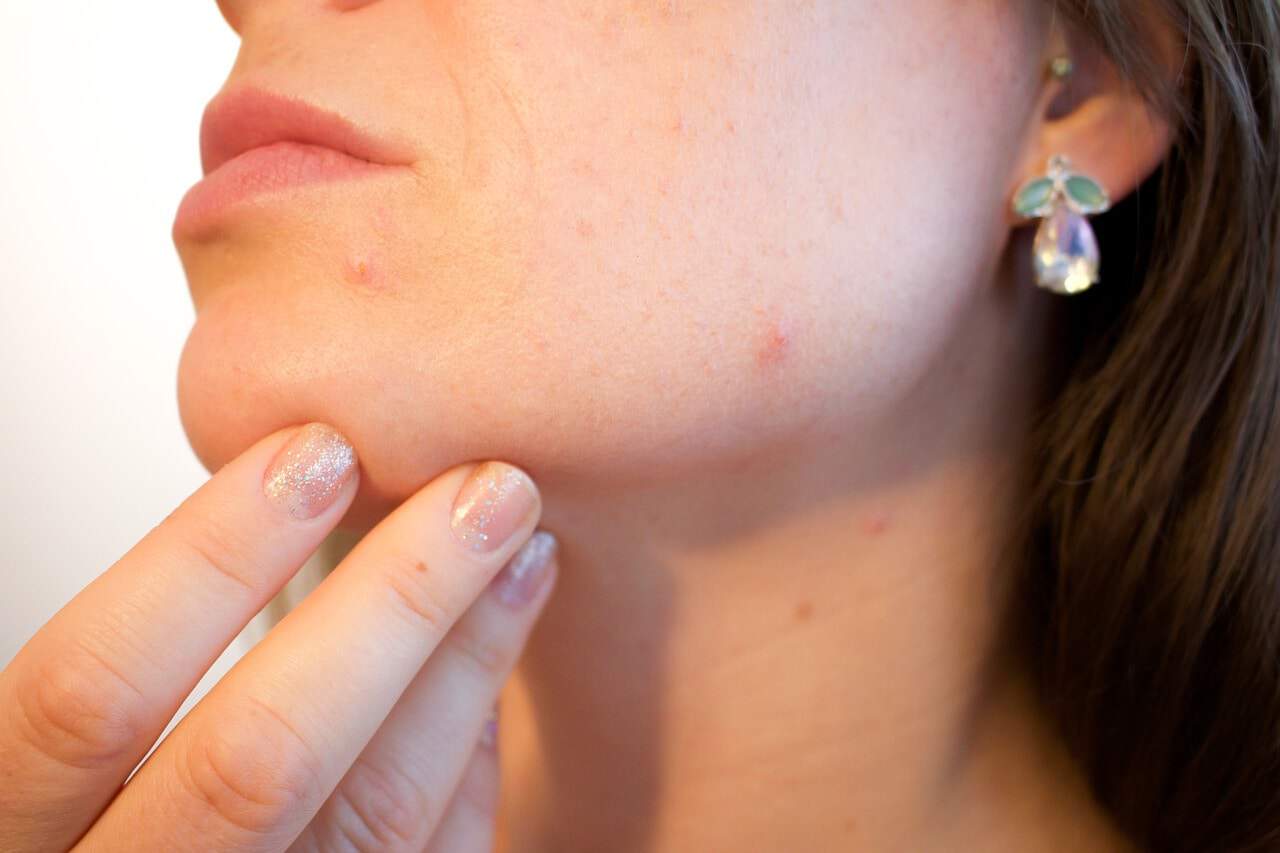
zinc for acne

If you alter your food choices, but you are still deficient, you should consider speaking with your doctor or a nutritionist. It could be a timing issue, such as eating your zinc-rich foods too close to phytates or improperly preparing your choices.

It could also be an underlying condition preventing your absorption, another unrelated condition, or it might be a signal that you need to take a supplement.

Additional Scientifically Proven Health Benefits of Zinc

• Dandruff control
• Fungal infections
• Warts, including viral HPV and herpes clusters
• Alopecia
• Eczema on hands and diaper area
• Rosacea
• Natural wrinkle reducer
• Natural broad-spectrum sunscreen

Final Thoughts on Zinc for Acne

Does zinc for acne work? It just might be what your body needs to kick acne to the curb.

Zinc provides your skin and immune system with multiple benefits. It is easy to incorporate into your diet, and you have plenty of tasty choices regardless of your lifestyle.

For treating acne, studies show ingested varieties of the mineral provide the strongest results for moderate to severe cases. Mild to moderate acne saw benefits from topical applications too.

Remember, zinc-based treatments will not work overnight. They can take days or longer, depending on whether you are zinc-deficient. You can use them alongside other medications too, but you should speak with your doctor to rule out interactions.

Including more in your diet or skin care regimen offers additional benefits too, including anti-aging and natural sunscreen. We see little reason not to consider making it a part of your daily routine.


Science Explains 5 Ways to Overcome Anxiety + Increase Mental Strength

Did you know people with anxiety tend to notice changes in facial expressions quicker than those without anxiety? However, their perceptions don’t always match up with reality, according to a study published in the Journal of Personality. Those with anxiety tend to overthink and easily jump to conclusions, which can lead to conflict in personal relationships.

Anxiety can wreak havoc on someone’s life and can become debilitating without proper treatment. Anxiety usually presents with some or all of the following symptoms:

  • Excessive anxiety and worry – about various different activities – occurring more days than not for at least six months
  • Difficulty controlling the anxiety
  • Restlessness
  • Difficulty falling or staying asleep
  • Easily fatigued
  • Trouble focusing
  • Muscle tension
  • An extreme fear of change
  • Irritability
  • Significant impairment in work, school, and/or relationships

The above symptoms describe generalized anxiety disorder. Anxiety can present with other symptoms as well, depending on the diagnosis. For example, if a person suffers from social anxiety, he or she will find it difficult to converse with others and may sweat, blush, or have a rapid heart rate when talking to people.

Anxiety disorders are the most common mental disorder in the U.S., with over 40 million people suffering from one in a given year. Unfortunately, many people don’t seek treatment for anxiety; if left untreated, anxiety can lead to depression, suicide, and other health problems. Not everyone has access to quality health insurance, which can make conventional treatment out of reach for some people. In this article, we will go over some natural ways to deal with anxiety so you can gain control of your mental health.

Here are 5 ways to overcome anxiety and increase mental strength:

  1. Take action, even if you don’t feel ready.

Many people with anxiety suffer from what’s called “analysis paralysis,” or feeling so overwhelmed by all the choices in the world that they remain stuck in one place. In other words, they cannot make a decision because the fear of making the wrong choice stops them from trying. This way of thinking causes you to ruminate on every possible choice you could make and consider every outcome, but paralyzes you from taking action.

The solution: Write down all the possible outcomes or solutions to a problem and then consider the pros and cons of making each choice. This way, you have a visual in front of you to bring clarity to the thoughts in your head. You could also just try out a few of the options on your list without writing them down. Remember: you don’t have to stick with any of the ideas, but it will feel better to move forward with your life and at least try out something new. It might actually work in your favor!

  1. Don’t get caught up in perfection.

An obsession with being perfect can also paralyze you with fear and overthinking, causing you to remain stuck in life. Perfection doesn’t exist, yet we all strive for it. Wanting better for yourself in life isn’t a bad thing, but there’s a thin line between making progress and obsessing over your performance. Many people with anxiety feel like they have to achieve perfection 24/7, which can lead to burnout and unhappiness.

The solution: Don’t focus so much on the outcome; instead, pay more attention to the journey. Actually enjoy the process, whether you’re trying to climb a mountain or finish your thesis in college. Simply take action instead of sitting for hours worrying about how to do something or what step you should take. “Doing it badly” will serve you much better in the long run than doing nothing at all. That way you can learn from your mistakes and change what you do the next time around.

  1. Become your best friend.

A lot of people with anxiety, particularly social anxiety, don’t practice self-love regularly. They allow negative thinking about themselves to distort their self-image, which can make them spiral into further self-doubt. If you had a friend who constantly doubted you and put you down, you probably wouldn’t remain friends with them for too long. However, we allow the voices in our heads to destroy our self-image without even thinking twice about it. This can cause a lot of damage to our self-esteem.

The solution: Studies have shown that self-compassion can work wonders for people with social anxiety. You might very well be your own worst enemy, while others don’t judge you so harshly. Don’t be so hard on yourself. Realize your strengths and good qualities, and focus on those instead of all your perceived flaws.

  1. Have a set “worry time” each day.

If you allow yourself to worry at all times throughout the day, you’ll quickly become burnt out and overwhelmed with fear. Unfortunately, those with anxiety have a difficult time turning off their brains from the thoughts that seem to run on autopilot. Controlling the thoughts will help you get your anxiety under control.

The solution: We set times for doing a lot of different tasks, from cleaning dishes to reading a book to doing laundry. So, why can’t we do the same with worry? Theoretically, we can. Just as you set your alarm for work or school, you can set your alarm for a specific “worry period” during the day. Doing this during the morning might work best since you can get it out of the way and focus on the day ahead. Worrying at night too close to bed may keep you up with ruminating thoughts, so try this in the morning when you feel fresh and renewed.

  1. Commit time each week to volunteering.

It’s written in our DNA to help others; after all, we need each other to survive. If you spend all your time just worrying about yourself, part of you will remain unfulfilled. Whether we realize it or not, we crave social connections. We need other people to need us and our strengths. Connections to others can help shield us from mental illness since we then have someone else to focus on besides ourselves.

The solution: How can you find purpose in your life with others in mind, you ask? You could volunteer at a nursing home or hospital or read books to children in foster homes. If you’d rather work with animals, you could visit a shelter for dogs. No matter what you choose, having a purpose in your life and making yourself important in the eyes of others will take your attention off of yourself and place it on meeting the needs of the people (or animals) who depend on you.

Other ways to decrease anxiety:

  • Avoid thinking of the worst-case scenario. People with anxiety like to think of the worst possible thing that can happen so that they can prepare for that event. However, most of the time, the terrible thoughts they’ve allowed to fester don’t become reality, anyway. The mind suffers greatly when fear becomes the driving force of our focus and attention, even if you think that you’ll have a better handle on a situation because of your anxiety.

anxiety

To overcome this, mental health expert Alicia Boyes says, “I use suddenly feeling overwhelmed as a cue to hunt for thinking errors. If I ever feel overwhelmed by an email, I tell myself, ‘There’s a ninety percent chance my reaction is just my good old anxiety brain, and that the request will seem easy when I look at it with fresh eyes tomorrow.’ I’ve had enough experiences of this alternative thought being true, to believe it!”

  • Don’t fear criticism. People with anxiety, particularly those with social anxiety, have an intense fear of negative judgment. This usually means that the sufferer will respond in one of two ways: either avoid the anxiety trigger altogether (ex. people), or become a people-pleaser and forget about their own desires.

Unfortunately, even people with anxiety disorders must deal with the stresses of daily life, and this often means coming face-to-face with what triggers them, such as people. Anxiety can cause people to become very critical of themselves and second-guess their decisions and work.

Alicia says, “If the occasional reaction or feedback I get is negative, it’s not the end of the world and is typically something I can learn from. I also remind myself that when something I’ve done wrong is pointed out, it’s usually fixable rather than a catastrophe.”

Final thoughts on Increasing Your Mental Strength and Beating Anxiety

We hope this article helped you see anxiety in a different perspective and realize that you can get a handle on it with some simple, but powerful, shifts in thinking. Positive thinking and reframing thoughts so that you don’t get stuck in black-and-white thinking can do wonders for your anxiety.

Mental illnesses such as anxiety might seem overwhelming and debilitating, but they only take control of you if you give them that power. Remember your own strength and you can take control of your mind and regain your life.

Psychology Explains Why Aunts Make The Best Relatives

Aunts are great relatives to hang out around kids. They’re fun but can be firm. They’re like friends, but they provide adult supervision. Also, they have unconditional love for their nieces and nephews!

But did you know that aunts are scientifically probably the best people to let your kids hang out with? Let’s talk about why.

Here’s How Psychology Explains Why Aunts Make The Best Relatives

aunts

1.    They Provide Unique Perspectives

Children get their main perspectives and ideas from their parents. They spend all day around their moms and dads, so it makes sense that they form their opinions based on them. While this isn’t necessarily a bad thing, it can be good for kids to get a different viewpoint, too.

Aunts are able to offer a whole new way of looking at the world that can be great for broadening the horizons of kids. Perspective-taking is actually a very crucial part of positive childhood development, so kids can only benefit from finding out about more views.

On top of this, aunts can also provide these unique perspectives in more serious situations. Advice and opinions from parents are good, but sometimes kids may not agree 100% and would appreciate an aunt’s different paradigm.

2.    They Can Take Charge

When parents are tired, they can be more willing to let things slide. When an aunt gets to take charge, they are ready to deal with whatever shenanigans their young niece or nephew is coming up with.

  • There’s also the fact that parents tend to be a little more strict when trying to take charge of their children.
  • Aunts are able to provide a gentler form of discipline that may help the child react more positively.
  • This is because they have a little leftover patience since they haven’t spent all day chasing after kids and trying to keep them in check.

3.    They Give Great Advice

Aunts are wonderful at giving advice. Not only can they console nieces and nephews, but they can also provide tons of helpful opinions to their adult siblings, too. When parents are tired, confused, or need counsel, aunts can give them the support they needed.

  • A lot of times, children don’t want to listen to their parents.
  • Sometimes, disagreements and arguments can cause kids to refuse to consider the opinions of their moms and dads.
  • Even in the best of circumstances, only hearing one particular brand of advice can skew a child’s worldview.

This is why aunts give such great advice; they’re not close enough to the situation to be biased but are close enough to truly care.

4.    They Love To Play

Let’s face it. Most parents are exhausted after a long day with their little ones. Yes, it’s all fun and games, but there’s only so much a mother or father can do before they get worn out.

When this happens, an aunt has all the energy needed to keep their niece or nephew occupied. They’re ready to play all sorts of silly games that don’t make sense, and they won’t tire out right away. They’re also available for snacks and TV while mom and dad do chores and errands!

5.    They Can Really Help Parents

There are more hands-on ways that an aunt can help parents. Especially in the early years of parenting, the process of caring for a baby, toddler, or very young and rowdy kid can really take a toll on someone.

  • Parents deserve a break, too, and an aunt can provide that.
  • It is incredibly important for a parent to have “me-time.”
  • It will boost their energy levels, positive thinking, patience, and cognitive ability.

So, the next time mom and dad need a few hours to sleep, go out, or just relax, an aunt can babysit and get the kids out of everyone else’s hair.

6.    They Provide Affection and Love

All children flourish when shown love and affection, and these are things aunts just won’t get tired of. Whether they’re cuddling, playing, or just spending time together, an aunt is able to give their little nieces and nephews much-needed attention, building the bond between them.

7.    They Spoil Their Nieces and Nephews

There’s nothing wrong with being spoiled every now and then. Parents have to be strict and uphold rules, but when an aunt’s around, kids know it’s time to let loose! And trust us when we say this is definitely not a bad thing at all.

  • Plus, aunts are good at giving the best presents.
  • They spend time with their nieces and nephews and really understand what they like.
  • They also think of the kids often, so they’ll be coming to visit with presents and treats often.

8.    They’re Good Listeners

Aunts are always willing to lend an ear to their little ones. They want to provide guidance, and to do that the right way, they know they have to hear out what the kids have to say.

  • A lot of children don’t want to share certain things with their parents.
  • It may be for fear of being scolded, or because they feel embarrassed.
  • Whatever the case, an aunt is someone they love enough to trust but isn’t too close to their immediate family to make speaking to them difficult.

Aunts are happy to listen to secret problems and, unless it’s something that is harming the child, will be able to keep those secrets. Plus, this means that children have an adult to go to with issues when they don’t feel comfortable discussing them with their mom or dad.

9.    They Give Cousins

We’ve talked a lot about aunts who are childless in this article but let’s not forget that many aunts do eventually become parents themselves. While this can mean less time for nieces and nephews, it also means that there will soon be more playmates for everyone!

Cousins provide a unique kind of love and friendship, and the bond you forge with your cousin is a special one. For children to be exposed to other kids who they can call family is great for positive development.

What if there are big age gaps? Well, young children can look up to their older cousins, and older children can learn responsibility by looking after the younger ones. It’s a good relationship!

10. They Can Teach

Although they’re associated with fun and games, aunts can also be tough teachers. As the sisters to a child’s mother or father, they are allowed to be strict with the kids when they have to be. Typically, this means they can teach important values and correct children when they’re wrong.

This isn’t to say that non-relatives couldn’t do this, but parents are more likely to be comfortable with a fellow family member teaching their child as they learn and grow as opposed to a friend’s parent.

11. They’ll Tell Fun Family Secrets

Your mom may never tell you about her first crush, and your dad will likely not talk about embarrassing moments of his childhood. Sometimes, for children, knowing that their parents were just like them at some point is helpful to their learning and development.

  • An aunt has all the dirt on her siblings, and usually, she isn’t afraid to dish it.
  • She’ll talk about how your dad lost his first job, too, or how your mom did that same bad thing you just did.
  • It humanizes parents in the eyes of their kids.
  • Some people don’t want this to happen, but it can actually make the bond between a parent and child stronger and more positive.

12. They Are Always Kind

There will be times when an aunt has to step up and scold or correct a niece or nephew for bad behavior. But when this happens, they are likely to be calmer than the already tired mom and dad of this child.

Aunts rarely want to start shouting matches with the kids. They want to correct wrongs, talk about how to improve and listen to what the little ones have to say. This teaches positive reactions in bad situations and will help a child with conflict resolution as they grow older.

13. They Can Resolve Conflict

This is especially true for slightly older kids. Sometimes, tensions rise between a parent and their child. Everything grows so emotionally charged that the conflict escalates out of proportion. Both sides can have trouble understanding the other’s perspectives – and this is where aunts can help.

An aunt can listen to their sibling and their niece or nephew and figure out what is truly going on. This allows them to either give good, relevant advice or help the two quarreling family members squash the fight.

14. They’re A Safe Yet Fun Vacation

An aunt can take kids out on fun short holidays and vacations. For parents who have too much work or can’t get time off, aunts are a lifesaver because they make free time that much more exciting.

It’s a great way to teach a kid about independence and responsibility, allow them to feel cool for going on a vacation without their parents, and also ensure that adult supervision is always just around the corner. Then, as they grow, a child – or a teen! – can begin making the trip to their aunt’s house on their own.

15. They’re The Perfect Role Model

Children will look up to celebrities and stars, but they also look up to family for the perfect role model. And who better to inspire them than an aunt? Unlike actors and athletes, an aunt is a tangible, reachable person who shows a child all that they can be when they grow up. And there’s nothing more wonderful than that!

blunt people

Final Thoughts On Why Aunts Make The Best Relatives

Aunts don’t get nearly as much love as they deserve. They’re shining beacons of positive thinking and good values, they’re loving and affectionate and kind, and they’re always happy to spend the weekend with a niece or nephew.

So if you needed any more reason to let your kids spend more time with their aunt, you definitely have them all now! Also, shout out to all the amazing aunties out there who make the lives of their little nieces and nephews better every single day!

Science Explains What Happens To Your Body When You Don’t Poop Every Day

If you don t poop every day, then you are suffering from constipation. The condition is characterized by the inability to pass bowel movements as well as the passing of hard stools whenever one is able to carry out the task. Many people claim pain during the process which results from tearing of the muscles around the anus.

Constipation is caused by lifestyle and diet issues as well as diseases. The apparent cause of constipation is the failure to drink sufficient water, which research states should be eight glasses per day. Lack of water means the stool will be too hard to pass, and you will not poop.

Other causes of constipation include lack of sufficient fiber in the diet, no exercises, and more. Some fiber-rich foods include most vegetables, avocado, flax seeds, and apples among others. Here is what happens to your body when you fail to pass stool every day.

What Happens To Your Body When You Don’t Poop Every Day

1. Hemorrhoids

When you don t poop every day, you are likely to strain during a bowel movement. Since you poop infrequently, you are likely to experience a heavy load at a time. Hence, similar to any other muscle that is undertaking a task that surpasses its capacity, you will experience wear and tear.

The length of the intestines consists of smooth muscle fibers that propel waste and food along the gut. When the muscles are exposed to pressure, like during constipation, they also put pressure on the veins that line the rectum.

When you face constipation, these veins are stretched beyond their typical capacity such that they are unable to hold their integrity and shape. At times, they fail to remain in the internal cavity and extend from the anus. This can be uncomfortable and result in bleeding every time you poop.

You can see blood spots on the toilet paper that you use to wipe. At times blood can accumulate in hemorrhoids to cause a painful, hard lump. Also, hemorrhoids can lead to skin tags, infections, and blood clots.

2. Loss of Appetite

It is common for those people who don t poop to face a loss of appetite. The kind of appetite loss that comes with chronic constipation is not an unpleasant hunger suppression form. Instead, it is a form of appetite loss that makes food consumption appear like a real effort and a complete turn-off.

It is similar to the appetite loss you experience when you are sick. This is because the gut is a well-honed, finely-tuned system of interconnected sections that are continuously sending messages to your organs and brain. Whenever you have a meal, special nerves that line your stomach’s insides are stretched, triggering mass movement.

During mass movement, the stomach nerves send neural signals to the bowels to trigger a bowel movement. The design of the intestines makes them respond by pushing food further through the gut. This explains why you feel the urge to poop immediately after finishing a meal.

But during constipation, there is an interruption of this feedback loop. Instead of propelling food via the gut, the stomach and brain get neural signals that food is backed up. Therefore, it will not be efficient to keep adding food into the gut until the congestion is handled.

Simply put, the body shuts down your appetite until you can poop.

3. Breakouts

Researchers state that there is a relationship between what appears on the skin and what takes place in the digestive system. If you don t poop, it can be a sign that there is some strain on your internal ecosystem of gut flora. When gut flora is not at its best, it can manifest in other ways other than constipation, and the skin can suffer.

Skin conditions like puffiness, dark circles under your eyes, rashes, and acne can originate from internal gut problems. Keep in mind that the skin is the biggest organ in the body and it undertakes some elimination functions.

Hence, toxins that accumulate during constipation or get into the body via an unhealthy diet, can lead to skin blemishes like zits. If the body fails to eliminate toxins through the regular bowel route, it can break out through the skin.

4. Headaches

According to research, constipation is one of the causes of headaches, and this is due to stress. The ability to poop well is a basic function of the human body. When you don t poop, you experience pain, worry, pressure, and inconvenience of being constipated as you feel your gut fill up, bloat, and block, which results in a lot of stress.

treat poop -migraine

This anxiety and stress can lead to tension headaches. Additionally, constipation can also be caused by dehydration. The bowels need enough water supply to generate soft stools.

When you fail to drink sufficient water, the stool can get compacted and dry, leading to hard poop that is popular with constipation. In this instance, while headaches are not directly caused by constipation, the related dehydration can. Hence, hydrating can treat both headaches and constipation.

Moreover, research shows that headaches can result from a buildup of toxins during constipation. The bowels are a primary outlet for the body to get rid of toxins. Hence, if the waste remains in the body for a long time, it can be reabsorbed into the system and lead to headaches.

5. Bad Breath

According to a Danish study, constipation can result in bad breath. The research reveals that about 25 percent of people suffering from bad breath suffer from constipation. Other studies show that people who have constipation have recurrent cases of bad breath or a bad taste in their mouths.

The reasons for this relationship are not fully clear. But a particular theory states that if you have constipation, there can be a proliferation of harmful gut bacteria, which generate malodorous gases. When they get to your mouth, you experience bad breath.

6. Anal Fissures

Straining to pass feces or passing hard ones can lead to tearing of the anus tissue. These tears are referred to as anal fissures. They result in bleeding, pain, and itching.

Since anal fissure symptoms make passing stool harder, they can worsen constipation. This takes place in children who hold in the poop since there are afraid of pain.

The tears are normally very tiny. But at times they can become bigger and impact the muscle ring at the anus opening that keeps the anus closed. This type of anal fissure is difficult to heal.

You might require surgery or medication to treat the condition. After getting an anal fissure, there is a high likelihood of getting another.

7. Impaction

When you fail to pass stool out of the gut, it can begin to congest in the intestines. The hardened stool sticks there and results in a blockage. The squeezing that the large intestines usually uses to get the stool out of the gut can’t work since the mass is too hard and large.

This can result in vomiting and pain. You might even require visiting the hospital for treatment. Fecal impaction is more likely to affect older adults and children.

8. Rectal Prolapse

The rectum is the last part of the colon and ends at the anus. When you keep straining during bowel movements, it can stretch and protrude outside the anus. While only some part of it comes out at times, there are times the whole rectum can come out.

This can be excruciating and results in bleeding. It can be difficult to differentiate between hemorrhoids and rectal prolapse because they both lead to bulging out of the anus. However, the conditions are different and require different treatments.

9. Fecal Incontinence

Fecal incontinence refers to the loss of control when it comes to bowel movements and the involuntarily passing of stool. This is a side effect of severe constipation as a result of constant straining that leads to weak rectal muscles as well as nerve damage. A physical blockage caused by fecal impaction makes the colon muscles to stretch and watery stool deeper in the gut can seep around the hardened stool.

The treatment of the condition involves a prescription of laxatives or the treatment of fecal impaction that causes the incontinence. You need to do pelvic strengthening and bowel training muscles to treat the weakened muscles.

10. Fatigue

Fatigue usually accompanies constipation. This can indicate that the constipation is a result of another medical issue. Constipation can also lead to fatigue if you are experiencing malnutrition.

When the colon holds on to toxins, the body has a difficult time getting nutrients from food. You need to consume a healthy diet rich in fiber as well as do regular exercises. If the situation is severe, ensure you seek medical treatment.

11. Bladder Control

There is a closer link between the bladder and the colon than most people might know. Having a full colon as you have a hard time pooping can lead to impacts on the surrounding organs. According to the University of California’s Department of Urology, a physical position is a problem.

If the full colon puts a lot of pressure on the bladder, the bladder will fail to fill and result in unexpected leaks or eagerness to empty. When you strain during numerous bowel movements, you can ruin the pelvic floor muscles that are essential for proper bladder control.

Conclusion

Loss of bladder control, pain and bleeding when passing stool, fatigue, bad breath, headaches, and breakouts are some of the side effects you will experience when you suffer from constipation. Constipation can be severe when it comes to children who are afraid of feeling pain during bowel movements.

Therefore, to ensure you are free from constipation, exercise regularly, drink a lot of water, and eat foods rich in fiber and healthy fats.


10 Proven Ways To Overcome Self Destructive Behaviour

While many people hide their self destructive behaviors and remain in denial that they are actually struggling, there are quite a few of us who admit to these problems (at least to ourselves) and work to overcome them. Even if you have spoken out about your issues, your loved ones may not fully realize the severity of your behaviour. It is essentially up to you to overcome these behavior, so you must decide the best method for doing so.

Many self-help methods can help you overcome your self-destructive behavior, and these methods are beneficial in more ways than just one. They can help overcome the behavior while also improving your overall life. Before you can consider the ways to overcome the behavior, however, you must first understand what constitutes self destructive behavior.

What is Self Destructive Behavior?

Many behaviors constitute self destructive acts. These are any kind of behaviors that negatively impact you on a personal level. Many common ones include:

  • Continuously telling yourself negative things such as, “I will never get this done on time” or “I’m going to fail”
  • Knowing something is bad for you and doing it anyway
  • Eating too much or not enough
  • Pretending to be incompetent
  • Inconveniencing yourself in order to cause harm to others
  • Purposely hurting yourself (self-harm)
  • Wallowing in self-pity instead of finding a positive way to move forward
  • Abusing drugs or alcohol
  • Alienating yourself from your friends and family
  • Avoiding emotions
  • Turning down help from those who want the best for you
  • Sacrificing happiness when you could be chasing after your dreams or goals
  • Overspending, even when on a budget
  • Physically neglecting yourself whether through lack of sleep, lack of exercise, or some other way
  • Avoiding getting the help you need for a mental illness
  • Ruining relationships by means of jealousy, possessiveness, emotional manipulation, neediness, violence, and other negative acts
  • Continuously underestimating yourself

telling yourself

Why Do These Behaviours Occur?

Typically, self-destructive acts and thoughts occur because of conscious or subconscious self-hatred and low self-esteem. Continuing along this same line of thinking, you may notice yourself exhibiting some of the signs if you are feeling unworthy or unconfident. Additionally, you may exhibit signs of self-destruction to cope with stress in any area of your life. The more stress you have and the number of events in your life that are stressful can impact the occurrence of self-destructive behaviour, as well.

How to Overcome Self-Destructive Behavior

Now that you recognize these actions, how do you self-correct?

1. Write in a journal

This may sound too simple of a task to help overcome your self destructive habits, but it is actually extremely helpful. Focus on writing about what you were thankful or happy about each day, forcing yourself to think about the positive aspects of your life instead of the negative ones.

Before you begin writing, take the time to think about the small aspects of your daily life that you enjoy, or a happy surprise that occurred that day. This helps reset your thinking, helping you see the positives in your life and work toward even more positives.

2. Start a garden

Gardening can help you overcome your self-destructive behaviour because it takes your focus off of yourself. You stop thinking all of those negative thoughts, and you can’t physically do anything negative to yourself while you’re working with plants and soil, so your energy will be placed on the task at hand. Another way that gardening will help is by giving you a feeling of accomplishment when you see the outcome of all of your hard work.

This isn’t to say that you have to go out and plant a huge garden right away. Instead, you can buy a small planter and start with a couple of herbs or vegetables and then, if you decide that this is the method for you, branch out and do a bigger garden each time.

3. Bask in the sunlight

This is hard to do in the winter months but with spring coming quickly, you will be seeing much more sunlight. Take the time to enjoy it. Sit near a window where the sun shines through, or choose to drink your coffee or eat your lunch outside.

You get Vitamin D from the sun, which is important to your well-being. Vitamin D can boost your mood and your energy levels, all while decreasing depression.

4. Watch something funny

Laughter can pull you out of the slump that precedes self-destructive behaviour. You can find comedies on Netflix, Hulu, and even on your regular cable channels. With many different varieties of comedy, you should be able to find something that makes you laugh. Some ideas include:

  • Romantic comedy movie
  • Comedy movie or TV show
  • Stand up comedian specials
  • Funny YouTube Videos

5. Adopt a pet

Adopting a pet can be beneficial in a couple of different ways. First, the unselfish act of adopting an animal can increase your mood and help you feel like you are worthy. Additionally, the actual act of caring for your new pet helps with many mental issues, including depression, self-pity, and anxiety.

destructive habits

6. Go for a walk

When you go for a walk, you are allowing your brain to produce more endorphins. This, in turn, causes a boost in your mood. Exercise of any kind has been proven to decrease self destructive signs, allowing you to find ways of overcoming those behaviours.

Walking also gives your brain a chance to think about other, less emotional, aspects of life. The fresh air will also help improve your mood. The combination of these effects has been proven time and time again to aid in this way.

7. Practice meditation

Meditation requires hard work, patience, and a good amount of self-discipline; hence the suggestion to “practice” meditation. It takes years to perfect, but it is so worth it in the meantime. Meditation makes you more aware of your thoughts and allows you to redirect any negative thoughts positively.

Not only does it help you redirect those negative thoughts, but it has also been shown to reduce mental illness. It helps boost your mood and motivation. This should help you overcome those self-destructive acts that you find yourself reverting to.

8. Volunteer

Like many of the other suggestions in this article, this can also help you overcome self-destructive behavior in multiple ways. Not only does it help you see that you are better off than many others, but it also boosts your self-esteem and self-confidence.

9. Declutter your space

Clutter and messes trigger anxiety, depression, and even paranoia. This leads to self-destructive behavior. By decluttering your space, you are helping yourself to avoid all of these struggles.

Additionally, decluttering your space can ease depression and anxiety by allowing your mind to focus on a task that offers instant gratification. This method is well-known to overcome self-destructive acts.

10. Change one small thing at a time

When it comes to overcoming your self-destructive behavior, you can’t tackle everything at one time, or you will surely fail in some regard and start the self destructive cycle all over again. To avoid this, choose one small thing at a time.

If you are wanting to start eating healthier, choose to eat one piece of fruit at breakfast time. Likewise, if you want to stop over-eating, cut out one unhealthy snack at a time, instead of cutting out every extra snack right away.

Once those small changes have become habits, then you can make one more additional change. This next change could be a more complicated one such as cutting out soda completely, including when at restaurants. Eventually, you will be making healthier eating choices all the time.

What to do When You Are Struggling to Refrain From Self Destructive Behaviour

If you can’t find anything that helps you overcome these behaviours, you need to take action in another way. You cannot continue to self destruct without serious consequences. Some more serious steps you can take if the self-help methods don’t help include:

  • see a therapist
  • talk to your doctor
  • for drug and alcohol abuse, visit a rehab center
  • ask for help from family and friends

self destructive - declutter your space

Final Thoughts on Ways to Overcome Self-Destructive Behaviour

Overcoming self destructive behavior is vital for your well-being and for the good of those around you. This type of behavior can stand in the way of your success, relationships, and essentially your life. There are ways that you can try to overcome the self-destructive behaviour on your own (and these methods generally work), but if none of those methods work for you, it is essential to seek help differently.

16 Behaviors That Reveal Your Partner Is Self Destructive

Love relationships are far from easy. Trying to be on the same page as another individual is something that requires constant work. However, being in a relationship with a self destructive partner further complicates things.

Yes, it is possible to have a relationship with a person with destructive habits, but you have to ask yourself—is it healthy?

Habits of Self Destructive Partners

Self destructive people are on a path to, either consciously or subconsciously, self sabotage. Trying to enter into a relationship with such a person can spell trouble for your own personal wellbeing.

Keep reading to learn 16 habits of highly destructive partners.

1. They’re Self-Defeatists

Destructive partners tend to always have self-defeating mindset. While these people may not realize they are this way, their lack of self esteem can present itself in the way they think about everything—including you.

When they fail, they take it personally. Oftentimes, they never want to try again after being turned down for something that didn’t pan out

These self-destructive people like to focus on the things that have gone wrong in life and will act as such in their relationships.

If they notice their partner is unhappy or there’s a disagreement, they will likely believe they are the cause of the issue. Many often go on to worry that the relationship is already going to fail, which translates to them avoiding reaching out to their partner to save the relationship.

2. They Don’t Value Self Improvement

In healthy relationships, both partners should aim to prioritize self improvement, but many self destructive people don’t care to work on themselves.

Whether it is professionally or personally, these types of people simply accept life as it comes. They do little to go after their goals and are content with wherever it is they end up in life.

3. They Create Excuses

All of us from time to time use excuses in life. Whether we feel the need to explain away our mistakes or shift the blame to someone or something else, creating excuses is part of being human.

However, partners in relationships that are always relying on excuse after excuse to get out of their responsibilities should be considered a self destructive partner. The partners aren’t capable of taking a hard look at themselves to see that they may have played a part in a problematic situation.

4. They Pity Themselves

Self pity stems from having lower self confidence. Instead of wanting to change things about themselves, these individuals simply revel in the fact they never feel good enough.

This self-fulfilling behavior ultimately results in a miserable relationship. As your self destructive partner is always ready to feel badly for themselves, most of your energy will go towards trying to cheer them up.

In this sort of situation, your needs will go unmet as all of the attention is given to your partner. Instead of feeling badly for them, it’s time to to do what is best for you and find someone else that is uplifting.

5. They Treat Others Poorly

The negative energy that accompanies self destructive behavior extends to the way that these people treat others.

In their romantic, personal, and professional relationships, these individuals tend to treat others as negatively as they treat themselves.

They are often unnecessarily rude with other people—resulting in ruined relationships and missed opportunities.

6. They Abuse Alcohol and Drugs

This isn’t true of every self destructive person, but abusing drugs and alcohol is certainly a habit that will destroy one’s life.

Substance use addiction is incredibly destructive. If your partner abuses alcohol or drugs, you already are aware of how challenging dealing with an addiction can be.

While a partner that is fighting addiction needs love and support, if you find that this habit has affected your life significantly, it may be time to evaluate the health of your relationship.

7. They Avoid Emotional Connections

It isn’t always easy to discuss how you’re feeling with a partner.

Partners that have these destructive habits often avoid all forms of emotional intimacy. Whether they are afraid of what they feel or are too scared to openly connect with another person, a self destructive partner can never have a deep intimate relationship until they face their feelings.

8. They Socially Isolate Themselves

People with destructive habits often isolate themselves from friends, family, and society as a whole.

Whether they’ve alienated their loved ones or simply refuse to make any new connections, this destructive behavior will ultimately destroy whatever relationships they do have.

In a love relationship, this sort of behavior can make the other partner feel unloved. Refusing to communicate, go out, or spend time with their partner, these destructive habits make it clear that they want to be alone.

9. They Don’t Want to be Helped

Many people like to prove that they can do things on their own, but when they realize they need help, they ask.

Destructive people are so offended by the idea that they are not self sufficient that they flat out reuse help. Part of this behavior stems from their refusal to acknowledge their need for help.

This sort of partner will avoid couples counseling, refuse advice from coworkers, friends, and their partner, and will ultimately refuse to improve themselves as they believe there is nothing more they can improve upon or are so unhappy with themselves that they don’t see the point in trying to improve anything.

10. They Neglect Themselves

Just as destructive people tend to care very little for others, they also care very little for themselves. These habits extend to their diet, their fitness, and their hygiene.

Whether they eat too little or too much, rarely bather, or never workout, a clear lack of self care is an easy way to identify someone that has destructive tendencies.

Oftentimes, this lack of care is an extension of the way they feel about themselves. If they don’t like themselves, why bother taking care of their body?

11. They Overcommit

Just as some destructive partners tend to avoid committing to anything, some go in the other direction and overcommit to everything.

Some destructive people avoid taking time for themselves by going overboard with their commitments. In this way, they are exhibiting destructive behavior as they are neglecting their basic needs.

With no time to spare, these individuals leave no time for their partners. While there’s nothing wrong with being busy, partners that are unable to make time for their loved ones are actively working to destroy their relationships.

12. They Self-Harm

Self-harm is very serious and should be addressed immediately. This physical abuse of one’s own body is a clear sign that an individual is unhappy with themselves.

Though some people view this as an outlet for stress relief, harming yourself is incredibly destructive and ultimately causes more stress.

If your partner wants to self-harm or does self-harm, it is important that you encourage them to seek professional help as soon as possible.

13. Frequent Overspending

Irresponsibility with money is certainly a destructive habit.

Individuals that go out of their way to overspend or waste money on the wrong things are typically doing so as a way to overcompensate for how unhappy they are with their current financial situation.

This kind of overspending creates insecurity around one’s finances, making it difficult to build a relationship on such an unstable financial foundation.

14. Sabotaging Relationships

Though most of these behaviors will ultimately sabotage a romantic relationship, partners with destructive habits usually set out to destroy whatever hope they had at a loving relationship.

self destructive

This can come about through emotional manipulation, possessiveness, jealousy, violence, and the like. Partners will act in this was because they ultimately believe they aren’t deserving of love.

15. They Abuse Their Partner

Physical, emotional, and mental abuse are all incredibly destructive habits.

While some partners outrightly display these behaviors, others may be more subtle about it.

If you are being victimized by your partner, you need to be honest with yourself and do what’s best for your wellbeing. There is no rom for growth with a partner that has these destructive habits. Moreover, your safety is being compromised the longer you stay with this person.

16. They are Lazy

We all need to take time for ourselves, but we also need to put in the work when it is necessary.

Partners that are always lazing around, rarely willing to put any effort into anything, and are always complaining when they have to do anything are lazy.

Though these individuals can explain away their laziness, this type of habit will ultimately take its toll on a love relationship.

Final Thoughts on Self Destructive Partners

Self destructive partners are deserving of love. However, these individuals must address their destructive habits if they hope to have a successful romantic relationship.

If you’re in a relationship with such an individual or you recognize some of these traits in yourself, it’s time to start making some changes. Use this guide to help you understand how to better yourself and build a stronger bond with the right partner.


Scientists Explain 5 Differences Between The Male And The Female Brain

Discussing the differences between the male and female brain today can be somewhat controversial. After all, these differences are often used as grounds for discrimination, whether against men as caregivers, against women as leaders, or other similar issues.

However, there is no discounting science – and science has revealed some biological differences between the brains of different genders. They’re interesting to read and understand, and they offer some insight into common behavioral differences.

Researchers Reveal 5 Differences Between The Male And The Female Brain

1.    Emotions

People with somewhat sexist views may consider women much more emotional and therefore unreliable. Or, they may consider men too aggressive to be trusted. Both of these extreme perceptions of emotions and gender are far from accurate.

That said, there are biological differences in the brains of men and women that indicate some emotional difference. First, let’s talk about neurochemicals or hormones. These are responsible for a lot of our moods.

In men, there are higher levels of testosterone, which boosts intimacy drive and can cause someone to lean towards anger rather than calmness in some cases. This doesn’t mean men are inherently violent, but it does suggest that they may be quicker to reach a stress limit before reacting aggressively. They may also have more trouble sitting still.

On the other hand, women have higher levels of oxytocin and estrogen. Estrogen lends itself to female reproductive functions, while oxytocin focuses on relationships, bonding, and socialization. This could be why women are stereotyped as nurturing, even if the correlation isn’t necessarily causation; women naturally lean into social interaction.

Men also produce 52% more of the hormone serotonin, which helps mood regulation and inspires positive thinking. This could explain why more women get diagnosed with depression as opposed to men. (However, men can, of course, still develop clinical depression and it is just as serious, no matter the gender of the patient!)

Men also tend to have more dominant left-brain function, while women have equal left- and right-brain function. This, combined with the differences between the male and female brain in neurotransmitter content, leads to some theories. One is that this is the reason more men are diagnosed with antisocial personality disorder, while more women receive a borderline personality disorder diagnosis.

2.    Structure

Males are known to have larger brains with more volume, while females have thicker cortices. Contrary to popular belief, though, this doesn’t have any effect on the average intelligence of those of either gender – neither is smarter than the other. A higher brain volume doesn’t mean more smarts. Thicker cortices, while linked to higher IQ and cognitive test scores, also doesn’t necessarily equate to women being smarter than men.

Structurally, men have higher brain volume than women in virtually all regions, but this is due to their larger average body and brain size. If adjusted so that the sizes of regions are calculated based on their relative size to the individual person’s brain, results change. Men now have 14 larger brain regions, while women have 10 larger brain regions.

On top of that, men tend to have more variation in the volumes of each brain region and the dimensions of each cortex. They also had much wider ranges in IQ test scores. Meanwhile, women have more consistency in brain region size and cortical thickness and score more consistently in those same tests. The average of both genders, however, remains more or less equal.

  • Despite these differences, however, a lot of findings showed that there is a good amount of overlap between the thickness of cortices, brain volume, and gender.
  • In other words, the differences aren’t quite as profoundly noticeable as you might think, instead being more comparative to height differences.
  • Scientists are fairly positive that male and female brains share more similarities than differences.

3.    Communication

Body language, language cues, and other methods of communication outside of directly verbal ones can definitely be confusing. But, apparently, for men, it may be a little bit harder. This is because there is a part of the brain that specifically picks up on language cues and works when using them, according to author Laura Schaefer.

It is this part of the brain that is a little different in men. Essentially, that part is thinner in male brains compared to female ones. This can affect one’s ability to understand subtle nuance in language, and it can also make one less inclined to speak in many situations.

This may go back to ancient times when humans still lived in caves. Women, being the gender bearing children and having the ability to feed them, would stay in their communal homes with the other women. To occupy themselves, they would socialize. On the other hand, men had to hunt in silence in order to accomplish that goal.

Additionally, women get significant boosts in oxytocin and dopamine from communication. This might cause them to associate talking with others with very good feelings. However, it’s worth noting that everyone, regardless of gender, experiences positive change in the levels of these hormones when they socialize – so it may not be a gender-specific thing after all.

On top of all this, women have more verbal centers in their brain, typically on both the left and right side. Meanwhile, men are inclined to have them in lower amounts, and usually just on the left side.

This reveals itself in a few communication patterns that, while stereotypical, have basis in science.

  • As an example, women tend to draw from different senses and use more detail when describing something.
  • Their verbal centers enjoy better connections to areas responsible for feeling and memory, so they can tell a story more vividly.
  • Men, on the other hand, have fewer word centers and those centers don’t link well with their emotional and memory centers.

Women are also said to have better writing skill and reading comprehension overall compared to men. However, it is worth noting that some of these results can be from social differences.

4.    Processing

Men and women’s brains seem to process information differently. Men use approximately seven times more of their brain’s gray matter than women do. Meanwhile, women use white matter a whopping ten times more than men do.

What even are these types of matter?

  • Well, gray matter focuses on processing specific actions and information in a very focused, singular manner.
  • This may be why the stereotype is that men aren’t good at multitasking.
  • You may find that a lot of men can get wrapped up in what they do and remain oblivious to outside input.

More gray matter use also means that someone can more feasibly forget about old memories, especially ones linked to emotion. They may spend a lot of time analyzing it in the moment. Then, once satisfied or disinterested, they quickly move on and forget their accompanying emotions.

  • Meanwhile, white matter is linked to networking.
  • It helps the brain’s centers to connect with its gray matter.
  • This can allow easier transitions between tasks, can lead to better multi-tasking and the ability to notice multiple forms of sensory input at once.

More white matter use also means that the brain is more capable of jumping back in time and reliving or remembering old memories. This can improve memory and it also can cause someone to linger in the past.

5.    Interests

For a long time, people assumed that the differences in interests between men and women were more social than biological. Girls are conditioned to like pink dolls, boys are conditioned to like blue trucks, and so on.

Apparently, however, there may be more information rooted in biology here than one might think. To understand this better, let’s look at animals. A study conducted on rhesus monkeys – animals not constrained by social concepts of gender – found that male and female animals have significantly different interests.

In the study, male monkeys heavily preferred wheeled toys – like cars and buses – to soft, cute ones. Meanwhile, female monkeys reacted in a more positive way to stuffed toys. It is not feasible to argue that these monkeys learned the behavior from society, as many people may have.

But animal studies don’t always equate to human ones. A more recent study covered young babies ranging in age from 9 to 17 months. In other words, at that age, they were too young to begin recognizing gender differences in other people; they may not yet understand the concept of a male or female person.

In this study, most children showed preferences for toys stereotypically marketed towards their gender. This could be for a number of reasons, including the idea that the human brain really does have those differences, or that it evolved to have them.

Let us note that if female babies have received dolls their entire life, they will more likely show an interest in similar toys. The same goes for male babies who receive mainly “masculine” toys. Still, while there are flaws in this research, the differences are worth taking note of.

brain power

Final Thoughts On The Differences Between The Male And The Female Brain

The fact is that these differences, while undeniably present, aren’t meant to dictate entire lives. That’s why women can be successful leaders and men can be amazing caregivers and fathers. If you think about it, you probably know quite a few people who defy traditional expectations.

A lot of the biological differences between men and women have their roots in evolution. Hunter-gatherer families required that men, being more biologically muscular, hunt in silence. Meanwhile, women, capable of bearing and feeding children naturally, stayed “home” and socialized with other women.

Even though we no longer need these more archaic brain features, we still have them from our ancestors – and that’s really interesting to think about! Who knows? Maybe in a few thousand years, our brains will change to be completely different.

At the end of the day, it’s about what you want to do, not about what science suggests you may be better at doing. So get your positive thinking going! You can achieve whatever you want to achieve, regardless of your gender and the stereotypes associated with it. So go out there and live your best life!

6 Behaviors That Attract Negative People

The people who surround you influence a lot of your life. Good people lift you up while negative people drag you down. If you’re seeking to get anywhere in life, you want to be surrounded by positivity, and you should do everything you can to make that happen – so why is everyone around you so negative?

For a lot of people, this can be confusing. It can make them question whether they truly are a good person, thinking that birds of a feather flock together. It can make them feel like they’re getting nowhere in life. But before you start panicking, practice some positive thinking!

Negative people often feed off of and feel attracted to certain traits in others. These traits aren’t necessarily bad ones, but they’re often not the best, and they can cause toxic energy to swarm around you. So how can you stop it?


Here Are 6 Behaviors To Avoid To Stop Attracting Negative People In Your Life

1.    Dwelling On Failure

We all know how disappointing failure can be. It can be as simple as something that just doesn’t go as planned and isn’t technically a “failure,” like a date that doesn’t go well, messing up a conversation, or breaking a diet. And of course, it can be as serious as losing a job, breaking off a relationship, or missing out on a big promotion.

If you’re someone who is always gunning for success, you may be overly perfectionistic. You may hold yourself to a very high standard that is, at times, unrealistic. This can cause you to be unnecessarily negative about perceived failure, and this will affect your entire outlook and reduce your positive thinking.

The problem is that holding onto negativity like this drags you down. What you’re essentially doing is messing up your chances of ever getting out of this phase of negativity. This creates a pattern where you blame yourself or others for one specific event or issue and never truly leave that headspace.

There’s something very important and freeing about letting go. Understand that mistakes are part and parcel of life and that your value is not determined by them.

2.    Emotional Baggage

Our past experiences shape us. This is a fact. What we go through, no matter how difficult, helps to make us stronger. That’s why so many of us are completely different people today than we were before a traumatic, difficult, or even sad event occurred.

But there’s a difference between understanding and remembering past experiences and allowing yourself to be defined by them. Unfortunately, all the negativity that comes with emotional baggage like this can attract negative people.

It is completely valid and reasonable for you to have, as many people call them, “issues” stemming from your past. If you’ve been through dark times, it makes sense that a part of you carries scars from that time. But centering your entire life around those dark times is unhealthy.

Recovery is easier said than done, but it is important to embrace the healing process and work on forgiveness so you can overcome the issues that stem from these experiences in a positive way. If you are struggling a lot with emotional scars and have difficulty overcoming them, consider speaking to a mental health professional. There is no shame in enlisting the help of a therapist or counselor.

3.    You Don’t Have Boundaries

Being kind and generous is a good thing. But there’s such a thing as being too nice, and that allows people to walk all over you. Being a pushover attracts negative, toxic people who seek to use your easygoing ways to take advantage of you. Here are a few ways you may be allowing too much.

a)    Listening

It’s good to be a great listener. But if you’re constantly listening, a toxic person can take advantage of this, especially if they have issues with narcissism. No matter how obviously you look impatient or uncomfortable, they won’t stop talking your ear off for hours.

To prevent this, limit your conversation from the get-go. From the start, you should know how much time you can (and are willing to) spend on an interaction. If you know someone is toxic, limit it even further.

Once time is up, use an exit line. For example, you might say, “It was so nice to catch up with you…” or “I’ve got to get back to…” or “We’ll talk later, but now I have to…” Make it abundantly clear that you are leaving right then, and there is no room for more talking.

b)    Physical generosity

Someone who knows that you’re always willing to lend someone cash, help them with an errand, or do them a favor is going to use that against you. You need to learn to say “no” with a firm voice and no waiting apology. A toxic person may then try to guilt you into doing whatever they want – don’t listen to them!

These people perceive you as easy and vulnerable, and it’s important that you have the ability to raise your voice and stand up for yourself if need be. Once they know you can’t be pushed around, they’ll stop bothering you.

c)    Emotional Generosity

If you’re willing to give everyone your time, answer to their needs, and respond to all of their correspondence immediately, some negative people will learn to expect that of you. They are likely to become worse and worse, demanding more and more of your time and energy with each passing day.

Know your worth. Recognize your own needs and time constraints. This can be tricky, as you might feel selfish for your decision. But focus on positive thinking and understand that your time and energy are valuable, and you get to decide how to spend it.

4.    You Tend To Whine And Rant

Every now and then, you may feel the need to let off steam. Turning to a trusted friend or confidant to complain, or ranting about it to someone who cares, is a great way to do so. After all, expressing feelings of negativity can often ease them and help you get through them.

But what happens when complaining becomes a habit? There’s nothing wrong with groaning about the odd annoyance now and then, but what if that’s your constant state? It’s not healthy and, worse still, it can actually feed the negativity you feel as you fuel it by giving it too much attention.

Plus, whining a lot makes you appear to be a negative person. This is especially true if you over-complain about inconsequential things, like the weather, people you know, or random inconvenient events. You’re likely to attract other people who have a lot of negative thoughts, and you’re likely to push away positive people in your life if you’re always a negative nancy.

Of course, trying to force positive thinking when all you want to do is moan and rant isn’t easy. Instead of voicing them to anyone who will listen, try expressing your difficulties artistically. You can write in a daily journal, which allows you to reflect on and analyze these thoughts. You can create poetry, paintings, or songs. These are much healthier ways to express inner negativity.

5.    Taking Things Personally All The Time

If you internalize everything around you, you’ll constantly be followed by a dark cloud that attracts negative people. This brings drama close and causes you to feel bad and upset by everything – including things that don’t involve you.

This can lead to people alienating themselves from you due to your sensitivity. Instead, you’ll have toxic friends who want to push your buttons to get the reactions they want. That’s why taking things personally all the time is one of the many behaviors to avoid to stop attracting negative people in your life.

Here are some steps to take to learn to stop taking everything so personally.

a)    Don’t assume

If someone confronts you, don’t leap straight to bad conclusions. Stay calm and allow yourself to listen to the other person thoroughly before responding.

b)    Be proactive, not reactive

If you automatically succumb to knee-jerk reactions to everything, you come across as impulsive or unhinged. Learn to put some space between your emotions and the situation around you so you can look at everything logically.

c)    See through their perspective

Instead of leaping to the defense, put yourself in the shoes of the other person. Did they have a bad day that makes them grumpy? Are they just tired? Do they not even realize what they’re doing? You’d be surprised how rarely things are about you!

d)    Seek clarification

If you go into an interaction with the goal of preserving your ego and pride, you’re doomed to fail. Focus on understanding the other person’s point of view so you can both move on.

6.    Not Allowing Yourself To Be Happy

Happiness is a choice – to some degree. We don’t mean that your depression will be instantly cured the moment you “decide” to be happy. What we do mean is that you need to feel a desire to be happy, work towards it, and believe you are worthy of it in order to improve yourself.

We know, of course, that this is much easier said than done. But the first step you can take is giving yourself permission to be happy. You might think this is an odd thing to have to consider allowing yourself to do but ask yourself these questions:

  • Does happiness make you feel uncomfortable or uneasy?
  • Do you prefer a boring, monotonous lifestyle that is kept as neutral as possible, never crossing into happy territory?
  • When you have a good day, do you automatically worry about anything sad that may happen to ruin it?
  • Do you often wonder why and how everyone else can be so happy?

If you’re not used to happiness, it makes sense that other sad, negative people will be your main companions. Being around happy people might just make you feel awkward, after all. That’s why it’s important to understand that happiness is not meant to be a reward or a punishment, but part and parcel of life – something you deserve to have.

Final Thoughts On Behaviors To Avoid To Stop Attracting Negative People In Your Life

be positive

Even the best of people can wind up surrounded by the worst of “friends.” If you think you’re generally a pretty positive person but find yourself overwhelmed by toxic people, it’s time to examine your behaviors and see if you’re unwittingly attracting them.

Everyone encounters a toxic individual or two in their life. But if the only people you know – or a good portion of them – are negative, look inwards at yourself. You might be surprised to discover that some of your actions are drawing them in. Learn to adapt, correct your errors, and step forward into a more positive space.

Researchers Reveal: Olive Oil Linked to Hair Growth

For many years, people have made olive oil a mainstay when it comes to cooking and home remedies. Lately, however, more and more people have begun extolling the benefits of olive oil for adding shine, body, and softness to one’s hair. The oil has also reportedly been useful in curtailing hair loss and even dandruff. Although the nutritional benefits of olive oil are well established, there is limited scientific research to substantiate the claims made about its effectiveness relative to hair care. However, there is sufficient anecdotal evidence that shows the properties in olive oil can improve hair health. In this article, we will be taking a closer look at the studies involving the use of olive oil has a hair care product and whether or not it is a viable alternative to traditional products.

OLIVE OIL BENEFITS

Before detailing how olive oil-based hair care treatments can improve hair health, let’s take a moment to go over how it can benefits your overall health first. Current research shows that olive oil and other monounsaturated fats can provide immense nutritional value including

Lowers cholesterol – Monounsaturated fat contains properties that are known to reduce LDL (low-density lipoprotein) cholesterol, which is considered bad cholesterol. Furthermore, monounsaturated fat can also increase (HDL) high-density lipoprotein, the good cholesterol that the body needs to help reduce the risk of heart disease and stroke.

Antioxidants – Monounsaturated fats contain antioxidants, like polyphenols, vitamins E, vitamin K, chlorophyll, and carotenoids, for example, that are critical in strengthening the immune system and protecting the body against free-radicals.

Anti-inflammatory – Oils containing monounsaturated fats acts as a natural anti-inflammatory to help relieve minor aches and pains. In fact, studies show these oils are comparable to that many over-the-counter pain relievers like ibuprofen, for example, when it comes to reducing inflammation.

OLIVE OIL BENEFITS AND WHY SOME OILS ARE BETTER THAN OTHERS

While olive oils benefits are plentiful in terms of overall health, they are not all created equal. That said, the extra virgin variant is considered the best in that it is derived from natural olive juice and is the least processed compared to other monounsaturated oils. However, there are several differences even among oils classified as extra virgin. Some of these factors may include

  • The process used in making the oil
  • The ripeness of the olives when harvested
  • Storing methods used

It is also worth noting that the extra virgin variation of these oils contains a higher degree of health-based properties compared to non-extra-virgin oils, according to the National Institute of Health. Beyond that, non-virgin oils undergo an extreme heat or chemical process that neutralizes many of the properties that would otherwise contribute to improved health. Some of these properties include

  • Vitamin E
  • Vitamin K
  • Carotenoids
  • Antioxidants
  • Polyphenols
  • Chlorophyll

OLIVE OIL BENEFITS AND HAIR CARE

When it comes to olive oil for your hair, most scientists do not consider it a viable alternative to traditional shampoo or conditioner; however, studies have shown that these oils do contain conditioning agents that help detangle the hair and also keep frizz to a minimum. In saying that, monounsaturated oils play a key role when it comes to protecting the hair from damage in that the oil penetrates the hair shaft and restricts how much water the hair is capable of absorbing.

As a result, swelling to the hair shaft is reduced considerably, which limits the stress on the hair and prevents split ends, breakage, and other types of hair damage. Some studies show that combining coconut oil with olive oil is ideal for retaining moisture as damaged hair is often the byproduct of excessive dryness. It is also worth noting that combining these monounsaturated oils is a great way to help minimize damage to hair proteins. Lastly, the study showed that participants who used coconut oil with olive-based oil achieved the best result when using it before and after washing their hair.

HOW TO USE OLIVE-BASED OIL ON YOUR HAIR

While many people tend to use olive-based oil to condition their hair, it may not be advisable for all hair types. With that caveat in mind, here are a few ways to make the oil part of your overall hair-care routine:

  • Start with only a small amount to see how your hair will respond
  • Add small amounts of oil to scalp or hair that are exceedingly dry
  • Cover hair for at least 15 minutes
  • Rinse hair with tepid water
  • Wash and shampoo your hair as normal

Although there are myriad of methods detailing how to use olive-based oil on your hair, there is no right or wrong way to use the oil when it comes to an ideal hair-care regimen. The steps detailed in this article are merely suggestions based on applications used by those who have tried using the oil on their hair in the past. To get the most out of your oil treatment, it would be a good idea to try several methods until you find the one that works best for you.

WHO IS MOST LIKELY TO BENEFIT FROM AN OLIVE OIL-BASED HAIR CARE ROUTINE?

If you’re considering an olive oil-based hair care regimen, it is important to note that it may not be an ideal treatment for all hair types. For example, studies have shown that using olive-based oil on fine hair can make the hair not only greasy but also weighty. Conversely, similar studies show that those with coarse or dry hair stand to benefit from an olive oil-based hair care routine the most.

POPULAR ALTERNATIVES TO AN OLIVE OIL-BASED HAIR CARE ROUTINE

If you are among the unfortunate few who have not benefited from an olive oil-based hair care routine, there other treatments that may work for your hair type, especially if you struggle with dry hair. Before detailing some of the remedies you can try at home, let’s take a moment to understand what causes the condition in the first place. Dry hair can be caused by several things including

  • Too much such exposure
  • Washing the hair too often
  • Vitamin deficiencies
  • Chlorinated water
  • Styling products
  • Harsh hair care products
  • Certain prescription medication

To combat dry hair, you can try using oils that are naturally rich in antioxidants and vitamin E as they a great for helping the hair to retain moisture and repairing hair damage that may have already occurred. Some of the more commonly used oils include

Here are 5 tips that can help you get the most out of using any of these alternative oils:

  1. Combine water and a half cup of your oil of choice
  2. Massage the combination into hair and scalp for several minutes
  3. Cover the hair
  4. Allow the oils to penetrate the hair at least 30 minutes
  5. Shampoo and rinse like normal

IS AN OLIVE OIL-BASED HAIR CARE TREATMENT SAFE?

Generally speaking, olive oil-based treatment, as well as treatments using other oils, is considered safe. However, there is a caveat in that those who are allergic to these type of oils should refrain from using them as they may irritate the scalp. Also, as previously noted, using oils on certain hair types have been shown to result in extremely greasy and weighty hair.

olive oil

OLIVE OIL-BASED TREATMENTS FOR BEAUTY BENEFITS

In addition to improving the condition of one’s hair, olive oil benefits the skin as well. For example, the antioxidants in these oils have been shown to reduce fine lines and wrinkles that contribute to premature aging. Also, these oils can help keep the skin moisturized and may even resolve certain skin conditions in the process.

In summation, an olive oil-based regimen is a great way to keep your hair moisturized, repair damage, and improve the overall condition of your hair. In saying that, those who are interested in trying this regimen should make it a point to use an extra virgin olive-based oil or any number of the other oils detailed in this article. Also, it may not be a good idea to use an oil treatment in combination with dyes, perming products, relaxers, or any other hair styling products. Beyond that, if the condition of your hair does not improve or worsens, you should immediately stop applying the oil to your hair and consider alternative treatments.


Skip to content