Weekly tips, affirmations, and small actions to feel your best.

8 Amazing Reasons to Add Figs to Your Diet

Historians often cite the Middle East as the home of civilization. Some of these culture’s earliest records describe the grains, vegetables, and fruit they learned to cultivate from native wild species, such as fig trees. Modern science is discovering the many benefits of adding figs to your diet.

Figs: Ambrosia of the Gods

For thousands of years, Eastern cultures recognized figs as a delicacy fit for divinity, royalty, and laborers alike. As trade and discovery spread from the Eastern to the Western hemisphere, fig-trees were among the many plants shared.

Sacred texts, art, and literature from around the world adore this tender fruit. In Christian tradition, the first humans sewed together fig leaves to make aprons to hide their nakedness. To those of the Muslim faith, these sweet orbs were considered a divine blessing, along with olives and grapes.

In Ancient Egypt’s afterworld traditions, the souls of royalty were said to be enclosed in one of these fruits after death. Early myths associated certain species with natural spirits, both good and evil. For some cultures, they were both feared and worshiped.

They have been a respectful representation of history and culture, which continues today. If you can’t find figs seasonally, you can usually find them dried or canned as a paste. While they tend to be a bit pricey, they are worth it.

figs

Dietitians share fifteen foods high in soluble fiber to relieve constipation. Hint: the list includes figs!

Fruit or Flower?

When you mention these teardrop fruits, many people immediately associate them with an eponymous stuffed cookie. If you enjoy these yummy pastries, you will adore figs in their fresh form. The tender, meaty insides provide a delicate sweetness that can complement savory or sweet dishes.

The common fig, also known as Ficus, is a relative of the mulberry tree, with at least 840 known varieties. Although we usually consider them fruit in culinary traditions, they are botanically an inverted flower. Ficus bulbs encase their blooms, which nourishes them to ripeness.

The complex sweetness and delicate aroma of Ficus have often been compared to honey. Their tiny seeds are edible and lend a bit of texture to them. In Mediterranean cuisines, Ficus is classically paired with cheeses, nuts, and wine, or cooked with bold meat dishes.

The pureed form is often used to make delicious cookies and cakes in many global cuisines. It’s often turned into lovely jellies, jams, and syrups. Some people around the world use Ficus syrup to flavor coffee, tea, and pastries.

8 Amazing Benefits of Consuming Figs Regularly

Did you know that including delicious figs to your diet and fitness regimen may benefit your health? They have natural sugars and a lovely taste that can be savored in moderation, since eating too many can act as a laxative. You can enjoy them fresh or as dried fruit like dates and plums.

Medical research has not only focused on the whole fruit but has also studied the effects of Ficus leaf extraction. This essential oil can be ingested as a supplement or used topically. Either form of the fruit suggests possible benefits for several health conditions.

Before you incorporate Ficus or leaf extract into your diet, discuss it with your professional healthcare provider. Their natural sugars or enzymes may counteract certain medications or be a risk for some disorders. Here are eight ways that enjoying figs may benefit your wellbeing.

figs

1. Nourish Your Skin

Do you have a dry, irritated complexion? Instead of relying on chemical-based salves and lotions, Ficus may do the trick. Dermatological studies have demonstrated that Ficus-infused lotion can soothe the burning and itching of dermatitis as well as common prescriptions.

Eating these luscious fruits from the Ficus tree may also keep your skin feeling fresh and younger. Scientific research into Ficus enzymes found that they are powerful antioxidants that can destroy cell-damaging free radicals. Don’t be surprised if you discover that your skin is glowing, and fine lines and wrinkles are less noticeable.

2. Benefit Your Cardiovascular System

Cardiovascular disease is one of the top killers in our country. Your professional healthcare provider has probably discussed the importance of good nutrition and exercise for heart health. Perhaps you are learning to avoid fat-laden processed foods for fresh whole foods, like figs.

This tasty fresh or dried fruit has shown promising results in lowering LDL levels, which is the bad cholesterol. Lowering your LHD means less plaque buildup in your vascular system, which can cause heart attacks and strokes. If you are on a statin medication for high cholesterol, never change or stop your doses without your healthcare provider’s advice, but nature can help.

Are you being treated for high blood pressure or hypertension? Ficus may also help lower your blood pressure, which reduces your cardiovascular disease risks. Monitor your blood pressure regularly as your healthcare provider recommends.

3. X Your Blood Glucose Levels

While some adults may develop Type 1 diabetes, the second type is most common. Unlike Type 1, Type 2 diabetes may be preventable and more manageable with proper lifestyle changes. One food that you might consider adding to the menu is fruit from the Ficus tree.

Fruits and some other foods have natural sugars that can cause your blood glucose levels to spike and suddenly drop. It can make you feel tired, irritable, and hungry and can be dangerous in the long run. Nutritionists recommend that you eat whole foods with a low glycemic index, such as Ficus fruits.

4. May Promote Healthy Digestion

With the poor food choices in the average American diet, it’s no wonder so many people battle gastrointestinal health issues. Feasting on overly processed products that are loaded with chemicals and artificial ingredients can wreak havoc on your gut, resulting in serious consequences.

Ficus is a nutritious food that is bountiful in probiotics, vitamins, minerals, and fiber. Along with promoting healthy gut nutrition, the extra fiber helps move waste through your system more efficiently. The probiotics encourage the growth of beneficial flora in your digestive tract.

prunes

5. May Lower Your Risks of Certain Cancers

As of now, no miracle food or supplement has been discovered that can prevent or cure cancer. However, countless studies show positive correlations between certain foods and possible anti-cancer benefits. One of these foods is delicious Ficus.

Some science focused on eating the fruit while others studied the positive effects of its leaf extraction. Many researchers are encouraged by how Ficus leaf extraction has shrunk or destroyed tumor cells in test tubes. Testing is still in its infancy, and more research is needed.

6. May Promote Bone Health

Our bodies depend on our skeleton for protection and support. What you eat and your physical activity can either benefit or be detrimental to your bones. While it’s normal for your bones to get weaker as you age, a healthy lifestyle may keep them strong long into your golden years.

For optimal bone health, bone, and joint specialists recommend that you enjoy foods rich in calcium, Vitamin D, Vitamin K, and magnesium. Did you know that Ficus fruit is chock full of these bone-healthy nutrients? Eating them in moderation can be a delicious way to prevent osteoporosis and brittle bone disease.

7. Bring on the Vitamin A

For years, people have munched on healthy carrots because experts touted the veggie’s high content of Vitamin A, which is good for your eyes. You may be pleasantly pleased to find that Ficus are also an excellent source of this vital nutrient.

Not only is Vitamin A beneficial to your vision, but it also boosts your immunity system in the process of building new blood cells. Each system in your body needs Vitamin A for optimal health and function. It benefits all your internal organs.

8. May Promote Your Reproductive Health

Maybe it’s not a coincidence that many ancient cultures considered the Ficus as an aphrodisiac. Before nutrients like magnesium, potassium, zinc, and iron were discovered, they intuitively knew that this fruit benefited reproductive systems.

If PMS is an issue for you, it might be worth adding a few figs to your diet. It is a perennial folk remedy for painful periods. Some medical reports found that Ficus may help regulate female hormones and reduce PMS symptoms for some women.

Some Precautions for Consideration

Almost everything has its exceptions, including Ficus. Although the fruit’s boost of fiber can promote healthy digestion, it might cause diarrhea and bloat for people with gastrointestinal conditions. The dried fruits can act like their notorious colon-cleansing cousins, the prune.

Talk to your professional healthcare provider if you take blood-thinning medications, since the Ficus’ Vitamin K content may be counteractive. If you are allergic to latex, steer clear of these fruits. Their thick flesh is a natural source of latex.
benefits of pineappleFinal Thoughts on Adding Figs to a Healthy Diet

Whether you savor them fresh, dried, or pureed into a velvety syrup, figs may be a healthy addition to your diet. Be sure to talk to your healthcare provider about any conditions or medications you take before starting. Discover the culinary love people have shared for this divine fruit since the beginning as they’re delicious and nutritious.


If You See Ravens Often, This Might Be Why

If you’ve been seeing ravens often in your life, the universe wants you to pay attention to the subtle meanings behind their presence. This spirit animal comes to you when you need guidance or reassurance on your path in life. People often associate ravens with bad omens or darker energy, but they also symbolize other, more positive things as well.

Seeing ravens often signifies that you have a strong, mysterious energy force in your life. They may show up when you feel you need to reflect on your character and your life as a whole. Perhaps your strong energy may influence others in a negative way, so this bird shows up when you need some introspection. Below, we’ll talk about the history of ravens and their relationship with humans.

Cultural depictions of ravens

In ancient texts and mythology, people often associated ravens with loss and ill omens. However, their symbolism carries many meanings depending on culture and belief systems. Ravens also represent great insight, prophecy, and a medium between the human and spirit world. They are said to bring messages from beyond for the people who really need them.

French anthropologist Claude Lévi-Strauss came up with a theory that people associated the raven with mystical properties because it served as a totem between life and death. Because ravens eat the decaying flesh of other birds, they have a long association with death and bad omens. For instance, in Swedish folklore, ravens are the ghosts of those who’d been murdered without a proper burial. In German literature, ravens are damned souls.raven

In Greek mythology, ravens are associated with Apollo or the god of prophecy. They have been historically known to bring bad luck. According to one story, Apollo sent a white raven, or a crow in some versions, to spy on his lover, Coronis. When the raven brought him news that she had been unfaithful to him, he burned the raven with his anger, turning the raven’s feathers black. According to this story, that’s why all ravens are black today.

Research about raven behavior

Though they have small brains, ravens have a lot of intelligence that we humans don’t give them enough credit for. A new study found that ravens can work out social dynamics in other raven groups, which only humans had been shown to do previously.

Jorg Massen and his colleagues of the University of Vienna wanted to discover more about the social skills among birds, so they studied ravens, which live in social groups. In their study, researchers looked at whether ravens had enough intelligence to understand relationships in their own social group as well as in groups they had never been part of. Ravens in a social group fight over their ranking in the group, like ravens who have a higher social status get first dibs on food and other important resources.

deceased loved one

The pecking order in a flock of ravens

Males always outrank females and fights usually occur between members of the same sex only. These confrontations, not surprisingly, are fueled by the higher-ranking birds who seek out the lower-ranking birds in order to assert their dominance and reinforce their social status. In the groups, the submissive birds put out a specific call to say they recognize the dominance of the higher-ranking birds. Just the same, the dominant birds put out a call to reiterate their high ranking.

However, sometimes the lower-ranking birds respond to the dominant birds in a non-submissive way. This is known as a dominance reversal call, which usually results in confrontations that sometimes change the social structure among the raven social groups.

Massen and his team gathered a group of ravens to make note of their conflicts. These included normal conflicts and dominance reversal calls. They also recorded calls from a different group of ravens housed separately. The team moved some ravens from the group to a separate enclosure. Then, researchers played recordings of different calls to mimic situations in nature where the ravens would overhear other ravens in a conflict.

Massen said they monitored the ravens’ responses to the calls to see if they responded differently to normal dominance calls and reversals. They used recordings taken from the other group to see if the ravens recognized that same behavior in other social groups.

Relationship stress

When ravens heard a reversal call within their own group, they showed higher stress levels because they expected some conflict to arise and bring changes in the social structure to follow. They either ran around or pecked at their own feathers, clear signs of stress in ravens. They showed even higher levels of stress when the dominant reversal calls came from members of the same sex. This isn’t surprising, because ranking confrontations only occur between members of the same sex.

Female ravens showed higher stress than males, likely because they already have a lower ranking than males so changes in the social structure affect the females at the bottom more drastically.

Hidden meanings of this spirit animal

Many people feel that ravens represent spiritual signs or messages. If you see ravens often, this is probably why:

  • You have great wisdom or intelligence, which people often come to you for.
  • Magical, mysterious forces surround you
  • The raven totem may appear when you need a spiritual rebirth
  • You need to cast darkness from your life so the light can get in
  • It could mean death or a bad omen, in some cases
  • Signifies recovery and healing
  • A great transformation will take place in your life

Is the raven your spirit animal?

Some cultures believe that everyone has a certain spirit animal that brings them greater wisdom from beyond. You will relate deeply to this animal, and you may even act like it sometimes. If you resonate with the raven, you have strong, powerful energy. However, you need to use it wisely, because it can overpower your judgment and bring negative energy back to you.

spirit animal

Read to find out how to identify your spirit animal.

Other spirit animal traits of the raven:

  • Fearless and strong – ravens have a powerful energy force and don’t fear anything in life.
  • Transformation- Ravens symbolize rebirth and grand transformation.
  • Solitude – Though ravens are social creatures, they need plenty of time alone to recharge and reflect.
  • Not afraid of the darkness – you see the importance of balancing both sides of creation.
  • Mischievous- If you’ve been told that you play pranks on people often, this might be your spirit totem. However, make sure to keep others’ feelings in mind so you don’t take it too far.

If this black-winged bird is your spirit animal, others might regard you as a prophet or bringer of important news. If you resonate with the raven, you have traveled to the darkest depths of your soul to bring forth the light. You may also enjoy being alone more than you like being around others.

So, if you see ravens often, this is what it means:

  1. Expect change.

Ravens can have both negative and positive symbolism, so if you see these birds often, expect a change of some sort in your life. No matter what change may happen, try to remain even-minded, and remember that the universe will only give you what you can handle. If you’ve been having more vivid dreams lately that seem to have strong messages or omens, then the raven totem may be calling to you.

  1. Your strength and bravery will reward you.

Other people may look to you when a crisis happens because they see you solid like a rock. Ravens carry this strong energy as well, so if you’ve been seeing them more lately, perhaps they want to warn you of a big change coming that you need to prepare for.

  1. You should pay attention to how you treat others.

Even though others enjoy your playful, sometimes mischievous nature, you need to make sure to not overdo it. Sometimes you can forget about others’ feelings, so just be mindful of how others react to you so that you can adjust your behavior accordingly. Others may say you intimidate them with your powerful energy, but this doesn’t mean you should change. Perhaps just tone it down a little and avoid being brash with people.

  1. You’re not afraid of the darkness.

You’ve explored both the dark and light sides of yourself and know that much can be learned by making friends with your dark side. However, choose your battles wisely, because you don’t need to travel into darkness unless you have a good reason.

ravens spirit animal

Learn five ways to tell if the spirit world is trying to contact you.

Final thoughts on why you see ravens often

As with any other totem spirit guide, animals will show up when you need certain messages and signs relayed from another realm. Maybe you’ve lost your way recently and need the powerful raven energy to remind you of your inner strength. Or, you may be on the verge of a huge awakening, and this animal came at just the right time. If you see ravens often, know that they symbolize prophecy and ancient wisdom. And, they are protecting you and providing you with a source of universal energy.

13 Habits Of Parents Who Give Kids A Better Chance of Being Successful

All good parents want their children to be successful. They hope to provide their kids with the tools they need to reach lofty goals and live a happy, comfortable life. But that’s much easier said than done!

It’s stressful being a parent as it is, just on its own – a rewarding but incredibly challenging journey. Add the pressure of creating higher chances of success for your child to the pile of your responsibilities, and it can all get pretty overwhelming.

Luckily, kids are capable of achieving success without fancy tuition classes, expensive private tutors, and too-high expectations. There is plenty you can begin doing today to foster them into a better life.

Here are 13 habits of parents who give kids a better chance of being successful.

successful

1.    They Foster A Close Parent-Child Relationship

For children to be able to tackle the world, they first have to feel that they have a safe and secure relationship with their parents and family. This bond provides them a strong base for them and enables them to tackle the world better.

According to a study by the University of Minnesota, the positive effects of a stable and loving parent-child relationship has been proven by research to create the following long-term results:

  • Better academic results in childhood
  • Achieve higher academic attainment in adulthood
  • Create healthier relationships with others
  • Raise their future offspring in a healthy and supportive manner

2.    They Read To Their Kids So They Can Become Successful Adults

Reading bedtime stories is a simple, routine task that most don’t think twice about. Most children will end up outgrowing it quickly. The British Cohort Study, however, has shown that it nets positive results in children’s intellectual growth.

Here are some of the benefits that are gained as a result:

  • Better reading, literacy, and language skills before elementary school
  • Higher academic test results
  • Faster progress in spelling, vocabulary, and mathematics

3.    Successful Parents Pay Attention

Despite positive thinking, showering a child in gifts is no substitute for genuinely listening to them. Research by the University of Delaware in 2014 has shown that paying attention creates children that:

  • Are more likely to become successful
  • Establish healthier interpersonal relationships
  • Achieve better academic test results
  • Are more inclined to pursue higher education

4.    They Make Kids Do Chores (instills a successful work ethic)

Letting your child focus on studying or working is tempting and do the household chores yourself. However, the Harvard Grant Study has proven that this results in children who do not learn to contribute and help their peers.

Instead, it is better to teach your children to do the chores and have them help you manage the house. This responsibility teaches your children to understand that to participate in life. They also need to do the work that is involved. The study also found that children raised on doing chores become:

  • More empathetic with those who are struggling
  • Better collaborators and co-workers
  • More capable of handling tasks independently
empathy class

Learn how schools in Denmark now include empathy training in the classroom.

5.    They Limit Screen Time

A study conducted by Ohio State University in 2011 has shown that children who spend more time watching television develop poor communication skills. Time spent watching TV also inversely also reduces parent-children communication time. Instead, try doing the following:

·         Reduce TV-Viewing Time

Even if you’re watching the same show together, the suppressive effects of TV on your child’s communication skills are still an issue. This is because both parents and children don’t communicate while passively watching a show.

·         Read A Book Together

Reading together and talking about the story not only creates a healthy communication environment, but it also fosters a closer bond between both parent and child.

·         Play Together

Playtime with shared toys is another great way to teach a child communication and social skills and strengthen parent-child relationships.

6.    They Encourage Grit In Personality

Discovered by and defined by a psychologist from the University of Pennsylvania in 2013, grit is a success-driven personality trait that pushes one to maintain positive thinking and complete long-term goals.

What most people don’t realize is that there’s a reason not everyone is capable of imagining and committing to the future they want. Grit has to be taught and cultivated by parents in childhood, and then encouraged as they grow up and start pursuing goals.

Grit correlates with the following things that lead to successful lives:

  • Higher grade-point average in Ivy League undergraduates
  • West Point cadet retention
  • Higher educational attainment
  • Maintaining one’s US National Spelling Bee rank

7.    They Have High Expectations

Setting impossible standards is never healthy, primarily if you do not provide your children with any support. That said, a 2001 study by the University of California showed that maintaining positive thinking and high expectations for your children is essential. It can invoke the Pygmalion effect and create a self-fulfilling prophecy based on your expectations.

Regardless of income level, children of parents with high expectations tend to:

  • Have higher academic attainment
  • Score better on standardized tests
  • Have better class attendance
  • Be more likely to attend college

8.    They Practice Authoritative Parenting

Of the three parenting styles discovered by a study from the University of California, the authoritative parenting style is often the one that produces the most favorable result. This outcome means that the parent:

·       Is Not Authoritarian

Parents who practice authoritative parenting avoid forcing their children to conform to their specific ideals. As a result, their children do not feel controlled or restricted.

·         Is Directional

Practitioners of this parenting style provide a robust framework and firm guidelines. This gives the child a structure to refer to and seek guidance from while learning to develop their own.

·         Encourages Independence

While the child is given strong limits at first, those limits are gradually eased as the child grows older. The child is also encouraged to set, develop, and maintain their own limits as they become more mature.

9.    They Teach Social Skills for Successful Adult Relationships

As it turns out, research from Duke University and Pennsylvania State University has proven that instilling good social skills in childhood better prepares them for their future. This shouldn’t really come as a surprise, considering that one of the important aspects of parenting is ensuring one’s child is ready for society.

Adults with good social skills are more likely to:

  • Find full-time employment sooner
  • Earn a college degree
  • Be more emotionally mature
  • Be better at sympathizing and empathizing
  • Cooperate with peers without the need for prompting
  • Be problem solvers

10. They Allow For Failure

Failure is part of becoming successful.

It’s tempting to micromanage a child’s life to avoid failure’s disappointment and frustration. However, research on helicopter parenting has proven that this is poor parenting, and can have damaging effects that last well into one’s adulthood.

This is especially so when most micromanaging parents do tasks for their adult children, such as booking doctor appointments. While it does show some minor positive effects, such as increased success in college and finding employment, many of these children are unable to live independently from their parents.

On the other hand, children who face age-appropriate failure are:

  • More inclined to use positive thinking in the face of struggles
  • More self-reliant when in the pursuit of tasks
  • Better at dealing with anxiety and depression
  • Better at bouncing back from a setback

11. They Work – Especially Mothers

The struggles and hardships of a working parent are not one to scoff at, but at least there are some silver linings to be found in providing good role modeling. Research by Harvard Business School has shown that children of working parents – mothers in particular – are more likely to:

  • Stay in school for longer
  • Earn better income
  • Help more with childcare and household chores
  • Study longer
  • Hold better job positions

successful

12. They Teach Self Control

A 32-year study that was published by the Proceedings of the National Academy of Sciences found that the results of having better self-control are profound enough to have a positive effect on the children’s outcomes as adults – even if they shared the same family background.

The same study also found that teaching children how to control their impulses not only made them more stable but also resulted in:

·         Better Health

Children with good self-control would lead healthier lifestyles and be better inclined to avoid unhealthy snacks and developing unhealthy eating patterns.

·         More Money

As a result of having developed better impulse control in childhood, these children would go on to become adults that are less likely to splurge needlessly.

·         Better Behavior

Adults with better self-control are less likely to engage in impulsive, dangerous, or problematic behavior.

·         A Lack Of Substance Abuse Problems

Better self-control results in children who are less likely to develop substance abuse issues as adults.

13. The Parents Have A Good Relationship

Arguments and conflicts are inevitable in just about any relationship. However, research by the University of Illinois has shown that children of parents in high-conflict relationships often fare worse than their peers – regardless of the marital status of said parents. They are also far more likely to develop and harbor loss and regret as young adults.

As a result, it is probably best to do the following for the sake of your children:

·         Resolve Conflict Calmly And Quickly

Studies have proven that conflict affects children negatively and results in poor adjustment for children.

· Don’t Avoid An Inevitable Divorce

If it is healthier for you and your partner to stay apart, then there is no point in staying together for your children. The negative effects of conflict will have a stronger impact on your children than that of a divorce.

·         Maintain Minimal Contact

Not all divorces are amicable. If each contact results in conflict between you and your partner, it is best to keep said contact to a minimum to avoid negatively affecting your children.

sibling rivalry

Therapists explain how to put an end to sibling rivalry.

Final Thoughts On Some Habits Of Parents Who Give Kids A Better Chance Of Being Successful

So you haven’t been doing these habits? No worries! It’s never too late to start, and your child will still benefit from a gentle and gradual inclusion of these habits into your and their lives. Your love, encouragement, and thoughtful care will contribute greatly to their futures.

Remember, your child is their own unique, individual person. Their chances of success go up when they are supported and given unconditional love – and, of course, when they are raised well! But remember that stereotypical depictions of success aren’t compulsory for your child to live a happy, healthy life.

15 Things Charming People Do Without Realizing It

Why is it that some people have a magnetic appeal when they’re in a crowd? What is it about these brilliant conversationalists that everyone finds so charming?

Do you often feel uncomfortable at a social gathering where you don’t know anybody, and do you have a hard time learning names? This familiar scenario is toward the top of many people’s lists of phobias. However, you may be envious of those who make socializing and conversation look effortless.

You’ve heard the adage that beauty is in the eye of the beholder. What makes someone with average looks be swarmed about with admiring listeners? How do some people waltz into a room of strangers and start chatting as if they were among old friends?

Does your career depend on you being an excellent communicator and influencer? These are vital skills when you are working in sales or helping professions. Effective communication and brilliant people skills can mean the difference between clients choosing your company or a competitor.

In the world of romance, charming people win more hearts than those who insist on being wallflowers. Let’s face it; we are first attracted to appearance. Beauty may get the initial attention, but character, charm, wit, and kindness will keep it.

Is it possible to increase your charm factor? For years, Dale Carnegie’s blockbuster book about gaining friendship and influencing people was the standard for learning effective communication. What are the secrets to knowing that will help you stand out in a crowd?

You don’t need stunning features, to have the right last name, or to be loaded with cash to be a magnetic personality. Learning a few simple communication skills and being sensitive to social cues are your keys to success.

Here are 15 things that charming people do for you to consider.

charming

1. They Look Others in the Eye

One of the things you probably studied in high school speech class was the significance of good eye contact. Our brains are hard-wired to scan another person’s eyes for sincerity and truthfulness.

When you make regular eye contact with others while talking, it exudes confidence, charm, and genuineness.

2. Charming People Often Smile

Have you heard that it takes more muscles to frown than it does to smile? When we see someone with a big frown or scowl, our first response is usually to walk the other way. A sincere smile does more to accentuate your appearance than diamonds or pearls ever can.

When you are a bundle of nerves facing an unfamiliar crowd in a speaking engagement or a party, try smiling. It can instantly put you at ease and draw positive attention from others. The more you practice smiling, the more natural it will become.

3. They Use Good Manners

Regardless of how fashion and social mores revolve, good manners will never go out of style. Even the most attractive person in the crowd is considered a swine if he is rude and obnoxious. The essence of charm is proper manners, grace, and dignity in all situations.

4. They Know How to Show Respect

Proper manners hinge on mutual respect. When you show respect to people regardless of who they are or their life’s situations, they’ll perceive you in a beautiful, positive light. Observing basic rules like treating others the way you want to be treated will serve you well when relating to people.

5. Charming People Talk About Interesting Things

You must have a broad range of topics to discuss if you want to be a successful conversationalist and influencer. First, steer clear of subjects dealing with religion, politics, or sex. Unless you are with close, like-minded friends, cursing and bawdy jokes have no place in most social settings.

A thoughtful person would never find amusement in comments that are hate-charged and prejudiced. Neutral topics as conversational starters needn’t be boring. Skilled conversationalists know how to tailor their conversations to the present company.

You’ll never go wrong by using open-ended questions to get people to talk about themselves because they will almost always view you as a fascinating person.

dale carnegie quotes

6. Don’t Be Afraid to Laugh

Most people indeed enjoy laughing with others. While nobody expects you to be a standup comedian, a little levity goes a long way when breaking the ice in an unfamiliar crowd. Remember to smile often and lighten up with a little laughter, if it’s not at the expense of others.

7. They Are Excellent Listeners

There’s a vast difference between hearing people and listening to what they are saying. You must be actively engaged in what the other person is saying to listen to them genuinely. Fascinating people allow a few seconds to reflect on other’s comments instead of thinking of what to say next.

Be a good listener, look the speaker in the eyes and concentrate on what she’s saying. Let her know that you understand her point by restating it in your own words. Keep your body language neutral and receptive, leaning slightly toward the other person.

Excellent conversationalists also value the importance of mirroring the person talking to them. Take a cue from the topic and the emotion the speaker is displaying and follow suit. Show genuine enthusiasm when he is sharing exciting news and display empathy when he’s perplexed or hurting.

Though it may be difficult, you should avoid interrupting. While you mirror appropriate emotion, nod your head, and think about what he’s saying. These nonverbal actions tell the other person that you care about what he’s saying, and you value him.

8. People with True Charm are Genuine

If you must be pretentious to make a statement, you won’t be a positive one. People like meeting those who are authentic and don’t need to put on airs. In a group or even one-on-one conversation, relax, and be yourself.

Nobody enjoys the company of a braggart, either. Those who can only blab about their accomplishments, possessions, or money always are usually avoided. Your best asset is a genuine personality with a positive attitude and kindness.

compliments

Therapists explain how to learn the art of accepting compliments gracefully.

9. Charming People are Positive

Skillful conversationalists are keenly aware of how to set the mood of the discussion. Your attitude can be contagious, be it positive or negative. Who wants to be smothered by a wet blanket spouting gloom and doom all the time? It’s a mood buster for everyone.

Of course, sometimes warrant serious discussions about negative situations, which are unusual in social occasions. Remember to smile and keep the conversation positive and lively. People will leave the conversation feeling good and will seek out your company often.

10. Know-How to Tell a Great Story

Isn’t it fun to be around people who are gifted storytellers? They are animated and instinctively know how to accent each part. While sharing stories is a beautiful way to bond with others, it should be used judiciously to avoid being boring.

11. Fascinating People are Team Players

What would happen in a basketball game if only one player controlled the ball? Nobody else could play, and their team would undoubtedly lose, regardless of whether the single player is a pro. Likewise, a one-sided conversation is a loss to everyone involved.

To be a great conversationalist, learn to share the limelight. When you draw others into the conversation and allow it to go back and forth naturally, everyone is happy and enriched. When a conversation dominator enters the room, people usually scatter.

12. They Use Appropriate Body Language

Even when people don’t know each other, our brains can instantly notice and analyze body language. If your body language isn’t congruent with what you’re saying, you’ll be ingenuine. When you are talking, keep your arms open and your body calm and relaxed.

13. They Do Things to Enrich Their Lives

Fascinating people don’t just happen; they invest in themselves. No wonder they are a treasure trove of interesting subjects to discuss. If you want people to be attracted to you, consider expanding your expertise and learning new hobbies.

14. Charismatic People Keep Their Word

Nobody enjoys the company of a liar, not even other liars. Those who attract attention at a party or social event know to save the obvious whoppers for a funny fishing story. Also, you build trust and camaraderie when you are honest, punctual, and fulfill your promises and obligations.

15. People with Charm Make Others Feel Good About Themselves

Most people can see straight through flattery with disdain. However, appropriate and sincere compliments are usually welcomed by others. When you have confidence in yourself and your abilities, it’s easy to step back from the spotlight and allow others to shine.

charmingFinal Thoughts on Being a  More Charming Individual

If you want to be perceived as a charming person with a magnetic personality, practice these suggestions. Soon, they will become second nature, and you will be more comfortable in a crowd or a one-on-one conversation. You’ll never regret learning how to make new friends and cultivate friendships you already have.

4 Habits to Achieve Better Mental Health

The National Institutes of Mental Health (NIMH) estimates that one in every five U.S. adults lives with a mental illness. This number adds up to nearly 50 million people. Sadly, these numbers likely underestimate the extent of the problem.

Why is mental health important? A bit of a rhetorical question, right?

Clearly, mental health directly affects the quality of our life. Our mental health determines our productivity, feelings of self-worth, confidence, and skillfulness in navigating life’s inevitable challenges. Good mental health maximizes all of these things; poor mental health minimizes them.

If we’re stricken with poor mental health, it becomes impossible to experience life optimally. Without proper treatment or guidance – medical or otherwise – most watch as their life takes a turn for the worst. That’s because the state of our mind impacts both our life – both personally and professionally.

Fortunately, we can improve our mental health. Better yet, we needn’t rely on copious amounts of pharmaceutical drugs to do so (as valuable as these can be at times.)

In this article, we’re going to discuss four habits that can lead to better mental health.

Let’s get to it!

mental health

Poor Mental Health Has Always Been a Problem

“ADHD [attention-deficit hyperactivity disorder], anxiety, depression … can be thought of as problems that have existed – and been ignored – for years.”  ~ Paul Hammerness, MD, Associate Professor of Psychiatry at Harvard Medical School

While the catalysts of mental illness have changed, poor mental health has probably been a thing since homo sapiens first walked the primordial Earth.

Whereas in days of yore humans were concerned about wild animal attacks and having enough food, today we’re fretting about time, money, family, and career. Most likely, a combination of all these things.

Fight or Flight

There is something that connects these two distinct periods, however: the brain.

Neuroscientists state that the structure of the human brain has remained mostly unchanged over the past 500,000 years. Ten thousand years ago, our brains actually shrank. The past century has resulted in a “brain size rebound,” a byproduct of better nutrition and less disease brought on by the industrial revolution.

We can attribute some of the more modern mental illnesses – anxiety and depression, mainly – to the brain’s relatively static development. The harsh living conditions of our distant ancestors required an ever-alert brain mechanism that could quickly respond to threatening stimuli.

Brain experts call this mechanism the Fight-or-Flight response. Others call it hyperarousal or acute stress response.

The ‘FoF’ response is critical to human survival, even now. If you’ve ever been in a situation of sudden, extreme danger – and had to take quick action to ensure your survival – then you’ve had first-hand experience with the FoF response.

The truth is that we’ve all had, to a greater or lesser degree, some experience with FoF. If you’ve ever suffered from an anxiety disorder, you felt the constant agitation. If you’ve ever had to act to avoid danger, you’ve felt the flood of adrenaline that accompanies FoF activation.

In all of these situations, you no doubt noticed an involuntary, unconscious state of arousal. That’s the FoF. Early humans, no doubt, also saw the unpleasantness associated with an overactive FoF response – which was passed along to us.

stress

The Cause of Mental Health Issues

While FoF plays a significant role in the state of our mental health, it’s far from the only influencer.

Neurotransmitters, chemicals that act as signaling molecules in the brain, also have a substantial effect on our mental health. While scientists posited this correlation a long time ago, it wasn’t until recently that SPECT imaging studies all but confirmed the relationship.

Any imbalance of the four primary neurotransmitters – serotonin, dopamine, noradrenaline, and GABA – can lead to sub-optimal mental states, possibly mental illness.

Here’s a breakdown of the function(s) of each neurotransmitter and examples of malfunctions:

Neurotransmitter Function Malfunction Effects
Dopamine Attention, emotion, influences movement, and learning Low dopamine levels link to mental sluggishness, reduced motivation, and a decrease in pleasure from usually enjoyed activities (anhedonia).
Norepinephrine (or noradrenaline) Affects attention and responding actions in the brain. Involved in the fight or flight response. Undersupply of norepinephrine links to a depressed mood.
Serotonin Arousal, hunger, mood, and sleep Low levels are linked to clinical depression; Prozac and other prescription drugs are often prescribed to correct this imbalance.
GABA Inhibitory transmitter Undersupply is linked to anxiety.

This all begs the question: can our habits influence our neurotransmitters? And, in so doing, improve the state of our mental health?

4 Habits That Improve Mental Health

“You have the power over your mind – not outside events. Realize this, and you will find strength.”~ Marcus Aurelius

1 – Observe your mind

Metacognition is actively observing your mental processes and understanding habitual emotional reactive patterns. It’s also a crucial component of good mental health.

If you’ve ever sat back and wondered why in the heck your mind is making so much noise, then you know what metacognition is. You’ve also made a crucial and potentially life-changing discovery: you are not your mind or feelings.

Rather, you are the awareness behind the thoughts and feelings. When you recognize and embrace this fact, you can observe the activity of our mind at a distance – as a passive ‘witness.’ You may even start to get curious about the inner-workings of your mind, and it’s this attitude that will lead to a transformation.

While it’s possible to observe your mind amid daily life, it’s often difficult – especially at first. This is where a regular meditation practice can help.

Try taking 15-20 minutes at the start of each day to sit and allow your mind to become quiet.

2 – Slow down

“The soft overcomes the hard. The slow overcomes the fast.” ~ Lao-tzu

Okay, so this sounds like commonsensical gibberish nonsense. “What? Slow down? That’s it?”

Okay, then why do we fail at things repeatedly?

Reason #1: society has taught us that frenzied action is the same as productivity. Not only is this untrue, but it’s also potentially disastrous to our mental and physical health.

Slowing down – more specifically, not rushing – can have a powerful impact on our state of mind. Things still get accomplished, and with much less stress. Often, you’ll find that slowing down and focusing on one task at a time (see ‘Single-tasking’ next) not only improves the quality of your work but, ironically, can increase the pace at which things get done!

Practice performing one task a day slowly. Put all of your attention on the job – washing the dishes, showering, vacuuming, etc. – and while doing the activity gradually and deliberately.

tasking

3 – Single task

“He did each single thing, as if he did nothing else.”   ~ Charles Dickens

Few things have been more damaging to our state of mind than multitasking. How harmful is it? Well, per a study conducted by researchers at Michigan State University, participants who multitasked using multiple forms of entertainment media “showed symptoms of anxiety and depression” based on mental health surveys.

Did you get that? Multitasking – even with entertainment – causes symptoms that mimic those of anxiety and depression!

The truth of the matter is that not only is multitasking a myth; it’s also stress-inducing and harmful.

The human brain simply is not meant for multitasking. When we perform a job, our neural circuitry is concentrated around that task – and that task only. It is incapable of diverting mental resources to a secondary task.

Unless, say, we’re talking about chewing gum and walking at the same time.

Instead, make it a habit to focus your attention single-mindedly on each task. Not only is this a more effective way of living, but it’s also much more peaceful.

4 – Be compassionate towards yourself

“If compassion does not include yourself, it is incomplete.”  ~ Jack Kornfield

Most people have good hearts. Although the media may try to convince you otherwise (their motto is “Bad news sells” after all) there is plenty of good happening in the world.

Since most people have good hearts, most of us are compassionate by nature. When someone is visibly hurting, we will often try to comfort and console.

But one problem that so many of us have is this: we don’t extend our compassionate nature to ourselves.

Indeed, each one of us is our own worst critic. We don’t even think about self-compassion. Many people live their entire lives without ever once practicing self-love or compassion.

To deny yourself some compassion is not only wrong; it is harmful to your mental wellbeing.

How do you practice self-compassion? Try picturing yourself as a child. If you have a picture of when you were a kid, take a good look at it.

Would you ever want this individual to suffer? Of course not. Talk to that inner child with compassion and love. How do you feel during and afterward?

mental health

Stress takes a toll on your well-being–here are management tips.

Final Thoughts on Improving Your Mental Health

In short, you hold the key to unlocking better mental health right there in your hand. All that’s left for you is to flick open that lock.

9 Ways To Set Boundaries to Protect Your Mental Health

Mental health issues can arise when you don’t set boundaries. A lack of boundary-setting can leave you feeling depressed, anxious, or traumatized when others cross the limits you didn’t realize you needed to communicate.

Unfortunately, it can be quite tricky to determine and defend your boundaries, especially if you’ve never done it before. Without them, though, you put yourself at risk for being taken advantage of, receiving poor treatment, and being surrounded by people who have no idea that they’re hurting you.

Though it seems overwhelming,s doesn’t have to be nearly impossible. There are many tips that you can make use of to stand up for the lines you don’t want others to cross.

Here are nine ways to set boundaries to protect your mental health.

set boundaries

Motivation Inspirational quote love yourself first because that’s who you’ll be spending the rest of your life with. Success, Self acceptance, Future, Choice, Happiness concept

1.    Define Boundaries By Your Personal Needs

Before you can even begin defining boundaries properly, you need to understand the needs and rights than you have. Think of your fundamental human rights and the kinds of consideration you naturally afford to even strangers around you. This list can be very simple or very complex. It’s up to you. Here are some examples:

  • The right to privacy
  • The right to respectful treatment
  • A right to failing and learning from failure
  • The right to defy unreasonable expectations
  • The right to guilt-free “no”s
  • A right to equally important needs as everyone else

These fundamental rights are the center of your boundaries. These are non-negotiable rights that must be met, and you owe it to yourself to uphold them all the time. With these as your baseline, you can begin considering other boundaries. Think about:

·         What Are Your Values?

What morals and ideals do you base your opinions and goals on? How can you set boundaries that are well-met and compliment those values? How will your limitations reflect or challenge those values?

·         When Do You Need To Say No?

Take note of when you feel uncomfortable and when you wish you hadn’t said “yes” to things. Assertiveness is necessary for many parts of life, and to be assertive in your “no”s, you must first understand when you need that “no.”

·         What Do Your Instincts Say?

Going with your gut is an excellent way to build boundaries, too, as long as they’re consistent when you communicate them. If you feel like something violates a yet unspoken limit or even just makes you uncomfortable, it’s time to set a boundary up.

2.    Know Where Your Limits Are

Once you know your basic needs, it’s time to figure out where your limits are. This isn’t just about what point you can get to before you snap. It’s about physical, spiritual, emotional, and intellectual limits, which can differ depending on the person involved. You would have different boundaries between family members, intimate partners, colleagues, and minor acquaintances, for example.

If it’s challenging to make sense of, try drawing out a chart for yourself and filling in where your boundaries fall for different groups or individuals in your life. Visualizing your limits can help you to form accurate and practical barriers.

working from home

3.    Be Assertive, In The Right Way

When you enforce boundaries, you need to be assertive to be taken seriously. But keep in mind that assertiveness is not being cruel, nor is it overly forgiving. Assertiveness is firm without losing human empathy, and it’s direct without being aggressive.

Your best bet is to use “I” statements, such as “I feel…”, “I would like…”, or “I dislike…” as opposed to accusatory statements, such as “You never…”, “You make me…”, or “Go away!”. Your aim is effective communication, not a fight.

Some examples of positive assertiveness in boundary-setting are as follows:

  • I felt uncomfortable when you made that joke and would like for you not to joke about that topic around me again.
  • I get overwhelmed when every detail of my day is planned this way. I need some wiggle room for improvisation, so I don’t get too stressed out.
  • I dislike it when you touch me there without asking. Please ask first in the future.
  • I need some time to myself right now. Let’s come back to this in half an hour.

Some examples of ineffective communication of boundaries are as follows:

  • Keep your hands off my cupboard!
  • You’re ruining my whole day, and I don’t want to be around you anymore.
  • How dare you take that without asking!
  • My other friends never do that to me!
  • You’re so annoying and uncaring.

4.    Care For Yourself

Self-care is crucial for positive thinking and overall health and happiness. It’s challenging to set and enforce boundaries when you’re not in a good state of mind, as what you can and can’t handle will fluctuate wildly in such times. When you’re well-cared-for, your desire to stand up for yourself will increase as you recognize how crucial your feelings are.

Besides, don’t be afraid to seek support if you need it. Getting help is a part of taking care of yourself. You can talk to friends or family, go for counseling or therapy, or attend support or religious groups – whatever you need to do to get the support you need!

5.    Keep Some Spaces Safe

Many people have made a joke out of the term “safe space” on the Internet, but the reason the word exists in the first place is that everyone needs safe spaces. This safety is especially important in the digital era.

Some ideas for keeping spaces safe are:

  • Planning for some “alone time” that is non-negotiable.
  • Setting a cut-off time for when you answer non-leisure messages or emails.
  • Creating a default “out of office” response template
  • Putting private items in locked or secured containers or locations
  • Making use of codes, passwords, and security features
  • Turning your phone off sometimes
  • Muting online conversations you want to take a break from
  • Triple-checking day-off schedules with the relevant departments
  • Enforcing a strict bedtime or rest time

Safe spaces can also consist of things like time. This is especially true when it comes to things like an introvert’s need for quiet alone time or when it comes to work-life balance. The expectation of responding to work-related stuff outside of work hours can impact previously happy and positive relationships.

6.    Start Small and Practice, Practice, Practice

If you didn’t set boundaries before this, that means learning of these boundaries and how to enforce them is brand new to you. This concept is the same as learning any kind of new skill. As such, you can always start small. Here are some tips:

  • Start with a lower boundary that is extremely easy to find reasonable and doesn’t feel threatening.
  • Don’t try to enforce a boundary that makes you feel overwhelmed to defend just yet.
  • Work your way up gradually to enforcing more significant and more critical boundaries.
  • Try not to concern yourself too much with the reactions of others.
  • Practice the use of terms like “no,” “no thank you,” and other similar phrases without providing an apology or reasoning for it.
  • Try enforcing boundaries with people you trust first.

7.    Grant Yourself The Permission

For a lot of people, guilty feelings can often take root when they first try enforcing boundaries. You can feel fear over the response of others, feel guilty for being assertive, or doubt the validity of your limitations.

Put on your positive thinking. You deserve the right to comfort and stress-free relations, and you deserve to be respected. Permit yourself to take up space, require basic respect, and defend yourself because you’re worth all of that.

futurists

Read nine predictions futurists believe will happen over the next ten years.

8.    Know The Consequences

Every action has consequences. What are the implications of yours and others’ actions towards you? Here are some ways to know the consequences beforehand:

·         Decide What Happens To Disrespectful People

Eventually, there will be someone who simply doesn’t respect your boundaries. In that situation, what are you going to do? What will be the consequences for that person? Decide this in advance, so when it happens, you’re prepared.

·         If Your Methods Don’t Work, Change Them

You aren’t capable of changing others, so your best bet is to work on improving your responses to others. Be prepared to change the way you usually handle situations based on common problems.

·         Speak Through Actions

Make sure your boundaries are enforced by more than just words. Clearly show where your limitations are and what happens when they are broken. Actions always speak louder than words.

·         Know When To Walk Away

Some people are simply lost causes. If someone repeatedly disrespects your boundaries despite your communication, let them go and move on. You don’t need people like that in your life.

9.    Understand Why You’re Setting Them So You Set Healthy Ones

If you’re having trouble setting or enforcing boundaries, remember why you’re doing so. Here are some essential things to keep in mind:

·         Boundaries Improve Emotional Energy

When you don’t set boundaries, the pain, stress, and resentment build up within you, and you may not know how to stop or change it. Your emotional energy gets drained and sapped, leaving you with less positive thinking every day.

·         Boundaries Boost Self-Esteem

When you set boundaries, you are putting yourself first where it matters. You become your priority, which has significant positive effects on your self-esteem.

·         Boundaries Improve Relationships

Better self-esteem means better relationships, and a better understanding of your boundaries allows you to enjoy your relationships without stress or fear.

·         Boundaries Help You Grow

When you set boundaries, you’re open and vulnerable to others, and this helps you to grow as a person and to foster better, more trusting relationships with others.

·         Boundaries Are Flexible

You can set boundaries easily because they don’t have to be set in stone. As you grow and evolve, you can make changes to your boundaries and update them with those who matter.

set boundariesFinal Thoughts On Some Ways To Set Boundaries To Protect Your Mental Health

Without boundaries, mental health suffers significantly. The fact that boundaries can be crossed without anyone realizing it makes it all the scarier to stand up for them, but doing so is worth it.

Keep in mind that the people who genuinely love you, care for you, and deserve to have you in their lives are those who will respect your boundaries. Start thinking hard about what your limits are today, and you’ll be thanking yourself later!

15 Signs of a Parasitic Infection Never to Ignore

Yuck, parasites. They’re more common than you think and are the cause of many well-known infections. You may wonder if you have a parasitic infection. So, what are 15 signs of a parasitic infection never to ignore.

Today, parasitic infections are a significant health issue all over the world. These infections result in the death of many people every year in developing countries. But parasitic diseases are on the increase in western countries, especially in big cities over the past couple of decades. Studies show that emigration to western countries from third world countries plays a considerable role in the spread of parasitic diseases. Common human parasites include hookworms, roundworms or whipworms, pinworms, pork tapeworms, scabies, bedbugs, and head lice.

15 signs and circumstances associated with parasitic infections

parasitic infection

Got a tick? Here’s how the CDC recommends dealing with it.

There are many signs of parasitic infection you should be on the lookout for, especially since parasitic infections are currently on the rise across the United States. If you have symptoms of parasites or find yourself in a potential situation where you could get them, be sure to ask your doctor to test you for a possible parasite infection.

This testing is especially necessary if you’ve traveled to a developing country or you have constant exposure to someone who has recently come from a third world country or developing nation.

Here are 15 situations or signs of a parasitic infection you shouldn’t ignore.

1 – You have epilepsy

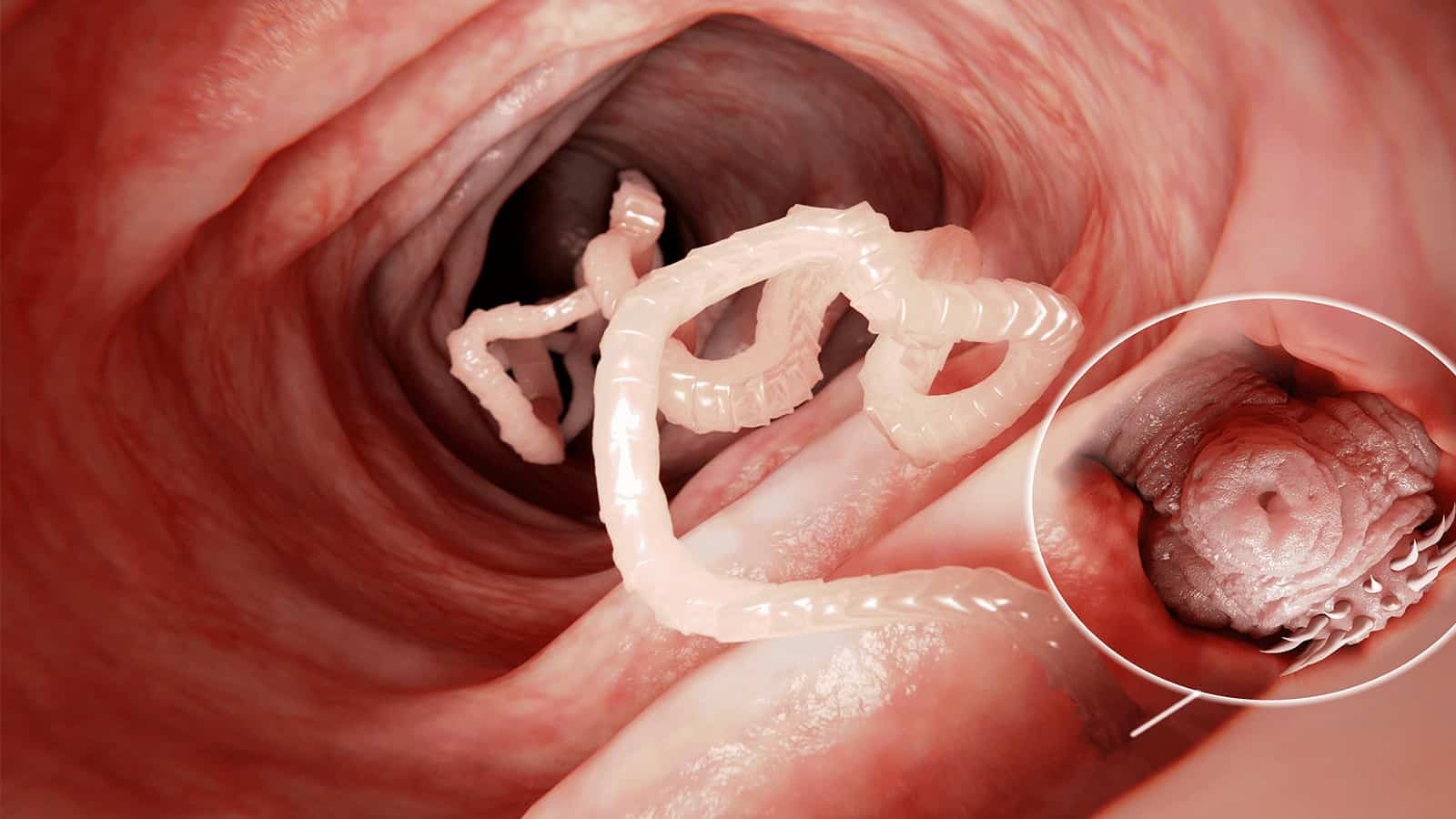
The most common cause of epilepsy around the world is from a pork tapeworm. This intruder can invade your central nervous system. The tapeworm occupies your body’s tissue, eventually building up in your central nervous system, skin, muscles, and eyes. This invasion can lead to neurocysticercosis, a severe illness that causes seizures like epilepsy.

2 – You have pain in the liver or gall bladder areas

A liver fluke is a type of parasitic worm. Liver fluke infections aren’t that common in the United States, but they do happen. You can get a liver fluke from eating contaminated, undercooked freshwater fish. If you accidentally eat a liver fluke, it goes to your intestines, where it locates in your bile duct inside your liver. It can grow more prominent in this environment. Many people have no symptoms, or their symptoms won’t show up for years. On rare occasions, liver flukes can cause bile, duct cancer, or liver stones.

3  You might feel have abdominal pain, indigestion, increased or decreased appetite

Adult tapeworms can infect your small intestine. Many times you’ll have no symptoms or minor signs thought to be related to stomach upsets, the flu, or other common stomach problems like IBS. Eating meat that hasn’t been cooked thoroughly can harbor tapeworm eggs.

4 –  You might feel extreme fatigue, fever, and headaches

These symptoms could be a sign that you have malaria. Other symptoms include nausea, vomiting, diarrhea, or anemia. Malaria is caused by the plasmodium parasite that enters your body by a mosquito bite.

The parasite affects your red blood cells causing toxins to build up that, in turn, reduces your red blood cell production or anemia. It can even block your small blood vessels in your body. Left untreated, malaria causes jaundice, coughing, shortness of breath, an enlarged spleen, or hypoglycemia.

5 – You may have excessive bloating, gas, or stomach discomfort

A tiny parasite by the same name causes giardia. It’s a common waterborne parasite in the United States. Found in streams, lakes, and sometimes public swimming pools or spas. It is occasionally transmitted through food or person to person.

Symptoms of giardia include the following:

  • Nausea
  • Weight loss
  • Fatigue
  • Watery diarrhea
  • Cramps
  • Gas

Call your doctor if you have any of these symptoms that last longer than a week.

Studies show it’s also a common parasitic infection for caregivers of children or those who swim in freshwater rivers, streams, or lakes.

 6 – You own a cat

Accidentally touching cat feces in the garden or litter box may give you a parasitic infection from the Toxoplasma gondii The Toxoplasma parasite is a single-celled parasite. It causes flu symptoms or no symptoms at all. If you’re pregnant, you can pass this infection on to your baby, which can cause dangerous side effects. If you’re not pregnant when you get this infection, your doctor may give you a drug used for malaria and an antibiotic.

7 – You can’t stop scratching your hair

Lice can live on your head, body, clothes, or pubic hair. They’re a parasite that feeds off human blood. They’re spread easily from person to person. Lice crawl, but do not hop or fly.

Symptoms of lice include:

  • Itchiness on your head, body or pubic area
  • Feeling like something is crawling in your hair
  • Finding nits on your clothes or pubic area
  • Finding little lice eggs or nits in your hair
  • Lesions on your scalp or neck

8 – You have a dog

If you own a dog, you are susceptible to getting hookworms and roundworms, both common intestinal parasites. These worms are especially common in puppies. These parasites are passed to their stools, so it’s easy to get them on your feet or hands if you’re walking barefoot or working in the yard. Little kids can accidentally ingest a hookworm if they touch their mouths.

Hookworm symptoms include:

  • Redness
  • Pain
  • Itchiness where the parasites travel under your skin
  • Both hookworms and roundworms also cause:
  • Stomach pain
  • Nausea
  • Diarrhea

Kids are more susceptible to these worms than adults since they play outside more in the dirt or sand. The best preventative is to deworm your pets and keep them up to date on shots.

9 – Your entire body itches incessantly

Mites cause scabies. The National Institute for Health reports that scabies affects people of all economic levels, but “especially the young, elderly and immunocompromised or developmental delayed are at significantly higher risk for scabies and related complications.”

Scabies is very contagious. You can get them touching an infected person’s skin, using their blankets, sheets, towels, or furniture. You can also get scabies from sexual contact with an infected person.

10 – Kids and parasites called pinworms

Not all kids get pinworms, but they are common in children. These little worms get inside your colon or rectum and lay eggs at night around the anus area. The eggs live on your bed sheets or clothing. The eggs are so small, they are often airborne and are easily breathed in. Kids tend to pass them to other children or those caring for them. Strange cases of pinworms have caused appendicitis, but it’s infrequent. Pinworm typically only causes mild symptoms. But studies found that one-third of people with pinworms had no signs.

Common symptoms include anal or vaginal itching and insomnia. Other symptoms may include:

  • Bacterial infection around the scratched areas
  • Watery diarrhea
  • Abdominal pain
  • Nausea
tapeworm

Know the early signs of a tapeworm.

11- Latin American travels

Studies show that Chagas disease caused small protozoan called Trypanosoma cruzi is exceptionally deadly for those living in Latin America, but it’s spreading even in the United States. Many people have no symptoms, but Chagas disease can lead to heart problems or life-threatening neurological and digestive problems. If caught soon enough, it can be treated, but if left too long, there is no treatment. Chagas disease is spread by a bug called triatomine bug that bites you then poops in the hole of your skin.

12 – You eat raw fish

If you eat ceviche or sushi with uncooked fish, you are susceptible to getting Anisakiasis or herring worm disease. This small worm can cause stomach pain, vomiting, fever, and diarrhea. If you get a tingling in your throat while eating raw fish, stop and cough up the worm before you swallow it.

13 – Undercooking meats

Trichinosis is a parasite you can get from eating undercooked pork, bear, or wild boar. It’s a roundworm that infects these animals then gets passed to humans if they eat the meat. The parasitic worms travel through your bloodstream and other body tissues. Symptoms are

  • Fever
  • Muscle pain
  • Headaches
  • Swelling in your face
  • Sensitivity to light
  • Chills
  • Eye infections
  • Fatigue
  • It can also give you stomach symptoms like diarrhea, nausea, or vomiting.

Trichinosis can be fatal if it’s not diagnosed quickly. If you have any of these symptoms, see your doctor immediately.

14 – Overseas travels

Depending upon where you travel, you may be at risk of getting a parasite when you go. Find out what pests are common to the area where you plan to visit. If there is a preventative measure, find out before your travels. If there isn’t a vaccine, take some precautions on your trip such as

  • Drink bottled or boiled water only
  • Wash your hands constantly
  • Avoid eating raw meat, eggs or shellfish

15- You do not wash your hands frequently

If you don’t wash your hands properly, you’re at risk. Handwashing is the best prevention against parasites. Wash your hands properly with hot soapy water after you go to the bathroom, work outside in the garden, caring for your pets, change diapers, or before preparing food. Sanitizing your hands is the number one way to safeguard your health plus prevent spreading parasites to others.

hand sanitizer

10 Hand Sanitizer and Handwashing Tips to Never Ignore

How to prevent getting a parasitic infection

Here are some basic ways to avoid a parasitic infection.

 1 – Cook your food properly

It’s recommended that you cook ground pork at 160 degrees Fahrenheit or whole pork shoulders at 145 degrees Fahrenheit. Chicken should be cooked at 165 degrees Fahrenheit, and beef should be cooked at 145 to 160 degrees Fahrenheit depending upon the cut of meat. Never sample meat until it’s cooked.

Always wash your hands with hot soapy water after touching raw meat.

 2 – Care for your pets, dogs, and cats

  • Hand washing after working in your garden or yard
  • Don’t touch cat or dog feces (or rabbit, horse, chickens, or any other critters you raise)
  • Get your animals vaccinated
  • Get your pets dewormed
  • Remove all dog or cat feces from your yard

 3 – Educate your kids about the risks

  • Instruct your kids not to eat soil or sand and not to put their hands in their mouths when playing outside.
  • Have your children wash their hands with hot soapy water when they come from playing outside.
parasitic infection

Learn how to get rid of head lice without chemical shampoos.

Final Thoughts on Catching Parasitic Infections

As with most diseases, prevention is always the best option. However, you may contract a parasitic infection despite your best intentions. If you do have any of these symptoms, seek an opinion from your doctor. A simple test can determine the next steps.

10 Natural Depression Treatments That May Be Better Than Prescriptions

Are you researching to find natural depression treatments to replace prescription medications/

If you suffer from depression, you know the ups and downs of how you feel. It can steal your motivation, your joy, and your sense of hope. Depression affects your life at every level. Today, doctors believe that some natural treatments can fight depression. Medication is the most popular treatment and sometimes the best one, depending upon your depression.

What does depression look like?

Here are some common symptoms of depression that you may experience.

  • Loss or significant change in appetite-eating too little or overeating
  • Loss of interest in life, work or social activities
  • Extreme tiredness
  • Feelings of irritation with family, friends, and co-workers
  • Loss of purpose, feeling hopeless or guilty.
  • Thoughts of death or suicide
  • Loss of joy
  • Trouble focusing
  • Everything feels like it takes a lot of work or effort.
  • Insomnia or sleeping all the time
  • Headaches
  • Aches and pains

depression treatments

Natural depression treatments

Although medications can be helpful to fight depression, there are also natural things you may try to ease the symptoms of depression. Never go off your prescription cold turkey. Talk first with your doctor. They can help you ease off the medication. Don’t try all these natural treatments at once, try one or two, then add a couple more if you feel better. If you’re feeling worse or experiencing thoughts of suicide, contact your doctor immediately.

  1. Exercise

Studies show that physical exercise is an effective way to help treat the symptoms of depression. This reasoning is valid not just because it helps your body, but it also helps your brain function better than well as release endorphins that improve your mood. You need to do aerobic exercises that pump your heart and get your blood moving. These seem to work better than low aerobic exercises, although you can mix the two. The top training to help depression include:

Cycling-Cycling is good for depression because you’re using your motor skill that keeps your brain active. Whether you use a stationary bike at your home or you are biking out on a country road, cycling is a great antidepressant. Increase the amount of time you cycle to increase your stamina and to get a full workout.

Running– Running helps depression, ADD, and ADHD. It enables you to control your thoughts, calms you down, and lifts your moods. Many runners find it helps them focus on their work and makes them more peaceful.

Aerobic exercises with machines-Using stair master, elliptical machines can rev up your exercise routine.

HILT-This cardio exercise includes short bursts of hard workouts that last only  20 to 90 seconds amid your aerobic workout.

depression treatments

  1. Keep a routine

Simple life routines can help you fight depression. Having regular times to eat, exercise, work, socialize, and sleep can bring peace of mind. It’s a simple thing to do for your mental health. Why does a routine help fight depression?

  • Routine provides a more relaxed life since you don’t have to make decisions about what to do next. Just expending the mental energy to figure out what to do next can cause anxiety. A clear, simple routine gives you peace and eases you through your day.
  • A routine gives you time within the day to rest without guilt that you should be doing something. You know your schedule; it allows you to get everything done. Rest is as vital as busyness. So having small segments of time to rest is essential for helping you fight your depression.
  • You’ll sleep better if you have a routine. Routine keeps you busy, so you’ll sleep at night. Being up and active in the day and sleeping at night is a healthy way to fight depression.
  • Routine helps you get things done. Scheduling keeps organized, so you’ll get everything done. This habit will make you feel successful and have a purpose.
  • There is a natural routine in nature that we can mimic. The sun rises and sets naturally. Seasons are predictable, flowers bloom and trees drop their leaves predictably. It only makes sense that we function well in a regular, routine way.
  1. Therapy

If you suffer from depression, consider getting professional therapeutic help so you can better deal with the troublesome symptoms of depression. Therapists are trained specifically to help people who have depression. They can teach you helpful techniques to cope with your condition. Plus, therapists are trained to listen. It’s great to have someone with a listening ear, which is unbiased and has good suggestions for you. Your insurance may cover these depression treatments, so you aren’t burdened with extra expenses. Local churches sometimes offer counseling at a low cost by professionals. You can also check out your community for other places to get free depression counseling.

  1. Yoga

When it comes to alternatives for depression treatment, Yoga is a proven means to fight the condition. Yoga means union in Sanskrit, a prominent Indian language. Yoga was established in India as a spiritual and physical meditative disciple. It involves breathing as well as exercises. It’s very popular today to improve balance and promote wellness. Yoga serves as a natural remedy for depression by:

  • Making you feel more relaxed and less stressed
  • Improving your mood
  • Soothing your mind and soul
  • Giving you exercise
  • Giving you more energy
  • Encourages deep breathing
  • Meditation can help ease depression symptoms
  1. Acupuncture

Studies suggest that acupuncture may be a helpful natural remedy to ease some symptoms of depression. There are still more studies to do on this topic, but it’s safe to say there are some noticeable benefits. Acupuncture is the use of narrow, tiny needles inserted into specific areas to stimulate your body to heal. Some acupuncture practitioners use heat and pressure, too.

antidepressants

  1. Supplements

These four supplements have been found to help with depression. Follow the directions on the labels, and don’t take all these at once. Try one supplement for a month to see if it provides relief from depression symptoms. If not, try another supplement for a month.

  •  Fish oil-Studies find that your brain is especially nourished by polyunsaturated fatty acids like omega-6 and omega-3 oils found in fish. Omega-3s may be the most helpful with potential benefits to fight depression.
  • Vitamin D-You get Vitamin D from sunshine. This natural remedy can help fight depression. Some people suffer from low Vitamin D, especially in the winter or climates where there is less sunshine year-round.
  • Folic acid- Folic acid can help improve your mood. Studies show that folate or folic acid deficiency is conventional for people with depression. This outcome makes sense since when you’re depressed your eating habits change so, you may not get adequate nutrition.
  • SAMe-This supplement helps your brain cells by increasing the serotonin levels in your brain. Studies are still ongoing to see its total effectiveness. Never mix this with other anti-depression herbs like St. John’s Wort or an over-the-counter antidepressant due to serious side effects.
  1. Support from family and friends

Having a healthy family and friends support network is essential when you’re depressed. If your family or friends aren’t supportive or feel like depression is just a simple fix, you can’t rely upon them for help. Instead, surround yourself with those people who get it. You want people who will listen and be emphatic but will encourage.

  1. Eat a healthy diet

Diet can’t cure depression, but eating healthy foods helps your body function and can help you feel better, which in turn improves your mood. Studies show that these nutrients are antidepressants:

  • Folate
  • Iron
  • Magnesium
  • Selenium
  • Omega-3 fatty acids
  • Selenium
  • Omega-3 fatty acids
  • Vitamin B6
  • Thiamine
  • Vitamin B12
  • Vitamin A
  • Potassium
  • Zinc
  • Vitamin C

Eating foods high in these nutrients are natural remedies for depression. Meditteranean diets are rich in these nutrients. Here’s a list of some of the highest antidepressant foods you can eat. 

  • Oysters
  • Clams
  • Crabs
  • Mussels
  • Octopus
  • Spinach
  • Mustard greens
  • Beet greens
  • Lettuce (red, green, romaine, swiss chard)
  • Kale
  • Chicory greens
  • Cauliflower
  • Broccoli
  • Strawberries
  • Lemon

These foods are noticeably the highest antidepressant food sources noted by NIH. Of course, you should add other highly nutritious foods such as

  • Low-fat meats like chicken
  • Beta-carotene rich vegetables like sweet potatoes or carrots or acorn squash
  • Whole grains like whole-wheat breads or brown rice
  • Berries such as blueberries and strawberries.
  1. Avoid alcohol

Alcohol is a depressant. Drinking alcohol when you’re depressed, makes your depression worse. It’s best to avoid it altogether, or if you can’t do that, to at least cut back drastically. Find ways to relax beside an alcoholic drink—mix seltzer water with wine to create refreshing spritzers without being high in alcohol. You can also buy seltzers with lower alcohol. Find activities that don’t center around drinking. Ask your friends or family to hold you accountable, to stick to one glass of wine.

  1. Faith

Studies found that having religious beliefs and practicing these may help you cope with your stress and depression. Having faith gives you meaning and hope, plus you have a group of people supporting you as you walk through the depression. Of course, having faith can’t cure you of depression, but it’s a useful tool for self-care and finding motivation in your life as you fight depression and its symptoms.

pop memeFinal thoughts on utilizing natural depression treatments in lieu of prescription drugs

All these natural remedies may help treat your depression. Remember, these aren’t cures, and if your depression symptoms get worse or you feel suicidal, contact your doctor right away. Incorporating healthy eating, exercise, and Yoga will give you enormous benefits right away. Find support from family or friends and, if possible, locate a therapist to help you walk through your depression. Take it a day at a time and enjoy each day as a new chance to feel a bit happier.

Doctors Explain That Poor Vision Reveals These 9 Health Issues

Your eyes are essential to see the beauty of nature and the face of your loved one. If you begin to experience poor vision, then it’s a cause for alarm. Many conditions can cause visual disruptions, and you need to have any vision issues evaluated immediately.

In most cases, your eye troubles are age-related and expected. It can also indicate that there’s something more malignant behind the visual changes. Here are the most common things that can cause poor vision.

1. Age

As you age, your vision will change. For some, the visual changes will be quite drastic. It’s common to require glasses to read and see things up close by the time you reach 40 years of age. Sadly, if you already had a problem with being nearside, then you will now require bifocal lenses. It’s exceedingly rare for a person to have 20/20 vision as they age.

One of the leading causes of visual changes is a loss of muscle strength in and around the eye. Eye muscle weakness will dictate how quickly your eye responds to light. The pupil is slower to react because the muscles aren’t as quick to stimulate the movements needed. Thus, your vision changes.

If you find that you are sensitive to bright lights as you age, this is a hallmark sign of a pupil that is slow to react. It’s best to have an anti-reflective coating added to your glasses, which helps to protect the eyes from lights that are too bright.

poor vision

2. Dry Eye

Numerous things can cause dry eye, and one of the biggest culprits of this condition is medications. Prescription and herbal treatments that reduce the amount of fluid in the body can affect the eyes, causing them to dry out. It’s easy to treat this condition with artificial tears.

You should keep in mind that your eye needs lubrication to function correctly. If you fight a chronic dry eye, it can cause you to experience poor vision when the eyes are dehydrated.

Another common issue that causes dry eye is sitting in front of a computer screen or being on other electronics or long periods. The bright lights from the screens tend to be drying to the eye, and you don’t blink as much when you are engaged in a game.

3. Reduced Peripheral Vision

Your peripheral vision is the ability to see to the sides. You must have this ability for driving and other activities. If you lose your peripheral vision, then it’s said that you have tunnel vision.

It’s estimated that by the time you reach 70 years of age that you have already lost more than 30 degrees of your visibility. Those who are still driving when this happens must be careful, especially with their blind spots. Thankfully, some mirrors can be added to any vehicle to help extend the visual field for your safety.

Your peripheral vision will decrease about a degree each decade, so it’s something to pay close attention too as you age.

4. Macular Degeneration

Macular degeneration is usually age-related. Unfortunately, there’s nothing that you can do to prevent this visual disturbance. Sadly, each person will experience this as they age, but there are ways to slow down the progression of this disease before you go blind.

The macula is the sensitive area within the retina, and it deteriorates as you age. Once this area degenerates, it affects the central vision. Though it’s thought of as a condition that only affects those of advanced age, it can also occur if you have experienced an eye injury that affects the retina.

In most cases, MD progresses very slowly, but there are a few cases when it happens over a period. Those who have a slow progression will notice blank spots that appear in their central visual field. Though initially, this disease will not cause you to go blind, it will eventually take your sight in later stages.

As it progresses, you won’t have enough vision to read a book or clean your house. Sadly, you will eventually lose the ability to see the face of your loved ones. MD starts with little to no symptoms, so it’s essential to have a yearly eye examination to see any changes to the central visual field.

macular degeneration

5. Cataracts

Developing a cataract is quite common in adults age 60 and older. There is a protective lens that covers your eye to filter out dirt and impurities. As this lens ages, it becomes cloudy and hard to see through. Think of it as a car window that is fogged-up from temperature fluctuations.

Lenses with protein buildup can make seeing impossible. Though you still have necessary visual abilities, you cannot drive at night, read a book, or make out the expression on your loved one’s face. These changes happen gradually, which gives you enough time to get treatment before you have poor vision that affects your daily life.

Early on, you won’t notice many changes to your site, but as the condition progresses, so does the visual problems. The lenses are foggy because of age and a protein buildup that forms on them. Sadly, these cloudy lenses are the most common cause of blindness in the world.

A surgeon can remove the clouded lens from your eye and replace it with a plastic one that allows you to see. Another option is to use sound waves to break up the protein layer and suction if from the lens. If you leave this condition untreated, it will cause complete vision loss.

6. Diabetic Retinopathy

Your blood sugar levels need to stay around 100 to 125 mg/dl. When your blood sugar consistently stays over 140 mg/dl, nerve damage occurs within the body. One of the major areas affected by high glucose levels is the eyes.

Diabetic retinopathy is a condition caused by high sugar levels in the body. The nerves in the eyes become damaged. The most common symptom of this condition is blurry vision, though you may experience dry eye too.

In some cases, the problem is temporary as sugar levels are too high and causing the eyes to react. However, if the glucose is left too high for too long, then the damage can become permanent. The first stages of diabetic retinopathy cause little to no symptoms, but eventually, it will progress to complete blindness.

With this condition, the body gives subtle warnings that your visual fields are being affected by the high sugar levels. Thankfully, if you heed this indication, you can reverse the problem and restore your sight. It’s estimated that there are more than 34.2 people in this country with Type 2, and over eight million individuals don’t know they have it.

It’s imperative to pay attention to any visual changes in your eyes, especially if you are at a high risk of developing Type II. Things that can increase your likelihood are obesity, family history, and a poor diet.

losing weight

Here are seven hidden reasons why you are struggling to lose weight.

7. Floaters and Flashes

It’s completely normal to have floaters or flashes occur in your field of vision. The fluid that surrounds the eyes can get various debris in them as you age. The floaters you are seeing are merely shadows of that debris in the eye’s fluid.

Keep in mind that about 99 percent of the time, these nuances are harmless. However, an abnormal amount of this activity type can indicate a detached retina, which is a severe condition. A detached retina can cause poor vision or a complete loss, but floaters and flashers don’t cause such issues.

8. Glaucoma

When abnormally high pressure exists in the eyes, it causes damage to the optic nerve. This damage is known as glaucoma. This disease may not produce any symptoms, or you may have tunnel vision or blind spots.

If not treated, glaucoma causes complete blindness. Even those that do have treatment will likely lose their sight as time goes by. There are strong genetic links to this visual disturbance, so if it runs in your family, then it’s best to be checked.

9. Retinitis Pigmentosa

Retinitis Pigmentosa or RP is a hereditary condition that affects the retina inside the eye. The light-sensing cells within the eye become damaged, and the retina will slowly deteriorate. There is no cure for RP, and it affects more than one out of every 4,000 people.

Folks with RP usually notice changes to their colored vision and are disturbed by bright lights. Eventually, the entire visual field will be affected. RP almost always causes complete blindness, and no treatment is known to slow the progression.

poor visionFinal Thoughts on Identifying the Causes of Poor Vision

Do you know what is considered normal visual changes as you age and what’s regarded as a cause for alarm? It’s common to have some changes as the body grows older, but some things are worrisome.

The best way to combat any vision problems is to have your yearly eye exam, especially as you age. Any changes that are troublesome to you need to be evaluated immediately. Putting off these matters can cause poor vision and blindness.

In some cases, the body is trying to tell you about an underlying problem, such as high glucose levels. Your prompt attention can save your sight and your life in these instances.

Skip to content