Weekly tips, affirmations, and small actions to feel your best.

Doctors Reveal Why You Should Never Ignore Blood in Stools

Nobody likes to think about observing their excrement after they’ve used the bathroom. However, being aware of what’s normal and what’s abnormal for you can serve as a valuable warning. You should especially notice when you have blood in your stools.

For some people, the blood may appear as a red tinge in the feces or the toilet. However, it can also be internal blood that makes your stools as dark as tar. You may also experience bright red smears on your bathroom tissue when cleaning yourself.

People are usually sensitive and embarrassed about talking about issues that deal with their colon or bowel movements. The Canadian Society of Intestinal Research states that it’s normal for people to have up to three bowel movements a day. However, some people are okay with three times a week, per the article.

Gastrointestinal Conditions That May Cause Blood in Your Stool

blood in stoolsIf you notice blood in your stool or on your bathroom tissue, you shouldn’t ignore it. Your body is giving you a warning that you should heed. Here are some common gastrointestinal conditions that may cause you to have blood in your stools.

1. Hemorrhoids

According to an article from the US Library of Medicine, you can experience bleeding from your bowels when your rectum or anal veins become inflamed. Hemorrhoids can be either external or internal. If you have a sedentary job that requires a lot of sitting, you may be a prime candidate for the condition.

People who battle chronic constipation can strain too much while passing stools, affecting veins in the anus and rectum. It’s also common for expectant mothers to have excess pressure on their rectal veins, resulting in hemorrhoids. Blood in your stools from hemorrhoids is usually bright red, and you may notice it in the feces or on the bathroom tissue.

The condition often causes itching and painful swelling that makes sitting or going to the bathroom difficult. Hemorrhoids are often more of a bother than an extreme medical issue. However, abnormal bleeding or severe pain may require medical attention. Some people need surgery to remove painful hemorrhoids.

2. Anal Fissures

If you have bowel problems, the skin around your anal area is delicately thin and sensitive, says an article published by The National Center for Biotechnology Information. For these reasons, anal tears (also called fissures) are common for both children and adults. The article explains that these superficial tears develop around the anus due to chronic constipation or an acute accident.

Anal fissures are among the most common reasons for emergency room visits because of bleeding or blood in your stools. Fortunately, this condition can be treated with medical management. Sometimes, more serious tears may require surgery.

3. Peptic Ulcers

Did you know that ulcers can cause blood in your stools? A study published by the National Library of Medicine states that at least 5 million people in America have been diagnosed with peptic ulcers. An overload of digestive acids can eat away holes in the lining of the stomach or small intestines, resulting in this diagnosis.

Not everyone with peptic ulcers is symptomatic. However, most patients can experience stomach pain, bloating, nausea, or vomiting. Another common symptom is dark, tar-like blood in your stools.

Internal bleeding from peptic ulcers can cause anemia, and it can lead to a life-threatening loss of blood without medical intervention.

4. Diverticulitis

Experts aren’t sure what causes diverticulitis, which is an inflammatory condition of the colon. An article published by the National Institute of Diabetes, Digestive and Kidney Diseases explains this condition as small sacs protruding from weak spots in the colon wall. When these become inflamed, it becomes diverticulitis.

While the article says that most diverticulitis patients are asymptomatic, others experience severe abdominal pain, diarrhea, and constipation. The condition can cause blood to enter the bowels, causing the stool to be dark red in appearance. In these rare instances, patients may require surgery.

5. Gastroenteritis

Have you ever experienced an episode of painful gastroenteritis? It’s what people mistakenly call the “stomach flu.” In an article published by the National Institute of Diabetes and Digestive and Kidney Diseases, experts explain that gastroenteritis is caused by a virus attacking your intestines. Therefore, it technically involves the intestines and not your stomach.

However, it can cause acute symptoms like abdominal pain, nausea, vomiting, and watery stools. Gastroenteritis is caused by norovirus and is a common condition. In fact, according to the report, it affects about 21 million people each year.

Gastroenteritis may also cause acute blood in your stools. If you have flu-like symptoms and notice bloody clumps in your feces, you should immediately get medical attention. The medical staff can rule out other disorders that may be causing your bleeding.

6. Irritable Bowel Syndrome

Have you been diagnosed with irritable bowel syndrome? The International Foundation for Gastrointestinal Disorders defines IBS as occasional abdominal pain associated with diarrhea, constipation, or all three. While the disorder’s cause is still undetermined, the article mentions that some experts believe it could be genetics, infection, or trauma-related.

IBS often causes constipation, which can cause straining and blood in your feces. It’s an alarming symptom that you should report immediately to your healthcare specialist. Everybody is different, so it’s best not to take chances on your health.

Hemorrhoids7. Ulcerative Colitis

Another condition that may cause blood in your feces is ulcerative colitis. According to an article from Crohn’s & Colitis Foundation, ulcerative colitis is an autoimmune disease that causes your colon to become inflamed. The result of chronic inflammation is small ulcers throughout the lining of your large intestines.

Some of the ulcerative colitis symptoms include abdominal pain, diarrhea, and possibly blood in the stool. When you have open sores (ulcers) in your colon, it’s understandable that they can become irritated and bleed.

8. Colorectal Cancer

Do you have periodic screening for colorectal cancer? The American Cancer Society provides annual statistics for the disease. Current figures from the organization say that at least 104,610 new colon cancer cases were reported this year in the United States. Also, 43,340 new cases of rectal cancer were reported.

The good news from the statistics is that these numbers have dropped since the 1980s because of early screening/detection and lifestyle changes. Many patients report symptoms like a change in bowel habits, abdominal pain, bright red rectal bleeding, and dark brown or black stools.

9. Gastrointestinal Bleeding

The National Institute of Diabetes, Digestion, and Kidney Diseases defines gastrointestinal bleeding as losing blood anywhere in your digestive tract. The article says that it’s a symptom of another disease and isn’t categorized as a disease itself. You can be bleeding from your upper digestive tract (upper GI) or lower part (lower GI), explains the source.

One of the tell-tale symptoms of gastrointestinal bleeding is dark, tarry stools. Patients may also experience abdominal cramps, exhaustion, dizziness, and bright red blood in their vomit. The article also explains the dangers of occult bleeding, or hidden blood in the stools that only a lab test can detect.

10. Polyps

Polyps are small growths usually found in the large intestines and colon. They are of particular concern when you have a colonoscopy screening for colorectal cancer. A study published by the American Gastroenterological Association states that it’s common for small rectal polyps to cause minor bleeding. While the article says that younger patients with no colorectal cancer history usually have benign polyps, they still merit an examination.

Larger polyps are usually of more concern as they carry a more significant chance of being malignant. Routine examinations are essential to keep polyps removed and any further issues under control.

How Often Do You Need a Colorectal Screening?

The American Cancer Society has guidelines for when and how often you should have a colorectal screening. The agency suggests that screening should start at the age of 45 if your risks are of an average level. Normal risks include not having a personal or family history of cancerous polyps or colorectal cancer.

They recommend that you have a stool sample test annually to check for occult bleeding. It would be best if you had a colonoscopy every ten years. If you have a personal or family history of colorectal cancer, the screening guidelines vary according to your case.

However, you mustn’t avoid these tests simply because of the inconvenience, as they have saved many lives. Additionally, severe bleeds from the inside can also be detected on many blood tests, specifically ferritin levels.

blood in stoolsFinal Thoughts about Blood in Your Stools

While it may be normal for some conditions to cause blood in your stool, it’s important not to ignore it. The bloody feces may be a sign of an underlying issue that can be serious. If you notice any signs of this type of bleeding, consult your primary healthcare provider as soon as possible.


15 Habits That Reveal Someone Is An Overthinker

Most people are familiar with “The Thinker,” which is the iconic statue of a man poised in deep concentration. We wonder if he is contemplating a simple task or debating a life-altering decision. Perhaps he is one of the countless examples of an overthinker plagued with worry.

Advanced thinking and reasoning are two of the abilities that separate us from the animal kingdom. You need your thought processes for self-preservation and quality life. When you start to second-guess yourself and rumination takes over your life, it becomes a severe issue.

It’s normal to go on a trip and suddenly wonder if you turned off the stove or locked all the doors. Have you ever gone back to the house to recheck everything and set your mind at ease? You are not alone in doing so.

Fyodor Dostoevsky, the famous Russian novelist, once said that overthinking is like a disease, and he was on the right track. Chronic overthinking is often one of the main symptoms of anxiety and obsessive-compulsive behavior or OCD. Mental health professionals say that these disorders can range from mild to debilitating.

overthinker

Habits of an Overthinker

Has anyone ever told you that you think too much? While critical reasoning skills can advance your knowledge and teach you new things, too much thinking can paralyze your life. If you are an overthinker, the constant worry can erode your self-confidence.

When you chronically doubt yourself and second-guess every decision you make, it can ruin even the most pleasant experiences. Over time, your rumination can lead to depression and pessimism, which can sour relationships with friends and loved ones. The more you overthink, the less you can relax and enjoy anything.

You needn’t let these negative thought patterns develop into more serious mental conditions. Once you recognize you have a problem, you have taken the first step toward a solution. If you have some of these 15 habits, you may be an overthinker.

1. You Are a Perfectionist

While most people try to do their best at whatever they do, perfectionists want even more. They often put unrealistic expectations on themselves and others. Unfortunately, these people have difficulties getting things done because they demand perfection.

Is this a familiar scenario for you?

If you are a perfectionist, anything you do puts you on edge, and you can never be satisfied with the results. Your unreasonable demands may put a strain on relationships at work or home.

2. You Have Difficulty Prioritizing

Someone wisely observed that if we make everything a priority, then nothing is important. Have you ever been around people who are in a perpetual storm over the smallest things? These drama-mongers are usually so wrapped up in trivial matters that the urgent ones get swept under the rug.

When you are an overthinker, your ability to prioritize tasks and problems is stymied. You may feel so overwhelmed with daily events that you can’t struggle to stay afloat. You may feel like your energy is drained because you often use it all on things that don’t matter.

3. You Often Feel Paranoid

Remember the old wives’ tale that warned if your ears are itching, someone is talking about you? While you probably dismiss this saying as absurd, you may still think people are dissing you behind your back. Paranoia can distort your sense of reality and make you distrustful of everyone around you.

4. You Hold Grudges

Since the Middle Ages, to forgive and forget has been deemed a virtue. While you can’t forget offenses, you do have the power to forgive the offender. Or, maybe you are a person who ruminates over past hurts and holds a grudge as vindication.

For the overthinker, hurtful events from the past play in an ongoing loop in their brain. When you cling to a grudge, every remembrance keeps the wound open and sore. Only when you can focus on forgiveness can you get past the pain and walk into healing.

5. You Spend More Time Thinking Than Doing

Have you ever watched a dog chase his tail? He may try to run faster, but he ends up going in circles, and his efforts are in vain. Such are the efforts of people who are so busy thinking that they don’t get anything accomplished.

If you are a tail-spinner, your feelings of perfectionism and loss of prioritizing add fuel to the fire. Of course, you should plan and make wise decisions. However, you must learn to trust your decisions and act on them, even if you do make mistakes along the way.

quote

6. You Like to Toot Your Own Horn

Overthinkers often get their ego wrapped up in their skewed thought processes. Although the egotist appears abundantly self-confident, it is a ruse meant to hide poor self-esteem. To continue this illusion, these people feel the need to overplay their achievements.

There’s nothing wrong with being proud of a job well done, and you needn’t feel guilty to accept praise from others. However, your achievements should prompt you to do more instead of just revel in what you’ve done in the past. Overthinking success doesn’t guarantee it in the future.

7. You Constantly Analyze What Others Say

Part of being a skilled listener is to think about what the other person is saying to you. It enhances your communication, and there are fewer chances of a misunderstanding. However, you do yourself and others a disservice when you analyze each word with paranoia.

You may be missing a fruitful conversation if you are forever dissecting every sentence, looking for a hidden meaning. When you are overly critical and mistrusting, you often assume that people are badmouthing or making fun of you in their conversation. If this continues, you may stop interacting with others and become isolated.

8. You Are a Pessimist (classic overthinker trait!)

By observing the weather patterns, you realize that every day can’t be gloriously sunny. Likewise, it’s unrealistic to think that every situation in your life will be positive. It takes both sunshine and rain for the earth to flourish, and the same goes for life.

However, this principle doesn’t give us a license to be negative about everything. Instead of learning and growing from past hurts and disappointments, some people become bitter. Have you unknowingly become a pessimist and assume the worst?

overthinker

9. You Are Impatient With Responses

We live in a world that demands instant gratifications and responses. When you call friends or family, you may expect them to answer by the second ring, or at least call back as soon as they get your voicemail. As soon as you hit the send button on an email, you might want the recipient to read it immediately and send a response.

Such impatience can be a sign of overthinking. Is the reason this person hasn’t called or emailed you right back because you offended them, or they don’t like you? Here is another instance of self-doubt getting in the overthinking mix.

10. You Are Hounded by What If and If Only

We’re all guilty of playing out the what-ifs and if only scenarios. Part of our brains have difficulty letting go of past regrets. Like many people, you may find an unexplainable comfort in re-scripting past conversations and events.

11. You are Stuck In the Past or the Future

Someone once remarked that depression is ruminating over the past, while anxiety is fretting over the future. When you are caught in this unhealthy mix, you are missing out on the present. Your mind is too busy with regrets and unfounded foreboding that you can’t enjoy what is before you now.

12. Mistakes Constantly Replay in Your Mind

When you consider the golden rule conversely, you should treat yourself as well as you treat others. Would a true friend or loved one constantly throw the past up in your face? You may be sabotaging your self-esteem when you refuse to let go of your past failures and mistakes.

13. You Don’t Sleep Well at Night

Aside from medical issues, many people complain that they can’t sleep because their brains won’t let them. Are you frazzled through the night by the constant chatter in your head? Perhaps you are replaying the events of the day with regret, or you are staging tomorrow with pessimism and anxiety.

14. You Dwell on Things You Can’t Control

In the beloved Serenity Prayer, people ask for the peace to accept things they can’t change, and that’s often difficult. Overthinking situations that are beyond your control just drive up your anxiety and frustration levels.

15. You are Afraid to Stop Thinking

Being an overthinker gives you a false sense of responsibility for everything. You may feel that if you don’t figure out every situation and provide input, then nothing will go right. It’s a relief when you realize that nobody has that power, and the world won’t stop revolving if you rest your brain.

pop memeFinal Thoughts on Being an Overthinker

There is such a concept as too much of a good thing, and thinking is one of them. If you see yourself in these warning signs, it may be time to re-evaluate your thinking habits. Save your brain energy to use in a more positive way.

Trainers Reveal a Dumbbell Workout for Toned Arms and Shoulders

Wouldn’t it be nice to have muscles like Van Diesel or Linda Hamilton? Undoubtedly, they put in hours of labor and dedication that is required to get their bodies into shape. While genetics can play a part in your muscular build, you will not get anywhere without hard work and a proper diet. A dumbbell workout can be your ticket to toned arms and shoulders.

It’s easy to be fooled into thinking that you can only develop muscles by going to a gym every day or investing in some expensive equipment and long hours of labor. The truth is that you can do some serious sculpting by using a pair of dumbbells you pick up at your local department store and blocking off 15 minutes.

You will see a big difference in your biceps and triceps by just doing an arm routine a couple of times each week. If you want to tone your arms, have 15 minutes to devote to this simple workout, and have a pair of dumbbells, you can have the muscles you desire.

14 Dumbbell Exercises to Tone Your Arms and Shoulders

dumbbells

Below is a list of the 14 most beneficial arm exercises. Select six of these for your workout, and you will need to do them in reps of 8-12.

When you do three to four sets of the exercises you select, you will see a difference in a short period. Here are your choices.

1. Triceps Kickback

Select the weight of your choice. Stand up straight with your feet spread about 12 inches apart. Your knees should be slightly bent and grab a dumbbell in each hand. Your elbows need to be at a 90-degree angle by your side.

Lift the dumbbells up and down, squeezing your triceps hard each time you straighten your arms. You should feel a burning in your arms if you’re doing this lift correctly.

2. Rear Delt Fly

With your hips spread apart and your knees bent, grab a pair of dumbbells. Your arms should hang downwards with your palms facing outward. Raise your arm out to the sides and up and down, making a “W” letter with your movements.

Each time you move the dumbbell, squeeze the blades of your shoulders tightly together. This is one repetition, and you will need to repeat it for 8-12 more times.

3. Overhead Triceps Extension

Take a weight into each hand and lift it over your head. Your arms must remain straight, and your feet should be spread about 12 inches apart. Your arms should be near your ears as you focus on keeping your hands on the top of the bar.

You want to lower the weight behind you in slow motion, so bend your elbows and straighten them back and forth to do this weightlifting exercise. Lifting up and down 8-12 times is one repetition.

4. Biceps Curl

The bicep curl is the most known of all the lifts. Stand with your feet about 12 inches apart and have a dumbbell in each hand at your sides. Make sure your back is straight, your chest is upright, and your palms are facing forward.

It would be best if you moved the dumbbells up and down without moving your upper arms. Bend your elbows as you curl the weights towards your chest. Lifting up and down is considered one repetition, and you need 8-12 to finish this task.

bicep curl

5. Stoop Lunge with Biceps Curl

You’re going to do the same thing you did for the bicep curl, except that your feet won’t be standing 12 inches apart during the repetitions. You want to bend your knees and slowly lower your body almost to the floor. Do the right knee forward and then the left.

You should do 8-12 repetitions for the right and then for the left to get the toned arms you desire.

lunge with bicep curl

6. Plié Squat with Biceps Curl

Stand straight with your feet at about 12 inches apart, while your toes point outwards to a 45-degree angle. Hold one of the weights in each hand. Now, breathe in profoundly, bend your knees, allow your hips to sink a bit, and get your thighs parallel with the flooring.

Lift the weight like you do in the bicep curl and squeeze those muscles for defined shoulders. As you exhale, bring your heels back to where you started while you straighten your arms.

7. Lying Overhead Triceps Extension

Rather than standing, you need to lie on your back for this exercise. Keep your knees bent; your feet should be firmly planted on the floor. Hold one of the weights in each hand while extending your arms over your shoulders.

You must ensure that your palms face each other for this task. Bend at the elbows as you slowly bring the weights down to the floor. Rotate by bringing them from the floor to the temples of your head. Each lift counts as one repetition, and you need 8-12 to complete.

8. Upright Row

Stand up straight with your feet about 12 inches apart. Your arms must be resting in front of you with a weight in each hand. Slowly raise the weight to your chest and then lower it back down to the waist area.

Pay attention to the biceps and squeeze to define shoulders.

upright row with dumbbells

9. Weight Floor Press

Lay on the ground and keep your knees bent and feet flat. Your feet should be about 12 inches from your rear. Extend your arms over your shoulders while holding a weight in each hand. Your palms should be facing each other during this lift.

Bend your arms and then release them to your sides, allowing your triceps to touch the floor. Your elbows must remain at a 45-degree angle. Now, reverse your movements and go back to the beginning.

10. Alternating Weight Floor Press

Again, get into the lying position, keeping your knees bent and feet flat on the floor. With a weight in each hand, lift them with both arms up over your head. This lift will help give you defined shoulders.

Make sure your palms are facing each other, slowly bend your left arm, and lower it to your side. Your left elbow should touch the ground. If you’re doing this lift right, your upper arm will be a perfect 45-degrees with your body. Now, reverse the movement and do it again.

11. Triceps Dips

Do you want toned arms? Well, set aside your weights and grab a chair. Your hands should be resting on the weights, and your fingers must be pointed toward your toes.

Slowly lift your butt off the ground by about six inches. Make sure you keep your arms straight and your elbows bent until you touch the ground. Push yourself back up to start again as this is one repetition.

12. Write Your Name

Sometimes the most straightforward exercises have the most significant impact. In this lift, have a weight in each hand and extend your arms out until they’re at chest height in front of you. Now, write your name with the weight in the air.

It sounds easy, but it’s a bit trickier. You will feel the burn with this one. Each letter in your name counts as one repetition.

13. Single-Arm Weight Floor Press

In the lying position, bend your knees and place your feet firmly on the floor. Please pick up a weight with the right arm and lower it until it almost touches the ground. Make sure to keep your form at a 45-degree angle while lifting.

Now, reverse your movements and do the left arm. Lifting up and down on each side counts as one repetition.

14. Plank with Biceps Curl

The bicep curl is the basis for many of these lifts. Now, get into the plank position where you have the weights in your hands resting on the ground. They should be aligned beneath your shoulders.

Your center core and hips must be stable. Next, bring the right weight up to your shoulder and lower it back down, keeping firm control the entire time. Do one of these lifts on the left and then on the right to count as one repetition.

dumbbellsFinal Thoughts on How Toned Arms + Defined Shoulders Await You as You Master a Dumbbell Routine

Do you feel the burn? You don’t need to invest a ton of money in a gym membership or spend loads of time to get the defined biceps and triceps you desire. I’ve seen people from all walks of life bulk up by just incorporating a few simple weightlifting moves into their weekly schedule.

Finally, you can tone and define as well as bulk up those arms. Don’t you want to have muscles that make people stop and look a second time?

10 Causes of Groin Pain That Most Men Ignore

Several studies show that a large percentage of men in America are struggling with some form of groin pain that impacts their day-to-day life. And there is a plurality of things that can cause this excruciating pain, some of which include muscle strain, bursitis, fractures, and hernias.

Additionally, groin pain can stem from inflammation and other conditions that negatively affect the testicles and scrotum. While this type of pain can affect all men, regardless of age or activity level, it is especially common among athletes.

According to the American College of Sports Medicine, a U.S.-based nonprofit comprised of sports medicine physicians, practitioners, and scientists, groin pain is not uncommon among athletes, especially those who play sports that entail kicking, rapid acceleration or deceleration, and quick directional changes. Some of the activities that can put men at risk of developing groin pain include soccer, baseball, football, and hockey.

Although women can develop groin pain as well, it is far more common among men.

groin pain in men

What You Should Know About Groin Pain Among Men

Now that we have a better understanding of how groin-related pain can impact a man’s health and overall quality of life let’s delve deeper into how this excruciating pain starts to develop in the first place. According to most physicians and physical therapists, the most common cause of groin-related pain is a muscle, tendon, or ligament strain, which, coincidentally, occurs quite frequently among professional and amateur male athletes.

To put this into context, a study published by the National Institutes of Health revealed that groin injuries make up 2 to 5 percent of all sports-related injuries. Pain in the groin resulting from a muscle, tendon, or ligament strain can set in immediately or can come on gradually, sometimes over several weeks or months.

Also note that the pain can intensify with continued activity, according to the American Medical Society for Sports Medicine (AMSSM). This organization promotes and integrates science-backed research, education, and practical applications relative to sports medicine and exercise science. For that reason, athletes should forgo playing sports until after they have healed from such an injury.

10 Causes of Groin Pain That Most Men Ignore

All too often, men will ignore signs that point to problems with their groin until they are in a great deal of pain, which can make matters worse. The same is the case for less common causes of groin pain, such as hernias and kidney stones, for example. Pain felt in the groin can also, indirectly or directly, stem from the following:

1. Bursitis

In most cases, bursitis is the result of a repetitive injury, such as those caused by repeatedly throwing a baseball, football, or other objects, which, over time, triggers inflammation. While bursitis usually forms in the shoulder, it can occur in other parts of the body, including the elbows, hips, knees, and heels of the foot. Bursitis that triggers pain in the groin usually occurs when the bursa, the groin side of the hip, becomes inflamed. Generally speaking, individuals with this type of bursitis often complain of pain in their hip; however, this is usually a case of referred pain since the source of the pain is, in reality, coming from the groin. Some of the more common signs of bursitis affecting the groin include

  • Decreased mobility
  • Pain that worsens with movement
  • Excessive swelling or redness

All in all, if you’re experiencing hip pain after playing sports or other engaging in other forms of physical activity, it would be a good idea to be seen by a physician to determine whether or not the pain is related to a problem involving the groin.

2. Hydrocele

Pain in the groin is sometimes a byproduct of inflammation or injury involving the scrotum. Signs of hydrocele include fluid buildup in the thin sheath that surrounds the testicles, which ultimately results in the scrotum becoming swollen and feeling unusually heavy. Initially, hydrocele is usually painless; however, as the swelling continues, severe pain can start to set in.

3. Kidney Stones

Although a painful groin and kidney stones may not seem correlated, the two often go hand-in-hand, according to a study published by Harvard Health Publishing. Kidney stones, which are are hard deposits comprised of minerals and salts that form inside of the kidneys as a result of a poor diet, excess weight, and other factors, can cause lower back pain that is sometimes felt in the groin as well. Along with back pain, additional signs of kidney stones can include the following:

  • Abdominal or groin pain
  • Pain radiating from around the ribs
  • A burning sensation while urinating

4. Avascular Necrosis

You probably never heard the term avascular necrosis. However, it is a medical condition that destroys bone tissue as a result of poor blood circulation and is usually a byproduct of long-term use of steroidal medication or excessive alcohol consumption.

Along with increasing the risk of bone fractures, this condition can also cause pain in the groin, not to mention the thigh, buttocks, and other parts of the body. Avascular necrosis is particularly common among individuals between the ages of 30 and 50.

Although not overly painful initially, the pain associated with avascular necrosis often intensifies and can eventually result in mobility problems if not treated. For this reason, it is best to see a physician as soon as possible if you suspect that you may have developed avascular necrosis.

cloudy urine causes

Here are ten things that can cause cloudy-looking urine.

5. Urinary Tract Infections

While urinary tract infections (UTIs) are more common among women than men, they can cause groin-related pain in men who do develop them, which is an estimated 3 percent of men around the world, according to current data.

When it comes to men’s health, along with groin-related pain, UTIs can cause kidney damage and infertility if not treated. Some of the most common signs of UTIs in men, much like those in women, often include

  • Dysuria, or painful urination
  • A frequent need to urinate
  • A burning sensation while urinating
  • A slow urine stream

6. Swollen Lymph Nodes

Swollen lymph nodes can be indicative of several problems involving men’s health, such as ear infections, strep throat, and mononucleosis. They can also point to issues involving the groin. Aside from cancer, swollen lymph nodes are a byproduct of an infection caused by bacteria or viruses.

And they can form on various parts of the body, such as the neck, armpits, and the groin. Because swollen lymph nodes are associated with numerous mild to severe health problems, it is best to be seen by a physician if you develop them.

7. Tendinitis

Also commonly referred to as tendonitis, tendinitis is a medical condition characterized by inflamed tendons. In most cases, tendinitis occurs following an injury, which explains why it is so common among professional and amateur athletes.

Groin tendinitis, specifically, occurs when the adductor muscles, the ones in the highest part of the groin, become damaged and inflamed. It is worth noting that tendinitis can also impact the thighs, fingers, elbows, wrists, and other parts of the body.

In some cases, tendinitis will go away on its own within 2 to 4 weeks; however, if the pain persists beyond this point, it would be a good idea to schedule an appointment with a physician.

tendonitis tendinitis

Learn about tendinitis, tendonitis, and the differences between the two.

8. Testicular Torsion

As the name might suggest, testicular torsion is a condition that causes the testicles to rotate, which leads to the spermatic cord, which supplies blood to the scrotum, becoming twisted. In short, testicular torsion restricts blood flow to the scrotum, which, in turn, causes pain severe and swelling. If left untreated, the condition can cause significant damage to the testicles, which could lead to them having to be surgically removed to prevent further complications.

9. Varicocele

Self-examination is one of the best ways to detect health problems before they can spiral out of control. And this also includes the genital area. A self-examination can quickly reveal to men whether or not they have varicocele. For those unfamiliar with this condition, it is one that causes the veins in the scrotum, which contains the testicles, to become enlarged. According to Johns Hopkins Medicine, an estimated 15 percent of men will develop varicocele, which often triggers mild to severe pain.

10. Scrotal Masses

During a self-examination, it is also a good idea to check for scrotal masses. As the name might suggest, these are abnormal growths that appear on the scrotum. Men who develop this condition may notice a buildup of fluid in their scrotum. It may also become swollen and inflamed. Although scrotal masses seldom cause pain, they can sometimes be cancerous. Therefore, they should not be ignored if they are observed while performing a self-examination.

prostate cancerFinal Thoughts on Men Dealing with Groin Pain

In summary, many health problems can contribute to groin pain in men. And in some cases, the pain felt can be a sign of something serious. That said, the best way for men to stay on top of their health is by performing self-exams and scheduling routine health screenings with a licensed physician.

10 Red Flags That Reveal Your Partner’s Telling You a Fib

One of the foundations of any relationship is trust and honesty. Unfortunately, many people don’t have an honest partner and are left to decipher if what they are being told is the truth.

If you have a hard time deciding whether or not to believe your partner, then you need a few tips to help you. Here are ten red flags that can reveal that your significant other is telling you a fib.

10 Signs Your Partner is Telling a Fib

Here are ten red flags that reveal a fib.

fib

1. They Won’t Look You in the Eye

The most significant indicator that someone is lying to you is that they won’t look you in the eye. They always say that the eyes are the window to the soul, so you can tell that their soul is not right if they can’t even look at you directly.

Whether it’s a little fib or a big lie, people often avoid eye contact. They will look off to the corner or even look at the ground. If you see them avoiding looking at you head-on, then ask them to look you in the eye and tell you the truth. You might see their house of cards tumble right before you. A liar doesn’t like confrontation.

2. They Sweat as They Fib

For some reason, the body tends to sweat when it’s under duress. Telling a fib is just the type of stress that causes the body to react. Experts believe that cortisol levels rise when someone is facing a fearful situation, and this hormone activates the fight or flight response in the body.

You may see sweat beading upon their forehead, or it may also drop from their hands. Depending on how big the lie, they may drench themselves. It all depends on their level of guilt and how their body reacts to the line they are feeding you. Anyway, if they start sweating when they are telling you a story, then it’s hot, or they are fibbing.

3. They List Character Witnesses

One of the first things that people do when they are caught is that they attempt to get others involved. Your partner may name ten friends that you can call for a witness. These friends probably know nothing about the situation. They are just fillers in the conversation to make their story look more believable.

If you were to ask for the number to one of these friends, then the entire story may change. If your partner tries to lie to you and give you a list of buddies that you can call to verify, then ask for specific information and call their bluff. Watch them sweat when you want telephone numbers and last names. If they eagerly give them to you, then they are probably going to have them cover, or they are not telling a fib after all.

relationship

4. They Can’t Sit or Stand Still

If you’ve ever observed a child when they are lying, they are often fidgety. They can’t sit or stand still because they know inside that they are doing wrong. When your partner is telling you a story, you may notice that they have a hard time staying still.

The twitching and moving back and forth is all caused by nervousness and anxiety. They know they are feeding you a line of bull, and the thought of telling you the truth is scary. It could cost your relationship, or you may find that they cheated. They fear what may happen If and when you find out what’s truly going on.

5. They Use Avoidance Techniques

If you ask your partner over and over about something and they refuse to answer, it could be that the truth is too hard for you to handle. Avoidance is an excellent way to tell if someone is lying. They may try to redirect the conversation to other things.

If it’s a text message communication, they could avoid the topic altogether. They may give you a blanket explanation and then never want to talk about it again. If you bring up a question that you feel needs to be discussed, and they shut you down, it’s something that needs to be investigated.

6. The Story Has Holes in It

If you’ve caught your partner before in lies, then it’s likely that you can spot the holes in their story early on. Look for any inconsistencies or things that point to deception. For instance, they may say they were out with a particular friend and then slip another name because they forgot who they told you they were out with that evening.

A fib can have as many holes in it as Swiss cheese, so you must learn to decipher every word they say, especially if they have a long history of being dishonest with you.

7. Their Voice Sounds Strange

When someone is not telling the truth, their heart can race, and the anxiety can make their voice crack or sound different. Have you ever run up a hill and lost your breath? Well, being in a state of angst can make you feel as if you’ve just run in a marathon.

If you notice that your partner is having a hard time getting the story out, their voice is cracking, or they are short of breath, then these are all signs that point to anxiety. It’s time to do some detective work if the conversation makes them this uneasy because they are indeed hiding something.

8. They Turn on the Waterworks

Women tend to use tears more than men, but men are not afraid to cry when they might lose something or someone they love. If your partner overspent on the credit card or cheated on you, then they may turn on the tears to try to get into your good graces.

Men and women alike have learned how to manipulate one another through emotions and body language. Women tend to be able to turn on the tears quicker than most, but they have learned over the years that male counterparts almost always fall for them. If your partner is quick to turn on the waterworks when they are confronted about something, then you might want to tell them to stop the drama because you want the truth.

phrases of a liar9. They Have a Panic Attack

You already know that anxiety can play a big part when someone is telling a lie. Lie detector tests measure the breathing and heart rates to determine if someone is dishonest. Thankfully, you can quickly understand without a machine.

Someone who is trying to tell a false story could have a full-blown panic attack. An anxiety attack can have symptoms of the following:

•Impending Doom
•Feeling as if they are going to pass out
•Difficulty breathing
•Choking sensations
•Nausea and vomiting
•Sweating
•Lightheadedness/Dizziness

All these sensations can be signs that they are trying to avoid telling you the truth, or they have fed you one big lie. It’s up to you to decide whether they are telling you the truth or using dramatics to feed you a line.

10. They Volunteer to Take a Lie Detector Test

The lie detector test has always been the hallmark of proving whether a person is lying or telling the truth. If a person feels like they will get caught in a lie, they will often swear on a bible and want to take a lie detector test.

Now, the beauty in this statement is that you can pay and have your partner take this test to prove their innocence or guilt.

The downside to this statement is that your partner knows that you are never going to take the matter this far. They believe that telling you that they are willing to take such a test is enough to prove their honesty.

They have no interest in taking a test to prove that they are telling the truth. Rather, they are using this statement to sway your belief that there’s no way they could be lying if they are willing to go to such extreme measures.

fibFinal Thoughts on How to Use Your Senses to Spot a Fib

Did you know that your senses can make spotting dishonesty easy? First, you can see and observe their behavior. If they are fidgeting or unable to look you in the eye, then their behavior is suspect.

You can use your sense of sound to hear a cracking voice or one that is out of breath. You may also be able to identify inaccuracies in their story.

If something sounds fishy to you, then it probably is a lie. Your sense of touch may be able to pick up on cold, clammy hands and other feelings that are associated with sweating caused by anxiety. If their honesty isn’t in question, then they wouldn’t be having signs of an inward struggle outwards.

Lastly, your sense of smell can come into play. If you smell a rat, then chances are you are being fed a big line of deceit. Both men and women have an intuition that can help them in these situations. If your partner is telling you a fib, then you need to call them out on it.

Don’t accept the garbage they are trying to feed you, especially if this is not the first time. You will find plenty of fish in the sea, and many of them will be more than happy to tell you the truth. Do you want to be with someone dishonest anyway?

Antarctica Ice Sheets Melt and the Rising Sea Levels Threaten Cities

For those who are unfamiliar with the term global warming, it refers to a sustained increase in the Earth’s atmospheric temperature. And it goes a long way toward explaining why Antarctica is experiencing an increase in melting ice.

Antarctica is the fifth-largest of the world’s seven continents, with a total surface size measuring about 5.5 million square miles, according to the National Snow and Ice Data Center, an information and referral center that supports polar and cryospheric research.

In terms of scale, Antarctica is about half the size of the United States. Antarctica is the only continent that remains frozen year-round. Thus, it holds the nickname the “white continent.”

Also, note that less than 0.5 percent of the continent’s surface is free of an ice covering. However, this may soon change, according to many environmentalists.

How Climate Change Is Impacting the White Continent

Let’s look at how Antarctica’s ice sheets are impacted by what scientists and environmentalists call climate change or global warming.

Nearly the entire continent of Antarctica is covered with land ice. This ancient ice formed from thousands of years of snowfall. One of the things that helped clue researchers and scientists in on the fact that this land ice is melting was the noticeable rise in the Earth’s global mean sea level.

For reference, the global mean sea level, also known as a tidal datum, is the average height of the sea surface when compared to one or more of the Earth’s bodies of water. In coming up with the global mean sea level, scientists and researchers will utilize sea level measurements that were recorded over the past 19 years, which is scientifically known as a Metonic cycle.

According to a study published by the U.S. Environmental Protection Agency, between 1993 and 2018, the global mean sea level rose at a rate of 0.11 to 0.14 inches every single year.

Researchers and scientists who have been studying this data believe that this increase has a lot to do with climate change. And there is significant and credible scientific evidence to support their hypotheses.

climate change

Here’s how climate change is affecting your health.

How Events of the Past Are Influencing Modern-Day Research

Scientists witness and record firsthand then melting of ice sheets, glaciers, ice shelves, and icebergs. Indeed, many researchers also looked to events of the past to forecast what could potentially happen to the white continent in the future.

After all, this is not the first time that global warming has made an impact on Antarctica. To help substantiate this claim, we need only take a look at a study published by sciencedaily.com, a science news aggregation and curation website.

According to the study, during the last interglacial period, which is a timeframe that refers to an interval of warmer than average global temperatures that last for millenniums, a significant percentage of the West Antarctic Ice Sheet was lost due to ocean warming.

And this increase in temperature was less than 2 degrees Celsius, according to the researchers. Nonetheless, it was enough of a temperature change to contribute to an above-average global mean sea level. According to Chris Turney, a Professor of Earth and Climate Science at the University of New South Wales, Australian public research university, it appears we are heading down that same path once again.

How Volcanic Ash Proves That Ice Is Melting in the White Continent

Along with melting ice sheets, several researchers and scientists studying climate change and its impact observed volcanic ash in the melted ice. This phenomenon is the same that occurred thousands of years ago. This observation allowed researchers and scientists to conclude that the continent is just as susceptible to climate change as it was thousands of years ago.

Therefore, we could potentially lose a significant percentage of the West Antarctic Ice Sheet. Additionally, we could see an increase in the mean global sea level, according to Chris Turney.

How Will the Melting of the West Antarctic Ice Sheet Impact the Earth?

According to the National Aeronautics and Space Administration (NASA), if the West Antarctic Ice Sheet were to melt completely, the mean global sea level would increase by 5 to 7 meters, which is approximately 16 to 23 feet.

And this will have a devastating impact on the lives of countless people. Adding to that, a separate study published by the National Oceanic and Atmospheric Administration noted that above-average sea levels could trigger destructive storm surges that could potentially push further inland than they ever did previously.

If this happens, many U.S. coastal communities will experience what is known as nuisance flooding. The term nuisance flooding refers to severe flooding that inundates low-lying areas. This type of flooding can quickly destroy businesses, homes, vehicles, and much more.

Nearly 40 percent of Americans live in these low-lying coastal communities, according to recent census data. Furthermore, 8 out of 10 of the largest cities in the world are located near low-lying coastal areas.

Protecting the Environment Against Climate Change

Melting ice is already taking place in Antarctica. However, there are several things that we can do to slow down the process and perhaps even reverse it. Some of the habits we should adopt include the following:

  • Using energy wisely
  • Switching to renewable energy
  • Taking public transportation whenever feasible
  • Carpooling

Each of these changes might seem small. However, they can go a long way toward slowing down the devastating impact that climate change makes the environment. These changes can also slow down the melting ice sheets if enough people step up and do their part. And if we are lucky enough, they may even help undo some of the damage that has already been done.

antarctica

Read how climate change caused Greenland to lose 11 billion tons of ice in one day.

Final Thoughts on How You Can Help Preserve the Ice Sheets of Antarctica

In summary, the current state of Antarctica should serve as a wakeup call that climate change is real. Furthermore, it will have a profound impact on the environment if we don’t all start working to reduce our carbon footprint.

How to Spot a Serial Cheater Before You Fall in Love

Just because you enjoy sharing with others doesn’t mean you want to share your love. Most people prefer to be their mate’s one-and-only and consider cheating a deal-breaker. Wouldn’t it be fantastic if you could spot a serial cheater before falling in love with him?

Yes, many people go through life in countless casual relationships, free of commitment. They are upfront in the beginning and let the other person know that their love life is a revolving door. For them, cheating isn’t an issue since they have been honest and aren’t interested in committing to anyone.

Perhaps you’re like most people in America who prefer a monogamous relationship. Of course, you needn’t be married to be in a committed relationship. If you have a mutual agreement as a couple, you will consider having anyone on the side as cheating.

How can you be sure that you aren’t beginning a new relationship with a serial cheater? Is finding a lifelong love worth risking heartbreak? Alfred Lord Tennyson believed so when he wrote that losing in love is better than never finding it.

Dealing with matters of the heart is a risky business. If you’ve been in toxic relationships in the past, you may be hesitant to try again. When a serial cheater breaks your heart, it’s understandable that you’d have trust issues.

partner

How to Spot a Cheater

So, you’ve met a guy who meets all your love material criteria. He’s handsome, charming, and has a rewarding career. After dating for a while, you can picture yourselves as a forever couple. He seems to say all the right things and has his life together, or does he?

Before you step out on a limb for love, set your heart aside for a moment and listen to your intuition. It’s easy for your heart to be oblivious to red flags in a relationship. Protect yourself from a toxic relationship and learn to recognize these signs that your person may be a serial cheater.

1 – He’s Got a Sordid History of Broken Relationships

Very few people are lucky in love once, and it lasts a lifetime. Most people date and have a couple of serious relationships before they find their forever partner. Just because you aren’t your man’s first love interest doesn’t mean he is a cheater.

However, be suspicious if he openly brags about all the women he’s loved and dumped. Do you want to be another checkmark in his little black book? Most serial cheaters have a sketchy reputation, and it might be worth your while to reconsider trusting him.

2 – He is Rarely Available for You

It takes two people to tango, so why does he have you dancing solo so often? Even married couples have jobs and other responsibilities that keep them apart for a few hours or days. You shouldn’t expect your man to be available every minute of the day.

If he loves you, shouldn’t he want to communicate with you regularly? It’s not that you wish to him psycho calling or texting you constantly, which is a tell-tale sign he’s either a control freak or is desperate. You don’t need that situation, either.

Does he seem to have difficulty penciling time with you into his schedule? Why do most of your texts go unanswered, and your calls go instantly to voicemail? Maybe he is juggling dates and invitations from another woman.

serial cheater

3 – He is More into Himself

A man who takes pride in his appearance and exudes self-confidence is quite attractive. However, no woman wants to be in a relationship with a narcissist who hogs the mirror. Do you know that instant turn-off you get when you meet a guy who thinks he is a divine gift to women?

Yes, you want your man to dress nicely and have a gentleman’s manners. Does your current beau take it to the extreme and can think of nothing else but his vanity? This guy may be used to strutting his stuff around more than one lady.

4 – He Shamelessly Flirts with Other Women Around You

While even the best guy may naturally be a bit flirtatious, it takes a lot of gall if he is checking out other women in your presence. If he is in a steady relationship with you, you certainly have a right to expect his full attention.

The next time you’re out with your lover, watch how he interacts with the opposite gender. Is he always chatting up the pretty servers at the restaurants as if you weren’t even there? Does he act a little too flirty around your best girlfriends?

5 – Clues that go Unsaid

It doesn’t take long for a serial cheater to get a bad reputation around town, leaving a trail of broken hearts and vengeful spirits. So, he moves his nefarious love schemes to another town or even another state. After a while, he’s up to his old tricks, and you may be caught in the crosshairs.

When you’re together in public, have you noticed glances from women you don’t know? Has he ever seemed shifty and nervous when an unfamiliar lady enters the room? Maybe a woman at another table gives you a one-second look of pity, then looks away.

These nonverbal clues might be your signal to rethink your new relationship. He may have forgotten the fury of a scorned woman, but their apparent glares say it all. Before you join their ranks, you might not want to get too attached to him.

6 – You Are the Other Woman

We all know that two’s company and three is a crowd, especially in a love relationship. Perhaps the reason your new romantic interest is acting so peculiar and vague is that he’s already attached. Even worse, he could be married and have a houseful of children in another town.

If you forgo the voice of your conscience and stick with him, things may get ugly. Even if he decides to break up with his other girlfriend or divorce his wife, you may live with a tinge of guilt in the future. If this guy used you to cheat on someone else, the chances are that he will eventually cheat on you.

signs of cheating

7 – He Acts Suspiciously

Yes, we’ve all done things that haven’t made us proud, and we don’t advertise them. However, relationships must be built on trust, which means you don’t hide things from each other. If your new beau seems vague about his past, his job, or even what he did yesterday, what is he hiding?

If he guards his phone like a secret service agent, it should be a red flag. Why does he go into the other room when he’s texting or talking on the phone? Does he seem antsy if you ask to borrow his phone, or does he carry it with him even to the bathroom?

When you’re on a date, and his phone is Grand Central Station, is he vague and dismissive when you ask about it? If it was nobody on the phone, then why does nobody keep calling and texting? He could be entertaining another woman by text while you are sitting right across from him.

Be aware of his body language when he talks to you because it may reveal if he’s lying to you. Does he have difficulty making eye contact with you, or does he seem jittery when you ask serious questions? If he is lying to you about one thing, could he be lying about being unfaithful to you?

8 – His Social Media Presence Doesn’t Include You

Do you suspect that your lover may be a serial cheater? A few simple online investigations can offer you clues. Check out his social media pages and notice his profile and picture sections. Why would he still say that he is single and available instead of in a relationship?

Are his photo albums loaded with pictures of you both having fun as a couple? How many photos of unfamiliar women do you see who are still leaving flirty comments to his posts? If he has current profiles listed on prominent Internet dating sites, your relationship is in trouble.

9 – His Conversations are Superficial About Commitment

Forging a committed relationship is nothing to take lightly. While you needn’t get married, it’s assumed that both partners pledge to be faithful and won’t cheat. A serial cheater is so used to cheating that even hearing the word commitment or fidelity makes him nervous.

He has honed his courting skills to perfection, and he tries to say everything he thinks you want to hear. Did he start the early stages of your relationship with crafty clichés like he’s never felt this way before, or can’t breathe without you? He is breathing fine after telling the last thirty women the same lines before dumping them and playing you.

serial cheaterFinal Thoughts on Unmasking a Serial Cheater, Once and for All

When you’re falling in love, you hope it’s with someone who loves you in return and will be faithful. If you have a suspicion that your current beau may be a serial cheater, trust your instincts. Refuse to allow him or anyone else to betray your trust because you deserve better.

20 Signs It’s Time to Call it Quits on Your Significant Other

Maybe you’ve been thinking about calling it quits with your significant other, but leaving them seems scarier than staying. After all, many people stay with their partners even if they feel unhappy just because of the familiarity of the relationship. The whole dating scene today looks vastly different than even five or ten years ago, and many people don’t want to go through the hassle. Sadly, the prospect of staying in an unhappy relationship seems easier than restarting with someone new.

Studies show that the longer you’re with someone, the harder it becomes to back out of a relationship. According to a 2017 study by the University of Utah, published in the journal Social Psychology and Personality Science, many factors come into play when deciding to break up with someone or not. Researchers gave out questionnaires that asked specific questions about why people would choose to remain in or leave a relationship. The participants consisted of married couples, people dating, and even those considering breaking up with their partners.

Researchers discovered 27 fundamental reasons for wanting to stay in a relationship: feeling obligated, emotional connection, and investment. They also found around 23 reasons people listed for wanting to leave, such as clashes in personality, betrayal of trust, and disconnection with partners.

No matter your relationship status, you rob yourself of potential life-long happiness with someone new when you stay in a toxic relationship. Perhaps you have lost feelings for your partner or need space for yourself to figure things out. If you’ve been confused about whether to leave your significant other, these signs will help you decide.

20 Signs It Is Time to Move on From Your Significant Other

significant other

Here are 20 signs it’s time to call it quits on your significant other:

  1. You have to walk on eggshells around your partner.

A partnership should feel like coming home, a safe place to unravel your innermost layers and show the deepest parts of yourself. If you don’t feel comfortable being yourself around your partner, it’s probably time to call it quits. It may seem scary at first to leave what feels familiar, but think how much freer you’ll feel once you get fresh air and gain clarity on the relationship.

  1. You feel like you’ve lost yourself in the relationship.

While a relationship brings two people together, they should maintain their own lives and have separate personalities. If you feel you’ve meshed too much with your partner to where you don’t even know where they end, and you begin, you might need to take a step back. Codependent relationships often involve some level of enmeshment, where personal boundaries become blurry, and partners become overly concerned with each other. When this happens, autonomy gets lost and partners lose their sense of self.

  1. Your partner doesn’t seem committed to you.

If you have a suspicion that your partner might be seeing someone else or that they want a casual relationship, you should talk with your significant other. No one should have to feel insecure and unwanted in a relationship, especially if you’ve been with your partner for an extended period.

  1. It’s time to call it quits when you feel insecure in the relationship.

You should probably call it quits if you don’t feel safe or secure in your relationship. Your partner should bring you comfort and peace, not add to your life’s problems.

  1. Your significant other wants different things in life than you.

You might need to call it quits if you don’t share the same life goals with your partner. Of course, wanting different things in life doesn’t have to mean you should end the relationship, but you should share the same values. For example, if one person wants kids and the other doesn’t, this probably rules out a long-term commitment.

  1. You’re starting to imagine life without them.

You may find that you daydream about a life without your partner from time to time. These thoughts may crop up after a bad fight or maybe just during a night alone, and if it happens infrequently it shouldn’t alarm you. However, if you start to notice yourself longing for the single life again, you should take a good hard look at your relationship.

let go of the past

  1. You feel like you’d regret it if you stayed in the relationship.

If you feel that staying with your partner would leave you with more regret than leaving, you’ve already made your decision. You must politely inform your partner that you can’t stay with them for whatever reason. Not every relationship lasts forever, but that doesn’t mean you can’t appreciate what you learned from each one.

  1. They don’t put the same effort as you into the relationship.

Maybe you plan all the dates or buy them nice things even though they don’t return the favor. A one-sided relationship can’t last too long before resentment starts to build, so if that sounds like your situation, it’s probably time to call it quits.

  1. You have more bad times than good times.

If your partner seems to put more stress lines on your face than smiles, you probably shouldn’t stay with them. Every relationship encounters hard times but shouldn’t outweigh the good ones.

  1. They seem emotionally unavailable and distant with you.

When you spend time with them, they seem distant and cold with you. Perhaps this points to infidelity, or it could mean they don’t want the relationship anymore but don’t want to tell you directly. You deserve a committed, loving partner, so don’t hesitate to end things with someone like this.

  1. You have suspicions that they’re seeing someone else.

Do they check their phone constantly and try to hide it from you? This may point to a cheating partner, in which case you should confront them about it.

  1. The relationship doesn’t bring out the best in you.

Maybe you could do better than your current partner, especially if they bring out the stress more than the best in you. If this sounds like your significant other, you should probably call it quits on them.man in relationship

  1. You’re codependent on them.

Do you feel like you can’t live without them and don’t know how to be alone? If so, this doesn’t mean you should necessarily end things, but you must examine your relationship insecurities to maintain autonomy.

  1. They put you down or blame you for their problems.

If you constantly get blamed for problems in the relationship or take a few too many “jokes” from them, you should ask yourself why you stay with this person. A relationship should build you up, not bring you down.

  1. They don’t give you time to talk and always make things about them.

They don’t deserve your time or energy if they display behaviors such as talking over you and not paying attention when you talk. Be with someone who adores you and wants to hear about your thoughts and feelings.

  1. You feel better when you’re alone and dread being with them.

If you can finally breathe when you get time to yourself, you shouldn’t remain in the relationship. Maybe they don’t act like the same person you met in the beginning. Sometimes people only show their true colors when they’re committed to someone.

  1. Your partner keeps threatening to break up with you.

If you constantly have to walk on eggshells because your partner threatens to end things when you make a mistake or upset them, do yourself a favor and walk out the door.

  1. They try to control you.

No one deserves a partner who won’t allow their significant other room to make their own decisions. Be with someone you feel comfortable with and who won’t try to assert dominance over you.

  1. It’s time to call it quits when your family sees the red flags that you don’t.

If your family doesn’t like your partner, they probably have their reasons. Make sure to value their input and try to see things from their perspective before you call it quits with your partner.

  1. You feel like you’ve had to sacrifice more than you should in the relationship.

If you feel like you’ve had to give more than your fair share in the partnership and it’s not reciprocated, it’s probably time to call it quits.

significant otherFinal thoughts on signs you should end things with your partner

Not every relationship can last forever, and they shouldn’t unless you feel you can choose them every day and not regret it. If the doubts start to scream louder than your faith in your partner, maybe you need to take a second look at things. This doesn’t mean you don’t love or care about your significant other, but sometimes two people need to break up and continue to grow on their own terms.

7 Signs That Someone Has Bulimia Nervosa

Over 30 million Americans will suffer from an eating disorder in their lifetime, and bulimia nervosa is one of three diseases classified by the medical community. Oddly, 20 million of those people are females, while the other 10 million are males. The numbers indicate that females have a more difficult time accepting their body image, and they use whatever means possible to fit into society’s norms.

Bulimia nervosa is an exceedingly tricky condition to understand, and the signs of this illness are hard to spot. For starters, most people suffering from this condition look normal on the outside. They have healthy appetites, and they sit down to dinner with the rest of the family.

The real problem is what goes on behind closed doors, and it’s hard to see what people hide under baggy clothes. These people become skilled at hiding their lifestyle, and you may not know what’s going on until their weight is at a dangerous level.

A Common Bulimic Story

bulimia nervosa

Allison was a vibrant high school girl who was captain of the cheerleading squad and all-around well-liked. When she started gaining weight in the 10th grade, her popularity floundered. Her new weight gain prohibited her from making the taxing moves that cheerleading required, so she quit the team.

Rattled by depression and guilt, she couldn’t stop eating. She found herself unable to control her urges around food as it was her only source of comfort. Her life was spiraling out of control. Allison talked to one of her friends about her now 50-pound weight gain and how her life was ruined.

Her friend introduced her to purging. She taught Allison that she could eat anything she wanted and purge it with little to no-calorie gain. Allison didn’t like how vomiting made her feel, so she paid little attention to her friend.

About six months later, Allison felt like her life was over. Her mother picked up a birthday cake for her little sister. In the middle of the night, she got up and ate the entire cake. She knew that eating that much sugar would make her deathly sick, so she tried purging.

The first time wasn’t easy, but she managed to do it. It was like a lightbulb clicked in her mind that she could eat all she wanted and flush it away. Fast forward six months later, Allison was painfully thin. She had lost a few teeth due to the stomach acids eating them away.

Her parents didn’t even notice that she went from 180 lbs. down to 115 in a matter of a few months. Allison knew how to hide her weight loss well, and she was hardly ever seen without baggy clothing. Her parents often praised her weight loss and told her how good she was doing, but little did they know their little girl was in serious trouble.

Bulimia nervosa soon took hold of Allison and her life. When she would eat anything, she couldn’t keep it down. Her skin developed lesions, her breath always smelled horrible, and her hair felt like straw. Her mother saw her undressing to get into the bathtub one day and was horrified by what she saw.

Allison’s parents immediately rushed her to the hospital, where she was admitted for an eating disorder. It’s been three years since she went to therapy, and she is doing much better. If her parents had not intervened when they did, it could be a vastly different story.

Statistics on Eating Disorders

eating disorder

Bulimia nervosa is not a respecter of persons. It’s a disease that doesn’t care how much money you have, your status in life, or the area of the country where you reside.

Many famous stars have battled bulimia, such as Jane Fonda, Brittney Spears, Richa Chadha, Kesha, Demi Lovato, Lindsay Lohan, Paula Abdul, Lady Gaga and Princess Diana. Two out of every 100 people will suffer from one of the three eating disorders. However, out of those two people, one will suffer from both bulimia and anorexia.

Anorexia and bulimia nervosa are often confused, but they are vastly different disorders. Those who suffer from anorexia don’t purge their food; instead, they don’t eat enough to keep up with their body function. They exercise fanatically, eat little if anything, and often take massive amounts of weight loss medications.

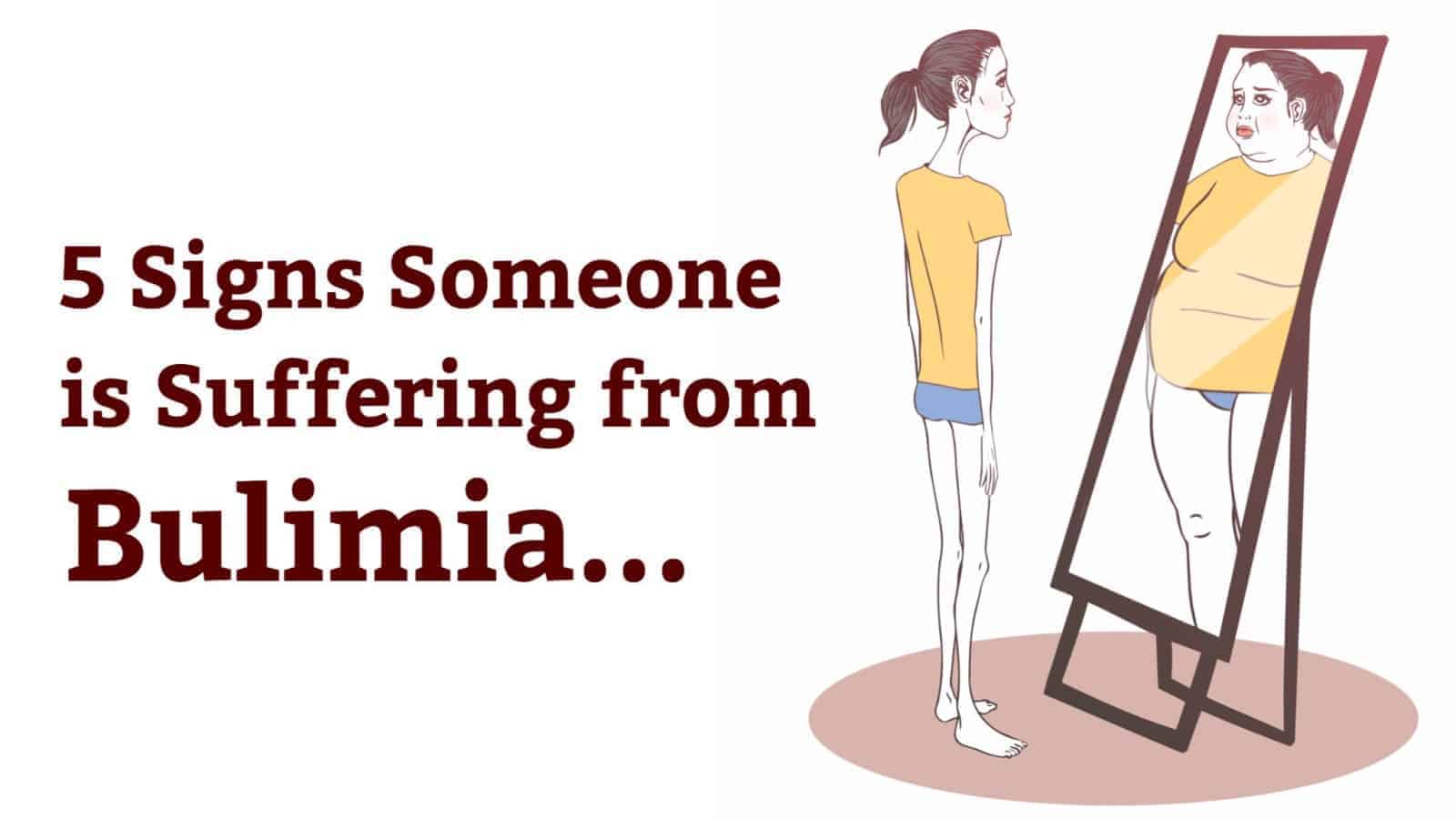
With both conditions, these people look in the mirror and see someone who is fat. It doesn’t matter how frail and little they’re; they will always see an overweight individual staring back at them. Those suffering from this condition have a distorted view of their body.

It’s estimated that right now, more than 8 million people have an eating disorder. Sadly, only one in ten people will get the treatment they need. The standard range to develop an eating disorder is between 12-25 years of age.

Eating disorders are considered a mental illness because the mind’s warped perceptions cause them to starve themselves to death. Of all the mental illnesses out there, eating disorders have the highest mortality rates. Even if a person does get help, sometimes the damage done to the body is irreversible, and 20 percent will die due to complications.

Signs of Bulimia

bulimia nervosa

The key to combating bulimia is to get early treatment, which means that friends and family members need to be on guard and know what to look for in their loved ones.

1. They Go to The Bathroom After Eating

One of the most significant signs of fighting with an eating disorder is that they go to the bathroom after eating. If you notice that your loved one eats enormous amounts of food and goes to the bathroom, it could be a sign of trouble. Be careful to see how much time they spend in the bathroom, too, as purging can take time.

2. Vomit Around the Toilet Bowel

While it’s gross to think about, vomit has a specific smell, and it can get everywhere. If someone is continuously purging, they will leave behind some trace of evidence. Look around the underside of the toilet seat and see if there are any remnants left behind.

3. Tooth Decay

Is your friend or loved one complaining about their teeth lately? The stomach acids rise to the surface when purging, and it can leave behind devastation. The teeth become rotted, but the gums and tissues inside the mouth can be raw. The stomach acid will eat the mouth to pieces.

4. Red Eyes

Purging takes a lot of strength and muscles. When someone is continuously doing this activity, they are going to bust a few blood vessels in the eyes. Be on the lookout for bloodshot eyes that don’t seem to get better. It can be a sign that your loved one is purging.

5. Weight Fluctuations

Weight fluctuations are the biggest indicator of a problem with eating disorders. However, another sign that something is amiss is if a person wants to wear large, baggy clothes in the heat of summer. Jackets and hoodies are commonplace when someone is trying to hide problems in their body.

One area that usually tells the truth about weight loss is the face and hands. The collarbone is another area that always shows when the weight is at a dangerous level.

6. Food Disappears in Large Quantities

As in the story of Allison above, she found out that she couldn’t control her urge to binge. She ate an entire birthday cake, but this behavior is quite common among those who suffer from bulimia nervosa. If you notice large amounts of food missing or you see piles of wrappers from snack cakes and other foods hidden, then it could be a sign that there’s a problem.

7. Mood Issues

When a person has an eating disorder, they are not getting the proper nutrients their body needs to thrive. Your brain needs vitamins and minerals to function. Since the bulimic purges most if not all of their food, their nutrients are low. A lack of nutrition can mess with brain function, which can cause mood disturbances.

You may notice them being sad, crying a lot, isolating themselves, and having low self-esteem. Any shift in moods should be investigated for the underlying cause.

compassion for mental illnessFinal Thoughts on Bulimia Nervosa: Knowing When to Get Help

Many parents and relatives try to handle matters on their own. Sadly, bulimia nervosa is a big issue, and it should be managed by a professional. The person suffering from an eating disorder needs counseling and trained about the proper way to eat.

Their unhealthy relationship with food is what probably brought them to this point anyway; then you add a mental illness on top of it, and it’s a recipe for disaster. Unlike some other psychological disturbances, having an eating disorder puts a person at an increased risk of dying prematurely.

The lack of proper nutrition, as well as the damage caused by binging and purging, can be too much for the heart to handle. It’s better to err on the side of caution than to wait too late to get help.

Skip to content