Weekly tips, affirmations, and small actions to feel your best.

Scientists Explain How Nature Has A Positive Impact On Your Wellness

In today’s modern world, the act of spending time in nature is becoming less and less common. While many people still enjoy visiting parks, going on hikes, and being around flora and fauna, few can deny that the human race has made more movement towards indoor life in recent times.

But what if this was a bad thing? What if being less outdoorsy is robbing us of benefits that could help our physical and mental health? Can surrounding yourself with nature have a positive impact on your wellbeing? As it turns out, yes, it can! Here are twelve ways it does so.

1.    Nature Improves Cognitive Function

natureStruggling with remembering things? A walk around your local park may be just the solution you need!

A study has discovered that thanks to the large amounts of stimuli provided by your nearest source of nature, taking in some fresh air and outdoor views can have the following positive benefits:

  • Give your “bigger picture” skills a chance to recover
  • Allows you to practice and focus on exploring details from a bottom-up perspective
  • Engage your mind in a gentler and more general fashion so that you can relax

As a result, your cognitive skills get engaged differently. This allows your brain and mind to rest and reset – so when you have to return to a task, you find yourself refreshed and ready to tackle a new challenge once more!

2.    It Increases Vitality

Positive thinking has a whole host of benefits for your mental and physiological health, but it can be challenging to pull off. Plants, however, can be in your ally in that regard!

As it turns out, research has discovered that being in a nature-filled environment brings a whole host of benefits for your mental health to the table! For example, it might:

  • Help those struggling with the impulsivity and agitation associated with learning disorders.
  • Boost your mental and physical energy levels
  • Invoke more positive emotions from within you, making you feel better

Fun fact, you don’t need to do a lot to reap the benefits from this either. All you have to do is spend 20 minutes in the park, and that’s all it takes to feel better!

3.    It Reduces Stress

Modern, urban life can be incredibly stressful – and for a good reason. When do you ever have a chance to break free of the seemingly eternal rat race? How can you possibly recover from that?

Thankfully, there is a solution: nature! In a study with 120 participants, researchers discovered that – compared to those looking at an urban environment – participants exposed to the visuals of a natural landscape:

  • Were more likely to have lower stress scores
  • Had healthier pulse counts and heart rates
  • Underwent a faster recovery period from stressful events
  • Had an easier time being positive
  • Maintained better general mental health

4.    Nature Gives You Sunlight

Vitamin D is an essential nutrient that the body cannot naturally synthesize. And it’s not something you can get from your food in necessary amounts, either. Instead, the best way to get this crucial vitamin is through sunlight!

The reason for this is because your skin only creates vitamin D when it is exposed to direct sunlight – something that you just so happen to get plenty of in nature! This is pretty important because Vitamin D:

  • It is necessary for the maintenance of good mental health
  • May used to help the body absorb calcium, preventing osteoporosis
  • It has a positive correlation with reduced risk of heart attacks
  • May help prevent the development of cancer

Thankfully, you don’t need too much sunlight. The exact amount you need will depend on where you are on the globe, the time of the day, and the amount of melanin – but for the most part, you’ll only need between 10 to 20 minutes of sunlight a day!

5.    It Improves Creativity

There’s a reason the great artists of old often ended up retreating to the countryside to create their masterpieces. Not only is nature full of inspiration and references to pull from for creating your next artistic piece, that disconnect from society can also give you a boost to your creativity!

It may just sound like an unsubstantiated observation, but there’s actual science behind it. Thanks to the University of Kansas, we now have research proving that nature helps:

  • Improve our creativity
  • Improve our problem-solving skills
  • Gives us a chance to refuel the energy we need for an attention-demanding world
  • Allows us to rest and relax

6.    It Improves Attention

Have you ever asked, what is it about nature that seems to be so restoring to our mental and physical health? Surprise! There’s an answer for that.

Research has proven that yes – nature does re-energize us and help us slough off that exhaustion we accumulate from daily life. The biggest reason for this is because:

  • Urban life is full of details that are dramatic in its demand for our attention and focus.
  • Nature is much gentler in its demand for our effort, lowering the required energy levels associated with paying attention.
  • The attention nature demands are often of a different type that we don’t usually use.
  • Humanity is a spatial species that naturally gravitates towards a suitably spatial environment – something that nature has in spades.

Thanks to these factors, nature ends up having a therapeutic effect on our minds and souls. We often find ourselves returning to our everyday lives feeling refreshed and ready to tackle life once more!

outdoors7.    It May Reduce BMI

Your BMI isn’t the end-all-be-all for health. Because it doesn’t consider how muscle is heavier than fat, athletes and body-builders are often considered obese. Obviously, that is totally incorrect!

That said, you may still be watching your or your child’s BMI for personal health-related reasons – and managing it can be quite difficult. Thankfully, nature is here to help! But how?

  • Studies have shown children who live closer to nature are more likely to be physically active.
  • Exercising outdoors is more pleasantly stimulating, making longer exercise sessions attractive and motivating.
  • You’re more likely to work out smaller muscle groups that would not be tested in an otherwise controlled, sterile environment.

8.    It Helps Depression Management

No matter how much we wish it were the case, clinical depression isn’t something that someone can resolve with positive thinking alone. That said, every little thing counts when you’re struggling and trying to keep that monster in check.

So why not consider nature as another tool to add to your armory to fight back? A study found that being in nature and interacting with the natural environment around you may offer these benefits:

  • A significant, positive boost to your mood
  • More energy and motivation
  • Encourages you to recover faster from a depressive episode

9.    It Promotes Heart Health

Despite it being incredibly vital to our continued existence, we don’t really have a lot of ways to care for it.

Coronary heart disease is one of the biggest, silent killers of the globe – which means that for every one person that succumbs to the disease, plenty more are struggling with managing its aftereffects. Even an operation isn’t a final solution, with many struggling to recover after diagnosis and surgery.

Nature, then, truly is one of the best healers you can go to. Horticultural therapy has been noted to be a significant source of reduction in mental and physical distress! This makes it a precious tool to assist with the rehabilitation of patients embarking on their long road to recovery.

You don’t have to wait until post-op to start reaping these benefits, thankfully. Feel free to preemptively start digging in some dirt for the sake of your health!

10. Mother Nature Can Spiritually Enhance You

Ever looked at some wonder of nature up close and be filled with awe at the spectacle? Then you may understand this experience more than you think.

Researchers have noted that exposure to nature increases our appreciation of the world around us – which is more significant than you might think. Think just about how much more connected to your senses and mind you become after really touching and seeing the physical world around you!

So when you’re struggling with understanding your place in the universe and what exactly is it about the world that’s so worth protecting, try driving out to a nearby park. That sense of calm and peace may be the balm you needed for your soul.

11. It Reduces Eyesight Problems

The modern world has not been kind to our eyesight. If you’re not wearing glasses, chances are you’re wearing contacts – or have undergone surgery. As our world’s eyesight increasingly deteriorates at a younger age, it poses the question – how can we counteract this?

Going outdoors is the answer! A study conducted on children in Australia found that participants who had had more access to playing outdoors are less likely to develop vision-based problems like myopia than their counterparts who spent too much time using digital screens!

12. It Improves Nervous System Function

No matter where you live, you would have experienced a culture that encourages the practice of spending time in nature. For example: in the United States, it’s largely seen how we desire to hike and camp in the wilderness.

There, we find ourselves simply content to take in our surroundings and breathe – which, according to various studies, might be just what we need for the betterment of our health!

Researchers have found that people who spend a significant amount of time simply taking in the experience of their natural surroundings have:

  • Healthier cardiovascular health
  • Lower risks of bowel disorders
  • Better moods
  • Optimal nervous systems

Nature, it would seem, really is the best healer there is!
outdoorsFinal Thoughts On How Nature Can Have A Positive Impact On Your Wellness

Nature is calming, serene, and beautiful. It’s no wonder that so many people enjoy performing hobbies surrounded by greenery! There’s just something so relaxing and enjoyable about participating in activities in the great outdoors, even if it’s just as simple as going for a walk by yourself.

The fact that nature’s benefits actually go deeper than just aesthetics and tranquility is a wonderful fact that you can use to change up your daily routine for the better. Nature is filled with positive effects that can improve your mental, physical, and spiritual states. So please take advantage of the great outdoors as they exist and surround yourself with lush greenery!
4 Ways Low Self-Esteem Worsens Depression (And How To Fix It)

Low self-esteem is a dangerous trait that can affect multiple areas of your life in surprisingly powerful ways. It can jeopardize your wellbeing on a deeper level, too, which gets even worse if you have diagnosed mental illnesses, such as anxiety or depression.

Depression and poor self-esteem form a deadly cycle, according to a study published in the Journal, Behavioral and Cognitive Psychotherapy. The lower your self-esteem, the more depressed you get, and the more depressed you get, the lower your self-esteem. It’s far from an ideal way to live! But how does it happen, and how can you get out of that downward spiral?

4 Ways Low Self-Esteem Worsens Depression

Here are four ways low self-esteem worsens depression and how to fix it in three suggestions.

low self-esteem1.    You Become An Unfair Perfectionist

Low self-esteem often drives you to become very perfectionistic, requiring self-destructive punishment levels for an inability to meet impossible standards—your self-worth hinges on being able to complete things to an arbitrary level of satisfaction.

When you continually fail to meet your own goals, it makes sense that you would feel more depressed. Of course, these failures are fuelled by poor self-image, making it all even more depressing. You’ll never feel good enough, which makes you more of a perfectionist, making you “fail” once more… it’s a destructive cycle to be caught in. Here are some ways that this can come into effect:

·         You Panic Over Tiny Details

The human brain cannot focus on every single tiny detail at once. It is inherently flawed and isn’t meant to be like a robot scanner. There’s no way for you to get every single minuscule thing completely accurate, and trying to do so will inevitably fail and, following that, an increase in depression.

·         Your Expectations Are Unrealistic

There’s a reason that goal-setting requires achievable goals to achieve positive results. If your expectations are sky-high, your self-esteem will drop as you fail to meet each milestone. You’ll begin to feel like your efforts are hopeless and worthless, which is a symptom of severe depression.

·         You Equate Failure With Being A Failure

It’s normal to fail, but it doesn’t make you a failure. Unfortunately, having low self-esteem means that this is how your brain tends to think. It’s easy to see how this can link to depression. Thinking you’re just a failure is sure to do harmful things to your head.

2.    You Define Yourself By Others’ Perceptions Of You

One of the most common low self-esteem symptoms is feeling like you have to please others so that they like, love, and respect you. As a result, many people-pleasers end up feeling aggrieved and used. To learn how to set personal boundaries, try the following tips:

Low self-esteem can make you a people-pleaser. You define your worth by how others look at you. This means that you develop unhealthy attachments with others that can feel smothering, overwhelming, or even frightening to the people around you.

When your only source of positive thinking comes from others, depression is a certainty. No one will give you constant reassurance, and people will notice your desperation, so you won’t find the self-worth you seek from others anywhere. Your self-esteem will dip quickly as no one fills your need for validation, which contributes to depression. Ask yourself, do you do the following?

·         You Can’t Say No

Saying “no” to others means having to let them down or refuse to gain their favor, so you feel constantly pressured to say “yes.” You may even agree to stretch yourself too thin between commitments sheerly because you hope those you help will like you more.

·         You Don’t Have Boundaries

Not only do you not respect other people’s boundaries, but you also don’t have any yourself. You’ll let people walk all over you as you encroach on their personal space. It’s a toxic situation all around.

·         You Never Put Yourself First

A little selfishness can be a positive thing, but you’d be reluctant to put yourself first, even for a second. You’ll do what you can to help other people, even if it means jeopardizing yourself every day.

3.    You Hate Yourself

Low self-esteem means disliking who you are, sometimes to an extreme level of loathing. It’s pretty apparent how this could worsen depression. Self-hatred can involve frustration, anger, harshness, resentment, a lack of forgiveness towards yourself, and more. All of these factors make you dislike your life, even more, worsening depression. Here are some key features to look out for:

·         Your Internal Dialogue Leans Negative

That voice inside your head constantly tells you that you’re not good enough, insulting you and hitting you where it hurts. It may have even become so much a part of yourself that it happens automatically, and you accept it without thinking. When your default processing is negative, depression is an obvious side-effect.

·         You Believe Every Negative Thing That Pops Into Your Head

Many people get negative thoughts, but those who have high self-esteem challenge those thoughts with positive thinking. If you have low self-esteem, that means you believe that negativity because it makes sense to you. You genuinely think that way of yourself, and once again, negativity is prime fodder for depression.

·         You Beat Yourself Up Over Mistakes

Making mistakes is a part of life, but to you, it’s like the end of the world. You continually resent yourself and feel shame and guilt for mistakes you’ve made. Instead of learning from them, you wallow in them, which makes you feel more depressed.

4.    You Don’t Give Yourself Enough Credit

Low self-esteem usually means you don’t see how well you’re doing. You constantly think poorly of yourself and never reward yourself or pat yourself on the back. This worsens depression because you wind up never being enough for even yourself, perpetuating that numb feeling of hopelessness so common in mood disorders.

Here are some examples of ways you may not be giving yourself enough credit:

·         You Attribute Success To Luck

Whenever you do well in something, you brush off your part and insist it was all luck. Even when you fought as hard as you could to make things work out, you ignore your efforts and insist that someone like you could have never done that well – even though you very obviously did!

·         You Refuse To Accept Compliments

Accepting compliments gracefully is basic decency, but it’s something you struggle to do. Whenever someone compliments you, you find yourself disbelieving them or even wondering if you’ve tricked them into liking you. It’s a paradox where you want external validation but then deny its existence, which messes with your head and depressive state.

·         You Have Poor Body Image

You think you look bad, even when others say you don’t. You rarely, if ever, have moments where you like aspects of your appearance. Hating your skin is sure to make you depressed, as you’re essentially saying that you hate your entire life’s vessel.

How To Fix Low Self-Esteem That Worsens Depression

1.    Alter The Narrative

Low self-esteem requires a negative narrative where you create bad tales about yourself that aren’t rooted in reality. You are blind to your strengths, you magnify your flaws, and you find things to hate that aren’t there.

Changing the narrative means pausing whenever these thoughts come up. Stop those processes and ask yourself if your thoughts are realistic. Are the stories you’re telling to yourself true? If not, then where do they come from?

Once you’ve noticed these negative thoughts, observe them and how they transform into other ones. You’ll slowly begin to understand where your worst beliefs come from. Then, you can change the narrative. After a certain point, stop these thoughts and correct them. For example:

  • Instead of: “I’m such an awful person! I can’t believe I screwed that up like I always do!”
  • Say: “People make mistakes, and I’m no exception. With this error, I’ve learned something new, and I can prevent this from happening again.”
  • Instead of: “I’m so lazy.”
  • Say: “I deserve to rest and recuperate after a long day,” or “I dislike this trait of myself, but I can change it by doing the following steps.”
  • Instead of: “They all probably hate me so much for being such a weirdo.”
  • Say: “My perceptions of other people’s thoughts aren’t likely to be accurate. I can clear the air with the people I’m concerned about via clear, direct communication, which should help us find a compromise or an accurate explanation.”

2.    Find Your Strengths

Even if you don’t believe it, there are things you’re good at in life, just as there are things you’re bad at. If you think you’re bad at everything, it’s because you haven’t found your strengths.

Instead of being adept in similar ways to others, find ways to flex your talents. Sure, you may not be as outgoing and socially intelligent as your colleagues, but you are a hard worker who tends to take the initiative to fix things.

It’s all about perspective. Finding your strengths and doing well in them will remind you that you are good at some things. Better yet, if your strengths lie in a fun talent, you can turn it into a hobby that will fill your time, giving you a way to manage your depression healthily and positively.

3.    Step Outside Of Your Comfort Zone

Your comfort zone is, well, comfortable! But it’s also limiting. For those with poor self-esteem, staying inside a comfort zone is an inherently negative thing because it prevents you from learning more about yourself and your capabilities.

Sure, it’s cozy to stay within your bubble. But by being brave, using positive thinking, and stepping out of that circle, you’ll realize that you’re more than equipped to tackle the unknown. Besides, it gives you something to occupy yourself with so you’re less focused on mental disorders like depression, so that’s a win-win!

low self-esteemFinal Thoughts On Some Ways Low Esteem Worsens Depression And How To Fix It

With low self-esteem, you become your own worst enemy. Your mood dips, your symptoms of mental disorders worsen, and you feel awful and depressed more often. Learning to improve self-esteem and fix negative self-perception is crucial in depression treatment, recovery, and management.

4 Reasons Why Some People Refuse To Feel Emotions (And How To Help)

Emotions are complicated. They can be uncomfortable, saddening, and challenging to manage, comprehend, and process. When you consider these facts, it’s not so surprising that many people wind up refusing to feel emotions at all, preferring to remain as oblivious to them as possible.

But let’s go deeper than that. What are the innate causes of this behavior? Is it healthy? Can it be changed?

4 Reasons Some People Refuse To Feel Emotions

Here are four reasons why some people refuse to feel emotions and help them open up in 3 ways.

feel emotions1.    They Don’t Have Healthy Coping Mechanisms

Healthy coping mechanisms enable people to become resilient. This means they would learn to process complex and difficult emotions or even welcome them as a chance to grow. When someone knows how to manage things that hurt, they don’t need to refuse their feelings – they can experience them and handle the results accordingly.

Unfortunately, not everyone learns positive ways of coping. They may repress their issues instead, which will lead to even worse feelings, which will lead to even more repression. People stuck in this dangerous cycle are likely to be even more adamant about refusing their emotions.

It’s often in childhood that people learn to refuse emotions. They may have failed to learn how to feel, express, and process emotions. This is especially common in men, who are often raised to believe that “boys don’t cry” and are weak for experiencing the feeling. That said, this can happen to people of any gender.

The ability to cope with negative experiences is a learned skill. It requires verbalization, self-awareness, and acceptance. It’s natural for the brain to shut down those feelings if the necessary skills aren’t sufficiently developed.

2.    They Face Judgment

Judgment seems like an innocuous thing, but in the face of it, many people revert to defensiveness, attempting to protect themselves from the unspoken accusation that they face. Judgment can be extremely harmful to those who struggle to confront their emotions, as feelings are commonly the subject of such judgment. Here are some ways that this happens:

·         They Judge Themselves

People are often their own worst critics. An individual may have internalized beliefs about what they should and shouldn’t feel, thereby becoming their judge for their emotions. When they feel something, someone may decide that they don’t deserve to have that emotion, that they’re harmful in some way for experiencing it, or that it’s weak to feel at all.

·         They Were Judged In Childhood

Childhood patterns follow people into adulthood all the time. Someone who refuses to feel emotions may have faced invalidation for expressing their feelings when they were a child. They may have been told to “suck it up,” “stop being a crybaby,” “just be grateful,” or “stop being dramatic.” As a result, they may have learned to internalize that “lesson,” choosing to refuse emotions instead of experiencing them because that’s what they learned.

·         They Are Judged By Others Now

The world can be a harsh place. Someone who opens up only to face judgment may protect themselves by repressing their emotions. When surrounded by close peers and supposed loved ones who judge them, it’s normal for a person to decide against showing any signs of emotion due to these toxic environments.

·         They Fear Judgment

Sometimes, the judgment doesn’t have to be actively present to cause people to refuse to feel emotions. Learned behaviors, observed factors, and media influence can all contribute to someone’s fear of judgment. These individuals may also fear being inadequate, annoying, or over the top, therefore deciding that their best bet to avoid this is not to feel their emotions at all.

3.    They Fear The Emotions

Emotions can be overwhelming. Being scared by them isn’t unusual, and that fear can be enough to make someone refuse to feel them at all. Here are some types of fear of emotion that lead to this behavior:

·         Fear That It Won’t End

Some extreme emotions feel like they go on and on forever. Someone might be afraid that there will be no end to those feelings if they give in. For example, they may feel so much pain that they believe that if they let themselves cry, they’d never be able to stop. Of course, this isn’t reality. No matter how strong emotion is, it will pass. But in the face of fear of a never-ending, horrible feeling, people may not be thinking entirely logically, to begin with.

·         Fear Of Unknown Feelings

Many people who refuse to feel emotions initially did so out of necessity. But now that they don’t need to do that to survive anymore, they’re faced with a startling truth: they don’t know what they’re feeling, and to try and find out could open a whole can of worms. Naturally, they’d feel somewhat intimidated by this concept.

·         Fear Of Being Hurt

This one is pretty straightforward. Someone fears being hurt and therefore refuses to feel at all. It’s a common defense mechanism, especially in those who have been injured in the past. The desire to keep wounds closed – even when they’ve healed poorly anyway – can be enough to coax someone into deciding to avoid pain entirely.

·         Fear Of Past Trauma

Sometimes, learning to feel emotions can mean having to process the trauma that occurred to cause the initial refusal. That’s terrifying to anyone and usually needs professional help. For many, the easiest choice is to not revisit the past trauma at all by continuing to repress their feelings.

·         Fear Of Rejection

When someone is open about their emotions, they’re showcasing a vulnerability and putting their hearts at risk. The fear of the rejection of their exposure and trampling over their openness can be enough to make many opt out of the risk altogether.

4.    They Have Unhealthy Attachment Patterns

Attachment patterns are typically formed in childhood. Studies have indicated that primary caregivers can completely change the way someone’s attachment style is – positive childhood attachment leads to positive patterns, but negative also then begets more negativity.

People may refuse to feel emotions because their attachment style is informed by a reality where it was safer not to feel them. Here are some caregiver experiences that can form unhealthy attachment patterns:

  • A neglectful caregiver who never acknowledged or seemed to care about a child’s emotions
  • An abusive caregiver who belittled and invalidated a child’s emotions
  • A busy caregiver who never taught a child how to process and handle emotions
  • An unaffectionate caregiver who didn’t give love to a child
  • A demanding caregiver who demanded that a child toughen up and not express high-intensity emotions

pop memeHow To Help Someone Who Refuses To Feel Emotions Open Up

Here are a few tips you can use to help someone feel comfortable about opening up to you.

1.    Use Active Listening Skills

Someone who represses or refuses their emotions is likely to have bad experiences with invalidation, judgment, and uncaring reactions in the past. They are, therefore, likely to be sensitive to even the slightest misinterpreted signs of lack of interest, even if you are genuinely listening.

This is where active listening comes in. This process refers to the skill of showing genuine interest, asking questions and paying proper attention to the responses they provide. It means showing that you are engaged, even if the person has been speaking for a while. This tip allows you to participate in a conversation even when it’s not your turn to speak.

Active listening will allow someone to feel comfortable opening up to you. They will feel heard and, if you do it well, they’ll also feel understood. Here are some ways to perform active listening:

  • Make good eye contact – not too much that it’s uncomfortable, but not too little that you seem bored.
  • Make noises, nods, or gestures of acknowledgment when they speak to indicate that you are listening.
  • Do not interrupt them; allow them to finish speaking before you speak or ask questions.
  • Please don’t make things about you by twisting them or bringing up your personal experiences unless asked for.
  • Mirror their phrases; show you understand by confirming their point in your own words.
  • Please don’t lie about understanding where you can’t; it’s okay to say that you can’t imagine what their pain is instead of saying that you can understand or empathize.

2.    Show That You’re Okay With Awkwardness

Discussing feelings, mainly when someone isn’t used to doing so, can be awkward. That can be enough for introverts, the socially anxious, and the emotionally repressed to back off and decide not to engage. But reality states that it can take an entire month, according to studies, before conversation patterns lose their awkwardness with new people!

Show that you have no issues with initial awkwardness by handling uncomfortable conversations with grace. Don’t shy away from things that feel a little weird unless the other person asks you to back off. The goal is to show that you’re okay with the discussion not being smooth sailing, which can give someone the push they need to open up.

3.    Share Your Vulnerabilities

If someone is having trouble opening up, you may have to get the ball rolling by beginning with yourself. This can create a quid-pro-quo sort of arrangement – you tell them something personal, and they respond in kind. Most people can pick up on this subconsciously.

More importantly, doing this establishes trust. It shows that it’s okay to be vulnerable between the two of you and that you’re trusting them with your issues. Often, this is all the encouragement someone needs to begin opening up, as you have established an open and welcoming dynamic between you.

However, it’s essential not to be calculative about this. Some people will take longer to open up than others, and your acts of sharing may not immediately bring forth a balanced response from them. As such, you shouldn’t share vulnerabilities that you aren’t comfortable sharing just for the sake of prompting them to do the same.

feel emotionsFinal Thoughts On Reasons Why Some People Refuse To Feel Emotions, And How To Help Them

It is not healthy to repress emotions, and yet so many people do so! If you’re trying to be there for someone like this, then understanding their motivations for such behavior and providing them with the opportunity to open up can help them work through these difficulties.

Boston University Study Reveals Increased Depression in College Students

A nationwide survey by Boston University of nearly 33,000 college students revealed an increase in depression in college students.

Anxiety and depression continue to rise and have reached a peak due to several factors. The researcher cited that students felt immense stress because of the pandemic, political unrest, inequality, and systemic racism. Mental illness had already been an epidemic before the lockdowns, but this past year made existing conditions worse.

“Half of students in fall 2020 screened positive for depression and/or anxiety,” says Sarah Ketchen Lipson, a Boston University mental health researcher and co-lead for the nationwide survey published on February 11, 2021. The Healthy Minds Network administered the survey online during the fall 2020 semester.

The survey found depression in college students had risen to 83 percent, giving way to a decline in their academic performance. Furthermore, two-thirds of college students reported struggling with loneliness and isolation. During the pandemic, mental disorders in young people reached an all-time high. This reveals the overwhelming toll that the pandemic and social distancing measures have taken on this age group.

Lipson says the survey’s findings show that university staff should accommodate students’ mental health needs. She says this:

“Faculty need to be flexible with deadlines and remind students that their talent is not solely demonstrated by their ability to get a top grade during one challenging semester.”

She adds that teachers can ease the burden on students by making class assignments due at 5 PM. Many professors set assignment deadlines for midnight or early in the morning, encouraging students to stay up late. Getting a good night’s sleep is essential for mental health, so teachers should consider it when setting deadlines.

How instructors can help college students in a mental health crisis

Also, Lipson says that instructors who notice a student missing consecutive classes should reach out to them. This way, the student will know they have support and that someone cares about how they’re doing.

“Even in larger classes, where 1:1 outreach is more difficult, instructors can send class-wide emails reinforcing the idea that they care about their students not just as learners but as people, and circulating information about campus resources for mental health and wellness,” Lipson says.

She also says instructors should keep in mind that some student demographics carry a higher mental illness burden.

“Students of color and low-income students are more likely to be grieving the loss of a loved one due to COVID,” Lipson says. They are also “more likely to be facing financial stress.” All of these factors can severely impact a person’s mental health and academic performance.

Lipson added that instructors should inform college students about mental health services they can utilize. Providing students with information on how to access services that emphasize prevention, coping, and resilience could make a huge difference. The fall 2020 survey data revealed that much of the anxiety and depression in college students that get diagnosed with anxiety don’t receive adequate treatment.

“Often, depression in college students will only be addressed when they find themselves in a mental health crisis, requiring more urgent resources,” Lipson says. “But how can we create systems to foster wellness before they reach that point?”

She has a suggestion:

“All students should receive mental health education, ideally as part of the required curriculum.”

However, she says that the skyrocketing depression in college students doesn’t just affect college students. The survey findings reflect a far-reaching trend of declining mental health in young adults across the board.

Integrating mental health education into the curriculum is a vital step in addressing the rising rates of depression among college students. As institutions seek to create proactive wellness systems, educational technology can play a crucial role in this initiative.

Flashcards have traditionally been used to reinforce academic knowledge, but they can also be adapted to support mental health education.  By using AI-powered flashcards, such as those offered by Memrizz AI, students can engage with mental health topics in an interactive and personalized manner. These tools can provide students with essential information on recognizing symptoms, accessing resources, and practicing self-care strategies, all while adjusting the content to their individual learning needs and progress.

Why so many people in today’s world have poor mental health

“I think mental health is getting worse [across the US population], and on top of that, we are now gathering more data on these trends than ever before,” Lipson says. “We know mental health stigma is going down, and that’s one of the biggest reasons we are able to collect better data. People are being more open, having more dialogue about it, and we’re able to identify better that people are struggling.”

Lipson says that overall, Americans may have worse mental health in today’s world due to several factors. She believes the pandemic, divisive social media, and shifting societal values play a huge role in the mental health crisis. In today’s world, she says that values have become more extrinsically motivated rather than intrinsically motivated. Basically, people care more about making money, being popular, and gaining success rather than being an upstanding member of their community.

Not to mention, the historically high student debt puts college students under enormous pressure.

Student debt is so stressful,” Lipson says. “You’re more predisposed to experiencing anxiety the more debt you have. And research indicates that suicidality is directly connected to financial well-being.”

Depression in College students increases the pressure.

Currently, over 22 million young people are enrolled in colleges and universities. Lipson says that students usually notice the onset of lifetime mental illnesses during the “traditional college years of life.” This shows why prevention and treatment measures taken in these crucial years could have a huge impact.

The good news from the survey was that the stigma surrounding mental illness has drastically decreased over the years. The survey revealed that 94% of students said they wouldn’t judge someone for needing help for a mental illness. Lipson says this indicates that those students would likely seek help themselves for a mental disorder. However, almost half of the students said they felt worried about what others would think if they did seek help.

“We’re harsher on ourselves and more critical of ourselves than we are with other people — we call that perceived versus personal stigma,” Lipson says. “Students need to realize; your peers are not judging you.”

college students

Final Thoughts: A large survey reveals worsening mental health among college students

Unfortunately, the pandemic and rising tensions in America have taken a toll on college students’ mental health. The results from the survey seem consistent with an overall decline in mental health across the board.

However, the Boston University survey revealed that students seem more comfortable seeking help for mental crises. Due to the fading stigma surrounding mental illness, people have become more transparent about their struggles. This means that perhaps students will seek help more often to get them through this challenging time.

5 Ways Obsessive Love Destroys Relationships (And How to Prevent It)

What do you desire in a partner? Everyone has fantasies about their perfect boyfriend, girlfriend, or future spouse. But not all of these love fantasies are workable, and a fair few of them can never come true.

If you know the distinction between what’s possible and what’s unreasonable, good for you. If you don’t, it’s time for a rude awakening because these desires you have for a partner may be actively harming your dating life.

5 Ways Idealized Love Destroys Relationships

Here are five ways idealized love destroys relationships and how to prevent it.

love

1.    You Dehumanize Your Partner

Your partner is a human being. They’re flawed, they make mistakes, and they need to work on themselves to improve. That’s just reality! Idealization robs them of this reality, painting them into something unreal and impossible by making them perfect in your eyes. This damages your relationship because:

  • Your partner may feel overwhelmed by the pressure and expectations put on them.
  • Their partner will never reach the standards you’ve set for them, as it is impossible to do so.
  • Your partner may become frightened of being a disappointment or feel insecure and inadequate.
  • Your idea of your partner will shatter when they inevitably break the false image you have of them.
  • You may allow your partner to get away with negative behavior due to the rose-colored glasses you wear.
  • You will assume that your partner will always be perfect and ideal.

2.    You Equate Fighting With Doom

Fighting is a normal part of any long-term close relationship. Even in familial and platonic relationships, fights are commonplace, and part of the point is that you know the bond you share is strong enough to overcome these kinds of hurdles.

The same goes for romantic relationships. The world often portrays fighting as a surefire sign that everything is going downhill. While different relationships have different typical, healthy argument frequencies, fights can be beneficial for couples at the end of the day. As long as you’re fighting with positive methods, it can even facilitate better communication, a strengthened bond, and a happier outcome.

Sure, love shouldn’t be painfully or impossibly hard. But it’s not easy, either. It takes work, and misunderstandings will always occur between two different people. As long as you know how to work through them with positive thinking and respect, it’s perfectly healthy.

3.    Your Expectations Are Unfair

We’ve talked about the dehumanization of idealized love due to its expectations, but there are other ways that these expectations can be harmful to a relationship. For the most part, they create unfair parameters that most individuals can’t meet. Here are a few expectations that can cause this to happen:

·         Change

Idealized love can make you want your partner to change into the version of them you perceive. It’s okay for you and your partner to have goals for personal self-improvement. But actively getting into a partnership and expecting the other to change to suit your needs and preferences is a surefire way to make the relationship end in flames. You should love your partner as they are and support their growth without demanding or expecting them to change who they are.

·         Comparison

You may compare your partner to other individuals, especially those presented in idealized ways. For example, you may want your partner to behave like a romantic comedy character, or you may want to have the #relationshipgoals that you see on Instagram and other social media. This kind of comparison is automatically unhealthy – fictional characters are fictional for a reason, and social media only shows the best sides of people.

·         Perfect Spark

We’ve seen it plenty of times – the romanticized notion that when you meet someone, there should be instant chemistry or some spark. This, too, is idealized, and the reality is that most relationships don’t start like this. Some may not even have that so-called “spark.” Genuine love, attraction, and respect are what is necessary to make a relationship work long-term, not a shallow, surface-level expectation of passion based on movies and novels.

4.    You Lose Empathy

When you idealize someone and have idealized ideas of love, you stop empathizing with a partner. The idea of them that you have in your head is already inherently false. There’s no way for you to understand them or meet them on their genuine level when everything you believe about them is wrong.

The ability to feel empathy for someone you’re close to, whether it’s a romantic relationship or not, is crucial. It allows you to comprehend others’ position, see things from their point of view, and put yourself in their shoes past your desires. Essentially, idealization is way too selfish and inward-focused to be empathetic, and that’s not how any relationship works.

5.    You Communicate Less

Communication is central to a healthy and positive relationship. No one can read your mind. Expecting your partner to know what you want magically, need, or think will never end well. Unfortunately, it’s prevalent for people to expect this out of their partner due to idealized love.

This is because they exhibit these behaviors:

  • Thinking they shouldn’t have to ask for what they want; their partner should naturally know.
  • Believing their partner should automatically know how to comfort them, help them, or do right by them, even in new relationships.
  • Dropping hints and hope that their partner will pick up on them quickly and easily, then get upset when their partner does not pick up on the suggestion.
  • Tending to say what they don’t mean, hoping that things will play out like they do in fiction.
  • Believing that in an ideal relationship, partners know everything about each other instinctively.
  • Thinking intimacy in the bedroom should be perfect, romantic, and sensual without ever needing to talk about what they like to dislike.

It doesn’t take a rocket scientist to see how this is not good. A person can’t figure all of these things out without being told. Don’t let movies and books tell you that the right person will always know what to say and do. That’s not how this works!

loved onesHow To Prevent Idealized Love

Now that you know how this ideology weakens your relationship, here’s how to prevent it.

1.    Challenge Common Depictions Of Love

It’s easy to develop idealized views of love because the most common depictions are overly positive. Challenge them and apply critical thinking to what you see before assuming everything is precisely as it seems. For example:

  • When you see a fictional relationship, note aspects of it that are toxic behaviors masquerading as romance.
  • Be more critical of the couple-related content you consume on social media and ask yourself if what is being presented is genuinely realistic or healthy.
  • Realize that most people will only want to present the best parts of their relationship first, so a couple that always seems happy has its ups and downs, just like you.

2.    Be Prepared To Work Hard

One of the most significant flaws of idealized love is that, for whatever reason, it assumes things are inherently perfect without effort. Understanding that all relationships are hard work can help to remove that unhealthy expectation.

Indeed, relationships shouldn’t be so tricky that you tear your hair out in frustration every day. But it’s not so easy that things fall into place naturally with no effort, either. Both parties must put in equal effort to maintain a positive dynamic.

Think about it: you’re dating a whole different human being, with all sorts of quirks, flaws, and motivations. You’re sharing your life with that person! That’s not something that’s ever going to be extremely easy, even if it isn’t painfully hard! So keep that positive thinking going, and expect to work hard to keep your partnership alive and healthy.

3.    Respect Your Partner

Without respect, a relationship cannot survive. It’s such a fundamental part of relationships that without it, there’s no point in dating at all. People often say that someone must earn respect, but you should both already respect each other when you choose to enter a commitment with someone. Here are some reasons that this is important in preventing idealized love:

  • Understanding that your partner is unique and is deserving of their individualism and respecting that so you do not seek to change them or dictate their behavior.
  • Knowing that mistakes and errors (within reason) are commonplace among any human being and respecting your partner even when and after making these mistakes.
  • Trusting your partner to handle themselves, try their best in the relationship, and put their best foot forward; in other words, to respect them enough to give them the benefit of the doubt first.
  • Staying loyal emotionally and mentally aside from just physically by respecting them enough to refrain from comparing them to other people you find desirable or attractive.
  • Never seeking to change your partner’s deep-seated ideals and beliefs unless they are comfortable with that and respecting them enough to disengage from a relationship if you cannot manage your differences.
  • Not resenting your partner for their imperfections, but learning to understand them and work with them and stand by them as they work on improvement.

4.    Don’t Set Any Expectations At All At First

Idealization is all about expectations. When you have so many of them, things are sure to go south. So get used to simply not having expectations. Don’t expect good things, bad things, or neutral things. Instead, expect that reality cannot be what you envision.

Research indicates that expectations on relationships, even ones made with positive thinking, can decrease the quality of a partnership. This does not mean that you shouldn’t have standards. By all means, choose to date someone who meets your reasonable desires in a relationship, such as “a person with a career,” “an honest person,” or “someone with similar political views.”

But don’t expect things. Your personal opinions aren’t going to line up with any actual human being, so let yourself be surprised by your partner instead of disappointed. If there’s an issue, you can practice healthy communication to find understandings or compromises.

loveFinal Thoughts On Some Ways Idealized Love Destroys Relationships And How To Prevent It

Idealization always paints a false picture; no matter what it is you’re idealizing. So focus on preventing these unreasonable expectations and, instead, build a healthy, powerful relationship that is based on truth, good values, real life, and genuine love!

10 Things That Cause a Nosebleed (and How to Stop It)

Nosebleeds are a common problem that plagues the masses. It’s expected to have these occurrences if you’ve been hit in the nose or have head trauma. But did you know that there are other reasons why you can experience nosebleeds?

Your nose is a delicate structure filled with tiny blood vessels that are prone to bursting upon impact. However, some bizarre reasons why your nose might bleed have nothing to do with being hit in this area, and they may need to be further evaluated.

Ten Things That Can Cause Nosebleeds

According to the Cleveland Clinic, about 60 percent of the population will have at least one nose bleed in their life. If you suffer from constant nosebleeds or a member of your family has this issue, then here are ten various causes that could be to blame.

nosebleed1. Sinus Issues

Those who are prone to allergies might deal with a bleeding nose on occasion. If you’re allergic to grass, then being around freshly cut grass can be a trigger for you. When your respiratory system dries out, it can cause it to bleed from irritation.

Seasonal allergy suffers often complain of an occasional bleed during prime season. As the nasal passages become quite irritated from blowing, dripping, and excessive mucus, it’s only natural that they would become inflamed and bleed.

2. High Blood Pressure

Oddly, having high blood pressure could cause a bleed in your nose. However, when the body’s pressure is too high, it affects the red blood cells from functioning normally. As hypertension worsens, it can disrupt the blood flow to the vital organs and your muscular tissues.

The blood vessel walls become weak, which makes them prone to damage. As a result, a bleeding nose may be an indication of an underlying issue.

3. Chemical Irritants

It’s not uncommon for your nose to bleed as a response to chemical irritants. Two of the biggest culprits are bleach and ammonia, but many others can cause significant damage. It’s always best to use natural products to clean your home for this reason.

When you inhale chemical irritants, it can dry out the nose and cause damage to the blood vessels, which results in bleeding. Your place of employment may also be to blame. If you’re around potent spices or other strong odors, it can wreak havoc on your nose.

4. Injuries

Obviously, getting hit in the head or nose area is going to cause it to bleed. It’s imperative to get this type of bleeding under control immediately as it’s so close to the brain it’s troublesome.

If you cannot get the bleeding to stop, then go to the emergency room immediately. This is one type of bleed that you don’t want to mess around with, especially when the trauma is severe.

5. Picking or Blowing Too Much

Children often pick their noses during their younger years. However, those who blow their nose often can also cause issues. When you blow or pick too much, you cause the blood vessels inside the nose to burst, and it causes it to bleed.

If you have a cold or sinus issue, try not to blow or pick too much at the area as you can cause further damage.

6. Upper Respiratory Infection

A respiratory infection is notorious for causing your nose to bleed. The area is inflamed and working overtime to clear the infection. When your nose is expelling snot to remove the virus, those blood vessels can become quite irritated.

In fact, the whole area may be red, sore, and raw from the bug.

7. Foreign Object Stuck in Nasal Passages

How many times has a child stuck a bean, crayon, or another foreign object into their nose holes? It’s a common issue that happens with most kids. However, those little items can cause some damage as they become lodged.

Any trauma to this area can cause some blood loss. If you cannot easily remove the object without causing damage, your local emergency room has experts in handling this matter.

8. Thinning of The Blood

Did you know that some foods naturally thin your blood? Eating things like chia seeds, garlic, as well as ginger, and turmeric can cause your nose to bleed? According to an article published by New Health Advisor, it’s not uncommon for people who eat certain foods to have more thinning blood issues, which can cause your nose to bleed.

9. Body Overheating

It seems that you have more than one reason to stay out of the sun. You know that overexposure to harmful UV rays can cause cancer, but did you know that getting overheated can cause your nose to bleed? When your body temperature rises, it can cause your blood pressure to increase, which will cause the pressure inside the body to leak blood through your nose.

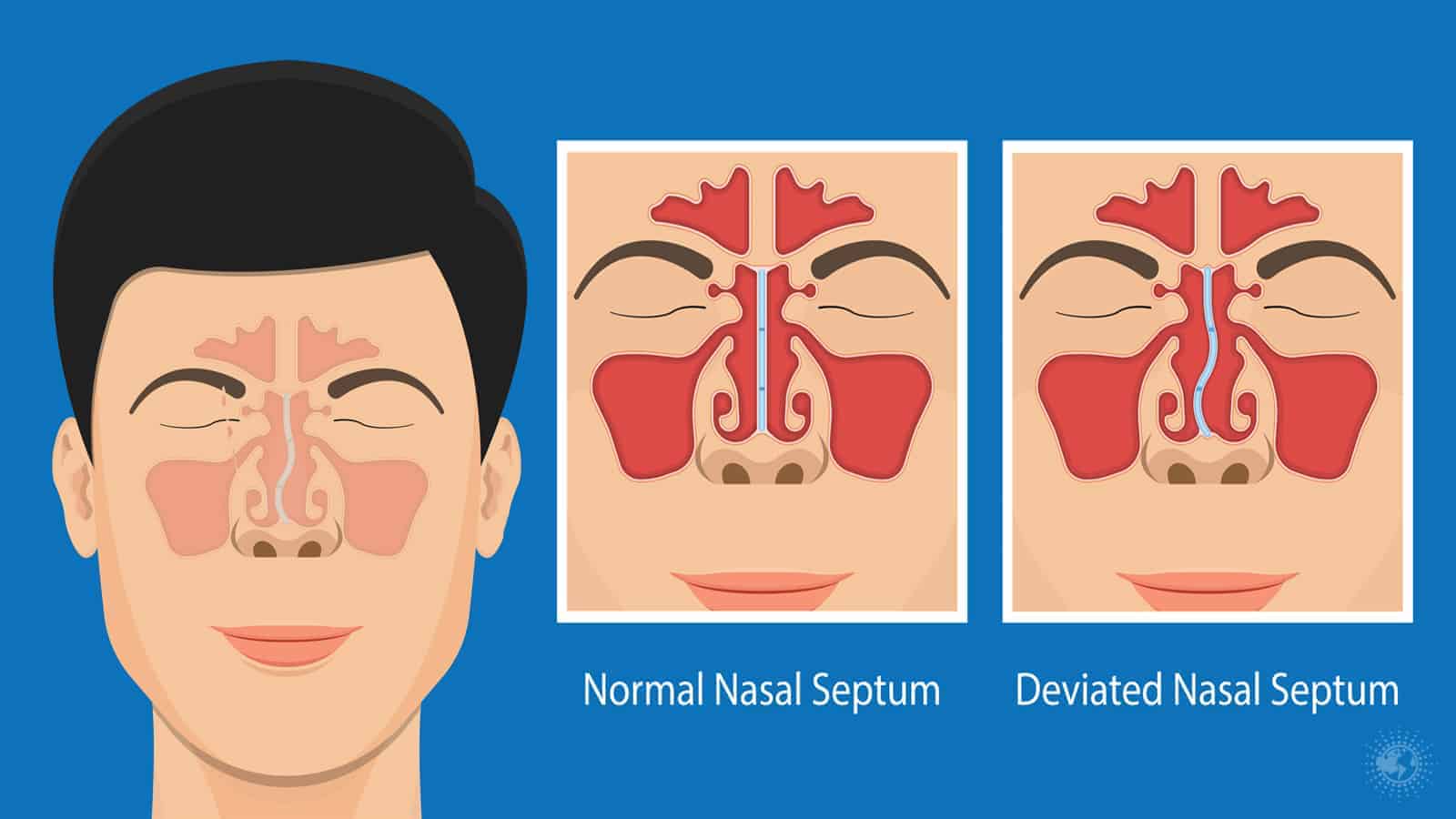
10. Deviated Septum

Do you have a deviated septum? The wall of cartilage between your nostrils is there to protect the structural integrity of your nose. Sadly, this deviation causes one nostril to be larger than the other.

Those with a deviated septum often blow their nose more than the average person as they’re trying to clear the airways to breathe. Frequent blowing can damage the blood vessels and cause bleeding.

deviated septum

Here are eight signs of a deviated septum never to ignore.

Seven Ways to Stop a Nosebleed

Now that you know all the many reasons that cause your nose to bleed, you need to know what to do to stop it. In most instances, a nosebleed wills stop quickly without much intervention, but there may be times when you need to take extra first aid steps to get the bleeding under control.

1. Adjust Your Position

When your nose begins to bleed, sit up and tip your head backward. You want to control the situation and don’t allow it to expel from the nasal passages. For some odd reason, sitting upright with your head back tends to stop the bleeding quicker.

2. Pinch the Nose

Pinch your nose closed. When you do this, you’re stopping the blood from getting all over everything, and you can protect the area. For instance, if you’re in a place where bleach or ammonia is strong, you can stop the bleeding by simply blocking the irritation. Within a few minutes, the bleed should subside when you’re no longer overheated or around chemicals.

3. Cool the Area with An Ice Pack

If you’ve been in the sun and your body is overheated, you might see your nose bleed as a result. Applying an ice pack to the area will help this region get to a better temperature and stop bleeding.

4. Use A Saline Nasal Spray

You can get many saline nasal sprays over the counter. These are usually natural and have nothing but saline in them to help flush irritated passages.

If you get a bleed frequently, then it may be advisable to have these sprays on hand. The key is that you don’t want to use them too much, as overexposure to saline can irritate too.

5. Use A Humidifier

It’s not uncommon to have more bleeds during the winter months, primarily since you use the heat more during this season. If you suffer from dry and irritated nasal passages, then a humidifier can undoubtedly help.

By putting moisture into the air, you can help to repair those dry and cracked areas. Additionally, you won’t wake up with so much dry mouth either, which is a common problem that indicates you need a humidifier.

6. Avoid Things That Can Thin the Blood

Adjusting your diet may be the key to getting your bleeding nose under control. If you eat things like spinach, garlic, chia, or other blood-thinning foods, then you may need to cut back. Your diet could have everything to do with your frequent bleeding issues.

Additionally, ingesting blood-thinning foods may have a more challenging time getting the bleed to stop.

7. See A Doctor

While you may have an occasional bleed, it’s not normal to have these occurrences constantly. If you have them frequently, then you need to see what’s the underlying cause. A medical examination can point you in the right direction to solving your problem.

Something as dangerous as hypertension could be behind these bleeds, and you don’t want to risk a heart attack or stroke from not treating a medical problem.

nosebleedFinal Thoughts on Nosebleeds

Nosebleeds are relatively common occurrences, and some people are more prone to them than others. However, if these bleeds become frequent or increase in severity, it’s essential to get to the root cause. You may have an underlying health issue that is showing you signs through these bleeds.

Additionally, your body may be trying to tell you something, and if you don’t listen to these warning signs, it could cause you significant issues down the road. Sure, a nosebleed can be a benign occurrence, but there are times when they are a little more sinister in nature.

20 Healing Affirmations to Make You Feel Whole Again

When painful memories keep running through your head, they can make you feel incomplete. No matter how recent the memories are, the effects are still the same, leaving you emotionally wounded. If you find yourself struggling with this, healing affirmations can help you feel whole again.

With healing affirmations, the healing process can speed up or begin if it hasn’t started. The promises will help you accept things you can’t change. Plus, the positive phrases will help you find peace in life as you overcome your emotional wounds.

As you use these healing affirmations, you will notice that you feel better right away. Once you make the positive phrases a regular part of your life, your healing will noticeably progress. You can find yourself again and begin to feel whole.

Twenty Healing Affirmations to Make You Feel Whole Again

As you read through the healing affirmations, remember the ones that resonate with you the most. Those are the ones you should say aloud to yourself each day.

healing affirmations1. I give myself permission to heal.

When you want to feel whole again, you must start by permitting yourself. Sometimes when things go wrong, you hinder your ability to heal emotionally by not allowing yourself to heal. If this sounds like your situation, then you need to permit yourself to become whole again.

2. I am getting stronger and feeling complete again.

When you tell yourself that you feel more robust and more complete, you will begin to notice it, too. Sometimes it is all about convincing yourself that you feel better. Then, your life can get back to normal, and you can feel like yourself again.

3. I put my well-being above making others happy.

You cannot put yourself last, even if you have made it a habit to do so. While making others is nice, you must take care of yourself, too. This means that when you know, something isn’t good for you or won’t make you happy, you should say no.

Likewise, when you are being worn out and expected to do too much, you must speak up. Voice your concerns and make it clear that you are putting your well-being first. If you wear yourself out, you won’t feel like yourself, and you won’t feel whole.

4. I have a purpose, and I will keep moving forward to discover it.

No matter what happens, your life is not purposeless. There is a reason you are here, but the only way you can discover it is by seeking it.

Don’t give up, and don’t hold yourself back because you feel bad right now. Instead, get out there and keep moving forward. Before you know it, you will feel whole again as you find your purpose.

5. I am patient with myself as I work through setbacks.

You won’t overcome obstacles right away. It takes time, so you must be patient with yourself as you go through it. Use this healing affirmation if you find yourself getting frustrated with your progress because you will get there, even if it takes time.

6. I work to better myself and take care of my mind.

When you work on becoming a better version of yourself, you will feel better. It will ease your mind, and you will begin to feel whole. Continue using this affirmation to motivate yourself along the way.

7. I will live a good life because that is what I want to do.

You are the only one who can decide the type of life you live. If you want to live a good and happy life, then make it your mission to be happy and grateful always. Nothing in your life has to change except for your mindset.

8. I am at peace with all things in my life.

If you can be at peace, you will indeed feel whole again. Work to find peace in all areas, but especially with things you can’t control. By doing so, you will begin to heal and find joy once again.

9. I am letting go of things that I can’t control.

Unfortunately, you can’t control everything, and part of feeling whole requires that you let go of those things. Once you have found peace with what has happened, you can then let go of it.

10. I am worthy and valuable, and I deserve respect and kindness.

Always remember your worth and value. You deserve to be treated with respect and kindness not only by others but by yourself, as well. Set boundaries with others that make it clear you expect to be treated this way.

Allowing anything less than respect and kindness will stop you from feeling whole again. It will make you feel like you are good enough, and that isn’t true. Use this healing affirmation to remind yourself of your worth each day.

healing affirmation11. I know that when things don’t work out the way I wanted them to, everything will be okay.

Life wouldn’t be as excited if you got everything you wanted, although it would be easier. Remember that you wouldn’t be where you are today if you had gotten everything you desired. Life works out for the best, and what is meant to happen will happen when the time is right.

12. I give myself permission to move on from the things that weigh me down.

Moving on can be challenging, and you may sometimes feel obligated to hold on. If you know that something is making you feel empty or incomplete, permit yourself to make a change.

To feel whole again, you must do what will make you happy, even if it isn’t the easy thing to do. Repeat this affirmation until you have convinced yourself to do what is best for you, even if that means moving on.

13. I choose happiness and seek joy in the little things.

Changing your mindset is all it takes to find happiness. By repeating this healing affirmation, you are more likely to notice positive things around you, helping you become happier.

14. I have people in my life who love me unconditionally.

When you are feeling incomplete, it is sometimes helpful to remember all of those who love you. Instead of feeling unwanted or unloved, use this healing affirmation to boost your spirits. When you remember that people love you no matter what, you will begin to feel like yourself again.

15. I forgive myself for my mistakes.

You can’t get through life without making mistakes, and sometimes you will feel defeated because of them. Forgiving yourself can make all the difference, though, and it will help you feel better.

16. I forgive those who have hurt me or betrayed me.

Forgiving others is essential to feeling whole again, as well. Even if you don’t allow them back in your life, you can forgive them and find peace again. Forgiveness will help you feel whole as you move forward.

17. I know that the only opinion of me that matters is my own.

People say mean and hurtful things sometimes, and it can make you feel bad about yourself. If this has happened to you, use this healing affirmation to remember that the only opinion that matters is yours. As long as you are happy with the person you are, you can find peace and feel whole again.

18. I accept myself as I am right now, and I am choosing self-love.

Self-acceptance and self-love can go a long way when it comes to feeling whole again. You will never feel more complete than when you are content and happy with who you are. Loving yourself is the best way to find yourself, your purpose, and the joy in life.

19. I am full of courage and can move forward confidently.

With courage and confidence, you can do anything, including feeling complete again. Find yourself and build your character as you go through hard times. It will help you get through so you can feel whole again, and you will have grown in the process.

20. I love myself even through the hard times.

Things get hard sometimes, but you must love yourself through it. Even if you feel that you have messed up somehow, be compassionate and continue to love the person that you are. Obstacles, failures, and setbacks are all ways to become an even better person.

healing affirmationsFinal Thoughts on Healing Affirmations to Make You Feel Whole Again

These healing affirmations will help you feel whole again as you move forward. It can be hard to move on and accept things, but it is essential to feeling complete and at peace. Whatever it is that is standing in your way, permit yourself to change it.

Take care of yourself and do whatever it is that makes you feel better, even if it is hard to do. As you work through your hardships, use these healing affirmations to help yourself move forward. You will find that they quickly help you progress with your healing as they keep your mindset in a positive place.

20 Positive Messages to Surprise Someone and Brighten Their Day

If you are looking for a way to brighten someone’s day, you can use positive messages to surprise them. You can compliment them, encourage them, or say something kind to help them boost their spirits. Recognizing the good in others is a positive way to contribute to society and improve the well-being of others.

Not only will the positive messages help the other person, but they will improve your well-being, too. You will notice a boost in your social skills and an increase in your self-confidence. Plus, you will find that you are more creative when you say nice things to others.

The receiver of the positive phrases receives plenty of benefits, as well, of course. Their self-esteem and confidence will increase, and they will feel happier and more at peace. You never know when someone needs to hear something good, so use positive messages whenever you can.

When you are looking for ways to make someone’s day, these positive messages will come in handy. The best part is that you don’t have to go out in search of a gift, and you can use the positive phrases on a whim.

Twenty Positive Messages to Surprise Someone and Brighten Their Day

You can use these phrases anytime and anywhere, so make sure you remember the ones you like best.

positive messages1. You are so smart, and I appreciate your wisdom.

People love to hear that you think they’re brilliant. Letting them know that you appreciate their wisdom will brighten their day and leave them feeling confident. Complimenting someone’s brain is the best way to make them happier.

2. You have made so much progress.

No matter what the situation is, if you notice that someone has made progress, tell them. Knowing that others are seeing their improvement will surprise them and make them happy.

3. I value your insight.

Sometimes people hold back their thoughts due to fear of offending someone. If you appreciate the insight given to you, make sure to let the person know. Letting them know will make them feel good about themselves, and it’ll brighten their day.

4. You look happy and full of joy today.

People love to hear that they look happy. By using this positive message, you will encourage that person to stay happy and joyful throughout the day.

Similar to the way positive self-affirmations work, hearing positive messages from others can convince the brain that the words are valid. So, if you tell someone they look happy, they are more likely to feel that way.

5. You look great!

Never miss out on the chance to tell someone how great they look. It will boost their confidence and self-esteem, and it will probably make their day. These types of compliments aren’t often forgotten, either.

6. Your strength gives me motivation.

The people around you go through so much, just like you do. As they go through hard times, their strength will shine through and possibly motivate you, too. If this is the case, use this positive message to let them know.

7. You are such a kind person.

When you notice that someone is a kind person, telling them can boost their spirits. This surprising compliment can go a long way when it comes to brightening someone’s day. Plus, it encourages them to continue being nice, making it a positive thing no matter how you look at it.

8. I love how authentic you are, and I think it’s courageous that you always stay true to yourself.

This is one of the best positive messages you can tell someone to brighten their day. It is hard to be authentic when society tells you that you should fit in and be like everyone else. Those who resist that idea and stay true to themselves are truly special people.

9. You are inspiring to me.

If someone inspires you, it isn’t something you should keep to yourself. Let them know how and why they encourage you, too. You never know when someone needs a confidence boost, and this one is sure to brighten their day.

10. You are so encouraging and cheerful, and it’s impossible not to be happy around you.

Encouraging and cheerful people are gems, and you should surprise them with this positive message. Let them know that you are always happy around them and that their positivity is contagious.

pop quotes11. I love spending time with you because you always brighten my day.

When you tell someone that you love spending time with them, they will know they are unique to you. Letting them know will make them feel valued, worthy, and happy with the message. Don’t miss the chance to tell someone that they always cheer you up.

12. I admire the way you live your life.

When you tell someone that you admire the way they live, their day will surely get better. It will help them feel good about themselves and the life they live. Plus, they will be surprised that you offered such a kind compliment that they will be flattered.

13. You are so thoughtful, and I am fortunate to have you in my life.

Thoughtful people are the best people to have in your life. When they always think about you and do sweet things for you, make sure they know how you feel. You are lucky to have someone like that, and letting them know will be the best.

14. You are essential and valuable.

Everyone feels down about themselves sometimes, and letting them know that they are necessary will help boost them back up. Let those around you know how important they are and that they bring value to the world around them. There is no better way to brighten their day than to remind them of their worth.

15. You work so hard and deserve a vacation.

People who work hard should get recognition for their dedication and drive. Even if no one else gives it to them, let them know that you recognize their efforts. Letting them know that you think they work so hard they deserve a vacation will make them feel proud.

16. You are so good at what you do!

Those that are dedicated to what they do like to hear that they are good at it. Even if they already know that they are reasonable, hearing it from you will be better and more uplifting. Surprise them by offering this kind compliment to boost their spirits.

17. You always make me laugh.

Funny people like to know that they are entertaining others. If you know someone that is always cracking jokes, use this positive message to brighten their day. They will be flattered that you think they are so funny, and they’ll likely tell even more jokes for you to laugh about.

18. Your smile makes everyone else smile, too.

People with contagious smiles are magnetic. Everyone wants to be near them so that they can get a glimpse of that person’s smile. It makes other people smile, too, cheering everyone up.

If you have someone like this in your life, this is the perfect positive message for them. Remind them of how beautiful their smile is and how it brings joy to those around them.

19. You have the skill it takes to accomplish anything.

Noticing someone’s talent is the best compliment you can give. When you recognize someone’s ability, let them know it so that they can receive a confidence boost.

Using this positive message will brighten their day while giving them the confidence to chase their dreams. This phrase is especially beneficial when you know someone has been feeling bad about themselves recently. It can help them begin to think positively again.

20. You are always here for me, and I am grateful for you.

Showing your appreciation to those who are there for you will mean a lot to them. This positive message will surprise them and make them feel good as they see your gratitude.

Even if you believe the other person knows how you feel, use this positive phrase anyway. The message will ensure that they know your feelings and boost their spirits while strengthening your bond.

positive messagesFinal Thoughts on Positive Messages to Surprise Someone and Brighten Their Day

Use these positive messages often to brighten the day of those around you. Encourage your friends, co-workers, and loved ones by telling them positive things about themselves. If you feel confident enough, don’t hesitate to use the phrases with strangers, either.

If someone came to mind as you were reading the positive messages, make sure you let them know. Not only will they feel good, but you will feel better, too, and the cycle of positivity will continue. Offer compliments whenever you can, and work to boost other people’s spirits because there is no downfall to positivity.

You never know what someone is going through or what they are keeping to themselves. With that being the case, use positive messages frequently because you never know when someone needs to hear them. Memorize or write down the ones you liked best, and share them with the people in your life to brighten their day.

15 Behaviors That Reveal a Pessimistic Person

No matter where you go, you’re surrounded by emotional energy. The ways we connect with others have a profound effect on us. This means it is important to choose wisely when spending significant amounts of time with friends, relatives, or romantic interests. Each person brings a unique energy to a relationship, but the more positive the energy is, the better. When you’re around someone who makes you feel good, you gain a sense of confidence, feel happier throughout the day, and look forward to seeing the person again. A pessimistic person has the exact opposite impact.

When the majority of the people around you give off negative energy, you risk adopting that negative energy. This can affect the way you view life and has a tendency to change the way you treat people. When you don’t have enough positive energy in your life, you can increase your chances of depression and anxiety.

At times, the negative traits present in your friend or relative’s personality may be hard to spot. It may not always be easy to detect that someone you love is profoundly negative. But after some time, you’ll start to see and feel the difference in your own energy.

15 Actions That Show Someone is a Pessimistic Person

You must protect your energy and ensure that you spread positivity no matter where you go. So here are 15 behaviors that will help you spot a pessimistic person.

stress meme1. Constant Pessimism

Pessimistic people have a difficult time seeing the good in any circumstance. This occurs even in happy or positive situations. If you notice that someone close to you can never truly be happy “in the moment,” no matter how upbeat a situation is, you like won’t be able to convince them to adopt another viewpoint. Their thoughts are wired to see the bad in everything, and if you spend too much time with them, you’ll find that you won’t enjoy the things you used to love.

2. Always Playing the Victim

People plagued with pessimism are always painting themselves as the victim, even in situations where they have inflicted pain on others. Pessimists believe that bad things are destined to happen to them, which means they will always believe that they are the victim even if they are the ones who are responsible for the situation they’re in.

3. Using People

Pessimistic people will usually only pay attention to you when it benefits them. If they need you to give them money, do a favor for them, or want emotional support, they will be sure to contact you and keep in touch. However, when they have no need for you, they will pretend that you don’t exist, especially when you need them for support and encouragement. If they do decide to show love or concern toward you, they will only do so if they feel they will be rewarded with validation or gifts.

4. Never Making Time for Relationships

If you have a friend or loved one who is a pessimist, you may notice that they will always make excuses when you need something. They don’t want to expend any of their emotional energy loving and supporting you but expect you to always be there for them. When you’re not able to drop everything to be by their side, they may sulk or pout to make you feel guilty. Beware of friends and loved ones who only want to hang out with you when their schedule permits, but have no regard for your time.

5. Being Emotionally Draining

Spending time with the people you love should be a fulfilling and rewarding experience. However, when you’re interacting with a pessimistic person, you may feel depressed, exhausted, or anxious when you’re with them or immediately after leaning their presence. Negative energy can suck the life out of you and stop you from having a healthy outlook on life.

6. Always Complaining

A person who is a pessimist rarely has anything good to say. No matter what is going on, they will look for something to disapprove of. If you buy them a gift, they complain that it’s the wrong color or size. If the weather is sunny and the skies are clear, they will complain about the heat. This type of person will also complain about parts of your personality and accuse you of not being a good enough friend/partner/family member.

7. Being a Gossip

It’s not always a bad thing to exchange information with your friends. But pessimistic people will find a way to say cruel or hurtful things about someone they say is a friend. This will try to get you to engage in these salacious conversations and may get upset when you don’t want to gossip with them. Keep in mind that if someone wants to gossip with you, they will also gossip about you when you’re not around.

pessimistic8. Never Being Satisfied

No matter what you do or how you try to make a pessimistic person comfortable, they will never be satisfied. Nothing you do is good enough and these people often attack parts of your looks or personality to deplete your confidence. If they find something about you that they don’t like, they will try to eliminate it or change it, which can take a toll on your self-esteem.

9. Spreading Feelings of Negativity

If you notice that you start to feel more negative energy in your own life, it could the result of being around someone who is pessimistic too often. If you naturally have a positive and upbeat demeanor but find that you’re sad and anxious more often than normal, this is likely because pessimism spreads. This behavior could be a sign that you should limit your time with the negative people in your life as much as possible.

10. Displaying Signs of Envy

Whether we want to admit it or not, we all experience feelings of jealousy at some point. However, a pessimistic person’s envy will make it impossible for them to congratulate you or be happy for you, even if you’ve achieved a huge milestone or the negative person has great things going on in their own life. When someone is jealous of you, they will try to make you feel bad about your accomplishments to keep you from appreciating your accomplishments.

11. Straining Your Positive Relationships

If you let pessimism affect you, you’ll, unfortunately, notice that your relationships will suffer. If you notice that meaningful relationships in your life start to suffer because your friends or loved ones are pulling away from you, you could be giving off negative energy.

12. Being a “Realist”

Some people who struggle with pessimism think they are realistic by negatively viewing the world. They are afraid to be disappointed, so they feel that if they always expect the worst, they won’t have to go through the emotional anguish of getting their hopes up for nothing. It’s important to be balanced in our thinking but to always think something bad is going to happen has a negative effect on the mind and body. This mindset also keeps up from enjoying life to the fullest.

13. The Inability to Be Spontaneous

When people have a mindset that is rooted in pessimism, they are unable to do things without planning first. If they can’t control as much of a situation as possible, they are sure something is going to go wrong. While planning and being organized are noteworthy traits, it’s important to enjoy life and do something unexpected every once in a while to create beautiful memories.

14. Worrying Too Much

If you have a friend or family member who is a “worrywart” you may avoid telling them certain things. After all, if you’re already concerned or nervous about something, you don’t want their worrisome energy to transfer to you and make the issue worse in your mind. On the other hand, if you have exciting news to share, you may avoid telling the worrier in your life because you don’t want to walk away from the conversation feeling discouraged or hopeless. Since pessimism makes it difficult or sometimes impossible to see the good in anything, people with this trait may seem like they’re looking out for you initially. However, by the end of the conversation, it’s easy to see that they are projecting their worries onto you.

15. Never Trusting People

It’s wise to “go slow” when you enter a new relationship. There are certain things you shouldn’t reveal to someone about your personality or your past until you’ve established a bond of trust with them. If you have a loved one who is constantly negative, it will be negative to get to a place where they can trust you, even if you’ve done nothing wrong. However, this person will likely want to know everything about you so they can pick apart your personality to find “reasons” why they can’t get close to you.

pessimisticFinal Thoughts on Identifying a Pessimistic Person

While you may not be able to do anything to make your loved one aware of their pessimism, knowing the signs to look for can help you avoid living with negative energy and spreading it to others.

Skip to content