Weekly tips, affirmations, and small actions to feel your best.

Doctors Explain That Poor Vision Reveals These 9 Health Issues

Your eyes are essential to see the beauty of nature and the face of your loved one. If you begin to experience poor vision, then it’s a cause for alarm. Many conditions can cause visual disruptions, and you need to have any vision issues evaluated immediately.

In most cases, your eye troubles are age-related and expected. It can also indicate that there’s something more malignant behind the visual changes. Here are the most common things that can cause poor vision.

1. Age

As you age, your vision will change. For some, the visual changes will be quite drastic. It’s common to require glasses to read and see things up close by the time you reach 40 years of age. Sadly, if you already had a problem with being nearside, then you will now require bifocal lenses. It’s exceedingly rare for a person to have 20/20 vision as they age.

One of the leading causes of visual changes is a loss of muscle strength in and around the eye. Eye muscle weakness will dictate how quickly your eye responds to light. The pupil is slower to react because the muscles aren’t as quick to stimulate the movements needed. Thus, your vision changes.

If you find that you are sensitive to bright lights as you age, this is a hallmark sign of a pupil that is slow to react. It’s best to have an anti-reflective coating added to your glasses, which helps to protect the eyes from lights that are too bright.

poor vision

2. Dry Eye

Numerous things can cause dry eye, and one of the biggest culprits of this condition is medications. Prescription and herbal treatments that reduce the amount of fluid in the body can affect the eyes, causing them to dry out. It’s easy to treat this condition with artificial tears.

You should keep in mind that your eye needs lubrication to function correctly. If you fight a chronic dry eye, it can cause you to experience poor vision when the eyes are dehydrated.

Another common issue that causes dry eye is sitting in front of a computer screen or being on other electronics or long periods. The bright lights from the screens tend to be drying to the eye, and you don’t blink as much when you are engaged in a game.

3. Reduced Peripheral Vision

Your peripheral vision is the ability to see to the sides. You must have this ability for driving and other activities. If you lose your peripheral vision, then it’s said that you have tunnel vision.

It’s estimated that by the time you reach 70 years of age that you have already lost more than 30 degrees of your visibility. Those who are still driving when this happens must be careful, especially with their blind spots. Thankfully, some mirrors can be added to any vehicle to help extend the visual field for your safety.

Your peripheral vision will decrease about a degree each decade, so it’s something to pay close attention too as you age.

4. Macular Degeneration

Macular degeneration is usually age-related. Unfortunately, there’s nothing that you can do to prevent this visual disturbance. Sadly, each person will experience this as they age, but there are ways to slow down the progression of this disease before you go blind.

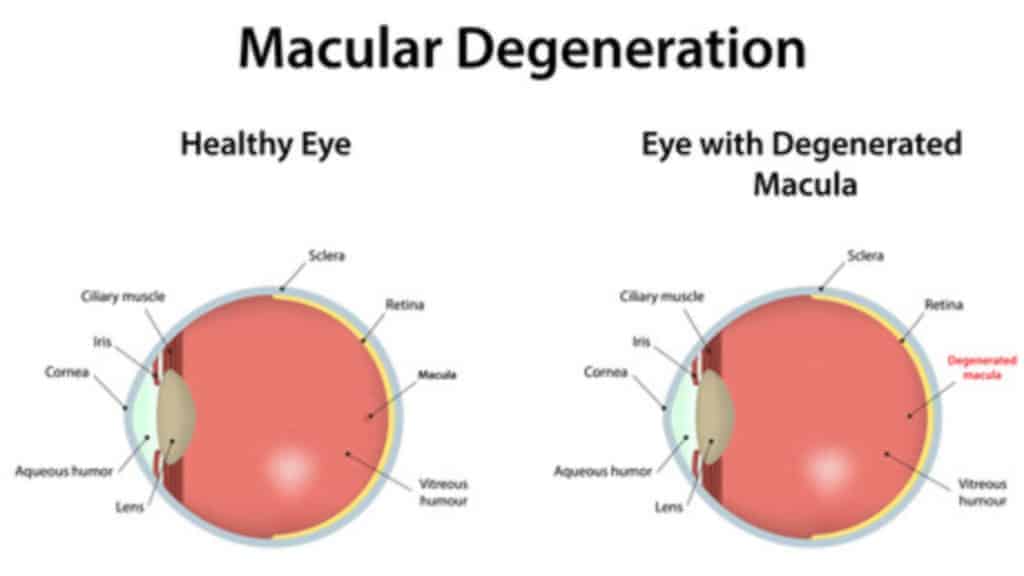
The macula is the sensitive area within the retina, and it deteriorates as you age. Once this area degenerates, it affects the central vision. Though it’s thought of as a condition that only affects those of advanced age, it can also occur if you have experienced an eye injury that affects the retina.

In most cases, MD progresses very slowly, but there are a few cases when it happens over a period. Those who have a slow progression will notice blank spots that appear in their central visual field. Though initially, this disease will not cause you to go blind, it will eventually take your sight in later stages.

As it progresses, you won’t have enough vision to read a book or clean your house. Sadly, you will eventually lose the ability to see the face of your loved ones. MD starts with little to no symptoms, so it’s essential to have a yearly eye examination to see any changes to the central visual field.
macular degeneration

5. Cataracts

Developing a cataract is quite common in adults age 60 and older. There is a protective lens that covers your eye to filter out dirt and impurities. As this lens ages, it becomes cloudy and hard to see through. Think of it as a car window that is fogged-up from temperature fluctuations.

Lenses with protein buildup can make seeing impossible. Though you still have necessary visual abilities, you cannot drive at night, read a book, or make out the expression on your loved one’s face. These changes happen gradually, which gives you enough time to get treatment before you have poor vision that affects your daily life.

Early on, you won’t notice many changes to your site, but as the condition progresses, so does the visual problems. The lenses are foggy because of age and a protein buildup that forms on them. Sadly, these cloudy lenses are the most common cause of blindness in the world.

A surgeon can remove the clouded lens from your eye and replace it with a plastic one that allows you to see. Another option is to use sound waves to break up the protein layer and suction if from the lens. If you leave this condition untreated, it will cause complete vision loss.

6. Diabetic Retinopathy

Your blood sugar levels need to stay around 100 to 125 mg/dl. When your blood sugar consistently stays over 140 mg/dl, nerve damage occurs within the body. One of the major areas affected by high glucose levels is the eyes.

Diabetic retinopathy is a condition caused by high sugar levels in the body. The nerves in the eyes become damaged. The most common symptom of this condition is blurry vision, though you may experience dry eye too.

In some cases, the problem is temporary as sugar levels are too high and causing the eyes to react. However, if the glucose is left too high for too long, then the damage can become permanent. The first stages of diabetic retinopathy cause little to no symptoms, but eventually, it will progress to complete blindness.

With this condition, the body gives subtle warnings that your visual fields are being affected by the high sugar levels. Thankfully, if you heed this indication, you can reverse the problem and restore your sight. It’s estimated that there are more than 34.2 people in this country with Type 2, and over eight million individuals don’t know they have it.

It’s imperative to pay attention to any visual changes in your eyes, especially if you are at a high risk of developing Type II. Things that can increase your likelihood are obesity, family history, and a poor diet.

losing weight

Here are seven hidden reasons why you are struggling to lose weight.

7. Floaters and Flashes

It’s completely normal to have floaters or flashes occur in your field of vision. The fluid that surrounds the eyes can get various debris in them as you age. The floaters you are seeing are merely shadows of that debris in the eye’s fluid.

Keep in mind that about 99 percent of the time, these nuances are harmless. However, an abnormal amount of this activity type can indicate a detached retina, which is a severe condition. A detached retina can cause poor vision or a complete loss, but floaters and flashers don’t cause such issues.

8. Glaucoma

When abnormally high pressure exists in the eyes, it causes damage to the optic nerve. This damage is known as glaucoma. This disease may not produce any symptoms, or you may have tunnel vision or blind spots.

If not treated, glaucoma causes complete blindness. Even those that do have treatment will likely lose their sight as time goes by. There are strong genetic links to this visual disturbance, so if it runs in your family, then it’s best to be checked.

9. Retinitis Pigmentosa

Retinitis Pigmentosa or RP is a hereditary condition that affects the retina inside the eye. The light-sensing cells within the eye become damaged, and the retina will slowly deteriorate. There is no cure for RP, and it affects more than one out of every 4,000 people.

Folks with RP usually notice changes to their colored vision and are disturbed by bright lights. Eventually, the entire visual field will be affected. RP almost always causes complete blindness, and no treatment is known to slow the progression.
poor visionFinal Thoughts on Identifying the Causes of Poor Vision

Do you know what is considered normal visual changes as you age and what’s regarded as a cause for alarm? It’s common to have some changes as the body grows older, but some things are worrisome.

The best way to combat any vision problems is to have your yearly eye exam, especially as you age. Any changes that are troublesome to you need to be evaluated immediately. Putting off these matters can cause poor vision and blindness.

In some cases, the body is trying to tell you about an underlying problem, such as high glucose levels. Your prompt attention can save your sight and your life in these instances.


10 Ways to Move Out of the Friend Zone and Into A Relationship

When it comes to relationships, there’s nothing worse than being stuck in the “friend zone.” When you long to be a lover, being trapped in this minimal position can cause you a significant internal struggle. Some people are afraid to move forward, while others battle conflicting emotions for months or years of their life.

It’s humiliating to be only thought of as “just a friend” when you desire so much more. Many times, people are afraid to take the next step because they’re worried they will lose a good friend, embarrass themselves by admitting their feelings, or are worried that it won’t work out. It’s complicated to make the shift from friend to lover, but you must follow your heart.

You can live in silent torment if you’re pining away after someone who is a close friend, and you want more. The long nights of hopelessly wanting and waiting for more seems unbearable. If you’re going to put your feelings on the line and still maintain a sense of dignity, then here are some ways to move beyond the “just friends” state.

10 Ways to Make it Out of the Friend Zone

friend zone

1. Assess the Risk

There are significant risks to jumping out of the friend zone and into a relationship. What would happen if it doesn’t work out? Once you’ve crossed that line, it isn’t easy to go back to just friends. Can you handle the possibilities of them out of your life?

Make a pro and con list of how to handle the situation. Do the benefits outweigh the risks? Have there been any behaviors or indications from him or her that they want more? Think carefully before you make your next move.

2. Develop a Game Plan

Once you’re ready to get out of the friend zone, it’s time to formulate a plan. Do you want a romantic dinner by candlelight to tell them how you feel, or do you want to take them to a park surrounded by nature? It’s essential that you set the stage for the big announcement.

Make a straightforward plan of what you will say, where it will be, and how it will occur. Maybe you could take them to your favorite coffee shop to talk over a cup of Joe.

3. Find the Right Time

Timing is everything in life. You don’t want to ask for a person to leap out of the friend zone the week of finals. If their mind is already overwhelmed by everything going on, then you may not get a receptive response.

Additionally, they may not feel that they’re in a place to develop romantic attachments with so much other stuff going on. It’s best to find the right moment. Then again, there may never be a perfect time, and you shouldn’t prolong the conversation as it only extends your torment.


4. Empower Yourself with Confidence

Whether you’re a man or woman doesn’t matter, it’s challenging to speak up when your dignity is on the line. You must use courage over your fear to tell the other person how you feel. If you don’t take the chance to speak up about your feelings, you may lose them to someone more open and honest.

You need to muster up all the internal strength you can find to tell this person the truth. Remember, you have nothing to lose by being honest, and you might gain everything. It’s always better to be upfront and truthful than to sit by and remain quiet and frustrated.

5. Don’t Go Straight to Sexual Places

If you’ve never had a talk with your friend about being more than just buddies, you shouldn’t go right to sex talk. Sure, they’re smoking hot and sexy, and you dream about making love to them, but if you come out of the gate with this statement, you may scare them away.

It would be best if you told them why you feel so strongly about them. List their qualities that you find attractive such as their eyes or hair. Also, you should bring out things about them that you appreciate beyond physical beauty.

If you want to give your conversation power and merit, then you need to speak your heart. There will be plenty of time for romance later. Right now, you need to get down to business with a serious conversation about your future.

6. Have a Conversation Face-to-Face

There are some conversations that you don’t have by text or by email, and flipping from a friend to a lover is one of them. It’s easy to send a text and wait anxiously for them to answer, but it’s best to look them eye-to-eye and tell them how you feel.

The direct contact and body language let them know that you are serious about them. The other party needs to see how much this means to you. They need to hear the conviction in your voice and see the warmth in your eyes.

It’s easier to say “no” when you’re sending a text, but it’s more challenging to deny true feelings in a person to person setting.

relationship quote

7. Don’t Beg

You want to keep your dignity intact in case this conversation doesn’t go the way you want. Try to come up with a statement that is a few sentences at most. You want to get to the point and stop chattering.

Don’t beg or plead or make bargains for someone to want you as more than friends. Either there’s more there, or there isn’t. You need to state your peace and then give him or her time to say how they feel. Always speak directly to them and be confident. Don’t hesitate or stutter over your words.

quotes

8. Be Honest with Yourself

Regardless of how things went down, you need to be honest with yourself. If they didn’t give you the answer you want, don’t hold on thinking they will change their mind. You are only wasting precious time that you could spend with someone else.

If they admitted that they have feelings for you and want to move out of the friend zone, you need to be honest enough to realize this changes everything. Once you cross from friends to lovers, there’s no going back to the way things were.

9. Make Them Miss You

If you didn’t get the answer you want, or they need time to think about things, then you need to give them some space. One of the best tricks in the book is to make them miss you so that they can see how much they genuinely care about you.

Being in the friend zone for an extended period can mess with your mind. While men and women can certainly be friends, there’s always that inner drive that makes one or both want more at some point and time. If they’re unsure how they feel about moving on from the friend zone, spending some time apart may be just what they need to sort out their feelings.

10. Admit Defeat and Move On, If Necessary

You don’t want to hang around any longer than you need too. If you’ve put your feelings on the table, then things will never go back to the way they used to be. If they don’t want any romantic attachments with you, then cut your losses.

There are very few times in these instances where you can salvage the friendship as most of the time. People will go their separate ways. When one wants to be romantically involved, and the other wants to be just friends, it doesn’t work. Admit the relationship was never meant to be, and simply move on.

friend zone

Here are the signs that reveal your guy friend is interested in romance.

Final Thoughts on Admitting Defeat if You Do Not Break out of the Friend Zone

The old saying states that it’s better to have loved and lost than never to have experienced love at all. Perhaps, Alfred Lord Tennyson was never stuck in the friend zone when he made such a statement. Still, with each time you give a piece of your heart away, it’s one part of it that you can’t get back.

There is no better feeling than love. It can get you through the darkest nights and give you a reason to get up in the morning. Sadly, there is also no more considerable pain than that of lost or unrequited love.

Think long and hard before you attempt to make the jump from friends to lovers. There is much at stake, and this move will change everything. Try some friendly flirting first and see how and if they respond to your subtle advances.

It’s always best to have some assurance before you take the plunge, but sometimes you must close your eyes and jump!

10 Quirky Habits to Avoid That Probably Annoy Your Partner

All is fair in love and war,” or at least that’s what the famous adage says. Being head over heels in love with someone is fantastic, but that doesn’t mean that their quirky little habits won’t drive you batty.

Did you know that most relationships end over silly things, and many of these personal habits can be changed?

Now, you should never go into a relationship with the hopes that you will change someone’s ways. If they’ve been leaving the cap off the toothpaste for 20 years, it’s highly doubtful that you are going to make them turn over a new leaf. Thankfully, some people are willing to change or do better and put their quirky little habits to the side of the sake of love.

Ten Quirky Habits That Annoy Others

hiding secrets

These twelve red flags might reveal that your partner is secretly hiding something from you.

So what are the most annoying personal habits that can drive another person mad? You might be surprised that things like throwing clothes on the floor and drinking out of the milk jug didn’t make the cut. You probably won’t be shocked by the items on the list, and if you do some of these things, then maybe it’s time to change.

1. Avoiding Domestic Obligations

While cleaning isn’t high on anyone’s list, it certainly is an essential part of a relationship when you live together. Guys tend to leave the toilet seat up and the sink full of dishes. A clean home is always a happier home.

Did you know that when you have a clean and organized space, it can help you to relax? There is some psychology behind having your home in order. Some people cannot function in chaos, be it in their home or work. So if you’re not a domestic god or goddess, then this is something that can annoy the other person.

2. Releasing Bodily Gasses

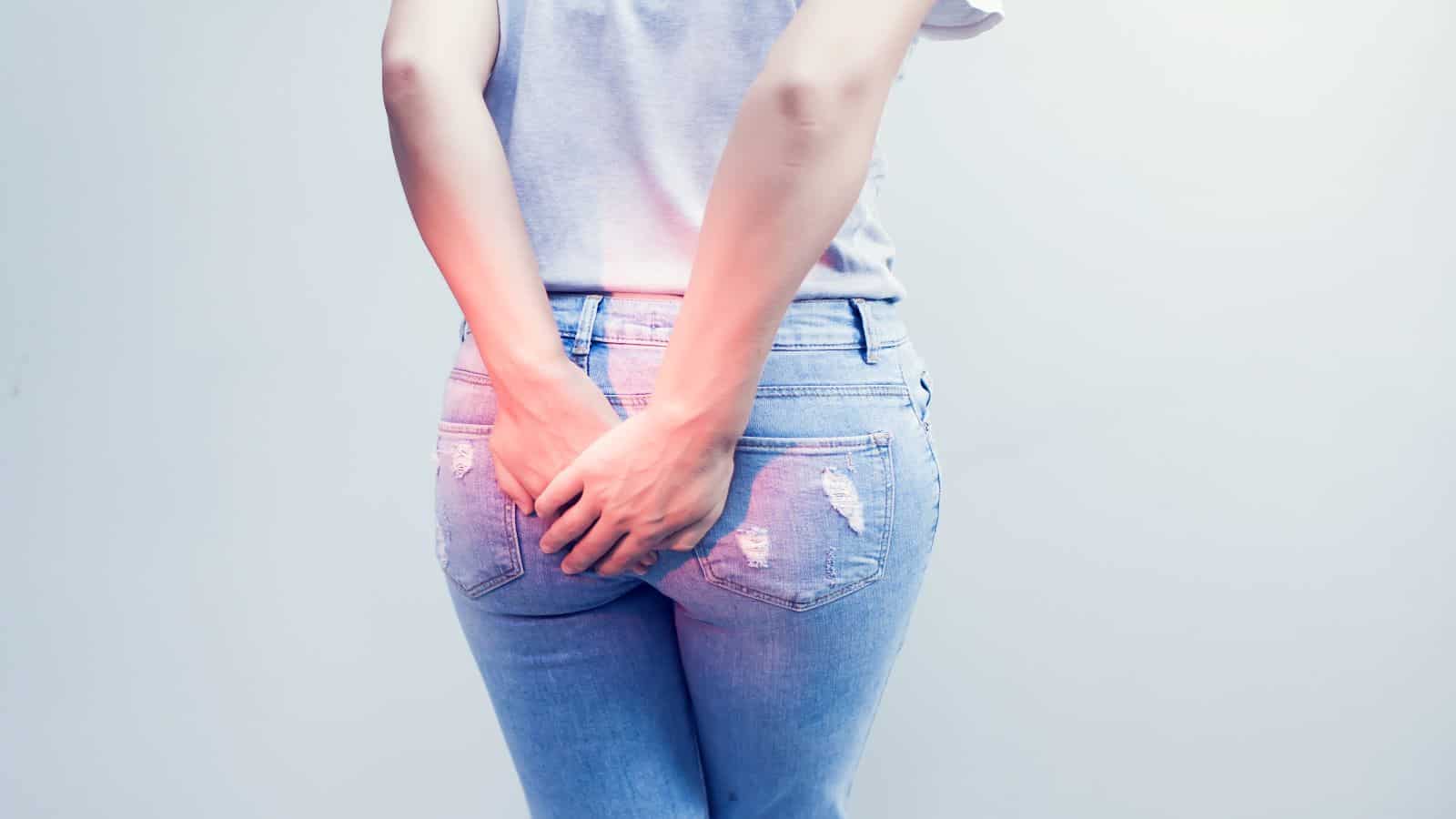
Everyone has gas from time to time. Whether it’s breaking wind from your backside or burping, it’s not a pleasant experience for those around you. There is no way you can stop the inner churnings of your body, but you can be discreet about how you relieve yourself.

If you feel the urge to burp, then cover your hand with your mouth to avoid any foul smells from protruding out. It’s also polite to say excuse me when this happens. If you must break wind, then, if possible, excuse yourself to the other room. No woman or man wants someone passing gas continuously while they are watching a movie or at dinner.

A “slip out” occasionally is acceptable and considered normal. However, if you’re always having these issues, then buy some gas reliever pills or leave the room as a courtesy. You may need to change your diet or see your doctor if your need to relieve gas becomes excessive.

quirky habits

Here are twenty things that cause humans to fart.

3. Talking About Ex-Lovers

Everyone has a past, but you don’t want to hear about their past time and again. While you need to be transparent with your partner about who you’ve been with, they don’t want to listen to his or her name repetitively.

The worst thing a person can do is compare you to their ex-lover. Get everything out on the table at the beginning of your relationship, and you should leave the past behind you and move forward. If you continuously mention a past lover, then they may feel that you still have feelings for that person that you haven’t resolved, which may be the truth.

4. Sleeping Too Late

One of the worst personal habits that can drive your partner crazy is when one person sleeps half the day. Are you a night owl, and your partner is an early bird? You must be on somewhat of the same page for your relationship to work.

If your partner hits the gym at 6 am and has half of the day done by the time you get out of bed, it can be a real issue. Try to get on a similar schedule that works for both of you. Staying up too late and sleeping all day can mess with your circadian rhythms and even your mental health.

5. Inappropriate PDA Balance

Public displays of affection mean a lot to some people, and others try to avoid them. It would help if you discussed your preferences on this matter at the beginning of the relationship, or it can be a quirky habit that is a source of contention.

Some people don’t like to draw attention to themselves or their bodies while in public. If you want to melt into the room and your partner wants to be the center of attention, things can get uncomfortable.

6. Always Negative

It’s hard to be positive 100 percent of the time, but it can bring you down when someone is always negative. Do you find that your partner tends to be a pessimist while you are more of an optimist? No one likes to be around a “Debbie Downer” or a “Negative Nelly,” so you need to bring attention to this quirky habit.

Call them out on their negativity, and you should give them tips and tricks for looking towards the sunny side of life. Sure, there are things that you can focus on that can be extremely uncomfortable to deal with, but your attitude will dictate everything.

spark between two people

Recognize the signs of a spark between two people.

7. They Talk Down to You

No one wants to be with someone who puts them down or acts superior. If you feel like you don’t do anything right in your partner’s eyes, then it may be time to move on. People who are talking down to you are trying to cope with insecurities within themselves.

There is usually a reason why people are looking or speaking condescendingly to you, and most of the time, the issue has nothing to do with you. Some may call this a quirk, but it isn’t polite to put yourself in a lofted position and look down on those around you, especially your partner.

8. Constantly on The Phone

There is nothing more infuriating than someone who is on their phone 24/7. If you are trying to talk to them, but they are too busy playing games, answering texts, or taking calls, it speaks volumes about their interest in you. There should be a dedicated time for you to talk on the phone, and there should be time to spend with your partner.

Don’t play second fiddle to an electronic device as they may have a smartphone addiction. Your relationship must be significant enough to put the phone down, and your partner should listen to what you have to say.

9. Doesn’t Like Your Friends

Your partner is not going to like every one of your friends, but there should be some mutual respect. Understand that your significant other has a life outside of you. Just because you’re in a committed union doesn’t mean that you should lose your individuality.

There is usually an underlying battle about friendships. Guys don’t like giggly girls hanging out at the house, and women don’t want the buddies hanging around playing poker. Some people forget their buddies when they start dating seriously. If your partner doesn’t like your friends, they don’t need to be down on them or wanting you to avoid spending time with them either.

10. They Don’t Care About Their Outward Appearance

Call it quirky or downright disgusting, but some people have horrible hygiene. There’s nothing worse than someone who doesn’t have very high regard for the way they look or smell when they’re in public. It can be very embarrassing if your partner hasn’t washed their hair in days, or their shirt is so dirty that it could stand up in the corner alone.

You can ask someone to shower more, use deodorant, or wear some perfume/cologne, but you can’t make a person who has lackluster hygiene change. If someone would rather wear a wrinkled shirt and soiled jeans to the store with bedroom slippers, you should have a serious talk with them about their appearance and how it affects you.

quirky habits of a partnerFinal Thoughts on Working Through Annoying and Quirky Habits

Coming together to form a union, whether through marriage or a verbal commitment, can be a difficult task. You will always find all these little quirks and habits that drive you crazy about your lover. What you can’t do is let these habits define your relationship.

There are some quirks that you can and should put up with as part of being a couple. However, there’s a big difference in missing the trash pickup a couple of times and talking down to you. You must evaluate if the relationship is healthy enough to sustain the good and bad times.

Many people think that they’re in love when they start dating. Consequently, true love doesn’t occur until you’ve seen a person at their best and their worst. Once you’ve sat beside someone at a hospital, funeral, or held their head while they were sick and vomiting, it’s only during these storms of life that you truly learn to love and respect each other.

Lust fades, but a commitment build on true love will withstand the test of time. Does your partner have quirky habits, of course, they do? You must ask yourself if these little habits are relationship breakers.

How to Make an Oatmeal Bath to Soothe Chapped Skin and Sunburn

Your skin is a protective covering for your whole body, and it is also your largest organ. You’ve spent a lifetime cleaning and nurturing your skin, so it will continue to make you look youthful and radiant. An old-fashioned oatmeal bath can be a comforting part of your daily beauty routine.

Unlike many of your vital organs, much of your skin is exposed to the elements, especially the sun. How you care for your complexion now will be evident when you are older. Fashion icon Coco Channel once observed that although nature gives us a beautiful face in youth, we all will get the skin we deserve when we’re older.

Yesterday’s Tan is Tomorrow’s Wrinkles

Remember when sunbathing was popular in earlier decades? Hollywood insisted that a sun-kissed complexion was the ideal beauty. People of all ages donned sunglasses and rubbed themselves down with coconut oil for the perfect bronze body. Their sun worship often led to sunburn and permanent skin damage.

You can usually recognize those who were sunbathers in the past. Many of these people have prematurely aged with tell-tale wrinkles and dark, leathery skin. Unfortunately, sun damage often causes skin cancer and other dermatological maladies. Are you paying for basking in solar rays when you were younger?

Since medical experts have spread the warning about the dangers of overexposure to the sun, most people have responded accordingly. Do you practice skin safety in the sun? Some of these best practices include sunscreen, wearing hats and light clothing, and avoiding the sun during peak hours.

Despite your best efforts, you may come home from the beach or pool with an accidental sunburn. They can range from mild redness and irritation to severe burns with blistering and pain. If you have a severe burn with blisters, seek medical attention as soon as possible.

Mild burns will often sting for a while, then fade into intense itching and skin peeling. It can be miserable when you are trying to go to sleep. What can you do to soothe your irritated skin?

Eliminating Eczema

Another skin complication that many people experience is eczema, also known as atopic dermatitis. Dermatologists have recognized at least six different skin conditions and say that patients can have one or more types simultaneously. These skin experts estimate that at least 30 million Americans battle atopic dermatitis every year.oatmeal bath

While environment and other variables may come into play, the cause of atopic dermatitis remains a mystery. If you have been diagnosed with this common skin ailment, you’re all too familiar with its symptoms. You’re usually plagued with dry, patchy skin that is continuously itching and flaking.

One of the strange things about atopic dermatitis is that it can flare up when you least expect. Then, the symptoms can disappear and not return for weeks. Because of this, some dermatologists suspect that atopic dermatitis and its variants could be an autoimmune disorder.

How can you find natural relief from this bothersome skin ailment? Countless people say that a warm oatmeal bath does the trick. It calms the nagging itch and rehydrates dry, flaky skin.

Knowing Your Skin Type

Dermatologists usually place our complexions in four categories: normal, oily, dry, or combination. While genetics play a significant role in your skin type, your lifestyle and environment also are key contributors. Each skin type may be sensitive, which creates another set of issues.

You may identify with one skin type or a combination. Many people have dry skin and have issues with an oily T-zone, the area of the forehead, nose, and chin. Season changes, weather, and hormonal fluctuations are often problematic for your skin, regardless of your type.

Not only can a warm, healing oatmeal bath benefit dry, flaky skin, but it can help any type. Oatmeal can dry excess skin oil and act as a gentle exfoliant to prevent pimples. People with sensitive skin attest to its gentle cleansing action that’s free of irritating chemicals or additives.

Oatmeal isn’t Just for Breakfast

When you were growing up, you probably enjoyed warm oatmeal for breakfast. For hundreds of years, oats have been a major cereal crop that provided nutritious food for people and animals. It’s a beloved grain around the world, especially in Scotland and Ireland.

This hearty grain is packed with vital vitamins, minerals, and fiber. Numerous medical studies confirm that using oats topically can also nourish your skin. Oats ground into oatmeal is easier to dissolve in water for a beneficial skin soak, and it’s best to use the whole steel-cut variety.

Many bath and beauty products advertise natural ingredients, like oatmeal. You’ll often see it in soaps, shampoos, and skin products. Sometimes oats are listed by its Latin name, Avena sativa.

skin

Here are skincare tips, according to your zodiac sign.

It isn’t surprising that many of these so-called natural products contain chemicals and artificial ingredients that can irritate sensitive skin. These fad beauty products tend to be a little pricey, too. The good news is that you can use inexpensive oats for a DIY oatmeal bath every day.

How to Create an Oatmeal Bath

Does your skin feel irritated, dry, and itchy from overexposure to the sun or from skin conditions like atopic dermatitis? Is your complexion oilier than usual, and you see more acne outbreaks? Or, maybe your skin looks dull and needs to be revitalized.

For any of these conditions, look no further than your pantry. Our ancestors used natural ingredients they kept at home for health and beauty remedies. Oats were one of their top choices when it came to skin conditions.

Do you want to soothe burning skin and nourish it at the same time? Try a soothing oatmeal bath, and you may see a calming difference. Here are some quick tips on preparing this natural and therapeutic bath.

• A Recipe for Success

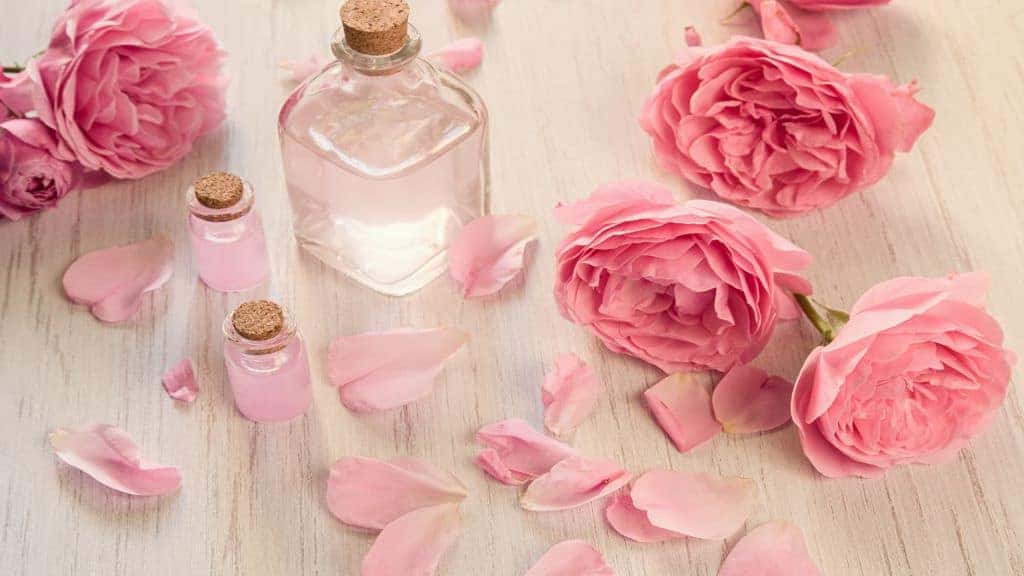
rosewater

Read how adding rosewater to your beauty routine can lower your stress levels.

Oats are probably one of the cheapest yet most nutritious grain on the grocer’s shelves. For your bath, purchase the old-fashioned rolled variety, not the steel-cut oats. You needn’t buy the most expensive name brand since a bargain one will do just as well.

The Internet is loaded with recipes to create an oatmeal mix for bathing. It is up to you whether you prefer plain oatmeal or want to add other beneficial ingredients. Here is a basic recipe that works well for dry or sun-kissed skin. You will need:

  • A blender
  • ½ cup ground oatmeal
  • 1 cup whole milk, or goat’s milk
  • ½ cup honey
  • ¼ cup almond oil
  • Ten drops of your favorite essential oil, like lavender

Put the oatmeal in your blender and pulse it at high speed until it turns into a coarse flour. Add the milk, honey, almond oil, and essential oil and blend for about three seconds or until totally blended. Pour the mixture into a sealable container and use it within three days.

Feel free to experiment with other recipes to find the ones that you like best. Since these mixtures don’t have preservatives, they can’t be stored for long periods. If you notice that your bathing mixture is making your skin condition worse, discontinue using it.

• Adding Moisturizers and Essential Oils

The first recipe incorporated milk, honey, and almond oil for a boost of hydration for your skin. Some other moisturizers you can consider adding are aloe, lanolin, coconut oil, or shea butter. Most essential oils have antibacterial and antifungal properties, and they lend a calming fragrance to your bath.

Feel free to experiment with other recipes to find the ones that you like best. Since these mixtures don’t have preservatives, they can’t be stored for long. If you notice that your bathing mixture is making your skin condition worse, discontinue using it.

• How to Use Your Oatmeal Beauty Bath

Oatmeal is so gentle that dermatologists often recommend it for the most sensitive skin. A warm, soothing oatmeal bath can be mild enough for your baby’s skin, as directed by your pediatrician. Some people can be allergic to oats and should avoid using it in their bathing or beauty regimens.

It’s best to use your oatmeal mixture within three days, immediately if possible. Hot water isn’t good for dry or irritated skin, so fill your bathtub with warm water. It’s up to you if you want to wash with soap or just use this instance as a therapeutic soak.

As the tap is running, add the full container of the oatmeal mixture into the water. The force of the water will disperse the mix throughout the tub. Before you get in, you might use your body brush to stir the water for a better distribution of the oatmeal.

Sit back in the tub, soak, and relax. Use a clean, soft washcloth to rub the oatmeal-infused water gently over your body. If you like, light candles and burn incense for total tranquility and relaxation.

oatmeal bath

An oatmeal bath is also an effective natural remedy for eczema.

Final Thoughts on Enjoying a Comforting Oatmeal Bath

There’s no need to fill your tub with chemicals that can enhance your water when nature provides everything you need. If you want to love the skin you’re in, then using oatmeal is an excellent way to soothe it and make it look amazing. Oatmeal exfoliates and promotes healing and rejuvenation.

10 Science-Backed Benefits of Manuka Honey

Thanks to the generosity of the humble honeybee, we share a sweet sensation called manuka honey. Historical accounts mention its discovery and use as far back as 4000 BCE. Its imitable sweetness has been preserved in art, literature, and our terms of endearment.

A Honey of a History Lesson

Just about every culture in history and modern times has a love affair with the golden elixir known as honey. Did you know that archeologists have found preserved jars of honey in the royal tombs of ancient Egypt? Hieroglyphics depict how the Egyptians adored honey for food and medicine and venerated their honeybee benefactors.

This heavenly nectar had prominent roles in early Asian, Greek, and Roman civilizations. Some cultures savored honey so much that it was often used as a currency or for a prospective husband to present to the family of his bride-to-be.

How could our industrious honeybee friends ever improve on such a perfect food? Countless studies suggest that honey is loaded with vitamins and minerals and has significant antibiotic and antifungal properties. However, it may have powered up as a type called manuka honey.

honey

The Birds, Bees, Flowers, and Trees

If you are a honey connoisseur, you realize that its color, consistency, aroma, and taste are contingent on the flowers the honeybees visited. It ranges from the lightest honey from acacia pollen to the darkest buckwheat honey and across the spectrum.

Unfortunately, the only honey familiar to many Americans is the watered-down versions often found in grocery stores. Those cute plastic containers shaped like bears aren’t an accurate representation of the vast flavor nuances in pure honey.

What is Manuka Honey?

During the eras of European colonization, travelers introduced European honeybees wherever they settled. When British colonies were established in Australia in the 19th century, their honeybees relied on native flora for honey production, mainly from species of manuka bushes.

These fragrant flowering shrubs are native to Australia and New Zealand. Indigenous people in both island nations valued manuka varieties for their impressive medicinal properties. European honeybees were drawn to the blooms of manuka and produced thick, ebony honey from its pollen.

However, many locals often didn’t appreciate the dark, robust honey, which sometimes ended up flavoring livestock feed. It wasn’t until almost a century later in the 1980s that Dr. Peter Molan and other scientists discovered that this honey carried the same medicinal properties as manuka plants.

When these multiple studies demonstrated several health benefits of manuka honey, it became a health food buzzword. Today, certified pure manuka honey commands a premium price. Australia and New Zealand continue a heated debate as to which country has the rights to the name.

New Zealanders claim that since their bees only visit the main species of manuka, they deserve the rights. In the United States, you can purchase this fragrant honey in its pure form, as a food ingredient, or in supplements. Before you complete the sale, be sure that the honey you’re considering is certified pure and isn’t blended with corn syrup or water.

Is buying this unique honey worth your time and money? Is it any more beneficial than other varieties? Consider these ten benefits of manuka honey as a natural remedy.

1. Caring for Wound

Sometimes, you may not have a triple antibiotic ointment to dress a wound. Reach for the honey of the manuka bush instead. If you have a scrape or minor cut, simply dab some of the honey on a waterproof dressing and place it over the wound.

The antibacterial properties of this natural wonder will protect the wound from dirt and will kill invading germs. Remember to change the dressing frequently as the wound heals. If the injury is deep or becomes infected, seek medical attention immediately.

2. Building Your Immune System

Are you searching for a way to boost your immune system naturally? Medical reports show promising results from using manuka variety of honey. Scientists have discovered that it encourages white blood cell production to resist illness and disease or fight those already present in your body.

Use it the way you enjoy other honey varieties and add stir it into your morning tea or oatmeal. It can also help your digestive system. Some people also savor a little honey on their toast.

3. Honey-Kissed Complexion

Do you battle dry skin and other dermatological issues? This healing honey makes a superb facial mask that will soothe dry, irritated skin, and eczema. If you have acne, the honey’s antibacterial properties can kill and wash away harmful bacteria that cause breakouts.

Use a few tablespoons of honey to rub directly on your face to create a mask. Leave it on to saturate your skin for at least 15-20 minutes. Use a clean washcloth and warm water to gently wash the honey mask from your face, leaving a healthy glowing complexion.

4. Honey Makes Your Smile

If you want a clean bill of health on your next dentist visit, you might consider using this honey. It has naturally occurring hydroperoxide, which kills the germs responsible for tooth decay and gingivitis. Instead of toothpaste, use this honey on your toothbrush to promote dental health and freshen your breath.

brushing your teeth

Learn four ways to remove harmful plaque from your teeth.

5. Lower Your Bad Cholesterol

By now, you’ve probably talked to your professional healthcare provider about the importance of regulating your harmful cholesterol levels. Elevated levels of bad cholesterol, or LDL, create fatty deposits in your circulatory system, causing clogged arteries.

When this happens, you are at risk for a heart attack or stroke. Scientific evidence shows the promise of this honey variety lowering your LDL levels. Remember never to reduce or stop your prescribed cholesterol medication without consulting your healthcare provider.

6. Healthy Hair and Nails

Using honey from manuka not only benefits your skin, but it is also a natural remedy for healthier hair and nails. Age, lifestyle, and environment can play havoc on these protein-based features and makes them dry, brittle, and dull.

Use it as a hair conditioner, rub a couple of tablespoons through your wet hair, wrap it up in a towel and allow it to sit for about 20 minutes. Rinse with fresh water as usual. You can also use honey to condition your nails to strengthen them and encourage them to grow.

7. Breathe Easier With Manuka Honey

Anyone with respiratory issues knows how miserable it can make a person feel. Have you been diagnosed with chronic sinus infections or bronchitis? Many people around the world have found relief when they make this honey part of their diet or enjoy tea.

It has natural antibacterial and antiviral properties, which helps build a defense against nasal allergies or upper respiratory issues. It can also help treat those who have seasonal allergies or asthma. Of course, honey shouldn’t be used as a replacement for your prescribed medication or treatment, but as a complementary agent.

long pepper

8. It Can Help Type 2 Diabetes

Although this honey is delightfully sweet, it does have a lower glycemic index than regular sugar. People with Type 2 diabetes can often eat sparing amounts of honey without raising their sugar levels. Some studies suggest that manuka properties may lower blood sugar in some instances.

Consult your healthcare professional about using manuka honey as part of your prescribed diabetic diet. It is still a sugar and should be used with caution while you monitor your blood glucose levels. Since everyone is different, honey may not be right for you.

9. Manuka Honey Can Fight Inflammation

Medical specialists say that inflammation plays a crucial role in most of our sicknesses and disease. White blood cells rush to defend the body against invading microbes, bring more heat and blood flow to the area. The result is painful inflammation.

Did you know that you can have inflammation problems without realizing it? Some people who eat honey everyday notice a change in their inflammatory conditions. There are even reports of people with cancer who have benefited from daily honey doses.

10. Manuka May Help Heal Ulcers

Ulcers on the skin or in the digestive tract are painful and can be life-threatening. While they are healing, these virtual holes are at risk for invading bacteria. Manuka honey has shown promise as a healing and protective agent with these ulcers.

Many hospitals and wound clinics over the world offer ulcer dressings saturated with medical-grade honey. It soothes the irritated ulcer while it blocks germs that can cause infection. Taken internally, it can also benefit gastrointestinal ulcers.

manuka honey

Researchers reveal what happens to your body when you drink honey-water daily.

Final Thoughts: A Sweet Conclusion About Manuka Honey

As with any honey variety, never give manuka to children under a year old. Honey may also interfere with certain medications and chemotherapy drugs. If you are allergic to bees, you should stay away from manuka or anything made with it.

If you want to enhance your immunity and general well-being, manuka honey may play a role. Enjoy it in moderation and discontinue if you notice any unusual side effects. Kudos to our honeybee neighbors for sharing food that can benefit us all.

How to Use Castile Soap to Clean Your Home and Body (No Chemicals)

No matter where you are, germs are around. They’re in the air, on your food, water, and even on your body. Luckily, your immune system regulates the majority of these germs. For the bacteria that your immune system doesn’t eliminate, you’ll need a great cleanser.

With the number of toxins and chemicals in commercial cleansers, you’re putting you and everyone in your home in danger. To remove germs and stay healthy, you need a gentle cleanser. A great natural cleanser for your body and home is castile soap.

What’s in Castile Soap?

One of the most significant aspects of Castile soap is its healthy ingredients. For one, Castile doesn’t use animal byproducts or harsh chemicals. Often, they use vegetable oil bases mixed with essential oils and natural fragrances.

When you purchase this soap, you’re likely to find some of these ingredients:

Castile soap

Coconut Oil

Coconut oil has a variety of health benefits. It’s excellent for healing burns and wounds. It’s also known for its antimicrobial properties and protects the teeth, hair, and skin.

Hemp Oil

Hemp oil is excellent for all skin types, mainly since it works without clogging your pores. If you suffer from chapped skin or inflammation, then hemp seed oil also acts as a natural pain reliever. You can also use hemp seed oil for hair growth. Hemp oil strengthens the hair follicles and improves scalp health.

Avocado Oil

Avocado oil protects against UV radiation, skin damage, and heals irritated and chapped skin. Typically, avocado oil acts as a beneficial carrier oil in numerous beauty regimens.

Depending on which castile soap you use, they’re typically scented with essential oil. Popular essential oils used to fragrance this soap are lavender, peppermint, and tea tree oil. In addition to their unique smells, essential oils have excellent cleaning properties.

For instance, tea tree oil is a great cleaning agent based on its ability to clean mold and mildew. Tea tree oil also has antiseptic and antiviral properties. Lavender essential oil is antimicrobial, antibacterial, and works as a disinfectant.

Lavender also promotes a calming effect that lasts after cleaning.

Peppermint essential oil is an excellent disinfectant. It’s also great for naturally eliminating pests like insects and rodents from your home. Unlike other pest repellents, these are safe for pets and children to inhale.

You can purchase this soap in liquid and bar form. If necessary, you can convert the bar into liquid form. Based on its healthy, natural ingredient list, Castile soap can be an expensive cleaning agent.

Luckily, it’s concentrated enough to clean after being diluted–and quite effectively. And, of course, you cannot hang a price tag on better health. Right?

essential-oils

Learn why essential oils are safer for housecleaning.

15 Ways to Use Castile Soap to Cleanse Your Home and Body

This cleanser is one of the few soaps gentle enough to cleanse the body but strong enough to clean your house. Although it’s lather isn’t as prominent as commercial soaps, it’s still working. Often, chemicals in soap cause them to foam or froth.

Castile soap is a great cleaning agent for nearly any surface. Here’s a list of ways to utilize this gentle cleanser.

1. Wound Cleaner

Everyone, from time to time, gets a minor wound around the house. Whether it’s a paper cut or a knee scrape, you’ll need to clean the wound to avoid infection. The chemicals in commercial soaps frequently burn, making it difficult to clean the injury effectively.

When you use Castile to cleanse your wounds, you’re also adding healing agents that speed up your recovery.

Add two teaspoons of soap to 2 cups of filtered water. A study proved using this cleansing mixture minimized the risk of wound complications. Best of all, your children can use this solution as they learn to cleanse their wounds.

2. Laundry Detergent

Chemicals and toxins in name brand laundry detergents not only irritate the skin but cause your clothes to deteriorate quickly. When making your detergent, mix a bar of shredded or 2 cups of liquid soap with one cup of baking soda. Baking soda acts as an exfoliant and helps remove dirt from your garments.

If you’d like scented laundry with an extra bit of cleaning power, add 30 drops of essential oils to your mixture. Mix these ingredients in an airtight container and use up to a quarter cup per large load. If necessary, adjust the amount of detergent, especially for delicate or smaller loads.

3. Shampoo

Some people struggle with growing robust and healthy hair. They don’t realize it’s their store-bought shampoo. Commercial shampoos use plastics, dyes, and chemicals that make hair dry and brittle.

Some even disrupt your scalp’s natural balance, which interferes with growth. Making your shampoo allows you to customize your cleaning routine based on your specific hair and scalp needs.

When washing your hair, there are two effective methods. You can either use a small amount of pure soap or a premade mixture.

Wet your hair and apply a small amount of undiluted soap to your hair and scalp. Even though it doesn’t lather like traditional shampoos, your hair will get clean.

For premixed shampoo, add one cup of water and one tablespoon of soap to a container and lightly shake. If you have a bottle with a pump or pourable lid, you’ll have better portion control. Wet your hair and apply the soap to your scalp and strands.

4. Facial Cleanser

This mild soap is excellent for cleaning your skin without stripping your natural oils. Wet your face and apply a few drops of soap to your face. After lathering, rinse, and pat dry before applying toner and moisturizer.

5. Body Wash

In addition to a facial cleanser, you can also use it on your body. Simply add a few drops to your washcloth or loofah for additional exfoliating and shower as usual.

6. All-Purpose House Cleaner

From countertops to toilet seats, Castile soap is strong enough to clean multiple surfaces. Add up to 2 cups of soap to a quart of water. You can strengthen your mixture with 20-30 drops of essential oil. Additionally, the essential oils provide a clean and fresh smell to your household.

Add your mixture to a spray bottle and spray your surfaces. Let sit for a couple of minutes and wipe clean.

7. Mop Solution

If you have pets or small children, you need a natural cleanser to keep your floor clean. Mix a half cup of soap with three gallons of hot water for a mopping solution. You can even spray your all-purpose mixture on the floor and follow up with your mopping solution.

castile soap

8. Toothpaste

Ingredients like coconut oil are great for cleaning and strengthening enamel. It’s an acquired taste, but adding a couple of drops to your toothbrush keeps your teeth clean. You can also add peppermint essential oil to boost benefits.

9. Produce Cleaner

Both conventional and organic products come with dirt and other contaminants on their journey to the grocery store. By adding a tablespoon of this soap to a sink full of water, you can clean your produce. Be sure to rinse off the soap before eating thoroughly.

10. Makeup Remover

Commercial makeup removers contain harsh chemicals that can hurt your skin. For a natural alternative, mix one-part soap with one part carrier oil. Dip a cotton ball into your mixture and remove makeup.

11. Pet Wash

This gentle cleansing agent is versatile enough to clean your pets. The amount of soap you use depends on the size of your dog and their hair. If possible, avoid using essential oils and avocado oil on your pet in case of a reaction.

12. Bug Repellent

If bugs eat your plants, you can create a bug repellent for your garden. Mix a quarter cup of soap with a quart of water in a spray bottle and spray your plants. Try a spot test before spraying your garden.

13. Shaving Cream

When you shave, you need a lubricant to minimize cuts and scrapes. Start by wetting your shaving area and add several drops of soap. This process creates a slippery surface that helps your razor glide as it cuts your hair.

14. Dish Soap

When you clean dishes, the chemicals in soap linger on your dishware. Instead, add several drops of soap to your wet washcloth or sponge and clean your dishes.

15. Glass Cleaner

Not only does glass cleaner contain chemicals, but it can also be expensive. By mixing two teaspoons of soap, 2 cups of water, and a half cup of vinegar, you’ll have a natural, affordable, streak-free glass cleaner.

cleaning productsFinal Thoughts on Using Castile Soap for Natural Cleansing

Castile soap is beneficial for the entire family. If you’re worried about your baby or smaller children, several brands offer tear-free Castile solutions. Based on its all-natural ingredient list, you don’t need to worry about chemical reactions and skin irritation.

Whether you want to use this soap for beauty or household care, its versatility makes it an excellent investment. Even if it appears a bit pricey, it saves money based on its ability to replace your commercial cleaners.

If you care about the overall wellness of your entire family, consider purchasing a bottle of castile soap. You’ll immediately see an improvement in your cleanliness and health.

Eastern Medicine Reveals How Face Mapping Exposes Hidden Stress

Face mapping began in China around 3,000 years ago, and they believe this practice can show one’s inner health, as well as expose hidden stress. Most people deal with occasional skin breakouts and redness and usually turn to skin creams for relief. However, Chinese and Ayurvedic medicine state that skin problems point to underlying health issues, so skin creams just serve as a bandage for the real problem.

Practitioners of face mapping say that each area of the face corresponds to different organs. And that when one goes out of balance, the skin will reflect it. The Chinese believe that an energy force, called qi, or chi, flows to and from organs on invisible pathways in the body. Below, we’ll go over what face mapping can tell you about different aspects of your health, and typical lifestyle habits that sabotage our well-being.

What is face mapping?

cucumber facial

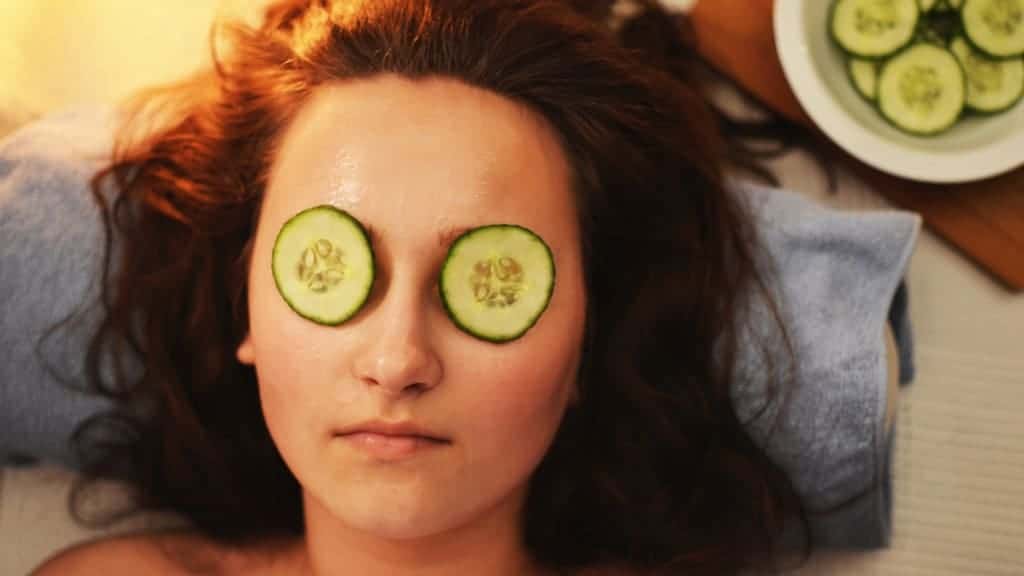
Enjoy the benefits of a spa facial at home using a cucumber face mask. 15 Recipes to try.

First of all, let’s talk a little about what face mapping entails, and how you can use it to analyze your health. Face mapping considers many aspects of what makes up a person’s health, such as allergies, stress levels, hormones, genetics, diet, age, personality, and body type (or dosha, in Ayurveda). Most people seek a face mapping practitioner due to acne, as flare-ups in certain areas mean that specific organs have an imbalance.

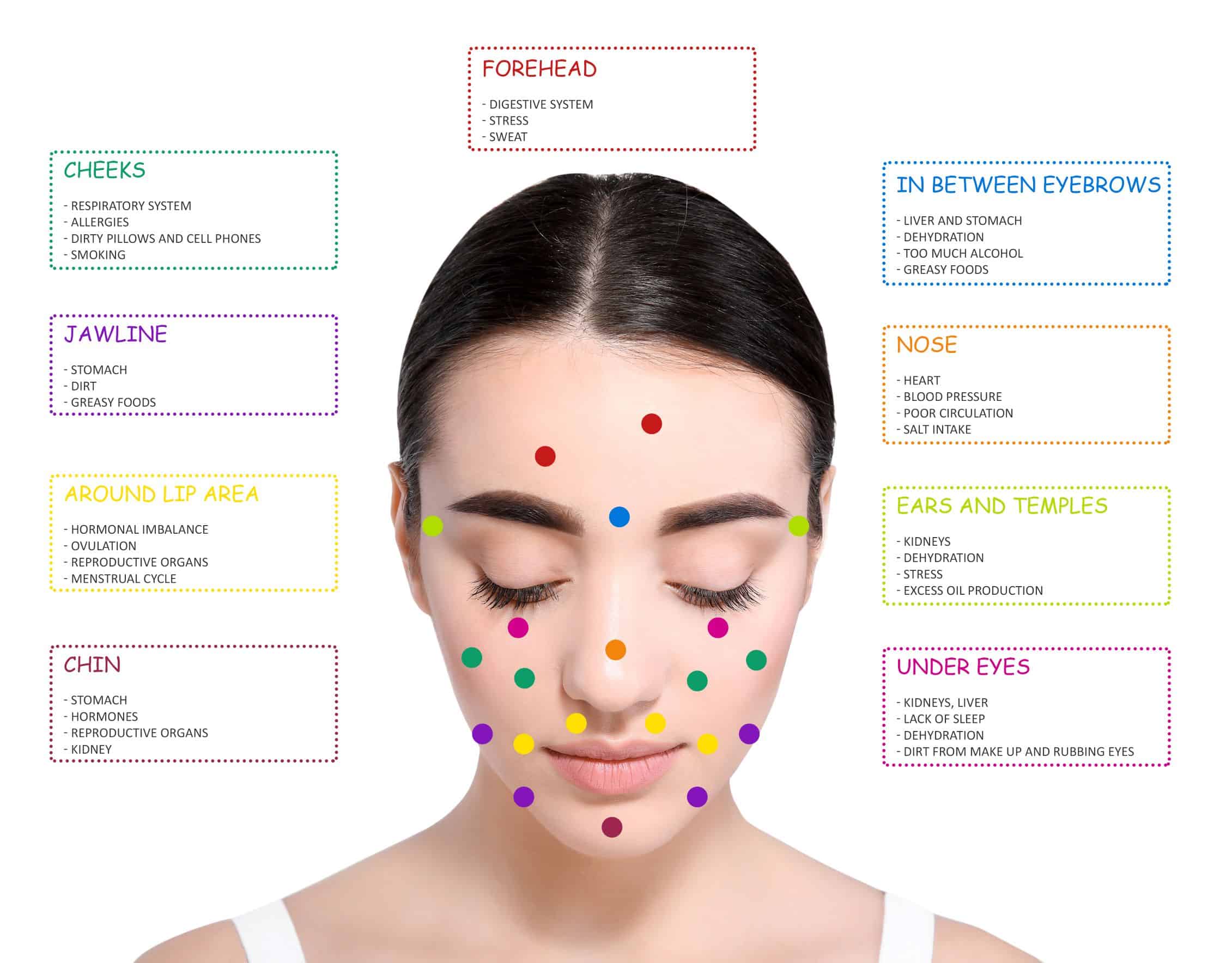
However, you can also use face mapping for skin conditions such as redness, wrinkles, rashes from skin allergies, and other facial conditions. While Ayurveda and Chinese medicine have slight differences in face maps, they divide the face into at least ten zones corresponding to various organs.

Here’s how each area of the face corresponds to a different organ, and what that means for your health:

face mapping


  • Pimples on the forehead —  governed by the bladder and small intestine, may be tied to unmanaged stress, poor digestion and lack of sleep.
  • Breakouts between/above your eyebrows or nose — corresponds to an imbalance in the stomach, kidneys, liver, bladder, or spleen. If you notice acne near your nostrils, it may represent an imbalance of gut bacteria and inflammation in the small intestine.
  • Lines or wrinkles near the eyes or between eyebrows — can indicate repressed negative emotions or a poor diet. Represents problems with the liver or spleen
  • Breakouts or lines above the eyebrows — correspond to problems with the heart.
  • Puffiness under the eyes — poor kidney function, likely due to inadequate water intake
  • Acne below the lips and on the jaw — hormone imbalance, problems with the reproductive system, as well as the large intestine, colon, and stomach. If acne forms below the mouth, it could mean an imbalance in the entire digestive tract. For women, especially, it could mean a problem with the hormones.
  • Red cheeks — usually mean a blockage in the stomach or respiratory system. May indicate gut bacteria imbalance. Breakouts here point to allergies or sinus problems.
  • Red nose — redness or blackheads on the nose may mean heart troubles or high blood pressure.
  • Irritation on your neck — points to stress that affects the immune system.

While face mapping is widely used in Eastern cultures to diagnose illnesses and treat stress, there isn’t a whole lot of evidence to back up the claims. Western medicine tends to ascribe to the idea that pimples appear on the face simply because of overactivity in glands that secrete oils. Some doctors believe that redness on the face may indicate hormonal problems or stress.

Modern dermatology lists the following reasons for acne or redness on the face:

  • Hormonal imbalances, especially androgen dominance which is known to cause acne
  • Elevated stress levels
  • Overactive oil glands in the T-zone of the face, which can lead to breakouts
  • Lack of quality sleep
  • Not washing the face, which allows dead skin and oils to build-up.
  • Poor gut health and poor diet in general
  • Allergies and immune responses
  • Irritation or allergies from skincare and beauty products
  • Genetics
  • Sunburns
  • Lack of circulation
  • Diseases such as heart disease or diabetes
  • Environmental toxin exposure

Face mapping also addresses many of these issues above, especially stress. However, most dermatologists say that you should look at your daily skincare routine and lifestyle choices to figure out the culprit. Do you clean your face every day with non-toxic facial washes? Use sunscreen while you’re out in the sun? Do you eat a balanced diet and exercise regularly? Get enough sleep?

If you follow a healthy lifestyle and still have breakouts, you should consider making an appointment with a face mapping practitioner or dermatologist for more help. While face mapping doesn’t have much science behind it yet, you shouldn’t rule it out as a possible treatment route. After all, they’ve been using it in Chinese medicine for thousands of years, so there must be something to it.

Face mapping can be compared to acupuncture in that they both use the qi, or meridian system, to diagnose underlying problems. However, most studies show that this system “lacks a physical anatomical basis.”

face mapping

Differences between Ayurvedic and Chinese face mapping

In traditional Chinese medicine, they focus more on the body’s meridian system, while Ayurveda diagnoses underlying problems based on someone’s body type or dosha.

There are three doshas: Vata, Pitta, and Kapha, and they determine one’s mental constitution as well. Any physical or spiritual imbalances show up in different parts of the body, depending on the dosha.

In Chinese medicine, they believe that any underlying problems will show up on the face. In Ayurveda, they listen to a patient’s issues and give them a specific treatment based on what dosha they determine suffers from an imbalance.

Dermalogica Face Mapping

Dermalogica is a company that offers skin treatment based on a combination of scientific knowledge and Chinese medicine. While they rely on ancient wisdom from Ayurvedic and Chinese face mapping, they mainly treat issues due to sun exposure, inadequate water intake, irritation from skincare products, and hormonal problems.

According to the Dermatologica website, the skin analysis they perform on patients “involves looking at your skin with a trained eye, touching your skin, and asking you questions about your lifestyle and environment.”

Dermalogica gives you a “Personalized Skin Fitness Plan” based on the results you get from your skin analysis as well as solid dermatology advice. They want to identify each patient’s skin goals and get an idea of their lifestyle so they can recommend products and lifestyle adjustments to fit each patient.

Here are some common recommendations made by the consultants at the company:

  • Avoiding irritating skin care and perfume products
  • Avoid using makeup that clogs pores.
  • Preventing sun damage
  • Getting adequate water intake
  • Addressing stress
  • Eating a balanced diet.
  • Avoiding foods that cause skin reactions
  • Clean your cellphone, pillows, and anything else that touches the face regularly.

The service only takes a few minutes to complete and is done by a qualified representative at Dermalogica. If this interests you, you can look on their website to find a nearby store to get your skin analysis.

In general, doctors and scientists recommend the following to take care of your skin and overall health:

  • Watch your intake of high calorie and processed foods.
  • Avoid too much salt or sugar in your diet.
  • Don’t smoke or drink alcohol.
  • Get enough sleep
  • Exercise regularly
  • Protect your skin when you’re out in the sun
  • Keep your mindset positive.
  • Get regular checkups with your doctor.

stress managementFinal thoughts on face mapping and how it can reveal hidden stress

According to Chinese and Ayurvedic medicine, the face can reveal deeper issues with the organs, such as heart disease, diabetes, stress, and other health problems. Redness, acne, wrinkles, or lines on the face mean that the energy flow is imbalanced in the body. Poor functioning of the body’s organs shows up in the skin because the energy needs somewhere to go, and the skin is the largest organ in the body.

Most people use face mapping because of problems with acne, which practitioners believe could point to a kidney or digestive issue. Also, acne on the chin and jaw could represent higher stress levels and hormone imbalances. Dermalogica face mapping is prevalent in many locations, including in salons and spas. If you’d like to get face mapping services, this one only takes a few minutes and is done by a qualified professional.

How to Make Disinfectant Wipes at Home

There’s nothing quite as satisfying than having a home that is sparkling clean. As you survey each room, you feel pleased that they are clutter-free, and all surfaces are dustless and pristine. It’s what you don’t see that maybe the problem, even in a spotless house.

Studies indicate that we share our abode with billions of bacteria and viruses. While many bacteria are harmless and even beneficial, many more are a health hazard to humans and pets. Cleaning your house does not eliminate all the microbes in the air or the ones that can survive on surfaces for days.

Because of these invisible invaders, you must clean your home with a disinfectant. You’d be surprised where harmful germs are lurking. They cling to nearly all household surfaces, but they can also be present in the air you and your family breathe.

Have you noticed that you or your family get sick often? You may have more asthma flareups or a nagging cough that doesn’t seem to get better. Could your impeccably clean dwelling be hiding germs that are making you sick?

Whatever microbes are in your home’s air that you don’t inhale will settle on household surfaces. When you use a powerful disinfectant on everything in each room, you can kill most harmful bacteria and viruses. Anything that your family touches needs to be properly disinfected to keep illnesses and viral infections at bay.

disinfectant

Common Hiding Places for Microbes In Your Home

If you are like most people, your strictest attention goes to the kitchen and bathroom when you’re cleaning your house. Although you may scrub your kitchen from top to bottom, rouge microbes may be hiding in places you never imagined. Check out these areas when you use a disinfectant.

• Kitchen

Remember that food draws microbes like a magnet, so it’s imperative to keep anything that comes in contact with it clean. Your kitchen sink is a potential breeding ground for bacteria, so disinfect it often. To disinfect your kitchen sponges, run them through the dishwasher or microwave them for two minutes.

• Bathroom

Would you brush your teeth with the same brush you scrub your toilet? Each time you flush with the lid up, you send microscopic fecal matter throughout the bathroom, which can land on your toothbrushes and towels. Sanitize or replace your toothbrushes often and wipe down faucet handles with disinfecting wipes. Finally, close the lid to your commode before you flush it.

• Electronics

Television and gaming controls are notorious for harboring hazardous bacteria because many people don’t think of washing their hands before or after touching them. You can also collect countless germs and viruses on your cell phone, so be sure to disinfect all these technological gadgets.

• Bedrooms

Did you know that you share your bed with millions of microscopic freeloaders each night? You bring germs on your body from outside and in your home, but most mattresses have mites. Vacuum and disinfect your mattress, bedclothes, and bedroom furniture regularly.

• Your Floors

Think of all the disgusting things you walk through in a day. If you and the kids wear your shoes in the house, you are depositing these microbes everywhere you step. To be on the safe side, leave your shoes at the door and go barefoot or wear slippers in the house, and ask guests to do the same.

Difference Between Cleaning, Sanitizing and Disinfecting

disinfectant

20 funny quotes about kids for every parent to read.

We often use the words cleaning, sanitizing, and disinfecting interchangeably, but they are not the same. While each aspect is necessary for a clean and safe home, disinfecting completes the germ-killing task. Once you add it to your list of chores, disinfecting becomes second nature.

Almost everyone has a regular house cleaning routine. When you clean, you remove visible dirt, grime, and dust from everything in the house. Using proprietary or homemade cleaning products as well as other cleaning tools, make your home less inviting to invasive microbes.

You may remove a few germs by cleaning, but you will kill more when you sanitize. Many cleaning products also have sanitizing ingredients for all the surfaces in your home. Sanitizing typically removes enough microbes that scientists deem is enough to be safe.

In addition to regular cleaning and sanitizing, health experts recommend that you also use a disinfectant. When you disinfect surfaces in each area of your home, you can expect to remove nearly 100 percent of bacteria and viruses that can make your family sick.

Choosing a Disinfectant

Do you want to save money and make disinfectant wipes at home? You’ll need a disinfectant, which is inexpensive and easy to find in the store. Buy the best quality brand that your budget allows.

• Isopropyl or Ethyl Alcohol

You probably recognize these as rubbing alcohol. To make wipes that will disinfect efficiently, purchase alcohol that is at least 70%. If you add a little bit of water, you can strengthen the alcohol’s effect.

• Chlorine Bleach

In the household world of disinfecting agents, chlorine bleach has been the reigning Queen of Clean for generations. Bleach effectively kills germs and viruses on contact. The only downside to using chlorine bleach is that it has a strong smell, can be corrosive to some surfaces, and is dangerous if accidentally mixed with other compounds.

• Vodka

If you want to make some disinfecting wipes in a hurry and can’t find anything else, go to your liquor cabinet. Did you know that vodka at least 120 proof can kill bacteria and viruses in your home? It is clear, odorless, and evaporates quickly without the need to rinse.

cleaning products

How to Make DIY Disinfectant Wipes

Are you tired of paying high prices for proprietary disinfecting wipes at the store? Why not make your own and have fun while you are saving cash. Since you are using chemicals, it may be a good idea if you do this project without the kids. Here are the things you will need:

  • An inexpensive roll of paper towels or reusable cloths
  • Your choice of disinfectant
  • If using paper towels, a round container with a lid
  • For reusable materials, use a flat square container with a lid
  • A few drops of essential oil, optional

If you are using chlorine bleach, add four teaspoons of bleach to a quart of water. Remember to use gloves when you are handling full-strength bleach. Never add essential oils or any other solution directly to chlorine bleach because you can create a hazardous chemical reaction.

First, put your paper towels or cloths in the container. Add either enough bleach solution, alcohol, or vodka, so it doesn’t overflow. If you are using alcohol or vodka, feel free to add a few drops of your favorite essential oil for a natural scent.

Did you know that many essential oils are naturally antibacterial and antifungal? Lavender and tea tree oil smell heavenly and will destroy most microbes in their path. You may also choose citrus oils like lemon or grapefruit or make a pleasing combination of scents.

Seal your container and allow the wipes to soak in the solution for at least five minutes or overnight. If you are using paper towels, you may need to cut the roll in half to fit into the container. Use a dedicated box that isn’t used for food and label it so that you will know the contents.

When you use paper towels, you can turn your container into a handy dispenser. Use a craft knife to carefully cut an X in the center of the container lid. Remove and discard the center cardboard from the roll and thread the first inner towel into the lid’s opening. Your homemade wipes will dispense just as quickly as the store-bought ones.

Using Your Disinfecting Wipes

While chlorine bleach is a powerful disinfecting solution, it’s strength quickly fades when you dilute it with water. Wipes made with a bleach solution are only good for a day, so that you may consider only making a few. Always wear rubber gloves when using bleach wipes, so they don’t irritate your skin.

Use your wipes on non-porous surfaces in your home to disinfect them. Avoid using bleach products on natural stone or stainless-steel surfaces. These wipes are handy to use on doorknobs, handles, and other germ collectors that are often forgotten.

For a disinfecting wipe to work effectively, the solution must stay on the surface between five and ten minutes. A solution made with alcohol or vodka will usually evaporate on their own. However, you should wipe bleached surfaces with a plain cloth to remove residue.

While it’s commendable to be thrifty, don’t take it too far when using disinfecting wipes. Once you use a wipe on a surface, discard it, or put the cloth ones in the wash. If you keep using the same wipe in a room, you are just transferring germs to another surface.

feng shui

Here are 15 ways to make a more restful home by following feng shui.

Final Thoughts on Saving Cash and Make Disinfectant Wipes at Home

You needn’t spend a lot of cash on store-bought disinfecting wipes. You can make ones at home that work just as well for a fraction of the cost. For your family’s well-being, try to disinfect your home at least once a week during your cleaning regimen and develop some new, clean, healthy habits.

New Research Reveals a Connection Between Negativity and Alzheimer’s

Scientists have uncovered a lot of new research about Alzheimer’s in the past decade. For instance, they’ve found a clear link between a sugary diet and Alzheimer’s, as well as how the disease could present with anxiety symptoms in its early stages. However, most people wouldn’t think twice about the connection between negativity and Alzheimer’s.

Negative thinking can cause a lot of health problems. Issues range from headaches to insomnia to mental disorders such as depression and anxiety. Over time, negativity can rewire your brain, lower your immune system, and decrease cognitive functioning. All of this can lead to Alzheimer’s in the long run. Of course, no one can feel happy all the time. But for the sake of our health, we should try to maintain a positive disposition more often than not.

Below, we’ll go over the research that links negative thinking with neurodegenerative diseases such as Alzheimer’s. And we will discuss how you can lower your risk of getting it.

Here’s how negativity can lead to the development of Alzheimer’s:

cancer and negativity

In a study of 292 people over the age of 55, published in Alzheimer’s & Dementia, researchers found ‘repetitive negative thinking’ (RNT) led to cognitive decline as well as higher deposits of dangerous proteins associated with Alzheimer’s. The researchers now believe that RNT poses a significant risk to brain health and that scientists should do more research on its link to dementia. They also say that mitigation tools such as mindfulness or meditation should be investigated to see how they can help lower Alzheimer’s risk.

Lead author Dr. Natalie Marchant of UCL Psychiatry said: “Depression and anxiety in mid-life and old age are already known to be risk factors for dementia. Here, we found that specific thinking patterns implicated in depression and anxiety could be an underlying reason why people with those disorders are more likely to develop dementia.

“Taken alongside other studies, which link depression and anxiety with dementia risk, we expect that chronic negative thinking patterns over a long period of time could increase the risk of dementia. We do not think the evidence suggests that short-term setbacks would increase one’s risk of dementia.

We hope that our findings could be used to develop strategies to lower people’s risk of dementia by helping them to reduce their negative thinking patterns.” -Dr. Natalie Marchant

The Alzheimer’s Society helped fund the study, and the research team included scientists and psychiatrists from UCL, INSERM, and McGill University. They studied 292 people in one group, as well as 68 from another cohort, all over the age of 55. Over two years, they asked them questions about how they think about negative experiences. Researchers made sure to focus on RNT patterns such as rumination about the past and worry over future events. Participants also completed questionnaires about anxiety and depression symptoms.

About the study

Researchers assessed their cognitive function as well, measuring memory, attention, spatial cognition, and language. 113 of the participants also underwent PET brain scans, which measured deposits of tau and amyloid proteins. These proteins in the brain can cause Alzheimer’s disease when they build up over a long period.

The researchers found that people who showed higher RNT patterns experienced a more significant rate of cognitive decline over four years. They also had poorer memory (which usually points to early-onset Alzheimer’s), and they had more amyloid and tau deposits in their brain. Depression and anxiety caused a more significant cognitive decline, but not amyloid or tau deposits. These factors led scientists to conclude that RNT could be a factor in why depression and anxiety increase Alzheimer’s risk.

“We propose that repetitive negative thinking may be a new risk factor for dementia as it could contribute to dementia in a unique way,” said Dr. Marchant.

alzheimers

Here are five signs someone could have Alzheimer’s

How exactly does negativity cause Alzheimer’s?

 Researchers believe that RNT might contribute to Alzheimer’s because of its impact on markers of stress, such as high blood pressure since other studies have linked greater levels of stress to amyloid and tau deposits.

Co-author Dr. Gael Chételat (INSERM and Université de Caen-Normandie) commented: “Our thoughts can have a biological impact on our physical health, which might be positive or negative. Mental training practices such as meditation might help to promote positive- while down-regulating negative-associated mental schemes.

“Looking after your mental health is important, and it should be a major public health priority, as it’s not only important for people’s health and well-being in the short term, but it could also impact your eventual risk of dementia.” -Dr. Gael Chételat

Researchers want to do more investigating the impact of mindfulness and targeted talk therapy on people at high risk of Alzheimer’s or dementia. Some of the doctors involved in the study, as well as other European researchers, have started working on a project to see how mindfulness or meditation may reduce dementia risk in older people.

Fiona Carragher, Director of Research and Influencing at Alzheimer’s Society, said: “Understanding the factors that can increase the risk of dementia is vital in helping us improve our knowledge of this devastating condition and, where possible, developing prevention strategies. The link shown between repeated negative thinking patterns and both cognitive decline and harmful deposits is interesting, although we need further investigation to understand this better.

The study participants

Most of the people in the study were already identified as being at higher risk of Alzheimer’s disease, so we would need to see if these results are echoed within the general population and if repeated negative thinking increases the risk of Alzheimer’s disease itself.

“During these unstable times, we are hearing from people every day on our Alzheimer’s Society Dementia Connect line who are feeling scared, confused, or struggling with their mental health. So it’s important to point out that this isn’t saying a short-term period of negative thinking will cause Alzheimer’s disease. Mental health could be a vital cog in the prevention and treatment of dementia; more research will tell us to what extent.”

Memory tricks

Here’s how you can lower your risk of developing Alzheimer’s:

 Another study published in Alzheimer’s & Dementia provides hope for those predisposed to Alzheimer’s and outlines a specific plan for people to follow to reduce symptoms within 18 months. The program involves diet changes, exercise routines, and cognitive exercises. The study, led by Dr. Robert Isaacson, founder of the Alzheimer’s Prevention Clinic in New York, involved 154 patients between the ages of 25-86. Isaacson and his staff asked some of his clients to volunteer for the study.

While the patients didn’t show any symptoms of Alzheimer’s, they had a history of it in their family. They also showed a decline in cognitive functions on specific tests but did not have a clinical diagnosis of Alzheimer’s or dementia. Thirty-five of the volunteers showed beginning stages of cognitive impairment, but not enough to where it affected their daily lives significantly.

Researchers asked all the volunteers many questions about family health and medical history. Then, they gave them cognitive tests to determine their overall health. For the patients who showed cognitive impairment, researchers gave them further evaluations. Then, the research team presented the members with a specialized list of 21 activities to follow. They placed the most significant importance on nutrition and exercise and gave each patient a personalized plan for both areas.

Here were some of the recommendations given by the research team:

  • Sleep
  • Alcohol intake
  • Dairy consumption
  • Vitamins and minerals
  • Listening to music
  • Meditation
  • Learning something new
  • Stress and avoidance of negativity
  • Overall medical care

The results of the study

Shockingly, the patients who showed mild cognitive impairment who followed at least 12 of the 21 activities had markedly improved memory and cognitive skills just 18 months later.

Those with cognitive decline who didn’t follow at least 60% of the activities showed no improvement. Instead, they declined in cognitive health. Those who had a family history of Alzheimer’s but didn’t show any symptoms also had improved cognitive health. That outcome occurred even if they followed fewer than 60% of the recommendations.

negativityFinal thoughts about the connection between negativity and Alzheimer’s

Research about how to prevent Alzheimer’s is still in the beginning stages. However, scientists have come a long way in understanding the disease. They know that dwelling on negativity for extended periods could increase your risk for developing it. That’s especially relevant information for those predisposed to it. They’ve found that negative thinking can exacerbate depression and anxiety, which have also been associated with Alzheimer’s in some cases.

To prevent the disease, it all starts with taking your health into your own hands. Here are some changes you can make to decrease your risk of Alzheimer’s:

  • Exercise regularly
  • Follow a healthy diet.
  • Get enough sleep
  • Keep your stress low through meditation.
  • Get enough sunshine
  • Have positive relationships

Above all else, keep negativity out of your mind as much as possible. When you think negatively, it keeps you in a lower vibration. And that only invites disease into your mind and body.

You can’t separate the mind and body, because what we do to one affects the other immensely. As you practice more positive thinking, you will start to see the benefits in all areas of your life.

Skip to content