Weekly tips, affirmations, and small actions to feel your best.

Psychology Explains Why Younger Women Often Prefer Older Men

Why is it that older men love dating younger women, and many people don’t think much about it? It doesn’t require any research to realize that they love someone who makes them feel young at heart.

However, why is it that the younger women who love to date older guys are often stereotyped?

While the research we cite specifically deals with younger women-older gentlemen attraction, some could argue that younger men-older women relationships flourish, as well. However, we will leave the second topic to a separate blog post!

Attraction to an Older Man

Some say that these younger women have daddy issues when they want someone older, but that’s not always the case. Others say they are just interested in money. You must put stereotypes aside and realize that some women love the senior guy because of his maturity.

They also crave the worldly wisdom they’ve obtained as well as the financial stability they’ve acquired. Keep in mind that financial stability doesn’t always mean wealth. It just means that they’ve made their blunders at a young age and have already learned the hard financial lessons.

older menSociety tends to accept a small age gap, which is anywhere from 5-10 years difference. However, what about the women that date men that are old enough to be their fathers? Is there a limit on age restrictions, and how do you know if the age gap is too much for a relationship?

There are both evolutionary and social motives behind a woman wanting an older man. Irrespective of the motive, both parties will have to overcome much stigma and many stereotypes to be together.

Many people will stop and gawk when they see an older man holding hands or kissing a younger woman in public. It has to do with cultural norms and what society expects. People passing have no clue about this couple, yet they are ready to make snap judgments on what they see.

Many studies have been conducted on these types of relationships, and science has come up with a few answers.

The Apparent Unfair Benefit of Age

In 2018, a study examined why there are so much prejudice and stereotypes when people are involved in age gap relationships. The bias rate was much higher in a relationship where the woman was younger and the man much older.

Many think that the man has the upper hand in these unions, which equals relational inequity. Older men that enter a relationship with younger women are often called “cradle robbers,” but the women are called “gold diggers,” both of which are derogatory terms.

Other women see the younger lady with an older gentleman, and they perceive that they want a comfortable lifestyle that money and this guy can offer. In other cases, they may insist that it’s the connections and resources they wish to gain to help further their career or obtain a certain social status in life.

Not all relationships are about money or influence. In fact, many people are together because they love each other and nothing else. True love doesn’t look at the chronological age and see any difference as it’s more focused on the heart.

Interpersonal Connection and Age

In 2016, a study was done on why some women wanted the older man as a partner. When the age gap is more than ten years, people think it’s an unhealthy relationship with the father. This study wanted to prove or discredit this theory, and they found that it’s not a fair stereotype because there’s no truth in these claims.

Of the 173 participants in this study, 44 were dating men at least a decade older than themselves. Most of these women had good relationships with their fathers and did not need to seek solace or a father/daughter relationship with an older man.

About 75 percent of the women said that they weren’t looking for a father figure, but they preferred the company of an older man to make them feel secure. If the father had been a great role model for the younger woman in life, then the maturity level they observed growing up brings them comfort in their relationship.

Younger Women Want Pleasant, and Strong Relationships–Regardless of Age

A couple with any sort of age difference can enjoy a healthy, satisfying, and loving relationship. Regardless of whether there are ulterior motives or one of the parties suffers from past childhood issues, many have strong unions that can stand up against the scrutiny of society.

Sure, there are couples where a younger woman wants to date the older man due to ulterior motives or because they are looking for a marriage of convenience. However, it’s unfair to lump all relationships with age gaps in this category. More often than not, people come together because they love each other.

Five Reasons Why Younger Women Like Older Men

It’s easy to see that many women who like older men often do it out of love and not selfish motives. However, what are the reasons why these women prefer someone with a significant age gap between them? Here are the top five reasons why the older man is more appealing.

pop meme1. Strong Genetic Profiles

It’s assumed that younger women are still in their childbearing years. When looking for someone to be the father of a child, you would want someone who ages well, is financially secure, and has his life together. It sure makes it easier than being with someone young who has nothing to offer.

They need to feel secure is one of the biggest reasons for the attraction to an older man, though it’s not about how much is in the bank.

2. Older Men Have Confidence

An older gentleman has already been through many storms in life and has developed an aura of confidence. They have a great deal of experience and are wise beyond their years. To the young lady who has much to experience in life, it can make things better to be with someone who is well seasoned.

It’s hard when you are younger and worry about money. Though the older man may not have great wealth, they probably have a home and a car, which is quite appealing to someone just starting in life. It takes time to really build your career to be able to afford such things.

3. They Know How To Treat A Lady

Perhaps one of the most appealing things about the older gentlemen is that they know how to treat a lady. Going back even two decades ago, men still opened the doors for the women and treated her like a queen. The older generation lived in vastly different times.

Sure, they expect a meal on the table when they get home from work, but they have no problem pampering their princess. The guys these days have a different set of morals and values that is nothing like those born before 1980. A few men show that chivalry is still alive, but it’s very few who practice it.

4. Older Men Are Interested in the Mind Too

These days, people become intimate on the first date. Unless you have something that goes beyond those one-night stands, the relationship may fizzle. Women love intimacy just as much as men, but they want someone interested in their minds too.

The older man enjoys good conversation and companionship. While they are interested in a sensual relationship, they are more about finding someone they enjoy talking to over coffee and bonding.

5. They’ve Got Style

What happened to the days when men knew how to dress like a man? Few women find it attractive when males have their pants hanging two inches below their underwear or holes all in their clothes. Some of the styles of yesteryear should make a comeback as they rival any trend of today.

The older man knows how to dress down for a day at the park or a beach, but they also know how to get all fancy for a night on the town. If younger women want the feeling of being a princess, she wants someone who will be her equivalent of a prince.

younger womenFinal Thoughts on Younger Women Dating Older Men

True love isn’t about age, skin color, wealth, or religion. It’s about a mental, physical, and spiritual connection between two people that conquers all obstacles in their way. Who are we to judge these couples?

When it comes to love, variety is the spice of life. One woman may prefer a man in his 50s who loves animals. The next lady may want someone in their 70s with a big bank account that can spoil her. There are all sorts of reasons why people fall in love. But society likes to typecast the traditional relationship and judge those that don’t fit into that mold.

If you are lucky enough to find someone in this life that makes you feel better about yourself, gives you a reason to smile, and holds your hand through the darkest days, then you have found a treasure that is far greater than any labels society may give you. While many younger women love men, most do it for the right reasons with no ulterior motives. After all, true love is timeless.


Psychologist Explains 4 Ways To Help Children Learn to Respect Others

Respect doesn’t come naturally – it’s something that has to be taught. If you’re a parent to young children, you’ll likely want to raise them to be respectful of others. This includes respecting different people from peers to elders, respecting cultures and traditions, and respecting rules and requirements.

Of course, few aspects of parenting are easy, and this one is no exception. Different children will experience different levels of difficulty in grasping concepts as complex as respect. Ultimately, though, it something that absolutely anyone and everyone can learn, and it’s something that must be taught – no exceptions!

But how can you go about it? Being too forceful about it may teach your children that respect has to be given to avoid punishment, not because it’s simply the right thing to do. You need to find ways to be firm but kind about this kind of lesson. Here’s how psychologists recommend 4 gentle ways to teach children to respect others.

1.    Set Up House Rules

Learning begins at home, so teach respect by committing to certain house rules that your children – and, ideally, you and other adults in the house – must follow. According to psychotherapist and Self-Esteem For A Lifetime author Ingrid Schweiger, Ph.D., following house rules is a child’s first step into being able to follow the rules at school and in other aspects of their future lives.

These rules serve as boundaries that your children must learn to respect. But of course, it’s harder to get little kids to fall in line.

Here are some tips for making that happen:

respect others

  • Sit your children down and explain to them what the house rules are in detail.
  • Post the house rules somewhere easy for your kids to see, like on the fridge
  • When you write the rules, write them in big letters and simple English, especially for young beginner readers in the house.
  • Explain to your children the importance of each rule and how it affects the rest of the household; for example, they must clean their toys because leaving them out creates a messy space for Mom and Dad.
  • Be very clear about the consequences of breaking the house rules and ensuring your children know you’re serious about them.
  • If house rules are broken, follow through on the promised consequences and remind to your child why the rules are important and what the consequences are for

We have talked about consequences here, but remember that purely punishment-based, reactive responses never have positive results for children. Punishments should be fair, clearly explained, and completely non-violent, and they should be done when you have a level head.

2.    Don’t Put Up With Rudeness

It’s not unusual for children to get more than a little bratty, but allowing it to happen and not correcting it is exactly how you wind up raising rude kids. This about it – how often do your kids scream:

  • “You’re stupid! You’re such a baby!”
  • “That’s mine, and you can’t have it!”
  • “Whatever, no one cares about that anyway!”

Sometimes, these outbursts will be accompanied by tantrums and negative physical behaviors. If not stopped, these behaviors and actions will be brought with them into classrooms, causing disruptions for their classmates. Basic social skills that overcome rudeness in positive ways are crucial for maintaining decorum in any learning environment for children.

But how do you nip rudeness in the bud, and how do you teach alternative methods to these outbursts?

·         Teach Apologies

Very young children are going to have a lot of trouble remembering to do what you’re teaching. This is perfectly normal; very young kids tend to lack mastery over-reactivity and impulses. That’s why it’s important to teach your child to say “sorry” and mean it at a very young age. Schweiger recommends taking the lead and apologizing first when you’re also in the wrong or if you’re involved. Your child will soon follow your example!

·         Self-Expression

For children old enough to manage things like impulse control, teach them the importance of positive self-expression through the use of “I” statements. For example, instead of saying, “Shut up! You’re just a jerk!” teach your child to say, “I’m angry!” or “I’m frustrated!”. This is a great first step into teaching your child how to express their emotions in a less accusatory way, says Schweiger.

·         Encourage Discussion

Is your child making sarcastic comments, muttering passive-aggressively, or acting out for attention? Teach them how to talk about what they feel. For example, you might say, “You seem angry. Why don’t you tell me about it?” or “You sound upset. Let’s discuss it!”. This will give your child the attention they both want and need from you while showing them a more positive way to go about their feelings, states Respectful Parents, Respectful Kids author Victoria Kindle Hodson.

·         Don’t Forget Manners

Make sure your kids know about basic manners – but expect especially young ones to forget sometimes. Give reminders where needed and be a good example by practicing those same manners in your everyday life. And if you slip up and do something rude and your child calls you out, apologize and fix it right away. This confirms the fact that ideas matter. Keep your positive thinking going, and don’t get discouraged if your child needs many reminders for a while. These things take time and will pay off later.

3.    Listen And Slow Down To Understand

Despite how silly they can be, children have their own reasons for their actions in their heads. Whether those reasons are fully rational or not is a separate issue – but that is arguably not the important thing to focus on.

Why, exactly, does listening and understanding tie into respect? It’s teaching your children that if they come out and say what’s on their mind with kindness and honesty, something good will come of it. It’s also teaching your kids about the give-and-take of conflict resolution. They’ll learn about compromise, be taught to understand other perspectives and learn valuable lessons about respect at the end of the day.

Kids want to feel like they’re being heard and like you understand them. This is why being an active listener and avoiding harsh judgemental thoughts can work wonders, says nationally recognized psychologist and parent coach Jeffrey Bernstein, Ph.D. Here are some steps for maintaining this mindset during times of conflict:

pop quotes

·         Step 1: Ask

When conflict arises, as your child, about their thoughts and emotions, be sure you’re not being judgmental and don’t invalidate their feelings, they may become defensive. If your child doesn’t want to share the emotion right away, make sure they know the door is open for them.

·         Step 2: Listen

When your child explains their feelings, listen carefully, and take it slow. Sometimes, it’s hard to really grasp what a child’s emotions mean and how their reasoning works. Instead of yelling, work to dig deep and fully comprehend why your child feels this way.

·         Step 3: Explain

Once you at least mostly understand your child’s point of view, explain yours. Tell your child what you would like for them to change. For example, you can explain that their sibling’s excessive rowdiness could hurt both of them and talk about how you worry about them being injured. Don’t let emotion get a hold of you here; step away if you need to and come back to explain when you’ve cooled off.

·         Step 4: Determine The Ultimate Source Of The Conflict

What’s the root cause of all this trouble? What is it that made you angry? Does someone have the TV turned up too loud? Has your toddler tugged too hard at your pants and annoyed you? What is really the source of this – is it truly your child, or is it you?

·         Step 5: Be Clear

Your kids can’t read your mind. You need to directly explain to them what is bothering you and why. Yelling out of nowhere will confuse them and make them afraid of you – and it’ll make them model their behavior after that! Yikes! Make sure your child knows what you expect from them; don’t leave room for guesswork.

4.    Expose Them To Diversity

Another kind of respect that many children need to learn is to respect those who are different from them. Without that kind of positive respect, your kids will struggle later in life to comprehend and accommodate people to whom they don’t relate.

Some children might not notice differences, but many will. And they’ll be curious. They might ask you quietly if you’re lucky, but the more likely occurrence is that they’ll loudly say something offensive and embarrass you! That’s okay – it’s part of the learning process.

Work through the embarrassment and gently explain things to them. Don’t dismiss them, brush them off, or shush them, recommends Schweiger. Instead, address their comments directly. If it helps, think of it as simple curiosity. Your children are not attempting to be malicious – they genuinely don’t know what’s going on! This is a learning opportunity, so use it wisely and explain what is different about the other person and why that’s okay.

Naturally, the best way to encourage respect for diversity is to expose your child to diverse groups of people from the time they’re very young. Not sure how to do this? You can:

  • Bring your kids to events that involve children of different backgrounds, ethnicities, and cultures.
  • Make sure that the media your kids consume features diverse characters.
  • Let your kids try things from other cultures and show them how to do so respectfully.
  • Talk about not just differences, but things your kids share in common with the people around them, says Hodson.

respect othersFinal Thoughts On Some Gentle Ways To Teach Children To Respect Others

Respect isn’t just something that’s earned. Every human being deserves basic levels of respect, and a child needs to be raised with this knowledge in mind. Without it, they can face even more behavioral problems in the future.

Teaching your children about respect can be difficult, but keep your positive thinking! Start by enforcing house rules, encouraging positive methods of self-expression instead of rudeness, and introducing them to the world’s diversity. Your efforts will pay off in the long run, and when they’ve grown into respectful, compassionate adults, your children will thank you!


15 Companies Decided to Let Employees Continue to Telecommute

Six months ago, companies were forced to send their workers home to telecommute to limit physical contact to minimize the spread of COVID-19. While the adjustment was huge at first for both workers and companies, there have been many surprising results. Big tech companies found that their workers’ productivity increased, causing them to rethink remote work benefits. The result is that at least 15 well-known companies have decided to let their employees telecommute permanently.

As more companies embrace permanent telecommuting, new legal considerations have emerged, particularly around employee rights and employer responsibilities. Remote work arrangements can raise questions about overtime pay, discrimination, and workplace safety, especially when home offices are involved. Employees need to ensure that their rights are protected under these new work environments, and an experienced employee lawyer can be crucial in navigating any issues that arise. Ottinger Law, a firm well-versed in employment law, has seen a surge in cases related to remote work, advising employees on how to handle disputes with their employers over fair treatment, benefits, and compensation.

Why has telecommuting worked?

Even with the adjustments of working from home, the advantages have outweighed the challenges. Here’s why.

  • Working from home helps workers focus on their work. There are fewer meetings and less interaction with co-workers that waste time.
  • Because workers create their own schedules, they’re 50% more productive. Self-motivation is a better catalyst than being told what to do.
  • Work is valued as more worthwhile when you telecommute because you don’t need to do unnecessary tasks.

Tech companies say that many jobs can be done via computer, so there’s little need for workers to come into an office.

Which companies will let their employees telecommute?

telecommuteWith no end in sight for the global COVID-19 pandemic, many Americans have expressed a desire to continue telecommuting from home. Many companies are listening to these requests by writing up permanent work from home policy guidelines. Here’s a list of companies that have decided to allow their employees to work from home permanently.

1. Microsoft

In a recent memo sent to its employees, Microsoft outlined specific guidelines for at-home workers. These guidelines will allow more flexibility for workers to choose whether to work from home. Microsoft, located in Redmond, Washington, plans to reopen its office in January 2021. At this time, the new guidelines will go into practice. Microsoft was the first large company to permit employees to telecommute before the pandemic, so it’s not surprising they lead the way with a specific remote work policy. Practically the guidelines state that.

  • Employees can do remote work for as much as 50% of the workweek without a manager’s permission. They also have the option to work the entire workweek without permission from a manager.
  • Those who choose to work full time from home can relocate to another part of the country if there’s a Microsoft office there. The company will pay your home office costs if you choose remote work.
  • If you choose, you can also move to another country, but your compensation package may change depending upon the country where its employees relocate. The company will use its geopay scale to determine what you’ll be paid. So, you won’t be able to move to a country where the cost of living is low and receive a United States compensation.  Your relocation fees will be your responsibility whether you relocate to the U. S or overseas.

If needed, employees can visit their office for personal training, access to specific hardware or data.

2. Google

At the end of July, Google announced extending its work from home policy for the upcoming year. Employees who live in the San Francisco area won’t need to go into the office until June 2021.

In his recent memo, Google’s CEO, Sundar Pichai, said, “To give employees the ability to plan ahead, we’ll be extending our global voluntary work from home option through June 30, 2021, for roles that don’t need to be in the offices. I hope this will offer the flexibility you need to balance work with taking care of yourselves and your loved one over the next 12 months.”

3. Twitter

Twitter, also based in the San Francisco area, announced this past May that their employees could work from home permanently.  In a strategic move, Twitter began deconstructing the use of offices two years ago. Employees were allowed to relocate and telecommute. What started as an experiment has turned out to be beneficial for Twitter employees.

“We’ve already been on this path, and the crisis just catapulted us into a future state,” said Jennifer Christie, Twitter’s Human Resources Chief. “The future of work is offering employees more optionality.”

Twitter’s foresight to allow employees to telecommute two years ago seems fortuitous. No doubt, Twitter’s long term work from home policy will draw talented employees who are looking for this kind of flexibility for their lives.

4. REI

REI, the outdoor retail store, just sold its 8-acre corporate office campus in Bellevue, Washington. Rather than having one main location, REI will now have new headquarters at several satellite campuses. The headquarters’ sale provided funds to offset the sales slump from COVID that hit the retail company. Employees have no commute and more flexible work schedules. This switch to 100% remote work gives REI the ability to hire new workers outside the Washington state area.

“We learned that collaboration doesn’t have to be tied to a single location,” says Ben Steele, REI’s Chief Customer Officer. “We learned that mobile working tools and technology are pretty effective, and we learned that the benefits of flexibility to the individual employee are pretty profound.”

5. Uber

Following other companies’ lead, Uber announced in August of this year it will permit its employees to work from home until June 2021. Uber is offering its office employees a $500 stipend for a home office. Employees can return to the office after this date if the pandemic has subsided.

6. Zillow

Zillow joins a growing list of companies allowing employees to telecommute permanently. In the past, Zillow discouraged its employees from working from home, emphasizing the importance of collaboration at the office. But the pandemic changed their thinking as workers’ productivity levels remained strong, and their ability to serve the customer never diminished.

7. Reuters

Reuters is an international news organization owned by Thomas Reuters. The company currently employs 2500 journalists and 500 photojournalists. As a result of the pandemic, they recently told their employees that they should work from home until January 2021.

remote learning

Ten hilarious teachers create videos that capture the reality of online instruction.

8. Square

This American-based company markets software and hardware payment products. Square also provides financial services and mobile payment services. Led by Jack Dorsey and Jim McKelvey, the company recently told its employees to work from home indefinitely until further notice.

9. Facebook

Well known CEO Mark Zuckerberg told his staff at Facebook they can telecommute from home indefinitely. Based on what happens with the pandemic, there could be an extension to the telecommute order.

10. Salesforce

Last May, Salesforce gave its employees the option to telecommute from home until the end of the year. At the moment, the plan is to open offices at different times, depending upon the pandemic.

11. Amazon

Amazon, a Seattle-based company, announced this past October that it would allow all office workers and corporate employees to work from home until January 2021. Depending upon the pandemic, this could get extended beyond this date.

12. Spotify

This Swedish-based auto-streaming and media services company was launched in 2008. It has become wildly popular and continues to grow. They recently told their employees they might work from home until 2021. Their offices will open per the government guidelines in each city.

13. Hitachi

Hitachi is a Japanese-based company that has permitted employees to telecommute during the pandemic. They’re hoping to keep at least 70% of its employees working from home permanently.

14. Coinbase

Coinbase is a cryptocurrency exchange company based in the San Francisco Bay Area. CEO Brian Armstrong announced that workers could work from home permanently. For those who would like, the company will offer them office space.

15. Mastercard

This well-known bank card company has no plans for its employees to return to the office. They told their employees they can telecommute until they feel comfortable going back to the office.

Other benefits of working from home

Working from home has many benefits for workers and employers. The pandemic has shown many companies that telecommute allows workers

  • Less of a commute
  • More productivity
  • More motivation to work and stay on task
  • A more balanced work and life
  • More control over your schedule
  • Psychological advantages
  • Better focus
  • Child care when a child is sick is easier

Disadvantages of working from home

Studies show there are also some disadvantages to telecommuting for employees and employers. These include

  • Some companies overcame challenges monitoring whether employees are really working
  • The financial cost incurred from working at home
  • Communication issues may occur
  • An employee’s home life may interfere with work-life
  • Fatigue and mental stress from home/work life
  • Isolation, employees can’t talk to their co-workers in the same casual way

telecommuteFinal Thoughts on Companies Who Decided to Continue to Telecommute

The pandemic has forced many companies to send their workers home to telecommute. The outcome has been more positive than employers expected. More productivity and continued ability to service customers effectively has convinced companies that telecommuting is here to stay. Many companies have decided to allow their employees to work from home permanently. Their decision will no doubt affect the way Americans work. Good chance, other companies will follow their lead since there’s no end in sight for the pandemic. The result may be an entirely different type of workforce in the years to come.

6 Reasons Why Children Should Know That Winning Isn’t Everything

Winning is great! It’s likely accurate to say that everyone likes to win. Unfortunately, some people take it too far and focus too much on rising above everyone else. This intense focus on victory, especially in environments like online platforms such as 씨벳도메인, can amplify this tendency. In competitions and games, that kind of over-concentration on winning can ruin the fun for everyone else—and, ultimately, for the person themselves.

This is even more apparent in children. Still, in their formative years with developing brains, kids pick up on many toxic undertones in generally problematic behavior. Children raised to think that winning is all that matters are likely to face many problems attempting to adjust to a more balanced approach to competition.

Competition is a great thing for a child. It teaches them about effort, working with and around others, and how different everyone’s abilities and methods can be. But being overly competitive can ultimately damage a child’s perception of the competitive world that we live in, leading to behavioral problems that are carried forward into adulthood.

It can be tough to teach a child a healthy approach to competition correctly. Some parents and guardians may not even see much of an issue with a little, overly ambitious child when it comes to contests, but kids must be taught healthier views of such challenges. Here are 6 reasons why children should know that winning isn’t all that matters.

1.    It’s Unhealthy Fodder For The Self-Esteem

It’s almost fair to say that winning all the time does to self-esteem what eating too much sugar does to teeth. When children put all their stock into winning, what they’re doing is bolstering their self-esteem with victories.

winningIn moderation, this can remind a child of their abilities and motivate them. In excess, it can cause them to become reliant on victory to feel good about themselves. A few pointers about this and how unhealthy this can be are:

  • A majority of people lose competitions (there can only be a few winners, or even just one), so your child has a higher chance of losing than winning in most cases – and when that starts to happen, their self-esteem may tank if they’re overly dependent on wins for confidence.
  • Competition often teaches children to be better than other children, not to be their own personal best; it’s not enough to be just “good.” You have to be “better than everyone else.” This creates a self-esteem dependence on comparison with others.
  • Parents who support the concept that winning is what matters most wind up indirectly conveying the idea that their child must win to be loved. Children may then develop unhealthy mechanisms to achieve the parents’ pride when they aren’t able to win something.

2.    It Teaches Self-Focus

Competition is about the “I,” not the “we.” Even in team-based competitions, children who grow up learning that winning is all they should strive for will often compete among themselves, trying to outshine their teammates.

It’s a bold sentiment and one that some can certainly appreciate, but this can take the fun out of sports and result in an inability to work in a team. Most of a human being’s life involves the need for teamwork and cooperation, and if your child can’t be a team player when he grows up, he’s going to have a lot of trouble.

A study actually found that for competitive and team sports to provide positive benefits to children, the following factors must be a part of the activity:

  • Reduced negative reinforcement and no punishments
  • Emphasis on enjoyment and having fun
  • Concentration on effort
  • Concentration on teamwork and cooperation
  • Less focus on competitiveness and winning

3.    It Can Cause Burnout

Many people underestimate how much burnout can affect someone. If you’re not familiar with the concept of burnout, it is essentially a severe form of mental exhaustion. Think about it this way: if you run for a whole day, you’ll be so exhausted at the end that you won’t physically be able to move anymore. Burnout is like that, but for mental energy instead of physical.

Surveys have shown that a shocking 70% of young individuals are dropping out of sports, specifically organized, competitive sports, by the time they turn 13. As it turns out, constant pressure to win and be better than everyone else can lead to problems such as:

  • Excessive pressure and stress
  • The removal of the aspects of fun from the game
  • Injuries due to overuse
  • An inability to balance social, academic, and sports-related responsibilities
  • Being shoehorned into that one field, unable to explore and discover as children should be able to
  • The loss of a passion due to forced performance

4.    It Can Lead To Hostility

Children can be somewhat impulsive when they become emotional, and a child who has learned that winning is the most important thing can become very emotional, indeed when they lose.

Losing is commonplace in any competition. No one will win all the time, and when one person wins, others, by default, cannot win. This results in several problems:

·         Winners and Losers Are Treated Accordingly

Your child will envy winners and treat losers as if they are beneath them. This can cause labeling behavior, and a lot of harmful actions may be taken by your child when they act out or lash out at those who carry these labels.

·         Everyone Is An Enemy

When your child views everyone as a competitor, everyone is an “enemy,” and those who aren’t enemies today could become enemies tomorrow. Your kid will learn to regard others with suspicion, being unwilling to trust anyone, and even treating others with aggression.

·         Empathy Is Non-Existent

Children who can only see others as opponents stop seeing others as people. This results in an inability to see things from the perspectives of others. Studies have shown that competition can decrease generosity, compassion, and empathy towards perceived opponents. In other words, your child will unlearn a lot of the lessons in the kindness they have been taught.

·         Communication Isn’t Learned

When teamwork is involved, communication is central and crucial. But if a child seeks only to compete and win, they never communicate with the people around them. This lack of social skills will come back to bite them later.

·         Friendships Are Jeopardized

It’s not uncommon for kids to ask for Liverpool vs Chelsea FA Cup Final Tickets to meet their friends at sports events and other extracurricular activities. When the pressure to win is involved, though, it isn’t easy to stay friends with those you’re trying to win against. As children compare themselves to their peers, they lose the friendships they built in favor of turning everyone into an enemy.

natural talent

Here are ways to help identify your child’s natural talents.

5.    It Ruins Things They Love

A battlefield is not fun. Turning playgrounds into a warzone is a surefire way to make kids begin to dislike the play they once loved. It stops being recreation and starts being work. They have to practice “defeat” others and get good results, so it becomes another form of school.

Taking away passions like this is extremely harmful to children. They can develop problems building new hobbies due to fear that they will be taken away or avoid joining new activities because they don’t want to lose.

For kids who once poured their heart and soul into the activity in question, having it ruined can be gutting. They might suffer mood drops and decreased positive thinking, a lack of motivation, and a tendency to turn to less healthy habits to fill the gap.

Of course, plenty of kids can achieve a balance between keeping their hobbies, just hobbies and going too far into competitive mode. It’s possible for those who can walk that tightrope to continue loving what you do and participate in competitions without adverse effects. But if winning is all that matters, it’s only a matter of time before interest drops away.

6.    It Causes Childhood To Speed By

Children who are forced to try and outdo everyone else often waste away their childhoods. Being young is supposed to be about discovery, exploration, and learning new things. It’s a time to make mistakes, experiment, and take time before settling on things you really want to focus on in the future.

Kids who are forced to excel in multiple areas of their life may end up rushing through their young years, spending all their time practicing or doing work to achieve the goals their parents set for them. It’s unfair for children to be subjected to that kind of pressure, and it robs them of formative experiences.

Interests and passions are things that should be discovered and honed, not thrust upon someone. This is especially true for kids, who would benefit most from experiencing childhood naturally for a more well-adjusted future with positive thinking.

winningFinal Thoughts On Some Reasons Why Winning Isn’t All That Matters

The world can often be very encouraging of competitive behaviors. People are always trying to get on top and stand out from the crowd. While this has its positive sides, it also has ugly facets that kids shouldn’t replicate. As the parent to your child, it is your responsibility to ensure that your kids can avoid that behavior’s most toxic parts.

Competition in itself isn’t a bad thing. It’s actually healthy for a child to participate in a moderate amount of competition. The important things are the values behind that competition. A child whose entire goal is winning and winning alone has values that don’t play well with productive competition.

Instead of teaching your children always to compete and win, teach them how to cooperate. Yes, you can – and should – teach them about the concept of competition. But you should also teach them that their personal best is all that matters. Don’t pit siblings against each other, don’t compare your child to their peers, and don’t provide completely conditional acceptance dependent on their performance.

There aren’t really any easy answers to staying on the thin line between healthy competition and toxic competitiveness. As a parent, you know your child best, and you know how best to teach these lessons to your children. At the end of the day, as long as your kids are happy, you’re doing something right.

Doctors Reveal 4 Ways To Avoid Heartburn (And 5 Ways to Fix It)

Are you looking for ways to manage and avoid heartburn? Rest assured, you’re in good company.

Heartburn is a pervasive issue that affects approximately 15 million people across America, according to the American College of Gastroenterology. It results from acid reflux, which is a problem that involves stomach acid being pushed up into the esophagus.

Heartburn is extremely uncomfortable and results in a burning sensation in the chest area. Those who deal with this pain often struggle to manage it or reduce its symptoms. In severe cases that occur over two times per week, this is a symptom of Gastroesophageal Reflux Disease.

Are you one of the many, many who suffer from heartburn? Well, get your positive thinking on because we’re here to help. Here’s how scientific research studies conducted by experts and doctors reveal 4 ways to avoid heartburn and 5 best ways to treat it.

Four Pointers on How to Avoid Heartburn

The best way to cope with acid reflux?  Don’t get it! Here are four things to try to avoid heartburn.

avoid heartburn1.    Don’t Overeat

Overeating is probably one of the main causes of heartburn, especially if you experience this problem on a frequent or chronic basis. To understand why we must first understand how the esophagus works.

The esophagus is located behind the heart and windpipe and measures about 8 inches in length. Lined with mucosa, a kind of pink tissue, this muscular tube has the simple job of connecting the throat and stomach. When it opens into the stomach, there is a muscle called the esophageal sphincter. This tissue is essentially a ring-like structure that works like a valve.

The esophageal sphincter’s job is to prevent the rising of stomach acid into the esophagus. It is meant to stay shut for the most part, except for when you throw up, swallow, or burp. But when the esophageal sphincter weakens, the gas and acid from the stomach can seep through, resulting in acid reflux. Or, as we’re calling it today, heartburn. Excessive pressure on the esophagus can also cause a similar effect.

When you eat, the esophageal sphincter opens and closes with more regularity. Weakened “valves” can have difficulty bouncing between the shut and open positions. This is why a lot of heartburn occurs during or after meals. Furthermore, studies suggest that large meals can make it worse. The Gut journal’s “evidence-based appraisal of reflux disease management” indicates that this is one of the biggest factors in positive heartburn prevention.

2.    Reduce Your Coffee Intake

When you drink coffee, its components cause certain parts of the body to weaken. Specifically, this happens to the lower esophageal sphincter, which essentially means that acid reflux has a higher chance of occurring.

More research is needed to link coffee to heartburn properly, but so far, research shows that:

  • The change in pressure on the sphincter of the lower esophagus after drinking coffee can aggravate or even cause heartburn, according to a study in the Gastroenterology journal.
  • Caffeine may be the main culprit within coffee that leads to this result, according to a study in the Diseases of the Esophagus journal that was conducted on healthy participants.
  • The consumption of decaffeinated coffee has a lower chance of triggering heartburn or results in a less severe experience of it among reflux patients, states a study published in the Alimentary Pharmacology & Therapeutics journal.
  • Another research paper in the Alimentary Pharmacology & Therapeutics journal found that the method of preparation of coffee may also have positive or negative effects on the occurrence of heartburn. However, exact links have yet to be determined.

It’s worth noting that different people have different reactions to coffee, and some people might not experience any heartburn after consuming coffee, while others feel their symptoms worsen considerably. As such, you should monitor your own response to coffee first before coming to conclusions!

3.    Maintain A Healthy Weight to Avoid Heartburn

The diaphragm is responsible for many different functions, but one of them is strengthening the lower esophagus’s sphincter. Excessive belly fat can result in abdominal pressure that pushes the sphincter upwards, moving it too far away from the diaphragm to be of much support. There’s even a term for this problem: hiatus hernia.

Studies on this topic show that:

  • Obese individuals have a higher risk of heartburn, which is likely due to their excess belly fat, says a study published in the Digestive Diseases and Sciences journal.
  • Carrying extra weight in the abdomen can increase the risk of developing heartburn and other reflux disorders, as reported by a study in The American Journal of Medicine journal.
  • Pregnant individuals are also at a higher risk of heartburn due to their swelling tummies, according to research published in the Minerva Ginecologica journal.
  • Losing weight, especially around the belly, can have positive effects on heartburn, relieving its symptoms and lowering your risk for it, states a JAMA Internal Medicine study.

4.    Reduce Citrus Juice Consumption

Citrus juices are usually full of healthy vitamins, and they taste great, but if you have heartburn, partaking of these delights can worsen your symptoms. It’s a little less understood why exactly this happens, but most experts and expert-led research seem to agree on this subject that a link does exist. Here are some facts that we do know:

  • Juices like grapefruit or orange juice can result in the worsening of symptoms of heartburn, says a study in the Gastroenterology journal conducted on 400 patients with Gastroesophageal Reflux Disease.
  • Citrus doesn’t affect the lower esophageal sphincter, found a study published in The American Journal of Gastroenterology, meaning it is more likely that aggravation of the esophageal lining is to blame here.
  • Acidity alone isn’t the sole source of this symptom aggravation from citrus fruits, as research also published in the Gastroenterology journal found that even neutral pH orange juice had similar results.

heartburnHow to Fix Heartburn, if You Already Have It

Too late to avoid acid reflux? Here are five ways you can reduce the burning sensation.

1.    Alter Your Current Position Or State

Sometimes, heartburn is minor and easily “treated” by making a minor adjustment or two to your current state. These adjustments take mere seconds and can often reduce or relieve heartburn symptoms significantly. Here are some of those changes to try!

·         Straighten Up

The act of sitting or lying down can add to esophageal pressure, especially if you’re slouched or curled up when doing so. You can easily relieve this by standing up straight.

·         Loosen The Clothes You’re Wearing

Tight clothes can put pressure on the esophagus and lead to stomach gasses entering it. Loosening your clothing is a great way to relieve some of that pressure. Whether it’s taking off a belt, loosening your pants, or untying a dress or skirt’s ribbon, this can help you significantly!

·         Raise Your Upper Body

As aforementioned, lying down can add to esophageal pressure. If you absolutely need to rest or lie down, though, make sure you’re sleeping in a bit of an inclined position, with your upper body raised. An adjustable bed or wedge pillow is ideal, so consider investing in one if you deal with heartburn a lot.

2.    Have Some Ginger

Ginger has been a staple of medicine for centuries, and it’s a traditional method of heartburn treatment that still rings true to this day. Many experts believe that due to its ability to relieve nausea, it may also be effective in heartburn treatment, though you will need to try it yourself to determine how positive its effects can be for you.

Not sure how to add ginger to your diet? Here are some ideas:

  • Make ginger tea by steeping ginger root – dried and raw both work fine – or using ginger tea bags.
  • Add ginger to soups, stir-fries, and other meals.
  • Grate or dice ginger if you can’t stand too much of its taste

3.    Chew Gum

Get heartburn after meals? Chew gum for half an hour after eating, and you might see reduced symptoms. Research published in the World Journal of Gastrointestinal Pharmacology and Therapeutics journal indicates a clear positive link between gum-chewing and heartburn reduction.

But why? Well, the act of chewing gum results in the production of saliva and the stimulation of swallowing. This can help clear out the esophagus from stomach acid or dilute the acid, so its effects are less severe.

4.    Take A Licorice Root Supplement

Licorice root is generally considered a traditional, folk sort of treatment – the kind that has been used for decades, if not centuries. Why? There’s a chance that it will help increase mucus production to coat the lining of the esophagus more reliably. This can prevent stomach acid damage.

Of course, eating licorice candy won’t exactly help you. The trick lies in a supplement known as deglycyrrhizinated licorice or DGL. The supplement has reduced glycyrrhizin content to reduce licorice side effects, providing the benefits without too many downsides.

However, do note that you shouldn’t consume too much DGL, according to experts at the National Center for Complementary and Integrative Health. Excessive DGL consumption can cause:

  • Medication interference
  • Higher blood pressure
  • Reduced potassium levels

Always speak to a medical professional before taking any supplements, even “alternative” ones like licorice root.

5.    Take Medication

It may be necessary for those who experience severe or frequent heartburn to treat the problem with medication. Several over-the-counter options exist that can provide benefits to you. Some examples are:

  • H2 Blockers, which reduce the amount of stomach acid secreted
  • Antacids, which neutralize the acid of the stomach
  • Proton pump inhibitors, or PPIs, which do the same thing as H2 blockers

Do note that severe heartburn or chronic acid reflux can be a sign of an acid reflux disorder that needs professional aid and treatment. If you think you may have Gastroesophageal Reflux Disease, you should speak to your doctor or relevant medical professional for diagnosis and advice.

avoid heartburnFinal Thoughts On Some Ways To Avoid Heartburn and Fix It

Dealing with heartburn requires a lot of pain tolerance, positive thinking, and remedies. For such a common problem, so much about it can be misunderstood. That’s why learning how to prevent properly – and, if necessary, treat – heartburn and acid reflux is important to those who regularly experience it.

Dealing with excessive heartburn? Talk to your doctor. Any heartburn experience three times or more every week is usually categorized as Gastroesophageal Reflux Disease. Most doctors will have a more effective form of treatment to offer you and additional advice on how to avoid heartburn.

Science Proves That Yoga Improves Chronic Pain in 89% of People

Chronic pain is something that an unbelievable number of people deal with regularly. It can come from many different sources, some of which can’t be cured. In some cases, it can be a lifelong condition.

In these cases, the best thing doctors can do is help their patients manage the pain, usually with medications. However, scientists have proven that yoga effectively improves constant pain in many people. Keep reading to find out how.

What is Chronic Pain?

Everyone can name a cause of pain because there are so many. Injuries, arthritis, toothaches, headaches – the list of pain sources could be a mile long. However, those are causes, not a definition of what pain is.

Understanding why yoga can relieve chronic pain is easier when you know exactly what pain is. The short definition is pain is your body’s way of telling you something is wrong. It’s essentially your body’s way of communicating with you.

Constant pain does more than cause a person to hurt. It affects every aspect of a person’s life. There are mental, physical, and even social consequences in dealing with the condition, such as reduced mobility and depression. Unfortunately, medications sometimes provide little relief.

Mental Consequences

chronic painIt shouldn’t be any surprise that a person who is constantly in pain might be in a sour mood sometimes. Eventually, as they learn to tolerate the pain, they may be able to hide it, but there will be times when they feel overwhelmed. These feelings can lead to insecurity, elevated stress, and depression.

Difficulty sleeping is a common problem for people who suffer from constant pain. According to a 2006 survey, over 85% of people who suffer from constant pain reported having sleeping problems. They may also have anxiety or even feelings of guilt.

Physical Consequences

Of course, the most apparent physical consequence of constant pain is unrelenting discomfort. However, it goes deeper than that. Constantly being in pain hampers your mobility, leading to problems like stiffness and inflexibility.

Stiffness and inflexibility lead to even less mobility. People think of mobility issues as age-related, but chronic pain can cause this problem at any age. Less mobility can cause other problems like cardiovascular disease, weight gain, diabetes, and more. It’s a big spiral effect that can lead to a severe physical decline.

Social Consequences

Chronic pain doesn’t just affect the afflicted person. It has consequences for the person’s family and friends. The afflicted person may miss out on quality time with loved ones due to being in pain. Their mental state can prevent them from bonding with loved ones. They may even end up with sour relationships at work.

When people deal with constant pain, it changes their personalities and their quality of life. They may try to pretend like they’re okay, and the pain may even be tolerable, but it’s always there. In many cases, the person deals with the condition alone because they don’t want to burden their loved ones. It’s a very unpleasant way to live.

That’s why the idea of relieving constant pain with yoga is so attractive. Yoga is an exercise that improves your mind and your body. The poses, even the basic ones, combat constant pain by relieving it at the source.

As you can see, there are many consequences to constantly being in pain, so it’s great that scientists have proven that yoga can be a relief.

What is Yoga?

Yoga is an exercise that focuses on total body enhancement. It exercises the mind just as much as it does the body. While yoga is an exercise, it’s more spiritual and philosophical in nature than it is scientific.

Yoga originated in India. It’s one of the six Āstika schools of Hindu philosophical traditions. The idea of yoga is to suppress the negative and unbalanced thoughts of the mind to achieve balance, enlightenment, and blissful ecstasy. You could say that yoga can free your mind from worldly things’ bondage and liberate your spirit.

A New Study Reveals How Yoga Improves Chronic Pain in 89% of People.

Scientists have discovered that yoga has the opposite effect on the brain of chronic pain. That makes it the perfect solution to a constant pain problem. In fact, in a study published in the Journal of the American Osteopathic Association in September of 2020, researchers found that 89% of participants agreed that yoga helped reduce their chronic pain. The remaining 11% were neutral in their opinions.

What’s clear from this study is that even though yoga poses may be a bit demanding to get into and hold, it won’t aggravate your pain. You’ll have a big chance it will give you some much-needed relief.

How Yoga Helps with Constant Pain

Freeing your mind from the pain is one way that yoga helps. But it can also liberate you of pain in more tangible ways. In yoga, you focus on breathing, posing, and stretching, all while clearing the mind. There may be meditation involved.

Physically, yoga stretches and strengthens muscles and joints. According to researchers at Harvard Health, many of the poses have a lot in common with standard therapeutic exercises, which can help to rehabilitate which can help alleviate constant pain. The following section has some popular yoga forms, known as asanas, that can help with pain relief.

Asanas and Their Applications

There are many ways of categorizing asanas. Four popular types of asanas are culturing (physical), strengthening, relaxing, and meditative. All of them can help to relieve pain in their own way. Asanas can also be combined, which can help target some of the worst pain in your body.

yoga

Asana yoga offers many health benefits.

Back Pain

One of the biggest causes of back pain is the misalignment of the spine. Yoga is excellent for correcting alignment and improving posture. It would be best if you started with relaxation asanas first, then move to the strengthening asanas. Starting with strengthening asanas first can make the pain worse. Here are some relaxation and strengthening asanas that can relieve back pain:

Relaxation Asanas

  • Reclined Bound Angle Pose
  • Mountain Pose
  • Corpse Pose (savasana)

Strengthening Asanas

  • Thread the Needle Pose
  • Downward Facing Dog
  • Extended Triangle Pose

Fibromyalgia or Myofascial Pain

An overactive sympathetic nervous system can cause both conditions. Being stressed out can negatively and painfully affect the musculoskeletal system. You may have heard the phrase, “it’s all in your head.” This statement can apply to these conditions.

While stress doesn’t cause the conditions, it does aggravate them. So, using yoga to destress can relieve the pain associated with them. Here are some asanas that can be used to melt away stress:

  • Forward Fold
  • Cat/Cow Flow
  • Eagle Pose
  • Child’s Pose

Knee Pain

Arthritis is one of the primary causes of knee pain. Unfortunately, there is no cure for arthritis, so doctors aim to manage the pain and inflammation of the tissues. This could be through medication or exercise. However, yoga is great for relieving constant knee pain.

Plenty of asanas will stretch your knees and relieve knee pain. These asanas don’t require rotation, so they won’t make the pain worse. Here are a few:

  • Reclined Hand-to-Big-Toe Pose
  • Bridge Pose
  • Banana Pose

Nerve Pain

Nerve pain can be excruciating and even debilitating. Also called neuropathic pain,

it’s essentially pain due to degeneration of the nerves. While most cases of neuropathy can be reversed once the doctor has discovered the source of the pain, it’s still hard to deal with until treatment is completed.

Yoga can help people get through neuropathy by providing some relief. One technique that can help is known as yoga Nidra. It’s a meditative asana that is sometimes called yogic sleep.

Yoga Nidra is done in savasana (the corpse pose), which is ideal for people with nerve pain because you don’t have to hold yourself in tough poses. The idea of yoga Nidra is to go through the five layers of self, and in the end, you come out whole. This melts away stress and pain.

chronic painFinal Thoughts on How Yoga Can Improve Chronic Pain

According to the Centers for Disease Control (CDC), chronic pain affects more than 50 million Americans. On a global scale, the percentage is even worse. It’s a problem that adds to other crises, such as opioid addiction, depression, and mobility issues.

If more people incorporate yoga into their lives, it can provide them the relief they seem from constantly being in pain. Plus, they’ll experience other health benefits. Yoga is such a convenient treatment – it can be done from the comfort of home for a minimal amount of money (the cost of a yoga mat). Since science has proven that it reduces chronic pain, there is nothing to lose by doing yoga.

Women Explain 5 Reasons They Stopped Shaving Completely

Most women shave at least some part of their bodies, but many women have stopped shaving completely. This lifestyle change may be hard to understand at first, but you shouldn’t judge it until you know the details. These ladies have well thought out their reasons for skipping shaving and make sense once you hear their reasoning.

Currently, nearly 85% of women in the United States shave their body hair regularly. This is considered to be normal since it has been the way of life for a very long time. Some women, however, aren’t interested in what is normal in society, and they want to forge their path.

Their reasons for making this change vary depending on which woman you ask. This only shows that there are many reasons for them to have stopped shaving. These reasons range from saving time to having healthier skin and many reasons in between.

5 Reasons Women Stopped Shaving

Here are just five reasons why women across Twitter stopped shaving.

1. To Save Time

stopped shavingShaving takes time, and some women feel they don’t have enough time to think about it. It is believed that women spend up to 72 days of her life shaving only her legs. So, if you add in other parts of the body, that number of days only increases.

It takes up even more time to shave properly, avoiding nicks and irritation than a quick shave would. So, either way, it takes time, and to do it properly, the amount of time is even greater.

Not only do women have to use extra time and caution to avoid nicks and irritation, but they also have quite a bit of upkeep. When someone shaves, the hair can grow back rapidly, which causes uncomfortable, pokey stubble. Because of this, women have to shave often to avoid stubble and use special creams and exfoliators.

The more steps and products added to the mix, the longer it will take a woman to shave. So, many women are just skipping the process altogether and saving quite a bit of time.

A Twitter user using the handle @proboo_east explained, “This sums up exactly why I stopped wearing women’s clothing. Now, I don’t meet the standards of what a woman should be (I also save hours every month by not shaving). The mental energy constantly being expended to exist without conflict from others as a woman is mind-crushing.” While she has a few different reasons why she stopped shaving, she is sure to point out how many hours she saves

Another Twitter user going by the handle @LRohmmy gave a shorter but effective response. She explained, “shaving your legs takes too long, that’s why I don’t do it.”

So, as you can see, many women choose to save their time for more productive tasks.

2. It Can Hurt

Anyone who has shaved before knows the risks they are taking when it comes to pain. There are many painful aspects to consider from common issues such as razor burn and shaving nicks to more serious issues such as rashes and inflammation.

Even the basic risks are painful and uncomfortable and can lead to further issues. Razor burn often comes with razor bumps, which cause a rash, skin tenderness, and inflammation.

It’s not as if they only have to deal with this once in a while for women. When women regularly shave their body hair, these painful issues are something they deal with every couple of days. Even if they went with a different hair removal method, such as waxing or plucking, there is pain involved.

If you only consider the most basic pain involved with shaving, you can still understand why some women stopped shaving. No matter how careful you try to be, cuts from a razor happen. If you end up with one on the back of your knee, consider how much it hurts each time you walk.

One Twitter user with the handle @Ggggcat1 posted, “Stopped shaving armpits as a quarantine experiment bc mine were always really sore. Also partly political I guess. I like it tho – I smell better because my skin’s not irritated & I like the soft hair. Looking in the mirror at an adult woman made me like my body more too.” While she gave multiple reasons for not shaving, she mentions the soreness and irritated skin that she doesn’t experience anymore.

3. They Don’t Mind Having Hair on Their Bodies and Don’t Want to Conform

Some women don’t care about having hair on their bodies. It doesn’t bother them, and if that’s the case, there’s no reason to bother with it. Since it’s natural, they don’t feel the need to remove the hair and conform to society’s standards of women.

Women who stopped shaving to stop conforming realized they were only shaving because of social pressure. By stopping, they feel they are setting a better example for young girls because they are showing you don’t have to conform. They view it as a way of making decisions for themselves based on their desires.

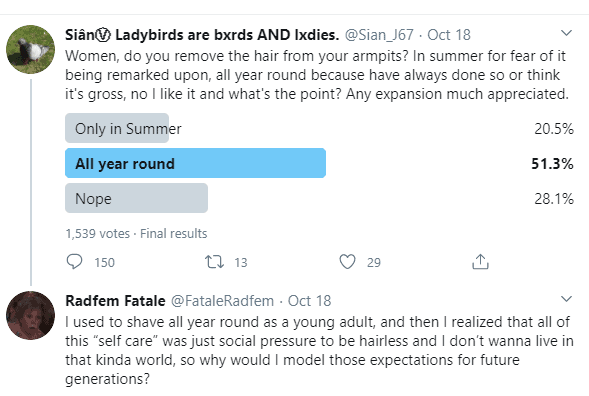
One Twitter user going by @Sian_J67 said, “I used to shave all year round as a young adult, and then I realized that all of this “self-care” was just social pressure to be hairless and I don’t wanna live in that kinda world, so why would I model those expectations for future generations?”

Another Twitter user, @sanguinate, explained, “I feel like society has moved past the need for shaved legs.” She states that it isn’t necessary to shave your legs if you don’t want to and that society doesn’t need it.

stopped shaving

4. Their Body Temperature is Better Regulated

Animals have hair and fur to keep them warm, and it can do the same for humans. This is why humans have hair on their heads because it insulates and keeps you warm. Body hair does the same thing, plus it can sense temperature changes and adjust your body ahead of time.

This could be why men tend to stay warmer than women. Men tend to have more body hair as it is, and when women shave theirs off, they are left with little protection.

A Twitter user using the handle @radvaz stated that she needed her body hair to stay warm. In a tweet, she shared, “There will be no shaving until February. I need my fur to stay warm.”

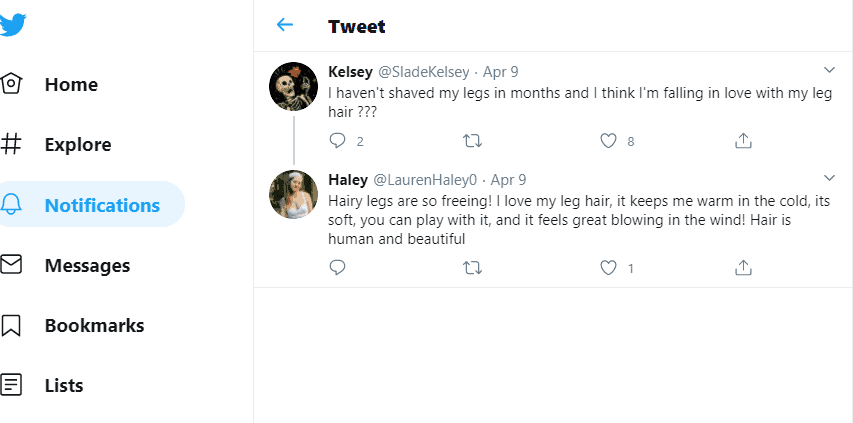
Another Twitter user, @SladeKelsey, posted, “Hairy legs are so freeing! I love my leg hair, it keeps me warm in the cold, it’s soft, you can play with it, and it feels great blowing in the wind! Hair is human and beautiful”.

5. To Be Healthier

Finally, some women have stopped shaving to be healthier. You may think that your body hair has nothing to do with your health, but unfortunately, this isn’t the case.

When you get cut shaving, it opens your body to infections that it would normally protect you from. Ingrown hairs caused by shaving do the same thing, furthering your risk of infection.

The infection that it would cause isn’t a basic infection, either. Oftentimes, staph infections will occur in these areas. Not only are staph infections excruciating, but they can be dangerous if a person does not seek treatment quickly.

Even worse, sometimes shaving causes small tears on your skin that you can’t see or detect. Any bacteria that you come in contact with can squeeze into these tiny tears. This leads to skin irritation, redness, swelling, and even fluid-filled sacs on the outside of your skin.

Body hair is natural.

All of these issues are ones that wouldn’t be as likely to happen if you left your body hair in place. That’s why some women have decided to stop shaving.

One Twitter user mentioned how her lymph nodes became infected often and how those infections eased after she stopped shaving. In her tweet, using the handle @LaVampiraBruja, she explained, “Yes! I would get lymph node infections in my armpits very often, so I stopped shaving, and it helped a bit, but after the detox, they stopped completely. It’s been almost 4 years since my last lymph node infection”.

Another Twitter user, @gothwyfe, explained, “I haven’t shaved my armpits in 2 years. I was self-conscious at first, but now I see my armpits hair as an accessory. I used to get ingrown hairs and cystic acne in my armpits from shaving (gross). After learning the origins of shaving, I decided it is not for me.”

Other Twitter users, such as @MsXandry, also stated that they stopped shaving for health reasons. She posted, “Stopped shaving my armpits and legs three weeks ago for “health reasons.”” While the quotation marks in her tweet may make you wonder if that’s her true reason, it is highly believable based on the health issues it can cause.

be yourself memeFinal Thoughts on Women Explain 5 Reasons They Stopped Shaving Completely

While many women are still shaving their body hair, there is a reason for some of them to have stopped shaving. Their decision might have come from a way to stop conforming to society or other reasons such as health or pain. No matter what the reason, it’s important to understand rather than judge.

Who knows, after learning these reasons some women have stopped shaving, you might do it, too. If you have already stopped, you can add these reasons to your lift of reasons why. However, if you want to keep shaving as you have been, at least you’ll now understand why some women don’t.

Therapists Explain 7 Ways To Reduce The Effects of Trauma

Many people experience some degree of trauma in their lifetime. If you’re one of those people, you probably already know how frightening and difficult it can be to overcome, especially when you don’t know what’s happening to you or why you’re reacting a certain way. Luckily, you can always take steps to reduce trauma.

Though it may be a difficult experience, there are ways you can begin now to set the stage for your healing journey. Here’s how therapists recommend 6 ways to reduce trauma for a positive future.

1.    Understanding The Traumatized Brain

Many traumatized individuals feel as though they should be able to tough out their pain and overcome it with pure positive thinking. But that’s not the case, says Doctor of Psychology Jennifer Sweeton. Here is how the traumatized brain differs from the typical one:

·         The Prefrontal Cortex

reduce traumaThe PFC is considered the Thinking Center of the brain, located behind the forehead, near the top. Its function lies in rational and logical thinking, with aspects such as planning, problem-solving, awareness, personality, and empathy controlled by it. When the PFC is unharmed, it allows for decision-making and clear thinking. In a traumatized brain, the PFC is under-activated, meaning you lose the ability to think clearly and rationally or make decisions and stay focused.

·         The Anterior Cingulate Cortex

The ACC is considered the Emotion Regulation Center of the brain. It is situated beside the PFC but deeper into the brain matter, communicating regularly with the PFC and handling emotional regulation. When the AAC is unharmed, it allows for the handling of strong emotions or difficult and painful thoughts, managing impulses, and keeping things rational. In a traumatized brain, the ACC is under-activated, meaning your emotions can’t easily be contained, balanced, or managed.

·         The Amygdala

The amygdala is considered the Fear Center of the brain. It is located pretty deep into the brain and is very small. Its primary function is determining what is a threat based on input from all senses and thoughts, and it is not controllable consciously. The amygdala produces fear when a threat is perceived. In a traumatized brain, the amygdala is overactivated, causing fear responses at an increased and unnecessary rate that often does not reflect a real physical threat.

This is why, if you’ve experienced trauma, you’ve likely, at some point, felt as though you had no control over any of your emotions. You may experience strong reactions to seemingly minor things and be unsure as to why. The answer, as it turns out, has always been in your brain.

2.    Acknowledge And Feel

It’s not uncommon to try and bottle up emotions stemming from trauma, hoping that positive thinking will make it all go away. Unfortunately, until you confront those feelings and trauma behind them head-on, you will not be able to recover fully.

Acknowledging what happened to you is very important, no matter what it was, says psychiatrist Mark Banschick. That event hurt you deeply. You deserve to process and understand the pain so that you can heal from it.

Once you’ve acknowledged what happened, you should allow yourself to grieve for what you lost or how it changed you. These emotions are completely normal and valid and are deserving of your attention. Let the feelings wash over you. Cry, scream, draw – whatever you need to do to process your feelings and experience them.

3.    Correcting Unhelpful Or Wrong Beliefs

Many people who undergo trauma wind up shifting a significant amount of their beliefs, whether of the world, of themselves, or even of the people around them. Research indicates that many of these changes are far from good, resulting in decreased positive thinking and generally skewed belief systems.

This often results in someone blaming themselves, in some way, for their trauma, despite logic dictating that it is far from their fault, says licensed psychologist Seth J. Gillihan, Ph.D. To heal from trauma, you have to confront the real truths related to them, as hard as that might be.

4.    Organize Your Memories to Reduce Trauma

Memories of trauma are usually a little jumbled, and it’s likely that the brain has partially suppressed some of them. In many cases, these memories are:

  • Disconnected
  • Without clear narrative
  • Lacking broader context
  • In fragments
  • Unprocessed by the hippocampus and similar areas that could help add context

But why should you organize your memories? It’s simple to unravel the truth behind them and form them into a clear narrative, says Gillihan. When you’re able to properly outline the event from beginning to end, it becomes less of a threatening, shapeless shadow and more of a manageable story.

emotional trauma

Here are eleven ways that emotional trauma impacts you.

5.    Don’t Isolate Yourself

It’s widespread for those who experience trauma to withdraw from their friends, family, and the rest of society. Unfortunately, isolation comes with a slew of side effects, including decreased positive thinking and worsened mental illness symptoms. Spending too much time by yourself can further harm your psyche.

Here are some pointers and ideas for making sure that you’re still around or spending time with other people, even when you don’t quite want to be:

·         Join Social Activities

Take part in normal events that involve groups of people, whether strangers or friends. It might help if these social activities have virtually nothing in common with the trauma that you experienced.

·         Don’t Feel Pressured To Share

Making sure you don’t isolate yourself doesn’t mean you must tell anyone the details about your trauma. If you want to and trust the people you’re with, then sure, go for it! But if not, know that you’re under no obligation to talk about what happened and how it affected you, no matter who asks.

·         Join A Support Group

Sadly, there are plenty of people with trauma, and many of them benefit from attending a support group for their trauma. These survivors’ groups can help you feel heard while making you realize that you’re also not alone when you hear similar stories to yours.

·         Ask For Support From Loved Ones

If you need more personal support, pluck up the courage to ask for it from your loved ones, whether it’s your family, friends, or anyone else that you trust. They are much less likely to judge you for the pain you’re experiencing and will probably want to help in any way they can.

·         Make New Friends

Making new friends can feel like turning the page in your life or even opening an entirely new chapter. These new friends will probably also have new ideas and activities to invite you to, allowing you to further distance yourself emotionally from that trauma.

·         Call Up Some Old Friends

If you have friends from yesteryears, it can be a viable option to call them and request their input or aid. You can also get back in touch with them as a symbol of your efforts and willingness to mend things that may have become broken over time. Speaking to people you once knew can be a big eye-opener into the ways you stayed the same and the ways that you changed.

·         Volunteer

Being kind can often make us human beings feel good, so take advantage of that. Sign up to volunteer with a cause that you believe in and play to your strengths to help out. It’s a great way to meet new people while also practicing compassion and social skills!

6.    Identify Triggers

Triggers in trauma refer to sights, sounds, smells, or even sensations that result in a panic or trauma response from your body. You might experience a flashback, dissociate, or have a panic attack in response to triggers, or you might have a completely different but similarly personally distressing response.

As recommended by Banschick, identifying triggers gives you insight into the behavior of yours that is trauma-induced. It also helps you communicate those triggers to the people in your life to warn you when they might arise.

Another reason that it’s good to identify a trigger is that it helps you break the cycle. Whether you do so by better managing your trauma response, distracting yourself when you know the trigger is coming, or even facing the trigger head-on. Indeed, it’s a great way to stop yourself from falling into the same trauma patterns again and again.

7.    Maintaining Good Health

When people say “healthy body, healthy mind,” there’s much more truth to that than you may know. Taking care of your body as you work to recover from your trauma is crucial to ensuring that the process goes smoothly.

At the very least, you should try to maintain similar health habits before and after seeking treatment, or if the trauma was recent enough, before and after experiencing the trauma. This can help ground you and show you, subconsciously, that life moves on.

Regardless of whether you’re reinstating old habits or creating new ones, here are some ways to maintain good health to help heal from trauma:

·         Eat Well to Reduce Trauma

Eat balanced meals with a good variety of ingredients. This will help keep your mood in a relatively positive shape as you go on this journey of recovery. The food you eat can have fairly significant effects on your emotional state and overall mental health. So make sure you’re eating well.

·         Sleep Enough

It would be best to aim for the standard recommended sleep time of between seven and nine hours per day or night. Understandably, traumatic events can disturb your sleep. But it’s still important to try and get the right amount of rest. Without sufficient sleep, it’s even harder to stay emotionally stable.

·         Avoid Vices

Things like drugs, alcohol, cigarettes, and other similar items can worsen negative mood effects like anxiety or depression. If you’ can stop yourself from indulging too much in them, try and do so.

reduce traumaFinal Thoughts On Some Ways To Reduce Trauma For A Positive Future

Healing from trauma takes a lot of time and effort, and it’s also something that you shouldn’t be doing alone. Try to seek mental health aid of some kind to help find your way through this difficult time. This is a serious issue that must be treated properly by a professional. After all, your personal efforts deserve to be bolstered by the professional help you need.

Pet Owners Share the Truth About Why They Canceled Plans (And It Wasn’t Really Sickness)

Everyone cancels plans once in a while, but pet owners have a different reason for doing so. If you’re a pet owner, you may already suspect what that reason is. For everyone else, that reason remains unknown for now, but you will soon find out.

Pet owners often view their pets as members of the family. To the owner, a pet is like a child that requires love, attention, and care. When it is put that way, pets are very much like children, so it is understandable.

To understand why people cancel plans to hang out with their pets, it is important to remember how much care a pet requires.

Some of the things pets needs include the following:

  • a safe environment
  • healthy diet
  • learning safe and normal behavior (training)
  • companionship (with both humans and other pets)
  • protection from pain and injury
  • professional health check-ups
  • disease and illness prevention
  • exercise
  • play
  • grooming

As you can see, pets require many things. Some of these necessities are a daily task, and a loving pet owner will make sure to meet the needs. So, now it’s time to explain the truth about why pet owners cancel plans.

Why Pet Owners Canceled Plans

pet ownersBy now you are already beginning to figure out why pet owners canceled plans by now. The main reason they do this is to spend time with their pets. While your friend may not tell you this when they cancel, many people admit to canceling plans for this reason.

A survey conducted by Wisdom Health Genetics, which is a pet genetics company, shows this fact. The survey was taken by 13,000 people who own pets, representing owners of both cats and dogs. After going over the survey results, it was determined that many pet owners prefer spending time with their pets over doing other things.

The surveys showed that 72% of dog owners cancel plans to spend time with their dogs. Cat owners are a little less guilty, with only 32% of them canceling plans to hang out with their cat. Both dog and cat owners are guilty of this reason for canceling plans, however, and you can’t blame them.

Pet Owners Admit the Truth

Some people have turned to social media to voice their truth about canceling plans to hang out with their pets. They are admitting to canceling plans to spend time with their pet, and they aren’t ashamed of it, either.

Owners love their pets and, as stated before, view them as their children. Many people even create social media pages for their pets to share photos and information with others.

The bond that owners and their pets share is incomparable, and the data is there to prove it. Furthermore, it’s important to note that many people view their relationship with their pets as the most important.

Top Reasons That Pet Owners Cancelled Plans

Users on both Twitter and Facebook are posting about it on social media, and we’re here for their admissions.

Their Pet Had a Procedure Done

Even seemingly simple procedures can be stressful for a pet. In one thread on Facebook, a user going by the name of Mary Myers posted, “Most recently, on Tuesday. Said no to dinner because my sausage dog had his teeth cleaned. He needed conciliatory cuddles!” Cuddling with your pet after they have their teeth cleaned is comforting to your pet and will help them relax.

Their Pet Needs to Stay on a Schedule

A Facebook user named Laurie Boucher Ziegelmann explained that her plans all have to revolve around her pet. Instead of canceling plans, she doesn’t make plans without considering her pet.

Ziegelmann posted, “I wouldn’t say I’ve actually canceled plans. However, ALL or ANY plans center around the doggies feeding schedule, potty schedule. Vacations only happen IF I can find a pet-friendly house to rent. Hotels are a no go since my girl is a yapper.”

With feeding and bathroom schedules, this is necessary to consider and adjust accordingly.

Their Dog Needs Attention

On Twitter, one user with the handle @gyarunel posted, “I cancelled plans to hang out with my dog all day man its what he deserves.”

As mentioned before, dogs need and deserve attention and companionship. This owner made sure his dog was getting what he deserved by canceling his plans.

Their Dog is Comfortable or Needs Cuddles

Another Twitter user, @HerrmannKenzie, took to Twitter to explain why she canceled her plans.

She posted, “Story time: once I canceled plans to hang out with someone bc my dog was laying on me, and she was super comfortable and being really cute:) don’t even regret it.”

Since her dog was comfortable, she couldn’t let her down by getting up.

Their Pet Was Sick

People also cancel plans when their pets aren’t feeling well. Twitter user @tdro shared an update that said, “Cancelled all my plans today to hang out with a sick cat. Yup, that seems normal.”

She implied that choosing your pet over your plans is abnormal, but as we now know, this isn’t true. Canceling those plans is entirely normal and expected of pet owners once in a while. It’s all a part of being a good owner.

pet illnessThey Just Wanted to Hang out With Their Pet

Sometimes there is no specific reason other than wanting to spend time with their pet. One Twitter user, @pchance8, said, “Just cancelled plans because I want to go home to hang out with my cat and knit a scarf…..I’m so ashamed right now.” Little did she know, she had nothing to be ashamed about because many people are doing the same.

Another Twitter user, @neptoonie, bailed out on events on multiple occasions just to hang out with her pet. She posted, “the amount of plans I’ve canceled to hang out with my cat is absurd.”

At least she’s sharing the truth about all of those canceled plans!

Benefits of Spending Time with Your Pet

By taking care of and spending time with their pet, people are benefitting themselves, as well. Studies show that pets benefit both the mental and physical health of humans.

Even with the extra work they require, the benefits outweigh the time spent. Most pet owners even enjoy the time that is spent caring for their pets, so it isn’t a sacrifice at all. Some of the benefits of having a pet include:

You Will Get More Exercise

Having pets (especially a dog) will help you improve your physical health by forcing you to get more exercise. Dogs need exercise, so they need to be taken on walks. This forces you to get out and to move regularly.

Unsurprisingly, people are more likely to go for a walk with their dog than with another human. This makes pet owners more likely to get the recommended amount of exercise each day. So, if you are struggling to get enough exercise and you don’t have a dog already, consider adopting one.

Lower Stress Levels and Alleviate Symptoms of Depression

Spending time with a pet can help lower stress levels by causing a decrease in cortisol levels in humans. If cortisol levels are too high, it can lead to stress, anxiety, and depression. Petting and playing with animals can cause cortisol to decrease significantly, and it lessens stress.

Those who spend time around animals experienced a decrease in their depression symptoms, as well. Aside from the decreased cortisol levels, this is likely to do with animals making a human feel like they aren’t alone and isolated. Plus, the physical activity that animals require can help treat depression.

Reduce Blood Pressure and the Risk of Heart Attack and Stroke

With less stress and more exercise, your blood pressure is bound to decrease—the decrease in cortisol levels mentioned before help with lowering blood pressure, too. With a mix of decreased stress levels and increased amounts of exercise, your heart health will drastically improve.

Your risk of heart attacks will decrease, as well, partly because of the decrease in blood pressure. Additionally, having a pet, especially a cat, can help reduce your risk of stroke. It isn’t confirmed whether this is because of the decrease in stress or if there is another reason, however.

pet ownersFinal Thoughts on Pet Owners Share the Truth About Why They Cancelled Plans

Canceled plans happen, and it is to be expected once in a while. You did not expect that reason to be for someone to hang out with their pet. You know now, however, as many pet owners are admitting to it.

Whatever the reason people choose to stay home with their pets is, they are benefiting not only their pets but also themselves. Pets offer many benefits to their owners, just like their owners offer benefits to them.

So, the next time you (or a friend) cancels plans to hang out with a pet, don’t feel bad. Just remember all the work pets require and how beneficial they are in their owner’s lives. It’s normal, and most pet owners cancel plans often to hang out with the pet.

Skip to content