Weekly tips, affirmations, and small actions to feel your best.

4 Healthy Chia Pudding Recipes That Fill You Up (Instead of Breakfast)

Many people have turned to chia pudding for a healthy breakfast due to its high nutrition content. Packed with protein, healthy fats, and fiber, it provides a complete breakfast that will give you energy all day. You can make chia pudding in a variety of ways. We will give you four recipes to choose from, so feel free to try them all!

Chia seeds offer so many important benefits for the mind and body. Not only are they packed with nutrients, but they also have very few calories per serving.

A one-ounce (28 grams) serving of chia seeds contains the following nutrients:

  • Fiber: 11 grams.
  • Protein: 4 grams.
  • Fat: 9 grams (5 of which are omega-3s).
  • Calcium: 18% of the RDI.
  • Manganese: 30% of the RDI.
  • Magnesium: 30% of the RDI.
  • Phosphorus: 27% of the RDI.
  • They also contain moderate levels of zinc, vitamin B3 (niacin), potassium, vitamin B1 (thiamine), and vitamin B2.

One ounce of chia seeds equates to about two tablespoons, so this is a very nutrient-dense food. Plus, a serving only contains around 137 calories and 1 gram of digestible carbohydrate.

Furthermore, if you subtract the fiber, the majority of which your body can’t use, chia seeds only have 101 calories.

Chia seeds are also high in antioxidants, which inhibit free radical production and reduce cancer risk. They are high in fiber, which helps stabilize blood sugar, increase fullness, and boost absorption of nutrients. Because of their high soluble fiber content, chia seeds can absorb up to 10-12 times their weight in water. This means they will expand in your stomach, which helps keep you fuller for longer.

Chia Seeds and Your Health

Your gut bacteria thrive on a high fiber diet, so chia seeds support a healthy microbiome. Furthermore, protein makes up around 14% of their macronutrient profile. This is much higher than many plant foods. Best of all, high-protein foods aid in weight loss and have many essential amino acids.

Finally, chia seeds have a tremendous amount of omega-3 fatty acids. These support healthy brain functioning, improve eye health, and ward off anxiety and depression. They also lower the risk of heart disease and metabolic syndrome. Additionally, chia seeds help support bone health and reduce blood sugar and inflammation levels.

Now that you know a little about the nutrition of these powerful seeds let’s get to the chia pudding recipes.

4 Chia Pudding Recipes That You Can Make for Breakfast

What you’ll need:

  • Blender
  • Spoon
  • Mason jar or bowl to serve it in

1 – Blueberry chia pudding

Ingredients:

  • one cup frozen blueberries
  • one cup of almond milk
  • 1/2 cup chia seeds
  • 1/2 tbsp maple syrup
  • pinch of cinnamon
  • Greek yogurt or any yogurt you like
  • a small handful of fresh blueberries or spoonful of blueberry jam for topping

Directions:

First, add one cup of frozen blueberries to your blender. Then, add one cup of almond milk and blend thoroughly. Next, pour 1/2 cup of chia seeds in a medium-sized bowl—mix 1/2 tbsp of maple syrup and a pinch of cinnamon in with the seeds.

Add the blueberry and almond milk mixture into the bowl and blend the ingredients fully with a spoon. Refrigerate overnight. Serve in a small mason jar or bowl, and add a couple of spoonfuls of yogurt on top if you’d like. Then, top with fresh blueberries or blueberry jam and enjoy!

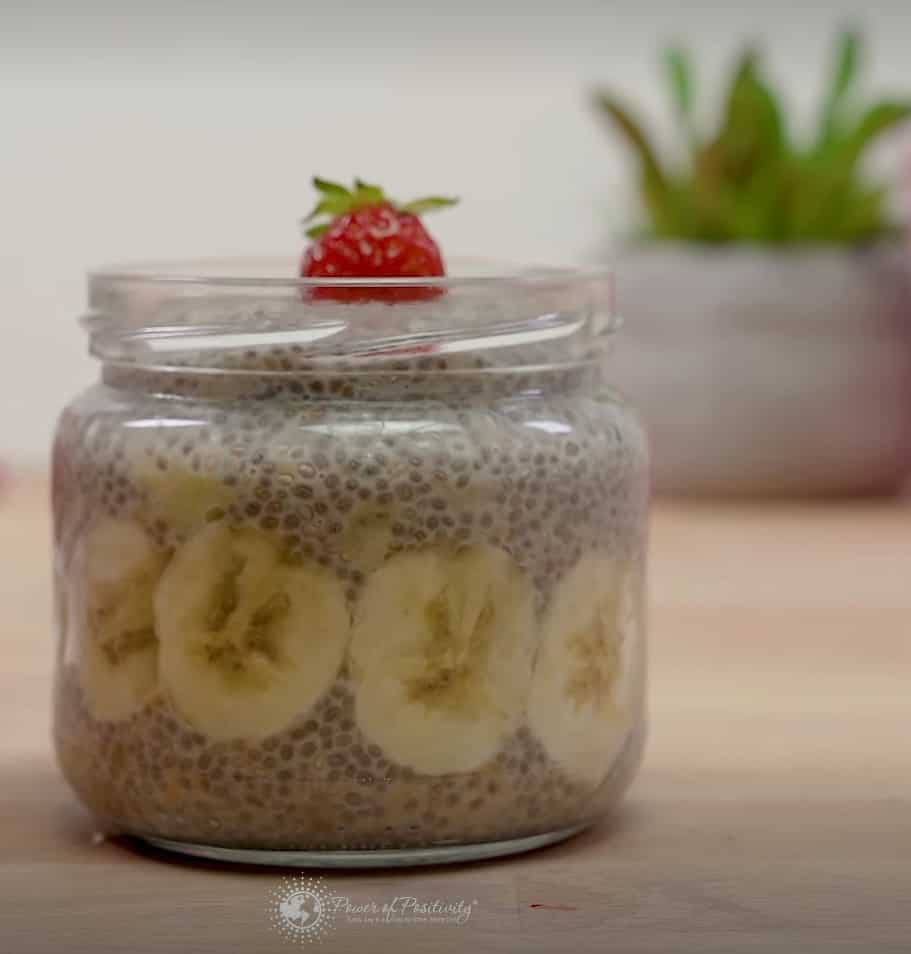
2 – Banana peanut butter chia pudding

Ingredients:

  • One ripe banana
  • 1 cup almond milk
  • 1/2 cup chia seeds
  • 1 tbsp maple syrup
  • 1 tbsp peanut butter
  • Sliced strawberry and banana for garnish

Directions:

First, mash up the banana with a spoon or fork. Then, add the chia seeds and maple syrup to a bowl, along with the peanut butter. Next, scoop the mashed banana into the mixture, and pour the almond milk into the bowl. Stir thoroughly and refrigerate overnight.

Cut up half of the fresh banana, and add the slices to a separate bowl or jar. Next, scoop some of the chia pudding into your serving bowl, and top with strawberry slices.

3 – Strawberry vanilla chia pudding

Ingredients:

  • 1 cup strawberries
  • 1 cup almond milk
  • 1/2 cup chia seeds
  • 1/2 tsp vanilla powder
  • 1 tbsp maple syrup
  • sliced strawberry for garnish
  • Greek yogurt or any other you prefer

Directions:

Blend one cup of strawberries and almond milk in your blender. Put the chia seeds, maple syrup, and vanilla powder in a bowl, and add the blended mixture. Once again, stir completely and refrigerate overnight.

Cut up a couple of strawberries for a garnish, and add some chia pudding to your serving bowl. Top with yogurt of your choice, and enjoy!

4 – Cocoa vanilla chia pudding

Ingredients:

  • 1/2 cup chia seeds
  • 1 tbsp cocoa powder
  • 1/2 tsp vanilla powder
  • pinch of cinnamon
  • 1 1/2 cup almond milk
  • 1 tbsp maple syrup
  • Shaved coconut and cacao nibs for topping

Directions:

Combine all ingredients in a bowl and mix thoroughly. Refrigerate overnight. Add to a small serving bowl and top with shaved coconut and cacao nibs. Enjoy!
chia puddingFinal Thoughts: These delicious chia pudding recipes offer a healthy breakfast alternative

A healthy breakfast doesn’t have to consist of plain oatmeal or a piece of fruit. You can make it both delicious and nutritious with these chia pudding recipes! Best of all, you can customize them however you’d like and create even more healthy options. However, we thought we’d get you started with the four recipes above.

Not only will the chia seeds and other fiber-rich fruits keep you full, but they’ll also give you tons of energy! Meals should promote your health and well-being. These bowls will ensure your body and mind have ample fuel for the day ahead.

Many people don’t take time for a nutritious breakfast, rushing out the door with a cup of coffee. However, you will feel more energized and vibrant by making sure you eat a quality meal each morning. If you try out these chia pudding recipes, let us know how you like them!

7 Infused Water Recipes That Help You Stop Drinking Soda

If you’ve been trying to give up soda, infused water makes an excellent replacement. Not only does water quench your thirst better than soda, but it also offers more health benefits. However, some people don’t enjoy plain water because it doesn’t seem too appetizing since it lacks flavor.

Infused water makes the perfect antidote for eliminating soda because it includes delicious, fresh fruits bursting with flavor. You can use any combination of fresh fruits and herbs, but we’ll get you started with a few ideas.

You can either make a whole pitcher or add the ingredients to a small glass. Alternatively, you could pour it into a mason jar to save for later. Without further ado, let’s get to the recipes!

6 Benefits of Drinking Infused Water

Drinking water with fruit and other healthy ingredients mixed in is highly beneficial to your overall health. It’s better than other flavoring and provides many essential vitamins and nutrients.

infused water

1. Prevents Dehydration

Water is essential for hydration, and it promotes the transport of oxygen and nutrients throughout your body. It helps regulate body temperature, lubricates joints, energizes your muscles, and aids other essential bodily functions. Without water, you will become dehydrated, preventing the benefits and triggering health issues, including:

  • Fever
  • Vomiting
  • Diarrhea
  • Reduced urine production
  • Mental confusion
  • Seizures
  • Weakness and fatigue
  • Dizziness or fainting
  • Increased heart rate

2. Improved Immune Function

Without enough liquid, the toxins build up and weaken the immune system and hinder its functionality. Drinking water can help eliminate toxins, including bacteria that cause disease. It can also circulate lymph, a clear liquid that cleans tissue and drains waste, through arteries, lymph vessels, and nodes.

Additionally, the nutrients in the fruits, herbs, and other healthy ingredients offer an additional boost. With more nutrients in your body, you’re less likely to catch a cold or the flu. Plus, it helps your body fight off other illnesses and diseases.

3. Improves Food Digestion

Water improves food digestion, alleviating issues and preventing new problems from arising. It softens the food, making nutrient absorption easier in the intestine.

Drinking soda, coffee, or tea can cause constipation as it dehydrates your body. The lack of water makes it harder to pass stool, making you uncomfortable and causing health issues.

4. Improves Mental Health

Drinking water improves mood and concentration, benefitting your overall mental health. Dehydration can cause mental health issues, lack of focus, and irritability, so infused water is highly beneficial. It helps you reach a stable mood, helping you find joy in your daily life.

Drinking flavored water Winston Salem also increases your energy levels, so forgo the caffeine when you feel tired mid-day. With more energy, you’ll be less likely to reach for unhealthy sugar-filled snacks.

5. Promotes Weight Loss

Replacing soda with infused water promotes weight loss as you eliminate sugary drinks. Drinking more water will reduce your sugar and carb intake, allowing you to achieve your goals. It makes you feel full, too, leading to less snacking and overeating.

Hydration also boosts your metabolism, burning more calories throughout the day. Studies show that it boosts your metabolism by nearly 30% within 10 minutes, and the benefits can last for more than an hour. If you’re always drinking water, your metabolism will always work harder.

Additionally, your body uses water to remove stored fat cells. Drinking water also makes you feel energized, so you’ll be more likely to exercise and stay active.

6. Helps You Reach Your Vitamin and Nutrient Requirements

When you put ingredients in your water, some of the vitamins and nutrients go into the water that you consume. As you drink, you consume essential nutrients, allowing you to reach your daily recommended values. The vitamins you drink depend on your chosen ingredients, so each recipe differs in nutrient content.

If you know that you’re deficient in specific nutrients, you can customize your water to help. Determine the ingredients that have the properties you need and enjoy the nutritional benefits.

How to Make Your Own Infused Water at Home

What you’ll need:

  • A pitcher or glass
  • Ice
  • Your desired ingredients
  • A spoon to stir the ingredients with

7 Delicious Infused Water Recipes

Replacing soda with infused water is highly beneficial. Try these flavorful concoctions, and you won’t even miss the unhealthy soda.

infused water

1. Thyme Grapefruit Lime Water

Get out your pitcher or glass, and fill it halfway with ice. Place a couple of slices of grapefruit, four slices of lime, and a handful of fresh thyme inside.

Push the thyme down with a spoon to make it fit, then pour filtered water on top. Stir with a straw or long spoon, and enjoy!

Benefits

Thyme has been used in holistic medicine for thousands of years. It contains tons of vitamin C, potassium, and manganese, as well as anti-inflammatory compounds.

Grapefruit is rich in Vitamin C and A and contains a high number of antioxidants. Finally, limes are high in Vitamin C and antioxidants, as well, to help boost immunity.

2. Basil apple ginger water

To make this infused water, fill a pitcher halfway with ice once again. Add four or five slices of green apple cut lengthwise to create thin circles.

Next, add a handful of fresh ginger shavings and 7-8 basil leaves. Fill the pitcher up with water, and stir with a straw. This infused water will revitalize you while giving you an immunity boost!

Benefits

Basil is high in Vitamin K, which helps keep bones healthy and heals wounds faster. Apples contain tons of fiber, Vitamin C, and polyphenols, a powerful antioxidant compound. Research proves that ginger is perhaps one of the most powerful roots on the planet, helping lower inflammation and ward off disease.

3. Strawberry Blueberry Mint Infused Water

For this one, repeat the steps above with the ice and pitcher. Add in a couple of handfuls of strawberry slices and a few handfuls of blueberries.

Pour in your water, and top off with a couple of mint leaves. You won’t miss soda after trying this one!

Benefits

Strawberries are rich in Vitamin C and B9, manganese, and potassium. Blueberries have a lot of Vitamins C and K, and they also contain manganese.

Both of these berries boost cognitive ability and boost antioxidant levels also. Finally, mint helps relieve indigestion, improve brain function, and ward off colds.

4. Lavender Lemon Water

After filling the pitcher or glass with ice, add 4-5 slices of lemon. Next, top it off with a couple of small handfuls of fresh lavender. Stir your drink and enjoy!

Benefits

Lavender can reduce stress and insomnia. Lemons are a good source of Vitamin C and help improve digestion.

5. Cucumber Mint Lemon Infused Water

Cut up half a cucumber into thin slices, and then do the same with half a lemon. Next, fill the glass, mason jar, or pitcher with ice.

Now, put your cucumber and lemon slices in with a small handful of mint leaves. Fill your glass with water and let your taste buds dance!

Benefits

Half a cucumber contains about 30% of your RDI of Vitamin K, plus it improves digestion and hydration. For mint and lemon, refer to the benefits listed above.

6. Green Tea Lemon Mint Water with Honey

This infused water recipe is like a cup of green tea, but cold and with the addition of mint. It still has the same benefits as a warm mug of tea but is refreshing on a hot day.

To make this, follow the same routine with the ice, and then add your ingredients. Put in 5-6 slices of lemon, a handful of mint, and a few sprinkles of green tea leaves.

Pour your water into the glass, and then drizzle honey over the top. Stir thoroughly to ensure the honey gets mixed in.

Benefits

Green tea is perhaps one of the healthiest beverages on the planet. It contains many bioactive compounds that prevent cell damage and reduce inflammation.

Plus, it improves metabolism and brain function and lowers the risk of certain cancers. Honey is a powerful antibacterial and anti-inflammatory food, and many cultures use it as medicine.

7. Lemon Grapefruit Orange Water with Rosemary

This infused water will make you pucker your lips from the tartness, but it’s packed with nutrients! To make it, cut an orange, pink grapefruit, and lemon into thin slices. Fill your pitcher up halfway with ice.

Put three lemon slices, two oranges, and three large grapefruit slices into the jar or glass. Next, add a few generous sprigs of rosemary. Fill with water, and let your body soak up the healing benefits from this infused water.

Benefits

Oranges are most well-known for their high Vitamin C content. They also have a fair amount of calcium and help your body make collagen, which gives you smooth skin. Rosemary is high in manganese, helping the body heal wounds faster and improve metabolism.

infused water recipeFinal Thoughts: These infused water recipes will keep you healthy and hydrated

Let’s face it – water can taste pretty boring after drinking it every single day of your life. Since we have to drink it to survive, why not make it a little more exciting? Adding fresh fruits, roots, and herbs to your water can spice up your life in a small but noticeable way. Best of all, there are virtually endless combinations to try so that you’ll never get bored!

20 Positive Motivational Quotes to Encourage Healthy Eating

Even when you want to make healthy dietary choices, it can be tempting to opt for something unhealthy. Oftentimes, unhealthy foods are the ones that are easiest and quickest to grab, but that doesn’t always have to be the case. If you struggle with healthy eating, read these positive motivational quotes to help encourage you.

Everyone struggles with temptation sometimes, but creating good habits can help reduce the struggle. These positive motivational quotes will help you remember why healthy eating is so essential to living a good life. Plus, you will feel better that you aren’t alone in this struggle, too.

Don’t worry about the struggle lasting forever. Once you develop good habits, making healthy decisions becomes easier, as these positive motivational quotes will assure you. You might even decide that you like the healthy options better than the unhealthy ones after a while.

Twenty Positive Motivational Quotes to Encourage Healthy Eating

positive motivational quotes1. “If you keep good food in your fridge, you will eat good food.” – Errick McAdams

One of the best ways to stay in control of your healthy eating is to have healthy food on hand. McAdams, a personal trainer, suggests keeping good food in your refrigerator. Try to keep quick and easy healthy snacks that are easy to grab when you’re in a hurry.

2. “Any food that requires enhancing by the use of chemical substances should in no way be considered a food.” – John H. Tobe

When chemicals are added to food, it is not healthy. Food should be natural, and chemicals aren’t necessary for healthy food.

3. “Take care of your body. It’s the only place you have to live.” – Jim Rohn

You can’t get a second body, so take care of the one you have. Eat healthily and your body will be more resilient and protect you better.

4. “Those who think they have no time for healthy eating will sooner or later have to find time for illness.” – Edward Stanley

Since it is so easy and quick to eat processed foods, it might seem like a wise time-saver. Unfortunately, unhealthy eating leads to illness, which means you will have to take much more time out of your life.

If you eat healthily, however, you will be healthier and have more energy. You will spend more time feeling good and less time at the doctor, too. So, if saving time is the reason you eat unhealthy foods, remember how much time it will cost you later.

5. “Sorry, there’s no magic bullet. You gotta eat healthy and live healthy to be healthy and look healthy. End of story.” – Morgan Spurlock

There is no instant or magic solution to being healthy. If you want to be healthy, you must eat healthily and take care of yourself. Then, you will be healthy and look healthy, as Spurlock explains.

6. “The food you eat can be either the safest and most powerful form of medicine or the slowest form of poison.” – Ann Wigmore

No matter what you choose to eat, it affects your body in some way. You can choose healthy foods that are safe and nutritious, or you can choose processed and unhealthy foods. If you choose unhealthy foods, you will be wearing your body down the more often you eat them.

7. “Eating healthy food fills your body with energy and nutrients. Imagine your cells smiling back at you and saying: ‘thank you!’” – Karen Salmansohn

Nutritious food is the best thing you can put into your body. By making it a habit to be healthy, you will feel more energetic and be healthier. Your cells will benefit, and you will notice the difference.

8. “In my food world, there is no fear or guilt, only joy, and balance. So, no ingredient is ever off-limits. Rather, all of the recipes here follow my Usually-Sometimes-Rarely philosophy. Notice there is no Never.” – Ellie Krieger

You can still indulge in treats sometimes, even if you are choosing to eat healthily. The key is to finding a balance and not overdoing it. When you are truly wanting something, go ahead and eat it, just make sure to do so in moderation.

9. “To keep the body in good health is a duty, otherwise we shall not be able to keep our mind strong and clear.” – Buddha

If you aren’t filling your body with the nutrients it needs, you can’t focus as well as you should. Your mind won’t be clear, and your thoughts won’t be as strong. To keep your mind clear and strong, make healthy eating a habit.

10. “Healthy eating is a way of life, so it’s important to establish routines that are simple, realistically, and ultimately livable.” – Horace

When you choose healthy eating, it becomes a lifestyle. Set good habits now and determine a routine that is easy for you to accomplish each day. By doing this, you will ensure that you stick with your health goals avoid straying.

pop quote11. “Processed foods not only extend the shelf life, but they extend the waistline as well.” – Karen Sessions

If the food you are eating is processed, then you can assume that it isn’t healthy. Processed foods are full of chemicals and additives, which can interfere with your health goals. By eating processed foods, you will likely gain weight.

12. “Doctors won’t make you healthy. Nutritionists won’t make you slim. Teachers won’t make you smart. Gurus won’t make you calm. Mentors won’t make you rich. Trainers won’t make you fit. Ultimately, you have to take responsibility. Save yourself.” – Naval Ravikant

No one can make you reach your goals. Instead, you must do it yourself. Take responsibility for your life and don’t assume that professionals can make you what you want to be. You have to work hard toward your goals, stay strong, and avoid giving in to temptation.

While the professionals listed in this quote will help you reach your goals, they can’t make you. You can see them, talk to them, and work with them, but you are ultimately responsible. Follow their advice, and make sure you instill healthy habits in yourself.

13. “Moderation. Small helpings. Sample a little bit of everything. These are the secrets of happiness and good health.” – Julia Child

Nothing should be off-limits in your diet, but you must have willpower. When you indulge in a treat, make sure you only have a little. Eat in moderation, no matter what you are eating, and you will be healthier.

14. “A healthy diet is a solution to many of our health-care problems. It’s the most important solution.” – John Mackey

Many health issues stem from a poor diet. If you want to be healthy, remember this quote and choose healthy eating. By changing your diet, you could also cure or ease health conditions you already have, too.

15. “Love yourself enough to live a healthy lifestyle.” – Jules Robson

One part of self-love is taking care of yourself and your body. To do this, you must think about healthy eating so that you can live a healthy lifestyle. The food you put into your body affects everything about you, so love yourself and make a change.

16. “Happiness lies, first of all, in health.” – George William Curtis

It is hard to be happy if you are unhealthy. For true happiness in life, begin with your physical state and make the changes you find necessary. Many times, the more important change to be made is the type of food you are eating.

17. “Your diet is a bank account. Good food choices are good investments.” – Bethenny Frankel

Invest in healthy eating now so that you can get a better long-term investment. Just like with your bank account, the wiser you are with your choices, the better off you will be. Put good things into your body and you will get even better things in return.

18. “Nutrition is the only remedy that can bring full recovery and can be used with any treatment. Remember, food is our best medicine!” – Bernard Jensen

Sometimes, prescription medication isn’t necessary to cure or treat a condition or illness. Oftentimes, ensuring you receive the proper nutrition each day can make all the difference. If you need medication, consider changing your diet to see if that helps, instead.

19. “A fit, healthy body – that is the best fashion statement.” – Jess C. Scott

If you are into fashion and want to look your best, remember this positive motivational quote. A fit body will make any outfit or accessory look better. Plus, being fit can be a fashion statement all on its own.

20. “Healthy eating isn’t about counting fat grams, dieting, cleanses and antioxidants; it’s about eating food untouched from the way we find it in nature in a balanced way.” – Pooja Mottl

As long as you are eating natural food that hasn’t been processed, you can rest assured knowing you made a healthy choice. You don’t always have to count or track a diet or how many calories you have consumed. If you know you are putting natural food into your body, then you know you are eating healthy.

Final Thoughts on Positive Motivational Quotes to Encourage Healthy Eating

These positive motivational quotes to encourage healthy eating can help guide and inspire you. Remember that you can still indulge in treats from time to time, but you must do so in moderation. Plus, you must make it an occasional treat rather than a daily habit.

When you find yourself struggling with healthy eating, remember these positive motivational quotes. The quotes can remind you that you aren’t alone in your struggle and that ignoring cravings is often the best choice.

4 Habits Emotionally Confident People Display Without Realizing It

Emotional confidence refers to high self-esteem and the ability to engage with relationships or social behaviors that are risky, potentially uncomfortable, or intimidating. It means maneuvering and carrying yourself well in a social environment without feeling inferior to others.

At its core, emotional confidence requires the same components as typical confidence but on a more zoomed-in level. You can learn from people around you who exude this kind of faith that good self-esteem is always the way forward – but let’s break it down even further.

Here are four habits of emotionally confident people you can adopt today

Adopt these four habits if you hope to become more emotionally confident.

emotionally confident1.    They Own Their Authority and Assertiveness

You can tell when someone is emotionally confident by how they speak and carry themselves. They’re reasonable, but they’d never let themselves be pushed around. They own their power and assert themselves with dominance, confidence, and authority, often with a delicate balance that prevents cockiness. How can you build this kind of ownership of confidence? Here are some tips:

·         Learn To Say No

Difficulty in saying no can lead to burnout as you overcommit, accept poor treatment to keep the peace, and get used to holding your tongue. While there is wisdom in picking battles and knowing when to give, there is also wisdom in knowing when you can turn something or someone down. Learning to say no with conviction is key to building up your emotional confidence. It tells others that you’re capable of making solid decisions in your best interests and can’t be swayed by crossing boundaries. You’re not one to mess with!

·         Be Decisive

People who lack confidence also often cannot make quick, intelligent decisions. There’s nothing inherently wrong with needing to ponder your options for a while, but confident people don’t spend forever overthinking, second-guessing, and being too afraid to begin. Sometimes, you need to learn to take leaps of faith – or, better yet, to trust your initial judgments. You’ll be right sometimes and wrong in other times, but no matter the result, you’ll slowly learn that you’re capable of making good decisions and bouncing back from bad ones. Decision-making skills are crucial for confidence, say studies!

·         Speak With Certainty

If you lack confidence, you’re likely to add disclaimers to all your sentences. For example, when giving information, you may use phrases like “I may be wrong, but…”, “I think…”, or “If I recall correctly…”. While these phrases are used accurately and are useful in some cases, at other times, they may weaken your overall message. If you know something for sure, don’t use phrases that imply you don’t!

Speak with confidence, and, over time, your confidence will grow, and you won’t have to try so hard to avoid these hedging statements.

2.    They Welcome “Failure.”

No human being is perfect, and failing is a part of growth. Emotionally confident people know this and therefore accept or even welcome failure. Viewing something that so many people consider automatically harmful as a good step forward will do wonders for your confidence. Here are some tips for welcoming so-called failure in your life:

·         Change Failure’s Name

Failures aren’t actually failures. Their opportunities to learn and grow. They’re challenges, hurdles, setbacks, and learning experiences. The term “failure” seems to imply that nothing good has come of it, and that’s unproductive and can tank your self-esteem. Stop letting your confidence gets knocked down by perceived failures by referring to them with positive names and positive thinking. You’ll find yourself feeling much more charitable towards ideas of failure.

·         Analyze Your Mistakes

When you “fail” or face setbacks, you get the golden opportunity to learn from them. Understand the root cause of this problem and how you can circumvent it or handle it in the future. Your emotional confidence and resilience will skyrocket when you begin falling into a habit of becoming more prepared for future setbacks by studying current ones. Writing about failures is a great way to learn to analyze them and build confidence and self-improvement in the process, say studies!

·         Don’t Dwell For Too Long

An emotionally confident person doesn’t ruminate on their challenges or mistakes for longer than necessary. They learn the lessons that need to be understood, make decisions about moving forward, and then carry on with their lives. They know that sitting and stewing can become unproductive and may prevent them from continuing with their lives and improvement. Learning to let go is part of becoming confident. You’re no longer treating your setbacks as defining moments, only as tools, and thus “failure” becomes less frightening.

pop meme

3.    They Are Kind To Themselves

An emotionally confident person shines from within because they nourish themselves. They make themselves a priority and treat themselves with kindness because that’s how their confidence grows. When you take care of yourself, you feel better and are imbued with positive thinking that helps your self-esteem. Unfortunately, those with low self-esteem are often mean, cruel, and unfair to themselves! How can you undo that pattern? Here are some ways to be kind to yourself:

·         Talk To Yourself With Compassion

Self-talk has to be realistic, but it also has to be kind. Admitting the truth to yourself should be done with compassion. Talk to yourself as you would talk to a friend. For example, “I wasn’t prepared enough for that presentation, but I powered through it like a hero. Plus, now I know how much preparation I need in the future.” This kind of self-talk stays realistic without becoming mean, and it builds your confidence by indicating that you will always forgive yourself and continue to move forward.

·         Don’t Expect Constant Confidence

Even the most emotionally confident people are not beacons of endless, non-stop confidence. Everyone has bad days, and a little bit of self-doubt can even be realistic. Too much confidence, all the time, can quickly tip into arrogance, and you don’t want to have so much positive thinking that your optimism is no longer grounded in reality. Being aware of faults and flaws, facing moments of self-doubt, and making mistakes are part and parcel of self-improvement. So don’t be hard on yourself when you can’t always be confident. Forcing constant confidence will only ever be counterproductive.

·         Don’t Compare Yourself To Others

Self-comparison is a quick confidence killer. Everyone is out here in the world presenting their best selves to others, so all you see is their most flattering angle. Remember, these people are human beings too, and they all have unique journeys that you are not privy to. They are not better than you, and you are not better than them. You are all humans doing your best to grow, learn, and be confident in everyday life. When you realize that you can best serve yourself by focusing on yourself – and that you aren’t alone in how you feel – you’ll become more emotionally confident.

·         Validate Yourself

Too often, you may find yourself saying that your emotions are ridiculous. “I shouldn’t feel this way, ” you say. But there are no rules that tell you how you’re supposed to feel. Validating your emotions will help you process them and handle them rationally. This doesn’t mean believing that emotional reactions are genuine. Instead, it means allowing your feelings to exist and speaking to them with kindness. “I understand you, but you don’t serve our progression, so we’re going to learn how to fix this.”

·         Be Kind To Your Future Self, Too

Self-compassion at the moment is essential, but don’t forget that what you don’t deal with now, you’ll have to deal with in the future. There are moments where being kind to yourself can be overdone, translating instead into being overly lenient and making excuses. Learn to prevent this from occurring by thinking about your future self. Would they be able to handle the responsibilities you’re shifting to them? The more you care about yourself in all its iterations, the more confident you’ll become thanks to your preparedness and a better understanding of your needs.

4.    They Use Self-Reminders About Their Identity and Purpose

Do you know who you are? Emotionally confident people do! That’s how they can be so confident in themselves. They know themselves well and aren’t fooled by people who try to make them feel like they don’t. You can achieve this by regularly reminding yourself of your life goals, identity, and everything you like about yourself. Here are some things you should keep in mind:

·         Your Strengths

Emotionally confident people know their strengths well because that is often one of the sources of their confidence. It’s easy to feel out of your depth and begin to question your capabilities when you’re not playing to your strengths. As it turns out, no one’s good at everything, so people who seem to be doing well all the time know how to direct their energy correctly. Learning to contribute in ways that you know you excel in is a good way to build and maintain confidence.

·         Your Values

Your values determine your character’s content, and that’s a powerful thing that gives you a powerful source of confidence. Studies have shown that recalling morals and goals can have a positive effect on confidence and motivation. This is because your values are what you can firmly identify with and remind you of your purpose, ambition, and self. Knowing who you are and what you stand for keeps you confident.

·         Your Expertise

Emotionally confident people don’t assume that they are inferior to others. They know that they should listen to experts in specific fields when they’re out of their depth, but they also know when they are the experts in a situation. When you’re among your peers, own your expertise. You can participate in and contribute to discussions with people at your level without feeling like you’re an imposter. Remember, you worked hard to get where you are. Own and use that to help others and be a part of circles that share your knowledge!

emotionally confident

Final thoughts on habits of emotionally confident people

Emotionally confident people are impressive and admirable, and you can learn to develop the skill of emotional confidence by adopting some of their positive habits! Working on your self-love and self-esteem is always a fantastic place to start, and as you gain confidence over time, you’ll see the significant effects it has on your social interactions and relationships.

10 Behaviors That Trigger Symptoms of Depression

Do you suspect you suffer from the symptoms of depression?

If so, you’re not alone. Did you know that according to the Depression and Bipolar Support Alliance, at least 17 million people in these countries suffer from the symptoms of depression?

It’s a common problem with no definitive cure, yet there are treatment methods available to help ease the indications. With over seven percent of the population suffering from these intense feelings, are there specific behaviors that trigger a depressive episode? For many folks, depression is an ongoing problem that they must learn to manage.

There are times when depressive symptoms are worse than others, yet you must learn to manage the highs and lows. This is especially true of those that suffer from bipolar depression. Could your behaviors be triggering the misery you feel from the pangs of depression?

Ten Things that Trigger Depression Symptoms

Is it possible to trigger depression? According to an article published by Davis Phinney’s Foundation for Parkinson’s, your behaviors can trigger your depressive episodes. Here are the most common triggers that are observed.

symptoms of depression1. Stress and Being Overwhelmed

When you’re under stress, it affects not only the body but the mind. During times of angst, your body will produce more hormones to combat these feelings, specifically cortisol and adrenaline. These hormones alter the brain cells, and they can even change the physical size of the hippocampus region in the brain, according to the National Institute of Health.

When this area becomes enlarged, then it tends to lead to depression. The chemicals within your brain, such as serotonin, norepinephrine, and dopamine, are controlled in these regions. When the substances are off-kilter, then it can cause you to experience symptoms of depression.

2. Ruminating About Your Problems

Everyone ruminates about their troubles a bit, but when you can’t think of anything else, then it can cause you problems. When you dwell on grief and past mistakes, then you can never move on to the future. Sadly, this obsession will interfere with your mental health.

When you get caught up in these feelings, it’s normal to develop self-pity, and you tend to exaggerate the unfavorable circumstances as you mentally replay events. Life is full of failures and frustrations, but you must develop healthy ways to combat these disappointments.

3. Substance Abuse Issues

Many folks turn to alcohol and drugs to try to combat the symptoms of depression. Sadly, using these substances to self-medicate will only make matters worse. You can trigger a depressive episode by using drugs and alcohol.

When you abuse these substances, it causes changes to occur within your brain. These physical alterations are destroying the connections between your brain cells. Your brain must make new pathways to handle your addictions to combat the changes, which throws everything off.

4. Getting Insufficient Rest

Sleep and depression go together. Did you know that studies have shown that sleep changes can be the crux of most depressive episodes? There will be an increase or decrease in the number of hours you rest in almost all cases.

Sleep disturbances are the number one reason why individuals with depression seek help, according to Psychiatry Adviser. Additionally, having insomnia for more than a few nights increase your chances of becoming depressed by more than four times. It’s important to address sleep issues as it seems to be one of the primary components of depression.

5. Financial Woes

Financial woes are a common concern among people. According to a study referenced by Jama Psychiatry, 35,000 Americans were evaluated to see how much their money affected their mental health.

As assumed, when the household incomes of participants dwindled, so did their moods. Financial stress can cause circumstantial bouts of depression.

symptoms of depression6. Illness or Sickness

According to Harvard Medical School, being sick with a chronic illness can increase the chances of depression by up to 15 percent. This occurs because it’s a traumatic experience to deal with a persistent disease, and illnesses can also cause body changes, like vitamin deficiencies.

The reciprocal relationship between illness and depression is not fully understood. Yet, when someone has HIV, MS, Parkinson’s, or other chronic health battles, they also seem to struggle with the symptoms of depression.

7. Positive and Negative Transitions

Changes can be stressful. Some people’s brains can’t differentiate between good stressors and bad ones, so they feel stress all the time. When you’re moving, going through a divorce, a job transfer, or anything that changes life as you know it, it can cause upheaval.

Some folks will experience an adjustment disorder, which is a period where these alterations bring about depression. To combat changes in your life, you should anticipate the stressors and be prepared for them. If you know something big is coming up that will affect your mental well-being, get counseling or join a support group to get help before things get to the breaking point.

8. Dealing with Rejection

Built into every person is the need for approval. Having basic acceptance from others fuels your self-esteem. Sadly, when you face rejection or periods of social exclusion, it can be very mentally overwhelming.

Some folks are more sensitive to being socially rejected than others, and it all comes down to genetics and other happenstances in their life. Many people are more susceptible to social cues than others, and even the slightest hint of any rejection can send them into a tailspin. When there is even a perceived notion of rejection, it causes them great distress.

When these repeated failures keep coming, it can lead to them isolating themselves, which leads to depression. Symptoms of depression can easily creep in when there is already a downtrodden mood and you feel sorry for yourself.

9. Grief and Loss

Even if a person has never been subjective to symptoms of depression before, going through a period of grief or loss can trigger it. During grief, you may be more apt to have anxiety, bouts of anger, sleep disturbances, and changes to your immune system. Many people cannot distinguish when the grief turns to depression, especially if they’ve had an ongoing battle with their grief.

10. Isolating Behaviors

Isolating behaviors come about with many phases in life. During times of sickness, you may be inclined to isolate yourself. You may also find that you want to squirrel away and hide from the world after a divorce or a breakup.

While these feelings are warranted in many situations, they’re not healthy. Since you’re a social person by nature, you need to be around other people. It’s easy for little thoughts to enter your mind when you’re all alone, and these thoughts can make you want to stay that way.

The best thing you can do is get out amongst other people, except when you’re sick. You will notice how much better you feel when you’re out and about rather than stuck behind four walls. It will give your brain chemicals a positive boost to laugh and be with others who enjoy your company.

Efficiently Managing Depression Triggers

To manage your depression, you must learn to identify your triggers. The goal is to recognize the signs and get help before it becomes an overwhelming situation.

For instance, if you know that the lack of money is a common trigger for you, you should start a particular “rainy day” account to help you put money away. Cutting out things like gourmet coffee and trips to a restaurant can alter your financial standing.

Additionally, if you have issues such as a severe illness that often flares, leaving you depressed and anxious, it’s best to combat these feelings with herbal remedies and exercise. You can increase your quality of life by getting healthier.

Having a solid support system around you to combat the symptoms of depression is also advisable. Everyone needs a sponsor or mentor to call when life seems bleak, and there will be those times.

Final Thoughts on Triggering the Symptoms of Depression

Depression can be circumstantial, or it may be chemically based. It doesn’t really matter the type you suffer from, as outside influences can alter the brain’s chemistry. Life is never going to be a bed of roses, and there will always be those cloudy days where you want to throw the covers over your head and not get out of bed.

However, the ten triggers listed above are warning signs that the burdens you carry are becoming overwhelming, and it can lead to symptoms of depression. It’s best to have a game plan if you typically struggle with such feelings, so you know what to do when these times arise.

For instance, if you start to feel yourself slipping mentally, isolating yourself from others, and having feelings of rejection or failure, then it’s time to call in reinforcements.

You can learn tips and tricks for controlling your depressive issues, and you can ensure you won’t let it get you down. By having a made-up mind and eating healthy, getting enough sleep, and exercising, you can win in this battle.

Psychologists Explain 12 Reasons Why Positive Self-Talk Improves Mental Health

Anyone active in wellbeing circles has probably heard of the concept of a positive affirmation or positive self-talk. This refers to the use of helpful, positive, and confident phrases or mantras to internalize their messages. It’s beneficial for those who tend to be pessimistic, or even just for those trying to manifest some good in your life.

But is there any truth to the idea that these kinds of affirmations even work? Doesn’t it feel silly to talk to yourself and give yourself mini motivational speeches? Well, according to science, it’s good for you on all counts and is worth a little initial awkwardness.

Why Positive Self-Talk Boosts Your Mental Health

Here are 12 reasons why positive self-talk is good for your mental wellbeing.

positive self-talk1.    It Helps You Feel Happier

Positive self-talk is a fantastic way to boost your feelings of happiness. While it isn’t a cure-all for every single negative emotion out there, regular usage of this technique is likely to increase your overall experiences of positive thinking and emotions, according to studies.

When you perform positive self-talk, you’re repeatedly giving yourself reasons to feel optimistic. That good energy equips you with the fuel you need to be happier in your everyday behavior and life. Again, it’s not a magic sadness-reverser, but it certainly helps!

2.    It Reduces Your Stress Levels

Positive self-talk has been known to promote resilience to stressful environments. Stress can wreak havoc on your body, as many studies have shown, leading to problems like:

  • A weaker immune system
  • Worsened levels of inflammation
  • A higher risk of developing the disease
  • A higher risk of developing mental health disorders

Positive self-talk, therefore, has physical benefits as well as mental ones. It brings you to a more optimistic place, leaving behind unwarranted pessimism so you can see the little silver linings in dark clouds in your life.

Optimists often automatically focus on problem-solving as opposed to rumination and wallowing, which is an additional bonus. On the other hand, pessimists tend to give up, assuming everything is out of their control, thus missing out on opportunities to learn and grow.

Regular usage of self-talk techniques can help you to cope with setbacks and seek ways to handle and overcome them more quickly as you become a more positive person overall.

3.    It Reduces Toxic Thought Patterns

Many toxic thought patterns in life can lead to long-term negative thinking. These patterns form cycles that are hard to break, especially if you don’t practice any positivity on the side at all. Examples of toxic thought patterns include the following possible outcomes:

·         Catastrophizing

This term refers to the act of constantly expecting the worst extreme outcome of any given situation, even when it’s not logical.

·         Magnifying

This behavior means focusing too much on the negative aspects of a situation, leading to its magnification; all you can see is bad, so you ignore any speckles of good.

·         Personalizing

If you personalize, that means you tend to assign blame to yourself for all situations that don’t go to plan, typically with a lot of guilt and pain. You may also feel like everything is out to get you.

·         Polarizing

This means that you see the world in complete binary or right-or-wrong thinking, ignoring the large expanse of middle ground and a balanced gray area in between. To you, everything is either bad or good – so even minor problems become worse.

When you practice positive self-talk, you break free from these patterns and begin to see the world in an improved light. You learn that these patterns don’t fit the new internal narrative that your self-talk provides, and your mindset changes in turn.

4.    It Makes You Feel More Confident

High confidence and self-esteem aren’t possible in someone who thinks all the time negatively. A tendency to be critical of yourself means you probably aren’t as confident in your abilities, thoughts, and even identity.

When you practice positive self-talk, you allow yourself to acknowledge the good parts of yourself. That doesn’t mean you ignore the bad, but it does let you become more aware of all the beautiful things you have to offer in the world instead of only the very worst of perceived flaws. Your strengths deserve to be celebrated and used!

5.    It Helps You Concentrate

Anxiety, stress, and a negative mental state can prevent you from fully concentrating on specific tasks or endeavors. If you’ve ever tried to focus on something while your mind is full of turmoil, you’ll know just how tough it can get when you’re unable to put bad thoughts out of your mind.

Positive self-talk disrupts this destructive cycle by:

  • Encouraging you to see the good things in your situation
  • Reminding you that you are capable of overcoming your setbacks
  • Focusing on the lessons, you can learn from the situation.
  • Channeling your energy towards more productive endeavors
  • Stops any spiraling, unproductive, or circular thoughts

The disruption allows you to return to being more concentrated on the task at hand. Even though it doesn’t altogether remove all negativity, it helps you to get through things one step at a time.

6.    It Can Reduce The Severity Of Anxiety

Anxiety is a severe problem and often requires professional treatment and therapy. But there are ways to reduce its severity, impact, and symptoms on your own, and one of those ways is positive self-talk.

Studies indicate that using positive ideation can decrease the worst feelings of stress, worry, and anxiety. Healthy, good inner dialogue can enrich you and effectively counter those bad feelings.

Another study has found that the positive thinking gained from self-talk training can lead to:

  • Higher self-efficacy
  • Improved confidence and self-esteem
  • Better self-optimization
  • Improved overall athletic performance

pop meme7.    It Gives You New Perspectives

When your internal monologue is a constant stream of negativity, that perspective of stress and bad experiences can lead to a stilted perspective. Introducing positive self-talk to your life can grant you new ways of looking at the world.

Self-talk doesn’t automatically make all the bad things you see turn good. Instead, it shows you a more realistic, nuanced take on the world around you. Life is rough, sure, but have you noticed the things you can be grateful for? Self-talk will ensure that your experiences are balanced, giving you the necessary paradigm shift for a happier and better mental wellbeing.

8.    It Makes You Perform Healthier Habits

Have you been trying to make healthier choices, stop bad habits, or build better routines? Positive self-talk can help! Here’s how:

·         It Motivates You

It’s tough to make good changes in your life, especially away from enjoyable but negative things. Self-talk can help give you the necessary motivation required to stick to your decisions to improve and grow.

·         It Makes You Want To Be Better

If you constantly talk down to yourself, you’ll also continue to maltreat yourself and your body. But with positive self-talk, you’ll begin to respect yourself and naturally want to care for yourself more.

·         It Manages Setbacks Well

Progress towards healthier habits is not linear. When stumbling blocks pop up, self-talk will keep you going, preventing discouragement and helping you learn from your errors.

9.    It Motivates You

Have you ever heard someone whisper to themselves, “I got this” or “You can do this” when they’re about to do something difficult? That’s because the effects of positive self-talk on motivation are so clear and obvious that it’s hard not to use them to your benefit!

Motivational self-talk like this affirms your capabilities and helps you retain positive thinking, even when it’s difficult. You won’t need to look elsewhere for motivation, either, so surface-level rewards and material concerns won’t serve as your primary driving forces. Instead, you’ll find intrinsic pushes from within, driving you to achieve all the things you know you’re capable of. It’s a wonderful thing!

10. It Helps Your Relationships

Your relationships often affect your mental wellbeing. Toxic relationships or negative relationship circumstances can bring your positive thinking way down. Yes, relationships aren’t always sunshine and rainbows, but they shouldn’t always be doom and gloom.

Positive self-talk helps you to exude confidence and positivity, which makes you more fun to be around. It also boosts your optimism, so you’re better at handling conflict, communicating your problems effectively, and disengaging from toxicity. Studies have even shown that couples with higher positive thinking tend to cooperate better and achieve long-term happiness.

Better yet, positive self-talk means you’re less likely to be overly dependent on your partner or exhibit negative traits like jealousy. You’ll be in a more positive state of mind and feel secure in your relationship without the need for constant reassurance. You’ll also get better at seeing the great traits of those around you!

11. It Helps You Find Your Triggers

Positive self-talk doesn’t just counteract the usual negative dribble that you may tell yourself. It also helps you fight the worst of your internal negativity by making your triggers for that negativity clearer.

You’ll begin to notice things that bother you when you need to take moments aside for self-talk. Certain patterns will become clear and visible to you, and you’ll start to understand where your negativity may stem from.

Positive self-talk may even give you the encouragement you need to distance yourself from things that trigger your downward spirals. On a less extreme note, it may help you manage and prepare for triggers to affect you less and less as time goes on.

12. It Helps You Prioritize Self-Care

Positive self-talk is a form of self-care. It’s not the only self-care you should do, but it’s a gateway into your increased self-compassion and is a good start regardless!

When you engage in this kind of talk, your health and wellbeing become more of a priority to you, and you begin setting aside time to ensure your emotional, mental, and physical states are in their best shape. This may be as simple as eating less junk food or as involved as giving yourself frequent days out or more regular me-time.

Final Thoughts On Some Reasons Why Positive Self-Talk Is Good For Your Mental Wellbeing

Positive self-talk can change your life dramatically for the better by significantly improving your mental wellbeing from many different perspectives. Learn to engage in a few phrases and sayings that you can tell yourself when you need a little bit of a boost. Over time, the process will become more natural to you!

31 Habits That Help You Be Kind to Unkind People

Life is chaotic, even on a good day. Unfortunately, all the excessive noise can keep you away from the things that matter most. Still, every day provides the opportunity to be kind to others, yet many folks let the chance pass them by.

When you become intentional about bringing happiness to others, it will only improve your outlook and level of positivity in life. Plus, it feels good to be a decent human being in a world filled with so much negativity.

A Common Fallacy That Equates Kindness to Weakness

kind to othersIt’s a fallacy to believe that when you’re kind to others that it shows weakness. On the contrary, when you go out of your way to be nice to someone, it takes a great deal of courage. To be kind means that you must step from beyond your comfort zone and show your vulnerability.

You have no clue how the other party will react, but you put yourself out there and show humility. Thankfully, most people will appreciate your kindness, but there’s always the chance that you could be rejected. For instance, what if you were to offer to pay for someone’s groceries in the checkout line?

The person might view your random act of kindness as an attempt to say that they look like they cannot afford their groceries. Then, there will be those people who just flat out feel they don’t need your gratitude as it feels like a handout. When you show someone kindness, it’s like going out on the end of a big tree limb and hoping that it holds.

If you’re on a personal growth journey, then you should know that being kind to others is an excellent place to start. It’s not always easy to be kind, especially if you’re dealing with a rather challenging person. Still, your actions will be rewarding, and you’re paying dividends into the bank of karma.

Why Being Kind to Others Is Important?

Each person has a purpose and a reason why they’re on this planet. Your goal may be to teach young children how to read and write, while another person may be here to help those in need of medical attention. While your purpose isn’t to please others, it’s quite admirable when you go out of your way to be kind.

Some people find being kind to others more comfortable than other folks, but it’s because everyone has unique wiring. Thankfully, the benefits of kindness are remarkable, and anyone can learn how to be a decent human being. Being kind makes the other person feel good, and you will also benefit.

Have you ever heard the saying that kindness makes the world go round? Well, where would society be without the goodness and humility of others shining through the darkness? Now, you should also know that there are medical reimbursements behind these acts.

You have two neurotransmitters in your brain that control your mood. Serotonin is known as the feel-good hormone because it acts as both a mood-altering agent and a hormone, according to the National Institute of Health. When you go out of your way to make someone else feel good, you automatically give yourself a boost of this neurotransmitter, making you feel good.

Have you ever lifted weights to gain strength? The more you work those muscles, the stronger they become. Being kind to others is like working out your muscle groups; the more you work on it, the easier it will become. Additionally, you will become a stronger human being in the process.

31 Habits to Help You to Show Kindness to Otherspop quote kindness

  1. If you’re wondering how you can show kindness other than telling someone they look nice, then here are some ways to help you out.
  2. Go out of your way to smile at others.
  3. Greet others with a “Good Morning when you enter your workplace.
  4. Leave your problems behind and focus on those around you.
  5. Be friendly and cheerful to everyone you meet.
  6. Say “please” and “thank you” often to show your good manners.
  7. Give a genuine compliment to someone well deserving.
  8. Take time to give family and friends warm bear hugs.
  9. Don’t complain about your life when you are in front of others.
  10. Listen more than you speak.
  11. Be eager to forgive because no one is perfect.
  12. Show gratitude and the things you appreciate about an individual.
  13. Be a shoulder to cry on when someone is sad.
  14. Remain honest and keep a high level of confidence.
  15. Be considerate of others, even if you have differing views or opinions.
  16. Deliver a card or gift to an individual who is going through a difficult time.
  17. Be gracious and jovial to those you meet.
  18. Be patient even when you don’t feel like it.
  19. Look for approaches to assist others.
  20. Respect the personal boundaries of folks.
  21. Be a tutor, teacher, or counselor to someone in need.
  22. Never gossip or complain about how bad you have it in life.
  23. Use a nice, gentle voice when communicating with others.
  24. Put yourself in the other person’s shoes and look at life through their eyes.
  25. Never interrupt others when they’re speaking.
  26. Try to learn people’s names, and always address them by it, which makes you seem warm and endearing.
  27. Believe the best about people, and always give others the benefit of the doubt.
  28. Go out of your way to speak to those who are lonely or shy.
  29. Always make time to volunteer to help the less fortunate.
  30. Apologize when you’ve done wrong, and always be the bigger person.
  31. Never let a person’s anger or hostility bring out the anger in you.

Being Kind to a Difficult Person

The world would be a boring place if everyone were the same. What if everyone had the same personality as you? Diversity is the spice that keeps this planet unique, as you can learn a great deal from others.

When you want a pear to eat with your salad, you want one that is fresh, juicy, and ripe. You might avoid prickly pears based on their appearance, and you may believe that they are sour and don’t have a good taste. People can be categorized as pears; some are prickly, and others are juicy and sweet.

It’s easy to judge the prickly pear based on the outward appearance, as they seem unappealing. While it’s not a traditional fruit, the prickly pear is often used for medical purposes according to Britannica. Though it’s part of the cactus family, it’s widely used for its fragrant taste that makes amazing jellies, pastries, and teas.

How many times have you judged a book by its cover? If the surface doesn’t have an appealing look or a picture that draws your attention, then you pass it by. You might be missing one of the greatest stories you’ve ever read simply because you were unwilling to look beyond the exterior.

It’s relatively easy to do the same thing when it comes to people. You might catch an individual on a lousy day and judge them based on this one interaction. You didn’t see the argument they had with their spouse that day or the bad news about their health that they received from their doctor.

It’s easy to make snap judgments about people when you don’t have the whole story. While you may pass over the prickly pear, it can be quite valuable and delicious to you. The fact is that sometimes you just catch people on an off day.

Thus, you must show kindness to even those “difficult people.” Perhaps, they’re the ones that need it most.

kind to othersFinal Thoughts on Being Kind to Others

In a world full of negativity and pessimism, you can be the optimist by being kind to others. When you pay for the order in the drive-thru of the person behind you, you’re putting positivity into the atmosphere, and it’s infectious. In many instances, the person who received a blessing from you will go and pay it forward.

When you are kind, you’re blessing another person. If you see someone at work who has been crying, hugging them might be just what they need to make it through the day. What about feeling an unction to give a gift card for groceries to someone at your office?

Perhaps, there was a reason why you felt to do this random act of kindness, and the Universe will make sure all good deeds come back to you. Life is about the journey you make it.

If you choose to be kind to others and live a joyous life, you will be blessed with abundant living. While you may not have a million-dollar home and a fancy car to drive, the payback for kindness will be more prosperous than any monetary value you could assign.

Starting today, go out of your way to be kind. You will see what a positive effect it will have on your life and overall wellbeing. Plus, being kind just makes you feel good.

Tokyo Researchers Connect Poor Oral Hygiene to Metabolic Diseases 

What does oral hygiene have to do with your odds of diabetes? As it turns out–quite a lot.

In a recent study, Tokyo researchers have identified poor oral hygiene as a risk factor for metabolic diseases. This group of conditions increases the risk for heart disease, stroke, and diabetes. Researchers from Tokyo Medical and Dental University (TMDU) discovered the bacterium which causes periodontal disease: Porphyromonas gingivalis.

Furthermore, they found that this bacteria causes skeletal muscle metabolic dysfunction, leading to metabolic syndrome. This occurs by altering the composition of the gut microbiome. Scientists have known for some time that periodontal bacteria can cause inflammation in the mouth. However, they have recently found that the bacteria can result in inflammation throughout the whole body.

Chronic inflammation resulting from sustained infection due to periodontal bacteria can cause other problems. Common issues include increased body weight, insulin resistance, and type 2 diabetes. Of course, insulin helps to carry glucose from the blood into tissues throughout the body – most notably, skeletal muscle. Muscles store 25% of the body’s glucose.

Insulin resistance occurs when your muscles, fat, and liver cells can’t process insulin correctly. The pancreas creates more insulin when the cells can’t utilize glucose in your blood for energy. As a result, your blood sugar increases, leading to type 2 diabetes.

The impact of insulin

oral hygieneInsulin resistance correlates strongly with the development of metabolic syndrome, which includes conditions such as:

  • obesity
  • high blood pressure
  • high blood glucose levels
  • chronic inflammation
  • inhibited lipid metabolism
  • type 2 diabetes
  • heart disease
  • stroke

Some estimate that insulin resistance could affect as many as one in three Americans.

Some signs of insulin resistance include:

  • A waistline over 40 inches in men and 35 inches in women
  • Blood pressure readings of 130/80 or higher
  • A fasting glucose level over 100 mg/dL
  • A fasting triglyceride level over 150 mg/dL
  • A HDL cholesterol level under 40 mg/dL in men and 50 mg/dL in women
  • Skin tags
  • Patches of dark, velvety skin called acanthosis nigricans

Risk Factors and Causes of Insulin Resistance

  • Obesity, especially belly fat
  • Sedentary lifestyle
  • Diet high in carbohydrates
  • Gestational diabetes
  • Health conditions like nonalcoholic fatty liver disease and polycystic ovary syndrome
  • A family history of diabetes
  • Smoking
  • Being of African, Latino, or Native American ethnicity
  • Being older than 45
  • Hormonal disorders like Cushing’s syndrome and acromegaly
  • Medications like steroids, antipsychotics, and HIV medications
  • Sleep problems like sleep apnea

More recently, researchers have added poor oral hygiene to the list of risk factors. It’s been well-established in the scientific community that more muscle people usually have lower blood glucose levels. However, they have just begun to establish the connection between periodontal disease and skeletal muscle’s metabolic function.

“Metabolic syndrome has become a widespread health problem in the developed world,” says the first author of the study Kazuki Watanabe. “The goal of our study was to investigate how periodontal bacterial infection might lead to metabolic alterations in skeletal muscle and thus to the development of metabolic syndrome.”

How researchers found the connection between poor oral hygiene and metabolic disease

Researchers first analyzed antibody levels against Porphyromonas gingivalis in the blood of patients with metabolic syndrome to perform the study. Researchers found a positive correlation between these antibody levels and higher insulin resistance. Thus, the results revealed that patients with metabolic syndrome likely had a past infection with Porphyromonas gingivalis. Therefore, their immune system had antibodies against the invading bacteria.

To understand how poor oral hygiene can cause metabolic disease, the team studied mice. They gave mice on a high-fat diet the bacterium Porphyromonas gingivalis by mouth. (A high-fat diet is a precursor to developing metabolic syndrome). Not surprisingly, the mice developed higher insulin resistance. They also had lower glucose uptake and increased muscle fat than mice in the control group.

However, they still didn’t know how the bacteria led to chronic inflammation and metabolic syndrome. The team turned their attention to the gut microbiome to understand the mechanism. This refers to the total of the bacteria in the gut, where much of the immune system exists. Interestingly, mice given the Porphyromonas gingivalis bacteria had a drastically altered gut microbiome, which may decrease insulin sensitivity.

“These are striking results that provide a mechanism underlying the relationship between infection with the periodontal bacterium Porphyromonas gingivalis and the development of metabolic syndrome and metabolic dysfunction in skeletal muscle,” says the corresponding author of the study Professor Sayaka Katagiri.

Science now proves the importance of maintaining good oral hygiene. Having a healthy mouth and gums will improve your overall wellness and reduce the risk of chronic disease.

oral hygieneHow to maintain a healthy oral microbiome

Here are a few tips on how to heal your oral microbiome:

  • Eat a mostly unprocessed diet. This includes a diet high in fresh fruits and veggies, lean proteins, nuts, grains, and seeds. Severely limit or cut out processed carbs since these lead to cavities and other oral health issues.
  • Practice good oral hygiene. This includes flossing, brushing your teeth daily, and using a tongue scraper to remove toxins. You’ll want to go to a dentist for regular cleanings as well. Avoid toothpaste and mouthwashes with harsh ingredients like unnatural dyes, triclosan, propylene glycol, and sodium laurel sulfate. That’s because these cause an imbalance in the mouth’s bacteria.
  • Consume probiotics. This will populate the oral microbiome with good bacteria, just as they do for the gut microbiome.

Final thoughts: Scientists report finding a connection between poor oral hygiene and insulin resistance

A new study by Tokyo researchers found that an unhealthy mouth microbiome could lead to metabolic disease. Previously, scientists have focused on other conditions like obesity and type 2 diabetes about metabolic syndrome. However, just as gut dysbiosis can lead to disease, so can having poor oral hygiene. In particular, they found that a bacteria called Porphyromonas gingivalis led to higher insulin resistance.

So insulin resistance plays a key role in developing metabolic disease, an umbrella term for many conditions. To maintain overall health, eat a healthy diet, practice good oral hygiene, and take probiotics regularly.

9 Reasons Why People Feel Helpless (And How to Avoid It)

When you’re feeling helpless, you often lose your sense of direction. Things in your life may seem pointless, like your family, friends, and work. This is a normal reaction if you’ve experienced loss, such as losing a loved one or a broken relationship.

Feelings of helplessness can also overwhelm you suddenly without a specific reason. If you feel that your life doesn’t have meaning anymore and you’re drowning in despair, realize that there’s hope. You needn’t go on feeling overwhelmed and depressed forever.

Nine Things That Can Make You Feel Helpless and How to Avoid Them

The moment that you recognize that you are helpless, you’re on the path toward healing. Are you ready to walk out of the shadows into the light of hope?

You are a blessed and worthy person who deserves to have joy and fulfillment. Here are nine things that can make you feel helpless and how you can avoid them.

helpless1. Your Life Feels Out of Control

It’s human nature to feel the need to be in control of your life. No matter how hard you try, life happens, and some situations are out of your hands. It’s times like these that you feel confused, angry, and helpless.

While it’s normal to want to have a say in your life, some people go overboard and want to control every situation. A study published by the Journal of Personality and Social Psychology found that these Type A personalities have more issues under uncontrollable stress.

If that sounds like you, it may be the culprit for your feelings of helplessness. Perhaps nothing speaks to control issues better than the beloved Serenity Prayer. It’s a liberating feeling when you realize that there are things you can’t control or change.

Now, you have more time to work on the changeable things. Your perspective may vary, and your hope will be revived.

2. You Feel Abandoned or Alone

Another basic need for humans is socialization. According to an article published by the Office of Behavioral and Social Science Research, socialization is a vital part of your well-being throughout life. You have strong bonds that connect you with family, friends, and the world around you.

Although everyone needs a little solitude to rest and re-group, there’s a difference between being alone and lonely. If you don’t have a close circle of friends or a significant other, it leaves you without a support system. With nobody to share the good times and trials in your life, it’s easy to slump into a helpless depression.

Having a satisfying social life isn’t defined the same by everyone. For you, having a couple of close friends to hang with maybe enough. Other people may feel distraught and lonely unless a group of besties is ever-present.

Also, marriage isn’t for everyone. Maybe you’re on top of the world when you date casually to meet new and exciting people. Perhaps you’ve committed to a significant other. No matter how you define your social life, your health and well-being depend on having others in your sphere.

3. You’re Grieving a Loss

Losing someone you love is one of the most earth-shattering occurrences that you will face. It’s like a sudden tumultuous storm that rips your world apart. As you try to make sense of the grieving process, you feel helpless and torn.

Death is not the only loss you can experience, although it’s quite devastating. Divorce, losing your job, and even moving to an unfamiliar place can cause different levels of grief. It can lead to depression and other mental illnesses unless treated.

Whoever said that time heals all wounds was wrong. You don’t “get over” a loss, especially when it’s a death. However, you allow yourself to experience grief the only way your know-how. You extend compassion to yourself and learn how to cope with a new reality with hope.

4. You Feel Defeated

Who doesn’t want to be a winner? Once you’ve felt the invigoration of winning and success, nothing else will do. Unfortunately, even the most talented and highly skilled people experience failure. It’s just as much part of life as winning.

Failing at something that you’ve invested time, energy, and resources into can make you feel hopeless and defeated. It can be especially damaging when you experience a string of misfortunes. You may feel so down that you want to give up.

Failure and defeat are other types of loss, and you will grieve. However, you can boost your hope and energy when you get back up and try again. When you consider all the famous people who failed many times before they succeeded, you will realize that you’re not alone.

pop meme5. You’re Paralyzed by Fear

Even though everyone experiences fear, it’s still a difficult emotion to explain. It also has social and psychological ramifications, especially for men. An article published by Emotional Review shares that boys are unfairly socialized to suppress emotions like sadness and fear.

Both men and women are bound and embarrassed by fears. When these irrational feelings affect your daily activities, they become phobias. No matter the fear, you might feel as if you’ll never escape.

If it weren’t for healthy fears, people would be careless and get hurt or die. Ask yourself if your fear is rational or if it’s turning into a phobia. When worry is holding you back, you may consider cognitive behavioral therapy to learn better-coping skills.

6. You’re Overcome by Guilt

Guilt is a sharp two-edged sword that can either help or hinder you. For many people, understanding the reasoning behind their guilty feelings is burdensome. When you’re oppressed by shame and guilt, it’s understandable that you’d feel degraded and hopeless.

Have you done something purposely to destroy something or hurt someone without reason? Then your feelings of guilt are justified, and your remorse can help you apologize and make amends. However, you may be living with a burden of guilt that someone placed on you undeservingly.

Take an honest inventory of your feelings and decide if your guilt is unwarranted. If you feel guilty because of intentional wrongdoing, try your best to apologize and make amends. Let go of the needless guilt that you or others have placed on yourself.

7. You’re Life Doesn’t Seem to Have Purpose

The search for life’s meaning has been ongoing since the beginning. Everybody needs a reason to get out of bed in the morning. Do you feel like you are wandering through your life without purpose or direction?

Understandably, you might feel frustrated and hopeless if your life doesn’t hold meaning. If you get depressed, you may lose interest in the things that always brought you joy. Such raw emotions can be even more detrimental if they turn into suicidal ideation.

It would help if you learned to appreciate yourself as an individual with unique talents and abilities. One of the things that can make life seem useless is boredom. Consider expanding your knowledge and learning new skills or do something you’ve always wanted to do. Try to bring more spontaneity into your life.

8. Someone Has Hurt You Deeply

Perhaps nobody can hurt you as deeply as family and friends. The pain and betrayal can fester into bitterness that only hurts you more. When you’ve been wounded emotionally, it leaves scars that often don’t heal.

Forgiveness is one of those rare gifts that benefit the giver even more than the recipient. When you choose to forgive someone who’s hurt you, it’s not excusing or forgetting their actions. It gives you hope by breaking the bonds of bitterness so you can go on with your life.

9. You Feel Things are Lacking in Your Life

As a human, you need nutrition, clothing, shelter, love, and acceptance. When you lack any of these, life can be challenging, if not impossible. People who struggle with poverty or a shortage of emotional support don’t have much joy or hope.

However, do you feel like you’ve been shorted in life even when you have all your basic needs? You can be one of the wealthiest people in the world and still feel like you’re missing something. Trying to fill the void with materialism only makes the despair worse.

An article published by the Association for Psychological Science mentions Rabbi Hyman Schachtel’s work about human happiness. Schachtel said that true happiness doesn’t come from having what you want but from wanting what you have. It’s an exercise in gratitude.

When is the last time you showed gratitude for all your blessings in life? Keeping a journal is a fun and meaningful way of listing your many blessings each day. When you feel down and hope is sparse, reviewing past entries can brighten your whole perspective.

Final Thoughts on Helplessness

Although it’s okay not to be okay, you needn’t stay that way. When you are drowning in depression and feel hopeless, there is help.

Try these suggestions and talk to your mental health provider about more ways to combat depression and how to renew your joy and well-being. Life is too short to spend each day feeling helpless and hopeless.

Skip to content