Weekly tips, affirmations, and small actions to feel your best.

Kind Bus Driver Rescued a Baby Boy Wandering Down a Busy Road

A heroic Milwaukee bus driver saved a baby boy wandering alone in the cold.

While Irena Ivic drove her usual route on December 22, 2018, she spotted something shocking on a freeway overpass. A baby boy was walking alongside a busy road without any adult supervision. He had no shoes or coat on even though it was freezing outside.

She immediately stepped into action to rescue the poor boy. Irena was driving in the opposite direction, so she parked the bus and ran across the road to help him. In the video footage, you can see her running in front of moving traffic to save the baby.

When Irena got to him, he was crying, obviously lost and scared. She scooped him up and brought him to the warm bus. The Milwaukee County Transit System(MCTS) bus driver was in a state of shock. How could any parent allow their baby boy to wander alone in frigid temperatures?

Not to mention, the boy toddled down a bustling road improperly dressed for the weather. He was wearing a red onesie and a diaper, hardly appropriate for the weather. When Irena got onto the bus with the child, she said,

“Oh my God. Oh my God. No – I’m shaking.”
baby boy

Passengers couldn’t believe it either. While they waited for help to arrive, one passenger offered her winter coat to wrap around the boy. Irena talked soothingly to the boy, caressing his hair to keep him calm. Everyone on board the bus helped to keep the baby boy warm and comfortable until first responders arrived.

They didn’t have to wait long; firefighters and police officers quickly arrived at the location. When they walked to the bus, they saw the baby boy was already asleep in Irena’s arms. Clearly, he was exhausted from walking down the busy roads and trying to keep his body warm.

The baby boy was then reunited with his father.

While he had been exposed to freezing temperatures, the toddler suffered no injuries. The baby boy went missing after the mother had a mental health crisis, according to authorities. She’d left him outside, and the boy must have gotten confused, prompting him to wander the streets.

They tracked down the father and brought the baby boy to him instead.

“I’m just grateful I was in the right place at the right time,” Ivic said at a ceremony honoring her for her heroic actions.

Ivic said she used to be a teacher and has children of her own, so she adores kids. She felt happy she could reunite the sweet baby boy with his dad. Irena is definitely a hero, and this is a perfect example of humanity at its finest.

According to the MCTS, this was the tenth time bus drivers found a lost or missing child in recent years.

Other times Milwaukee bus drivers rescued children in the area.

  1.  Jenny Mitchell was driving her route in Milwaukee’s north end when she spotted two young children alone. She decided to pull over and ask if they needed help. The children, ages one and five, appeared lost and scared. Immediately, Jenny sensed something was wrong. She asked where they were trying to go, and they pointed in every direction. They said they’d left their house where a babysitter had been watching them. They were now trying to get to their aunt’s house. So, Jenny called the police to help them make it to their destination.
  2. (MCTS) Driver Cecilia Nation-Gardner noticed a young boy wandering through traffic after running away from school. She’d just pulled up to a bus stop on May 15, 2019, when the child began crossing the street in front of cars. Cecilia began frantically honking her horn to alert the drivers, but most didn’t stop. So, she got out of the bus to chase down the boy. She took the six-year-old’s hand and brought him to the bus to wait for the police. Officers later learned the boy had a disability and wandered away from school. They later reunited him with family members. The miracle of the story was that Cecilia normally didn’t travel this area on her route. She’d been in the right place at the right time.
  3. Another time, Milwaukee bus drivers saved two lost children on the same day! Cecilia once again came to the rescue of one of the children. In the morning hours of July 5, 2019, she noticed a young girl walking alone along Route 15. The girl was crying, carrying a blanket, and dressed in pajamas and slippers. The girl told Cecilia she was looking for her mom, who lived in another state. However, the girl’s relatives were searching for her. They soon made it to the bus and took the girl back home.
  4. On that same day, MCTS bus driver Cressida Neal drove for an early shift at 4:40 am. She suddenly spotted a baby boy wandering alone near an intersection. The boy was barefoot, scared, and crying. Cressida told him to come on the bus, where she gave him water and comforted him until police arrived. Apparently, the boy had been spending the night with his grandmother. He wandered away in the early-morning hours and got lost. Luckily, the police took the baby boy back to his family.
karma memeFinal thoughts on the Milwaukee bus drivers who went and above and beyond the call of duty

Not all heroes wear capes. Most of the time, they’re everyday people like you and me. The MCTS bus drivers have a history of excellence, going far beyond their job requirements. Many of them had saved children from danger, like when Irena Ivic rescued a baby boy wandering the streets. Unfortunately, parents face mental health issues and leave their children unattended. But luckily, guardian angels are looking out for them.

It seems that in Milwaukee, at least, the bus drivers are always willing to help children in need. It’s stories like these that restore your faith in humanity and remind you that heroes walk among us.
10 Lifelong Impacts of Growing Up in a Dysfunctional Family

There is no perfect childhood. However, growing up in a dysfunctional family can give you wounds so deep that it affects you for the rest of your life. What defines dysfunction, and how do you know if you fit into this classification?

Growing up in a dysfunctional family can mean many things. In most instances, the home was unstable and full of conflict. Commonly, there is abuse, neglect, and dependency on drugs or alcohol. Sadly, there is often a combination of these things that make the child suffer every day.

One family may struggle to find stable housing due to substance abuse issues and run-ins with the law. While another family may have a mental illness that leaves them unable to work, they turn to illegal activities to make ends meet. 101 scenarios can fit into this category, but all these dysfunctions dramatically impact a child who depends on their parents for everything.

Ten Lifelong Impacts of a Dysfunctional Upbringing

When you see an adult who has issues, it’s almost always because childhood affected them profoundly. The pangs of abuse radiate throughout the decades and can leave this person severely altered for life. Were you a victim of some abuse or neglect growing up? Here are some of the lifelong impacts that this trauma can have on you.

dysfunctional family1. Trust Issues

One of the first and foremost problems that growing up in a dysfunctional family brings is trust issues. When you cannot trust your parents who gave you life, you grow up with a sense that you cannot trust anyone. Often, children of parents with substance abuse issues are made promises that the parent can’t keep.

These children live complicated lives because there is often violence and being raised around unscrupulous people. They learn they must look out for themselves at an early age.

2. Learn To Lie

A child who grows up in such an environment full of turmoil learns to lie. They lie for their parents to cover up their actions because they fear child protective services will step in and take them away. Lying becomes a mechanism to shield themselves from the dangers the parents have brought their way.

Sadly, dishonesty becomes such a normal part of this person’s life that it interferes with relationships and jobs in adulthood. Pathological lying, according to the National Library of Medicine, is rooted in a deep-seated mental health issue.

3. Poor Communication Skills

Since no one ever wants to address the elephant in the room, people in this family learn to brush things under the rug. Communication skills are lacking because no one wants to deal with issues, so they spend little time interacting. When parents are involved in illegal activities, they don’t openly talk about their children’s lives and feelings.

Kids growing up in this environment learn that it’s a don’t ask, don’t tell the type of situation. This can severely stunt their ability to communicate in the future.

4. Problems With Anxiety and Depression

The National Institute of Mental Health states there are forty million adults in this country, or one in five people, that suffer from anxiety disorders. The erratic or unpredictable conditions that a child grows up in can affect their nerves. They’re constantly on guard because they never know what will happen next.

Though they grow and have a place of their own that’s safe, the brain has been hardwired to live in a constant state of alert. The fight or flight mode is not so quickly left behind, mainly when your body is used to higher stress hormones like cortisol.

5. Feelings Of Being Unimportant and Unworthy

Self-image can be badly destroyed when you grow up in dysfunction. Even as you grow and have healthy relationships, the past can certainly put a damper on your happiness. Being in a relationship with someone who has so much baggage from their childhood is challenging.

This individual will need constant reassurance and support to help them move past this damaged thought process. It can take years of therapy and aids like journaling and positive affirmations to help overcome such a troubled upbringing.

6. Shame

It’s hurtful to grow up with such chaos all around you. Sadly, many children learn to protect and defend their parents and their actions. Even into adulthood, you may find that you’re still supporting them. Many people won’t talk about their past because it’s too painful to recall.

pop quote7. Bury Feelings

One thing you don’t do in a dysfunctional family is let your emotions out. When you cry, scream, or have a temper tantrum, it can make the abuse worse. The child who remains quiet and stays out of the path of the abuser fares better than the one who challenges them.

Children quickly learn that they must suppress their feelings and emotions not to become a target. This pattern is not broken easily, and the suppression can continue until you know to break the cycle. The emotional aspects of feeling unimportant and unloved sting deep.

8. Poor Financial Management

Many folks who grow up in chaos never learn to manage money effectively. Having no positive example of paying the rent, cable, electricity, and water can have a considerable impact. Many of these families lack financial stability, so the child never learns the importance of not spending all they have on frivolous purchases with no thought for tomorrow.

9. Learns Violence

Have you ever heard that the abused become an abuser? It’s sadly quite common for someone who was abused to become an abuser. The reason is that they never learned effective ways to handle conflict.

If they grew up in a home where they were beaten with a belt to get them in line, they believe that this is the proper way to discipline a child. Hitting never resolves anything, and it only tends to make matters worse.

Growing up in an environment where violence was used for conflict resolution causes problems. You must stand up and say, “It stops here!” You don’t have to let the cycle of abuse continue.

10. Self-Medicating with Drugs and Alcohol

You’re a product of your upbringing. Many people don’t know how to deal with all the things that happened to them in the past, so they try to self-medicate the pain away. The downside to this thought process is that the numbness wears off when the intoxication is gone, and then you must still face reality.

Growing up in a dysfunctional family is no picnic, and rehabilitation centers across the country are full of people who don’t know how to cope with what happened to them.

Three Ways to Get Over the Mental Chaos

You’ve identified what it means to grow up in dysfunction, but now you need practical tools to overcome these things. You can and will overcome them if you put some effort into healing. It’s not going to happen overnight, and you may struggle with overcoming these things for the rest of your life.

However, you should know that it can be done when you get the proper help. Here are some ways that you can help to heal from the past.

•Counseling

The most effective defense you have against your past is learning to process what happened. Many times, you have feelings of guilt and shame that need to be addressed. Counseling is an effective outlet to helping you overcome this trauma.

•Practice Meditation and Mindfulness

Learning to live in the present is hard for someone who was always on edge. However, meditation is a great tool to help you purge negativity from your mind. Don’t let the past rob you of your future.

•Incorporate Movement into Your Daily Routine

When you exercise, you release potent endorphins in your body that help you to have good mental health. Often chemical imbalances are to blame for bipolar disorder, anxiety, depression, and other mental health issues. You can improve your state of mind by moving your body more.

dysfunctional familyFinal Thoughts on Growing Up in A Dysfunctional Family

There is no perfect childhood. Even if a person says their upbringing was wonderful, there are always things to overcome. You must be careful because the cycles of abuse become so commonplace that you can become the very thing you loathe.

If you have children, remember they’re watching your every move. Do you want them to grow up with the same neglect and feelings of despair that you did? What happens in a dysfunctional family is hurtful and wrong on many levels, but there is a way to overcome it.

You’re past doesn’t have to define you a minute longer than you allow it. You have the power to overcome the hurt and pain, and you can live a normal, healthy life. It’s all about your mindset and getting the help you need to overcome the unthinkable.

Study Proves How Rising Early Decreases Depression

A new study shows how rising early can reduce a person’s risk of major depression by 23%. A groundbreaking genetic analysis reveals that waking up just one hour earlier can produce these results.

The journal JAMA Psychiatry published the article on May 26, 2021

 Researchers from the University of Colorado Boulder and the Board Institute of MIT and Harvard led the study. It included 840,000 people, one of the most extensive studies of its kind to date. The research provides solid evidence that chronotype – a person’s tendency to sleep at a specific time – impacts depression risk.

It’s also one of the first studies to determine the change in sleep habits required to influence mental health. Many people have experienced drastic changes in their lives and sleep patterns during the pandemic. As more people have switched to working and attending school from home, it’s led many to push back their bedtimes. Perhaps this new study will help shed light on the importance of going to bed and rising early.

“We have known for some time that there is a relationship between sleep timing and mood, but a question we often hear from clinicians is: How much earlier do we need to shift people to see a benefit?” said senior author Celine Vetter, assistant professor of integrative physiology at CU Boulder.

“We found that even one-hour earlier sleep timing is associated with significantly lower risk of depression.”

Prior observational studies showed how night owls have twice the likelihood of developing depression as those rising early. This holds no matter how many hours they sleep. However, many people with mood disorders have difficulty falling or staying asleep. This makes it harder for researchers to determine whether the mental illness causes insomnia or vice versa.

The new study may have found the answer.

rising earlyPast studies have had several flaws which skewed results:

  • some of the sample sizes were too small
  • others relied on questionnaires that covered only a single time point
  • they didn’t consider environmental factors which can impact both sleep timing and mood

However, there was one large, long-term study that included 32,000 nurses in 2018. The study, performed by Vetter, found that rising early led to a 27% reduction in depression risk over a four-year time period. However, the findings left out a crucial question: How early should people wake up to reduce depression?

So, in this study, researchers wanted to quantify exactly what being an early riser means. They had two main goals: to determine whether rising early truly protects mental health and what waking time provides the most benefits.

To do this, lead author Iyas Daghlas, M.D., analyzed data from the DNA testing company 23andMe and the biomedical database UK Biobank. Then, Daghlas used a method called “Mendelian randomization. This technique investigates causal relationships between modifiable risk factors and health outcomes using genetic variations.

Daghlas, a recent graduate from Harvard Medical School, says this:

“Our genetics are set at birth so some of the biases that affect other kinds of epidemiological research tend not to affect genetic studies.”

The research found that over 340 common genetic variants impact a person’s chronotype. One of these includes variants in the PER2 gene, known as the “clock gene.” Experts estimate that genetics plays a role anywhere from 12-42% of our sleep timing tendencies.

The researchers then analyzed deidentified (removing data that could identify patients) genetic data on variants from 840,000 people. This included data from 85,000 people who had worn wearable sleep trackers for seven days. It also included 250,000 individuals who had answered questionnaires on sleep preferences. This gave researchers a more detailed picture, down to the hour, of how gene variants impact our circadian rhythm.

The study found that rising early greatly reduces depression risk

 The largest of the samples revealed the following:

  • around a third of the participants identified as early risers
  • 9% reported being night owls
  • the rest fell somewhere in the middle
  • the average sleep mid-point was 3 AM, meaning they went to bed at 11 PM and woke at 6 AM

After gathering this information, the team then analyzed data from another sample. This one included genetic information, anonymous medical and prescription records, and surveys about diagnoses of major depression.

Finally, the team used novel statistical techniques to ask the million-dollar question. Do those with the habit of rising early due to a genetic predisposition also have a lower depression risk?

The answer? A definitive yes.

The study found that with each one-hour earlier sleep midpoint, the risk of significant depression fell by 23%. The midpoint refers to the halfway point between bedtime and wake time.

So, let’s say someone normally falls asleep at 1 AM. If they went to bed at midnight instead and slept the same amount, they’d have a 23% lower depression risk. If they fell asleep even earlier, at 11 PM, their risk would fall by about 40%.

Researchers are unsure if these benefits would apply to those already in the habit of rising early. However, for the night owls or people somewhere in the middle, going to bed and getting up earlier would help.

morning person

10 Ways to Awaken Your Inner Morning Person and Be More Productive

Final thoughts on how rising early benefits mental health

Prior research suggests that getting up early decreases depression due to having more light exposure. People who rise with the sun receive hormonal benefits, which can boost mood. However, experts believe that societal norms also come into play. Having a circadian rhythm vastly different from other people can feel isolating and depressing.

“We live in a society that is designed for morning people, and evening people often feel as if they are in a constant state of misalignment with that societal clock,” said Daghlas.

He also said that to confirm whether rising early can reduce depression, a large randomized clinical trial is necessary. “But this study definitely shifts the weight of evidence toward supporting a causal effect of sleep timing on depression.”

If you’d like to get in the habit of rising early yourself, take this advice from Vetter:

“Keep your days bright and your nights dark,” she says. “Have your morning coffee on the porch. Walk or ride your bike to work if you can, and dim those electronics in the evening.”

15 Behaviors Reveal That Someone Leans Toward Introversion

Are you an introvert or an extrovert? The two personality types are opposites, and it’s easy to identify which type you’re based on a few key characteristics. People who gravitate towards introversion prefer to keep things simple.

Unlike the extrovert who likes to mingle and keep people close by, the introvert would rather be alone and enjoy the peace that comes with solitude. Carl Jung was a Swiss psychologist and psychotherapist who believed that every personality was made up of four facets: thoughts, feelings, beliefs, and perceptions. He was the one who originally came up with the idea of the human personality, according to Psychologia.

He was the one who coined the phrases introversion and extroversion through more than two decades of research. Jung wanted to merge Sigmund Freud and Alfred Adler’s psychological findings, where he formed his theories in 1948. Though his discoveries were groundbreaking in psychology, many of his works didn’t get published until he passed.

Jung forever changed the mental health world by introducing personalities and analytic psychology. Today, both psychiatrists and psychologists still use his founding studies to help patients understand and cope with their mental health.

Fifteen Behaviors That Indicate Introversion

introversionThings have certainly changed in the world of psychology, especially in the past few decades. The stigma is beginning to lift as people learn that they should embrace their differences and seek help.

Some of these individuals are mistaken to have depression, especially since this personality tends to be reclusive. Thankfully, it’s not sadness but rather their makeup and how they are hardwired.

Here are some other habits of the introvert that you should familiarize yourself with:

1. Must Charge Internal Battery

One of the reasons why an introverted person prefers to be alone is because it gives them a chance to recharge their batteries. It wears them out to be around a large group where everyone is talking and mingling. They need quiet times so that they can reflect and refocus both their mind and their body.

Have you ever used rechargeable batteries for your electronics? It’s a similar process with these individuals. They become drained by life, especially when they are pushed to their limits. So, they must be alone to rejuvenate. They plug into solitude and peace and quiet to refresh themselves.

2. Very Guarded and Private

Privacy is essential to the introvert, and they don’t like to answer any questions about themselves. They tend to get frustrated with people who tell everything they know. Some may think that introversion makes a person stuck up and not friendly, but nothing could be further from the truth.

They are not the kind of person with social media, or if they have these accounts, they would never post anything personal online for all to see.

3. Prefers Low Key Activities

Going white water rafting or climbing a mountain probably isn’t going to be an activity an introvert engages in. They love simple things like watching TV or reading a good book. Their appreciation for low-key activities also extends to people.

They prefer to hang with those who are modest and don’t engage in drama. Introverts often choose people just like themselves to have as friends.

4. Enjoys Quiet, Solitude, and Being Alone

You won’t hear music blaring from the introvert’s cars or homes, as they prefer peace and quiet. They don’t need to be with friends to be entertained as they love flying solo.

They’re the kind of person that can go out to eat all alone or enjoy a movie without any friends in tow. Their simplistic lifestyle and need for solitude allow many of these individuals to live in rural areas. It’s okay if there’s no neighbor for miles as the location’s tranquility turns its crank.

5. Always on The Outside Looking In

One might describe an introvert as someone who is on the outside looking in. They would instead observe than engage in activities. These people are often good judges of character, so they tend to watch and observe before interacting.

In a business meeting at work, they’re over in the corner, hoping no one calls on them. They don’t do large groups, so even in essential situations like work, they tend to stay outside and let others handle negotiations.

6. Keeps the Inner Circle Small

Due to their nature that prohibits them from opening up to others, their relationships are usually few. They don’t let many people into their inner circle, so they prefer to have a couple of good buddies they can trust.

Family is usually essential, so they allow certain members to join their circle. These individuals don’t see the need to have more than a select few friends.

7. Functions Better in Small Groups

When it comes to introverts, they prefer to stay away from social situations. Some may think they’re too withdrawn or have a challenging personality to get to know. However, there is a biological behind introversion.

According to the National Institute of Health, the brain of the introvert is wired differently. Social signals don’t flow normally in their brain, and they tend to be guarded. They prefer to stay in smaller groups with fewer stimuli.

being alone8. Prefers Face-to-Face Interaction

Forget phone calls and texting as this person prefers to handle things face-to-face. While they may love modern technology, they are old-school in their methods. Since they’re cautious, conversations on the phone won’t allow them to see the person and read body language, which is especially important.

If you have a conversation with them on the phone, they won’t talk long, and they will have very few things to say.

9. Generally Quiet and Reserved

Introverts like to listen more than speak. You will often see these people in careers like a therapist because their listening skills are superior. They make great spouses and friends as they always seem to make others feel at ease.

Since many people talk non-stop and don’t allow others to get a word into a conversation, this aspect of the introvert is a breath of fresh air.

10. Think Long and Hard Before Speaking

Many people accuse them of not responding or listening when they speak. However, their pause to answer stems from the fact that they prefer to think before they talk. They are very calculated, so they weigh their words wisely.

Remember, this individual doesn’t like drama and prefers to stay more subdued, so they usually have few words. So, when they do speak, their words are meaningful.

11. Prefers to Be Home

Rather than going out and socializing with people, those who display traits of introversion tend to be more of a homebody. According to the National Institute of Health, these people would rather engage in activities like writing or quilting as they can be done from the comforts of home. They also make great IT professionals and other careers where technical expertise is necessary.

12. Don’t Like Group Activities

Since this person is a loner, they don’t like to work in groups. Being alone allows them to focus and not become overwhelmed with social distractions from peers. Work at home jobs is perfect for this person because they feel the most comfortable in their home environment.

13. Cautious in Relationships

Whether a friend or a lover, the introvert is extremely cautious about getting involved with anyone. They’re not quick to share any details of their life, so letting people inside is often a challenge. However, once they open their heart to someone, they are very loyal and committed and tend to stay in the friendship/relationship for the long haul.

14. There’s No Time for Small Talk

Small talk is just a waste of their time. They prefer to be engaging in something, even if it’s just a good book. You won’t see this person sitting around “shooting the breeze” as they have more important things to do. It’s not that this person is rude or unfriendly; it’s just that they don’t need all the social stimulation that others crave.

15. A Calculated Risk Taker

Don’t count on this individual to make any decisions at the spur of the moment. They’re very calculated risk-takers, and they think long and hard before making decisions. These people are the ones that drive sale professionals crazy because it may take a few weeks to a month to decide on the right automobile or other major purchase.

introversionFinal Thoughts on Introversion

Whether you’re introverted or extroverted doesn’t matter. Both have enduring characteristics that people love, but introversion tends to be a more subdued personality.

Nevertheless, you must identify these classic traits in yourself, your spouse, and other family members. Not only will it help you to enhance your relationship, but it will help you understand how the other person thinks and feels.

16 Signs It’s Time to Let Go of a Toxic Partner

It’s a basic human need to have a romantic relationship. Nonetheless, the person you consider your soulmate jeopardizes your well-being. So how do you know when to break away from a toxic partner?

You must guard your heart if you see these red flags.

Sixteen Warning Signs of a Toxic Relationship

Just the thought of falling in love with a beautiful person may send your heart soaring. Although, as your relationship matures, you see the best and worst sides of each other. Of course, every couple has its rocky moments, but the good should always outweigh the bad.

Are you and your significant other compatible? What are some clues that your togetherness is doing more harm than good? Here are 15 signs it’s time to walk away from a toxic partner.

toxic partner1. Communication Breakdown

Excellent communication is the lifeline of any relationship. If you and your person aren’t having meaningful conversations, it’s a red flag that something is wrong. Couples in love value each other’s opinions and are eager to hear about what’s going on in their minds.

Of course, any couple can get too busy or be angry at each other briefly. However, a toxic partner may stop listening to you and disregard your feelings. They may even become belligerent, eerily silent, or verbally abusive. It would help to consider that this person isn’t good for you anymore.

2. No More Emotional Support

The beauty of being with a partner is knowing that they have your back and you have theirs. When the going gets rough and you feel like you’re a failure, their loving support reminds you that you can make it. You know your lover is holding your hand whenever you feel down or in need.

You don’t have that safety net if you have a toxic partner. Instead of being your best cheerleader, they are harmful and make you feel even worse. You don’t need someone who can’t support you emotionally and uplift you.

3. Dishonesty

The foundation of healthy relationships is trust and honesty. When those are broken, the whole structure will fall. Are you and your mate transparent and honest with each other?

When little white lies start compiling into bigger ones, and things are swept under the rug, it breaks down trust. If you constantly must second guess your toxic partner’s motives or stories, how can you feel secure in the relationship?

Do you keep catching your person in lies, and they refuse to own up to their responsibility? If they chronically lie about one thing, what other things are they hiding? Maybe you need to evaluate your exit options.

4. Total Disrespect

Another essential facet of a committed relationship is mutual respect. You and your mate may not agree on everything, but you respect one another’s feelings and opinions. When they appreciate you, you are their top priority, and they are quick to apologize if they’ve inadvertently hurt you.

The relationship may turn toxic if they’ve lost their respect for you and take you for granted. You deserve to be respected by the one who says they love you. If not, don’t tolerate the disrespect anymore and walk away with your pride intact.

5. Your Relationship is Chronically Stressed

Anyone who says their relationship isn’t stressful is oblivious or lying. Of course, it takes a lot of work and determination to keep a relationship healthy, which involves pressure. However, without some stress, neither of you would learn, grow, and evolve as a couple.

On the other hand, your partner should not be a source of avoidable and chronic stress for you. According to an article by the National Center for Complementary and Integrative Health, chronic stress can harm physical and mental health. If your health declines because your person is overloading you with anxiety, you may have a toxic partner.

6. Jealousy

Has the green-eyed monster set up camp to terrorize your relationship? While being somewhat jealous of your person’s attention is normal, it can destroy a relationship if it’s a constant problem. Unfortunately, so often, severe control issues are masked as jealousy.

Does your mate make you feel more like a heavily guarded possession than a lover? Are they so paranoid and jealous that they can’t go anywhere or have any friends or family around? These are signs of an unbalanced person who is not only toxic but may also be dangerous.

7. Irresponsible Financial Deals

Are you in love? Contrary to romantic myths, a healthy relationship requires more than love. Just remember that romance without finance isn’t happening.

No, this doesn’t mean that money rules your heart. A relationship built on greed and materialism is doomed to fail, too. However, you want your partner to be responsible in work and financial management.

Some toxic partners are reckless spenders who can bog you down in debt and other financial ruin. Take notice if they are spending money erratically and are always expecting a bailout from you. Consider breaking ties before they ruin your credit and bankrupt your savings.

finances8. Your Support Network is Dwindling

We all have different personalities, so understandably, some may clash. Likewise, you may have the occasional family member or best friend who doesn’t get along with your mate. The difference is that mature people know how to be civil, even if they don’t like each other.

This situation becomes problematic when your lover can’t get along with hardly any of your family and friends. Your mate may be the problem, but they want you to take their side and cut ties with others. Beware of toxic partners who try to keep you isolated.

9. Your Mate Won’t Accept Blame

Making mistakes and having shortcomings are all part of the human condition. Unfortunately, couples in the best relationships still make mistakes every day. However, the saving grace is that they take responsibility for their words and actions and ask for your forgiveness.

A toxic mate may refuse to acknowledge fault and will shift the blame to you and everyone else. According to an article published by the American Psychological Review, blame-shifting is one of the many ominous signs of gaslighting.

10. You Ignore Your Needs

A healthy relationship fulfills a couple’s need for companionship, intimacy, and validation. If your relationship feels more one-sided, consider that you may be giving too much. Your mate should respect and love you enough to ensure your needs are paramount.

With this attitude, joy and fulfillment are mutual. However, be wary if your person shows signs of a narcissistic personality and is only concerned with their needs. They can’t love you and watch you ignore your needs in favor of them.

11. You Feel Lonely

One of the sweetest advantages of falling in love is that you can be with one another. Why bother if your person is emotionally unavailable and isn’t interested in fixing the situation? When they say they are there for you, they must be “there.”

You can sit on the couch next to your lover and still feel lonely. Do you share your thoughts, feelings, and dreams as a couple? Do they take time to have meaningful conversations with you?

12. You Are Bitter

It’s been said that bitterness is the only poison meant to hurt someone else, and it only destroys you. So how can you stay in a relationship if you or your partner harbors resentment? Whether it stems from your relationship or other people, it’s bound to create overwhelming toxicity.

Maybe your person is embittered and refuses to extend forgiveness to whomever. As a result, their dark feelings will seep into your relationship and soon make you feel angry and resentful. It’s a negative whirlpool that will hurt you in the end.

13. Controlling Behaviors

A significant other who loves you isn’t interested in controlling you. As an adult, you remain the person who makes your own decisions. A toxic mate often tries to control what you think, what you do, and where you go. A relationship shouldn’t be a virtual prison.

14. Waiting for a Change

If you stay in an unhealthy relationship hoping your mate will change, you’ll sadly be disappointed. While people can work on changing bad habits, many are already set in their ways. Wanting to change a toxic person isn’t a basis for a beautiful life together.

15. Are You in Their Future?

Listen closely when your partner discusses plans and dreams for the future. Are these “I” or “We” plans? If you aren’t part of their future, why are you part of their present?

16. You Feel Depressed

How do you feel when you are with your significant other? Do they bring out the best in you, or do you feel lost and trapped? These negative feelings may lead to depression.

toxic partnerFinal Thoughts on Leaving a Toxic Partner

It’s difficult to walk away from a relationship in which you’ve invested time, energy, and heart. Leaving might be your best option if you’ve recognized these tell-tale signs of a toxic partner. You’re a worthy person, and you deserve better.

15 Red Flags That Reveal a Toxic Man

You’ve met Mr. Wonderful, but you’ve noticed a few quirks that bother you. Or, perhaps, you’ve been dating for a while now, but you’re starting to see some concerning behaviors. A toxic man can manipulate you and act like Prince Charming until he can no longer keep up with the façade.

The self-centered, manipulative, and often selfish person tends to be good for a while. Consequently, it’s not long before their true colors come shining through. You need to identify the signs of these evil people, so you can avoid any heartache and drama.

The last thing you need is to be hooked up with Mr. Wrong, as it can cause you to miss out on the right one. Plus, you must consider all the mind games and stress that have an astronomical effect on your inner being.

Fifteen Signs of a Toxic Man

You wonder if that little white lie that he told is just the one you caught? The time he snapped at you for seemingly nothing didn’t sit well with you, so you can’t help but wonder about his issues. Here are some red flags identified from those who’ve dealt with the toxic man.

toxic man1. He Lies

Having a relationship with a liar is like building the foundation of your house with sand; it won’t last. Whether he tells the occasional lie or he’s a habitual or pathological tale teller doesn’t matter. You need someone that will be upfront and honest with you.

If you’re catching your man in a lot of lies, it’s a sign that there’s something not quite right about him. Either he has much to hide from you, or he’s trying to make himself seem bigger and better in your eyes. There’s never a reason to lie, even if it’s just a small one.

According to the National Library of Medicine, pathological liar continually and spontaneously tells false stories for their benefit. They’ve become such good storytellers that they believe their lies.

2. He Uses Emotional Manipulation

People tend to think women manipulate men with their tears, but men have their tactics too. If you find that he plays on your emotions to get you to do what he wants, then it’s a sign of emotional manipulation. This person will stoop to whatever levels to get their way, and they have little regard for your feelings.

3. He’s Constantly Changing Moods

One minute he loves all over you, and the next, he gives you the cold shoulder. You walk on eggshells because you never know what mood he will be in. He seems like he has bipolar disease, which according to the National Library of Medicine, is a condition where moods fluctuate based on levels of brain chemicals.

4. He Puts You on Guilt Trips

Guilt is a powerful tool, and he’s mastered using it. He will put you on a guilt trip to get his way. He isn’t afraid to lie or cheat and use you to further his agenda, and this includes putting you on an occasional guilt trip.

5. He Uses Your Love Against You

He knows how much you love him. And he will use that to his advantage. He knows that you won’t say no to him, especially when he pleads his case. While this does play into your emotions a bit, he is not above using your feelings of admiration to manipulate a situation.

6. He’s Overly Sweet and Attentive

Some guys are sweethearts and the teddy bear is attentive and loves to cuddle. However, if your guy is sappy sweet with a side of clinginess, then it’s a sign that something isn’t quite right. The toxic man often has issues from trauma, according to the National Library of Medicine.

This behavior indicates that his inner child has been damaged, and he doesn’t know how to love you in a pure and innocent way. Toxic individuals often pour on the charm heavily in the beginning, but look out, as this act doesn’t last for long.

7. He Promises Change

If your relationship hits the rocks, he may know his days are numbered. To keep you around, he may promise you the moon. Have you noticed that his promises are easily broken when he goes back to doing the same thing repeatedly?

Remember, a tiger doesn’t change their stripes, and this guy isn’t going to change anytime soon. However, if he gets counseling and tries to work on things, then that’s a different matter.

toxic man8. He Never Talks About Family or Friends

One thing that is commonplace with selfish and manipulative people is their inability to keep friends. They’ve burnt many relationships along life’s journey, so the chances of them taking you home to meet the parents are slim. They will be very closed-lipped about their associations, and you may wonder what happened to their family.

Don’t believe every word they say, and make sure you check out their stories too. They are not above making up tales of tragedy to explain the absence of their family either. If you’re in doubt, do some digging on the matter.

9. He’s Constantly Criticizing

Your sappy, sweet Casanova has turned into a negative critical person. Sometimes, you wonder why you’re in a relationship with him as all he does is cut you down. You can’t seem to do anything right.

From cooking to cleaning and even how you dress, he always has a crucial review of you. He’s slowly destroying your self-esteem, and it’s going to be a damaging blow.

10. He Separates You from Family and Friends

When you’re in love, a natural separation happens between your family and friends. You want to spend more time with the one who has stolen your heart. However, this is a bit different because he purposely tries to take you away from those you love.

He probably won’t come out and say that you can’t see these people, but he will do everything to occupy your time. As the relationship progresses, he may become angry if you take time away. It’s not that you’ve done anything wrong, but his insecurities shine through.

11. He’s Dragging You Down

While you love him, walking away is as hard as putting down an addictive drug. You have this attachment to him that keeps you in turmoil. He’s dragging you down with him, and you don’t know how to get off the merry-go-round.

12. He Overinflates His Worth

He is his own biggest fan. You don’t need to stroke his ego, as he does plenty of that himself. He may inflate his job title or say he makes more money than he does, but this is all coming from his inner turmoil and feelings of not measuring up.

13. He’s Taking Way More Than Giving

He expects you to drop everything at a moment’s notice to help him out, but don’t expect the same help in return. He wants you to be at his beck and call, but when it’s your turn for help, he’s unavailable.

14. He’s Always Right, Never Wrong

It doesn’t matter what the topic, he is always right. The toxic person feels that they know everything and you know nothing. No matter how much evidence you present to them, it will never change their mind.

15. He Talks More Than He Listens

The toxic man will dominate the conversation. He wants to tell you about his day, life, and everything going on in his universe. However, when it comes time for you to talk about your day, he may cut you off.

He doesn’t really care about your day or what’s going on in your life. Nothing in this world could be more important than what he has to say. Don’t take it personally, but this guy just thinks he’s all that and more.

toxic manFinal Thoughts on Unmasking a Toxic Man

Being in a relationship with a manipulative and self-centered person can be torture. Things might have seemed so perfect initially, but now things are just so messed up. One major red flag that the person you’re dealing with is a toxic man is the way they make you feel.

True love makes you want to live in the clouds and feels like butterflies and sunshine. Sure, there will be challenging times, but you can conquer anything together. When you’re involved with someone toxic, the feeling of the entire situation is just tense and strange.

You can sense with your gut that something isn’t right, but you’re drawn to them like a moth to a flame. If you see any of these 15 warning signs above, run like the wind to escape him. He’s going to destroy you mentally and give you emotional baggage that will last for years to come.

The Peanut Butter and Jelly Sandwich Recipe That Tastes Too Good to Be True

Peanut butter and jelly sandwiches have been a staple in American lunches for decades. The sweetness of jelly or jam perfectly complements the salty, thick texture of peanut butter. Whether you use white, wheat, or rye, the fluffiness of the bread brings it all together. From service members to schoolchildren, this sandwich has provided millions with a nutritious, healthy lunch.

Julia Davis Chandler invented the popular sandwich in 1901. Shortly after, the recipe appeared in the Boston Cooking School Magazine of Culinary Science and Domestic Economics. In the beginning, the sandwich was mostly served at fancy tea parties and other formal occasions. However, it soon became a staple in many households, as the ingredients were cheap and shelf-stable.

Plus, peanut butter and jelly sandwiches are one of the easiest foods to make. They also have all the macronutrients – protein, fat, and carbohydrates – making it a perfect meal for kids and adults alike. The original recipe from Julia Chandler was quite simple but caught on as more people discovered it. The magazine published the short and sweet instructions for making the sandwich as follows:

“For variety, some day try making little sandwiches, or bread fingers, of three very thin layers of bread and two of filling, one of peanut paste, whatever brand you prefer, and currant or crab-apple jelly for the other. The combination is delicious, and, so far as I know, original.”


However, back then, pre-sliced bread and jelly hadn’t even been invented yet. Those came about two or three decades later, and as the ingredients became widely available, the prices dropped dramatically. Thus, this made the sandwich more accessible to even poor people, and it became a staple in the American household.

Now that you know the history behind the peanut butter and jelly sandwich let’s get to the recipe! We will show you how to make your own bread for the sandwich.

Here’s how to make homemade bread for
scrumptious peanut butter and jelly sandwich:

peanut butter reasons

You will enjoy the process as much as the outcome!

What you’ll need:

    • A large mixing bowl
    • Whisk
    • Smaller mixing bowl
    • Silicone spatula or wooden spoon for stirring
    • Large cutting board
    • Saran wrap
    • Large kitchen towel
    • Parchment paper
    • Bread pan
    • Large cooking pot
    • Baking sheet
    • Food processor
    • Pastry brush
    • Small spoon
    • Knife

Ingredients:

      • 2 cups all-purpose flour
      • 3 tbsp granulated sugar
      • 1 tsp salt
      • 1 tbsp instant yeast
      • 1/2 cup warm water
      • 1 1/2 tbsp melted butter
      • 1 large egg
      • Olive oil
      • 2 cups frozen strawberries
      • 1 tbsp lemon juice
      • Lemon zest
      • 3 cups peanuts

Directions:

Get out your large mixing bowl and pour in the all-purpose flour. Next, add a tbsp of granulated sugar, salt, and instant yeast. Mix the ingredients with your whisk until thoroughly combined.

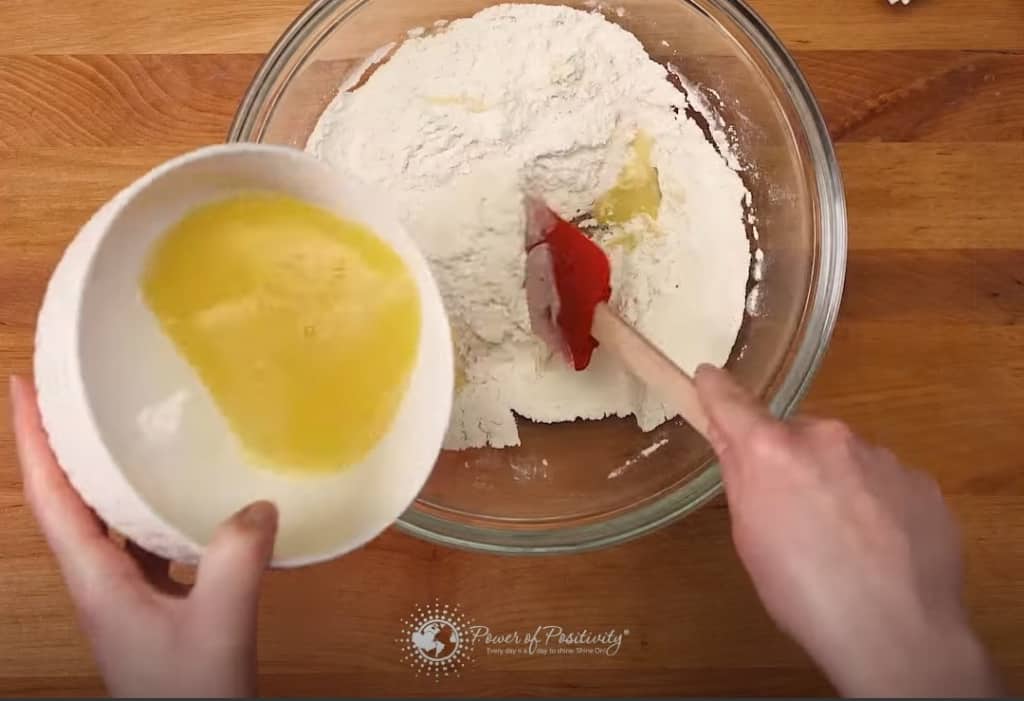
In a separate smaller bowl, whisk the warm water, melted butter, and egg until mixed completely. Add this to the larger bowl, using a spatula or large spoon to combine with the ingredients in step 1.

After stirring the ingredients together, use your hands to create a dough. Knead it until it forms a small ball shape.

Now, sprinkle a pinch of flour on your cutting board, and place the dough on top. Continue kneading it for 5-10 more minutes.

Next, drizzle a little olive oil in the large mixing bowl. Place the dough in the bowl, coating it thoroughly with the oil. Cover the bowl tightly with saran wrap and a large kitchen towel. Let the dough rise at room temperature until it’s doubled in size.

Once again, sprinkle a little flour on the cutting board. Place the dough back on the board, and use your hands to create a long cylindrical shape.

Line a bread pan with parchment paper, and place the dough inside. Cover with saran wrap and the towel, and let it sit for an hour.

If you’d like to make your own jam, follow this next step. Add 2 cups of frozen strawberries to a large pot. Add 2 tbsp of sugar, 1 tbsp of lemon juice, and lemon zest.

Stir to combine the ingredients, and cook on low until the mixture resembles a thick jam. Pour in a bowl or mason jar, and set aside.

If you’d like to make your own peanut spread, follow this step. Line a baking sheet with parchment paper. Then, pour the peanuts on the parchment paper. Shake the pan to spread out the peanuts, and roast at 350 degrees F for 10-12 mins.

Once cooled, put the peanuts in a food processor. Blend till the peanuts become thick and creamy. Scoop into a bowl and set aside.

Now, brush your bread with the egg wash using a pastry brush. After completely coating the top and sides, bake at 400 degrees F for 35-40 mins or until golden brown.

Use the knife to slice the bread once it’s cooled.

Now spread the peanut butter and jelly on two slices of bread, and enjoy.


peanut butter and jelly

Modifying the recipe:

Keep in mind that you can skip a couple of steps by using store-bought peanut butter and jelly. However, if you want to keep the recipe completely homemade, you can do so as well. To add flavor and thickness, you could also add salt, sugar, and peanut oil to the peanuts. For the jelly, you can substitute other fruits such as grapes, blueberries, or blackberries if you prefer.

Final thoughts: Make your own bread for the classic peanut butter and jelly sandwich

The peanut butter and jelly sandwich goes back to the early 1900s and remains popular today. Most people buy the ingredients at the store, but you can easily make your own at home. Best of all, you can use the bread throughout the week to make different sandwich combinations. Of course, these sandwiches make the perfect quick, easy lunch to take to the office or pack in your kids’ lunchboxes for school.

Peanut butter and jelly sandwiches provide a portable, nutrient-dense meal for those days when you don’t feel like cooking. Making your own bread takes some work, but it allows you to control the ingredients. Plus, you’ll have leftovers to use throughout the week. We hope you enjoy it!

15 Quotes About Telling the Truth, Even When It’s Hard

The truth isn’t always easy to say, but telling the truth is essential, even when it’s hard. People tend to think that lying or hiding the truth is easier, but that isn’t entirely true. Many times, sticking to a lie is harder than telling the truth would have been.

Even knowing that the truth is important, it is still tempting to take the easy route and fib a little. Rising above that temptation shows your inner courage and strength while showing that you are an honest person. Plus, if you don’t tell lies, you don’t have to try and remember what you said later.

When you think that telling a lie is the easiest route, change your mindset. Telling lies gets you caught up in a confusing mess with no possible solution. Telling the truth, though, will allow you to find an answer that improves the situation one way or another.

Twenty Quotes About Telling the Truth, Even When It’s Hard

These quotes about telling the truth even when it’s hard will help you make the right choice. Telling the truth is always the better option, as these quotes will explain.

telling the truth1. “Stop holding your truth; speak your truth. Be yourself. It’s the healthiest way to be.” – Tiffany Haddish

If you are holding back the truth because you’re afraid to speak up, stop doing that. Be true to yourself and speak what is on your mind.

Tell people the truth even when they don’t want to hear it. Telling the truth is the healthiest way to live, as Haddish explains.

2. “Truth is ever to be found in simplicity, and not in the multiplicity and confusion of things.” – Isaac Newton

Telling the truth allows you to simplify things. Lies only complicate situations and cause confusion, which doesn’t help anyone involved. Be honest, and you won’t have to worry about the bigger issues that accompany lying.

3. “To tell the truth is a beautiful act even if the truth itself is ugly.” – Glen Duncan

No matter what the truth is, telling it is more beautiful than lying. When the truth is out in the open, you can find solutions and make decisions based on the facts. Doing this is beneficial to you and the person hearing it, even if it is hard at first.

4. “You can hate me. You can go out there and say anything you want about me, but you will love me later because I told you the truth.” – Mary J. Blige

When you tell the truth, the other person might dislike you for a while. Things could even become more complicated, which is one of the reasons telling the truth is hard. However, later on, that person will appreciate you for being honest.

When you lie, you drag things out, get caught up in more lies, and continually disrespect the other person. If they find out that you have been lying, they will be even more upset than if they had heard it from you.

5. “Whoever is careless with the truth in small matters cannot be trusted with important matters.” – Albert Einstein

If you get caught in a lie, it will discredit you for a long time to come. The person you lied to won’t believe you about the important things if you lie about anything at all. So, avoid this situation by always being honest, even when it’s hard.

6. “Never be afraid to raise your voice for honesty and truth and compassion against injustice and lying and greed. If people all over the world would do this, it would change the earth.” – William Faulkner

While telling the truth is sometimes hard, it is better than the alternative option. Don’t be afraid to speak up and voice your honest opinion. As Faulkner explains, if everyone were honest, the world would be a much better place.

7. “Truth only means something when it’s hard to admit.” – Nicholas Sparks

If the truth were easy to tell, everyone would do it. The harder it is to say out loud, the more meaningful it is.

Remember this quote the next time you need to speak up and tell the truth. It will remind you that it is only hard because it means so much.

8. “The great enemy of the truth is very often not the lie, deliberate, contrived and dishonest, but the myth, persistent, persuasive and unrealistic.” – John F. Kennedy

While deliberate dishonesty is bad enough, it isn’t the worst part about telling a lie. Creating a false narrative in someone’s mind and giving them empty promises and hope is even worse.

The next time you consider lying to someone, remember what you will be doing to them. No matter who it is, the other person deserves to know the truth, no matter how hard it might be.

pop meme9. “The truth is not always beautiful, nor beautiful words the truth.” – Lao Tzu

Saying what someone wants to hear might sound beautiful, but the words aren’t the truth. Likewise, the truth might not always be beautiful, but at least it’s honest. Choose honesty and integrity over speaking beautiful but dishonest words.

 10. “Have the courage to say no. Have the courage to face the truth. Do the right thing because it is right. These are the magic keys to living your life with integrity.” – W. Clement Stone

The truth and doing what is right should always take precedent over telling a lie or hiding from the truth. Honesty shows courage and integrity, so make sure you follow the right path.

11. “Once you eliminate the impossible, whatever remains, no matter how improbable, must be the truth.” – Arthur Conan Doyle

You can’t build anything based on lies, so if you are working toward something good, make sure there is honesty along the way. Overcoming obstacles and navigating setbacks only get you so far if the truth isn’t there in the end. Tell the truth from the start, and you can trust that you are building on a solid foundation.

12. “For every good reason there is to lie, there is a better reason, to tell the truth.” – Bo Bennett

You might try to justify telling a lie or hiding the truth, and you will likely come up with some good reasons. If you find yourself looking for justification, think of the benefits of honesty instead. Thinking this way can help you recognize the benefits of telling the truth, even when it is tempting to lie.

13. “There is nothing so strong or safe in an emergency of life as the simple truth.” – Charles Dickens

When things get hard, the truth can offer strength and safety. Fully knowing what is going on can bring peace in a way that correlates with moving forward. When the truth is hidden, there will always be a sense of worry and weakness in the relationship.

14. “Honest communication is built on truth and integrity and upon respect of the one for the other.” – Benjamin E. Mays

Without truth and integrity, there can be no honest communication. Plus, dishonesty is a sign of disrespect for the other person. You wouldn’t want them treating you that way, so you should offer the same consideration.

Rather than stoop to this level, choose honesty instead. If you are honest right from the start, it will make the rest easier.

15. “Always tell the truth. That way, you don’t have to remember what you said.” – Mark Twain

When you tell lies, it is easy to forget what you said. Plus, you sometimes have to build on those lies or tell new lies to cover up the truth. The entire process is tricky and confusing, so it is best to avoid it.

When you tell the truth, though, you don’t have to worry about forgetting what you said. Since you were honest, you can recall the event from memory and avoid being caught in a lie. Telling the truth saves you stress while simplifying your communication, as well.

telling the truthFinal Thoughts on Quotes About Telling the Truth, Even When It’s Hard

Telling the truth isn’t always easy, but it is better than the alternative. By being honest from the start, you can find a realistic solution that will work and isn’t based on lies. Plus, there are always more reasons to be honest, anyway, so it truly does work out for the best that way.

Keep in mind that you also won’t have a confusing mess of lies to remember and keep straight. When you tell the truth, you only have one story that you must follow. Plus, you won’t have to build more stories based on the things you made up.

If you choose to tell the truth, everything will work out how it was supposed to. It might be hard to say words that you know the other person doesn’t want to hear, but it is better than deceiving them. Remember these quotes about telling the truth the next time you are in this situation.

Making Noodles Is an Art That’s Fun to Master

Making noodles takes a little elbow grease, but the beautiful culinary art you’ll create makes it all worth it. We’ll show you several different ways to make your pasta, so you never have to repurchase it. Just kidding – as eye-catching as these kinds of pasta are, they do take some time to prepare. However, when you have a free afternoon, these noodles can provide dinner for a few nights during the week.

People all around the world use noodles in various dishes, from spaghetti to manicotti to pho. Noodles serve as a base for a variety of dishes and provide hearty, nourishing meals. Today, we’ll focus on Italian-style noodles, which you can use in any dish you prefer. Not only will these give you a nice dinner, but they are therapeutic to make as well. In our fast-paced world, sometimes it’s nice to slow down and create your culinary masterpieces.

So, to learn the secret of creating your noodles, read on for the recipes below.

Here’s how to make your noodles from scratch:

First off, you’ll need a large cutting board or baking sheet to roll out the pasta dough. Since you’ll need to use flour to ensure the dough doesn’t stick, prepare to get a little messy! Make sure to wear an apron or some old clothes before embarking on this culinary adventure. Now that we have that out of the way, we’ll get to what you came for – the recipe!

making noodles1 – Spinach noodles

Sneak spinach into this dough…the kids will never know they are eating their veggies.

What you’ll need:

  • Large cooking pot
  • Wooden spoon
  • Blender
  • Strainer
  • Large bowl
  • Small spoon
  • Large surface for rolling the dough
  • Plastic wrap
  • Knife
  • Roller
  • Pasta cutter wheel or pizza cutter
  1. Spinach pasta

Ingredients:

  • 2 cups spinach
  • 1 1/2 cups all-purpose flour
  • Two eggs

First, cook the spinach in a large pot for about 5 minutes, stirring occasionally. Add it to a blender along with the two eggs, blending thoroughly. Next, get your bowl and strainer, pouring the mixture into the filter. Stir it to remove excess water, and then lay out the flour on a table or cutting board.

Pour the strained spinach and eggs in the middle of the flour. Start mixing and folding the dough with your hands until you form a ball shape. Knead it thoroughly so that all the flour mixes in with the spinach and eggs. Wrap it with plastic wrap, and sprinkle it with a bit of flour. Refrigerate for 30-45 minutes.

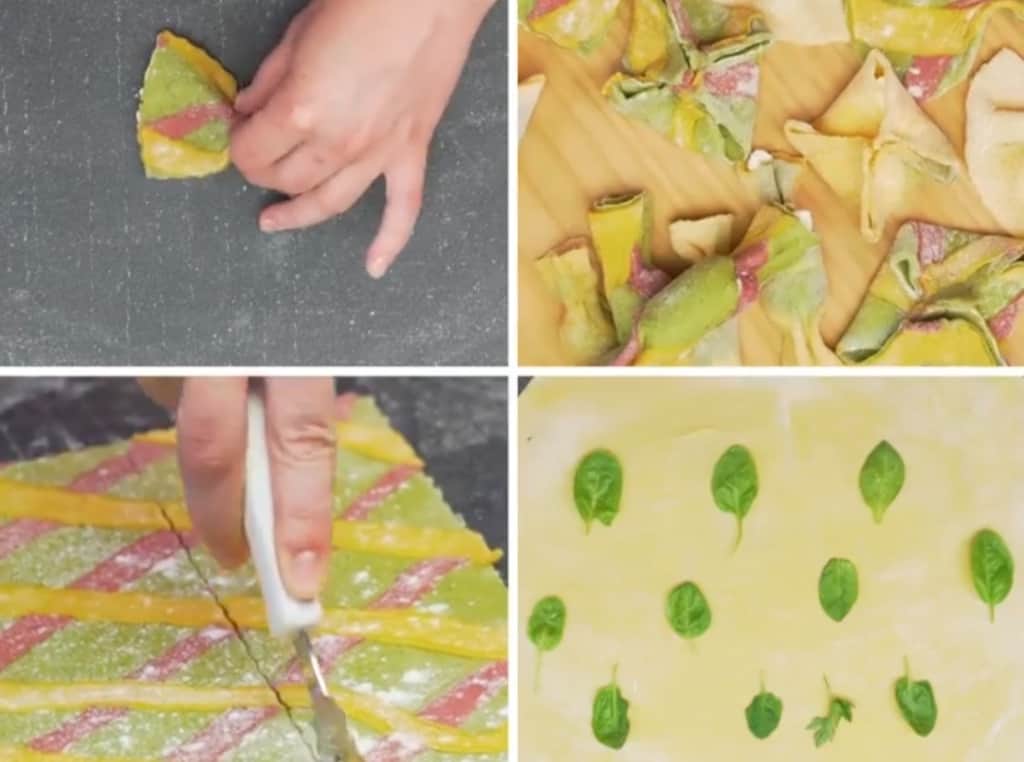
Once you remove it from the fridge, roll the dough out and sprinkle it with flour. Cut along the length of the dough to create a few large pieces. Take the beetroot noodles and lay them diagonally across a portion of the spinach pasta dough. Leave space between each beetroot noodle, and then lay the turmeric noodles diagonally in the opposite direction.

In other words, the beetroot and turmeric noodles should form “X’s” on top of the spinach pasta dough. Remove any noodle pieces hanging off the spinach dough, and sprinkle the dough with flour. Use a roller to spread it out, and cut the dough into squares. Add ricotta filling, and make whatever colorful shapes you prefer!

2 – Beetroot pasta

Add the healthful benefits of beetroots in this recipe.

Ingredients:

  • Two eggs
  • 1 1/2 cups all-purpose flour
  • 1/2 medium-sized beetroot, cubed

Rinse out the large pot and fill it halfway with water. When the water is boiling, add the cubed beetroot. Cook until soft, and pour into your blender along with the two eggs. Combine thoroughly.

Next, pour the flour onto your cutting board to make the dough. Form a circle with the flour, and pour the beetroot and egg combination in the middle. Repeat the step above, mixing and folding the dough until you form a ball. Sprinkle a little flour on top, and wrap it in plastic wrap. Refrigerate 30-45 minutes.

Roll out the dough and sprinkle with flour. Cut fragile pieces to create long noodles, and set these to the side. Leave half of the longer works for the first recipe.

3 – Turmeric pasta

Turmeric adds a delicious twist to this pasta.

Ingredients:

  • 1 tbsp turmeric
  • Two eggs
  • 1 1/2 cups all-purpose flour

Pour the flour on your cutting board, and then put the eggs and turmeric on top. Mix with your hands until all the flour is combined thoroughly. Once again, wrap the dough in saran wrap and refrigerate for 30-45 minutes. Repeat the process above to create the long noodles, and leave half for the first recipe.

4 – Spinach parsley pansotti

Pansotti is an Italian pasta stuffed with a filling such as cheese and folded in a triangular shape. Making it is easier than it sounds and only involves a few steps.

Ingredients:

  • 2 cups all-purpose flour
  • Four eggs
  • A handful of spinach and parsley leaves
  • Ricotta cheese

First, mix the flour and eggs on your cutting board, creating a dough. Follow the steps above to knead it into a ball shape, and refrigerate for 30-45 minutes. After you remove it from the fridge, sprinkle a little flour on top and cut the dough in half. Create a ball shape with one half, and then flatten it using your hands to make a circle.

Sprinkle more flour on top, and use a roller to roll the dough as thin as possible. Now, place the spinach and parsley leaves evenly on top of the layer of dough. Stretch it out as much as you can. Then repeat the steps above for the other half of the dough, laying it on top of the first half.

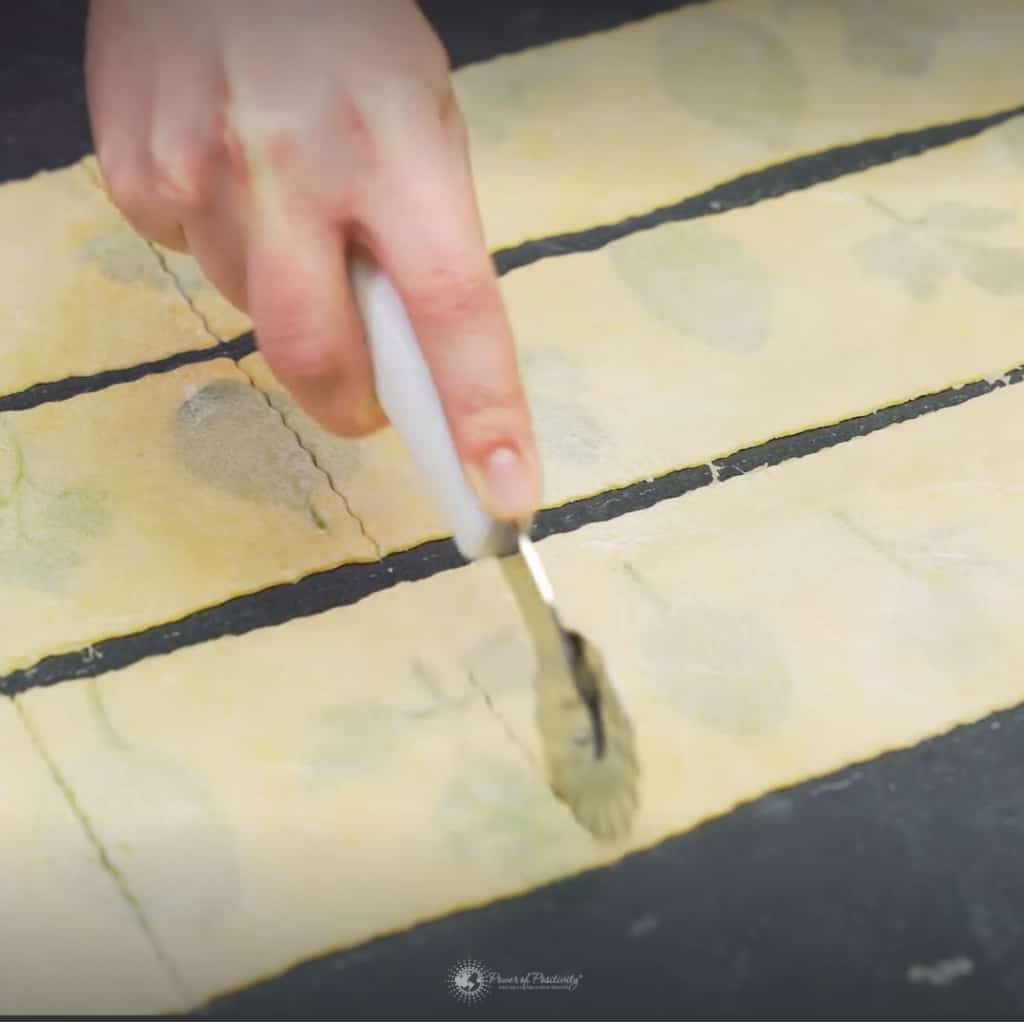
Sprinkle with flour, and use the roller to spread out the dough more. Then, use your pasta cutter to create squares in the dough between the spinach and parsley leaves. Finally, add a little ricotta cheese in each square, and fold the dough diagonally. Press down on the edges with a fork to seal the pansotti.

noodles

Final thoughts: making your noodles is a form of art

These noodle recipes will bring out the Italian pasta chef in you. While it saves time if you use a pasta machine, making it by hand is more fun and rewarding.

If you want, you can also create bowtie pasta with some of the dough squares. Pinch on the middle of a square to make the bowtie shape. There are countless other types of pasta you can make as well; use this guide for more culinary inspiration. Let us know if you decide to make your noodle creations.

Skip to content