Weekly tips, affirmations, and small actions to feel your best.

Awesome Happiness Hacks : 10 Simple Ways To Find Happiness Within Yourself

Happiness, to some people, is a foreign terminology. When one is asked what they would wish for their family, many people say happiness. Money is said, but only because we tend to think that it will bring you joy; it helps, but it is not the catalyst for your glee.

If you have stared out your window and realized that your life is slipping away and you are not happy, now is the time to change that. You can find pure joy and contentment in yourself, and it does not have to come from other people. Work on yourself, and you will discover the delight you so desperately desire.

Here are 10 happiness hacks to help you find happiness within yourself.

Make someone happy

Bringing joy to other people can make you happy. You can give a compliment, smile at them, or send them a gift, anything to bring joy to the other person. When you are compassionate to others, you receive a natural “high” that makes you happy. Do it today, and you will appreciate it.

Christine Carter who is from the University of California, Berkeley states that the number of friends we have and their quality positively affects our well-being.

Challenge yourself

When you try new things, such as yoga, chess, learn a new game, or visit a new place, all of these will stimulate your mind and you will be happier.

Mihaly Csikszentmihalyi, a psychologist, states that creative, learning new skills, or artistic activities when performed relate to having a better approach to life.

Exercise

We don’t always follow through with our exercise routines, we either change our minds or decide we become tired of hitting the gym. It is known that exercise is a sure mood-booster.

A study done in Harvard states that the well-being of people who are physically active is higher than those who do not engage in physical exercises. Most people believe that exercising is too difficult to increase your happiness, but try going to hit the gym. You can walk, ride a bike or hike, choose your form of exercise.

Gratitude

Look around you and appreciate the people who are in your life. Send a text or tell your parents, friends, or colleagues that you are thankful that they are in your life.

You can list down the good things that have happened in your life, think of the good experiences you have had with your family, friends or children. This will naturally boost your mood.

Let life flow

Do not challenge yourself too much that you lose what is important to you. Chasing money or fame will not make you happy on its own. Linda Esposito of LCSW, states, “The concept of “everyone” does not exist when it comes to experiencing joy.”

You need to find what makes you happy and not how you should attain it. Do not listen or let people dictate to you how you should achieve happiness that is all on you.

In the genes

According to psychologist David Lykken, our “set points” of how happy we can be is on our genes, but whether we can overcome that point is all dependent on our experience and training.

If your “set point” is low, you can encourage yourself to achieve more and be happy by practicing positive thinking.

Be truthful

According to the author of The Liar in Your Life, and a psychologist at the University of Massachusetts Robert Feldman, 60% of people, cannot go through a 10-minute conversation without lying.

That is a considerable number. To not lie is not an easy thing, but when you are honest, your conscience is clear and you know that there are no consequences that you are waiting for.

Listen to your heart

When you are satisfied with all you have and you know it is enough, you will always be happy. Most often than not we try and compare ourselves with others and feel low when they have what we desire.

A study conducted in the 1980s by the University of Northern British Columbia discovered that people who are in search for career success, money, fame or friends are less happy than those who are not in the same quest.
Be content with what you have regardless of what your family and friends say or have.

Enjoy the simple pleasures

The sun, grass under your feet, starry nights, thunderstorms, the ones you love, or treasured memories, enjoy them. The simple pleasures and things in life are a sure way of making yourself happy.

happiness

They are gifts that have been given to us for free, and you sure need to enjoy them more.

Be with those who make you smile

We are happiest when we are around those who make us happy, as studies have shown. Be around people who bring you joy, and when you are together, your time is spent in laughter and tears of joy.

Try and steer clear of those people who consistently bring you down. Toxic or narcissistic people should be a no-no in your life. Do not be dragged into an unnecessary drama that will only make you sad or angry.

Conclusion

Cultivate a spirit of looking for happiness within yourself. This way, you will not rely on other people. The more you look within yourself, the more likely you are to achieve it.

Always be thankful for the small joys in life and blessing that are there in your life. For a fulfilled and peaceful existence, try and practice these happiness hacks. Understand what works for you and this will be the first step to the journey of finding your joy.

https://www.youtube.com/watch?v=lVhLd8LiQDY

(C)Power of Positivity, LLC. All rights reserved

10 Tips On How To Live In The Moment And Appreciate Life

Over time, it can be easy to become overwhelmed by challenges or struggles and have a change in your perspective on life. Unfortunately, focusing too much on the negative can make it difficult to appreciate life. Many people begin to form a habit of focusing too much on what isn’t going right rather than appreciate the positive.

Your mindset and thoughts will ultimately influence your joy in life, which determines what you appreciate. If you fail to focus on the moment you’re living in, it can become easy to get stuck in a rut.

If you want to remain thankful, there are a few essential tips to follow on how to live in the moment.

1. Remain Thankful

Many people have a habit of focusing too much on the negative rather than realizing what they have in life, which can make it difficult to appreciate everything. Make it a point to remain thankful by creating a list of how you’re blessed, whether it’s due to your career, your family, or your health. Practicing gratitude is essential for remaining positive and feeling happier.

2. Let Go of the Past

It can be challenging to live in the present and feel joyful if you’re reliving moments from the past. Whether you experienced trauma or loss, the experiences can affect your present life if you allow them to influence your current mood. Allow yourself to let go of the past and instead focus on what you learned. Understand that pain is a part of life that doesn’t have to dictate how much you appreciate each day. Choose to have hope for the future and dream of the possibilities.

3. Avoid Postponing Gratification

As an adult, it can be easy to postpone gratification and put your happiness on the backburner. Instead of waiting to feel happy or fulfilled, you can allow yourself to have fun and enjoy life by participating in activities that you enjoy today instead of waiting until tomorrow. Allow yourself to have fun, spend time with loved ones, and eat delicious food on a daily basis.

4. Focus on the Present

One of the best ways to combat fear and avoid worrying about the future is to focus on the present. Become more conscious about focusing on the present and your current feelings to ensure that you enjoy life. By cherishing each moment that you experience, you can feel more fulfilled and rich instead of placing your focus on the future, which isn’t guaranteed.

5. Become Self-Aware

Living in the present will require you to become self-aware. Evaluate your feelings and thoughts to determine what influence what you experience each day. Understand that you’ve reached where you’re at due to your decisions and who you are as an individual. Your decisions and choices have ultimately determined your current state. If you want to accomplish more or change directions in the future, you’ll need to begin to make different choices for yourself.

6. Lose Track of Time

Losing track of time will also prove to be beneficial when you get into the flow of an activity or hobby that you’re enjoying. By spending time enjoying various activities or tasks, you can lose track of time and avoid spending too much time processing your thoughts, which can allow you to be present. Try new tasks that allow you to be in an elusive state, which can enhance the quality of your day and make it possible to appreciate life.

7. Practice Mindfulness

Start by practicing mindfulness each day, which can reduce your stress levels and make it possible to avoid anxiety if you appreciate the current moment. Mindfulness means focusing on your immediate experience and taking in both the good and the bad with complete acceptance of it.

8. Disconnect

Disconnecting from tehcnology is vital to ensure that you can remain present and avoid spending all of your time online. Spend a few hours each day by unplugging from your phone and computer.

9. Spend Time with Loved Ones

Studies show that spending time with family members or friends can allow you to relax and will also improve your mood by laughing and feeling supported by those you trust. By making conversation and spending time in a joyful setting, you can create new memories and appreciate life more.

appreciate

10. Enjoy Your Job

Find a job that you truly enjoy to ensure that you spend most of your time practicing your passion or making a difference in your community. The quality of your job will impact how fulfilled you feel long-term.

Living in the moment doesn’t have to be impossible after you’ve formed many habits of living too much in the past or future. With the right steps taken, you can change your perspective and learn how to focus more on the now, which will prove to be fulfilling.

https://www.youtube.com/watch?v=lVhLd8LiQDY

(C)Power of Positivity, LLC. All rights reserved

12 Simple Ways to Reconnect with Your Partner

Relations require constant work, and there will be times when you feel like you have lost your connection. You can’t neglect your relationship during these times, or the disconnect will worsen. Instead, figure out how to reconnect your relationship and rekindle your romance.

In a relationship, both partners need affection, love, and attention. When one of them doesn’t get those things for a long time, it can ruin your relationship. Life gets busy, and unfortunately, that means relationships suffer, but you must make your partner a priority amidst the chaos.

Sometimes, one or both of you will take the relationship for granted, which can also cause you to feel disconnected. Your partner might take the last place as you focus on work, household chores, kids, bills, and other responsibilities. Since you assume they’ll always be there when you have time, you don’t prioritize them like you do other things.

Make positive changes in your life so that you can begin reconnecting with your partner. Please don’t ignore the divide between you, or it could jeopardize your relationship. Reconnecting can save your relationship and help you find the spark that you once had.

How to Reconnect with Your Partner

So now you might wonder. What things can couples do to reconnect? Try new things when you don’t know how to reconnect with your spouse.

how to reconnect with your partner1. Admit Your Mistakes

Everyone makes mistakes, and admitting them is essential for the integrity of your relationship. Experts say that the first step to reconnecting is figuring out the underlying problem and owning up to your faults. If you don’t take ownership of some of the issues, your partner will feel alienated and shut down.

Plus, if you are unwilling to admit your mistakes, nothing can be resolved. When there are issues in the relationship, there are typically faults from both partners. You can’t expect your partner to own up to their mistakes if you won’t honestly acknowledge yours.

2. Connect With Feelings

Many times, in relationships, someone doesn’t feel heard. They will say something multiple times, and their partner still doesn’t pick up on their feelings. This lack of understanding often happens because you aren’t connecting with emotions but with words.

The issue typically doesn’t stem from one partner not listening, as the problem usually revolves around a misunderstanding. If your partner doesn’t feel heard, try connecting with feelings instead. When you connect with emotions, it fosters trust and intimacy as well as a deeper connection.

The next time your partner says something, take a minute before responding. Think about how they are feeling rather than what they are saying and approach it that way instead.

3. Know The Things Your Partner Loves

Your partner will be thrilled if you know the things that they love. Knowing what they love proves that you want to get to know them, no matter how long you have been together. Remembering little details about your partner can make their day and help the two of you reconnect.

Knowing what your partner loves also shows them that you are committed and invested in the relationship. While your life doesn’t have to revolve around pleasing your partner, you must at least make a regular effort.

Do things you know they will enjoy, and it’ll prove to them that you want to feel a connection again. Plus, it’ll encourage them to do things that you love, too.

4. Set Clear Boundaries

Many people think that boundaries shouldn’t exist in relationships but are essential for maintaining a healthy relationship. Relationships require a little privacy, including having separate friends, hobbies, and schedules.

You can’t expect your partner to know your expectations when it comes to boundaries. Both of you must be straightforward because it sometimes requires compromise. With understanding comes a deeper connection, and it spares hurt feelings and unnecessary arguments.

One example of this is how often you exchange text messages throughout the day. If one partner likes frequent text communication but isn’t realistic for the other, it must be addressed. Otherwise, misunderstandings and barriers occur.

These boundaries aren’t only about how often you communicate, though. You should set boundaries about how you’ll split holidays with your families and which traditions you will celebrate at home.

Any area of your relationship that causes tension between the two of you should have boundaries set. Boundaries offer a level of protection to your relationship as they prevent misunderstanding or hurt feelings.

5. Give A Compliment

This idea is one of the easiest ways to reconnect with someone your partner

When you want to reconnect with your partner, one of the best ways is to give a compliment. Tell them you think they look good or love their outfit. Little compliments will make your partner feel good and remind them that you appreciate their appearance.

You can’t only give compliments about their appearance, though, because they also want to know that you appreciate their mind. If your partner doesn’t know that you think they’re smart, they might begin to feel like you don’t think they are. This feeling is especially prevalent if you sometimes focus on their inadequacies.

When your partner says something intelligent, point out how smart they are. If they do well on a project, tell them that you are impressed with their work. By complimenting their intelligence, you’ll quickly reconnect.

6. Refrain From Blame

When you have a conversation about a problem, blaming your partner won’t help. Blame can divide the two of you, making reconnecting even harder. Rephrase your words so that your partner doesn’t feel attacked or unfairly blamed.

Additionally, when you blame your partner, it usually results in an unhelpful, defensive response. Try to use “I” statements and avoid using the word “you.”

how to reconnect with your partner

7. Validate Yourself

While focusing on your partner is essential in a relationship, you also must validate yourself. You can’t find your worth in your partner’s eyes, so you must find your value separately. Self-validation will give you confidence and a deeper understanding of the way you are feeling.

When you validate yourself, you won’t seek validation from your partner as often. This separation will help you feel less needy and release some tension in your relationship. You won’t do it perfectly every time, but practice will help you make it a habit.

To practice validating yourself, do the following steps:

  • acknowledge your feelings and recognize what you need
  • accept your feelings without judgment
  • remember that your feelings don’t define you

8. Travel Together

Sometimes all you need to do to reconnect is switch things up a little. A change of environment can bring the spark back to your relationship as you keep things fun and interesting. You don’t have to travel far but pick somewhere neither of you has been and explore it together.

If you have the means, plan a road trip to a place you’ve both always wanted to see. Create the perfect playlist and pack road trip snacks. It’ll be fun, and you can bond and reconnect during the adventure.

When life gets busy, it’s easy to let things get in the way of your relationship. Traveling together gives you time to focus on the two of you without distraction.

9. Set Goals Together

While you should still have individual goals, setting goals with your partner is essential for maintaining a connection. Suppose you’re both active, train for a fitness event together. Or, if you’re both business savvy and passionate, you can start a business together.

Talk to your partner and find out where they want your relationship to go. Maybe they want to buy a house together or start a new weekly tradition. It doesn’t have to be a huge goal, as long as you are both actively working toward it.

When you have something to look forward to together, it strengthens your bond and allows for reconnection. Consider both short- and long-term goals to continue the excitement.

10. Learn To Say Sorry

Apologizing is more meaningful than most people realize. It’s a simple and often overlooked action, but it can make a huge difference in your relationship. When you have made a mistake or hurt your partner’s feelings, don’t hesitate to say that you are sorry.

Experts support that saying sorry is essential for maintaining a long-term relationship. Make sure you mean it when you say it, though, because your partner will likely pick up on the difference.

11. Be Kind

Being kind goes a long way when trying to figure out how to reconnect with your partner. Small, thoughtful actions add up, and your partner will appreciate the kindness. Even sending a sweet text message randomly during the day can fill your partner with love and gratitude.

Doing small but kind things like helping with housework or making eye contact during a conversation shows that you are making an effort. These day-to-day actions promote a positive connection and build trust.

12. Say “I Love You” Every Day

Don’t just assume that your partner knows you love them. They need to hear it from you daily, as well. You can never tell them enough that you are in love with them and that you won’t take them for granted.

Check-in throughout the day to say I love you, and say it before you leave every day. Don’t miss an opportunity to tell your partner how you feel.

how to reconnect with your partnerFinal Thoughts on How to Reconnect with Your Partner

Relationships require constant work, and it is easy to let them fall to the bottom of the priority list. Figuring out how to reconnect with your partner can save your relationship and help you move forward happily.

Please make an effort to reconnect with your partner so that they know you still care. Focus on how you make each other feel, and consider the words you use when you talk. Communicate your emotions and work on bonding and rebuilding the connection.

The Cold Hard Truth About Having a Narcissistic Parent

Growing up and establishing an identity of your own is hard enough to do in a “normal,” healthy family. When the family has serious issues, it’s that much harder. Having a narcissistic parent can introduce huge extra challenges.

The truth is they won’t fundamentally change. People with Narcissistic Personality Disorder may make superficial efforts to fit in socially. Still, deep down inside, they will continue to have a skewed set of priorities that are problematic for people around them.

Here’s the cold hard truth about having a narcissistic parent:

narcissist

You Need To Learn To Love Yourself

A narcissist isn’t really capable of loving other people. Being raised by such a person can you leave you warped by practices like parentification. One result is that you will tend to spend a lot of time looking to get validation from them, looking to prove you are good enough and looking for the love from them that you should have gotten but never did.

This is a dead end. It’s a bankrupt relationship. Putting more into it tends to be like throwing good money after bad.

Such people are emotional vampires. They will always bleed you. They will never nourish you. You need to learn to nourish yourself. You need to learn to love yourself.

No Contact And Practical Alternatives

Some people choose to cut the Narcissistic parent out of their life completely. Others choose to remain touch but to limit the contact.

Going no contact is the simpler answer. For some people, it is the only one that is manageable.

However, it is also the most extreme, and the fact that it is so extreme can interfere with you getting a normal life. It can interfere with relationships with other relatives and look weird to people with healthier families who won’t understand and may be inclined to assume you are the problem.

One option is to take a job, or marry someone with a career that will take you far from home and make it impractical to visit much. If handled right, this can make it look to the parents like you aren’t avoiding them.

You will still need to wrestle with them trying to micromanage your life from afar. But limiting their information and the control they can exercise is easier if they live far enough away.

This won’t work as well if your Narcissistic parent has the means and inclination to readily drop by to see you in spite of the distance. In a case like that, you will have no real choice but to take the bull by the horns and tell them they can’t do certain things if they wish to remain a part of your life.

You Need To Learn To Set Healthy Boundaries

Whether you cut them out of your life or not, you will still need to learn to set healthy boundaries, if only to try to have healthy relationships with other people. When you are parentified by a Narcissistic parent, boundaries get weird. It takes work to realign and get your social expectations out of the weird zone.

Some things you can do work on improving your boundaries:

  • Learn to develop your “Nar Dar”
  • Let go of the past.
  • Get toxic people out of your life.
  • Develop positive mental health habits.

Narcissistic

Flying Low On The Internet

Someone with a Narcissistic personality is prime material for being a stalker. This can make having a normal internet life challenging. For most people these days, the internet is a big part of their life. Just staying off it may not be realistic. Even if it is, it is a hardship.

But there are ways to mitigate the problem. Here are some pointers:

  • Chose user names on public forums that aren’t easily tied to you.
  • Use different user names on different forums and don’t cross reference them.
  • Don’t talk trash about your relatives online, not even in veiled terms. Be aware they may be reading it and this will only provoke them.
  • Make sure you have strong passwords.
  • Try to avoid having “dirty secrets” that people can hold over you. One way to do this is to be open about having family friction or other problems, but not too specific. The secrecy part is what makes it blackmail worthy.

You can’t control what they do. But you can make personal choices that help limit what they can do to you.

Moving far away and thinking very carefully about details like how to interact with the larger world via internet may sound burdensome. But it’s less of a burden than letting them have control over your life.

(C)Power of Positivity, LLC. All rights reserved

8 Things Your Sleep Position Can Tell You About Your Relationship

You probably don’t pay much attention to your sleep positions at night. You might think there are more important things in a relationship than how you and your partner sleep together. And you would be right. However, you might be surprised to find out just how much the way you sleep can reveal about your love and relationship.

Why are sleep positions so revealing?

We do sleep together unconsciously; our subconscious minds often dictate our positions as we dream. In a way, our nocturnal body language is the most truthful one that we have. So, analyzing it can lead to fascinating results, especially because it showcases how well-matched your two personalities are.

Here are some of the most common couple sleep positions – and what they reveal about your love and relationships.

Here Are 8 Sleep Positions That Reveal A Lot About Your Love & Relationship

“During sleep, you cannot fake your body language. This is the time when you are honest, vulnerable and your sleeping position can reveal a lot about your relationship.” – Corrine Sweet

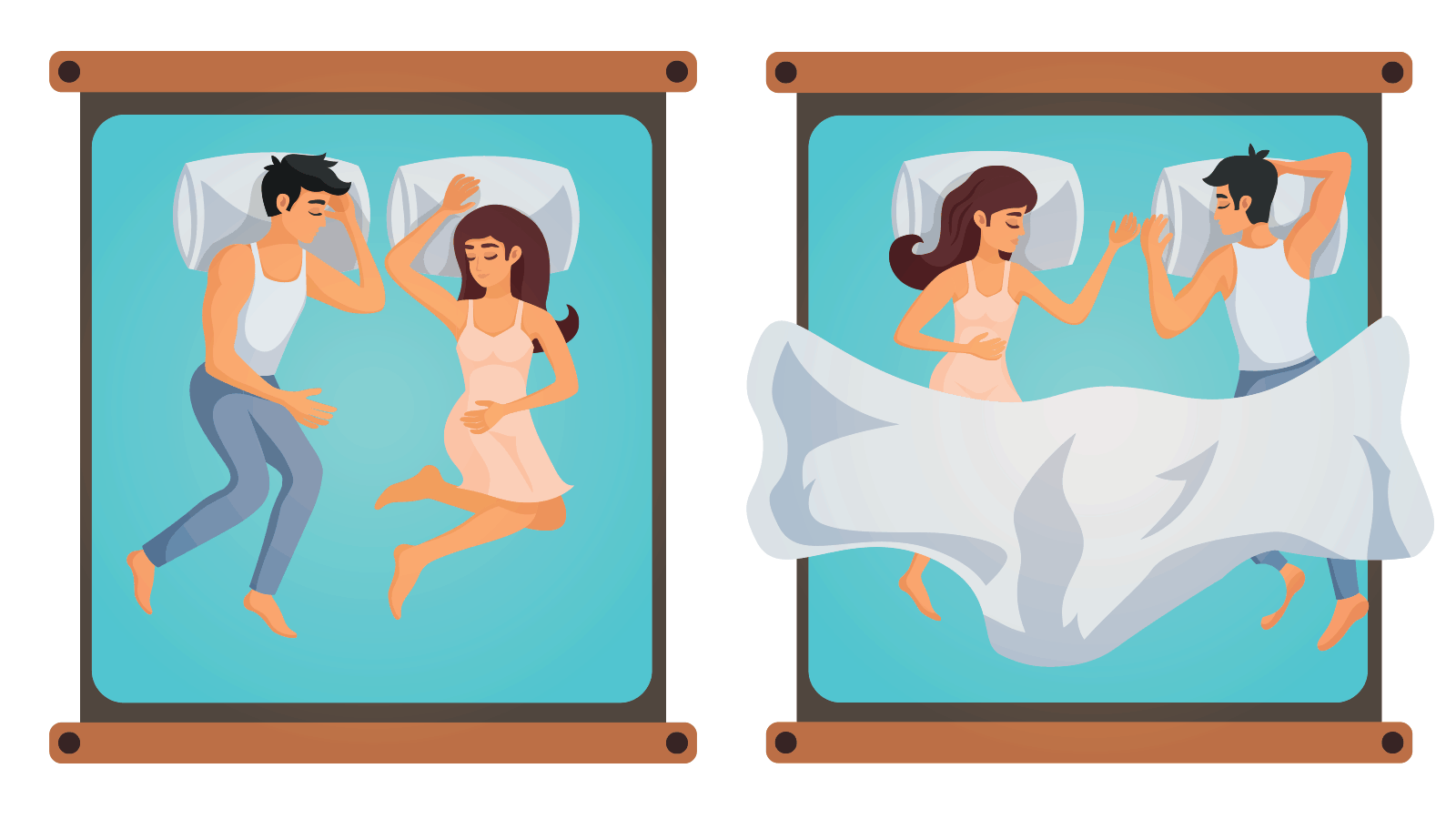
1. Zen style

Many people think minimal physical contact at night means a lack of closeness in a relationship. However, scientists have discovered it’s the exact opposite. If you sleep back to back or side by side, with only small parts touching each other, you feel like you’ve been together for a very long time. You’re completely comfortable around the other person, and you trust them explicitly – so much so that you’re okay with turning your back to them and still believing that you’re safe. Researchers point out that this is a common sleep position for new relationships and people who have been together for years.

2. Sleeping face-to-face

Unlike back-to-back sleeping, when you are sleeping together and face each other but don’t touch, this indicates a need for something more in your relationship. It’s a subconscious craving for more intimacy and communication through touch because even while asleep, you’re more or less begging your significant other for attention and closeness.

This isn’t necessarily worrying, as you can take some positive steps to bridge any gap between you to help you feel closer during the day. Sooner or later, that will also come through in your night sleeping.

pop meme

3. Spooning

We tend to think of spooning as the most popular of sleeping positions, but you might be surprised to learn that actually only a fifth of couples spoon in bed. It’s much more common to spoon for a bit while awake and then change positions. That’s because people have different levels of comfort when it comes to sleeping together.

Not everyone is fully comfortable with so much physical contact with one another. Close spooning eventually turns into loose spooning as the relationship matures and your trust in one another grows.

4. The dominant

This is one of the sleeping positions that might indicate some trouble. Does your partner try to push you off the bed, steal your covers, or attempt to take up all the space? Then, it’s a subconscious fight for dominance.

This might indicate they feel like they should have more power in your relationship or that you have too much control. It’s something to watch out for. This behavior could lead to more serious problems regarding controlling behavior later on.

5. Completely tangled

It may seem romantic to spend the whole night in each other’s arms, but it rarely is. Research reveals that couples that sleep with every part of their bodies touching may be too dependent on one another. Even in sleep, you try to find the other person and feel like you need to be together all the time. This could be a problem when you’re awake, too, as you find yourself absorbed in your relationship and ignoring all other aspects of your life. It’s the first warning sign of problems to come.

6. The stargazer

sleep

One way to refer to the sleeping position is where one person is on their back, and another is pillowed on their shoulder. Normally, the person on the bottom is a more dominant personality. They see themselves as the foundation of the relationship, the stronger one.

The person on top is the clingier one, as they constantly need that support from their partner. It’s a good idea to try and switch up the roles in this sleeping position to see how you feel taking on a different position of power. If you are comfortable in both, that’s a good sign that you are needed just as much as you need your partner.

7. The tangled legs

Sometimes, you feel the need for that simple connection of your feet touching. This is a comfortable position for many couples as it accommodates people who like to sleep on their back, front, and side. Scientists claim that if your partner is playing footsie with you in their sleep, that means they are craving sexual intimacy. It’s also a sign that you two are so close that you look for each other subconsciously, even in your sleep.

sleep positions

8. Start with a tangle, end up back to back

Many couples start the night off completely tangled in one another but then gradually end up sleeping with their backs to each other, barely touching. Even if only eight percent of couples do this, it’s actually a sign of one of the most vital relationships out there. It means that you’re comfortable being intimate with one another, but you’re also okay with existing in your little world without being too dependent on your partner. It really is the best of both worlds and shows that you’ve reached a comfortable balance in your relationship.

Final Thoughts on Sleep Positions and the Health of Your Relationship

If you think that your sleep position might say something about your love and relationship that you don’t like, first of all: remember positive thinking. Then, try resolving it. Positive interactions during the day and thinking about how to improve any dependency issues can change your subconscious mind and slowly shift your sleeping position as time goes on.

Also, your sleep positions might not be up to you. Of course, if you have children or pets, you may have no choice but to find a position that’s comfortable for everyone. However, think about the ways you communicate with your significant other even when you’re asleep. Indeed, it may help show you whether you’ve found your perfect match in life.

10 Foods to Never Eat Before Exercise

It’s important to know what kind of foods we should eat before exercise. But we’re always hearing about what we should be eating, and what we should not be eating. Let’s back up a bit first and quickly recap the various functions of primary food nutrients.

  • Protein: Enables physical growth; develops and repairs muscles and tissues.
  • Carbohydrates: Helps deliver caloric energy to the body; three types: fiber, starch, and sugar.
  • Fats: Delivers protein energy to the body; transports vitamins and minerals throughout the cells.

We know that all three nutrients are critical to health, but there is much more to food than just macronutrients. For the sake of not turning this article into a research project, suffice to say food elements such as micronutrients, phytochemicals (antioxidants, antibacterial, antiviral, etc.), water, and zoochemicals (the animal-based kin of phytochemicals) play roles in producing and maintaining energy. When we exercise, we must manifest this energy as we perform under exertion. For this reason, we must have the correct balance of these nutrients.

Besides knowing what foods to eat before exercise, we must also know what foods not to eat before exercise. To a certain degree, the latter is more important than the former.

Today, we are going to discuss foods to never eat before exercise. We’ll wrap things up by going over foods that will do your body good!

Here are the foods (and drinks) to never consume before exercise:

“Food is the most widely abused anti-anxiety drug in America, and exercise is the most potent yet underutilized antidepressant.” – Bill Phillips

  1. Pastries

For those who exercise regularly, the thought of eating a fat-laden, sugary pastry is enough to make us hurl. It’s funny how getting in shape changes your perspective about food. Anyways, pastries are a huge no-no that provides little in the way of nutrition.

  1. Milk

While a bit of lowfat milk with cereal is probably okay, too much dairy – or any dairy product – can cause stomach troubles. The last thing you want is to be kicking butt in the middle of a workout to head to the nearest toilet. Anyone sensitive to any lactose product shouldn’t touch dairy before working out.

  1. Fried or fatty foods

Okay, so you’re going to the gym, right? Think you’ll burn off that burger and fries? Think again. Saturated fat is about the worst thing you can load up on before exercise; they are hard to digest and are known to cause bloating, cramping, diarrhea, and nausea.

  1. Alcohol

If you’re going to hit the gym after work, it is wise to skip Happy Hour. Alcohol is a diuretic and will sap your energy when you need it the most. It also inhibits normal metabolic function – and that pretty much defeats the entire purpose of working out.

  1. Sports drinks

A sports drink (especially Gatorade) is perhaps the most overhyped, overmarketed “fitness” product today. The main draw of sports drinks, health-wise, is its electrolyte content. While electrolytes do indeed carry out essential functions within the body (e.g., maintaining sodium levels, delivering water to body tissues), most sports drinks are loaded with sugar. Stick with water.relieve stress

  1. Refined carbohydrates

While carbs are vital for energy, refined carbs spike blood sugar levels and lead to an energy crash. Fortunately, you can find plenty of healthy pre-workout options, such as whole grain bread, oatmeal, brown rice, and sweet potatoes.

  1. Carbonated drinks

Besides possibly causing a mean case of tummy trouble, carbonated drinks (e.g., mineral water, soda) often contain a load of sugar. Carbonation may also prevent water and other fluids from reaching muscle tissues.

  1. Beans

Beans are one of the healthiest, most nutrient-dense foods around. Loaded with protein and fiber, they are great for any other meal besides one that precedes a workout. We all know what sometimes happens when we eat beans – so no need to go into further details.

  1. Protein bars

Come to think of it, protein bars may actually be the most overhyped fitness product. The only exception is a bar that is under 200 calories, over 10 grams of protein, and a couple of grams of sugar, max. But most protein bars, aside from tasting like cardboard, are not conducive to a quality workout.

exercise

  1. Energy drinks

The vast majority of energy drinks are carbonated and loaded with sugar. While a bit of caffeine (less than 250 milligrams) can help fuel your workout, energy drinks are not the way to go. Instead, try a quality green or black tea.

What you should eat before exercise

 The pre-workout meal should serve one purpose: to hydrate and fuel your workout. Ideally, you’ll want to eat one to two hours before lacing up. A meal of 200-300 calories will suffice for a medium- to high-intensity workout lasting 60-90 minutes.

Here are few excellent foods to eat before working out:

  • A whole-wheat bagel with banana and peanut butter (yum!)
  • 1 serving of oatmeal with sliced fruit or berries
  • ½ turkey sandwich with two slices of turkey, low-calorie mayonnaise, and tomato slice on whole-grain bread
  • A small chicken breast with a scoop of brown rice
  • 1 cup of Greek yogurt and a tablespoon of fresh blueberries

https://youtu.be/yG-G9_LOkLA

(C)Power of Positivity, LLC. All rights reserved
Sources
https://www.rd.com/health/fitness/foods-never-eat-before-workout/

12 Foods That Relieve Pain and Inflammation

Whenever our body senses something “foreign” – a chemical or toxin, for example – the immune system becomes active. As a result, it triggers an inflammatory response. These internal processes serve one purpose: to ensure your survival. But they can go astray.

Inflammation becomes a problem when it persists. That is, your body releases anti-inflammatory hormones despite there being no threat. This immune system malfunction is the catalyst for many major diseases – including arthritis, Alzheimer’s, cancer, depression, diabetes, and heart disease.

The best cures for inflammation aren’t at your local pharmacy. Eating anti-inflammatory foods is, in fact, the best preventative and treatment measure for a maligned inflammatory response. “Many experimental studies have shown that components of foods or beverages may have anti-inflammatory effects,” says Dr. Frank Hu of the Harvard School of Public Health.

Foods are thought to influence the immune system, hence the inflammatory response, via the intestinal wall. In a 2017 study published in the journal Inflammatory Bowel Disease, researchers discovered that eliminating certain foods can even improve symptoms of inflammatory bowel disease (IBD).

Here, we’re going to discuss twelve foods known to relieve pain and inflammation:

pain

“Doctors are learning that one of the best ways to quell inflammation lies not in the medicine cabinet, but in the refrigerator.” – Harvard Health Publishing

Avocados

Considered one of the very best “superfoods,” avocados are one of the most nutrient-dense foods on the planet. Avocados promote digestion, heart, and nerve health by containing high fiber, magnesium, and potassium. Studies demonstrate that eating a serving of avocado with a meal lowers inflammation markers (an increase in blood protein levels signals lower levels of inflammation.)

Berries

Blueberries, blackberries, raspberries, and strawberries all contain potent antioxidants. Numerous studies have linked the inflammation-fighting qualities of berries to a lower risk of disease. Berries also boost immunity and may prevent hypertension (high blood pressure).

inflammation

Brown rice

Unlike its white counterpart, brown rice does not cause inflammation. Brown rice may have some anti-inflammatory properties. Magnesium – which helps to relax blood vessels, muscles, and nerves – may be a big reason why brown rice is helpful in suppressing inflammation.

Broccoli

Broccoli contains a potent antioxidant called glutathione, tied to a lower risk of arthritis development. Plenty of other fruits and vegetables contain healthy amounts of this antioxidant, including asparagus, avocado, grapefruit, and tomatoes.

Dark chocolate

This delicious treat is loaded with antioxidants known to reduce inflammation drastically. Dark chocolate also promotes the balancing of the gut’s flora, or healthy bacteria, making it an excellent choice as a probiotic. Make sure to pick dark chocolate with a minimum of 70% cacao (look at the ingredients.)

Fish

Per the Arthritis Foundation, which calls arthritis “a disease of inflammation,” fatty fish is considered the most potent anti-inflammatory food. Omega 3s, found in fatty fish, obstruct pro-inflammation immune cells. Excellent vegetarian and vegan sources of omega-3s are flaxseed and quinoa.

Ginger

The bioactive compound in ginger, gingerol, has both powerful anti-inflammatory and antioxidant properties. Ginger has significantly reduced muscle pain and soreness in various studies.

Kale

Research shows that foods rich in vitamin K reduce inflammatory markers in our blood. Kale, by far, has the highest “K” amount of any food, with over 443% of recommended daily value (DV). Other foods high in vitamin K include mustard greens, swiss chard, collard greens, natto, and spinach.

Nuts

Nuts reduce inflammation markers and lower our risk of cardiovascular disease and even diabetes. In addition, nuts are high in tryptophan, an amino acid that may lessen pain sensitivity.

Oranges

An orange contains over 230 phytochemicals and flavonoids. Flavonoids, which can also be found in tea and wine (yay!), display various protective properties, including anti-inflammatory, antioxidant, anticancer, and antiviral compounds. The remaining phytochemicals work to protect our cells from damage.

Soy

Per a study published in the Journal of the Academy of Nutrition and Dietetics, Chinese women who ate soy regularly had 25 percent fewer inflammatory markers than those who did not. Per the study, soy also possesses potent anticancer properties.

Turmeric

While technically a spice, the active ingredient of turmeric, known as curcumin, is one of the most active inflammation-fighting compounds on the market. Not only is turmeric/curcumin outstanding for reducing inflammation, but it is also an effective pain reliever! Studies show that less than one teaspoon of turmeric reduces the same amount of pain as 800 to 1000 milligrams of ibuprofen. Incredible!

pain

Final Thoughts on Pain and Inflammation: What NOT to eat

You knew this one was coming, didn’t you? No real genuine inflammation-fighting article would be complete without a list of “No-no foods!” Here they are:

  1. Anything high in refined carbs (bread, white rice, sweet treats.)
  2. Sweetened beverages
  3. Processed meats
  4. Hydrogenated vegetable oils
  5. Fried foods

(C)Power of Positivity, LLC. All rights reserved

25 Things Your Gut Can Tell You About Your Health

Did you know that your gut has a brain? That’s right. There are over 100 million brain cells in the gut. While this number may pale in comparison to the brain’s 100 billion cells, it is nonetheless significant. So significant, in fact, that scientists have taken to calling the gut “The Second Brain.” There’s even a relatively new field, called neuro-gastroenterology, the study of brain-gut interaction and overall gut health. Incredible stuff!

One big takeaway from all of this new research is that the gut has its own unique form of intelligence. Our instincts, “gut feeling,” or whatever we may call it, are byproducts of this intelligence. Of course, this means that the gut is capable of signaling when something is going wrong. (As a side note, the gut also houses 70 percent of the immune system!)

In this article, we’ll discuss topics such as digestion, gut health, gut bacteria, and how you can protect your gut from damage.

Here are 25 things your body can tell you about your gut health:

  1. Your *ahem* bowel movements are irregular.

If you’re constipated, it may be because you need to get more fiber in your diet. If you’re dealing with any kind of irregularity in your daily motions, tune into what you’re eating, as you’ll probably find a direct connection.

  1. You’re taking antibiotics.

Antibiotics effectively eliminate all bacteria in the gut, good and bad. In this case, you need to take pre-biotics, such as bananas, garlic, legumes, asparagus, or onions.

  1. Your immune system is weak.

As mentioned, much of the immune system is located in the gut. When you get sick more often than usual, it’s a sign that you need to get more B-vitamins, specifically biotin (B7), folate (B9), and cobalamin (B12).

  1. You’re feeling down in the dumps.

Around 95 percent of the neurotransmitter serotonin is produced in the gut. Eating healthier may help relieve brain fog, lack of energy, and even sadness.

  1. You need more sleep.

While researchers are still examining the relationship between the gut and brain, it is clear that gut health affects our energy levels. If you’re sleeping poorly, make sure you’re eating a balanced diet.

  1. You need to chew your food!

When we wolf down our food, our digestion is likely to suffer, and we’ll probably experience indigestion, bloating, and gas.

  1. You need to relax.

When we’re overstressed, the gut feels it. If your gut is acting up, take time to practice a hobby, or try meditation.

  1. You have a leaky gut.

Also known as intestinal permeability, the symptoms of leaky gut include bouts of bloating, digestive problems, and pain. Managing stress and eating right are critical.

gut health

  1. You have irritable bowel syndrome (IBS).

Affecting the large intestine, IBS produces intermittent symptoms such as abdominal pain, cramping, and diarrhea. IBS is linked to stress levels and diet.

  1. You have a food allergy or food sensitivity.

By now, you probably know if you’re allergic to foods, but experiencing frequently-loose stools after eating something may indicate that you are allergic or sensitive to certain foods.

  1. You may have an ulcer.

Stomach ulcers are open sores that grow around the lining of the stomach. The most common symptom is continuously bothersome pain and burning around the center of the abdomen.

  1. You may have liver problems.

The liver is actually part of the digestive system – and it affects gut health. Be wary of symptoms such as abdominal swelling, fatigue, loss of appetite, mood swings, or weight loss.

  1. You’re eating too many fried foods.

Elevated cholesterol levels and the formation of cholesterol gallstones are both indicative of consuming too many saturated fats, including fried foods.

  1. You should schedule a colonoscopy.

Worrisome symptoms – blood or puss in the stool, fever, weight loss, among others – are serious signs that warrant getting your colon checked out.

  1. You have internal bleeding.

Stool that is black in color may indicate possible internal bleeding. Of course, this is a severe health issue that should be attended to ASAP.

  1. You may have inflamed bowels.

Stool that is red could be an initial sign of inflammatory bowel disease (IBD). Chronic digestion problems may also be signs of this problem.

  1. You have a bowel obstruction.

A hardness of the gut, along with gas and constipation are possible signs of something obstructing the bowels. Because this symptom can be linked to IBD, hernias, and sometimes cancer, it’s wise to get your gut checked out.

  1. You’re eating too late.

It’s recommended that you eat no later than three hours before bedtime. Eating past that timeframe may result in symptoms like acid reflux or heartburn.

  1. Your ANS needs attention.

Your autonomic nervous system (ANS) produces the fight-or-flight response, the survival mechanism that causes short-term anxiety and elevated stress. If you’re constantly on-edge, you may want to think about implementing a stress management strategy and a healthy diet.

  1. You need to fix your sleep/wake cycle.

It has recently been discovered that gut health and the circadian rhythm (sleep/wake cycle) are related. So when you can’t sleep, it is possible that your gut health is suffering.

  1. You need to read the labels.

There’s no doubt that low-quality food hurts your gut health. Junk food, processed food, refined sugars – all this stuff is known to cause abdominal pain and changes in digestion. Try eating natural sugars from fruits, along with organic produce, poultry, and fish.

  1. You need to get moving.

Exercise has a positive effect on the ANS (see #19); as a result, physical activity may help relieve constipation and other problems with digestion.

  1. You may have a bug.

Stomach bugs happen – and they suck. Sporadic, intense, and short bouts of diarrhea is a common symptom. While medication can sometimes help, staying hydrated and getting rest is the best cure.

  1. You could have long-term constipation.

A long-term constipation condition, known as chronic idiopathic constipation (CDC), often produces symptoms such as hardened stools and feeling unable to empty your bowels. Fiber can help, but if the condition continues, it may be beneficial to talk with your healthcare provider.

  1. You’re drinking too much.

While light to moderate alcohol intake is usually okay, alcohol abuse can significantly alter the gut’s microbiome. When this happens, complications such as a leaky gut may become problematic. Alcohol abuse, of course, is most poisonous on our liver – also part of the digestive system.

https://youtu.be/yG-G9_LOkLA

(C)Power of Positivity, LLC. All rights reserved
Sources:
http://mentalfloss.com/article/64685/10-brainy-facts-about-your-gut-its-smarter-you-think
https://www.rd.com/health/conditions/gut-digestive-symptoms/
https://www.webmd.com/digestive-disorders/what-your-gut-bacteria-say-your-health

3 Things People Think Trigger Migraines (That Really Don’t)

A migraine headache is a complex neurological condition that affects about 38 million people in the U.S. alone. Migraine headaches can be debilitating. They cause symptoms like nausea and vomiting, pulsating and throbbing pain, and sensitivity to light and sound. But have you ever wondered what causes migraines?

Researchers from the American Headache Society learned in a recent study that what people commonly assume causes migraines might not, in fact, be the triggers. The researchers highlighted some food (or food ingredient) triggers that might not be the reason for your migraines:

Here Are 3 Things That Don’t Cause Migraine Headaches

“By taking the time to focus on our mental and emotional well-being, we can minimize our triggers and reduce the likelihood of a recurrence.” – Sarah Hackley

1. Chocolate

If you’ve been searching for what causes migraines, you have probably thought of chocolates. Chocolate is a migraine trigger, according to common perception. Then again, common perception is not always accurate. In fact, studies regarding the effects of chocolates on migraines haven’t exactly established a concrete link.

Experts from the American Headache Society looked into 306 individuals with alleged migraine reactions to chocolates. Surprisingly, they learned in an N=1 analysis that the attack risk is only four compared to a decreased risk of 12. In other words, more people in the study reduced their migraine triggers by eating chocolates.

A study in the International Headache Society journal surveyed 63 women who regularly suffered from migraines. They indicated that chocolate was not likely to cause a migraine as much as stress, alcohol drinking, an improper diet, and lack of sleep. Researchers stated that there was never any scientific basis for avoiding chocolates or cocoa.

But why are chocolates commonly blamed for migraines?

According to experts, people suffering from this condition usually crave sweets before an attack. They have likely consumed chocolates to pump up their adrenal glands. They might need an energy boost to combat actual triggers, such as exhaustion, lack of sleep, or stress. Experts say that while there are no scientific links between a migraine headache and chocolates, it you should monitor your body’s responses to what you eat. Everyone is different, so take note of when you get migraine attacks and whether you ate chocolate before it happened.

If possible, jot down other foods you’ve had (aside from chocolates) to rule out other triggers. Remember that each person’s food sensitivity is unique, and your body may be responding to other ingredients.

Also, consider the context of your predicament. If you ate tons of chocolate and have not eaten a decent meal that day, you will likely feel ill. Also, if you’re prone to migraine attacks, then you’re likely going to feel worse.

2. Monosodium Glutamate (MSG)

Monosodium glutamate (MSG) is not what causes migraines. MSG is a flavor enhancer and an active ingredient in processed food, soy sauce, Asian dishes, and meat tenderizers. MSG is naturally fermented from corn sugar, starch, or molasses from sugar cane but just because something is naturally made doesn’t automatically mean it’s safe for the body.

Apparently, there is such a thing as Chinese restaurant syndrome, which highlights how people develop migraine headaches within 30 minutes of eating high-MSG Chinese food. Reports of adverse reactions from people who ate food with MSG crop us as early as 1968, yet no clear scientific evidence supports these claims.

Studies on MSG

In the American Headache Society study, 122 individuals said they had migraine triggers from eating food with high-MSG content. The experts stated that following an N=1 analysis, MSG’s actual high risk was about five, while its decreased risk was at two. The study authors said that this difference was not significant.

A separate 2017 study published in the Journal of Headache and Pain cited that there is no causal relationship to link migraines to MSG. The experts saw no significant difference in the triggers and migraine attacks of the MSG-filled food the study participants consumed, despite the researchers controlling the food’s MSG contents.

The experts also stated that previous human studies on MSG effects administered the additive in high doses, which led to gastrointestinal problems. Such a condition likely influenced migraine sufferers more. The study authors stated that conclusions tying MSG to migraines could be premature.

In recent times, some of the health problems associated with MSG have been debunked, as per Washington Post. The Food and Drug Administration (FDA) also cited that the ingredient is generally safe.

migraines

3. Nitrates

Nitrates are chemicals added to foods like bacon, cured ham, salami, and sausages to prolong their shelf life and prevent the growth of harmful bacteria. This ingredient also lends a salty flavor and pinkish color to processed food to make it palatable.

The American Headache Society tested 182 people in an N=1 analysis. They learned that the high risk of migraine attacks with nitrates intake was about four and the low risk was at two. As with the findings in the effects of MSG, experts mention these results have little significance.

migraines

In 2016, a separate study discovered that the gut bacteria in people with migraine attacks work differently. As a result, their body grows sensitive to certain foods; migraine headaches are a side effect of this sensitivity.

These studies highlight that there is not one specific “migraine” diet. We also have no concrete proof that avoiding certain food or food ingredients will help alleviate the condition. Some people might not even have these common food triggers and yet they still develop throbbing headaches regularly.

Final thoughts

Experts suggest that along with studying your diet, you must keep your lifestyle habits in check. Also, try to identify the actual migraine triggers. By taking a proactive and positive approach to what you eat and what you do, you might slowly begin to control the condition, thus keeping it from recurring and affecting your daily activities. Remember to maintain positive thinking as one step to understanding the best choices for your health.

https://youtu.be/lFdcCXmGpy4

(C)Power of Positivity, LLC. All rights reserved
References:
https://onlinelibrary.wiley.com/doi/abs/10.1111/head.13306

http://journals.sagepub.com/doi/10.1046/j.1468-2982.1997.1708855.x
http://yourmigrainedoctor.com/2017/07/crave-salt-or-sugar-after-a-migraine-attack/
http://healthpsych.psy.vanderbilt.edu/HealthPsych/msg.htm
https://medlineplus.gov/ency/article/001126.htm
https://thejournalofheadacheandpain.biomedcentral.com/articles/10.1186/s10194-016-0639-4
https://www.washingtonpost.com/news/wonk/wp/2018/03/20/why-americans-still-avoid-msg-even-though-its-health-effects-have-been-debunked/?noredirect=on&utm_term=.6f360a19c80b
https://www.theguardian.com/science/2016/oct/18/migraines-could-be-caused-by-gut-bacteria-nitrates-food-trigger-study-suggests
Skip to content