Weekly tips, affirmations, and small actions to feel your best.

5 Ways to Respond to People Who Violate Your Boundaries

Settings boundaries is crucial, but it can be difficult to keep healthy and positive boundaries up when others violate them. It’s incredibly frustrating to draw lines, only to have them crossed again and again.

Most people do not intentionally violate boundaries. They do so out of ignorance, lack of critical thought, or because that’s their go-to strategy for building any kind of relationship with someone.

Still, regardless of good or bad intent, your boundaries have still been violated. And no matter how many times you try to protect them, they are just invaded once again. It’s a very uncomfortable and unpleasant feeling to see the lines you clearly indicate blatantly stepped over.

The trick to preventing this lies in learning how to deal with people who just can’t respect your boundaries. Simply allowing it to keep on happening is not the way to go! Here are some ways to respond to people who violate your boundaries.

5 Ways To Respond To People Who Violate Your Boundaries

1.    Make Your Boundaries Extra Clear (To Yourself And To Others)

It is possible that some boundaries you are setting are not consistent or clear, leading to confusion or making them appear less like boundaries and more like suggestions. You may feel too tired to enforce your boundaries one day and let them slip, allowing others to perceive that you are okay with whatever is going on.

You need to have a very good idea of where your boundaries are. When they are already being crossed, causing discomfort, it makes sense that you’d have trouble articulating them or making sense of them. As such, it’s important that you take some time to yourself to contemplate exactly what your boundaries are.

Why is this so important? In the event that someone crosses a line and you need to explain your boundaries to them, you want to be able to explain them in a foolproof, loophole-free manner that is consistent and accurate. When someone violates them, you’ll be able to calmly and quickly inform them where those boundaries are.

Not sure how to figure out where your real boundaries lie? You have to be honest with yourself, but that’s easier said than done. Here are some tips for positive action:

  • Give yourself permission to have boundaries and recognize that you deserve to have them.
  • Start small and work your way up.
  • Discuss them with a trusted friend, family member, or therapist.
  • Pay attention to your emotions and feelings.
  • Learn self-awareness and self-honesty.
  • Consider your past experiences.

Have trouble sticking to your boundaries? You can:

  • Write them down so you remember them.
  • Have a close, trusted person hold you accountable until you do so naturally.
  • Turn them into affirmations and repeat them to yourself daily.

Boundaries must be clearly articulated in order to respond to a person who is violating them. Without clear knowledge on where those boundaries are, you’re setting yourself up for inconsistency.

2.    You’re In Charge Here – Act Like It

This is your life, and these are your boundaries. You are the only person who is going to be affected by a lack of respect for them. This means you have the final say. Don’t allow anyone to boss you around when it comes to your boundaries.

This is crucial, as some less well-intentioned people may use manipulative tactics to get around your boundaries, especially when you start standing up for yourself. For example, they may use phrases like:

  • You’re just overreacting.
  • Calm down!
  • It was just a joke.
  • I obviously didn’t mean it that way.
  • You’re a little too sensitive, don’t you think?
  • You’re being unreasonable.
  • I didn’t know about it, so it’s not my fault.
  • Can’t you make an exception for me?
  • Aw, I thought we were close friends!
  • You need to lighten up.
  • Where’s your sense of humor?

Don’t allow these phrases to throw you off or make you soften up. Even unintentional manipulation is still manipulation, and you shouldn’t be made to feel guilty for having boundaries. There are plenty of ways you can go about correcting these negative people in your life, but it’s important that you do correct them.

Don’t back down, even if told to “calm down,” or any other phrase. You have the right to declare your values, so tell them that your boundaries are not on the table for discussion. It’s simple: no means no, no matter what.

Do note, though, that you do not have to be hurtful in order to be strict. Set boundaries and correct others firmly, but gently and kindly, too – especially for first-time “offenders.” Do not resort to personal insults like:

  • You’re just the type of person who tends to cause people to feel uncomfortable.
  • I don’t understand how this is so difficult for you to get.
  • You must be pretty dull if you haven’t understood me by now.
  • I’m getting sick of telling you about this.
  • You’re such an invasive person.

You should also be very clear and avoid using wishy-washy words, like:

  • Perhaps
  • Maybe
  • Probably
  • Sometimes
  • Possibly

Instead, use “I” statements that articulate feelings instead of pass blame, such as:

  • I feel uncomfortable when you stand so close.
  • I feel like you aren’t respecting the boundaries I’ve talked about.
  • When you say things like that, I feel very uncomfortable.

This is sure to get a more positive response.

3.    Record Violations For Further Adjustment

When someone continues to cross lines again and again, it’s time to collect evidence. Use a journal or document to take note of the dates, times, and natures of boundary disrespect. It is also helpful to record the replies that you provided to them in this respect.

This will not only allow you to prove someone’s negative track record, but it will also allow you to take an objective look at how you handle these situations, too. Are you not being clear or firm enough? Are your boundaries inconsistent? Do you tend to react very angrily, leading to more trouble down the line?

This can also help you to take a look back at someone’s actions and consider them carefully. You may learn more about yourself and the other person through this practice.

4.    Accept That Not Everyone Will Respect Your Boundaries

We always hope for the best of people, but for some, that just doesn’t work. There are people who will never listen to you, and will never take you seriously, and they will continue to overstep boundaries for as long as you have interactions with them. In these cases, your response has to be different – don’t invest too much energy into correcting them.

You cannot change the minds of these people. They may be toxic or just plain ignorant – either way, it’s not pleasant. Consider why they may be behaving this way and, based on critical thought, decide how you can best respond to their repeated annoying violations.

It can take a lot of positive thinking to get your mind on the right track in order to ignore someone who continually violates your boundaries, but there is a lot of wisdom in not giving them the satisfaction of engagement. Instead of reacting angrily or in a way that shows you are upset, you can:

  • Laugh it off
  • Make a joke about it
  • Ignore them completely
  • Smile and pretend not to care

Essentially, just don’t show them that they’re getting to you. It causes a great power shift, and your lack of reaction will make the process of goading you less fun for them. Often, this can cause the behavior to stop.

Do note that this does not apply the same way to someone who is hurting you physically; lodge a formal complaint, speak to a higher-up at work, or contact the police in these cases, depending on the situation.

5.    Cut Out Those Who Don’t Listen

Unfortunately, there may come a point when you realize that someone is a lost cause. If it’s a friend or family member – basically someone you can avoid, unlike a colleague at work or someone you have to see often – then it’s time to call it quits with them. It’s a tough choice, so here are some questions to consider.

  1. What is the nature of your relationship? Is there a purpose to the relationship, whatever kind it is? Is it healthy? Would it be easy to cut them off, or is this their one flaw while they provide kindness and support in other ways?
  2. What harm is the relationship causing you? Are you losing focus, becoming anxious or unhappy, or do you feel like you are being abused? Or does it not really bother you at all?
  3. Will burning bridges make things more difficult in the long run? Will it be a decision that haunts you, lands you in trouble, or causes you to lose other relationships?
  4. How easily can you cut things off? If it’s a colleague, can you request a work transfer? If it’s a family member, are you dependent on them in any way, and who’s side is the rest of your family on? Is it a housemate, and if so, can you move out quickly? If it’s a friend, will your other friends likely try to convince you to rethink?

It can be a difficult decision to make, but with positive thinking and confidence, you can and should make a choice that is most helpful to you. At the end of the day, you have multiple options to choose from when it comes to distancing yourself from someone who won’t stop violating your boundaries. You do not need permission or approval in order to do what’s best for you.

personal boundaries

Final Thoughts On Some Ways To Respond To People Who Violate Your Boundaries

Boundary-breakers come in all forms. They can be family members, friends, and colleagues. They can be toxic, manipulative, or actually have good intentions. But no matter who violates your boundaries and why, it’s important to keep in mind that your boundaries are valid and you deserve for them to be respected.

Setting boundaries can be difficult, and reinforcing them against those who break them is even harder. There is no easy answer, and solutions to this problem aren’t one-size-fits-all. You have to determine the cause for these boundary violations and figure out the best solutions to them.

Some people get angry. Others feel offended. Even more, they might seem upset. But the people who matter will apologize, listen, and learn. Remember, you deserve respect. Your boundaries (and those of others) should be heeded and abided by, and it is not okay to walk all over them!


8 Body Parts Most People Don’t Clean Enough

You have a bath daily. You brush your teeth, wear clean clothes, and make sure your hygiene is in check. But did you know that lurking away from your careful eyes and soapy hands, bacteria is finding places to hide on body parts you may not clean enough?

It’s true! Many people neglect certain spots of their body, or simply don’t clean them in the way that is needed. Luckily, we’re here to help you make sure you’re scrubbing them down.

Here Are 8 Body Parts You Don’t Clean Enough

1.    Underneath Your Fingernails

We know how important washing your hands is. That’s why we make sure to do it often. But even then, there’s a part of your hands that isn’t as easily cleaned with a few rounds beneath the faucet: the underside of your nails.

You may notice that dirt and grime can often get trapped beneath your fingernails, causing dark lines where they meet your fingers. Worse still, there may even more there than you can see with your naked eye! It’s not difficult for bacteria to begin building a colony there.

Multiple studies have indicated that most people do not sufficiently wash their nails. Here are just two of them:

  • An Aston University, Birmingham study performed by Dr. Anthony Hilton was done on male and female participants. The study collected their nail clippings for analysis. 15% of all female participants and 24% of the male participants had harmful, dangerous bacteria present in those clippings.
  • Supposedly, a shocking 95% of all individuals have no idea what the correct hand-washing method is! This is according to research that was published in the reputable Journal of Environmental Health.

How can you wash your nails in a positive way that actually works?

  • Turn on some running water and wet your hands.
  • Pour some soap onto your hands. If your skin is particularly sensitive, an oil cleanser can have a similar and just as useful effect.
  • Rub your hands against each other so that the soap begins to lather.
  • Lather your whole hand thoroughly – do the in-betweens of your fingers, go behind your hands, and especially beneath the fingernails.
  • To really get under the nails, give yourself a lot of lather on your palm, then scratch your nails against the soapy palm.
  • Continue to scrub and soap your hands for around 20 seconds.
  • Rinse the soap off. Make sure the water you’re using is clean.
  • Allow your hands to dry on their own or dry them off with a towel – also clean.

Need additional help with your fingernails? Get a bowl and fill it with warm water. Mix in some soap. Then, take a cotton swab and soak it in the bowl, then use it to clean beneath your nails. Be sure to also keep your nails neatly trimmed!

2.    Your Back

Do you get acne all over your back? It’s likely because you’re not giving it as much cleaning as it needs. Sure, your back gets drenched whenever you shower, but you wouldn’t exactly call standing under the shower, unmoving, to be a good cleansing session, would you?

Since your back winds up lying down or resting against chairs a lot, it accumulates sweat and is in extra need of a good clean. The friction from rubbing against a variety of surfaces can also cause irritation, and trapped sweat can easily fester if not cleaned.

Even if you do try to soap your back, the issue is that there’s only so much that your hands can reach. Your arms aren’t designed to be able to efficiently wash your back completely since they can’t reach it – but that’s no reason to give up and stop your positive thinking!

Your best bet is to use a back scrubber or a similar device designed to reach behind you. You can also ask someone close to you to help you out with a loofah, sponge, or washcloth. Make sure you scrub it thoroughly around twice or thrice weekly!

3.    Your Buttocks

If you’ve ever had to deal with pimples on your backside, you know just how annoying they can be. Let’s face it – you spend a large portion of your day sitting down on your behind. Plus, if you tend to sleep hot, or you sweat in your clothes a lot, you’re in even worse trouble.

Why? Well, your buttocks are just as prone to acne as the rest of your body is, and the fact that it spends a lot of its time covered or hidden makes it even more susceptible. It goes through even more stress than your face does!

Naturally, you already wash your behind when you have a shower – or, at least, we certainly hope so! But sometimes, that still isn’t enough. You may need to give it some extra care to avoid pimples. Here are some tips:

  • Use benzoyl peroxide to clean out follicles
  • Use antibacterial soap to clean out follicles
  • Do not use any thick types of lotion, which may only clog your follicles more
  • Always wash your hair before your body to prevent dirt from your head from getting back to your body and clogging pores
  • Exfoliate with your choice of product to get rid of excess dirt
  • Try preventative care with the use of a product with glycolic acid

4.    Your Belly Button

Belly buttons aren’t exactly smooth. There are a lot of folds that hide all sorts of nooks and crannies. This not only makes it difficult to properly clean, but it also serves as an easy hiding spot for all kinds of gross bacteria.

This can lead to bad smells and even a good habitat for yeast since moisture can easily become trapped in all those little crevices. Worse still, this area is so easily prone to infections that it requires daily washing. Researchers have discovered a total of a whopping 1,400 types of bacteria within just a hundred individuals, according to the Belly Button Biodiversity project.

How do you clean it? Here are some tips:

  • If your belly button is an innie, soak a cotton swab in rubbing alcohol or a mixture of soap and water that is warm and clean it with the cotton.
  • If your belly button is an outie, a simple loofah, sponge, or washcloth can be used in the shower.
  • Wash your belly button every time you shower for added cleanliness.
  • Always dry your belly button with a towel post-shower.
  • Clean your belly button after a shower, not before.

5.    Your Tongue

Hopefully, you brush your teeth daily, at least twice a day. But even if you’re ensuring that your gums and teeth are in pristine condition, there’s a chance that you’re still neglecting something important – your tongue!

The tongue is covered in tiny little bumps and areas that can easily hold, conceal, and fester with bacteria. Bits of food can even be left behind! So if you have bad breath or still have tooth issues despite daily brushing, it may because your tongue is covered in nasty microorganisms.

You can easily use a tongue scraper in order to clean out your tongue – or even a toothbrush, which is just as effective. Do this every time you brush your teeth for the most positive results. (2)

6.    Your Scalp

Even when you wash your hair, there’s a good chance that your scalp isn’t being properly cared for. The standard shampoo isn’t quite able to give your scalp the care that it needs, often leading to itchiness and even flaking.

Why does this happen? Like the rest of the skin, the scalp has lots of sweat glands. The fact that these glands are completely covered by a head of hair does it no favors. Plus, most people don’t shampoo their hair every day, whereas the scalp needs daily cleansing, like the rest of your body.

Here are some tips to help you keep your scalp clean:

  • Use shampoo to scrub at your scalp, taking about two minutes each time to fully cleanse it.
  • If you have a sensitive scalp that becomes irritated by your shampoo, go for organic types – or, for a cheap fix, use baking soda and apply it to your scalp daily before washing off.
  • Use hair oil to massage your scalp if needed.
  • When you don’t want to use any products on your hair, get some warm water to slowly massage at the scalp so that you can get rid of dead skin while boosting circulation.
  • Lessen your use of dry shampoos, hair gels, and other styling hair products.

7.    Behind The Ears

The spot behind your ears is recessed, and it has a lot of special glands on it that work to repeatedly create something called sebum. This can then become a breeding ground for a wide variety of bacteria, often causing quite a stink!

Cleaning is, luckily, simple. Just wash behind your ears, or just get a cotton swab and use some warm water around the back of your ear. Make sure that, after you shampoo your hair, you give your ears a good wash so no product remains and dries it out. Don’t forget to towel dry after, too!

8.    Feet

feet

Your feet are arguably the most smelly parts of the body after a long day. They’re cooped up in socks and shoes, exposed to the ground, and often go ignored in the shower. Here are some areas to care for:

a)    Toes

The spaces between your toes can accumulate gross toe jam over time. Yuck! Make sure you make it a habit to rinse the areas between your toes, and be sure to dry them afterward to prevent moisture buildup. If you like, you can apply talcum powder to them after a shower for even more care!

b)    Base

You might think that all the soapy water collecting on the shower floor is enough to get the soles of your feet clean. Sadly, this isn’t the case. You need to tend to your feet in order to have the bottoms of them nice and clean. Mix soap and warm water in a basin and use this to soak your feet!

c)    Treat Yourself

Have corns, calluses, or other unsightly foot issues? Go and get a pedicure! Not only is it relaxing, but it’s also very effective and giving your feet a thorough clean, removing dead skin cells in a positive way. (3)

Final Thoughts On Some Body Parts You Don’t Clean Enough

Being clean isn’t just good for personal hygiene and health. It makes you feel good, boosts positive thinking, and makes you much more approachable. As such, don’t neglect these 8 body parts you don’t clean enough! They need as much care as other places, if not more.

5 Reasons People Have Trouble Losing Weight (Even With Diet And Exercise)

You’re doing everything you can to lose weight. You’re on a diet. You exercise. You’ve followed all the instructions. But somehow, you’re still not losing weight the way you thought you would…

Why does this happen? There are plenty of things that may be stopping you from shedding the excess weight you so desperately want to lose. You may not even realize that you’re jeopardizing your efforts!

5 Reasons You’re Not Losing Weight, Even With Diet And Exercise

1.    You’re Not Sleeping Enough

Sleep is restorative. It helps the body recover from the troubles of the day. It gives you energy, improves positive thinking, and betters your focus. Overall, it is great for mental and physical health all around.

Without enough sleep, you are automatically at a higher risk for obesity.  You are also 55% more likely to wind up being overweight or obese! This is because you’re depriving yourself of all the positive benefits that come from a minimum of seven hours of sleep per night. (1)

Why does this happen? Well, the body’s natural cycle – or the circadian rhythm – is based on hormones that are regulated by sleeping times and mealtimes. As such, you need to have a regular daily routine in order for your body to respond correctly.

2.    You Take Medication

Medications come with a whole host of side effects. Sometimes, those side effects involve your weight, fat storage, or metabolic rate. Here are some types of medications that may be giving you problems:

a)    Antidepressants and Antipsychotics

Many medications related to mental health can lead to weight gain in general, often gathering around the belly. These types of drugs can also negatively affect the levels of insulin within the body, leading to insulin resistance and other issues.

Some antidepressants can even lead to excess food cravings, causing you to feel hungry when you don’t actually need to eat yet. Of course, each type of drug is different, so ask your doctor about side effects.

b)    Migraine and Seizure Medications

These types of medications have a tendency to lower metabolic rates. This causes excess fluid to be stored within the body, and it can also make your appetite larger because it suppresses feelings of satiety. You may also experience heightened junk food cravings.

c)    Steroids

Sure, we all know that menopause can lead to weight gain due to the hormonal imbalance. But taking steroids to balance out those hormones can be just as detrimental to weight loss efforts.

This causes a change in fat distribution, and it can even lead to fat buildup all over your stomach. Yikes! Of course, people use steroids for other medical purposes, too, but the end result is the same: it can lead to added fat around the gut.

This also includes corticosteroids, which are commonly used for muscle gain, or to bring down levels of inflammation and counter pain. These types of products can lead to increased appetite.

d)    Allergy Relief

Allergy control medications that you can buy over the counter work by preventing histamines from overreacting and causing bad allergic reactions. What are histamines? – Special body chemicals designed to respond to allergens.

Unfortunately, histamine is actually fairly important for other bodily processes. As such, blocking its action can eventually cause weight gain.

e)    Insulin

Did you know that insulin is technically a steroid? As such, it leads to added fat buildup and can even cause you to lose some of your muscle mass. It’s a complicated drug and can often cause weight gain because it causes the body to better absorb sugar in the blood in order to balance out blood sugar levels.

f)     Beta Blockers

Beta blockers are endlessly crucial for those with heart disease. Unfortunately, it does so by lowering heart rate and blood pressure. This means that you don’t get the same benefits out of exercise as you would without this purposeful slowing. It can also lead to increased fatigue, which lowers your physical activity levels.

Remember, you should never stop taking prescribed medications without your doctor’s agreement, even if it’s preventing you from losing weight. Instead, talk to your doctor about alternatives that won’t give you these side effects.

3.    Your Diet Isn’t Balanced Enough

Yes, you’ve been trying to eat healthily, and maybe you’ve made yourself a good meal plan that you believe works well. But not all diets are effective for everyone. Some may not even work for you at all while giving positive results to other people. Here are some areas of your diet to consider when you aren’t losing weight.

a)    Too Many Carbs

Carbohydrates provide us with energy, yes. But too much of this component can actually make weight loss efforts much more difficult. Studies have revealed that low-carb diets can be up to three times more effective at aiding weight loss.

This is especially true if you have metabolic issues. Eating fewer carbs can also lead to better levels of blood glucose, cholesterol, and fat.

b)    Too Little Protein

Many people believe that high-protein diets are just for bodybuilders or those hitting the gym, but this couldn’t be further from the truth! If around 30% of your allocation for calories is taken up by protein, you can actually greatly increase your metabolism.

In addition, protein can help you feel sated, preventing unwanted hunger and cravings throughout the day. It’s one of the nutrients with the most positive effects on weight loss, so don’t discount it! (2)

c)    Your Drinks Have Too Much Sugar

Fruit juices, smoothies, diet sodas, and health-centric drinks are common go-to’s for those trying to lose weight, but they often contain a lot of sugar. Even sugar-free options can contain artificial sweeteners that wreak havoc on weight loss efforts. Stick to water and brewed tea!

d)    Ignoring Whole Foods

Whole foods with just one ingredient are often countless times more healthy than foods that have been certified as “healthy” for any other reason. Don’t let companies preying on dieting culture fool you into believing a granola bar is healthier than vegetables or whole wheat bread!

e)    You’re Eating Too Little

When you don’t get enough calories in a day, your body goes into starvation mode and begins stocking up on fat. This life-saving emergency bodily response works wonders in disaster situations, but for weight loss, it’s just not going to cut it. Make sure your calorie deficit isn’t below 400!

f)     Eating Too Many Times In A Day

At some point, information began circulating that eating more meals in smaller portions helps increase metabolism. This couldn’t be farther from the truth, and research indicates that it doesn’t actually do anything good or bad for you.

In fact, intermittent fasting, a method that involves eating less and not consuming food for prolonged periods, has actually proven to be much more effective than multiple small meals.

g)    Your Diet Has Stretched On For A Long Time

Have you been dieting for months and months? It’s time to take a break. Diets aren’t meant to be long-term options. They’re meant to help get you started as you incorporate more sustainable habits, like exercising, getting more sleep, and formulating better meal plans.

h)    You Care Too Much About Dieting

As we said, diets aren’t meant to be long-term solutions. The longer you force yourself to diet, the more likely you will gain weight, according to research. Regular deprivation will not do you, or your body, any favors.

4.    Your Workout Is Too Intense

Believe it or not, exercising too much can actually be just as harmful to your weight loss progress as not exercising enough. Why? Well, the body uses carbohydrates when you exercise, and only after it has burned off those carbs does it begin cutting down on fat.

What’s the problem with that, then? Many people engage in what is known as HIIT, or high-intensity interval training, to blast fat and burn excess calories. Unfortunately, these exercises are performed in very short bursts. This means you just have the time to burn away carbohydrate energy stores, not fat stores.

But fat also is much slower at releasing energy – more than twice as slow as carbs. As such, you can burn yourself out if you try to be intense for long periods of your exercise routine. Instead, take it slow and steady.

This type of exercise is called LISS, or low-intensity steady state. It is much gentler on the body, but it allows you to keep moving for long stretches of time, allowing your body’s energy burning to synchronize itself with the rate at which fats supply energy!

5.    Pollution

river cleanup

Yes, surprisingly, pollution can have a severe effect on someone’s weight. Think about it – tiny bits of pollution in each inhalation; it’s not too out of this world to imagine that it builds up over time. Here are the two most difficult types of pollution that cause this:

a)    Airborne Pollution

A study conducted in Beijing and published in the FASEB Journal back in June 2016 revealed that pollution leads to a variety of issues within the body, namely inflammation, and oxidative stress.

These, in turn, lead to issues such as metabolic conditions. This includes heart disease, type 2 diabetes, and even hypertension – and, naturally, these all make weight loss much more difficult.

b)    Organic Pollutants

Studies have also found that the use of certain components known as POPs, or persistent organic pollutants, can cause increased weight with regular exposure. It may also cause other disorders, including glucose intolerance, insulin resistance, and, eventually, type 2 diabetes.

Unfortunately, avoiding pollutants is nearly impossible in today’s world. But don’t fret, and keep your positive thinking hat on. There are ways to combat the issues caused by pollutants. Avoiding meat and fish products can reduce your exposure to POPs; go for fiber-rich options instead. Some examples of safer foods are: (3)

  • Fruits
  • Vegetables
  • Seaweed
  • Tea
  • Mushrooms
  • Pulses
  • Rice
  • Nuts

In general, choosing organic food only decreases your risk of exposure to pesticide pollutants, which can also cause a variety of dangerous health conditions.

Final Thoughts On Some Reasons You’re Not Losing Weight Even With Diet And Exercise

Losing weight is an uphill battle, and it can be more difficult for some than others. The key is understanding that not all diets or exercise plans will work for you. By being aware of these 5 reasons you’re not losing weight, you’ll be able to make more intelligent and informed choices leading up to better, healthier, and more effective weight loss.

10 Comebacks For Dealing With Bad Behavior

The fewer words you use, the more effectively you communicate with your kids. It’s not unusual for children to become distracted and have short attention spans, causing anything more than a few words to be lost, no matter how hard you try to get through to them. It’s even more tricky to get a kid to listen to you when they’re exhibiting bad behavior. Most children have one-track minds, so once they’re upset or nearing a tantrum, trying to make them listen to you is nearly impossible.

That’s where good, one-line comebacks come in. For all the rocky ups and downs, a well-chosen comeback is perfect for knocking a child out of their negative thought cycle, allowing them to really think about what’s happening – and understand what you mean!

But you can’t just use absolutely any comeback. It has to be something effective that really gets through to the brain of a tiny tot. Short, sweet, and full of meaning – that’s a lot of boxes to check off! To help you out, here are some comebacks for dealing with bad behavior.

10 Comebacks For Dealing With Bad Behavior

1.    You must (insert action here) now.

You are an authority figure in your child’s life. As such, it makes sense for you to deliver firm and strict commands. When you sound sure of yourself and aren’t being overly polite, your child is more likely to listen to you. For example, don’t say things like:

  • I think it may be time for you to have a bath.
  • Don’t you think it’s bedtime now?
  • Isn’t it about time to do your homework?

These might sound like kind, patient ways to speak to your child – and they are! – but this is likely not the best time or place for them. Use firm language that leaves no room for discussion or arguing and your child will recognize it as your last word. For example:

  • You must have a bath now.
  • (Name of child), you must go to bed now.
  • You must do your homework now.

2.    I want to say yes …

Sometimes, when you’re considering approving of your child’s request, they begin to act out because they think they won’t get that approval. This can turn a potentially good, fun day into one filled with tantrums, and a headache for you!

So, when you see your kid begin to complain about not getting the “yes” they want fast enough, tell them that you want to say “yes,” but that certain things are stopping you from doing so. For example:

  • I want to say yes, but I don’t want to have to clean up all your toys afterwards.
  • Although I want to say yes, I have to finish all these chores!
  • I want to say yes, but I can’t until you show me that you can be responsible.

These types of statements encourage your children instead of discouraging them, showing them that if they do good things, help out around the house, and clean up after themselves, they’ll be able to enjoy more stuff!

This is also good because, instead of punishing bad behavior, you are using positive reinforcement for good behavior – something that science has proven works much better when teaching children (and everyone else!).

3.    Ask them to decide…is bad behavior worth it?

If your child already knows the consequences of bad behavior, the next time they start to act out, stop them with this simple phrase. By asking them if what they want is worth it, you’ll make them remember what consequences they will face for misbehaving.

This can prompt a kid to begin acting reasonably, allowing them to try and reign in their temper and irrational outbursts before they get out of hand. The more often you use this phrase, the more it works! Just make sure that they get bad consequences for bad behavior and receive positive reinforcement for good behavior.

4.    I love you too much to allow that.

Let’s say your child really wants to do something reckless or potentially dangerous, or something that just isn’t too good for them. Responding that your love for them is the reason you can’t allow it is sure to make them pause.

Why? Well, it’s flipping the script and showing them that you aren’t trying to take away their fun. Instead, you’re only caring for them. This can make many children view your intervention as a positive thing!

5.    You don’t need to understand.

Many parents believe that they have to explain each and every detail of matters to their children, making sure they understand everything in detail. This really isn’t the case. For a lot of young kids, nuanced and complex topics just aren’t going to be comprehended, much less retained as long-term knowledge.

Sometimes, it’s okay for children not to understand things. Explaining something that your kids don’t yet possess the cognitive abilities to process is only going to waste your time and make them more confused and frustrated. Learn to tell them that they don’t need to understand everything and that they can know more when they’re older.

6.    I can’t understand you.

Children often whine and complain, and it’s difficult to teach them not to. But with just one comeback, you can encourage them to simmer down. By stating that you can’t understand what they are saying whenever they speak this way, you are telling them that unless they speak correctly, their message won’t be heard.

Of course, your kids need to have been taught how to speak politely and properly before this can work. But assuming you’ve taken these steps in the past, insisting that you don’t understand them can work wonders. Just make sure you’re consistent – refuse to listen to them at all until they stop their whining or shouting.

This will also help your kids to speak well and effectively with other people. They want to be understood, and they’ll do everything they can to make that happen!

7.    This is not who you are.

If you’ve raised your child with intentional parenting, they likely have been taught:

  • Who they are
  • Their heritage
  • What your family’s values are
  • What your family stands for
  • How their actions can affirm these values

This means that, in the event that their actions stray from what is right, you can correct them with this simple comeback: this isn’t who they are! This can cause them to focus on trying to be good again, shifting their perspective.

8.    What do you want me to say?

It’s likely that you’ve taught your child the Golden Rule: to only do and say to others as they would like to be treated and spoken to in return. If you haven’t done so yet, you should; it’s a great way to align their minds to positive thinking and to developing empathy.

Once your child has learned this, you can incorporate this comeback. The next time they snap angrily about something or say something mean, ask them to imagine you saying those same words. Make them think:

  • Would they like to be spoken to like that?
  • Wouldn’t it hurt their feelings?
  • What would they rather you said?

This encourages children to think about what they are saying before they speak and choose their words carefully. It’s a great lesson to impart.

9.    What would you want me to do?

This continues on from our previous point regarding the Golden Rule. If your child does something bad, ask them how they would feel if you did that to them. It will definitely get their gears turning about how much that would hurt, making them less inclined to exhibit bad behavior of that kind to you.

10. No

The word “no” might be short, but it’s simple, and it is very, very clear. But kids don’t always completely understand what “no” means, and that’s why you have to make sure your “no” is non-negotiable. As such, be sure of the following:

  • When your child becomes upset after being told “no,” do not respond by joining in and making it a shouting match.
  • Provide quick reasoning (in five words or less) if your child asks why the answer is no, such as “It is too dangerous,” “We don’t have the money,” or “We don’t do that here.”
  • Do not allow your child to swindle you away from the “no” by begging or pleading or causing a scene – stick to your word.
  • If they are angry, leave them be to “stew” in that until they calm down, then, once they have, reopen the avenue for communication.

During calm times, teach your child what the “no” rule means. Here are some possible guidelines:

  • Encourage your child to do something productive and positive after being told “no,” such as go to their room and color a picture, especially if they are angry.
  • Teach them what you personally expect them to do after being told “no.”

Teaching your child to understand the meaning and value of the word “no” means that they’ll apply that to their own lives. This will allow them to respect other people’s “no”s and also that their own “no”s are worth valuing and respecting.

On top of that, it will encourage your child to know to react calmly and peacefully when they are faced with situations where “no” is the only answer they are given. This will prevent them from acting spoiled, and trust us when we say this will come in handy as they grow up!

rude people

Final Thoughts On Some Comebacks For Dealing With Bad Behavior

A good parenting comeback can do many, many things. It can shift a child’s perspective, help diffuse tantrums, aid in attitude adjustments, and basically assist in teaching your child – all in one go! It’s pretty impressive, isn’t it?

Of course, do keep in mind that comebacks only go so far. You still need to be constantly teaching your child new things, especially through cause and effect. This type of teaching will tie easily into your comebacks and serve as reminders of lessons they’ve learned, instead of as half-lessons on their own that don’t quite get the full picture across.

It may take a while for these comebacks to work, especially if your child is quite stubborn! But if you keep at it with positive thinking and patience, you’ll soon see that they are able to understand and change their bad behavior.

As a parent, you’re probably always looking for more ways to parent in more positive and effective ways. At the end of the day, you’re hoping to be able to achieve your parenting goals easily but in the right way, and these one-liner comebacks are a great way to do so.

10 Signs A Man Likes You (But Is Afraid to Say It)

The dating scene is tough to navigate. It’s especially difficult when you have to try to read someone and figure out whether a man likes you. Or not. The fact that many people can be cripplingly shy about their attraction definitely doesn’t help matters!

Luckily, no matter how cautious someone is, they’re sure to let slip a few tell-tale signs that indicate their interest. Though they can differ from person to person, for the most part, they’re pretty reliable!

NOTE: We acknowledge that the inverse of this concept is also true, that women reveal their feelings by specific behaviors. Because female behavior differs, we covered that topic separately.

Here Are 10 Signs A Man Likes You But Is Afraid To Say It.

likes you

1.    He Jokes About Liking You

It’s not unusual for someone to fear rejection. In fact, it’s very natural. As such, a man who is afraid you aren’t interested and will turn him down may try to test the waters and gauge your reaction to a suggestion that he might like you. He may do this by making jokes about:

  • Having a crush on you
  • Going out on a date with you
  • Calling you his girlfriend or boyfriend
  • Doing something romantic together

The reason he may tell these jokes is so that if your reaction to them is not positive, he can just laugh it off and play it like a harmless, innocent joke, avoiding awkwardness and saving face.

Depending on whether you want this guy to like you or not, tailor your reactions to be clear and concise so he understands them. React negatively if you’re not interested, and positively if you are. Usually, all you have to do in this scenario if you want him to ask you out is to just react well, and after a few of these jokes, he’ll make the leap and say them for real.

2.    His Body Language Suggests Interest

Body language speaks much louder than verbal language in many cases. That’s why communication, on the whole, is just as much about nonverbal language as it is about the words you say.

There are a number of ways that body language can be one of the biggest signs a man likes you. To begin with, pupil dilation is a very quick and easy way to see if someone likes you, or at least likes your appearance. Pupils dilate when they see something pleasing, after all.

But you can’t go staring into someone’s eyes, squinting to try and catch minute dilation! As such, here are a bunch of other body language signs that you can take note of, such as:

  • An open facial expression (parted lips, slightly flared nostrils, slightly raised eyebrows)
  • Touching his face while looking at you
  • Open arms, not crossed
  • Facing you with his whole body
  • Leaning in towards you
  • Fidgeting with hair
  • A quick eyebrow raise and lower
  • Smoothing clothing
  • Playing with buttons
  • Fiddling or pulling socks
  • Spread legs when seated and facing you
  • Standing with legs at hip-width apart, hands on hips
  • Sitting on the edge of a seat
  • Standing straight, chest puffed, shoulders back
  • “Accidental” light touching
  • Doing big or loud motions to attract your attention

3.    He Appears Jealous, Even Though He Hides It

When you like someone and they don’t know about it, it’s easy to get jealous when other people interact with them. The same is true for most men. As such, if you speak to other people who suit your sexual orientation, flirt with them, or spend time with them, you might notice that the man you’re wondering about gets agitated or angry.

Of course, if this man is a good person, they’ll likely not admit their jealousy and won’t let it get out of hand. Jealousy, after all, is not a very positive emotion and can be toxic. But you might still be able to notice his gritted teeth and demeanor changes when he sees you with someone else.

4.    His Friends Know Who You Are

If you hang out with this guy and his friends and they all seem to know about you, then it’s pretty easy to figure out that the man in question has been talking about you to his buddies. This means he’s likely talked about you, his interest in you, or shared some of his thoughts or feelings about you with them.

Think about it – when you’ve got a crush, don’t you tell your close friends, too? Men do the same, and even shy guys are likely to share their attraction to you with those they trust.

5.    You Catch Him Staring

A man infatuated can’t help looking at the person he’s into. He wants to watch everything they do and admires their subtle actions and movements easily. So if you continually catch a man staring, even just quick, subtle glances, there’s a good chance that he’s into you.

Usually, when you meet the eyes of a man staring at you, he’ll quickly avert his gaze and pretend he wasn’t even looking. This is because he’s frightened of being caught, and isn’t ready to reveal his feelings for you yet. He’ll pretend to be busy, quickly glance at his phone or out the window, and basically look like someone putting on a very unconvincing act!

But, if a man lets you see that he’s staring at you, he’s already flirting with you! At that point, it’s on you to either encourage or discourage the interactions to achieve the end-goal you desire.

It’s difficult not to notice when someone’s eyes are tracking you. The human brain is actually capable of feeling an odd sensation when someone’s gaze won’t leave us, alerting us of what’s going on. Use this positive sixth-sense of sorts to determine whether that guy is watching you!

6.    He Acts Anxious or Nervous

If someone is usually confident and smooth but acts nervously around you, then it’s a sign that they feel something special for you. If he’s usually relaxed and laid-back but becomes high-strung and fidgety whenever you’re around, that’s a pretty good indicator that he likes you!

How can you tell if someone is nervous? Here are some common nervous behaviors that he may exhibit:

  • A cracking, dry voice
  • Lots of throat-clearing
  • Fidgeting with any nearby object
  • Forgetting information
  • Blushing
  • Pacing around or swaying from side to side
  • Shrinking away or “escaping” the situation
  • Freezing up

7.    He Gives You Mild Compliments

When someone gives you big compliments, they are being open and honest, and likely aren’t trying to hide anything. They aren’t worried about coming on too strong because they might not be coming onto you at all.

But when a man gives you very small, subtle compliments, it’s often because they’re being extra careful. They’re afraid to tell you that they like you and therefore give you “safe” compliments that won’t result in awkwardness or embarrassment if you turn them down. Examples include:

  • You look nice.
  • You’re a really good listener.
  • That’s a nice shirt/skirt/dress.
  • You did well on that project.
  • It’s fun hanging out with you!
  • You’re pretty cool.
  • You’re really good at (insert hobby or talent).
  • I like what you’ve done with your hair.

8.    He Smiles A Lot Around You

When a man feels good around you, he’s more likely to fall for you. Of course, feeling good also means you’re more likely to be in a good mood. So, if a man is feeling warm and fuzzy inside, they’re sure to let it show on their face through generous smiles. It’s a totally natural and positive reaction!

Of course, do note that smiling doesn’t always refer to happiness – but you can’t deny that someone ecstatic to see you will be grinning from ear to ear! Often, a man who likes you but is afraid to say it will try to dampen his smile or make it less evident so his feelings aren’t found out.

As such, it’s important that you pay attention to how the smiling occurs. Does this guy smile all the time? Is he usually serious, but now has a bit of a grin? Does he look like he’s trying not to smile too much? Take note!

9.    He Somehow Always Manages To Spend Some Time With You

Someone who likes you is going to want to spend time with you. That’s just how it works. After all, being with that person makes you feel good, so it’s only natural to want to increase those feelings.

Of course, we’re not talking about stalking or predatory behavior. We’re referring to the ways that someone will try to see you as often as he can!

If a man likes you but is afraid of showing it, he will find any and every excuse possible to hang out with you. He just happens to be around you a lot, or chooses or be in close quarters with you. He might:

  • Decided to attend an event because he knows you’re going
  • Join your table during meals
  • Seem to have something to say to you often
  • Stop by your table/desk/place of work often, even if it’s just for a few minutes
  • Give you his full attention whenever he is around you
  • “Bump into you” fairly often

10. You’re Just Pretty Sure That He Likes You

falling in love

Sometimes your gut instinct screams that he’s into you. You just feel it and can’t help thinking you’re right. There’s a spark, and you’re sure of it.

Of course, you have to be careful. Ensure it’s not just your wishful or positive thinking going into overdrive. Try to be objective and rational, putting aside your own emotions to consider the possibility.

If you have a crush on him, be extra careful about not reading too much into things. Take the evidence you’ve seen and consider it before making a move. You don’t want to wind up in an awkward situation!

No matter how much you like this guy, try to be rational and objective about the evidence. Don’t read into something that isn’t truly there just because you like him. In the long run, this will only cause you more pain.

Final Thoughts On Some Signs A Man Likes You, But Is Afraid To Say It

When someone tries hiding their feelings, it can be tough to decipher them and figure out whether or not they’re into you. One or two of these 10 signs a man likes you on very rare occasions may not indicate a serious crush, but several of them exhibited often certainly point to that!

What is there to do next? Well, if you aren’t interested, make it clear. But if you are, then why not make the first move? Waiting it out is a fine option, but it’s definitely a slow one, and sometimes you have to learn to take a leap of faith. So get your positive thinking going and just go for it!

10 Things That Take Most People A Lifetime to Learn

Do you ever notice how older people tend to have a lot of wisdom? That’s because they’ve lived through so much and picked up a lot of lessons along the way. Some people say that there are lessons you can only learn through many years of living – but what if that wasn’t the case? What if you could be armed with that extra knowledge now?

Here Are 10 Things That Most People Take A Lifetime To Learn

“Live as if you were to die tomorrow. Learn as if you were to live forever.” —Mahatma Gandhi

1.    Be Kind To Yourself

A lot of people strive to be perfect, even without realizing it. They berate themselves over every failure, always expect more out of themselves, and feel guilty for stopping to rest.

But we’re all human beings, and expecting flawlessness is unreasonable. You’re setting an unhealthy and unattainable standard for yourself, essentially dooming yourself to disappointment from the get-go!

Yes, it’s important always to strive to do your best. But that doesn’t mean you should shun the idea of being human. You need breaks, and you’ll experience failure every so often, and that’s okay!

  • Learn to be gentle and kind to yourself, and find the beauty in the human experience.
  • Take self-care days.
  • Comfort yourself after upsets.
  • Build yourself up with positive affirmations.
  • Forgive yourself for your errors.
  • Most importantly, be compassionate to yourself – you deserve that!

learn

2.    Don’t Overwork

Many people spend a lot of time chasing their dreams and hoping to hit it big. You might focus on furthering your career to the point where your entire life is consumed by the concept of chasing after an ever-elusive level of success.

Working hard is great, and it’s good that you have that worth ethic and drive. But make sure you aren’t overdoing it and neglecting all other aspects of your life because of it. Your career is important, but so is your family, your hobbies, and your quiet time for relaxation.

There is not a single person in the world who, on their deathbed, wishes that they’d clocked more hours at the office or worked a little more overtime. You’ll want to spend as much time with your loved ones as possible instead of squandering your time burning the midnight oil and missing family dinners.

3.    Gratitude Is Key

It’s important to appreciate what you have. Many people make the mistake of concentrating so much on what they lack or what they wish they had that they forget how privileged they are.

There’s always something to be grateful for! Whether it’s being glad that you read something that could help you later on, being thankful for a good meal, or anything “minor” that’s good in your life, there’s no shortage of ways to be appreciative. Here are some ideas of areas you can be grateful for.

  • Having a job that pays your bills
  • Knowing that there are people who care about you
  • Having a strong character that overcomes adversity
  • Your bed, water, heating, electricity, and other small luxuries
  • The good state of your health
  • Good memories you have
  • The lessons you’ve learned from a mistake

This kind of positive thinking isn’t just for show. It can make you happier and even allow you to have better success rates. Making it a daily practice can be tricky, but start small. End your day by naming three things you’re grateful for. Before you know it, you’ll find good things everywhere you look.

4.    Failure Is A Lesson

If you don’t make mistakes, you’ll never learn or grow. Life is all about falling down and picking yourself back up again, even when it’s difficult and even when it’s the last thing you feel like you want to do.

Every single mistake and supposed failure makes you stronger. It arms you with new knowledge, makes you smarter and sharper, and ensures that you won’t make the same error again. You’re onto the next step in the staircase of life – and that’s a good thing!

  • Don’t let a fear of failure stall your progress.
  • Don’t allow it to pull you away from taking risks.
  • Embrace each mistake and recount the lesson it has taught you; actively apply it in your life.
  • Then, move on. Your mishaps shouldn’t weigh you down; they’re meant to teach you something and help you fly.

There is no correct way to succeed or clear path in that direction. Your best bet is forging your own path. In the process, you’re guaranteed to mess up. But if you react positively and keep learning and growing, you’ll soon find the success you seek.

5.    Be Kind

Compassion is free, and there isn’t enough in the world. That’s why it’s important to take the time just to be kind to those around you, no matter who they are. Many people don’t learn this until they’re old and grey – so start now!

There’s something precious and wonderful in learning that giving is more important than receiving. Do so willingly, expecting nothing in return. Search for opportunities to be kind, such as:

  • Smile at people as you walk by them.
  • Give a gift to someone you care about.
  • Compliment someone respectfully.
  • Offer to pay for the meal of someone having a bad day.

It’s very easy to get swept up in bad news and think that the whole world is cruel and depressing. Doing kind things for others is a great way to make a small difference and improve positive thinking. After all, kindness begets kindness.

6.    Live In The Present

A lot of us carry around emotional baggage from the past. You might dwell on old news, actively holding yourself back from looking forward to the future. Thinking of all your worries left behind is a sure way to ensure they always haunt you.

On the flip side, some people worry too much about the future. They constantly fret about making the wrong decision and winding up in a bad state because they didn’t plan enough. Their minds are always ahead, focusing on the unknown – something that can still take them by surprise.

  • The secret to a more positive life is to live in the present.
  • Worrying and dwelling are unproductive and stop you from living in the moment.
  • It won’t be long before the moments you’re living now become a part of the past, too.

Learn to reflect on the past without dwelling on it, and look forward to the future without biting your nails. Focus on the moment that is happening now, the people around you, and where you are in life. It won’t last forever wherever you are, so enjoy it while you can!

7.    Procrastination Will Drag You Down

We make a lot of jokes about procrastination, but did you know that this bad habit can mess up your chances of a better future? Is it that much easier to dawdle about and use the motivation of a last-minute panic to rush your work? Of course not!

This causes you to create less-than-stellar work. You’re not giving your best – you’re giving your minimum. And if you think what you create when you procrastinate is good enough, imagine what you can make with a little more time and effort!

Time is money, so you must know how to manage it correctly and positively. This will allow you to feel much more in control of your life. You’ll be amazed at how much more you can get done and the quality you can improve if you stop putting things off!

8.    Actions Speak Louder Than Words

Many people have heard wisdom regarding how actions mean more than words, but few truly appreciate what that means. You believe other people’s promises and lies. You tell yourself false things, too, just to convince yourself of something that isn’t working out.

  • Words can be comforting, but they don’t mean anything if the appropriate action doesn’t accompany them.
  • Stop believing people’s words and start focusing on what they do.
  • Stop telling yourself what you’ll do, and start doing it simultaneously!

9.    Focus On The Journey, Not The Destination

We’ve talked about how living in the present is important. This is similar but crucial in ensuring positive thinking, better moods, and inner peace. A journey goes on. It is rarely stagnant or static. So if you are experiencing bad times, it’s important to know that they are only temporary like all other times.

At the same time, focus on loving the journey instead of placing importance on the end goal or final destination. Take your time as you go through it. You don’t have to be jogging or running along the way; stroll down the path and stop and smell the roses.

It can be daunting to think of the non-permanence of life and everything in it, but that can help you appreciate the present even more. Make the most of every step you take – it’ll pass you by soon enough!

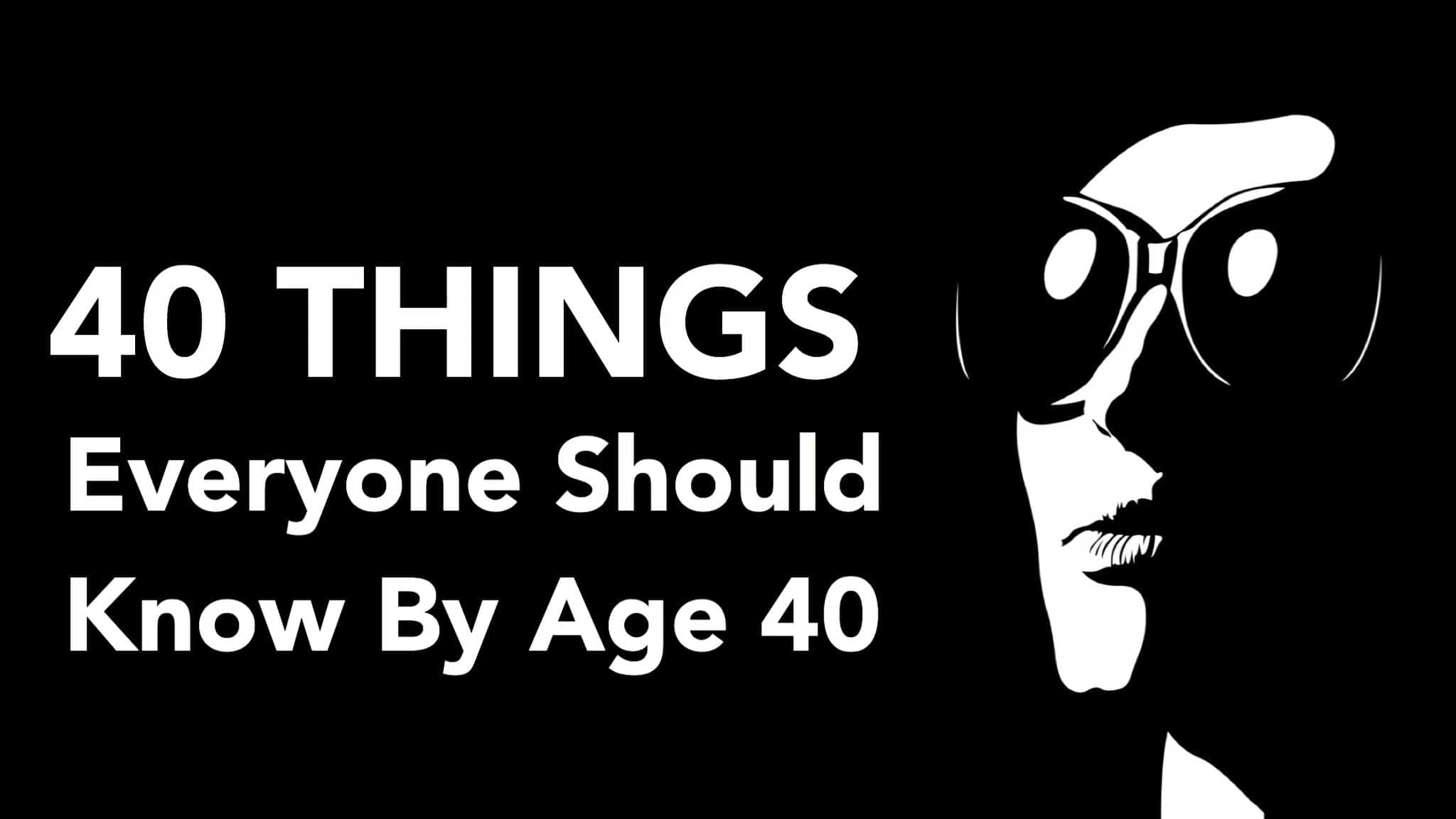
40 things by 40

10. Happiness Takes Hard Work

Many people seem to expect happiness to come to them naturally. Unfortunately, this simply is not how it works. The people you see around you who seem so happy and lighthearted have been through a lot of hard work to get there. They have worked on themselves and improved until they find happiness.

Happiness, for the most part, is a choice. You have to want it and be willing to work towards it to achieve it. You may have to let go of your pride or ego, and there are plenty of lessons you’ll likely have to learn along the way.

Life is all about improving and growing. Only through regular development and personal improvement can you find true happiness. So make the most of this one life you have!

Final Thoughts On Some Things That Take Most People A Lifetime To Learn

Life is complicated. It throws hurdles and stops in the directions of all those attempting to trudge through it. But when you’re equipped with these lessons that take most people a lifetime to learn, you might just be able to live to the fullest and make fewer mistakes along the way!

3 Habits of Famously Productive People

Arianna Huffington. Elon Musk. Jeff Bezos. Warren Buffet. Oprah Winfrey. What does every name on this list have in common? (Besides being filthy rich? *sigh*) They are all famously productive people. They make the most out of their day. Every day.

And they didn’t need some so-called “productivity guru” to tell them what to do.

Speaking of which…

The productivity movement has gotten out of control. Seriously. With such an onslaught of available information, no wonder people get overwhelmed before they begin.

Learning to be productive isn’t brain surgery. You don’t need twenty books and a phone full of apps. You merely need a common-sense approach and a bit of self-discipline.

(How much sense does it make to spend precious downtime reading a book on how to be productive? Doesn’t that kind of defeat the purpose?)

Becoming productive constitutes making the most out of a limited resource – time. In one sentence: Productivity is all about time management. If you can create and stick to a schedule, you can be productive. Predictably, people get stuck with managing time.

We should model behaviors of the traits we seek to acquire. In the context of the article, this means understanding what famously productive people do and then doing it.

Without further ado, let’s look at three excellent habits of the famously productive!

“The secret to getting ahead is getting started.” – Mark Twain

productive people

#1. Famously productive people keep Facebook, Twitter, Instagram, YouTube, e-mail, web browsing, idle time, meme-reading, and duplicate tasks to a minimum.

“These (social media) companies offer you shiny treats in exchange for minutes of your attention and bites of your personal data, which can then be packaged up and sold.” – Cal Newport, author of Digital Minimalism: Choosing a Focused Life in a Noisy World

Newsflash: You can’t be productive by wasting time on pointless activities. Public enemy number one: Your Facebook Page. Or your Instagram account or your Twitter account. Or looking at cute cat memes, idly browsing the internet … or checking your e-mail inbox for the umpteenth time.

Don’t. Do. It.

The bottom line is that, except for work-related email and web usage, most modern technology wastes time. Now, this isn’t a problem if you have time to spare. If you have an hour, a day, or a week of downtime, go nuts. The problem is when this technology use gets in the way of getting things done.

Social media companies like Facebook make nearly $56 billion in one year alone from their users’ (finite) attentional capacity. Facebook, in essence, offers its users a quick dopamine injection in exchange for just a bit more of their data (which the company then turns around and sells.) The same can be said of Instagram and Twitter. Or cute and silly cat memes.

On the individual level, digital media usage is skyrocketing. In a 2018 study by Nielsen, a media research and analysis company, the average American adult spent nearly half an entire day – 11 hours and 6 minutes – “watching, reading, or generally interacting with media.” Eleven hours and six minutes.

The writer is willing to wager that many of these folks don’t have an extra 4 hours a day to watch television. Or 2.5 hours to play on their smartphone. Or nearly 2 hours listening to the radio. Proof: many of these same people complain that they don’t have enough time.

Of course, high achievers and people who lead fulfilling lives don’t waste their precious time on mindless activities, media, or otherwise. Understandably, many of these folks run businesses, build careers, and communicate with friends and family using social media and other digital tools. But they’re well aware of the rabbit hole to nowhere that is social media.

What about you?

Now, should you quit using these technologies? That really is up to you. Social media has some practical purposes, such as keeping up with family and friends. Work may also necessitate the use of social media. The same goes for establishing and maintaining career prospects.

Bottom line: there’s nothing innately wrong with digital entertainment. The problem arises when someone gets addicted to such things and neglects the things that deliver true fulfillment. Only you can determine if you’re wasting too much time on these things.

#2. Famously productive people do one thing at a time

“Single-tasking is a superpower. What does that mean? That means in a digital economy where distraction is a currency, if you can focus … and block out all distractions, you have a huge leg up … you’re able to do deep work.” – Tim Ferris, author of Tools of Titans

Multitasking drains your brain of precious energy. It’s more stressful, less productive, and probably doesn’t even exist. “Task-switching” is an actual term for directing your attention to one thing and re-directing it to another. Here’s what the American Psychological Association (APA) has to say about the myth of multitasking:

“Psychologists who study what happens to cognition (mental processes) when people try to perform more than one task at a time have found that the mind and brain were not designed for multitasking. Psychologists liken the job to choreography or air-traffic control, noting that in these operations, as in others, mental overload can result in catastrophe.”

In this were a stage play with characters, multitasking may be the puppet, and distraction would be pulling the strings. Indeed, task-switching is nothing more than using temporary distraction via some other task to avoid anxiety and boredom.

Instead, productive individuals use their cognitive resources more wisely by focusing on one task up to completion – a process casually referred to as “single-tasking.” Single-tasking has three basic requirements:

Get rid of distractions (yes, that includes your smartphone).

The extent to which we are productive depends heavily on our environment. If you have a tempting tool like your iPhone within arm’s reach, common sense dictates that you’ll find it far more likely to multitask or distract yourself. While you’re putting away the phone, clean up anything lying around – supplies, trinkets, mugs, etc. – that isn’t pertinent to the job.

Build up slowly.

If you’re not used to single-tasking, it may take time for your brain to get used to it. There is no shame in starting with five minutes of focused work and going from there. The Pomodoro technique – 25 minutes of distraction-free work followed by a short, 5-minute break – is an excellent single-tasking productivity hack.

Take effective breaks.

See that word “effective” before “breaks”? That means filling up a water bottle and getting something in your stomach, if necessary. If you have quenched your thirst and satisfied your hunger, go for a brisk walk. That sudden rush of blood oxygen will have you ready to go! Bonus points if you can make it outside!

#3. Famous productive people are resilient

bounce back quote

“I knew that if I failed I wouldn’t regret that, but I knew the one thing I might regret is not trying.” – Jeff Bezos, CEO, and Founder of Amazon

Resilience is an innate trait. It’s the thing that knocks some people down but allows them to bounce back from the setback at least as strong as before.

Life is full of obstacles and uncertainties. But famously productive people overcome despite the ebb and flow of life through resilience. To clarify – and this is a crucial point – resilience is not rigidity. It’s not stiffness. It’s a calm – almost “still” – demeanor capable of mindful activity.

Too often, people – especially tough-guy, macho types – discuss resilience like it’s a back-breaking grind of a concept. Well, we suppose one can approach resilience that way, but it certainly isn’t recommended, and such an approach isn’t optimal. (Rule of thumb: don’t take advice from tough-looking egotists who beat their own drum.)

Again, resilience is a calm, silent demeanor that, at the same time, is flexible enough to adapt to changing circumstances. Productive people know the importance of alertness, focus, and flexibility – both are requisites to succeed in any field. You need resilience in an ever-changing world that offers no guarantees.

Here’s a fitting quote from the Buddha that wraps up the contents of this article on productivity nicely:

“Praise and blame, gain and loss, pleasure and sorry come and go like the wind. To be happy, rest like a giant tree in the midst of them all.”

7 Supplements that Improve Brain Function

Some believe that as humanity progresses, our brain function will operate like the physical body of someone in the Mega Man Triathlon.   In the relatively recent past, being capable of heavy lifting and having dexterity, quick reflexes, and stamina were crucial to both survival and making a living.  Presently, much of our lives are relying on high brain functionality, and supplements are starting to make their way into the conversation about optimal brain health.

Technology development requires high attention to detail, the ability to quickly analyze and make a decision, and to absorb, remember, and utilize increasing amounts of information.  Currently, many companies are working on developing various computer-brain integrations to both improve the lives of those with disabilities and also enhance and surpass our current mental capabilities.

We have begun to acknowledge, no matter how slowly, that increasing brain function is vital in how we care for ourselves.  As we start to feel the stress on our brains to handle our jobs, families, external stimuli, and increasingly technological society, we are seeking more ways to enhance our brain through supplements.

Could myh brain be “burned out”?

rewires your brain

Life often comes filled with high-demand situations.  Even positive events can create stress.  Over time, this stress accumulates, and we start to feel exhausted or “burned out.”  Often when we think of exhaustion, we only think of the physical symptoms:

  • Fatigue
  • Headaches
  • Insomnia
  • Appetite changes
  • Increased illnesses or infections

We may not always realize the symptoms of mental exhaustion.  Mental exhaustion comes from long-term stress; it produces physical and emotional symptoms, which later display themselves in specific behaviors.

Emotional symptoms of brain exhaustion

Our emotions also stem from our brain.  Without a doubt, they share a link.  When mental exhaustion sinks in, you may see symptoms such as:

  • Anxiety and depression
  • Anger
  • Feeling powerless or hopeless
  • More cynical or bitter
  • More negative attitude
  • Unmotivated

How does mental exhaustion show in our behavior?

When we are experiencing mental exhaustion, we display specific behavior resulting from the emotional and physical symptoms:

  • A decrease in one’s ability to work well
  • Less socially active and more irritable with others
  • Fail to follow through on work or personal responsibilities
  • Find excuses to not go to work or school

The most frustrating issue with mental exhaustion is that the actual symptoms perpetuate the fatigue.  We begin showing the signs, and then the symptoms make the mental exhaustion worse by decreasing our ability to think clearly.  It is a cycle we must break so that the symptoms can subside.

How can I minimize or prevent stress?

Stress is created from hormones released in our brains, creating a physiological reaction.  The hormones release based on our “fight-or-flight” response, which comes from the height of our emotions.

One of the major hormones released during times of stress is cortisol.

Cortisol is a hormone that serves multiple functions.  It acts to regulate the body after a stressful event, balances our blood sugar, and plays a role in our memory capability.

Under chronic stress, our body makes more cortisol than it can release and begins to affect our brain’s ability to function.  Rebecca Bernstein points out the effects in an article titled “The Mind and Mental Health: How stress affects the brain.” Cortisol is thought to be the reason behind the cycle of stress that the symptoms perpetuate.

It might alter the way specific glands operate, thus rewiring our brains to be more susceptible to a “flight or fight” reaction.  This reprogramming causes the “cycle of stress.”   She states that it can interrupt the regulation of synapses, creating a decrease in the desire to be social and increasing social avoidance.   Some studies have even shown that stress can kill brain cells and shrinks the prefrontal cortex – the location of your brain where memory and learning occur.

With that information, we should be able to create the opposite cycle.

We need to find ways to create a cycle toward higher brain function and less stress.

When we can process information appropriately, with increased clarity of thought and improved focus, we can better respond to an issue without pressing the “panic” button.  In short, the better our brain is functioning, the less stress we experience, resulting in little to no side effects of stress.  In this manner, cortisol is never released in abnormally high amounts, we retain our brain’s function, and the low-stress cycle continues.

What supplements can I take to improve my brain function?

Improving how our brain functions can be done in many ways, and when multiple methods are used together, they build upon each other.  One of those ways is to take supplements.

Supplements become more important as we age.  Aging decreases the hormones which regulate our emotions and memory. Additionally, some areas of our brain shrink and thin out.  This decreases our capacity to learn, remember, and process information.  Taking supplements, along with engaging in a healthy lifestyle, can reduce stress and delay or lessen this aging process on your brain.

Here are seven supplements which can improve your brain function:

  1. Ginkgo Biloba.

This particular herb has had the most research backing it and has been in use in China for centuries.  Touted to slow the decline of cognitive function and the advancement of Alzheimer’s, this herb proves beneficial for young adults and older adults.   It is believed to be helpful for memory and cognition, causing an increase of blood flow to the brain.  It has also been shown to decrease levels of cortisol and stress.

  1. Bacopa Monnieri.

This herb is included in India’s natural medicinal practice called Ayurveda.  Extensive research on this herb has been done and shown to work by improving the communication between neurons.  It also contains antioxidants which aid in brain power and overall mental health.  It can improve your brain’s ability to form memories and increase your attention span.

Additionally, it can also decrease stress and anxiety and improve mental cognition.   Most studies on this herb consisted of elderly adults or adults showing signs of mental decline, but younger adults also reported similar benefits.

  1. Rhodiola Rosea.

This is another traditional Chinese Herb, which is an adaptogen.  Adaptogens are herbs which decrease stress from any cause.  Through reducing stress, it can lessen fatigue, increase your energy, and decrease brain fog by boosting clarity.  While it does enhance your energy, it also helps you to retain a calm focus in times of stress.

  1. Alpha GPC.

This is a synthetic supplement containing choline.  Choline is known for aiding other chemicals in your body which work to improve your attention span, endurance, memory, and mental clarity. Choline Bitrate, a form of choline found in drug stores, is not as highly recommended of a source as Alpha GPC or CDP-Choline.

  1. Huperzine A.

A more preventative supplement to prevent memory loss due to aging is found in this derivative of Chinese club moss.  It aids in maintaining levels of a neurotransmitter acetylcholine (ACh).  With the levels of acetylcholine in balance, your choline levels increase.  That makes Huperzine A a great addition to Alpha GPC for production of choline in your body. ACh not only helps your neurons to communicate but also contributes to the creation of new cells.  Huperzine A apparently improves clarity, memory, and the ability to learn new things.

  1. Omega-3 Fish Oil.

Omega-3 fish oil has had bragging rights for quite a while, with plenty of research to back up its claims.  It contains two fatty acids, abbreviated as EPA and DHA.  EPA enhances mood and acts as an anti-inflammatory.  DHA improves brain development and cognition.  The combination of the two may contribute to lowering cortisol levels and increasing blood flow in the brain.  Omega-3 has studies to support it may decrease anxiety and depressive symptoms in addition to processing information more efficiently.  Omega-3 works best when taken with Vitamin D.

  1. Phosphatidylserine (PS).

This is a fat-soluble amino acid derivative from neural tissue.  It is necessary for growth and maintaining the life of neurons.  It aids in memory, cortisol balance, focus, overall speed, mental capability, and processing.  Studies have shown it to be very effective for children with ADHD to such an extent that doctors will recommend it prior to medications.   It is a great option for anyone looking to take supplements to improve brain function.

brain

Final Thoughts on Improving Brain Health

Combining supplements with seven to eight hours of sleep, a well-balanced diet, and 30 minutes of physical activity four or five days a week is the most optimal way to keep your brain functioning at its peak. A supplement’s efficiency is directly related to your lifestyle; the better you take care of your health, the more effective they will be.

Always take care to ensure you are not taking supplements which may interfere with your current medication.  Consult with your doctor regarding any supplements you take.

It is possible to create a cycle of decreasing damaging stress effects such as burn out, memory loss, brain fog, and overall negative moods.  Taking supplements can be a great way to enhance your brain’s ability to cope with the multitude of daily stressors and tasks we face.

Life has always been about creating memories, learning, growing, and changing.  Keeping your brain sharp is an essential element to living that life.

12 Laws of Rich People that Will Change Your Life

Upon reading the article’s title, you may feel a bit indignant. Some of you may have an internal (or even external!) monologue going something like this: “What?! Rich people? Follow a set of laws?” “I follow laws, too, but I’m not rich!” “Looking at things, it would seem that the rich don’t follow any laws!”

All of these sentiments are understandable and even justifiable in certain circumstances.

Consider the 2008 global recession. The whole thing started because of greed. Greedy, already-filthy-rich financial institutions and so-called “experts,” thought it’d be a good idea to offer mortgages to just about anyone who applied.

We all know how well that turned out. The American people ended up footing the bill for a multi-billion-dollar “bailout.”

Who Are the Rich People Across America?

Contrary to what many think, the rich don’t have any particular advantage that expedites their rise to the upper echelons of the income bracket. At least in the beginning.

Here’s something to consider.

As of 2022, Forbes lists the top five wealthiest Americans as follows:

  • Elon Musk, CEO of Tesla, SpaceX and Twitter
  • Jeff Bezos, founder and CEO of Amazon
  • Bill Gates, the co-founder and long-time CEO of Microsoft
  • Larry Ellison, co-founder of Oracle
  • Warren Buffett, investor and founder of Berkshire-Hathaway

rich people

Any guesses as to how many of these men were born into wealth? Zero.

In fact, Bezos and Ellison had to navigate turbulent childhoods. Bezos’ father abandoned the family (his last name is taken from his stepfather) while foster parents raised Ellison.

Nope. What sets the wealthy apart is the rules that many self-devise and painstakingly follow.

“Okay, but what about the rest of the rest of them?” you may be asking. According to the late Thomas Stanley, Ph.D. and author of The Millionaire Next Door, 80 percent of America’s millionaires are first-generation affluent.

In other words, eight out of every ten high-net-worth individuals are self-made.

Surprising, right? The way that the mainstream media demonizes the rich, you’d think that the only reason they “made it” was because of some plush trust fund stashed away at megabank.

As you’ll see by reading the 12 rules that rich people follow, nothing could be further from the truth! If you’re willing to adhere to the following twelve rules of rich people, you too may see your finances change for the better!

Defining “Rich”

For this article, the word “rich” applies to people with a gross income above $160,000 and assets of at least $3.2 million.

12 Laws of the Rich

“Intelligence, talent, and charm are great, but more often than not these aren’t what separate the wealthiest among us from the poorest.” – Tom Corley (source)

Without further ado, here are the 12 laws of rich people that will change your life.

Law #1: Rich people create and follow good daily habits.

Habits are formed in the basal ganglia, a mass in the brain the size of a golf ball that serves as our “emotional center.” Once habits are programmed into the neurons of the basal ganglia, they can be difficult to unlearn. Worse, our conscious mind often does not “catch” the undesired habit surfacing; even if it does, the odds are that we’d carry on as usual.

So, how do you form good habits? First, you must recognize the subconscious behaviors making your financial life difficult. You must be brutally honest here. Get a notepad and write out every expense for a week. Where are you wasting money?

Law #2: Rich people are healthy.

From how long they watch television to how often they call Mom, rich people commit to a non-negotiable plan of action. In other words, rich people have good, healthy daily habits and ruthlessly stick to them.

Of course, rich habits aren’t limited to just financial. Put a workable diet, exercise, and a proper sleep regimen in place – and stick to it. You’ll have more energy and motivation.

Remember: habits shape behavior, but behavior can also shape habits.

Law #3: Rich people live below their means.

Spending money that you don’t have is a problem that plagues many Americans. Over 60% don’t have $1,000 in savings. This, in a country where the average annual household income is over $60,000.

What the heck is going on? Americans may make a lot of money, but they also spend a lot of money. Especially money that they don’t have. Exhibit “A”: the average person has two bank-issued credit cards and carries a $5,551 balance.

Now, do some billionaires “waste” money? Sure. They’re billionaires – they have 100 million dollars ten times over. (BTW, most billionaires don’t waste money, either.)

They can blow money without thinking twice.  But for the average rich person (defined by having nearly $4 million in assets), wasting money on the frivolous is foolhardy.

Law #4: Rich people prioritize savings and investment.

You’ve probably heard the saying, “A job won’t make you rich.” It’s true. Does this mean you shouldn’t have a job? If you’ve got the entrepreneurial talent, you can stake out on your own – but it’s still a job. Most of us have to make a living somehow.

So, how do you get rich if a job won’t make you rich? Savings and investment. You make your money work for you by figuring out the places that will reap the highest returns and putting your money in those places.

As of this writing, the best low-risk, high-yielding investments are:

  • Certificates of deposit (CDs)
  • Money market accounts
  • Treasury b0nds
  • Government bond funds
  • Municipal bond funds

Law #5: Rich people love to read.

Rich people are incredibly well-read, with 88 percent reading at least 30 minutes per day. Here are some other interesting stats on the rich and reading:

  • 94 percent read about current events
  • 79 percent read educational material about their job field
  • 63 percent listen to audiobooks during their daily commute
  • 58 percent read biographies about other successful people
  • 55 percent read personal development material

Perhaps most telling? Just 11 percent of the rich read for entertainment purposes.

Law #6: Rich people are even-keeled.

Rich people realize the importance of developing and maintaining relationships – even with those they don’t necessarily like. An attribute that helps people in this regard is the ability to manage emotions. In one study, researchers said that 94 percent of rich participants reported having a good handle on their emotions.

For people whose financial house is a bit messier, a paltry 31 percent reported having the same.

How do you manage your emotions? Begin with noticing the word manage here. What does management entail? Among other things, measurement, observation, and supervision. Managing your emotions is about observing, labeling, and watching them come and go. Notice that there’s nothing in that definition about attempting to suppress emotions.

Law #7: Rich people avoid procrastination.

Procrastination is a dream killer. If you don’t get a handle on the near-universal urge to put things off continually, you probably won’t succeed at much of anything.

Four strategies that the rich use to avoid procrastination include:

  • Making a daily “to-do” list
  • Setting deadlines
  • Having accountability partners
  • Engaging in positive self-talk (e.g. affirmations)

The easiest way to avoid procrastination is just to get started. Sit down and start working. You’ll be amazed at how quickly the feelings that accompany procrastination fade.

Law #8: Rich people are great listeners.

Again, the rich understand that financial success doesn’t take place on an island. Relationships are key. It’s no surprise, then, those wealthy folks are excellent communicators who place great emphasis on being good listeners.

The particular kind of listening that the rich practice is called active listening.

Active listening can be defined as “a (listening) technique … that requires the listener to fully concentrate, understand, respond and then remember what is being said.”

Law #9: Rich people don’t rely on luck.

When it comes to financial success, luck is rarely the catalyst. Aside from those who win the lottery or are born into wealthy – a very small minority – those who’ve become rich have done so with not luck but skill.

Perhaps the rich person has caught some lucky breaks, but this is different from relying on luck. Or blaming the absence of luck for one’s financial failures.

The famous author Coleman Cox said it perfectly: “I am a great believer in luck. The harder I work, the more of it I seem to have.”

Law #10: Rich people have a mentor.

Get this: a whopping 93 percent of the wealthy had a mentor to whom they attribute their success!

Nothing else needs to be said here. Find a wise teacher and follow their instructions! You may want to find out your life’s purpose first (see law #12).

Law #11: Rich people are mentally tough.

how to be mentally tough

To start with nothing and build up wealth takes tremendous discipline, focus, and persistence. In other words, the rich are mentally tough.

That said, let’s dispel some myths about what exactly constitutes mental toughness. Mental toughness is not bullying. There is nothing interpersonal about mental toughness.

Instead, mental toughness is about accounting for and overcoming your mental weaknesses. If you can somehow accomplish this seemingly Herculean task, the world is your oyster, as they say.

Law #12: Rich people know their main purpose.

While this one may be the last law, it is the most important. Most financially independent people achieve it through working on knowing and progressing towards their life purpose. That is, they prioritize the work that makes them happy, and they find a way to get paid for it.

Here are a few steps that you can take to help you find your purpose:

  1. Make a list by writing down everything that has ever made you happy.
  2. Circle those things from step 1 that involve skill and then identify that skill(s).
  3. Order the circled items from #1 to #10 in terms of what makes you happiest.
  4. Order the circled items from #1 t2o #10 in terms of income potential.
  5. Total the columns. The one with the highest score may identify your life’s purpose.

rich people

Final Thoughts: Becoming Rich

REMEMBER: Being rich within is the first step of being rich in any area of your life…

If accumulating wealth is a priority, you’d follow the twelve research-backed habits of the rich. Even if you don’t become rich, you may acquire the most valuable possession: a good character.

Skip to content