Weekly tips, affirmations, and small actions to feel your best.

5 Lessons to Learn Before Living Your Best Life

We’re all learning in our attempt to navigate this messy tale we call life. The goal for most people is to live the best life that they possibly can. It goes without saying, though, that this is much easier said than done.

How do you go about elevating yourself to the point where you feel truly happy? How do you achieve that coveted place in life that you can confidently proclaim is the best?

Here Are 5 Lessons To Learn Before Living Your Best Life
living your best life

1.    Trust And Authenticity Are Crucial

It’s easy to want to lie, conceal, or claim to be better than you are. After all, little white lies and subtle embellishment of your traits can earn you a lot of favor among the people you meet. But there’s a valuable lesson to be learned in focusing on being as genuine and authentic as possible.

Authenticity is what lends itself to influence, confidence, and some degree of social status. When people know they can trust you, and when they feel you are sincere, they give you the benefit of the doubt most of the time. They are happy to be around you, they feel safe around you, and they appreciate you.

But trust isn’t just about other people. You need to learn to trust yourself. Without that confidence in your being, you won’t be able to step forward and believe in your abilities. This lack of self-esteem can stop you from having the positive thinking necessary to unlock your best life and live up to your potential. (1)

It is also crucial that you maintain trust and confidence in others, especially those who are important to you. This does not mean putting blind faith in everyone you meet, but trusting in their intentions and showing them that you believe in them, too.

2.    You Need To Aim To Improve, Often

Self-improvement is crucial in your journey to truly live your best life. If you never work on who you are, you’ll never get where you’re trying to go. Many people believed that there’s a point where you’ve reached your peak and don’t need to get any higher – but there’s no such thing. You can get as high as you so desire!

Whenever you’ve been at a certain point for a long time, try working on getting better. Embrace the act of learning and broadening your horizons. Figure out ways to improve and devise action plans to get there. When you think you’ve done your best and succeeded well, pat yourself on the back, and then it’s onto the next goal!

Don’t burn yourself out, of course. There’s a balance to be struck. But know that your journey is an ongoing one and that there are always ways to get even better. That’s how you get to your best self!

Not sure where to start? Begin by challenging yourself regularly. Step outside of your comfort zone now and then, pushing yourself to widen the world, you know. Not sure how to do that, either? Here are some great ideas:

  • Take a new class
  • Further your studies in a specific area
  • Eat more healthily
  • Work out
  • Get creative at work
  • Try something new
  • Go someplace you’ve never been
  • Do something you’ve always been afraid of
  • Try seeing a therapist

3.    Love And Kindness Are Endlessly Important

Many times, the world will try to convince you that kindness is a weakness. However, this is far from the case. Compassion, love, and empathy are some of the most important traits you’ll ever learn in your journey towards your best life. Here are some ways that this applies:

Help Others When You Can

Kindness is something that is typically extended to others, and that’s something you can do in your everyday life. Compassion makes you happier, helps you feel fulfilled, and can open your mind to much of the world. Essentially, it makes you a better person!

Doing small things to help others can work wonders for those people. Be there for a person going through a rough patch. Drop off old clothes at a donation drive. Volunteer for a local shelter. Compliment someone. The possibilities are endless!

Prioritize Your Health

Apart from being kind to those around you, you also need to be kind to yourself. This self-care includes taking steps to make sure you’re healthy. See doctors for issues you’re concerned about. Put some effort into physical activity. Eat relatively well. Being healthy gives you the strength you need to live your best life!

Live With Zest

When you live a passionless life, you often wind up without any motivation or purpose. Essentially, you stop living – all you do is barely exist. Without anything that excites you, you may wind up feeling bored with life, causing your progress to grow stagnant.

Do note that this decrease in positive thinking can be a symptom of depression, so if you cannot pull yourself out of the funk in question, speak to your doctor or a therapist!

Be Kind To Those Around You

It’s easy to judge the people you see, but you don’t know their life story. You don’t know their journey, and every person is unique and different from you.

That’s why you need to put aside your judgemental eyes and focus on kindness. You’ll be happier and freer to pursue your own life when you’re not judging everyone around you!

Make Sure You Have Time for Self-Love and Self-Care

Self-love and self-care are two words that we often use today. They’re not overrated at all, though! It’s simple – if you’re not feeling well in body and mind, then you likely won’t be able to live your best life in any way.

Take care of yourself and set time aside to have a little me-time. Watch a show you love or read a book you’ve meant to start. Treat yourself to a special meal or an item you’ve been wanting. Soak in the bath. Dedicate some time to your hobbies. Do what makes you happy!

Heal Through Love

We’ve all heard the saying that time is responsible for healing pain. But experience, love, and life are what give you the chance to heal. When you love, you can forgive yourself, you can forgive others, and you’re in a better place to open yourself to the positive sides of your struggles.

4.    You Are Responsible For Your Life

It’s very easy to blame everything around you for where you are in your life. External factors can indeed affect where you are in life. And it is also true that for many people, it’s not as simple as just getting up and changing their circumstances. But that doesn’t mean you shouldn’t try!

Many people fall into the trap of blaming their lack of fulfillment in the world around them. They say there’s nothing they can do, they lie on their backs, and they spend their days complaining. But, to some extent, you are responsible for what you make of your situation! Here are a few things to keep in mind:

You Are (Mostly) In Control Of Your Life

For the most part, your life is in your hands. You have the power to make the changes you want to work towards your desired “best life.” Dislike your job? Come up with an action plan to get another one. Worried about your health? Hit the gym or eat well – both these things significantly reduce all disease risk.

Yes, these are simplifications. But you’d be amazed how simple some things can be if you think of them that way. Take ownership of your life. Analyze the things you can’t change, and see what you can change.

You Are (Fully) In Control Of Your Reactions

All sorts of misfortunes can happen to you. You can’t control that. But you can manage your reactions. This self-control is not easy at first, but you can learn to slowly but surely regulate the way you think and respond to situations of all kinds.

This doesn’t mean you can never be sad about adverse circumstances. Wallow in sadness for a while, then get up and get back to your life. Don’t dwell for too long. Acknowledge the problem and figure out how to move past it.

You Have To Be Responsible

If you want to enjoy freedom, happiness, and independence, then you have to be a responsible person. When you do something wrong, it’s 100% on you. To be mature and live your best life, you must learn to hold yourself accountable for what you do, no matter how hard that is to do.

Other People Won’t Save You

There’s no shame in asking for help when you need it. The trouble comes around when you begin to expect help. If you start turning to others to fix problems for you, you’re going down the wrong path in life. You must save yourself first before anyone else can save you.

5.    Perfection Doesn’t Exist

Many of us crave a sense of perfection – but not in the way you might think. You’re likely thinking, “But I know nothing is perfect, that’s life!”, but the concept of not-perfection many of us subscribe to is still as unattainable in the way we desire. To explain, here are some pointers:

Waiting For The Right Time

You’re waiting for the perfect time to start on a new goal, or begin a resolution, or shoot for your dreams. Guess what? There’s no such thing as the right time. The right time is right now. Don’t wait for some magical sign that it’s the right time. You dictate the signs!

Growth and Progress Are Not Linear

Your progress is not going to be one straight, diagonal line upwards. It’s going to leap up and plummet back down. There are going to be straight lines where you hit a standstill and feel stuck.

Naturally, it is going to be sometimes discouraging. But no one’s growth is ever linear, and the sooner you learn that the sooner you get to live your best life.

It’s Never Going To Be How It’s Meant To Be

It’s one thing to visualize where you want to be and why, but it’s another to hold onto a definite and likely unrealistic idea of how you want your life to be.  You can get caught up in that fantasy and become unhappy that you’re not getting there.

There are things you cannot change. Optimism is great but blind, false hope will only wind up in disappointment. Do your best to keep yourself realistic, but positive, and set challenging goals that you genuinely know are achievable.

best life

Final Thoughts On Some Lessons To Learn Before Living Your Best Life

Life is an uphill climb, full of trials, tribulations, and unexpected setbacks. But if you keep these five lessons to learn before living your best life in mind, you’re already on your way to all your goals and dreams. It won’t be easy, but we guarantee one thing – it will be worth it!


7 Habits Of Unsuccessful People (And How to Avoid Them)

It’s fairly safe to say that all people want to find success at some point in their lives. But because of the way life works, some people’s journey to the top can take much longer than others. People find success in many different ways, but unsuccessful people tend to find failure because of their negative habits. These habits can be dangerous to your future and may significantly harm you if you take part in them!

Here Are 7 Habits Of Unsuccessful People, And How To Avoid Them:

1.    They Fail To Interact Well With Others

Success is often about politics, meaning it’s about people and how you interact with them. Here are some bad habits that successful people perform around others:

They Refuse To Listen

We’re meant to listen more than we speak. Unsuccessful people do the opposite. They refuse to pay attention to anyone else and don’t care what others say about them, causing them to miss out on valuable advice and positive, constructive criticism. (1)

They Burn Bridges Too Quickly

It goes without saying that, at some point in your life, you’ll probably have to cut off some toxic people. But a mild disagreement, dislike, or discomfort should not directly cause you to burn bridges in an impulsive and extreme fashion.

Not only could these people potentially cause trouble for you later on, but it’s generally a good idea to maintain contacts as you go up in the world. So keep your acquaintances!

They Hang Out With The Wrong People

If you’re hanging out in the wrong crowd, you’re going to slowly begin to pick up on their traits. Surround yourself with bums and people who have no drive for success and you’ll incorporate their energy into your life.

Hang out with friends who hold you accountable. They’ll support you, but they won’t stand for you making any ridiculous excuses to get out of doing what needs to be done.

They’re Just Not Nice

Going up in the world means networking, building positive relationships, and making friends in high places. You won’t get very far with a nasty attitude that makes everyone think you’re mean.

Instead of doing this, open your mind. Listen to criticism, learn to build a network of contacts, and be friendly. Be accepting of others and surround yourself with successful people!

2.    They Don’t Know What Their Goals Are

You need to set goals in order to succeed. There is little you can do if you’re hiding behind a “winging-it” personality. Sure, winging it works for some things – but not for your entire life. Here are some ways this manifests:

Unsuccessful People Waste Time

Unsuccessful people don’t have a very good idea of what their next plans are. This causes them to laze around a lot, wasting their time and falling complacent. As everyone else works hard to move up in the world, they’re stuck in one spot, and they don’t bother doing anything to get out of it.

Act Impulsively

Those who are unsuccessful tend to react naturally on impulse. They spend money on whatever they see. In addition, they make snap decisions without thought. They react immediately to new information without taking the time to process it.

This leads to a lot of regrets and bad choices that ruin their chances of success. Instead of making plans and goals, they rush into things and muck them up.

Conform

Conformity isn’t necessarily a bad thing, but many unsuccessful individuals don’t have their own sense of self. This leads them to copy those around them. They don’t know what to do in life, so they just follow the crowd, blending in and becoming just another monotonous face that could have tried to stand out.

It’s a good idea to list down your short-term and long-term goals. Then, once you have them, create an action plan that will feasibly allow you to get to where you want to be.

3.    They Have Bad Work Ethic

Success involves the desire to work towards it. If you have a terrible work ethic, it’s going to stop you from achieving great things. An unsuccessful person doesn’t have a particularly good work ethic at all. They’re mainly interested in doing the bare minimum that they can get away with, just to scrape by.

Unsuccessful people also procrastinate, often putting things off for days, weeks, or even months. They do everything last minute, and not because of any form of executive dysfunction – it’s just because they can’t be bothered to do it earlier. Don’t fall into this trap! Get off your behind and do something, even when it’s difficult!

4.    They’re Quick To Give In

Someone who is successful didn’t become that way overnight. They stumbled and fell a lot of different times. They use positive thinking to get them through the most humiliating failures, knowing that each time they fall, they are learning new lessons that they will use on their way to success. (2)

This is why, if you want to avoid unsuccessful behavior, you need to be strong and resilient. You need to be determined to succeed, no matter what. Here are some areas where unsuccessful individuals tend to fall short:

Taking The Easy Way Out

People like to say that there is usually an “easy” way and an actual “right” way. Guess which one unsuccessful people choose? They have no interest in doing things correctly if there’s a simpler and faster way to do them, even if that means the results are lower in quality.

They Sacrifice Nothing

It’s rare that anyone is able to climb the ladder of success without sacrificing something – whether that’s giving up some of their free time, spending barely anything so they can save up, or having to live very far away from loved ones. An unsuccessful person doesn’t have it in them to sacrifice anything.

Unsuccessful People Give Up Quickly

The moment an unsuccessful person sees failure, they abandon the project and turn their attention to something else. They never sharpen their skills, instead accumulating barely mediocre knowledge in many fields that they continue to turn their backs on when failure strikes.

Avoiding Any Risks and Challenges

Unsuccessful individuals never challenge themselves. They stay put, never leaving their comfort zone. Often, they become stuck in one area and never broaden their horizons. They don’t grow – they stagnate.

5.    They Are Endlessly Negative

If you don’t have positive thinking, you can’t get anywhere in life. You have to be aware of the power that negative thoughts can have on you. Here are some habits to avoid:

They Find The Bad In Every Situation

People are supposed to find the silver lining in every cloud. Unsuccessful people to the opposite – they find dark clouds in every shining opportunity. For some reason, they’re able to see imaginary bad in all that is good, which stops them from working towards a positive future.

They Dislike Many Things

There’s no end to what a negative person dislikes, probably because they dislike almost everything. They dislike so many people and things that it makes it impossible to get along with them.

They Constantly Complain

No one likes a complainer. Someone who isn’t successful may fall into the trap of complaining constantly. It’s one thing to vent and rant when you’re going through emotional turmoil, but it’s a whole different ballpark to always be running your mouth about what’s wrong with the world.

They Are Never Grateful

Gratitude is one of the most important traits of success. Those who do not practice regular gratitude are less likely to succeed, and they likely have a much worse sense of positive self-esteem, too. (3)

Remember, focusing on the positive will always help you. Don’t get too hung up in the downsides. Look at the upsides and see how you can make them better.

6.    They Bring Others Down

Unsuccessful individuals have no interest in chasing success themselves, so they often attempt to bring down the people around them to their level. In other ways, they put other people down so they can feel like they’re higher up. Here are some ways that this may happen:

Judgment

An unsuccessful person doesn’t like listening to input from other people. As such, they wind up being very judgemental. Whenever someone says something to them, they scoff and ignore it, or pick it apart. This prevents people from being open with them again, ever.

Envy

Many unsuccessful individuals envy people who do succeed. But instead of asking those people for advice, they wallow in envy and jealousy. This extra negativity further prevents them from getting anywhere in life.

Manipulation

An unsuccessful person may spread rumors in order to bring down a person they are envious of. They may try to completely ruin that person’s career and life by gossiping, sabotaging, and manipulating in every way possible.

Hoping For Failure

Instead of working harder and hoping for their own success, an unsuccessful person lazes about and hopes for the failure of others. They do not want anyone else to rise above them or taste the blissful feeling of success. Unfortunately, this can bring down an entire team of people.

Make an effort to respect those around you – even those who are doing better than you. Better yet, befriend those people! You may learn a thing or two from them. At the end of the day, everyone is different, and it is okay if your journey to success takes longer. It’s still valid!

7.    They Refuse To Take Responsibility

A successful individual is mature. They know that they are primarily in control of their lives. Furthermore, they hold themselves accountable and take responsibility for what is happening. They don’t blame their circumstances for failure – they recognize their mistakes and move on, armed with more knowledge than before.

On the flip side, someone who is always unsuccessful tends to make a habit of blaming other people. They point fingers and never admit to any wrongdoing. Their pride and ego must be shielded, and they, therefore, never learn anything from their mistakes.

It can be very easy to pass on the blame and insist that you had no control over any given situation. But your actions and reactions are all your own, and you get to decide how you conduct yourself, even in difficult times – so keep that in mind.

unsuccessful people

Final Thoughts On Some Habits Of Unsuccessful People And How To Avoid Them

Only you get to decide what your idea of success is. Once you have that idea, though, it’s time to go towards it with all the planning, intelligence, and determination that you can. Avoid adopting the habits of unsuccessful people and your journey will be much smoother.

10 Signs of “Information Pollution” (and How to Avoid It)

Let us begin this (super informative!) article on information pollution by considering a quote by one Daniel J. Boorstin:

“Technology is so much fun, but we can drown in our technology. The fog of information can drive out knowledge.”

First, a bit of background on Mr. Boorstin. He was an American historian who served as the twelfth Librarian of the United States Congress from 1975 to 1987. Did you know that such a position existed? Pretty interesting, eh?

Since Boorstin stepped down from his position in 1987, the amount of information available for consumption has multiplied many times over.  This ubiquity of information has its roots in the development and widespread adoption of the internet. Of course, this resource is now available to nearly every person in almost any sector of the globe.

The Library of the U.S. Congress (or ‘L.O.C.’) is the most extensive library in both the United States and the world. To have earned this distinction indicates that the library must hold a vast amount of information. By most measures, it does – around 164 million items.

164 million is a vast number, indeed. But it hardly registers as a blip on the nearly omniscient ‘map’ of information and data.

Some Interesting Facts

Consider this: 266 million ‘e-books’ were sold in 2017 alone. That’s 102 million more books and media that are available in the massive structure that is the L.O.C. combined.

We are, as Mr. Boorstin warned, drowning in our technology. We are subconsciously allowing the opaque and murky fog of information to drive out actual knowledge, including that which adds vibrancy and joy to life.

In this article, we’re going to discuss the concept of “information pollution” and how it is rewiring our nervous system and changing our society. We’ll then get into the signs of information pollution and what you can do about it. Finally, we’ll delve into the popular trend of a “digital detox” and how it can help to safeguard the brain from information pollution.

Defining Overload

“Once [brain] capacity is surpassed, additional information becomes noise and results in a decrease in information processing and decision quality.”

~ Joseph Ruff, Harvard University (source)

In the above quote, Harvard-trained psychologist Joseph Ruff is explaining the concept of information overload.

We define information overload as: “a level of information that is greater than … information processing capacity, i.e., an overly high information load…”

Overloading the human brain with information is not an easy task, and the fact that it can become oversaturated with data is not something to be taken lightly. It’s a sign that there is a severe imbalance somewhere. We’ll talk more about this later.

Information Pollution: This Is Your Brain On (Too Much) Data

In many ways, the human brain is just a massive storage house of information – and by ‘massive,’ we mean incomprehensibly enormous.

Scientists estimate that the human brain is capable of storing the equivalent of 2.5 petabytes of information. Let’s do a bit of conversion and simple math that will help us understand this number.

– 1 petabyte = 1.024 terabytes = 1 million gigabytes (GB)

– 2.5 petabytes = 2.5 million gigabytes

In 2008, the internet giant Yahoo built the world’s largest (and “busiest”) data warehouse. The warehouse is capable of storing and analyzing two petabytes of information. This storage space is used to analyze (and presumably, track *hint* *hint*) the behavior of over 500 million visitors to the World Wide Web every month.

In other words, no even an enormous multi-thousand-square-foot-man memory warehouse can exceed the storage capacity of the three-pound human brain.

But having all of this processing power comes at a cost, particularly if we don’t know how to manage it.

When we don’t know how to manage the brain, we pollute it with unnecessary, irrelevant, and potentially destructive information. This pollution even takes on a material essence in the form of cortisol, which is capable of killing brain cells. Unchecked, the brain’s continuous release of cortisol can cause it to shrink.

Signs of Information Pollution

“Although there is considerably more information with which to deal, our brain’s ability to absorb and utilize this information is no better suited than the people of four of five hundred years ago.” P. Chard (source listed below)

It is critically important that each of us understand that information pollution has adverse effects on the brain that are very real. More important is the willingness to make the necessary effort to prevent and counteract these effects. Let’s discuss the former now.

Here are 10 signs of information pollution:

Poor Performance

The brain can only handle a certain amount of information before the rest becomes “noise” – a static, real or perceived – that interrupts information processing capabilities.

In a study of bank loan officers attempting to predict bankruptcy, the predictions of individuals operating under conditions of information overload were both slower and less accurate.

Diminished Creativity

An abundance of information takes its toll on the creative mind. When a firm in Canada introduced computers to the workforce, management required its workers to increase productivity by an astounding 1,900 percent. In the first hour alone, creative problem solving dropped by 30 percent. By the second hour, it had fallen by 80 percent.

Information pollution necessitates linear thinking, a mode of thought that is in no way conducive to creativity.

Lack of Concentration

Concentration, or sustained attention, implies focusing on one thing for an extended period. It stands to reason, then, that a barrage of information is in no way conducive to this frame of mind.

The prominent neuropsychologist Dr. Kenneth Freundlich explains what science says about the brain, multitasking, and information overload:

“The brain works best when focusing on a single task. It takes time for cognitive processes associated with one task to be turned off. The more complex the task, the longer it takes to access and retrieve the [necessary] information from the brain’s vast storage.”

Bad Memory

The average person consumes an average of 35 gigabytes of data per day. Any guess to how much information we store in the working memory? A maximum of 10 bits.

When we continually overload our brain circuitry – and more specifically, our working memory – it loses its ability to store information. Information pollution causes “a deficit in both short- and long-term working memory,” says Dr. Freundlich.

Anxiety and Overwhelm

When the brain becomes overly stimulated, it becomes overwhelmed. One of the critical symptoms of overwhelm is anxiety, which arises out of a perceived lack of control. You may also experience shortness of breath and tension.

This state of overwhelm stems from information overload researchers sometimes call it “information anxiety,” “library anxiety,” and “information technology anxiety,” among others. The common thread that adjoins these terms is a fear-based response that arises from being exposed to excess information.

 Strained Relationships

It stands to reason that continuous exposure to a barrage of information makes us agitated – and agitation is never good for promoting or maintaining harmony between two people.

In one study, people reported experiencing ill health as a result of information overload in the workplace. Of those, 68 percent felt that there was a negative impact on both collegial and personal relationships. In another study, 62 percent of participants admitted experiencing difficulties in their social and personal relationships.

Digital Addiction

Digital addiction is a more courteous way of saying the people can’t put their damn phone down. Or turn the television off. Or shut down their computer. They’re glued unconsciously to their digital screens. Studies show that digital addiction – a legitimate condition that is recognized by many in the academic and medical fields – “increases loneliness, anxiety, and depression.”

Therefore, the vast information dumps that are YouTube and Facebook keep semi-conscious people – children, teenagers, and adults alike – glued to their screens. How? By deliberately hijacking your attention.

Irritability

Information pollution interferes with both our mental and physical equilibrium. Thoughts have tremendous momentum that can carry us down undesirable paths. Of course, that’s including adverse emotional states, if we’re not mindful.

Mental health practitioners studying a condition related to “health … maladies connected to information overload,” called Information Fatigue Syndrome (‘IFS’), concluded that it caused “Pervasive hostility resulting in a chronic state of irritability near anger or even rage.”

Uh, that’s not good.

Bad Decision Making

Many individuals and organizations use data to make better, more informed decisions. The paradox is that humans, being poor judges of “enough information,” semiconsciously consider too much information. And that can produce paralysis by analysis.

The result is poor decision making. According to Huff, After a certain point is reached, the decision-maker has obtained more information than he can process, information overload has occurred and decision-making ability decreases.”

FOMO

Most people who can’t rest the urge to check their devices, email, and other communications, often suffer from FOMO, or the fear of missing out.

FOMO is defined as “a pervasive apprehension that others might be having rewarding experiences from which one is absent.” In one survey taken:

  • 56% of participants report FOMO if not consistently (read: constantly) checking their social networks.
  • 52% have taken or considered taking a sabbatical from one or more social media sites. Only 24 to 31 percent plan to.

information pollutionFinal Thoughts: Is ‘Digital Minimalism’ the Answer to Information Pollution?

“Solitude deprivation: A state in which you spend close to zero time alone with your own thoughts and free from input from other minds.”  ~ Cal Newport, author of “Digital Minimalism: Choosing a Focused Life in a Noisy World.”

Indeed, some of those in high places probably couldn’t care less about the detrimental effects they’re having on innate human neural networks. So it’s up to each of us to take charge of our own digital lives.

Similar to the mind, technology and information is a good servant but a terrible master.

Additionally, technology and information are similar to the mind in that no one should have the right to tell you how to use it.

BUT, it’s a scientific fact that the human brain is not wired to be constantly wired.

First, there’s the issue of humans being biologically incapable of multitasking.

Then, there’s the problem of the automatic stress response that kicks into gear every time our senses are flooded with data.

And, there’s the fact that our working memory can only hold a tiny fraction of the information pollution that we expose ourselves to.

Of course, there’s also the fact that the attention can be subconsciously hijacked – something that the social media conglomerates are constantly doing.

So is digital minimalism the answer? Or a digital detox? That depends.

How much do you really value your voluntary attention?


Scientists Discover Plastic-Eating Worms That Could Save The Planet

The plastic crisis we currently face affects everyone on the planet. No one has immunity from the harmful effects of plastic pollution, and unless we do something drastic, our planet and its inhabitants will continue to suffer. While some countries such as Costa Rica have banned single-use plastics, the world has a long way to go before it solves the plastic epidemic.

Some cities, such as Seattle, Washington, have banned single-use straws, and zero-waste grocery stores have begun to pop up across the world. These efforts are commendable, of course, but the rest of the world needs to catch up and follow suit so that we can have a sustainable planet now and in the future.

Here are some startling statistics from Green Peace about just how pervasive the plastic problem has become:

  • Roughly 8.3 billion tons of plastic have been produced since the 1950s, which equates to the weight of about a billion elephants.
  • Of all the plastic, only 9% has been recycled, 12% has been burned and the rest has ended up in landfills or the environment.
  • 12.7 million tons of plastic enter the oceans annually.
  • Every minute, the equivalent of a truck full of plastic gets dumped into the oceans.
  • There are five trillion pieces of plastic in our oceans, which is enough to circle the globe over 400 times.
  • First-world countries like the U.S., U.K., and Canada export plastic waste to countries in Asia and Africa, giving the plastic problem away to often poorer communities.

As you can see, we have reached dire times when it comes to the manufacturing and recycling of plastic. Unfortunately, most plastic is not recyclable. So the only solution seems to be changing the materials we use in our daily products. Or, we could just buy and produce less in general (someone had to say it).

The Plastic-Eating Worm

For now, though, scientists have found another viable solution to the problem – a worm that can literally eat its way through our plastic. Called a waxworm but actually a member of the caterpillar family, this tiny creature could possibly help save our planet. This amazing discovery was made accidentally, as most life-changing findings are.

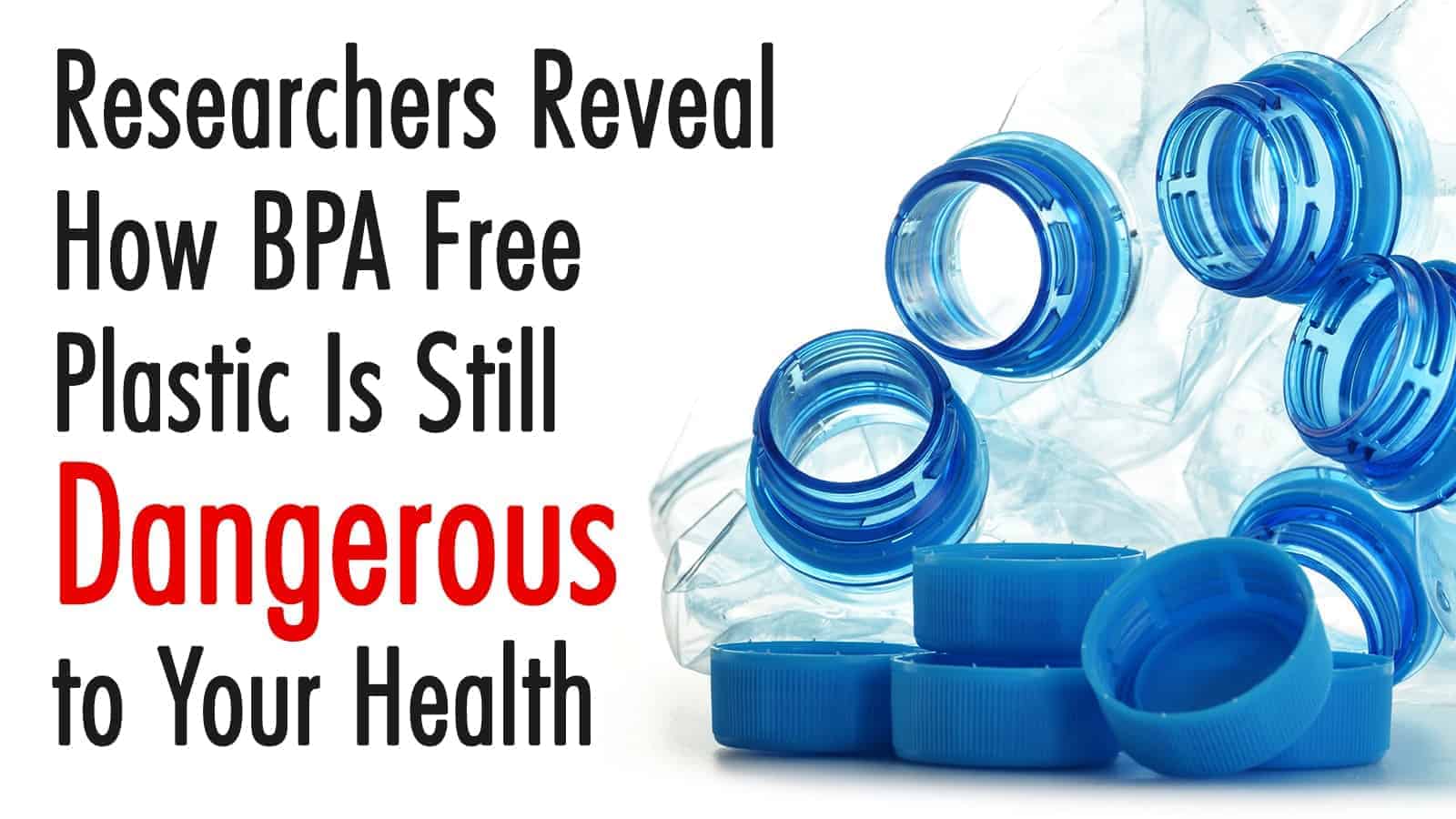
bpa free

Professor and beekeeper Federica Bertocchini placed some of these worms in a plastic bag. They later found tiny holes in the bag. Along with scientists Paolo Bombelli and Christopher J. Howe, Bertocchini decided to conduct further research using 100 of the worms.

They placed the worms in various shopping bags and noticed holes after about 40 minutes. After 12 hours, they found that the plastic had decreased by 92mg. So that they could ascertain whether the worms had an actual effect on the plastic, the scientists crushed a couple of worms and put them on the bags. They found holes in them once again; this proved that something in the chemical makeup of the worms had actually eaten through the plastic.

Scientists believe that these plastic-eating worms have a certain enzyme that helps them digest plastic. Hopefully, they will do more studies about this enzyme, and soon! Perhaps scientists can begin to release the worms into areas with heavy plastic pollution to help clean up the Earth.

Researchers Reveal Potential Ovarian Cancer Treatment with Frankincense Essential Oil

HISTORY OF ESSENTIAL OILS

Dating back to 3500 B.C., essential oils have long-since been utilized by many cultures around the world for their purported healing properties. These aromatic plants supposedly have whole-body benefits. They aid in the optimization of everything from digestion to muscle recovery. Most holistic treatments have virtually no merit in the world of allopathic medicine. However, one particular resin, frankincense, might bridge the gap after outperforming chemotherapy at killing ovarian cancer cells. (1.)

Over five millennia ago, ancient Egyptians first harnessed the power of essential oils. They cultivated and harvested specific crops before extracting their essences for cosmetic, healing, and mummification processes.

Ancient times

China and India, the latter of which constructed an entire system of health, known as Ayurveda, wholly believed in the intrinsic healing abilities of plants. They also began their investigation into essential oils such as frankincense.

Greeks and Romans jumped on the bandwagon as well. They adopted such practices as massage and aromatic baths to expedite healing, inside and out.

Hippocrates, one of the earliest and most well-known holistic physicians, routinely prescribed essential oils to his patients for various ailments.

Modern medicine is just now beginning to understand two of his famous quotes.

“Let food be thy medicine and medicine be thy food.” –Hippocrates

“All disease begins in the gut,” –Hippocrates

Each of these sayings speaks to the impressive amount of wisdom harbored by ancient healers.

The Renaissance

Homeopathic medicine faded away until the Renaissance period when it saw a rapid resurgence. Paracelsus (1493-1541), a Swiss physician, alchemist, and astrologer, used plant resins to supposedly cure diseases. He treated ailments like leprosy, previously considered a lifelong condition.

Military use of essential oils in WWI

Later on, in the early 1900s, French chemist Rene-Maurice Gattefosse sustained severe epidermal burns as a result of a failed laboratory experiment that left his hands covered in gangrene. Upon applying lavender oil to the wounds, he experienced rapid, unprecedented healing beginning the following day.

Gattefosse had not been a proponent of homeopathic medicine before the accident. However, his incredible discovery opened a door that would forever remain ajar.

He took his newfound knowledge to the battlefield and treated soldiers in military hospitals during World War I. This generation coined the term “aromatherapy.” That word now implies “inhalation or bodily application (as by massage) of fragrant essential oils (as from flowers and fruits) for therapeutic purposes.” Several other medical doctors subsequently began utilizing essential oils in the context of war.

Modern-day medicine begins to acknowledge essential oils

Fast-forward about half a century to the 1980s, when French doctor Daniel Pénoël and biochemist Pierre Franchomme experimented with more than 270 different essential oils. The pair was able to determine their precise healing effects and its potential usefulness in clinical settings. They published their book, L’aromatherapie Exactement in 1990.  It was long regarded as the gold standard of information on essential oils for many years thereafter.

Natural medicine is a phenomenon ever-increasing in popularity. However, recent findings suggest it to be much more than a passing trend. Essential oils are proven to support the function of nearly every bodily system, including digestion, circulation, sleep…and even repair on a cellular level. According to the National Library of Medicine, compounds found in frankincense oil have potent anti-cancer properties.

INFORMATION ABOUT OVARIAN CANCER

Cancer stems from the mutation of a cell’s DNA. This error communicates to the cell that it needs to multiply rapidly, which creates a mass of abnormal cells – otherwise known as a tumor. Whereas a healthy cell would eventually die, cancerous cells continue living and can break off from the tumor to metastasize or invade other organs. Ovarian cancer is one of the disease’s most sinister types because it is challenging to detect in its early stages. By the time a woman begins experiencing symptoms, such as:

  • Abdominal bloating or distension
  • Rapid onset feeling of fullness while eating
  • Weight loss
  • Pelvic discomfort
  • Changes in bowel habits
  • Frequent urinary urgency, (2.)

Cancer has often already spread into the pelvis and abdomen. Even more unnerving is how ambiguous and nonspecific the symptoms mentioned above are. So despite having several or possibly all of them, an afflicted woman may not express any concern to her doctor.

Three varieties of ovarian cancer

As far as what precisely causes ovarian cancer, it all comes down to which type a woman has. The three known varieties are:

  • Epithelial tumors: these initially occur in the thin layer of tissue lining the ovaries and are responsible for approximately 90 percent of ovarian cancer cases
  • Stromal tumors: begin in the ovarian tissue containing cells that produce hormones. These account for about 7 percent of cases and are typically diagnosed at an earlier stage than epithelial tumors.
  • Germ cell tumors: By far, the rarest type of ovarian cancer. These tumors begin in egg-producing cells and tend to occur in younger women.

Risk factors for developing ovarian cancer

Ovarian cancer may often be a silent killer, but it usually isn’t random. Several risk factors increase a woman’s likelihood to develop the disease, including:

  • Age. Ovarian cancer is most common in women between 50 and 60 years old, although it can occur at any age.
  • Genetics. Although rare, a woman can inherit the gene mutations that cause ovarian cancer. These genes are  the breast cancer genes 1 and 2, or BRCA1 and BRCA2. And, as the name would suggest, they also increase the risk of breast cancer. Several other unrelated gene mutations, such as in cases of Lynch syndrome, also make a woman more susceptible to developing ovarian cancer.
  • Family history. Women with two or more relatives who have or had the disease are at a higher risk of also developing it.
  • Estrogen hormone-replacement therapy. Especially when used long-term and at high doses, estrogen HRT is connected to the onset of ovarian cancer.
  • Age when female entered puberty. Women who began menstruating at an early age and/or entered menopause later than average have a higher likelihood of developing ovarian cancer.

Ovarian cancer is an extremely complex disease with many different causes, prognoses, and risk factors. Therefore, it would only make sense that treatment isn’t a one-size-fits-all ordeal. Of course, surgery and chemotherapy are beneficial and should be respected and utilized when necessary. However, emerging research is pointing towards another treatment modality that would bring the art of healing full circle back to the ancient wisdom of those who came before us.

HOW FRANKINCENSE KILLS OVARIAN CANCER CELLS

Frankincense, derived from the Boswellia plant, possesses antifungal, antibacterial, anti-inflammatory, anti-rheumatism, and anti-cancer properties. Consistent with these findings, a 2017 study concluded that frankincense, pine needle, and geranium essential oils “suppressed cell viability, proliferation, migration, and invasion in human BC MCF-7 cells.” These are breast cancer cells, which, as previously discussed, are also involved in the development of ovarian cancer. The three oils also demonstrated an ability to induce apoptosis, the process by which a cell dies. Considering cancer cells do not follow a typical life cycle, this discovery is incredibly significant. (3.)

Also notable is the fact that, when replicated in rodents, frankincense oil also induced apoptosis while additionally stalling tumor growth. All three of the oils mentioned earlier help to regulate the AMPK/mTOR signaling pathway. This is the body’s master regulator of cellular energy homeostasis. It is therapeutic in treating diseases such as type II diabetes, obesity, and cancer. (4.)

The healing compound in frankincense

The healing compound specific to frankincense oil is  AKBA or acetyl-11-keto-beta-boswellic acid. This amalgam is where most of the plant’s benefits are found, including its anti-cancer property. According to Kamla Al-Salmani, who is a Ph.D. student from the University’s Department of Cancer Studies and Molecular Medicine, “After a year of studying the AKBA compound with ovarian cancer cell lines in vitro, we have been able to show it is effective at killing the cancer cells.  Many people take frankincense with no known side effects. This finding has enormous potential into a clinical trial in the future and developed into an additional treatment for ovarian cancer.” (5.)

One of the experiment’s most novel findings was that the cancer cells responding positively to the frankincense treatment were resistant to chemotherapy. This promising discovery offers a potential solution to drug resistance, which is an ever-growing epidemic concerning not only cancer but many other diseases as well. Implementing frankincense oil in the treatment of late-stage ovarian cancer could improve the shockingly low current survival rate of 47%. (6.)

ovarian cancer

FINAL THOUGHTS ON FRANKINCENSE AS AN ALTERNATIVE TO CHEMOTHERAPY

IN THE TREATMENT OF OVARIAN CANCER

Essential oils, including frankincense, have been used for thousands of years because of their innate healing properties. These aromatic plants contain powerful resins that can aid in the treatment of sore muscles, headaches, and even ovarian cancer.

Recent laboratory findings have shown that a compound called AKBA found in frankincense oil can kill late-stage ovarian cancer cells that are resistant to chemotherapy. This offers hope to not only those currently afflicted by the often-terminal illness but also the world of oncology as a whole. We consider holistic and allopathic medicine polar opposites. However, findings like this could bridge the gap between the two schools of thought in a beautiful way the world has never seen before.

This Chicken Noodle Soup Recipe May Be The Best Ever (And 1 Million People Agree)

There’s nothing like a steaming bowl of chicken noodle soup to warm the soul on a cold winter night. Not to mention, chicken noodle soup can benefit your body as well!

Homemade versions of this soup contain lots of vitamins and minerals from the various vegetables and broth in the dish, and if you have a cold, chicken noodle soup can boost your immune system. In addition to the health benefits and warmth that this dish provides, it also doesn’t take a lot of effort to prepare.

Of course, picking up a can of soup from the store is by far the easiest option, but canned soups usually have a mountain of salt and other unhealthy preservatives in them. You’ll feel better knowing you made this dish yourself since you can control what you put in the dish.

This “Ultimate Chicken Noodle Soup” recipe on the site Taste of Home got over 1 million views, which shows how many people enjoyed this recipe. It’s the third most viewed recipe on the site, so you know it’s good.

What makes this chicken soup recipe so special, you ask? Well, the bone-in chicken thighs cooked in canola oil add rich flavor to the broth, and the garlic, onions, carrots, and celery add texture and antioxidants. The recipe calls for cooking the thighs in the broth until they’re juicy and tender, which ensures maximum flavor as well.

Prepping this recipe only takes 15 minutes, and cooking time is 45 minutes (plus cooling time). The recipe makes ten servings (3 1/2 quarts). We’ll go over the steps for making this delicious chicken noodle soup below!

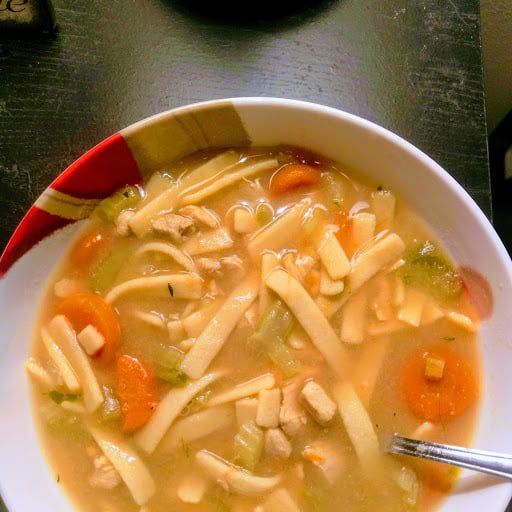
soup

Chicken noodle soup recipe:

Ingredients

  • 2-1/2 pounds bone-in chicken thighs
  • 1-1/4 teaspoons pepper, divided
  • 1/2 teaspoon salt
  • 1 tablespoon canola oil
  • 10 cups chicken broth
  • 1 large onion, chopped
  • 1 garlic clove, minced
  • 4 celery ribs, chopped
  • 4 medium carrots, chopped
  • 2 bay leaves
  • 1 teaspoon minced fresh thyme or 1/4 teaspoon dried thyme
  • 3 cups (about 8 ounces) of egg noodles
  • 1 tablespoon chopped fresh parsley
  • 1 tablespoon lemon juice

Instructions

1. First, pat the chicken dry with paper towels, then sprinkle with 1/2 teaspoon of pepper and salt. In a 6-qt. stockpot, heat the canola oil on medium-high. Add the chicken slowly with the skin down, and cook for about 3-4 minutes. Take the chicken out of the pan and remove the skin. Save two tablespoons of the drippings and throw out the rest (or save for another dish!)

2. Add onion to drippings, cooking and stirring it for 4-5 minutes. Add garlic and cook for 1 minute. Then, add the broth and bring it to a boil. Put the chicken back in the pan and add celery, carrots, bay leaves, and thyme. Reduce the heat to a simmer, and cover the pot to let the chicken cook until tender, or about 25-30 minutes.

3. Put the chicken on a separate plate and remove the soup from the heat. Add the noodles and let stand, covered, for 20-22 minutes.

4. When the chicken has cooled, take out the bones and discard them. Shred the meat and return it to the stockpot. Stir in parsley and lemon juice. Remove the bay leaves and adjust the salt and pepper as necessary.

weight loss soup

Remember to save the veggie scraps and chicken bones so you can make broth for another soup!

Nutrition Facts:

1-1/3 cups: 239 calories, 12g fat (3g saturated fat), 68mg cholesterol, 1176mg sodium, 14g carbohydrate (3g sugars, 2g fiber), 18g protein

If you make this recipe, let us know how you enjoyed your homemade chicken noodle soup in the comments below!

(C)Power of Positivity, LLC. All rights reserved

12 Super Healthy And Delicious Cucumber Salad Recipes

There is nothing better than cucumber to remind you of the sunny days of summer. If you need a passing dish for a barbeque or dinner, or if you are just wanting to try a new side dish, a cucumber dish is a way to go. Therefore, cucumber salad recipes have increased in popularity. And, there is a wide variety of them online.

Because cucumber is delicious, crunchy, and healthy, it pairs well with many other foods. Also, it is so versatile and well-liked that cucumbers have become a popular highlight of a salad. This means it has replaced quickly begun to replace the typical lettuce-based salad recipes of the past.

With a high water content and nutritional value, cucumber offers many health benefits while tasting delicious. Additionally, it is easy to make cucumber the star of a dish. Of course, there are so many options for what to mix in with your cucumber salad recipes.

12 Cucumber Salad Recipes

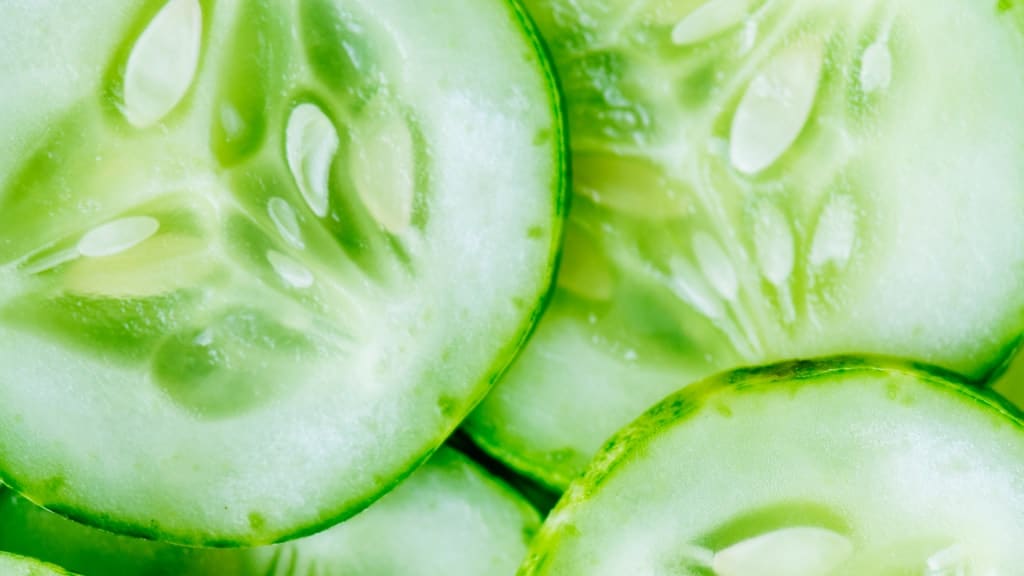
cucumber

Cucumber and Onion Salad

Ingredients

  • 2 medium cucumbers
  • 2 tablespoons fresh dill
  • 1/2 medium red onion
  • 1/4 cup apple cider vinegar
  • 2 tablespoons avocado oil
  • 2 tablespoons raw honey
  • 1/4 teaspoon sea salt

Instructions

1. Thinly slice the cucumbers and onion.
2. Chop the fresh dill.
3. Combine the dill, apple cider vinegar, avocado oil, honey, and salt.
4. Mix them together until the vinegar, oil, and honey have completely coated the dill.
5. Add the cucumber and onion, and mix until the vegetables are coated.
6. Refrigerate the salad for 30 minutes to 1 hour to allow the flavors to come together.
7. Keep refrigerated until ready to serve.

Gaby’s Cucumber Salad

Ingredients

  • 3 tablespoons extra-virgin olive oil
  • 2 tablespoons balsamic vinegar
  • 2 small or medium garlic cloves
  • Kosher salt and black pepper
  • 1 avocado
  • 2 medium cucumbers (approximately 12 ounces)

Instructions

1. Thinly slice the cucumbers.
2. Mince the garlic cloves.
3. Slice or dice the avocado.
4. Mix together in a bowl the extra virgin olive oil, balsamic vinegar, and the garlic.
5. Add salt and pepper to taste.
6. Put the avocado and cucumbers into the bowl and toss until combined.
7. Serve immediately after mixing.

Cucumber and Tomato Salad

Ingredients

  • 2 medium cucumbers
  • 1 pound cherry tomatoes
  • ¼ cup red onion
  • ¼ cup fresh dill
  • 2 tablespoons extra virgin olive oil
  • 2 tablespoons toasted sesame oil
  • ½ teaspoon salt
  • black pepper (to taste)
  • vinegar (to taste)

Instructions

1. Thinly slice cucumbers and onion.
2. Chop cherry tomatoes and fresh dill.
3. Mix all the ingredients together in a bowl.
4. Serve immediately.

Thai Cucumber Salad

Ingredients

  • Half cup unseasoned rice vinegar
  • 2 tablespoons sugar
  • ½ teaspoon salt
  • 1 medium cucumber (about 12 ounces or 2.5 cups)
  • ½ small, red onion
  • 1 Thai chili
  • ¼ cup roasted, unsalted peanuts
  • ½ cup cilantro

Instructions

1. Thinly chop the cucumber, onion, and Thai chili.
2. Chop peanuts and cilantro.
3. Mix the vinegar, sugar, and salt in a saucepan and bring to a boil.
4. Reduce heat to medium.
5. Cook until the consistency is similar to syrup (approximately five minutes).
6. Remove from heat and transfer to a bowl.
7. Let the mixture cool completely.
8. In addition, stir the cucumber, onion, and Thai chili into the bowl and toss until the mixture and the vegetables are combined completely.
9. Let sit together while the cucumbers soak up the liquid (approximately five minutes)
10. Toss salad again and refrigerate.
11. Just before serving, add the peanuts and cilantro to the top, but do not mix.

Basil Cucumber Salad

Ingredients

  • 4 medium cucumbers
  • ¼ cup mayonnaise
  • ¼ cup sour cream
  • 1 teaspoon each of salt and mustard
  • 1 tablespoon milk
  • ½ teaspoon each of pepper and garlic powder
  • ½ cup fresh basil

Instructions

1. Thinly slice the cucumbers.
2. Mince the basil.
3. Mix together in a small bowl the mayonnaise, sour cream, mustard, milk, salt, pepper, and garlic powder.
4. Put the cucumbers into a larger bowl, and then pour the dressing mixture over top.
5. Gently stir in the basil until it has evenly coated the cucumbers.
6. Refrigerate until the salad is ready to be served.

Cucumber and Feta Cheese Salad

Ingredients

  • 1 large cucumber
  • ½ medium red onion
  • 1/3 cup feta cheese, crumbled
  • 4 tablespoons Italian salad dressing

Instructions

1. Peel and seed the cucumber.
2. Chop the cucumber and onion into bite-sized pieces, then place them in a bowl.
3. Sprinkle feta cheese over the cucumbers and onion.
4. Add Italian salad dressing.

Japanese Cucumber Salad

Ingredients

  • 2 medium cucumbers
  • 1 tablespoon dried wakame seaweed
  • 4 crab meat
  • White sesame seeds (to taste)
  • 3 tablespoons rice vinegar
  • 1 tablespoon sugar
  • ½ tablespoon soy sauce
  • ¼ teaspoon salt
  • 2 tablespoons dashi

Instructions

1. Peel alternating strips that are 1/2-inch wide down the length of the cucumbers, but leave some of the skin intact. This offers an extra bit of crunch to the cucumber salad.
2. Cut the cucumbers into thin slices.

cucumber slices

Make cucumber slices very thin.

3. Sprinkle salt over the cucumber slices and rub in using your hands.
4. Let the salt sit on the cucumbers for about 5 minutes and then wash it off in cold water.
5. Squeeze the cucumber slices to remove excess water.
6. In a separate, small bowl, soak the wakame in water for about 10 minutes.
7. Squeeze the water out of the wakame at the end of the 10 minutes.
8. Cut the crab into pieces, and then shred it up.
9. Combine the remaining ingredients in a small saucepan and mix well.
10. Heat those ingredients until the sugar has dissolved.
11. Remove this mixture from the heat and set it aside to cool.
12. Combine the cucumber, wakame, and crab in a large bowl.
13. Pour the dressing mixture over the ingredients in the large bowl and mix it together.
14. Sprinkle sesame seeds over the top.
15. Serve this salad at room temperature or chilled.

Cucumber and Sour Cream Salad

Ingredients

  • Two medium cucumbers
  • 2 tablespoons onion
  • 2 tablespoons sour cream
  • salt and pepper (to taste)

Instructions

1. Peel the cucumber and chop into small pieces.
2. Dice the onion.
3. Add the cucumber and onion to a bowl.
4. Add the sour cream.
5. Mix together, and taste.
6. Add salt and pepper as you see suitable.
7. Chill for 20 minutes in the refrigerator.

Easy Cucumber Salad

Ingredients

  • 1 large cucumber
  • 4 tablespoons sour cream
  • 1 tablespoon white vinegar
  • Divided in half one teaspoon of salt
  • ¼ teaspoon pepper
  • ½ teaspoon fresh dill
  • 1 teaspoon fresh chives

Instructions

1. Chop the fresh dill.
2. Mince the chives.
3. Thinly slice the cucumber.
4. Place the cucumber in a bowl and sprinkle half the salt and half the pepper over the top.
5. Leave the cucumbers and seasonings together for 20 minutes.
6. In a separate bowl, mix the sour cream, vinegar, the remaining salt and pepper, the dill, and the chives together.
7. Stir the dressing mixture into the cucumbers.
8. Chill the salad in the refrigerator for 2-3 hours.

Zippy Cucumber Salad

Ingredients

  • 2 large cucumbers
  • 1 large onion
  • 2 teaspoons salt
  • 1 large jalapeno pepper
  • ¼ cup carrots
  • 1/3 cup rice vinegar
  • 1 teaspoon ground ginger
  • 5 teaspoons white sugar
  • 1/4 teaspoon black pepper

Instructions

1. Peel half of the skin of the cucumbers.
2. Thinly slice the cucumbers and onion.
2. Remove the seeds and mince the jalapeno pepper.
3. Mince the carrots.
4. In a medium-sized bowl, place the cucumber, onion, and salt with water.
5. Place this mixture in the refrigerator and let it sit together, covered, for about 30 minutes.
6. Drain the water from the mixture.
7. Place the mixture into a large bowl and add the jalapeno and carrot.
8. In a small bowl, mix the rice vinegar, ginger, sugar, and pepper together and stir until the sugar is dissolved.
9. Pour the liquid mixture over top of the cucumber mixture and stir until it is evenly combined.
10. Cover the cucumber salad and place in the refrigerator for 30 minutes before serving.

Cold Cucumber Salad

Ingredients

  • 2 large cucumbers
  • 1 teaspoon each of salt and white vinegar
  • ½ cup mayonnaise
  • ¼ cup sour cream
  • 1 tablespoon fresh dill
  • Pepper
salad recipes

Avoid these unhealthy salad ingredients.

Instructions

1. Peel and slice the cucumbers into thin slices.
2. Place the cucumbers in a bowl.
3. Sprinkle the salt and vinegar over the top of the cucumbers.
4. Let stand for 30 minutes, covered.
5. Drain the extra liquid from the cucumbers by placing it in a colander for 30 minutes over the sink.
6. Add the remaining ingredients and mix thoroughly.
7. Chill in the refrigerator before serving.

Mexican Cucumber Salad

Ingredients

  • 1 medium cucumber
  • 1 can sweet corn, drained
  • 2 large tomatoes
  • 1 green pepper
  • 1 red pepper
  • 2 tablespoons red wine vinegar
  • 1 tablespoon dried, crushed chilis
  • 1 clove garlic
  • ½ teaspoon cumin
  • ¼ teaspoon salt
  • 1/8 teaspoon pepper
  • Fresh, chopped coriander to taste

Instructions
1. Chop the cucumber, tomatoes, green pepper, and red pepper into bite-sized pieces.
2. Mince the garlic clove.
3. Mix together the cucumber, sweetcorn, tomatoes, peppers, and vinegar.
4. Season with the rest of the ingredients.
5. Cover and chill in the refrigerator for at least 30 minutes before serving.

Final Thoughts on Super Healthy and Delicious Cucumber Salad Recipes

As you see, cucumber salad recipes are fun and delicious for a spring or summer dish. They are generally easy to make and take minimal time. Because of the wide variety of salad recipes available, you are sure to find at least one that you love.

Perhaps the most fun thing about cucumber salad recipes is learning the different ways that other cultures prepare the salad. You can make a different cucumber salad for each event this summer, and impress everyone you know.


15 Incredibly Useful Personal Finance Tips to Help You Save Money  

It goes without saying: We’re all trying to save money. And these personal finance tips can help.

This is more important than ever: A 2018 survey showed that 40% of Americans could not cover a $400 emergency expense.

This means that we all need to do a better job of saving money, even if we can’t afford to hire the best financial experts. Here are 15 personal finance tips to help you cut your expenses and put more money in your wallet.

Personal Finance Tips to Help You Save Money

save money

Establish a budget

This is the most basic of all personal finance tips: Establish a budget. Judge your income and expenses, and track the results during the month. The first few months may be tough, and you’ll probably be shifting money around. However, you can’t save money if you don’t know how much you have, or how much you are spending.

Thankfully, you don’t need insanely expensive software to make this work. An excel sheet will do just fine. Conversely, there are plenty of free websites you can use, including Mint, or You Need A Budget.

Audit your expenses

This is one of the personal finance tips that’s often overlooked! A budget won’t do you any good if you aren’t looking at the data it reveals. Once you have a budget done for a few months, check out the results. Where can you save money? Are there things you find yourself purchasing that you don’t need? What can you cut out? Do a full audit of your own expenses, and see where you can save.

Buy gift cards online

Of all the personal finance tips we have to offer, this is one of the more creative ones. Do you make purchases at major chain stores? If so, check out Gift Card Wiki, an amazing website which aggregates other websites that allow you to purchase discount gift cards at a discount.

So, let’s say you go to Target regularly. During certain promotions, you can purchase a Target gift card for as much as a 15% discount! And, if you leverage that purchase with a credit card which gives you points on your purchases (more on that below), you can make even more money.

Do this enough, and you can save major bucks.

Save automatically

Saving isn’t supposed to be about saving what’s left at the end of the month – that means you’ll never get to put anything away! Instead, set up your bank account so that you save at the beginning of every month, and make the transfer automatic. This way, you’re guaranteed to put away money with every paycheck, ensuring that you save what you need.

Set a “24 hour rule” for expensive purchases

We’ve all been there – You see that television set, and think: Yes, you really want that! It will look so good in your room, and you can finally play all the video games you want! I mean, yeah, it’s a little expensive, but it’s on a special clearance sale!

Here’s one of those personal finance tips which involve restraint: Wait. Don’t make any major purchases until you think about it for at least 24 hours. This will give you time to answer a few important questions:

  • Do you really need that item?
  • Can you afford it? What does your budget say?
  • Can you get it less expensive somewhere else? Is it available in another store, purchasable with a discount card, or cheaper online?

Don’t make impulse buys on major purchases. Take a breath, wait a day, and see if you still want or need it in the morning.

Take advantage of credit card point programs

So many people leave money on the table. Have you checked out credit card reward point programs? Depending on the card, you can get anywhere from .5% – 5% of your purchase back, and use that money to pay down your credit card, earn gift cards or miles on travel purchases. Even better, many of these cards are available without any additional fee, or the fee is waived in the first year. This means that it may cost you nothing to save money!

Cut down on eating out

Eating out is a huge expense. It sounds cliche, but it’s true: If you’re buying a $4 coffee every day, you’re costing yourself $1,460 a year – enough to save towards a down payment of a house, reduce your debt or make a dent in your college loans. Thankfully, with proper planning (see the next item) and a little bit of restraint, you can help cut down on this cost. If you find that eating out or going to the bar is a big part of your social life, try having pot-luck dinners instead. As with most personal finance tips, sacrifice is a must.

Plan your meals in advance

Have a set time every night to plan out what you are having for breakfast, lunch, and dinner, and to the extent that you can, cook the meal or get all the prep done. This will make it easier for you the next day, and will prevent you from waking up in the morning and saying, “Gah, I’m too busy, I’ll just grab a coffee on the road!”

Figure out how to save on your energy usage

This can take two forms. First, if your state allows it, see if you can purchase power from a cheaper generation service. This may allow you to buy money from a less expensive source.

Second, check your house, and give yourself an energy audit. Common ways to save money here include:

  • Turn off unnecessary lights and use more natural lights.
  • Turning off the water and fixing a leaky faucet.
  • Unplugging unused appliances.
  • Purchase lower wattage light bulbs and more energy-efficient appliances.

Consolidate your debt

Debt consolidation can lower your monthly payment, reduce your interest rates and make it easy so you only have one monthly payment. You may pay more over the length of a loan, but this can help you free up cash that you can use for other purposes – including paying down your debt quicker.

Remember that some loans cannot be consolidated, and others may already have low interest rates. It’s essential that you review your options to get a better handle on your debt and consolidation possibilities just by implementing our personal finance tips.

Comparison shop for major purchases

Never make a major purchase – totaling hundreds or thousands of dollars – without checking out other options first. In a digital age, there are no shortage of options to check out how to save money on big purchases. Examples include:

  • PriceGrabber, which lists a slew of products and possible purchase options.
  • Google Shopping, which, of course, hooks in the impressive power of Google.
  • RedLaser, which has an easy to use smartphone app which allows you to scan a bar code and get a price comparison.

This is one of the more basic personal finance tips, but it also comes back to the general principles: Take your time, don’t impulse buy, think about your purchases, and do your homework first.

Let someone else negotiate your bills

If you aren’t sure how to negotiate major purchases (like your utilities or gym membership), fear not: There are major services like Trim and BillCutterz which will do it for you! All you have to do is list what you pay and to whom you pay it and turn it over to these companies. They will negotiate lower rates for you and get paid by charging you for a portion of the savings – usually around 30-40%. This means that you will save a ton of money and someone else will do all the work!

personal finance tips

Create a grocery spreadsheet

Have you ever tracked how much your regular purchases cost at different grocery stores? You’d be surprised how much the purchase price varies from store to store. To that end, grab your receipts and create a spreadsheet that allows you to analyze and compare your purchases.

Of the personal finance tips we’re offering here, this one is more labor-intensive. But, it can save you a pretty penny – maybe as much as 5%.

Inflate your tires and save fuel

Here’s one of those smaller personal finance tips that can make a big difference: Ensure your tires are properly inflated. Did you know that under-inflated tires can cost you big money? It’s true. Properly inflated tires can save you 3-4% on fuel costs, and given the gas price, that’s real money! Additionally, under-inflated tires increase stopping distances, hurt your steering control and increase the risk of a tire blowout. This can all cost you big money on repairs, which says nothing about the safety hazards!

There are dozens of more personal finance tips that you can use to boost your income and save your hard-earned dollars. By and large, it all comes down to common sense and discipline. Think before you spend, don’t buy what you don’t need and engage in some preventative maintenance and planning. Those cents turn into dollars, and those dollars turn into more. Use these tips and more and you will be a long way towards reaching your financial goals.

20 Long Distance Relationship Quotes To Help Close the Distance

Long distance relationships certainly get a bad reputation for driving people apart, but this doesn’t have to be true. True love can survive anything if both partners are willing to work for their relationship. Let these relationship quotes serve as your beacon.

Relationship Quotes for Long-Distance Couples

One of the best ways to keep your relationship going strong, regardless of where you are in the world, is to use relationship quotes to remind yourselves of the love you have for one another. The best relationship quotes make it easy to see that love can last any amount of distance.

Read on for the following 20 best relationship quotes that will inspire you to keep going:

1. “Her absence means more to me than the very presence of others’.” — Edward Thomas

Being without your loved one can be particularly difficult to deal with, but there’s a silver lining to missing someone: missing them is a reminder of all the amazing feelings you have when you’re with them. Thus, this absence at the moment means more than another’s presence does.

2. “Let their presence, strengthen your love, let their absence sharpen it.” — Richard Bach

The distance between two lovers can often be incredibly overwhelming. However, absence needn’t be destructive. Let your time apart sharpen your love for one another through phone calls, video chatting, and letters.

When you’re both together again, you’ll feel your love that much more.

3. “The world’s most beautiful things can’t be touched or seen; we must feel them with our hearts.” –Helen Keller

Helen Keller’s beautiful words remind us that wherever on earth our loved ones might be, we can still experience the beauty of their presence and our love for them by digging deep inside our hearts. This is especially true in long-distance relationships; whether your partner is near or far, carrying them in your heart will keep the love ever-present until you can see each other again.

4. “In regards to love, the absence is just like the wind is with fire. Though the wind may extinguish the smallest flames, the greater the fire, the more the air will kindle it.” — Roger de Bussy

Many partners wonder if their long-distance relationships will go the distance. While the miles in between two lovers can spell trouble for some relationships, if both of you truly believe in building your love, any absence or distance will only strengthen your love.

5. “Love is missing your lover when you’re apart, yet feeling warm within because you know you are close in heart.” — Kay Knudsen

The beautiful thing about love is that it surpasses time zones, miles, and years. When two people are meant to be together, no amount of distance can tear them apart. As long as both partners work to feel close through communication and intimacy, it doesn’t matter how far apart they may be.

6. “Though the distance might be far and wide, love can surpass it all. The space between lovers is greater than any distance that threatens to keep them apart.” — Linda Roy

The distance itself won’t be the thing that ruins a relationship. All partners should understand that the love that exists between the two of them should be strong enough to bridge any gap of time or distance.

7. “The truest loves show that while small distances can at times feel insurmountable, the greatest distances can easily be bridged. ” — Hands Nouwens

In love, it can be difficult to just be apart from a partner for a few hours in the day. However, lovers that are committed to one another go above and beyond as they invent new ways to make sure their love goes on regardless of how many miles are between them.

8. “With distance, the heart grows fonder. ” — Thomas Haynes Bayly

Popular relationship quotes like this will always ring true, no matter how far your true love may be. Essentially, the trials that distance puts two partners through will transform their relationship, forcing it to grow stronger until they can be together again.

While this doesn’t mean that couples need to be far apart to learn how to love each other, it is this distance that makes them more cognizant of how they truly feel for each other.

9. “As you listen carefully to the wind, you’ll hear me whispering that I love you.” — Andrew Davidson

Whether your lover is a city away or in another country, being in a long distance relationship can often feel like you both are on two separate worlds. If you start to feel this way, take a break to remind yourself that you both are closer than you think.

The beautiful thing about any relationship, wherever you may be, is that you both see the same stars, moon, and sun from wherever you are. While you may not be next to each other physically, you still get to experience the same wonder of the world that will remind you and your partner of how you feel life in the same way.

10. “People can feel closer than ever, even if they are far away. These loved ones walk with us and stay near every moment of our lives. ”– Senora Roy

If you love someone that is far away, it can be tempting to question if the love you both share is genuine. However, this distance doesn’t need to separate you two.

By investing in intimacy and reminding one another of how you both feel for each other, you will both feel closer than ever before, no matter where on earth you are.

11. “Though parting can be painful, this feeling can never compare to the joy between two lovers meeting again.” — Charles Dickens

Though saying goodbye can be particularly heart wrenching, keep in mind that you will see one another again.

While your long-distance situation is separating you for the moment when you both reunite again, the intense feelings of seeing one another again will be like a wave washing over any feelings of pain or sadness.

12. “Lovers have the same desire: to be close forever. However, the true test of real love is being far apart and managing to still love one another in the same way as both did when they were close.”– Senora Ray

All relationships are hard, but relationships that are long-distance are even more of a challenge. While it’s easy to feel close when physically near to your partner, choosing to pursue a relationship despite the distance will truly test the authenticity of your love for one another.

13. “We don’t say goodbyes. Wherever you may be, you’ll be in my heart always.” – Gandi-

Gandhi knows how to make love last. Relationship quotes like this show us that while many lovers do say goodbye to one another, there is something that seems so final in “goodbye”. Instead of giving into this finality, walk away from each other knowing that you will keep the love you both share in your heart until you both are reunited.

14. “Love travels as far as anyone will let it. Love has no limits” — Dee King

Relationship quotes like this one remind us that love is limitless, boundless, and endless. If we truly wish for love to last, it will, no matter how far two people may be from one another.

15. “Love is truly immeasurable and powerful. True love will endure any set of circumstances and will reach across any length of distance.” — Steve Maraboli

Do you believe in the power of your love? If both you and your partner are committed to pursuing each other, no amount of distance will be able to change that.

The best relationship quotes encourage us to let love be as powerful as possible and keep choosing our partners every day.

16. “Though love may be strong, its depths are truly tested upon separation. ”– Khalil Gibran

While it’s easy to feel the pangs of separation, are you still able to feel your love when apart from one another?

With your partner nearby, it’s easy to feel as though you have found your true love, yet separation is the thing that will truly test how deeply you feel for each other.

17. “We were apart, yet we were still together.” — Shannon A. Thompson

Long-distance relationships will only survive if both partners make the effort to be with one another. Though they can’t physically be next to each other, couples can spend time with each other by scheduling dates for phone calls, connecting through social media, and using any other communication tools that will bring them closer to each other.

18. “Long-distance isn’t easy, but if you’ve found someone worth the pain, hardships, and sacrifices, your efforts will always be worth it.” — Anna Agoncillo

The best relationship quotes show us that in true love, any sacrifices that are made will be worth all the effort. These hardships will be painful to experience at the moment, but in the end, your love will win.

relationship quotes

19. “Sometimes two people must be apart. Sometimes this separation makes them love each other more.” — Nicolas Sparks

Distance shows us we should never take one another for granted. By being apart from them, we see how much they truly mean to us.

20. “Choose to be the couple that makes long distance work.” — Dee King

If you’ve ever heard that long-distance relationships don’t work, don’t buy into this lie. Choose to be the two partners that make their love last.

Final Thoughts on Relationship Quotes

All relationships require open communication, commitment, and dedication. This is even truer in a long-distance relationship. While these LDR’s can be particularly complicated, they can and do work.

The best relationship quotes show us the beauty of true love, regardless of how far one may be. If you find yourself far apart from your lover, take heart: though you both may be away from one another in the moment, remind yourself of the love you both share. If your hearts are closer than ever, no amount of distance can separate the two of you.

Skip to content