Weekly tips, affirmations, and small actions to feel your best.

Researchers Reveal The Impact of Negativity And Stress on Kids

It’s a common misconception that stress does not significantly affect children. This statement couldn’t be further from the truth. Children who experience negativity and stress early on in life don’t just temporarily suffer. They could develop health problems of all kinds that follow them well into adulthood.

But how does this work? Why do these issues impact kids so severely? Don’t kids retain little to no memories before the age of 4? To clear things up and answer your burning questions, here is how researchers reveal the long-term impact of negativity and stress on children.

1.    Stress and Children

Researchers sought answers about the harmful effects of stress over the years. We are all now well-aware of the many consequences of being exposed to stress and negativity, especially over a prolonged period. But most of the most widely publicized studies focus on adults – and that does a good deal of disservice to research done into childhood stress.

Parents and guardians will often try to shield their children from the negativity in the world as much as possible. This can often involve trying to protect them by blocking out their knowledge of stressful events, such as the ongoing COVID-19 pandemic. This means that, to some degree, we are aware of the fact that stress is bad for children.

At the same time, many adults also believe that kids will forget about stressful situations quickly. This includes domestic fights or violence, the deaths of loved ones or pets, illness involving family members, and similar scenarios. But do they not know what’s going on? Will they forget?

Unfortunately, more and more science is revealing that though children may not remember all the details of adverse events – or understand what they remember – they are still able to perceive them as unfavorable and experience stress as a result. This stress, as it turns out, can be harmful in the long run.
negativity

2.    The Formative Years

Most experts now agree that the earliest years of our lives are some of the most important. And, some of the first experiences of an individual will vary significantly shape who they become as an adult – and even what their health will be like.

One of the most significant factors that influence a child’s future is now recognized to be stress. This vital mechanism, when left unchecked in childhood, can dramatically change the wellbeing and overall health of that person in the future.

Examples of stress that can be present in a child’s life include overly strict or harsh parenting, neglect, abuse, and more, and the child who experiences these stressors can grow up to carry on the negative cycle with their children. Even below the age of three, these factors can affect a child. In-utero stress has adverse effects on children, not yet born!

3.    Studies That Indicate The Impact Of Negativity and Stress On Children

As we’ve previously mentioned, research has shed plenty of light on what happens to kids who are exposed to toxic levels of stress in early life. Here are some studies that have found answers as to the long-term impact of adverse circumstances on children:

·         Disturbances Of Attachment And Parental Psychopathology In Early Childhood

This study was published in the Child and Adolescent Psychiatric Clinics of North America journal in 2010. It reaffirmed the concept of attachment theory and urged proper psychological evaluation of parents, guardians, and children, as well as the relationship between children and their caregivers. Interventions are more essential to be provided to caregivers in this scenario, as encouraging guardians to be more supportive and parental to their children boosts the social relationship between them and their child as well as the child’s wellbeing.

·         Early Life Programming As A Target For Prevention Of Child And Adolescent Mental Disorders

This study was published in the BMC Medicine journal in 2014. It found that the mental and emotional state of pregnant women could affect the development of their developing babies. Adverse mental health could produce neurotic and teratogenic factors that could result in psychiatric disorders in the resulting children and teenagers.

·         Early-Life Stress and Adult Inflammation

This study was published in the Current Directions in Psychological Science journal in 2014. It found that toxic stress or prolonged stress experienced in the early stages of life, including childhood, could add risk factors to inflammation in adulthood. This inflammation puts the adults in question at a higher risk for severe physical health conditions.

·         Effects of Stress and Negativity on the Developing Brain

This study was published in the Cerebrum journal in 2011. It found that uneven or chaotic behavior and emotional tone in parenting and family life could result in impairment of a child’s emotional regulation and self-control later in life. Conversely, supportive care from parents, provided consistently, provides a child with a sufficient foundation for positive development over time.

·         The Lifelong Effects of Early Childhood Adversity and Toxic Stress

This study was published in the Pediatrics journal in 2012. It drew multiple damning conclusions, including linking maternal health to prenatal stress responses in children that could have lifelong effects. It also showed how the architecture of the brain is shaped by a mix of predisposition via genetics and the influence of the environment around a growing child. Toxic stress specifically disrupted the development of the architecture and even derailed the development of regulatory systems and organ function.

·         Parent Psychological States Predict Changes in Inflammatory Markers in Children With Asthma and Healthy Children

This study was published in the Brain, Behavior, and Immunity journal in 2008. Its findings suggested that children are not only aware of and sensitive to the psychological negativity of their parents but also that they can internalize that lack of positive thinking and have it manifest in their biology. This is seen through higher inflammatory markers noticed in children around distressed parents, which could lead to higher morbidity rates later in life.

·         The Science of Early Life Toxic Stress for Pediatric Practice and Advocacy

This study was published in the Pediatrics journal in 2013. This study reaffirms previously believed knowledge that toxic stress is harmful to children and urges pediatricians to learn to identify signs of this stress in their patients to intervene.

pop memes

4.    The Physical Response Of Stress

When you think of “stress,” you might attach mental health and psychological states to the word. What you may forget is that stress, especially in the case of its impact on children, refers to the physical responses of a child’s body to unfavorable, complicated, or negative situations.

To protect themselves, when a child (or anyone of any age) perceives a specific circumstance as threatening, frightening, or challenging, the body releases several different chemicals and triggers a few responses. This affects:

  • Metabolism
  • Heart rate
  • Blood pressure
  • Nervous system response
  • Hormones

When needed, these changes are beneficial and have nothing but positive benefits. They help you to overcome stressful and dangerous situations and survive difficult times. Unfortunately, frequent triggering of these chemical processes –  a “stress response” – does quite the opposite.

Children are still developing their stress responses. When that response is triggered too often, it stops being well-tuned and becomes impaired. This can cause excessive stress responses akin to a traumatic stress disorder. It can also cause the opposite – a too-low stress response that doesn’t fire when needed.

Children who have their stress responses triggered too often early in life can develop serious health problems in their adult lives. This includes:

  • Cardiovascular disease
  • Diabetes
  • High blood pressure
  • Obesity
  • Depressive disorders
  • Anxiety disorders
  • Post-traumatic stress disorder

5.    Is All Childhood Stress Dangerous?

We’ve harped pretty hard on childhood stress and its dangers – but is it all bad? First, let’s consider the three types of stress, which are as follows:

·         Type One: Positive Stress

Positive stress is a “healthy” and completely normal stress response. In children, it is entirely essential and necessary for proper development. These types of reactions are mild, not frequently triggered, and don’t last for a long time. Usually, children who receive parental support and protection while experiencing stress are experiencing positive stress. This allows them to get mentally stronger and gain resilience, intelligence, and motivation while positively learning new things.

·         Type Two: Tolerable Stress

Tolerable stress refers to slightly more frequent and severe stress responses that last longer than positive stress. This means that the triggered chemical responses have the chance to have negative effects on the brain. This type of stress refers to things like the passing away of someone close to you, the divorce of your parents, or something similar. In most cases, once the problem is removed or lessened, the brain can recover to a certain degree. In children, that can be more difficult, but with supportive relationships and guidance, it is possible.

·         Type Three: Toxic Stress

This type of stress is the most dangerous and harmful. It refers to a long activation of biochemical stress responses, often with the result of the body being unable to recover. Usually, in children, this type of stress comes about due to a lack of support from guardians or parents. Parents and guardians with mental disorders, substance abuse, and aggressive or negative behavior can predispose a child to develop toxic stress.

The kind of stress we’ve bashed most today is toxic stress. Positive stress, on the other hand, can be helpful. It’s a standard part of a child’s development, teaching them to think, overcome problems, and face obstacles head-on.

Tolerable stress, while not favorable, is usually unavoidable. Protecting a child when they experience tolerable stress is key to preventing it from developing into toxic stress later on. Tolerable stress can also help children experience mental growth or learn mental resilience and strength as they overcome the difficulties they face with guidance and support.

negativityFinal Thoughts On The Long Term Impact Of Negativity And Stress On Children

Negativity and toxic stress can have severe long-term consequences on children, but it doesn’t have to be that way. If you’re a guardian or caretaker, do what you can to ensure that the child in your care is equally protected and supported. Your aid will give them the positive thinking they need to avoid toxic stress responses!
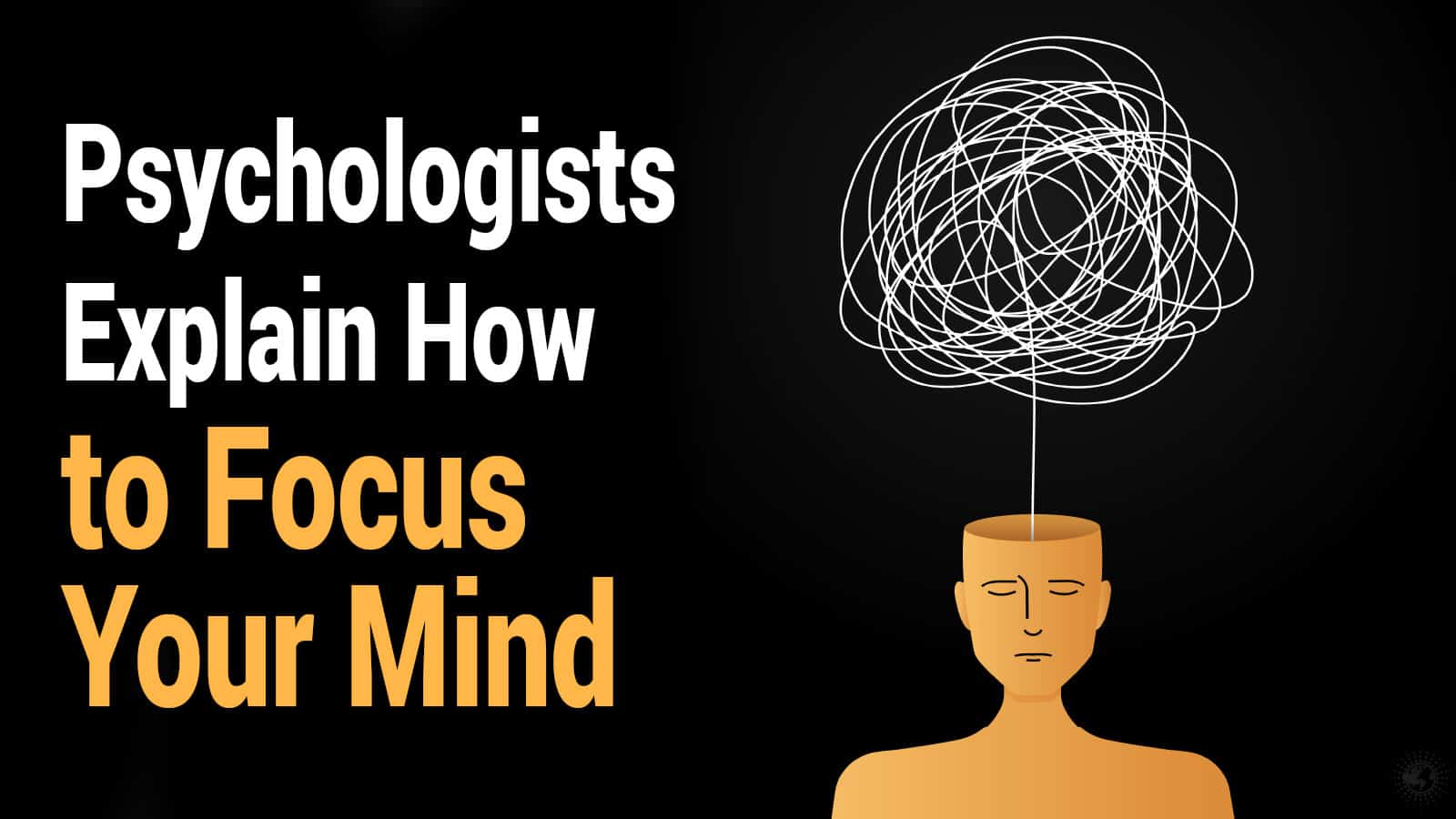

Science Explains 10 Ways to Get Laser-Sharp Focus

The human brain is both exceptionally adaptable and resilient. Scientists have coined a term for these innate qualities of the brain: neuroplasticity.

Neuroplasticity can be defined as: “The brain’s ability to reorganize itself by forming new neural connections throughout life.” There’s an emphasis on the words ‘throughout life’ here. The reason is that most people think that brain development is stagnant after a certain age.

We now know this to be untrue.

Indeed, it is this neuroplasticity with which we are going to hone our focus abilities to their peak – regardless of age.

But we must first acknowledge that neuroplasticity is a double-edged sword. Our brains will absorb the bad just as much as the good. As such, we must do our best to eliminate the former to maximize such outstanding benefits like enhanced focus.

We’re going to define focus as ‘the ability to direct and hold our mental resources onto a task.’ That is, we direct our attention to what requires it – and hold it there until the task is complete.

This focusing ability may be the biggest differentiator between individuals who achieve what they set out to do – and those that don’t. In other words, a strong focus will almost assuredly lead to goal achievement.

Before getting into the ten scientifically-backed ways of achieving laser-like focus, let’s discuss what must first be overcome: distraction.

focus

Understanding Distraction

“By prevailing over all obstacles and distractions, one may unfailingly arrive at his chosen goal or destination.” ~ Christopher Columbus

When it comes to focusing, we must all deal with multiple distractions, all of which fall into one of two categories – internal distractions or external distractions. To truly focus requires that these disturbances be overcome or, at the very least, minimized.

Internal distractions are those that cloud the mind and stir the emotions. This inner frenzy is perhaps the biggest obstacle to doing what needs to be done. For referential purposes, here are just a few of the myriad internal distractions that we must overcome:

  • Lethargy
  • Laziness
  • Anxiety
  • Procrastination
  • Fear
  • Doubt
  • Hesitation
  • Boredom
  • Impulsiveness
  • Insecurity
  • Low self-worth

An internal distraction is one that originates from the mind or body that has nothing to do with the task at hand.

An external distraction is one that originates in your environment, and may include:

  • Chatty coworkers
  • Loud noises
  • IM notifications
  • Cell phone notifications
  • Chit-chat
  • Clutter (especially around your desk)
  • Kids playing
  • Pets
  • Poor lighting
  • Music
  • Email

An external distraction is one that originates from an outside stimulus that has nothing to do with the task at hand. Without recognizing and eliminating (or minimizing) these distractions, any attempts to become more focused will prove fruitless.

Now’s a good time to bring in the neuroplasticity effect.

If you remember, neuroplasticity can be thought of as a double-edged sword. In this case, distractions are one side of the sword – and focus is the other. What side of the blade are we going to choose? Also, keep in mind that once we want, it’s challenging to stop the brain’s powerful momentum!

Now, let’s get to the juicy part. Here are ten scientifically verified ways to achieve laser focus:

laser-sharp focus10 Approaches to getting Laser-Sharp Focus

“Concentrate all your thoughts upon the work at hand. The sun’s rays do not burn until brought to a focus.” ~ Alexander Graham Bell

  1. Eliminate distractions

This can not be repeated enough, which is why it’s again repeated here. We simply cannot focus optimally amidst a din of distraction.

Please make sure that you understand (really understand) this point before moving on.

In case you wanted to know the scientific ramifications of continuous distraction, consider the following findings by the London Institute of Psychiatry:

  • Emails produce an “addictive, drug-like grip” on our attention.
  • The average IQ loss caused by distractions is about 10 points.
  • Compulsive activity tires and slows down the brain
  • A study revealed an “almost complete lack of discipline” in how we handle emails and virtual communications.

Move away from that chatty coworker. Deal with any internal conflict. Put on some headphones. Pop in some earplugs. Show some restraint in how you handle emails and text messages.

Get rid of or minimize distractions, and your focus will automatically be enhanced.

  1. Monotask

Almost (but not quite!) as important as eliminating distractions is doing one thing at a time.

The simple fact, which is uncomfortable to some, is that multitasking is mostly a myth. For emphasis: multitasking doesn’t exist.

Task-switching, on the other hand, does exist, and it couldn’t be any different from “multitasking.” Task-switching is precisely that: we engage and disengage our attention with multiple tasks – sometimes very quickly. We’re not handling two tasks simultaneously, ever.

If it sounds like task-switching is inefficient, that’s because it is. First, there’s a sort of attention residue that remains as we move on from a task. Per Science Direct, attention residue “refers to cognitions about a [task] that persist even though one has stopped working on [the task]… and is now working on Task B.”

The result is that we drain our cognitive resources while getting less done.

  1. Say ‘No’

Look, nobody likes to say ‘no.’ But here’s the thing: every time we say ‘yes’ to something, we’re saying ‘no’ to something else.

What are we saying ‘no’ to? Possibly those things that can improve our lives. So, in a way, we’re always saying no to something. It’s our job to make sure we’re saying no to things that bring little value.

What are those things?

They usually come in the form of ‘favors.’ To make things harder, people are pretty good at making you feel bad if you turn down their pleadings of “Pretty please…”

Ask yourself what you can afford in terms of time, then give in.

  1. Manage your energy, not your time

It’s so much easier to remain focused on something if we have adequate energy levels. Moreover, we perform at our best when our energy levels are high.

It only makes sense then to schedule the necessary things for when your energy peaks.

Unfortunately, we’re often in the habit of planning things using time as a barometer. The problem with traditional scheduling is that it doesn’t consider your energy capacity. This isn’t a big deal if the task is dull and monotonous. It is a big deal if the job requires some real brainpower.

  1. Get proper sleep

This one needs to introduction. For proper focus, it is essential to get adequate sleep. Per the National Sleep Foundation (NSF), seven to nine eyes of shuteye not only enhances focus, but also aids in decision making, productivity, reaction time, and memory.

  1. Practice meditation

Talk about something that should need no introduction. Meditation, done correctly, may just be the most useful mind and brain training there is. Quite simply, no activity hones attentional skills quite like a regular meditation practice.

In a study published in the journal Psychiatry Research, participants of two types of meditation – focused-attention (FA) and open monitoring (OM) realized improved executive attention (or ‘attentional control.’) Scientists witnessed no improvement in concentration in the relaxation-only group.

energy

Here are fifteen habits that drain your energy.

  1. Drink some java

Here’s some good news for all of the coffee lovers! Meta-analysis research shows that drinking up to four cups of brewed coffee per day improves cognitive function, “particularly alertness and vigilance [and] … perception of fatigue.”

The research also found that up to 400 mg of tea per day (around 8 cups) produces similar cognitive benefits.

  1. Listen to Mozart

Researchers from Stanford University found that listening to classical music enhances the attentional capacity. If this sounds familiar, you’re probably thinking of the so-called ‘Mozart Effect,’ which purports that listening to Mozart increases general intelligence.

Why classical music and not another genre? Because classical music is entirely instrumental. There are no words or lyrics to cause distraction. Moreover, since much classical music features periods of silence – known as “transition points” – it helps to keep hearers alert and attention.

  1. Get some cardio

We most commonly associate exercise with physical improvements, but the effect can be mental as well. Plenty of research suggests that cardiovascular exercise (‘cardio’) increases the size of the brain’s hippocampus, the brain area involved in learning and verbal memory.

Per an article published by Harvard Medical School, exercise improves the brain both directly and indirectly. It lowers inflammation, reduces insulin resistance, and stimulates the release of growth factors known as ‘BDNF.’ It can be deduced that physical activity improves focus as well, as exercise is known to improve mood and sleep and reduce anxiety and stress indirectly.laser-sharp focus

  1. Practice relaxed concentration

To reap the full benefits of focus, you must remain relaxed and at ease. Too much tension caused by over-striving isn’t conducive to concentration and will only hinder your efforts.

Allow the mind’s focus to emerge naturally from a mind and body that’s at ease, rather than constricted or tight.

Scientists Reveal 7 Ways to Increase Your Frequency

In essence, everything you see around, you wouldn’t exist without thoughts and vibrations. Consciousness continues to live on even after we die, which shows that reality operates as a strong illusion. If we want to understand how the multiverse works, we have to go beyond the 3D world we see before us and tap into what holds it together – frequency.

We influence our reality every second based on our thoughts, energy field, and vibrations. In other words, we can create our reality according to the frequency at which we operate. By increasing your frequency, you have a much easier time attracting things and people into your existence, which positively affect you.

“If you want to find the secrets of the universe, think in terms of energy, frequency and vibration.” ― Nikola Tesla

Below, we’ll give you more insight into how you can raise your energy levels to bring more positivity into your life.

Here are seven ways to increase your frequency:

frequency

  1. Eat lighter foods, like raw fruits and veggies.

Dense foods such as meats, processed foods, and alcohol lower your vibration. Eating foods that don’t come from nature weigh you down and therefore decrease your frequency. However, eating lighter meals that have a lower karmic load, such as fruits and veggies, will naturally raise your energy levels. Foods that come from nature have a lot of prana, or life force energy.

Boxed foods and meats have much less life force energy, making you feel dull and unenthusiastic about life. If you want to feel more vibrant, here are some foods to include in your diet:

  • fruits
  • veggies
  • nuts
  • seeds
  • grains like quinoa and brown rice
  • raw dairy
  • eggs on occasion

You want to avoid alcohol and any mind-altering substances as well; while they will help ease your mind, they act as depressants that numb you, which will negatively impact you in the long run.

  1. Be mindful of the TV shows, books, and music you consume.

Just like the foods we eat can either increase or decrease our vibration, so can the types of entertainment we allow into our lives. While we should keep aware of current events, overconsumption of news and social media can drain our life force energy. Much of the press focuses on the negative occurrences in our world, so watching too much of it can raise cortisol levels and put us in a pessimistic mindset.

The entertainment we choose should uplift us and give us a sense of peace. Anything that causes discord or fear in our energy field should either be eliminated or significantly reduced to enhance our energy. Instead of spending hours scrolling social media, which tends to leave people feeling anxious and depressed, why not watch an inspirational video or TV show? What we give our attention to expands in our consciousness, so by feeding our brains positive information, our whole world will start to become brighter.

stress

  1. Get out into nature!

One of the best ways to increase your frequency sits right outside your front door. We evolved to spend plenty of time in the sunshine, but our modern environments filled with overstimulation and artificial lighting have far removed us from what our bodies need. Make sure to spend at least 15-30 minutes per day getting some fresh air, as Vitamin D can help alleviate depression and boost your immune system.

  1. Practice meditation and breathing exercises.

To raise your consciousness above the limited ego, you have to slow down your breathing and go deep within to access your soul. Meditation and breathwork offer some of the best ways to increase your frequency while providing many health benefits, such as better concentration, lower stress, and reduced risk of high blood pressure and heart disease, among others.

Meditation involves quieting and the mind and paying attention to the breath, which will ground you in the present moment. Eventually, you’ll notice your racing thoughts will start to dissipate, and you’ll have much less attachment to them. Many people allow their thoughts to torment them, but in meditation, you’ll realize that you exist beyond your mind. You have opinions, but they don’t define you.

You should perform the breathing exercises before meditating to prepare the mind and body for deep concentration. Below, we’ll go over some of the best breath techniques that will relax you and raise your frequency at the same time.

depression memeBest breath exercises for raising consciousness:

– THE 2-TO-1 EXERCISE

For this exercise, you will exhale for twice as long as you inhale on a single breath. The sympathetic nervous system becomes less stimulated during this exercise while activating the parasympathetic nervous system. This will help slow down the heart rate and relax your body as your breathing becomes less shallow and more grounded.

Inhale and exhale as deeply as possible so you push out any accumulated toxins and carbon dioxide within the body, which will increase blood flow to the heart and lungs. Make sure you sit up straight in a chair or lie down on a bed for this exercise. Keep your spine aligned and your arms at your sides with the palms facing upward. Contract your abdominal muscles to push out any extra air.

– THE 4-7-8 BREATHING EXERCISE

Also known as the “Relaxing Breath,” this breathing technique especially helps people with insomnia to fall asleep faster. Creator Dr. Andrew Weil describes this breathing exercise as “a natural tranquilizer for the nervous system.” Dr. Weil developed the 4-7-8 breathing method to help people combat insomnia as well as reduce stress and anxiety in their daily lives. This exercise works so well because it helps people feel more grounded by increasing mindfulness and soothing the nervous system.

To perform this exercise, simply inhale through your nose for four seconds, hold for seven and exhale through your mouth for eight seconds. During the training, keep the tip of your tongue on the roof of your mouth just behind your front teeth. Concentrate on keeping your breaths consistent, and try to do the exercise at least twice a day.

– BELLY BREATHING

Most people breathe shallowly through their chests, which only increases feelings of stress and anxiety. To get the most benefit from your breath, make sure to take deep, slow breaths through your diaphragm. Harvard Health says this type of breathing will slow your heart rate, stabilize blood pressure, and allow you to fall asleep easier.

– ALTERNATE NOSTRIL BREATHING

Originating from a yoga breathing practice called pranayama, this breathing technique involves alternating the breath between nostrils. To start, place your right thumb on your right nostril and inhale deeply through the left. When you’ve inhaled fully, pause, remove your thumb and place your ring finger on your left nostril. Then, exhale slowly and deeply. Repeat this exercise for several breath cycles.

  1. Move your body.

As you can see from this list, raising your frequency mostly involves taking care of the mind and body properly. In our fast-paced world, many of us neglect our mental and physical health, which only lowers our vibration. Not only does exercise improve our physical health, but it keeps our minds healthy as well. Experts recommend getting at least 150 minutes of moderate aerobic activity per week as well as strength training exercises for all muscle groups at least two times per week.

  1. Focus on feelings such as gratitude, love, and generosity.

Our emotions play a significant role in determining our frequency. High vibe emotions like love and forgiveness make us feel lighter and more vibrant, while negative feelings like anger and envy cause heaviness within the body. This doesn’t mean you shouldn’t honor your feelings, but don’t allow yourself to dwell on them. Allow them to pass through you, and try to remain in a joyous, loving state as much as possible.

  1. Hang out with positive people.

Don’t allow people to steal your energy away; make sure you surround yourself with positive people who will uplift you. Negative people tend to drain others of power because they have none to offer themselves, so avoid these types of energy vampires whenever possible. You may attract them because of your infectious positivity, but that doesn’t mean you have to give them your energy and time if you don’t want to.

frequencyFinal thoughts on how to increase your frequency

Nothing in the universe would exist without energy and vibrations, including us! At our core, thoughts and life force energy allow us to remain in human bodies, so if we want to level up in life, we should focus on increasing our frequency.

As we said above, maintaining your health with proper diet, exercise, meditation, and immersing yourself in a positive company will help to raise your vibrations. Also, avoid overconsumption of negative media and news, and concentrate on positive emotions such as love, gratitude, and compassion.

If we all did this, imagine how much more peaceful and blissful our world could become!

12 Salad Recipes When You’re Too Lazy to Cook

We have all had “that day.” You know—the one where the last thing you want to do is to cook over a hot stove. Instead, try these fresh salad recipes that are easy to prepare and don’t require cooking. Your family will have a healthy meal without all the fuss.

1. Fiesta Taco Salad

Ingredients:

•4 Taco bowl shells
•4 cups lettuce, shredded
•2 cups leftover grilled chicken, seasoned & shredded
•2 cups pre-cooked rice
•3 red bell peppers, seeded & thinly sliced
•1 cup canned corn, drained
•1 cup canned black beans, drained
•3 ripe avocadoes, peeled and sliced
•1 medium jalapeno pepper, seeded and thinly sliced
•2 limes, juiced

Directions:

•In four dinner plates, place one taco bowl shell each and set aside.

•In a large mixing bowl, combine all ingredients except lime juice. Add lime juice and lightly toss ingredients until well combined. Zesty salad recipes can be served with warm tortilla chips and fresh salsa.

pop meme

2. Caesar Chicken Salad

Ingredients:

•3 gloves garlic, peeled
•1 cup extra virgin olive oil
•4 anchovy fillets, chopped
•1 fresh lemon, juiced
•4 cooked chicken breasts, skinless & boneless, sliced
•3 cups seasoned croutons
•4 hearts romaine lettuce, roughly chopped
•1 cup Parmesan cheese, freshly grated
•Salt & Freshly ground pepper, to taste

Directions:

•In the bowl of a food processor, add two garlic cloves, ½ cup olive oil, anchovies, and lemon juice. Puree until smooth. Add salt and pepper to taste and adjust as necessary.

• In a large bowl, add lettuce, chicken, croutons, and Parmesan and lightly toss until combined. Add dressing and gently toss again until ingredients are completely coated. Add more salt & pepper to taste. Salad recipes like this can be served without meat.

3.Tangy Apple & Bleu Cheese Salad

Ingredients for Dressing:

•4 TB French Dijon mustard
•1 small lemon, juiced
•2 TB light honey
•1 cup extra virgin olive oil
•Three-fourths cup balsamic vinegar
•1 tsp. salt & freshly ground black pepper

Ingredients for Salad:

•2 heads romaine lettuce, torn
•4 medium Granny Smith apples, cored & thinly
•1 cup toasted pecans, chopped
•1 half-pound bleu cheese, crumbled

Directions:

•In the bowl of a food processor, add mustard, lemon juice, and vinegar and blend. Slowly drizzle oil in until well combined. Add salt and pepper to taste. Place in refrigerator to chill.

•In a large salad bowl, add lettuce, apples, and cheese and toss lightly until combined. Add dressing and continue rolling until ingredients are coated. Sprinkle in pecans and toss again. If you don’t have pecans, you can substitute with chopped walnuts. These salad recipes are ideal for busy weekdays.

salad recipes

4. Garden Greek Salad

Ingredients:

•1 large seedless cucumber, peeled and diced
•1 medium red onion. Peeled and thinly sliced
•3 medium tomatoes, diced
•2 stalks celery, sliced
•1 half-cup whole Kalamata olives
•1 small bunch fresh oregano, finely chopped
•Sea salt and freshly ground pepper, to taste
•1 half-cup feta cheese, chopped
•One-half cup extra virgin olive oil

Directions:

•In a large salad bowl, add cucumbers, onion, tomatoes, celery, and olives and gently toss. Add oregano and season with salt and pepper for taste. Toss in feta until combined. Set aside for at least 15 minutes for optimal flavor.

•Drizzle in olive oil and add more salt & pepper as needed. You can add anchovies to make this like one of the classic Greek salad recipes.

5. Italian Sub Salad

Ingredients for dressing:

•3 Tbsp. extra virgin olive oil
•One-fourth cup red wine vinegar
•One-fourth tsp. garlic powder
•1 small bunch fresh oregano, finely chopped
•One-fourth tsp. sea salt and freshly ground black pepper

Ingredients for salad:

•1 large head romaine lettuce, torn into small pieces
•2 cups baby spinach leaves
•1 small red bell pepper, seeded and chopped
•1 small golden bell pepper, seeded and chopped
•Ten small pecorino peppers, whole
•1 cup black olives, sliced
•1 half-pound sliced pepperoni, chopped
•1/2 pound prosciutto, chopped
•1 half-pound hard salami, chopped

Directions:

•In a medium bowl, add oil, vinegar, garlic powder, oregano, salt, and pepper and whisk unto combined. Set aside.

•In a large salad bowl, add all vegetables and meats and toss to combine. Drizzle in dressing and continue tossing until ingredients are coated. Serve crusty bread with this and others of your favorite salad recipes.

6. Easy Cobb Salad

Ingredients for dressing:

•1 cup red wine vinegar
•1 large lemon, juiced
•One cup cold water
•1 Tbsp. Salt & freshly ground black pepper
•1 Tbsp. Worcestershire sauce
•One tablespoon powdered mustard
•1 cup extra olive oil
•3 cups canola oil

Ingredients for salad:

•One-half head iceberg lettuce, shredded
•1 large bag mixed salad greens, chopped finely
•2 large tomatoes, peeled, seeded, & diced
•2 skinless/boneless chicken breasts, precooked and finely diced
•1 half-cup precooked real bacon bits
•4 hard-boiled eggs, chopped
•1 avocado, peeled and finely diced
•1 small bunch fresh chives, finely chopped
•Three-fourth cup bleu cheese, crumbled

Directions:

•In a blender, add vinegar, water, lemon juice, salt, pepper, Worcestershire sauce, and mustard powder. Blend until just combined. While still blending, drizzle in oils until completely incorporated. Place in a sealed container and refrigerate at least 3 hours or overnight.

•In the bottom of a wide, shallow salad bowl, alternate lettuce and mixed greens into four side-by-side lines. Alternately arrange chicken and tomatoes in lines over the greens crosswise. Evenly sprinkle bacon bits over salad. Place avocado around the edges of the mixture. Top with eggs, blue cheese, and chives evenly.

•Pour one cup of dressing over the salad just before serving and toss until combined. Cover and refrigerate any leftover dressing. This is one of the most attractive salad recipes to make.

7. Summer Pea Salad

Ingredients:

•2 cups frozen peas, thawed
•1 can water chestnuts, drained & thinly sliced
•One medium red bell pepper, seeded & diced
•1 half-cup whipped salad dressing
•2 tsp. Dijon mustard
•1 small bunch fresh dill, chopped
•One-half tsp. sea salt & freshly ground black pepper

Directions:

In a medium mixing bowl, add peas, water chestnuts, and red bell pepper and toss until combined. In a small bowl, combine whipped salad dressing, mustard, dill, salt & pepper until smooth. Stir dressing into the salad and toss to combine well. Cover and refrigerate at least 1 hour.

8. French Beet Salad

Ingredients:

•One-fourth cup extra virgin olive oil
•1 Tbsp. light honey
•2 Tbsp. Dijon mustard
•1 small lemon, juiced
•2 Tbsp. red wine vinegar
•2 cans plain cooked beets, chopped
•1 small bunch fresh basil, chopped

Directions:

In a medium bowl, add oil, honey, mustard, lemon juice, vinegar, salt & pepper, and whisk until combined. Add beets and onions, cover, and refrigerate for at least 30 minutes. Top with basil and serve.

9. Lemony Blackberry Salad

Ingredients for dressing:

•2 Tbsp. red wine vinegar
•1 Tbsp. extra virgin olive oil
•2 Tbsp. sesame seeds
•Sea salt & freshly ground black pepper, to taste

Ingredients for salad:

•1-pint blackberries, rinsed & drained
•1 large lemon, zested & juiced
•4 cups packaged mixed greens, rinsed & drained
•1 small green onion, chopped
•1 small bunch fresh dill, chopped

Directions:

•You want to add together the blackberries, lemon, greens, dill, and onions into a large bowel, and then set aside for later.

•Now, using a whisk, prepare the vinegar, oil, seeds, salt, pepper, and lemon juice in a smaller bowl. Pour the mixture over the salad in the larger bowl and serve.

liver detox

10. Grandma’s Egg Salad

Ingredients:

•8 packed boiled eggs, chopped
•1 cup whipped salad dressing
•2 small green onions, chopped
•2 medium dill pickles, diced
•4 Tbsp. Dijon mustard
•One-fourth teaspoon salt & freshly ground black pepper
•2 Tbsp. paprika

Directions:

In a medium bowl, add eggs, salad dressing, onions, mustard& spices, and stir until completely incorporated. Cover and refrigerate for at least 1 hour or overnight. This is one of the many salad recipes that are easy to prepare ahead.

11. Quick Cucumber Salad

Ingredients for Dressing:

•One-fourth cup extra virgin olive oil
•1 small lime, juiced
•One-half tsp red pepper flakes
•One-fourth tsp salt & freshly ground black pepper

Ingredients for salad:

•2 cucumbers, thinly sliced (large and seedless varieties)
•1 large onion of your choice – thinly sliced
•1 large bunch fresh cilantro, chopped
•Three-fourth cup feta cheese

Directions:

In a large bowl, add cucumbers, onion, cilantro, feta, and lightly toss to combine. In another small bowl, add dressing ingredients and whisk well. Pour dressing over cucumber mixture, stir well, and serve.

12. Farmhouse Tomato Salad

Ingredients:

•6 large heirloom tomatoes, cut into wedges
•20 multi-colored cherry tomatoes, cut in half
•One-half cup extra virgin olive oil
•One-fourth red wine vinegar
•4 cloves garlic, crushed
•Sea salt & freshly ground black pepper, to taste
•One fresh bunch parsley, chopped
•1 fresh bunch basil, chopped
•1 fresh bunch chives, chopped

Directions:

In a large bowl, add heirloom & cherry tomatoes, oil, vinegar, salt & pepper. Gently toss to coat the tomatoes. Set aside to marinate for at least 10-15 minutes. Toss in herbs and serve.

With these quick and easy summer salad recipes, you won’t be stuck in the blazing kitchen all day. Serve them as a main course or pair them with another simple dish. Enjoy time with your friends and loved ones during meals instead of cooking the whole season.

salad recipesFinal Thoughts on Using Salad Recipes forMaking Healthy Lazy Meals

If you can’t imagine turning on the stove in the scorching heat, or you’re too tired from work to make a big spread, then these salad offerings are sure to please.

8 Ways to Increase Oxygen Levels in the Body Naturally

In light of the recent health crisis, many people wonder how they can naturally boost oxygen levels in the blood. In a healthy environment, our cells become rejuvenated every night as we sleep and have normal oxygen levels. However, in a toxic environment, the cells lose oxygen because they lack the energy to repair the body. Low oxygen can weaken the immune system, leaving you more vulnerable to disease and sickness.

Having more oxygen in the body will give you more energy, vitality, and youthfulness since you will have more stamina. Low oxygen levels usually result from a lack of fitness or a poor diet, both of which can improve with time and effort. Low levels of oxygen in the blood, or hypoxemia, can signal problems with breathing or circulation.

What happens when your oxygen levels fall short?

When your blood oxygen falls below a certain level, you may experience symptoms such as headaches, dizziness, trouble breathing, confusion, or restlessness. Common causes of hypoxemia include:

  • Being at a high altitude
  • Anemia
  • ARDS (Acute respiratory distress syndrome)
  • Asthma
  • Congenital heart defects in children
  • Congenital heart disease in adults
  • COPD (chronic obstructive pulmonary disease) exacerbation
  • Emphysema
  • Interstitial lung disease
  • Pulmonary edema (excess fluid in the lungs)
  • Medications, such as certain narcotics and anesthetics that depress breathing
  • Pneumonia
  • Pneumothorax (collapsed lung)
  • Pulmonary embolism (blood clot in an artery in the lung)
  • Pulmonary fibrosis (scarred and damaged lungs)
  • Sleep apnea

Of course, some of these conditions will require additional care, and your doctor may recommend supplemental oxygen. However, for mild oxygen deprivation, you can usually treat it naturally by making some lifestyle improvements, which we will list below.

oxygen

Here are eight ways to increase oxygen in the body naturally:

  1. Exercise frequently.

Unfortunately, many people lead a sedentary lifestyle nowadays, so their lung capacity will decrease due to a lack of use. Aerobic exercise can help pull more oxygen into the body as you take deeper breaths. Moreover, you’ll expel more carbon dioxide as well. Not to mention, your heart will also become healthier by pumping more oxygen to the muscles that need it and increasing circulation throughout the body.

As you start an exercise regimen, you may feel out of breath doing workouts because you don’t have a significant breathing reserve. However, the more you exercise, the better lung capacity you will have and the higher your oxygen levels will be. Start with at least three 30-minute moderate to intense aerobic exercise sessions per week. Make sure to incorporate weight training as well for a complete body workout.

  1. Eat more oxygen-rich foods.

If you eat primarily processed or cooked foods, you won’t get the benefits of the antioxidants present in raw fruits and vegetables.  Raw foods contain more prana, or life force energy, which will increase oxygen levels in the blood. Hemoglobin, a red blood cell protein, helps to carry oxygen throughout your body. If you want to increase oxygen, make sure to eat foods rich in hemoglobin to have more red blood cells.

According to Harvard Health, specific nutrients listed below increase blood cell production in the body:

  • 2 milligrams of copper
  • 18 milligrams of iron
  • 5,000 international units of vitamin A
  • 7 milligrams of riboflavin (vitamin B2)
  • 20 milligrams of niacin (vitamin B3)
  • 10 milligrams of vitamin B5
  • 2 milligrams of vitamin B6
  • 400 micrograms of folic acid (vitamin B9)
  • Six micrograms of cobalamin (vitamin B12)

In addition to these nutrients, vitamins C, D, and K, as well as calcium, chromium, magnesium, phosphorus, and potassium, have been found to help with blood oxygen levels. A study in the journal Clinica Chimica Acta and another in the AGE Journal found that low vitamin D levels can affect hemoglobin levels and increase the risk of anemia.

Mineral-rich foods that increase hemoglobin include beef liver, oysters, crab, turkey organs, salmon, chocolate, potatoes, cashew nuts, and sesame seeds. Iron helps to increase blood oxygen and comes in two forms: heme and non-heme. Animal products like beef, oysters, duck, and lamb have heme iron, while fruits, veggies, and grains have non-heme. The National Institutes of Health recommends eating 1.8 times the standard amount of iron if it comes exclusively from non-heme sources.

Vitamin-rich foods that boost hemoglobin include the following:

  • dairy
  • eggs
  • sweet potatoes
  • spinach
  • carrots
  • pumpkin
  • cereal
  • beef
  • shellfish
  • chicken
  • turkey
  • grains
  • nuts
  • shiitake mushrooms
  • sunflower seeds
  • bananas
  • beef liver
  • legumes
  • avocados
  • brussels sprouts
  • seafood
  • chickpeas

iron deficiency

  1. Put plants around your home.

While studies have primarily been inconclusive about plants’ ability to purify the air in homes, research does show that houseplants can calm the sympathetic nervous system. In turn, your breathing will start to slow down, allowing more oxygen into your lungs. Not to mention, plants add warmth and happiness into the environment of any home, and a better mood can make a big difference in your overall health.

  1. Practice breathing exercises.

Perhaps one of the best ways to increase oxygen levels is by engaging in breathing exercises. They can also lower cortisol and decrease mental chatter. Pranayama, or yogic breathing, helps increase oxygen levels because your breaths become much more profound and slower. This practice helps to purify the body by expelling more carbon, which makes blood less toxic. To do this exercise, you’ll want to take deep breaths into your diaphragm and exhale slowly.

Inhale through the nose to at least a count of six, hold for a few seconds and release for six. Of course, if you feel uncomfortable, you can decrease the amount of time you inhale, maintain, and exhale the breath; over time, it will get easier. Keep your mind focused on your breathing since mindfulness helps lower cortisol and increase oxygen.

  1. Avoid smoking.

You’ll want to avoid harmful habits such as smoking, which only to decrease lung capacity and can lead to lung diseases such as COPD. Smoking also leads to high blood pressure and heart disease, which means your organs must work much harder to carry oxygen throughout the body. Furthermore, smoking destroys tiny air sacs in the lungs that allow oxygen exchange.

Not to mention, smoking can result in cancer because it destroys DNA and increases free radicals in the body. Many people report that after just a few days of quitting smoking, they feel healthier and can breathe much easier due to the lack of inhaled toxins.

relieve insomnia

  1. Take supplements that increase oxygen.

While most people have just the right amount of oxygen in their body to function, people suffering from anemia and other illnesses need more oxygen. Eating plenty of fruits, veggies, meats, and other whole foods can help, but supplements may be necessary if you don’t get enough fresh food in your diet.

Iron especially can help because it aids the body in making hemoglobin, which transports oxygen to the lungs and other organs throughout the body. If you don’t have enough iron, you run the risk of developing anemia, which can lead to fatigue and weakness. You might also look into taking citrulline, which helps increase nitric oxide in the body. This improves blood vessels, increasing circulation and availability of oxygen in the body’s cells.

Finally, beetroot supplements can increase oxygen levels because it contain high amounts of nitrate, which converts into nitric oxide. Like citrulline, this helps decrease the amount of oxygen the body actually needs.

  1. Take a vacation by the water.

At higher elevations, the air gets thinner and contains less oxygen. This explains why you see oxygen sold at pharmacies when you go to towns nestled in the mountains because vacationers can have difficulty breathing at high altitudes. If you live at higher elevations, you probably have become used to the thinner air by now, but it doesn’t hurt to get away to the ocean occasionally!

  1. Meditate.

Since meditation involves slowing your breathing and becoming more conscious of your breath, you will naturally have better oxygen levels as you practice more. Studies have shown that meditation can help increase arterial and cerebral oxygen saturation, as well as lower blood pressure and baseline respiration.

Because circulation improves with meditation, the increased blood flow allows more oxygen to move throughout the body. This is just another reason to begin a regular meditation practice!

oxygen bodyFinal thoughts on how to naturally increase oxygen levels in the body

Most people have healthy oxygen levels, but a little more oxygen never hurt anyone! If you have reduced lung capacity or want to become a little healthier, consider eating more fresh fruits and veggies and having a regular exercise routine.

Meditation and breathing exercises also help increase oxygen levels, as well as having plants throughout your home. Besides, avoiding smoking and taking vacations near bodies of water can boost your oxygen levels, making you feel more vibrant and energetic.

With the current health crisis, many people have wondered if they can do anything to boost oxygen naturally. Implementing even one or two things on this list can dramatically affect your health.

15 Benefits of Walking Meditation (and how to get started)

When Sir Isaac Newton described the natural Law of Motion, he observed that bodies in motion tend to stay moving unless another force acts on it. Newton was referring to celestial bodies, but the same law applies to human bodies. Do you regularly keep your body moving, or does the cozy recliner often get in your way? Sir Isaac probably did not have walking meditation in mind when he developed his theory, but it certainly is a healthy habit to try.

Fitness experts have recommended walking as an ideal exercise for losing weight and toning your body. Walking is part of our daily activities, and it’s something that almost anyone can do. You don’t need any special equipment, and you can walk anywhere.

What is Walking Meditation?

If you want to boost the benefits of your walking routine, you might consider adding meditation. Walking meditation is an ideal way to improve yourself physically, mentally, emotionally, and spiritually. Once you get comfortable with meditation, you’ll find that it will come as naturally as walking does.

Also known as mindful walking, walking meditation is a concept steeped into ancient Buddhism. It has been observed in the Buddhist cultures of Eastern Asia and continues to this day. These early cultures understood the inseparable bond between body, mind, and spirit thousands of years before Western science.

Getting Started on the Right Foot

You don’t need special training or expensive gym equipment to start reaping the benefits of mindful walking. Whether you are strolling under the gaze of forest trees or taking a short walk to the post office, you can bring mindfulness to every step. These are some basic methods that you can modify to your preference.

walking meditation

• Choose a Pleasant Location

Are you inspired by the stunning beauty of nature and breathing fresh air? Parks and forests are excellent places for walking meditation. If you have a city route, you can still notice the colorful houses and other attractive sites along the way. You can even practice while you are walking indoors through long corridors or while shopping in the mall.

• Be Mindful of Each Step

Walking is so much of a part of your daily life that you don’t need to think about how to do it. Have you ever noticed the complex patterns of movement that involves your entire body? When you mindfully walk, you become aware of lifting your foot, pushing off with the other, and moving your legs, arms, and head.

While you’re walking, be aware of each breath and your heartbeat. Breathe naturally and intentionally while you inhale positive energy and exhale negativity. Feel your muscles and joints as they work together to move your body forward.

• Practice Bringing Your Mind into Focus

When you are walking, try to focus your mind on the present moment. Notice your breathing and each gentle movement of your body. If your mind wanders, bring it gently back to the present. At this minute, be grateful for who you are and the blessings around you.

yogananda quote

• What’s Your Speed?

You needn’t be a marathon runner to benefit from walking meditation. Medical experts often recommend walking over running since the latter can cause damage to joints and bones. You can pace yourself between a stroll and a quick power walk.

If your legs and arms are moving at an even stride for 30-45 minutes, you can optimize your walking meditation routine. The idea is to get your body and mind moving in sync. You’re not in a competition, and the goal isn’t to exhaust yourself.

• Making Mindful Walking a Daily Habit

Sure, there may be days that you can’t get outdoors to walk because of weather or busy schedules. You can still practice mindful walking while doing household chores or on your job. Simply be conscious of your steps, breathing, and being present in the moment.

Potential Benefits of Meditation Walking

Unlike some forms of Western fitness regimens, meditation walking, and other Eastern forms take a holistic approach to well-being. By walking and meditating for about 10,000 steps per day, you may soon notice its positive affect. These are ten benefits that mindful walking may offer.

1. Help You Lose Weight and Tone Your Muscles

Did you know that walking is an excellent practice for losing weight, lower blood pressure, and getting your body in shape? Walking helps burn fat, build muscle, and tighten loose skin. As you meditate, you can express gratitude for your body and enjoy the present moment of bringing it optimal health.

2. Improve Your Circulation

Do you want an efficient cardio workout without going to the gym? Walking increases your pulse and breathing, so it’s beneficial for your heart and lungs. Keeping your body moving can also increase and improve circulation throughout your body.

3. Lower Your Blood Pressure and Blood Sugar Levels

When you do exercises such as mindful walking, it can also reduce your blood glucose levels. If you are trying to control or reverse Type 2 diabetes, it may be a valuable support. Regular walking and meditating have also been shown to lower blood pressure if you have hypertension.

4. Make Your Daily Exercise Fun

Boredom is the enemy of any healthy habit, including walking. As you blend meditation with your walking routine, you may notice many beautiful things that you’ve failed to see. Notice the sky, trees, and wonders of nature as if you were seeing them for the first time.

5. Inspire Your Gratitude

Soon, you will look forward to your daily walks and meditations. Practicing gratitude brings you joy and puts the fun into your journey. If your brain perceives a pleasurable activity, you are more apt to turn it into a healthy habit.

6. Boost Your Creativity

Have you ever been inspired by nature or been dazzled by a random idea while walking down a pathway? Mindful walking helps clear your mind of stagnant negativity, and you can experience greater mental clarity. You are also more apt to remember your ideas and creative rushes.

7. Improve Your Quality of Sleep

If you tire yourself with physical activity, you will be more ready for a good night’s sleep. However, endless mind chatter may keep you tossing and turning regardless of how exhausted you are. Blending meditation with walking can help soothe your brain and improve your sleep quality.

8. Improve Your Sense of Well-Being

How do you feel right now? If your body, mind, and spirit are unbalanced, you feel the unrest deep inside your soul. Meditation walking addresses all three aspects of your personality and can offer you a sense of well-being that continues with practice.

9. Help Lift Your Depression

For years, people who battled depression weren’t comfortable discussing it because of society’s negative attitudes. Are you among the estimated 7.1 percent of Americans with this prevalent mental illness? In addition to medication and therapy, many professional healthcare providers recommend exercise for their depressed patients.

Mindful walking can increase dopamine production in your brain, which can boost your mood. During your meditative journey, you can practice gratitude and be present. These actions may help you lift through the dark clouds of depression to feel the sunrays of joy.

walking-barefoot

Science explains what happens to your body when you walk barefoot every day.

10. Reduce Your Anxiety

Like depression, anxiety, and panic are other mental issues that people often decline to discuss. Anxiety is an unseen phantom that haunts your mind with fear and uncertainty. Multiple studies have shown positive results in patients with anxiety who meditate.

Their anxiety and panic levels are often reduced. When they team it with physical exercise like walking, the anti-anxiety benefits were noticeable.

11. Reduce Panic

Often, this disorder materializes as a crippling panic attack that makes you feel like you are dying. Sometimes, just worrying about having a panic attack can bring on one. Mindful walking is a great way to minimize panic.

12. Improve Your Digestion

Do you know that sluggish feeling you get after you’ve overdone it at mealtime? No wonder so many people opt for a walk after a heavy dinner. Walking involves your whole body, including your stomach and digestive system.

It can help your food move quickly through your system instead of building up to create painful gas and indigestion. Relaxing your mind with mediation can also ease the nerves and tension in the colon, making you less likely to have constipation.

13. Raise Your Energy Levels

Your energy level, or metabolism, is dependent on many internal and external variables. If you have a sedentary lifestyle and are steeped in negative thoughts and emotions, your energy levels will be dismal. Addressing physical and mental problems can be the key to a much-needed energy boost.

14. Slow You Down

Are you exhausted from going at a frantic pace each day? Mindful walking can encourage you to relax and slow your life down. It will allow you to enjoy each moment as they come.

15. Improve Your Concentration

When you are out walking and meditating, you can train your mind to concentrate. Your brain will learn to filter stray thoughts. You may see a difference when you are focusing at home, school, or work.

walking meditationFinal Thoughts on Trying Walking Meditation for Good Health

Mindful walking is a simple way to bring your body, mind, and spirit into focus. As you practice every day, you are bound to notice improvements in your well-being. It’s another reason to keep your body moving and your spirit soaring.

Scientist Explains How We All Have ‘Superhuman’ Abilities

Do you possess superhuman abilities? According to one physicist–you probably do!

Russell Targ is the textbook definition of an academic. A laser physicist, Targ earned a Ph.D. in physics and founded and headed up a research center at Stanford University called the Stanford Research Institute (SRI) for over two decades. More on Targ’s work at SRI later.

For your laser guys and gals, Targ published some of the earliest research on the use of homodyne detection in laser light. Later, he published papers that contributed to the development of such areas as frequency modulation, mode-locking, and continuous waves in lasers. No idea what those are? Me neither.

Who is Russell Targ?

superhuman

He’s an involuntary apologist for extrasensory perception (ESP) and an ardent follower of Buddhism; the latter he credits for providing insight into these psychic abilities. While Targ wouldn’t follow Buddhism until later in life, he studied the ESP phenomenon at the Stanford Research Institute (SRI) starting in 1972.

Along with his friend and fellow laser physicist, Harold (“Hal”) E. Puthoff, Targ researched psychic abilities for the Department of Defense. Some of Targ’s former clients include NASA, the CIA, Defense Intelligence Agency (DIA), and Army Intelligence.

To ensure that his colleagues wouldn’t think that Targ and his team had “gone off the rails,” (his words) they published all their work in the world’s most prestigious academic journals, including:

  • Proceedings of the Institute of Electrical Engineers
  • American Association for the Advancement of Science
  • American Institute of Physics
  • Nature magazine

Targ emphasizes that ESP was not always so taboo. It had been written about in the New York Times, featured in gold-standard academic journals, and even offered as a field of academic study at world-class universities. In other words, this fascination with scientific materialism is a rather new one; and, in Targ’s opinion, a gravely mistaken one.

As Targ wryly notes: “ESP existed back then.”

Finally, Targ says that we are all capable of becoming psychic. Indeed, we are already.

In this article, we’re going to delve into what the insiders say about psychic abilities, including the arena where Targ dedicated most of his working career – remote viewing, or RV.

Why Russell Targ is Important

psychologicalIf you peruse Targ’s bio, it reads like something created for some science fiction character. Indeed, Targ’s experiences are uniquely unlike anyone else’s in modern history.

For one, Targ oversaw highly-secretive, classified work at the highest levels of government – working with, get this, the Department of Defense.  Oh, and then there’s the thing where he designed and performed psychic experiments with the DoD and CIA’s approval on DoD and CIA personnel.

His stories of what happened – and the events that followed – are essential for us to hear. If for no other reason than he deserves our ear. Now in his late-80s, Targ spent the better years of life serving during some of the most uncertain times in history, apparently without a “Thanks for coming” from our government.

If his feats are to be believed, here are just a few accomplishments of Targ’s team at SRI:

  • Finding a downed Soviet airplane in North Africa
  • Locating a kidnapped American General in Northern Italy
  • Finding a hidden weapons factory in Soviet Siberia
  • Locating where a Soviet reconnaissance submarine was being constructed
  • Giving the location of a Chinese atomic bomb test three days before it was scheduled to be detonated.

Targ’s team did work like this for over two decades – all funded by the federal government. Much of Targ’s and SRI’s work has been declassified if you wish to dig deeper.

Perhaps the best-known – and contentious work of Targ’s involves experiments of the Project Stargate program, which we’ll discuss next.

Remote Viewing and Project Stargate

“President [Jimmy] Carter has spoken out about that [Stargate-related] incident and confirmed that it was true. And there are lots of other examples that have now been declassified of that sort.”  ~ Dr. Jessica Utts, Professor of Statistics at University of California-Irvine, regarding the outcomes of Project Stargate

Most of the work of Targ and his colleagues involved remote viewing or RV. We’ll briefly describe RV to provide some context for the remainder of the article.

RV involves “the practice of seeking impressions about a distant or unseen target, purportedly using extrasensory perception or ‘sensing’ with the mind.”   He considers this a superhuman ability.

energy vampireFor reference, here is the basic structure of an RV experimental session:

(1) RV requires: (a) a viewer, (b) a monitor, and (c) a target. (A) accesses and records data about the destination; (b) track the progress of the RV session and prompts ‘a’ for target details; (c) is the object, event, person, place, function to be viewed.

(2) The experimenter selects a random photograph, which is then placed inside of an opaque manila folder and sealed.

(3) The viewer than attempts to acquire data through the process of RV. Feedback is given at the end of the session.

The Stargate project arose from the US Army Intelligence community in 1978. Stargate operations were undertaken in response to the perceived threat of Communism, mostly from the former USSR.

In 1995, despite continuing RV operations at Stanford Research Institute for over twenty years, the US government decided to cease SRI activities, citing a lack of actionable evidence. An insider and researcher at SRI, statistician, and professor Dr. Jessica Utts, states that these findings are false.

Asked why the government abruptly canceled the program, Utts flatly states, “The cold war had ended and [the US government] was not interested in those kinds of issues anymore,” adding that there are now more sophisticated means of spying (ahem, NSA.) that didn’t require remote viewers.

Utts’ most crucial work relative to Stargate was a paper that she co-authored with a well-known skeptic of remote viewing. This paper was subsequently reported to the US Congress as an overall evaluation of the Stargate Program and other SRI operations.

“What I found was overwhelming statistical evidence – ten to a billion or whatever – against chance… The skeptic who was with working me agreed that there was overwhelming statistic evidence. He just didn’t agree on what was causing it. But he had no alternative explanation.”

What Targ Says About Psychic Superhuman Abilities

“Consciousness/mind is neither material nor nonmaterial; rather, it is multidimensional.”  ~ Russell Targ

When explaining the existence of psychic abilities, Targ humbly states that they’re nothing magical or superhuman. “They’re abilities,” he says, which anyone can cultivate if they so choose.

Targ says that these abilities are explainable, both inside and outside the context of science. Regarding the former, Targ points to both recent and not-so-recent findings by Erwin Schrödinger and the Buddhist sage and scholar, Nagarjuna.

Nagarjuna lived around the time of Christ and was probably the first to expound on non-duality in his Buddhist treatises. Schrödinger was among the first to theorize nonduality’s existence in a scientific setting, theories that were subsequently proven in the 1970s and 1980s.

The essence of both Nagarjuna’s and Schrödinger’s findings can be summarized as such: the mind is outside of time and space, existing instead in some unseen, undetectable dimension. The mind projects from this dimension, and this is what influences our thoughts and actions on the Earthly plane.

The mind is not local, thus not limited by distance, space, or time. Recent findings in the field of quantum mechanics, particularly quantum entanglement, seem to point to the truth of such phenomena.

superhumanHere’s what Targ explicitly says about superhuman or psychic abilities:

Remote viewing is the superhuman ability Targ describes.

“[Remote viewing] is a natural psychic ability that we all have despite what you may have heard to the contrary. People can quiet their mind and describe an experience – what’s happening thousands of miles away or in the future.”

Distance doesn’t matter.

“Something that we found as physicists is that it’s no harder to describe what’s happening in Soviet Siberia 6,000 miles away than it is … to describe the funny object that I have in my pocket.”

It comes in handy: “You can find your car key, find a parking place, even in Los Angeles – and we were exemplarily successful in doing that…”

You can make money in the stock market. Targ’s former firm, Delphi Associates, earned a six-figure commission in 1982 from correctly predicting the prices of the silver futures price. The front page of the Wall Street Journal featured them for their exploits.

Final Thoughts on Developing Superhuman Abilities

You can develop spiritually: “My opinion is the most important thing that you can do … is to discover who you are. If you learn to quiet your mind and move your awareness into timeless awareness, you are likely to begin to experience things that give you a different view of reality.”

Psychologists Reveal 4 Tips for Better Mental Health

The National Institutes of Mental Health (NIMH) estimates that one in every five U.S. adults lives with a mental illness. This number adds up to nearly 50 million people. Sadly, these numbers likely underestimate the extent of the problem.

Why is mental health important? A bit of a rhetorical question, right?

Mental health directly affects the quality of life. Our mental health determines our productivity, feelings of self-worth, confidence, and skillfulness in navigating life’s inevitable challenges. Good mental health maximizes all of these things; poor mental health minimizes them.

If we’re stricken with poor mental health, it becomes impossible to experience life optimally. Without proper treatment or guidance – medical or otherwise – most watch as their life takes a turn for the worst. That’s because the state of our mind impacts both our life – both personally and professionally.

Fortunately, we can improve our mental health. Better yet, we needn’t rely on copious amounts of pharmaceutical drugs to do so (as valuable as these can be at times.)

In this article, we’re going to discuss four habits that can lead to better mental health.

Let’s get to it!

pop meme

Poor Mental Health Has Always Been a Problem

“ADHD [attention-deficit hyperactivity disorder], anxiety, depression … can be thought of as problems that have existed – and been ignored – for years.” ~ Paul Hammerness, MD, Associate Professor of Psychiatry at Harvard Medical School

While the catalysts of mental illness have changed, poor mental health has probably been a thing since homo sapiens first walked the primordial Earth.

Whereas in days of yore humans were concerned about wild animal attacks and having enough food, today we’re fretting about time, money, family, and career. Most likely, a combination of all these things.

There is something that connects these two distinct periods, however: the brain.

A Word About the Brain

positive-thinking

Neuroscientists state that the structure of the human brain has remained mostly unchanged over the past 500,000 years. Ten thousand years ago, our brains shrank. The past century has resulted in a “brain size rebound,” a byproduct of better nutrition and less disease brought on by the industrial revolution.

We can attribute some of the more modern mental illnesses – anxiety and depression, mainly – to the brain’s relatively static development. The harsh living conditions of our distant ancestors required an ever-alert brain mechanism that could quickly respond to threatening stimuli.

Brain experts call this mechanism the Fight-or-Flight response. Others call it hyperarousal or acute stress response.

The ‘FoF’ response is critical to human survival, even now. If you’ve ever been in a situation of sudden, extreme danger – and had to take quick action to ensure your survival – then you’ve had first-hand experience with the FoF response.

The truth is that we’ve all had, to a greater or lesser degree, some experience with FoF. If you’ve ever suffered from an anxiety disorder, you felt the constant agitation. If you’ve ever had to act to avoid danger, you’ve felt the flood of adrenaline that accompanies FoF activation.

In all of these situations, you no doubt noticed an involuntary, unconscious state of arousal. That’s the FoF. Early humans, no doubt, also saw the unpleasantness associated with an overactive FoF response – which was passed along to us.

The Cause of Mental Health Issues

While FoF plays a significant role in the state of our mental health, it’s far from the only influencer.

Neurotransmitters, chemicals that act as signaling molecules in the brain, also have a substantial effect on our mental health. While scientists posited this correlation a long time ago, it wasn’t until recently that SPECT imaging studies all but confirmed the relationship.

Any imbalance of the four primary neurotransmitters – serotonin, dopamine, noradrenaline, and GABA – can lead to sub-optimal mental states, possibly mental illness.

Here’s a breakdown of the function(s) of each neurotransmitter and examples of malfunctions:

Neurotransmitter Function Malfunction Effects
Dopamine Attention, emotion, influences movement, and learning Low dopamine levels link to mental sluggishness, reduced motivation, and a decrease in pleasure from usually enjoyed activities (anhedonia).
Norepinephrine (or noradrenaline) Affects attention and responding actions in the brain. Involved in the fight or flight response. Undersupply of norepinephrine links to a depressed mood.
Serotonin Arousal, hunger, mood, and sleep Low levels are linked to clinical depression; Prozac and other prescription drugs are often prescribed to correct this imbalance.
GABA Inhibitory transmitter Undersupply is linked to anxiety.


(Sources: https://www.compoundchem.com/2015/07/30/neurotransmitters/
https://www.quora.com/What-are-the-neurotransmitters-found-in-the-parietal-lobe-temporal-lobe-occipital-lobe-and-cerebral-lobe-in-relative-to-what-these-lobe-contains)

This all begs the question: can our habits influence our neurotransmitters? And, in so doing, improve the state of our mental health?

set boundaries4 Habits That Improve Mental Health

“You have the power over your mind – not outside events. Realize this, and you will find strength.”~ Marcus Aurelius

  1. Observe your mind

Metacognition is actively observing your mental processes and understanding habitual emotional reactive patterns. It’s also a crucial component of good mental health.

If you’ve ever sat back and wondered why in the heck your mind is making so much noise, then you know what metacognition is. You’ve also made a crucial and potentially life-changing discovery: you are not your mind or feelings.

Instead, you are the awareness behind the thoughts and feelings. When you recognize and embrace this fact, you can observe the activity of our mind at a distance – as a passive ‘witness.’ You may even start to get curious about the inner-workings of your mind, and it’s this attitude that will lead to a transformation.

While it’s possible to observe your mind amid daily life, it’s often difficult – especially at first. This is where a regular meditation practice can help.

Try taking 15-20 minutes at the start of each day to sit and allow your mind to become quiet.

  1. Slow down

“The soft overcomes the hard. The slow overcomes the fast.” ~ Lao-tzu

Okay, so this sounds like commonsensical gibberish nonsense. “What? Slow down? That’s it?”

Okay, then how come we are so bad at it?

Reason #1: society has taught us that frenzied action is the same as productivity. Not only is this untrue, but it’s also potentially disastrous to our mental and physical health.

Slowing down – more specifically, not rushing – can have a powerful impact on our state of mind. Things still get accomplished, and with much less stress. Often, you’ll find that slowing down and focusing on one task at a time (see ‘Single-tasking’ next) not only improves the quality of your work but, ironically, can increase the pace at which things get done!

Practice performing one task a day slowly. Put all of your attention on the job – washing the dishes, showering, vacuuming, etc. – and while doing the activity gradually and deliberately.

  1. Single task

“He did each single thing, as if he did nothing else.” ~ Charles Dickens

Few things have been more damaging to our state of mind than multitasking. How harmful is it? Well, per a study conducted by researchers at Michigan State University, participants who multitasked using multiple forms of entertainment media “showed symptoms of anxiety and depression” based on mental health surveys.

Did you get that? Multitasking – even with entertainment – causes symptoms that mimic those of anxiety and depression!

The truth of the matter is that not only is multitasking a myth; it’s also stress-inducing and harmful.

The human brain simply is not meant for multitasking. When we perform a job, our neural circuitry is concentrated around that task – and that task only. It is incapable of diverting mental resources to a secondary task.

Unless, say, we’re talking about chewing gum and walking at the same time.

Instead, make it a habit to focus your attention single-mindedly on each task. Not only is this a more effective way of living, but it’s also much more peaceful.mental health

  1. Be compassionate towards yourself.

“If compassion does not include yourself, it is incomplete.” ~ Jack Kornfield

Most people have good hearts. Although the media may try to convince you otherwise (their motto is “Bad news sells” after all) there is plenty of good happening in the world.

Since most people have good hearts, most of us are compassionate by nature. When someone is visibly hurting, we will often try to comfort and console.

But one problem that so many of us have is this: we don’t extend our compassionate nature to ourselves.

Indeed, each one of us is our own worst critic. We don’t even think about self-compassion. Many people live their entire lives without ever once practicing self-love or compassion.

To deny yourself, compassion is not only wrong; it is harmful to your mental wellbeing.

How do you practice self-compassion? Try picturing yourself as a child. If you have a picture of when you were a kid, take a good look at it.

Would you ever want this individual to suffer? Of course not. Talk to that inner child with compassion and love. How do you feel during and afterward?

Researchers Explain What Your Hairstyle Reveals About Your Personality

Your hair makes a statement about you. Whether it’s long, short, curly, or straight, your hairstyle reflects your personality. Some people change their hairstyles regularly, while others keep the same hairstyle their entire life. No matter what your hairstyle, it represents you to the world.  So, what does your hairstyle reveals about your personality?

What is hair?

Your hair is composed of a durable protein called keratin. Keratin is tough and impermeable, so it won’t dissolve when wet.  Your hair follicles are the little holes you see on your scalp. Each follicle holds your hair in place at the root, where it widens into a hair bulb.

Your hair bulb is consistently producing cells that divide and grow into hair shafts. Your genetics and hormones affect your hair growth and structure. Depending upon the shape of your hair follicle, your hair will be curly or straight.

Your genes also contribute to the look of your hair. Hair color depends upon how much melanin is in your hair cells. As you age, your hair loses melanin causing your hair to turn white or gray.

Researchers suggest that your hair does more than make you look great. The hair on your head protects from the sun while your eyelashes and eyebrows protect your eyes from dirt and dust. Those not-so-nice looking nose and ear hairs prevent germs from entering your body, and the hair on your body hair helps keep you warm.

Your relationship with your hairstyle

hairstyle

You can get as creative as you want with your hair. Your hair is a great way to show off who you are to the world. In the popular Broadway musical, “Hair,” the theme song describes the creative passion people have for their hair.

 I want it long, straight, curly, fuzzy

Snaggy, shaggy, ratty, matty

Oily, greasy, fleecy

Shining, gleaming, streaming

Flaxen, waxen

Knotted, polka-dotted

Twisted, beaded, braided

Powdered, flowered, and confettied

Bangled, tangled, spangled, and spaghettied!

You may not be interested in spaghettied or confettied hair. But that’s okay because your hair still reveals a lot about your personality.

On what side of your head do you part your hair?

Here is what your part reveals about you.

Left side parts

Men and women who part their hair on the left side of their heads are viewed to have a masculine personality. Parting your hair on the left means, you are logical, analytical, and linear in your thinking. A left-sided part, also suggests you’re organized and confident. Famous people who part their hair on the left include Hillary Clinton and Margaret Thatcher.

 Right side parts

Creative,  feminine types part their hair on the right side. If you part your hair on the right, you may be perceived as fun-loving and reliable. Famous people who part their hair on the right side include Martha Stewart and Clark Kent.

Middle part or no part

If you part your hair in the middle or have no actual part, you’re seen as balanced, wise, and trustworthy. Famous people with the middle part or no part at all include Gwenyth Paltrow and Sean Connery.

hair color

Researchers describe what your hair color reveals about your personality.

Hairstyle vibes

Here’s how your hair’s styling comes into play.

Loose and natural

If you let your natural waves shine through, you’re probably a creative type with energy and a keen sense of purpose. You like the freedom of letting your hair do its thing because that’s who you are. Your casualness may make it tough for you to maintain relationships; you just like being alone too much.

You may keep your thoughts and feelings to yourself and find it hard to open up emotionally. Don’t worry, your free and easy style makes you fun to be with you, anyway. Just relax and let your true fun self shine through, and you’ll find the right relationships.

 No nonsense ponytail

If you wear your hair in a ponytail, you are probably a goal-oriented person with a plan for the day. You may be athletic and love the polished, natural look you can pull off quickly after a run. You’re elegant at the same time because this hairstyle is so versatile. You exude pure professionalism that makes people listen to your ideas. Stay as stylish as you are. You will light up the room when you walk in.

Curls for you

If you wear your hair curly, you are a free-spirit, fun-loving person. You aren’t fussy about your style. You love romantic movies that make you cry. And, you have friends for all seasons, and everyone wants to hang with you because you make them feel so special.

Finally, you may need to slow down and give yourself breaks from people to prevent burnout. Let your free, easy way lead you into calming times alone to recharge your batteries.

 Thick mane

If you have thick hair, you may be seen as reliable and sometimes a little stubborn. That’s okay because you are high energy, and you always get the job done when others are just getting started. You have a firm point of view about life because you’re not a follower. Sometimes without realizing it, you plow ahead and forget others around you.  But be sure to keep track of those around you, Use your high energy to draw others into your success. This will help you stand out even more than your thick mane of hair already does.

 Straight hair

Wearing straight hair means you are more conservative. Your co-workers view you as a serious person whom they can count on in any situation.  Even your family and friends see you as a dedicated and authoritative person with high standards for yourself. Because of this, you may be perfectionistic. Don’t forget to allow yourself some relaxation and fun. You are a professional at what you do, so give yourself a little vacay from all that responsibility every so often. You are headed for great things, so stay just the way you are.

 Short and unafraid

If you wear your hair short, you aren’t afraid to be different. You’re probably trendy and confident. Your cropped hair looks professional, too, so you give off these vibes at work, which makes people want to get to know you. Stay true to yourself if you want to keep your hair short, do it. Don’t be afraid to make a loud statement of who you are. Don’t worry if you’re told you’re not a team player. This is because you color outside the lines more than most people, and that’s the best part of who you are.

mean people

These fifteen comebacks are great when you must deal with mean people.

Other hairstyles personalities

High maintenance hairstyles

If you love curling and styling your hair, even if you’re just running to the grocery, no doubt you’re overly critical of yourself and your looks. You may be a bit of a drama queen who is fishing for some compliments. Don’t be too hard on yourself, enjoy who you are, and don’t give in to self-doubt.

Unusual hairstyle

If you wear a hairstyle that’s unconventional, you will be viewed as a fun person. You don’t follow the rules. Indeed, you make them. People find you refreshing and maybe a little intimidating because you’re so out there. Be sure to allow people to know the real you, don’t be afraid of being vulnerable around people you can trust.

 Blunt cut hairstyles

A blunt haircut suggests you are the point kind of person. You’re direct and no-nonsense about life. You’d make an excellent doctor or pharmacist. Don’t forget to reach into your emotional self and relate to people, not just with your brain but your heart.

Changeable hairstyles

What if you like to change your hairstyle a lot?  If you love change and love to switch hairstyles all the time, it could mean you are feeling a bit out of control. Changing hairstyles provide you a sense of gaining control of your life. Changeable hairstyles could also say you are feeling moody, and these moods dictate your hairstyles.

You may be searching for something, and your new hairstyle feels like the answer. Many women get a haircut in the later stages of their pregnancy. Their life is about to change big time, so a hairstyle gives them a sense of something they can control.

Avoid impulsive haircuts. You may regret it later when you’re stuck with shorter hair than you wanted. Otherwise, embrace the changeable you. If changing hairstyles is who you are and if it makes life fun for you, then keep it up.

hairstyleFinal Thoughts on What Your Hairstyle Reveal About Your Uniqueness

Your hairstyle choice is entirely up to you, but consider the best hairstyle for your lifestyle or job. If you’re a doctor, pigtails may not be the best choice because your patients may not feel you’re a serious person. A school teacher may want a casual, simple style for long days with kids.

Fortunately, your hair is as flexible as you are. You can take great pride in caring for their hair: washing it, conditioning it, coloring it. Hair is so versatile no matter how you style it, and it shows off your creative personality.

Go ahead and wear your hair proud, loud, and as long or short as you want because it’s your hairstyle, and it shows off your personality.

Skip to content