Weekly tips, affirmations, and small actions to feel your best.

Dwayne Johnson And His Daughter Teach the Handwashing Song

Because of the coronavirus pandemic, the public has been encouraged to follow safety precautions such as handwashing for at least 20 seconds and practicing social distancing. While some adults have no trouble with these practices, many children struggle to have the attention span and patience to wash their hands for that long.

However, Dwayne Johnson wanted to teach his daughter how to wash her hands properly so she could stay safe during the outbreak. He shared a video on Instagram recently to teach his fans a little bit about handwashing as well. While the video has been removed, it’s still an adorable concept worth mentioning, and perhaps it can give other parents some ideas during the downtime. Dwayne’s daughter Tiana is 23 months old and seems to enjoy the song her Dad came up with, as you can see in the video below. How adorable are they!?

The caption says, “As we’re all holding down our households all over the [world] doing our best to manage this pandemic taking care of our families and teaching our babies the importance of handwashing and for how long — a fun way to teach ‘em is singing the rap portion of my song ‘You’re Welcome’ from MOANA. The benefit to this is your kids will now love washing their hands. You’ll find one drawback because the song sticks in your head forever. You’re welcome. Stay healthy, everyone,” according to Us Weekly.

More About Dwayne Johnson

Dwayne also has a four-year-old daughter Jasmine with his wife Lauren Hashian. He wants them all to remain safe and healthy during the pandemic, and hopefully, they will follow Dwayne’s lead with the handwashing song!

Dwayne met his wife on the set of his film The Game Plan in 2007 and immediately connected with her. He had just split up with his first wife, Dany Garcia when he met the love of his life. In 2015, he told Esquire that both of them had been living together for eight to nine years. “To fall in love again? That’s a hard thing to do twice in the position I’m in. I’m one lucky son of a b—h,” he said.

change the world

Learn eleven small changes you can make to improve the world and enjoy your life more.

“I’ve got a lot of things happening in my life, and I’ve been so lucky and fortunate to be blessed with a lot of things. The relationship part to me is my most prized thing. The people in my life. I’ve learned the power that we have to make other people happy and content in a relationship. And I have the love of my life, Lauren, who I’ve had for eight years now. I wake up every day so grateful and so thankful that I have someone like that, someone that you can walk through this world with,” he said once to Entertainment Tonight.

Aren’t Dwayne and his daughter Tiana just adorable?! We could all learn a thing or two from them about washing our hands! If you enjoyed the video and think some people in your life could use a refresher on handwashing, please share with them!


Science Explains What Happens to Your Brain When You Panic

First, you hear bad news to trigger panic.

There’s probably never been as much apprehension around a health issue in the 21st century then what we’re now seeing with the spread of novel Coronavirus (COVID-19).

As of this writing, California, New York, Illinois, and Connecticut have all issued stay-at-home orders to its citizens to prevent the spread of the virus. That means about 75 million Americans, a quarter of the entire country, are being told to stay inside.

Even in states where there are no such requirements, businesses are closing their doors, and people are staying inside. In other countries, there are even lockdowns and forced quarantines. Many are stuck overseas as their home country issues travel bans and visa restrictions.

On an individual level, people are anxious and uncertain. These are entirely reasonable human responses to such an event.

However, unless managed, this uncertainty, anxiety, and fear can swell into full-blown panic. You mustn’t allow this to happen. We mustn’t let this happen.

Now, the good news. While outside events aren’t within our locus of control (besides taking safety measures ourselves, of course), we can indeed influence how we respond.

By understanding how anxiety works, we can effectively manage it. By doing so, we limit the possibility of panic- a more extreme form of stress – from taking hold.

Anxiety In The Brain

Anxiety, fear, and panic are all inside the mind. This assessment isn’t just some cliché. Indeed, it’s science. Per the Mayo Clinic: “Anxiety is all in the head.”

Short and sweet.

Several areas of the brain are involved in the anxiety response, which is triggered when the amygdala (uh-MIG-duh-luh) senses trouble. An important thing to mention here is that the amygdala responds whether or not the threat is real, imagined, or anticipated.

When activated, the amygdala releases a flood of hormones (including the stress hormone, cortisol) and adrenaline. Scientists call this process fight-or-flight, which enabled our distant ancestors to survive in life-or-death situations.

Of course, the number and degree of life-or-death scenarios that we currently face pale that of our forebearers. The problem: our neural circuitry hasn’t evolved much since this time. In other words, the underlying brain structure that was around when we slept among wild beasts who wanted to kill us remains pretty much intact.

While our survival mechanism is necessary for those increasingly rare live-or-die scenarios, it can be a hindrance when trying to remain calm amid crisis.

anxiety leads to panic attack

These 26 tips can help you manage anxiety before it turns into full-blown panic.

Let’s discuss how this mechanism works.

  1. When alarmed, the brain’s amygdala is immediately on guard. In turn, the amygdala alert multiple other regions of the brain to the potential threat. This is when we notice that typical fear response: rapid heartbeat, sweaty palms, a spike in blood pressure, and a surge of adrenaline. All of this transpires before you’re even aware of why you are afraid.
  2. It is only after the deeper brain structures are alerted to the threat that the conscious part of the brain, the prefrontal cortex (PFC), tries to make sense of what is going on. Signals are sent to the thalamus and then to the cortex for the gathering of raw data. The cortex then “decides” whether a fear response is required; if it is, the cortex signals the amygdala, and the body stays on alert.

Panic sets in under one of two conditions: (1) the stimulus (outside event, internal thought/emotion) is overwhelming, which triggers heightened anxiety response, or (2) the onset of symptomatic anxiety disorder has hijacked the response. In the case of panic disorder (PD), the second condition may precede the first.

Per the Anxiety and Depression Association of America (ADAA), between 2 to 3 percent of Americans experience PD in any given year.

Normal anxiety versus generalized anxiety disorder

The ADAA distinguishes between “normal anxiety” and an anxiety disorder (generalized anxiety disorder, or GAD.)

Normal Anxiety Anxiety Disorder
Muscles aches or fatigue; exercise overexertion; stress at work; sitting too long at the computer Agitation, muscle tension, fatigue (or a combination of these) that continue for six months or more; symptoms are not related to a specific physical or emotional problem
Worry about a work deadline, school exam, or upcoming medical appointment Chronic and continual worry that disrupts social activities interferes with work, family, school, and relationships.
Difficulty concentrating, relaxing, or sleeping when faced with a job loss, illness, or relationship difficulties Difficulty concentrating, irritability, or sleep disturbance on the majority of days for at least six months.

(Source: ADAA)

For the remainder of this article, we are going to assume that you experience normal anxiety on occasion. In times of crisis, such as what the world is now dealing with, you may find that instances of normal anxiety may become more frequent. What distinguishes normal anxiety from an anxiety disorder is that the removal of the stimulus (in this case, COVID-related events) results in the relief of many anxiety symptoms.

Please note that the next section, which deals with the short-term relief of anxiety and panic, maybe of benefit for both groups. However, intervention and treatment are often required for individuals with an anxiety disorder.

note to selfCounteracting Anxiety and Panic

An understanding of the sympathetic and parasympathetic nervous system (SNS and PNS, respectively) may come in handy here.

The SNS orchestrates the body’s rapid, involuntary response to danger or stress. It is the SNS which activates the fight-or-flight response. The PNS counteracts the SNS by promoting a state of dynamic equilibrium (homeostasis).

Studies have shown that uncertainty, like what we’re dealing with now, results in more frequent SNS activity. Other factors also contribute, including the absence of an emotional outlet, feelings of non-control, and feeling a lack of support or hope.

panicHacking the PNS

The good news is that we can voluntarily activate the PNS, thereby suppressing SNS activity and, thus, anxiety symptoms.

How?

Well, there are numerous methods. But the simplest is, by far, a quick breathing exercise.

Dr. Rick Hanson, the author of “Buddha’s Brain,” lays out a five-minute meditation called “A Taste of Equanimity.” Here’s how it works:

  1. First, relax your body and mind. Don’t force this relaxation; just let it happen. Think of how residue settles at the bottom of a glass of water.
  2. Focus on the sensations of your breathing, either at the belly or chest or around your upper lip.
  3. Mindfully (moment-by-moment) attend to the quality of your experience. Are the sensations you’re experiencing pleasant, unpleasant, or neutral?
  4. Observe as your mind automatically shifts into a mode of patience about whatever arises. You’ll feel at ease – a relaxed and undisturbedly pleasant state. Accept these feelings.
  5. Observe as your mind becomes more and more collected, steady, and quiet.

After a few minutes, with practice, your mind will be able to witness mental and physical events. That is, your brain and consciousness become less prone to getting “caught” up in rumination, uncomfortable sensations, and so on.

If you wish to take your practice to another level, try sitting for ten minutes. When you’re ready, bump it up to 15. Just remember that the quality of your meditation and mindfulness practices are much more important than the quantity.

If you are on the go and caught up in anxiety, there’s an even quicker breathing exercise that you can practice. Here’s how it works:

  1. First, take three deep breaths, filling your lungs, and exhale fully.
  2. On the following in-breath, count to four.
  3. Hold the inhale to a count of two.
  4. Exhale to a count of seven.

Practice this breathing exercise for 2-3 minutes or until your mind collects itself (which it will.) This technique is a wonderful practice when you’re at work or in any situation where you need to take a timeout. Try to get into the habit of breathing this way whenever you can.

panicFinal Thoughts: Please Be Safe, Prepare But Don’t Panic

While the above exercises will certainly help you ease any anxiety and panic that you may feel, please exercise the proper precautions during this difficult time.

Per the World Health Organization (WHO), here are some measures that you can take to help protect yourself from COVID-19:

  1. Wash your hands frequently to kill any viruses that may be on your hands.
  2. Keep at least a 3-feet distance between yourself and anyone that is coughing or sneezing. (Furthermore, it’s probably a good idea to maintain this distance whenever you’re out in public.)
  3. Abstain from touching your eyes, nose, or mouth, as doing so can transfer viruses to these areas and enter your body.
  4. Always cover your mouse and most whenever you cough or sneeze. If you use a tissue, dispose of it immediately.
  5. If you develop a fever, cough, and difficulty breathing, seek medical attention.

For more information, please visit the World Health Organization’s website at www.who.int.

Please be safe and well.

How TED Talks May Help Boost Cognitive Function

Editor’s Note: Updated title to remove Neurosurgeon reference

Do you feel that your thinking process occasionally malfunctions, and your brain needs a jumpstart? Maybe you are concerned that it happens more frequently as you age. Please don’t feel bad, because we all experience these brain lags.

The good news is that you can do something about it. Just like any other part of the body, your brain thrives with exercise. You can improve your cognitive skills by exercising your mind and stretching your learning capacity.

Top neurologists refer to studies that link boosting cognitive abilities with keeping the brain active. If you continuously engage in mindless activities like sitting in front of the television, your body and your mind will quickly get out of shape. How can you inspire your brain to expand?

Can You Train Your Brain with Ted Talks?

Medical experts tell us that our brain has billions of neurons and other cells that are responsible for proper physical and mental functions. As some brain cells die over time, they regenerate with more, a process called neurogenesis. Your brain can produce even more neurons with a little training.

Ted Talks are becoming the modern neuroscience way to speed up neurogenesis.

What are Ted Talks?

It’s an acronym that stands for Technology Education and Design.

They are videos made from a lecture at the leading TED conference, and it’s a global effort to share ideas worth communicating. Additionally, these talks can be generated from one of the numerous satellite events that take place around the globe.

These talks range on a variety of subjects, but they are only a mere 18 minutes in length. Studies show that normal neurological functions and intentional brain-expansion training give the brain a steady supply of fresh neurons, and these Talks can be what you need for optimal brain health.

TED Talks help to keep your mind active, and your brain’s neurogenesis will be strengthened, which will enhance your language, creativity, and cognitive abilities. Your brain will continue to expand as you train it.

TED Talks8 Ways TED Talks Can Improve Cognitive Function

1 – Never Too Old to Learn

Whoever said that you couldn’t teach an old dog, new tricks were out of touch with reality. Not only can you “learn new tricks,” but you can expand your learning power by consistently challenging your brain through Ted Talks. Whether you are a kindergarten student or an older person, exercising your mind is crucial for mental strength.

What are you currently doing to stretch your intellect? Do you feel like you have hit a roadblock and need something mentally challenging? Here are some efficient ways to improve your cognitive skills every day.

2 – Tune in To Virtual Classrooms

You don’t need to be in an actual classroom to learn. Modern technology brings the classroom experience to you via the Internet. Online classes and TED talks are available on just about any subject imaginable. Many of them have a minimal cost or are free.

Perhaps you want some inspiring ideas for your job. Gleaning current information from an online seminar or one of the many TED talks may expand your creativity and brainpower. The fact that you are reading this article demonstrates your desire to learn more about yourself and your world.

3 – Fall in Love with Reading Again

Reading is your passport to the world of imagination and learning. When you mastered the skill of transposing speech to the written word, it set your brain into perpetual motion. As you read, your mind stores the information and collates it with experiences in your life.

No doubt, you must read a lot for your job. Memos, emails, and policy books are always keeping your brain cells buzzing. When was the last time you opened a book or magazine and read for pleasure?

Many people find that reading the newspaper keeps them mentally sharp and on top of current events. If papers bore or depress you, consider finding a book or magazine that piques your interest. Whether it is fiction or non-fiction, you are bound to learn something new, broaden your views, and increase your vocabulary.

What could tickle your senses or exercise your deductive reasoning more than a good mystery novel? Along with subjects you enjoy, consider pursuing unfamiliar topics. You will grasp concepts that will broaden your interests and may lead to new skills.

positivity quotes

4 – It’s OK to Tease Your Brain

When your brain hasn’t been sufficiently challenged, you may feel bored, foggy, and depressed. However, you don’t have to read a book on rocket science to give yourself a little nudge. Treat your brain health like a wandering toddler and always have something on hand to grab its attention.

Remember the zany brain teasers you used to read as a kid? Puzzles and riddles are as old as humanity and still challenge us to think while having fun. Brain teasers have a plethora of forms, like riddles, trivia, word searches, and crossword puzzles.

Do you dread standing in line in the grocery store or waiting forever in the doctor’s office? Do your brain cells a favor, and keep a few puzzle books with you. Crosswords and sudoku puzzles can hone your vocabulary and reasoning skills.

5 – Step into the Unknown

Like most people, you probably don’t like change. You find comfort in the familiar and feel uneasy when your thoughts and habits are challenged. Just as weightlifters endure temporary discomfort to gain muscle, stepping out of your comfort level can increase your cognitive abilities.

If you feel like you are frustrated with a dead-end job, then what is hindering you from your dream career? Have you ever wanted to learn a new skill but are too intimidated to try? While part of your brain feels the stress and fear, most of it thrives at a chance to learn something new.

Maybe you are retired or disabled and think that your days of dreaming are over. Nothing could be further from the truth. Multiple scientific studies suggest that people who keep their minds active not only enjoy better brain function, but they may live longer. Ted Talks is an excellent way to give your brain that boost it needs.

6 – Your Brain Needs Other Brains

Humans are social creatures and were never intended to live in solitary. Although it is relaxing and beneficial to be alone with your thoughts sometimes, your mind needs to be challenged by others. It is how the collective consciousness has expanded since the beginning.

What attracts you to other people? Beyond physical attraction, we connect with compassionate people with lively personalities and powerful conversational skills. As you talk with friends and family, your brain exercises skills in conversation and reasoning.

One of the best ways to keep mentally sharp is to meet new people continually. At parties and other social occasions, find fresh faces, and introduce yourself. Everyone has a unique experience and story to tell.

Consider joining clubs or other social organizations where you can meet a variety of people. It would help if you volunteered with a charitable organization that shares your passions. Networking with others lends valuable insight and potential for your mind to ponder.

brain health

7 – Give Your Brain a Break

When you don’t get enough rest or sleep, you suffer physically and mentally. Healthy brains need rest as much as they do exercise for optimal performance. If your mind is overworked, your cognitive skills will be negatively affected.

Choose from one of many Ted Talks and play it while you drift off to sleep. You need seven and nine hours a night to function well. If you aren’t getting enough sleep, your brain may stay in a fog that makes you feel miserable and unproductive.

Sometimes, your body needs to rest, but your mind keeps racing. A beneficial way to give your brain time to rest and reboot is a distraction. Take a mental break several times during the day to clear your mind and energize your brain cells.

Another useful way to bring your mind rest and vitality is meditation. Find a quiet place, close your eyes, and release your thoughts into the air. As you are conscious of your breathing, allow your brain to dissipate negative energy, and inhale the positive.

While meditation may be easy to dismiss for some, scientific studies show otherwise. People who meditate consistently often are less stressed and find that their cognitive ability and creativity are enhanced.

8 – Keeping Your Overall Wellness in Balance

As you keep your brain active,  you’ll become more motivated to keep your body in shape, too. Obesity can cause other diseases, which can impair your brain’s ability to produce more neurons. Talk with your health care professional about the diet and exercise regimen that is right for you.

TED talksFinal Thoughts: Ted Talks Place a Lifetime of Learning Firmly Within Our Grasp

You only have one brain, and it must last a lifetime. TED Talks are the perfect way to expand your horizons, and you can choose from hundreds of animated lessons that can grow on your learning capacity. Your brain health is essential, and it’s your job to stimulate your mind every day.

10 Natural Ways to Reduce Brain Fog and Boost Mental Stamina 

Today, most of us are strapped for time and looking for cheap and effective ways to boost our energy quickly. Our brain fog makes us have to sift through more stimuli than in the past. Unfortunately, this process can deplete our mental stamina in no time.

Exhaustion plagues so many of us, and it can feel like a never-ending battle sometimes. We’re all trying to find the answers to how we can thrive instead of just survive. How can we stop feeling burnt out and have more mental stamina to take care of responsibilities?

Manufacturers sell everything from pills to powders to energy drinks that claim to boost energy levels. However, most of these “remedies” have two ingredients in common: caffeine and sugar. If you get an energy boost, it’s likely due to those ingredients since they raise cortisol levels but leave you with a crash. With so many unhealthy products out there, how can we discern the good from the bad?

We’ll go over some natural ways to reduce brain fog and boost mental stamina below.

Ten Ways to Boost Your Mental Stamina and Remove Brain Fog Naturally

mental stamina

1 – Meditate 

Researchers believe that mood disorders like anxiety and depression could connect with vagus nerve function. This is a cranial nerve that runs from the brain to the heart, lungs and digestive tract, helping to regulate their function. Researchers studying the vagus nerve and its connection to mood believe that ‘understanding the neurobiology of emotional regulation and dysregulation’ during these emotional states will lead to breakthroughs in treatment for mental illness. 

Stimulating the vagus nerve can help us boost mental stamina by reducing unwanted mental states such as anxiety. Researchers discovered that a type of meditation called the ‘Loving Kindness Meditation’ helped reduce heart rate variability. Along with the meditation, experiencing more positive emotions and positively connecting with others helped to improve the functioning of the vagus nerve. 

2 – Don’t work too much

Work demands so much energy from us since it takes up the majority of our time. If you can, try starting your own business where you have more control over your hours, or perhaps ask your boss if you can work from home a couple of days a week. Having more flexibility in your schedule will allow you to reduce brain fog since you won’t have to think about work as much.

Work can quickly drain mental energy, and meditation, in combination with setting boundaries, can help tremendously with stress. 

brain fog

3 – Exercise more

Exercise offers so many benefits to our mind and body, especially when combined with healthy eating practices. For one, it increases endorphins, which are feel-good hormones released when the body needs a quick burst of energy to perform a task. Endorphins provide the body with a natural high. 

Furthermore, exercise helps you sleep better, which will reduce your brain fog and increase energy. A study published in April 2015 in the Journal of Sleep Research studied people with insomnia who did moderate-intensity workouts for at least 150 minutes each week. Researchers discovered that participants had less severe insomnia symptoms as well as better moods when they exercised.

Exercise can also increase focus and eliminate “brain fog.” According to a study of older adults published in April 2016 in Oxidative Medicine and Cellular Longevity, a 24 workout program containing moderate-intensity aerobic exercise improved concentration and focus.

Exercise can also eliminate depression and anxiety symptoms, which will improve your energy since your mind won’t be running on overdrive. 

4 – Get blood sugar under control

Diabetes and high blood sugar can later lead to neurodegenerative disorders such as dementia. By eating healthy, abstaining from added sugars, exercising, and maintaining a healthy weight, you can get your blood sugar under control, which will improve energy levels.

5 – Don’t sleep as much

In a chronically sleep-deprived society, this might seem like bad advice, but hear us out. Most people spend a long time in bed, but a good portion of that time isn’t spent sleeping. This confuses the body and causes the circadian rhythm to get out of whack. To figure out how much sleep you need, sleep experts advise you to restrict your sleep until your body resets itself. 

Here’s some advice on how to get started:

  • Avoid daytime naps.
  • Start with four hours of sleep and add to it as needed.
  • If you slept well during those four hours, add 15-30 minutes each night until you wake up the next day fully rested.
  • If you wake up during the night, don’t just lie in bed and suffer through it. Instead, get up and do something to make you sleepy, such as reading a book or drinking tea.

mental stamina

6 –  Eat healthier foods

Avoid eating a lot of processed foods, because these have very few nutrients but are high in calories. This means your body will use that energy quickly but still feel deprived despite the intake of calories. Eat mostly whole foods such as grains, fruits, vegetables, avocados, nuts, seeds, fatty fish such as salmon, and low-fat dairy. Eating small meals plus snacks throughout the day will keep your blood sugar stable and help you avoid cravings.

7 – Get off technology.

Research shows that heavy technology use, especially at night, can interrupt your sleeping cycles. This can lead to insomnia and other sleep disorders. The use of technology at all hours of the day confuses our bodies, as we are still wired for light only during the daytime. However, many people still use their phones right before bed, and some even wake during the night to check notifications! 

To get the best sleep possible, and have more energy, try to limit your technology use at night. Put your phone in another room if you have to so you won’t feel tempted to check notifications. Turn off the TV and computer at night as well. 

Technology also links to conditions such as depression, anxiety, fatigue, eye strain, neck pain, and memory problems. We walk around with our cell phones practically glued to our hands, which has proven to be detrimental to our quality of life. Try only to use your phone when you have to and not just out of habit. You’ll feel more present, and the break from a constant stream of information will eliminate a lot of brain fog. 

8 – Cut out alcohol. 

Alcohol is a sedative, so if having more energy is your goal, avoid alcoholic beverages. During nighttime hours is especially when you’ll want to abstain from alcohol, as it can disrupt your sleep cycle by causing insulin levels to spike. If you do drink, limit it to one drink during the daytime.

9 – Drink more water. 

So many people suffer from chronic dehydration and don’t even realize it. We’ve replaced water with energy drinks, coffee, and other beverages that only serve to increase our thirst. Water gives you energy by hydrating your cells and helping carry out numerous bodily functions. It’s essential to drink lots of water during the day, so if you have problems getting enough, carry a water bottle with you wherever you go.

10 – Spend plenty of time in nature. 

So many people wake up to an alarm in the morning, but nature provides a much better way to get your day started. Nature is one of the most natural energy-boosters. Sunlight and fresh air can do the mind a lot of good, especially if you don’t have a chance to get outside much during the workweek. Even 15 minutes a day in the morning time can help improve your energy levels and reduce brain fog.

fogFinal Thoughts on Ways to Have More Mental Stamina and Fight Brain Fog

Plenty of people struggle with brain fog and reduced energy levels in our fast-paced world. Our brains and bodies are taxed to the max, trying to take care of our worldly responsibilities while also caring for others. However, we can improve our energy levels using the tips listed above. Most importantly, on the list are meditation, getting sunlight, having a restful sleep, eating healthy foods, and reducing stress can fight brain fog. 

Also, limiting technology use will help reduce brain fog since the constant bombardment of advertisements and social media posts can cause overstimulation. In general, you want to maintain a calm, positive demeanor, so reduce anything in your life that evokes the opposite response. Of course, some things are out of your control, such as work and household duties, but mindset training through meditation can improve how you react to those situations. 

We all have come here to learn valuable lessons and correct past karma, so of course, we will face many tribulations. However, knowing how to arm yourself with the best possible knowledge and techniques will significantly aid you in moving forward. We hope these tips will help you boost your energy levels and mental stamina, and provide you with a happy, healthy life that you deserve. 

3 Habits Of People With Good Brain Health

Cognitive decline is something that many people accept as a part of their potential future. Almost everyone has seen a relative slowly develop a degenerative disorder of the brain, leading to a tragic and difficult-to-manage situation. But what if this declining brain health didn’t have to be the case?

Though some people are predisposed to degenerative conditions, there are methods that can be used to prevent their progression, lower their risk, or simply slow the degeneration down. It sounds pretty simple when it’s put this way: all you need is to keep your brain healthy. But that’s easier said than done!

It can take real effort to make sure that your everyday habits are doing your brain well. Luckily, research into brain health and preventing cognitive decline has been in place for a long time. Plenty of people perform good habits in order to keep themselves sharp, backed by scientific findings.

So how can you be like these people? What do you need to do? Here are 3 habits of people with good brain health – but there’s still so much more beyond the simple three!

3 Brain Health Boosting Habits to Never Ignore

1 – Exercise

If you want a healthy mind, you need a healthy body. It’s said very often, but people often underestimate just how true and accurate it is! Your mind simply cannot be healthy if the body that it is in isn’t.

You don’t need a lot of exercise to reap the benefits that come with it, including good brain health. Spending half an hour a day simply walking around can be all you really need. Even simple tasks like doing household chores, gardening, or playing with pets can help, too. There’s no need for a fancy gym membership! Here are some ideas for simple exercises that people with good brain health practice habitually:

  • Do Some Yoga

According to neuroscientists working with UCLA, yoga has positive benefits for more than just stress and anxiety. Those who do traditional yoga accompanied by meditation can experience a significant reduction in cognitive problems, including those which can lead to degenerative disorders. Yoga was also revealed to be even better than most typical exercises for memory enhancement.

  • Have A Routine

When you have an exercise routine, working out can feel like second nature. You get used to the process and it can even become comforting in its way. It’s a way to fill your time in a productive way. What’s not to like?

  • Dance

According to a study in the Journal of American Geriatrics Society, exercises and activities that involve mindful movement, such as dance, often have much stronger cognitive ability than those who don’t. Dancing for just an hour a week was revealed to aid those with cognitive decline, boosting their positive thinking and daily function.

dancing

  • Change Things Up

If you are experiencing some cognitive decline or have some issues with cognitive health, changing up your routine regularly can help make a difference. According to research published in the Journal of Aging Research, activities such as lifting weights and walking help boost spatial memory. Other types of exercise offer different benefits. As such, you should mix up your routine regularly to get a diverse group of benefits!

  • Just Get Moving

At the end of the day, all you really need to do is get moving. Vigorous exercise can make you scientifically ten years younger in terms of cognitive health! This is likely because experts believe that exercise produces new neurons in the brain, especially in the hippocampus, which is the memory and learning center of the brain.

2 – They Stay Active Mentally

Mental activity is very crucial to maintaining your brain’s health. Think of it like a muscle. If you never put it to use, it will slowly waste away. As such, you need to continue working out your brain so that it stays strong and “fit”. Here are some great, science-backed ways to do so – and ones that those with good brain health employ!

  • Do A Crossword Puzzle

Crossword puzzles, and other games related to words and numbers that engage the mind, have been proven to have some pretty impressive effects on brain function. They aid reasoning skills, memory, and attention, and two separate studies in the International Journal of Geriatric Psychiatry found that those who do puzzles have performance levels that indicate processing levels eight years younger than those who don’t do puzzles.

  • Learn Another Language

Lots of people in the world are bilingual, but if you’re from a primarily English-speaking country, there’s a chance you are only really fluent in English. Well, now you have a reason to learn something else! MRI scans done by researchers in Canada revealed that those who have fluency in more than one language have thicker and denser brain portions focused on memory, language, and cognition. This reduces the speed of degeneration.

  • Learn To Play A Musical Instrument

According to research published in the Journal of Neuroscience, learning a musical instrument can actually alter brain wave performance! This causes an increase in hearing and listening skills very quickly, which can even prevent hearing loss as you age and keep your mind sharp.

  • Color, Doodle, or Draw

If you’re bored but can’t do absolutely anything you want, grab a piece of paper and a writing instrument and color, doodle, or draw away. When you do these activities, you’re actually boosting your positive thinking, giving yourself better levels of creativity, improving problem-solving skills, and innovating. Why? Because the blood flows more smoothly in your prefrontal cortex when you draw freely!

coloring

Coloring aids in meditation, according to science.

  • Play Games

If there are children in your life, play games with them! Puzzle games, especially physics-based ones, improve abilities to do different tasks, focus, and adapt and react to changing situations. If you don’t have kids to play games with, try getting a book of brainteasers, or encouraging friends to play puzzle games with you!
  • Just Learn Anything New! 

Learning new things is crucial to keeping your brain active. You can even learn from a modern device, such as an iPad, laptop, or smartphone. Plus, learning new things doesn’t have to be specific. You can take a class for something new. Or perhaps you can learn new recipes. You can figure out how to use a social media site you’ve never been able to figure out. The possibilities are endless!

3 – They Eat and Drink Mindfully

You are what you eat. The things you put into your body often have a significant effect on your brain and mental health. After all, the brain controls every part of your body, and so it needs sufficient nourishment to get that job done. Here are some specific eating and drinking habits that people with good brain health have!

  • They Get Sufficient Minerals and Vitamins

Multivitamins themselves may not do anything particularly useful, but certain vitamin deficiencies can lead to a decline in cognitive function. Make sure you’re getting the minimum required vitamins and minerals every day.

For example, without sufficient Vitamin B12, the central nervous system can develop cognitive loss. A lack of vitamin D has been linked to an increased risk of cognitive decline. Insufficient iron causes difficulty in oxygen transport, leading to less of the crucial component reaching the brain. 

  • They Don’t Eat Too Much Sugar

Sugar – as well as any other kind of simple carbohydrate – can be a real drain on the brain. Studies have indicated that even healthy people experience a drop in cognitive performance after consuming these types of foods.

  • They Eat Omega-3 Fatty Acids

We just talked about how bad refined sugars can be for you – but omega-3 fatty acids are the complete opposite of that. They can undo damage to a certain extent thanks to the properties of the fats, which improve brain permeability.

  • They Eat Antioxidants

Antioxidants prevent free radicals from taking free reign over your body. Oxidation is responsible for aging and damage to the body and its organs, and antioxidants can help slow the process. Do note that plant-derived antioxidants work best for this purpose.

  • They Eat Dark Chocolate

Dark chocolate is packed with flavanol, which is a key ingredient in cocoa. Numerous research papers have linked flavanol to positive results on cognitive health. It can improve memory, processing, and even attention spans!

  • They May Enjoy A Mediterranean Diet

This diet is traditionally packed with healthy fats, including fish, olive oil, legumes, and nuts, with limited red meat and tons of vegetables and fruits. Studies have indicated that senior citizens who follow this diet enjoy better brain volume and health as they age! Higher brain volume means a lower chance of developing dementia.

brain health

Research explains the many benefits of the Mediterranean Diet, including brain health.


  • They Drink Moderate Amounts of Red Wine

We’re often told to avoid alcohol entirely when it comes to health. But studies indicate that red wine may have positive effects on the brain. One such study found that after consuming resveratrol, an antioxidant in red wine, participants had sharper memories and could memorize more words at a time.

It’s true that red wine doesn’t have that much resveratrol in it, but the trace amounts inside can be of great help! Just don’t overdo it – you shouldn’t be alcoholic. Stick to moderate amounts; a glass a day is more than enough for these benefits!

  • They Drink Moderate Amounts of Coffee

When you drink coffee, you know it jolts you awake and sharpens your mind. But why does this happen? Coffee helps to block receptors for adenosine and it has antioxidant compounds that can repair cell-based damage. Studies have linked moderate coffee consumption to a lowered risk of Parkinson’s and Alzheimer’s.

brain health

Here are important habits to improve brain health.

Final Thoughts On Some Habits Of People With Good Brain Health

Keeping your brain healthy isn’t just what you’ll need for your old age. It’s something that you should always be considering, no matter how old you are. There’s no time like the present to start caring about your brain and its health!

A healthy brain is happy, positive, focused, and quick-thinking. It carries out the body’s functions well and can make the difference between a good day and a great one. So take these habits to heart!

It can be difficult to build the habits you need for your brain to stay healthy. But take it from medically sound studies, numerous personal experiences, and the word of experts – by exercising, eating well, and keeping your mind active, you can ensure that your brain stays healthy for a long, long time.

Think and Grow Rich by Napoleon Hill (A Book Review)

If you don’t know the story of Think and Grow Rich, it’s a fantastic book, written by one of the most excellent journalists of all time. Here’s a quick synopsis about why this book is the #1 best selling self-help book in the world.

Andrew Carnegie was one of the most affluent men in the world and did business with a number of the other top wealthiest people in the world. Andrew didn’t have time to question what made his friends and others super-wealthy and successful, but he had this question burning inside of him.

So he knew that Napoleon Hill was an incredible journalist and invited Napoleon in for a quick meeting. Well, Napoleon Hill was incredibly broke, but he scavenged for just enough money for a one-way trip to see Andrew. During their meeting, Andrew proposed the question to accept the responsibility to research and interview the fifty richest men in the world.

It was Napoleon’s responsibility to get in touch with these people, set up interviews, pay his way, and compile his research into a book. Andrew Carnegie had a stopwatch underneath his desk because Andrew knew that the #1 trait of the super successful is quick decision making. As soon as he proposed the question, he started the stopwatch.

To speed things up, Napoleon agreed almost instantly to begin this research project, and the result of his research became this book. This book is what caused Napoleon Hill to gain his success and great wealth.

book review

Book Review: The Magic

Why this book is worth your time to read

So why is this book still one of the most excellent selling self-help books? To be honest, it’s because it is still incredibly relevant to this day and age! So, sure. Our technology today is different and more advanced. However, that doesn’t mean that the basics of becoming wealthy and successful have changed. It’s oozing with information that is helpful in any situation.

I mean, let’s break it down for a second. This book isn’t just for entrepreneurs who want to get rich. It has a whole section on creating a cover letter that will, for sure, get you an interview.

Employers are still looking at cover letters almost daily. If you were to follow the guidelines laid out in this book, you would stand head and shoulders above the stack of other applicants. Why? Because most people are refusing to read books anymore since everything is online or their attention span isn’t long enough.

The best thing that this book does is that it focuses on thinking before you take action. The author delves into contemporary issues like the rise of online casinos accepting crypto, urging readers to consider the implications of such choices carefully. But the writer also emphasizes that you must take action to allow things to manifest in your life. The Universe is an incredibly magnificent being that wants to provide for you. If you’re going to become successful, then you have to think of successful thoughts, and this book has it all laid out from the most prominent and brightest people of their time.

think and grow rich review

Book Review: In the Garden of Thoughts

Final Thoughts: Think and Grow Rich Makes a Transformative Impact

Think and Grow Rich is my absolute favorite book, and I will continue to re-read it almost every 3-4 months. It’s the first book that I read every New Year to see what nuggets of information that I can get that I overlooked last time.

If nothing else, it’s worth a read just to see what areas of your life that you could improve on, even if it’s just to re-write and format your cover letter. You never know what it could do until you try it.

Think and Grow Rich provides you a clear direction on how to achieve success. It has improved my life in great leaps and bounds. Allow it to do the same in yours.

5 Ways to Attract Positive People Into Your Life

They say misery loves its company, and the same goes for positivity. We attract the vibes we give off, so to have more positive people in our lives, we must become what we want to see. In recent years, it’s become apparent how positive thinking and affirmations can rewire our brains and shift our entire lives. After all, we experience reality based on our thoughts and belief systems. Thus, we can change to a different reality by merely tuning in to a higher frequency. 

Whatever you focus on will start to manifest in your life whether you want it to or not. For example, the more you worry about things that can go wrong, the more you’ll start noticing adverse events in your life. Similarly, fixate on negative aspects of people, and you’ll attract people with those traits into your life. 

“Be the reason someone smiles. Be the reason someone feels loved and believes in the goodness in people.” Roy T. Bennett

So, you might ask yourself what you can do to start attracting more positive people into your life. We have some great tips for you below.

Here’s how to attract more positive people into your life:

  1. Visualize yourself meeting positive friends.

Visualizing is a compelling technique. In fact, according to a Harvard University study, the brain cannot tell the difference between something real and imaginary. In the study, neuroscientists taught a simple 5-fingered combination of piano notes to participants. They used the thumb, index finger, middle finger, ring finger, little finger. They played this repeatedly for two hours for five consecutive days.

Another group of participants simply imagined playing the notes in the same combination. Just like the first group, they visualized themselves playing for two hours a day, five days in a row. 

The researchers used a technique called TMS (Transcranial Magnetic Stimulation) to examine the brains of participants every day. They found marginal or no difference between the minds of those who played the notes with their fingers and those who only visualized themselves playing. In both cases, the brain areas associated with learning grew, showing that the brain doesn’t know the difference between imagining something and it happening.

This study can apply to meeting new friends as well. If you imagine yourself attracting positive people into your life, your brain won’t know the difference between visualizing it and this taking place. Therefore, when you go out into the world, you’ll automatically attract the people you want because you’ve prepared your brain beforehand. 

positive people

  1. Work on changing your thoughts.

If you closely monitor your thoughts, you’ll probably notice that, unfortunately, negative thoughts creep in much more than you’d like. We all think without really paying attention to our overall thought patterns, and this leaves us living life on autopilot. In this manner, life happens to us, instead of us taking charge and determining our destinies. 

Here are a few things you can do to cultivate more positive thoughts:

  • Start a gratitude journal. Studies have shown that expressing gratitude helps shift the brain from ruminating about adverse events into thinking more on the positive side. If you believe you already have what you need, you’ll start to attract better things into your life. In general, operating from an abundance mindset attracts positive things and people, while working from a sense of lack attracts more of the same.
  • Practice positive affirmations. Instead of thinking you’ll never achieve your dreams and will never amount to anything in life, shift it to “I am perfectly capable of living the life of my dreams. I have everything I need within.” Once you start empowering yourself with positive thoughts, you’ll begin to believe it, and this will show up in your daily life.
  • Meditate. As you begin meditating, you will have the opportunity to sit alone with your thoughts. Most people are afraid to do this, but observing your thoughts will help you see that you have power over them. Silencing the mind allows you to approach situations in a more responsive, rather than reactive, standpoint.
  1. Examine your current friendships and relationships. 

To draw better things into our lives, sometimes we must let go of relationships that no longer serve us. This doesn’t make anyone a bad person, but sometimes we just outgrow certain people. We can either distance ourselves while sending the person loving vibes and wishing them well, or just tell them upfront that the friendship isn’t working. Either way, both people can walk away, thinking of what they learned from the relationship instead of harboring bad feelings toward each other.

This way, once you get rid of anyone holding you back in life, you’re more likely to invite people who align better with your thoughts and beliefs. In general, if someone criticizes you or is always complaining, you probably want to distance yourself from that person. Remember, your vibe attracts your tribe, so the more you associate yourself with positive people, the more it will influence your mindset. 

soul tribe

  1. Give out what you want to receive.

If you want more positive people in your life, give more positivity to others. Even if you don’t always feel extra bubbly or cheerful, a simple smile to a stranger or complimenting someone on their makeup can go a long way. It’s not hard to practice positivity in daily life – it just takes reaching out to others and becoming the change you wish to see. Plus, the more you engage with others, the more you’ll invite positive friendships into your life! 

If you’re an introvert, you might feel apprehensive about talking to others at first, but just remember that most people are friendly and would love the chance to get to know you.

Everything you put out into the universe comes back eventually, so if you want more positive friendships in your life, send that vibe out into the world and watch your life change!

  1. Limit your exposure to negative news or media.

You might wonder how this applies to making positive friends. Well, if you think about it, our lives are the sum of what we give our energy to. The more we pay attention to negative news and media, the lower our vibration will become. If you want to have more positive people in your life, you must first tune yourself to that reality by lifting your frequency. 

Negative news, movies, and music can rewire your brain and contribute to depression, whereas positive influences promote better moods. 

Notice the news outlets and media sources you watch daily, and limit or eliminate anything that doesn’t align with the reality you want to experience. If you want to attract positive people into your life, it’s vital to become a positive person yourself. Part of that means raising your vibration through positive music, podcasts, books, and anything else that helps you shift your reality. 

positive people

Reead why overexposure to media exposes your kids to negative people.

Bonus tip on how to attract more positive people into your life

Attracting positive people will become more comfortable if you first write down or pay attention to what you love about yourself. If you always talk down on yourself, how can you expect to attract anyone who will notice the best parts of you? Attracting authentic, positive people begins with you. Start to talk to yourself like you would your best friend, and you’ll invite people who also love themselves. 

Self-love is the catalyst for significant changes in your life. Of course, it all begins with the thoughts you allow yourself to believe. Believe that you’re beautiful, healthy, smart, thoughtful, caring, and positive. Even if you don’t currently embody these qualities, you will begin to cultivate them. Every action starts first with your thoughts. So simply believing in yourself will attract those who see your beauty as well.

positivity quotesFinal thoughts on attracting positive people into your life

Everything in the universe is energy, and it’s responding to the frequency you give off. People often think life just happens to them, instead of doing what they can to shift their vibration, so more positive people and events come into their reality. 

Attracting more positive people into your life begins with visualizing yourself meeting people who you want to become friends with. Then, you will want to work on changing your thoughts and examining current friendships. Sometimes we outgrow people, and that’s perfectly okay. People change, and you can’t take everyone with you if you want a fresh start. 

Promote positivity in your life by giving people what you want to receive as well. What goes around comes around, so giving love and good vibes will attract more of that into your reality. Finally, limit your exposure to negative media and music, as these will lower your frequency and contribute to depression. Love yourself as you would others. Then, watch your reality change as more positive people come into your life.

Doctors Explain The Symptoms and Causes of Syncope (Fainting)

Have you ever stood up too fast and felt so lightheaded you thought you might pass out? That is what a syncope (pronounced ‘sin-ko-pea’) episode feels like at its onset. Syncope is a more technical way of referring to the act of fainting. But it is much more complicated than you might think.

These fainting spells can happen for many different reasons. At the core of it is the fact that there is a sudden decrease in blood flow going into your brain. When this happens, you lose consciousness, and down you go to the floor.

Emergency room staff see syncope episodes every once in a while. It is estimated that about 3-5% of emergency room visits in the United States every year involve someone fainting. What’s more, about 42% of the population will experience a syncope episode at some point during their life.

So, why does this happen? Why is it happening to you? Is it something you should be concerned about? Let’s explore those questions as we take a further look into what causes fainting spells and what their symptoms can mean.

How Blood Flow Works

First and foremost, you need to understand how blood flow works throughout your body. Your brain and spinal cord both rely on two sources for blood: your vertebral arteries and internal carotid arteries, which branch off to form the middle and anterior cerebral arteries. This blood flow can change when you experience sudden bradycardia (when your heart beats at less than 60 beats per minute), a drop in blood pressure, or changes in blood flow to other parts of your body (like your legs).

syncope and anemia

Read the fifteen symptoms of anemia to never ignore (including fainting).

Blood Flow and the Autonomic Nervous System

Syncope is a result of the interaction between the circulatory system and your body’s autonomic nervous system (ANS for short). Your ANS is responsible for maintaining your internal homeostasis. That’s just a fancy way of saying that it helps to regulate your blood pressure, body temperature, heart rate, fluids, and electrolytes. When these things are all in balance, you will likely feel alright and not have any fainting episodes.

If your ANS is unable to regulate your body’s systems, you’re going to have some problems. When you go to stand up, gravity will pool about 500 to 800 mL of blood in the distensible veins located below the heart. This pooling causes plasma volume to decrease by about 15% within 20 minutes of standing up. When your blood does not flow appropriately as a response, it pools in the veins. This situation triggers a reduction in your heart’s ability to pump blood, which then alerts your body’s compensatory mechanisms to act.

Those mechanisms include:

  • the central autonomic network (CAN) mediating the sympathetic outflow upregulation
  • skeletal muscles pumped in the legs
  • the cerebral autoregulatory mechanism
  • the renin-angiotensin-aldosterone system (RAAS)

The CAN, which is located in the brain stem, helps to coordinate the autonomic supply to your body’s cardiovascular system. There are pressure receptors that send impulses to the CAN when they detect a problem. That, in turn, triggers a flow of norepinephrine, which prompts your body to act. Your body thus experiences vasoconstriction, venoconstriction, and an increased heart rate. Constriction of veins will result in a correction of your orthostasis.

All it takes is 6 to 8 seconds of a stop in blood flow to the brain for someone to lose consciousness. That is how quickly your entire system responds to something as simple as a change in posture (e.g., going from sitting to standing).

Types of Syncope

There are several different types of syncope (and presyncope, which does not involve entirely passing out but does involve some loss of consciousness) that you should know about. Let’s take a look at each type individually and explain their different symptoms.

syncope

Woman suffering from headache at home

Reflex syncope

This type is the most common cause of fainting. As described above, your body’s reflexes stop working as they are supposed to. Your heart rate drops, as does your blood pressure. Hence, the blood flow to your brain ceases. In a matter of seconds, you pass out.

There are three sub-types here. These are:

  • Vasovagal (This happens when your body overreacts to a stimulus, such as standing for too long or intense pain; this accounts for about 50% of reflex fainting cases.)
  • Situational (This can happen when you do something like sneeze, cough, or laugh.)
  • Carotid sinus (This can occur as a result of too much pressure placed on the carotid artery in the neck. Even things like wearing a choker necklace or moving your neck too quickly can cause this to happen.)

Symptoms most frequently associated with reflex fainting include:

  • nausea
  • feeling too warm
  • tunnel vision
  • feeling lightheaded
  • visually blacking out

Cardiac fainting

This type of fainting is directly related to a problem with your heart. If you have structural issues like cardiomyopathy or a heart valve disorder, you could experience fainting. Electrical problems with the heart (such as arrhythmia) can also contribute, as can various other conditions, including a pulmonary embolism.

You are at risk for cardiac fainting if you are over 60 years of age, are male, have some form of heart disease, or have a known family history of cardiac conditions (especially if those family members have experienced fainting).

The most common symptoms of cardiac fainting are:

  • passing out while you are lying down
  • fainting or almost fainting while you are exercising your body
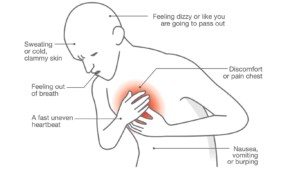
  • feel heart palpitations or chest pain before passing out
heart health symptoms

Know the warning signs of poor heart health.

Orthostatic fainting

As mentioned above, orthostasis involves how gravity impacts your blood flow when you change positions. Orthostatic fainting happens when you experience a blood pressure drop as you stand up. Your brain will try to stabilize this, but that doesn’t happen when you have orthostatic issues.

Causes for this condition can include:

  • being dehydrated
  • alcohol use
  • recent blood loss
  • taking certain medications (such as blood pressure or diabetes meds)
  • having underlying health conditions (including multiple sclerosis and Parkinson’s)

Chiari malformation is another condition that involves fainting. Chiari is a type of structural defect of the skull that causes the cerebellum to compress on the brain stem, causing herniation. The condition Chiari involves intense cervical spinal pain. Since the CAN is located in this impacted area, ANS functions can become dysfunctional. Chiari patients present with a loss of balance and dysautonomia. Decompression surgery can help alleviate these symptoms.

With orthostatic fainting, you might notice warning signs that you are about to drop. Your vision might begin to tunnel or fade to black. However, this type of fainting can happen without any warning.

Cerebrovascular fainting

This type of fainting happens as a result of the blood vessels near and within the brain, not getting enough blood as that they can properly function.

Causes for cerebrovascular fainting can include:

  • a cerebrovascular disease (such as an aneurysm or stroke) causing damage to the blood vessels
  • Steal syndrome (which reverses the flow of blood to your arms from the subclavian arteries)
  • basilar artery disease (a reduction of blood flow in the brain’s basilar arteries)

Those at risk for developing this condition are the elderly, those with cardiovascular disease, and those with cerebrovascular disease.

Symptoms of cerebrovascular fainting include:

  • experiencing a headache
  • feeling lightheaded or nauseous
  • difficulty hearing
  • confusion
  • uncoordinated movements

Coping with Fainting

The best thing you can do if you feel faint is to lie down. Elevate your legs and keep your head low (in other words, avoid using a pillow for your neck and keep your entire spine as straight as possible). If you are not able to lay down on a firm surface, sit down. Putting your head between your knees can increase the blood flow to your brain. Stay in this position until your symptoms have passed and slowly get up. Do not rush it.

Afterward, you might feel just fine and not need any immediate medical attention. However, some folks will need to seek emergency medical help. Those people include the elderly, pregnant women, those with heart disease or diabetes, those who were injured in their fall, those who lost consciousness for more than a couple of minutes, those who lost control of bladder or bowel functions during their fainting episode, and those who have had these episodes happen on a somewhat frequent basis.

fainting and bikram yogaFinal Thoughts: Getting Diagnosed with Syncope or Fainting Spells

It is crucial to speak with your doctor about the diagnosis. Doctors can diagnose your condition with tests like an electrocardiogram (ECG), a tilt-table test, a stress test, an echocardiogram, a CT scan, or an MRI. If you put off getting treated, your condition could worsen.

Do your best to avoid fainting spells. Stay hydrated, sit or lie down as needed, and don’t skip any meals. Pay attention to your triggers and seek medical attention if your situation becomes dire.

13 Quotes from Rumi That Can Transform Your Life

Rumi was a scholar and poet that lived in 13th-century Persia (now modern-day Iran.) Like all extraordinary gifted, and profound teachers, Rumi’s words have transcended time and place.

An Islamic scholar and Sufi mystic, Rumi wrote much of his thoughts down in the form of poems. As you read through these 13 quotes from the great sage, we invite you to reflect on the words. Allow them to enter your heart and see if they don’t stir up something inside.

Without further ado, here are 13 quotes from Rumi that can transform your life, along with some commentary on each.

13 Rumi Quotes to Remember Always

Gandhi quotes

1 – “Yesterday I was clever, so I wanted to change the world. Today I am wise, so I am changing myself.”

These words of Rumi were perhaps an expression of lament brought on by the remnants of the Mongol Empire’s conquest of his homeland. The Mongols were a brutal regime, often slaughtering opponents of their expansion – including many Muslims during the time of Rumi.

Moreover, it’s well-known that Rumi was a mystic devoted to contemplation and self-surrender. Like many mystics, he probably realized that the external problems of the world couldn’t be solved without first doing the necessary internal work.

It’s safe to say that Rumi probably wouldn’t think highly of the empty rhetoric and broken promises so prevalent in today’s society.

It’s wonderful that we want to change the world, but we must first change ourselves.

As a Sufi, Rumi certainly practiced Murqabah, an Arabic word that translates to observation in English. Murqabah is a form of Sufi meditation that aims to “watch over” their spiritual heart and gain insight into the Ultimate truth.

Nearly every form of meditation, across religious and spiritual traditions, emphasizes quietude of mind. Individuals who are adept meditators are well-aware that mental silence can lead to profound insight, a phenomenon that Rumi was almost assuredly referring to in this quote.

Please quiet your mind from time to time!

3 – “The art of knowing is knowing what to ignore … Ignore those that make you fearful and sad, that degrade you back towards disease and death.”

This quote from Rumi is among his most insightful. Demanding particular attention is the mystic’s noting of the relationship between mental well-being and “disease and death.”

Taking on too many things is perhaps the main reason why people nowadays are so stressed. Here, Rumi advises that true wisdom is differentiating between the important and unimportant.

Whether intended or not, Rumi’s quote is also scientific. Relatively recently, scientists have discovered an inextricable link between one’s susceptibility to stress and the development of illness, which, of course, can lead to premature death.

Please pay attention to those things that lift you up. Ignore those that bring you down.

4 – “It’s your road, and yours alone, others may walk it with you, but no one can walk it for you.”

Ultimately, we are individuals who are responsible for our own lives. This is the point that Rumi was making in this quote.

That’s not to say that there won’t be interested parties – loved ones, dear friends, and others – who will stand by us on our path. However, like all gifted contemplatives, Rumi assuredly realized that one’s ultimate destiny, if determinable, is influenced by that person – and them alone.

Walk your path, friend.

Rumi

5 – “The wound is the place where the Light enters you.”

Back in September of 2012, a young man was rushed to the hospital. Eventually, he passed out and woke up with a surgeon telling me he would operate. After the ordeal, he remembered giving a “thumbs up” before drifting back into oblivion.

Fast-forward a couple of days, , when he woke up hearing instructions not to panic while the docs extracted a breathing tube from his lungs. This began the long recovery from a brain abscess, a bacterial infection nearly killing him.

During this time, there was an unmistakable feeling that he could only call Presence. The Presence of something. And it wasn’t just him. Everyone around this former brain surgery survivor felt it too.

This Presence can only be described as “Light.” Pure, loving, protecting light.

Rumi was probably referring to his experience of this Light when he jotted down this beautiful passage.

6 – “Inside you, there’s an artist you don’t know about.”

More beautiful words!

Here’s the thing: we were all well aware of those inner artists as children. But then we were told we had to “grow up” and live in “the real world.” (How’s that treating us, by the way?)

Creative power, which is probably what Rumi was referring to here, is accessed by quieting our minds and hearts. It doesn’t come through arduous effort or diligent striving. We too often forget this fact, creating the stressed-out, always-striving attitude that we carry into our personal and professional lives.

Relax and let your artist out, friend!

7 – “As you start to walk on the way, the way appears.”

Lao Tzu, the founder of Taoism, said something similar: “The journey of a thousand miles begins with a single step.”

In all likelihood, Rumi meant something quite similar.

It matters not whether Rumi was referring to the Ultimate “Way” (as Lao Tzu was) or simply to an everyday decision. The “path” could be about career, spirituality, or even the next important task. The advice is the same: start walking and allow the path to reveal itself.

Whatever endeavor you’re considering, start by taking the first step!

8 – “Let yourself be silently drawn by the strange pull of what you really love. It will not lead you astray.”

Here’s another powerful quote that can apply to just about anything. Apply it to career choice, for instance. Why?

The simple reason is this: our jobs are killing us.

One’s job is the leading cause of stress in life, and it’s really not even close. Job stress contributes to everything from burnout to mental exhaustion, heart disease development, and an increased risk of stroke.

Most of us have forgotten what it feels like to fall in love with our work. To work with meaning, passion, and joy. Instead, we’ve opted to “go where the money is.” Unfortunately, as opposed to Rumi’s advice, this shortsighted approach often does lead us astray.

Find passion in what you do, whether it’s to earn a living or not!

9 – “Your task is not to seek for love, but merely to seek and find all the barriers within yourself that you have built against it.”

This Rumi quote is a beautiful reminder to remove those inner obstructions blocking love. This applies to both the love of others and self-love.

Notice that Rumi uses the words “Seek and find” to make his point. The things that obstruct our acceptance of love aren’t always apparent. We’re often required to look inside of ourselves to deconstruct the (often subtle) mental and emotional tangles that block it.

Buddha quotes

10 – “The garden of the world has no limits, except in your mind.”

Here, Rumi states that if there’s no limit to the mind, there’s no limit to what the mind can experience.

This isn’t just some feel-good platitude, either.

Take, for instance, the practice of Jhna or absorption meditation. In advanced stages of Jhna, meditators often report experiencing a disconnect from all sense perceptions, with many reporting a connection to the Absolute, or “Source.”

Individuals who master the Jhnas can remain in this state up until to a predetermined time – to the exact hour, minute, and second.

In short, our mind is much more powerful than we think.

11 – “Wear gratitude like a cloak, and it will feed every corner of your life.”

When we wear something, we cover ourselves with it. In this saying, Rumi is telling us to cover our heart with feelings of gratitude. Doing so will infuse our life with wellbeing, says the great mystic.

Here’s another quote with scientific backing. Per a whitepaper [PDF] produced by the University of California at Berkeley, gratitude is linked to “many benefits…including better physical and psychological health, increased happiness and life satisfaction, decreased materialism, and more.”

12 – “You were born with wings, why prefer to crawl through life?”

It is in the human DNA to explore and discover to maximize our experiences. The society that’s been constructed for us encourages none of these things. We’re told that going to college, getting a good job, and retiring is the only way.

So why is it that most people are unhappy?

Do what brings you joy. Don’t let fear get in the way, either.

lao tzu

13 – “When you let go of who you are, you become who you might be.”

This one’s powerful – and accurate.

If you ask someone who they are, they’ll probably give you their name, what they do for a living, their hobbies, and maybe something else.

But is that who they are? A name, a job? Is that who you are?

The people who have delved the depths of their consciousness say that we are one of these things. We’re most certainly not some evolutionary accident, either.

No. According to the great sages and seers, including Rumi, we are much more. What is that exactly? It’s something we need to find out for ourselves. We can start by letting go.

Skip to content