Weekly tips, affirmations, and small actions to feel your best.

Study Reveals Too Much Cleaning As Dangerous As Smoking a Pack of Cigarettes Per Day

Most people want to maintain a clean environment. But did you know cleaning too much poses the same threat as smoking a pack of cigarettes per day? It shocked us to hear that, too, because we associate cleaning with health. However, studies have shown that cleaning the house too often can lower your immune system.

Of course, it’s part of our nature to want to keep our surroundings clean. But perhaps the media and advertising industry have given us the wrong impression. Especially in times when sickness increases in the world, we worry about sterilizing our environment. However, some cleaners can do more harm than good because our immune systems need exposure to germs and bacteria. Cleaning too much weakens our immune response because of the harsh chemicals and lack of bacteria in the environment.

Much of the danger comes from the types of products that most people use to clean their homes and workspaces. Products such as household bleach, aerosol spray disinfectants, and other name-brand cleaning products have toxic ingredients that can harm your health with too much exposure. We will go over the dangers of these cleaning products below, as well as healthy alternatives for cleaning your home.

Here’s how cleaning products can destroy your health as much as cigarettes:

organize featured image

Read about fifteen things you can do to clean and organize your house.

Scientists investigated home cleaning products to see how they impacted lung function and published their findings in the American Journal of Respiratory and Critical Care Medicine. Norwegian researchers discovered some essential facts in this unprecedented study about home cleaning products, listed below:

  • The study followed 6,000 women over 20 years.
  • It looked into how cleaning products can impact respiratory health over a long period, including airway obstruction and the decline of lung function.
  • Scientists studied both professional cleaners as well as homeowners.
  • The study measured forced expiratory volume, or how much air the participants could blow out of their lungs in one second.
  • They also looked at forced vital capacity, or how much air they could blow out after inhaling deeply.
  • While people start seeing a decline in their mid-20s of both breathing factors, the study found that regular use of toxic cleaning products worsened lung capacity.
  • Cleaning just once per week over 20 years led to significant lung damage.
  • People who cleaned professionally for work experienced similar lung damage as someone smoking a pack of cigarettes a day for 10 to 20 years.

The researchers believe that some of the ingredients in the cleaning products can lead to the following negative results in the body:

  • Immune system impairment
  • Mucous membranes become inflamed.
  • Damage to cells and tissues in the airways

What to do?

Environmental Working Group reviewed the study and offered the following tips:

  • Buy fewer cleaning products to cut down on exposure and save money. When you buy cleaners at the store, the manufacturers legally do not have to list all the ingredients in their products. Because of this, you have no idea what effect it will have on your health in the long term.
  • Try not to use spray cleaners. If you do use them, spray them onto a cloth first to minimize the droplets you ingest.
  • Use microfiber cloths to dust your home instead of cleaning wipes.
cleaning diffuser

Here’s how to clean your essential oil diffuser.

Other Harmful Effects of Home Cleaning Products

If the study above doesn’t make you want to give up store-bought cleaners forever, we have a few more studies for you. Since we don’t know the long-term effects of these chemicals on our bodies, we should certainly use them cautiously. Let’s look at other ways home cleaning products can damage your health.

  1. Impairs your immune system

An animal study published in Science in 2012 showed how living in an overly sterile environment can harm one’s health. Researchers placed mice into two groups: the first group didn’t get exposed to any bacteria, raised in a “germ-free” environment; the second group got exposed to both good and bad bacteria. When researchers tested them, they found that the germ-free mice had much higher levels of inflammation in the colon and lungs than those with healthy immune systems.

Furthermore, mice with impaired immune systems also showed symptoms similar to asthma and ulcerative colitis. However, once researchers exposed them to healthy bacteria levels two weeks after birth, their immune systems got stronger, and the inflammation disappeared.

  1. Increases air pollution in the home

A 2006 study published in the journal Indoor Air found store-bought cleaning products often contain high levels of volatile organic compounds or VOCs. Additionally, these cleaners often have other toxic chemicals, such as glycol ethers and terpenes, which can react with formaldehyde and other particles to create ozone, which damages the lungs. Citrus-scented products specifically contain synthetic fragrance terpene chemicals called limonene and linalool.

pollution

Learn four ways to protect yourself from the harmful impacts of pollution.

  1. Increases inflammation in the sinuses

Researchers did a study of nearly 2300 Chinese students from 21 different schools. They found that children whose parents frequently used cleaning products showed increased symptoms of rhinitis, an inflammation of the nose lining, by 29 to 97 percent. Researchers measured kids’ “total chemical burden” by adding up their total exposure time to 14 different cleaning products. As their chemical burden increased, the rhinitis symptoms worsened.

  1. Higher likelihood of developing asthma

Professional cleaners, as well as homeowners, have an increased risk of developing asthma from chemicals in the products. A 2010 review study published in the Current Opinion in Allergy and Clinical Immunology found evidence linking cleaning products to work-related and new-onset asthma. Researchers believe the irritating ingredients or sensitivity to certain ingredients may cause symptoms. The study author noted that these products specifically could worsen asthma:

  • Spray cleaners
  • Chlorine bleach
  • Other disinfectants
  1. Worsens skin conditions

Many cleaners and laundry powders contain ingredients that aggravate skin conditions, such as dermatitis, eczema, and psoriasis. Preservatives such as methylisothiazolinone have been known to irritate the skin, and because of this, it’s been removed from many cosmetic products. However, make sure to read labels when you buy regular or even natural cleaners or laundry detergent, as it’s still used in many rinse-off products.

  1. Accidentally mixing toxic chemicals to create poisonous gases.

Many household cleaners we use have dangerous chemicals, but mixing them with other cleaners could have disastrous results. For instance, many people accidentally mix bleach with ammonia, such as glass or floor cleaners. This creates chloramine gas, which can create the following symptoms in just 24 hours:

  • Eye, nose, throat, and airway irritation
  • Teary eyes
  • Runny nose
  • Sore throat
  • Coughing
  • Chest congestion

Other Harmful Mixtures

The American Lung Association says that even natural fragrances such as citrus can decrease indoor air quality, especially if ozone levels are high. With these conditions, using natural and synthetic forms of citrus can react to form formaldehyde, which is carcinogenic to humans. It also creates toxic microparticles that can get lodged in your lungs.

According to the American Lung Association, fine particles in the air can worsen asthma and increase heart attack and stroke risk as well. At the same time, ozone can make asthma and other lung diseases worse.

Safer Alternatives for Cleaning Products

  • For weekly cleaning, you don’t need to sterilize your home with chemicals completely. Simple ingredients you probably already have, such as white vinegar, baking soda, and castile soap, can get the job done. If you need to do some deep cleaning, add in a few drops of essential oils to kill germs.
  • Always go for unscented products when possible.
  • On high ozone days, don’t use anything with citrus scents, and avoid air filters that increase ozone.
  • Avoid antibacterial soap, especially triclosan, a known hormone disruptor.
  • Beware of green or natural cleaners as well. A 2015 study found many contained carcinogens, added fragrances, and VOCs similar to regular cleaners.

cleaning productsFinal thoughts on how cleaning too much poses the same risk as smoking cigarettes

While most people don’t think twice about their cleaning products, the studies cited above show that we should pay more attention to how we clean our homes. Not only can cleaning with toxic chemicals cause the same damage to our lungs as smoking a pack of cigarettes per day, but it can also weaken our immune systems. Cleaning our homes just once a week can cause this effect over a long time, and for those who clean professionally, the risk increases exponentially.

Inflammation and a weakened immune system caused by cleaning products can lead to autoimmune diseases, cancer, and even heart attacks and strokes.

If you want to clean your home, always go for natural products. Consider these safer cleansers:

  • Vinegar
  • Lemon
  • Essential oils
  • Castile soap
  • Baking soda

When you go shopping for cleaners, make sure to check out the Environmental Working Group’s app or articles that list healthy cleaners and alternatives to harmful ones.

15 Quotes to Stop Self-Criticism and be Happy Again

Self-criticism can be detrimental to your mind and your goals. Overly criticizing yourself can cause you to hinder your progress, making your goals further away. It’s crucial to stop self-criticism so you can experience full happiness.

While criticizing yourself is inevitable at times, you have to be able to stop it before it becomes a problem. This negative way of thinking or speaking about yourself will do more harm than good.

On the other hand, stopping those thoughts and thinking positively or taking action will help you reach your goals. You can’t let negative criticism of yourself hold you back, and you can’t make it interfere with your happiness.

Quotes to Stop Self-Criticism and be Happy Again

self-criticism

1. “You have been criticizing yourself for years, and it hasn’t worked. Try approving of yourself and see what happens.” – Louise Hay

Think back on all the times you have criticized yourself and consider whether it has worked or not. More often than not, you’ll realize that it didn’t work. Next time you find yourself wallowing in criticism of yourself, approve of yourself, instead, and see the difference.

 2. “Ours is the one ever-present voice in our lives. Therefore, it is crucial that our self-talk instill confidence within us and is supportive, not submerging, and that our attitudes toward ourselves help keep our spirits afloat through acceptance and trust. We are our own most important and influential buoy.” – Sue Thoele

Since your mind is the only one you hear at all times, make it a positive one. Support yourself and praise your attempts. When you do this, you’ll find yourself achieving more and feeling happier.

This mindset will also help you ignore the negative voices of others. When the sound you hear the most often is positive, the negative ones won’t affect you as much.

3. “We all have the tendency to believe self-doubt and self-criticism, but listening to this voice never gets us closer to our goals. Instead, try on the point of view of a mentor or good friend who believes in you, wants the best for you, and will encourage you when you feel discouraged.” – Kelly McGonigal

Criticizing yourself doesn’t get you anywhere closer to where you want to be. Think of how you would want your best friend to speak to you in awkward moments. Then, talk to yourself that way.

4. “Turn down the volume of your negative inner voice and create a nurturing inner voice to take its place. When you make a mistake, forgive yourself, learn from it, and move on instead of obsessing about it. Equally important, don’t allow anyone else to dwell on your mistakes or shortcomings or to expect perfection from you.” – Beverly Enge

To stop overly criticizing yourself, you have to start thinking positively about yourself. Give yourself some grace and grow from your mistakes. Expect the same of those around you, because mistakes do happen and no one will ever be perfect.

When you create these boundaries for yourself and those around you, positive thoughts will be more natural. Make an effort to change your thoughts or the way you are speaking when it becomes harmful.

5. “One should never criticize his own work except in a fresh and hopeful mood. The self-criticism of a tired mind is suicide.” – Charles Horton Cooley

When you’re in a bad mood or have been working hard for a long time, it’s important to take a break. Only when you’re feeling good should you criticize something you’ve worked on. A positive mindset will allow you to evaluate positively.

When you remember to do this, you’ll find yourself being more positive. Everyone has to make changes in life, and negatively criticizing yourself won’t make it any better.

quote

6. “Start listening to what you say. Are your comments and ideas negative? You aren’t going to become positive if you always say negative things. Do you hear yourself say, “I could never do that,” “I never have any luck,” “I never get things right”? Wow – that’s negative self-talk! Try saying, “I am going to do that,” “I am so lucky,” “I always try to get things right.” Can you hear how much better that sounds?” – James Arthur

Take notice of the things you are saying to yourself. Positivity will not come from negativity, so consciously change your negative thoughts. Encourage yourself and remind yourself that you can do anything.

Take the advice of Arthur and change the things you are saying to yourself. The negative thoughts and comments will only hold you back and interfere with your happiness.

7. “As there must be moderation in other things, so there must be moderation in self-criticism. Perpetual contemplation of our own actions produces a morbid consciousness, quite unlike that normal consciousness accompanying right actions spontaneously done, and from a state of unstable equilibrium long maintained by effort, there is apt to be a fall towards a stable equilibrium, in which the primitive nature reasserts itself. Retrogression rather than progression may hence result.” – Herbert Spencer

In short, taking care of yourself is more than just moderating physical things, it’s also moderating your negative thoughts. Overthinking things and criticizing yourself can cause you to get further away from your goals. Positive thinking, on the other hand, results in making progress.

8. “Let ‘action’ replace your negative self-chatter and self-doubt. What is the first action step to move you forward?” – Jackie Cantoni

There is nothing to quiet your thoughts like doing something. So, when you find yourself self-criticizing, get up, and do something productive instead. If you don’t know what to do, think of your ultimate goal and take the first step.

9. “Self-criticism, like self-administered brain surgery, is perhaps not a good idea. Can the ‘self’ see the ‘self’ with any objectivity?” – Joyce Carol Oates

You can’t diagnose or cure yourself, so you shouldn’t criticize yourself, either. You can’t see yourself objectively, so you’ll never be able to make a full conclusion about yourself.

10. “Our reaction to self-criticism is more important than the self-criticism itself. Paying attention to our reactions is very important because the only thing we have control over is how we react.” – Yong Kang Chan

No matter how much you practice positive thinking, criticizing yourself still happens. When it does, you have to react positively. This is where taking the first step toward your goal comes in handy.

11. “Every experience, no matter how bad it seems, holds within it a blessing of some kind. The goal is to find it.” – Gautama Buddha

No matter how bad something seems, there is some good in the situation. No matter how seemingly insignificant the blessing is, take note of it, and you’ll become happier. When you do this instead of criticizing yourself, you’ll feel better.

12. “If babies held the same tendency toward self-criticism as adults, they might never learn to walk or talk. Can you imagine infants stomping, ‘Aargh! Screwed up again!’ Fortunately, babies are free of self-criticism. They just keep practicing.” – Dan Millman

You can do anything you set your mind to if you allow yourself to fail a few times first. No one does anything perfectly the first time, so keep trying until you get it. The practice is the only way to be better while criticizing yourself could lead to never learning.

quotes

13. “If we judge ourselves only by our aspirations and everyone else only by their conduct, we shall soon reach a very false conclusion.” – Calvin Coolidge

Don’t judge yourself by the dreams you haven’t reached yet, but everyone else by how they are handling life now. Judge yourself in the same way you think of others because they aren’t perfect either. Everyone is working on something, and judging in this way doesn’t help or make you feel better.

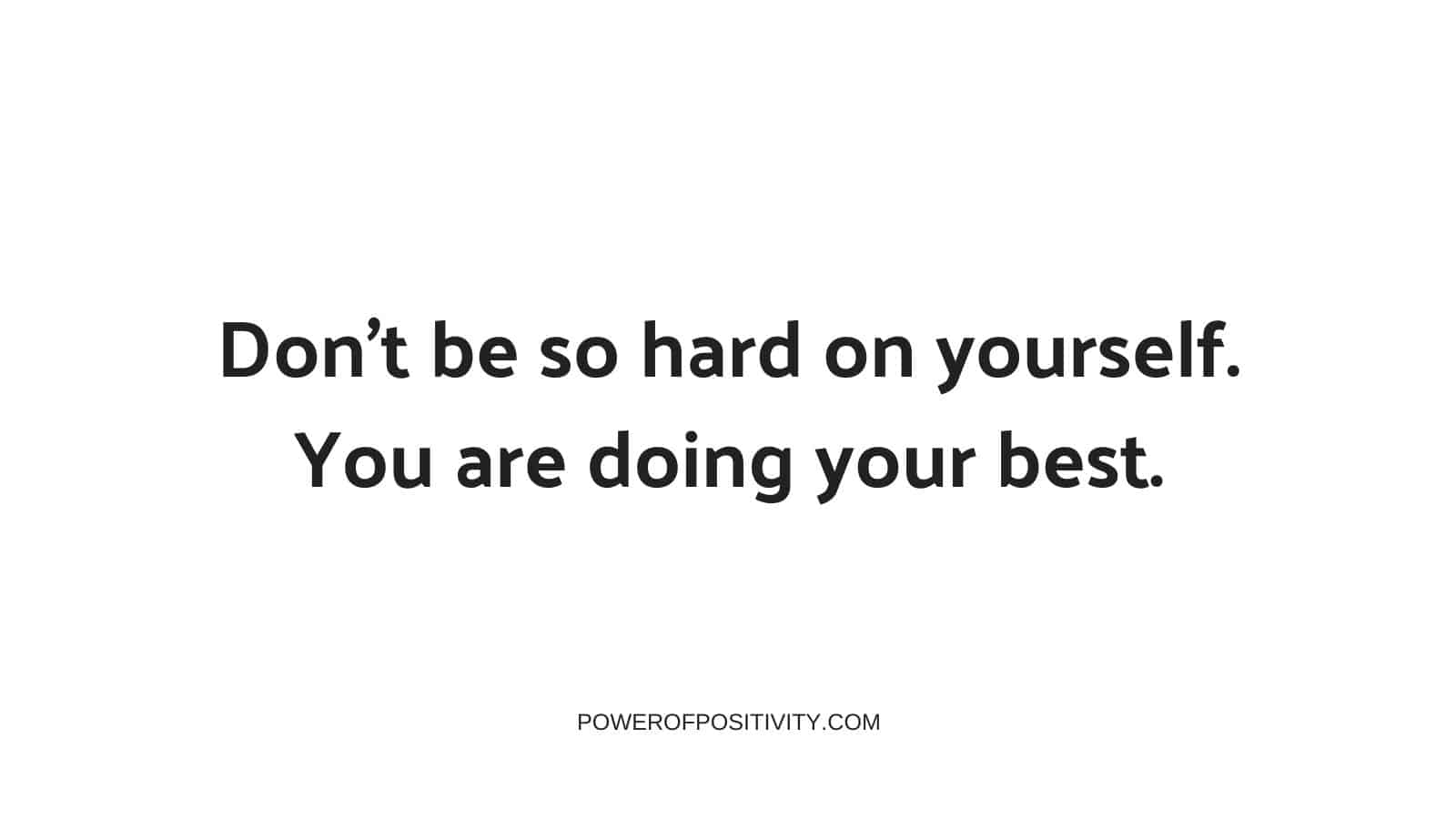
14. “Bring acceptance and compassionate self-talk. Say nice things to yourself – you’re the only one listening. Tell yourself. I am doing the best I can.” – Gabrielle Bernstein

When you continually hear positivity, you’ll begin showing yourself more compassion. As Bernstein says, remind yourself that you are doing your best. Sometimes that’s all you need to hear to keep working toward something better.

15. “A final word on self-criticism: Do not beat up on yourself. Even if you think you know your flaws, there is no need to advertise them. Most people won’t have noticed.” – Philip Toshio Sudo

Don’t say negative things about yourself because everyone has flaws. Speaking or over-thinking about it doesn’t do any good. Plus, others likely wouldn’t have noticed if you hadn’t pointed it out.

self-criticismFinal Thoughts on Quotes to Stop Self-Criticism and be Happy Again

Self-criticism is normal, and you’ll never fully be able to avoid it, but you can stop the severity. You can stop doing it so often, and you can learn when to take action instead. Instead of letting it ruin your happiness, learn to stop instead.

As these quotes explain, everyone experiences this type of criticism at times. Don’t let it hold you back from your goals. Learn to stop criticizing yourself and be happy again.

12 Red Flags That Someone is Afraid to Commit to Their Partner

There’s nothing worse than commitment issues. When one person is ready to go to the next level, but the other isn’t, then it makes for a toxic situation. Unless people are casually dating, most folks want their love interests to be exclusive. When you get to the point that you don’t want to date anyone else, you expect them to commit to you in return.

Unfortunately, making a long-term commitment isn’t so easy for some people. They have past hurts that play a big part in their future. Some couples are hesitant to tie the knot because they worry about divorce. However, current statistics imply this fear is unfounded.

In 2018, the CDC released statistics that showed that for 2,132,853 marriages, only 2.9 percent ended in divorce. That number equates to roughly one-third of marriages.

As each couple is different, your timeline for a committed relationship will vary. Some couples deeply commit after a few weeks of dating, and typically these are the people who believe in love at first sight. Yet many other couples can date for years without even discussing the issue.

It’s important to realize that you don’t need to be married to be in a committed relationship. Many couples get along better living together than they would be married. Being committed to each other means that you both work to be a faithful, loving couple through the good times and bad.

commit

Experts reveal the twelve secrets of happy couples.

Understanding Commitment Fear

Why are some men all lovey-dovey until they think the relationship is headed in a serious direction? Men who grew up in broken or abusive homes are often afraid of repeating history, so they steer clear of commitment. For others, an emotional breakup or bitter divorce sours them on the idea of committing to another relationship.

How can you tell if your man is just shy or isn’t interested in upping the ante with you? Perhaps he is using you as a cover for his hushed sexuality, which is a distressing issue itself. If you have your doubts, here are 12 red flags that could reveal your partner’s fear of committing to you.

partner commit1. She’s in Love with Love

Has the object of your affection been a serial dater, or have her romantic relationships been far and few between? If she’s had few relationships, how long did they usually last?

Your commitment radars should be sounding if your person has a pattern of breaking up with someone one day and falling head over heels in love with another soon after. For these people, love is an endless journey without a destination.

They’re fascinated with dating rituals and the ability to say they are going steady with someone. Unless you both are teenagers in junior high school, the only road to a commitment you’ll have with this guy is a dead end.

2. He Is Too Interested in Being Controlling

There’s a fine line between regular communication and obsession. If he is calling and texting you non-stop and freaks out if you don’t answer right away, he either has control issues or is desperate. Committing to a relationship with matters like these wouldn’t be advisable.

3. Your Partner Keeps Her Distance

When you’re in love, you want to stay in touch with that person regularly. Someone who is genuinely attached to you wants to text or call to see how you are doing. If she rarely calls or texts and your calls go straight to voicemail, she may be telling you that she isn’t ready for a commitment.

4. She Avoids Discussing Commitment

If your significant other fidgets or tries to change the subject every time you mention commitment, there may be a problem. People who want a more profound, committed relationship are usually the first to broach the subject. While you don’t want to beg someone to commit, it shouldn’t be a topic of taboo when you’re talking.

5. He’s Stuck in the Past

Do you feel forced to live in the shadows of his past romances? He probably isn’t ready to commit to you if he can’t move out of the past with someone else. One of the biggest reasons people won’t commit is their heart still belongs to another person.

dating tips for introverts

Here are twelve dating tips for introverts.

6. Your Love Discusses Plans or Goals without You in Them

One of the hallmarks of those who are reluctant to commit is a lack of planning or setting goals. Doesn’t it seem odd that you can easily envision a lifetime with her, but she can’t even plan a vacation for you both? If you’re not in her future, then should you be in her presence and waste your time?

7. He Spends More Time with Others than with You

Just because a couple is committed to each other doesn’t mean they should always be joined at the hip. Healthy relationships also allow each person to be an individual, with a variety of interests and friends. You probably enjoy spending a girls’ night out, and he likes to have his buddies over for a weekly poker game.

It’s normal and healthy to socialize with mutual and separate friends, usually the same gender. However, if you are continually playing second fiddle to his buddies, it could be commitment issues. He may not be ready to settle down and realize that he’s not in high school anymore.

8. He Uses the Dreaded Friendship Word

Nothing can be quite as unnerving as devoting weeks, months, or even years cultivating a relationship, just to hear him tell others that you are “just a friend.” Yes, you must be each other’s best friend in a committed relationship, but when he calls you his “friend,” then it implies that you’re just a casual date.

If you’ve been upfront with him about wanting more than friendship, then it takes a commitment from you both. He may try to derail the conversation by assuring you that he cares for you. It shows how differently you and he view the relationship.

9. Her Excuse is that She is Too Picky

Here’s another game of smoke and mirrors that women who are slow to commit often play. Despite your best efforts, she might tell you that she has never been in a committed relationship, she is too picky. While he may think his confession sets your mind at ease, such a statement implies that you’re not good enough.

Does your significant other live in a delusional world of perfection? If she is that fussy, perhaps you shouldn’t be in a committed relationship with her. While she searches for her ideal man who doesn’t exist, you should go your own way.

10. He Deliberately Sabotages the Relationship

Some men are naturally klutzy and absent-minded. Does your fellow occasionally show up late for dates or worse, he stands you up? Does he make promises he cannot keep? This guy could either be a chronic people-pleaser, a pathological liar, or ruins relationships out of commitment fear.

11. Her Conversations with You Seem Shallow

When a couple is in love and is committed to their relationship, you can hear it in their voice. The way they look at each other and the depth of conversation reveals the passion for how their partner feels. When you’ve been with a woman for a while and are ready for a committed relationship, you expect warm conversations.

Granted, not every person is a natural conversationalist. However, your woman shouldn’t be looking at his watch or giving you one-word responses when you are on a romantic date. Ladies who aren’t in touch with their feelings are intimidated when women start a meaningful conversation because they may be afraid of discussing commitment.

12. Her Body Language Says It All

As you are conversing, take a cue from her body language. Is she making direct eye contact with you or glancing away when the topics get personal? Is her posture open and receptive, or does she keep her arms folded as if she is guarded? Does she smile, laugh, and touch your hand or shoulder when you are deep into a conversation?

type a personality

Relationship experts share the benefits of dating a Type A personality.

Final Thoughts on Why Someone Will Not Commit to Their Partner

For any relationship to work, both people need to be on the same page. If you are ready to commit and she is still unsure, you have two options. The first is to find the root of her commitment fears and work them out together, or you can agree to disagree and go your separate ways.

Life is too short to spend wondering if your person loves you, or are they blaming yourself for something that’s not your fault? You deserve to be in a loving, lasting relationship that doesn’t have room for second-guessing. If you’re not finding this with your current partner, then perhaps it’s time to move on.

Trainers Reveal the 10 Best Benefits of Weight Training

Weight training carries a great deal of significance in improving quality body functionality, like boosting your body’s metabolism rate. A person who follows a training program will always look and feel better compared to one who doesn’t. The reason why many people are not living to their optimum best is because of the lack of proper workouts.

Statistics reveal that 1/3 of the world’s population suffers from obesity. It is for this reason that trainers emphasize the importance of weight training. The benefits of this type of training are diverse and play a very significant role in improving one’s quality of life.

If you go to any training facility, you will realize that an increasing number of people are joining workout programs to better their health and wellbeing. This is a result of the consciousness and awareness that society is beginning to adopt regarding quality living.

The following are the ten best benefits of weight training that you should know.

body weight exercises

  1. Weight Training Improves Cardiovascular Health

Trainers assert that weight training carries a great deal of significance when it comes to cardiovascular health. Research shows that lack of weight training contributes significantly to increased risk of heart complications. The more you do muscle-strengthening training. The more your blood pressure improves, thus boosting the quality of health of your heart.

If you are thinking of embarking on a training regimen, you can consider making weight training part of your workouts. If you are not quite familiar with lifting weights, you can always get guidance from professional trainers. With a consistent routine, you will notice a significant improvement in your cardiovascular health.

  1. Weight Training Helps in Losing Weight

Weight gain is a problem that many people struggle with. One of the most effective ways of losing weight is through weight lifting. Research studies reveal that losing weight has a relationship with one’s rates of metabolism.

The difference between weight training and aerobic training is that it allows your metabolism to remain active for a longer time. What this means is that long after you have done your exercise, you will still be able to burn calories as you go on with your day.

The more calories you burn, the more you will be able to lose extra weight from your body. If you do weight training consistently, you will be able to burn more calories than someone who does aerobic exercises alone. The reason behind this is that while aerobic exercises burn one’s muscle and fat, weight training burns fat alone.

  1. This Workout Helps With Chronic Disease Management

If you have a chronic disease, professional trainers reveal that weight training can help you to manage it effectively. For example, for people who have arthritis, weight training is a highly recommended exercise to help relieve the pain. Additionally, this type of training is suitable for people with type 2 diabetes, as it helps in controlling glucose in the body.

Indeed, it’s possible to improve your quality of life if you have a chronic illness. It’s not a death sentence, as many believe. With adequate and practical training, you can improve your health significantly. Take up the challenge and visit a fitness facility near you and begin doing weight lifting routines, and you will notice a difference in your disease management.

weight training

  1. Weight Training Boosts Physical Work Ability

One thing that trainers will always tell their clients is that practical training makes the body active. If you know someone who lacks the physical motivation to handle daily tasks, the chances are high that he or she doesn’t have a workout routine. That is why fitness trainers advise that you should have set time for proper training in a week.

Weight training helps improve one’s physical work capacity. If you would want to remain active for most of your day, you should try doing strength training exercises. If you make this a habit, you will be able to handle activities of daily living with much ease.

It might seem challenging at first, especially for women, when it comes to the consistency part, but it’s possible. It only takes the determination to start and the commitment to continue. With time, you will see evidence of how you will be able to work for longer hours than before.

  1. This Exercise Enhances Fitness and Makes You Stronger

Isn’t this the apparent benefit? Indeed, when you commit yourself to a regular exercise program, you will witness incredible results. One of the outcomes of such a quality training regimen is a fitter and healthier body.

Muscle strength goes a long way to allow you to do things you would struggle to do before. The opposite is exact in that you will find it difficult to do even simple tasks because you lack the strength to do so. That is why weight training is so vital to your everyday life.

The science behind getting more robust with time is that weight lifting and training builds muscle mass. The more muscle mass you create for your body, the stronger and fitter you become. This is especially essential for the aging population because as one gets older, he or she begins to lose muscle.

  1. Weight Training Boosts Mood and Energy Levels

Have you ever wondered why some people always have their energy levels down? While there might be other reasons contributing to this, lack of exercise is one of them. Trainers know this very well, and that is why they recommend a substantial amount of weight training to clients.

Essentially, weight training triggers an increase in the number of endorphins, which are responsible for the boosting of energy levels and mood. Just to reiterate a point mentioned before, when your energy levels are up, you will be in a position to do more. Hence, you don’t have to allow a bad mood and low energy levels to affect your day.

Start an exercise program that works for you. After a while, you will experience a big difference in the way you go about your day and work on your daily goals. Remember, with a good mood and a high energy level. You will be able to accomplish so much.

healthy habits

These four habits are not as healthy as you probably think.

  1. This Exercise Is a Metabolism Booster

Weight training works very well in boosting your rate of metabolism. A person with an increased metabolism rate has the body functioning better than one who doesn’t. That is why it’s imperative for you to invest in training exercises that boost your metabolism.

Some of the benefits that come with increased metabolism include:

  • The ability to cleanse your body

If you have a high metabolic rate, you will become healthier because your body will have the capacity to remove toxins from your system. A high metabolism facilitates the removal of toxins from your body through respiration, urination, and bowel movement.

  • Improving energy

This is a point that has already had its fair share of explanation, and the fact that it appears here again is an indication of its significance.

  • Improving blood circulation

As you commit to doing weight training, you will be improving the quality of blood circulation in your body. Thus, better blood circulation gives white blood cells more power to function at their best.

  1. Weight Training Gives your Body Balance

No exercise routine helps you to build a better balance, posture, and flexibility for your body like weight training. Older people have a better chance of improving their balance and posture by getting into a weight training program. The outcome of this is that they will be able to reduce the risk of falling significantly.

Generally, the muscles on one’s feet determine the quality of balance that they exhibit. If the muscles are strong, then the quality of body balance will be okay. This is an area that you should work on to build healthy body mechanics.

  1. Weight Training Is Good For Bone Health

Weight training improves bone density to a great extent. Bone health is such a crucial area of daily living, especially to the aging population. At age 30 onwards, people begin to lose muscle mass, and this has a significant effect on bone health.

Therefore, as a way of reducing a rapid loss of your bone density, you need to start doing weight training exercises.

  1. Weight Training improves Self-Esteem.

Weight training helps in building confidence. Both men and women benefit from weight training in this way. The more you exercise, the more your body looks good, and the result of this is that you feel empowered.

An empowered and confident person can do more. Trainers reveal that a consistent workout routine fuels a positive attitude that affects different areas of one’s life. It is for this reason that you should dedicate yourself to a training program that works best for you.

weight trainingFinal Thoughts on Weight Training and Your Health

Without a doubt, quality health and wellbeing are a result of proper and deliberate weight training. Trainers make it clear that there is no gain without pain. The pain of consistency in your training routine will definitely give birth to positive outcomes.

High metabolism rate, cardiovascular health, and overall quality of health are some of the benefits you will receive from weight training. Therefore, take up the challenge and begin weight training today.

10 Ways Fear Brings Out The Best In You

Fear is a healthy and universal human emotion, and it’s also one that is very difficult to manage. It can be crippling, it can ruin opportunities, and it can be the cause of severe emotional difficulties.

But what if I told you that fear can be a positive thing and can be used to your benefit? Here are ten ways fear brings out the best in you.

1.    It Teaches Analysis

Fear is both our biggest enemy and one of our most excellent teachers. When you are stricken with fear, your brain goes into overdrive, and it seeks to identify your options, analyze them, and decide on what the best decision is.

Of course, it is entirely possible to become so paralyzed by fear that you are unable to properly analyze it or your situation, resulting in over-analyzing or under-analyzing. The risk of making a more deficient decision is always a constant worry for many.

As such, when faced with fear, you need to come up with a battle plan to overcome it and use it to your advantage. Here are some tips to properly analyze your concerns while under their effects:

  • Evaluate your potential solutions and identify both the advantages and disadvantages of them
  • Be cautiously bold in your choices and thought.
  • Try to expect or predict your problems.
  • Look at the problem from a different angle and try to seek external perspectives if required.
  • Believe in your instincts
  • If all else fails, plan what you want to do and just go for it
abandonment

Here is how to tell if someone is afraid of abandonment.

2.    It Makes You A Champion

Fear can be used as an excellent driving force to make you a better and stronger person. All successful people get to where they are by facing their fears and working proudly towards achieving their distant dreams. Here are some tips on how to use your fears to make you a champion:

  • Use your feelings of fear and turn them into a competition with yourself. Set a target for yourself and try to shoot past it every time
  • Learn from your past goals that you have set
  • Remember the mistakes that you may have made and learn from them
  • Step out of your comfort zone
  • Keep going until you succeed, no matter what

3.    It Teaches You To Let Go

Fear manifests in many different ways, and one of these is through the fear of a lack of control. Not feeling in power can be very frightening, and it can decrease positive thinking and even make you more prone to mood and anxiety disorders.

But there’s the truth: no one is ever truly, really in control. There are some situations in life where letting go of outcomes is simply your best option. In some instances, you will try, and circumstances outside of your control will still stop you.

Stay positive! Failure is a part of the journey to success. Instead of focusing on all the things you can’t control, focus both on what you can and on the beautiful things that can come when you let the world and universe sweep you up.

FOBO fear of better options

4.    It Makes You Aware

Fear is a natural response. It is your brain telling you of danger, whether of a physical or mental kind, sometimes triggering a fight-or-flight response. In the latter cases, what your fear is doing is making you hyper-aware of your surroundings. This awareness allows you to take in extra information that gives you more power in decision-making.

Fear can be detrimental when it holds us back, so don’t let it control you in that way. The next time your fear gets to you, use the somewhat unsettling hyper-awareness to gather knowledge that helps you find more efficient solutions. This is you taking and using your fear to your benefit.

To add to your awareness, think of some of the common fears you feel in a day and how the knowledge they grant you can be harnessed. Here are some of the most common concerns experienced by most people:

  • Failing
  • Change
  • Getting rejected
  • Losing
  • Public speaking
  • Success
  • The unknown

5.    It Lets You Build Skills

A common fear that many faces is the fear of being inadequate. You may fear that you lack the knowledge, skills, talent, or ability to reach goals properly, find success, or carry out tasks. A lot of the time, this fear is an excellent teacher, but it’s blown out of proportion.

What do we mean by that? Well, simply put, fear acts as an alarm for your brain, informing you of potential difficulties with the task or goal at hand. When allowed to run unchecked, that fear takes over you, ruins your positive thinking, and exaggerates your flaws.

But what happens when that fear is kept in check? That means you get to listen to the warnings your brain is sending you. Should you put in an extra hour of practice for your chosen skill? Do you feel underprepared for an evaluation because you genuinely are? Do you feel inferior to your peers because you don’t put in as much effort?

Once you take note of these fears and rationalize them, you can use those concerns to build on the relevant skills. Here are some ideas for overcoming shortcomings:

  • Take some time to try and better understand what the problems you face are
  • Learn a new ability to keep your brain sharp
  • Ask for constructive criticism from those you look up to
  • Self-reflect on yourself and your progress
  • Expand your knowledge by doing research and study

6.    It Can Make You Feel Good

For some people, fear is a feeling that they enjoy. Yes, really! This is because the emotions that arise from stepping outside of your comfort zone can make you feel alive thanks to a rush of adrenaline. For some, it can be an exciting and even a new sensation that teaches of the benefits and positive sides to fear.

Think of it this way. Fear is like coffee – an excess is bad for health, but a small amount gives you positive effects instead. So let yourself feel a little fear and appreciate the energy that comes from the accompanying adrenaline rush. Here are some activities that you can do to get that small dose of healthy fear in your life.

  • Take a skydiving lesson
  • Ride a high-speed roller coaster
  • Try zip line or white water rafting adventure
  • Watch a horror movie or play a horror game

7.    It Pushes You Out Of Routine

Fear can be unpleasant, but it can also be a mechanism for pushing you outside of your regularly scheduled routine.

Take this, for example. When taking on a big project that you may not have all the skills for, you are forced to come out of your comfort zone to complete the project. One of the biggest fears you will face is self-doubt, as you are unsure of your methods. Your mind might be conflicted – do you apply knowledge for past projects to this, or change it up and try something new for this unfamiliar territory?

This fear is now pushing you to consider leaving your safe routine, allowing you to try tackling it from a different point of view. This makes you more innovative, and it helps you rise to new challenges in ways that will make you less frightened in the future.

confident

8.    It Helps Health

Believe it or not, fear can be good for your biological health. Here’s how:

·         It Helps Weight Loss

Believe it or not, a study found that watching a horror movie can burn up to 200 calories each time, which is more than other positive forms of calorie-burning like 30-minute walks. Why does this happen? Well, fear causes a quickened pulse, which surges adrenaline and sets your metabolism into its fastest form, burning off fat and sugar as your heart beats faster to send those components to your muscles.

·         It Keeps You Safe

Fear is a crucial part of life because it keeps you safe. It makes you care about threats to your life and can kick you into survival mode in difficult situations. The adrenaline you get from fear can even help you do things you usually would be unable to do.

·         It Boosts Immunity

Watching a horror movie or doing something else that triggers fear can have positive results on your immune system, according to a Coventry University study. When you are frightened, more white blood cells, activate to fight off disease and help fix current problems with your body. You can also try a horror based escape room venue in Bristol for a fun and thrilling experience.

9.    It Gets Easier

Have you ever noticed that seeing the same scary thing multiple times can make it less scary, or at least decrease the involuntary reaction your body has to it? This is because the first time you overcome fear is always the hardest. It gets easier the second time, the third time, and so on.

Essentially, this process allows you to make small improvements in the way you handle, manage, and challenge your fears. This can become a habit over time, allowing you to fight your fear and harness it where it can be used without needing to try very hard.

10. It Makes You Overcome Barriers

When you experience fear, you are eventually forced to confront their sources. While a good number of fears are at least somewhat reasonable, you’ll find that most of them are forming barriers in front of you that prevent you from progressing. Some of these barriers are real, but some are imagined.

Examples of barriers, both real and imagined, include:

  • Defensiveness
  • Fear of being wrong
  • Inaction
  • Anxiety
  • Stress
  • A dislike of change
  • Uncertainty
  • A desire for control
  • Being stuck in your ways
  • Feeling overwhelmed
  • Demanding fully planned paths
  • Loss aversion
  • Fatigue
  • Impatience
  • Low self-esteem
  • Distrust

To say that you need to remove your imagined or changeable barriers is an understatement, but to actually get to that point is difficult. Take small steps towards breaking past your barriers, and don’t stop – make sure you’re always taking actions towards getting through them.

Fear of Public Speaking

Therapists reveal eleven ways to conquer your fear of public speaking

Final Thoughts On Some Ways Fear Brings Out The Best In You

When used correctly, fear is far from a bad thing. It can bring out the absolute best in you over time in ways that would not have been possible without fear. Learning to harness your fear gives you a powerful tool in your life’s journey.

5 Times When Being Competitive Can Be A Bad Thing

Our society sometimes encourages a competitive spirit among individuals seeking success, and for a good reason. It allows you to rise to new challenges, learn from the people you compete with, and better yourself as you keep up with your rivals in new and exciting ways.

But not all competition is good, and sometimes, fiery competitiveness can even be detrimental for you, others, and your progress. Here are five times when being competitive can be a bad thing.

1.    You Feel Motivated By The Wrong Things

Competition can be motivated by many different factors, but for it to be healthy, it has to be fueled by the right things. Here are some harmful forms of competitive motivation:

·         Jealousy Or Envy

The green-eyed monster is powerful and often feels all-consuming. When you’re motivated to be competitive due to your envy of others, you’ll often wind up making selfish decisions that can harm those around you – and even yourself, in the long run. Stop placing your focus on envy. Instead, focus on things you find inspiring.

competitive

·         Obsession

Obsession is such an extreme state of mind that it is always, regardless of the situation, very unhealthy – and that includes during competitive urges.

·         A Desire To Win

Winning at all costs is a constant motivational factor for competition, and it works in direct, intentional, organized contests. As hyper-competitiveness, it’s one of the four faces of competition, with the other three being lack of interest, anxiety-driven avoidant, and, of course, the one you should aspire to be: self-developmental.

·         Ego

Some people attach their egos to success. This means your pride and self-worth will be dictated by how well you do, causing you to become toxic in your competitiveness. Failure is a part of life and is no indicator of worth.

·         Fear

Fear of scarcity is a widespread issue among those who are overly competitive in the wrong ways. The concept that you have to fight for your piece of the proverbial pie is often an unhealthy one, as real-life doesn’t have to be greedy chaos.

·         Status

Did you know that a study found that people have more positive responses to perceived social ranking, even if they claim otherwise? Even those who think they put more stock in mastery and personal progress respond better to social praise. Status isn’t an unreasonable thing to strive for, but it shouldn’t be the primary fuel to your competitive fire.

·         Compromised Values

For some people, their desire to be competitive runs so strongly that they simply do so for the sake of competition, even when it goes against their core beliefs and values. When you’re competing, you should have a substantial reason for it, and you shouldn’t forget your goals and dreams in the process.

impostor syndrome

2.    When It’s Not All About You

Competition only works well in solo efforts, or on a very subdued level in group efforts (though that still usually isn’t recommended). When you’re working on something with others, then being competitive is more of a hamper than a help, because in this situation, it’s not about you and you shouldn’t be focusing on yourself. Here are some signs that you tend not to play by those non-selfish rules:

·         You Think You Cannot Share Your Success

All competitions are win-lose types of situations. In other words, the desire to succeed alone means a loss for everyone else – and when you eventually aren’t the “winner,” you’ll wind up the loser. Indeed, you can share success among different people. Start to see–plenty of situations have win-win possibilities in them.

·         You Value Your Performance Over Teamwork

In a lot of real-life situations, you’ll be working with, not against, your peers. At work, you cooperate with your colleagues. In classes, you progress together. In your personal life, you lift those around you, and they do the same. When your competitiveness starts to mean that you no longer care about teamwork and only think of yourself, you’ve gone too far.

·         You Don’t Wish Success On Others

When your competitiveness is more about being the only one to succeed, you’re not just performing illogical and toxic behavior, but you’re also setting an impossible goal. Some people are going to succeed alongside you, and attempts to be the only one ever at the top will likely end in burnout and the failure you fear.

·         You Secretly Want Others To Fail

An extremely toxic trait, this type of thinking is sadly common among competitive folk, and it can be tough to stop it once it has a subconscious hold on you. Healthy competition doesn’t involve wishing the worst on others. It means using other people’s success as motivation and inspiration.

·         You Don’t Want Others To Get On Your Level

Last-place aversion is a feeling where the closer you are to the bottom, the less you want others to be on the same level as you. Studies have found that people one tier above the lowest positions tend to be the most discouraging towards least position progress, a direct opposite from those in the highest places. This mindset is not at all the right kind of positive thinking; focusing on what’s behind you doesn’t help you move forward.

3.    When Your Improvement Is Impeded

If your competitiveness is paying off, then you should be experiencing positive improvement, growing as you are motivated to challenge others and rival them. But when your development is going downhill, something’s off. Here are some signs that your improvement has been impeded by competition:

·         When You Can’t Innovate Anymore

Focusing only on “winning” means you do things how you know to get ahead. This situation leaves you with little room for self-improvement and innovation, as you aren’t willing to take risks or voice new ideas due to your focus on being in the first place.

·         When It Stops You From Performing Well

An insistence on competition ruins your chances of cooperation, meaning you don’t get the opportunity to learn from your peers and get work done faster and with better quality. That’s not to say you can’t complete your tasks alone relatively well, but your performance can be impeded when you try to be the number one lone wolf.

·         When Your Skills No Longer Grow

Breaks are crucial to self-improvement, and being overly competitive can often mean not getting any of those very important breaks. Studies have shown that literally doing nothing and allowing the mind to wander helps the brain’s creativity and productivity.

4.    When Your Relationship With Others Is Hurt

Competition is, for the most part, supposed to be friendly. It’s not supposed to have a negative effect on your relationships with others at all, and if it does, that means there’s toxicity leaking out into your social interactions. Here are some “competitive” behaviors that hurt the friendships and partnerships you’ve built:

·         Diminishing The Work Of Others

If your competitive spirit is making you scoff at other people’s work and degrade them for not doing as well as you perceive yourself doing, you’re going to lose a lot of friends. You shouldn’t compare yourself to others, whether you’re putting yourself or the other people down.

·         Attention-Seeking

If your competitiveness is primarily to gain the favor and attention of others, you can become so self-focused that the people around you start to become almost nonhuman in your eyes. You do everything for their approval or notice, and most of them will suspect this and give you even less attention in turn.

·         Only Wanting Validation

Unfortunately, studies have found that individuals tend to value shallow features of competition, such as in regards to attractiveness or praise, as opposed to performance or morality. Basing your competitive thoughts on purely shallow opinions of others is a poor way to live your life.

·         Idealizing Other People

You scroll through social media and beat yourself up whenever everyone else shows they’re doing well. You dream of being like these people, forgetting entirely that most people only upload content that shows them in the most favorable light possible to gain attention. These images are unattainable, and everyone has their daily struggles. Whether you idealize someone in real life or online, know that you don’t remember their efforts. Your best bet is to focus on you.

attractive

5.    When You Feel Terrible Afterwards

Being competitive is supposed to fuel you. If after a streak of competition, you just feel awful – and not only tired but genuinely terrible – then your competitiveness is harming you. Here are some signs that this is happening:

·         You Fail to Manage Your Stress Levels

Being competitive in the right amounts can give you the strength to go in frustrating times. But too much competition can just cause you to feel very stressed out all the time, and this frustration is exceptionally unhealthy. Numerous studies indicate various downsides to stress, including decreasing positive thinking overall on top of changing the way the brain functions altogether.

·         You Feel Depressed

Being unable to reach your goals and feeling like you can’t keep up with your peers is always an upsetting feeling. But when the competition goes too far, you can be bummed out all the time and lose all positive thinking. Any sign that someone else is closer to your goal can immediately give you the blues, and this is very toxic to your mindset.

·         You’re Bitter

Whenever someone else succeeds, you shouldn’t be so invested that resentment fills you and threatens to burst free. There’s no reason to be bitter. Life doesn’t hand out grand prizes – multiple people can achieve similar things if they put in the work and effort.

·         You Want To Give Up

If watching other people do well in life is making you want to give up on your own goals, or if your competitive spirit is resulting in unhealthy work-life balance and burning you out, that drive for competition may be ruining your chances of success. Learning from the achievements of others is better than always trying to beat them to it.

competitiveFinal Thoughts On How Sometimes Being Competitive Can Be A Bad Thing

Being competitive can often be a great thing. But like all other traits, you must not take it to extremes. Knowing when and where you can let your competitive flag fly is crucial in maintaining healthy competition. You may always have your competitive spirit burning. But learn to direct it in the right channels and avenues. Then, it will bring you good results, not bad ones.

12 Reasons Why Loved Ones Fight With Each Other

Fights with people you love can be painful. Emotions get riled up, you may say things you don’t mean, and you wind up feeling awful afterward because of the strain in your relationship. Patching things up is difficult, and you can feel at a loss for how to move forward.

You’ve likely noticed that you fight much more with your loved ones than with mere acquaintances. It’s a frustrating phenomenon, and it can be tough to understand why this happens.

Here are 12 reasons why loved ones fight with each other.

loved ones

1.    Misunderstandings and Miscommunications

Relationships aren’t always positive. Sometimes there are crossed wires, or maybe something went unsaid. Whatever the cause, the result is the same – fights and arguments with our loved ones. In some unfortunate cases, it can develop to the point of no return as resentment simmers and boils over in a conflict.

Here are a few ways to avoid this from happening:

  • Pay attention to your choice of words within a given situation
  • Make sure your volume and tone are appropriate
  • Ensure that you are truly listening and paying attention to your partner

2.    Focusing on Oneself, Not On The Team

It’s important to remember that the success of any relationship is reliant on the teamwork involved. You’ll find that you often end up recovering positive thinking faster after the resolution of any conflict you have with your loved ones.

Thinking of yourself first instead of you and your loved ones as a team is often the cause of more conflicts than not, as discovered by a study from National Taiwan University. To remind yourself that it’s a team effort, you should:

  • Use the word “we” when referring to you and your loved ones
  • Think of you and your loved ones as a singular unit, rather than separate units
  • Work together with your loved ones to ensure all parties involved come out winners

narcissist

3.    Insecurity Between Loved Ones

Our insecurities may not be evident to us until they are triggered. In such situations, a calm discussion can quickly snowball into an unintentional fight. Avoiding such situations requires one to:

  • Be self-aware of what you may naturally perceive as a threat
  • Understand that our loved ones do not mean to harm us deliberately
  • Be willing to discuss concerns and issues beforehand in a calm, open manner

4.    Focusing On The Past

Those who do not learn from history are doomed to repeat it – but fixating on one’s past does not give it justice either.

·         Make Your Closure

It’s easy to want to find closure from the other person, especially if you have been wronged. However, that isn’t always possible. Thus, it is best to come to terms with or without the involved party.

·         Consider Therapy

Trying to push forward without dealing with buried issues may only serve to make present and future problems worse. Try consulting a therapist to resolve any trauma you may have to stop fixating on the past.

·         Maintain Open Communication

While it is inevitable that your partner may accidentally hit a raw nerve or two regardless of their care, it is best to inform them in advance so that they understand how to better support you.

·         Move On

Sometimes, there is no real way to truly heal and recover. The best you can do is to avoid fixating on events that have hurt you. Instead, forge onwards and make better memories for yourself.

5.    Too Much Rationality (Yes, Really!)

Most would assume that being reasonable and rational is the method that will produce the most positive results in a conflict. As it turns out, this is not the case. A study has shown that when you are trying to be reasonable in an argument, it also makes it difficult to listen to the other person and come to a compromise.

As a result, being in a reasonable state of mind often ends up with us thinking of a way to defend ourselves from criticism and somehow win the argument. A better thing to do instead would be to:

  • Take some time to listen to the other person’s points.
  • Stop thinking of arguments as something to win or overcome
  • Examine the other person’s argument as if it is something of value
  • Avoid using reason as a weapon against the other party

6.    Pet Peeves

Pet peeves are any quirks and habits that you or your partner may quickly find annoying. There is nothing inherently wrong with these quirks, but it can be a source of irritation and frustration – sometimes to the point of conflict. In such cases, it’s best to:

  • Consider if the habit or quirk is something that can be adjusted or resolved.
  • Discuss openly your pet peeve, and how it is affecting you
  • Learn how to work around or with the pet peeve, to reduce its irritation on you

7.    Impossible Expectations

Thanks to the romantic formula seen time and time again across various media, many of us start a relationship with an unrealistic idea of what romantic love and relationships are. Unfortunately, the reality is not as exciting or smooth sailing – and fights can ensue as a result. Here are a few things to bear in mind:

  • Love is not a feeling. Rather, it is something that must be actively worked towards every day in your actions.
  • Open communication is incredibly important, no matter how silly, embarrassed, or vulnerable it makes you feel.
  • Learning how to deescalate and resolve conflicts is an incredibly important skill in any relationship
  • Discuss each other’s needs openly and regularly, and work together to figure out how to meet them
  • Be kind to both yourself and your loved ones

8.    Being Inauthentic

An easy assumption to make is that ceding to your partner and being permissive is a method that is guaranteed to avoid conflicts of any sort. Unfortunately, this couldn’t be further from the truth.

In reality, research has shown that forced positive thinking to cover up one’s true feelings or beliefs can create a long-lasting depressive mood. Instead, it is best to be authentic to yourself and those around you. Here are a few ways to do so:

  • Take a stand in what you believe in, regardless of your loved ones’ opinions.
  • Communicate your thoughts and beliefs clearly and openly
  • Avoid downplaying or hiding your real feelings.
Irrational

Therapists explain how to repair your relationship after a fight.

9.    Mistreatment Is Less Acceptable From Loved Ones

It is easy to assume that love will also bring with it plenty of patience. In reality, however, our tolerance for mistreatment is often higher for strangers than it is for loved ones. Here are a few possible reasons for it:

·         Negative Things Rile Us Up Easily

It is simply human nature to be more invested and argumentative about things that we dislike over things we do like.

·         Low Tolerance For Our Inner Circle

When surrounded by people of your choosing, you may find that you have less patience for their faults in comparison to that of strangers.

·         Familiarity Breeds Contempt

It may be easier to dismiss the behavior of one-time strangers. In contrast, the proximity of your loved ones may cause more irritation. If unresolved, this might build up over time and eventually burst into open conflict.

10. A Lack of Sleep

It’s well known just how bad a lack of sleep can affect one’s mental, physical, and emotional state – even in small amounts. It should then come as no surprise that a lack of sleep is fully capable of affecting one’s relationship as well.

For those who are in denial, a study has confirmed that even if only one partner was deprived, it had a significant effect on their ability to deescalate situations and resolve conflicts. Thus, it is ideal to ensure you get good, significant sleep. Here are a few ways to guarantee it:

  • Make sure you have a consistent bedtime and wake up time, even on the weekends
  • Start getting ready for bed at least 2 hours before your planned bedtime
  • Maintain a predictable bedtime routine to prepare yourself for sleep

11. Frustration From A Lack Of Perfection

No one is perfect. Therefore, as much as we want to be the best possible partner for our loved ones, it is foolish to expect perfection from yourself. As noble a goal as it is, trying to pursue such a path will only ultimately cause frustration and anger.

·         Talk To Your Partner

All good relationships require open communication, and this topic is no exception to the rule – especially in times of frustration.

·         There Is No Need For Perfection

If you do not impose these sorts of standards on your partner, why should you apply them to yourself? A good partner will love you despite your flaws, and may even not see them as such.

·         Take A Break

It is impossible to be strong and supportive all the time. Sometimes you will need to rely on your partner’s support as well, and that is alright.

12. A Lack Of Self-Compassion

It should be noted that dismissing one’s own needs in a conflict is not helpful or productive. It is instead a major cause of emotional turmoil and is often caused by low self-compassion.

In contrast, research has shown that caring for your wants and needs and showing kindness to yourself results in better compromises and personal wellbeing. You can do this by:

  • Placing your own needs and wants as something of importance
  • Be kind to yourself when mistakes are made.
  • Treat yourself with the same kind of care you would a loved one.

loved onesFinal Thoughts On Some Reasons Why Loved Ones Fight With Each Other

Fights aren’t world-ending, even when they feel like they are. In most cases, fighting is completely normal when it comes to your loved ones, and it’s not something to be ashamed of or to beat yourself up over.

When the fight is over, work on patching things up with compassion, empathy, and the love you know you feel for the person in question. A strong relationship will grow with each fight, establishing new, healthy boundaries as you each learn more about the other person and yourselves.

At the end of the day, a fight does cause damage, but it’s nothing you and those you love can’t work through. Just remember the information you’ve learned from the 13 reasons why loved ones fight with each other, and you’ll better comprehend the underlying issues at hand.

14 Common Foods That Can Mess With Your Metabolism

Many health-conscious individuals who watch what they eat forget about a very crucial bodily function known as the metabolism. Cutting calories isn’t enough to lose weight, as your metabolism needs to be functioning optimally at the same time.

The problem is that so much of what you may be eating regularly is messing up your metabolic rate and digestive system without you even realizing it!

Here are 14 common foods that can mess with your metabolism.

1.    Dairy

Dairy contains several different components that are less than helpful for many people’s metabolic rates. These include:

  • Casein, a kind of dairy protein that some individuals don’t digest or process well
  • Lactose, the sugar component of dairy that many have an intolerance to
  • Saturated fats, which can contribute to inflammation via molecules known as lipopolysaccharides

Dairy in small amounts can be healthy, but those who consume a lot of it and have a lactose or casein intolerance may find themselves struggling as their body, unable to digest those components properly, slows down the metabolic process. Full-cream dairy products have a lot of saturated fats on top of that, which exacerbates problems like bloating.

metabolism

2.    Farmed Beef

In recent years, you’ve probably started hearing more and more about the benefits of grass-fed meat as opposed to factory-farmed meat. A lot of the statements surround animal rights and similar issues. We should take these valid considerations into account. However, a closer look provides you with a human health-related reason grass-fed meat is better.

Factory-farmed beef is made by giving the cows in question a lot of antibiotics. This approach has been the standard, acceptable farming method for decades, as antibiotics prevented the overcrowded cows from developing and spreading disease. Most thought nothing of it until a study, published in the Frontiers in Public Health journal, revealed that those antibiotics are harmful to us.

This research mostly showed that antibiotics could cause weight gain and digestive changes, as they may kill off the good gut bacteria that human beings need to process food. Meanwhile, grass-fed cows that aren’t kept in inhumane conditions don’t usually need those antibiotics for their farmers to make a profit, so grass-fed beef comes made without the metabolism-harming medicines.

3.    Alcohol and a Sluggish Metabolism

Alcohol is full of calories, and when you drink your calories, you’re less likely even to notice them. But it’s not just that trap that can get you stuck when it comes to alcohol – your body’s metabolic and digestive processes can suffer, too, because:

·         Blood Sugar

If you’ve ever noticed that after drinking a lot of alcohol, you don’t feel motivated to work out the next day and wind up craving sugary things, it’s because alcohol causes an imbalance of blood glucose.

·         Lowered Inhibitions

Lowered inhibitions mean that you don’t think as much about what you eat or drink, which can cause a lot of additional calories from unhealthy foods that further slow metabolism.

·         Research

According to a study in Current Obesity Reports, actions such as heavy drinking increase the risks of obesity. Though many factors are contributing to this, the bottom line is that those who drink a lot are also more prone to making poor decisions, for any variety of reasons.

metabolism4.    Sugary and Sweet Drinks

A lot of drinks have sugars in them. Even fruit juices and smoothies, touted as healthy, are packed with them, and “no-sugar” diet sodas are empty calories with artificial sweeteners that are just as harmful as sugar. The consumption of sweet dreams regularly links to numerous diseases, such as:

  • Insulin resistance
  • Obesity
  • Diabetes

But why do sugary drinks, in particular, do this? That’s because most use something called fructose in their sweetening efforts. High-fructose corn syrup, specifically, is what is used, providing 55% fructose (which is more than table sugar’s 50%). Fructose affects the digestive system and results in increased fat storage.

A study found that overweight individuals consuming drinks sweetened with fructose experienced less positive metabolisms than those who didn’t, and in fact, their metabolic rate dropped at a noticeable rate.

5.    Fast Food and Fried Food

These foods taste great, but they’re incredibly unhealthy – that’s why they’re commonly referred to as junk food and panned by health and diet experts. They contain trans fats in high amounts, typically impartially hydrogenated oils, and these oils can:

  • Facilitate weight gain, even with reasonable or “healthy” calorie consumption, when compared with those who don’t eat them
  • Clog up the digestive system, causing a significantly slowed metabolism
  • Increase the risk of abdominal obesity, according to a study published in the American Journal of Clinical Nutrition

6.    Omega-6 Fatty Acids

You’ve likely heard a significant number of good things about omega-3 fatty acids, which provide healthy fat to the body in an easy-to-digest and often nutritionally rich manner. But what about omega-6 fatty acids? Well, they’re excellent and sound to consume in moderation, but not too much.

Omega-6 fatty acids themselves aren’t harmful, but the fact that they’re effortless to find in oils and fats exacerbates the problem. This kind of fatty acid, when consumed in excess, can also cause inflammation that wreaks havoc on your metabolism, and it also increases the risk of developing insulin resistance, according to research.

Essentially, you need the right balance of omega-3 and omega-6 fatty acids to enjoy their benefits without significant repercussions. As such, make sure that your omega-6 fatty acid intake isn’t outdoing your omega-3 intake. You can find these omega-6 fatty acids in:

  • Pork
  • Cookies
  • Butter
  • Chicken Thighs
  • Sesame seeds
  • Pumpkin seeds
  • Firm tofu
  • Cured meat
  • Peanut butter
  • Junk foods

7.    Soybean Oil

Soybean oil is a prevalent ingredient in many different kinds of foods, so it’s difficult to avoid – and, therefore, all the more harmful. It is packed with:

  • Calories
  • Omega-6 fatty acids
  • Inflammatory components

Soybean oil has been found in studies to contribute to obesity, and it is the one component in the average American diet that has ruined the omega-3 to omega-6 ratio that would be healthy. It’s so high in omega-6 fatty acids that it can cause leptin resistance, which is a type of hormone that informs you when you feel full.

If you use soybean oil a lot, you can opt to switch to other options, such as flaxseed or olive oils, but remember to avoid eating foods where it is commonly used, such as in fried and processed foods.

8.    Granola and Granola Bars

Granola has been thought of as a healthy food for years, but unfortunately, the benefits of the oats used in them are completely drowned out by preservatives, sugar, and high-fructose corn syrup. Relying on them can result in an extremely slow metabolism, especially if you eat them in the morning.

9.    Traditional Yogurt

Greek yogurt is amazing for your metabolism. Traditional yogurt? Not so much. They don’t have nearly as much protein as the former does, so you lose out on an important nutrient that helps keep the metabolism up. Some traditional yogurts also use fruit puree, sugar, and artificial flavoring, loading you up on simple carbohydrates that cause blood glucose spikes.

greek yogurt recipes

Learn fun new ways to enjoy Greek yogurt.

10. Decaffeinated Coffee

If you drink decaf in the evenings, that’s fine, and you’re doing yourself a favor. But depriving yourself of caffeine and swapping out normal coffee for decaf isn’t typically a good idea. This is because the caffeine helps kick start the metabolism.

It’s okay if you have one cup of normal coffee a day and then opt for decaf from that point onwards, but don’t eliminate regular coffee unless you have an excellent reason to do so!

11. Refined Grain

Refined grains refer to foods such as white rice, white bread, white pasta, packaged food, and similar products. According to a 2011 New England Journal of Medicine study, individuals who consume refine drains gain .39 pounds per serving of refined grains they eat per day over years

Why does this happen? Well, refined grains:

  • Cause sudden spikes in blood sugar
  • Are full of empty calories
  • Don’t have a lot of fiber
  • Aren’t as filling, requiring you to eat more
  • Cause feelings of tiredness or sluggishness, which can be misinterpreted as hunger

All of these problems combined don’t just mess up your metabolism, but your overall feelings of fullness and even your energy and positive thinking. Opting for whole grains when making food choices provides much better nutritional value without harming the metabolism.

12. Typical Produce

For most people seeking to live a healthy lifestyle, produce seems like a safe option. After all, what harm is there in typical fruits and vegetables? Unfortunately, the damage is not in the actual items in general, but the pesticides that conventional produce is farmed with.

Research published in a journal called Environmental Health Perspectives discovered that a prevalent form of fungicide used in produce farming could cause noticeable weight gain in mice. The researchers suggested that the positive results found in the mice are highly likely to be replicated in humans.

Of course, that doesn’t mean you should stop eating them. Instead, try purchasing organically farmed produce, or ones that specify they do not use harmful pesticides. Also, wash all your fruit before you cook or eat it!

13. Frozen Low-Calorie Meals

A lot of frozen, easily microwavable meals are shallow in calories, sometimes with as few as 150 calories per meal. But this is an incredibly inefficient manner of encouraging weight loss and managing calorie intake because:

  • Frozen meals often lack flavor, so their recipes are packed with hydrogenated oils, sugar, and sodium
  • The low-calorie count means your digestive system isn’t kicked into gear as well, so your metabolism isn’t as efficient
  • The trays used for frozen meals are usually packed with BPA, which is not just harmful to overall health but is also connected in some ways to metabolic problems

14. “Trendy” Salts

Sea salt is touted as “fancy,” but the reality is that the switchover from standard table salt to sea salt can be doing you dirty. This is because sea salt contains very little iodine, and iodine is a necessary component in thyroid and, therefore, metabolic function.

The best type of salt you can opt for is iodized table salt. If your palette truly is sensitive enough to mourn the difference in taste, you can instead eat sea salt with foods that are already rich in iodine, such as shrimp.

digestionFinal Thoughts On Some Common Foods That Can Mess With Your Metabolism

It can be difficult to avoid foods that affect your metabolism but focus on self-regulation and balance over complete restriction. With positive thinking and conscious, nutritious eating, and exercise, your metabolism will go up in no time.

Science Explains How LED Light Therapy Reduces Acne and Wrinkles

Scientists and doctors have found that LED light therapy can significantly aid in reducing acne and wrinkles using varying wavelengths of light.

LED stands for light-emitting diode therapy and uses primarily red and blue light for anti-aging and acne treatments. NASA developed it originally for plant growth experiments on shuttle missions and later discovered that it could help treat wounds.

Some aestheticians use light therapy to help regenerate skin and prevent aging, and healthcare providers often use it for treating acne. Red light helps with wrinkles and other age-related skin issues, and blue light aids with acne treatment. Luckily, LEDs don’t have UV rays, unlike different types of light therapy, so you don’t have to worry about getting cancer. LED light therapy also doesn’t cause burns compared to other kinds of skin treatments such as dermabrasion, chemical peels, and laser therapy.

However, you should not use light therapy if you take prescription medicines for acne or have skin rashes. While side effects don’t usually happen, some people experience inflammation, redness, and rashes from treatment. Now that you know a little about the procedure, let’s get into how exactly it helps reduce acne and wrinkles.

Here’s how LED light therapy can reduce acne and wrinkles:

led light red light therapy

Researchers explain how red light therapy boosts your body’s ability to fight viruses.

First, let’s examine the science behind this breakthrough in the skincare industry.

What is LED light therapy?

A light-emitting diode (LED) light therapy can be given both in an office setting or at home. Using varying LED wavelengths, this relatively new skincare technology can help:

  • treat acne
  • reduce inflammation
  • decrease wrinkles and other signs of aging

You may want to check out this skincare technique if you’ve tried over-the-counter creams and medicines and still haven’t seen the results you want. All skin colors do well with LED therapy, and it doesn’t cause any burns like other types of skin care treatments.

However, keep in mind that this treatment does have disadvantages. Here are a few:

  • LED therapy can be expensive.
  • The results aren’t guaranteed.
  • You can’t qualify for it if you take certain medications or have an existing skin disorder.

If this interests you, talk to your dermatologist to see if you’d be a good candidate for the treatment.

led lightHow much does it cost?

Unfortunately, insurance doesn’t cover LED skin treatment Costs vary from clinic to clinic, but usually, a single session can range from $25 to $85, according to patients who reported costs on realself.com. It also depends on where you live and if you have any additional treatments. Most aestheticians recommend up to 10 sessions, so make sure to take the total cost into account as you visit with different practitioners to make a decision.

If you choose to do home treatments, they can range anywhere from $25 to $250 or more. Overall, this might save you money in the long run because you can keep the device and use it for more treatments in the future if you wish. However, don’t expect to get the same results as in an office setting. Either way, LED light therapy does not take long and is noninvasive, so you don’t have to worry about side effects.

Here’s how LED light therapy works

LED light therapy helps with a wide variety of conditions. The U.S. Navy SEALs starting using it in the 1990s to help regenerate damaged muscle tissues and heal wounds faster. Since then, aestheticians have made use of it to treat various skin conditions. Mainly, LED light therapy helps to increase tissues and collagen, which can smooth out skin and reduce aging from age spots, acne, and wrinkles.

LED light therapy works on different frequencies or ranges of light. These include blue and red light wavelengths, which don’t have UV rays and get absorbed into the skin fairly quickly.

Red light

Red, or infrared light, treats the epidermis or the outer layer of the skin. When the light gets applied to your skin, the epidermis absorbs it, which then stimulates the production of collagen. More collagen means that your skin will appear more smooth and full, which will reduce wrinkles and lines on the skin’s surface. Red LED light also helps reduce inflammation and improve circulation, which also makes the skin look healthier.

Blue light

Blue LED light therapy targets the sebaceous glands or oil glands. These are located just beneath the hair follicles. Sebaceous glands help lubricate the skin and hair, so they don’t dry out. However, these glands can become overactive, which leads to oily skin and acne. Blue LED light therapy can target these glands and decrease their activity. This will help reduce the occurrence of acne breakouts.

Blue light can also kill bacteria under the skin that causes acne, which helps treat severe acne pimples, including cysts and nodules. Sometimes, a blue LED light can be used along with red LED light to treat acne, reduce scarring, and lower inflammation. One animal study from 2018 found that blue LED light helped improve the healing of third-degree burns on the skin.

The procedure

According to EstheticianEDU, each treatment will last about 20 minutes. You’ll need up to 10 treatments total in some cases, depending on what results you want. Some clinics will have you lie down directly under the lights while others use light-infused wands directly over the skin. If you choose to do it at home, you can use masks or wands that you’ll apply to your face for several minutes at a time.

LED light therapy can work on any part of the body, but most people use it for the face. Skin damage occurs more frequently on the face because it gets more exposure than other body parts. Some treatments include light therapy on the neck and chest, which often show signs of aging more quickly than others.

stop wrinkles

Risks and side effects of LED light therapy

Studies by the American Academy of Dermatology have shown LED light therapy to be safe and effective for the treatment of acne and other skin conditions. Because it doesn’t contain UV rays, poses few risks, and doesn’t involve surgery, light therapy will not cause long-term damage.

If you require light therapy, your provider may recommend LED, especially if you have sensitive or darker skin. LEDs won’t burn your skin like more invasive and harsh therapies such as laser, and they won’t cause pain. However, LED therapy still comes with risks that you should consider before getting treatment. If you take Accutane for acne, the light may enhance scarring because of the high concentration of Vitamin A in the drug, which increases skin sensitivity to light. Don’t take LED light therapy if you use anything on your skin, which enhances skin sensitivity.

You also shouldn’t get this treatment if you have a skin rash, such as psoriasis. Talk with your doctor if you want light therapy, because in some cases, you can still receive it as long as you continue with your prescribed treatment.

Side effects of LED light therapy don’t occur often and were not observed during some clinical trials. However, if you should experience any of the following symptoms, call your doctor immediately:

  • inflammation
  • redness
  • rashes
  • pain
  • tenderness
  • hives

Post-therapy

Since LED light therapy only takes around 20 minutes and doesn’t require any recovery time, you can get back to your daily activities right after. If you go for in-person sessions, you’ll usually have 10 of them spread out about a week apart. You may start to see results after just one session, although you’ll notice the most significant difference after you complete all the treatments. However, even after you complete the procedure, your results will not last forever.

Skin cells continuously replace themselves. So as your skin regenerates, you may lose some of the collagen produced by the treatment. If you receive treatment for acne, you might start to see breakouts occurring once again. You should go every few months for maintenance treatments, or whenever your provider recommends. If you do the treatment at home, you won’t see as big of a difference as in-person therapy because the light frequencies are lower.

How to prepare for treatment

Each LED light therapy session takes about 20 minutes. Make sure to wear protective goggles so the light doesn’t damage your eyes; your provider should supply these for you. Also, whether you choose at-home or in-person treatment, you shouldn’t wear any makeup during the session as the lights will cause it to melt.

Finding a provider

If you need treatment for acne or anti-aging, call your local dermatologist or aesthetician. Make sure to call around so you can compare pricing and procedures, as they vary from clinic to clinic. Also, since LED therapy is relatively new, it might be limited in your area, so you may have to travel to the nearest big city in some cases.

Zinc for acne

Adding zinc to your diet can help you beat acne.

Final thoughts on LED light therapy for acne and wrinkles

No one wants to have blemishes or wrinkles on their skin, and luckily, you can now have a relatively easy, harmless treatment to keep your skin young and healthy. LED light therapy works on every skin type and color, as long as you don’t take acne medication or have a skin rash. Talk to your local providers to see how you may benefit from LED light therapy.

Skip to content