Weekly tips, affirmations, and small actions to feel your best.

10 Ways to Ease a Nagging Cough at Home

There’s nothing worse than an awful cold–except perhaps a nagging cough that lasts for weeks afterward. It might seem easy to get over the initial sickness part of the virus, but what happens when you cannot get over the cough that lingers for weeks on end? It doesn’t matter how many times you tell people you’re not sick anymore, when they hear you hacking, they want to steer clear of you–understandably!

The average time for most cold symptoms to disappear is around ten days. Sadly, some annoying coughs can linger on past the 18-day mark. The reason for this annoying occurrence is that your immune system is fighting hard to return your airways to a normal state.

Just because your congestion is gone doesn’t mean that you won’t have some lingering postnasal drip. No, the annoying cough won’t last forever, though it will seem as such. A doctor should evaluate any cold that lingers for more than 30 days.

Not all nagging coughs are caused by a virus. You could have other medical ailments like GERD, allergies, asthma, or even a heart condition. Plus, you can’t rule out conditions such as COPD, either.

Top 10 Ways to Get Over a Nagging Cough at Home

nagging cough

If you’re tired of hacking and coughing fits, then here are ten ways to help you.

1. Use Honey

Dextromethorphan is a common ingredient used in most over-the-counter cough suppressants. However, one study found that using honey can be just as effective as these chemical suppressants. Manuka honey is a particular type of honey that is native to New Zealand, and it’s known for its extensive healing properties.

It can be found in most grocery stores, but it’s best to buy from a local dealer. Dealers in your area not only support bee conservation, but this homemade product is a blend of local pollen, which can be beneficial in all ways.

2. Try a Neti Pot

Did you know that the mucus inside your nose has infection-fighting white blood cells in it? You don’t want to wash too much of that away, but you also don’t want too much clogging your system either. A Neti pot is an excellent tool that can holistically help you to breathe and clear those airways.

Postnasal drip can cause a nagging cough that makes you want to scream, so washing away some of the mucus can help.

3. Use an Air Purifier

There are many irritants in the air of your home that can contribute to your nagging cough. For instance, if you have a pet, the pet dander can make your cough worse. An air purifier will cleanse your air and allow you to breathe better.

Plus, it can help remove toxins from the air that are dangerous for your respiratory system.

4. Get Plenty of Rest

Rest is an essential part of keeping your immune system healthy. When you’re asleep, your body is busy building and repairing your damaged cells. If you don’t get the rest you need, then your body cannot function as it should.

Plus, you cannot fight off a nagging cough when you’re exhausted and barely hanging on from a lack of rest.

5. Wash Your Hands Often

Germs are everywhere. While you need some germs to help build immunity, the overabundance of them can make you sick. During sickness, use an antibacterial soap to ensure you get as many bacteria off your hands as possible.

It should be noted that you shouldn’t use antibacterial soaps continuously. They should be reserved for times of high risk of infection or illness. It would help if you had some healthy bacteria to keep your body in defense mode.

6. Take Natural Supplements

If you reach for cough drops and other over-the-counter concoctions to try to ease a nagging cough, you may be taking chemicals that you don’t need. Did you know that pseudoephedrine, a popular ingredient in cough suppressants, can be chemically altered to make meth? Why do you think they keep it behind the counter and make you show identification for it?

Thankfully, Mother Nature has some incredibly useful alternatives that don’t have any side effects, and you don’t need an ID to obtain. Slippery elm is a great alternative to cough drops as it coats the throat and provides a numbing action. Vitamin C can help to boost your immunity to get over that nagging cough.

Turmeric has become quite popular these days for its anti-inflammatory, antiviral, and antibacterial properties, plus you probably have it in your spice rack. Ginger is another herb that is known to ease a nagging cough due to its anti-inflammatory properties. Whatever your ailment, nature provides the cure.

7. Try Steam

A lovely shower or bath feels good when you’re sick, but it’s also beneficial to your respiratory system. Steam helps to open your clogged passageways so you can breathe better. Thankfully, it also makes it easier for the mucus to slide down and the coughing to stop.

If you don’t feel like getting in the shower, heat some water over the stove. Then pour the water into a large bowl, put a towel over your head, and soak in that glorious steam. You will be surprised how much it helps your coughing.

8. Eat Dark Chocolate

If you think you read that wrong, you should know you didn’t. Dark chocolate can absolutely help with your coughing. The compound theobromine is what’s responsible for the healing properties.

All you need is one teaspoon of dark chocolate, every four hours. Try it for a week and see how much better your cough is and your breathing too. Did you know they often use this method on people who suffer from COPD or asthma?

9. Don’t Smoke or be Around Secondhand Smoke

You know smoking is bad for you, but it’s a hard habit to break. If you smoke while you’re dealing with a cold, then it can make things much worse. Smoking restricts blood flow and can narrow your breathing passages.

Why do you think so many chronic smokers have COPD or asthma? What’s worse than smoking is second-hand smoke. Being around someone who smokes when you have a horrible cough is only going to make things worse. Smoke can take your breath away, and you need all you can get when you’re trying to fight a cough.
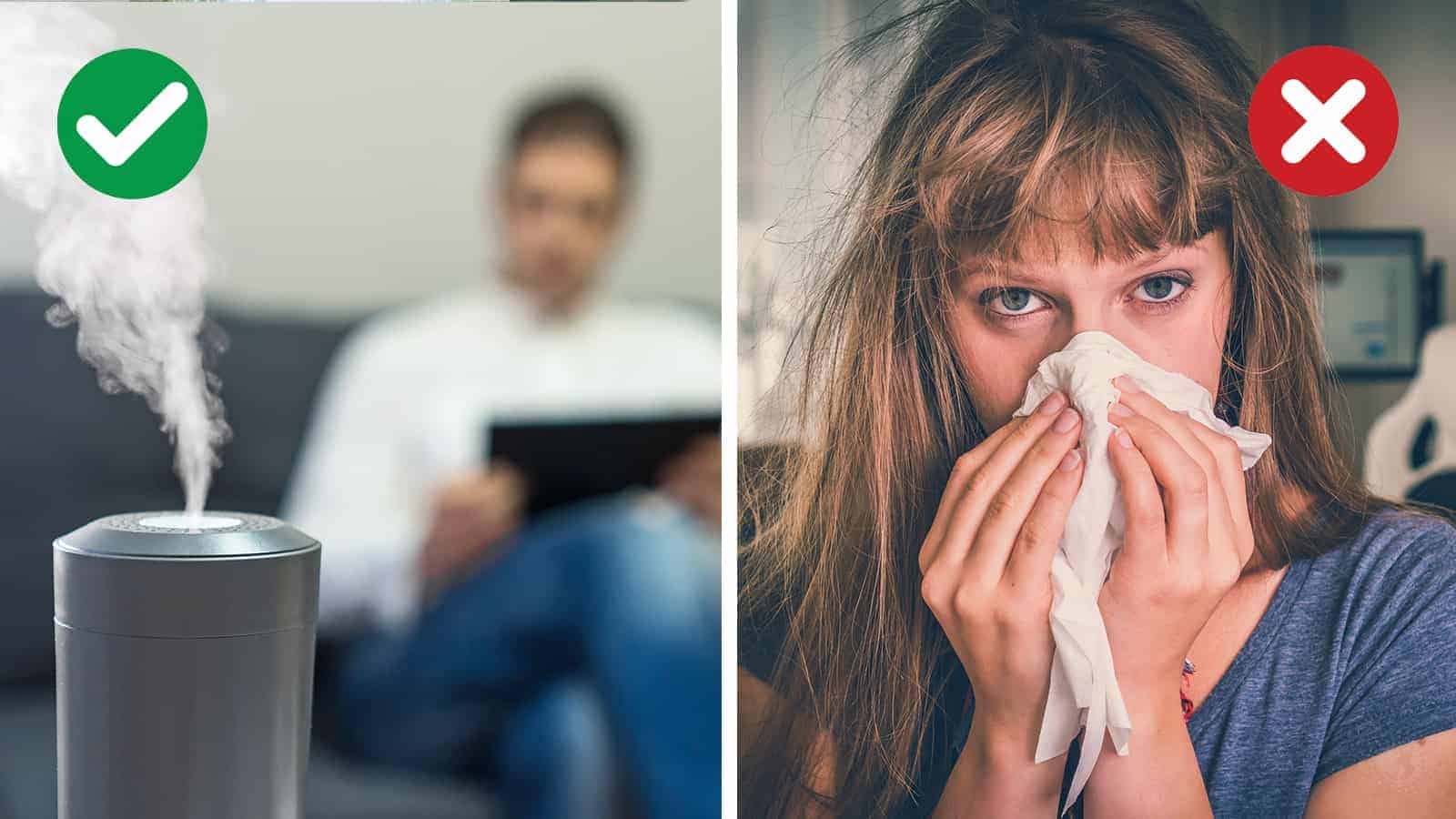
avoid catching a cold

Doctors reveal twenty tips to help avoid catching a cold.

10. Stay Hydrated

Your body is about 60 percent water. You need water to stay hydrated or to keep things at the optimal levels. While some people say that you should drink eight glasses of water each day, it’s just an educated guess.

It would help if you were drinking enough water for your body composition. Using an online hydration calculator will consider your age, the weather outside, your height, weight, and overall health. Some people need more water than others, so you want to make sure you get the proper amount.

Hydration is essential for keeping things flowing freely. Water helps flush mucus as well as providing much-needed oxygen to your cells. While it’s acceptable to have one cup of coffee or other beverage each day, the rest of your consumption should be pure H20.

Things to Consider

Most coughs will linger for a bit, but a few warning signs indicate it’s time to seek medical intervention. Here are some things to consider that maybe your cough is an infection.

• Coughing Up Phlegm

It’s completely normal to cough up phlegm when you’re sick. You need to examine the color of the mucus. If it’s clear to white color, then this is normal. However, if the color is green, bright yellow, or red, it’s a sign of infection. You don’t want to mess around with infection.

• You Experience Breathing Problems

Breathing problems and a cough run together. However, if you feel tightness in your chest, a burning sensation, or a hard time getting your breath, you need to see a doctor. You could have an infection that has developed into an upper respiratory situation.

• You Have A Fever

A fever is a sign that your body is fighting off an infection. If you thought you were done with this cold, the nagging symptoms could be lingering for a reason. Things like pneumonia can cause you to be extremely sick, even when you think you’re past the worst of it.

• You Are Sneezing Constantly

Sneezing with a chronic cough can point to a sinus or allergy issue. Allergy testing may be warranted if this condition lingers, and it can easily show you what’s irritating your airways and why your nagging cough just wont budge.

• You Have Stomach Issues

A cold follows typical patterns and symptoms. However, stomach issues like indigestion and diarrhea are not two of them. Nausea can be caused by excessive mucus, but it’s not typical.

Any digestive problems need to be evaluated as it could be the flu and not a cold.
nagging coughFinal Thoughts on Ridding Yourself of a Nagging Cough

Finally, a nagging cough is typically just a part of the process of getting over a cold. When it comes to conditions like bronchitis, it may seem that the cold will never go away. Thankfully, it will pass, and you will get better. If anything lingers more than the 18-20-day mark, then you should seek medical intervention.
20 Tips to Make Your Favorite Sandwich Healthier

Did you know that there are more than 200 varieties of sandwiches for you to enjoy? No wonder there are so many different kinds as a sandwich is the perfect meal on the go for breakfast, lunch, or dinner. Whether you prefer a grilled cheese, Philly cheesesteak, chicken salad, Falafel, or Monte Cristo doesn’t matter.

It’s about using the right ingredients to make it a healthy meal. A sandwich can fit into any diet plan out there if you prepare it correctly. However, the toppings you choose can add hundreds of calories and turn your meal into a high-fat calorie bomb. You must be careful about what you put on your sandwich, especially if you want to lose weight.

Here are 20 tips for you to make your sandwiches healthier.

Are you ready to give your sandwich a healthy makeover? Try these tips.

1. Ditch the White Bread

sandwichWhite bread is processed, and it’s not the best choice for a healthy sandwich. You need whole grains like wheat to help fill you and to give you less sugar and carbs.

Anything that you can put on white, you can also put on wheat bread, and it will taste just as good.

2. Load up on Vegetables

Those monster sandwiches that you see on restaurant menus aren’t healthy. If you want to get the height you see in advertisements, then you should use lots of veggies.

To fill your stomach without overeating, you need to load the sandwich down with things like pickles, cucumbers, tomatoes, bell peppers, and green leafy varieties. These garden additives will make each of your sandwiches pop with flavor without extra calories.

3. Size Counts

While that extra serving of ham or chicken seems like a good idea, you should make sure you have no more than 2-4 ounces on your bread. Use the veggies to give your brain the illusion of a big meal and not meat.

Some meats are better than others, and beware of those that are cured with sugar if you’re watching your waistline.

4. Skip Mayo and opt For Mustard Instead

Did you know just one tablespoon of mayonnaise has 45 calories and about five grams of fat? If you like to slather on the mayo, then you could be adding a couple of hundred unnecessary calories to your meal.

Instead, mustard has zero calories and no fat, so you can use as much of it as you want. If you absolutely cannot do without mayo, then use one made with an olive oil base as it’s healthier.

5. Grill Don’t Fry

Sure, frying that chicken tastes better than grilling it, but think of all the extra calories you’re adding? Grilling is the heart-healthy option to help you keep your cholesterol levels in check.

6. Be Leery of High-Calorie Sauces

Do you love to pour thousand island dressing, ranch, and other sauces on your subs? It would help if you opted for something lower in calories and fat. Don’t ruin a perfectly good sandwich with unhealthy sauces.

7. Pile on the Bean Sprouts

Bean sprouts can give you a crunch that is amazing on a wrap or sub. Why not add a heaping pile of crunchy spouts to give your mouth the satisfaction of the crunch that a side of potato chips would bring? You can skip the chips and save on the calories.

8. Use Part-Skim Cheese Not Processed Varieties

Read your labels when you shop for cheese. Some of the famous brands say that they are a cheese product because they are highly processed.

All these fake byproducts are unhealthy, and most won’t even melt. You want real cheese, and you want to make sure it’s made with part-skim milk to reduce the calories.

9. Say Yes to Dark Rye or Pumpernickel Bread

If you want a healthy meal but don’t like wheat dough, you should try rye or pumpernickel bread. They are among the best around that provide low calories and are right for you. It takes some getting used to the pungent taste, but nothing tastes more delicious than eating healthy.

10. Use Olive Oil Rather Than Butter to Grill Your Bread

Who doesn’t like grilled cheese? The next time you crave this deli favorite, why not use an olive oil-based mayo rather than butter?

Olive oil is perfect for you, and it makes a fantastic healthier mayo. Plus, it doesn’t have all the fat and calories of butter. Your bread will be crisp and golden and delicious.

11. Use Strawberry Slices Rather Than Jelly on a PBJ

The iconic PB&J is something that you’ve probably eaten a few hundred times in your life. Jelly and jams are full of sugar and calories. You can skip this overload of carbs by simply adding slices of strawberries to your next sandwich.

Nothing tastes better than fresh berries anyway. You could also top it like “The King of Rock n’ Roll” and have peanut butter and banana sandwich. Just make sure your peanut butter is all-natural so that you avoid added sugars.

dietitians

Nutritionists refuse to eat these thirty things.

12. Grill Onions and Peppers Don’t Cook in Oil

Some sandwiches require onions, bell peppers, and other veggies. You take away from the wholesome goodness of these garden delights when you fry them in fatty oils.

If you must fry, you should use olive oil. However, grilling them is a better option, and it won’t take away from the flavor.

13. Never Buy Premade BBQ Sauce – Make Your Own

Did you know that the average BBQ sauce has around 16 grams of sugar per two tablespoons? Wow, that’s a lot of sugar.

You can make a variety at home that tastes just as good and has half the sugary content. Plus, it’s easy to make a tasty version that is healthier for you.

14. Use a Dressing with A Yogurt Base Rather Than Mayo

Health-conscious people can make a dressing using a yogurt base rather than one with mayo. A lovely Russian sauce or Greek tzatziki is a healthier option that you can enjoy without all the guilt. Plus, the flavorful options are endless.

15. Pile on the Sauerkraut

Sauerkraut is a fermented food that is good for your gut health. Not only will it aid in digestion, but it helps you to boost your immune system too. What’s a Rueben or a Bahama mama sausage without the kraut?

16. Wrap it Up and Skip the Bread

Thankfully, your sandwiches don’t all have to be on bread. You have many options to ensure you keep it fresh. There are many low calories and carbohydrate wraps that make excellent sandwiches.

It’s a great option that doesn’t get soggy and is easy to transport. Plus, some varieties have flavorings like spinach or sun-dried tomatoes.

17. Use Lettuce as Your Base and Skip the Extra Carbs

If you’re trying the Keto diet or other low carb lifestyles, then you may want to skip the wraps and bread altogether. Many people love using large leaves of lettuce instead of a bread base.

Lettuce gives you a nice crunch, will hold things together nicely, and is a healthy option. Did you know there are more than 18 different varieties?

18. Steer Clear of Processed Meats

Did you know that many of the meats in your grocery store are heavily process and full of harmful things? A study was conducted on these meats in 2015 with shocking results. People who regularly consume these lunchmeats have a higher chance of developing cancer, specifically colon cancer.

It’s recommended that you don’t look at it more than twice a month, if at all. Choose healthy meats like chicken and turkey, and make your own lunchmeat. Who says you need meat at all? Why not enjoy veggie sandwiches?

19. Use an All-Natural Ketchup or Tomatoes Instead

If you thought that the tomato-based ketchup you eat with everything was useful for you, then guess again. Did you know that three tablespoons of the red condiment have 16 grams of sugar in it? That’s as much sugar as a large donut.

Thankfully, the low carb craze has brought awareness to this overlooked calorie issue. There are sugar-free or all-natural varieties now carried at grocery stores across the country, but you can also easily make it at home. Ketchup is one of those sneaky condiments that can pack a calorie punch.

20. Select Nitrate Free Turkey Instead of Ham

Ham is often cured with sugar, which does nothing but pack on the calories. Read your labels and look for a turkey that is nitrate-free as an option to pork.

Turkey is a lean and healthier option, especially if it doesn’t have the dangerous nitrates added to it. Experts suggest that pregnant women shouldn’t eat lunchmeat as it’s unsafe for the baby, so why should you eat it?

sandwichFinal Thoughts on Making a Healthier Sandwich

What would a summer picnic be without sandwiches? This iconic food has become a staple in the life of Americans. Yet, these little meal makers can be good or unbelievably bad.

You have the power to make your sandwich a healthy treat or meal that you can enjoy. You must learn to find alternatives that taste great but still give you the nutrition you need without the extra fat and calories.

Dentists Explain the Cause of Canker Sores (and How to Fix It)

Have you ever brushed your teeth in the morning and noticed a tender, painful spot in your mouth? It’s probably a canker sore. What causes this irritating mouth condition, and what can you do to remedy it?

If you have ever experienced these irritating sores, you know what they look and feel like. Canker sores are small flat ulcers or open wounds that appear in your mouth, inside of your cheeks, on your tongue, or your hard palate. Sometimes, you can get them along your gum line too.

Also known as aphthous ulcers, they usually have a white or yellow center surrounded by a ring of painful inflammation. It’s difficult to eat, drink, or even talk when you have an outbreak. Fortunately, they don’t last long and usually go away on their own, and they aren’t contagious.

Three Types of Canker Sores

Did you know that you can get three different types of canker sores? They are graded by how big they are and how long they last. Here are the types and characteristics.

1. Minor Aphthous Ulcers

canker soresThese are the most common mouth ulcers and less than a centimeter in diameter, and they often affect people between 10-20 years old. Although an outbreak can occur three to four times annually, minor aphthous ulcers usually heal within a week and don’t scar.

2. Major Aphthous Ulcers

Some of these mouth sores are larger and can last 14 days or longer. However, this type is less common. After they heal, they often leave a scar.

3. Herpetiform Aphthous Ulcers

On rare occasions, some mouth sores appear in a cluster of tiny ulcers that are usually gone in about seven days or so.

What Are Your Risk Factors for Canker Sores?

Even though studies show that one in five Americans will get these painful sores chronically, medical science is yet to determine their exact cause. However, some common risk factors seem to make people more susceptible to these ulcers than others.

Risks for Minor Sores

Here is the most common risk for the minor cankers in your mouth.

•Injury from a piece of food

•Rubbing caused from a sharp tooth or a dental appliance

•Chronic stress

•Acidity in certain foods like citrus fruits, tomatoes, berries, soda, coffee, or tea

•Allergic reaction to dental hygiene products or something ingested

•Bacterial infection from Helicobacter pylori, the same microbe that causes peptic ulcers

These factors can contribute to a range of dental issues that may require immediate attention. For instance, an injury from a piece of food can lead to a painful dental emergency, necessitating the expertise of an emergency dentist. They can provide prompt care to alleviate pain and prevent further complications, ensuring that patients can return to their normal routines as quickly as possible.

Additionally, chronic stress and the acidity of certain foods can exacerbate dental problems, leading to increased sensitivity or discomfort. If an allergic reaction to dental hygiene products or certain ingested items occurs, it can further complicate oral health. Consulting with an dentist not only helps address immediate concerns but also aids in identifying underlying issues, allowing for comprehensive care and preventive measures to maintain overall dental health.

Risks for Major Sores

If you have any of these uncommon risk factors, you are more apt to present with major aphthous ulcers.

• Certain chronic health conditions, like lupus, HIV/AIDS, Crohn’s Disease, celiac, Bechet’s disease, or anything that weakens the immune system

• Vitamin deficiencies such as lack of iron, folic acid, or Vitamin B12

Other Risk Factors

Women are usually more prone than men are to developing these painful sores. Researchers believe this risk may be due to female hormonal fluctuations. If you have a family history of developing aphthous ulcers, you have a greater chance of getting them, also.

tongue-healthWhat are the Signs and Symptoms of Canker Sores?

You will recognize the onset of these irritating mouth sores if you’ve had them in the past. Here are the common signs and symptoms of developing mouth ulcers.

•Burning and tingling sensations in your mouth, on your gums, or on your tongue before the sore appears.

•The sores appear inside your cheeks, in your mouth, on your tongue, or the back part of the roof of your mouth, which is called the soft palate.

•The sore appears as a round flat ulcer with a white or grayish center. It has an inflamed red border that is painful and tender to the touch.

Uncommon Symptoms

•Fever, usually low-grade

•Extreme fatigue

•Swollen lymph nodes in the neck or other body areas

How are Aphthous Ulcers Diagnosed?

Since these sores are common and usually go away on their own, most people recognize them and treat mild symptoms until they heal. However, you should consult a healthcare provider to diagnose these unusual symptoms.

•Abnormally large sores

•Sores are spreading throughout your mouth

•Sores last three weeks or longer

•You’re avoiding trigger foods but are still experiencing severe pain

•Dehydration, because you try to avoid the pain from drinking fluids

•A high fever

If you consult a healthcare provider team, they will do a physical exam to diagnose mouth ulcers. The exam will probably include reviewing your medical history and evaluating your risk factors. The team may also take samples of your blood to check for vitamin deficiencies or other underlying health conditions that could be responsible.

Are Canker Sores and Cold Sores the Same?

Both painful sores can appear in the mouth region, but they aren’t the same. Cold sores usually appear on the mouth and sometimes on the face, but aphthous ulcers only appear in areas inside the mouth. A virus (herpes simplex virus 1) causes cold sores, while aphthous ulcers have other causations and aren’t contagious.

Cold sores go through different stages, from a cluster of blisters to a scabbed-over sore that usually dries up in a few days. Aphthous ulcers are flat open sores with white or grayish middles. Both sores normally heal on their own and rarely have complications.

How to Treat Canker Sores

If you are like most people, you can usually take care of your mouth sores at home, and they will clear up without problems. However, more severe cases require medical intervention. Here are some common medical treatments for mouth ulcers.
•Oral medications or steroids, to reduce inflammation and promote healing

•Specialized mouth wash

•Vitamin supplements if your ulcers are due to nutritional deficiencies

•Cauterization: In severest cases, specialists can use dental lasers or chemicals like silver nitrate to cauterize the ulcers to bring quick relief from the pain and for faster healing

Natural Remedies for Canker Sores

If your mouth ulcers aren’t serious and you want to speed up the healing process naturally, here are some home remedies that you may consider.

• Saltwater Gargle

You may not like the slight sting of salt on your sores, but it is a natural way to dry up any sores.

What You Need:

•½ cup warm filtered water

•One Tsp. Salt

Directions:

Stir the salt into the water until it is completely dissolved.

Swish a mouthful of this solution around in your mouth for 20-30 seconds, then spit it out. Repeat every few hours as needed.

• Enjoy a Cup of Yogurt

Did you know that yogurt has natural probiotics that may soothe inflammation? Try to eat a cup of low-fat plain yogurt every day to promote healing for your ulcers.

• Honey

Scientific research demonstrates that honey has strong antibacterial and anti-inflammatory properties. Use a cotton swab dipped in honey and apply to your mouth sores at least three to four times a day. Be sure to use organic, unfiltered honey.

• Hydrogen Peroxide Rinse

Hydrogen peroxide is a regular treatment for wounds and infections. It can effectively rinse your mouth sores and destroy bacteria in your mouth that may make them infected.

What You Need:

• ¼ cup warm filtered water

• ¼ cup 3 percent hydrogen peroxide

Directions:

Mix peroxide in the water until it’s completely blended. Swish a mouthful around in your mouth for 20-30 seconds and spit it out. Repeat throughout the day, as necessary. You can also dab a cotton swab in the mixture to apply directly to the sores.

• Milk of Magnesia

Did you know that the same over-the-counter treatment for digestive problems can also treat ulcers? It’s a natural antacid that can balance the pH in your mouth so the sores will dry up.

Directions:

Use a cotton swab to dip into a small amount of milk of magnesia and apply it directly to the sores in your mouth. Allow it to sit on the sores for about 5-10 seconds, then rinse your mouth. Repeat three to four times daily until the sores are healed.

How Can You Prevent Canker Sores?

Experts still aren’t sure what causes these painful sores, but they have narrowed down some of the risk factors. Remember that there remains no cure for them. If you avoid some of the risks, you might prevent or minimize future outbreaks. Here are some measures to consider.

• Avoid eating or drinking things that can trigger an outbreak. These higher acidity foods like citrus fruits, tomatoes, and anything extra spicy. You should also drink more water instead of sodas, coffee, and tea.

• Chewing gum can sometimes make you accidentally bite the inside of your mouth or tongue, which results in a mouth ulcer. For fresh breath, consider sugar-free mints or a few fresh herbs like peppermint or parsley.

• Prevent injury or irritation to your mouth, gums, and tongue and use a toothbrush with soft bristles. When you brush and floss at least three times a day, you flush the bacteria from your mouth that may promote infections and mouth ulcers.

canker soresFinal Thoughts on Dealing with Canker Sores

If you are one of the many people who battle canker sores, you have hope. They aren’t usually serious, aren’t contagious, and will often heal on their own within days. However, you can still use preventative measures and home remedies to minimize outbreaks or speed healing times.

Experts Reveal 6 Simple Strategies That Contribute To Personal Growth

Personal growth is challenging but rewarding. Still, despite knowing the good that lies in wait, it can be difficult to get into the swing of things when it comes to self-improvement if you work on yourself. With all the hurdles, sure to be thrown your way, it can be tough to adapt and power through while still maintaining the momentum of growth.

Those who don’t pay much attention to their personal growth often have trouble finding success. They don’t learn from mistakes, become better people, or move towards goals consistently. It’s a bad situation all around, and one that you should try your best to avoid.

If you’ve felt like your personal growth has come to a halt lately, then you may need to rethink your methods for self-improvement. How are you ensuring that what you do bears fruit in your betterment as a person? Here’s how experts reveal 6 simple strategies that contribute to personal growth.

1.    Develop Endurance Skills

Personal growth can, often, feel like a bit of an uphill battle. To fight that battle, you need to have mental endurance. Wellbeing technology expert, consultant, and writer Tchiki Davis, Ph.D., has some statements about what skills to develop. Here are ones you can focus on:

·         Resilience

Resilience refers to the skill that allows you to bounce back from difficult situations and circumstances. If you don’t have resilience, it’s nearly impossible ever to reach success. You’ll encounter many failures along the way. So skills like mindfulness, emotional regulation, and positive thinking play into resilience.

personal growth

·         Self-Soothing

Stress is common when you’re chasing goals and trying to work on yourself. If you don’t know how to calm that stress down, you’re going to wind up hurting yourself in the long run and even becoming discouraged as you lose all positive thinking. That’s where self-soothing comes in. The right self-soothing methods can help calm you down from moments of anxiety while balancing out all the stress, so you’re prepared for whatever comes next.

·         Progress-Monitoring

It can be difficult to keep going when you don’t think you’re getting anywhere. That’s why tracking your progress can work wonders for you. You can clearly see your improvements, how far you’ve come, and areas that need your attention. Of course, progress-monitoring is equally crucial for a more practical reason: it ensures that you’re going on the right track and allows you to make changes if you veer off course.

2.    Perform Positive Self-Talk

The world can weigh a little heavily on your shoulders sometimes. It’s okay to have periods where you feel down or discouraged – as long as you get back up again later! That’s where positive self-talk comes into play.

As its name suggests, positive self-talk is the act of speaking motivationally, inspiringly, or effectively instructional to yourself to boost your emotional state. It sounds a little silly to think that this can have a significant effect, but the results are more tangible than you may think. Research has long linked positive self-talk to enhanced performance in things like sports and endurance tasks!

What if you don’t feel like you believe your positive self-talk right away? That’s okay – fake it till you make it. Eventually, with enough words of encouragement, you’ll begin to believe yourself. You might even start seeing results sooner than expected!

This isn’t just good for your growth because it motivates you and keeps you on task. It’s also a sign of personal growth in itself. The improvement of your self-esteem, positive thinking, and coping mechanisms is a success all on its own, and it’s one worth striving for.

3.    Make A Map

Want to understand how far you’ve come and where you need to go from here? Sometimes it can be tough because you have no way to rewind your memories and easily review the changes you may have made. The solution, then, is to map it all out, says Doctor of Psychology, Professional Clinical Counselor, life coach, and speaker Ilene Berns-Zare.

When you have some time to spare, think about your life and its progression. How did you get here? Can you follow the trail you’ve walked along? Here are some questions to help you out with this process:

  • What are some of my most significant experiences?
  • What are some of the mistakes I have made, and how did I overcome them?
  • Can I teach anyone a valuable lesson based on my mistakes?
  • What are some big lessons I’ve learned over the years? Did I learn them in time, or the hard way?
  • What are some things I wish I’d done?
  • What are my goals? Where do I want to go?
  • What are my biggest values, dreams, and hopes?
  • What can I do next to get closer to my goals and dreams?

It’s a lot to think about at once! If you dislike this process, you can make it easier by committing to writing a daily or weekly journal consistently. That will give you something physical to flip through as time goes by!

4.    Develop Thinking Styles Focused On Progression

You can’t grow if you don’t know how to progress properly in life. You’ll wind up stagnant and stunted, and no one wants that! Here are some thinking styles Davis recommends developing in this vein.

·         A Growth Mindset

A growth mindset is the opposite of a fixed mindset, which is defined as the act of shying away from risks and challenges in favor of staying in a safe space. The growth mindset, on the other hand, involves not letting fear control you. It means seeking good opportunities and being brave enough to seize them, even if you’re anxious about them. It’s about being smart enough to know when taking a leap of faith or jumping at a challenge is a good idea. Without this mindset, your growth will get stuck.

pop meme·         Entrepreneurial Thinking

Entrepreneurial thinking is what it says on the tin: thinking like an entrepreneur, or an individual in business. You see, entrepreneurs are excellent planners (and if they aren’t, they seldom find success). They’re also innovative, convincing, and adaptable – all traits you’ll need to grow as a person and reach all your goals and dreams.

·         The Search For The New

The beauty of life is that you never have to stop learning. You can continue developing new skills and seeking new opportunities for the rest of your life. So keep doing that! That way, you’re always become a better, more positive you every day.

5.    Be Kind

A little kindness goes a long way. Although you might be an objectively decent or even good person, the chances are that, with your busy schedule, you don’t have much time to put into acts of kindness. You can work on changing that by making kindness a genuine habit.

According to Madeleine Mason Roantree, a psychologist, when you are compassionate to others, you gain multiple personal benefits. Though kindness shouldn’t be about what you can personally gain, it’s still interesting to note these factors, such as:

  • Feel less isolated
  • Have a sense of purpose
  • Improve your positive thinking and mood
  • Foster better relationships
  • Are becoming a better person

You don’t need to do anything overly fancy to reap the rewards of kindness. All you really need to do is be genuine in your compassionate gestures, and you’re good to go! Here are some ideas for random acts of kindness:

  • Send a loved one a nice text message.
  • Compliment a stranger respectfully.
  • Buy drinks or lunch for a colleague or friend.
  • Donate to charity or volunteer for a cause you’re passionate about
  • Do someone a favor

But there’s another way you can be kind for personal growth: being kind to yourself—licensed clinical psychologist and neurotherapist. Catherine Jackson says that you should try to look at yourself as you would look at a best friend. You wouldn’t, for example, be overly hard on your friend for making a mistake, nor would you refuse to be empathic of their emotions.

6.    Learn Gratitude

Being grateful is a huge step towards growing well as a person. Without gratitude, you never truly appreciate the things in life that have gotten you to where you are and can help you go even further. Taking these things for granted can, then, cause you to lose them.

Gratitude is a bit of a skill, and it’s one that needs to be practiced to be honed. A good idea is keeping a gratitude journal that must be filled every day with at least three things you’re grateful for that day. It’s a good way to shift your mindset, so you notice more good things in everyday life.

Is it a fair bit of effort? Yes, but it’s certainly worth it! Studies indicate multiple positive effects of practiced gratitude, including:

  • Better sleep
  • Reduced anxiety and stress
  • Better social relationships
  • A more positive outlook on life

According to sport psychology mental performance coach Anna Hennings, MA, there’s an acronym you can use to help you think of what you’re grateful for. It’s a surprisingly fitting one, too: GIFTS. Here’s how to use it!

·         G for Growth

This refers to your own areas of personal growth, such as new skills you’ve learned.

·         I for Inspiration

This is self-explanatory – what has inspired you recently?

·         F for Friends and/or Family

The people closest to you and who you love are always worth being grateful for.

·         T for Tranquility

What moments of peace and happiness do you enjoy? Think of your time spent listening to music, sipping tea, reading, or doing something similar.

·         S for Surprise

Again, this is self-explanatory – what pleasant surprises popped up for you?

personal growthFinal Thoughts On Some Simple Strategies That Contribute To Personal Growth

For many people, purpose can be found in the fight for self-improvement and personal growth. It can be fulfilling to see yourself become better, whether in your values, your work, your relationships, or your life as a whole.

That’s why always working on yourself is so important. It propels you closer to all your hopes and dreams, all while making you someone to look up to. You deserve to watch yourself blossom into the very best that you can be, so work hard on yourself. You’ll be amazed how far you can go in terms of growth in just a few months!

18 Quotes About Being Positive from Motivational Speakers

Many people have quotes about being positive, but the best quotes come from motivational speakers.

These are people who know how to encourage and bring out positivity in people. They are trained to do so, and their advice applies to most people.

A motivational speaker can help others reflect on their lives. They’ll help you pinpoint problem areas of your life or areas that could use more of your attention. Then, they’ll give tips on how to improve it.

Their quotes about being positive can normally be applied to all areas of your life. They’ll help you feel better and have a higher sense of hope for the future. By doing this, they’ll help you bring out the best of yourself.

Remember these quotes about being positive and you’ll be able to get through any struggle in your life. They’ll be nice reminders when things are going well, and they can be guidance when things didn’t go as planned.

 18 Quotes About Being Positive

1. “When you are grateful, fear disappears and abundance appears.” – Tony Robbins

When you are positive and count your blessings, the negativity will fall away. This will cause any fear you are feeling to fall away. It’ll also cause more positivity to come your way, making your life even better.

quotes about being positive

2. “In every day, there are 1,440 minutes. That means we have 1,440 daily opportunities to make a positive impact.” – Les Brown

You can’t let a couple of bad minutes affect the rest of your day. Each minute is a new chance for positivity. Use each minute wisely and strive for positivity in each moment, despite what happened in the minutes before.

3. “Acknowledging the good that you already have in your life is the foundation for all abundance.” – Eckhart Tolle

Counting your blessings will give you a solid foundation for more blessings to come. Being positive leads to further positivity, making it a beneficial cycle in your life.

If you choose to count all the negative parts of your life, however, you’ll be making room for more negativity. Remember that what you focus on is what will come back to you, so make sure you focus on positivity.

4. “Think about every good thing in your life right now. Free yourself of worrying. Let go of the anxiety, breathe. Stay positive, all is well.” – Germany Kent

When you think of the good things in your life, you’ll feel more optimistic. You won’t worry so much, and your anxiety will lessen. Take deep breaths and stay positive, as Kent explains.

5. “Change the way you look at things and the things you look at change.” – Wayne Dyer

When you feel like everything is bad, try changing the way you look at things. Usually, it’s all in your mindset. If you start thinking better, the things around you will improve.

6. “People deal too much with the negative, with what is wrong … Why not try and see positive things, to just touch those things and make them bloom?” – Thich Nhat Hanh

If you ever feel like you are constantly dealing with problems, then stop putting so much time into it. Instead, put that time and energy into what is going right. Look around and find the good in each moment and focus on that instead of on the negativity.

7. “A loving person lives in a loving world.  A hostile person lives in a hostile world; everyone you meet is your mirror.” – Ken Keyes, Jr.

Everyone lives in the same world, but each person’s mindset makes the world different for them. The world will seem loving in return if you have a loving personality. On the other hand, if you have a hostile personality, the world will seem like a hostile place.

The world is a reflection of you. So, whatever it is you want to see in the world, make sure you can see it in yourself first.

8. “The best thing to do when you find yourself in a hurting or vulnerable place is to surround yourself with the strongest, finest, most positive people you know.” – Kristin Armstrong

When your world seems to be crumbling or closing in on you, think of the positive people in your life. As Armstrong explains, spend time with them when you are feeling vulnerable. When you do this, you will become stronger and more positive, too.

9. “Positive thinking will let you do everything better than negative thinking will.” – Zig Ziglar

When you are positive, your thoughts will flow more freely. You’ll be able to be more creative and open-minded, and you will think of new ways to do things.

On the contrary, when you are negative, your thoughts will be restricted. Your thoughts will all be negative, hindering your skills and abilities. As you can see, you can do far better work when you are positive than when you are negative.

pop quotes10. “It takes but one positive thought when given a chance to survive and thrive to overpower an entire army of negative thoughts.” – Robert H. Schuller

Positivity is much more powerful than negativity. It will give you the strength you need to overcome obstacles and free your mind of hindering thoughts. Just one positive thought can overrule many negative thoughts, so keep that in mind the next time you feel negativity.

11. “It is important that you recognize your progress and take pride in your accomplishments. Share your achievements with others. Brag a little. The recognition and support of those around you is nurturing.” – Rosemarie Rossetti

While continuous boasting may be taking it too far, doing a little bragging is good. It’ll allow you to show pride for your achievements and allow others to see the greatness, too. You’ll feel good from the support, giving you an even greater sense of positivity.

12. “Much of our pain or misery in life stems from our own outlook towards the situation. A paralyzed person can also be happy, so can be a financially poor family.” – Amit Ahlawat

Your negative thoughts can cause you more pain than is necessary. Instead of thinking about how bad a situation is, find whatever positivity you can. Despite your obstacles or setbacks, you can be happy in any situation.

13. “I do not fix problems. I fix my thinking. Then problems fix themselves.” – Louise Hay

You can’t control everything, but you can control your thoughts. Not every problem can be fixed to your liking. You can change your thinking to work with the problem, however.

When you do this, you’ll be able to find a new solution. It will be your guide to overcoming whatever obstacle is set before you. Once you can do this, the problems will eliminate themselves.

14. “Positive thinking is more than just a tagline. It changes the way we behave. And I firmly believe that when I am positive, it not only makes me better, but it also makes those around me better.” – Harvey Mackay

You can’t simply say that you are a positive thinker. You have to live that way, as well. If you are a positive thinker, you will behave positively.

This will make you a better person and make you better able to achieve your goals. It’ll make the people in your life better, too, as you’ll be bringing positivity to their lives.

15. “You’ve done it before and you can do it now. See the positive possibilities. Redirect the substantial energy of your frustration and turn it into positive, effective, unstoppable determination.” – Ralph Marston

Each time you’ve encountered a hardship, you have gotten through it one way or another. You can get through it this time, too. Stay positive and look for new possibilities.

Use the frustration you are experiencing to get you through a hard time. Don’t let this feeling hold you back, as it can be a useful tool for moving forward.

16. “Don’t let mental blocks control you. Set yourself free. Confront your fear and turn the mental blocks into building blocks.” – Dr. Roopleen

Mental blocks happen to everyone, but don’t let it get you down. Look for the cause of the mental block and address it so that you can move forward. By addressing it, you are learning and growing, which is what makes them become building blocks.

17. “You have within you right now, everything you need to deal with whatever the world can throw at you.” – Brian Tracy

All of the necessary tools are already inside of you. It is up to you to find and use them for whatever obstacle is before you. You can overcome anything; keeping a positive mindset will help you get there.

18. “Optimism is a happiness magnet. If you stay positive, good things and good people will be drawn to you.” – Mary Lou Retton

Positivity attracts positivity. If you can stay positive, you will always have other positive situations and people coming to you. It is sometimes the only tool you need to reach success, along with motivation and determination.

quotes about being positiveFinal Thoughts on Quotes About Being Positive from Motivational Speakers

Motivational speakers can convince many people to work on positive thinking. These quotes about being positive prove how knowledgeable they are in this area.

Use their advice and wisdom given in these quotes about being positive, and your life will change for the better. Positivity is a way of life, as these motivational speakers explained. Following their tips can help you reach all of your goals and live a happy life.

20 Quotes About Change Never to Forget (No Matter What)

Change means different things to different people, as these quotes explain. Some people embrace change, while others resist it.

Change can mean good things are coming, or it could be something unexpected and dreaded is happening. Either way, you have to accept it and make that change into something great. These quotes about change can help you accept any change and make it as beneficial as possible.

Based on your mindset, you can control what effect a change will have on your life. If you embrace change, you will find the benefits of it. On the other hand, if you resist change, you may struggle to see any benefit.

20 Quotes About Change Never to Forget

Change in life is inevitable. These quotes about change will help you understand that it is necessary. Plus, some of the quotes about change guide making the most of the change.

1. “Change will not come if we wait for some other person or some other time. We are the ones we’ve been waiting for. We are the change that we seek.” – Barack Obama

No one else can implement the changes that you want to see, says President Obama. You have to be the one to make the changes and begin the process. This is the only way to have the life you have dreamed of and reach your goals.

quotes about change2. “Any change, even a change for the better, is always accompanied by drawbacks and discomforts.” – Arnold Bennett

Change isn’t easy. It’s uncomfortable and new, and it won’t always be perfect. This doesn’t mean it’s not a good change, so keep an open mind as you get used to the new situation.

3. “Even if you cannot change all the people around you, you can change the people you choose to be around.” – Roy T. Bennett (click to tweet)

Change doesn’t always have to be forced on you. It can be a choice that you make. This doesn’t always make it any easier, however. When you sense that you need a change in your life, it is up to you to figure it out. This may mean walking away from people you care about if they aren’t a positive influence in your life.

4. “I cannot say whether things will get better if we change; what I can say is that they must change if they are to get better.” – Georg Lichtenberg

There is no guaranteed outcome when something changes. However, if you don’t try and choose to stay the same, there will be no room for improvement. To have a better life, you have to be willing to change.

5. “Life is a series of natural and spontaneous changes. Don’t resist them — that only creates sorrow. Let reality be reality. Let things flow naturally forward in whatever way they like.” – Lao Tzu

Resisting change is only resisting the inevitable. It will leave you feeling frustrated and in despair, as Tzu explains. Instead, accept each change as it comes and adapts accordingly.

6. “Nothing is absolute. Everything changes, everything moves, everything revolves, everything flies and goes away.” – Frida Kahlo

Everything in life changes at some point. Things aren’t meant to stay the same, so nature ensures the changes are never-ending. Accept them and know that even if one thing leaves, something good will take its place.

7. “Resistance is never the agent of change. You have to embrace the actions that are going to get you closer to your goal.” – Ali Vincent

Trying to avoid making a change will keep you from reaching your goal. You have to roll with each change, no matter how unexpected, to keep getting closer. With each change that you adapt to, you are becoming more resilient for the next one.

8. “There can be no life without change, and to be afraid of what is different or unfamiliar is to be afraid of life.” – Theodore Roosevelt

Without change, the life cycle would end. Each part of life requires some change. So, to be afraid to change is the same as being afraid of life itself, as Roosevelt explained.

9. “No matter who you are, no matter what you did, no matter where you’ve come from, you can always change, become a better version of yourself.” – Madonna

Anyone can change if they set their mind to it. This means you can change yourself and become whoever you have always dreamed of being. It isn’t too late to become the best version of you. Just remember that you are the only one who can change you; it should be the changes you want.

10. “Progress is impossible without change, and those who cannot change their minds cannot change anything.” – George Bernard Shaw

You can’t become better if you never change. Improvement is always necessary, and improving means changing and adapting. Those who can’t change won’t be able to progress in any of their life goals.

pop meme11. “Look at things from a different perspective, embrace change, look out for opportunities, and you will feel much more in control.” – Steve Backley

When a change seems to be hard, try looking at it differently. If you can see it differently, you’ll find the opportunities that arise from the change.

12. “Continuity gives us roots; change gives us branches, letting us stretch and grow and reach new heights.” – Pauline R. Kezer

While roots are essential, branches are the only way to expand. Branches grow and stretch across new places and see new things that roots could never see. Allow yourself to branch out and see more of the world than you would have if your life never changed.

13. “Without change, something sleeps inside us and seldom awakens. The sleeper must awaken.” – Frank Herbert

Life would become dull and monotonous if nothing ever changed. You would lose a part of yourself that sparked the urge to grow and adapt.

14. “Stop being afraid of what could go wrong, and start being excited about what could go right.” – Tony Robbins

In life, there are always things that could go wrong. This is especially true when a change is taking place because you aren’t sure what to expect.

However, the chance of things going right is greater than the chance of them going wrong. Instead of focusing on what could go wrong, focus on the excitement of what you want to happen. There is no need to stress yourself out over the negative when the positive is likely to occur.

15. “Obstacles don’t have to stop you. If you run into a wall, don’t turn around and give up. Figure out how to climb it, go through it, or work around it.” – Michael Jordan

Sometimes, life forces you to make a change. When an unexpected obstacle gets in your way, make a change to get around it. Create a new plan and adapt accordingly.

16. “Things alter for the worse spontaneously, if they be not altered for the better designedly.” – Francis Bacon

If you don’t make a change when given the option and the chance to plan accordingly, it could happen unexpectedly. When this happens, you’ll be left scrambling and trying to recover. So, when the chance arises, make a change for the better, so you aren’t blindsided later on.

17. “Dreams are the seeds of change. Nothing ever grows without a seed, and nothing ever changes without a dream.” – Debby Boone

You must be willing to change your life when you have a dream. You can’t reach new successes and achievements if everything stays the same. So, when you have a dream, allow it to grow and make the necessary changes.

18. “Change is slow and gradual. It requires hard work, a bit of luck, a fair amount of self-sacrifice, and a lot of patience.” – Robert Greene

When a change occurs, it isn’t always easy, as explained before. Getting used to it may take time and dedication, and you may feel like giving up sometimes. Just keep working at it, though; eventually, it will be normal.

19. “It takes a lot of courage to release the familiar and seemingly secure, to embrace the new. But there is no real security in what is no longer meaningful.” – Alan Cohen

At some point, change is necessary. Your life isn’t intended to stay the same for all of the time. You have to let go of what you are comfortable with and accept what is coming next.

20. “Some changes look negative on the surface, but you will soon realize that space is being created in your life for something new to emerge.” – Eckhart Tolle

While some changes may seem devastating, try to remember that something good is coming. When a change leaves an empty void in your life, it will be replaced by something else. You will have good things in your life, even if bad things occasionally happen.

quotes about changeFinal Thoughts on Quotes About Change to Remember Always

Change isn’t always easy, but these quotes about change should help you accept it. Life is full of unexpected changes, and you must make decisions that will lead to serious change. It is all a part of growing and learning.

Learn to embrace change and view it as an opportunity for something new. Look around for good in life even as everything changes, and you’ll be reminded that change isn’t always bad. Remember these quotes about change the next time you experience a change and know that everything will be okay.

Research Reveals a Spider Venom That May Help IBS

If you’ve ever suffered from irritable bowel syndrome, you know that it is not a pleasant experience. Even worse, it can be challenging to diagnose. Most people suffering from irritable bowel syndrome would do almost anything to get rid of the symptoms. Researchers now reveal a new way to treat irritable bowel syndrome: spider venom.

This therapy is not going to turn you into a Spider-Man, but you could feel so much better you would think after receiving this particular spider venom. Keep reading to find out what researchers now know about this atypical treatment.

What is Irritable Bowel Syndrome?

Irritable bowel syndrome (IBS) is a disorder of the large intestine. It’s quite common but quite uncomfortable. There is technically no cure. It’s a chronic condition that can arise many times throughout a person’s life.

The good news is that it’s not known to cause colorectal cancer. This diagnosis is a little bit of relief for a person with chronic IBS. When you suffer from this condition, you’ll welcome any bit of comfort you can get. However, if left untreated, it can get severe and possibly even be life-threatening.

If you do have any damage to the tissues in your large intestine, it’s probably something more severe than IBS. Your doctor can examine you to tell you more.

Types of IBS

spider venom ibsThere are two types of IBS, and both have similar symptoms. The difference is the location of the afflicted areas.

  • Ulcerative colitis is when you get inflammation and ulcers in the lining of your rectum and colon (large intestine). It’s estimated that 750,000 people in the United States have ulcerative colitis. It takes time for this condition to develop. Although you’ll never be completely cured of it, it can go into long-term remission with treatment and lifestyle changes.
  • Crohn’s disease is an inflammation of the digestive tract. It can affect deep layers of tissue. This version is also incurable but can go into long-term remission with treatment and lifestyle changes. It may have a few additional symptoms that are different from ulcerative colitis: inflammation of the eyes, skin, joints, liver, and bile ducts. However, this usually occurs if it’s allowed to get to a point where it’s severe.

Symptoms of IBS

There is a bit of good news and bad news about the symptoms of irritable bowel syndrome. The good news is that the symptoms alone are relatively harmless (albeit uncomfortable). The bad news is that the discomfort can be so severe that you might feel like it’s going to kill you.

IBS is most often characterized by cramping, abdominal pain, bloating, mucus in stool, and gas. This ailment may be accompanied by diarrhea, constipation, or both. Essentially, any strange and sudden change in your bowel movements is an indicator of IBS.

If you experience more severe symptoms such as weight loss, rectal bleeding, vomiting, or nausea, these symptoms indicate something else. It could be colon cancer, so see your doctor right away.

Diagnosing IBS

Gastroenterologists don’t have a specific test for irritable bowel symptoms. They generally go by the symptoms you experience. Your gastroenterologist may do tests to rule out other issues before concluding that you have IBS.

The biggest clue is that the pain you experience connects to your bowel movements. Most people with IBS notice that the problem goes away shortly after the bowel movement has been completed. Other significant clues are that your stools look different, or you have a change in the frequency of your bowel movements.

Time is another clue that the gastroenterologist may use. They generally check to see if you’ve had the issues at least once a week for the last three months and if you’ve had symptoms for at least six months.

Additional Information About IBS

IBSCauses, Risk Factors, and Triggers

The cause of IBS is unknown. However, researchers have identified a few speculated risk factors. One is genetics. If you have a family history of IBS, you’re more likely to develop it.

IBS develops in young people under the age of 50. Women are more prone to IBS than men, and people with mental health problems seem to be more inclined to it.

Certain things seem to trigger irritable bowel syndrome in people. Food is the main trigger, which makes sense because IBS is a disorder of the large intestine. Stress can make IBS worse, but researchers don’t believe it causes IBS.

Traditional Treatments

Since doctors don’t know what causes IBS, there aren’t any specific treatments for the disorder. Traditionally doctors treat the symptoms. For example, if you’re constipated, they’ll tell you to take laxatives, but if you have abdomen pain, they may prescribe antispasmodics.

Doctors may also recommend that you change certain lifestyle factors. Eat healthier, exercise more, stop smoking, and take probiotics, improving your gut flora.

Statistics

*Statistics provided by the International Foundation for Gastrointestinal Disorders.

  • Between 10 and 15 percent of people worldwide have IBS.
  • About 40% of people with IBS have a mild version, 35% have a moderate performance, and 25% have a severe case of IBS.
  • IBS is the most common disorder diagnosed by gastroenterologists.
  • Women make up from 60 to 65 percent of IBS cases.

Spider Venom as a Pain Treatment?

It may sound bizarre, but recent research done by Professor Richard Lewis from the Institute for Molecular Bioscience, University of Queensland, and the company has found two peptides in spider venom that could alleviate pain associated with irritable bowel syndroms. Research believes these peptides can relieve pain from many conditions. The study is in the beginning stages, but if it becomes a mainstream treatment, it will revolutionize the way chronic pain is treated.

Why Venom Instead of Pain Medication?

Although there are current pain medications that treat pain associated with IBS, after long-term use, a person can develop a tolerance to the medicine. This scenario won’t happen with the peptide in the spider venom.

Another consideration is that current medications don’t always work ultimately, primarily because of dosage limitations. The effects are only temporary, so pain medications are not an effective way to treat pain. Of course, no one is recommending that you skip pain medication – you still need some relief until something better comes along.

The Peptides in the Venom

The venom of the Bird Eating Tarantula is harmless to humans, typically. Otherwise, it wouldn’t be an option for pain treatment. However, as mentioned before, it’s two peptides in the venom that would be isolated for treatment usage. They are called TAP1A and TAP2A.

The way they work is by inhibiting chronic pain channels in the body. Most chronic pain channels are sodium (NaV) and calcium (CaV) channels. These are known as voltage-gated channels because they use electrical signals to move sodium and calcium into cell membranes. The main channels are:

  • NaV1.1
  • NaV1.3
  • NaV1.7
  • NaV1.8
  • NaV1.9
  • CaV2.2
  • CaV3.2

Think of these channels as radio stations. The peptides in spider venom would act as interference that stops the frequency (chronic pain) to the channels. It would eliminate the problem, and you wouldn’t need pain medications, which can sometimes have severe side effects.

The Spider That the Venom Comes From

The venom in discussion comes from the Venezuelan Pinkfoot Goliath Tarantula. It’s the world’s most massive spider. The two peptides used from the venom are called Tap1a and Tap2a. They effectively inhibit pain receptors in the gut area and do so almost immediately. There is still a lot of research to be done on this spider venom treatment, but it’s showing promising results.

If you’re a spider lover, you’ll find the Pinkfoot Goliath interesting. If not, it may be a nightmare for you.

This gigantic tarantula is sometimes called the Bird Eating Tarantula because it can eat birds or anything that’s smaller than it is. These spiders grow up to 4.75 inches (12 centimeters) with a leg span of up to 11 inches (28 centimeters). Despite the name, the spider is a coffee brown color. However, it does have a bit of pink fur towards the bottom of its legs.

spider venom and ibsFinal Thoughts on Using Spider Venom for IBS

When you say it out loud, using venom from a spider (or any venom for that matter) for IBS sounds ridiculous and dangerous. However, many medications started with bizarre theories and have proven beneficial once the research was done. There is promising evidence that the spider venom treatment could be the next best thing for pain treatment of IBS.

Still under research, this treatment most likely won’t be available any time soon. So for now, you’ll have to continue using pain medication. Check-in with your doctor to learn more about the progress and availability of this therapy as it emerges. Until then, manage your irritable bowel syndrome with specific lifestyle changes can help prevent the disorder from affecting your quality of life. Make sure you have regular appointments with your doctor and take care of yourself so that chronic pain will be the least of your concerns.

Psychologists Explain 12 Bipolar Depression Signs Never to Ignore

It’s common for people to experience ups and downs, and with the state of the world currently, there may be more downs than ups. However, bipolar depression is a whole different animal. It can be severe depression with bizarre behavior that lasts for an unreasonably long amount of time.

It’s essential to recognize the signs of bipolar disorder so that you or whoever is suffering from it can get the help they need before severe consequences occur. By recognizing the signs and symptoms early, you may even be able to prevent the depressive episode from getting worse. In this article, you’ll learn a little about depression from bipolar disorder plus 12 symptoms that psychologists say you should never ignore.

What is Bipolar Disorder?

If you’re reading this, there is a good chance that you already know what bipolar disorder is. However, if you don’t, make sure you read this section.

Bipolar disorder is a disorder in which the affected person has severe shifts in mood, thinking, behavior, and day to day operation. Everyone might have an off day, but people with bipolar disorder have extreme off days that are noticeable and possibly dangerous. Even worse, they may not be aware of the change.

Bipolar Depression

bipolar depressionBipolar depression is a “state” of bipolar disorder. People with bipolar disorder can have shifts from manic episodes (extreme, erratic highs of feeling euphoric) to extreme lows, which is the depression state. Neither state is good, but the depression state can quickly become dangerous to the affected person and the people around them.

If that’s not bad enough, affected people can experience both episodes simultaneously. These people will be extremely depressed while being unusually energized. It might be one of the most bizarre things you’d ever encounter. Unfortunately, the disorder is more common than you think.

Types of Bipolar Disorder

There are three types of bipolar disorder. They are defined by the moods that the affected person may experience. They are:

  • Bipolar I disorder – characterized by manic episodes lasting at least a week and depressive episodes lasting at least two weeks. May require hospitalization.
  • Bipolar II Disorder – deals more with depressive episodes than manic episodes. There could be hypomanic episodes (not quite full-blown manic).
  • Cyclothymic disorder – defined by the cycling of depressive and hypomanic episodes over at least two years. It can be only one year for children.

Occasionally a person can display a bipolar type that doesn’t correspond with any of these three. In this case, it may get labeled as “other.”

Unfortunately, there is no cure for bipolar disorder. This means that it must be managed well to keep it from getting out of hand. That’s why it’s so vital that you don’t ignore the signs of a depressive episode. Below are 12 of the most common symptoms of depression from a bipolar episode. If you are someone you know are displaying them, don’t delay getting treatment.

12 Causes and Signs of Bipolar Depression You Should Never Ignore

Here are classic signs that someone may struggle with this mental health challenge.

1. Feeling sad or hopeless may indicate bipolar depression.

This symptom is a classic and most recognized sign of bipolar depression. However, it’s also a symptom of unipolar depression (usually just called depression). You can tell the difference if the person also has manic episodes. Keep in mind that the depression that comes with the condition isn’t merely feeling a little down. The person will feel utterly hopeless.

2. Loss of interest in everything.

People suffering from bipolar depression can experience a loss of interest in life. This lack doesn’t mean just the things they usually love to do. This means everything.

Being interested in life is not something they can turn off and on. It’s not a choice that they’re making. They don’t have the motivation to be interested in anything. This symptom ties into the next symptom on the list.

3. Nothing they do brings pleasure.

If they’re experiencing a loss of interest in life, it makes sense that nothing will make them happy. For something to affect their mood, they have to care about it one way or the other. Bipolar people suffering from depression may be unable to manage.

In a case like this, it’s helpful not to care when dealing with stressful situations. We may all wish we could let those roll off our shoulders. However, not caring or feeling anything at all is no way to live.

4. They sleep too much or not enough.

Depression from bipolar disorder affects the brain on a chemical level, and those changes can interrupt sleep patterns. Some of it comes from a lack of pleasure and care. They may not have the motivation to get up. The rest of it is simply changes in their mental and physical health. If they’re not sleeping enough, it could be due to the next symptom.

5. Restlessness may mean bipolar depression.

The affected person can’t seem to settle down. The person is antsy, agitated, and not at peace. Their minds may be running a marathon all the time, and you would be able to tell because they may be speaking rapidly. They’re restless and can’t sleep.

This is also a symptom of stress, so you would need to look for other signs of bipolar depression to go with this one. However, keep in mind that stress can trigger bipolar depression.

6. Their energy level plummets.

With chemical changes in the body, interrupted sleep patterns, and possibly elevated stress levels, it’s no surprise that the affected person’s energy level would plummet. The body and mind are likely going through a taxing ordeal during a depressive bipolar episode, so all of their energy is being diverted to survival. This is especially true if they’re not getting enough sleep to replenish their energy.

bipolar depression7. They have unfounded guilt.

Depression from bipolar disorder can make a person feel guilty for no reason at all. It’s possible that they didn’t even do anything wrong, but the feelings of guilt can manifest themselves out of nowhere. It’s even worse if they did something. However, it’s probably nothing that they should continuously feel guilty about. Unfortunately, the disorder makes it seem like the worst thing in the world.

8. They can’t concentrate.

With so many things going haywire, primarily mental and emotional things, it’s no surprise that a person’s concentration may be broken. Again, stress is a common cause of this, but stress can also aggravate bipolar disorder. The inability to concentrate can come from the fact that you’re easily distracted. This is another concentration-related symptom of bipolar disorder.

9. Indecisiveness may indicate bipolar depression.

They can’t seem to settle on anything and are anxious about a decision. They’re doubting every move they make and may even have a bit of fear deciding on something. Being indecisive is a sign that a depressive bipolar episode is around the corner. If you can recognize it, you may be able to stop the attack from progressing into full-blown depression. If they’re already there, indecisiveness will be one of many symptoms.

10. For children, they’re highly irritable.

Children who are suffering from a bipolar depression episode may display their depression as irritability. They don’t know how to express themselves adequately and suffer from raging hormones. This is during everyday life so having a depressive bipolar episode makes matters worse. They may be aggressive towards siblings, parents, or other school children. They may even get into fights.

11. The person is experiencing psychosis.

Psychosis is one symptom that you or others around you won’t be able to ignore. With depression from bipolar disorder, psychosis appears in the form of hallucinations and paranoid delusions. It’s similar to schizophrenia. Psychosis can also be characterized by incoherent thought patterns and rapid speech. Don’t ignore this – whoever is suffering from it could seriously hurt themselves or someone else.

12. They’re thinking about suicide.

Suicide is nothing to play around with. Research has found that as much as 60 percent of people suffering from bipolar disorder will attempt suicide and that as much as 20 percent of them will succeed. The depression can get so heavy that they feel like suicide is their only way out.

If someone you know is having thoughts of suicide, seek help immediately. You can contact the National Suicide Prevention Lifeline at 1-800-273-8255. They are available 24 hours a day, seven days a week.

double depression

Here are the seven main warning signs of double depression.

Final Thoughts About Bipolar Depression

Depression from bipolar disorder is a severe disorder to deal with, but it doesn’t only affect the sick person. It affects everyone around them. It’s a stressful condition, but the affected person can lead an everyday life if managed properly. The key is recognizing signs of depressive episodes before they become full-fledged.

Depression, whether it’s from bipolar disorder or not, is nothing to ignore. Ignoring it can have devastating results. Pay attention to these signs listed above and seek help for the affected person as soon as possible.

15 Signs of Cushings Syndrome Never to Ignore

Cushings syndrome is a symptom that affects many parts of the body. Unfortunately, the worst part of it is the part that everyone can see – the changes in physical appearance. When a person has this syndrome, there is nothing they can do to hide it.

One good thing about the syndrome is that it’s reversible. Catching it early is best before all the embarrassing physical changes take place or before it causes worse problems in the body. To catch it early, people need to know what signs and symptoms to look for.

This guide will tell you everything you need to know about this rare syndrome. Plus, we’ll reveal the first signs of Cushing’s syndrome you should never ignore.

What is Cushings Syndrome?

Named after Henry Cushing, an American neurosurgeon who pointed out the condition in 1912, this is a syndrome that is caused by long-term exposure to excessive levels of cortisol. Cortisol is a hormone made by the adrenal glands, located right on top of the kidneys. You may have heard of cortisol before during discussions of obesity.

Physical Changes from the Syndrome

cushings syndromeCushing’s essentially makes a person look obese but in a more “deformed” way. Thin arms and legs characterize the condition, but a large midsection with an extended abdomen may hang low. They may have a rounded face and a fatty hump in the middle of their upper back near the neck. They can have excess fat around their neck

The syndrome causes a person’s body to look unsightly, leading to low self-esteem, withdrawal from people, and depression. However, since Cushing’s is reversible, so are the physical effects from it (maybe not entirely in some cases, but enough for the person to feel better about themselves).

Other Problems Caused by Cushing’s Syndrome

A person’s physical appearance is not the worst part of this syndrome, even if they feel like it is. The syndrome can cause significant health problems, many of them associated with being obese, although the person did not gain the weight of their own accord. Some of these problems include (but are not limited too):

  • Thin skin that bruises easily
  • Lack of muscle strength
  • Fatigue
  • Trouble sleeping
  • High blood pressure
  • Loss of bone density
  • Menstrual changes
  • Excessive body hair growth in women
  • Women may start looking more “masculine.”
  • Diabetes

Living with Cushings syndrome can be an absolute nightmare. That is why the signs and symptoms shouldn’t be ignored, especially when it’s a syndrome you don’t have to live with. The next section has the signs and symptoms you should look out for.

Statistics on Cushing’s Syndrome

*Statistics provided by the American Association of Neurological Surgeons (AANS)

  • 10-15 per million people are affected every year
  • Most commonly affects adults ages 20-50
  • Women make up about 70% of cases of the disorder
  • Most cases of Cushing’s syndrome are caused by corticosteroid medications

15 First Signs of Cushing’s Syndrome You Should Never Ignore

1. Weight gain.

Not only should you not ignore the weight gain, you probably will not be able to ignore it because it will be so significant. It can be extreme, especially for women. It can be even more alarming if you know you don’t overeat, but you’re becoming obese. It’s a clear indicator that something is wrong.

The weight gain will happen around your midsection while your legs and arms remain small. You may also gain weight in your neck and face. It can be especially alarming when you know you aren’t overeating.

hormones2. Moon face.

Moon face is a descriptive term used to describe how the face begins to look. Extra fat starts building up on the side of the face, causing it to have a rounded, plumper appearance. It’s sometimes also called a Cushingoid appearance.

Moon face can also cause other skin conditions, some of which are mentioned further along the list. You may notice that you have to perform extra skincare steps in your routine to keep your skin healthy.

3. Hump on your upper back.

The syndrome causes fatty deposits to collect in the middle of your upper back near the neck. This leads to what laypeople describe as a “buffalo hump.” Over time, these humps can become significantly pronounced and possibly even prevent you from holding your head up straight. It’s not something you can ignore.

4. Weak muscle legs.

The syndrome causes a weakening of the muscles, especially in the legs. Unfortunately, this muscle weakness could persist even if you get rid of the syndrome. That makes it more critical than ever to get tested and treated early before the muscle weakness becomes irreversible.

5. Purple stretch marks.

Stretch marks are common, especially on overweight people. However, if your stretch marks are purple, you should be concerned. These stretch marks most commonly appear on the breasts, arms, abdomen, and thighs.

6. Oily skin/Acne

The syndrome can cause oily skin, which is precisely what causes acne. Even if you’ve had a history of dry skin, you may suddenly have oily skin. A sudden switch from dry to oily is a significant indicator of the possibility of Cushing’s syndrome.

7. Red face.

Along with moon face, your face may become redder than usual, especially on your cheeks. This is known as cutaneous flushing in the scientific community. The flushing is not so much about the color of the skin. It occurs because the syndrome encourages additional blood flow to the face.

8. Face is warm to the touch.

This also occurs from the cutaneous flushing. The additional blood flow causes the face to warm up. This is a vital sign for dark-skinned people who may not see the redness in their face. The warmth gives it away.

9. Osteoporosis

Osteoporosis is a syndrome on its own, so it can be tricky to figure out that it’s being caused by Cushing’s syndrome. However, if you have osteoporosis along with some of these other symptoms in the list, then you should get tested for Cushing’s syndrome.

10. High blood sugar.

Hypercortisolism (the name for excessive cortisol) impedes the action of insulin in the body. This can lead to high blood sugar levels. If this isn’t taken care of, you can develop secondary diabetes.

You’ll need to recognize the symptoms of high blood sugar to realize something is wrong. This can include frequent thirst, frequent urination, fruity-smelling breath, fatigue, and dry mouth.

11. Slower growth rate in kids.

Kids suffering from Cushings syndrome may be obese, but the rest of their growth could be stunted. The child’s pediatrician would likely recognize this symptom even if you don’t bring it up. However, that does require regular doctor visits, so it’s essential to keep up with the child’s appointments.

12. Extra facial and body hair.

While this can affect men, it affects women more. They may experience hair growth in strange places on their body. This can include the face, neck, chest, abdomen, and thighs. This is due to Cushing’s causing an increase in the production of a hormone called androgens. Androgens are responsible for male characteristics in the body.

13. Mood changes.

It makes sense that if someone’s body is changing before their very eyes, and negatively at that, they would be moody. However, with Cushing’s syndrome, some people can develop real psychiatric problems. Depression is common, but it can get as bad as psychosis (rare).

14. Erectile dysfunction.

This symptom that affects men can happen due to secondary causes. Obesity, diabetes, high blood pressure, depression, and many of the other signs on the list can all contribute to erectile dysfunction. Add that to the hormone disruption caused by Cushing’s in the first place, and it’s a recipe for erectile dysfunction.

15. Difficulty getting pregnant.

Cushing’s syndrome can cause a woman to seem infertile. This is because the syndrome affects the menstrual cycle. It can make it occur randomly or not at all. Plus, the secondary conditions that Cushing’s causes, such as diabetes and high blood pressure, all contribute to difficulties with conceiving.

cushings syndromeFinal Thoughts About Cushing’s Syndrome

Cushing’s syndrome doesn’t start as a condition that significantly impedes your life. It’s a slow-developing condition, so it can be easy to miss the signs at first. However, when they start showing up, especially if you have more than one, you should see a doctor right away.

Getting treatment right away for the syndrome gives you the best chance of reversing all the symptoms and damage caused by it. When treated early, it could be treated with medications rather than surgery. Keep an eye on your body and your health, and if you see any signs of Cushing’s Syndrome, don’t hesitate to get tested

Skip to content