Weekly tips, affirmations, and small actions to feel your best.

Japanese Study Explains How Dopamine Receptors Drive Motivation

If you’re feeling unmotivated, blame it on your dopamine receptors. A new study reveals that an impaired reward system can lead to disinterest in achieving life goals. Several neuropathological conditions, such as depression or anxiety, can lower motivation and diminish willpower.

In the latest Japanese study, scientists analyzed the behavior of monkeys after manipulating their reward system network. They found several vital missing components of their reward system which could explain their lack of motivation.

But, where does motivation come from, anyway? What drives us to achieve goals or complete monotonous tasks necessary for our survival? The answer lies in the reward system of our brains, which includes dopamine receptors. This evolutionary mechanism prompts us to work and helps us weigh the costs and benefits of taking risks. If we decide the perceived reward warrants the effort to earn it, this mechanism drives us to take that risk.

However, their reward systems become weakened in people with neurological conditions like depression or Parkinson’s disease. This leads to decreased motivation to work, chronic fatigue, and blunted dopamine receptors.

This new information builds on previous research.
dopamine receptorsPrevious studies have pointed to low dopamine levels as a core feature of disorders like depression. When the reward system becomes disrupted, it makes even simple tasks seem difficult to accomplish. The hallmark symptoms of depression such as lethargy or lack of motivation stem from disrupted dopamine receptors.

Recently, neuroscientists have begun studying how people can “beat the system” and overcome behavioral challenges. They’re investigating how the reward system performs cost-benefit analyses to decide whether to complete a task or not. By dissecting the brain’s dopamine receptors, they can figure out how to bypass learned behaviors and increase motivation.

The Japanese study included Dr. Yukiko Hori of National Institutes for Quantum and Radiological Science and Technology, Japan, and her colleagues. Their research led to a greater understanding of how the reward system evaluates cost-benefit trade-offs. Their findings have been published in the journal PLoS Biology.

The study shows how dopamine receptors drive motivation.

Dr. Hori explains the purpose of their research: “Mental responses such as ‘feeling more costly and being too lazy to act’ are often a problem in patients with mental disorders such as depression, and the solution lies in the better understanding of what causes such responses. We wanted to look deeper into the mechanism of motivational disturbances in the brain.”

To perform the study, Dr. Hori and her colleagues honed in on dopamine (DA). This neurotransmitter encourages motivation and regulates behavior based on cost-benefit analyses. Dopamine gets transmitted in the brain through dopamine receptors or molecular anchors that bind DA molecules. These receptors send signals through neuronal pathways in the brain.

Since the receptors play specific parts in DA signal transmission, the scientists wanted to study how they influence DA signaling. So, using macaque monkeys as subjects, the team hoped to understand how the two classes of DA receptors affect motivation. These dopamine receptors are the D1-like receptor (D1R) and the D2-like receptor (D2R).

In their research, the scientists first trained the animals to perform two different tasks: “reward size” and “work/delay tasks.” Then, the team measured how the required effort and perceived reward influenced behavior. They also altered the dopamine receptors of the monkeys to gauge their response.

Dr. Takafumi Minamimoto, the co-author of the study, explains the following:

“We systematically manipulated the D1R and D2R of these monkeys by injecting them with specific receptor-binding molecules that dampened their biological responses to DA signaling. By positron emission tomography-based imaging of the brains of the animals, the extent of bindings or blockades of the receptors was measured.”

Next, they allowed the monkeys to perform tasks to earn rewards. The team observed whether the monkeys accepted or refused to carry out the tasks. They also recorded their response time to cues related to the tasks.

Both classes of dopamine receptors play a critical role in making decisions

After analyzing the data, the scientists uncovered interesting findings of the dopamine receptors involved in decision-making. They found that the cost-benefit analysis of completing tasks required both D1R and D2R. What’s more, the team observed that these dopamine receptors played a role in two parts of the cost-benefit analysis:

  • incentivizing the motivation (the size of the reward-motivated the monkeys to take action)
  • increasing delay discounting (the tendency to prefer immediate, smaller gratification rather than larger, delayed rewards)

They also noted that cost-benefit analyses involve DA transmission via both dopamine receptors. Specific neurobiological processes govern benefits or “reward availability” and costs or “energy expenditure associated with the task.” “Workload discounting,” the process of discounting the perceived value of rewards based on the effort required, only involved D2R manipulation.

Prof. Hori emphasizes, “The complementary roles of two dopamine receptor subtypes that our study revealed, in the computation of the cost-benefit trade-off to guide action, will help us decipher the pathophysiology of psychiatric disorders.”

In the future, scientists hope their research on dopamine receptors will enhance the lives of many. Perhaps subsequent studies will provide more insight on how we can manipulate our reward systems to increase motivation. This can especially help people with neurological or mental disorders have a better quality of life.

Basically, increasing dopamine makes people more motivated to achieve goals. A properly working reward system enables a person to perform cost-benefit analyses effectively. They will put forth effort so long as the perceived rewards outweigh the risk involved. In a person whose reward system isn’t functioning properly, however, they have less motivation to work.

dopamine receptorsFinal thoughts on a study showing how dopamine receptors influence motivation

Dopamine, otherwise known as the “feel-good hormone,” acts as an important part of the brain’s reward system. It gets released when your brain expects a reward, which motivates you to work to obtain it. However, people with dysfunctional dopamine receptors tend to have below-average levels of this important chemical. This leads to a lack of motivation and decreased effort in completing tasks.

A new Japanese study shows how two dopamine receptors play a role in driving motivation. Their research may lead to improved treatments for disorders caused by low dopamine levels, such as depression.

Too Much Computer Time Increases Stroke Risk, According to AHA

A new study reveals that spending excess time doing leisurely, sedentary activities quadruples stroke risk in young adults. The risk is highest in sedentary people–those who spend eight or more hours per day engaged in little physical activity. Researchers define sedentary leisure time as any activity done sitting or lying down. This could include spending free time watching TV, using a computer or smartphone, or reading.

However, they found that increasing physical activity could reduce or eliminate the elevated stroke risk from excess sedentary time. Participants in the study who engaged in more physical activity had a lower risk of stroke, unsurprisingly. Researchers say that public health efforts to encourage more physical activity in adults younger than sixty could lower their stroke risk.

The research was published earlier this month in Stroke, a journal of the American Stroke Association, a division of the American Heart Association.

According to the AHA, US adults spend an alarming amount of time connected to devices each day. On average, adults spend 10.5 hours a day consuming media on smartphones, computers, or TVs. The data showed that adults aged 50 to 64 spend the most time using media out of all age groups. It also revealed that stroke-related deaths decreased in 2010 among adults 65 years and older.

However, stroke deaths among younger adults ages 35 to 64 have been increasing in the same time period. In 2010, 14.7 in every 100,000 adults of this age group died from a stroke compared to 15.4 per 100,000 in 2016.

The AHA believes that a dramatic increase in sedentary time is to blame. Prior research suggests that cardiovascular disease risk, including stroke, increases with more sedentary time. Modifiable risk factors such as a sedentary lifestyle contribute to nearly 90% of strokes.

Excess Sedentary Leisure Time Increases Stroke Risk in Young Adults

stroke risk“Sedentary time is increasing in the United States and Canada,” said study author Raed A. Joundi, M.D., D.Phil., a stroke fellow in the department of clinical neurosciences at the Cumming School of Medicine at the University of Calgary in Canada. “Sedentary time is the duration of awake activities that are done sitting or lying down. Leisure sedentary time is specific to the sedentary activities done while not at work. It is important to understand whether high amounts of sedentary time can lead to stroke in young individuals, as a stroke can cause premature death or significantly impair function and quality of life.”
For the study, researchers analyzed the health and lifestyle of 143,000 adults with no history of stroke, heart disease, or cancer. They participated in the Canadian Community Health Survey in 2000, 2003, 2005, and 2007-2012. The research team studied the participants for an average of 9.4 years (until Dec. 31, 2017) and used hospital records to identify stroke events.

After reviewing the participants’ time spent each day in leisure sedentary activities, they organized the data into groups. The team divided leisure time into the following categories:

  • less than four hours per day;
  • four to less than six hours per day;
  • six to less than eight hours per day, and;
  • eight or more hours per day.

Researchers also categorized physical activity into quartiles or four equal categories. The lowest quartile corresponded with the least physically active participants. The physical activity of this group equated to going for a walk for ten or fewer minutes daily.

Joundi said this in the report:

“A walk of 10 minutes or less per day is lower than half of what the American Heart Association’s physical activity guidelines recommend.

The American Heart Association recommends adults engage in a minimum of 150 minutes, or two and a half hours, of moderate-intensity physical activity per week. This would mean going for a brisk walk for at least thirty minutes per day on average.

Key Findings From the Study That Links Stroke Risk to Sedentary Behaviors

  • During the nearly 10-year follow-up period, 2,965 strokes occurred. Ischemic strokes, the most common type of stroke, made up 90% of stroke events. These occur when blood flow through an artery supplying blood to the brain becomes blocked.
  • All participants had an average daily leisure sedentary time of 4.08 hours per day. Adults aged 60 and younger spent an average of 3.9 hours per day doing leisure activities. Adults ages 60 to 79 had an average of 4.4 hours, while adults 80 and older averaged 4.3 hours.
  • The stroke risk with 8+ hours of sedentary time was significantly higher only among adults aged 60 or younger who were the least physically active. They had a 4.2x higher stroke risk than adults who had less than four hours of daily leisure sedentary time.
  • The least active group had a seven times higher stroke risk than adults with less than four hours of sedentary time who had higher physical activity levels.

Joundi reported the following:

“Adults 60 years and younger should be aware that very high sedentary time with little time spent on physical activity can have adverse effects on health, including increased risk of stroke. Physical activity has a very important role in that it reduces the actual time spent sedentary, and it also seems to diminish the negative impact of excess sedentary time. Physician recommendations and public health policies should emphasize increased physical activity and lower sedentary time among young adults in combination with other healthy habits to lower the risks of cardiovascular events and stroke.”

Note that this study only included leisure sedentary time. Taking occupation-related sedentary time into account, it’s likely that participants spent much longer sitting each day. People who work desk jobs, for example, may want to pay extra attention to this study. After getting off work, exercising is probably the last thing on your mind, but it may help prevent a stroke.

stroke riskFinal Thoughts on a Study Showing How Too Much Leisure Time Increases Stroke Risk

Sadly, young people today have a higher stroke risk due to several factors, including a sedentary lifestyle. A new American Heart Association study found that excess sedentary time (eight or more hours per day) more than quadruples stroke risk in young adults. It’s even worse when comparing inactive adults to highly active adults – the risk increases by seven times.

This study proves the importance of being at least moderately physically active. Instead of watching a show or scrolling social media after work, go for a walk instead. It just might save your life.

9 Reasons Why You Should Fight For Your Relationship

What could be more divinely inspired than to find your soul mate? When you’re with the one you love, the world seems like a brighter place. Although the best of relationships will have their rocky moments, you still have reason to fight for yours.

It takes two people to make a loving relationship work. Since nobody’s perfect, it’s reasonable to assume that there’s no such thing as an ideal relationship. You may have found yourself “happily ever after,” but you and your person will occasionally be conflicted.

Do you feel like your relationship is inferior just because you have the occasional argument? According to an article by Study Finds, even couples married for decades can get into arguments. It’s a way to learn and grow as a couple if it’s done fairly.

Nine Reasons To Fight For Relationships

When a couple has no disagreements, one partner isn’t true to themselves. The underlying complacency and invalidated opinions can be more damaging to a relationship than an argument. It’s easier to agree when couples argue their points in the right way.

fight for your relationship1. Most Problems Can be Worked Out

As long as two people are in the relationship, you’ll always have a different opinion. The way you were raised and your point of view may not always be consistent with your partner’s beliefs and vice versa. Some of these differences are bound to cause occasional disagreements.

However, you needn’t let these minor differences fester into more significant issues and tear you apart. You can fight for your relationship by being willing to work out your problems. While they may never be solved entirely, you can both find ways to agree and disagree kindly.

Learn to be an active listener and listen to what your person says. Try to mirror their emotions and be empathetic to their viewpoint. Most relationship problems can be solved when you listen to one another and make compromises where necessary.

2. You’re Each Other’s Soulmate

Do you believe that you’ve found your soulmate? Then you must fight for your relationship because it was meant to be. Just because they are your one-and-only doesn’t mean your life together will always be a bed of roses.

How do you know if this person is the one? While intimacy is vital in a healthy relationship, it goes beyond the physical aspects. You realize that not only are you fulfilled with them, but you don’t want to be without them. If your spiritual bond is this close, why would you not do everything to keep your love alive?

If you can’t fight for your relationship, you may be dishonest with yourself. Maybe you don’t love each other enough to make it work. In this case, take a hint from the Universe and go your separate ways.

Do you have enough love to do anything to save your relationship? Of course, this doesn’t mean that you should stay in a relationship that’s toxic or abusive. It’s just the urge to know that you both have created a beautiful thing you want to keep.

Are you at a crossroads with your partner and considering whether to stay or leave? This is the most challenging decision. However, your love and commitment can help you weather the storms.

Anything worth keeping, like your relationship, is also worth defending. Is your mate your one, and you want it to stay that way? Here are nine reasons you should take a stand and fight for your relationship:

3. How Will They Know?

Maybe you are part of a budding romance and haven’t fully expressed your feelings for one another. This is common, especially if you’re unsure of yourself due to past broken relationships. One of the best ways to show your person that you mean business is if you’re willing to stand up for your relationship.

Remember the poetic lines of Alfred Lord Tennyson that it’s better if you have loved and lost than to have never loved at all. Determine that you will put your heart on the line for love. Your love interest will never know how you feel until you show how meaningful your relationship is to you.

Show them that your heart means business and share your feelings. You’ll probably discover that they were nervous about approaching you, too. Don’t keep your emotions buried.

4. Relationships Require Hard Work

Who’s ever succeeded without investing time, resources, and energy? Sometimes couples forget that love is more of choice rather than an emotion. In the beginning, the butterflies and giddiness you both had were infatuations, not true love.

Even if you believe it was love at first sight for you both, your love must be tenderly cultivated. Just as a gardener puts time and effort into raising a bountiful harvest, a relationship also requires hard work. You must fight for your relationship to keep your love going strong.

Relationships are about spending quality time with each other and making the right sacrifices when necessary. It’s about seeking to know each other’s hearts and souls and what brings them joy. Although cultivating a lifelong relationship is tough, you’ll be glad you did.

fight for your relationship5. Your Relationship is In Your Hands

Remember the old saying that it isn’t over until it’s over? You may be a couple, but you are still individuals who have the power to stay in the relationship or call it quits. In the heat of the moment, you may think everything is over when it isn’t.

If you and your partner love each other, don’t let a disagreement destroy what you have. When you fight for your relationship, you both maintain that loving decision to mend what’s broken. It’s a power that should never be taken lightly.

6. Don’t Let it Be a Regret

Everyone has a few past regrets in the back of their mind. While you may have some, don’t let missing a beautiful relationship be one of them. Some of the most challenging words to echo in your memory are “if only” or “what if.”

Even if a potential relationship doesn’t come to fruition, you have the satisfaction you tried. You’ll not lie on your pillow at night and wonder why you didn’t fight for your relationship. Refuse to let words go unsaid and leave love undone.

7. They Still Fight For You

Of course, sometimes you’re in love but can’t stand each other for the moment. It’s normal for couples, and it will pass. One of the most substantial encouragements to fight for your relationship is when your mate is fighting for you.

You wouldn’t feel significant in their life if you weren’t important enough to fight to keep. When those occasional spats hit the fan, does your person try to work out things rather than walk away? If they are committed to you, you owe it to them and yourself to be equally determined.

8. You’re Still Best Friends

Nobody in a potential relationship wants to be called a “friend.” It carries the connotation that the relationship won’t be any more than casual and platonic. However, most long-time couples will admit that their relationship was based on a deep friendship.

Being each other’s best friends can cultivate a loving relationship for years. Friendship doesn’t imply a lack of intimacy. Instead, it shows that you’re linked together emotionally and spiritually also.

Consider that this is the person with whom you can share your dreams, fears, and vulnerability. You see each other at your best and worst. As individuals, you know your flaws but love each other anyway.

You may need space for a while after a nasty argument. If you can still say you’re best friends at the end of the day, you know you have something special. Fighting for your relationship is worth it for you and your mate.

9. Getting Beyond the Past

You’re willing to overlook some simple faults and failures whenever you’re in love. Everyone makes mistakes and needs to ask for forgiveness. However, there may be some transgressions in your relationship that can’t be fixed.

Words said in the heat of an argument can’t be forgotten. When you forgive each other, you’re not offering an excuse.

You give each other the freedom to get past the wrong and promote healing as a couple. Perhaps you’ve had your share of tumultuous seasons with your partner. Maybe it’s too much to mend. However, if you’re both determined and are love bound, your relationship is worth saving.

fight for your relationshipFinal Thoughts About Fighting for Your Love


You’ve invested too much in your relationship to let it go to pieces. It’s okay to disagree and have moments of doubt. However, when you truly are meant to be together, you will find a way to fight and preserve the precious gift you have been given.

4 Effective Ways To Heal From Bullying

It’s a sad fact that many people are bullied in their childhood. Worse still, there isn’t enough action taken to protect victims of bullying from the perpetrators in many cases. This lack of protection causes those victims to experience more pain than they should have ever been left to experience. That pain can follow them well into adulthood.

If you were bullied as a child, you might still be recovering from that trauma till today. It can feel like an impossible effort to try and fight those memories, but it can be done. Here are four practical ways to heal from bullying.

1.    Acknowledge What Happened

It seems evident that if you know you need to heal from bullying, you’re therefore acknowledging the bullying you underwent in the past. But many people struggle to acknowledge the extent of that bullying fully, and without fully comprehending the scope of what you faced and endured, it’s not going to be possible to heal healthily.

Research shows that the most positive way to move on and grow from bullying is to accept it and recognize it realistically. Here are some ways that you might not be doing this and that you need to do to heal:

heal from bullying·         Minimizing What Happened

As an adult, the bullying you may have experienced as a child may seem minimal, especially when you think about it through the lens of a grown-up. But what happened to you was real, and it was severe, and the perspective of your child self felt that bullying severely. If it felt horrible to you, it’s because it was awful, not because you exaggerated it or were overly sensitive, and that’s important to acknowledge.

·         Blaming Yourself

Many victims of any abuse, including bullying, end up blaming themselves for what went wrong. You might believe that you could have handled it better. Perhaps you think you should have stood up for yourself or put up a fight. Or maybe you think you did something to incur the bullying. But that’s not true, and this is not one of the situations where there’s any responsibility you need to accept. The people who bullied you behaved cruelly, and there is no justification for that.

·         Being Too Ashamed

When you feel ashamed of what happened to you, you may feel tempted to avoid thinking about it or addressing it at all. It can be tough to try and look at or focus on how you were bullied and the specific ways you were harmed, or what was done to you. But this shame will not benefit you, and there is nothing that you have to be ashamed of. The shame falls on the perpetrators for behaving so terribly, and pride falls on you for surviving.

·         Dismissing What Happened

You’ve seen your bully grow up and become a better person, and maybe they’ve even directly apologized to you. So, you try to dismiss it and consider everything done and dusted. But that’s not how life works! Apologizing for something doesn’t reverse its effects. It is okay to still focus on healing after the issue is “technically” sorted out. Your pain is valid, and it’s not something a few apologies can undo.

2.    Talk To Others

Many people try to heal from bullying alone, but not only is that often not possible, but it’s also often a bad idea in general. Isolating yourself is unlikely to have any positive effects, and research shows that it’s a worryingly common behavior by victims and survivors of bullying.

It would be best if you talked to the people around you to heal, so don’t let yourself fall into the trap of isolation. Here are some ways to talk to others to aid your recovery:

·         Seek Supportive Circles

You are not alone in overcoming your trauma from bullying. Your friends, family, and loved ones can lend you a kind and welcoming ear and a shoulder to cry on, and there are also plenty of recovery support circles where you can share your experiences, help others, and be helped in turn. These positive circles will help to uplift you and remind you that you don’t have to do this momentous task of recovery by yourself.

·         Get Trauma Counseling or Therapy

There is a lot of stigma around the concept of seeing a therapist, but there really shouldn’t be! There is no shame in needing professional help, as mental health is just as important as physical health and requires just as much care and expertise. When you’re trying to heal from bullying, a professional can guide you through the complexities of such an effort with a gentle, knowledgeable, and unbiased hand. If your bullying stems from childhood, studies indicate that you should seek a therapist specializing in that kind of trauma.

·         Teach Your Children

You can’t change the past and what happened to you, but you can influence the future. If you have children or regularly look after kids, use your experiences to teach them about empathy, accountability, and compassion towards others. These lessons will prevent them from engaging in bullying behavior. You should also teach them what bullying is like and how to protect themselves or best react to it, allowing you to shield the next generation from the pain you faced. It can feel incredibly empowering to take that into your own hands!

critical thinking3.    Be Kind To Yourself As You Heal From Bullying

It’s impossible to heal from the trauma of any kind when you’re cruel to yourself. You need to support yourself through the process. If you treat yourself the way the bullies treated you, it’s pretty easy to see why you won’t be able to heal. Here are some tips for being kind to yourself:

·         Remember Your Worth

People who face bullying often have their self-esteem sink due to the verbal and physical abuse they endured, say studies. When you get pushed around a lot, you might have started to believe the insults levied against you, or you might have even thought that you deserved to this poor treatment. But that’s not the truth, and your worth has never been defined by how others treated you or what they said. Remember that you are a valuable person. So think about your strength, the features of yourself that you like, and even what your loved ones like about you.

·         Be Patient

Recovery is a long, arduous journey, and it’s not often linear. It can take years for you to heal from the trauma you have from bullying, which research very much validates. Maintaining positive thinking and being gentle and patient with your little steps in the right direction is endlessly important. You can’t rush recovery if you want it to be done right, and you have to expect that you’ll take a few steps back among your steps forward.

·         Be Proud Of How Far You’ve Come

In your recovery process, you’ve taken many small steps in the right direction. No matter how small it seems or feels, every little win is something to be celebrated and appreciated. Be grateful and utilize positive thinking to pat yourself on the back from all the things you’ve achieved. Remember, there is no such thing as going “too slowly.” Your progress is impressive, no matter how small it seems to be!

4.    Adopt A More Positive Mindset

A lot of people who faced bullying in childhood have their adulthood mindset entirely shaped by those experiences. You may get caught in your own mind or think in negative ways. As a result, your subconscious may cling to the lessons you learned for survival, even if they don’t serve you any longer.

It’s one of the most difficult steps of healing from bullying. But adopting positive thinking and learning to redirect your focus as needed is crucial to recovery. Here are some tips for adopting that mindset:

·         Live In The Here And Now As You Heal From Bullying

Bullying can leave you stuck in the past as you reminisce and ruminate on what you went through. While it is important to learn from your past experiences, you also need to let that past go. Learn the necessary lessons, and then focus on living your daily life. Mindfully living each day one at a time and based on the many new things you’ve experienced in life is the key to experiencing a more positive mindset that facilitates recovery.

·         Focus On Your Own Growth

It’s easy to rely so much on the opinions and thoughts of others when you have a history of bullying trauma. You’ve spent so long hearing bad people’s insults and feeling like you deserve the negative treatment you’ve received that you automatically desire the validation of others. Start changing your mindset to focus on what you want and what makes you happy. Create safe spaces for yourself. Perform activities and hobbies that you love. Think about what helps you and where you want to be. Move towards your goals. Your journey should be entirely about you, not about what others think of you.

·         Release Negative Emotions

There are all sorts of feelings from your past that continue to control you till today. All of those pent-up feelings can poison your life, and all that repression will only make those feelings worse. It’s not possible to truly forget all your experiences. Nor is it a good idea to deny emotions or invalidate them. However, you do need to understand that the old pain you have must be released. It doesn’t serve you anymore and should no longer be controlling your life. Even if it feels familiar to you, it isn’t helping you. Let go of your guilt, anger, depression, anxiety, and negative feelings that are remnants of your bullying trauma.

heal from bullyingFinal Thoughts On Some Effective Ways To Heal From Bullying

Bullying is immature and hurtful behavior. Although it is a result of the pain of the bullier, its effects are undeniably severe on the victims of these actions. You are not responsible for what happened to you, and your bullies don’t deserve any of your shame or guilt. Knowing this as you work through acknowledging what happened, talking to others, practicing self-compassion, and using positive thinking will help you heal from the bullying you faced.

6 Ways Empathy Helps You Win Good Friends

Many people want to have a circle of good friends, even if it’s just a small one. Social support is, after all, an important part of human life, and it’s natural for us to want to form communities with others.

However, this isn’t an easy task for everyone! The world is full of different kinds of people with unique behaviors, opinions, and desires that finding, making, and keeping good friends can be difficult.

The good news is that your ability to gain positive friends often stems from you and your own traits. Empathy, which is the ability to put yourself in other people’s shoes and understand their struggles, can help you in that endeavor. Here are six ways empathy helps you win good friends.

1.    Empathy Helps Your Communication Skills

Just how are you supposed to connect to others? For many people, empathy is the key. And it’s easy to see why! With the help of empathy, you’ll likely find yourself:

  • Visualizing and internalizing how the other party must be feeling
  • Considering the situation from their point of view
  • Reconsidering your own perspective of things and how it may influence others
  • Avoiding misunderstandings, as you can better interpret what someone else is trying to get across
  • Adapting your own thoughts and explanations so that you can resonate better with the other person

And that’s not all! Empathy isn’t limited to just thoughts and words. It also helps you better pick up on subtler nonverbal cues as well.

good friendsFor example:

  • You’ll pay closer attention to intonation and body language for further context
  • You take into account the history and experiences of the person and how it may explain their current situation and behavior
  • You’ll recognize the context they’re in is an important consideration you have to keep in mind as well

As a result, you’ll find yourself better communicating with the other party and enjoy positive conversations!

2.    It Is Key To Human Community and Making Good Friends

Pick up the closest book, or watch a movie. You may have noticed that some of the key things these stories center around are the protagonist’s relationship with others or its lack. And there’s a good reason for that!

As humans, we are genetically hardwired to crave close, positive, and meaningful connections with others – which is why many of us have at least some capacity for empathy! According to studies, this is done by the brain releasing oxytocin to motivate us to group up with others.

Some of the reasons for this genetic predisposition is:

  • Help protect ourselves from outside threats
  • To better understand and relate to others in our social circle
  • Encourages us to trust and work closely with each other
  • Better integration ourselves with the norms and cultural differences of a group

This all then allows us to form beneficial bonds that can help assist each other. But how does empathy factor into this equation? It actually helps us by:

  • Allowing us to feel compassion for others, strengthening our ability to connect with them emotionally
  • Encouraging us to look out for those around us and closest to us
  • It motivates us to care and show compassion for those in our social group
  • It pushes us to create positive bonds and relationships with everyone

3.    It Increases Cultural Competence

The internet may have made our vast world smaller, but that doesn’t mean we get to see all of it. We may find ourselves easily caught up in groups and communities that share the same mindset and cultural experiences – which isn’t always great!

Figuring out the reason behind why it’s so important to have friends from various cultures isn’t that hard to figure out. For starters, it:

  • It helps expose us to ideas and concepts we have never heard of before
  • Broadens our views and horizons about the world around us
  • Introduces us to experiences we may otherwise have never experienced second hand
  • It prompts us to think about how we view the world and why we view it the way we do
  • Encourages us to take other perspectives and needs into account
  • It teaches us how to interact and listen to the viewpoints of others who are coming from different backgrounds and experiences

As you can imagine, these reasons are all crucial factors to encouraging our social and emotional growth as a person – and they all hinge on you learning how to grow and practice your empathetic skills. These skills can then be applied to all sorts of cultural contexts and situations!

For example:

  • This study talks about how important it is for clinicians to have empathy and cultural context to better communicate with their adolescent patients and gain their trust.
  • Another study showed how empathy and understanding allowed white people to reconsider and change their interracial interactions with black men for the better.
  • You learn how to work alongside people from different backgrounds and cultures.
  • It’s easier to focus on positive thinking in the context of dealing with a social group that’s foreign to you.

And these are all positives you otherwise wouldn’t get if it weren’t for empathy!

being quiet

4.    It Allows You To Forge Close Relationships

Just about any relationship expert will tell you that all relationships, be they platonic, romantic, or familial, are highly dependent on open and direct communication between the parties involved. But even within that, there’s another special ingredient that’s necessary – empathy.

But how can empathy help with that? Here are a few ways that empathy can help smooth over the rough patches you may be dealing with in your bonds with your loved ones. Or even with your coworkers and superiors!

  • You truly take the time to listen and pay attention to their struggles and worries.
  • Taking the time to consider how the situation may be like from their point of view and what the context there might be that’s crucial to their understanding of the situation
  • You care about the other person’s needs and well-being and consider it an important priority.

As a result, this all then allows you to:

  • Achieve mutual understanding and respect between you and your loved ones
  • Understand and see them for who they actually are – not who you think they are
  • Encourages you to consider a situation from their point-of-view, with their history and experiences and understanding in mind, so you can better understand how they’re affected
  • It helps you to negotiate and take into account the wants and needs of your loved ones

5.    It Helps To Improve The World

These days, it feels like the world is just too vast for us to really enact any true sense of change. How can you, one single person, do anything to change how cold and cruel the world can be? It makes positive thinking a tough challenge as a result.

Surprisingly, there’s actually a lot you can do – but you have to think of it as changing the world, one step at a time. You gotta remember, you don’t live in a vacuum. Even if it doesn’t feel like it, your actions have very tangible consequences!

Here’s an example scenario of how your impact may play out, far beyond what you can see.

  • You take the time to listen to someone and show them kindness and empathy
  • They feel supported and listened to, which pushes them forward
  • They then can have enough energy and support to carry on with their causes or even support other people in turn

The cycle then repeats itself in a ripple effect and gradually helps make the world a better place. Get enough people doing these small acts of kindness, and pretty soon, you’ll find that the world will be a kinder and more caring place. In this way, this is how empathy can change the world!

Here Are Six Ways You Can Be a Good Friend

If it still feels like the task and burden are too much, here are a few simple acts of empathy you can carry out as a starting point. Remember: you don’t need to perform some grandiose action. Sometimes:

  • Being there in person can be enough
  • You need to listen and nod in understanding
  • Vocally voicing your support and love for someone can be a massive source of encouragement.
  • Asking them if you can sit with them or help do their laundry or chores can help
  • Volunteering your time, effort, or money to bigger organizations can be of incredible help.
  • You have to realize that your single voice calling up your local political representative or administration adds to a protest against injustice and harm.

Channel that empathy, and let it fuel you to at least sit with your beloved grandparent if that’s all you can do. Soon, you’ll find that no act is ever too small to make the world a better place.

6.    It Teaches You To Handle Disagreements Healthily

Arguments and disagreements are a natural part of any relationship. After all, both you and the other party are two different people. It’s only natural that somehow, somewhere, both of you will find that there’s something you’ll clash upon!

In this regard, empathy can be of great help. Empathy helps you to:

  • Consider how the situation must look like from the other person’s point-of-view, by fully taking into account their own knowledge, skills, experiences, and history
  • Acknowledge validate the feelings being experienced by the other party
  • Factor in their wants, needs, and desires during a discussion
  • Work together with the other party to come to a solution you can both agree on
  • Adapt your thoughts and words in a way that allows the other party to understand you better
  • Ensure that their learning styles are being accounted for and utilized while explaining your side of the issue

If both sides keep all of these in mind with a healthy dose of positive thinking and empathy, you’ll soon find discussions and disagreements to be an opportunity for growth!

good friendsFinal Thoughts On Some Ways Empathy Helps You Win Good Friends

Empathy is an important trait, and while it isn’t the only thing you need for healthy friendships, it’s undeniably important in finding, making, winning, and keeping good friends. If you tend to struggle with empathy, don’t fret! You can learn to develop empathy over time, and cognitive empathy works just as well as natural empathy if it’s your only option!

Natural-Born Leaders Display These 13 Confident Behaviors

There are many kinds of people and personalities in this world. However, folks can be categorized as leaders or followers. What classification do you fall into?

Are you a take-charge person that needs to be in control? Do people naturally flock to you for advice and guidance on matters? Perhaps, you prefer to follow the crowd and not stand out too much, and you especially don’t want to cause any issues.

Followers tend to melt into the background and listen to the leader rather than make any bold choices or ripples in the water. What makes a natural-born leader, and why are these people so strong and able to trailblaze through whatever comes their way? According to Psych Reg, these people are typical Type B personalities.

Understanding a Type B Personality

Rosenman and Friedman were responsible for the development of the personality types A and B. They did a study using 3,000 men to gather their analysis back in 1974. They classified type B as those who are highly directed and task-oriented.

They’re the first to learn and do new tasks, and they pick up things fast. They’re self-starters, so they don’t wait on others to get the ball rolling. While type A often has issues with their overall self-worth, the Type B personality is self-sufficient and has a relaxed view of life.

People flock to this person because they handle things without being too aggressive. They’re ambitious, but they do it in a way that is not overpowering. True leaders don’t have to use scare tactics or browbeat their people into following. They will observe and trust the instinct of this person because they lead by example.

The Confident Behaviors of The Natural Born Leader

leadersIsaac was the first person on the playground that had new games to play and kept the other kids busy. He was always coming up with creative things for his friends and fellow students to do. At an early age, his teachers could see that he was a born leader, and he was the one other children looked up to and came to when they needed help.

Today, Isaac is running a company, and his employees are delighted to work for him. He’s not afraid to get his hands dirty and help them, nor is he off playing golf while others work. He arrives at work before the office opens and stays long after it closes in the evening. He’s driven, and therefore his company is succeeding.

Do you see any parallels between you and this theoretical story? Here are some ways to tell if you’re one of the natural-born leaders that others tend to flock to.

1. Not Afraid to Speak Their Mind

One of the ways that natural-born leaders set themselves aside from others is how they aren’t afraid to speak their minds. They will challenge things that don’t sit right with them, and they’re not afraid to stand up to people for what they believe is right. While many folks lack the courage to go against the grain, a leader doesn’t have any issue shaking things up a bit.

2. They Won’t Settle for Mediocrity

When they take on the leadership role, they won’t settle for anything less than delivering an excellent outcome. They want things to be exceptional, not mediocre. They want only the best for themselves, their team, and the outcome of a project.

If someone isn’t happy with their company or service, they will go out of their way to change their opinion. They see each customer as valuable to their company, and they don’t want their reputation to be marred by one bad experience.

3. They’ll Never Let You See Them Sweat

One thing that is so fascinating about these people is that they can remain calm and relaxed no matter what’s come their way. They don’t get overly excited when trouble comes as they step into resolution mode. When the going gets tough, they get to work.

4. They Listen to Others

One of the reasons why leaders get things done and are well-liked is because they listen and care about the opinion of others. These people don’t think they know everything. While they’re confident, they still believe it’s important and valuable to listen to others.

5. They Face Things Head-On

It’s easy to run when things are looking bad, but they will face their obstacles head-on. There is no sweeping things under the rug and hoping that they go away, as they want to deal with the issue, find a resolution, and move on. Other folks might ignore it and pray it goes away, but you won’t find that method used when dealing with leaders.

pop meme6. They Think Outside the Box

Where would this country be if everyone conformed and listened to what they were told was acceptable? Leaders like to think outside the box, and they always want to reinvent or create ways or products that make life easier. Alessandro Volta was an Italian physicist who created electricity.

Though many people had their hand in the pot for creating this invention, it was Volta in 1800 that learned that a steady electric current could be produced from a volcanic pile. How many people do you think thought he was crazy? Back in those times, they used gas lamps, and homes didn’t have electricity as they do today.

However, thinking outside the box can allow magnificent things to happen that can benefit many people.

7. They Show Praise and Appreciation to Others

The leader is not too proud to tell someone when they’ve done an excellent job. People love working for them because they do give them the boost they need to be successful. From the management view, if the people who work under you don’t love their job and feel like they make a difference, it will affect the overall company reputation and productivity.

8. They’re Passionate About Life

Natural-born leaders have a zest for life that’s infectious. Their passion is so palpable that people around them can’t help but be affected by it. They are often fascinating folks to watch and be around because they can make going to work a bit more enjoyable.

9. They’re Empathetic

One reason why people are so attracted to this person is that they’re empathetic. They can feel the pain you’re going through, and they jump into “fix-it” mode to help you resolve the issue. They’re truly a friend and like to help whenever they can.

10. They Roll with The Punches

This person knows that life isn’t always going to go the way they want. They’ve had their fair share of heartbreaks and upsets, but they learn to roll with the punches. Rather than getting overly upset, they step into fixer mode to learn how to handle what life just threw their way.

11. They Have Great Flexibility

The key to being a great leader is not to be too rigid about things. You must be flexible because nothing ever goes as planned. They’re not going to get too worked up if something goes array, as they will see it as a learning experience and find another way to handle things.

12. They’re Always Optimistic

A leader learns to embrace the power of positivity. They always see the glass as half-full rather than half-empty. Their helpful attitude and optimism is another reason why so many people like to be around them. They make you feel better about yourself as they have a way of leading people into being the best they can be.

13. They Have a Good Life Balance

Another wonderful thing about a leader is the fact that they can maintain a good life balance. They don’t overwork themselves and ignore their family at home. They know the importance of putting aside work for relaxation and play.

Perhaps most importantly, they know the importance of a healthy work-life balance. Thus, they don’t overwork their employees either. Taking time off for vacations and personal days is essential to them as it gives them the fuel they need to keep going.

leadersFinal Thoughts on Natural Born Leaders

Did you learn anything you didn’t know about leaders? Perhaps you tend to be a leader more so than a follower, or maybe you’re in-between. Being a leader is never bad, especially when they tend to be problem solvers, have empathy for others, live their life looking through optimistic lenses, and have an infectious zeal for life.

Unlike the Type A personality, who tends to have self-esteem issues and can be pretty aggressive in getting things done, the Type B personality has more than enough confidence. They don’t use aggression or blackmail, or any other tactics to complete the task at hand. They know that when they treat people right and pitch in to help, they will accomplish their goals.

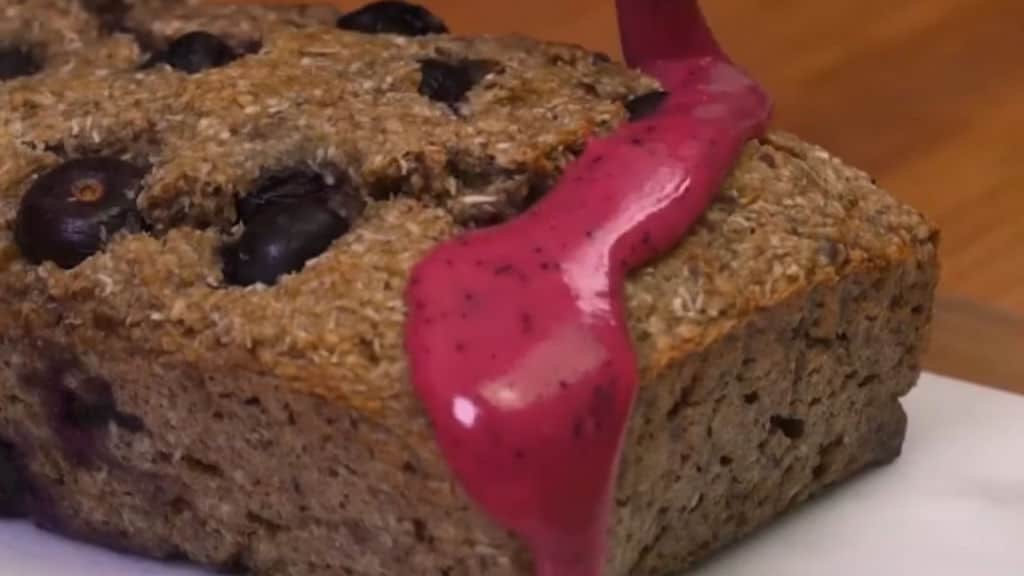
How to Make a Refreshing Blueberry Banana Bread

Both dessert lovers and health-conscious folks can enjoy this delicious blueberry banana bread. It’s packed with natural sugars from fruit that make the bread flavorful without being overpowering. Those on a diet can also feel good about eating it because of the fresh, whole foods included in the recipe. Plus, it’s gluten-free, so anyone with wheat allergies or sensitivities won’t have to miss out on this mouthwatering bread. Are you ready to make some homemade bread that will make both your taste buds and waistline happy? Read on for the full recipe!

Here’s how to make a refreshing blueberry banana bread:

Give this a try. It tastes as good as it looks.

Kitchen tools you’ll need:

  • A large mixing bowl
  • Spoon
  • Whisk
  • Food processor
  • Knife
  • Bread pan
  • Parchment paper
  • Blender
  • Cutting board

Ingredients for bread:

  • 2 cups oat flour
  • 1/2 cup shredded coconut
  • 1 tbsp flaxseed meal
  • 1 tbsp baking powder
  • 1/2 tsp baking soda
  • 2 ripe bananas
  • 1/4 cup maple syrup
  • 1/3 cup canned coconut milk
  • 2 tbsp lemon juice
  • 1 1/2 cups blueberries

Ingredients for blueberry frosting:

  • 1/3 cup powdered sugar
  • 2 tbsp lemon juice
  • 1 tbsp oat milk
  • 1/4 cup blueberries

Directions:

  1. First, grab your mixing bowl and pour the oat flour into the bowl. Then, add the shredded coconut, flaxseed meal, baking powder, and baking soda. Whisk until fully combined.
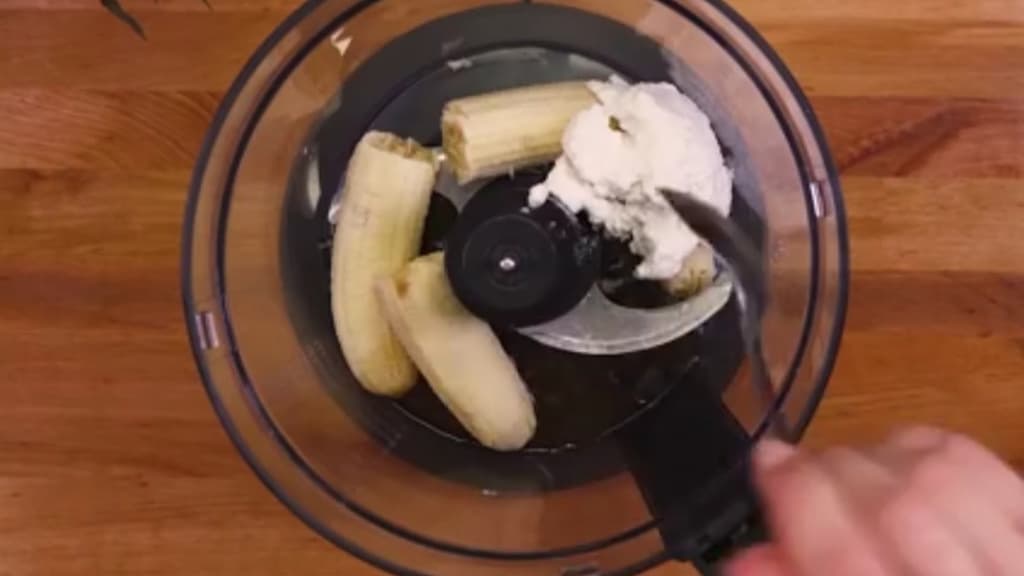
  2. Now, in your food processor, blend the ripe bananas, maple syrup, canned coconut milk, and lemon juice. Mix until all the lumps are gone, and the texture is smooth and creamy. Add the mixture to the large bowl with the flour and other ingredients.
  3. Combine with a spoon thoroughly until you can no longer see the flour. It will have a thick, doughy consistency. Now, add the fresh blueberries and mix them into the dough with your spoon.
  4. Next, get out your bread pan and line it with parchment paper. Use scissors to cut any extra paper off, and flatten it with your hands, so it hugs the pan. Add the dough to the pan, using a spatula, spoon, or your hands to “pat” it down.
  5. Bake at 350 degrees F for 40 minutes. While it’s cooking, let’s make the frosting for your yummy blueberry banana bread!
  6. To make the frosting or sauce, you’ll need the blender. Add the powdered sugar, lemon juice, oat milk, and blueberries, blending thoroughly.
  7. Now, remove the bread from the oven. Once it’s cooled, take it out of the pan and remove the parchment paper.
  8. Transfer it onto a cutting board and pour the blueberry banana bread frosting on top. Please place it in the fridge until the frosting hardens. This may take several hours or even overnight.
  9. Once the frosting is hardened, use a large knife to slice the bread. Enjoy!

baking breadPro tips on making the most delicious blueberry banana bread ever:

  • Some people say gluten-free bread is more dense and heavy than their gluten counterparts. If you find that your blueberry banana bread lacks moisture or fluffiness, we gathered a few tips from a gluten-free bread baker:
  • Add hydration. He says that gluten-free bread tends to absorb moisture more than bread with gluten. To remedy this, you can add carbonated water or even non-diet soda. The bubbles will add lightness to the batter. If you use non-diet soda and decide to add yeast to this recipe, the sugar will help activate the yeast more.
  • Mix the batter longer. For traditional batters, you don’t want to overmix them because they tend to get rubbery. However, the opposite is true for gluten-free bread. For this blueberry banana bread, try mixing the batter a bit longer. It will result in a better structure and more height in the dough.
  • Allow the dough to sit before baking. After mixing the ingredients and pouring in the pan, let the dough “rest” for about 30 minutes. This ensures maximum absorbency of liquids and a thicker, less sticky dough. It also helps soften the bread and yields a fluffier consistency.

Is the dough still wet or sticky even after the 40 minute bake time?

Leave it in a little longer – about fifteen to twenty minutes extra. This eliminates excess moisture and reduces gumminess in the dough.

  • Make sure to use fully ripe, spotty bananas. If they’re underripe, the bread won’t be nearly as sweet.
  • Want to add some fun toppings? Consider lemon zest, orange zest, white or regular chocolate chips, walnuts, shaved coconut, or sliced almonds!
  • Use room temperature ingredients only. Cold ingredients don’t mix as well as room-temperature ones.
  • Freeze or refrigerate leftovers in an airtight container. The blueberry banana bread should last a few days in the fridge and three to six months in the freezer.

Not only is this bread delicious, but it also packs a punch when it comes to nutrition too. Bananas have tons of potassium; in fact, a medium-sized banana contains about 9% of your DV, according to the National Institutes of Health. They also have about 20% of the recommended DV of Vitamin B6 and C. As for blueberries, they’re low in calories but high in nutrients as well. In one cup of fresh blueberries, you’ll consume about 4g of fiber, 116 mg of potassium, and 14.6 mg of Vitamin C. They only have about 80 calories per cup, plus they’re packed with antioxidants which boost immunity and ward off diseases.

Final thoughts on this homemade blueberry banana bread

If you need something to help cool you off this summer, why not try this refreshing blueberry banana bread? It’s loaded with essential vitamins and minerals and doesn’t take very long to make. You can easily store leftovers in the fridge or freezer as well. Pretty much everyone loves the classic banana bread, and the added blueberries in this recipe make it even better!

You may not think of bread as refreshing, but letting it cool in the fridge gives it a whole different vibe. The chilled blueberry frosting adds the perfect touch to this summer recipe. We hope you love this blueberry banana bread; let us know if you decide to make it!

How to Make Blueberry Raspberry Crumble Bars

Blueberry raspberry crumble bars make the perfect refreshing summer treat. While they’re a dessert, of course, they’re light and airy enough to enjoy guilt-free! This recipe will make enough for a family, but we won’t judge if you decide to eat the whole pan. These scrumptious crumble bars have the perfect ratio of sweetness and tartness, taking your taste buds on an exciting culinary adventure.

You probably have a lot of the basic baking ingredients stuffed away in your cupboards somewhere. If not, it just takes a quick trip to the store to gather what you’ll need. So, let’s get to the good stuff! We’ll share our secret on making the best blueberry raspberry crumble bars you’ll ever taste.

How to Make Blueberry Raspberry Crumble Bars

crumble bars

Kitchen gadgets you’ll need:

  • Large mixing bowl (as usual)
  • Smaller bowl
  • Whisk
  • Large spoon
  • Large baking sheet
  • Parchment paper
  • Large cooking pot
  • Measuring cups and spoons
  • Knife
  • Aluminum foil
  • Rolling pin or coffee mug

Ingredients for bottom and top crumble layer:

  • 4 cups rolled oats
  • 4 cups all-purpose flour
  • 1 tbsp baking powder
  • 1 1/2 cup coconut sugar
  • 1/2 tsp salt
  • 1 1/2 cup coconut oil
  • 1 tbsp vanilla

Ingredients for blueberry raspberry filling:

  • 1 cup frozen raspberries
  • 1/2 cup brown sugar
  • 3 tbsp lemon juice
  • 1 cup frozen blueberries
  • 1 tbsp corn starch
  • Fresh raspberries and blueberries

blueberry raspberry bars

Directions for making the crumble layers:

  1. You know the drill for these recipes by now, right? We thought so! Have your large mixing bowl handy. Pour in the oats, all-purpose flour, baking powder, coconut sugar, and salt.
  2. Whisk the ingredients until fully combined. Next, pour in the coconut oil and vanilla, using the large spoon to blend them into the oats.
  3. Once they’re thoroughly combined, use your hand to mix the ingredients further. The texture should resemble crumbly oats.
  4. Now, grab your baking sheet and line it with parchment paper. Pour 2/3 of the mixture onto the pan, and save the rest for later.
  5. Use your hand to spread the mixture evenly across the pan, pressing down firmly along the edges. Next, use a coffee mug or rolling pin to roll the oats. This ensures they’ll bake evenly and won’t fall apart on you.

Directions for making the blueberry and raspberry fillings:

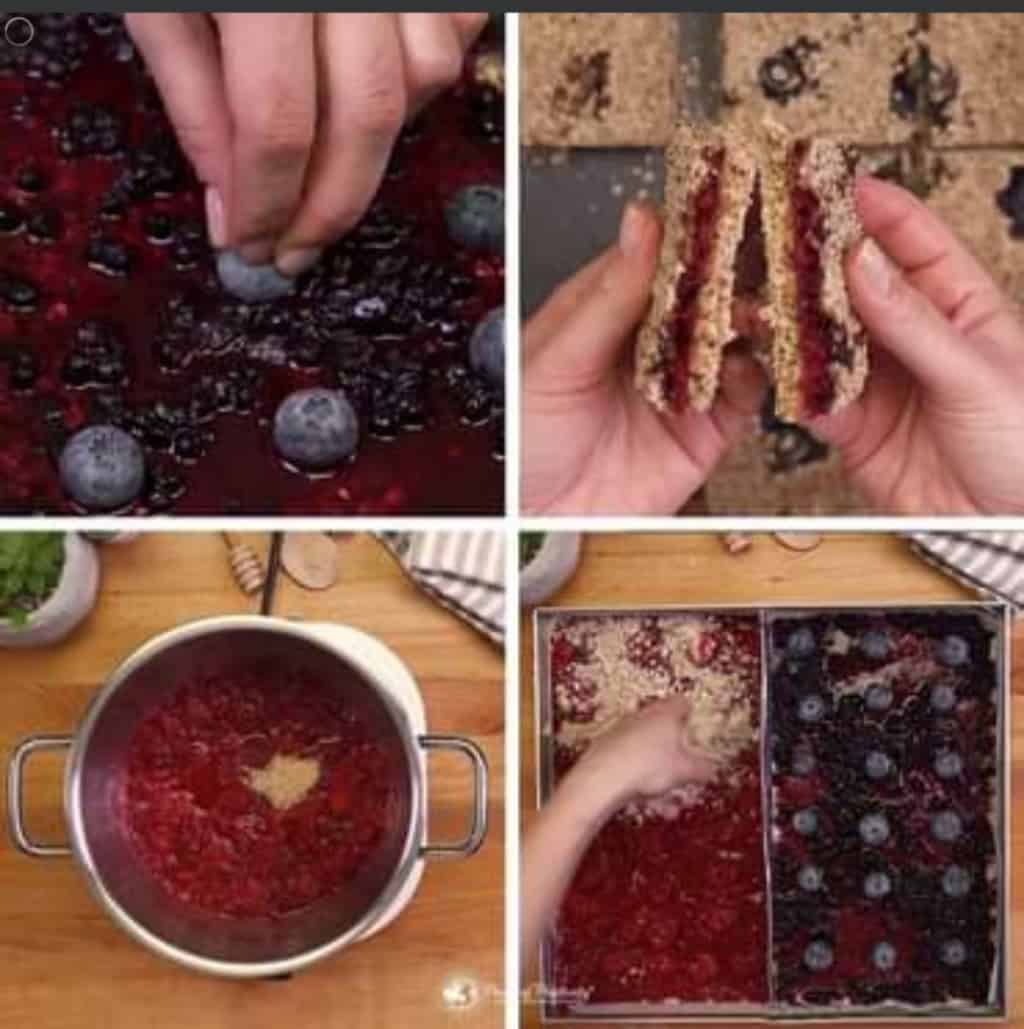
  1. Set that aside and get out your cooking pot. Pour in the frozen raspberries and turn the heat on medium-low. Stir occasionally.
  2. Once they come to a slight boil, pour 1/4 of the brown sugar and mix it in.
  3. Next, mix in 2 tbsp of the lemon juice. When the raspberries have cooked down to a sauce-like, slightly chunky texture, remove from the heat.
  4. In a small bowl, pour in your frozen blueberries. Mix in the remaining 1/3 cup of brown sugar, 1 tbsp lemon juice, and corn starch. Use a small spoon to blend the ingredients, mashing down the blueberries in the process.

Putting it all together:

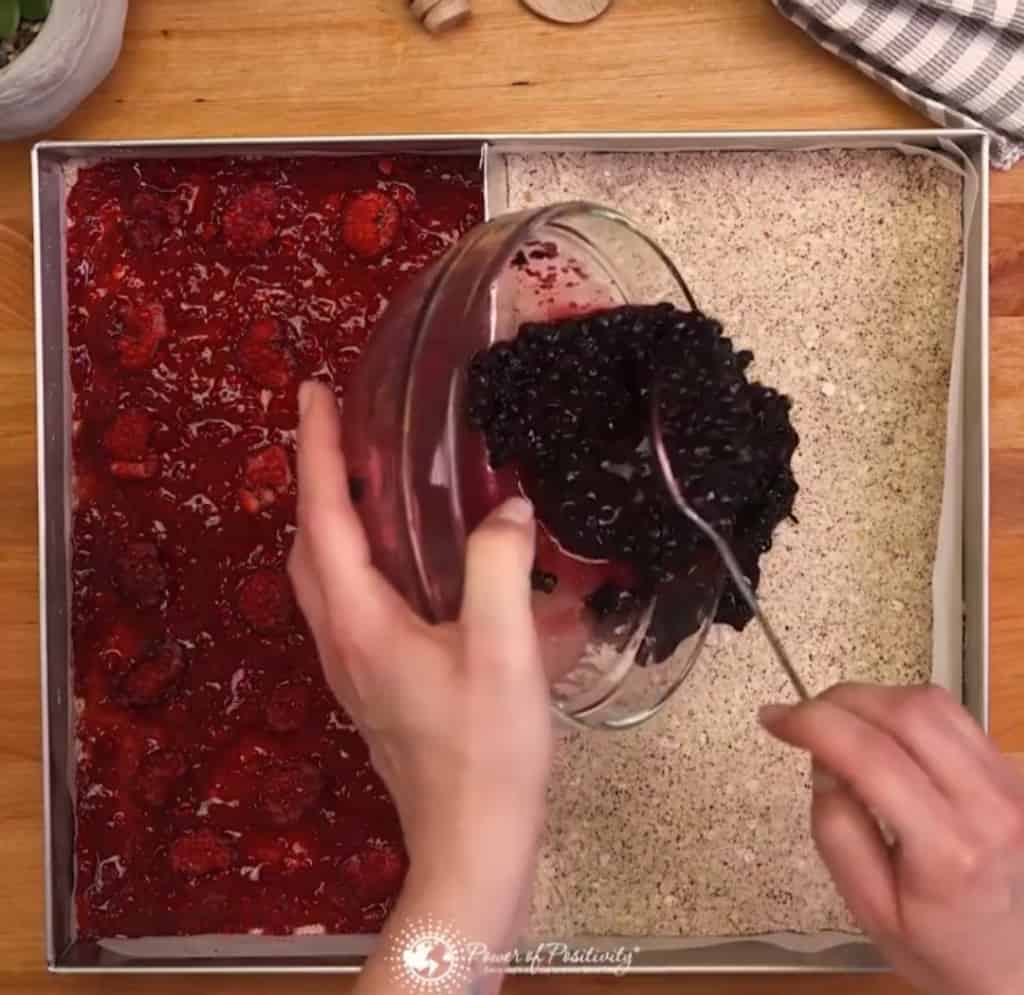
  1. So, now that you have your two fillings for the blueberry raspberry crumble bars cut down the middle of the crumble layer with your knife.
  2. Next, take a piece of aluminum foil and fold it up lengthwise. Use this to separate the blueberry and raspberry fillings where you made the cut down the middle.
  3. Now, spoon the raspberry filling onto one side of the pan. Take a container of fresh raspberries and place them uniformly throughout the filling. This will add some texture to the crumble bars.
  4. Repeat this step with the blueberry filling on the other side. Place fresh blueberries on top of the filling, about three per row. If you want to be exact, we used about 18 blueberries total.
  5. Finally, sprinkle the rest of the oat mixture on both the raspberry and blueberry fillings. Pat it down with your hand, then bake the crumble bars at 350 degrees F for 40-45 minutes.
  6. Now, remove the parchment paper and aluminum foil. Cut the bars lengthwise on each side, then make three cuts widthwise. You should end up with 8 crumble bars of each filling.

We hope you enjoy these delectable crumble bars! They’re gooey, crunchy, sweet, and tart at the same time, giving them the perfect texture and flavor.

A few more tips:

To ensure your bars turn out amazing, here are a few extra pro tips we gathered along the way:

  • Want an extra crunchy crust and topping? Add about 1/2-1 cup of butter to the recipe! You’ll want to make sure it’s softened first, so it’s easier to mix in. Not only will the addition of the butter provide more texture, but it will also give the crumble bars a richer flavor as well.
  • If you’re a big berry fan, feel free to add other types of berries like blackberries or strawberries!
  • Chill the bars for 30 minutes to an hour before cutting them. It will make the slices much cleaner and easier to cut.
  • Serve with vanilla ice cream or whipped cream on top! (You can also eat them for breakfast since they have fruit, but you may want to opt-out of the ice cream in this case).
  • Freeze or store in the fridge if you have leftovers. Keep in mind that the crumbly texture won’t keep as well in the freezer. However, the crumble bars will still taste amazing!

Final thoughts on these amazingly delicious blueberry raspberry crumble bars.

If you’re drooling after reading this recipe, we don’t blame you. Maybe it will give you more motivation to get into the kitchen and start baking! It doesn’t seem all that appealing to stand over a hot oven on hot summer days. However, these bars will help cool you off with the refreshing berry layer, so it’s totally worth the effort, in our opinion.

Many variations of crumble bars exist, but there’s none quite as revitalizing as these berry crumble bars. Desserts get a bad rap these days because they’re usually heavy and filling, but this recipe is just the opposite. Ready to try them out for yourself? We thought so!

Talented Woman Designs Unique Polymer Clay Jewelry

Eliza, the owner of Boogie Bee Jewelry on Instagram, creates unique polymer clay jewelry such as watches and earrings. The jewelry features cute themes such as aliens, animals, mushrooms, and other wildlife. With bright colors and adorable prints, these fun earrings appeal to almost 30k followers on Instagram.

A type of modeling clay, polymer clay, doesn’t contain any clay materials. It’s made of synthetic materials like plasticizers and PVC (polyvinyl chloride). However, since its characteristics resemble clay so closely, many people consider it “man-made clay.” The polymer clay shares natural clay’s flexibility, versatility, and simplicity, making it attractive to artists.

The history and background of polymer clay

  • Polymer clay didn’t make its debut in the world until the late 1930s. While it’s a relatively new arts and crafts medium, the pliable clay has grown in popularity worldwide.
  • It was first discovered in Germany by doll maker Fifi Rehbinder. She had trouble finding her standard supplies due to political uprisings at the time. So, she decided to make her materials, creating a plastic clay she called “Fifi Mosaik.”
  • About 30 years later, in 1964, she sold her formula to manufacturer Eberhard Faber. They named it Fimo, and toy stores across Europe started carrying the polymer clay.
  • The clay didn’t appear in the US until the 1970s. An immigrant family from Germany received the Fimo brand clay as a Christmas present from their grandmother, still living in Germany. In 1975, the family started importing the clay into the US, and companies jumped on the bandwagon also.
  • Others in the US also began to create their versions of polymer clay. In the 1960s, Zenith Products Company accidentally made a polymer clay while working on thermal transfer compounds. It didn’t work as they’d hoped, but the owner’s daughter suggested using it as an arts and crafts medium. The company named it “Polyform,” known today as the popular polymer clay “Sculpey.”
  • Sculpey started selling colored clay in 1984. Until that time, artists had to create their colored dyes for projects.
  • Today, many different companies sell polymer clay, and it’s even available in other varieties. Liquid polymer clay, mica clays, glitter clays, and glow-in-the-dark clays are some other popular options.

Interesting facts about polymer clay

  1. It stays soft until baked in the oven. You can bake it in your regular home oven since it’s non-toxic. Most name brands recommend to bake the clay at 275 degrees F for about 30 minutes.
  2. In addition to making jewelry, some people use it to create picture frames, figurines, keychains, ornaments, and more. The sky’s the limit when it comes to what you can start with this bendable clay.
  3. It dries much quicker than traditional air-dry clay. Once it’s out of the oven, it’s ready to use once it cools.
  4. It doesn’t dry out, so you can store it for years and pick it back up where you left off. However, it does keep best in a cool, dry place out of sunlight.
  5. You don’t need much to get started. If you’re making earrings, you’ll need the clay, earring backs, jump rings, flexible superglue, and parchment paper for baking. For tools, you will need to have an acrylic rolling pin, a sharp craft knife, clay cutters, a baking sheet, a toothpick or large needle, and jewelry pliers handy.
  6. Before you make your creations, you’ll need to condition the clay. To do this, roll and knead it in your hands to increase flexibility and softness. Many artists use a pasta machine to make the process easier; run it through about 20 times for best use.

Eliza’s journey with selling her polymer clay creations

“So, I started my jewelry account in January of this year (2020), which has been crazy. But making art in general, I would say it’s been my whole life. My earliest memories I can recall my mom painting and always doing something fun to my bedroom,” Eliza says. “Like we would have really decorated and coordinated furniture in my rooms and…I remember she painted vines on one of my walls one time. I definitely helped with that, and I think I liked it.”

Eliza enjoys making her earrings in natural light whenever possible. She often works on her balcony or even sitting outside in the grass. Being natural helps to inspire the creative process.


She advises anyone entering the polymer clay art world to ask for help if they need it. For example, if you follow a creator online who inspires you, don’t hesitate to reach out to them. Often, if you’re polite and open-minded, they’ll offer you advice on getting started.

Eliza learned the hard way and tried to set everything up herself. She wanted to find things out on her own, but this made the process much more difficult. So, for any newbies, she suggests not following in her footsteps and getting the advice of long-time makers.

She says, “You’d be surprised how many people are willing to help you.”

If you’d like to check out her creations, please visit her Etsy shop! She’s currently taking a break, but you can still peruse her earrings and other jewelry. We guarantee you’ll find something that catches your eye.

Final thoughts on this talented woman who designs polymer clay earrings

If you’ve never heard of polymer clay before, you’ve probably seen it at least once in your life. Many crafters use it to create many arts and crafts, from figurines to jewelry, because it is durable and flexible. Not to mention, it’s pretty easy to use; you roll it, pop it in the oven, and it’s ready to go! After baking it, you can create almost anything you can imagine, and it will last for years to come.

Working with polymer clay looks quite fun, so maybe you’ll want to give it a try. If you’re not the artsy type, you can still use it for practical things like bookmarks, planters, and even dishes!

Which pair of earrings in the video was your favorite? Let us know in the comments!

Skip to content