Weekly tips, affirmations, and small actions to feel your best.

Love Yourself Daily: 10 Top Ways to Love Yourself

Self-love is a concept many of us still struggle to grasp. What does it mean to really love yourself? All over the internet, articles about the transformative effects of learning to love yourself, but what does that mean? Is there even a one-size-fits-all answer to self-love when all of us are, in fact, different selves?

One thing is certain: You’re the only one who can learn how to love yourself. There is plenty of practical advice online, but it’s up to you to try out different methods and devise your own effective practice.

Maybe your self-love will look different as you grow. That’s okay. To get you started on the right path, here are 10 self-love practices that will help you learn to love yourself more and more each day.

10. Start Each Day With Positive Affirmations

Author Maria Robinson once wrote, “Nobody can go back and start a new beginning, but anyone can start today and make a new ending.” Instead of ending things on a good note, why not start off on one instead?

Self-affirmations affirmations can restore our confidence and activate the systems in our brain that allows us to look inward and reflect on who we are (1). You can find plenty of positive affirmations online; use them in a meditation or simply write them down in a notebook and repeat them to yourself throughout the day.

affirmations

9. Write a Schedule

Time-management leads to greater organization and productivity, which reduces stress. Writing a daily schedule can help you prioritize your top responsibilities and avoid getting caught up in non-essentials.

You can allocate specific time periods for work, rest and socialization. Each of these play vital roles in your mental well-being, and knowing how to attend to your responsibilities without getting overwhelmed is a great act of self-love.

8. Remember Your Goals

It’s difficult to love yourself when you feel like your life is going nowhere. We all experience a stasis at some point, be it in our mental health, relationship or career. It’s important to keep plans for the future to motivate yourself everyday.

By developing a future time perspective, we can learn to stay motivated, look ahead and see a bigger picture (3). This discourages frustration with the present and allows us to stay resilient and optimistic even during times of stagnation.

7. Get Some Fresh Air

Many of us spend the majority of our days indoors. We wake up, go to work, sit at a desk and only glimpse the sun when we’re headed back home. A sedentary lifestyle is dangerous for a lot of reasons, and one of them is the negative impact minimal exposure to daylight has on your mental health.

Spending time outdoors every day can boost Vitamin D levels and elevate your mood (4). Take some time each day to just breathe and enjoy the fresh air, even if it’s just for 15 minutes. The benefits on your inner peace, stress levels and mental health will be worth it.(5).

6. Exercise Regularly

The benefits of working out far surpass the dread and procrastination many people associate with their routine cardio.

If you have to practically force yourself to go to the gym, consider spicing up your regimen by taking a class in something you enjoy. From kickboxing to Zumba, there are a lot of ways to stay in shape and get some endorphin-boosting exercise without having to schlep to a gym and trudge along a treadmill for half an hour.

5. Be Your Own Best Friend

It’s great to have a reliable support system, but we also have to be our own best friends. Relying too much on others for emotional validation can actually reinforce our anxiety. Learning how to enjoy your own company, listen to your thoughts and value your opinions is a daily practice that will help you develop a strong sense of self-worth.

When you learn to love yourself, you’ll find that you don’t look to others as often. This doesn’t mean you don’t value their input or care about them; instead, you’ll be able to develop stronger relationships by having your commitment rooted solely in your enjoyment of the other person’s company. Rather than feeling subjected to the approval or judgement of your family and friends, you’ll be able to stand confidently on your own and believe in the value you contribute to every relationship.

4. Change Your Perspective

Catch yourself slipping into autopilot and remind yourself of the bigger picture. It’s easy for us to feel overwhelmed by the weight of stress and obligation. Many of us plough through our lives without truly experiencing anything. At night, we crawl into bed and feel like another day has come and gone without much meaning.

It’s all too easy to lose yourself to the world, so take time throughout the day to remind yourself to step back, breathe and live in the moment. You can even set a reminder on your phone to help you refocus throughout the day.

3. Set Aside Time to Acknowledge Your Emotions

Do you have a tendency to repress sadness, frustration or other uncomfortable feelings? It’s human nature to avoid pain, and burying painful feelings deep inside ourselves is just one way we try to protect ourselves. But what if you could take your hurtful feelings and transform them into positive ones?

You have to make a conscious decision to acknowledge your feelings, no matter how painful they may be. Meditation and mindfulness are excellent tools for dealing with negative emotions. Instead of intrinsically identifying with every thought and feeling that passes through you, you learn how to take a passenger’s perspective and let your emotions move through you.

Emotional intelligence allows us to understand ourselves and empathize better with others. Learning how to acknowledge, accept and interpret negative feelings can help you develop a higher emotional IQ and become a happier, more positive person (6).

2. Seek Help When You Need It

You may need to speak to a therapist, or you could just need to pick up the phone and pour your heart out to your best friend. Self-awareness is an important quality many people lack; when you love yourself, you learn to stop underestimating your capabilities and putting yourself down.

Self-awareness means understanding that you can’t do everything alone, and self-love makes us capable of reaching out without feeling embarrassed, ashamed or weak. If you’ve just started to learn to love yourself, you might still feel awkward or nervous to get help. But if you decide to go against the voice in the back of your head telling you to stay quiet, you’re making progress.

It isn’t easy to admit we’re struggling, and it’s even harder to accept the fact that we can’t make things right on our own. Mental health is hard, but part of self-love is tending all pillars of your health: metal, emotional and physical.

1. Dare to Be Vulnerable

In her book “Daring Greatly: How the Courage to Be Vulnerable Transforms the Way We Live, Love, Parent, and Lead”, Dr. Brené Brown discusses what vulnerability really means and guides readers on how to find strength in letting go.

One of the greatest ways to learn to love yourself is vulnerability. So many of us let our fear of judgement, abandonment or rejection hold us back from taking the risks we need to become who we truly want to be.

love yourself

Being vulnerable doesn’t mean you let people walk all over you. There’s a reason emotional boundaries exist, and they protect us from undue harm and toxic relationships. However, some of us perceive vulnerability as a sign of weakness, so we avoid getting too close, saying too much and living too loudly for fear that we’ll somehow get hurt.

Allow yourself to take that risk. When you dare to be vulnerable, you become capable of sensing, feeling and receiving so much more love from the world around you. It won’t be easy, and sometimes, it’ll backfire. But when you allow yourself to go after what you want in spite of the pain, fear and anxiety holding you back, you will understand the immense freedom that comes from self-love.

Take Your Time

Practice patience with yourself. Be kind even when you would rather just wallow in self-pity or tell yourself all the reasons why you aren’t good enough. Think of your inner child. Would you talk to them the way you often talk to yourself? Nurture the small, trembling parts of your soul and embrace all that you can be.

You will learn how to love yourself with time. After some daily practice, you’ll start to identify what exercises really work for you. What makes you grateful? What makes you feel loved by yourself?

As you embark on this rewarding and incredible journey, you should feel excited about the person you’re going to meet. You’ll be amazed at just how much there is to learn about yourself when you exist from a place of love.

A Complete Beginner Guide For Paleo Diet Meal Plan

Paleo diet has been made to symbolize what the human ancestor consumed centuries ago. Even though it is not possible to know what exactly human ancestors consumed in various parts of the globe, researchers have the belief that their meals comprised whole foods.
Their whole foods’ diet and physically active lives resulted in lower risk of getting lifestyle conditions like heart conditions, diabetes, and obesity. Research shows that this diet can significantly aid in losing weight and boost your health.

Here is an introduction to the paleo diet with an easy meal plan.

Paleo Diet Meal Plan

Some of the human ancestors consumed a diet rich in carbohydrates with plenty of plants, while others consumed a diet low in carbohydrates with plenty of animal foods. Use this as a general guide when following the paleo diet meal plan.
You should eat healthy oils and fats, herbs, nuts, vegetables, fish, spices, seeds, fruits, eggs, and meat. Be sure to avoid trans fats, margarine, artificial sweeteners, most dairies, soft drinks, processed foods, vegetable oils, legumes, grains, and sugar.

Foods to Avoid on a Paleo Diet

As you avoid the listed foods, please note that grains include barley, spelt, pastas, breads, wheat, and rye, among others. Dairies to avoid include those that are low in fat while trans fats are hydrogenated fats present in processed foods and margarine.
The vegetable oils to keep away from are safflower oil, corn oil, sunflower oil, grapeseed oil, cottonseed oil, and soybean oil, among others. You should also stay away from sugars like ice cream, candy, fruit juices, pastries, table sugar, soft drinks, and others.
Legumes to avoid are lentils, beans, and others. Avoid those processed foods indicated low-fat or diet as well as those with many additives. Artificial sweeteners to keep away from include acesulfame potassium, cyclamates, aspartame, saccharin, and sucralose.
You can simply avoid all foods that appear to have been produced in a factory. To avoid these foods, you require reading the list of ingredients, even on meals that are indicated as healthy.

Foods to Eat on a Paleo Diet

The meats to eat include pork, chicken, beef, turkey, lamb, and more. Fish and seafood to consume are shellfish, haddock, salmon, shrimp, trout, and others. As you pick your eggs, go for a free-range, those enriched with omega-3, and pastured.
The vegetables should include tomatoes, onions, kale, carrots, peppers, broccoli, and more. For fruits, go for blueberries, avocados, oranges, apples, strawberries, pears, bananas, and others. Eat tubers like turnips, potatoes, yams, sweet potatoes, and more.
Nuts and seeds include pumpkin seeds, hazelnuts, macadamia nuts, sunflower seeds, walnuts, almonds, and others. For salt and spices, go for rosemary, garlic, sea salt, garlic, and more. Healthy oils and fats to eat include avocado oil, olive oil, and coconut oil, among others.

Modified Paleo Diets

The paleo diet meal plan has evolved over the past few years, allowing for multiple various versions of the diet. Several of these versions give room for some modern foods that research proves they are healthy.
These are some grains like rice that are free from gluten and grass-fed butter. Most people now fail to deem the paleo diet as strict diet rules to be followed, but instead, see it as a guide to base one’s diet.

Sensible Indulgences

Wine and dark chocolate are okay when consumed in scarce amounts. Drink red wine that is quality and rich in beneficial nutrients and antioxidants.
Eat dark chocolates that have at least 70 percent content of cocoa. Dark chocolate of high quality is healthy and nutritious.

Quenching Your Thirst

When you are hydrating, go for water. You can also go for coffee and tea, even though they don’t comprise the paleo diet.
Tea is nutritious and consists of high levels of beneficial compounds and antioxidants. The best tea to drink is green tea. Coffee is also rich in antioxidants, and it has multiple benefits to your health.

Paleo Diet Meal Plan for a Week

Monday
During breakfast, fry your vegetables and eggs in coconut oil, and add fruit. Have an olive oil-coated chicken salad with some nuts for lunch. During dinner, you can make a bun-less burger with some salsa and vegetables.

Tuesday
Have bacon, eggs, and fruit for breakfast. Have the burgers that remained on Monday for lunch. During dinner, fry salmon in butter and eat with vegetables.

Wednesday
Have the dinner leftovers from Tuesday as breakfast. For lunch, eat a sandwich with fresh vegetables, meat, in a lettuce leaf. Have some berries, stir-fried ground beef, and vegetables.

Thursday

For breakfast, have fruit and eggs. Have the dinner leftovers from Wednesday for lunch with some nuts. During dinner fry some pork and eat with vegetables.

Friday

During breakfast, fry your vegetables and eggs in coconut oil. Have chicken salad sprinkled with olive oil and some nuts for lunch. For dinner, eat sweet potatoes, vegetables, and steak.

Saturday

Make some eggs and bacon, and add fruit for breakfast. Have the dinner leftovers from Friday for lunch. Make some vegetables, avocado, and baked salmon for dinner.

Sunday

Have the dinner leftovers from Saturday for lunch. Make a sandwich with fresh vegetables and meat in a lettuce leaf for lunch. During dinner, drill some chicken wings and serve with salsa and vegetables.

When starting the paleo diet, tracking of the calories is not a requirement. But if you would like to lose a significant amount of weight, it is ideal to reduce carbohydrates and minimize consumption of high-fat foods like nuts.

Easy Paleo Diet Snacks
It is never necessary to have over three meals each day. But in case you get hungry, you can have some easy to make and carry snacks. These include homemade beef jerky, apple slices with almond butter, nuts, boiled eggs, berries with coconut cream, leftovers, fruits, and baby carrots.

paleo diet

Here are some Paleo Classics

1. Baked Egg Cups
Put an egg, asparagus spears, and bacon slices in three muffin tin slots. Sprinkle some pepper and salt on the top and bake in the oven for 15 minutes.

2. Avocado Deviled Eggs

Mix some boiled egg yolks with pepper, salt, garlic, avocado, and cilantro. Then put the mixture into boiled and sliced egg whites.

3. Bacon with Roasted Brussels Sprouts

Roast your Brussels sprouts with pomegranate seeds, chopped apples, and diced bacon. Serve while hot.

4. Prosciutto-Wrapped Asparagus

Boil some asparagus and cool in cold water before wrapping in prosciutto that is free from preservatives. Then roast for ten minutes until they get crispy. You can have it as an appetizer before your main meal.
Sprinkle with lemon pepper and some olive oil before serving.

5. Melon Wrapped in Prosciutto

This snack is easy to prepare as it needs no heating. Select your best melon and wrap with prosciutto that is free from preservatives for a salty snack with a delicious kick. Sprinkle it with olive oil, balsamic vinegar, and mint leaves before serving.

6. Mediterranean Hummus

Combine lemon juice, tahini, eggplant, cauliflower, and red pepper to create a delicious paste. Serve with some cucumber after sprinkling with olive oil and some spices.

7. Springtime Guacamole

Mix some avocado, with sliced onions, diced tomatoes, lime juice, and classic cilantro. Remember to include some garlic powder, hot sauce, and Himalayan salt. Throw some diced apples on top.

8. Avocado Tuna Salad

Remove the middle of the avocado and keep it intact after slicing the fruit into two. Then combine tuna, pepper, salt, lemon juice, and onion in a bowl. Place the mixture in the avocado halves and serve.

9. Chunky Monkey Trail Mix

Some of the most delicious trail mixes are not suitable for paleo since they have peanuts, milk chocolate morsels, and sugar-coated dried fruits. Create your version of trail mix by using walnuts, unsweetened banana chips, fudge chunks that are paleo-friendly, and cashews.

10. Butternut Squash Wrapped in Bacon

Any food that is wrapped in bacon is always a delicacy and suitable for paleo. Use different varieties and thicknesses of bacon to play with the flavor. You can serve it cold or hot.

11. Peppers Stuffed with Eggs

Slice off the pepper’s top and remove the seeds before baking for 15 minutes. Stuff a raw egg and spinach, then bake for another 20 minutes. Serve without scooping.

12. Sweet Potatoes Roasted with Rosemary

Sweet potatoes are popular for paleo due to their ability to be cooked in various ways. Roast your sweet potatoes with pepper, salt, rosemary, and olive oil.

13. Zucchini Baked with Almond

Mix flour with egg, pepper, sea salt, garlic powder, and thyme, and use the mixture to cover sliced zucchinis. Then bake in the oven for 15 minutes.

14. Turkey Meatballs

Mix ground beef with salt and pepper before making it into small balls. Fry them with a pan in olive oil and Italian seasoning. Serve with spicy hot sauce.

Conclusion
The paleo diet meal plan is designed to resemble the diets followed by the human ancestors centuries ago. Since the diet has no strict rules to be followed, one only requires to emphasize on whole foods and avoid processed ones.

Ensure to eat foods like healthy oils and fats, vegetables, fruits, seeds, fish, nuts, eggs, and meat. Keep away from sugar and legumes.

18 Health Benefits Of Quinoa (Including Weight Loss)

Quinoa refers to a grain plant that is farmed to obtain its seeds that are edible. The pronunciation of the word is KEEN-wah. It is technically a pseudo-cereal as opposed to a cereal grain. This means that it is a seed that is cooked and consumed just like grain.
It was a crucial crop to the Empire of Inca. They called it the mother of all grains and deemed it sacred. For centuries, it has been a staple food in South America. It is only recently that it has been adopted by the rest of the world to achieve a superfood status after trending.
Nowadays, you can find the seeds and its products all around the globe, particularly in organic restaurants and health food stores. It can be found in three types. These are black, red, and white quinoa.
In addition to consuming quinoa for weight loss, here are eighteen other benefits.

1. Rich in Nutrients

The grain is one of the most famous health foods in the world. It is high in protein, has all nine essential amino acids, and is gluten-free. It is also rich in vitamin E, calcium, iron, magnesium, phosphorous, potassium, zinc, copper, folate, manganese, and B vitamins.
The crop is non-GMO and grown organically. Although it fails to be cereal, it remains to be a whole-grain food. Its high nutrient content, growth simplicity, and ease of use have led NASA scientists to study its ability to grow in outer space.
The year 2013 was named The International Year of Quinoa because of its high value of nutrients and its potential to offer global food security.

2. Rich in Kaempferol and Quercetin Compounds

Real foods are not only rich in minerals and vitamins, but they also have thousands of trace compounds, some of which are very healthy. Two well-studied flavonoids are kaempferol and quercetin and are present in the grain. The content of quercetin in the grain is higher than in regular quercetin foods such as cranberries.
These significant compounds have been discovered to possess anti-depressant, anti-cancer, anti-viral, and anti-inflammatory impacts in animal studies. Consuming it will provide these compounds and more.

3. Higher in Fiber than Most Grains

Another crucial benefit of the grain is the high content of fiber. Research that studies four varieties of the crop discovered a range of 10-16 grams of fiber for every 100 grams. This is the same as 17-27 grams per cup and more than two times the content in most grains.
When it is boiled, it has more fiber due to absorption of water. However, a majority of the fiber is insoluble, which has fewer health benefits than soluble fiber. Still, the food has decent amounts of soluble fiber at 1.5 grams per 100 grams or 2.5 grams per cup.
According to research, soluble fiber enables a reduction in levels of blood sugar, aid with weight loss, increase fullness, and lowers cholesterol.

4. Ideal for Persons with Gluten Intolerance

A 2013 study showed that about 33 percent of the US population is attempting to avoid or minimize gluten consumption. Diets that are gluten-free can be healthy if they are based on naturally gluten-free foods. When people consume foods that are free from gluten and made from refined carbs, problems arise.
These foods are similar to gluten-containing foods since gluten-free junk food remains to be junk food. Research has been looking at ways to incorporate the grain in staples such as bread and pasta for gluten-free diets. More studies have revealed that using it as opposed to regular gluten-free ingredients such as rice flour, corn, tapioca, and potato can dramatically heighten the antioxidant and nutrient value of our diet.

5. High in Protein and all Essential Amino Acids

The protein consists of amino acids, whereby nine of them are referred to as essential. This is because they cannot be produced from your body and require being obtained from the diet. Foods that have all nine essential amino acids are called complete proteins.
The issue is that some plant foods lack in particular essential amino acids like lysine. But this grain is different since it has all essential amino acids. Therefore, it is a great protein source since it has better and more protein than a majority of the grains.
A cup of 185 grams of the grain has 8 grams of protein. This makes it an ideal plant-based source of protein for vegans and vegetarians.

6. Has a Minimal Glycemic Index that is Ideal for Control of Blood Sugar

The measure of how quickly your levels of blood sugar are raised by foods is referred to as the glycemic index. Consuming foods that appear high on the glycemic index aids in stimulation of hunger and leads to obesity. Such foods have been associated with many typical, chronic, Western conditions such as heart disease and type 2 diabetes.
The grain contains a glycemic index of 53, and this is considered low. But it is great to remember that it is also rich in carbohydrates. Hence, it is not an excellent choice if you want a low-carb diet.

7. Rich in Significant Minerals Like Magnesium and Iron

A majority of the people fail to get some nutrients in sufficient quantities. This applies to some minerals such as iron, zinc, potassium, and magnesium. The grain is very rich in all the minerals. A cup of magnesium, 185 grams, has 30 percent of the daily requirement.
But it has a compound called phytic acid that can make these minerals bind, reducing their absorption. By sprouting or soaking this grain before cooking, you reduce the levels of phytic acid, making the minerals able to be absorbed.

8. Improved Metabolic Health

Due to the high content of nutrients, it can boost your metabolism. Studies have shown that the use of the grain as opposed to the regular gluten-free pasta and bread can minimize the levels of triglyceride, insulin, and blood sugar significantly.
More research has revealed that including it in your fructose-rich diet inhibits the negative impacts of fructose.

9. High Antioxidant Levels

The grain has high levels of antioxidants that combat free radicals to aid in fighting diseases and aging. Research on five bowls of cereal, two legumes, and three pseudo-cereals discovered that quinoa had the highest content of antioxidant among all the ten foods.
Allowing the sprouting of the seeds appears to heighten the content of antioxidants further.

10. Loss of Weight

Losing weight requires the intake of fewer calories than are being burned. Particular food properties aid in the promotion of weight loss, either by reducing appetite or boosting metabolism. Luckily, you can consume quinoa for weight loss since it has many such properties.
It is rich in protein that reduces appetite and boosts metabolism. Additionally, its high fiber levels may make you feel full resulting in the consumption of fewer calories. Also, eating quinoa for weight loss is ideal since it has a low glycemic index, meaning that it is linked to low intake of calories.

11. Easily Incorporated Into Your Diet

It is delicious and combines well with a majority for the foods. Depending on the quinoa type, it can be crucial to use water to rinse it before cooking to remove saponins that are present on the outer layer and have a bitter flavor.
But some brands have already been rinsed, making cooking easy for you. It cooks fast within 15 minutes. After cooking, it has a mild, nutty flavor as well as a satisfying crunch.

12. Protects the Heart

Its soluble fiber mixes with bile acids in the liver to create a jelly-like substance that is produced in your bowel. It aids in provoking your liver to remove cholesterol from your blood to produce more bile when the stores get depleted.
Due to the lower bad cholesterol levels, you face a lower risk of coronary heart disease and atherosclerosis.

13. Improves the Health of the Skin

It has B vitamins that assist in treating age spots and other skin pigmentation conditions through reduction of the skin’s dark melanin deposits. It also helps to give the skin a healthy complexion.
The food also has tyrosinase inhibitors that aid to decrease pigmentation and the related issues. Vitamin B3, present in the grain, helps in acne treatment. It soothes the inflamed and red areas frequently linked to breakout of acne.

14. Fighting Inflammation

Its fiber helps to produce butyrate, an essential fatty acid that turns off inflammation-related genes. Also, B vitamins present in quinoa aid in the reduction of an inflammatory hormone called homocysteine in the body.

quinoa

15. Fighting Cancer

Research shows that daily consumption of quinoa for weight loss can aid in reducing the risk of premature death due to cancer. Another study reveals that an extract of the crop’s leaves has anticancer and chemopreventive effects. Studies also show that the high levels of antioxidants present in the food fight free radicals and cancer-causing compounds.

16. Treatment of Anemia

It is rich in iron, whereby 185 grams offer 15 percent of the daily requirement. The iron content helps in the prevention of anemia. It also has riboflavin, a nutrient that is significant in preventing anemia.

17. Growth and Repair of Tissues

It has high levels of lysine, an essential compound in growth and repair of tissues. This amino acid is only available in the grain. The high levels of protein also contribute to this benefit.

18. Treatment of Dandruff

Quinoa has essential minerals such as phosphorous, iron, and calcium that keep the scalp moist to prevent dandruff. You just need to mash it and apply to the scalp and hair. The original hair color is maintained by tyrosine and split ends are treated by its proteins.

Conclusion

Antioxidants, all essential amino acids, fiber, and minerals make quinoa one of the most nutritious and healthiest foods in the world.
Consuming quinoa for weight loss can also improve levels of blood sugar, and reduce levels of cholesterol. What’s more, it is delicious, easy to prepare, naturally gluten-free, and incredibly versatile.

5 Signs of Chronic Vitamin Deficiency In Women

A vitamin deficiency spells bad news for anyone’s system. It can cause a variety of illnesses and make you feel unwell, tired, or unusual. Basically, not getting enough vitamins can lead to less-than-ideal daily performance.

A balanced diet is crucial to bodily health. The food you eat should provide you with all the nutrients you need, including recommended vitamin dosages. The problem is that, if you’re not paying attention, it can be easy to miss a few necessary vitamins here and there.

But how can you tell if you’re lacking some essential nutrients? The answer is simple: by paying attention to your body. Here are some signs of chronic vitamin deficiency in women and how to alleviate them.

Here Are 5 Signs Of Chronic Vitamin Deficiency In Women

1.    Deteriorating mouth health

Declining mouth health can be a direct sign of vitamin deficiencies. Here are some areas to keep an eye out for.

·         Ulcers

Otherwise known as canker sores, ulcers are very commonly caused by iron deficiencies as well as a lack of B vitamins. This is so prevalent that a study found that those with these ulcers have twice the chance of being iron deficient, even minorly.

The B vitamin deficiencies most commonly associated with mouth ulcers are vitamin B2, also called riboflavin; vitamin B1, also called thiamin; and vitamin B6, also called pyridoxine.

·         Cracking, bleeding, or splitting

Known medically as angular cheilitis, splitting and bleeding around the corners of the mouth can be a result of low iron and B-vitamin levels. This is especially true for vitamin B2 or riboflavin.

Keep in mind that angular cheilitis can also be caused by dehydration or dryness. As such, if you only experience this and no other symptoms, you may simply need to drink more water.

·         Gum bleeding

Gum issues are most commonly caused by too-low vitamin C consumption. This is because the body doesn’t produce this vitamin naturally, so it must be eaten to keep health up.

Vitamin C boosts the body’s positive ability to heal and protect itself against diseases. As such, insufficient vitamin C consumption can lead to painful gums that bleed easily. Don’t take this lightly, as up to 17% of the population is vitamin C deficient.

Do note that being too harsh when brushing teeth can also cause gums to bleed, as can leftover food sediments that breed gum infections. If you only experience gum bleeding, speak to a dentist or swap your toothbrush for one with softer bristles. To combat these symptoms, consume iron-rich foods such as:

  • Nuts
  • Meat
  • Fish
  • Legumes
  • Poultry
  • Seeds
  • Dark greens and leafy greens
  • Whole grains

You can also consume B-vitamin rich foods, including:

  • Dairy
  • Fish
  • Poultry
  • Nuts
  • Meat
  • Organ meat
  • Eggs
  • Green vegetables
  • Starchy vegetables
  • Legumes
  • Seeds

For gum problems, opt for foods rich in vitamin C, mainly fresh veggies and fruits. Don’t forget to eat at least 3 servings of veggies and 2 servings of fruit daily. Remember that severe vitamin C deficiency can result in scurvy. More severe warnings that you aren’t getting enough vitamin C include:

  • Loss of teeth
  • Scaly skin
  • Weakened bones
  • Weakened muscles
  • Increased nosebleeds
  • Frequent bruises
  • Frequent sickness
  • Lethargy
  • Decreased wound healing speed
  • Fatigue

2.    Restless leg syndrome

Willis-Ekbom disease, more commonly known as RLS or restless leg syndrome, is a condition of the nerves. Essentially, it is characterized by discomfort that occurs in the legs, which leads to a desire to move them around. Usually, this is a behavior that is compulsive and can’t be resisted.

Approximately 10% of individuals in America experience RLS and women are at a higher risk of experiencing it. If you have RLS, you might get your worst episodes when relaxing, especially if you’re trying to go to sleep.

Unfortunately, RLS is not a comprehensively understood disease, so doctors have yet to uncover for certain exactly what causes it. But links have been discovered that suggest the levels of iron in one’s blood may be the underlying cause beneath this.

In addition, consuming additional vitamin C may be helpful as it can help the body more easily absorb iron to aid chronic vitamin deficiency. If you’re eating enough iron but skimping on vitamin C, the positive effects of iron will not reach its full potential.

Iron-rich foods include:

  • Nuts
  • Meat
  • Fish
  • Legumes
  • Poultry
  • Seeds
  • Dark greens and leafy greens
  • Whole grains

Vitamin C-rich foods include:

  • Fresh fruits
  • Fresh vegetables

3.    Eye health deterioration

No one wants to experience vision problems. If you’ve noticed your eye health deteriorating, it could be a sign of vitamin deficiency.

One of the most common causes of vision problems is a lack of vitamin A. And one of the most common vision problems that comes from too little of this nutrient is something called night blindness. As the name suggests, this means you may have trouble seeing properly in low light conditions.

Why does this happen? Vitamin A is a key component in the production of a pigment called rhodopsin. Rhodopsin sits in the retinas and helps night vision. If you’re not producing enough of this pigment and you don’t make an effort to treat it with vitamin A intake, not only will you not be able to see well at night, but your eyes could also get worse.

Untreated vitamin A deficiencies can lead to xerophthalmia. This disease causes damage to the corneas and may cause blindness. One of the most common symptoms of the beginning stages of xerophthalmia are spots known as Bitot’s spots. These are little white growths that appear foamy and elevated in the eye’s whites.

Speak to an eye specialist if needed, as treatment can remove these growths. However, treating your vitamin deficiency is the only way to completely and permanently remove Bitot’s spots.

The best foods to eat to improve your lack of vitamin A are:

  • Dark, leafy green vegetables
  • Eggs
  • Dairy
  • Organ meat
  • Yellow vegetables
  • Orange vegetables
  • Fish

Do keep in mind, though, that excessive vitamin A consumption is toxic. As such, you should steer clear of most supplements for this nutrient. Excess vitamin A is stored in the body’s fat and may lead to toxicity. Symptoms include:

  • Headaches
  • Skin irritation
  • Nausea
  • Bone pain
  • Joint pain
  • Loss of consciousness

4.    Bad nail and hair health

health

Nails and hair are closely linked together. Usually, symptoms that affect one of these body parts will often affect the other as well. There are lots of potential causes behind declining health of hair and nails, but a B7 vitamin deficiency, otherwise known as a biotin deficiency, is a fairly common one.

Biotin is the vitamin responsible for food conversion, changing it into energy for the body. If you have a chronic vitamin deficiency in biotin, you may notice brittle nails and brittle hair. These two parts of the body may split, thin, or break easily.

Other symptoms of biotin deficiency include:

  • Cramps
  • Tingling in extremities
  • Pain in muscles
  • Fatigue
  • Chronic fatigue

A deficiency in biotin is rare, but if you have a higher risk of developing it if you:

  • Smoke and/or drink heavily
  • Have a digestive disorder
  • Are currently pregnant
  • Use anti-seizure medications
  • Eat raw egg whites

If you need more biotin in your diet, consume a 30 mg biotin supplement under a doctor’s supervision, or eat foods such as:

  • Nuts
  • Meat
  • Organ meat
  • Fish
  • Seeds
  • Broccoli
  • Spinach
  • Sweet potatoes
  • Bananas
  • Fish
  • Cauliflower
  • Whole grains
  • Yeast
  • Dairy

Another symptom of a vitamin deficiency visible in hair health is dandruff or scaly areas on the scalp that lead to flaking or itchiness. These scaly, itchy areas – known medically as seborrheic dermatitis – may also show up on the:

  • Face
  • Groin
  • Armpits
  • Chest

There are a variety of possible causes for these issues, but chronic vitamin deficiency is certainly one of them. Too little zinc can result in these hair problems, and B-vitamin deficiencies are also very common causes.

The vitamins typically lacking in these cases are vitamin B2, known as riboflavin; vitamin B3, known as niacin; and vitamin B6, known as pyridoxine.

Foods you can eat that will give you more vitamin B2, B3, and B6 include:

  • Green vegetables
  • Starchy vegetables
  • Poultry
  • Fish
  • Meat
  • Organ meats
  • Eggs
  • Legumes
  • Nuts
  • Dairy
  • Seeds

For more zinc, you can consume:

  • Nuts
  • Meat
  • Legumes
  • Seafood
  • Whole grains
  • Dairy

Some vitamin deficient women may also experience hair loss, something that nearly half of all women experience as they age. If you experience this, you may be deficient in:

  • Vitamin B3, or niacin
  • Vitamin B7, or biotin
  • Zinc
  • Linoleic acid
  • Iron

If you are confirmed to be deficient in these nutrients, taking hair-loss prevention supplements may help as they provide a mix of the necessary components.

5.    Skin bumps and issues

One less common sign of chronic vitamin deficiency that is still worth keeping an eye out for are small bumps on the skin. This is known as keratosis pilaris. It’s a condition that causes small red or white bumps that look like gooseflesh to show up on the backside, arms, thighs, and cheeks. Sometimes, these bumps come with ingrown hairs.

It’s not 100% certain why these bumps pop up, but usually, it’s assumed that it’s a result of an excess of keratin made from follicles. Though there are genetic causes behind this, chronic vitamin deficiencies in vitamins A and C are thought to cause keratosis pilaris.

The best foods to eat to improve your lack of vitamin A are:

  • Dark, leafy green vegetables
  • Eggs
  • Dairy
  • Organ meat
  • Yellow vegetables
  • Orange vegetables
  • Fish

The best foods to eat to improve your lack of vitamin C are:

  • Fresh fruits
  • Fresh vegetables

Final Thoughts On The Signs Of Chronic Vitamin Deficiency In Women

Serious vitamin deficiencies may be rare today, but missing out on hitting daily vitamin requirements can have adverse effects on the body. It can affect your physical fitness, immune system, and various body parts. It can even affect your mental health, resulting in decreased positive thinking and loss of productivity.

In order to prevent these negative symptoms, look out for the signs of chronic vitamin deficiency in an effort to keep yourself healthy. Taking a balanced amount of each vitamin – not too little or too much – will work wonders for your body.

If you notice highly severe symptoms, don’t forget to visit a doctor for a check-up! And of course, never to take vitamin supplements without a doctor’s approval first.

10 Signs of Adrenal Fatigue Most People Ignore

Adrenal fatigue refers to a state whereby the adrenal glands do not function at optimal level. The term came into use in 1998 and describes a series of symptoms that can cause someone to feel unwell or ill.

The adrenal glands are located above the kidneys and are responsible for stress-combating hormones. They also aid in heart and blood pressure health. Iff adrenal glands are continually overworked, they may have difficulty producing sufficient amounts of hormones to promote the best levels of health.

Adrenal fatigue is not typically recognized as a critically serious disorder. However, there is certainly some credibility to the idea that organs can become tired and overworked. As such, it’s not impossible to imagine that symptoms of adrenal fatigue can manifest in certain individuals.

To keep your adrenal glands working in the best way they can, you should keep your eye out for symptoms of their fatigue. Here are some signs of adrenal fatigue most people ignore.

Here Are 10 Signs Of Adrenal Fatigue Most People Ignore

1.    Difficulty handling stress

Stressful moments are part and parcel of life. But if you find yourself having a particularly difficult time managing feelings of stress, it may be a sign of adrenal fatigue. This is especially true if you feel overwhelmed from potentially stressful but minor tasks that would usually not have affected you so severely. Closely linked symptoms to this one include:

  • Disinterest in everyday activities
  • Lack of enthusiasm
  • Lack of focus
  • Apathy
  • Anxiety and nervousness
  • Short temper or irritability

The adrenal glands release a variety of hormones that are meant to manage and balance the body’s natural stress responses. These hormones include cortisol, norepinephrine, and adrenaline. Where the glands are not functioning correctly, they might fail to help you regulate the stress you’re feeling, no matter how much positive thinking you practice. To help manage your stress from adrenal fatigue, you can try a number of solutions, including:

  • Minor exercise
  • Meditation
  • Deep and calming breathing
  • Essential oils

2.    Tiredness even after a good sleep

The most common warning sign of adrenal fatigue is lowered energy levels, even when you make sure you get more than enough sleep. You might feel disoriented, tired, and suffer brain fog, even after what should have been a restful snooze.

If this is a problem you’re facing, you may notice that you have difficulty getting out of bed every morning. This will happen regardless of how long you slept the night before. If your sleep schedule is in good order but you’re still feeling exhausted, you likely have adrenal fatigue.

This happens in the early stages of this condition because those who have adrenal fatigue typically are under a good amount of stress, which boosts cortisol and adrenaline hormone levels. In turn, this messes up the body’s natural daily cycle of hormones and disrupts their proper levels. This can cause difficulty in attempts to fall asleep every night.

Another reason this may happen, mainly during later stages of this condition, is because low cortisol levels tend to lead to low blood glucose levels. Essentially, this will make you feel hungry and often force you to wake up earlier than you mean to. Naturally, this will cause morning tiredness.

3.    Cravings

The adrenal glands have a part known as the cortex, and this area produces a mineralocorticoid known as aldosterone. Essentially, this component is responsible for regulating your kidney’s excretory function.

If you are experiencing adrenal fatigue, this diminished kidney function will cause an imbalance in the body of certain types of minerals, including magnesium, sodium, and potassium. This means you will have less sodium in the body than you are accustomed to. As such, you may begin craving salty foods that will help to replace the lost sodium.

You may also experience sugar cravings if you have adrenal fatigue. This is because when your adrenal glands aren’t producing enough cortisol, your blood sugar levels drop. Not only will this cause you to crave sugary meals, but it may also simply make you hungrier in general. This can lead to unhealthy snacking.

4.    Tiredness in the afternoon and more energy at night

Closely linked to our aforementioned point on tiredness even after a good sleep, afternoon fatigue is very common in those with adrenal fatigue. Due to the fact that the adrenal glands are producing too-low levels of cortisol, the late afternoons are the most typical times to experience a crash in blood sugar.

Healthy bodies without adrenal fatigue will follow a normal energy cycle. They will feel most energized during the daytime and begin to feel more tired as the evening wanes on. But those with adrenal fatigue will have the opposite cycle. They will feel tired during the daytime and experience a sudden spike in energy towards the late afternoon. Sometimes, this will result in such high energy at night that insomnia occurs.

Usually, if you find yourself experiencing this particular symptom, you are in the earlier stages of adrenal fatigue. Your best option in preventing these symptoms from becoming worse is to watch your diet. This is because low energy levels tend to lead to excessive snacking and caffeine intake, both of which will make sleeping even more difficult.

5.    High levels of fatigue

Once again, this point links closely to the aforementioned ones about energy levels and morning tiredness. But it’s far from a redundant point, and it’s something typically experienced by those further along in adrenal fatigue states.

In later stages of this disorder, the adrenal glands are no longer able to create the hormones that your body requires. This leads to constantly lower levels of all the hormones you would typically need to function every day.

As such, if this is something you’re going through, you might think your energy levels have just dropped permanently. No matter how much coffee you drink or how much sleep you get, you just feel more tired. Most people make the mistake of assuming this is a sign of aging. Usually, it’s just the adrenal glands failing to work well.

Regaining proper, normal energy levels is difficult, but doable. Changing your diet to provide the necessary nutrition for gland recovery is crucial. Look up some good adrenal fatigue recovery diets, keep up with one, and your energy levels will slowly return to normal.

6.    Bodily pain, weakness, and sensitivity

The body runs on a variety of hormones that need to be used and produced in balance. When the adrenal glands aren’t able to make these hormones correctly, the body is unable to function at optimum levels.

Laura Cipullo, a Certified Diabetes Educator and a Registered Dietitian, states that adrenal fatigue isn’t so much of a diagnosis as it is a collection of symptoms. Some of the most common of these symptoms are muscle and body pains. Other symptoms you may experience are:

a)    Sensitivity to Light

This symptom is surprisingly common in those with adrenal fatigue but is often overlooked. A lack of proper balance between the body’s potassium and sodium levels can cause the eyes to suffer and become more sensitive.

b)    Lightheadedness upon Standing

This is a very common struggle for those with adrenal fatigue. If it happens extremely regularly to you, speak to a doctor. This is according to Dr. Jill Carnahan, who is a Medical Doctor with a certification from the Institute for Functional Medicine’s Certification Program. She is also a member of the American Board of Integrative Holistic Medicine and the American Board of Family Medicine.

Your best option in combating these signs of bodily weakness is through changes in diet. Eating foods rich in calcium, consuming extra vitamin D, or eating foods like Greek yogurt can help shield you from these negative effects.

7.    Lack of hunger in the morning

If your hormone cycle isn’t in order due to adrenal fatigue, every bodily cycle won’t be in order either. This includes your food schedule. If you used to eat at specific times during the day, you may suddenly lose your appetite or not feel like eating at those times anymore.

This is because, alongside countless other functions, cortisol is the hormone responsible for stimulating hunger in the body. For those in the later stages of adrenal fatigue, early mornings are the worst times for hormone production. Your adrenal glands may have all but chugged to a stop, preventing you from feeling hunger until later in the day.

This may go unnoticed in some cases if you’re not looking out for it. If you notice seemingly unexplained weight loss, question whether you have been eating less due to decreased appetite. While most of us view weight loss as a positive thing, this is something you’ll want to look out for as it is not the healthiest way to drop extra pounds.

8.    Higher consumption of stimulants

It makes sense that, when you feel tired, have low blood sugar levels, and are having trouble performing daily tasks, you consume more stimulants. You might drink more coffee, eat more candy, or down several energy drinks.

Unfortunately, overdoing stimulant consumption reduces their effectiveness, which only makes you want to consume more of them. It’s important to keep an eye on your caffeine and sugar consumption, especially if you don’t usually watch what you eat because your regular diet works fine for you in normal circumstances.

In order to combat adrenal fatigue, you’ll want to push away coffee and sweets. These will only add to your stress levels while also making you want more of them. Instead, go for fruits or other low-sugar foods that are still sweet and refreshing.

9.    Physical Bodily Changes

There are a number of bodily changes you may notice happening to you on a physical level when you’re going through adrenal fatigue. Here are the most common:

a)    Hair loss

Hair loss is often a result of hormonal imbalance – something that occurs in abundance with adrenal fatigue. Thinning hair or increased hair loss can be a sign of this.

It’s especially important to take note of this symptom if you know you have a good diet and live a healthy, positive lifestyle. Irregular hormones can create hair issues that no self-care or hair-care products and routines can fix.

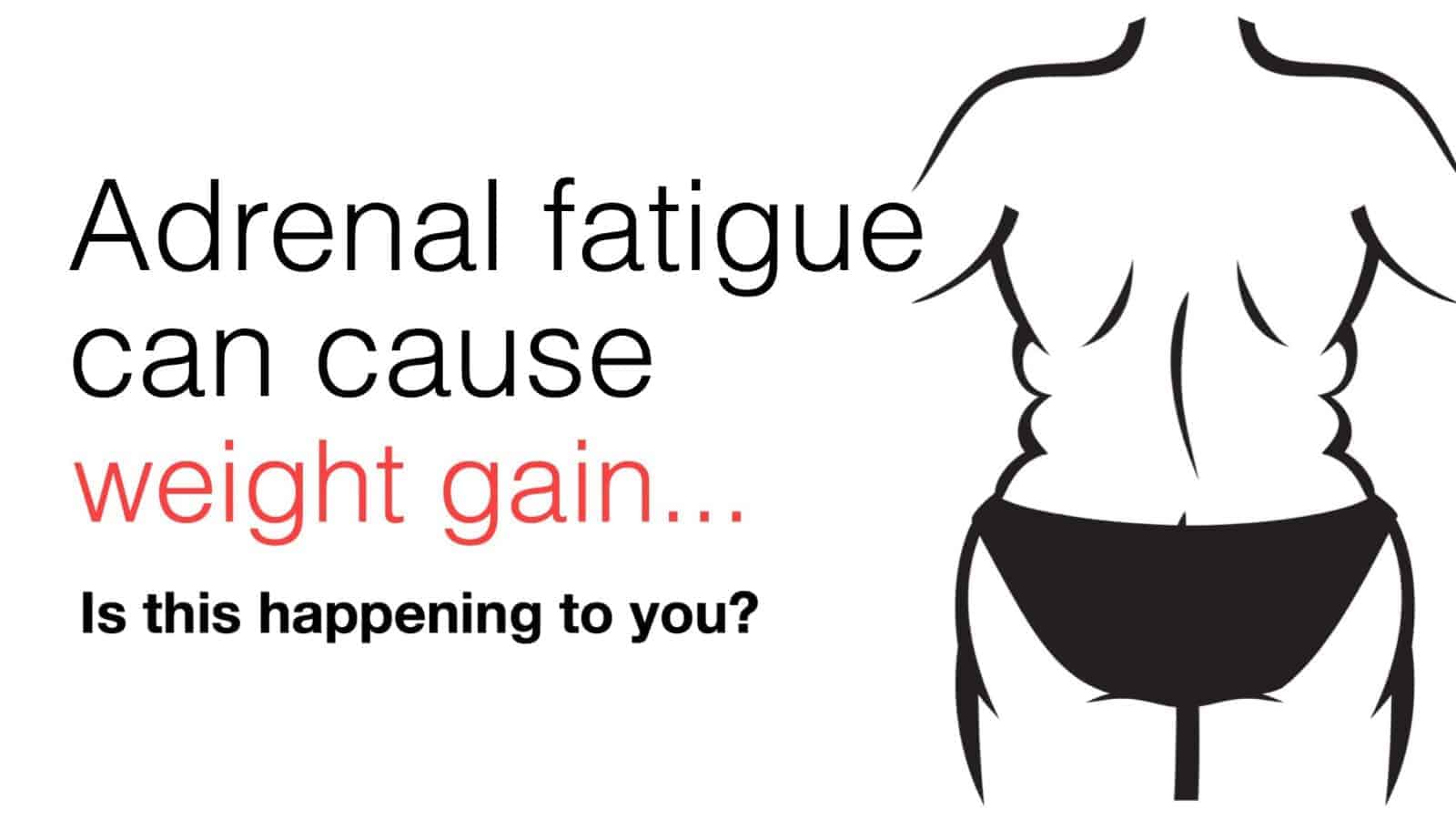
b)    Belly weight gainadrenal fatigue

If you have very sudden weight gain that you can’t pin to an obvious cause, you may have adrenal fatigue. This is even more true if the aforementioned weight gain primarily happens around the stomach.

Even if you try controlling your diet or adding to your exercise routine, you may still find yourself in this negative situation. Speak to a doctor if you’re gaining weight when you shouldn’t be or with no obvious plausible reason.

c)    Skin discoloration

Dark spots on the skin could be a sign of hormonal issues based in the adrenal glands. You may also notice worsened dark circles or other skin problems.

10. Getting sick more frequently

A weakened immune system is a sign of many different disorders. One of them is adrenal fatigue. This is because cortisol – being the multi-functioning hormone it is – is responsible for creating anti-inflammatory effects that help keep the immune system running smoothly.

Inflammation plays a crucial role in infection defense. Often, the body will raise its temperature to kill infections. Cortisol helps to prevent that inflammation from getting out of control. So if your cortisol levels are messed up, your immune system suffers.

This can cause your immune system to become compromised and more vulnerable to developing minor conditions. This means you will feel sick more often. Adrenal fatigue that doesn’t get treated can result in more serious diseases, including:

  • Chronic inflammation
  • Autoimmune conditions
  • Allergies

As such, if you notice you get sick more often than usual, you should speak to a doctor. Positive thinking is good, but it’s always better to be safe than sorry.

Final Thoughts On Signs Of Adrenal Fatigue Most People Ignore

Adrenal fatigue can result in a lot of unwanted symptoms and feelings of illness. It can cause you to feel stressed out, result in the formation of unhealthy habits, and be the reason behind unusual tiredness.

By looking out for these 10 signs of adrenal fatigue most people ignore, you’ll be able to notice when your adrenal glands need a break. This will help you take steps to remain happy, positive, and healthy.

That said, please keep in mind that adrenal fatigue is not a medical diagnosis. If your symptoms are severe and are not being alleviated, speak to a doctor immediately as there may be a more serious underlying cause.

https://www.youtube.com/watch?v=cHeI3Y_CfMo

Science Explains 15 Secrets To A Better Marriage

Why is intimacy in a relationship so important? First, human beings are remarkable creatures capable of doing many amazing things. We can make captivating musical compositions and write emotional poetry. We have impressive athletic abilities and can build beautiful architectural structures.

Perhaps, though, one of the unique capabilities of the human is our innate tendency, desire, and effort to create and maintain relationships with other humans.

It’s inherent in our DNA that we long for closeness with other people. “No man is an island,” John Donne wrote a few centuries ago. Having healthy relationships connects with having more vibrant lives. Committed relationships, especially marriage, can reduce amounts of the stress hormone, cortisol, released in the body and minimize undesirable responses to psychological stress.

Would you believe according to research, the lack of interpersonal relationships had the same impact on the health of people as if they smoked 15 cigarettes every day? A loving marriage can give a person a purpose, which reports claim can add years to a person’s life. Marriage is more than just commitment. It’s a way of thinking and an attitude. With the right attitude, you and your spouse can weather any storm — even a deficiency of intimacy in a relationship.

For a lot of married couples, holding onto affection is a challenge and subject to rises, falls, and shifts of satisfaction. Closeness is not purely physical. There can also be a lack or inadequate presence of emotional and spiritual closeness. Affection is fragile and can become imperceptible or atrophied because of monotony, distractions, or neglect.

Affection is vital in a marriage because along with it comes contentedness and wholeness.

Intimacy in Spirituality

Cultivating the closeness in the relationship on a transcendent level will fortify any other types of closeness experienced in the marriage. Often, while time gets spent on physical closeness, the spirituality of the matrimony gets neglected. Whatever you and your wife believe in or choose not to believe, this is a choice that no one else should dissuade or interfere.

Spend time with others who share your faith. Other like-minded couples can mentor you and encourage you and your spouse spiritually. Also, serve and help others together. Open your home, if you like, and offer hospitality. Volunteer as a couple to help neighbors, troubled young people, community programs, your church, the homeless, and any others you could bless with your united, homogeneous intentions.

Connect with abundant expressions of love in everything. All faiths share one thing in common, and that is love. Acts of love and sharing love with others is an excellent way to strengthen your spiritual connection with one another.

Physical Intimacy

There have been a few significant studies recently which suggests that couples who are having more physical encounters elevated their well-being, which fostered more happiness and overall satisfaction within their relationship. Research shows a frequency of physical intimacy in a marriage once a week is sufficient for positive health results. Realize although the whole of your companionship does not depend on physical intimacy, having a positive rapport in your marriage is essential to having a loving relationship.

Make love as often as you can, instead of trying to have sex

Intimacy in Friendship

Like with platonic intimacy in relationship, married couples who are emotionally intimate are close friends.They share their feelings, thoughts, secrets, and desires. Any friendship comes with a few innocent expectations, especially if you allow yourself to be vulnerable to another person about your emotions. You have a right to expect from an intimate friendship:

  • Respect
  • Attentiveness
  • Trust
  • Active listening
  • Non-judgment
  • Dependability
  • Honesty [6]

Turn off or silence all smartphones, TVs, and game consoles. Human interaction is essential to have meaningful and deep affection as friends. In society, the number of virtual friends on Facebook, “likes” to posted selfies in Instagram stories, and shares of tweets on Twitter are a huge part of current culture.

Text messages and emails zip from device to device but when you are with your spouse, find time to silence the rings and notifications. Try powering off the TV, muting cellphones, putting the computer to sleep and talk to one another, looking into each other’s eyes, and enjoying a fulfilling, real-time, person-to-person interaction.

Spend 30 minutes of uninterrupted time with each other every day.

You understand the importance of turning off electronics from time to time to interact with your spouse. Now take it a step further and plan a half an hour each day after the kids drift off to sleep to be together.

You don’t have to limit yourselves to just 30 minutes, but you can shop, do tasks, errands, and chores together. Not only will it help to add quality to your affection in the relationship but you’ll get a lot done and in less time than if each of you were to go at it alone.

Take part in marriage retreats or marriage improvement groups. You and your spouse may enjoy the activities in some communities, with civic groups and churches which sponsor and host events created to enrich the bonds and closeness of married couples. Many couples reap wonderful benefits by having structured guidance from a public leader or clergy.

Make a date night or pick a day every week when you two can have fun together.

It’s easy to get swept away by family affairs, work obligations, and social demands for your time and attention. By spending this time together, you and your spouse create new memories and strengthen your emotional closeness.

Also, consider collaborating on a checklist of various enjoyable activities you and your spouse can do. It’s like a bucket list but without morbidity. You two will always have something to look forward to. The collective desires and dreams will encourage more affection in the relationship.

Create an environment where your spouse feels valued and secure. They say the people closest to you hurt you the most because they know you the most. Cohabitation with matrimony implies an extreme closeness of two individuals. As years go by, you learn what hurts the one you love, but that doesn’t mean you should do it.  Do your part to make your spouse feel safe to speak and express feelings without fear of backlash.

Don’t hold grudges. Resentment towards your spouse could be emotionally dangerous. When disagreements come up, your partner should feel comfortable talking with you and know things between you two always settle. Forgiveness fosters emotional intimacy.

Intimacy in Relationship Through Growth

Understand you and your spouse are not the only ones who require a refuel of closeness in their marriage. Take inventory of the lovely things going well in the relationship and of what you two hope to improve. Then, work together to plan on what changes you two need to make to achieve those areas of growth.

Usually, when the words, “You aren’t the person I married,” come up within a marriage, it’s negative. However, as you both take steps to improve individually and as a unit in positive ways, the two of you become different people who are better than before. You are growing together as a couple in an intrinsic and intimate way.

Put down the boxing gloves. There will be conflict from time to time in any relationship, but its arrival doesn’t mean you and your spouse are lacking something that seemingly happier couples own. It says both parties have defenses up. It may sound contradictory, but you want to fight positively and not by creating a dynamic of inequality in the relationship. In this way, instead of affection, anger and anxiety build.

You don’t want your marriage to turn into a toxic relationship. If you feel they are controlling tendencies, then do your best break free from those circumstances. If you feel the controlling is getting out of hand and you aren’t able to neutralize it together, then seek help and make a plan.

Try flirting nostalgically like the relationship was brand new and compliment your spouse. You don’t want to get in a rut and too comfortable with your spouse and stultify the relationship. Reports show the tendency for cheating and affairs in marriage appears when one person gets dissatisfied. Keep the spice and flavor in your love and avoid routine, complacency, or monotony.

intimacy

Take time for yourself.

You want to be an interdependent partner with your spouse in your marriage. You likely have things you enjoy doing as a personal passion, sport, or hobby. It’s all right to experience these things by yourself or with your friends outside of the marriage. It’s healthy to spend time with your spouse but not too much. As the popular adage claims, “Absence makes the heart grow fonder.”

Don’t shy away from therapy if you need the help. To rekindle intimacy and rebuild closeness, intervention from a therapist could be helpful if there are stumbling blocks. Therapists can help a couple restore affection and facilitate necessary adjustments within the marriage. Speaking to a trained and objectively unbiased ear can help with these obstructions to closeness:

  • Communication issues
  • Affection anxiety
  • Unproductive beliefs or intentions
  • Cognitive misinterpretations

As Dean Martin once crooned, “Everybody loves somebody sometime.” Typically, people enjoy spending time with others. In a lot of those situations, romance penetrates the scene, and we also find people enjoy being in love with other people. Although the definition of marriage has morphed into more politically correct terms over the recent years, it remains a union between two people in a committed relationship of legally recognized love. However, the law has no jurisprudence over affection — only couples can desire, cultivate, and achieve it together.

Intimacy doesn’t just involve sex but holistically, also implicates physical proximity, emotional, and spiritual closeness. The important thing to remember is to be receptive and inviting to the blossoming of real affection. It’s about being open to spending time together, interdependence, understanding, expressions of love, new experiences, fellowship with other couples, enrichment, and growth. When there’s intimacy in relationship, there’s love and a “happily ever after.”

How To Build Intimacy In Your Relationship, According To Relationship Experts

Intimacy is an essential part of any relationship. Whether you are just beginning something new, or you’ve been in a relationship for a while, it’s important to make a habit of building this intimate bond between yourself and your partner. While many assume intimacy comes naturally in any relationship, it is something that must be cultivated over time.

Growing Intimacy in Relationships

As humans, we all have the desire and innate need to be close with others. In a relationship, this intimacy is much more than sex. Couples must build their own form of long-term intimacy that allows them to feel loved, valued, and understood. This closeness keeps their bond strong and allows the relationship to keep moving forward.

Looking for ways to grow intimacy in a relationship? Keep reading.

1. Start with Gratitude

Building intimacy in a relationship starts by showing your partner that you are thankful for them. This gratitude can be expressed through heartfelt “thank yous” but should also be shown in the way that you treat your partner.

This kind of gratitude should be exhibited everyday. Do this by letting your partner know how grateful you are to have them in your life. During quiet moments, take time to reflect on the memories that brought you closer together. Think about the first time you met, your first time being physically intimate, and anything else that re-awakens feelings of love and thankfulness for your partner.

2. Learn to Be More Open

If openness isn’t easy for you, you’ll have to work on this as you aim to become more intimate with your partner. Even the most private of people need to be able to open up their lives, emotions, and innermost thoughts with their partner. While this may not be easy, it is essential for partners that are hoping to grow closer to each other.

3. Practice Honesty

In addition to this openness, it’s equally as important to be honest with your significant other. Yes, there may be things about yourself that you may not want to share, but without honesty, there will always be a barrier between you and your partner.

Truly feeling intimate requires that you are “naked” with your partner. By holding nothing back, you’ll be able to experience a closeness like nothing else you’ve felt before.

4. Try to Comfort Your Partner

We all have different love languages. As you work to build an intimate bond between each other, you and your partner will need to learn each other’s love language. While we all find different things to be comforting, every person needs someone in their corner that will support them and show up for them.

Where most couples go wrong in creating intimate feelings is failing to understand how to act with their partners when things aren’t going well. Each person may respond positively or negatively to certain actions, so it’s important to learn how to treat your partner.

5. Be Practical About Your Relationship

Yes, there are moments where relationships rival the best scenes in our favorite romantic comedies, but when it comes to long-term intimate bonds, we must be practical.

The truth is that intimate feelings can be found in the simplest of things. Practical things like creating a budget together or going over plans for the future can make you feel completed bonded to your partner in ways that no rom-com love story could.

6. Talk About How You Grew Up

While you may not think sharing about your childhood as a way to build an intimate bond, it is an excellent opportunity for you to establish an intimate bond with your partner.

Going over all the joy and pain you felt growing up will give your partners a certain insight into your mind, allowing them to understood how you grew into the adult you are now.

7. Discuss Self-Improvement

Just as self-improvement helps us grow closer to ourselves, discussing self-improvement as a couple will help both partners improve their sense of intimacy. Begin this discussion by talking about how you’ve watched your partner grow, telling them how proud you are of them.

Just as we all need to actively pursue self improvement, it is necessary for couples to intentionally push their relationships to the point where they can grow even more.

When discussing self-improvement for your relationship, start by having a conversation about certain things you’ve been thinking about but have been hesitant to talk about. These things can include a fear of judgement, being misunderstood, or not feeling like you are being valued the way you should be.

8. Listen to Each Other More

Growing closer to each other doesn’t always need to be a complex and emotionally heavy experience. Simply encouraging your partner to talk to you will bring you both closer to each other.

During this kind of conversation, it’s important to completely focus on one another. Oftentimes, having a conversation about basic everyday things will lead to even deeper conversations.

9. Be Vulnerable

Vulnerability isn’t comfortable to experience, but it is a shortcut to becoming intimate with your partner. As you get to know someone, you’ll begin to become more and more vulnerable.

With a long-term partner, it can be easy to forget this vulnerability that you initially had in the beginning of the relationship. As you aim to become more vulnerable, it is important to ensure that your partner does the same. A relationship where vulnerability
is one-sided is one that is unhealthy.

10. Ask Questions

Being inquisitive will naturally lead you to know more about your partner. Whether you’ve known your significant other for a while or you just started dating, your partner is an individual that you will never stop learning about. Just as you are always changing, so is your partner.

Keep asking questions as you grow closer in your relationship. These questions will serve as a way to keep you in tune with your partner’s innermost thoughts and feelings.

11. Practice All Forms of Intimacy

While intimacy is more than just sex, there are various types of intimate bonds. By tying in all forms, you’ll find that you are closer to your partner than you’ve ever been:

  • Physical
  • Intellectual
  • Emotional

Every aspect of being intimate is needed for you to grow closer to your partner. Many experts suggest that appreciating and talking about all three forms of becoming intimate is the best way for couples to improve their understanding of them.

Going back to expressing gratitude, showing your partner that you are thankful for how they touch you, how they make you feel, and how they understand you on an intellectual level will strengthen these intimate feelings in them.

12. Tell Your Partner That You Love Them and Why

Whether this is stroking your partner’s ego or not, it’s always nice to hear all the reasons that someone loves you.

intimacy

Telling your partner that you love them is an important part of building an intimate bond as it is essential that your partner understands that you really do love them, and vice versa.

13. Keep Dating Each Other

As a relationship grows, it’s natural for that initial spark to fade away, That is why it is so important that couples intentionally keep this flame alive. By making it a point to have regular date nights, couples will be actively working towards growing their intimate bond.

Consider the following date ideas:

1. Work Out Together

Working up a sweat together helps to build your body, as well as bringing you and your partner closer together. The endorphins that are released during exercise helps couples to feel more positively about each other.

2. Spend Time Reading

While most people envision a date as an outing with their significant other, this doesn’t have to be the case. Spending time reading good books and discussing them together will allow both partners to feel more intimate.

3. Work on Your Home Together

This may not seem like a date, but it is definitely a way to bring couples closer together. Whether you undergo an extreme home makeover or simply do a few household chores together, you’ll find that these activities help you to feel more intimate with your partner.

4. Engage in an Extreme Sport

There’s a reason couples on the Bachelor go on extreme dates like skydiving or paint-balling. Going through these nerve-wracking experiences together help to make couples feel more attracted to each other.

Final Thoughts on Intimacy in Relationship

True love is built on how intimate couples become with each other. While some people are under the impression that love doesn’t always last, it can. However, to ensure that couples remain committed to each other, each partner must make a committed effort to grow closer to the other.

There is no one way to build intimacy in the relationship. Keep this in mind when applying these strategies to your love life as you aim to get closer than ever to your significant other.

I Kept A Gratitude Journal For A Month And This is How It Changed My Life

It’s very easy to be negative in our world, today. From politics to violence to personal conflicts, it is rare that I make it through the day with some form of commercial or personal conflict to overcome, and it seems that our society is geared to notice the negative. The timeless journalistic adage is that things that bleed are leading stories, and ratings and sales love to focus on conflict. However, if we focus on conflict, what kind of lives will be the outcome. Furthermore, how will it impact our mental, emotional, and physical health? What if we could reverse the damage and benefit ourselves, instead? We can through a little internal focus adjustment in noticing the good. Taking time to practice gratitude has is a gift we give ourselves to improve our whole lives.

Trust me, I know how it feels to be wronged and feels that something must be done to offset the karmic deficit on those that wronged you. However, I also know what toll it can take upon your life. Eight years ago, I got divorced to get away from someone that had taken many years worth of negative toll upon myself. I enjoyed the peace of knowing I was free, and she would no longer be able to dominate my life choices. However, seeing her rewarded with a rich life of her parents while I struggled was hard. Further, sharing a child gave her ample opportunities to attempt to harm me through the child, while I could not respond at all.

However, the lesson that I learned was that this was taking a toll upon me by my own permission, while she was not even aware of any stress to be had. The bitterness of retained anger burned me and affected my own life, while she was living happily. Maya Angelou said about bitterness, “Bitterness is cancer – It eats upon the host.It doesn’t do anything to the object of its displeasure.” (1)

That is how it was for me, too. I found myself distracted and distraught by not only the past but every little thing she did, after. The wounds of the past were still opening and bleeding. However, those were self-inflicted wounds. I began to understand that the level of happiness we find in our lives is a product of what we set in front of our eyes and reinforce, daily. That was when I began to journal about the positive things I could find in each day and practice gratitude. The outcome was phenomenal, and you can share in the results in your own life.

Keeping a Gratitude Journal

As stated, finding negative things about which to talk is built into society and ingrained into our psyche from our culture. It doesn’t take extra work to identify those. However, it takes a little work in order to identify the good things, at first. After you become more practiced in doing it, finding the positive things will become a second nature. An old Native American tradition says that all of us have competing wolves that are trying to dominate our nature, and the wolf “you feed” will be the one to win. (2)

You might be thinking, “Why do I need to keep a journal, instead of just making an effort to notice those things around me that are positive?” Berkeley University’s Greater Good organization says about the effort to Practice Gratitude.

“[Robert] Emmons points to research showing that translating thoughts into concrete language – whether oral or written – has advantages over just thinking the thoughts: It makes us more aware of them, deepening their emotional impact.”(3)

When you hear something or see something, it has an impact. However, it has a greater impact on you when you think about it. It has the greatest impact when you tell others or tell yourself, and a journal is a great way to do that.

Structuring Your Journal

Just as how you live your life and find the positive items, the structure of your journal is a personal choice. However, here are a few tips for putting together your journal.

1. Set aside time required to do the journal.

The first point of conflict that you will face in the creation of this journal is feeling that you don’t have the time to do it. Even 30 seconds of gratitude practice can have amazing impacts on your life. However, more is better. Set aside at least 10 minutes a day to reflect on what you saw in your day. It may take longer, if you have a lot of daily distractions to remove from your mind, first.

2. Make your journal personal.

Resist the temptation to make your journal formal or to list only those things you would want others to see. Make your journal as personal as you are, and keep it under lock and key. This is not for publishing to make yourself feel better. It is for personal recording and reflection, so be as personal with your positives, as well.

3. Praise yourself.

While you may find a lot of other things to praise about your day, spend a little time each day finding something good to praise about yourself. It may be as simple as noting that you were funny to the guy you liked, wore a cute outfit, or made it to class or work on time. However, when you take more time to focus on your personal successes, it will work to build your self-esteem and confidence, as well.

4. Make your positives .. positive.

It is important to make sure that your positive reflections are positive, meaning that you are listing things that you found that were intrinsically good, instead of noticing how things are better than others. When we use the comparison to identify the good things, we are still feeding the negative wolf.

5. Reflect on what you wrote.

After you have written your piece for the day, take a little time to think about what you have written, especially the things about yourself. One of the benefits of keeping a gratitude journal is that you have a written testimony of good things, witnessed by yourself. That is a good thing to have to dispel the doubts that arise in our hearts or minds at various times or to put down negative things that we hear from others.

Practice Gratitude

When you put all of this into practice, you will start seeing a change in how you view your days and your mood living in it. There is scientific proof that when you practice gratitude it can lessen anxiety and depression, as well as making you a happier person that wants to share that happiness with others.

gratitude

That change in mood and vitality can put a spring in your step, when you make it a practice of reflecting on gratitude in your journal, when you wake up. You will enter each day more prepared to handle what challenges may come, because you drew confidence in the good that you read from prior days.

Keeping a gratitude journal is also a great way to fall to sleep at night. Taking the time to force a reflection on the good that can be found in your days will help to ward off worry that may work to keep you awake, when you would rather be sleeping. This added rest of your mind in sleep will also benefit your mood in the next days, as well.
In the end, none of us wants to live in negativity. That’s why people complain about it. However, we have power over how much influence negative things will have over our lives. Taking the time, each day, to practice gratitude will allow us to live those lives more fully and more happily, and maintaining a journal to practice gratitude is just one of many keys to making that life truly satisfying.

Researchers Explain 10 Proven Benefits of The Mediterranean Diet

With a focus on eating vegetables, fruits, olive oil, legumes, nuts, and whole grains, the Mediterranean diet is seemingly good for your entire body! Some of the benefits of the Mediterranean diet health benefits practitioners include reducing the risk of developing heart disease, cancer, and depression. Also, it can help prevent cognitive decline.

A large body of research points to this diet offering surprising benefits. Some other examples include improved memory and a reduction in blood sugar. This is not a new diet at this point. Indeed, people have long considered the Mediterranean diet among the healthiest diets. The Mediterranean diet health benefits list is staggering. You can quickly adopt it with few restrictions.

Some of the critical aspects of the Mediterranean diet include:

  • Eating at least five servings of non-starchy vegetables a day
  • Eating at least five servings of non-starchy vegetables a day and consuming healthy fats from fish, nuts, and olive oil sources.
  • Enjoying two servings of legumes a week
  • Eating at least a handful of nuts daily
  • Get adequate protein from fish and eggs two or three times a week.

Let’s take a look at the many benefits of this lifestyle.

Promotes Healthy Weight Loss

One of the main factors that have made this diet so successful in helping people lose weight compared to other diets is that it is not a very restricting diet. This meal plan allows followers to indulge in their favorite foods regularly while keeping them fuller. This satisfaction makes it much easier to stick to a healthier diet.

To realize the full potential that this diet has and enjoy the maximum amount of weight loss possible, you should plan on sticking with it for at least six months. This should not be looked at as a “diet” but more as a lifestyle change that you plan on sticking with for life.

While you follow this diet, you can enjoy eating small amounts of bread and other carbs. Indeed, these are calorie-dense foods that can add up quickly if you’re not stringent with portioning. This can result in your weight loss stalling or reversing.

Bolsters Cognitive Health

Aside from enjoying a reduction in the risk of developing degenerative cognitive conditions such as Parkinson’s and dementia, followers of this diet can realize it also offers measurable improvements to the brain’s language capabilities

For faithful followers of this diet, the significance of these findings remains clear. But the younger generations can also benefit from the Mediterranean diet health benefits, both physical and mental. Following this diet can help maintain peak brain function throughout the lifetime of practitioners. Some of the potential benefits of this can include a healthier frame of mind, improved job performance, and a considerable bump in the quality of one’s life!

Puts You In A Better Mood

People suffering from mental health conditions such as depression, anxiety, and ADHD can benefit from the boost to cognition resulting from following this diet.

These conditions may result from your brain not getting enough of the chemical in the brain responsible for thought processing, the regulation of one’s mood, and body movements; dopamine. By consuming foods encouraged by this diet, namely probiotic foods high in fiber and healthy fats, such as olive oil and nuts, you can enjoy improvements in your mood and overall brain health. Also a possible cause of some mood disorders, poor gut health can be mitigated by this diet!

While scientists do not recommend this diet as a complete replacement for regular treatment programs for said conditions, following this diet can be used, with likely positive results, as a supplement to traditional medications and therapies. It’s not guaranteed, but with time you may find you do not need to medicate to suppress the symptoms of these disorders!

Helps to Maintain Heart Health

In countries where the population’s diet closely mirrors Mediterranean counties, heart disease is much lower than in other parts of the world. The dietary choices increased frequency of physical activity, and an emphasis on valued social support of those in Mediterranean countries are all factors that keep the heart and the rest of the body healthy.
Their diet often reduces the risk of death due to cardiovascular complications due to its positive impacts on LDL or “bad” cholesterol.

The beneficial effects this diet has on the heart health of practitioners are not only due to their food choices but also as a result of what they choose to drink. Long associated with a reduction in the rate of heart disease, the regular but moderate consumption of red wine is encouraged. The key here is reasonable, as in no more than ten ounces for men under 65 and no more than five ounces for women and men over 65.

Protects Against Type 2 Diabetes

When researchers looked at the Mediterranean diet compared with other healthy diets such as vegan, vegetarian, low-carb, high-fiber, high protein, or low-glycemic diets, they found that it provided more beneficial effects for those with diabetes or high blood sugar.

An emphasis on healthy foods with many monounsaturated fats such as fish, olive oil, and nuts and high fiber foods such as fruits and vegetables is what researchers attribute to the decreases in cholesterol and blood sugar in people with diabetes.

By replacing trans and saturated fats with healthier unsaturated fats, individuals have enjoyed improvements in insulin sensitivity.

Reduces Your Risk of Developing Alzheimer’s Disease

By improving blood sugar levels, cholesterol, and the overall heartiness of your blood vessels, this diet significantly reduces your chances of developing Alzheimer’s disease or dementia as you age!

mediterranean diet

Research indicates that when seniors follow a diet closely resembling that of Mediterranean countries, the rate of cognitive decline is slowed or even halted. This enables older adults to limit the burdens of illness, both economic and social while preserving their quality of life.

For a long time now, doctors have been trying to get patients to embrace healthier eating habits more in line with this diet as a possible means to combat cognitive conditions such as dementia.

Reduces Your Risk of Developing Parkinson’s Disease

As a result of the increase in healthy antioxidants you’ll be ingesting by following a diet similar to that of Mediterranean countries, you can drastically reduce your risk of developing Parkinson’s disease by nearly 50%!

Antioxidants, which occur in high concentrations in foods such as the vegetables, fruits, healthy fats, and seafood encouraged by this diet, offer results by keeping your cells from undergoing a process known as oxidative stress. Oxidative stress can cause a lot of damage over time and can contribute to the development of Parkinson’s and other degenerative diseases.

Most scientists agree that more research should look at the effects nutrition can have on neurodegeneration and neuroprotection. Indeed, studies shine a positive light on the diet’s ability to provide significant benefits to people genetically predisposed to or who face factors from their environment that can contribute to the onset of such conditions.

Fights Off Inflammation

Research on the impact of this diet on inflammation biomarkers in those at increased susceptibility showed that a diet such as this can regulate and even reduce these markers. This results in better control of inflammation within the body, which can act as a preventative measure against many of the conditions and concerns brought on as a result of chronic inflammation.

Indeed, the rich antioxidants of many foods consumed on this diet reduce your body’s likeliness of experiencing oxidative stress. Oxidative stress is a leading cause of inflammation.

To increase these beneficial effects even further, try increasing your intake of foods containing betaine and choline. Foods rich in betaine include vegetables such as spinach and beets. You can find choline in abundance in egg yolks and soybeans.

Staves Off Cancer

Studies have shown that followers of this diet enjoy a reduction in the risk of developing cancer and cancer-related mortality. The research says that the Mediterranean Diet plays a protective role in preventing cancer.

Aside from the general reduction in risk of cancer developing among devotees, studies have positively associated this type of diet and lifestyle with more specific types of cancer. One stand-out example is that the diet is particularly effective at reducing or preventing the development of postmenopausal breast cancer.

Improvements in Pain Management

High fiber vegetables and fruits, and magnesium-rich whole grains, all encouraged while following this diet, can provide real value and effects on pain management. Due to its effectiveness at reducing inflammation and providing stress relief, you’ll likely notice a huge difference in your body’s response to pain.

Magnesium is the real driver of this diet’s success in pain management and relief. If you’re looking for some of these Mediterranean diet health benefits, try to include more nuts, fish, legumes, whole grains, spinach, and chocolate.

Improved Fertility

Studies prove that a diet rich in whole grains, fruits, vegetables, and fish can positively affect fertility in even those who had trouble previously with trying to conceive! Admittedly, research continues on this topic. But, the diet’s overall other benefits mean that doctors still recommend trying to follow the diet’s guidelines closely.

With an overabundance of information available pointing to the Mediterranean diet being a real winner when it comes to weight loss and overall health, it’s hard to say no to giving it a chance. More people show an interest in their health and well-being today. So this diet is a safe bet for those that want a plan that they can stick with and benefit from for the foreseeable future!

Final Thoughts on the Many Reasons to Follow the Mediterranean Diet

With the Mediterranean diet, health benefits are plentiful! By adopting a few of these suggestions, you will improve your overall health and mood. The sooner you start on the right track to a healthier lifestyle, the better. Healthy living is cumulative, it’s not a race, and every little bit counts, eventually resulting in a better you!

Skip to content