Weekly tips, affirmations, and small actions to feel your best.

10 Behaviors Reveal That Your Child Might Be A Cyberbully

Law enforcement leaders estimate that more than 13 million children, ages 6 to 17, found themselves the victim of a cyberbully in 2006. Unfortunately, the prevalence of cyberbullying has only continued to increase since then. The percentage of individuals who have been cyberbullied nearly doubled from 2007 to 2016, reports PACER’s National Bullying Prevention Center.

Sadly, the number of individuals being cyberbullied is likely to be higher than statistics reveal as much cyberbullying goes unreported. Data analysis shows that in 2015, only 43% of all students who were bullied reported it to an adult. This stat was revealed in the Indicators of School Crime and Safety report published by the National Center for Education Statistics. Tragically, suicide rates and suicidal ideation have also increased dramatically among young people over recent decades. The CDC reports that teenage suicides increased by  76 percent in the last decade. Suicide was the second largest cause of death for 10 to 24-year-olds living in the U.S. in 2017.

CYBERBULLYING AND NEGATIVE IMPACTS ON KIDS

Many psychologists, psychiatrists, and pediatricians aim to better understand the dramatic increase in suicide rates among children and adolescents. Their copious amounts of research have revealed a connection between the rise in suicide rates with the spike in cyberbullying. The harmful effects of bullying are both immediate and long-term. Child psychologists explain how being bullied has a myriad of adverse effects on children’s and adolescent’s lives. Among the adverse effects of being bullied are depression, anxiety, low self-esteem, physical health problems, personality disorders, and even suicide.

The authors of this peer-reviewed research article examined the relationship between bullying and suicide among young people. Their data revealed that bullying strongly correlates with suicidal ideation as well as suicide attempts. Furthermore, researchers found that cyberbullying is more strongly related to suicidal ideation than traditional bullying. Thankfully, parents can aid in helping to prevent terrible outcomes such as these. Parents can help by closely monitoring their children for signs that they may be a victim or perpetrator of cyberbullying. If your child is cyberbullying, there are some telling signs that she or he might show. Knowing these signs and how to respond to them could save a child’s life. Keep reading to learn more about ten behaviors that reveal your child might be a cyberbully.

10 BEHAVIORS THAT REVEAL YOUR CHILD MIGHT BE A CYBERBULLY

Your child might be a cyberbully if she or he:

1) Is secretive about their online activity.

A child who is cyberbullying might quickly switch or close the computer screen when anyone walks by or enters the room. Someone who is bullying others will also commonly avoid having conversations about their computer and cell phone activities with adults.

2) Uses the laptop and/or their mobile device late at night.

In their desire to be secretive and unsupervised, a cyberbully often uses their electronic devices late at night. Consequently, young people who are cyberbullying commonly have trouble sleeping. This peer-reviewed research revealed that adolescents who bully had more irregular sleep schedules and shorter sleep duration than non-bullying schoolmates.

3) Uses multiple different online accounts and/or fake names.

This behavior is related to the anonymity that someone who is cyberbullying seeks. To remain anonymous, a person who is cyberbullying uses fake names to create multiple email and social media accounts. By doing so, the bully can indeed hide behind the screen and remain unknown to their victims. This anonymity often causes a bully to feel even more powerful and uninhibited in their bullying behaviors. Much research has shown how anonymity can have an impact on antisocial behavior online. The authors of this scientific study aimed to determine if online anonymity increased the frequency of cyberbullying among young people. Their research revealed that the more people feel they are anonymous online, the more likely they are to cyberbully.

4) Becomes excessively upset when you take away their computer and/or cell phone privileges.

This outburst occurs because someone who cyberbullies uses the computer and/or cell phone as their “weapon” of choice to bully others. Take away the device, and you effectively disarm them of their weapon of choice. Consequently, a cyberbully becomes extremely upset when you remove these devices. If your child is involved in cyberbullying, he or she may also display excessive computer and/or cell phone use.

5) Blames others for their actions.

Individuals who bully are usually acting out of fear and anger. Because of this, they do not see what they do to others as being their fault. And they don’t accept responsibility for the things that they do. Bullies frequently justify their violent behavior by shifting the blame to their victims. They commonly believe that they are merely reacting to what someone else has done to them. Individuals who bully often perceive themselves to be the victim instead of the other way around. If a bully cannot find a way to blame others for their behavior, they are likely to deny any involvement in bullying.

6) Lacks empathy for others.

Having a lack of empathy makes it much easier for a bully to be emotionally and physically abusive to their victims. Instead of seeing their victims for the humans that they are, bullies often dehumanize their victims. Someone who bullies people will commonly feel superior to others and be discriminatory and intolerant of differences. These perceived differences could be social, economic, physical, or racial. A bully will use anything that they believe makes another person “less than” to try to justify their bullying behaviors. “Researchers Explain 10 Ways to Teach Empathy to Your Kids” is a fantastic resource for parents. Check it out if you’d like to learn more about how you can help cultivate empathy in your children.

7) Acts aggressively.

Individuals who bully others often live in fear and feel out of control of their own lives and emotions. Because they feel out of control, they fear what will happen to them if they do not control others. Bullies commonly fear that they will be hurt if they do not have total control of a person and/or situation. Consequently, they act aggressively and aim to control and dominate others in an attempt to prevent themselves from being hurt. In many cases, a person who bullies also enjoys watching violent television shows and movies and plays violent video games. All the while, demonstrating a positive attitude about the violence that they observe or commit.

8) Becomes frustrated easily.

Because those who bully are not in complete control of their own emotions, they often become frustrated, and quite easily. They often escalate to anger quickly, also. This rage comes from the individual’s lack of emotional control as well as a lack of impulse control. The littlest things can set a bully off. This problem is intensified by the fact that bullies frequently feel fearful and are under a lot of emotional strain.

9) Breaks rules often and doesn’t learn from previous mistakes.

Almost all children and adolescents break the rules and push boundaries. It’s an inevitable part of growing up and learning. However, an individual who bullies may lack the ability to see or understand that what they are doing is wrong. As a result, they do not learn from their mistakes and continue to break the rules. This behavior often causes a bully to get into trouble at school. And when an adult calls out or disciplines a young cyberbully, they commonly talk back to and argue with adults. They might also hang out with other youth who are known bullies.

10) Has a history of bullying others and/or is currently a victim or has been a victim of bullying in the past.

The authors of this study, published in School Psychology International, aimed to understand the relationship between traditional bullying and cyberbullying. The data that researchers collected made it clear that more frequent traditional bullying linked to higher chances of cyberbullying. Additionally, an individual who is cyberbullying may also currently be the victim of bullying, or has been in the past.

Are you worried that your child is bullied in person or online? Know all the signs to watch for. Here is an article that discusses symptoms that children might exhibit if they are bullied.

intelligent childrenFINAL THOUGHTS ON BEHAVIORS THAT REVEAL YOUR CHILD MIGHT BE A CYBERBULLY

In the not so distant past, many people regarded bullying as a natural occurrence among children and adolescents. In previous decades, it was quite common for adults to believe that bullying was a healthy thing for young people to experience. Some adults even incorrectly assumed that being bullying increased a young person’s mental fortitude.

Over time, an abundance of scientific research has revealed the opposite to be true. We now know the facts surrounding the multitude of terrible outcomes that bullying has on those who are victimized. Consequently, we have come to understand that bullying is not healthy or okay in any way, for anything. Unfortunately, cyberbullying can be more challenging to detect and control than traditional bullying due to the anonymity of cyberbullies. Because cyberbullying often takes place when young people are at home, the help of parents in prevention efforts is vital. If you’d like information about how you can help prevent cyberbullying, “Preventing Cyberbullying: Suggestions for Parents” is a wonderful resource.

There is no denying that technological advancements have had an impact on young people and cyberbullying. The rise of social media and smartphone technology plays a crucial role in the cyberbullying epidemic. However, technology is not the problem, nor is it to blame. Some of the impacts of technology and social media on kids are incredibly positive, and some are not. Technological advances, including the Internet, have helped youth to accomplish many great things and to grow in truly incredible ways. But with more and more technology comes the need for more and more parental supervision, guidance, and responsibility.

parent of a cyberbully?But remember…

Those who bully others likely found themselves the target of a bully, themselves. Children and adolescents might not report the incidents for fear that the bullying will only get worse if they do. The best thing that you can do is have an open and honest conversation with your child about bullying. If you’d like information about how to approach this conversation with your child, this resource is incredibly helpful and informative.

Children who bully are not bad or hopeless. Quite the opposite. They often feel hurt. And you can uncover (and address) logical explanations for their behavior. Here at the Power of Positivity, we aim to help every child and parent to succeed and remain healthy. We hope that this article, and the resources included in it, have given you an excellent place to start talking about cyberbullying with your child.

Kid In Trouble For Doodling Hired By Local Restaurant to Create Wall Art

When you were in elementary school, I’m sure you can recall doodling on papers while daydreaming about being elsewhere. Almost every kid does it, but some teachers aren’t as tolerant of it as others. However, even if schools don’t always condone creative expression, it’s important that parents support that side of their children. When 9-year-old Joe Whale got in trouble for doodling in class, his parents urged him to keep drawing even if his teacher didn’t agree with it.

His parents picked up on Joe’s natural talent and sent him to an after-school art class where everyone around him was in awe of his abilities. Joe’s artistic abilities were so remarkable that he was asked to decorate the dining room of ‘Number 4’ restaurant in Shrewsbury, England. Known by most people as The Doodle Boy, Joe now has his own website and social media pages to showcase his work!

This is the perfect example of how something negative can easily be turned into a positive if you simply reframe the situation. Read on to see some of Joe’s work and read more about his story!

Kid Gets In Trouble For Doodling In Class, But Local Restaurant Asks Him To Draw on Their Wall

Joe’s sketchbooks are filled with creative drawings like these!

https://www.facebook.com/thedoodleboy.co.uk/photos/a.116375316469110/143070827132892/?type=3&theater

Now you can see why the restaurant asked him to doodle on their walls! Here are some photos from the Number Four.

Joe was just beginning his masterpiece.

https://www.facebook.com/thedoodleboy.co.uk/photos/a.102670987839543/102671761172799/?type=3&theater

This is from the second day of doodling. He’s made quite a bit of progress in just one day!

https://www.facebook.com/thedoodleboy.co.uk/photos/a.102670987839543/102672767839365/?type=3&theater

Day 3

https://www.facebook.com/thedoodleboy.co.uk/photos/a.102670987839543/102674164505892/?type=3&theater

It’s just amazing what can come from the mind of a child. Perhaps we adults could learn a thing or two from him!

https://www.facebook.com/thedoodleboy.co.uk/photos/a.102670987839543/105942324179076/?type=3&theater

According to Joe’s dad Greg, his son always loved drawing. Furthermore, he entered into gifted classes at just age 4. His dad said it took Joe about 12 hours to illustrate the walls of the restaurant.

Greg had the following advice to give for parents who have a child with a knack for creativity: “I would advise parents to encourage their children to always follow their passion and dreams — research local workshops or groups within your local community.”

Joe standing in front of his finished masterpiece!

https://www.facebook.com/thedoodleboy.co.uk/photos/a.102670987839543/107237470716228/?type=3&theater

kid drawing jewelry

Learn how you can turn your child’s doodling into jewelry to treasure forever.

Joe in the middle of filming for a TV show. Just shows you what can happen when you follow your passion in life!


View this post on Instagram


A post shared by Joe whale (@thedoodleboy.co.uk) on

You can see what a big imagination Joe has from his drawings!

https://www.facebook.com/thedoodleboy.co.uk/photos/a.102670987839543/102675814505727/?type=3&theater

Aren’t Joe’s doodles just adorable? They really bring you back to a more childlike existence where everything seemed fun and carefree.


View this post on Instagram


A post shared by Joe whale (@thedoodleboy.co.uk) on

What did you think of Joe’s doodles? Amazing, right?! If you’d like to see more of his work, you can follow him on Instagram, Facebook, or check out his website.

Do your own children love to draw? Then, we hop you feel inspired to enroll your kids  in some sort of community art class. Or, take them to a museum to feed their soul some inspiration. Remember, this world would just be “eh” without art!

Cardiologists Explain Why The DASH Foods Diet Is Best For Anyone With Heart Issues

You’ve likely heard friends mention they are eating DASH foods, but you may not know what those letters stand for or mean. DASH stands for Dietary Approaches to Stop Hypertension.

Moreover, cardiologists say that these DASH foods are essential for heart health. This diet effectively lessens the need to give medication for this blood pressure issue.

With a healthy heart being so crucial to our lives, this diet could be life-saving. It isn’t difficult to incorporate into your diet, and you can easily find favorite snacks and recipes that follow the dietary guidelines. It is a simple diet, as long as you follow the rules of this program.

Cardiologists swear by this diet and have worked hard to explain the importance of it. Before discussing the significance, however, it is essential to know what the guidelines of the menu are.

Rules of the DASH Diet

The guidelines of this diet are pretty simple and include the following:

  • Eat more fruits and vegetables
  • Switch to low-fat dairy foods and add a decent amount to your diet
  • Consume fewer foods that are high in saturated fat, cholesterol, and trans fats
  • Consume more whole-grains
  • Eat fish, poultry and nuts more often
  • Limit preservatives, sodium, sweets, sugary beverages, and red meats
  • Measure out portion sizes

The Importance of the DASH Foods Diet

Studies show that in the last 50 years, the number of people with hypertension (high blood pressure) has risen drastically. Because of that, the DASH diet was created with the primary goal of lowering blood pressure.

While it can also help you to lose weight, reduce cholesterol, and manage diabetes, the full intention is to lower blood pressure. This goal is because high BP can lead to heart disease, stroke, and kidney disease. Cardiologists swear by it because studies, like this one published by AHA Journals, prove that following this diet can regulate blood pressure without requiring weight loss.

Many of the DASH foods contain large amounts of antioxidants. Antioxidants prevent chronic health problems like heart disease and hypertension. Positive results can be seen in less than two weeks once you have implemented this healthy eating regime.

What Eating Habits are Typically Like in Comparison

Cardiologists have a good reason for pushing so hard for people to follow this diet. The typical person in the United States currently consumes food that is rich in saturated fats, omega-6 fatty acids, carbohydrates that contain a high glycemic load, and too many artificial additives to count. Each of those components listed is detrimental to the health of your heart.

When cardiologists realized this was such a huge issue, they began working to create the DASH diet that was introduced in the 1990s. Once it was released and studies underway, scientists and doctors quickly found that eating habits alone can lead to an improvement in blood pressure regulation. They found this outcome even when the participants made no other life changes, including improving their exercise or sleep habits.

What You Should Eat

  • Grains

You should eat six to eight servings of whole grains each day. This food could be in the form of bread, cereal, rice, or pasta. Options include one slice of whole-wheat bread, one ounce of dry cereal, or 1/2 cup of cooked cereal, rice or pasta. It is important to choose whole grains over white bread or rice or regular pasta because whole grains have more fiber and nutrients.

  • Vegetables

Everyone should be eating four to five, serving of vegetables each day. There are many to choose from for this diet, including tomatoes, carrots, broccoli, sweet potatoes, greens, and a wide array of others. Vegetables provide essential nutrients and minerals, making them an excellent option to ensure a healthy heart.

An example of one serving of vegetables would be one cup of raw greens and 1/2 cup of chopped vegetables or cooked vegetables. You can enjoy veggies as a snack, side dish, or even a topping for noodles or other main dishes. Of course, there are always delicious salads to try, as well. Frozen, canned, or fresh vegetables are all options when it comes to DASH foods.

  • Fruits

Cardiologists recommend four to five servings of fruits each day, which is easily accomplished. Since fruits are the perfect snack or lunch side, it’s an easy way to follow the DASH diet. A serving of fruit would be 1/2 cup of fruit (can be fresh, frozen, or canned) or four ounces of fruit juice.

Leave edible peels on the fruit, as well, because they provide many nutrients. It’s also important to note that when consuming fruit juice, you should avoid the ones that have added sugar.

  • Dairy

You should have two to three servings of dairy each day in the form of milk, yogurt, cheese, or other dairy product. It is vital to choose the low-fat or fat-free option to avoid saturated fat. One serving of dairy is one cup of low-fat milk or yogurt or 1-1/2 ounces of cheese.

It’s important to note that you should avoid consuming too much cheese as it contains high amounts of sodium.

  • Fish, poultry, and lean meat

You should consume no more than six one-ounce servings each day, as it is full of essential nutrients but doesn’t allow you to consume as many vegetables. Options include one egg or one-ounce of fish, poultry, or lean meat such as salmon, herring, or tuna. The reason these are included in the DASH diet is that they contain high amounts of omega-3 fatty acids, which are essential for heart health.

  • Nuts, seeds or legumes

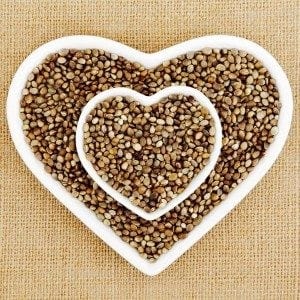
Surprisingly, you should consume nuts, seeds, or legumes four to five times each week. Examples include almonds, kidney beans, peas, and sunflower seeds, with many other options, as well. A serving contains 1/3 cup of nuts, two tablespoons of seeds or nut butter, or a half-cup of beans or peas.

You should only consume these foods a few times a week because they are high in calories. They are still important, however, due to their ability to protect against cardiovascular disease.

hemp seeds reduce blood pressure

Learn six reasons why you should add hemp seeds to your grocery list asap.

  • Sweets

Let’s be real. You’re not going to skip an occasional treat. Fortunately, DASH foods allow limited treats. Therefore, while you will avoid too many sweets, you don’t have to cut them out entirely. You can consume up to five servings of sweets each week, including a cup of lemonade, a small bowl of sorbet, or one tablespoon of sugar, jelly, or jam. When consuming sweets, still remember to avoid artificial sweeteners and sucralose.

  • Fats and oils

Too much fat and oil can include your risk of heart disease, but they do assist your body in absorbing nutrients. As long as you keep your intake to no more than 30% of your total daily calories from fat.

Servings include one teaspoon margarine, one tablespoon mayo, or two tablespoons of salad dressing. Remember to avoid trans fat and saturated fat.

Easy Ways to Incorporate the DASH Diet Into Your Life

You may be able to substitute the ingredients in your favorite dishes with ingredients that are DASH diet-friendly. If you can’t find a proper substitute, however, there are hundreds of DASH diet recipes on the internet. Some quick and easy ideas include:

  • fruit with low-fat yogurt on top
  • low-fat frozen yogurt with fruit mixed in
  • instead of making mashed potatoes, make mashed cauliflower
  • eat a taco salad with black beans, substitute ground turkey for ground beef. And, use low-sodium or homemade taco seasoning
  • have oatmeal for breakfast and top with fresh fruit
  • prepare a smoothie for breakfast using juice or low-fat milk, greens, and your favorite fruits
  • add cooked fish to a salad full of your favorite vegetables and top with nectarines
  • make vegetable soup using low-sodium broth and your favorite veggies (add black beans or lean ground chicken for an added touch)
  • have a grilled fish sandwich on a whole-grain bun and top it with vegetables
  • prepare a fruit salad and keep it in your refrigerator as a quick snack option
  • make hamburgers but use ground turkey instead
  • cut sweet potatoes into French fry shapes, lightly season them and bake them in the oven
  • have a bean burrito on a whole-grain tortilla, top with low-fat sour cream, and have whole-grain rice as a side
  • dip vegetables in hummus for a quick snack
  • sprinkle a little granola and honey over the top of Greek yogurt
  • add shrimp to whole-grain pasta and mix in a little extra virgin olive oil before sprinkling with cheese
  • make your snack mix using pretzels, popcorn, dried fruit, and sunflower seeds

DASH Foods for healthy heartFinal Thoughts on the Importance of the DASH Foods Diet for Lower Blood Pressure and Preventing the Onset of Hypertension

Cardiologists developed the DASH foods diet when they noticed the association between high blood pressure, heart health, and the intake of an average American. Once they linked diet to hypertension, they began vigorously testing this program. Those research results showed how much your diet affects your blood pressure and, in turn, your heart.

Since your heart is one of your essential organs, the desire to protect it should be high on your list of priorities. By making simple lifestyle changes and taking on a healthier diet can be the only change that stands in the way for you.

Boy Helps A Blind Deer Find Food Before School Everyday

In this world where we’re inundated with bad news almost constantly, it’s nice to read something positive for a change. One sweet ten-year-old boy in Chicago, Illinois spotted a blind deer before school one day and decided to help it find food. We could learn a lot by adopting habits and behaviors of children, don’t you think?

A Reddit user with the name Bluecollarclassicist shared this heart-warming story with the world. Of course, if the deer attempted to return to living in nature, it wouldn’t survive very long. That’s where this kind-hearted boy comes in to offer relief to the helpless deer. He took the deer to grassy spots along the sidewalk so it would have food to eat. A neighbor snapped a photo of the pair together and posted it on Imgur. It quickly went viral as people’s hearts melted over the generosity of the young boy.

Boy Helps A Blind Deer Find Food Before School Everyday

When the Illinois Department of Natural Resources got word of the story, it decided to adopt the deer. They gave her a safe shelter, food, and water. They learned the boy hadn’t named or pet the deer, wanting to be respectful of the fact it was a wild animal despite its limitations. The boy didn’t feel sad, therefore, when the deer was taken away. Rather, he felt a sense of relief knowing that the deer would be in safe hands from then on.

Luckily, the deer didn’t get picked up by government officials, who often put down animals without a second thought. The group that came to pick up the deer is a local organization that made sure the deer was well taken care of.

View post on imgur.com

Source: Reddit/bluecollarclassicist 

The boy’s natural affection and care for the deer is something all of us can learn from. Humans don’t live in harmony with our local environment, instead choosing to exploit and become possessive of resources, and even each other. However, the boy and this deer have a beautiful relationship, where the deer can fully trust the boy to care for it.

The deer was extremely lucky to have wandered into a neighborhood where such a caring person lived, because otherwise the deer would’ve likely been hit by a car or starved to death. When the IDNR came to pick up the deer, half the neighborhood came outside to show their support and witness the act of kindness for themselves.

The reddit user and his wife hope to reward the child’s act of kindness and take him to visit the deer in the local nature preserve.

Final Thoughts on Helping the Environment Around Us (even a blind deer)

We can all do better in regard to living in harmony with the animals around us. If you see a stray dog, for example, you could post pictures of it on social media to see if anyone would like to adopt it. Or, if you have a local no-kill animal shelter, you could take it there so it can be formally adopted. This is just one example, but the point is that we can all do our part to live more cohesively with the environment around us.

Do you know of anyone who has helped an animal in need like this? If so, please share your story with us in the comments!

(C)Power of Positivity, LLC. All rights reserved

Dietitians Reveal Pros And Cons Of The 3 Day Military Diet

Are you looking for a way to lose weight and get into better shape? Losing weight is not a process of instant gratification, however, and many of us quickly lose steam because we don’t see the results that we wish. Is there a weight loss plan that allows us to jump-start our progress, gain momentum, and still enjoy real, sustainable food? There might be–it’s the 3 day military diet.

Here’s a little bit about the 3 Day Military Diet

The 3 Day Military Diet is a fast weight loss program that boasts rapid weight loss over a three-day cycle, followed by four days of a low-calorie, less restrictive eating plan. The plan allows you to repeat the weekly cycle until you achieve your desired goal weight. Followers of the program claim to have lost as much as 10 pounds per week, or almost 40 pounds in a month, eating foods like hot dogs, vanilla ice cream, and peanut butter. The science behind the plan is the food combinations that supposedly jump-start the metabolism, encourage fat burning, and satiate hunger.

How did it originate?

The origin of the 3 Day Military Diet is unknown. Still, some theorize that nutritionists working for the U.S. Military designed the plan as a way for soldiers to quickly slim down and get into shape.

How does it work?

Combinations of specific foods pair together to fire up your metabolism and promote rapid weight loss. For three days, you stick to a list of allowed foods at particular times, and the following four days, you develop a low-carb, relatively low-calorie eating pattern.

What do I eat on the 3 Day Military Diet?

The “on” days of your diet plan are as follows:

Day one:

Breakfast:

One slice toast
2 Tbsp peanut butter
1/2 grapefruit
Black coffee or tea

Lunch:

One slice toast
Half cup of tuna fish
Black coffee or tea

Dinner:

3 ounces meat
1 cup green beans
Half a banana
One small apple
1 cup vanilla ice cream

Day two:

Breakfast:

One slice toast
Half a banana
One cooked egg

Lunch:

1 cup cottage cheese
One hard-boiled egg
5 saltine crackers

Dinner:

2 hot dogs without buns
1 cup broccoli
Half a banana
1 cup vanilla ice cream

Day three:

Breakfast:

One slice cheddar cheese
One small apple
5 saltine crackers

Lunch:

One slice toast
One cooked egg

Dinner:

1 cup tuna
Half a banana
1 cup vanilla ice cream

Limited substitutions on the plan are allowed, as long as you stay within calorie guidelines.

What are the possible food substitutions for the 3-day military diet plan?

As much as some people want to try the diet plan, they are put off by foods on it that are unappealing or even off-limits to them. Rest assured, there are some food substitutions for each meal that you can use to customize according to your tastes and dietary needs that will work equally as well. We’ll break down food substitutions for each meal that will produce the same kind of chemical reaction and keep you on track for losing weight:

Day one breakfast

Swap out 1/2 tsp of baking soda in a glass of water for grapefruit. The diuretic effect of this pH balanced water will remove excess water from tissues.

An acceptable substitute for toast would be 1/8 cup of sunflower seeds, 1/2 cup multigrain cereal, one tortilla, or two rice cakes.

Peanut butter can be swapped out for most nut butter, including cashew, almond, and sunflower seed butter. You can even use hummus or bean dip for additional protein.

Day one lunch

Some people cannot stomach the taste of plain tuna from a can. Acceptable substitutes would be any lean meat, cottage cheese, tofu, or almonds. Slices of avocado with sunflower seeds would also be a delicious alternative.

Day one dinner

Vegetarians, no worries–you may use lentils, beans, or tofu as meat alternatives.

Swap out your green beans for lettuce, spinach, or tomato, making sure that your calorie count is the same.

Fruit substitutions for the apple and banana could include dried apricots, kiwi, papaya, plums, peaches, pears, zucchini, or grapes. Again, make sure your calorie count is the same for these two items.

Are you craving a healthier option than vanilla ice cream? Consider 1 cup of fruit-flavored yogurt, unsweetened apple juice, or almond milk. No chocolate almond milk, please, as it contains added sugars that can derail your metabolic process.

Day two breakfast substitutions

  • Egg—1 cup of milk, one chicken wing, two slices bacon, 1/2 cup beans or lentils
  • Toast–1/8 cup sunflower seeds of 1/2 cup multigrain cereal
  • Banana–2 kiwis, 1 cup papaya, two apricots, grapes, applesauce

Day two lunch substitutions

  • Cottage cheese–1 cup plain unsweetened yogurt, ricotta, cheddar cheese, eggs, or ham
  • Hard-boiled egg—1/2 avocado
  • Saltine crackers–rice cakes, almond crackers

Day two dinner substitutions

  • Hot dogs–turkey or soy dogs, deli meat, lunch meat, beans, lentils, portabello mushrooms
  • Broccoli–cauliflower, Brussels sprouts, cabbage, asparagus
  • Banana-2 kiwi, 1 cup papaya, two apricots, grapes, plums, applesauce
  • Vanilla ice cream—1 cup fruit-flavored yogurt, applesauce, almond milk

Day three breakfast substitutions

  • Saltine crackers–rice cakes, almond crackers
  • Cheddar cheese–eggs, cottage cheese, ham, tofu
  • Apple–plums, peaches, pears, zucchini, dried apricots

Day three lunch substitutions

  • Hard-boiled egg–1 cup milk, one chicken wing, 1/4 cup nuts, two slices of bacon, 1/2 avocado
  • Toast–1/8 cup sunflower seeds, 1/2 cup whole-grain cereal, one tortilla, two rice cakes

Day three dinner substitutions

  • Tuna—1/2 cup canned chickpeas
  • Banana–2 kiwis, 1 cup papaya, apricots, plums, grapes, applesauce
  • Vanilla ice cream–1 cup fruit-flavored yogurt, apple sauce, almond milk, or vegan Coconut Bliss

Pros and Cons of the 3 DAY Military Diet

Some nutritionists and dietitians argue that the 3 Day Military Diet is not a sustainable way to lose weight, as the calorie restriction in the first part of the diet is too low to provide adequate energy for most. With any diet plan, it is wise to consult your doctor before beginning any program, and you should always follow medical advice when starting and implementing a new program.

There are, of course, pros and cons to this diet that promises rapid weight loss using combinations of real foods:

Diet plan pros:

This diet plan does quickly start your weight loss, and if followed correctly, can yield lasting results. A method this structured can take the guesswork out of dieting that is so hard for some to sustain.

Food combinations are comprised of items that you can find in most people’s homes, and they are relatively easy to obtain and prepare. Food substitutions are acceptable to most, and there are some options for vegetarians and other dieters who have different food sensitivities or restrictions. Check here for more information on food substitutions that are acceptable on the plan.

You can repeat this 3-day-on, 4-day-off plan, which keeps your metabolism fired up and working efficiently to lose weight on an ongoing basis. With other types of diets, following a low-calorie plan for an extended time can cause your metabolism to slow, making weight loss difficult.

Diet plan cons:

While many know this as an effective weight loss plan, the reality is that there are processed foods on this list of meals. For some, this type of eating while on a “healthy” eating plan is unacceptable. Hot dogs, for instance, have shown links to the development of heart disease and even cancer. Finding a healthier substitute might be more beneficial for lasting weight loss.

While you may lose a few pounds initially, following this diet for an extended period might cause you to gain the weight back, because some of the foods on this diet are processed, high-fat foods. While the thought of eating vanilla ice cream every night after dinner is appealing, it might not be a sustainable way to follow a sensible eating plan that helps you maintain your weight.

Is this diet calorie counting in disguise?

The military diet is all about portion control. For the first three days, calories are counted for you unless you choose to add in foods or make substitutions, which must still be measured, and calorie counted. It is recommended on the following four days that you keep a food log and continue to count calories, keeping your daily total under 1500 calories to see measurable results.

weight loss

You will lose weight…but is it all water?

Experts note that water weight is relatively easy to lose; some people can lose up to five pounds of water weight in a single day. While your initial pound count might be primarily water, following the diet over time will allow you to drop needed pounds.

water weight loss on 3 day military diet

Final Thoughts on Trying the 3 Day Military Diet

As you embark on your journey to be healthier, you must decide if the 3 Day Military Diet is right for you. Talk to your doctor, make smart choices, and see what you how you can benefit from trying out this simple yet effective plan for both quick and lasting weight loss. Here’s to your healthiest days ahead and a slimmer, trimmer you!

5 Ways To Overcome Laziness

Laziness can be a real drag on your ability to perform tasks and progress in life. You put things off, you rush last-minute work, and you deliver at a mere fraction of your full capabilities. No one wants to live like that!

But laziness isn’t a permanent trait, and it doesn’t have to be one that defines you and your life. All you have to do is learn the methods that can work for you to help overcome your procrastination.

Here Are 5 Ways To Overcome Laziness And Stop Postponing Schedules

1.    Focus On The Most Crucial Tasks First

One of the most valuable skills you can learn to stop postponing things is prioritizing your most essential tasks in a list of tasks. This method can have positive effects on your productivity. Reasons it is essential to pick the most significant responsibility to concentrate on the first include:

  • An ability to devote the most time and energy to the most crucial task
  • When you are tired, only the least important tasks will remain
  • You will be able to get the problematic jobs done early

You need to focus on a specific task instead of multiple tasks at once to avoid being overwhelmed:

  • Multitasking can lead to distractions that derail any attempts at productivity
  • It sets your priorities straight, showing you which unrelated things you should say “no” to
  • A motivation boost from finishing this first task can help you finish the next few tasks
  • Less difficult tasks will appear less daunting if you’ve completed a much more difficult one first

Getting the tricky stuff out of the way can be great for reducing feelings and urges of laziness. You’ll have already done what you’re least looking forward to, so the desire to avoid your work will lower significantly!

2.    Stay Motivated and Committed

When you’re motivated, you get things done quickly. You don’t postpone schedules or act lazy because you want to get it done. However, motivation is not permanent. It comes and goes. That’s why you also need the commitment to stick to your goals and schedule, and you need to be able to help yourself be motivated again eventually. Here are some ways to do that:

·         Visualize Success

Close your eyes and visualize yourself, completing the tasks at hand. Imagine being energetic and happy as you finish your jobs, working efficiently, and producing good quality work. The mind is a powerful thing, and these visualizations can boost your positive thinking significantly.

·         Use Positive Affirmations

When you tell yourself something positive enough, you will begin to believe it and make it a reality. Choose some specific and uplifting affirmations to say to yourself daily. Examples are “I accomplish my goals,” “I perform tasks easily and on time,” “I am capable of great things,” or “I have the motivation I need to do what I need to do.”

·         Consider The Benefits

Think about the short-term good that will come out of completing your tasks. What can you do in your free time? How will it help to advance your career or life? Who will be proud of you?

·         Consider The Consequences

Think about the bad things that will happen if you give in to feelings of laziness and keep postponing everything you need to do. Who will be disappointed in or angry at you? How will this hurt your career, goals, or life plans? How difficult will it be to keep up with or make up for the laziness?

·         Find People To Look Up To

Are there people around you who are living a successful life you want to live? Are there people whose traits and hard work you admire? Use these people as your inspiration. If circumstances allow, you can even ask them for advice.

·         Envision Your Goals

Who do you want to be? What do you want to achieve? What kind of life do you want to live? Let these thoughts propel you forward.

·         Announce Your Plans

Tell all your friends or family members what you plan to do. Post your schedule and commitment to it on social media. Announce it to the world! This will help you stay motivated, both to keep good on your word and to avoid losing face when you don’t follow through.

3.    Take Care Of Your Body to Conquer Laziness

Laziness is sometimes not a reflection of your character but a genuine product of your energy levels. Not taking care of your health can cause your body to become exhausted, even without you realizing it! This can lead to “laziness,” which is really just you needing a break.

Caring for your body is crucial in caring for your mind and positive thinking – and, therefore, your productivity. Here are some ways you should be taking care of your body to avoid unintentional laziness:

·         Exercise regularly

It is recommended that you get 30 minutes of exercise for five days a week for 150 minutes of physical activity weekly.

·         Eat a balanced diet

Focus on eating reasonable portions focused on healthier, nutritionally balanced meals. Occasional treats are fine, but make sure most of your food is healthy!

·         Don’t skip medical check-ups

It can be tempting to miss annual check-ups, especially due to their potential cost. But those costs are nothing compared to the price involved with treating a serious illness that could have been spotted early and prevented.

·         Give yourself regular breaks

There’s a difference between laziness and taking a much-needed rest. Give yourself a self-care or off day now and then to refresh yourself.

4.    Understand Deadlines and How To Set Them

Working within time constraints can be relatively challenging, but it doesn’t have to be. Using deadlines can teach you to work within a certain time limit, thereby forcing you to rearrange your schedule to fit your tasks in on time.

When you don’t have a fixed deadline, or you have one that is a long time away, a false sense of security can trap you. It’s a good idea to break down large tasks into smaller ones with their deadlines for positive results.

Though they sound strict and tiring, deadlines can lead to fewer working hours. This is because you can consider your deadlines rules rather than guidelines. Once the clock strikes a certain time, your time is up, no matter what.

But sometimes, avoiding the hassle working overtime isn’t enough of an incentive to meet deadlines. You need to make deadlines matter enough that you want to meet them. One way to do this is by thinking about what you’re missing out on by working extra hours, such as free time to:

  • Watch a TV show or movie you’ve meant to watch
  • Read a book you’ve wanted to read
  • Indulge in a time-consuming hobby
  • Go out with friends or alone for a fun night
  • Spend with loved ones
  • Exercise
  • Cook a nice meal
  • Just relax

If this isn’t enough incentive, try scheduling something you’d really want to look forward to after a deadline. Schedule a date or outing or plan to catch a movie and book tickets in advance – anything that helps you want to keep to the deadline.

A word of caution: do make sure that your deadlines are reasonable. Understand your working ability, and don’t give yourself added stress by setting deadlines that are too close to impossible for you to meet. This could make you give up on deadlines altogether – or result in questionable work quality.

5.    Try The Eisenhower Matrix

This matrix is named after President Dwight Eisenhower, America’s 34th president. It was used by him when he was the supreme commander of the Allied forces during the Second World War. He used this method of prioritizing and understanding the urgency to command thousands of troops successfully.

Regardless of your opinions on President Eisenhower’s politics, few can deny that his matrix works. Studies prove that his method of prioritization and managing multiple tasks has positive effects on productivity and procrastination. The model divides tasks into four quadrants. Here’s how to use the matrix.

·         Quadrant 1: Important, Urgent Tasks

These tasks are both crucial and time-sensitive. Typically, these tasks will have a critical effect on your career or your life that requires them to be finished immediately.

Quadrant 1 tasks may involve searching for a job, finishing a report for work, replying to client requests, getting treatment for a severe illness, or paying an urgent bill.

·         Quadrant 2: Important, Non-Urgent Tasks

These tasks are important and can have a big impact on your life, but they aren’t time-sensitive enough to warrant immediate completion. Typically, they have something to do with your long-term goals – and they often get overlooked due to their lack of urgency.

Quadrant 2 tasks may involve exercising, furthering your studies for career purposes, dedicating time to spend with loved ones, or improving on non-crucial skills.

·         Quadrant 3: Urgent, Non-Important Tasks

These tasks are time-sensitive, but often not crucial to your personal career or life. These are often jobs you would delegate to other people who are in a better position to perform them when you are their leader, or to those who are more qualified in that field.

Quadrant 3 tasks may involve answering a ringing phone while you’re busy, responding to individual simple emails, or doing a very minor and simple but urgent task.

·         Quadrant 4: Non-Important, Non-Urgent Tasks

These tasks are ones that sap up your time for no good reason. Avoid doing them at all when you have work or other duties to perform.

Quadrant 4 tasks may involve watching television, playing games, lounging around, or chatting for hours with a random acquaintance.

Of course, this doesn’t mean that you shouldn’t take time for leisure. You absolutely should! But during your working hours, these tasks should not be focused on, and if you have to sacrifice any tasks, these should be the first to go.

lazinessFinal Thoughts On Some Ways To Overcome Laziness

Laziness can make your life exceedingly difficult. But by learning to overcome its underlying causes and working around urges and feelings that detract from productivity, you can learn to stop postponing schedules and start seeing progress and success in your work.

Utilizing methods to avoid laziness is far from shameful. It’s something to be praised and smiled upon! You’re doing what you can to fight the inner desire we all feel just to relax, and that’s admirable in itself.

11 Science-Backed Health Benefits of Kefir

Kefir has become popular amongst the natural health community, and the benefits make it clear why. High in probiotics and nutrients, kefir benefits promote overall health with a focus on gut support. It offers more benefits than other drinks, and it promotes the digestion and absorption of nutrients.

Kefir is a tart and creamy fermented drink that contains many bioactive compounds and good bacteria. This probiotic drink offers many health benefits, making it a common choice for healthy people. It is widely available in stores, or you can make it at home. You might also hear people call it kefir yogurt or kefir milk.

Many of the kefir benefits are still being established, but there are many science-backed benefits already. Adding this drink to your diet (any time of the day) could make all the difference in maintaining a healthy lifestyle. If you’re thinking about adding it to your diet, learn about the many kefir benefits to improve your health.

What is Kefir?

Before learning about the kefir benefits, you should understand what kefir is. It is a fermented milk drink that is similar to yogurt, with a thinner consistency. You can use any milk to make kefir, and some people use coconut water rather than dairy.

kefir benefitsSome of the types of milk you can use include the following:

  • goat
  • sheep
  • cow
  • soy
  • rice
  • coconut

Kefir is made using starter grains that are a combination of bacteria and yeast. As it interreacts with milk, it creates a fermented drink that boosts your nutrients and promotes health. Since it is fermented, it might taste slightly carbonated but still maintain a creamy consistency.

Much of the kefir benefits are due to its high probiotic content. Probiotics are living organisms that promote gut health and other conditions. While kefir is healthy, there are some risk factors to be aware of for some people.

If you have a milk allergy, you shouldn’t consume kefir. It is safe for those with lactose intolerance, but a milk allergy could pose a problem.

Another thing to consider is that many pre-packaged kefir options contain high amounts of added sugar. The added sugar negates many of the health benefits and could lead to further health issues for you. Try to avoid any kefir that contains high sugar levels so that you can ensure you consume the healthiest option.

Eleven Science-Backed Kefir Benefits

Let’s take a look at all the benefits of drinking kefir milk–it is so good for you!

1. Kefir Is Source Of Many Nutrients

In one six-ounce serving of kefir, you will consume a good portion of your daily recommended values of nutrients. It also contains bioactive compounds that contribute to your overall health. Kefir has a high probiotic content containing more than 50 species of kefir probiotic bacteria and yeasts.

Those aren’t the only nutritional benefits of kefir drinks, though, as it also contains many other nutrients. The nutrient content changes based on the version of kefir you have, but it typically contains decent amounts of:

  1. protein
  2. calcium
  3. phosphorus
  4. vitamin B12
  5. riboflavin
  6. magnesium
  7. vitamin D
  8. fat
  9. vitamin K2
  10. biotin
  11. folate
  12. enzymes
  13. carbohydrates
  14. vitamin A
  15. potassium

2. Kefir Has Antibacterial Properties

This fermented drink contains Lactobacillus kefiri, or L. kefiri, which is a species of healthy bacteria. L. kefiri hinders the growth of pathogenic bacteria, preventing illness from E. coli, Helicobacter pylori, and Salmonella. Additionally, it protects you from getting infections and fights off illnesses.

Kefir also contains kefiran, which is a carbohydrate that has antibacterial properties. Kefiran helps protect you from harmful bacteria, as well, aiding L. kefiri in the process.

3. Kefir Improves Bone Health

Kefir is a beneficial source of calcium and vitamin K2. Vitamin K2 helps with increased calcium absorption in bone cells, improving bone density and preventing fractures. This benefit makes kefir a way to decrease your risk of osteoporosis.

Kefir also contains bioactive compounds that help with calcium absorption and slow bone degeneration. Plus, one cup of kefir typically contains between 300 and 400 mg of calcium. Since the average person should get 1,000 mg per day, this drink can account for a large portion of that.

4. Kefir May Protect You Against Cancer

This drink contains microbiota that can fight cancer by stimulating the immune system and reducing tumor growth. According to a study published in Cancer Management and Research, kefir kills cancer cells and reduces their spread. Their study was specific to leukemia cells, but other studies show that it works with other cancers, too.

As one of the leading causes of death, finding ways to reduce your cancer risk is essential. The probiotics found in kefir help, with research showing it reduces cancer cells by more than 50%.

5. Kefir Promotes Healthy Digestion

Having good gut bacteria in your digestive tract promotes healthy digestion. Research shows that kefir and other probiotic foods help with digestion by restoring gut balance. It can also help after taking antibiotics, which often disrupt digestion by removing all bacteria from the system.

Kefir also prevents and alleviates certain conditions, such as diarrhea, ulcers, Crohn’s disease, and irritable bowel syndrome. It can also help relieve bloating as it helps maintain regular bowel movements.

kefir benefits6. Kefir Helps Fight Allergy Symptoms

People that have an over-sensitive immune system tend to get allergies or have allergic reactions. Kefir can help prevent and fight those symptoms, though, as it suppresses the inflammatory responses.

During an allergic reaction, inflammation can disrupt the lungs and air passages. Plus, mucus can build up, further blocking the airways. Kefir reduces these problems, allowing you to breathe and recover after an allergic reaction.

This beverage can also suppress allergic reactions altogether. If you’re prone to allergies, make kefir a regular part of your diet to prevent flare-ups.

7. Kefir Helps In Blood Sugar Control

Research shows that people who consume kefir have lower fasting blood sugar levels than others. They also experienced decreased hemoglobin A1c values, which measure blood sugar over three months. This benefit shows that this fermented milk can help people with diabetes as it helps regulate blood sugar.

8. Kefir Aids In Weight Control

Good gut bacteria promote weight loss in a few different ways. First, it helps synthesize nutrients Vitamin K and some B vitamins. Plus, they help break down fiber that people can’t typically digest.

One study from the European Journal of Nutrition shows that the bacteria L. gasseri prevents weight gain and fat accumulation. Researchers also found that it can reduce lipogenic genes and triglyceride levels. Another study from the British Journal of Nutrition found that people who consumed L. gasseri lost more weight than others.

Additionally, consuming kefir can reduce total cholesterol levels, helping control obesity. Since obesity is linked to a gut bacteria imbalance, kefir can help you take control and become healthy again.

9. Kefir Supports Skin Health

Your skin is the largest organ, so keeping it healthy is essential to your overall health. Kefir supports skin health by increasing the good bacteria in your skin. This increase helps with systemic skin issues, and it can help you recover from burns or rashes.

Additionally, the carbohydrate kefiran, found in kefir, helps promote skin health as well. Research shows that kefiran improves skin quality and wound healing, and it can protect connective tissue.

10. Kefir Improves Your Lactose Intolerance Symptoms

Many people can’t break down and digest lactose, leading to lactose intolerance. The lactic acid bacteria in this fermented beverage turns the lactose into lactic acid, though. Plus, they contain enzymes that promote the breakdown of lactose even more.

When you drink this beverage, symptoms of lactose intolerance won’t be as severe because the lactose has already partially broken down. Some people don’t experience any lactose intolerance symptoms at all due to pre-digestion.

Even better, though, is that studies show regularly consuming kefir improves lactose digestion over time. Eventually, it could help you overcome the intolerance altogether due to the wide range of bacterial strains and nutrients. With nearly 65% of people struggling to digest lactose, this information can be life-changing for many.

11. Kefir May Reduce Inflammation

Inflammation can cause or be the result of many conditions and diseases. Kefir can reduce inflammation, resulting in a decreased risk of developing certain issues. Plus, the inflammation reduction can ease the symptoms of conditions you already have, such as rheumatoid arthritis or irritable bowel disease.

kefir benefitsFinal Thoughts on the Science-Backed Kefir Benefits

The kefir benefits are plentiful, giving it an advantage over regular milk. Plus, with less lactose, it is safer for more people to drink all of the nutrients. Since this fermented beverage is becoming more popular, it is easy to find, but you can make your own.

If you make your own, make sure you do it properly because it could make you sick otherwise. With a consistency similar to drinkable yogurt, it might take some getting used to, but you’ll learn to love it. As it supports many health aspects and prevents severe conditions from developing, adding it to your diet right away is essential.

It is safe to drink kefir every day, so keep it on hand to boost nutrients and vitamins. Drink it about an hour or two before bedtime for the best results, but anytime during the day is fine. Once you learn the science-backed kefir benefits, you won’t turn back.

10 Life Lessons We Can Learn From Kobe Bryant

On January 26, 2020, America lost one of its elite athletes. Known for his on-court skills and the famous “Mamba Mentality,” Kobe Bryant tragically died in a helicopter crash.

Adding to this tragedy, Gianna “GiGi” Bryant also perished. Bryant’s 13-year-old daughter, was an up-and-coming ball player herself.

In total, nine people perished in the crash and blaze that followed. CNN released the names of some of the additional victims:

  • Christina Mauser, a girls’ basketball coach from Orange County, CA
  • John Altobelli, a “basketball dad.”
  • Keri Altobelli, “basketball mom.”
  • Alyssa Altobelli, GiGi’s teammate
  • Helicopter pilot, name unreleased at this time

(Note: we will add names to this post as we receive verified information from reliable sources; we will not operate on speculation or hearsay).

About Kobe Bryant

NBA player Joe “Jellybean” Bryant and his wife Pamela Cox Bryant welcomed their son Kobe into the world on August 23, 1978.

Under his father’s guidance, Kobe began learning to play basketball around the age of three. Throughout his childhood, he developed both motor skills and intense knowledge of strategy and continued to grow into his destiny.

And, even after Jellybean’s retirement from the NBA and a move to Italy to play European league ball, Kobe continued to watch basketball videos. His grandfather regularly mailed videos of the best games to Kobe in Italy to analyze.

He learned from watching the greats. In fact, Kobe revealed to ESPN in a 2010 interview:

“I seriously have stolen all my moves from the greatest players.” ~Kobe Bryant

Bryant returned stateside for high school, attending Lower Merion High School, located in Ardmore, Pennsylvania. The Philadelphia suburb proved a competitive training ground. More importantly, it helped young Kobe to hone his on-court skills further.

In 1996, several universities attempted to recruit Bryant to their programs. However, rather than choosing a top-notch school like Duke University, University of Kansas, or UNC, Bryant had another plan. Instead of impressing college, he decided to showcase his talents to the NBA teams. He worked out with his favorite team, the Los Angeles Lakers in 1996.

Did he impress the big league?

Must have. Bryant, at just 17, entered the NBA draft that same year. The Charlotte Hornets signed the young shooting guard to a deal as the number 13 pick in the first round.  In a move that must have made them smack a face-palm later, they immediately traded him to the Lakers in exchange for center Vlade Divac.

The rest, as they say, is history. During his career with the Lakers, Bryant earned many distinctions:

  • 5 NBA championship titles (Lakers)
  • 18 All-star game appearances
  • One-time season MVP

So, what can we take away from one of the greatest NBA players in history? These life lessons from Kobe Bryant remind us that mindset, hard work, and perseverance point us towards success. Take a look.

The Mamba Mentality

As mentioned, this man was a student of his sport. In fact, he developed such a sharp understanding of the game that he made split on-court decisions that won games. Sports fans and commentators dubbed this the Mamba Mentality, referring to the deadly snake whose bite is swift and deadly.

However, this was a compliment–it showed respect for the natural abilities of the player.

10 Life Lessons from Kobe Bryant

1 – “The moment you give up, is the moment you let someone else win.”

Of course, winning is everything to an elite athlete. But, how can you relate? Do you want to promote to a new job? Or, do you aspire to finish a degree you never completed? You must also develop an abundant mindset and gather the courage to “go for the win” in life.

We live in a competitive world. Besides, we are competing on a global level thanks to the internet. To get what you want, you must work for it. Because ultimately, giving up means a 100% chance of failure.

2 – “If you’re afraid to fail, then you’re probably going to fail.”

This is one of the most profound life lessons we can take from Kobe Bryant.

Why?

Almost all human beings fear failure, it’s an integral part of our “wiring.” However, it’s what we do with that fear that matters. You can overcome your fear and use that energy to reach your goals. Instead, harness the negative energy. You know it–the little voice that whispers that you’re not good enough.  Then, change your mindset and use that energy to power forward and accomplish all that you want in life.

3 – “Haters are a good problem to have. Nobody hates the good ones. They hate the great ones.”

Too often, we worry about what other people think. Sometimes, we care more about impressing our Instagram followers than becoming truly happy.

So while you might not want others to hate you, success breeds jealousy. If you become successful, those who envy you will develop negative feelings. Rise above that, hold your head high and enjoy all the benefits of your hard work…despite the haters

4 – “I create my own path. It was straight and narrow. I looked at it this way: you were either in my way or out of it.”

The Mamba Mentality meant that nothing stood in the way of success on the basketball court. This legendary player did not allow others to stop him from scoring points and winning games.

Although this sounds ruthless, the truth is that there’s still a life lesson in this Kobe Bryant quote. We must carve our own path in life and stick to it. Of course, you will meet naysayers along the way who try to distract you. But don’t give in to their negative energy.

Reach the goals that best serve you and your loved ones– it’s the true way to genuine happiness.

5 – “Use your success, wealth and influence to put them in the best position to realize their own dreams and find their true purpose.”

Despite the Mamba Mentality, this superstar had a big heart off the court. He took ownership of managing his money in a way that he grew wealthier. As a result, he branched out into philanthropic ventures.

From mentoring underrepresented female athletes to providing after-school programs to needy inner-city kids, Bryant and his wife Vanessa believed in giving back.

So even if you’re not a millionaire sports legend, you, too, can make a difference. Find a cause you love. It can be working with shelter animals, homeless people, or aging veterans. Then…commit to it.

You’ll find that you are receiving back more than you are giving.

6 – “I realized that intimidation didn’t really exist if you’re in the right frame of mind.”

Have you ever been bullied, put down, or belittled? This quote offers a fresh perspective–you allow yourself to be intimidated.

Feeling intimidated–or not–is a mindset. Choose to deflect the negative energy and brush it off.  Even though that is easier said than done, this rule of Mamba Mentality will help you rid yourself of these toxic people.

7 – “The most important thing is to try and inspire people so that they can be great in whatever they want to do.”

Again, the Mamba reveals a softer side. Off the court, Bryant served as a role model for young athletes around the world.

Regardless of your profession, you cannot help but admire someone who approached his game with such mechanical precision. Furthermore, you can learn from the man’s continuous desire to improve and succeed both on- and off-court.

So, find someone who inspires you. Strive to improve your mindset and set goals. In time, you will become great at doing what you love.

 8 – “Once you know what failure feels like, determination chases success.”

Athletes in every sport know that the opposite of the victory is the ice-cold feeling that stems from defeat.

All of us face setbacks, roadblocks, or challenges in life. However, only with determination and a positive mindset can you view these as “temporary.”

The truth is that failure is part of life. It teaches us lessons that we could not learn otherwise. However, moving forward after failing with a renewed sense of confidence urgency will set you back on the right path.

So bounce back, set your goals, chase your dreams, and refuse to let others hold you back.

9 – “A lot of leaders fail because they don’t have the bravery to touch that nerve or strike that chord.”

Being successful at what you do requires bravery. And that sometimes means that you’ll annoy others as you stand up for what you believe is right.

Think of some of the most effective social activists and leaders of all time:

Sometimes, you must be brave enough to stand up for what is right. And that means you have the heart of a leader.

10 – “I can’t relate to lazy people. We don’t speak the same language. I don’t understand you. I don’t want to understand you.”

This life lesson reminds us that Kobe Bryant worked hard to perfect his game. Although some might argue that Bryant was “born into” basketball, the fact remains that he began training at the early age of three and watching videos as a pre-teen.

Undoubtedly, he had a natural talent. However, he also possessed the work ethic that took that talent to the next level in his career. He was willing to mentor anyone who was willing to put in time and energy.

And isn’t that something we should all try to do?

Final Thoughts on Taking Life Lessons from Kobe Bryant

Kobe Bryant retired from basketball and went on to continue to mentor others and give back to the world. He led basketball camps, advocated for women athletes, contributed to the homeless, and loved providing for LA’s neediest children. We all watched this gifted teenager grow into manhood in front of the world.

And he was far from perfect–he was perfectly flawed. Like all of us. Ultimately, that’s what made Kobe so likable a guy. The juxtaposition between the ruthless Mamba Mentality and the sweet dad and mentor fascinated all of us.

Kobe Bryant’s life philosophy was simple. Honor him by achieving all that you can. Focus on the positive, develop a mentally strong mindset, and work hard. Then, you can achieve all your goals. Rest in peace, Mamba.

Scientists Reveal How Junk Food Causes Depression

Junk food is cheap, convenient, and tasty, but everyone knows it’s bad for your body. It can increase the risk of obesity, which in turn increases the risk of depression along with other diseases. But did you know that junk food is also bad for mental health, not just physical health?

Experts suggested that unhealthy fast foods are partially to blame for depressive symptoms for years. And now, there is scientific evidence of this fact.

Scientists Reveal How Junk Food Causes Depression And 10 Foods That Can Help

How Junk Food Causes Depression

A study entitled “Fast-food and commercial baked goods consumption and the risk of depression”, published in the Public Health Nutrition journal, confirmed the link between junk food and mental health disorder risk.

The study found that those who consume fast food regularly are 51% more likely to wind up developing symptoms of depression when compared to those who eat little to no junk food. Increased junk food consumption also increases risks. Thus, the more you eat, the more susceptible you become.

A study sample of 8,964 individuals participated in a study, all from the University of Navarra Diet and Lifestyle Tracking Program’s SUN Project. Each participant, none of which had a diagnosis of depression when the study began, was assessed over the course of around 6 months. After the study period was over, 493 individuals were prescribed antidepressants or were diagnosed with a depressive disorder.

From these results, researchers were able to determine that even consuming small amounts of junk food, even commercially baked goods lead to increased depression risk. Individuals consuming junk food were also found to work very long hours, smoke, be less active, have poor diets, and be single.

Though more research is needed, study authors are positive that those avoiding depressive symptoms should cut down on their junk food consumption overall.

Additional Negative Effects Of Junk Food

Junk food isn’t just responsible for depression. It can have adverse effects on a wide range of bodily systems, organs, and functions. Here are some of them:

1.    Respiratory System

When you eat junk food, you’re opening yourself up to the risk of weight gain. Obesity and excess weight of any kind increases the risk of damage to your respiratory system, potentially leading to breathing difficulties and even asthma.

This is because the extra weight puts more pressure than usual on your lungs and heart, meaning you could lose your breath from simple tasks like walking or climbing stairs. This is even more apparent in children, as those who consume fast food thrice weekly have been found to have an increased risk of asthma development.

Of course, you won’t necessarily receive respiratory problems from rare junk food meals, especially if you work out and keep your weight down. But it is still a risk factor.

2.    Skeletal System

When you eat junk food, the extra sugar and carbohydrates lead to more acid production in your mouth. Eventually, over time, this can lead to the diminishing of enamel on the teeth. Thus, you increase the risk of bacterial infection and cavities.

In addition, the potential weight gain from regular junk food consumption could lead to muscle mass and bone density problems if it develops into obesity. Overweight individuals have a higher risk of breaking bones, and a higher risk of falling and developing injuries in general.

3.    Reproductive System

Studies indicate that the ingredients used in junk food can be damaging to your reproductive system and fertility. Phthalates, specifically, are chemicals that change hormone function in the body, and they are commonly found in processed foods.

Exposure to a lot of this chemical can result in reproductive problems, ranging from cycle irregularity to birth defects. If you’ve been having trouble with fertility, seeking to reduce junk food consumption may have a positive effect.

4.    Cardiovascular and Digestive Systems

The huge amount of carbohydrates in junk food is typically accompanied by little to no fiber. This means that the body will be breaking down and absorbing a lot of carbs into your blood, causing a significant spike in blood sugar.

Lower in your body, the pancreas releases insulin in order to transport the glucose (sugar) from the carbs all over your body. In a healthy body, this goes off without a hitch. But in a body that is overly used to consuming high levels of carbs, this can be especially dangerous as your body’s standard insulin production procedures falter.

This will eventually lead to type 2 diabetes, as well as other issues caused by insulin resistance, like weight gain, PCOS, cardiovascular disease, and more.

5.    Integumentary system impacted by junk food

This system, which basically consists of your skin, hair, and nails, can be affected by what you eat. Past experts believed that greasy foods and chocolate were the culprits for acne, but more recent research indicates that carbohydrates might be even more at fault.

This is due to the aforementioned blood sugar spikes, which may lead to acne production. In teenagers and children, consuming fast food thrice weekly is enough to increase the risk of developing eczema.

Ten Foods That Can Help Ease Depression

1.    Berries

Berries are packed with antioxidants, and these are known for helping repair DNA, fixing cells and reducing the risk of cancer and other similar diseases. Numerous studies have indicated that antioxidants are able to lower depressive symptoms and risks, increasing positive thinking and mental health.

Raspberries and strawberries are great options, but blueberries are by far the best choice thanks to their high polyphenol and vitamin C content. Wild blueberry juice has also been found to boost the general mood within hours.

2.    Fermented Foods

An unhealthy gut can lead to an unhealthy mental state, according to numerous forms of research conducted over the years. While experts are still working on uncovering the exact reasons for this, the results don’t lie.

Kimchi, miso, tempeh, kombucha, sauerkraut, yogurt, and tamari are all good fermented food options for battling depression.

3.    Leafy Greens

Dark, leafy greens are packed with nutrients and are among the most commonly recommended foods for literally any purpose. They boost immunity, reduce cancer risk, and reduce brain inflammation, which can lead to depression.

Swiss chard, kale, watercress, cabbage, collards, and spinach are all great options – and if you need a break in between leafy greens, broccoli and peppers also work.

4.    Avocado

This increasingly popular food is famous among health fanatics for a reason. It’s packed with good fats, vitamins, and 11g of dietary fiber in just one fruit.

Healthy fats are important brain-boosters, and the lack of sugar in this fruit also makes it even healthier than other fruits in many cases. The fat in avocados is oleic acid, which helps your brain run smoothly.

5.    Walnuts

You likely already know that the mix of antioxidants, omega-3 fatty acids, and vitamin E in walnuts are good for the cardiovascular system, but it’s actually also good for lowering depression risk thanks to its healthy fat content.

In fact, a recent study conducted with the data from more than 26,00 different adults in America was able to definitively link increased positive thinking and reduced depression risk with regular walnut consumption. Eating just an ounce of walnuts daily can reduce depression scores by 26%! This is 8% lower than any other type of nut provides.

6.    Dark Chocolate

Eating very highly sweetened chocolate can count as eating junk food, and that’s why dark chocolate is such a good option. Cocoa beans have an antioxidant known as flavonoids, and these are well-known for boosting mood and positive thinking.

Milk chocolate and other non-dark chocolates have fewer flavonoids and more dairy and sugar, making them less effective. But dark chocolate – especially of 80% and above – works wonders!

chocolate--not necessarily junk food

7.    Salmon

Salmon has two nutrients that make it useful for battling depression. The first is omega-3, a fatty acid which is a form of good fat. As we’ve previously discussed, this is great for improving the overall health of the brain. Salmon is especially powerful here because it has EPA and DHA, which are even more beneficial.

The second nutrient is vitamin D. Those who have lower levels of vitamin D in their bodies are often found to have a higher risk of developing depression. While it’s not easy to have a vitamin D deficiency, you may still not be getting exactly enough.

8.    Beans

Beans are great for the cardiovascular and digestive systems. They’re very high in fiber, which allows them to absorb carbohydrates and sugars that you eat, preventing them from entering the bloodstream. High-fiber foods also digest more slowly. So, you stay full for longer and don’t wind up eating excess junk food.

Gut health and mental health work hand-in-hand. Furthermore, fiber can also aid in the production of short-chain fatty acids. And that reduces the risk of inflammation in the brain, which can cause depression.

9.    Tomatoes

Tomatoes are full of nutrients that can fight depression. Folic acid is its main benefit. Among those with depression, folate deficiency is surprisingly common, accounting for ? of every patient with the disorder.

This may be because folic acid is capable of balancing homocysteine production. Homocysteine is responsible for limiting dopamine, serotonin, norepinephrine, and other positive neurotransmitters.

Another good component in tomatoes is alpha-lipoic acid. It is capable of helping to balance mood, and it also assists the body in energy production from glucose.

10.  Oysters

Oysters contain healthy levels of zinc. And, studies find a link between low zinc levels and depression. In fact, there are experts who genuinely recommend regular oyster consumption to their patients in order to boost their cognitive ability and mood.

Oysters are the best foods for this particular job, but if you’re not a fan, you can also opt for any other kinds of shellfish. Either way, you’ll get zinc, fatty acids, vitamin B12, and selenium. Each of these links back to mental health.

fast food links to depressionFinal Thoughts on the Connection Between Junk Food and Depression

Junk food does no one any favors. It is irrevocably bad with no redeeming qualities, and the fact that it can cause and worsen depression is even more reason to avoid it.

So you don’t have to cut out junk food permanently and 100%. However, it’s a good idea to cut down on eating these empty calories to the point where they’re a rare treat. Instead of eating junk food, focus on eating foods that power the brain and have positive effects on mood!

Skip to content