Weekly tips, affirmations, and small actions to feel your best.

Trainers Explain 10 Ways to Melt Away Inner Thigh Fat

Are you searching for ways to shed excess inner thigh fat? Rest assured, you are not alone in this quest.

Leg fat can be stubborn. Sadly, it’s a growing problem as you get older. This is because when you reach a certain age, and you gain weight, new fat cells develop in your thighs and hips. Even gaining a few pounds can add new fat cells to your legs. Many people wonder how to lose their thigh fat.

Once you reach adulthood, you tend to gain fat in your legs, hips, and thighs whenever you gain weight. This is, in part, due to your genetics, but a fact of adulthood.  Sadly, you can’t spot-reduce in just one area of your body like your legs, so you need to reduce your all-over body fat with healthy eating and exercise. Over time, your body will burn fat all over your body, including your thighs.

10 Effective Ways to Lose the Inner Thigh Fat
inner thigh fat

1 – Reduce just 500 calories

Eliminating only 500 calories from your daily calorie intake helps you burn body fat, including on your thighs. First, figure out how many calories you’re eating to maintain your current weight. Then subtract 500 calories from that number, and you’ll get the number of calories you need to eat to lose body fat.

By following this plan, you could lose one pound a week without exercise. If you exercise, you’ll lose two to three pounds a week. This is a simple way to approach losing body fat. When you drop the 500 calories, you’re apt to feel hungry.

Eating smaller portions several times per day, usually four to six times a day, will help stave off your hunger. Be sure to eat nutrition-rich, fibrous foods when you eat your small meals. Here’s a list of healthy foods to try.

  • Blueberries
  • Strawberries
  • Nuts
  • Yogurt
  • Whole grain pasta
  • Quinoa
  • Oatmeal
  • Lean turkey and chicken
  • Hot peppers
  • Edamame
  • Dark chocolate
  • Potatoes

2 – Drink lots of water

Drinking fresh water helps lose your body fat in several ways.

  • It helps you feel full: Water is a low-calorie way to feel full. Plus, drinking water prior to your meal will help you eat less. Drinking just a couple of glasses of water prior to a meal can help you lose weight. The water fills up your stomach so you’ll take in fewer calories.
  • Helps rid your body of toxins: Drinking lots of water helps your kidneys eliminate the toxins. It also helps rid your body of excrement. Otherwise, you will get constipated. Water flushes out your system keeping your skin smoother, you’ll feel less bloated, and you’ll have increased energy.
  • Metabolism boost: Drinking more water, boosts your metabolism by up to 30%. It aids your digestion, the absorption of nutrients, and your body’s fat-burning abilities.

thigh fat

Try these eight exercises to melt away thigh fat.

3 – Lower your carbohydrates

Eating fewer carbs will help you slim down your thighs. When you eat carbs, your body turns them into glucose, which is stored in your muscles, liver, and other cells for your body to use later, or it gets turned into fat.

Lowering carbs reduces your insulin levels, which makes your body burn the stored fat. It’s a healthy way for the body to get energy since you’re eating fewer carbs. This will cause fat loss. One warning: when you cut out too many carbs at once, you may feel fatigued, dizzy, constipated, and nauseated. It’s best to determine how to eat fewer carbs without causing too many side effects.

Studies did find, though, that low-carb diets don’t help you lose weight any better than other foods did if you ate a low enough amount of calories.

4 – Eat more protein and fiber

Higher protein plus fiber can help you lose leg fat. You’ll feel more satisfied, so you won’t eat as much. Protein kicks up your metabolism, so you burn more fat. Fiber helps shed waste with greater efficiency as you metabolize your food.

5 – Aerobic exercises

Aerobic exercise revs up your metabolism. It gets your heart rate going and helps your body burn fat. You’ll lose weight faster as you include aerobic exercises into your exercise routine. You don’t need to join a gym (unless you want to).

Here are some excellent aerobic exercises to try.

Jumping jacks

Jumping jacks provide a full-body workout. It kicks up your heart rate and helps you lose body fat quickly. Your legs are getting a good work out so you’ll feel the burn, but that’s okay because, in turn, you’ll slim down your thighs.

Jumping rope

Jumping rope may not be something you’ve done since you were a kid. That’s okay. Pick up the rope and get started. When you jump rope, you’re revving up, and you’re giving your body a good workout. Jumping gives your legs a great workout, just like it did when you were a kid. It’s a tremendous form of exercise you can do anywhere with an inexpensive jump rope and a good pair of shoes.

6 – Yoga

Yoga is a helpful way to lose body fat, especially in your legs and thighs. More rigorous types of yoga (think hot yoga) facilitate the fastest weight loss. Additionally, you will also tone your muscles and gain better balance. It’s easier on your joints than aerobic exercises, so you’ll be less prone to injury.

7 – HIIT training

HIIT training is short bursts of aerobic exercise. HIIT kicks up your metabolism, causing you to burn fat and calories. The HIIT training sessions require you to push yourself hard for 20 to 90 seconds, which is enough to give you great benefits. You take short rests in-between, but your body is still burning fat. Over time, you can add seconds to the HIIT training sessions to build stamina and burn more fat.
exercise to melt inner thigh fat

8 – Walking

Rapid walking is a good workout. You should walk at least 20 minutes at 3.0 to 4.5 miles per hour to get weight loss benefits. Walking helps your body burn fat but also slims down your legs and thighs. Daily walking improves your mood and is easier on your joints than jogging or aerobic exercises. It’s free, all you need is a good pair of shoes and a place to walk.

9 – Inner thigh fat exercises

Besides the other suggestions for melting away your thigh fat,  spot exercises which concentrate on giving your leg and thigh areas a good workout are helpful to slim down your thighs.  Here are some useful exercises that can help burn fat the tough areas.

Lunges

Keep your body straight and your shoulders slightly back. Relax with your chin up. Use your core, not your upper body, to perform the lunges. Using one leg, step straight ahead while bending so your knees are at a 90-degree angle. Your front knee shouldn’t be extended too far. Don’t let your other knee touch the floor. Balance your weight on your heels as you push yourself up into a starting position. Repeat as many as you can. Build up the number of lunges over time.

Squats

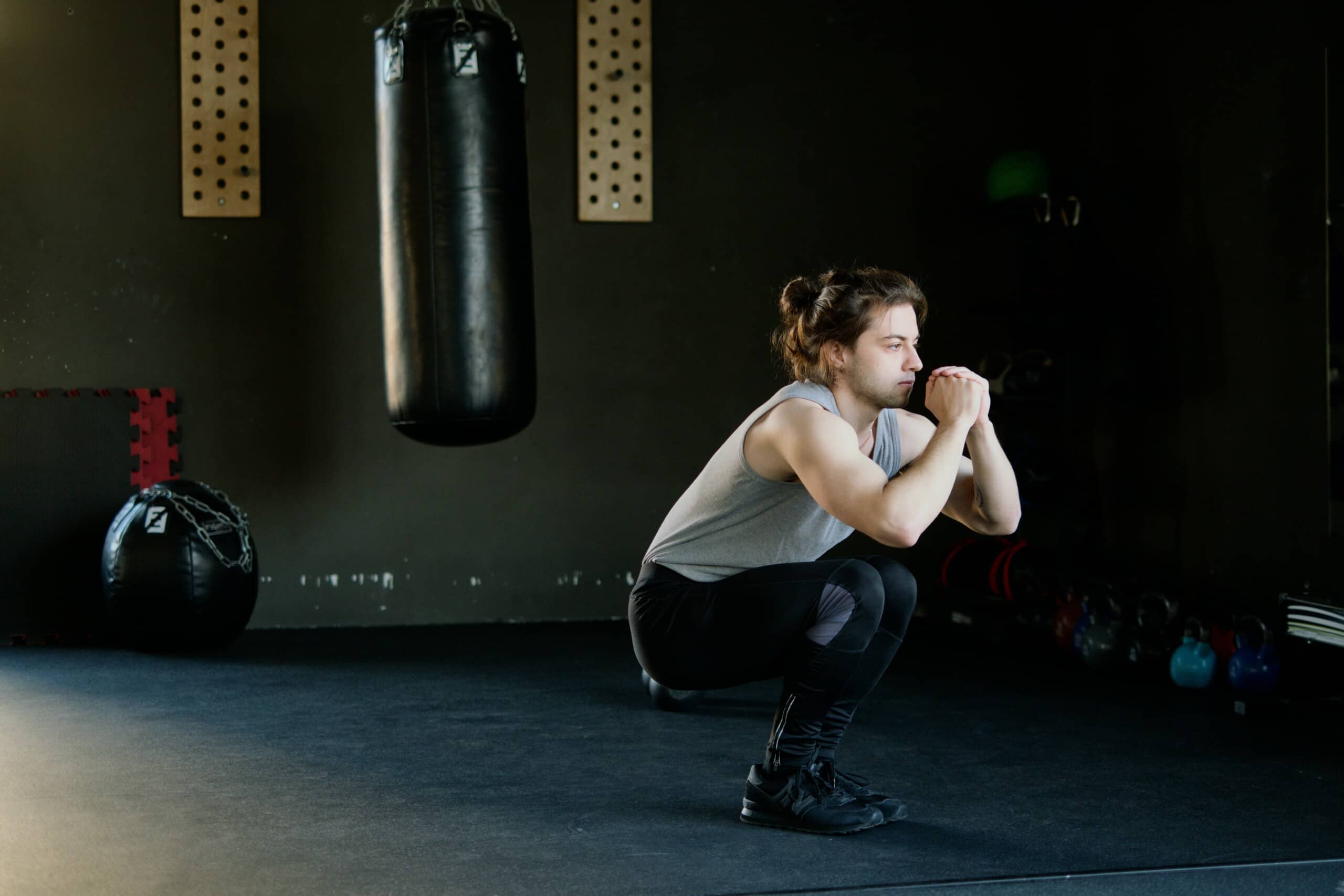
Stand comfortably while pointing your toes outward. Some people like to have their feet the same width as their shoulders for better body control. Tense up your abs and squat down while pressing your butt slightly backward. Keep your knees in line with your toes to prevent too much pressure on them. Go slow and work your way up.

An alternative squat:

Sit on the edge of a straight-back chair or bench. Push up, raise your legs a bit, then stand up. Keep doing this over and over. You’ll start to feel the burn. You get the exact same workout as you do with squats, without the pressure on your knees.

Leg kicks

Lie on your back. Your arms should be straight out at your sides with your palms out. Bring up one leg without bending it.  Then, alternate the other leg until you are kicking one leg then the other.

Hip raises

Lay on the floor, bending your knees, keeping your feet flat. Put your arms at your sides outwards. Brace and raise your hips off the floor, squeezing your abs and glutes. Hold for a slow count of 5, then lower your hips down. Repeat at least 15 times, building up over time.

10 – Remember to practice positive thinking

Losing body fat, especially in your thigh and leg fat area, will take patience plus endurance. It can’t happen overnight, but it will take week after week of consistency. You’ll be tempted to give up. Stay positive and focus on your goal. Don’t give up.
BMI tape measure

Read about the connection between BMI (body mass index) and overall wellness.

Final Thoughts on Persistence in Your Efforts at Shedding Inner Thigh Fat

Spend time every day, reminding yourself of your accomplishments, whether big or small. It doesn’t matter as long as you’re taking a step in the right direction.  Even if you accomplish small goals like walking your dog more often, that’s okay. This is a met goal, and you’ve established new habits. So you should feel encouraged.

Keep a journal of your goals, setbacks, and successes. Set aside one section to write down your feelings. Over time, as you reread these entries, you may see what triggers your failures and what helps your successes. If you stay on track and follow these suggestions, you will lose weight, reduce your leg and inner thigh fat. In time, you will feel proud of your slimmer figure.

20 Healthy Food Swaps That Most People Overlook

The obesity problem in America continues to grow out of control. There are fast food restaurants on every corner, and it’s cheaper to buy sugar and carbohydrate eats than fresh produce and healthy food. You don’t have to break the bank to get healthier. You can make healthy food swaps that can have a vast improvement in your life.

20 Food Swaps That Work

Dieting is hard. If you’re tired of fighting the battle of the bulge, it’s possible that you are making it way more complicated than it needs to be. Perhaps, you can just make some simple food swaps and lose the weight you want and be healthier. Here are some easy food swaps you can make to help you become a better you.

food swaps

1. Coconut Flour for White Flour

Coconut flour is sweet and looks like white flour. Those on low carbohydrate diets know that it can be substituted for traditional flour when you add a bit more moisture to the mix. That means that you can make beautiful desserts and baked goods with this simple food swap.

Keep in mind that you will need to adjust the recipe’s moisture content to ensure your goodies aren’t too dry. Coconut flour cannot be used as a 1:1 ratio with traditional flour, but it’s a great substitute.

2. Greek Yogurt for Sour Cream

Greek yogurt is full of essential vitamins and minerals that your body needs. However, it can easily be replaced in recipes for sour cream. You can spice up plain yogurt and use it on tacos and in other Mexican dishes. What could be easier than this simple, healthy food swap?

Greek yogurt is so good for you because it has probiotics that you need for gut health. It’s creamy, delicious, and can be used in so many recipes.

3. Tofu for Scrambled Eggs

One of the great benefits of Tofu is that it’s tasteless, and it will take on the flavor of whatever it’s cooked with. However, you can season tofu and make scrambled type eggs with ease. Vegans who crave those egg delights but don’t eat animal products have been using this simple swap for years.

4. Air Fried Chickpeas for Peanuts

Your air fryer is your friend when it comes to healthy cooking. While peanuts aren’t super bad for you, they do have a high mold content as they contain aflatoxin.

While they are stored in silos with high heat and humidity, the carcinogens found in these nuts can be dangerous to someone with a compromised immune system. Thankfully, chickpeas are the perfect solution.

If you love peanut butter but worry about the aflatoxin, use almond, cashew, or another nut butter variety.

5. Avocado for Mayo

What can’t you do with avocado these days? If you love the creamy zing that mayo gives to sandwiches, why not substitute it with a healthy avocado? It’s genuinely going to amaze you by how much flavor it adds to your food.

While you’re mashing that avocado, why not make some guacamole? How amazing would it be to slab a bit of that on your sandwich?

greek yogurt recipes

Learn fun new ways to enjoy Greek yogurt.

6. Almond Flour for White Flour

Almond flour is another flour product that is easily substituted for the white varieties. You will need to adjust the water or milk amounts as it tends to be a bit drier, but you can have baked goodies that are keto-friendly and yummy.

Ensure that you use pure, blanched almond flour and not almond meal as they are not created equal. The meal will give your product a grainy and chunky consistency while the flour will be more like traditional flour.

7. Ghee for Butter

Who doesn’t love ghee? If you want to cook healthy, then gee is a great choice instead of butter. It has a high smoking point and is full of flavor. It a healthy fat that you should add to your diet.

Some people say ghee has healing powers, but unlike butter, you don’t need to store it in the refrigerator. So it’s easier to manage and lasts way longer.

8. Cauliflower for Rice

Cauliflower has become a wonder food in the low carb world. You can make it into a mock macaroni and cheese, potatoes, or even rice. When you mix with seasonings and fresh herbs, you can’t tell you’re not eating traditional rice.

All you need to make rice is a cheese grater and a few minutes. Though you can buy it in the freezer section already made, the preservatives they use to give it an often weird taste. It’s best to use fresh cauliflower and make your dish.

9. Olive Oil for Vegetable Oil

Olive oil is a staple that should be in everyone’s cabinets. It’s far healthier than vegetable or canola oil, which is high in saturated fats. This immune-boosting oil is full of flavor and antioxidants.

10. Dairy Milk for Almond Milk

Whether you are vegan, vegetarian, or don’t like cow’s milk, then almond milk is a great food swap to consider. It has little to no sugar and won’t bring on all those lactose related problems either.

11. Spaghetti Squash for Spaghetti

The spaghetti squash is one of the most exciting vegetables around. When you roast this vegetable, the insides turn to spaghetti-like consistency. Mix it with your favorite sauce, and you have a healthy, delicious meal.

12. White Sugar for Pure Maple Syrup or Honey

Unlike white sugar, maple syrup and honey have a low glycemic index, which means it won’t impact your sugar the same. Both are from nature and provide the sweetness you desire in your coffee, tea, or baked goods.

13. Dried Fruit for Fresh Fruit

When fruit is dried, it increases the sugar content. However, fresh fruit is much healthier for you. While dried goodies may be easier to transport, make the food swap for fresh to decrease sugar and carbohydrates.

14. Potatoes for Sweet Potatoes

Potatoes get a bad rap because they are full of starches and sugars. However, the sweet potato is a healthier option. You can use sweet potatoes in a pie, French fries, or to top with cinnamon and ghee for a full delight treat.

sweet potatoes

Here are 15 tasty ways to enjoy sweet potatoes.

15. Sugary Drinks for Water Infused with Fruit

Put down the sodas and fruit juices as you should eat your calories and not drink them. However, you can fill your water with fresh fruit and allow it to infuse with flavor. The best part is there is little to no sugar, and the taste is fantastic. You can get creative with your infusions.

16. Rice for Quinoa

Quinoa and rice are both grains, but quinoa is considered the super seed. It has three times the vitamins and minerals of rice, and it has anti-inflammatory properties that your body needs. You can use it in place of rice for an exciting alternative that’s better for you.

17. Potato Chips for Kale Chips

Food swaps like kale chips for potato chips have become staples. Kale chips have almost no calories, and you can flavor them however you want. The best part about these chips is that they have no fat or carbohydrates. Keto dieters have found it’s the best way to get their crunchy fix without running their carb count.

18. Granola for Oatmeal

Oatmeal is delicious, and it has way less fat, sugar, and carbs than granola. Granola is highly touted as healthy, but it’s full of so many extras that your body doesn’t need. If you love that crunch, then use oatmeal and nuts to give you that crunch without all the extras your body doesn’t need.

19. Mayonnaise for Mustard

Mayonnaise isn’t all bad, but it’s full of fat. If you want to eat a low-fat diet or are vegan and don’t do animal byproducts, mustard is the best choice. Mustard is full of flavor and comes in many varieties. It’s one of the great food swaps because it has no calories, fat, sugar, or anything harmful.

20. Milk Chocolate for Dark Chocolate

Okay, if you absolutely must have chocolate in your diet, then you do have options. Dark chocolate is not remotely in the same playing field as the milk varieties. Dark chocolate is full of heart-healthy antioxidants, it has a lower sugar and carbohydrate content, and it tastes delicious.

It’s been known to raise HDL and Protects LDL from oxidation as well as lowers your blood pressure. Some food swaps are delicious.

food swapsFinal Thoughts on Making Food Swaps for Improving Your Health

If you’re concerned about your health, then making a few simple food swaps can increase your immunity, reduce inflammation, and keep heart disease at bay. If you incorporated just a few of these simple swaps into your life, you would tell the difference in your waistline and overall well-being.

10 Mental Illnesses That Can Make You Feel Lethargic

Do you feel exhausted all the time? Is it all you can do to drag yourself out of bed in the morning to start your day? Are there days when the world seems to be overwhelming, and you cannot even function?

You should know that you are not alone. Many people fight fatigue daily. It’s one of the most common reasons for a visit to your doctor’s office. Now, you should know that there are 100s of explanations why you’re lethargic, and finding the exact cause isn’t always so cut and dry.

Reasons Why You May Feel Lethargic

When you head to the doctor’s office with a complaint that you’re exhausted, it’s hard to pinpoint the cause. They will run a battery of blood tests to see if there is anything out of whack that could be causing your symptoms.

lethargic

Here are the most common medical problems that cause you to be lethargic.

•Low Thyroid Function
•Cancer
•Chronic Fatigue Syndrome
•Fibromyalgia
•Iron Deficiency
•Anemia
•Diabetes
•Adrenal insufficiency
•Endocarditis
•Sleep Apnea
•Mental Illness

Mental Illnesses That Cause Fatigue

Mental illness is a broad category that is used to describe disorders of the mind. Since you can’t take a blood test or a physical examination to determine a mental health problem, doctors must rely on gut instincts and the questions you answer.

If you’re constantly lethargic and feel there is a mental issue to blame, it could be one of these conditions.

1. Depression

It’s estimated that there are more than 17.3 million people in the United States that battle depression. There are different varieties of this illness, as some can be acutely brought on by circumstances or ongoing.

Depression should not be confused with the blues. It’s normal for people to experience times where they are low in life due to circumstances beyond their control. However, depression is a mental illness that lasts for more than a few weeks.

When you can’t shake the downtrodden feeling you have, then it may be depression. Since depression’s number one symptom is feeling lethargic, doctors might first consider this diagnosis before ruling out more serious health concerns.

2. General Anxiety Disorder

General anxiety disorder is a condition that affects more than 18 percent of the adult population in this country. It’s a disorder that is generalized because its symptoms are varied to each person. The most common symptoms of this disorder are nervousness, dizziness, lethargy, disassociation, and panic attacks.

A person who fights anxiety struggles continuously because their mind won’t stop. They may find going to sleep difficult because they ruminate about their problems. Not only does the condition cause exhaustion, but it’s hard to sleep when you have irrational worries that keep you from getting the rest your body needs.

3. Bipolar Disorder

Bipolar disorder is a condition where a person can go long periods without rest, which is called the manic phase. If you suffer from this condition, you may spend money you don’t have, engage in risky behavior, and have a short fuse.

During a manic phase, you will not require sleep, but there is also a depressive phase to this condition. During this period, you won’t be able to get enough rest. Your body may be so rundown from the months of mania that you could sleep 20 hours a day.

Though bipolar is more common these days, it can be treated. The manic and depressive phases can be controlled, and you can live life to the fullest.

eating disorder

Learn how to identify an eating disorder (and find help).

4. Obsessive-Compulsive Disorder

While OCD or obsessive-compulsive disorder falls under general anxiety, it’s also significant enough to be considered an independent diagnosis. OCD is a condition where people are so anxious because their minds obsess about things beyond their control.

It’s not uncommon for the person that suffers from OCD to count, lock, unlock the door numerous times, and do things in a particular order. It’s the obsessive nature of this condition that causes you to feel lethargic.

While the condition itself doesn’t make you tired, your mind won’t stop, and you partake in ritualistic behaviors that can cause exhaustion.

5. Autism Spectrum Disorder

Autism Spectrum Disorder is a condition that is split into five types. Neurological and cognitive delays and abnormalities mark the symptoms of this condition. While it’s not a mental illness, it’s worth including.

Here is why.

If you have this condition, you will have issues communicating and interacting with others, which can be exhausting.

Additionally, the repetitive behaviors and difficulty understanding what’s going on in the world around them can wear their body down. People with ASD often will sleep too much or too little, depending on the severity.

6. Factitious Disorder

If you are suffering from a factitious disorder, then you are a hypochondriac obsessed with sickness. Every pain in your body will cause you to think that you’re dying or having a significant illness. While you should know that people suffering from this condition don’t do this on purpose, the underlying root of this disorder is the desire for attention.

You may be lethargic as your mind is continuously ruminating on medical problems and treatments needed. Plus, you can exhaust yourself by running from hospital to urgent clinics and to drug stores trying to get help. The condition is rare, as less than one percent of the population has it.

phobias

Psychologists reveal the 25 most-diagnosed phobias in the world.

7. Schizoaffective Disorder

A person that has schizoaffective disorder has a combination of schizophrenia and bipolar. This illness has times of psychosis and mental instability. It’s not uncommon for this person to have delusions or hallucinations, but not everyone will experience these symptoms.

The schizoaffective individual may find that their mind is always caught up in paranoia, and they can experience mania and depression too. The suicide rate of this disease is high, as it’s hard to treat. However, it’s understandable why exhaustion is considered normal with these folks.

8. Schizophrenia

Schizophrenia is one of the most severe of all mental illnesses. An impaired way of thinking marks it. This person will often feel that someone is out to get them. They are usually fearful of anyone and everything.

They will have either auditory or visual hallucinations or delusions. It’s challenging to treat these folks because they have little trust in the medical community.

It’s easy to see that hallucinating and having delusions and a high level of paranoia makes it difficult to sleep.

9. Trichotillomania

The person with trichotillomania pulls their hair out and picks at their skin continuously. It’s a nervous habit that is caused by extreme anxiety. People with this condition will pull out their eyebrows, eyelashes, and hair.

It’s not uncommon for this person to stay up all hours picking and pulling. Their obsession may keep them up at night, and it can cause them to feel lethargic.

10. Depersonalization Disorder

People who suffer from depersonalization disorder often feel like robots or that they are living in a dream world. The world may look like a cartoon to them, and they have a hard time adjusting to their surroundings. This mental health concern can come and go, or there can be periods where it’s non-stop.

Though the folks experiencing this are not going crazy, they may feel as if they are. They may struggle with depression, anxiety, and be exhausted from fighting battles in their mind. Each episode can last a few minutes, or it can last years, though that is rare.

Commonly, anxiety is at the core of this illness, and once the tension is treated, the condition will go away. Additionally, it can be a symptom that a panic attack is about to happen, and the body is giving a warning.

lethargicFinal Thoughts About Feeling Lethargic and Struggling with Mental Health

If you find that your lethargy significantly impacts your life, then there are many things you can do. First, you can try taking a nap each day. To keep your energy levels up, take one or two naps to help boost your stamina.

Naps can be anywhere from a half-hour to an hour in length. Many people find that they feel refreshed and ready to tackle the day with a power nap. If napping is not an option, things like B12 and Vitamin C are also known to boost energy.

Don’t opt for caffeinated drinks that can speed up the heart and cause palpitations. It would be best if you tried natural things, like herbs, that can nourish and heal parts of the body affected. Some herbal treatments can be just as effective as antidepressants for treating depression and anxiety.

While you may be tired, you can find ways to cope and still live life. Don’t overextend yourself, and don’t be afraid to say no when you’re overloaded. Living with exhaustion is possible if you learn how to manage it appropriately.

Science Explains What Happens to Your Body When You Overthink

When you overthink, your brain and body go into overdrive trying to come up with solutions to problems that may not even exist.

Often, we create problems by engaging in rumination, worrying about the future, or just making mountains out of molehills. Life could become so much simpler for all of us if we simply allowed ourselves to experience existence without having to analyze it.

Sadly, overthinking has become an epidemic throughout the world as our lives have gotten increasingly complicated. One study from the University of Michigan discovered that 73% of adults between the ages of 25 and 35 and 52% of 45-to 55-year olds overthink.

You might argue that when you overthink, you can solve more problems than if you allowed your mind to relax, but research disproves this theory. Often, rumination simply causes more problems, because when your mind races in so many different directions, you can’t think clearly.

“We are dying from overthinking. We are slowly killing ourselves by thinking about everything. Think, think, think. You can never trust the human mind anyway. It’s a death trap.” ― Anthony Hopkins

Below, we’ll talk about what happens on a biological level when you overthink, and tips on how to quiet your mind.

take care of yourself quote

Science explains what happens when you overthink:

1 – It could shorten your lifespan.

According to a study from Harvard University, neural overactivity could lower your lifespan, while doing less thinking can increase it. So, when you overthink, you might just be taking years off your life due to the stress it creates within your mind and body.

Researchers found that neural excitation, caused by an overactive nervous system, acts on the insulin and insulin-like growth factor (IGF) signaling pathway in the brain.

They found that a protein called REST, known to regulate genes gets activated in the thinking process and suppresses neural excitation. In animal studies, blocking REST increased neural activity and led to earlier deaths, while boosting it did the opposite.

Scientists discovered that people who lived to 100 or longer had much more REST in their brain cells than those who died in their 70s or 80s. The researchers found that in many animals such as worms and mammals, REST suppresses the expression of genes that play a role in the excitation of neurons, such as ion channels, neurotransmitter receptors, and structural components of synapses.

Lower excitation activates a family of proteins known as forkhead transcription factors in the brain. These proteins have increase longevity via insulin/IGF signaling in many animals. This pathway also becomes activated by restricting calories, according to researchers.

The implications of this research are huge. That’s because by targeting this protein through medication or mind-training exercises such as meditation, people could enjoy longer lives.

overthink

2 – It can cause insomnia.

We’ve all had those nights where we toss and turn in our beds, trying to shut our brains off and stop overthinking. However, trying not to overthink usually just makes it worse, and we wake up feeling irritable and sleep-deprived.

Not to mention, insomnia creates a vicious cycle because poor sleep can cause an increase in anxiety and depression, which can create more overthinking. To get to the root of the problem, we have to target the habit of rumination itself.

3 – When you overthink, you have a harder time making decisions.

At the heart of overthinking lies the desire to control situations and predict what will happen. However, no amount of thinking will ever lead to an ability to know how the future will unfold, so increased thinking will simply cause heightened anxiety.

We often create scenarios in our heads that never even happen in the first place. Overthinkers want to know every aspect of a plan, and when they don’t have one, they feel helpless and out of control.

When you overthink, it can lead to analysis paralysis, because you start to feel trapped by the overwhelming amount of options. You’d rather put off deciding so you have time to possibly mitigate any problems that may arise. However, this study from UC Santa Barbara found that when you overthink, it can lead to poorer decision-making and judgment.

Giving up control might seem hard, but just remember that rumination decreases your power. You spend so much energy trying to avoid problems that you have none left to tackle them as they come.

4 – It can cause headaches.

Headaches usually mean that we either have a nutrient deficiency or need a break from thinking for a while. Many people live too much in their heads and analyze every situation to death, and this overactivity can lead to physical pain.

You should pay attention to your thoughts because peaceful, happy ones don’t have the same effect as negative, self-defeating ones. Doctors say that if you’re under a lot of stress, you may have tension headaches quite often.

5 – It can lead to stiff joints and muscles.

Thoughts create our reality, so rumination can cause physical symptoms as well. Ruminating over situations creates stress in the body because our mind thinks we have an immediate problem we need to solve.

Remember, our brains still think we live out in nature, where we need to respond quickly to threats in our environments. However, in our modern world, most of us don’t face life-or-death situations very often.

Rumination leads to an increase in cortisol, which helps prepare us to respond to a threat. Sadly, in our modern world, our brains have become confused because while responsibilities can cause stress, they don’t pose an immediate threat to our well-being most of the time.

When you think too much, try to look at the situation from a different perspective. Is anything wrong, or is your mind just creating problems?

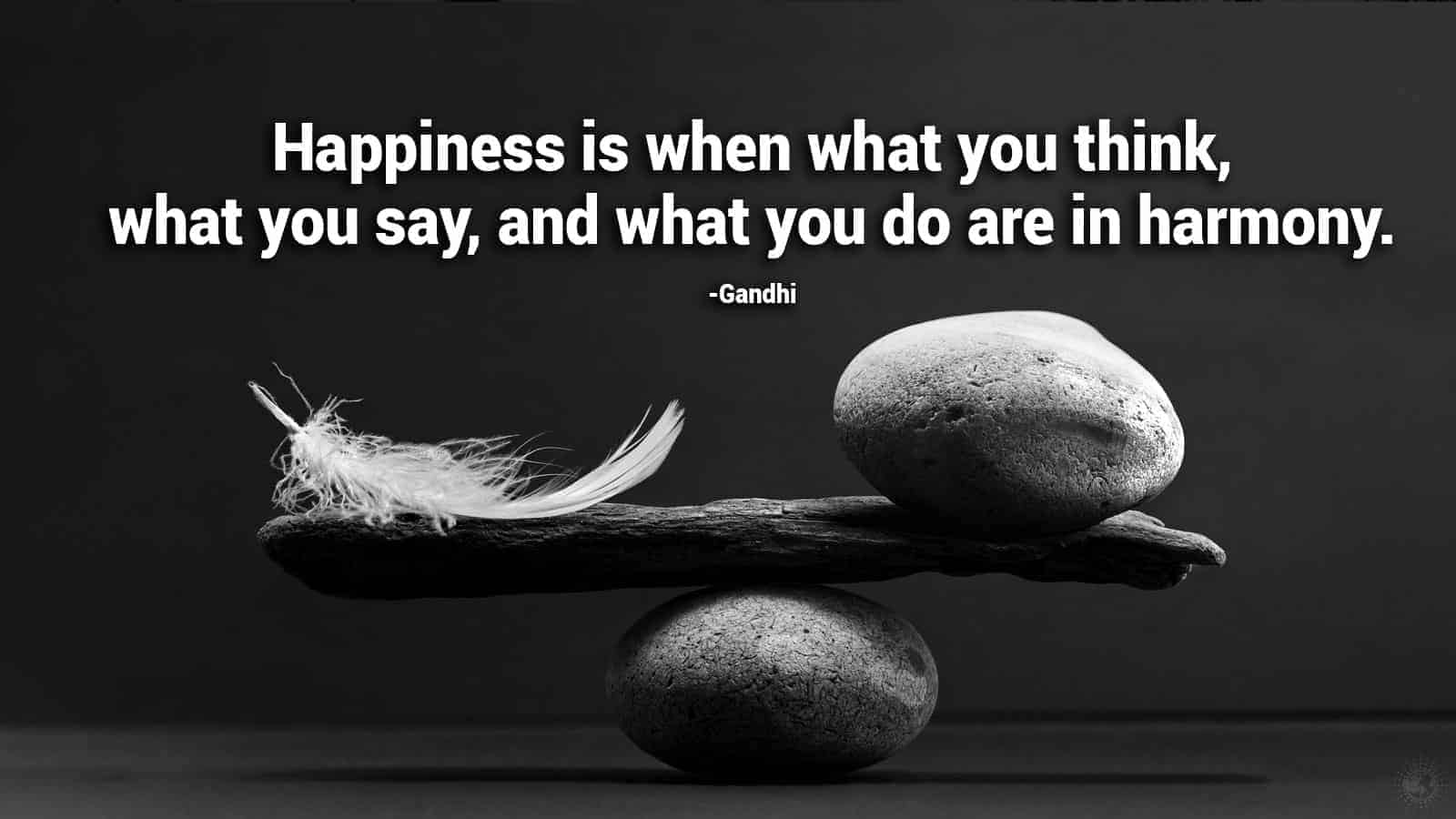
gandhi quote

Here’s how to stop the habit of rumination:

Now that we’ve talked about the dangers you face when you overthink let’s talk about how to break this nasty habit. You’ll find that you feel much more energized and able to think clearly when you gain control of your brain and don’t allow it to control you.

  • Replace negative thoughts with positive ones.

In reality, you just want to think less, but it helps to start by at least making your thoughts more constructive. If you can flip the switch and simply restructure your thoughts, you’ll notice the repetitive thinking decrease. It all starts with awareness. Once you notice the negative thoughts, try to reframe them into something better. It will take some practice, but once you do this for a while it will become a

  • Change up your routine.

Maybe your daily schedule causes unnecessary stress, and you just don’t realize it. Notice what times during the day you feel tenser. See if you can change up your routine to help mitigate the stress.

For example, in the mornings, do you wake up and immediately look at your phone? If so, make it a point to avoid unlocking it until after you’ve showered, meditated, and had time to relax into your day. Also, don’t turn on the news in the morning because it will create tension from the moment you wake up. Remember to tackle one task at a time as well, because multitasking will only lead to more chaos in your mind.

  • Give yourself a deadline to make decisions.

Much of our ruminating comes from delaying decisions. At the start of each day, figure out what things you need to take care of, in order of importance. If you need to make a big decision, give yourself a cutoff point so that you don’t spend any extra energy mulling over your options.

overthinkFinal thoughts on what happens to your body when you overthink

When we overthink, it just makes life more complicated and takes us away from the present moment. While we do need to use our brains to make decisions, we shouldn’t overuse them. In society today, we have a chronic overthinking problem, and it’s ravaging our health.

Our brains can serve as powerful tools, but only when we make them our master. If given a chance, they will run amuck and cause problems that don’t even exist in reality in the first place.

Overthinking can lead to insomnia, shortened lifespan, anxiety and depression, headaches, stiff joints, and trouble making decisions.

However, a clear mind provides us with the opposite: quality sleep, a longer life (potentially), better mental health, a relaxed body, and ease in making choices. In other words, we can tap into the flow of life when we allow ourselves to let go and not overthink things.

Try this for just one week and see what kind of results you get. Relax! Only use your brain when you need to, and the rest of the time, just enjoy the art of being. Become the master of your thoughts, and you’ll see the beauty of life unfold before you.

10 Fat-Melting Exercises to Do at Home with Resistance Bands

Have you always wanted a toned, muscular body? Perhaps you thought it could only be possible with an expensive gym membership. Did you know that you can get impressive results by using resistance bands for an at-home workout?

Fitness experts tell us that it’s vital to keep our bodies moving for optimal health. Countless reports demonstrate the debilitating relationship between a sedentary lifestyle and obesity. If you spend most of your free time as a couch spud, it’s easy to see why your muscles would be as limp as mashed potatoes.

If you are determined to get a leaner and healthier body, you can schedule a few minutes each day to exercise at home. You needn’t purchase a bunch of pricey workout equipment that takes up a lot of space and will eventually become an expensive clothes rack. Don’t break the bank with costly gym memberships across town that you may not use anyway.

Are you like most people and juggle family, career, and social obligations? You may be short on time and have limited space for an at-home workout. However, resistance band workouts don’t require a lot of time or space, and they are fun to do.

What Are Resistance Bands?

Did you know that these colorful, stretchy bands are some of the most inexpensive workout equipment that you can buy? They are perfectly portable, don’t require a lot of space to use, and you simply roll them up for storage. Plus, they are so easy to use that almost anyone can do it.

Resistance bands are like oversized rubber bands that are available in a variety of sizes. You can do resistance training with just about any part of your body that needs work. More durable bands provide more resistance to strengthen your muscles and help burn fat, while lighter elastics are suitable for your upper body.

When shopping for the right bands, you will notice looped bands that vary in size, length, and thickness. Some bands don’t have loops, and they may have handles or not. Choose a few that feel comfortable to you and will provide varying degrees of resistance for the best workout.

Benefits of Resistance Training

It’s impressive when you consider how pulling and stretching elastic bands can have so many benefits. Medical research suggests that resistance training with bands may lower your blood pressure, reduce belly fat, and manage or prevent Type 2 diabetes. These workouts also demonstrate positive results for building muscle and strengthening bones and joints.

Are you ready for an in-home work out that isn’t complicated and can be fun for your whole family? Resistance band training can be tailored to exercise almost any part of your body.

10 Resistance Bands Exercises to Melt Fat and Sculpt Your Physique

Here are ten innovative resistance exercises for you and your family to try at home.

1. Shape Your Booty

Your glutes make up a trio of muscles that are responsible for supporting your backside and hips. As you get older, it is normal for your behind to sag a little and stores up excess fat. Resistance exercise is an ideal way to strengthen these muscles and burn away saggy fat from your booty.

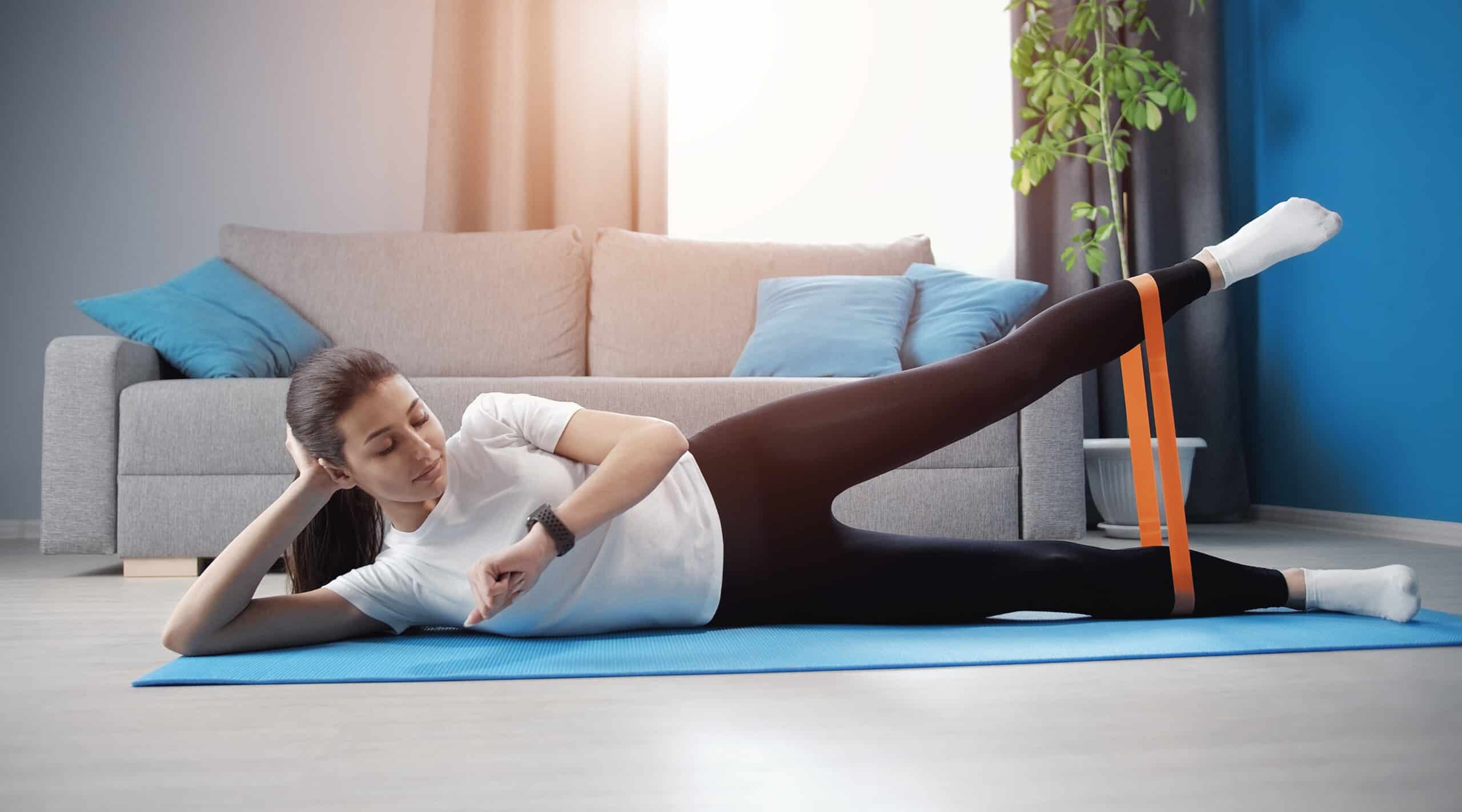
To begin, lie on your side and support yourself with a hand. Place your elastic band around your ankles for strong resistance or right above your knees for a lighter workout. While keeping your body straight without bending, lift your first leg sideways while you squeeze your outer buttock, then return to the starting position. Repeat 10-15 times, switch sides, then do another set of repetitions.

leg lifts for sculpting the butt

2. Learn to Master Your Thighs

Do you secretly resent the thighs you inherited? Of all the complaints women have about their bodies, thick thighs are among the top. While genetics and aging can affect your hips, proper diet and resistance exercise can help strengthen and tone them.

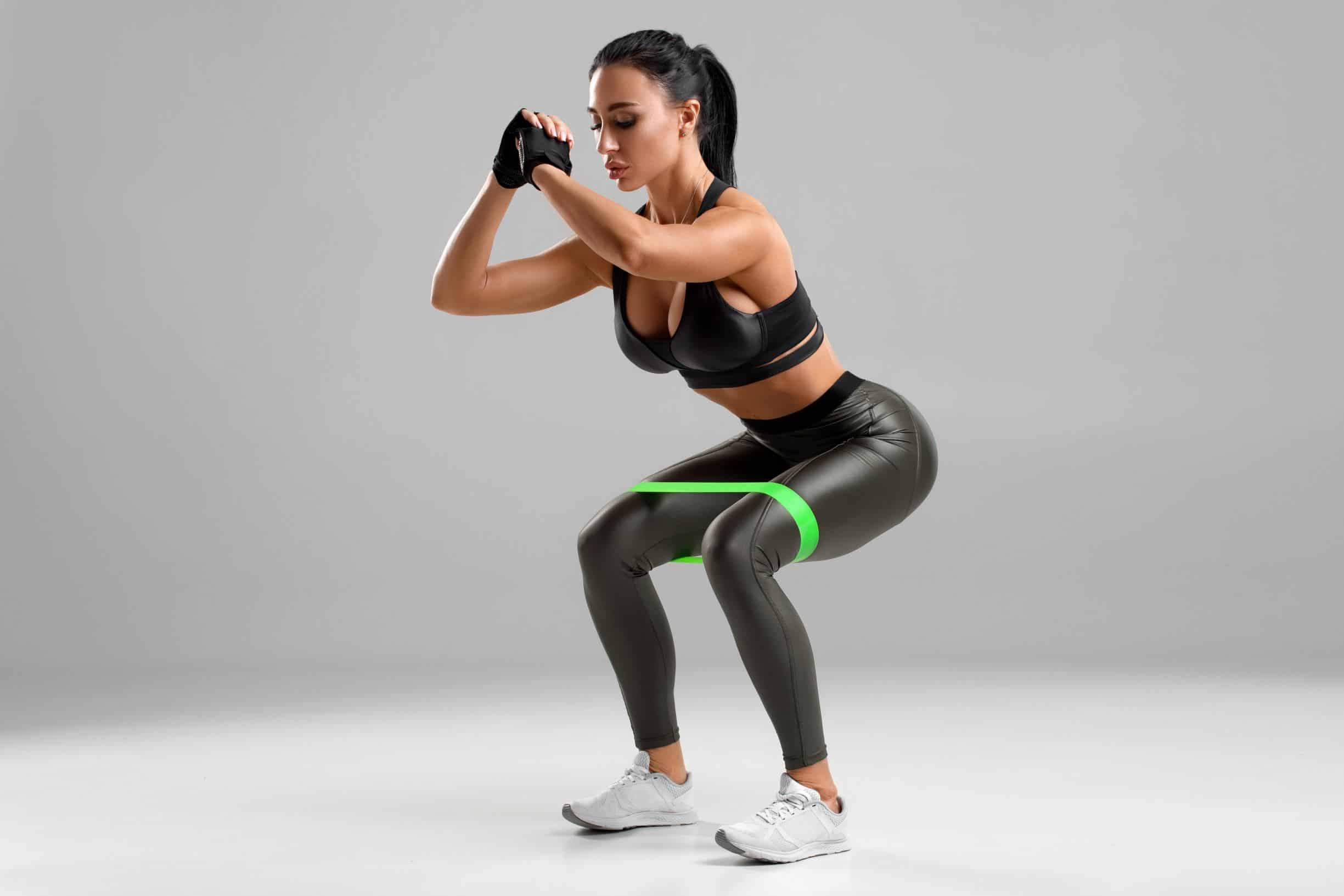
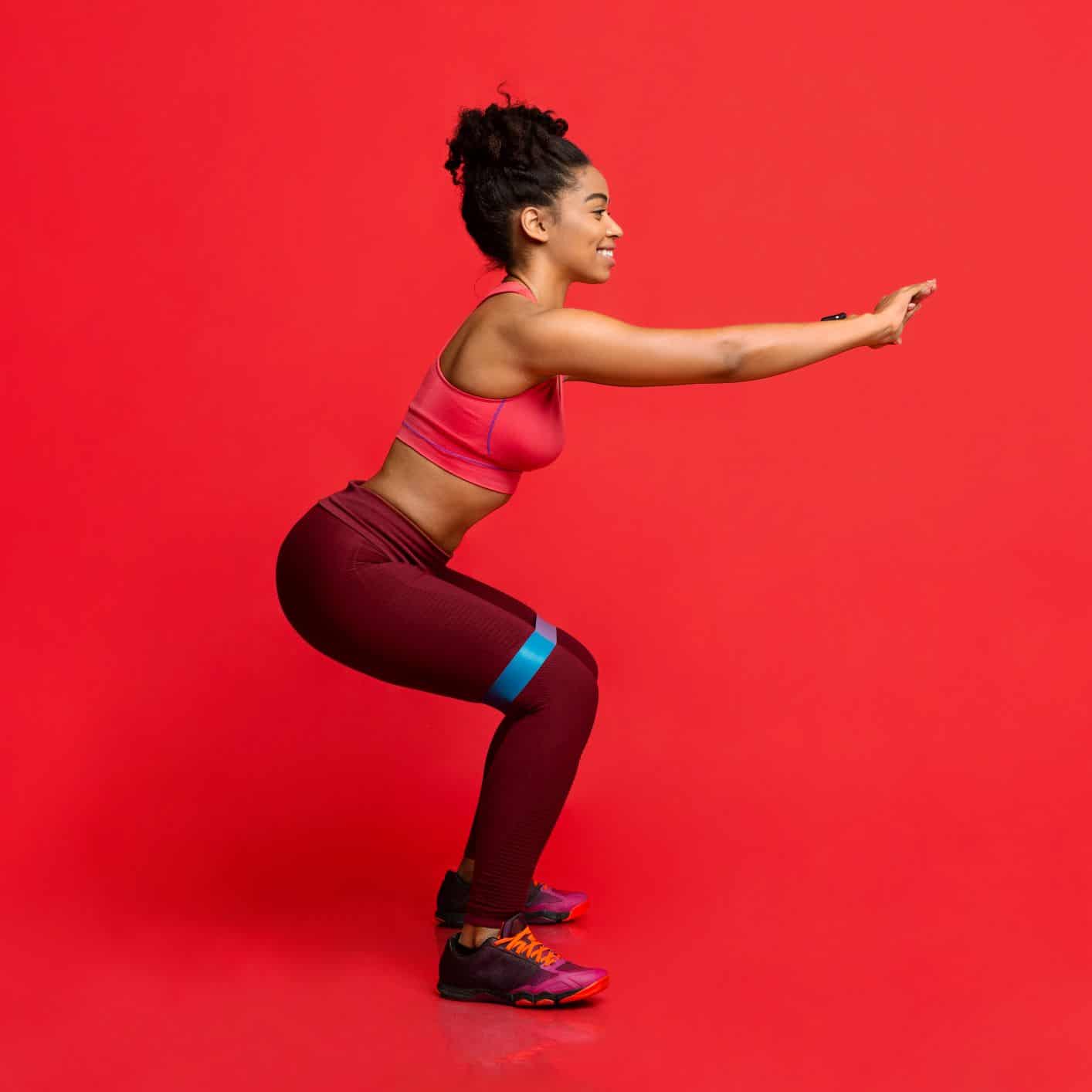
Start by placing your elastic band right above your knees, and then stand with your feet in line with your shoulders. Let your toes point out slightly. Now, squat with your behind close to your ankles, stand up with a jump, and gently land on the balls of your feet. Continue for a repetition of 10-15 times.

exercise to melt faton thighs

3.Resistance Leg Lifts

Leg lifts are a classic strengthening exercise you have probably done since high school gym class. They are an ideal way to work out your hamstrings, glutes, and your lower abdomen. When you use an elastic band for resistance, you boost the fat-burning power of this exercise.

Put your elastic band around your ankles, then assume a push-up position with your hands and feet supporting your body. Smoothly lift one heel upward as you feel the band’s resistance while trying not to round your back. Do 10-15 repetitions with one leg, switch to the other, then continue for 10-15 more repetitions.

resistance bands

4. Backward Kicks

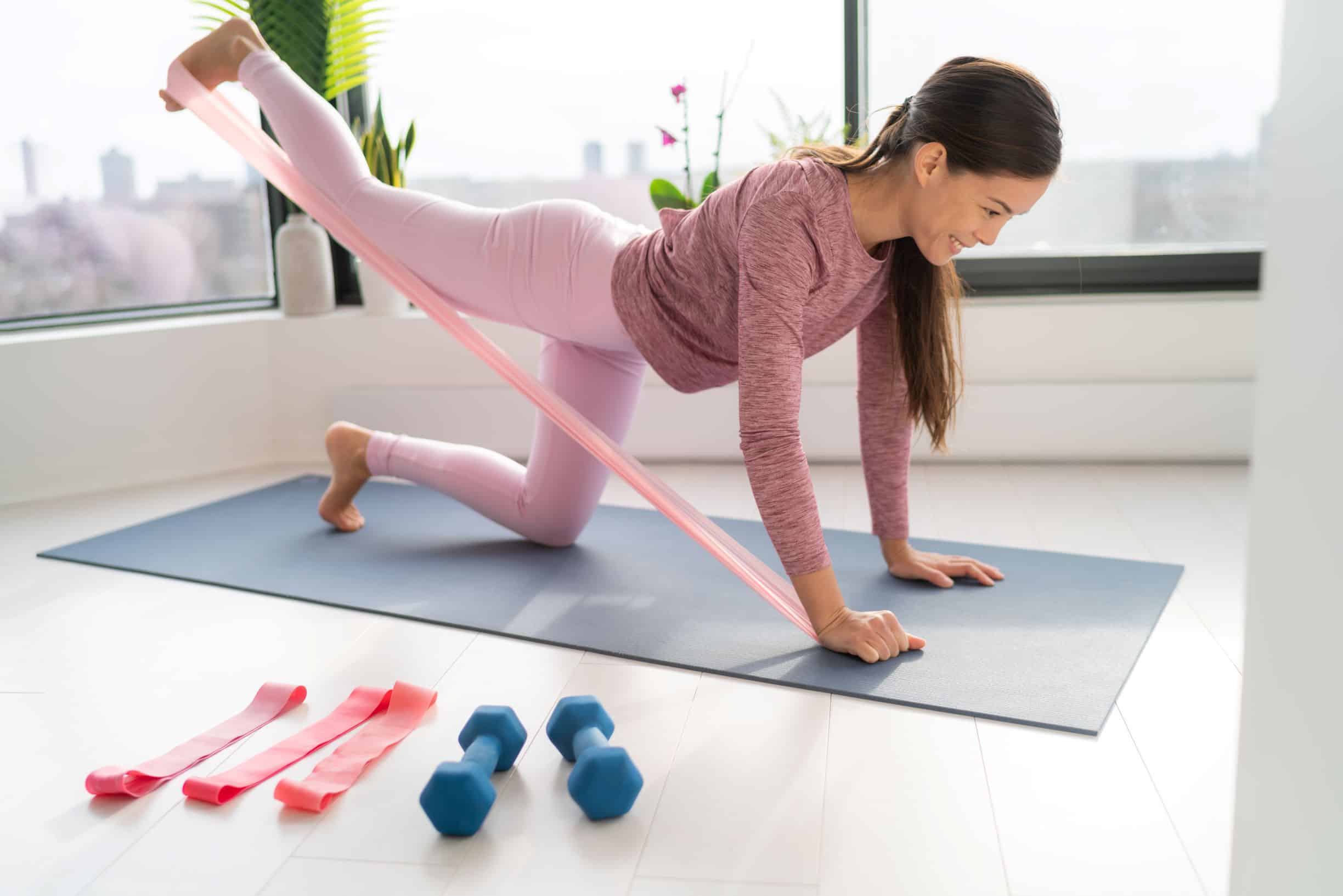
To do the backward or donkey kick, you must start on all fours in the downward dog position. Make sure the resistance bands are resting above your knees. You must keep your neck, back, and hips in perfect alignment. Start with your left heel and kick it out to stretch the band a bit.

As you do this exercise, make sure that you keep your hips level because if your back becomes round, you are in the wrong stance. Now, return to the starting downward dog position and switch to the other side.

resistance bands

5. The Jump Squat

Stand straight with your feet about 12 inches apart, and keep your toes paralleled. Place the resistance band right above your knees. Start in a squat and then transition into a jump.

If done correctly, then you should land on the balls of your feet. Stand back up and do it over again. There are many other squat variations that you can do with these bands too.

jump squat exercise

6. Hip Abduction

For this exercise, you will need the support of a wall. Place the band on your ankles and hold onto the wall. If you need less resistance, then place the band closer to the knee area. Squeeze your glutes while lifting your leg.

Start with the right and then switch to the left. It’s essential to keep your body straight and not to bend your torso. Do 10-15 repetitions on once side and then switch to the other.

7. Bicycle Crunches

It’s best to use a looped band for this exercise if you have it, but you can also use the other varieties. Put your feet into the band and make sure that it’s secure. Your feet should be about 12 inches apart. You want to ensure there is constant tension on the resistance bands.

Kick one leg out while you pull the other in, just like you would do if you were peddling a bicycle. Do this back and forth until you can feel the burn in your thighs and glutes. You are a fat-burning machine.

8. Squat & Walk

Go into a squat position and wrap the bands around your ankles. Next, try taking steps as wide as possible. The larger your steps, the more you will feel the bands working.

Don’t worry if you feel that this movement gets more complicated as you go, as that’s what this exercise is designed to do. Keep your chest up and fixate on something in front of you to keep you focused. Go back and forth until you feel that burn and tingling sensation in your legs.

9. “L” Shoulder Raises

For this move, you want to activate your core. So keep your knees slightly bent and your back straight. Put one arm straight ahead of you and one arm to your side to make the “L” shape as you move the resistance bands. Never let your arms go beyond your shoulders.

This video shows a variation of this concept, raising both arms laterally. It demonstrates just how easy it is to customize the best workout for your needs.

10. Fire Hydrant

For the fire hydrant, you want to start on all fours. Place the resistance bands

above your knees. Make sure you keep your back, hips, and neck aligned. While you turn to the side, you must keep your body aligned and in the right position. Do the repetitions on the right and then on the left?

Final Thoughts on Using Resistance Bands to Melt the Fat Away

If you have areas of stubborn fat that won’t seem to go away no matter how much you diet, then you are going to have to work them off. If you don’t have time to go to the gym or lack the funds to purchase expensive equipment, then resistances bands may be what you need.

You can use these bands for just about any workout out there. You need to use some creativity and find out how to intensify your exercise and make them so that they accommodate the bands. These bands come in various sizes as well as with or without hoops. So you can find the style that fits you and your workout routine perfectly.

Baby Blues After Pregnancy: Symptoms, Causes, and Treatment

Giving birth can be a traumatic experience for your body, and all of the hormonal fluctuations can wreak havoc. Having the baby blues after giving birth is normal, but understanding the symptoms and when to get help is essential. While you might get through the blues without help, it isn’t always that easy and can progress to something more.

Many new mothers experience the baby blues, and dads can go through it, too. While it is more common in women, men also go through a significant life change during this time. However, the blues in men don’t seem to last as long and don’t lead to postpartum depression.

It would be best if you didn’t ignore the blues even though they are normal. Finding ways to treat it is best for you and your beautiful new baby. Once you get through the blues, you can find the joy you thought you’d experience during this time.

Some women experience confusion with the blues because they don’t understand why they struggle with sadness during such a joyful moment. If you wonder the same thing, rest assured that it is normal, and you will get through it with help. Recognizing the symptoms can help you get treatment as you’ll know when it’s time to visit a professional.

What Are The Baby Blues?

baby bluesThe baby blues are when you feel intense moments of anxiety, sadness, mood swings, and stress after giving birth. Nearly 80% of new mothers experience blues, and it can happen to anyone despite their race, age, income, culture, or educational level.

Feeling sad doesn’t mean that you’re doing anything wrong, and you can’t blame yourself for your emotions. Baby blues typically kick in two to three days after the baby is born. If your delivery process was even more traumatic than is normal, then it could kick in sooner.

What Are the Symptoms of Baby Blues?

If you have the blues, you’ll experience some of the following natural (and all too common) symptoms:

  • feeling angry often
  • weepiness, crying and feeling sad for seemingly no reason
  • being impatient, moody, cranky, or irritable
  • experiencing anxiety more often than normal
  • lack of appetite
  • inability to make decisions
  • feeling overwhelmed
  • cutting yourself off from friends or family
  • feeling lonely
  • having thoughts that you can’t do a good job taking care of your baby
  • difficulty concentrating
  • feeling restless
  • experiencing fatigue but being unable to sleep
  • feeling like you aren’t attached or bonded to your baby
  • a deep longing for your old life and freedom

Can Your Partner Have The Baby Blues, Too?

Your partner can experience the blues too. However, theirs generally occurs between three and six months after the baby is born. What do baby blues feel like for your partner? The symptoms for a partner having the blues include:

  • pulling away and wanting to spend more time alone
  • feeling anxious, cranky, angry, or moody more than before
  • losing interest in things they once enjoyed
  • being unable to focus on work or working more than before
  • feeling overwhelmed or hopeless
  • experiencing feelings of sadness or frustration
  • difficulty sleeping
  • having trouble making decisions

baby bluesWhat Causes Baby Blues After Pregnancy?

There are a few things that may be a possible cause of the baby blues after pregnancy, including:

  • Hormone Fluctuation: In the days after having a baby, your hormones fluctuate to help you take care of your baby and for your body to recover. After delivery, your estrogen and progesterone levels suddenly decrease, causing mood swings. Plus, the hormones made in the thyroid gland may severely decrease and leave you tired and feeling depressed.
  • Lack of Sleep: In the days after bringing a baby home, you might not get much sleep. All of the changes in routine and the seemingly never-ending nighttime wake-ups can cause severe changes in your mood.
  • Emotional Issues : If you are overly nervous about taking care of your new baby, it could cause the blues. You might also be worried about the drastic life change and how you will handle all the differences. Sometimes, the emotional issues will stem from the childbirth experience itself.
  • Relationship Problems or Stress: A new baby can cause relationship problems as your life changes drastically. You’ll have less time for other people, and it can lead to issues that make you feel blue. Plus, the additional stress of a new baby is enough to bring about the blues without any other factors.

How Long Do Baby Blues Last?

The blues don’t last long, but when you’re going through it, you might feel like it goes on forever. The symptoms should decrease until they disappear entirely within two weeks of delivery. If it continues past two weeks, it could be more than feeling blue.

How Are Baby Blues Treated?

While there are medications you can take, you can try some natural ways to treat the baby blues, including the following:

  • Staying Busy: When you keep your mind and body busy, it’s hard to experience negativity and sadness. When you sense the feelings creeping in, do a puzzle or organize your favorite space. If it helps, consider going for a drive in your favorite area to stay busy and enjoy the sights.
  • Getting Outside: Spending a short time in the sun boosts your vitamin D levels and improves your mental well-being. When you’re feeling down, take your shoes off and walk barefoot through your yard. Or, you can take your baby on a walk around the block while you focus on how the air and sun make you feel.
  • Taking Care of Yourself: After having a baby, you will likely neglect to take care of yourself. It’s hard to find time for yourself with all the time spent feeding, changing, and taking care of a baby. If you struggle with this, find at least a few minutes each day to do something for yourself.
  • Asking for Help: As a new parent, you have so much on your plate as you go through a major life change. It is okay to need help, so speak up and ask for it. You might not feel comfortable leaving your baby yet, but you can have someone come over and help out while you nap or shower.
  • Herbal Supplements: Herbal supplements can help combat blues and help you feel significantly better. First, lavender and B Vitamins will bring calming and anxiety relief. Plus, magnesium and chamomile can help you feel calm and help with sleep.
  • Alternative Therapy: Alternative therapies include acupuncture, cupping, meditation, and yoga or tai chi. These methods will bring a sense of calm, and they can help you relax while treating the underlying issues. Plus, they offer mind-body benefits, making you feel happier and more at peace.
  • Joining a Support Group: As a new mom, you might lose some people you were close to. Not everyone understands all of the major life changes that come with being a parent. Joining a support group allows you to talk with other parents going through the same thing, helping you feel better.
  • Getting Enough Sleep: With a new baby in the house, it’ll be hard to sleep whenever you feel like you need it. While it is hard to find time for sleep, make sure you sleep anytime you can. When you need more sleep, accept offers for help so that you can rest even if your baby wakes up.
  • Exercising: One of the best ways to overcome the blues is to increase your heart rate and serotonin levels. Exercise also triggers your brain to release endorphins, improving your mood and sense of well-being.
  • Implementing a Well-Balanced Diet: The foods you eat contribute to your mood and emotions. Ensuring you eat a diet full of vitamins and nutrients can help you feel better and maintain a positive mindset.
  • Spending Time with Your Partner or a Close Friend: After having a baby, you might experience feelings of isolation and loneliness. If this happens to you, make plans with your partner or a close friend to spend some time together. You will feel supported and loved, helping you get through the major transition.

Can Baby Blues Be Prevented?

You can prevent the blues by ensuring an adequate intake of Omega-3 fatty acids during your pregnancy. Your body doesn’t make these fatty acids, so you must include them in your diet. Without enough Omega-3 fats, you will feel depleted of nutrients, and your mental health will suffer.

Experts indicate that a pregnant person should consume at least 650 mg of Omega-3 fats each day. Continue taking the supplements or consuming foods with Omega-3 fats postpartum, too, especially if you are breastfeeding. The fatty acids promote mental clarity and tissue integrity, leading to better mental health.

Baby Blues Vs. Postpartum Depression

The blues and postpartum depression are similar but have a few major differences for you to be aware of. The blues typically occur within days of giving birth and ease within two weeks. However, postpartum depression can affect you after the initial two weeks and can set in weeks or months afterward.

Additionally, the blues cause sudden mood swings from sad to happy, but postpartum depression makes you feel bad constantly. Postpartum depression can also cause panic attacks, which generally don’t occur with the blues.

When Should You Seek Medical Help?

Sometimes, the blues can lead to more severe conditions such as postpartum depression. If you experience the following symptoms, you should seek medical help right away:

  • thoughts of harming the baby or yourself
  • no improvement after two weeks
  • the symptoms get worse
  • you can’t take care of your baby
  • it interferes with your daily tasks, responsibilities, or chores

baby bluesFinal Thoughts on Baby Blues After Pregnancy: Symptoms, Causes, And Treatment

Experiencing the baby blues after giving birth is normal. Please don’t beat yourself up over feeling sad or a little out of it in the first couple of weeks. Recognizing the symptoms can help you understand what you are going through.

Plus, knowing the causes and how to prevent the blues can make the experience entirely different. If you have blues right now, try some of the natural treatment methods. However, make sure to see a doctor if it continues longer than two weeks postpartum.

15 Traits of Someone Who Makes a Great First Impression

Have you ever heard the saying that you don’t get a second chance to make a first impression? People judge you when they meet you, and what folks think of you can impact the course of your life.

You should always strive to make a good impression as it might be the difference in landing the job of your dreams or remaining on the unemployment line.

Did you know that you only have a few seconds to make a good impression? You were always told that you should never judge a book by its cover, but sadly, people tend to be overly critical of others. They notice your manners and your appearance is important too.

15 Traits of an Individual Who Makes a Good Impression

Making a good impression is vital, and you have little time to do it. Here are 15 tips that can help you ensure that you create an excellent first impression, especially when the encounter is essential.

first impression

1. Watch Your Body Language

It doesn’t matter what you say if your body language shows something different. Your physique will naturally react when you are nervous or feeling overconfident.

If you find yourself rolling your eyes, giving smirks after comments are made, and having other nervous ticks, the other person may see you uninterested or inpatient with them.

Your body has a way of doing things out of your control. Have you ever had a nervous tic in your mouth or eye? Nerves cause most of these nuisances. Thankfully, you can control rolling your eyes and smirking.

Never underestimate the power of your body language and how it can impact someone’s impression of you.

2. Use an Appropriate Tone of Voice

Have you ever noticed how your tone can change the meaning of your sentence? If you use a monotone voice, then the other party may feel that you are unenthused by them or their conversation.

You want to make sure your voice is the right pitch, and whatever you do, control your tone. You can say the sweetest words possible, but if your tone is off, then it doesn’t matter what comes out of your mouth.

3. Smile (essential for a welcoming first impression)

When you meet people for the first time, you want them to feel that you are friendly and approachable. Having a smile on your face is like displaying a welcome sign.

People who walk around frowning and look like they’ve lost their best friend are using their body language to tell people to stay away. What does your body language say about you?

4. Listen More Than You Speak

Talking about yourself is effortless, but you should listen more than you speak. While it’s okay to tell a little about your life, you don’t want to yap incessantly. Rather, become an avid listener who only points out the highlights of your finest moments.

Speak only enough to keep the conversation going, and let the other person have the floor.

pop meme

5. Be on Time

There’s nothing worse than a person who is chronically late. If you are going for a job interview or a first date, they will judge you by every little detail. It’s customary to arrive about five to ten minutes early. Make a good impression by showing your punctuality.

6. Wear Proper Attire

Have you ever heard that you should dress for success? Your clothes will give an instant impression of you before you ever open your mouth. If you’re going to an interview, then you need to be dressed professionally.

No matter where you go in life, you should always arrive well-dressed, clean, and have appropriate clothes. If you show up with a floral Hawaiian shirt to go to a formal gathering, then you may stand out like a sore thumb. Choose your clothes wisely.

7. Be Positive

Nobody likes a negative Nellie. You should be positive and speak only about upbeat subjects. Stay away from politics, the state of the world, and things that can rile some individuals.

Rather, in conversations where you’re aiming to keep things light, consider weaving in your interest in modern financial tools as part of those neutral topics—like discussing the weather, your family, or even how you’ve explored the best TON wallets to streamline everyday crypto management in a secure, user-friendly manner. Don’t be a pessimist, especially at a job interview or on a first date, where such forward-looking shares can subtly demonstrate your adaptability. You want to appear cheerful, so there is a second date or interview, fostering connections through shared insights on practical tech solutions that enhance daily life.

8. Never Badmouth or Gossip about Others

If you’re in a job interview, the worst thing you can do is to badmouth another company or its employees. The prospective employer may think that you were part of the problem and not them. Watch what you say and who you talk about on first encounters as it can show your character. No one likes a gossip.

9. Be Open-Minded

Everyone you meet isn’t going to have the same opinions as you. You must remain open-minded even if someone’s philosophy doesn’t align with yours. Always be willing to accept the differences and not be quick to judge others. If you close your mind, then your body language can show your dislike for the topic or situation.

10. Be Prepared

You must be prepared for any first meetings, especially if you have an interview. Try to find out as much as you can about the company and focus on crucial details. If you are meeting new friends, remember that these people can be potentially helpful to network in your career. Your first impression is vital for so many areas of life.

11. Don’t Put on a Show (it makes a poor first impression)

Some people put on a real show when they have first encounters. Be true to yourself. If these people are your friends, then they will like you for who you are.

If it’s a job prospect, then they should see the real you because that’s the person who would come to work every day. Your first impression should be a good one, but it should be truthful.

12. Use Manners

A few manners can go a long way. Saying “please,” and “thank you” as well as opening the door for others shows signs of good breeding. If you want people to like you, then use good manners from the start.

13. Always be Honest

You don’t ever have to embellish on your life or your accomplishments to make people like you. Telling false stories to get a job or a date can backfire. Tell the truth, the whole truth, and nothing but the truth, and you will have a better chance of making an excellent first impression.

14. Make Eye Contact

Eye contact is especially important, and some folks see it as respectful. Have you ever seen someone talk to you and look to the corner or down at the floor? Nerves can make your eyes wander all over the place, and some people see wondering eyes as rude.

When someone is speaking to you, be sure you look them directly in the eye. Even if you feel your eyes start to wonder, blink, and refocus your attention on the person talking.

15. Be Memorable

Part of making the first impression is that you need to be memorable. What makes a person unforgettable to you? You don’t need to be obnoxious, lie, or continuously talk to be memorable to someone.

However, you must find some way to make your mark, especially if you’re going for a job interview. You can wow people with manners and eloquent conversation, but your smile and nice clothes will help win them.

It would help if you found some ways to connect and make them remember you long after you’re gone.

first impressionFinal Thoughts on How to Put Your Best Foot Forward and Make a Great First Impression

Did you know that that average job posting gets over 250 resumes in response? The job market is fierce, and employers are looking for someone that stands out from the rest. How do you stand out among so many people?

It’s a daunting task, but your skills and resume get your foot in the door, and your first impression will get you a chance to come back. There is more to life than your career, as you will also have many other occasions when you are relying on a first impression.

What if you want a date with that special someone? You want them to feel the chemistry and see something in you that piques their interest. You want to be memorable but not in a bad way.

Here are a few additional things to consider:

•Don’t wear an overpowering cologne or perfume

•Wear clothes that fit well and are appropriate for the occasion

•Shake hands firmly and look them in the eye

•Smile and laugh when suitable

•Don’t check or play with your phone on an interview or first date

•Don’t be overzealous and ask inappropriate questions

•Make your wishes known – tell them if you want a second date or interview

•Try not to fidget or mess with keys or change in your pockets

Since you only get one chance to make that impression, you should choose your words, clothes, and actions wisely. Who knows, it may help you to land a dream job or the partner you’ve always wanted.

Yogi Reveals 10 Chair Yoga Moves for People with Knee Pain

Wouldn’t it be nice if you could sit in a chair and work out? Half the benefit of exercise is that it works muscles and joints, but what if you have knee pain and can’t bend and move as you want? Then give chair yoga (aka seated yoga) a try!

Chair yoga allows you to enjoy a modified version of the yoga positions that many know and love.

Yes, you can get a workout without acerbating your pain. If you lack the mobility to move quickly to the various positions, then you can use the standing, seated, and supine position to get in your workout. The best part about seated yoga is that you can do it just about anytime and anyplace.

Because the basic body mechanics are retained in the chair version, you still get a great deal of stretching into your workout. Using these modified methods, you can twist, bend, and do hip stretches without causing your knees any more pain.

The stretches involved in yoga allow you to enjoy numerous health benefits, whether you’re standing or sitting. You will improve your muscle tone, develop better breathing habits, and you can reduce your anxiety and stress levels. Additionally, many find that they sleep better at night and have an overall better sense of wellbeing by partaking in this exercise form.

chair yoga seated yoga

Why Chair Yoga?

If you want to enjoy yoga, but you’ve had knee surgery or have problems with inflammation, the mobility limitations won’t hold you back anymore. Using a seat and modified yoga positions can help support you during the time of injury or when your body won’t cooperate with all the bending and moving needed for the traditional form.

Who does seated yoga classes? It’s widely used in places where people have limited mobility, such as nursing or retirement homes and senior centers. Additionally, those who are overweight and want to find an exercise regimen that they can do also love the chair style yoga.

People with neurological problems that don’t have the coordination to bend and move like needed can also benefit. Best of all, you can use your office chair and make some of these fantastic moves while you’re on a 15-minute break or at lunch. It’s another way that you can increase your health and wellbeing using this ancient Indian art practice.

The Ten Best Chair Yoga Moves

The beautiful thing about chair yoga is that you can adapt it to your needs. The chair you use is of little importance, so there’s no need to buy a specialized seat to do your workout. One word of caution is that you don’t want to use a seat on rollers, like your office chair.

Chairs that move around have the possibility of causing you to fall and get hurt. However, just about any other seat can be used for this workout. If you are a shorter person, you may have problems putting your feet firmly on the ground. So you might need to use blocks to give your feet a firm foundation.

If you’re ready to get started, here are ten basic chair yoga moves you can do.

1. Chair Eagle Pose

The eagle pose is a simple maneuver where you cross the right thigh over the left one. Depending on your mobility, you should try to wrap the right foot around the backside of the left calf. If your foot is not that flexible, then do the best you can.

Cross your arms and place your left hand on the right elbow. Now, slowly bend the elbows allowing your palms to make a connection. Drop your shoulders away from your ears and lift your elbows slightly.

It would help if you tried to hold this position while breathing in and out for five breaths. Then, switch and do the other side to the count of five.

2. Chair Extended Side Angle

Bend forward and stay folded. Now, place your fingertips on the floor to the left side by your foot. Inhale deeply by opening your chest as you twist to the right. Then, bring your right arm up as you look directly into the ceiling.

Hold this movement for several breaths. If you find that you cannot bring your hand to the floor with ease, raise your foot level by putting some blocks under you. It will make it easier to twist to a higher plane.

Rotate between right and left arm doing the same position and breathing.

3. Chair Raised Hands Pose

Sit firmly in the chair and keep your body posture good. Relax your shoulders, and make sure the rib cage is naturally sitting over your hips. Anchor your bones firmly in your chair seat and reach up from there.

When you inhale, you should raise your arms toward the ceiling while maintaining good posture. Relax your shoulders so that your rib cage is naturally aligned over the hips. You must anchor your bones in the chair and then reach and breathe.

4. Chair Cat-Cow Stretch

Sit firmly in the chair using your best posture and plant both feet firmly on the floor. Now, place your hands on your knees. If you’ve just had knee surgery, you can put your hands on your thighs.

Inhale and arch your back while rolling your shoulders back and forth. Your shoulder blades should come into your back, almost touching each other, which is why it’s called the cow position.

When you exhale, bring your spine back to a normal position and drop your chin to the chest area. The shoulder and head should also come forward while doing this as this is the cat position. Rotate between the cow and cat position to the count of five.

5. Chair Pigeon

In the upright seated position, place your right ankle on your left thigh area. Make sure that your knee is aligned with your ankle, if possible. Then, repeat this process with the left leg. Hold this position for up to five breaths, which is called chair pigeon.

6. Chair Forward Bend

Bend forward and let your hands rest on the floor. Your head should hang heavy as you loosen the muscle tension holding it. Exhale, and raise your arms into the air and over your head.

Go back and forth with your hands between the floor and ceiling while using deep breathing exercises to do the forward bend.

7. Seated Yoga Reverse Warrior

Lower your left arm till it’s even with the left leg. Take your right arm and lift it to the ceiling. Inhale while doing these movements, and you should hold it for the count of three.

Sit straight in the chair with your legs in front of you. Now, turn to the side and sit facing the left. Now, go through these warrior poses with your arms to the ceiling while on the left, then turn and do them to the right.

8. Chair Warrior I

Keep your right leg to the side of the chair but take your left leg and swing it to the backside of you. If you have inflammation, you may have a difficult time doing this pose, so do the best you can.

Now, plant your left foot on the floor, and make sure that it’s parallel to the seat while you straighten the leg out in front of you.

Your torso should be facing the right leg as you raise your arms to the sky. Inhale to the count of three while doing the Warrior I pose.

9. Seated Yoga Pose–Chair Warrior II

Exhale and open your arms up, allowing the right one to come forward while the left arm goes backward. Turn your torso to the left while drawing that hip back.

The goal is to make sure it’s aligned with the front of the chair. Now, look across your right fingertips to the count of three for the Warrior II pose.

10. Final Relaxation

After you have completed your chair workout, sit there with your eyes closed and your hands in your lap. Rest in the deep relaxation that you feel surrounding you. Allow your body to absorb the positive effects you think at this moment.

Final Thoughts on Mastering Chair Yoga

Many yoga studios across the country have classes divided into experience levels, and some even include the chair methods for those with limited mobility. When you have knee pain, you may feel like exercise is not possible.

However, when you learn how to modify yoga and other workout routines, you will discover that you can still get what your body needs without causing you more discomfort.

This ancient exercise has been around for more than 5,000 years and isn’t going anywhere. It’s one path to better health that works well for people from all walks of life.

What is your favorite pose, and do you find the chair yoga helpful to you during times of inflammation and knee pain?

How to Get Into a Flow State in Two Minutes

Do you struggle to get into a flow state and stay focused on one task at a time?

Most people live in a state of constant distractibility, their attention adrift. We’ve accepted this way of being as “normal” – a byproduct of the human brain.

Eh, yes and no!

There’s no doubt that the reptilian part of the brain – the brain stem, amygdala, and so forth produces most of the fight-or-flight responses and that these may interrupt attention. The epigenetic toll of living among wild beasts and aggressive neighbors did little to help.

While some automaticity of the brain and mind is indeed innate (“programmed,” if you will), we can train ourselves to become much less susceptible to its pull. The problem? Most people don’t know this fact. As a result, their life’s experience consists mainly of being on ‘autopilot’ – driven by impulse and whim.

Something even scarier: most people were on ‘autopilot’ before all of these distractions, gizmos, and gadgets became so ubiquitous.

flow state

Meet the Father of Modern Psychology, William James

William James, often referred to as the “Father of Modern Psychology,” was the first to write of attention in his masterwork, “The Principles of Psychology,” published in 1890.

Unsurprisingly, Mr. James had little good to say about the state of most people’s attentional faculties:

“[Humans] all know of this state (distraction) … even in its extreme degree. Most people fall several times a day into a fit of something like this: The eyes are fixed on a vacancy, the sounds of the world melt into confused unity, the attention is dispersed…”

In other words, blank stares, inability to listen, and scattered thoughts. Sound familiar?

Little has changed in 130 years. Fast-forward to present-day, and our attention is as “dispersed” as ever. Sit at a café and see how many people are staring blankly at their smartphone.  Go to a restaurant and see how many children fail to get the notice of their parents.

It shouldn’t needn’t be this way. You can sharpen your attentional faculties – and become as “laser-focused” as you want to. So says the latest scientific research.

Excited? You should be! Mr. James would be thrilled, remarking in his book that education in attention would be “an education par excellence.”

Now, if dispersed attention is one end of the mental state spectrum, then ‘flow’ – a term coined by famed psychologist Mihaly Csikszentmihalyi – is its polar opposite.

We’re going to talk about the flow state – and how you can get into it in as little as a couple of minutes. We’ll use the latest and greatest in scientific research and a favorite brain hack to help get us there.

Let’s briefly discuss why attention is so crucial to our happiness.

First Thing’s First: Attention Determines Our Reality

“For the moment, what we attend to is reality.” ~ William James

Read the above quote a couple of more times, slowly.

Did you read it? Good. Try memorizing it – because it’s that important to your life.

James’ words aren’t mere platitudes or useless hyperbole. In just nine words, the father of modern psychology explains why attention is critical. The people, places, things, emotions, mental activity – anything and everything – to which we attend shapes our reality. And the quality of our existence – how happy we are – depends a lot on how we direct and sustain our attention.

Buddhists and Hindu yogis have known the essentiality of attention for thousands of years. In fact, many would argue, cutting-edge attentional training isn’t to be found in tech or brain hacks, but in meditation practice.

So, why not just learn meditation? Well, you can (and should, coming from a meditation junkie…the benefits are enormous!) However, unlike the recommendations provided below, meditation takes a while to get down.

But I digress.

We’re looking for a more “Westernized” approach to honing the attention. Something fast, efficient, and accessible.

But what would fit such a bill?

Enter binaural beats.

The Science of Binaural Beats

“…Binaural beats appear to improve the related processes of memory and attention. The same meta-analysis that found significant effects on anxiety also reported medium-sized effects on different kinds of memory, both short- and long-term.” ~ Seth J. Gillihan, Ph.D.

Binaural beats work by exposing both ears to slightly different frequencies. The difference between these frequencies enters the brain as a pulse. For example, if the rhythm you hear in your left ear is 140 Hertz (Hz), while in the right ear, it’s 100 Hz, your brain will perceive a 40 Hz pulsation.

Your conscious mind won’t detect the difference, but your brain certainly will, and, as a result of the beat exposure, will “shift” how it operates. How it shifts depends, among other things, on the beat’s frequency.

train brain stop worrying

Here’s a list of frequencies and their known cognitive correlations:

Brainwave Frequency Cognitive Effects
Delta 0.5-4 Hz Sleep, Comatose
Theta 4-8 Hz Deeply relaxed, inward focus
Alpha 8-12 Hz Very relaxed, passive attention
Beta 12-35 Hz Low-End: External attention, relaxation. High-end: Anxiety-dominant, active (potentially overactive)
Gamma 35-50 Hz High-level information processing, high focus

(Source)

It must be reiterated at this point that properly produced binaural beats are scientifically sound (see this 2019 metanalysis, published in the journal Psychological Research for one of the latest examples.). Even the most skeptical studies document that binaural beats produce advertised brainwave frequencies.

(Sidenote on scientific criticism of binaural beats: The rub lies with mainstream science’s rejection of subjective “feeling states,” claiming that these are neither reproducible nor observable. Binaural beats are just one of the punching bags of materialistic scientists, joining such practices as meditation and mindfulness. It doesn’t matter to some scientists that millions of people attest to the difference these practices have made in their personal or professional lives. Oh, and the thousands upon thousands of scientifically rigorous studies that have been done on meditation and mindfulness.)

sixth sense

Here are ten ways to sharpen your sixth sense.

‘Flow’ and Binaural Beats

Provided that binaural beats induce a shift in the brain’s operation, and that flow is a brain state, it stands to reason that binaural beats can help to encourage flow.

A word about the task of choice. You can’t enter a flow state if the difficulty of the work exceeds your ability to perform it. You must choose an activity where there’s a balance between both variables. The task should be challenging enough to demand your full attention to the point that it pushes your capabilities but doesn’t exceed them. Easy jobs aren’t going to get you in a state of flow, either.

It’s also much easier to enter a state of flow if the task is, at worst, one that evokes neutral feelings. It’s much more challenging to enter a flow state if you hate the job. (Binaural beats will probably help you stomach the job, however!)

Here are the components for the flow experience for your reference:

The conditions of flow

The balance between challenge and skill
Clear goals and feedback

The subjective states of flow

Intense concentration
Merging of action and awareness
Loss of self-consciousness
Strong sense of control
Distortion of the temporal experience (“losing track of time”)
Experience of intrinsic reward (from the concentration itself)

(Source)

Okay, so you’ve found the task to be completed. You’ve got your (stereo!) headphones and are eager to get in the flow. What now?

Now you’ve got to choose the right beat. Remember, binaural beats produce a pulsation in the brain of a specific frequency. We’ve got a beat that falls along the wavelength frequency experienced in the flow state.

The Brain Waves of a Flow State

Research shows that flow states produce brainwaves between 12.5 and 15 Hz, also known as Sensorimotor Rhythms (SMR). SMR is associated with numerous beneficial conditions of mind and body, including:

  • Physical and mental calm
  • Non-impulsivity
  • Heightened external awareness
  • Increased energy levels
  • Flow states
  • Promotion of healthy sleep patterns

Clinicians who specialize in brainwave therapy, or neurofeedback, induce SMR levels to “assist with concentration, reading speed and energy levels as well as for help with epilepsy, ADHD, insomnia, depression, anxiety, stress, and autism.” (Source)

As the range of 12.5 to 15 Hz is borderline-Alpha, you may find that listening to a beat in the Alpha wavelength may help with more easily sustained attention and, ideally, flow. As everyone’s brain is different, it’s impossible to prescribe a narrow set of wavelengths that will work for everyone.

flow stateFinal Thoughts on Reaching Your Flow State

What’s the worst thing to happen if you try to reach a flow state? Give binaural beats a shot! You’ve got nothing to lose and a whole lot to gain!

Skip to content