Weekly tips, affirmations, and small actions to feel your best.

6 Effective Ways To Stop Feeling Guilty All The Time

There are lots of reasons you might be feeling guilty. Whether it’s because of a mistake, low self-esteem, guilt-tripping people, or unfortunate circumstances, no one can deny that guilt is an awful emotion.

If you struggle with guilt, the chances are that you’re pretty tired of it. But how can you overcome those powerfully negative experiences? Here are 6 effective ways to stop feeling guilty all the time.

1.    Confront The Guilt

If you regularly experience guilt, you have to look it in the eye if you want to start solving it. Ignoring it won’t make it go away and can lead to worsening experiences and declined positive thinking. Here are some tips for confronting your guilt:

pop meme·         Get To The Core Issue

It can take a lot of reflection before you begin to truly understand why you’re experiencing guilt and where it is coming from. Soul-searching is difficult and often frightening, but it’s necessary. What is the source of guilt? Why is that guilt happening? Has someone caused you to feel this way? Is it rooted in past experiences or trauma? It would help if you got to know your guilt, inside and out – no matter how uncomfortable it gets.

·         Retrace The Spiral

For many people, guilt becomes a spiral. You feel a little guilty, then keep thinking about that guilt and get worse and worse and worse. Stop the cycle by stopping the guilt in its tracks. Then, once you’ve calmed down, retrace your steps back up the spiral. Before long, you’ll arrive at the initial trigger, and you’ll see that it’s not as severe as you thought. And, as a bonus, you’ll know what started the whole mess!

·         Record Instances Of Guilt

If your struggles with guilt are extremely significant, try keeping a guilt journal. Record every time you feel guilty, feelings crop up, noting down the day, time, and reason for the guilt. Then, in a few weeks, reflect on the journal entries and see if you can spot patterns, triggers, and trends. This will help you be aware of your guilt and better understand how it works.

·         Dedicate Guilt Time

Is guilt a constant part of your life? Section it off to only fill a certain time. Spend 5 to 10 minutes a day, allowing yourself to feel all the guilt you want and even get caught in it. Then, once the dedicated time is over, immediately stop the thought processes. You must now wait for the next day to feel guilty again. This lets you sit with your guilt without letting it overtake you.

2.    Act On It In A Positive Way

Guilt can actually be a good motivator, as long as it doesn’t cross into shame. When you feel bad about something, you have the opportunity to act on those emotions positively. Not only will this help you feel better and reduce your guilt, but it also ensures that you’re working on yourself, improving, and overcome mistakes. Here are some ways to act on guilt effectively:

·         Correct The Wrongs

Made a mistake? Don’t waste your energy on guilt by beating yourself up about it non-stop. Feel guilty about something? Do what you can to correct the results of that misstep. This may involve apologizing to people you’ve hurt, even if it’s challenging to swallow your pride to do so. The good news is that guilt can lend itself to positive reparations being made, so tap into that tendency instead of shame!

·         Stop Blaming Others

It’s normal to want to point fingers when you feel guilt. You don’t want the blame to fall upon you, after all. But this is extremely counter-productive and will only push away those around you, including those who you’re feeling guilty about hurting. Instead of assigning fault left and right, start taking responsibility. Accept that you played a role without burdening yourself with blame.

·         Ask For Other Perspectives

When your negative feelings about someone or something are fresh, the guilt can make it hard to see clearly. Besides, limiting yourself to your viewpoint is toxic and far from the best way to handle negative situations. How can you learn if you only consider your own perspective? Talk to people you trust, whether family, friends, a therapist, or even colleagues, and see their thoughts on the situation. They can give you new insight into your guilt that you hadn’t previously considered.

3.    Hone Your Confidence

A lot of guilt can come from a lack of self-esteem. You feel guilty for positive things in life or feel like you don’t deserve anything nice because your confidence is low. There’s no quick fix for this, but you can start today with these tips:

·         Know You Have More Good Than Bad

You are a wonderful human being with amazing gifts to give to the world! Sure, you’re not perfect, but no one is. Your talents, skills, and positive traits more than outweigh your bad ones, and it’s okay to mess up now and then. Your positive side will always more than compensate for your failures!

·         List Out Positive Qualities

Need a little extra confidence? Take some time to list all the things you like about yourself. If you’re not used to doing so, it can be difficult for you to come up with things first, but you need to fight your worst inner critic and let positive thinking win. Write down at least 10 things that you like about yourself. You can also opt to make this a routine – write 3 traits that you love every day!

·         Use Self-Affirmations

Self-affirmations are a wonderful way to fight guilt, and they boost positive thinking by acting as self-fulfilling prophecies. Tell yourself great things about who you are, and you will slowly begin to believe them, thus mounting your confidence. You can also use guilt-specific affirmations, such as “I am more than my mistakes,” “I have the strength to overcome difficulty,” and “I deserve good things.”
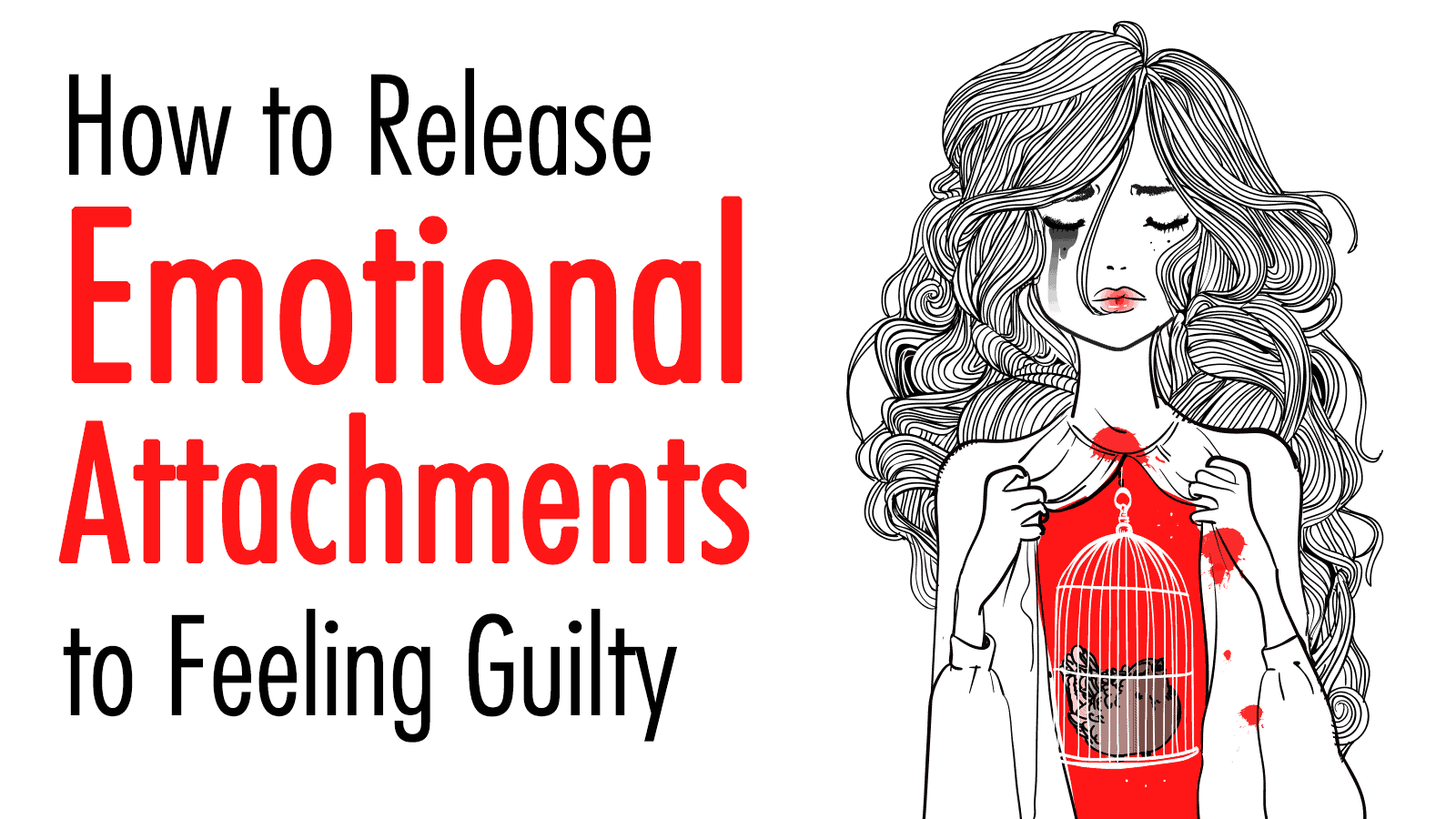
feeling guilty4.    Be Kind To Yourself

There’s a difference between letting yourself off the hook and being kind to yourself. Self-compassion is a powerful tool for growth, positive thinking, and overcoming mistakes. It’s hard to overcome guilt when you’re too hard on yourself. You need to be accepting and understanding of your actions and emotions to move on. Here are some tips for self-compassion that can overcome guilt:

·         Make Yourself A Priority

This doesn’t mean shirking responsibility – it means no longer feeling guilty for putting yourself first. At the end of the day, you are the only person who will always be around you, and you need to care for yourself with the same compassion you would afford a loved one. You can’t pour from an empty cup, nor can you help others without first helping yourself.

·         Be Your Own Best Friend

Have you ever noticed that you talk to yourself in ways you would never dare speak to a friend? You’re kind and empathic with loved ones but can’t turn that compassion onto yourself. Start thinking of yourself in a third person, as a friend. If you wouldn’t treat your friend this way, you shouldn’t treat yourself like that either!

·         Take A Break

It’s easy to let emotions overwhelm you when you’re exhausted. Communicate to those involved with a situation that you’ll be taking some space to process your emotions and events that triggered your guilt. Then, take some time away to really relax and let yourself recover. Your brain will be much more ready to tackle guilt when it’s rested.

5.    Make Peace With Guilt

Guilt is always going to exist. If you aren’t at peace with that, you’re never going to break the cycle of shame. Here are some ways to make peace with guilt:

·         Know That Guilt Doesn’t Mean You’re Wrong

Like all emotions, guilt can be misplaced. You can feel guilty even when you’re not at fault. Studies find that guilt can be a sign of your acts of comparison to people you look up to, sometimes to the point where your moral identity depends on it. In excess, that’s not healthy at all, and it’s good to know that sometimes, guilt is irrational.

·         Know That Things Can Be Gray

Trying to see the world through a black-and-white lens of “right” and “wrong” is unhealthy. As previously mentioned, taking responsibility means acknowledging areas where you could have done better. It doesn’t mean finding the winners and losers in each situation.

·         Know That You Can’t Control Everything

You are a single person in a huge universe. Some things are outside of your control, and you don’t deserve to feel guilty for them. Make peace with that.

6.    Learn and Apply

Now that you’ve done all you can to address the guilt, it’s time to learn from the situation that caused it. What lessons can you take away? How can you apply them to the future? What steps can you take to prevent this from happening again – or to improve on your responses? Here are some ways to learn from guilt and apply those lessons:

·         Think About New Ways To Do Things

Okay, you did something bad. Now, what would you do differently next time? Is it avoidable? Or is it something you have to manage intelligently? Can you reduce the behavior if you can’t eliminate it?

·         Reflect On Learned Lessons

Reflection is a positive tool for self-improvement. It involves taking a deep dive into your actions. What motivated them? How did others react? How did you feel at the moment? What consequences do you face that may be permanent? What’s next? Take some time to reflect on these things at least once a month and use your reflections to set goals related to the lessons you’ve learned.

·         Keep Looking Ahead

Guilt is inherently rooted in the past. There’s no reason to keep asking “What if” – what’s done is done. It’s time to move on and take what you’ve learned with you into the future. You deserve more than to be forever stuck in guilt that is attached to the past.

feeling guiltyFinal Thoughts On Some Effective Ways To Stop Feeling Guilty All The Time

Learning how to manage shameful feelings so you stop feeling guilty all the time will help your mental health in the long run. If you need assistance, don’t be afraid to read out for help from loved ones or a mental health professional.
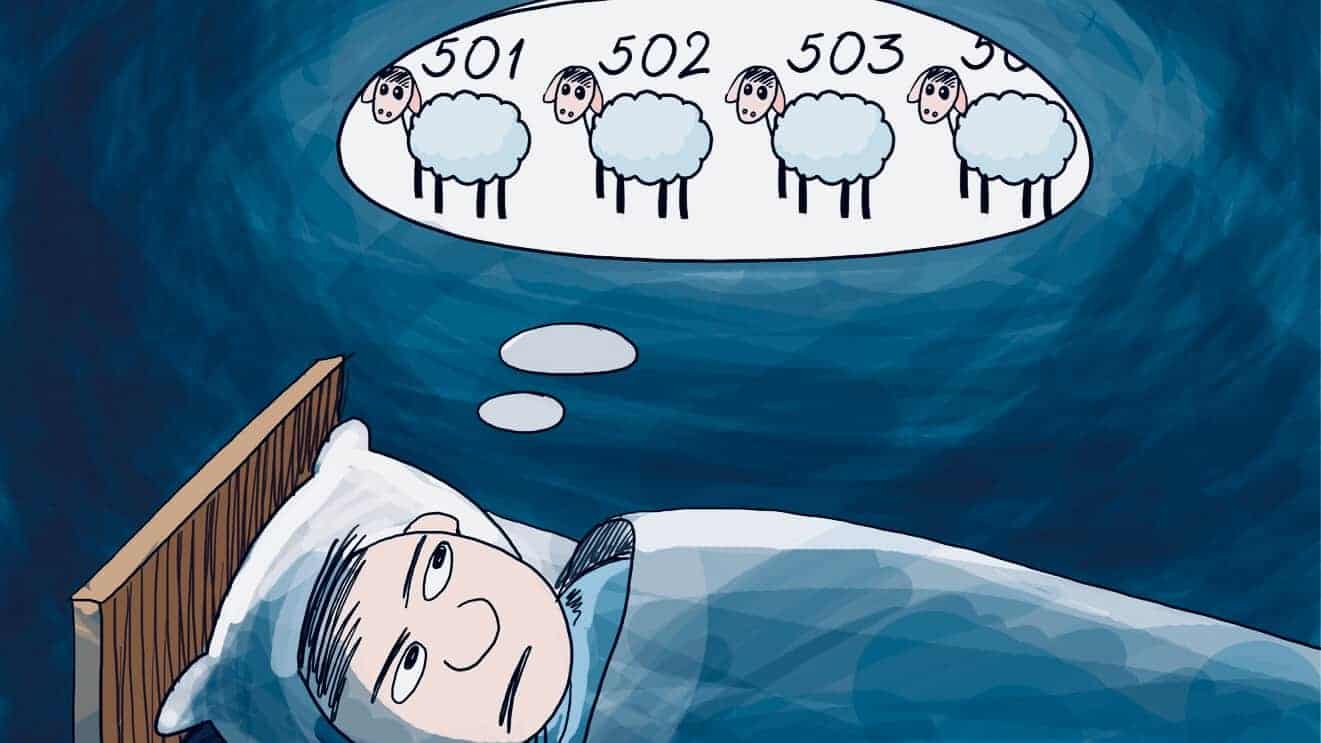
Science Explains How Sleeping in a Cold Room Is Good For Your Health

You may not have heard about the health benefits of sleeping in a cold room. There are plenty of benefits worth noting. Here is what science says about why you should try sleeping in a cold room.

How cold should your room be?

Studies show that sleeping in lower temperatures, around 62 degrees, benefits your sleep. When you sleep, your brain regulates your body temperature to a lower setting, much like having a thermostat inside your body. If you get too cold or hot at night, your body works hard to maintain the correct setting, ensuring a comfortable night and day bed experience.

So, a slight drop in temperature helps you sleep, but too much of a drop in temperature will keep you awake. Finding the perfect comfort level for your bedroom could make the difference between insomnia or a good night’s sleep. Try different temperature settings until you find the one that is best for you.

What helps you sleep?

sleeping in a cold roomHere are some helpful suggestions for getting your most restful sleep.

1 – Keep your room dark

Hang blackout curtains at your windows, turn off all the lights in your bedroom–including night lights since they can disrupt your sleep. This includes your alarm clock.

2 – Keep your room quiet

Turn off your cell phone and anything that makes unnecessary noise. Some people like white noise to help them sleep. You can use a fan, but it may make a draft in the room. Noise machines or apps work well.

3 – Keep your room at the right temperature

Not too hot or too cold. Remember that research suggests 62 as the ideal setting.

4 – Avoid memory foam pillows

These pillows can make you too warm.

5 – Wear socks

Cold feet keep you awake. Tuck your toes into a pair of cozy socks to keep them warm despite the cooler temperature setting.

Ten healthy benefits of sleeping in a cold room

So what the physical benefits of a good night’s sleep? There is a long list of amazing reasons to lower the temperature in your bedroom.

1 – You look younger when you sleep in a cold room

Stress takes a toll on your body and your skin. Colder temps boost your melatonin levels. Melatonin is not only a sleep hormone but an antioxidant that protects your skin from the damaging rays from the sun. It also increases collagen production, which prevents wrinkles. If you sleep in a warm room, your eyes get puffy with dark circles underneath them. Sleep is good for your skin because it heals and renews itself by removing toxins from your body and skin.

2 – Sleeping in a cold room reduces depression

When you sleep in a cold room, your sleep is deeper and more restful. This helps reduce your cortisol levels.  A good night’s sleep improves your mental outlook and helps you fight anxiety and depression. Insomnia and depression can go hand in hand. So, getting a good night’s sleep can help your general outlook on life.

3 – Sleeping in a cold room gives you a deeper sleep

A study in 2018 found for the first time that cold temperature is a huge factor in the production of melatonin. Melatonin is a hormone that regulates your sleep, so your body has a cycle of sleeping and waking. As your brain responds to the darkness and cold, it produces melatonin. Melatonin has other roles in your body besides sleep, but researchers are still learning exactly what all these roles are.

4 – The cooler temperature helps you fall asleep quicker

Lowering the temperature of your room helps you drift off to sleep quicker. Researchers believe that those who struggle with insomnia usually have higher body temperatures during their sleep, so they have a hard time falling asleep. A colder room also helps you have a sleep deeper. You’ll stay asleep because the production of melatonin doesn’t get interrupted.

5 – Sleeping in a cold room promotes weight loss

How many times have you found yourself eating extra cookies because you’re so tired from being awake all night?  When you can’t sleep, it increases your cortisol levels. Higher cortisol levels raise your anxiety and stress. When you feel anxious, you’re apt to overeat. Lower bedroom temps also increase your metabolism, which increases your good (brown) fat and improves your insulin levels.

6 – The cool temperature at night helps you fight off disease

Besides being tired, insomnia increases your risk of getting type2 diabetes. When you lower the temperature in your bedroom, it helps you fall asleep and stay asleep. During sleep, your body makes insulin, which controls your blood sugar and cortisol levels. Getting a good night’s sleep helps you avoid diabetes and other metabolic diseases. Sleeping in a cold room at night may also help your body fight heart disease and Alzheimer’s disease.

insomnia

Here are tips to beat insomnia forever.

7 – Sleeping in a cold room helps during pregnancy

When you’re pregnant, it’s hard to find a comfortable position to sleep. But much of pregnancy discomfort is also due to a higher body temperature. Due to the extra blood flow, your body’s metabolism creases by around 20%. This causes your body temperature to go from 37˚C (98.6˚F) to 37.8˚ (100˚F). So sleeping in a cold room will help you feel more comfortable so you’ll fall asleep quicker and stay asleep.

8 – The coolness reduces inflammation and pain

A cool bedroom can reduce inflammation and pain that can keep you awake at night. Many athletes sleep in a cold room after performing to help their bodies recover and lower their inflammation levels.

9 – Reduces the chances of fungal infections

Lower bedroom temperatures can help reduce fungal and bacterial infections in women. Bacteria and fungi multiply in warm, moist environments. When you sleep in a cold room, you reduce the chances of getting a UTI or vaginal infection.

10 – Can improve male fertility

Sleeping in a cold room at night might affect male fertility. Researchers suggest that long exposures to heat lower sperm level production in men. Scientists are still studying this. But if you’re trying to get pregnant, it may be worth lowering the temperature in your bedroom.

What is the best way to cool your bedroom at night?

You may not have access to your home’s thermostat, but you can still cool off your bedroom. Here are some tips for keeping your room more relaxed at night.

  • Open the windows at night to get a good breeze. Close the windows during the day to keep the cool air in your bedroom.
  • A ceiling fan or an oscillating fan helps circulate the air around your room so it cools off.
  • Stick a box fan in your window at night to draw out the heat from your room.
  • Cool mattress topper. Avoid memory foam pillows and mattresses because they make you feel warmer.
  • Keep blinds or curtains closed during the day to maintain cooler temps in your room, especially in the summer.

Other sleeping habits that will help you sleep better at night.

Besides lowering your bedroom temperature to help you sleep, some good sleep habits can improve your sleep.

1 – Stop gaming, texting, and sending emails at least an hour before your bedtime

These devices have blue screens, which have been found to keep you from falling asleep. The blue screens interfere with your body’s melatonin production, the sleep hormone that helps you fall asleep and stay asleep.

2 – Exercise and a good diet

Exercise and eating healthy are two critical factors for a good night’s sleep. When your body is healthy, you will feel less stress from elevated cortisol or high blood sugar. Be sure not to exercise close to bedtime since this will stimulate your brain and heart so you can’t fall asleep.

3 – Avoid drinking caffeinated drinks, alcoholic drinks, or smoking

Stay away from smoking, alcohol, and caffeine in the late afternoons because they’ll keep you awake. Many people don’t realize how much smoking affects them until they stop. There is often an immediate difference in how they feel and how much better they sleep.

4 – Establish a sleep pattern

Try to go to bed at the same time every night and get up at the same time every day. At night, find ways to relax by taking a bath, reading, or writing in your journal. These activities allow your body to wind down and get you ready for sleep.

sleeping in a cold roomFinal Thoughts on Sleeping in a Cold Room

Getting a good night’s sleep is essential for not only feeling your best but staying healthy. Researchers found that sleeping in a cold room improves your sleep by enhancing your body’s melatonin production. Melatonin is called the sleep hormone because it causes you to sleep at night. It’s also an antioxidant, so it improves your mental health, helps you fight off disease, and improves your skin tone. Keeping your room dark also helps the production of melatonin.

Create good sleep habits to help your body unwind and prepare for sleep. Things like avoiding blue screen devices, reading a book, and eating healthy all add to your sleep ability. Sleep is essential for your body, so why not try lowering the temperature in your bedroom tonight to get the best night’s sleep ever?

10 Ways to Reduce Dandruff Many People Forget

Dandruff is a scalp condition that causes itchiness and white flakes on your scalp. It’s widespread, so don’t be embarrassed by it. Better yet, it’s manageable–once you know how to reduce dandruff, you’ll be on your way to regaining your self-confidence.

Indeed, the Journal of Clinical Investigative Dermatology estimates that around half the adult population in the United States have dandruff. Besides trying dandruff shampoos, you may wonder what else you could do.

Look no further. Here are 10 tips to get rid of dandruff, which most people overlook.

Six Primary Types of Dandruff

Here are the six kinds of dandruff. Knowing which you have might help you solve this problem faster.

1 – Dry skin dandruff

Dry scalp may be due to cold weather in the winter. Most often, it shows up in people who already have a dry scalp. If you have curly hair, you’re prone to a dry scalp more than other hair types.

2 – Oily scalp dandruff

If your body produces a lot of oil, you are susceptible to getting dandruff. The overproduction of oil often occurs at puberty, during times of stress, pregnancy, or not shampooing regularly.

reduce dandruff3 – Fungal dandruff

Fungal dandruff is an infection of your scalp caused by a fungus called Malassezia globosa fungus. It spreads easily when your pH balance is off or if your scalp is extremely oily. It’s a contagious infection that can spread if you share your comb, hat, or towels with someone.

4 – Product build-up

If you overuse conditioners, gels, serums, hair sprays, or mousse, you can get a build-up on your scalp that causes dandruff.

5 – Seborrheic dermatitis

This condition is an inflammatory condition that affects your skin where you have a lot of glands like your scalp, behind your ears, eyebrows, and neck. Doctors think it’s a reaction to yeast found on your skin. Hormonal changes and stress triggers this type of dandruff. This condition closely relates to eczema.

6 – Psoriasis

Psoriasis dandruff is a skin condition caused when your immune system attacks your skin’s health tissue like that found on your scalp. This causes new skin cells to grow, and the dead skin flakes fall off. If you have this condition, you get silver looking rashes on your scalp, neck, behind your knees, and your back.

Ten Useful Tips to Reduce Dandruff

Trying to reduce dandruff can feel like a full-time job. You may have tried all kinds of shampoo and treatments. These useful at-home remedies may be the answer you searched for all the while.

1 – Tea tree oil

Studies found that tea tree oil has antifungal abilities that can get rid of yeast and fungus. If you use a shampoo with at least 5% tea tree oil, you might reduce dandruff

2 – Apple Cider Vinegar

Apple cider vinegar gets rid of certain types of flakes. It’s an antifungal that slows down the growth of conditions like candida. It also balances out your pH levels on your skin, which inhibits fungal growth that may cause some scalp conditions.  Add two tablespoons of apple cider vinegar to your shampoo.

3 – Baking soda

Baking soda helps relieve dandruff as it exfoliates the white flakes from your scalp. In one study, researchers tested people scalp conditions using baking soda, and it stopped the fungal growth for 79% of the type of dandruff tested. Baking soda can also bring relief to those who have psoriasis relieving the itchiness and irritation. One word of caution about baking soda, since it’s alkaline, it may damage your hair if you treat your scalp too often.

Too many treatments will also dry out your skin, which can worsen matters. So try baking soda once, then wait to see how it works. If it seems to relieve your dandruff symptoms, use it again, but sparingly.

4 – Coconut oil

Your dandruff may be due to a dry scalp. Try applying coconut oil to your scalp once a week for eight weeks to see if it helps reduce your dandruff symptoms.

5 – Aloe vera

Although no research proves aloe vera will get rid of your dandruff, it does seem to minimize it. Topical aloe vera can help skin conditions such as psoriasis. It has antibacterial properties that could help fight dandruff. Additionally, researchers suggest that its antimicrobial abilities may help those who suffer from alopecia.

6 – Lemongrass oil

Using a 10% concentration of lemongrass essential oil in your shampoo can help treat shampoo. Researchers found that after seven days, many study participants showed improvement.

7 – Omega-3s

Eating a diet high in omega 3s helps improve your skin and scalp. Omega 3s can help by doing the following:

  • Controlling the oil production of your body
  • Regulate your inflammation
  • Boost your hydration
  • Reduce signs of aging

Foods high in omega 3s include:

  • Mackerel
  • Tuna
  • Sardines
  • Salmon
  • Walnuts
  • Flaxseeds
  • Chia seeds
  • Soybeans
  • Canola oil
  • Tofu
  • Canola oil

8 – Zinc

Add zinc supplements to your daily regimen to boost your immune system to encourage cell growth for healthy skin. Zinc deficiencies cause hair loss, skin lesions and could contribute to dandruff and seborrheic dermatitis. Most over-the-counter dandruff shampoos contain zinc since it also stops fungal growth.

9 – Aspirin

Aspirin has salicylic acid, which is found in most anti-dandruff shampoos. Part of aspirin’s success is tied to its exfoliating ability and reduces oil. You can crush up a couple of aspirin tablets into powder and mix it into your shampoo. Put the shampoo mixture on your hair and let it sit for a few minutes, then rinse it out.

10 – Eucalyptus oil

Eucalyptus oil has anti-inflammatory abilities that can fight seborrheic dermatitis. Plus, eucalyptus has antiseptic type antifungal and antibacterial anti-fungal abilities, which help fight bacterial dermatitis. You can add some eucalyptus oil, coconut oil, or jojoba oil and rub it on your scalp.

castor oil

Learn about how castor oil can help promote healthier hair.

What about your scalp?

It’s easy to focus on your dandruff without considering the importance of a healthy scalp. How can you take care of your scalp, so it’s healthier and less prone to flakiness? Here are some tips for keeping your scalp healthy.

1 – Exfoliate your scalp

Exfoliating your scalp speeds up the process of cell removal. Exfoliate a couple of times a week to remove the dead skin from your scalp. If you do it more often, it may dry out your scalp. Try using a gentle exfoliating shampoo to do the job. Always use a gentle hair brush to brush your hair and scalp daily. This stimulates and releases the oils to release moisture for your scalp and hair.

2 – Keep moisture in

Dry skin on your scalp itches and burns. Take good care of your scalp. Be careful not to use too hot water when you shower. This dries out your scalp and hair.  Don’t overly blow-dry your hair since this affects your scalp and dries it out.

3 – Try a scalp massage

Many people with a dry scalp swear by a scalp massage. Getting a scalp massage stimulates the blood flow to your scalp as well as stimulating the oxygen flow. You can give yourself a scalp massage when you’re in the shower simply by using your fingers to make gentle circular movements on your head. Ask your hairdresser if you would like a professional scalp massage.

4 – Limit dyes and heated styling devices

Chemicals take a toll on your scalp. Coloring, straightening, or curling irritates your scalp and can dry it out. Always have a professional do your treatments to prevent damaging your hair and scalp. Home products contain harsh chemicals, and if they’re used in the wrong way, it could cause serious irritation to your scalp.

What else can you do to reduce dandruff?

Sometimes you’ve tried everything, but nothing works. Here are some suggestions for what you should do.

Find the cause of your dandruff.

If you’re struggling with dandruff and haven’t found a solution, you may want to keep track of your food, stress, and environmental changes. Write down everything you eat for one month. Note any triggers that pop up. Knowing what is causing your dandruff can help you know how to get some relief.

Don’t give up

Keep trying the suggested remedies, and if nothing works, you may need to see a dermatologist. They will run tests to determine exactly the cause. Your dermatologist may prescribe a cream or a lotion to help reduce the itchiness and irritation on your scalp. You may be given a salicylic acid treatment to help exfoliate the skin on your scalp.

New dandruff trend

For those who love weird trends, there’s a new dandruff trend that may catch your eye. It’s called dandruff scraping. If you have a strong stomach combined with an urge to see dandruff scatter everywhere, you’ll love this video on Youtube showing people scraping dandruff off scalps with a comb. Some have compared this trend to watching pimples being popped. Thanks for sharing. So watch this video at your own risk and try not to resist the urge to get all itchy as you watch it.

reduce dandruffFinal Thoughts on Your Battle to Reduce Dandruff

It may feel like dandruff is ruining your life. Hopefully, one of these remedies can help reduce your dandruff so you can go back to living your life without worry. Don’t forget to add zinc and omega 3s to your diet. These two are often a simple way to improve your dandruff. If nothing seems to work, try to find the root cause of your dandruff, don’t give up. It may be time to see a dermatologist who can do tests.

Research Finds the Zebra Finch Has Great Communication Skills

A recent study published in the journal Science Advances found that zebra finches can recall voices much as humans can. According to the research from the University of California, Berkeley, these songbirds recognize one another based on a song or contact call. They have the ability to quickly memorize distinct sounds of at least 50 members of their flock.

The red-beaked zebra finch can pick up on specific tones from familiar finches, much like humans do with their friends. When a friend calls, or we hear their voice in a crowd, we can instantly distinguish them. Zebra finches have almost this same capacity for language mapping and communicating with other birds. According to the study, they also have the uncanny ability to remember each other’s distinct vocalizations for months or even longer.

“The amazing auditory memory of zebra finches shows that birds’ brains are highly adapted for sophisticated social communication,” said lead author of the study Frederic Theunissen, a UC Berkeley professor of psychology, integrative biology, and neuroscience.

Theunissen and a team of researchers wanted to investigate the songbirds’ scope and magnitude to distinguish vocalizations. Their findings showed that the birds performed even better than they had expected.

“For animals, the ability to recognize the source and meaning of a cohort member’s call requires complex mapping skills, and this is something zebra finches have clearly mastered,” Theunissen said.

Theunissen has studied bird and human communication patterns for around two decades. He collaborated with UC Berkeley postdoctoral fellow Julie Elie, a neuroethologist who has studied zebra finches in Australia. Their work has provided a fascinating insight into the communication skills and vocalizations of this songbird.

finchFun facts about the zebra finch

  • Zebra finches are the most popular finch species.
  • Their life span is around 10 years.
  • While the zebra finch is small, it’s not the tiniest of the finch species.
  • The species takes its name after the zebra-like stripes on its neck, chest, and tail.
  • You can tell males and females apart by the coloring on their beaks. The males have red bills, and the females have orange.
  • They originated in the remote desert areas of Central Australia, but they also thrive in Timor and Indonesia.
  • Zebra finches love to sing, while females usually don’t. This is because males use songs as mating calls.
  • This bird doesn’t do well alone. Indeed, they thrive when kept in pairs. They make a wonderful beginner pet bird, as they don’t need a lot of care or time commitment.
  • While these birds love being social with each other, they don’t bond strongly with people. With training, a pet bird will eventually come to your hand, however.

The zebra finch typically travels in colonies of 50 to 100 birds, flying apart and then regrouping later. Their songs are usually mating calls. However, they also employ distance calls to locate one another.

“They have what we call a ‘fusion fission’ society, where they split up and then come back together,” Theunissen said. “They don’t want to separate from the flock, and so, if one of them gets lost, they might call out ‘Hey, Ted, we’re right here.’ Or, if one of them is sitting in a nest while the other is foraging, one might call out to ask if it’s safe to return to the nest.”
Theunissen keeps a few dozen zebra finches in aviaries on and around the UC Berkeley campus. He used 20 of them in the study about communication skills and vocalizations.

The zebra finch study

In the two-part experiment, the team trained 20 captive zebra finches to recognize different birds based on their vocalizations. They first trained half the birds to memorize songs, and the other half learned to recognize distance or contact calls. Then, they switched the tasks so the other half of the flock could learn.

Then, they placed each zebra finch, one by one, into a chamber where they listened to sounds as part of a reward system. In doing this, the team wanted the birds to memorize different renditions of the zebra finches’ sounds.

When they pecked a key inside the chamber, the birds triggered an audio recording of zebra finches. If they waited until the six-second recording stopped, the researchers rewarded them with birdseed as a small treat. However, if they pecked before the recording had finished playing, they moved on to the next recording. The birds went through several trials to learn which vocalizations would lead to a reward and which ones they should skip.

After this, the zebra finch flock got introduced to more audio recordings from different birds. This would allow them to learn which vocalizations came from which birds. They quickly learned the various sounds of the 16 different zebra finches.

The zebra finches performed so well that four of them faced an even greater challenge of distinguishing between 56 different finches. On average, the birds could recognize 42 different zebra finches based on their distinct sounds. Surprisingly, they could still identify the birds based on these unique vocalizations even a month later.

“I am really impressed by the spectacular memory abilities that zebra finches possess to interpret communication calls,” Theunissen said. “Previous research shows that songbirds are capable of using simple syntax to generate complex meanings and that, in many bird species, a song is learned by imitation. It is now clear that the songbird brain is wired for vocal communication.”

pop memeFinal thoughts on the study about the profound communication skills of the zebra finch

Zebra finches are adorable little songbirds that make wonderful pets, even if you’ve never owned a bird before. The males love to sing, and both males and females have distinct vocalizations. They have the ability to recognize various sounds from different birds, much like humans can learn the voices of friends and family.

This innate ability to distinguish between birds helps them learn each other’s locations and mating. Even after months have passed, these birds can still remember each others’ unique sounds. If you own one, you can even play music or sing to your zebra finch to inspire it!

Science Explains What Happens to Your Body When You Skip Meals

When life gets busy, it’s tempting to skip meals. Plus, right now, intermittent fasting is a growing popular trend. But does skipping meals really help you lose weight? Is it healthy? Scientists weigh in on this subject. Here is what they’re saying.

What happens if you skip a meal?

Everyone skips meals once in a while. But if you’re skipping meals regularly, you may not realize the impact it’s having on your body.

1 – Blood sugar drop

When you skip meals, your blood sugar plunges. Your brain needs glucose to function, and fasting causes your glucose levels to drop> Thus, your brain may feel foggy, as if you can’t think straight. You may also feel irritable and tired. Your body is under stress, so it makes extra cortisol to compensate.

skip meals2 – Decrease in metabolism

When you skip meals regularly, your metabolism slows down. Your body stops burning calories, so you can’t lose weight. Your body starts working hard to survive, so it craves nourishment.

3 – Poor food choices

When you skip a meal, you feel starving. When you decide to eat, you’re prone to eat carbohydrates or sugary foods because these make you feel better right away. But loading up on carbs causes your glucose levels to spike, then fall quickly. You create a cycle of lowering and raising your glucose levels. This is dangerous and can lead to diabetes down the road.

4 – Depression

Regularly skipping meals increases your stress level leading to anxiety and depression. Your blood sugar dips and your cortisol levels increase. This drop causes moodiness and mental exhaustion. One cross-section study revealed that university students who frequently skip breakfast showed depression symptoms.

 5 – Strong cravings for sugar and carbs

Another consequence of skipping meals is low blood sugar, leading to strong cravings for sugar and simple carbohydrates. Simple sugars get broken down quickly in your body. There’s a spike in your blood’s glucose levels, so you get a short blast of energy that doesn’t last long.

Simple carbs include the following:

Raw sugars

  • Corn syrup
  • High fructose corn syrup
  • Fruit (fructose) juices

Syrups

  • Candy
  • Baked goods
  • Cereals with sugar
  • Table sugar

6 – Weight gain

If you’re trying to lose weight by regularly skipping meals could backfire on you. One study found that meal skipping, especially breakfast, was related to obesity.

 7 – Mess up your digestive system

When you skip meals, it affects your gut. It can lead to diarrhea or constipation. Plus, your stress levels are elevated, which also affects your digestive system. Over time, skipping meals, then eating a lot of food creates irregularity and could lead to digestive system problems like IBS. Eating regular, fiber and plant-rich foods help your digestive system function correctly.

8 – Risk of an eating disorder

Skipping meals and fasting put you at risk for an eating disorder. Not maintaining a normal meal routine combined with healthy exercise sets you up for poor health and a cycle of losing weight quickly through fasting. Eating disorders like anorexia, bulimia, and orthorexia (an obsession with eating healthy, fad diets, and food planning to the point where your health suffers) all started by irregular eating, guilt about eating, and a poor body image.

If you think you may be struggling with an eating disorder, talk to your doctor, or a counselor right away. Eating disorders can lead to health problems down the road that can make your life miserable.

What is intermittent fasting?

circadian rhythm

Intermittent fasting has gotten a lot of interest over the past couple of years. The premise of this eating pattern is that you limit the time during the day when you eat so you can lower your calorie intake. Usually, you only eat during an 8-hour window, fasting for 15 to 16 hours. So, if you stop eating at 7:00 in the evening, you don’t eat again until 11:00 am the next day. The jury is still out as it whether intermittent fasting causes weight loss and if it’s healthy for you.

Researchers say that the timing of your meals isn’t usually the biggest factor to your weight loss, but what and how much you’re eating is important.  Eating a diet high in whole grains, dairy, vegetables, and fruits give you the greatest advantages to be healthy. Moderate to intense exercise at least 2 1//2 to 5 hours a week is also important for your health. Intermittent fasting isn’t safe for everybody, especially if you have health problems. It’s best to talk to your doctor before you do this fast.

Is intermittent fasting healthy?

If you’re looking for a quick way to lose weight, intermittent fasting may not be your best choice. The question of intermittent fasting’s long-term health effects on humans should involve more research. Researchers are still trying to confirm if an intermittent fasting pattern is safe for healthy people, both old and young. So far, most of the research has been done on middle-aged, overweight individuals.

Check with your primary care doctor for specific guidance on whether intermittent fasting will work well for you.

The importance of eating breakfast

In a January 2020 study, researchers found that skipping meals, especially breakfast, will up your risk for coronary heart disease, diabetes, and metabolic syndrome. Metabolic syndrome involves high blood pressure, extra body fat around your middle, and higher cholesterol levels. Eating breakfast every day lowers your risk of glucose or insulin problems, leading to diabetes. Another study found skipping breakfast reduces the quality of the food you eat since breakfast often contains fiber and calcium that you may not get the rest of the day. Because of this, skipping breakfast over a long period can affect your overall health. Plus, eating breakfast didn’t cause weight, but overeating was the cause of obesity in adults.

In an interview with Laila Ali: fitness expert, athlete, and wellness advocate, TV host, founder of the Laila Ali Lifestyle Brand, home chef, and mother of two, suggests this:

If you’re short on time and energy in the morning, skipping breakfast may be tempting. But breakfast gives me the energy to knock out all my daily tasks and take care of my family. It also helps me choose healthier snacks and meals later on. Keep healthy, portable options around like fruit and nuts, or low-sugar granola, or yogurt you can grab on your way out the door and eat on the go. And the earlier you can stop eating at night, the better! Having an early dinner may help you avoid weight gain in the long run.

How to maintain your weight and stay healthy

You don’t want to skip meals. But how do you stay healthy and not gain weight? Here are some suggestions to help you.

  • Eat smaller meals more often during the day rather than skipping your meals.
  • Keep a snack handy when you’re out running errands. Choose something high in protein and fiber like nuts or seeds. They will keep you full.
  • Plan your meals ahead of time, so you don’t get over hungry and end up grabbing unhealthy food at the last minute.
  • Plan your menus a week ahead of time and buy the food you’ll need for the meals. This takes away the pressure to grab processed or pre-cooked meals at the last minute. Plus, you’ll have everything you need to cook when you get home after work or picking the kids up from practice.
  • View food as an investment. You invest in healthy foods to get the best returns.
  • Enjoy your meals because you haven’t been snacking all afternoon.

What should I eat?

Doctors suggest you eat a balanced diet involving eating these foods daily:

  • 5 portions of vegetables and fruits
  • High-fiber foods like whole grains. Choose whole grain rice or quinoa.
  • Dairy or dairy alternative foods like cheese, tofu, milk, or almond milk
  • Lean proteins like fish, eggs, nuts, and seeds
  • Eat small amounts of fat, salt, and sugars. You can eat healthy fats like avocado oil or olive oil.

skip mealsFinal Thoughts on the Dangers of Skipping Meals

Skipping meals sounds like a quick way to lose weight, but more and more research shows that it’s not healthy and may not help you lose weight at all. Skipping meals elevates your glucose, which in turn boosts your stress hormones called cortisol, which affects your mood, weight, heart, and metabolism. Skipping meals sets you up for an eating disorder that can cause long-term health problems like the following issues:

  • Heart failure
  • Kidney failure
  • Liver failure
  • Osteoporosis
  • Anemia
  • Low blood sugar
  • Constipation
  • Gastrointestinal problems

If you want to lose weight, eat regular meals, or frequent small meals during the day. Eat a good variety of fruits, whole grains, vegetables, dairy, and low-fat meats. Exercise regularly, at least 2 ½ hours a week.

Eating trends come and go with many other fads. And not all are actually that healthy in the long run. Stick to a tried-and-true method of regular meals, healthy food choices, and exercise because this is the safety healthiest route.

Trainers Share 7 Exercises to Reduce Turkey Neck

Father Time is no respecter of persons and will leave his calling card with everyone. Skin and body parts start to droop and sag as you get older. One thing that you may be battling at a certain age is a turkey neck. It’s a self-deprecating term, describing the loosening of the skin around the jawline and neck.

As your body’s largest organ, your skin covers and protects you from head to toe. Not only does it protect your muscles and inner organs, but it provides a cooling system for your body. It is amazingly elastic and supple and moves quickly with your muscles.

Collagen and other nutrients keep your skintight, smooth, and elastic when you’re younger. Unfortunately, collagen wanes with age, and your skin doesn’t snap back as it used to in your youth. Tell-tale signs of sagginess show all over your body, especially your face and neck.

What is a Turkey Neck?

Although the skin on your face and neck is exceptionally elastic, it is also quite delicate. It’s one of the first places that begin to show fine lines, wrinkles, and sags as you get a little older. Your once graceful swan neck may be turning into an unsightly turkey waddle.

turkey neckHave you noticed a little wiggle in the skin on your neck lately that didn’t use to be there? Perhaps your elegant chin has become droopy, much to your chagrin. Maybe you’ve taken to wearing turtleneck tops or colorful scarves to camouflage your turkey waddle.

•Genetics

How do people develop these dreaded waddles like the classic Thanksgiving bird? The usual culprit is age and a loss of collagen and skin elasticity. If one or both of your aging parents have a wobbly neck, chances are you will too later in life. Sadly, this condition can be hereditary.

•Sun Damage

Were you a sun worshipper and tanner when you were young? Your skin will pay the price of your adoration with extensive sun damage. The UV radiation from the sun absorbs into the inner layers of your skin and destroys vital skin cells responsible for elasticity. You can often recognize serial sunbathers by their dark, wrinkled, leathery skin.

Since sun damage affects collagen production, it’s understandable that it would result in sagging facial skin and a turkey waddle. One way you can reduce the chances of sun damage is to wear sunscreen and keep your skin covered from the damaging rays. Stay out of the sun during peak UV ray times like mid-afternoon, if possible.

•Smoking

It may have been “cool” to smoke when you were a teenager, but it will eventually take a toll on your body. Every organ and system is negatively affected by smoking, even your skin. Whether you smoke cigarettes, cigars, or pipes, your skin will show the inevitable signs.

Like sun damage, smoking damages skin cells, and your skin loses its glow and suppleness sooner. Smoking also depletes your body of oxygen, which is bad news for your skin. Many smokers have deep wrinkles, leathery skin, and a droopy turkey neck.

•Weight Fluctuation

It’s no surprise that obesity is a severe epidemic in America, especially with children. When you eat too many calories than you burn, your body stores them as excess fat. Your skin must strain its elasticity to the brink to accommodate the extra cushioning.

Your face and neck are no exception. If you are overweight or obese, you will often notice a fatty deposit under your chin, often called a double chin. When you are younger, your chin is stout and firm.

Losing extra weight to be healthy is one of the best decisions you’ll ever make. As your body gets rid of the excess fatty deposits, it may be challenging to get your stretched-out skin to snap back, especially if you’re older. Your once double chin may turn into an unsightly turkey waddle.

Seven Neck Exercises to Help Avoid or Reduce Turkey Neck

pop memeFor some people, camouflage is key for minimizing their turkey waddle. Many fashion experts recommend avoiding low-cut or sweetheart necklines in favor of crew or turtlenecks. You may also wear pretty scarves that draw the eyes to your face instead of your neck.

Did you know that your neck has many muscles that support your head, upper spine, and upper chest? When you do specific workouts for these areas, the strengthened muscles can tighten the skin around your neck. So, your neck needs proper exercise to avoid or minimize the turkey neck.

Remember that no amount of diet and working out will return it entirely to normal once the skin is stretched out. However, you needn’t go under the plastic surgeon’s knife to reduce your turkey waddle. If you have a daily workout regimen, these neck exercises would be easy to incorporate into it.

You can do all seven of them 2-3 times a week, or you may try doing one a day each day. The idea is to tone and strengthen your neck and chin, not to cause pain or injury. Here are seven helpful workouts that can strengthen your neck, and give it a better definition.

1. Howling at the Moon

How to:

•Raise your head until you’re looking at the ceiling or sky.

•Put your right hand on your collarbone and push down gently.

•Now, push your jaw and lower lip toward the ceiling/sky. You should feel a slight pulling sensation across your neck. Do this step for five repetitions.

•Switch to your left hand and repeat the steps another five times.

2. Neck Lifts

How to:

•Lie flat on your back on your workout mat. Then, gently raise your head and neck until it’s slightly off the mat.

•With your head and neck still up, slowly turn your head to the left, to the right, then forward again. Lower your head gently back unto the mat into the starting position.

•Do these steps for 5-10 repetitions. Be sure to make small, gentle, controlled movements. If you feel any pain, stop immediately. This is a good strengthening and toning workout for better definition.

3. Chewing Bubble Gum

•How to:

•Sit up straight on your workout mat or in a chair. Tip your head back gently to look at the ceiling while keeping your mouth closed.

•While your mouth is still closed, slowly open and close your teeth like chewing bubble gum.

•Do at least 15-20 repetitions.

4. Head Pushes

•How to:

•You may sit on your workout mat, stand, or sit in a chair for this exercise.

•Put your right hand on your forehead. Gently press against your hand without letting your head go forward.

•Hold this position for 5-10 breaths. This works the muscles in the front of your neck.

•Now, bring your hands behind your head and intertwine your fingers. Push your head gently to add some tension to the muscles. Try not to let your head move.

•Hold this position for 5-10 breaths. You are now working the muscles in the back of your neck.

5. Kiss the Sun

•How to:

•Sit up straight on a workout mat or a chair. Gently lift your head to look at the ceiling or sky.

•Purse your lips as if you are offering the sun a big smooch.

•Now, do 15-20 kisses slowly in the air, lower your head to the starting position.

•You can rest for 5 minutes and do another set of 15-20 kisses if you like.

5. Awakening Neck Lifts

•How to:

•Relax on your bed, face down, and allow your body to be smooth and relaxed. Your head should be comfortably dangling from the end of the bed.

•Now, slowly lift your head until it’s level with the bed. Hold this position for 1-2 breaths, then gently lower your head to the starting position. Try to do 3-5 repetitions, resting between them if needed.

•Remember to keep your movements slow and gentle. Fast or jerking action can cause pain or damage to your neck muscles. If you feel any problem at all while doing this movement, stop at once.

6. The Swan

•How to:

•You can do this classic yoga workout while standing, sitting on your workout mat, or sitting in a chair.

•First, turn your head slowly to the left and gently tilt it back. You should feel a little stretching and tension in your neck muscles, but no pain. Don’t twist your neck too far and stop immediately if you start hurting. Hold the position for 5-10 breaths.

•Slowly bring your head back to the start position, then repeat by turning your head to the right.

7. Upward Dog

•How to:

•Here’s another yoga position that will help tone your neck. Start by lying on your belly on your workout mat.

•Gently push your upper body up with your arms straight and positioned right under your shoulders. Gently tilt your head back and hold the position for at least 3-5 breaths. Do at least 3-5 repetitions.

Final Thoughts on Battling A Turkey Neck

While you strengthen and tone your body, don’t neglect your chin and neck. If you make it part of your regimen early enough, you may avoid the dreaded turkey neck. Or you can minimize the one that you already have.

7-year-old Weightlifter Is Already Training for the Olympics

Prisais Brooklyn, best known as Princess P, began working out at just 10 months old and quickly fell in love with weightlifting. Now 7 years old, she has her sights set on the Olympics, training for it rigorously. In addition to being a weightlifter, she also loves gymnastics and practices it regularly as well. She truly is the strongest 7-year-old you will ever see!

Prisais also started doing CrossFit at a young age and says that she enjoys feeling strong and healthy. It seems that she knew what she wanted early on in life and continues to pursue her goals. She said, “I found my passion for gymnastics by doing 10 strict pull-ups at 4 years old. Being brave, strong, and confident inspires me.”

What a role model for all the young girls out there!

Going to school can often present challenges with fitting in and learning how to stand up to bullies. Princess P shows young girls and teens how exercise can help them stay strong not only physically but also mentally. When you feel accomplished and have goals, people’s opinions will have less of a hold on you. Everyone deserves to feel good about themselves, whether that confidence comes from working out or something else.

She says, “My future goal is being in the Olympics and being a veterinarian.” It’s inspiring to see kids who know what they want out of life and don’t let anything stop them! She says that knowing she inspires others as well keeps her motivated as a weightlifter and future Olympian.


View this post on Instagram


A post shared by Princess P (@princess_p_freya_doll) on

“Gymnastics, CrossFit, and weightlifting inspire me because it makes me stronger!” she says.

Not only does she have a strong, healthy body, but she keeps her mind positive as well. Her determined and focused attitude helps her stay on track and reminds her that she can do anything she sets her mind to. Her parents share her progress on Instagram and YouTube, and Prisais inspires thousands on these platforms. If everyone out there had her willpower, imagine what the world could accomplish!

Prisais’ dad, a former NFL wide receiver, helps her with workouts and ensures her form stays on point. Both her parents give her full support, encouraging her to grow up fearless and strong. Princess P actually picked up her first weight at only 14 months old and seemed to have natural talent. She even taught herself workouts, which she carries over into her gymnastics routines.

She was the only 4-year-old on the Level 2 Junior Olympic team and has now advanced to the Level 4 team. Her baby sister Freya is also following her big sister’s footsteps and often joins the dad/daughter team for workouts. While some fans have questioned young kids’ safety lifting weights, the American Academy of Pediatrics (AAP) says kids can benefit from it. With proper supervision, resistance training can build strength and help prevent childhood obesity.


View this post on Instagram


A post shared by Princess P (@princess_p_freya_doll) on

Weight lifting and children

A clinical report published in the June 2020 issue of Pediatrics said:

“Resistance training consists of much more than weight-lifting, and it has a place in everyone’s physical fitness routine,” said Paul R. Stricker, MD, FAAP, lead author of the statement, written by the Council on Sports Medicine and Fitness.

“We know children as young as 5 can build strength with one-legged hops or frog jumps. For older children, resistance training can be combined with aerobics or other sports to round out their activities.”

However, as with any exercise regimen, parents should set guidelines for their children.

The AAP recommendations include taking the following precautions:

  • Before beginning any program as a weightlifter, children should see a doctor if they have any medical conditions or are in chemotherapy.
  • Make sure their workouts are age-appropriate and include aerobics, resistance training, and other developmental exercises.
  • In youth with overweight or obesity, start with resistance training, as this helps burn fat over a longer period of time. Then, incorporate aerobics when they feel ready for it.
  • Make sure to include warm-ups and cool-downs in each training session.
  • Encourage kids to drink enough water and eat a balanced diet to ensure safety and success in workouts.
  • If children show any signs of illness or injury, stop exercises immediately, and evaluate further before clearing them for workouts again.

Especially in today’s sedentary world, kids need exercise to grow up healthy and strong. Even if they don’t gravitate naturally toward working out, they may learn to love it after becoming second-nature. Who knows – they may even grow up to become a weightlifter or sign up for the Olympics just like Princess P!

With the advent of technology, more children than ever spend time sitting on the couch rather than playing outside after school. Make sure to set limits on kids’ technology use to have a well-rounded childhood and get adequate exercise. Children need time to release pent up energy, and if they don’t have recess or P.E. at school, they should have time to play after school.


View this post on Instagram


A post shared by Princess P (@princess_p_freya_doll) on

Childhood obesity is becoming an epidemic, but parents and guardians can do something about it. In addition to ensuring your child gets enough exercise, make sure they follow a balanced diet with only occasional treats. If we want our kids to grow up free of diseases, we must instill a healthy lifestyle in them at a young age.

Final thoughts on the 7-year-old weightlifter already training for the Olympics

Princess P, a 7-year-old weightlifter, has big dreams of making it into the Olympics one day. With her drive and determination, we do not doubt that she will achieve her goals and take the gold medal! She inspires thousands of people to become healthy, work hard for their dreams, and above all, have no fear. Her parents are her biggest cheerleaders and support her 100% on her journey.

Do you know any kids who have an inspiring story like Princess P? Please share with us in the comments!

Therapists Reveal 6 Traits Of Psychological Health

Do you ever wonder what kind of person is happiest? It seems like a very subjective sort of question. Most experts would likely agree that anyone can experience psychological health or disorders, illnesses, and general lack of wellness, regardless of their personality, values, and traits.

But what if there was scientific evidence that certain traits lend themselves to better overall psychological health? What if learning to adopt these traits could help you in your journey towards a healthier mind? As it turns out, there might be some truth to that concept!

Recently, new research was published in the Journal of Personality and Social Psychology that provides insight into these traits. Titled “The healthy personality from a basic trait perspective,” this study presents some new and potentially groundbreaking findings on positive personality traits and their impact on mental health.

Based on that study, many traits have been uncovered that indicate what could add up to people of better mental state and well-being. These traits join many others that experts have long believed contribute to the ideal level of mental health. Based on this and previous research, without further ado, here’s how therapists reveal 6 traits of psychologically healthy people.

1.      A Person with Good Psychological Health Is Not Impulsive

An impulsive person is someone who has difficulty managing urges, cravings, and temptation. Those who face this problem are more susceptible to mental health issues, as they experience guilt and regret later on or perform acts that may ultimately harm them.

Humanistic psychologist and author Scott Barry Kaufman, Ph.D., states that people should aim to develop low impulsivity because:

  • You will develop high frustration tolerance.
  • You can more easily resist any kind of temptation.
  • You’ll be able to delay gratification.
  • You are capable of focusing on long-term goals over short-term ones.

pop memeIt is worth noting that impulsiveness is not the same as being a risk-taker, a quick thinker, or a spontaneous person. It refers very specifically to a lack of forethought resulting in ill-advised decisions that could harm you and others without sufficient calculation to determine its safety beforehand.

2.      They Are Open To Feelings

Being open to feelings doesn’t just mean being accepting of the emotions of others. More importantly than that, it refers specifically to your acceptance of your own emotions. It means:

  • The ability to be aware of your own feelings and thoughts
  • The understanding of emotion as a crucial part of everyday life and being human
  • The acceptance of difficult and complicated emotions
  • The willingness to reflect on feelings, no matter how difficult it can be to confront them
  • The openness to experiencing all sorts of natural emotions, including deeper and differentiated emotional states
  • The ability to express your own feelings to others in healthy and positive ways
  • The experience of more intense emotions than others

This isn’t much of a surprise, based on past research. Numerous studies have pointed out how repressing and suppressing emotions can lead to decreased positive thinking, jeopardizing physical and mental health. Self-expression of emotion isn’t just healthy – it’s necessary!

3.      They Don’t Trap Themselves In Negative Emotions

Negative emotions are normal, and they’re even healthy to experience every once in a while. The problem arises when you become trapped in those negative emotions, leading to difficulty moving past them and potentially leading to long-term negativity. Here are some forms of negativity that can form traits of poor mental health:

·         Stress

Stress is a normal part of life, but those who are especially vulnerable may experience it in an unbalanced excess. That much stress can mess up the way your brain processes and handles difficult situations, potentially leading to constant or chronic stress – both of which are, of course, not the best for mental health!

·         Angry Hostility

You’ve probably heard these terms separately plenty of times. When put together, they tend to experience negative emotions based on or resulting in anger. Examples of this are annoyance, bitterness, envy, and frustration. Angry hostility can lead to a susceptibility to negative situations, meaning you are more likely to lash out or experience anger from minor situations.

·         Anxiety

Anxiety comes with restlessness, stress, and fear, which all take a toll on one’s psychological state. It’s easy to become caught in an endless loop of worries about the future and regrets about the past. Do note that this does not refer to anxiety disorders specifically, but to the general concept of being trapped within anxious worries and thoughts to the point that they become self-fulfilling.

·         Depression

Unfortunately, depression is often not controllable, but you should be aware of what makes you more susceptible to it. Those with diagnosed or clinical depression tend to experience higher shame, guilt, worthlessness, hopelessness, sadness, and loneliness. Combined, it makes plenty of sense that these point to bad psychological health, especially since cycles of negativity are common in depression. Learning to manage a depressive disorder better can help you overcome the worst of these symptoms.

Clinical psychologist and psychoanalyst Jennifer Kunst, Ph.D., who also works with the Fuller Graduate School of Psychology and the Psychoanalytic Center of California, considered vitality a significant sign of mental health. She defines vitality as the state of being more engaged, alive, and inhibition-free – all things that you will have difficulty developing while trapped in negativity.

psychological health4.      They Have A High Frequency Of Positive Emotions

Linked to the previous point, most psychologically healthy individuals make it a point to promote and create positive emotions in their lives. If you try to be optimistic, you’re training your brain to better spot good things over bad things. As such, the more positive emotions you train yourself to experience, the more psychologically healthy you can become – and vice versa.

Of course, it goes without saying that this is easier said than done. But did you know that faking positive thinking through smiles can actually trick your brain into releasing happy hormones? Numerous studies have shown that the brain can’t tell the difference between a real and fake smile, so it always responds as if the smiles are real. This doesn’t mean you should repress sadness, but that you should learn to incorporate smiling more into your everyday routine.

Being around positive people may also help you train your happiness. Author and psychiatrist Dr. Eva Ritzo states that seeing other people smile makes it easier for you to smile, allowing for even more “training” for your brain.

5.      They Are Warm

Warmth refers to acts of affectionate intimacy on an interpersonal level in all sorts of relationships, whether platonic, romantic, familial, or even with strangers. Psychologically healthy people tend to form positive attachments with others easily as they genuinely like being around other people.

Someone who lacks warmth is distant, formal, reserved, and a bit of a loner. While they may still be compassionate, there’s an inherent lack of closeness in all their bonds, if they have any at all. This doesn’t mean having a lot of friends or changing from an introvert to an extrovert. Instead, it means being open and warm in your valued relationships and being friendly to others.

Kunst adds to this trait by listing love as a sign of good mental health. Essentially, in that case, love is a form of warmth that means genuine care for others. A loving person makes room in their heart for the people they value most and makes an effort to repair damage in their relationships, with their main intent always rooted in gratitude and appreciation.

6.      They Are Direct And Straightforward

Being straightforward can be difficult. Many people are more willing to tell white lies because they’re sweeter to hear, are more likely to be well-received without creating conflict, and can make others feel a little better. But at the end of the day, a lack of honesty gets you nowhere.

Psychologically healthy people are often genuine in their everyday lives. They are sincere and frank, and their social skills are maintained through means other than uncomfortable deception. They do not use incorrect flattery, nor do they manipulate, deceive, or use underhanded tactics to get ahead. This allows their minds to be uplifted and safe from negative psychological effects related to repetitive lying.

This is another one of Kunst’s stated signs of positive mental health: an overall commitment to truth. This means that you would rather provide real and factual information instead of providing statements that are dishonest for the sake of idealism or kindness. While there is some nuance to be applied to this concept, it’s a good one to keep in mind.

In the past, research has also released interesting findings regarding the mix of happiness and honesty. Not only are you more likely to be honest when you’re happy, but being honest is linked to other forms of positive thinking and behavior, including:

  • Life satisfaction
  • Self-control and impulse management
  • Feelings of normalcy
  • Positive self-belief
  • Social success
  • Healthy relationships

psychological healthFinal Thoughts On Some Traits Of Psychologically Healthy People

How many of the things on this list can you tick off? As highly positive traits, they’re all values that you may find beneficial to add to your behavior, whether your goals involve improving psychological wellbeing or not.

Despite research into these traits, it’s worth noting that no single trait can ever dictate physical or mental health. Even then, a collection of traits is still not a definitive form of proof of psychological health. You can have all of these traits and still have mental disorders, and you can have none of them and be psychologically healthy.

However, given the evidence, it’s likely that learning to hone these traits can improve your mental state or make you less susceptible to threats to your mental health. You should always be working on self-improvement, and many of the traits that research over the years has found to be beneficial for psychological health are ones that many would strive to achieve regardless.

At the end of the day, one of the best ways to become mentally healthy is to work on yourself and your wellbeing. You might not be able to control everything, especially if you have a mental disorder, to begin with, but you can learn to handle better and manage the factors that affect you. If you need further assistance in your efforts, you can always speak to a therapist, psychologist, or similar medical professional for advice on your psychological health!

15 Symptoms of Dehydration That Most People Ignore

Have you ever been dehydrated? It’s a miserable feeling that can be serious if it’s not taken care of promptly. Dehydration symptoms are easy to spot, especially since they typically follow a sickness or extended periods of fluid loss.

Your body is made of 50-65 percent water, so it stands to reason that when you lose more water than your body needs to thrive, your system suffers. You need water to carry out normal functions, so you must replace the fluids that are lost.

While anyone can become dehydrated, the situation is more difficult for both the elderly and young children. Older adults have a lower amount of water in their bodies, and they usually take medications that can alter their fluid levels. Though these age groups are more susceptible to dehydration, it can happen to anyone at any age.

It’s not uncommon to see more dehydration cases during the heat of summer when people are outside and not hydrating properly. It’s also possible for those who exercise too much without replacing what’s been lost through sweat. Thankfully, most people can reverse their dehydration without even realizing it’s a problem by drinking more water, and sports drinks are also good at replacing lost electrolytes.

However, when the loss of bodily liquids is severe, then it will require medical treatment. There are many reasons why a person becomes dehydrated, and it doesn’t always have to be because they had a hard workout or were out in the heat. Chances are you’ve had issues with this medical problem but were able to resolve it before it became a significant issue.

The Causes of Dehydration

symptoms of dehydrationThe symptoms of dehydration typically appear after an extended period of sickness or food poisoning. When you’re sick, you don’t drink the water you need, or your body may not be able to stomach the additional fluids. Additionally, if you’re out hiking in the woods or camping, you might not have access to safe drinking water.

Medical experts have concluded that the most common reasons for dehydration are as follows:

•Increased Urination

Many things can cause you to go to the bathroom more frequently. One of the most common culprits is medication, specifically blood pressure varieties. When a person has diabetes, the body tries to expel the extra sugar through urination, especially if it’s uncontrolled.

•Fevers

When you’re sick, one of the main problems you will experience is a fever. A fever absorbs the water from your system to cool off your body. It stands to reason that higher fevers will take more water from your system than a low-grade temperature. Remember to drink plenty of fluids when your body is above 98.6 degrees.

•Excessive Sweating

Some people naturally sweat more than others. These people need to make sure that their fluid intake can match their output. For others, their sweating increases when they are outside in the hot sun or involved in vigorous activities.

Your body automatically loses more water when the temperatures are soaring, so you must stay hydrated to avoid any of the symptoms of dehydration from appearing.

•Vomiting

Vomiting that comes with an illness can be severe. When you lose the contents of your stomach, you may begin to purge bile and water. Not only does this affect the body’s hydration levels, but it also affects your electrolyte balance. Sadly, dehydration can happen very quickly.

•Diarrhea

Some people have lost stools on occasion, and they are not troublesome. The real issue comes when you get sudden or violent diarrhea attacks along with other issues like fevers and vomiting. The combination can be too much for the body to handle.

Who Is At Risk?

prevent dehydrationWhile anyone can become dehydrated, some people have a higher risk than others. They include the following:

•Those with Weakened Immune Systems

Those who have diabetes are at significant risk of having symptoms of dehydration. Since the excess glucose is passed from the urinary system, the body will attempt to expel the sugar. It’s not uncommon for a person with diabetes to use the bathroom more frequently than others.

However, diabetes isn’t the only condition that causes a loss of fluids. People with kidney disease also seem to expel more fluids than usual. Even having something as minor as a sore throat can make you less likely to drink and more likely to become dehydrated.

•Individuals Who Work Outside or Exercise

When you work outside in the elements, your body uses more water to stay cool. When the weather is hot and humid, you’re at an increase of losing too much water from your system. Your body sweats to cool you, but the sweat can evaporate rather quickly when temperatures are soaring.

If your body temperature increases, you need more water to sustain it. You can never drink too much when you’re outside in the elements trying to work.

•The Elderly Crowd

When you become age 60 and above, the fluid reserves in your body are not the same. You have fewer storage capacities, and your conservation abilities are reduced. When an older adult has problems that cause them to use prescription drugs, they can also play with fluid levels.

Another problem is that many older folks don’t drink an acceptable amount of water. The reasons can be mobility problems that limit their capability to get to the water, or they forget what they’ve ingested.

•Babies and Younger Children

Babies and children are the most common group to experience symptoms of dehydration. It’s partly because this group often has issues with diarrhea and vomiting. When they have a fever, their body kicks into overdrive, trying to cool itself, and they can lose essential fluids.

Another issue with the younger kids is that they can’t articulate to their parents when they’re thirsty. Infants mostly must rely on their parents for help in ensuring their food and hydration levels are appropriate. Since young kids can’t get a drink for themselves, their parents must watch for warning signs that they need hydration.

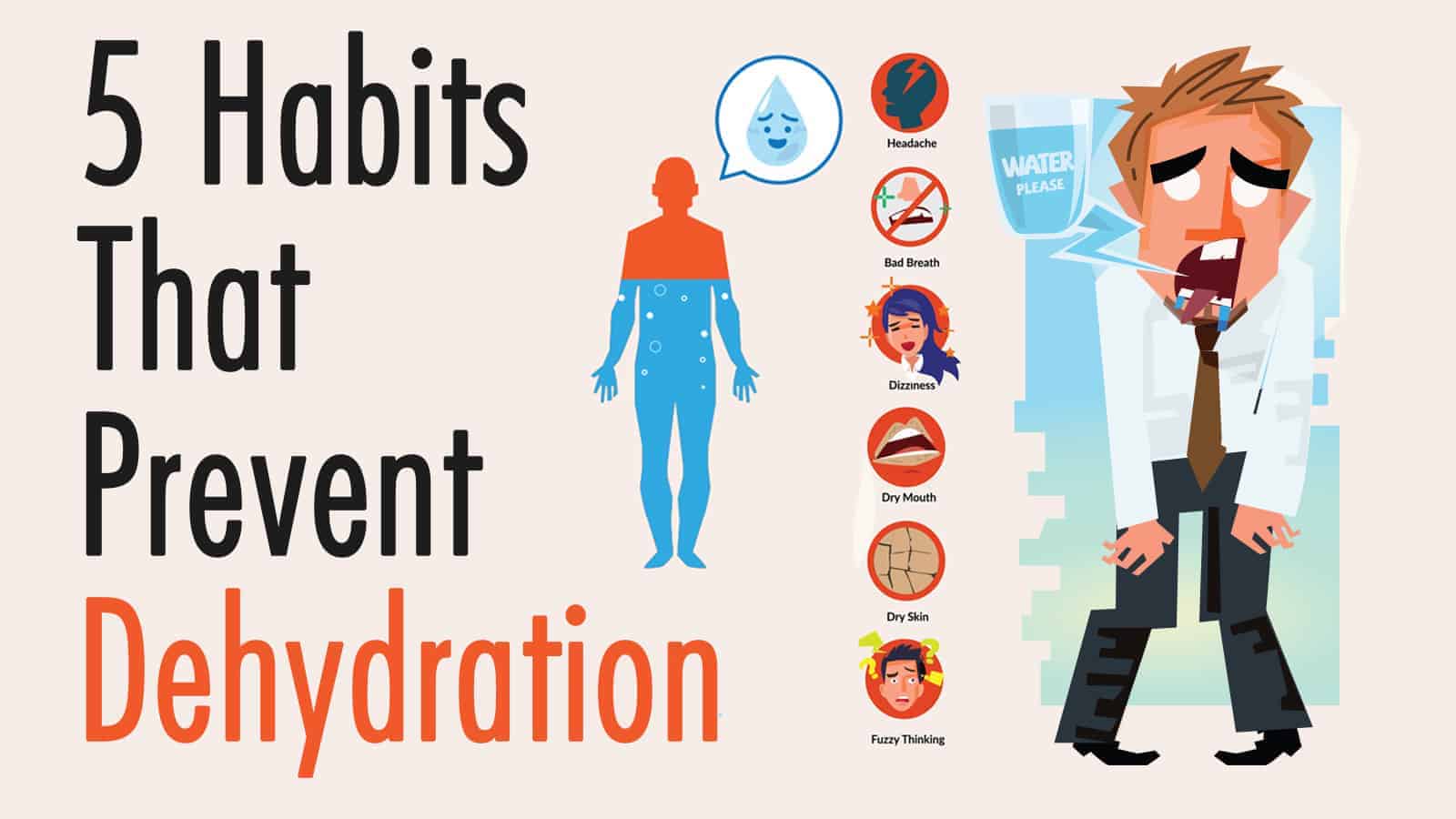
15 Symptoms of Dehydration

Now that you understand all the causes and people who are at risk, here is a list of the most commonly observed signs of dehydration.

1. Dizziness/Lightheaded

2. Headaches

3. Dry Mouth

4. Excessive thirst that can’t be quenched

5. Fatigue

6. Inability to urinate

7. Dry skin

8. Constipation

9. Reduction in saliva production

10. Sunken eyes

11. Fast breathing and heart palpitations

12. Drop in blood pressure

13. Urine turning a dark color

14. Confusion

15. Fainting

Complications of Dehydration

Most mild problems with dehydration can be treated at home using a sports drink and adding a pinch of salt or sugar to water. Children can use drinks like Pedialyte to help rebalance their electrolytes.

Severe dehydration symptoms must be evaluated by a medical professional. Here are four serious complications that can arise when the body’s fluid level is too low.

•Hypovolemic Shock

Hypovolemic shock is a condition that can be life-threatening if not treated immediately. When the blood volume drops too low, it can cause your blood pressure to plummet. Ultimately, the oxygen levels in your body deteriorate, causing a severe health emergency.

•Seizures

Seizures are always scary because the brain is short-circuiting. When your electrolytes become unbalanced, they can cause electrical messages to become confused.

Confused signals lead to involuntary muscle contractions and seizures. It’s imperative to keep potassium and sodium levels intact following sickness for this very reason.

•Kidney Damage

If you have chronic spells of dehydration, it can put a massive strain on your kidneys. The bouts of low fluid levels can cause you to experience UTIs or even kidney stones. Ultimately, your kidneys can fail when your fluid levels are altered.

•Heat Damages

Heat injuries can occur relatively quickly when someone is outside and sweating more than they have in their water reserves. How many times have you heard of a heat stroke? All a heatstroke means is someone has exhausted their fluid levels, and the body is unable to cool itself naturally.

Heat injuries can range in severity, but they are nothing to mess around with. If you’re outside and start to experience any dehydration symptoms, you need to get help. Heat strokes can be life-threatening.

symptoms of dehydrationFinal Thoughts on Dehydration

Dehydration is a common problem that affects the masses. The key is to notice the signs and be ready to act. If you’ve tried to treat the condition at home to no avail, then it’s time for medical intervention. Things can go from bad to life-threatening in a matter of minutes, so you must recognize the symptoms of dehydration and be ready to get help when needed.

Skip to content