Weekly tips, affirmations, and small actions to feel your best.

11 Signs Your Partner May Be Sleeping With Someone Else

No one likes to think about whether or not their partner is seeing or sleeping with someone else. In an ideal world, no one would have to deal with the heartbreak that comes with being cheated on. Unfortunately, these things do happen. Hopefully, your relationship is one where open and honest communication comes before the possibility of your partner seeking an extramarital affair.

But if that isn’t the case, there are plenty of ways to tell whether or not your partner is sleeping with someone else. Of course, context is key. Some of these signs, by themselves, don’t mean your partner is cheating. You need to look at the bigger picture, pattern of behavior, and see if it’s out of the norm.

“Cheating is never to do with how attractive you are.” – Marie Helvin

Is Your Partner Sleeping With Someone Else?

Watch for these signs.
sleeping with someone else

1. Someone sleeping with someone else become protective of their phone

If your partner, in the past, was not very protective of their phone and “if you notice a change in phone habits — like suddenly on silent all the time”, it could be a sign that there’s something on there that they don’t want you to see, says author Marina Sbrochi.

You’ve probably had no issue using your partner’s phone for something in the past – but now, they seem to be extremely protective, even going so far as to put a lock on it that prevents you from opening it.

2. They’re (too often) home late from work

If your partner is usually home by a certain time every day, but suddenly they’re staying late at work, it could be an excuse for them to see someone else behind your back. It’s a common enough excuse that many people don’t think too much about.

As dating and relationship advice and etiquette expert April Masini says, “When someone stops coming home at the regular time, on a regular basis, be wary. When a schedule changes and there’s no comment about why or what he or she is doing differently, it may be because your spouse is cheating on you.

3. Showering as soon as they get home

Unless your partner does a job like construction, roofing, or something else that’s bound to get them dirty, taking a shower as soon as they get off work can be a sign that they’re trying to wash away the evidence of another person. They might want to scrub away some errant lipstick, or a hint of cologne or perfume. This is a sign, especially if their showering habits are changing suddenly.

4. Their libido is down if they are sleeping with someone else

People’s libido often fluctuate due to stress, nutrition, lack of exercise, or any other reason. A fluctuating libido isn’t a sign in and of itself. But, if it has always been pretty regular, and they start no longer desiring your attention, it may be because they’re getting their needs met elsewhere. But why?

Psychotherapist and author Tina B. Tessina, PhD., says, “Most women cheat because they feel emotionally deprived, and men are unfaithful because they often feel physically deprived.

5. They’re not as present during time together as they used to be

Now, perhaps your partner is still spending time with you – but maybe they don’t make you feel special like they used to. If your time together has gone from exciting and enjoyable for a long time to simply sharing  a few minutes together, it may be a sign that your partner is simply trying to placate you, while pursuing more enjoyable time elsewhere.
sleeping with someone else

6. They pay more attention to their appearance

This sign doesn’t always mean that they’re sleeping with someone else – especially if they’ve already discussed with you wanting to change their appearance. However, if your partner goes from not caring much about how they look, to suddenly preening like a peacock, they may be trying to impress someone else.

Masini adds, “If your partner starts suddenly looking a lot better than he or she used to, they may be cheating.” If you’re not sure that the person they’re trying to impress is you, this can point to a sign of your partner stepping out.

7. They’re unexpectedly trying something new

Of course, this also doesn’t automatically mean that your partner is cheating on you. Usually, something new is going to be communicated between the two of you. However, if your partner is suddenly engaging with you in a way that seems unnatural, it may be a sign that they’re actually figuring this stuff out with someone else.

8. You can never get a straight answer

If your partner has gone from being open and honest in all of their communication, to being flighty and cagey, it’s probably a sign that they have something to hide from you. Getting a straight answer may feel impossible, even something as simple as how their day at work went. This can be a sign that they’re trying to hide something – or someone.

9. They’ve picked up new habits

These habits can be anything from suddenly being over-protective of their phone, to not picking up their phone when you call. The new habits that your partner exhibits will often be hard to explain away, and your partner may feel defensive if you try to bring them up. This can be a sign that they’re seeing someone else and they don’t want you to know about it.

10. You’re feeling ignored

One of the biggest signs that your partner is seeing someone else, is that feeling you get when you know that you’re no longer being appreciated in the relationship. While your partner may think that hiding evidence of the fact is enough, they may not notice that they’re treating you differently, and making you feel underappreciated.
sleeping with someone else

11. A partner sleeping with someone else avoids your friends and family

If your partner was very active in your social or family life before, but doesn’t seem to be showing too much of an interest now, it could be a sign that they’re trying to avoid a fallout. They may feel extremely guilty for seeing someone outside of the relationship, and seeing your friends and family can be a reminder of that.

Most of these signs are about extreme and sudden changes in behavior. If your partner exhibits these signs, but they don’t seem out of the ordinary for your relationship, it’s not likely that they’re seeing someone else. As always, context is important to understanding your partner’s behavior, and whether or not they’re seeing someone outside the relationship. If you suspect that they are, the best way to get an answer is to confront them directly, and try to have an honest conversation about what is going on.


(C)Power of Positivity, LLC. All rights reserved

10 Signs There’s Serious Chemistry Between You And Your Partner

What is “chemistry” anyways? The word chemistry itself is perplexing, isn’t it? Fortunately, we’re not discussing the type involving periodic tables and nerd goggles.

In simple terms, chemistry – in the context of a relationship – can be defined as a “connection between two people.” This type of chemistry can be romantic or platonic, positive or negative.

For this article, we’ll focus on positive and (mostly) romantic relationships. We’ll delve a bit into the science and psychology of romantic chemistry, as well.

Here are ten of the more common signs of chemistry:

So, how can you tell if this mysterious chemistry exists? Watch for these behaviors.

1. Plenty of Smiling Reveals Chemistry

If there’s a connection between two people, there’s likely to be plenty of smiles – and the reason is simple. When our brain is happy, we smile; a natural reaction that occurs between both friends and romantic interests.

Even shy and introverted types will flash the occasional big smile here and there when a connection is evident.

chemistry

2. A Sense of Familiarity

Ever meet someone and just hit it off? Not only did you hit it off, but you’ve also felt as if you’ve known the person for years.

A strong sense of familiarity doesn’t happen very often – and that’s part of what makes the sensation incredibly unique. When it happens, there’s a strong feeling of comfort and a natural, flowing conversation.

3. Sexual Attraction

We’re genetically inclined to seek someone with whom we have a strong physical attraction. Human beings are a mating and reproducing species, after all.

While strong sexual magnetism is the basis for romantic connections, there may be a bit of physical attraction in friendships as well; albeit to a much lesser degree and for different, more complex reasons.

4. Spiritual Connection [Quote P.T.]

While we’re sometimes unable to understand why we feel a particular spiritual connection to someone, there’s no denying its presence.

Kelly Campbell, an Associate Professor of Psychology at California State University – San Bernardino, writes in Psychology Today:

“I do know that when I first meet someone and experience that feeling, it puts me into the flow of life. I am rejuvenated and eager to learn more.

5. A Couple With the Same Sense of Humor Reveals Chemistry

Two individuals with the same sense of humor are likely to have great chemistry. Furthermore, this shared humor deepens the feelings you have for the other person, even if they’re just a friend.

Most individuals who have a similar sense of humor also think alike. It’s also a reliable and tested way to determine whether or not you have a connection with someone else.

relationships

6. “Mirroring”

Mirroring is a human behavior wherein a person subconsciously imitates the gesture, speech pattern, or attitude of another. People engage in mirroring whether or not we realize it.

It’s common for a person, when they feel a physical or emotional attraction to someone, to begin imitating the person’s posture or mannerisms (e.g., touching face, crossing arms, etc.)

Mirroring occurs in both platonic and romantic relationships.

7. Feeling Instantly Comfortable

We touched on this a bit in #2, but an immediate sense of comfort with someone is a powerful indication of chemistry.

When we meet someone for the first time, our natural tendency is to “stiffen up.” Our posture is straight, we use formal language, display nervous quirks, etc.

For some strange reason, certain people create this overwhelming sense of comfort (which may be spiritually-tied, as well). Many couples and close friends cite this phenomenon.

8. Same Interests

How many women can honestly say that they love video games? Football?

MMA?

How many men can honestly say that they love romantic comedies? Cuddling? Amy Schumer?

That isn’t trying to stereotype or pigeonhole either gender. The point is that male and female interests tend to go the opposite directions. There’s nothing wrong with this fact – it is what it is.

For friends and lovers, especially of the opposite sex, it is scarce to find someone with the same interests. Again, this is one component of chemistry that is exceptionally powerful.

9. Physical Contact Reveals Chemistry

Playful and innocent touching is a near-universal sign of chemistry. Though friends indeed engage in this type of “play touch,” it’s more commonplace during dating and further romance.

Play touch is the ultimate icebreaker. Men and women love using this behavior to gauge how someone feels about them. Mutual engagement of play touch is almost always a clear sign of chemistry.

10. Eagerness

The last behavior on our list is eagerness – missing the individual’s presence while anxiously awaiting the next opportunity to see them again.

Eagerness, while it doesn’t sound too exciting, is quite a beautiful thing. One delightful element of eagerness is that it remains – and to a strong degree– throughout the relationship.

chemistry

Final Thoughts on Noticing Partners With Chemistry

Even on days when our partner drives us up a wall, and we feel as if we couldn’t get any more frustrated, this feeling slowly gives way to a sense of anticipation – and of longing for the person we love.

(C)Power of Positivity, LLC. All rights reserved

11 Hidden Things That Happen When You Hide Your Feelings

“We try so hard to hide everything we’re really feeling from those who probably need to know our true feelings the most. People try to bottle up their emotions, as if it’s somehow wrong to have natural reactions to life.” ? Colleen Hoover

Everyone represses and hides their feelings every now and again, especially when we’re feeling sad.

There are many different reasons that we may endeavor to hide, or disguise, the emotional pain that comes in the wake of negative beliefs about ourselves evoked by a particular person or situation. But what they have in common is that they’re all fear-induced,” says clinical psychologist Leon F. Seltzer.

While we may not realize it, there are things that happen to us when we focus on hiding our feelings rather than dealing with them outright. In fact, repressed feelings may resurface in ways we least expect, especially through our behavior.

11 Things That Happen When You Hide Your Feelings (That You May Not Realize)

1. Taking care of others

While this may sound like a good thing, it can come at a great cost to your own emotional well-being. When you’re feeling low and depressed, it may feel easier to deal with other people’s problems that your own. Unfortunately, this can cause you to extend more emotional labor that you’re capable of giving out, and can make you feel even more worn out, tired and depressed.

2. Disappearing from the lives of people who matter

Every so often, you may find that you retreat from the lives of your friends and families for long periods of time – days, or weeks. You stop contacting them and stay within your own, quiet barrier. This is something that happens when we’re forced to face our emotions before we’re ready to do so. This happens when our emotions stay hidden. Instead of facing them, we retreat from situations that force us to do so.

3. Constantly staying busy

Perhaps you find that you’re more susceptible to facing your emotions when you have downtime. This can prompt you to keep yourself busier than normal. You may take on another job, or be constantly planning outings with friends and family in order to keep yourself busy. Without having a moment to yourself, you’re able to ignore the emotions that you’re keeping hidden.

4. “I’m fine!”

You may find this placating phrase come out of your mouth more and more when you’re repressing your emotions. Claiming that everything is all well and good, even when it isn’t, is a way to push people away so you don’t have to face your feelings. After all, if no one knows that you’re not doing well, you don’t have to admit it even to yourself.

As Jim Morrison pointed out, “The most important kind of freedom is to be what you really are. You trade in your reality for a role. You trade in your sense for an act. You give up your ability to feel, and in exchange, put on a mask. There can’t be any large-scale revolution until there’s a personal revolution, on an individual level. It’s got to happen inside first.

5. Start developing new anxieties

I explain that, many times, people learn to hold in disturbing emotions such as sadness, anger, or hurt. So as adults, when any of these repressed feelings start to come to the surface, an internal alarm goes off that “dangerous emotions are about to erupt.” Thus, they feel anxious,” says licensed psychotherapist Becki Hein.

Therefore, even if you’re ignoring your emotions, you may still find that they find other ways to manifest in the form of new anxieties that weren’t there before. Perhaps you find it hard to leave the house, or have trouble getting together socially when people you were once entirely comfortable around.

6. Start feeling false positivity

Despite feeling miserable, you may find that you’re still able to put a self-deprecating humor and false-positivity on all of the things going wrong in life.  While this may seem like a good thing, the lack of real positivity can make keeping up this act particularly draining.

feelings

7. Constant need for control

You always plan ahead so that every second of your day is under your control. You leave no time for surprise or spontaneity because it would possibly force you to confront the feelings that you’re keeping locked away. You may find that you hate any down time that allows you to sit and think about how you’re feeling. So, instead, you would rather have all of your days planned out so you know exactly what’s going to happen.

8. Seeking bad relationships

These relationships aren’t always abusive, but they can be in some ways. Rather, the core is seeking out relationships with people who are wrong for you. This keeps you from having to face any kind of emotional intimacy that would require you to be real and honest with your partner or yourself, so you can keep your emotions under tight lock and key.

9. Everything becomes a joke

Even if you’re feeling like you’re drowning in your sadness, you’re somehow able to turn this into a joke. Laughing at your own pain becomes a way to brush it off, rather than dealing with it. It’s a defense mechanism that allows you to both keep your emotions hidden away while also holding people who want to help at arm’s length.

10. Start presenting a tough exterior

When you repress or hide your emotions, you may find that it’s harder to express the good ones, too. This causes you to show off a more tough exterior. This can cause people to stay distant from you, even when you need them to be there for you. You may start to come off like nothing bothers you, even when you’re hurting deeply inside.

11. Sadly, the positive emotions suffer

The thing about locking away your emotions means that you may start to lock away even the good ones, as well. When you refuse to let yourself feel sadness or grief, you may find that you’re unable to express joy, as well.

You may not realize it at first, but there are plenty of things that happen to us when we hide our feelings that expose how we really feel deep down. If you’ve ever found yourself doing these things, you may need to look into how hiding your emotions has affected your behavior.

“… if we truly want to make others more attuned to our vulnerable feelings, we need to manifest them physically and express them verbally,” adds Seltzer.

7 Signs You’re In The Best Relationship Of Your Life

One of the more ridiculous myths about “true love” is the idea of the soulmate – that there is someone out there who is your perfect match. A good relationship is about navigating the numerous differences between you – over politics, food, money, how to raise children,” says author Kate Figes.

Everyone wonders about their relationships, and some people often compare their relationship with their significant other to the relationships of people around them. Common questions that run through people’s minds include whether or not their relationship is happy and healthy.

Indeed, they can feel that way, but relationships can feel differently to people while they’re in them versus after they’ve ended. While there’s no right way to have a relationship, there are some standard things that most happy relationships meet every day. People in happy and healthy relationships will have a lot of the same qualities in their relationships.

“I think for any relationship to be successful, there needs to be loving communication, appreciation, and understanding.” – Miranda Kerr

Here Are 7 Signs You’re In The Best Relationship Of Your Life

relationship myths

1. You’re able to speak your mind

Healthy relationships are all about communication, and you know you’re in a great one when you’re able to speak your mind. You won’t have to feel afraid of upsetting your partner by staking your opinions and telling the truth. And your partner feels the same way. After all, communication in a relationship is a two-way street, and a happy, healthy relationship means you’ll both feel free to say what’s on your mind.

2. You have space to yourself

Even if you’re so in love you miss each other, you still have the space to be yourself and do what you want to do without your partner hovering over your shoulder 24/7.

Amy Baglan, CEO of MeetMindful, says, “A friend taught me that no matter how in love you are or how long you’ve been together, it’s important to take an exhale from your partnership. Hang out with girlfriends until late in the evening, take a weekend trip to visit family, or spend time ‘doing you’ for a while. Then when you go home to Yours Truly, you’ll both be recharged and ready to come together even stronger.”

A healthy relationship means giving one another time to miss each other. If you’re able to go out on your own without having your partner text you every five minutes to ask where you are or when you’ll be back, you’re in a pretty good relationship.

3. You like the relationship as is

The sign of an unhappy relationship is discontent and hoping that it will eventually change and work itself out. When you’re in a healthy and happy relationship, you like it just the way it is. There’s no waiting on your or your partner’s end for something to work out.  You’re accepted for who you are by your partner, and you’re not expected to change a part of your personality to suit them – and you don’t expect that from your partner, either.

4. You make decisions together

In a happy relationship, you and your partner make decisions together. This means that you’re not left surprised when your partner makes all of the big decisions for you – where to live, what to do with the house, or anything else like that. As a unit, you and your partner are making decisions, both big and small, and keeping one another informed of your thoughts and opinions.

As Dr. Sue Johnson mentions, “It is clear that when we know someone has our back, we are more confident and more adventurous. We achieve our goals more easily and are less derailed by disappointments.”

5. The relationship is balanced

Unbalanced relationships can cause a lot of stress and strain on one partner. A relationship with one partner doing all of the household chores while the other makes all of the money can be unsettling for one reason or another. Relationships become happier and healthier when there is balance. Sometimes this means giving up and compromising together.

6. You trust one another

Relationships don’t last if there’s mistrust between partners. Your relationship is probably excellent if you can trust your partner and tell them everything, and they can do the same with you. You can also trust them not to hurt you or do things that would upset you. Trust is a variation on respect, and when you and your partner respect and trust one another, the relationship is bound to be happy.

7. You’re intimacy is closer than anything you’ve ever felt

Healthy relationships have a level of intimacy that unhealthy relationships don’t. Dr. Patricia Thompson says, “From the time we are born, we are meant to be touched. Touch is linked with feelings of safety, trust, and support, and individuals who receive more physical affection report feeling more positively about their relationship and their partner…”

When a relationship has run its course, being physically intimate with one another might be the first thing to stop. However, if you find that you and your partner are still being close and still enjoy it just as much as the first time, congratulations, your relationship is going strong.

Happy and healthy relationships all have the same key ingredients that unhappy relationships don’t. Relationships aren’t all the same, and they don’t benefit from being compared to the people around you. But comparing your relationship to a healthy relationship can help ensure that you’re getting everything that you need emotionally, intellectually, and physically out of a relationship.

6 Habits to Maintain Your Happy Relationship

love

1.     Be Fully Present With Your Partner

What does this mean, exactly? Turn off the TV or put down your phone in your partner’s presence. You don’t always need background noise or activities during bonding time in a relationship. Sometimes, you need to enjoy one another’s a company without distractions.

In our digital world, relationships have suffered due to the advent of smartphones and other devices. We’re so caught up in social media and other forms of entertainment that we’ve lost touch with reality somehow. However, we can repair our relationships by simply giving the gift of our attention and presence.

Being fully present means turning toward your partner when they speak and listening to understand, not reply. It means enjoying you SO without any expectations or worries, being immersed in the here and now. Let go of any stress to get the most out of quality time with your beau.

2.     Do Something New and Exciting Together

Relationships start to feel stale, especially if you’ve been with your SO for many years. The honeymoon phase only lasts a short time, and then you come crashing back down to reality. Juggling careers, families, and other obligations, marriage takes a back seat, putting distance between partners.

Fortunately, studies prove that planning something exhilarating or spontaneous with your partner can reignite the flames in relationships. Everyone needs some novelty in their life, so if you’ve been in a rut, consider:

  • Planning a fun vacation to somewhere new with your partner
  • Taking a class together, such as a pottery or baking class
  • Working out together (studies show that exercising with your SO leads to greater relationship satisfaction)
  • Cooking dinner together
  • Going to a theme park together (adults need a break sometimes, too!)

3.     Practice Active Listening

As we said earlier, many couples suffer from a lack of communication in the modern world. They have so many responsibilities that they forget about their obligation to each other. So, they start to feel resentful and alienated in the relationship, leading to tension and passive-aggressive behaviors.

Fortunately, research shows that active listening leads to greater relationship satisfaction. Every couple should feel comfortable expressing themselves to one another in a safe, authentic manner. After all, what’s the point of a relationship if you can’t share your deepest thoughts or insecurities? Communication and trust provide the foundation of a healthy relationship, so if you’ve been feeling distant, make time for a heart-to-heart.

You can practice active listening in the following ways:

  • Look your partner in the eyes or touch their hand when they speak.
  • Listen to understand, not to reply.
  • Nod and ask questions during the conversation to show you’re engaged.
  • Show empathy by providing support and encouragement.
  • Turn off all devices during conversations, such as during mealtimes.
  • Open your heart and put yourself in their shoes.

4.     Check In With Each Other Throughout the Day

If you want to have a happy relationship, you should text each other during the day. Long working hours mean many partners only see each other during the evenings. This can easily create a rift between partners as they struggle to make time for themselves. However, you can make up for this by emailing or messaging throughout the day.

Send your partner cute, positive messages such as:

  • “How’s your day going? I miss you!”
  • “Can’t wait to see you tonight!”
  • “I hope you’re having a great day!”
  • “You’re my favorite person in the whole universe.”
  • “I hope you know how much you mean to me.”

And don’t forget to add in heart or hug emojis for good measure!

5.     Go To Bed At The Same Time

Studies show that couples who have synchronized sleep schedules experience an increase in REM sleep. This makes sense because going to bed with a partner increases feelings of safety and security. So, if you want a happy relationship, try to align your sleep schedule with your partner’s.

This might mean going to bed a bit later or earlier than you intended. However, you’ll get to spend more time with your partner as you unwind for the day, a worthwhile reward indeed. Many couples don’t even see each other until the evenings, so bedtime is essential for bonding.

You can even extend the bedtime routine by brushing your teeth and doing other nighttime activities together. Plus, going to bed simultaneously gives you a chance to cuddle, and who would object to that?!

6.     Learn the Love Language of Your Partner

We all speak a different love language based on preferences and past experiences in relationships. Learning how your partner gives and receives love can strengthen your relationship and create a deeper connection. Researchers explain that five love languages exist, which include the following:

  • Acts of Service. This involves doing things for your partner, such as assisting with errands and chores. It can also mean showing acts of kindness like bringing your partner coffee in bed, washing their car, or giving them a massage. To them, actions speak louder than words.
  • Words of Affirmation. If your partner speaks this love language, it means they want to show your love verbally. Affirming words that show how much you appreciate and care about them will melt their heart!
  • Giving Gifts. Some people like to receive gifts to feel loved in a relationship. It doesn’t have to be anything grandiose; even a flower or box of chocolates would mean the world to them. They especially enjoy gifts that have a sentimental value, such as a framed picture or engraved necklace.
  • Quality Time. Having this love language means your partner enjoys undivided attention and meaningful conversations. They don’t need a fancy date night or extravagant vacation; they want your company, no matter what you’re doing together.
  • Physical Touch. Your partner feels the most loved when you cuddle, hold hands or engage in other acts of intimacy. The closeness of physical touch makes them feel loved and safe, allowing any stress to disappear.perfect person

Final Thoughts on the Best Relationship of Your Life

Every relationship requires commitment and effort to not only survive but thrive. You may date a while before finding your special someone, but you know when it feels right in your heart. The best relationship of your life will make you feel comfortable in your skin. You will also feel loved and secure and never want to live without your partner. Everyone deserves this kind of relationship, so never settle until you find it!

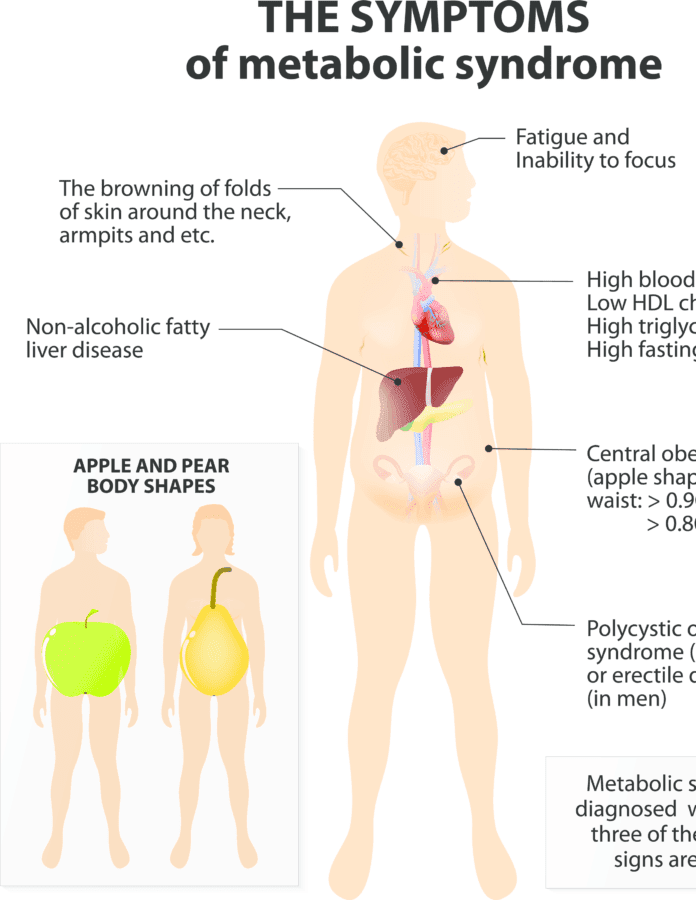
6 Signs of Metabolic Syndrome

Metabolic syndrome (‘MS’) is a medical term that applies to various health conditions. We will get into each condition shortly. For now, just think of MS as a wide-ranging medical condition often resulting from being overweight or obese.

Nobody likes facing the potentiality of a dangerous medical condition, and MS is no different. However, we can make a conscious choice to make some lifestyle choices – and decrease the risk of developing the condition.

Causes of M.S.

Inactive lifestyles and/or a genetic predisposition are usually responsible for metabolic syndrome.  Another word for inactivity is ‘sedentary,’ which most medical professionals use to describe a desk-bound, lazy way of living.

Of course, being sedentary is a risk factor for being overweight or obese; both conditions can create many other health issues.

As being overweight or obese correlates to M.S., here is a point-by-point description of what regularly happens within the body:

  • A healthy digestive system will actively break down the foods you consume into sugar, or glucose. The chemical responsible for this conversion is insulin.
  • Overweightness or obesity may stimulate problems within the digestive system.
  • Sometimes, the overweight or obese person’s digestive system goes awry.
  • s a result, their cells do not respond to insulin, causing blood sugar to spike. This condition is called insulin resistance.

“Who’s at risk?”

Statistically, certain demographics of the population are more at risk than others. Also, people with certain health conditions are more likely to develop metabolic syndrome.

  • Age: Risk of MS increases as you get older.
  • Race: Latin Americans “appear to be at the greatest risk of developing metabolic syndrome,” followed by Caucasians and African-Americans.
  • Diabetes: Risk of MS is higher if you have a family history of type 2 diabetes.
  • Obesity: Disproportionate amounts of fat around the abdomen increases the risk of MS.
  • Diseases: Cardiovascular disease, nonalcoholic fatty liver disease, and polycystic ovary syndrome increase the risk of MS.

6 Signs of Metabolic Syndrome

As we go through the six most common signs of metabolic syndrome, please bear in mind that some metabolic disorders have no symptoms; this is a critical point.

The following information is based on guidelines set forth by the National Heart, Lung, and Blood Institute (NHLBI) and the American Heart Association (AHA).

Per these criteria, any person with three or more signs meet the standards for M.S.

1. High blood pressure [Hypertension]

Healthy blood pressure is below 120 systolic or 80 diastolic (120/80). Blood pressure between 120/80 and 140/90 is considered “normal.” Any blood pressure reading above 140/90 is a sign of pre-hypertension.

Symptoms of high blood pressure: dizziness, headaches, chest pain, shortness of breath, nosebleeds.

2. High blood sugar

For a person without diabetes, a “fasting blood sugar” reading (a measure taken following a 24-hour fast) is under 100 mg per deciliter (dl).

Typically, blood sugar (or blood glucose) is considered too high if it exceeds 130 mg/dl before a meal or 180 mg/dl shortly afterward. Under most circumstances, high blood glucose symptoms do not surface until levels exceed 250 mg/dl.

Symptoms of high blood glucose: blurred vision, fatigue, headaches, increased thirst, frequent urination, trouble focusing (“brain fog”).

3. Low high-density lipoprotein (HDL) cholesterol

HDL is considered the “good” cholesterol type and is vital for heart health. Despite popular opinion, cholesterol is an essential fat and is a crucial substance for every cell.

For men, HDL level of less than 40 mg/dl is considered too low. For women, it is HDL levels below 50 mg/dl.

Smoking, poor diet, and lack of exercise are commonly cited reasons for low HDL.

4. Large waist circumference

A large waist size is usually an indication of excess belly fat. Per the Mayo Clinic, a “large waist circumference” is defined as:

– “a waistline that measures at least 35 inches (89 centimeters) for women and 40 inches (102 centimeters) for men.”

5. High triglyceride level

Triglycerides are one of three fatty acid groups and are in our blood. As we eat, the body transfers any calories not needed for energy into triglycerides and stores them in your fat cells. As the body needs energy, this lipid releases from the hormones within the pancreas.

  • Normal levels: less than 150 mg/dl
  • Borderline: 150-200 mg/dl
  • High: greater than 200 mg/dl
  • Dangerously high: > 500 mg/dl (may cause pancreatic inflammation).

6. Obesity

Obesity is defined as being excessively overweight and is the top risk factor for developing metabolic syndrome. Typically, a measure called the Body Mass Index (BMI) determines a person’s degree of obesity.

While an imperfect method, BMI may help determine whether they’re overweight or obese.

Please note that it is important to consider body type – a simple “eye test” will suffice (not medically recommended, obviously).

First, here’s how to calculate BMI in kilograms (kg) and centimeters (cm):

– Weight (kg) divided by height (cm)

Here’s how to calculate BMI in pounds (lb.) and inches (in):

– LB/IN x .45

Second, here is the BMI range (applies to men and women) for underweight, normal weight, overweight, and obese:

Underweight: BMI < 18.5

Normal: BMI 18.5-24.9

Overweight: BMI 25.0-29.9

Obese (and category):

Class 1: BMI 30 < 35

Class2: BMI 35 < 40

Class 3: BMI > 40 (“extreme” or “severe” obesity)

metabolic syndrome

Decrease your risk of M.S.

Here are a few ways to lower your risk of metabolic syndrome:

  • Lose weight: Even a 10% reduction helps significantly.
  • Exercise: Aim for 30-45 minutes of moderate physical activity per day.
  • Know your family history of risk-related diseases (see above), and make the appropriate changes.
  • Eat a well-balanced and nutritious diet: Prioritize fruits, vegetables, whole grains, and lean meats.
  • Do not fast without consulting a medical professional.

7 Signs Someone Has High Functioning Anxiety

You may have suspected that someone has high functioning anxiety. This article will give you the seven signs that your intuition was right about them. Hiding anxious symptoms is a skill that the high-functioning yet anxious person has mastered unless you know what to look for.

7 Signs of High Functioning Anxiety

anxiety levels

1. Highly detail-oriented

Someone who has high functioning anxiety is usually hyper-focused on the details, planning, organizing, strategizing and working to make things as perfect as possible. This is because a person with anxiety often feels out of control. The parts of life that they can control give them a small sense of stability and control over their environment.

2. Think ahead like a chess player

Planning several moves ahead is a key technique of the best chess players. Plus, it is a skill for those with high functioning anxiety. Planning is one way to try to manage symptoms of anxiety because the more that they can control, the fewer scary unknowns there are.

3. Risk avoidance behavior

Anything perceived as ‘thrilling’ by the average person is something that someone who has high functioning anxiety would avoid. Risky situations like scary movies or extreme rollercoaster rides are not thrilling to those with anxiety. If you ask an anxious person to meet you after dark, they are likely to suggest a daytime meeting. If you suggest somewhere crowded, they will suggest somewhere with fewer people.

4. Seem a little fidgety

People with high-functioning anxiety often hide their nervous habits in public. But they also spend hours biting nails, picking, or rhythmically twitching or moving to deal with the constant anxiety. Nervous habits are a key trait of someone with anxiety. Indeed you may not know that they have these at all.

5. Need to control their environment

In times of stress, a highly functioning anxious person seeks to control as many things that are within their control as possible since they cannot control the uncontrollable. A research study found “one possible explanation as to why the need to control the environment is such a critical component of human behavior. The feeling of control enables organisms to deal with stress.”

6. Outbursts are rare but surprisingly intense

When someone has high functioning anxiety, they may suppress how they really feel or minimize the intensity of their feelings. Therefore, they seem calm most of the time. However, an anxious person is likely to explode at you when they continue to be frustrated or additional stressors like noise are introduced into an already stressful situation.
quotes

7. Thoughts seem preoccupied

When you’re telling them about something that is on your mind, their mind seems to have wandered. It might appear as if they only half-listen to others. Most likely they are worried about what to say in response, what you think of them, or if you bumped into them unexpectedly, worrying about the next unpredictable encounter. For the highly-functioning anxious person, thoughts are focused on the future or the past, not the here and now.

Researchers from the University of Illinois at Chicago found that people with anxiety disorders had a fear of the unknown. Researchers say that “Uncertain threat is unpredictable in its timing, intensity, frequency or duration and elicits a generalized feeling of apprehension and hyper-vigilance.” Research explains that fear of the unknown makes people preoccupied about their fears.

5 Ways to Tell Someone They’re Attractive (Without Being Weird)

Here is the scenario: You like someone, and found them attractive for a long time now. You feel that they are the only ones in the Universe that matter and you do not even so much as steal a glance at another. The very thought of outright telling them how you think they’re attracted to you is borderline nauseating, especially if you do not want to ruin what you have with them right now.

Yet you think about them non-stop and you just cannot wait to see them again, but when you do you are so nervous about how to tell them that you get nauseated again, and the cycle repeats itself – over and over again.

You then look at couples around you and you ask yourself: “How did THEY do it?” The answer is that one of them made its move.

The question now is: how do you make your move without coming across as some kind of pervert or cheesy? We, at Power of Positivity, have five ways to take the plunge correctly. What are they? I thought you would never ask.

5 Ways to Tell Someone They’re Attractive (Without Being A Creep)

show admiration

1. Make sure compliments are specific to THEM.

A lot of people just go about it in a cavalier fashion, telling their crush that they are “hot”, “fit”, or “beautiful”. You can say that about any person you find attractive, so when you take the time to notice what it is them you find attractive, you are far more likely to receive a positive response from them. There are many things to compliment them on. Otherwise why are you attracted to them in the first place?

Let us look at a couple of examples: If their thing is fashion (hopefully you do not become cavalier in this!), comment on how well their get-up looks on them. If they are intellectually gifted, tell them so and why. They might have written an exceptional thesis on their university course, this could be how you open the door. Also, have some fun while you do it. You need not go full on pick-up artist on them, but there is no harm in some light teasing. Remember, you are not R2D2!

2. Tell them about the emotions she has stirred in you.

Go on, be a little emotive. People, in general, eat it up like a turkey on Christmas! This is a person we’re talking about, right? It shows that you are willing to be vulnerable and that takes guts. This is more of a compliment to anyone than an actual compliment. This is a great way to demonstrate that you are willing to put your neck on the line for someone else. A great way to do it is to take your crush somewhere quiet and slowly and calmly reveal that they have struck a chord with you and tell them why.

Example: “I am just going to come out and say it. I think you are amazing. I really liked the way you helped out that old man at the food court. He dropped his tray and you paid for another meal for him. Only someone special with a big heart does that. And it is not the first time I have noticed this about you, I also noticed…”

3. Be vague.

I know it sounds contradictory and counter-productive to the last two points, but stay with me. Being all vague and mysterious it is a great way to tell someone you find them attractive. You have many forms of vagueness that you can use: ambiguity, omission, classification, uncertainty, approximation, and probability.

– Ambiguity is something having a double meaning. In the movie “Dumb and Dumber”, Harry said to Mary, “Nice set of hooters you’ve got there.” Taken aback, she replied, “I beg your pardon?” He responds, “The owls, they’re beautiful.”

– Omission is leaving out certain parts of information, so you can tell someone part of what is going on and the rest is on “a need-to-know basis”. For example, “I am going to the festival tonight. Do you want to come?”

– Classification is the perception of the information being told. When someone is vague, there is no definite classification of how to interpret this information. In this way, they will not know how to process what you have told them.

– Uncertainty means that you are unsure of the information or its candor, which puts doubt in the mind of the recipient of the information.  An example can go along the lines of: “I do not know for certain, but…”

– Approximation is an estimate. It can be close to the mark or very obscure. It can also serve as an anchor to keep the estimation around that certain point.

– Probability goes into the statistics territory. The benefit of this little beauty is that it can be used as what might be, using potential as a powerful weapon by way of increasing the recipient’s assessment.

4. Be sincere when you reveal you find them attractive.

Nothing is quite so off-putting than hearing a fake compliment. It is like saying that Florida has great ski slopes or the best vodka in the world comes from the Maldives islands. If you are not honest with your words, you will not be taken seriously by them and you will get that “are you for real?” look. Fellas, please do not tell her that she has a nice rack when she is not very well endowed in that area. Ladies, please do not tell him that you noticed how strong he was while unsuccessfully trying to open that jar.

attractive traits

5. Maintain strong eye contact while you talk to them.

Eye contact is the ultimate non-verbal way of interaction. Dogs use their eyes to tell us humans how they are feeling, and so can we. People can lie with their mouths but never with their eyes. It does not matter if it is an apology or if you are conveying desire. When you demonstrate that you are of high self-esteem (and doing that via eye contact is certainly one of the best ways – if not the best way to do so), you will be regarded by the other person as someone with power, and people associate this mental power with being great in bed.

Eye contact portrays confidence and is even a way to have foreplay without taking your clothes off. Michelle Pfeiffer uses it to “choose” Al Pacino for a dance in “Scarface”. Also, take mental note of Paul Walker in the movie “The Fast and The Furious 2” when he uses some really potent eye contact with Eva Mendes while he is driving fast and brakes at the traffic light at just the right time!

You know what they say, there is no time like the present. Now you have the tools not only to change your life, but also to change someone else’s. Lights, camera, action!

Using Nail Polish Every Day? Here’s Why You May Want to Stop

“If I think about how much nail polish I’ve ingested in my lifetime (nail biter as a kid), it horrifies me. I’m much more aware now that I’m thinking about the next phase of my life that includes pregnancy, kids, and overall well-being.” – Katherine Nilan

Nail polish is a fun accessory that many women use in their day-to-day lives. There’s nothing better than getting a new color and putting on that fresh coat of polish. However, a lot of women are finding that a few astonishing things happen once they stop using nail polish.

After all, nail polish is a mix of chemicals that you’re putting on your nails – and that’s just the stuff that chips off in a few days! If you use nail polish every day, you might want to reconsider this particular habit and see what happens when you let your nails go polish free for a while.

Foot specialist Joy Rowland says, “I always recommend to my patients that it’s best to leave polish on for a few weeks on, and then remove the polish and go without for a few weeks. It’s not a good idea to leave nail polish continuously on your toes all summer. They need a break.

Here Are 6 Reasons Why You May Want To Stop Using Nail Polish Every Day

1. You’ll have stronger nails

Nail polish remover can cause a lot of damage to your fingernails, especially if you use it frequently to change the polish color. The solvents used to take off the polish dry out your fingernails. This means that your nails can become much more prone to peeling, breakage and splitting. When you stop using nail polish, you’ll stop using nail polish remover – and that’s a win for you, because your nails will start to grow back stronger than ever.

2. No more yellow nails

Using polish daily can cause a yellow undertone to your fingernail – which many of us use nail polish to cover up in the first place! It’s an endless cycle. Much like the way cutting back of coffee can make your teeth look whiter, the same thing happens when you start cutting back on nail polish. The chemicals in nail polish can stain your nails and make them look slightly yellow. Fortunately, once you stop using nail polish, your nails will get back that regular, peachy-clear look to them.

3. No more rough patches

White patches on your nails are often caused by the keratin granulation from when you keep your nail polish on for too long. If you’re prone to wearing your nail polish until it chips all the way off or grows out, you’ve probably noticed that your nails also have a few rough patches. When you use nail polish too much or use too much polish remover, it can strip your nails of much needed layers of keratin. When you let your nails go polish free for a while, you’ll notice that those rough patches completely disappear.

4. Nails get back their natural shine

A lot of women use nail polish in order to get a shine to their nails. Turns out, if you stop using nail polish and remover, your nails will get their own healthy glow. Applying too much nail polish and then removing it with a rough acetone can cause damage to your nails and strip them of their natural shine. Instead, try getting a manicure only once every three weeks to help keep your nails looking beautiful and shiny.

5. You will eventually use less chemicals

Nail polish and its remover are full of chemicals, and when you put nail polish on too much, you’re getting those chemicals right into your body – from getting them in through your nails, to breathing them in when you paint your nails or remove the polish.

According to Dr. Michael Roizen, “…the truth is that painting your nails is like coating them with a medley of toxins. In fact, nail polish is likely the most toxic cosmetic there is.

These chemicals are often tied to any number of upsetting diseases, from lung disease to certain types of cancer. Pregnant women often want to avoid nail polish both on their nails and breathing in the fumes due to ties to miscarriage and birth defects. Going polish-free is a great way to make sure you stay chemical free, too.

6. Nails can predict your health

There are all sorts of illnesses and disease that can affect the color of your nails, from discoloration to a change in nail shape to calcium deposits underneath your nails. American Academy of Dermatology states, “Nails often reflect our general state of health. Changes in the nail, such as discoloration or thickening, can signal health problems including liver and kidney diseases, heart and lung conditions, anemia, and diabetes.

By coloring the nails continually with polish, you may miss these important signs into your health. When you go polish free, you’ll be able to see changes in your nails immediately and talk to your doctor as soon as they happen.

Nail polish can be fun, but there are plenty of ways to make your nails look lovely without using nail polish and risking damage to your body and nails with too much usage. Nail polish can be excellent for an event, but like any other beauty product or chemical that’s meant to go on your body, using it sparingly is the key to using it at all. Bare nails can still stand out and look stunning with a little maintenance.

References:
https://www.rodalesorganiclife.com/wellbeing/6-great-things-happen-when-you-stop-using-nail-polish
https://www.boldsky.com/beauty/body-care/2016/seven-things-that-happen-when-you-stop-using-nail-polish-097637.html
https://health.clevelandclinic.org/2015/07/why-you-should-give-your-toenails-a-break-from-polish/
https://www.sharecare.com/health/healthy-nails/nail-polish-toxic-chemicals
http://articles.mercola.com/sites/articles/archive/2015/12/07/10-nail-symptoms.aspx

10 Signs You Are (Or Will Be) A Good Parent

What makes a great parent? Have you ever thought about this question?

Of course, there are the traditional answers:

  • “Giving them good moral values.”
  • “Making sure they don’t go without.”
  • “Ensuring they get a good education.”
  • “Teaching them to be polite.”

We could go on. All of these are wonderful pieces of advice (if a bit cliché).

“Children learn more from what you ARE than what you TEACH.” ~ Anonymous

Let’s get slightly more specific with the question:

Have you ever thought about how the “little things” you currently do influence the kind of parent you will be? 

Uh…that’s a different animal, isn’t it?

More than likely, most people haven’t actually considered this before. So let’s talk about it a bit!

By the way, every item on this list applies to both current and future parents!

Here are ten signs you are – or will be – a great parent!

parent

1. You treat customer service people well

Who hasn’t been on hold before? Who hasn’t been on an excruciatingly long hold before? Uh-huh.

How is your demeanor once you get someone on the line? Do you go off on the person and vent your anger, or remain calm, collected, and polite?

Staying calm with people in emotionally charged situations demonstrates high emotional intelligence. “The capacity to be aware of, control, and express one’s emotions” is a vital skill for parents.

2. You have a few long-term friendships

Alisa Bash, a licensed marriage and family therapist based in Malibu, California, says:

“People with long-term friendships understand emotional intimacy. Their word means something, and they show up when they commit to things and to people, something that will mean so much to a child.”

So, if you’ve got a few ole’ chums, you may just bring a bit more to the parenting table.

3. You understand balance.

As you read this sentence, a parent is slowly killing themselves from work stress. And a child is wondering where their Mom or Dad is.

As defined by one prominent childhood educator, work-family balance is necessary ” to have the energy and patience to take care of their children in a fun, joyful, and loving way.”

4. You prioritize a healthy lifestyle

Speaking of work and speaking of balance. The crazy scheduling and resultant stress of modern life require that we monitor and take care of our mind-body health and lifestyle.

Many potential parents see having a baby as a fix to their problems.

Just … no. While things may be challenging, as adults, it’s our responsibility to take care of any pressing issues before bringing a baby into the mix.

5. You’re not afraid of self-sacrifice

If you’re reading these words, you’re either (1) a positive person or (2) someone trying to become more positive. Positivity is an admirable trait in a society that is so self-absorbed.

You are more likely to sacrifice yourself for someone else. Have you bought a stranger’s lunch before? Helped out an older adult? Lent money even when things were tight?

You get the idea. And if you’re a self-sacrificing person, odds are you’ll be a great parent.

parent

6. You’re an empath

Empaths are the folks who make the world go round. We always need more of them and can never have enough.

Not only are empaths compassionate; they have an almost superhuman ability to see and feel what someone else sees and feels as if they were them.

That’s really all that needs to be said. You know who you are. Not only will you be a great parent, but a great friend, great lover, and a great influence on a planet that really needs you.

7. You’re pretty much a nature photographer

First things first – no, selfies and 500 food pics do not count! Sorry!

Photographers, regardless of their level of innate ability, are almost always penetrating, observant, and grateful individuals.

Perhaps their greatest gift is their talent for seeing the beauty in all of the “little things” around them. You know… the person who can melt your heart with a photo of some random bug on a leaf.

8. You’re on speed dial

Being a great (active) listener is a fantastic skill that can improve any aspect of your life.

Linda Lucas, a child psychologist in Leesburg, Florida, says, “More than almost anything, children need to be listened to.” As such, if you’re the one person someone calls for advice or anything else, you’ll probably make one heck of a parent.

9. You’ve “blueprinted” things

No matter if you’re the natural planning type. If you’re already seriously considering the who, what, when, where, and how you’ll raise your kid, you’ll probably be a pretty good parent.

This doesn’t mean daydreaming about names and pink outfits (though that’s pretty nice.) It means some deliberate planning. Of course, these plans may just go to the wayside once you have the little bundle of joy; but it shows your sincerity and seriousness about parenting.

parent

10. You’re creative

In all sincerity, this world needs a bit more creativity in it. Creative individuals are open-minded, intelligent, and well-meaning in everything they do.

No reason to think they’d raise their child any differently. We need more people like you!

Sources
https://en.oxforddictionaries.com/definition/emotional_intelligence

https://www.rd.com/advice/parenting/surprising-signs-youll-make-great-parent
Skip to content