Weekly tips, affirmations, and small actions to feel your best.

Therapist Explains How To Find Calm When You Have Anxiety

Until recently, a large number of people viewed anxiety as a mild condition that required little to no medical attention. However, as mental health awareness continues to gain prominence, anxiety is finally being taken as a serious medical condition which, if not properly handled, can lead to depression and other physical illnesses as well.

As revealed by the Anxiety and Depression Association of America (ADAA), anxiety affects over 40 million US adults thus making it a serious condition that needs immediate attention. As you might be aware, the main symptoms of anxiousness are such as rapid breathing, increased heart rate, fatigue and sweating. If you suffer from regular anxiousness, then it is important to seek professional anxiety treatment to prevent the condition from escalating further.

To help you in the fight against nervousness, below are fourteen proven ways to find calm when dealing with anxiousness.

1. Manage your breathing

As mentioned earlier, rapid breathing is among the main symptoms of anxiousness. When anxious, your body responds through shallow, rapid breaths that make you more nervous. Therefore, whenever you detect anxiousness creeping in, it is crucial to manage your breathing by taking in deep, long breaths. The best way to manage your breathing is by holding your breath for three to five seconds then breathing out gently through your mouth to release the air slowly. To prevent hyperventilation from occurring, it is advisable to take slow breaths repeatedly.

2. Have a support system

All doctors offering anxiety treatement will agree that talking to people helps to calm a patient when anxious. As such, it is important to talk to someone you trust whenever you feel that anxiety is creeping in. A simple conversation with a trusted friend or family member can go a long way in helping you to prevent an attack. Therefore, whenever you start to feel anxious, it is advisable to take immediate action by reaching out and talking to a friend about your situation.

3. Have a personalized mantra

When anxiousness starts to creep in, you should be well prepared to fight it off by remaining calm. Although it might be hard to believe, using a simple mantra can help reassure and calm you down. All you have to do is find the right words to tell yourself whenever you detect an impending attack. By reminding yourself of how far you’ve come, you will give yourself the motivation required to overcome the intense feelings of anxiousness.

4. Have a ready playlist on your phone

While most people advocate for slow, soothing songs, we recommend listening to songs that make you happy and relaxed. Whether you love hard rock or fancy old school, be sure to create a playlist that can genuinely soothing and relax your mind. The significance of music in anxiety treatement cannot be overstated, more so due to its role in calming the nervous system and allowing for smooth blood flow as well as easy breathing. If you experience feelings of anxiousness regularly, having a playlist containing your favorite songs is recommended.

5. Understand your triggers

As you might be aware, there are different triggers that can make an individual anxious. To successfully fight anxiousness, you will need to understand your triggers and find ways to control, if not avoid them. Unfortunately, avoiding triggers can be impossible, especially since some triggers are a basic part of our daily lives. The important thing to do though, is to understand your triggers and be prepared to control them. For instance, if you get anxious when required to make presentations, you can prepare yourself adequately by listening to your favorite songs, or taking deep, slow breaths before stepping on the podium.

6. Accept that you are anxious

The greatest error made by most victims of anxiousness is failing to acknowledge that they are actually anxious. To avoid making similar mistakes, it is important to accept and own your emotions, especially when feeling anxious. The first way to control and contain anxiousness is to accept that, due to the triggers, your body is responding by being anxious. Once you acknowledge that you are anxious, you significantly increase your ability to fight off nervousness and control the condition.

7. Essential oils and aromatherapy

If you have never tried aromatherapy or the use of essential oils to manage nervousness, then you need to start doing so immediately. Due to their brain activating qualities, essential oils help to release chemicals such as serotonin which are well known to ease stress, and depression symptoms. Recommended oils are such as Lavender, Chamomile, Frankincense, Bergamot and Cedarwood. However, you are free to use essential oils of your preference provided they are natural. Aromatherapy, too, can help brighten your moods, especially after a hard day at work.

8. Eat food and drink water

If you have a history of regular anxiousness, having a bottle of water around you is always recommended. A simple sip of water can go a long way in reinvigorating your body and taking concentration off the trigger. When you start breathing rapidly, ensure you drink water as you take deep slow breaths. Drinking water whenever anxious is a proven way to contain nerves and ease your breathing. Also, if you are in a place where you can eat, do not hesitate to grab a snack in a bid to take your mind off whatever might be triggering nervousness.

9. Switch up activities

Whenever you are participating in activities that make you anxious, it is advisable to take a bit of time off and focus on other activities. For instance, if studying for your final exam makes you nervous, then you should give yourself a short break to focus on other activities that can relax your mind. Luckily, distracting the brain is not a hard task as all you have to do is engage in other activities for your brain`s concentration to switch.

10. Develop relaxing techniques

To avoid becoming over-anxious, it is crucial to develop relaxing techniques that can help nullify anxiousness before it becomes serious. A simple technique can be walking or jogging on the same spot, raising your hands, or even tapping your fingers. By doing such activities, you divert your brain’s attention from the trigger which allows you to calm down. Since everyone is different, relaxing techniques should be specific to an individual. Put simply, your friend`s coping mechanisms might not work for you. Therefore, take enough time to understand yourself and the activities that can help to boost your moods. Having such an understanding can help in preventing attacks.

11. Meditate

You will be shocked at how powerful your mind is once you take time to meditate daily. Meditation is known to soothe the brain and calm the nervous system allowing you to have the much-desired peace of mind. However, for meditation to have positive outcomes, it is important to cultivate a habit of regular meditation. A simple 15-minute meditation routine can help you overcome feelings of anxiousness whenever they arise. Impressively, meditation can help you to overcome your triggers provided you take enough time to concentrate and focus on your issues.
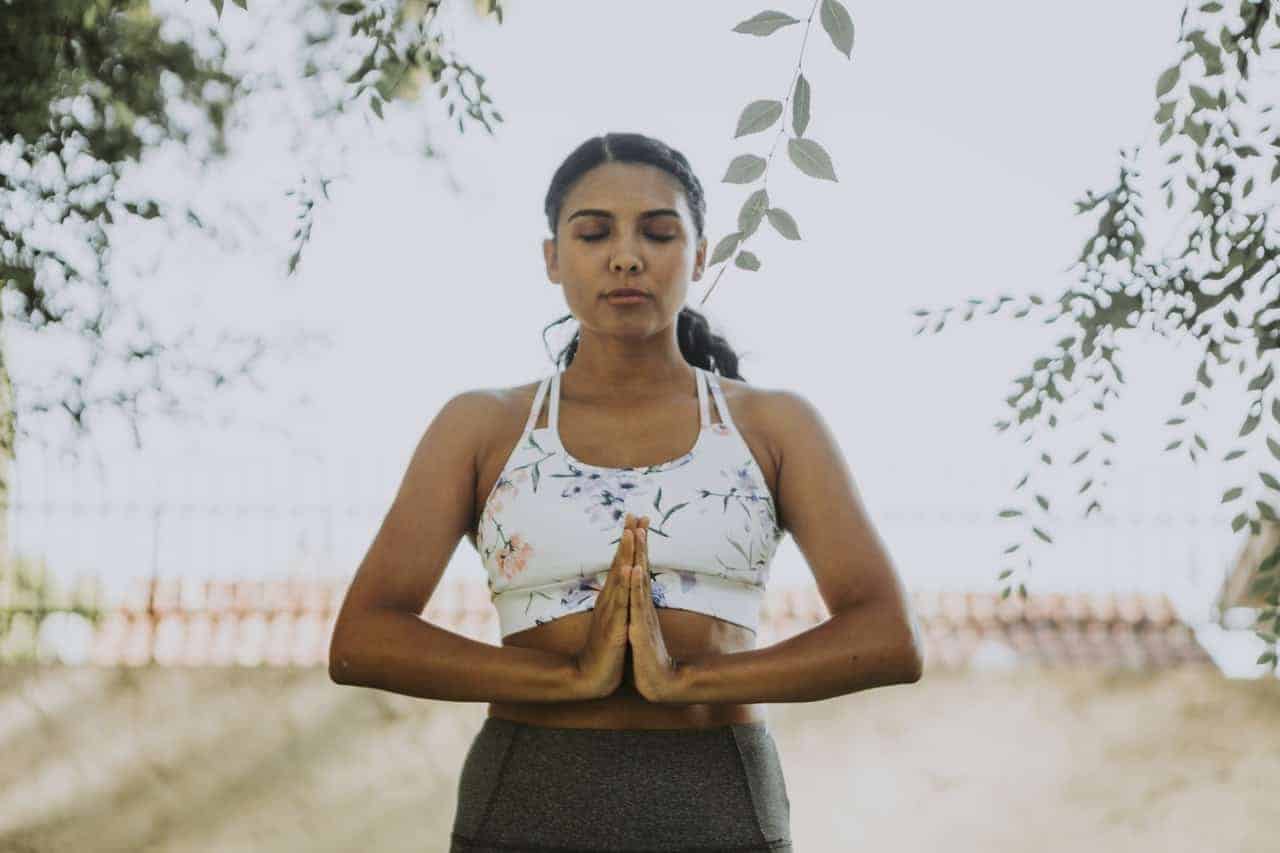
meditation for anxiety

12. Change the scenery

Whenever you feel anxious, a change in scenery can serve as the best anxiety treatment. As such, make a list of areas close to your neighborhood that you can visit preferably by walking or jogging. The change in environment will not only help to relax your mind but also to ease up your nerves. Regular walks or jogs to scenic locations around your neighborhood will help you to forget about the various stresses in your life. In fact, it is advisable to make a habit of jogging and walking regularly to keep fit, and improve your mental health.

13. Close your eyes and visualize something you love

Of course, it is impossible to jet off to your favorite destination every time you become anxious. However, by closing your eyes and picturing something you love, it is possible to control nervousness and remain calm enough to avoid an attack. When visualizing, be sure to be as creative as possible to divert your mind from the various triggers that make you anxious. You can picture yourself in the moon or somewhere in the middle of the ocean if such thoughts can help to ease your nerves.

14. Make a habit of counting objects

Luckily, there can never be a shortage of items to count. If you are at work, you can count the tiles on the floor or even count your pens and office accessories. The whole idea behind counting objects is to divert your brain’s attention from the trigger. Remember, although controlling anxiousness is not easy, you can successfully manage feelings of nervousness by shifting your brain`s focus from a trigger. If embarrassed to count out loud, you can do it silently provided you concentrate on counting the objects of interest.

Final thoughts on how to calm down when you have anxiety

When it comes to anxiety treatment, the best remedy is to calm yourself down whenever you feel anxious. As can be seen from the above tips, managing anxiousness is not as difficult as most people perceive; all you have to do is concentrate on diverting your brain`s focus from the trigger.

If you have a history of being anxious, then it is advisable to take extra caution when the symptoms surface. Remember, controlling the symptoms early enough will go a long way in preventing an attack or the occurrence of other mental illnesses such as depression.


5 Ways to Flirt With Your Soul to Attract Your Soulmate

Many people are out in the world hoping to find their soulmate. They want to find the person who will fit into their lives amazingly. They want to find that ever-elusive “One True Love” that evades them.

When you’re out in a bar and flirting with the person next to you, how do you know if you’re even doing it right? Is what you’re doing even attracting the right people? The answer depends: are you flirting with your soul?

It sounds complicated, and it can be, but speaking with your very being and soul is what draws the right people in and keeps the wrong people out.

5 Ways To Flirt With Your Soul To Attract Your Soulmate

Here are some ways to flirt with your soul to attract your soulmate.

1.    Practice Honesty

Honesty is the best policy when it comes to flirting with your soul. Anything founded on lies or half-truths will come back to bite you at the end of the day. Besides, how can you use your soul if you’re masking what it contains? Here are some ways you need to be honest to flirt with your soul.

·         Be Honest With Yourself

Flirting with your soul involves knowing yourself well, and the only way to do so is to be honest with yourself. A lot of times, people fear who they are without realizing it, so they ignore their innermost voices in favor of avoiding personal introspection.

That’s why it’s important to be honest with yourself. You have to be confident in yourself, and in order to do so, you have to know yourself and be real about it! So be proud of who you are, practice positive thinking, and know that at the end of the day, your authentic stuff is more than enough!

·         With The People You Flirt With

A lot of people embellish their lives and personalities when flirting with new people. This sets the stage for disappointment, a lack of trust, and other issues as you go on.

This doesn’t mean you shouldn’t put your best foot forward – you should always do that! – it just means that you shouldn’t pretend to be someone you’re not to attract others. Your real soulmate will like you just as you are, and may even deem your dishonest self a less-than-suitable match.

·         With Your Relationship Desires

There is definitely a line to be drawn regarding reasonable expectations, but that doesn’t mean you cannot go after certain desires, even if they are not the most conventional.

Unfortunately, many people believe that wanting certain things out of a relationship is “greedy” – but it isn’t greedy or shallow to want certain things out of your lifelong partner. For example, you may want a partner who:

  • Aims to travel with you often
  • Loves social gatherings or is extroverted
  • Will cook for the family
  • Has certain political leanings or opinions that align with yours
  • Is a vegetarian, vegan, or has a dietary plan similar to yours

You have to be honest with yourself and what you want. Before you attempt to find your soulmate, take time to determine what you really, truly want in a relationship.

Essentially, don’t settle! Don’t model your desires after successful relationships around you, as every relationship is unique and different. This will prevent discontentment down the line.

Be true to yourself, your desires, and who you are; in this way, seek to forge honest, real connections with others. That’s how you flirt with your soul, and it’s how your soulmate will be drawn to you!

2.    Love Yourself and Heal Yourself

It’s important to work on yourself and focus on self-love, instead of searching for someone to help you heal. Not only is seeking a soulmate to make you whole a toxic way to begin a relationship, it likely won’t actually attract a real soulmate.

Of course, the concept of needing to love yourself before someone else can love you is a bit of an exaggeration, but at its root, it’s a good concept to follow. If you’re overly critical of yourself and who you are, you send out bad vibes and negative energy that will repel your soulmate – and everyone else, for that matter.

Self-love is easier than it sounds, though. So here are some ways that you can work in this area!

·         Forgive Yourself

It’s not unusual for someone to be extremely hard on themselves. You might feel like your past wrongdoings mean you have to punish yourself forever. You might be stuck in the past due to moments where you messed up.

But you need to learn to be kind to yourself and be forgiving of your past. You can’t grow without making errors along the way; the best thing you can do is learn from those errors, apply the lessons to your life, and move on.

Remember that there is no such thing as failure, as those failures are only stepping stones to success. Learn to take each failure in a positive way, and you’ll be able to do the same for others.

·         Work On Healing

Old wounds can make it difficult to move forward. It can cause you to form protective habits to prevent yourself from being hurt again, without truly understanding the wounds you’ve sustained.

Take a moment to examine your so-called emotional baggage. Take a look at areas of your life and behavior that are affected by this baggage. Recognize where your issues come from; then let yourself understand them.

Realize that these problems do not dictate your future and that you can incorporate positive habits to prevent them. Allow yourself to heal and give yourself permission to be happy. Believe that the rest will follow.

·         Prioritize Self-Love

Treat yourself well every single day. Listen to your body and mind and what it wants. Be gentle with your mistakes. Do what you can do be happy.

It can feel like an uphill battle at first, but soon, little positive affirmations, moments of kindness, and your self-love habits will become natural to you. You’ll really, truly love yourself more and more every day, opening the door for others to love you.

·         Do Self-Care

Everyone needs a break, even go-getters like you! Make sure that your own needs are being met regularly. Treat yourself once in a while and let yourself feel pampered. It’ll do wonders for your mental health!

At the end of the day, loving yourself is attractive. It creates confidence, and your positive thinking will shine through with a bright energy that draws others in. That’s how you can flirt with your soul!

3.    Pay Attention To Silence

There is a lot that can be said in silence, often more so than you can hear in audible words. Your connection to a soulmate will occur without the noise – you’ll feel it in the energy, in the air, and intuitively.

Here are some ways to learn to appreciate silence when you’re flirting with your soul to draw your soulmate in.

·         Body Language

Nonverbal language makes up a huge portion of communication. If you ignore this, you might miss out on some interesting cues from a soulmate, such as:

  • Expressions
  • Gestures
  • Posture

On top of that, understanding nonverbal language will allow you to be more in control of yours so you can use it effectively when flirting!

·         Eyes

Someone’s eyes say a lot about them. Some even say that they’re the window to the soul. Practice good, healthy eye contact when flirting and appreciate what you notice in the other person. Maybe there’s a spark there only you can see!

·         Exist

Sometimes, all you have to do is take a step back, breathe in, and allow yourself to exist in a space. Even in a party or large social gathering, learn to appreciate the sounds of the world around you without actively participating all the time.

With a soulmate, you’ll enjoy many comfortable minutes of silence. Even when in a crowded room, you’ll be drawn to each other and will be able to exist in your own private world together. It’s a magical feeling to experience with one another, and in order to get there, you have to learn to be happy with silence.

4.    Be True To Who You Are

Your soulmate will be attracted to who you really, truly are. They’re not going to be drawn in by your masks and embellishments. They’re not going to notice you when you tone yourself down to hide your perceived “weird” traits or preferences.

As we mentioned earlier, it’s very easy to fall into the trap of embellishing your life and putting on a mask when flirting. You want others to like you, so you shift into what you think they want – and, often, you get it wrong anyway.

soulmate

If your goal is to attract your soulmate; other people who don’t like who you are don’t matter. They won’t be a big part of your life, and they definitely aren’t expecting you to change.

So don’t be afraid to be yourself, to be unique, and to be “weird.” Wear the outfits you love, even if your friends say they dampen your chances. Talk about your passions, even the ones others might scoff to hear about. Express yourself boldly and confidently, and even people who don’t like you will have to respect your self-assuredness.

It’s exhausting to wear any kind of mask. To be yourself is the ultimate way to flirt with your soul to attract your soulmate. Don’t put on fake personalities for others – wear your own proudly, and let those who are drawn to you be drawn further in.

5.    Have Faith In The Journey

A lot of times, people are so focused on the end goal – finding a soulmate – that they forget how amazing the journey can be. A soulmate relationship is just like any other – it’s a relationship, and you need to be in a good place in your life to sustain it.

Trust that the universe is conspiring to make that happen perfectly. Don’t rush it, don’t force it, and don’t become discouraged. Put your faith in the whole process and continue to learn and grow every day. One day, as you flirt from your soul, your soulmate will find you, and you will find them.

things that happen when you meet your soulmateFinal Thoughts On Some Ways To Flirt With Your Soul To Attract Your Soulmate

Flirting with your soul is an art, and it takes practice. But by being honest, being yourself, and loving who you are, you’ll find that it’s not too hard to grasp. So relax and enjoy the moment. Who knows? Your soulmate might be just around the corner.

8 Morning Stretches That Make You Stronger And More Flexible

Lots of people stretch in the morning. It’s a great, positive way to start your day. But not all stretches are created equal. Some work better than others, and they all do different things for the body.

If you want to perform stretches that truly help your muscle strength while keeping you nice and limber, look no further.

8 Morning Stretches That Make You Stronger And More Flexible

1.    Standing Side Stretch

This great stretch is a wonderful way to get your shoulders engaged. At the same time, it works wonders for the upper back, and it is even good for your core muscles. As you move from side to side, you’ll also be training your body’s flexibility. Here’s how to do it.

  1. Start by standing with your feet slightly apart at about a hip’s width.
  2. Move your hands together so that your palms are pressed against one another with the index fingers pointing.
  3. Move your hands, still clasped against each other, over your head and hold the position.
  4. Now, lean your body slowly to one side. Focus on deeply inhaling and exhaling as you do so. Count about 5 calm breaths, or for between 10 and 15 seconds, feeling a deep and lovely stretch throughout your sides.
  5. Return to your first starting position.
  6. Repeat step IV, this time leaning to the other side.
  7. Do this for at least four reps.

2.    Standing Forward Bend

yoga

This simple version of the yoga move, known as Uttanasana, has countless benefits. It’s good for the kidneys, liver, and digestive system, it boosts positive thinking while reducing stress, and it can even help calm headaches.

More importantly, this pose is perfect for strengthening your legs. It works your thighs, hips, knees, calves, and hamstrings. Plus, bending over that way isn’t easy, so with repeated use, it makes you much more flexible. Here’s how to do it!

  1. Start by standing with your feet slightly apart at about a hip’s width. Your knees should be slightly bent.
  2. Lean forward, using your hips as a “hinge” of sorts, until your upper body drapes over your legs.
  3. At this point, you should be able to clasp your elbows. If you have lower back pain, instead of grabbing your elbows, rest your hands on your legs or on the floor so you are more supported.
  4. Focus on deeply inhaling and exhaling. Count about 2 to 4 calm breaths. As you breathe and hold the position, shake your head “no” to the side and “yes” up and down – but do so gently.
  5. When you’re ready to come out of the stretch, use your ab muscles to gently extend your spine and pull yourself back in very gradually.
  6. Do this two more times, or more if you like.

3.    Standing Hamstring Stretch

sciatica stretches

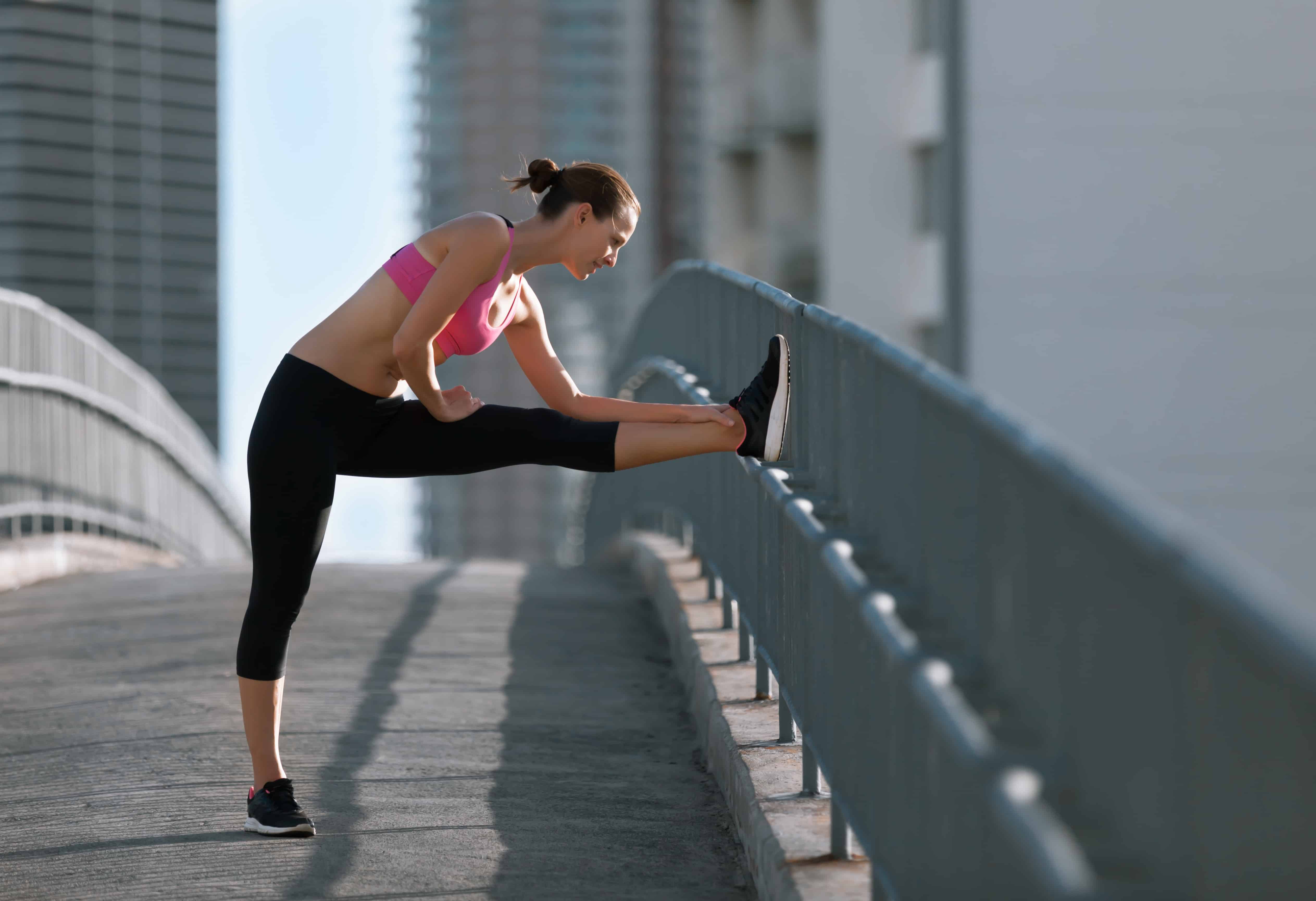
As the name suggests, this stretch focuses on your hamstrings. But it’s not just a one-muscle strengthening move. It activates the legs, especially around the back, and it can have great, positive effects on lower back pain. So if you’re looking to ease some back issues while getting stronger, here are the steps for this move.

  1. To begin, find a low object that can support your leg. It should end up with your heel naturally lower than your hip at the most relaxed and unstretched position. A chair or bed usually works fine.
  2. Lift your right leg onto the object of choice and make sure you are supported. Your heel should rest on the surface.
  3. Flex your foot and slowly deepen the stretch. To do this, use your hips as a “hinge” and increase the stretch. Make sure your waist, back, and spine are straight, not rounded.
  4. Focus on deeply inhaling and exhaling. Count about 4 to 6 calm breaths, then release the stretch.
  5. Repeat this on your other leg.
  6. For more of a challenge, slowly choose taller and taller objects to rest your leg on so you lift your leg higher each time.

4.    Spinal Twist

sciatica

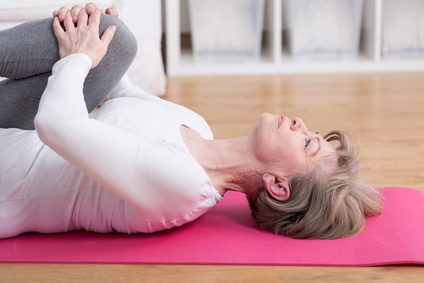
The spinal twist is fantastic for shaking off aches and stiffness from the night’s sleep. It works your neck, spine, and shoulders. Make sure you don’t over-twist, though!

There are two ways to do a spinal twist. First, let’s talk about the lying down way.

  1. Start by lying on your back.
  2. Lift up your right knee and move it so that it is now on the opposing side.
  3. Stretch out your left arm and turn your head to the left, slowly and gently. Make sure your arm stays in line with the shoulders and that your shoulders are down and touching the surface beneath.
  4. Focus on deeply inhaling and exhaling. Enjoy the stretch spreading through your back.
  5. When ready, switch to the other side.

Now, here’s how to do it when sitting.

  1. Start by sitting on either a chair or the edge of your bed. Have your legs together.
  2. Slowly lengthen out your spine and twist at the waist, rotating yourself to the right.
  3. As you do this, move your right hand so it is behind your back, and place your left hand on your right outer thigh.
  4. Turn your neck along with your body and look over your shoulder.
  5. Focus on deeply inhaling and exhaling. Count about 2 to 3 calm breaths, then release the stretch.
  6. Repeat, this time twisting to the left.

5.    Standing Quad Stretch

yoga for lower back pain

Once again, this stretch’s name tells you what it does: it focuses on your quadriceps. It also helps to practice balance, and it can improve your leg flexibility if you perform it often enough. Here’s how to do it.

  1. Start by standing with your feet slightly apart at about a hip’s width. Stand straight. You can use a wall, bed, or chair for additional support if you need help with balance.
  2. Loosen up your left knee and reach backwards with your right hand, grabbing your right ankle or any area of your right foot that feels comfortable.
  3. Bend your right knee so that it is pointing at the ground beneath.
  4. Your thighs should be parallel now, your pelvis in a neutral position, your chin up so the top of your head reaches for the sky, and your spine nice and tall.
  5. Focus on deeply inhaling and exhaling. Count about 4 to 6 calm breaths, and feel your right thigh and hips enjoying the stretch.
  6. Release, then repeat with the other leg.

6.    Neck And Shoulder Stretch

neck shoulder stretch

You may wonder, how can neck and shoulder moves that ease tension also have strengthening qualities? You’d be surprised that they are morning stretches that make you feel stronger and more flexible!

Neck and shoulder pain after a good sleep often comes with age. But that doesn’t mean you can’t relieve the tension! Here’s how to do a combined neck and shoulder stretching sequence.

  1. Sit cross-legged.
  2. Start by tilting your head so your left ear is directly over your left shoulder.
  3. Hold this pose for around 15 to 20 seconds.
  4. Repeat by tilting your head to the right this time.
  5. Now, pause to relax and breathe. Then, bring your shoulders to the back in a rolling motion.
  6. Bring your shoulders to the front in a rolling motion.
  7. Lift your shoulders upwards, keeping the muscles tense, so they reach your ears.
  8. Drop your shoulders entirely.
  9. Now, repeat all these steps again another three times.

Alternatively, you can do these exercises separately. Here’s how to do a neck stretch on its own.

  1. Choose a neutral starting position. Make sure your shoulders are relaxed.
  2. Start by tilting your head so your left ear is over your left shoulder.
  3. Hold this pose for around 15 to 20 seconds.
  4. Repeat by tilting your head to the right this time.
  5. Repeat as many times as you like.

Here’s how to do a shoulder stretch on its own.

  1. Choose a neutral starting position. Have your shoulder blades down and back.
  2. Start by reaching your right arm to cross over your body as far as you can.
  3. Use your left arm to lengthen and deepen this stretch.
  4. Hold this pose for around 15 to 20 seconds.
  5. Repeat on the other arm.
  6. Repeat as many times as you like.

7.    Straight Calf Stretch

Once again, this stretch’s name speaks for itself: it gets rid of calf tension wonderfully well, and as time goes on, you’ll notice you can do deeper stretches – a sure sign of increased flexibility. Here’s how the stretch goes.

  1. Start by facing a wall.
  2. Hold your arms out in front of you so that they rest against the wall, but keep them straight.
  3. Move your right leg a step forward, keeping the foot planted on the ground.
  4. Extend your left leg backwards, also keeping it firmly planted on the ground. Your heel should be pushing against the floor beneath.
  5. Lean forward into the wall, but do not bend your back leg. Lean until you feel that your calf muscles are engaging.
  6. Focus on deeply inhaling and exhaling. Count about 10-15 seconds, or 30 if you’re up for it, and feel your right left calf enjoying the stretch.
  7. Release the stretch and repeat on the other side.
  8. Do this for two more sets, and try to perform the stretch again later so you do it twice a day.

8.    Elevated Hip Stretch

sciatic stretch

This is perhaps the most difficult stretch on our list, but it’s a great way to really work on flexibility while relieving pain. It focuses on the outer thighs and hips, but it’s also good for helping lower back pain. Here’s how to do it.

  1. Stand in front of a bed. You can also use a bench or chair.
  2. Lift your left leg, bending the knee, and place it down on the bed. When you do this, your knee should end up in front of your shoulder and your hips should be square. Do not tuck in your tailbone.
  3. Keeping your spine nice and straight, use your hips as a “hinge” so you bend forward. If you have difficulty with this, place your hands onto the surface for added balance.
  4. Focus on deeply inhaling and exhaling. Count about 4 to 6 calm breaths, then release the stretch.
  5. Repeat with the other leg.

Final Thoughts On Morning Stretches That Make You Stronger And More Flexible

Stretches are a mild form of exercise – and exercise is endlessly good for you! It gives you energy for the day, boosts your positive thinking, and adds great benefits such as strength and flexibility.

Pick and choose which of these morning stretches work best for you, or do them all for the best results! Just remember not to strain yourself – take it slowly and build your way up!

Doctors Explain The Best Diet For A Bad Thyroid

If you’re struggling with thyroid disease, you’re not alone; according to the American Thyroid Association, more than 20 million Americans have already been diagnosed. Also, twelve percent of the U.S. population will develop the disease within their lifetime.

The thyroid, a butterfly-shaped gland located at the base of the neck, is responsible for releasing hormones that regulate metabolism and control how the body utilizes energy. Hypothyroidism, characterized by the body’s inability to produce enough thyroid hormones, is the most commonly diagnosed disease.

Individuals who have been diagnosed hypothyroidism often exhibit the following symptoms:

  • Fatigue
  • Hair loss
  • Weight gain
  • Depression
  • Feeling cold
  • Bloating
  • Fatigue

In this article, we will take a closer look at hypothyroidism. Then, we will look at how a healthy diet can help reduce the severity of symptoms commonly associated with the disease.

WHAT CAUSES THYROID-RELATED PROBLEMS?

In most cases, hypothyroidism is a byproduct of Hashimoto’s thyroiditis, an autoimmune disease that causes the immune system to attack the thyroid gland. Hypothyroidism can also be brought on by an iodine deficiency or a reduction in thyroid-stimulating hormone (TSH). This often results if a pituitary gland does not function properly.

One of the most distressing symptoms of hypothyroidism is the inability to maintain a healthy weight; the disease adversely affects metabolism. This, in turn, affects how quickly you can burn calories. As such, it is not uncommon for those struggling with hypothyroidism to be overweight.

NUTRITION AND HYPOTHYROIDISM

If you have hypothyroidism, figuring out what to eat to reduce the severity of symptoms can prove challenging. That’s especially true if you’re trying to lose weight, struggling with fatigue, or feeling bloated.

The most important thing to be mindful of when it comes to your diet is that certain foods can improve your symptoms while others can worsen them. Selenium-rich foods like Brazil nuts, fish, and certain cuts of beef, for example, can improve hypothyroidism symptoms. Conversely, foods that contain goitrogens like broccoli and cabbage, can further disrupt thyroid production and worsen symptoms, especially among those with iodine deficiency.

LOSING WEIGHT WHILE STRUGGLING WITH THYROID PROBLEMS

For many people diagnosed with hypothyroidism, losing weight can seem like an uphill battle; however, it is not impossible. Certain diet strategies can help you quickly shed unwanted pounds. Of course, you will want to consult your physician or nutritionist before starting any new diet or exercise regimen. That said, let’s take a look at two diets proven to help people with hypothyroidism lose weight:

CALORIE-RESTRICTED DIET

If one of your goals is to lose weight while easing hypothyroidism symptoms, a calorie-restricted diet may be worth considering. This diet considers the number of calories you consume each day and your resting metabolic rate to determine how many calories you can cut back on to lose weight.

However, you’ll want to avoid cutting calories too drastically; doing so could result in the body turning to muscles for energy, which can further slow down your metabolism. In the end, you may find that you’re gaining more weight than you’re losing.

ZONE DIET

Developed by Barry Sears, Ph.D., the Zone Diet is an excellent option for individuals diagnosed with hypothyroidism and interested in losing weight. To better illustrate how this diet works, the pancreas produces an excessive amount of insulin when someone consumes a large number of calories. This impedes the body’s ability to use stored fat for energy and makes losing weight difficult.

The Zone Diet prescribes meals that contain forty percent carbohydrates, thirty percent protein, and thirty percent fat. This combination reduces insulin production and stimulates fat burning. To further improve the effectiveness of this diet, dieters should aim to consume lean proteins, unsaturated fats, and carbohydrates with a low glycemic index.

MANAGING THYROID SYMPTOMS

In addition to losing weight, a healthy diet can go a long way toward easing symptoms associated with hypothyroidism. Because bloating is one of the more common symptoms of hypothyroidism, it would be best to avoid pizza, hot dogs, and processed foods. They can cause fluid retention and also contribute to weight gain.

Studies show that the fluid retention caused by bloating can increase one’s weight by as much as 10 pounds. In most cases, the excess weight will be noticeable in the face, hands, abdomen, and feet.

One of the best ways to combat bloating is by adopting a low-FODMAP (fermentable oligosaccharides, disaccharides, monosaccharides, and polyols) diet, which is designed to limit your overall intake of wheat, onions, garlic, beans, and certain fruits and vegetables.

CONSTIPATION

In addition to bloating, a poorly functioning thyroid causes constipation, characterized by hardened feces and difficulty emptying the bowels. One way to circumvent this problem, assuming you’re not also struggling with bloating, is by consuming foods rich in fiber, like beans and whole grains, for example.

Also, you should drink a minimum of eight 8-ounce glasses of water daily, promoting healthy bowel function. If you’re still struggling with constipation after making these dietary changes, you may consider over-the-counter medications like Miralax and Milk of Magnesia. These products can soften stool, which, in turn, makes emptying your bowels that much easier.

FATIGUE

Like bloating and constipation, a poorly functioning thyroid also causes fatigue. Assuming you have ruled out other health conditions that may be contributing to the problem, the following dietary changes may prove beneficial:

  • Drinking caffeinated beverages
  • Taking dietary supplements like coenzyme Q10
  • Limiting your consumption of sugary and gluten-based foods

VITAMINS AND MINERALS

Because a poorly functioning thyroid causes nutritional deficiencies, make it a point to get the vitamins and minerals your body needs. For example, vitamin D can improve bone health and your immune system, which is often compromised due to hypothyroidism.

Obviously, the best source of Vitamin D is the sun’s ultraviolet rays. However, you can also find vitamin D in various foods like fatty fish, eggs, and fortified cereals. On a side note, individuals with hypothyroidism caused by Hashimoto’s thyroiditis are especially prone to low vitamin D levels.

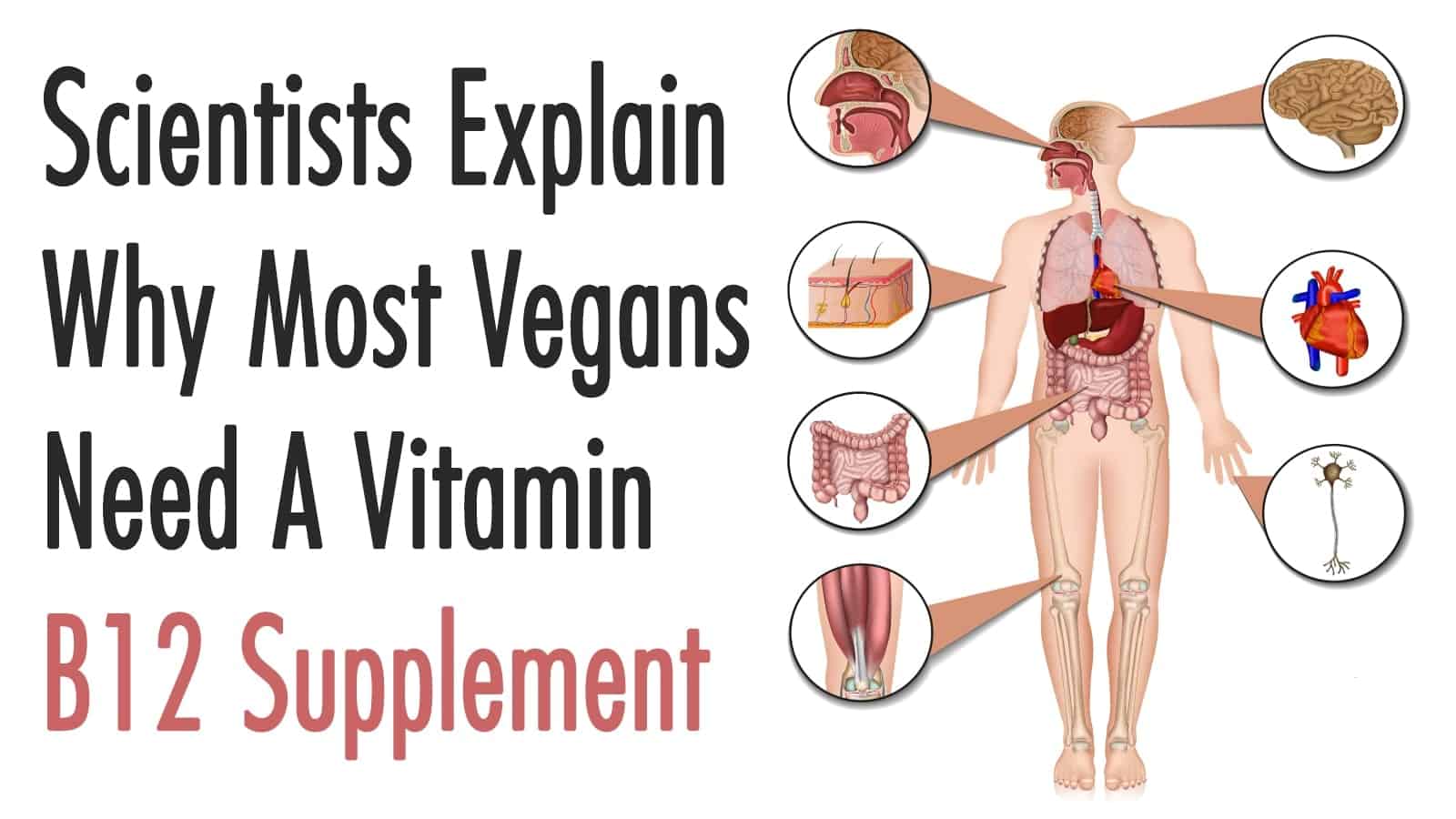
VITAMIN B12

In addition to low vitamin D levels, individuals with hypothyroidism may also be deficient in vitamin B12. This vitamin plays a key role in keeping the body’s nerves and blood cells healthy. Being deficient in vitamin B12 can cause fatigue, making routine tasks even more difficult.

To resolve a vitamin B12 deficiency, you can get B12 shots or take supplements. Also, you can increase your vitamin B12 levels by consuming many of the same foods that contain vitamin D. These include dairy products, fish, beef, and certain cereals.

thyroid - vitamin b12

THYROID-BASED HORMONE REPLACEMENT MEDICATION

Although dietary changes and supplements can help combat the severe symptoms of hypothyroidism, prescription medication may still be needed to get the disease under control. Some of the more commonly prescribed thyroid-based hormone replacement medications include:

  • Levothyroxine sodium
  • Liothyronine sodium
  • Liotrix

Most people generally use these hormone-replacement drugs well-tolerated; however, there are some side effects worth noting. The toxicity level associated with thyroid-based hormone replacement medications can cause chest pain, elevated heart rate, profuse sweating, headaches, insomnia, diarrhea, and vomiting. Also, women who take these medications may notice a disruption in their menstrual cycles.

Despite the many side effects of these medications, many people have credited them with relieving many of the symptoms associated with hypothyroidism. They believe wholeheartedly that the positives outweigh the negatives.

SUPPLEMENTS AND THYROID-BASED HORMONE REPLACEMENT MEDICATIONS

If you have been prescribed thyroid-based hormone replacement drugs, you should take them at least 3 hours before taking dietary supplements. This will help improve drug absorption. The same applies to any over-the-counter medications that you may take. Ideally, you should advise your physician of any supplements or over-the-counter medications you take before starting a thyroid-based hormone replacement regimen.

An improperly functioning thyroid causes several health problems. Thus, it is best to schedule an appointment with your physician as soon as possible if you are experiencing any of the symptoms detailed in this article. The same is true if you are facing other symptoms that may suggest a problem with your thyroid gland.

7 Signs That Reveal Bad Energy In Your Relationship

We interact with different people every day – our parents, children, spouse, coworkers, significant other, boss, etc.  How those interactions play out severely affect how you see yourself, your career, your parenting style, your relationship, and just life in general.

We all can agree that a good relationship must be based on trust, healthy communication, respect, honesty, and setting boundaries for ourselves and others.  Building and maintaining those aspects of relationships requires effort, time, and commitment.  You must value that relationship. What happens when that foundation begins to break or was never built in the first place?

An unhealthy or toxic relationship creates bad energy between yourself and the other person.  Usually, toxic relationships have clear signs from almost the beginning. What are 7 signs that reveal bad energy in your relationship?

What is a toxic relationship?

Lillian Glass, a psychology expert who claims to have initiated the term “toxic relationships” in her book Toxic People, defines toxic relationships as “any relationship [between people who] don’t support each other, where there’s conflict and one seeks to undermine the other, where there’s competition, where there’s disrespect and a lack of cohesiveness.”  It is important to note here that she differentiates toxic and abusive relationships.  She clarifies that an abusive relationship is one where one person is exerting control over the other through physical abuse, psychological tactics, verbal abuse or some combination of each.

Bad energy (or toxic energy) in a relationship equates to negativity. People learn negative thinking and behavior through various circumstances: their childhood, a mental illness, traumatic experiences, or a fear-based mentality. According to Raj Raghunathan, Ph.D., author of Dealing With Negative People, a fear of disrespect, the fear of being unlovable, and the fear that the world is a dangerous place can create negative energy in relationships. Fear and love cannot coexist in a healthy relationship.

Now that you know a little about toxic relationships, we’ll go over some signs of bad energy in your romantic life.

7 signs of bad energy in your relationship

1. You argue all the time

As stated above, healthy communication is one of the building blocks for a foundation of a good relationship. Being unable to agree or compromise and always reverting to an argument means that you don’t know how to communicate effectively with each other.  People disagree all of the time, but eventually, most people come to a compromise. Constant arguing points to a problem in how the information is being relayed or understood. This is especially true if the arguing includes disrespect, insults, and failure to reach a mutual agreement.

2. Constant complaints about each other

Needing to occasionally vent to a friend about relationship problems is normal. After all, some situations arise in relationships where an outside party could provide helpful advice. It usually aids us in burning off stress and helping to understand the other side.  The negative loop becomes obvious if you or your partner is chronically complaining, never seeing the other perspective, or stressing about trivial matters.

3. No longer sharing about each other’s day

Sharing with people about your life is a natural way people connect with others.  Whether it is updates on performance at work or school, funny or frustrating things that happened, or a passing joke, these are all ways to connect with one another.  If you and your partner find you know nothing about each other’s day, then you are no longer investing in each other.

4. You don’t feel happy and/or comfortable around your partner

Why do we have relationships?  Basically, we have an inherent need to feel emotionally close to someone. We choose the relationships in our lives because the person makes us feel happy, important, and comfortable in our own skin.  Feelings of nervousness, defensiveness, or tension around each other demonstrate a lack of happiness and comfort in the relationship.

If you choose someone out of loneliness or desperation, for example, you might start having negative feelings around them due to a forced connection.

5. You manipulate each other’s emotions

Passive-aggressive behavior consists of behavior that is punitive in nature while not stating the cause. This may include purposely going out of the way to avoid someone, giving them the silent treatment, withholding affection, or making them jealous or guilty.  This behavior is extremely damaging, as it causes the other person to feel that they have to bend over backwards to tend to the other person. They are being punished, yet they don’t know what they did and therefore don’t know how to correct the behavior.

6. Lack of affection or intimacy

Physical intimacy is crucial to the emotional wellbeing of all people.  Giving hugs and kisses, putting your arms around their shoulders or waist, offering small touches on the arms, legs or back, and initiating sex are all forms of affection and intimacy with a person.  It demonstrates a closeness and a connection to that individual.  No longer desiring to relay that affection demonstrates a rift in most relationships.

7. No longer offering compliments or positive statements

Part of wanting to make someone happy or encourage positive behavior includes complimenting them.  It is a sign of appreciation for what they did or the care they took in something.  This includes complimenting each other for a raise at work, a job promotion, a new haircut, a well-made dinner, and other daily accomplishments.  If you no longer notice these things or are purposely not sharing these positive comments, then negativity is brewing under the surface. Thus, the other person is going to feel uncared for and unappreciated.

How to handle bad energy in your relationship

Recognizing bad energy in your relationship can create a wealth of emotions including guilt, anger, helplessness, or feeling trapped.  Usually, by the time you’ve recognized it, you have been an unwilling accomplice in the relationship’s demise.  Does this mean the relationship is irreparable?  No, but it will take time, energy, and patience to heal it.

1.      Self-Care

Usually, by the time one recognizes the bad energy in a relationship, some damage has been done to their self-esteem.  This lack of self-esteem also drains energy and morale.  Begin to take time to care for yourself through exercise, appearance, meditation, affirmations, a spa day, or a short vacation to refuel yourself.

2.      Therapy

Going to individual, marriage, or family therapy can help everyone voice their feelings with a therapist present to mediate and put things in perspective for both parties.  Oftentimes, emotions are so raw and high that being able to speak to each other without reverting to the negative habits is impossible.  After all, your relationship is now defined by this negativity and dynamics have been in play allowing it to function.

3.      Be more positive

You can’t change the other person, but you can change yourself.  Consequently, by changing yourself, their reactions to you will change.  The best way to combat negativity is through positivity.  Build your own positivity by writing affirmations for yourself, making a list of “gratitudes”, meditating, and listening to positive videos or podcast.  Give the other person compliments and make sure to reward them for improvements or positive things they do, no matter how small.

bad energy

4.      Be Compassionate and Listen

There are many reasons why a person may be negative.  Often, it is due to fear – fear of not being enough, fear of abandonment, and the fear of being unlovable are just a few.  When someone is being negative with you, ask them to explain.  Don’t argue with them – just listen and show compassion.  Show them that you are safe to talk to and that you care about them. This will open up a dialogue where you can both be open and honest without judgment.

5.      Don’t blame the other party

It is so easy to blame the other person for why the relationship no longer works, why you are unhappy and why everything is negative.  However, remember that a relationship takes two people in order to work. Try not to blame them for how the relationship turned out, but make sure to voice your concerns and feelings in a healthy way.

6.      Take responsibility for your part

There’s an expression, “It takes two to argue.”  It takes two to build a relationship with bad energy as well.  Look at yourself and how you contributed to the negativity. If you chose to combat negativity with your own negativity, that is on you. That is a tough lesson to learn and one many do not like to accept.  It is part of taking responsibility for yourself and your role in the relationship.

We all deserve a loving, healthy relationship.  Recognizing and changing the bad energy in a relationship is not easy; in fact, it’s much easier to just walk away. However, remember that bad energy can be transformed to positivity. You and your significant other can grow and learn from the negative experiences together to build a stronger relationship.

Scientists Link Sleep Deprivation to Distraction And Other Health Issues

Sleep deprivation is a little like when you are buzzed from drinking.  You may not realize the effects it’s having on you until afterward.  A lack of sleep affects your mood, coordination, memory, focus, and weight. It also contributes to various health issues.

According to the Center for Disease Control, sven hours of sleep is considered the average recommended amount of time.  Recommendations for sleep time decrease as age increases, with infants needing 12-16 hours, children 1-5 years of age needing up to 13-14 hours with naps, and children ages 6-12 needing between 9-12 hours.  Teenagers should get about 8-10 hours and adults under the age of 65 about seven to nine hours.

There are a few things that can contribute to a lack of sleep – children, studying, health issues, illness, poor decisions regarding bedtime, work hours, and more.

You might wonder how widespread sleep deprivation actually is?  Consider that 37 percent of 20-39 year old’s, 40 percent of 40-59 year old’s, and about 35.3 percent of adults overall report receiving less than 7 hours of sleep in a 24-hour period.

What are the fatalities related to sleep deprivation?

Roughly 100,000 deaths occur each year in United States hospitals due to medical errors related to sleep deprivation. Additionally, 1,550 deaths occur due to drowsy driving.  There are an additional 40,000 yearly nonfatal injuries related to driving while tired.   These statistics do not even show the amount of health-related deaths due to sleep deprivation.

Scientists have been studying how sleep deprivation can make you more distracted, affecting your judgment and muscle coordination.

What Is Sleep Deprivation?

Sleep deprivation is defined in two different ways:

  1. The lack of sleep due to your actions. This is usually attributed to college students staying up late to cram for finals, parents caring for young children who are ill, or those staying out late for a party while knowing they will need to get up early for work the next day. The decision to sleep or not was arguably under your control.
  1. The results of ongoing sleep loss, whether a conscious decision or not. This type of sleep deprivation occurs over an extended period of time where the person gets less than seven hours of sleep per night. Persistent sleep deprivation is termed as sleep debt, which is the difference in the amount of sleep you did get vs the amount you should get.  This sleep debt will accumulate over time.

For example:  You stayed up late and only got four hours of sleep one night.  The following night, you only slept six hours.  Your body now needs to make up for a loss of 4 hours of sleep.  Should you be able to go to sleep on the third day, you would need to get the normal seven hours of sleep plus the four hours you are missing to get back on track.  You could also do two nights of the 7 hours plus 2 extra hours to gain back the lost sleep.  This definition of sleep deprivation may point to a chronic problem, which may cause or be the consequence of a sleep disorder.

Understanding the difference between the two is very important.

In the first definition, you have control.  You can choose to go to bed earlier or take short naps during the day.  Part of this decision may mean giving up more fun activities and not using your phone, tablet, computer, or TV prior to sleeping to ensure you fall asleep successfully.

In comparison, if you have developed a sleep disorder, there are more complicated methods which may need to be employed to get proper rest.  It may not entirely be under your control without medical intervention.

Behaviors related to distraction and sleep deprivation

We all get distracted on a daily basis.  Between our text messages, chat messages, emails, phone calls, and office or home activities, it is harder than ever to stay on task.  Concurrently, not all of us are capable of multitasking or switching from one task to another unrelated task quickly.  We can only give our full attention to a limited number of tasks at a time without losing track of details.  This has been very well-illustrated when one considers texting or talking on the phone while driving.

How does being distracted affect your behavior, regardless of sleep?

  1. Decreased ability to reorganize thoughts when returning to a task after being interrupted
  2. More mistakes related to the accuracy of tasks performed
  3. Slower ability to accomplish a task
  4. Missing important details

We all have these behaviors when we are distracted.  However, how does sleep deprivation contribute to these symptoms?

In short, deprivation of sleep magnifies the symptoms of distraction.  In a study done by Michigan State University, researchers studied 234 people at a sleep lab between the hours of 10 p.m. and midnight.  They were all given various tasks to perform individually which required multiple steps to complete.  During this time, researchers interrupted at various times and then required participants to return to the task at hand.  At midnight, half of the group was permitted to return home to get some sleep.  The other half remained at the lab and were denied sleep.  The following morning, the entire group met together and were given another group of tasks.

sleep deprivation

What were the findings?

  1. Of the sleep-deprived individuals, 15% failed to be able to complete the new tasks. Only 1% of the group who got to sleep failed to complete all the tasks.
  2. The sleep-deprived individuals who did complete the tasks did so with a higher number of errors. Those errors increased the longer they worked on a task. In other words, slowing down to complete the tasks did not result in fewer mistakes.  It increased the number of errors.
  3. Less able to return to tasks after interruptions. This was attributed to a decrease in cognitive function – more specifically, memory maintenance. Memory maintenance is our ability to store information in our memories and then call upon it as needed.

Another study was performed in 2000 by the VAHS in San Diego and UCSD School of Medicine.  They had their group perform verbal learning tasks while monitoring them through the use of MRI’s. Some of the group was sleep-deprived and others were not.  Their findings were that those who had higher sleep deficits had more activity in the prefrontal cortex of the brain.  This is the part of the brain which supports your logical and practical assessment, reasoning and working memory.

They concluded that a sleep-deprived person is using more effort to try to access that part of the brain than those with enough sleep.

However, even though they tried harder to access the logic and reasoning portion of the brain, their results were still lacking.  Essentially, they were trying to compensate for their decreased abilities.

These scientists have revealed how sleep deprivation can make you more distracted.  The studies have shown that while we are not sleep deprived, distractions can be handled and tasks completed in a timely and accurate manner.  While being sleep deprived, even when attempting to compensate by trying to focus longer and harder, we will still make more errors, have a harder time returning to tasks, and have more difficulty calling on information necessary to complete the tasks.

How to decrease sleep deprivation

What can we do about our sleep deprivation?  Sleep is the short answer.

  1. Organize your day around getting seven to eight hours of sleep.
  2. Stay off of electronic devices two hours prior to bed.
  3. Make your bedroom only for sleep, not an extended office or where you watch T.V.
  4. Keep lights off in the bedroom.
  5. Keep the bedroom at a comfortable temperature; usually a little cool is recommended.
  6. Take naps during the day if your job or family prevents you from sleeping 7-8 hours straight.
  7. Make up for lost sleep as soon as possible.
  8. If you snore, are unable to fall asleep within about fifteen to twenty minutes, or fall asleep within five minutes no matter where you are but still feel exhausted, go see a doctor. You may have a sleep disorder.
  9. Exercise. Moving your body helps regulate hormones and lower stress levels, which could help you fall asleep faster at night.

Recognizing the impact sleep has on our overall mental, physical and emotional health is crucial.  Unfortunately, many people today don’t get nearly enough sleep, and even if they stay in bed for 8 or more hours, they might not get high quality sleep. If you want to maximize your sleep, you have to establish a bedtime routine so your body knows to wind down at a certain time. Also, distractions in the bedroom should be eliminated so you aren’t tempted to stay on your phone before bed or when you wake up to use the bathroom in the middle of the night.

Sleep should be a priority, not an inconvenience to our day.

15 Ways to Reduce Redness On Your Face Quickly

We all hate the look. The red splotches, the uneven skin tone, or the gross eruptions on our faces are horrible. It’s gross. It’s unappealing. And we just want to get rid of it all!

Today, we’re going to show you the top three most effective ways to reduce redness and to get clear skin super fast. Then, we’ll list some other solutions which have worked for most people worldwide. Don’t worry. We’ve got you covered.


What Causes Face Redness in the First Place?

The Answer: Bacteria. Above all other reasons, bacteria is the number one cause of facial redness. Even allergies, sleep deprivation, and emotional upheaval all take second place next to bacteria.

Tips To Reduce Redness On Your Face Quickly

That’s why our number one tip is to never touch your face.

1. Only touch your face with freshly soaped hands.

There are more bacteria on your hands than on all the other parts of your body combined. Your hands are serious agents in germ warfare. Nothing can carry armies of both good and bad bacteria like your hands can.

Nobody knows how often we touch our own face. We do it so often and so fast that it passes our notice. It doesn’t matter if you’re a teenager or in your 80’s. Every time you touch your face, you’re spreading massive bacteria to your skin.

Picking at yourself in the mirror is okay. That is always fine. But, this time, wash your hands with soap before you do. Now you can pick and prod without guilt. This one activity alone can reduce facial redness by up to 80%. It is pure gold.

2. A few minutes of sunshine per day will make your skin tone smooth.

Even if you burn easily, a couple of minutes in the sun will give you Vitamin D, a key ingredient for healthy skin. Light-toned skin is specifically designed to soak up more Vitamin D than dark-toned skin. That means that you might need Vitamin D more. If you have dark-toned skin (but still suffer from redness), you may need the vibrational frequency of sunlight to even out your skin tone.

3. A light layer of coconut oil will protect your skin further.

Just because your skin is clean does not mean that it is protected. Your skin normally is protected by a layer of skin oil. This ensures that bacteria can’t get in and that only sweat can get out. Since we have to wash off sweat and skin oil with soap and water, we can replace this protection with a very light layer of coconut oil.

Coconut oil is very spreadable so only use a little bit. At room temperature, coconut oil is solid. At body temperature, it melts. After you have shampooed and rinsed your hair (no conditioner), you can also brush coconut oil through your hair with a natural-bristle brush. This will replace the scalp oils you lost in the washing.

These top three tips can be combined to make your skin safe and even-toned. Read below for more specialty situations.

Allergy Mayhem

Allergies are the main problem of many people who enjoy living in front of the TV and computer. This is a good lifestyle to have, as long as your body is kept healthy for most of it.

4. Fix food allergies with slight reintegration

If you have food allergies, these can cause your face to break out. Make yourself immune to this problem by occasionally incorporating a small bit of your allergy food into your diet. This builds up a tolerance and gradually adapts you to the problem food. If you have multiple food allergies, do this one at a time, so that your system can adapt to one thing at a time.

5. Fix pollen and pet dander allergies with outdoor exercise

Oxygenation is the key to removing outdoor allergies of any kind. Your immune system depends on proper oxygenation to fuel an immune response to any kind of external microbes.

In the beginning, exercising outdoors may make you a bit wheezy. It’s okay. You can use your inhaler as many times as you like. Over time, you will end up using it less and feeling less allergic, too. You will reduce redness in your face, as well. As you keep doing this, your entire body will look stronger, and your skin tone will tighten and firm up.

Sleep Support

Even above proper nutrition and working at a good job, sleep is the number one need of all humanity. Sleep is above food, sex, relationships, recreation, and downtime. Your brain requires sleep to purge itself of its neuro-toxins. These neuro-toxins can’t be flushed out while you’re awake. Only during sleep can your brain clean and maintain itself. Sleep is also the defining factor between peaceful neighborhoods and violent neighborhoods. Emotional distress can also be purged and processed through dreams and sleep.

6. Darker and quieter makes a longer rest

The longer you sleep, the better you feel. Your skin relaxes and feels clean. Your body is at rest. Your mood is at peace. Get a longer sleep by shutting off all electronics (except your alarm clock) in your room, closing the door, and allowing peace and darkness to descend on your bed. Go to bed early so that you can get all your sleep in before your alarm goes off. You shouldn’t “have” to get up. You should feel happy to get up.

7. Clean sheet day is your skin’s favorite day

Nothing feels as good to clean skin as clean sheets. Clean sheet day is your skin’s favorite day of the week (or the month, depending on your laundry habits). Laundry day also reduces bacteria on your sheets which cause rashes or sores. Remember to use fabric softener to make your sheets silky soft.

Blankets and comforters can be washed once a month, but sheets and pillowcases should be washed and replaced once a week. These come in the most frequent contact with your skin. Keep them both super soft and super clean at all times. Redness and itching will reduce immediately.

8. Well-watered rest makes you feel cleaned out (and skinny) the next day

Your skin cells, your body cells, and your brain cells will be able to flush themselves out if you drink plenty of water right before you go to bed. There’s nothing wrong with getting up in the middle of the night to go to the bathroom. It will reduce redness and make your tissues feel so good and clean in the morning.

What you want to avoid is waking up dry and dehydrated. Your whole body will feel bloated and cracking, like a dried up beach ball. If you go to bed well-watered, you will feel smooth, fresh, and skinny the next morning.

If you find that you go to the bathroom more than once at night, then you may be drinking too little during the day. That’s why your nighttime watering overflows too much. Simply hydrate a little more throughout the day and your balance should even out after you go to bed.

Emotional Turmoil

We all need good relationships in our lives. According to Dr. William Glasser, “Happiness only occurs when you have the types of interactions you want with the people with whom you want the most to be in relationships.” In other words, when you do what you want with the people you care about the most.

9. Self-care is the opposite of selfishness

When someone denies themselves help and self-care, they often go into a downwards “needs” spiral where they end up on a bad cycle. This is a starve-and-gorge cycle. They starve themselves of their own attention, and then they need to “take” from others to get their starving needs met.

redness - self care

Your skin needs self-care. Redness in your skin can often be a sign of neglect. Your soul also needs self-care. Whether you’re a man or a woman, pamper your skin and yourself at least twice a week. Go someplace quiet, get out the good lotion, and enjoy your evening with a good book or your favorite TV show.

10. The order is: You first, your spouse second, your kids third

Now you can think about others. You still have to keep yourself first, though. When your needs are met, your overflow can nurture your spouse. When you and your spouse’s needs are met, you both have overflowing energy that can nurture your children. You will feel better, the redness in your skin will go away, your kids and your spouse will feel more at peace, and your problems will start becoming manageable.

Are your kids really third on this list? Yes, because kids feel most secure when their parents take care of themselves first and each other second. They feel as if they are standing on a firm foundation now. It is better that they feel secure in this foundation than that they get attention first at the moment.

11. Zero promises and many acts of kindness

wash your face

Promises are great for people who have the time and the resources always to back them. However, if you happen to not have several million dollars in your account, you can still create quite a reputation for yourself.

Never make promises because this burdens you to fulfill them or let someone down. Instead, perform many acts of kindness spontaneously for people. You can reduce redness on your skin by simply reducing the amount of stress you take on. When asked for help, do what you can do for them immediately, but never promise them more. This way, you can be infinitely kind to others without draining your future emotional energy or reserves.

In conclusion, your skin directly reflects how you are treating yourself and how you think about yourself. If the top three tips don’t fix things for you, consider the specialty tips below them. You may find something that will nourish your soul and your skin in one fell swoop. Peaceful nurturing.

15 Things That Happen When You Use Shea Butter On Your Skin Every Day

An oil filled with fats that are extracted from the karate tree or the shea tree is the solution to many skin conditions. Because of its widespread use in numerous beauty products like conditioners, shampoos, lotions, and cosmetics, shea butter has become popular in the Western world. Hence, you can access these beauty products to enjoy its benefits for your skin or get pure shea fat from beauty stores.

The primary components of shea fat include linoleic acid, oleic acid, stearic acid, and more. Since it melts at the temperature of the body, it quickly gets absorbed into your skin. Its healing and moisturizing properties are beneficial for many skin conditions.

Additionally, its antimicrobial and anti-inflammatory properties are essential for multiple ailments. Here are 15 reasons to use shea butter on your skin.

Reasons To Use Shea Butter On Your Skin

1. Moisturizing Dry Skin

Shea butter is an exceptional moisturizer for the body and face. It is rich in fat that has humectant and emollient properties. It locks in the moisture inside the skin while keeping it hydrated for long.

Dry and dehydrated skin gets scaly and rough. Particular body parts can even result in developed cracks because of dryness. Butter from shea can offer your skin nutrients that are present in its fat content.

It can also aid in softening the skin on your feet and hands as well as making it supple. It gets through the skin easily without leading to clogged pores, making it efficient for dry skin. Use the butter to treat rough skin patches, dry cuticles, and cracked heals.

Also, you can utilize it in moisturizing your skin during the winter.

2. Exceptional Lip Care

Shea butter for skin is easy to absorb and offers additional moisture and nutrients that are needed by the lips during the winter and summer months. Hence, it serves as an ideal lip balm and is also efficient in the treatment of dry and chapped lips. During application, it creates a barrier on the lips to retain moisture in the skin.

3. Aids in Soothing Skin and Treating Baby Diaper Rash

Unrefined butter from shea is a great natural moisturizer that has zero chemicals. Hence, it is perfect for baby care since it is not only soft and gentle on the skin, but it is also adapted for the sensitive and delicate skin of infants. It can be used to sooth the skin after taking a shower and also to heal diaper rash or eczema on the skin of infants.

4. Shea Butter Minimizes Stretch Marks

Shea butter is usually utilized as a base in creams or ointments produced commercially for the treatment of stretch marks. This is due to its ability to dramatically aid in the prevention and reduction of stretch marks that result from pregnancy because of a gain and loss in weight. These marks result when there is stretching of the skin beyond its elastic capacity.

The application of butter from shea restores the natural elasticity of your skin and also boosts the production of collagen. Since this emollient is natural, daily massage of the impacted area can assist in lightening the stretch marks.

5. Minimize Bumps and Razor Irritation

Shaving your hair with the use of a razor can often result in itchy and irritated skin. You can sometimes end up with bumps after shaving due to the irritation. Shea butter for skin can assist in reducing razor irritation and bumps due to its soothing properties.

Also, you can apply the butter one day before shaving to smoothen hair and skin. This will make the process of shaving faster and easier and does not leave any irritated spots afterwards.

6. Restores Your Skin Elasticity

The vitamin F and non-saponifiable matter in the butter are essential ingredients for maintaining the elasticity of the skin. Shea butter also improves the production of collagen in your skin. Hence, when you use it, your skin’s natural elasticity will be restored in addition to hydration, softening, and beautification.

Restored elasticity will also enable your skin to have minimal blemishes and wrinkles, making you look younger.

7. Shea Butter Offers Relief to Peeling and Itchy Skin

When you have itchy skin, you can benefit from the butter due to its anti-inflammatory and moisturizing properties. When your skin is dry, it can begin to peel and get flaky. This causes itchiness of the skin.

The butter’s moisturizing fatty acids can offer relief by supplying your skin with the required oils. In case the itching results from a skin condition such as psoriasis, the butter’s anti-inflammatory activity works well to eradicate it.

8. Anti-Free Radical and Anti-Aging Agent

Shea butter is deemed as one of the top anti-aging agents for your skin. It boosts the production of collagen, a protein that has youthful scaffolding impacts on the skin. The vitamins E and A present in the butter keep the skin supple, radiant, and nourished.

In case it is used regularly, it minimizes wrinkles and safeguards your skin from facial illness and premature wrinkles. Its anti-aging properties also arise from the butter’s ability to improve circulation of blood to the skin and promote the renewal of cells.

These vitamins together with catechins, also have an antioxidant impact against free radicals that ruin the skin. These free radicals can be found in the environment in irritants and pollutants. The sun’s rays can also boost the free radicals on your skin, which can easily destroy the skin cells.

The cinnamic acid esters present in the shea fat can safeguard the skin against damage from these compounds by offering it a boost of antioxidants.

9. Shea Butter Minimizes Skin Inflammation

Shea butter for skin has numerous derivatives of cinnamic acid that show anti-inflammatory properties. These properties make it advantageous for the improvement of skin problems that are caused by an increase in inflammatory compounds.

Overall inflammations from conditions such as rosacea and dermatitis can be eradicated by applying shea butter on the impacted area. The butter can also treat scrapes, cuts, sunburns, and rashes that can lead to swelling.

10. Treatment of Blemishes and Acne

Shea fat is popular for its healing properties, which can be due to the availability of multiple fatty acids and plant sterols like linolenic, stearic, oleic, and palmitic acids. These components are soluble in oil but do not experience saponification or change into soap when contacted by alkalis.

shea butter for acne

Shea fat is more non-saponifiable in comparison to other nut oils and fats, which make it a great healing agent. Shea butter that is raw and unrefined is efficient in treating skin rashes, scars, frost bites, athletes foot, acne, skin peeling after tanning, stretch marks, burns, and insect bites and stings.

11. Wound Healing

Shea fat contains moisturizing properties that are accompanied by healing properties due to the broad spectrum of phytonutrients it has. Abrasions, cuts, and wounds can heal quickly when the butter is applied regularly.

It absorbs easily inside the deeper skin layers, where it offers all the vital nutrients and fats while enabling the repair function of cells by boosting microcirculation.

12. Insect Bites

Since shea fat is rich in vitamin A, it aids in the promotion of disinfection, healing, and soothing of skin allergies such as poison ivy and insect bites. The antimicrobial and anti-inflammatory properties speed up the process of healing. Insect bites are usually susceptible to developing infections, and you can avoid it by applying shea fat.

13. Eczema, Psoriasis, and Dermatitis

Conditions such as eczema, psoriasis, and dermatitis lead to itchiness, scaliness, patchiness, flakiness, and dryness of the skin. Treating the condition requires the use of an ingredient that performs like a deep moisturizer and eradicates the inflammation. Shea butter for skin fits this profile ideally.

It is deemed as a perfect moisturizer for eczema, dermatitis, and psoriasis due to its efficacious humectant and emollient properties. Its anti-inflammatory properties can be used to lessen itching and swelling. Physicians usually recommend the butter to individuals who have these skin conditions as it is well tolerated and safe.

14. Shea Butter Provides UV Protection

Shea fat works as a natural sunscreen by offering protection against the sun’s ultraviolet radiations. However, the protection level provided could be variable. The butter has cinnamic acid, which is a compound responsible for offering UV protection, and the range of the SPF is between six and ten based on the quality of the butter.

It is not advisable to solely use shea fat as a sunscreen due to its low SPF and the fact that it does not provide sufficient protection against harmful rays. Shea fat is best utilized after sun exposure to help in soothing the skin and reversing the oxidative damage that result from exposure to the sun.

15. Soothing Itchy and Dry Scalp

Shea fat assists to soothe dry and itchy scalp as well as dandruff. It has anti-inflammatory properties as well as rich fat that is absorbed inside the skin without making it appear greasy or clogging the pores.

Therefore, it is very effective in offering relief from scalp psoriasis, dry scalp, and other scalp conditions.

Conclusion

Whether you have dry and itchy skin, eczema, acne, insect bites, or any other condition that affects the skin, be sure to use shea fat. Shea butter for skin has proved beneficial for many centuries having been used in Africa long before it became popular all over the world.

The application is simple as you can take a bath with a shea fat soap or apply the butter on your skin or the affected region. You will see results in no time.

15 Adorable Photos That Prove Animals and Babies Make the Best Friends

Animals and babies make the best friends for a lot of reasons. Animals love to protect and guard the little ones, because animals have a natural instinct to protect their young. So, if the animal doesn’t have any babies, it takes your bundle of joy under its wing and make sure nothing bad happens to him or her. Plus, furry friends and babies have a deep bond that nothing in the world can break.

Animals bring joy to a child’s life, while the child gives the dog, cat, or other animal attention, pets, and unconditional love. What more could anyone ask for?

We hope you enjoy the following photos of animals and babies that prove their incredible bond with each other.

15 Heartwarming Photos that Prove Animals and Babies Make the Best Friends

1. Animals and babies that cuddle together, stay together. How adorable!

[deleted by user]
by inaww

2. This is a true friendship right here. This dog cares so much about this little boy, and we’re sure he’s so grateful for his furry friend.

https://imgur.com/cwXjrHr

3. Have you seen anything cuter than this? We didn’t think so.

We had a baby three weeks ago and our Border Collie hasn’t left his side since we brought him home.
byu/HotMagentaDuckFace inaww

4. Dogs are definitely a girl’s best friend. They teach unconditional love which only makes a young girl’s heart even more full.

Not Just Mans Best Friend
byu/JimmyCartersBalls inaww

5. It’s just so sweet how gentle dogs are around newborns, isn’t it?

Back from hospital…first meet & greet.

6. If you ever needed proof that dogs have emotions and empathy, here it is.

To this day, my parent’s dog is the best babysitter

7. “Y’all did great, but this baby is mine now.” – Dog

We’ve only been home with our newborn for 20 minutes and our dog claimed him.

8. Such a beautiful, heartwarming picture. Whoever said pit bulls are bad with kids has clearly never seen this picture.

Pit bulls are so dangerous!
by inaww

9. From the looks of it, both of them seem to be full entranced by something on TV!

My 1 year old kid and 150lb mastiff are best friends
byu/Nosivad inaww

10. Sometimes, you just want to bring your pet with you to school. Eight hours away from your furry friend is a long time!

Something told me to inspect my son’s backpack before he got on the bus yesterday.
by inaww

animals

11. Animals and babies show love to each other in a variety of ways, including licking one another’s faces.

He loves his baby brother
by inaww

12. This photo looks like something out of a movie! You can just feel the bond between them in this picture.


View this post on Instagram


A post shared by Andy Seliverstoff (@andyseliverstoff) on

13. “Theo Bandito stealing a smooch.”


View this post on Instagram


A post shared by Jessica Shyba (@mommasgonecity) on

14. These two are clearly best friends for life.

Baby, meet mastiff. Mastiff, meet baby.
byu/Bettong inaww

Here’s another of them 18 months later!

15. Look how happy and peaceful these two are together! Animals and babies really do make the best pals.

http://imgur.com/1JlrwND

We hope you thoroughly enjoyed all these adorable pictures of animals and babies together, because they sure made our day! The bond between almost any animal and humans is quite surreal. Without dogs, cats, and other furry friends, life just wouldn’t be the same.

We need each other to survive, so if you have been debating whether to get a pet for your family, let these photos be your sign to take the plunge! Babies who grow up with pets learn responsibility as they get older, and animals also allow for more bonding and fun times together with your family.

Do you have any cute photos of your children and pets to share? Feel free to post them in the comments!

(C)Power of Positivity, LLC. All rights reserved
Skip to content