Weekly tips, affirmations, and small actions to feel your best.

12 Habits to Help Let Go of Traumatic Feelings

A traumatic event shocks or scares you. It puts you in danger, either physically or emotionally. A person who experiences trauma can feel a wide range of emotions right after and long after the event. We will explore twelve science-backed suggestions for overcoming emotional and physical traumatic feelings.

What can cause traumatic feelings?

There is a long list of experiences that can cause you emotional trauma. Some of these include

  • Natural disasters-Earthquakes, hurricanes, tornadoes, or floods
  • Accidents-A car accident, seeing a drowning, or witnessing a horrible accident
  • Assault-Rape, abuse, mass shootings, or terrorist attack.

Different responses to trauma

traumatic feelingsTraumatic situations can affect you emotionally, physically, behaviorally, socially, or cognitively.

Traumatic Feelings Due to Emotions:

Emotional reactions to trauma may produce feelings of anger, fear, shame, or sadness. Processing emotions can be difficult for some individuals, causing them to deny their feelings, which can cause a lack of emotions or a feeling numb emotionally.

Traumatic Feelings Due to Physical Health:

Physical reactions to trauma can include headaches, stomach pain, insomnia, racing heart, and being jumpy. Other physical problems after a traumatic experience include the following:

  • Heart problems and circulation conditions
  • Trouble breathing
  • Skin disorders
  • Autoimmune disorders
  • Stomach disorders
  • Joint pain

Cognitive Causes of Traumatic Feelings

Cognitive reactions to trauma are common. Studies found trauma challenges you at the very core of your understanding of life. You suddenly realize the world may not be as safe as you thought it was. Trauma challenges your expectations that you can protect yourself.

Behavioral Reactions to Traumatic Feelings

Behavioral reactions to trauma occur when you engage in a particular behavior to cope with the after-effects of the trauma. You may try to reduce your feelings of stress with alcohol, overeating, high-risk behaviors, or self-injury. Other people suddenly become aggressive or act out their trauma.

Twelve Habits to Help You Let Go of Traumatic Feelings

Here are some positive changes you can make to let go of negativity.

1 – Give yourself time to recover from those traumatic feelings

Getting over your traumatic feelings can take time. Don’t rush it. Processing your emotions, letting go of negative thoughts and feelings are part of healing. You may need to grieve the loss of someone or something. As you go through these traumatic feelings, remember you’re not alone. It’s thought that approximately 70% of adults in the United States experience a traumatic event at least once. Although knowing that it’s common doesn’t change what you went through, but it helps you see that you’re not alone. So, give yourself the time you need as you let go of your traumatic feelings.

2 – Find a support group

Talking to other people who have gone through similar trauma can be helpful to you.

When people share memories of a traumatic event, they have different perceptions of how things happened. Things stand out to them in a way that you may not have thought about. As you hear their different perspectives on similar experiences, you feel less trapped by the trauma.

3 – Face the facts about your traumatic feelings

This advice can be one of the most challenging things for you to do after trauma. It’s tempting to want to ignore what happened. But a crucial part of your recovery is learning to be okay with your memories of the trauma. When things trigger these memories, don’t avoid them. Choose to face your negative thoughts and feelings head-on. This approach helps you deal with them and enables you to heal. It’s tempting to avoid talking about the worst parts. Maybe you feel humiliated, or you’re scared to think about it. You may worry that you’ll fall apart when you talk about it. Or you think no one understands what you went through.

Traumatic feelings are messy. It produces a jumble of emotions. If you don’t talk it out, it will control you. Even if you don’t know what to say, that’s okay. Part of processing the trauma means making some sense of it. Talk to a trusted friend, a family member, your pastor, or even start journaling what happened.

4 – Laughter

Laughter is good for you. An ancient proverb says this:

A joyful heart is good medicine, but a broken spirit dries up the bones.” (Proverbs 17:22).

The literal meaning is a joyful heart causes good healing. It turns out; the ancients knew something about the power of laughter. Research says that laughter has positive effects on your body when you engage it regularly. After a traumatic event, it’s understandable that you don’t feel like laughing, but as time passes, smile. Little by little, practice these ideas to put laughter back into your life.

  • Smile: Many suggest that smiling is contagious. Smiling activates mirror neurons in human brains, sort of like how yawning makes the people around you yawn. So, smile and watch others around you follow your example.
  • Tell jokes: According to research, people who tell good jokes are more likely to get a raise or promotion.
  • Be silly: Do silly things that make you laugh. Here are a few suggestions, if you’re brave enough:
    • Go to MacDonalds’s and ask for fries without potatoes
    • Go to a pet store and buy birdseed. At the checkout, ask the person how long it will take for the birds to grow.
    • Sit in your car and point a hairdryer at people driving by. See if they slow down.
    • Call your friend and tell them you can’t talk right now.

If you’re interested in more zany ideas, check out these. Some of them are over the top! Even if you’re not brave enough to do these in public, you’ll get a good laugh just reading them.

5 – Avoid isolating

After experiencing trauma, It’s tempting to isolate yourself from your friends and family.

Withdrawing from society is a common side effect of trauma. Your friends and family may feel some of the same awkwardness as you. Being with these loved ones is essential to your recovery, so don’t withdraw from them. Even if you can’t talk about the trauma immediately, it’s good to be with the people you love and trust.

6 – Get professional help

There is so much stress that comes from a traumatic event. You may feel sad, fearful, angry, depressed, or have grief. If these feelings persist and interfere with your ability to do life, it may be helpful to get professional help. A mental health expert can walk you through some things you are feeling.
traumatic feelings7 – Press into your faith

Remember to press into your faith when dealing with traumatic feelings. It’s in the hard times that your faith is tested. Suffering is a common human experience that helps you recognize your need for God. Attend church services, talk to your pastor, or read books on suffering to help you draw closer to God and find peace.

8 – Have a balanced lifestyle

As much as possible, try to keep a daily routine. Incorporate a balanced lifestyle with regular meals, daily exercise, and get at least 7 to 8 hours of sleep. It may seem small, but routine can bring peace and a sense of control into your life.

9 – Exercise

Exercise reduces your adrenaline and cortisol stress hormones. It stimulates your body to produce chemicals in your brain that improve your mood. It improves your thinking and memory so you can concentrate better and feel mentally sharp. Exercise also causes the growth of new brain cells. Studies show that aerobic exercise can be an effective therapy for people with PTSD. Some of the best exercises you can do to help you let go of your traumatic feelings include

  • Running
  • Biking
  • Hiking
  • Swimming
  • Fast walking
  • Team sports
  • Yoga
  • Tai chi

10 – Take care of your body

Ongoing stress because of trauma harms your body. You’re more prone to weight gain, digestive problems, fatigue, or moodiness when going through trauma. Eating nutritious foods helps your body deal better with stress. Include these foods in your diet to help you let go of traumatic feelings.

Carbohydrates

Carbs help increase your serotonin levels. Serotonin regulates your mood, lowers anxiety, and makes you happier. Low levels of serotonin link to depression. Eat healthy carbohydrates like the following:

  • Sweet potatoes
  • Beans
  • Eggs
  • Whole grains
  • Fruits

Vitamin B

B vitamins impact your energy levels and brain function. It helps your body fight infection. Vitamin B6 produces serotonin, which lowers your anxiety and boosts your mood. Good sources of B vitamins are these:

  • Lentils
  • Black beans
  • Wheat germ
  • Cereals
  • Leafy greens
  • Tuna
  • Salmon
  • Milk or yogurt
  • Chickpeas
  • Bananas
  • Avocado

11 – Mindfulness

Mindfulness allows you to notice the things around you more profoundly. It helps you relax and let go of the anxiety related to your traumatic feelings. Try deep breathing or these relaxing techniques to release your negative thoughts.

  • Walk outside and enjoy the sounds and smells
  • Notice colors in your home or your clothing
  • Eat a meal enjoy the various flavors of each food
  • Listen to music and enjoy the notes or the different instruments

12 – Do normal things without talking about the traumatic feelings

After you’ve experienced trauma, you feel different. You wonder if you’ll ever feel normal again. It takes time to get over these feelings of being different. One thing you can do is to try to do everyday things with other people without talking about the traumatic feelings. Go out to a restaurant. Hang with your buddies at a sporting event. Doing these simple things is part of your healing process.
emotional traumaFinal Thoughts on Letting Go of Traumatic Feelings

It can be tricky to let go of traumatic feelings that become ingrained in your soul. But once you absolve yourself of the weight of your worries, you will feel free to be happy all over again. And that is a gift you should give yourself freely.


Nutritionists Reveal 25 Tricks to Speed Up Weight Loss

When you want to supercharge your weight loss, many tips and tricks exist.

Not all of the weight loss tips that you find will help, and many ideas are unhealthy.

Nutritionists know all the proven ways to supercharge your weight loss, giving you the information you need to get started. With the right weight loss tips, you can quickly supercharge your weight loss plans.

Nutritionists Reveal 25 Tips to Supercharge Your Weight Loss

Use these proven tips to help you boost your weight loss quickly and effectively. With science to back it up, you can rest assured that the methods are safe and accurate.

supercharge1. Limit Refined Carbs

Refined carbs are often found in sugar and grains that have been stripped of their natural fiber, such as white bread and pasta. These carbs can cause your blood sugar to spike, making you experience more cravings and feel hungrier sooner afterward.

2. Split Meals in Half

If you don’t have time or don’t want to count calories, cut your meals in half instead. Cutting your meals will help you eat less, supercharging your weight loss. Most of the time, meals are too big already, so cutting them in half will make them closer to the correct serving size.

You can do the same with high-calorie beverages, too. Pour them into a cup instead of drinking right from the bottle or to-go cup. By pouring them into a different cup, you won’t be as tempted to drink more than half.

3. Do Cardio Exercises

Cardio or aerobic exercise is the perfect way to burn extra calories. As you burn more calories, you will lose weight, targeting belly fat.

4. Drink More Water

Increasing your water intake is one of the best ways to supercharge your weight loss. Drinking water boosts metabolism for up to five hours, helping with additional calorie burning that entire time.

If you drink a decent amount of water about 30 minutes before a meal can help you eat less, too. You won’t consume as many calories, and water helps curb cravings.

5. Get More Sleep

Getting more sleep is directly related to weight loss, but many people don’t take advantage. Those that don’t get enough sleep have an increased risk of obesity. Plus, when you’re tired, you are more likely to eat junk food without thinking about it.

6. Use a Smaller Plate

When preparing your meals at home, use a smaller plate. With a smaller plate, you will fill it with less food, meaning fewer calories. You aren’t as likely to go back for seconds, and even if you do, your servings will be a little smaller.

7. Consume Spicy Foods

Eating spicy foods can boost your metabolism and reduce your appetite. The capsaicin found in chili peppers quickly causes these effects, and it keeps working for a while.

8. Go for a Walk After You Eat

If you can, go for a short walk after every meal. It increases your overall daily movement while supporting healthy digestion and supercharging weight loss. If you have the time, increase the length of your walks for additional benefits.

9. Eat Eggs

Eating more eggs can help you lose weight and consume fewer calories. The protein makes you feel full for a longer time, meaning fewer cravings and mindless snacking. Avoid adding oil or butter to your eggs, though.

10. Practice Portion Control

You can lose a ton of weight if you practice portion control and pay attention to calories per serving. You can exercise portion control by tracking your food and measuring out your servings. This one dietary change can enhance your weight loss right away.

As you pay more attention to portions and calories, you will become more aware of what you eat. You will begin to make healthier choices a habit instead of a chore.

11. Take Breaks to Stretch

If you work at a desk or in a sedentary position, take breaks to stretch every half hour. Spend one minute stretching each time. If you need a reminder, set a timer on your phone when you are working.

Not only does stretching help burn calories, but it will relieve knots and tightness in your back and shoulders. The goal is to move and stretch often, so start making it a habit today.

12. Drink Coffee

Coffee is full of antioxidants and increases metabolism by up to 11%. It promotes fat burning, too, making it perfect for weight loss,

Coffee can be tricky because it is healthy, but many things that people add to it aren’t. If you add sugary or full-fat creamer to your coffee, you are likely negating all of the benefits.

Try to drink your coffee black. If you don’t like it, add sugar-free creamer instead.

coffee helps in losing weight13. Do Weight Training

Lifting weights promotes muscle strength and increased metabolism. As the exercise challenges your muscles, you will burn more calories as you tone your body.

14. Consume More Protein

Protein is essential for weight loss because it boosts your metabolism and helps you burn more calories. Eating more protein also decreases cravings and late-night snacking.

15. Try Green Tea

One of the many benefits of green tea is that it helps you lose weight. It contains caffeine and antioxidants that work together to burn more fat. It also boosts your energy level, increasing your daily movement and burning more calories.

16. Increase Your Fiber Intake

If you eat more fiber, you will lose more weight. It makes you feel full for a longer time, helping you control your weight easier. You won’t eat as much, either, supercharging the weight loss even more.

17. Keep Healthy Snacks on Hand

If you keep healthy snacks around, you will be less likely to indulge in unhealthy foods when you get a craving. You can use fruits, vegetables, low-fat cheese, nuts, hard-boiled eggs, and other healthy snacks ready.

18. Avoid Sugary Beverages

Sugary drinks like soda and fruit juice are incredibly fattening and can lead to obesity. The added sugar in these drinks is one of the leading contributors to weight gain. Limiting these drinks is a good start, but eliminating them from your diet entirely is best.

19. Do Intermittent Fasting

This popular eating cycle requires you to go a set amount of time without consuming anything but water. Studies show that this is an effective method to supercharge weight loss by restricting calories. It will also help you avoid the loss of muscle mass.

20. Eat a Whole Food Diet

Whole foods are single-ingredient foods in their natural state. These foods will help you stay full while filling your body with essential nutrients and vitamins. When you fill your diet with whole foods, it is difficult to gain weight, too.

21. Eat Fruits and Vegetables

Not only are fruits and vegetables good because they are whole foods, but they also have other things that make them effective for weight loss. Since they don’t contain many calories and are filled with fiber and water, they are good to fill up on. The high amounts of nutrients are also highly beneficial to your overall health.

22. Use a Glucomannan Supplement

Glucomannan is a fiber that has been linked to increased weight loss. This type of fiber is water absorbent and stays in your gut longer, making you feel full. It makes you consume fewer calories and have fewer cravings.

23. Chew Slower

If you chew slower, your brain will register that you are full before you overeat. By chewing slowly, you will consume fewer calories while increasing the production of weight loss hormones. Plus, when you don’t eat as quickly, you will be more mindful of your eating habits.

24. Limit Added Sugars

Added sugar is highly detrimental to your health and causes significant weight gain. Most people consume too many added sugars each day, making weight loss impossible. To supercharge your weight loss, stick to natural sugars and avoid added ones.

Even some foods that are labeled as health foods are full of added sugar. Read all labels, and never assume something that says it’s healthy is free of added sugars.

25. Chew Sugar-Free Gum

Chewing gum can help curb your cravings, preventing you from overindulging in unhealthy snacks. Most gum is full of added sugars, so avoid that kind and choose a sugar-free option. Whenever you want something unhealthy, try chewing gum first and see if the craving passes.

If you replace a snack each day with a stick of sugar-free gum, you will be cutting out quite a few calories. Plus, your snacking habits will improve, and you won’t be as lucky to cave and have too many treats.

superchargeNutritionists Reveal 25 Tips to Supercharge Your Weight Loss

As you work toward your weight loss goals, you may hit times when you want to supercharge your progress. Use these tips to boost your weight loss and reach your goals.

You don’t have to implement all of these tips at once, so don’t feel overwhelmed. Try a few tips at a time and see what works for you, then implement a few more tips later.

10 Ways to Stop Your Mind From Feeling Stressed

Your brain may be the most complex computer in the universe, but its power isn’t constant. As with manufactured electronics, your mind and body can overwork and become depleted of energy. Fortunately, there are ways to energize yourself and avoid feeling stressed.

In an article published by Northwestern Medicine, Dr. Kapil Sachdeva explains that the average brain only weighs about three pounds. Yet, it’s one of the most singular marvels in the world. Sachdeva states that your brain is composed of approximately 86 billion neurons and one quadrillion connections.

Imagine the speed of some of the luxury cars across the globe. According to statistics published by The Measure of Things, a Peregrine Falcon car can reach speeds of 240 mph. Now, consider the fact that your brain can send and receive signals up to 260 mph. It’s little wonder that such extraordinary speeds would cause your brain the need to be recharged regularly.

In the past, some research suggested that the average person has about 70-80 thousand thoughts per day. However, a new study cited by IFLScience believes that you probably only have about 6,200 ideas each day. Even at the much lower number, it still means you’re generating about 4.3 thoughts per minute.

Stress: The Good, the Bad, the Ugly

Talk to just about anyone in your circle, and they’ll probably mention they’re stressed out. Perhaps, you also join the ranks of people across the nation who feel burnout. It’s a crisis that affects people regardless of their socioeconomic status.

A report published by the American Psychological Association states that three-fourths of the US population has stress-related symptoms each month. These include sleepless nights, anxiety, irritability, anger, and fatigue. Undue stress creates a negative effect on your entire well-being, and it could be life-threatening with time.

feeling stressedGood Stress

It’s difficult to classify any stress as beneficial, but some of it is. In fact, your brain reacts to stressors for survival. It’s known as a part of your survival reaction, fight, flight, or freeze. Early humans depended on this automatic reaction to survive in an often dark and dangerous environment in the prehistoric world.

Your survival reaction signals your brain to dump emergency hormones into your bloodstream immediately. This adrenaline and cortisol increase your strength and stamina in an instant to save your life. The reaction has sometimes enabled people to lift cars from a person who is trapped under them.

Life without some stress is impossible. Your brain uses good stress as a tool for learning and growing. In this sense, stress can help you. However, you can also have undue stress that wreaks havoc on your health.

Undue Stress

The same reaction meant to preserve your life from danger can also be a hazard to you. This instinct evolved to be used in an emergency and not perpetually. A constant flow of adrenaline and cortisol in your body can lead to disease, mental health problems, and conditions that can cost your life.

Ten Ways to Avoid Feeling Stress

Isn’t it frustrating when you try to make a call on your smartphone only to see that the battery needs recharging? The multitude of tasks and stress on your mind takes its toll on you. How can you renew your brain and break the cycle of anxious feelings?

It’s all about taking time for yourself and providing the rest you need and deserve. When you give your mind some respite each day, it will become a beneficial habit. Try these ten ways to energize your mind and lower unnecessary stress.

1. Create a Diversion When Feeling Stressed

Although your brain does go into rest and repair mode when you sleep, it’s still maintaining your vital functions. Due to the constant activity, your brain doesn’t fully rest. You can relax your body, but the only way to calm your mind is with diversion.

Determine each day to take a mental break to energize your brain. Do something fun and fulfilling. Find time to laugh or stretch your imagination. This welcome diversion will benefit your mind more than you know.

2. Spend Time With Family and Friends

Modern technological advances make connecting with people near and far a simple task. Unfortunately, it’s also a time when people may feel the most disconnected. Energize your mind and spirit by spending time with precious family and friends.

Surround yourself with positive folks who lift your spirits, inspire you, and make you laugh. They can provide a bright spot in your daily life when your stress levels are overflowing. Plus, your communication will be uplifting for them.

3. Take a Technology Break

Speaking of technology, you can have too much of a good thing. Most of each day, you’re surrounded by computers and mobile devices that are vying for your attention. Even when you’re relaxing, you depend on electronics to deliver your favorite movies, shows, and music.

If you want to energize your mind, plan to take a daily technology break. During family, mealtime is an excellent opportunity to shut off the phone and video games. Spend these cherished moments and have meaningful conversations with your family around the dinner table.

4. Reduce the Negative When Feeling Stressed

You can no more eliminate all the negative energy in your life than you can all the stress. While you can’t eliminate negativity, you can reduce its influence. You can also spend as little time as you can around energy-draining people.

When interacting with a bitter relative or a sour coworker, you needn’t partake of their drab outlook. Sometimes you need essential information from depressing news media outlets. After dealing with negativity, energize your brain with something positive.

feeling stressed5. Getting Past Your Past When You Are Feeling Burnout

Everyone has words and actions in their lives that are hurtful or shameful. Although your past is written in permanent ink, it doesn’t dictate the chapters of today or tomorrow. Living in the past is often a source of depression and negativity for many folks.

Energize your brain and cultivate a more vibrant present by closing the book on past failures, pain, and disappointment. Gratefully receive the lessons it taught you and leave them. Keep your eyes and your heart in the present, and you won’t stress about past problems.

6. Forget about Multitasking If When You’re Feeling Stressed

Multitasking is a modern buzzword that often appears as a personal strength on resumes and job applications. It’s the perceived ability to do several things at the same time. While you may view multitasking as efficient, it can also cause you to be overstressed and make foolish mistakes.

Instead, try to focus on one task at a time. Not only will your work be more accurate, but you won’t be as stressed. It will also be easier to energize your brain during breaks.

7. Practice Meditation If You Are Feeling Stressed

Although your brain likes to stay busy, it also needs some peaceful moments to reflect and energize. Spending as little as 20 minutes a day in meditation can keep you grounded and nourish you mentally and spiritually.

As you meditate comfortably in your sacred space, consider using visualizations or mantras to manifest positive energy. Your mind will get used to this daily break and will welcome it. Feel free to add candles, incense, or tranquil music if it helps you relax.

8. Challenge Your Brain

It seems counterintuitive to take your mind to a task when you’re trying to de-stress and revitalize. However, boredom is a great enemy of the brain, and it can also induce stress. Beat the boredom by challenging your brain every day.

Make it a habit of learning something new each day or solving a brain teaser. Keep crossword puzzles, sudokus, or other fun puzzles for a bit of a brain challenge. It will keep your mind more agile, and it can enhance your problem-solving skills.

9. Address Any Substance Abuse That Stem From Anxious Feelings and Stress

If your body and mind are overloaded with stress, it increases your anxiety level exponentially. Anxiety has many adverse effects, and your body naturally seeks to alleviate it. Many people temporarily mask their fear with substances that leads to addiction.

The masks of addiction are as varied as those who are addicted. It includes substances like alcohol, tobacco, and drugs. Addiction to work, technology, or forbidden romance can also destroy your life and relationships.

After you awaken from the temporary high, your stress and anxious feelings are still there. Breaking the chains of addiction can bring healing to your body, mind, and spirit. If you battle addiction, get help.

10. Keep Your Body Healthy to Avoid Feeling Burnt Out

Do you want your brain to work at peak performance? Keeping your body healthy and robust adds many benefits to your brain. Enjoy a balanced diet of fresh whole foods and eliminate junk and processed items. Also, follow a daily exercise routine you custom-tailor to address your needs.

feeling stressedFinal Thoughts on Energizing Your Brain

As with any computer or technical gadget, your brain needs to be recharged to run efficiently. By minimizing your stress and following some of these suggestions, you can revitalize your mind daily. It will bring you more clarity and a greater sense of accomplishment. And of course, it will help eliminate feeling stressed.

7 Signs It Is Time to Set Firm Boundaries With Your Family

Some families are good at living with boundaries. They naturally give others space. But other families can’t understand limits. They need some gentle but firm boundaries. How do you know you must set some ground rules with your family?

What is a relationship boundary?

Everyone lives with boundaries. Whether at work or school, you understand why limitations exist with other people. But family can be more complicated. So it’s easy to ignore the signs that indicate you need to set some limits with them.

Someone has described a boundary as an imaginary line you establish with other people regarding how you expect them to speak and act around you, your kids, and your house.

firm boundariesSigns you need to set firm boundaries with your family

Here is a list of the seven signs indicating it’s time for some family boundaries.

1 – Nonstop or frequent unannounced visits

If your sister stops by your house unannounced every day of the week, it’s time to set a boundary. Frequent, unannounced visits are disruptive to your family life. You may need to change your plans if she shows up at the wrong time. Perhaps your sister is lonely or looking for your support but hasn’t expressed it.

Solution:

Studies show that sibling relationships are often the longest-lasting family relationships a person will have. A good relationship with a sibling is essential for your well-being.

You may want to ask your sister why she’s coming over so often. It’s essential to be clear about your need for a boundary yet remain kind towards her. Being kind but firm, will help your sister feel like you care about her, but help her understand your limits.

2 – Unwanted advice about your life, your partner, or your job

Family members often feel like they’re helping you when they give unsolicited advice. Their suggestions about your work, where you live, or your partner can feel very intrusive. It’s easy to put up with them, but you may start to feel angry at them if you let it go on. Anger is harmful to your mind and body. Don’t allow their comments to fester. It would be best if you spoke up.

Solution:

No one else is going to set your boundaries. It’s something you must do yourself. So, when your aunt says something belittling about your partner, you must speak up and tell her to stop. If she continues, you need to say firmly and calmly,

“Aunt Elma, I know you’re concerned for me, but I don’t like the way you’re talking about Joe. If you keep talking like that, I’ll need to leave.”

While you acknowledge her concern for you, you also set a boundary for how she talks about someone you care for.

3 – Opinions shared about how you raise your kids

Being a parent is like having a target on your back. People seem very comfortable giving unsolicited parenting advice. It may be your mother-in-law giving you the side-eye for allowing your daughter one more show on your iPhone or a sarcastic comment by your sister about how strict your bedtime routine is compared to hers. At some point, you’ll become fed up with their unsolicited opinions.

Solution:

For relatives whom you know are genuinely trying to be helpful, you can say, “Thanks, but we’re going to stick with what we’re doing.” They’ll get the message to stop interfering.

But you need to be more direct with family members like your sister, who uses sarcasm to correct you. Tell your sister that her sarcastic comments make it clear she disagrees with your bedtime routine, but it’s what you think is best for your kids.

Your kids need to see how you work out disagreements with family members. It teaches them how to adapt to different people’s opinions without getting angry. It’s also helpful for your kids to understand that family members may parent differently.

4 – Buying things you don’t want without asking you

Do you have relatives who constantly buy stuff for you or your kids? Some relatives are extraordinarily generous, and gift-giving is how they express their love. But you may not appreciate your great aunt sending five stuffed animals in 30 days to your one-year-old. It’s probably time to set a firm boundary with your dear great-aunt.

Solution:

Tell your sweet relative how much you appreciate her generosity, but you’ve put a moratorium on all gifts unless they are for a birthday or a holiday. If she wants to buy something for your kids, she can keep them at her house. Please don’t bring them to your house.

If she keeps giving unsolicited gifts, the best way to discourage her is to say, “My, this is cute. I’ll drop it off at the thrift store tomorrow. I’m sure someone will want it, but we’re maxed out at my house.” Hearing that her gifts are going to the thrift store will quickly stop her overly zealous gift-giving.


firm boundaries

5 – Comments about your diet or body

Families sometimes cross the line on comments about diet, weight loss, and weight gain. Everyone has advice on how you should look, how much exercise you need or what diet you should be on. If you’ve recently gained weight, it’s hurtful when your relatives make comments. You know you want to lose weight, but having them tell you that you should lose weight feels rude. It’s challenging to navigate through these comments. It would be best if you told them to stop.

Solution:

The fact that your relatives are so free with their opinions reveals their rudeness towards you. These relatives may not be as “safe” as you thought. You don’t owe them an explanation about your weight gain. Set a boundary by not replying to their rude comment. Or you can say, “It’s none of your business.” That should shut them down. If not, walk away from the conversation.

6 – Asking intrusive questions about your personal life

Well-meaning family members sometimes ask too many questions about friends, dating, or your significant other. Perhaps you’ve shared a little about your partner, and now they feel free to delve into the nitty-gritty details of your relationship. At this point, your comfort meter goes off, and you realize it’s time to set some strict boundaries about your personal life with your family.

Solution

When your relatives ask questions about your personal life, reply, “Thanks for asking, but I don’t want to comment on that.” If they pry for more information, keep pushing back with the same comment, then change the subject to another topic you are comfortable talking about.

7 – Snooping around your house

There are those family members who come into your house and start looking through your entire home without regard for your privacy. This behavior is insulting and shouldn’t be tolerated. Even if it’s your sweet grandma doing it. You need to tell her to stop.

Solution:

The first time you find a family member snooping around your house, say something like, “Oh, you must be lost. Let me show you where the living room is.” If they do it again, you need to address their behavior with something like, “Grandma, I caught you snooping through my stuff again. Please stop. If you don’t, you can’t come over to my house.

Why is it hard to set firm boundaries with family?

There are many reasons why you may feel hesitant to set boundaries with your family. Here are a few of them.

  • You love your family and worry that setting boundaries will ruin your relationships with them. It’s easy to assume that a limit will hurt your relationship with a family member, but the opposite is true. Even if they don’t like the boundary, they will respect that you can stand up for yourself.
  • Kids don’t stand up to the older family members in your family: This may have been true when you were little, but you’re an adult now. It’s okay to disagree with an older relative as long as you’re respectful. If they get belligerent and angry at you, it’s wonderful to tell them to stop or walk away from the conversation.
  • It’s the first time you’ve said anything: If you let things go for too long when you finally set up a boundary, it feels weird. Your family member may be surprised because “it never bothered you before.” You need to explain to them that it has bothered you, but you were afraid to tell them. This could open up a conversation about your relationship.
  • The living situation makes it more complicated: If you live with your parents or with you, setting up boundaries can be challenging. Don’t assume you can live with the annoying things they’re saying. You’ll eventually get irritated, which could result in you making angry comments. Your parents may be surprised at your reaction because they thought everything was okay. Speak up while you’re calm and express the need for a boundary.

Could setting firm boundaries improve your family relationships?

It’s not easy setting boundaries with your family, but ultimately they can strengthen your family relationships. Here are some reasons why limits can be helpful.

  1. Boundaries draw a clear line so family members feel comfortable knowing what is expected of them around you and your family.
  2. When you set up boundaries for your younger family members, you inspire them to stand up for themselves in a kind but firm way.
  3. Setting up healthy boundaries shows respect for your family and yourself.
  4. Your family will understand that you want an open, honest relationship with them.
  5. Instead of feeling resentful or avoiding your relatives, you feel comfortable around your relatives.
  6. Healthy boundaries make family relationships stronger

firm boundariesFinal thoughts on knowing that it’s time to establish some firm boundaries

Getting together with your family can be a lot of fun. Unfortunately, family get-togethers sometimes involve gossip, unsolicited advice about your personal life, or unhelpful comments about your kids. At some point, you know it’s time to set some firm boundaries with a family member. It’s challenging to do but important for the sake of the relationship with that person and for your own heart. Take the bold step of telling that family member to stop saying or doing something. Be kind but firm with them. Setting a boundary is worth the hard work and produces good results for you and your family.

4 Ways An Act Of Kindness Can Fuel Inner Growth

An act of kindness is any behavior performed to benefit others, putting them first before you. Specifically, this act must be performed without the expectation of receiving anything in return. The compassion in these acts can make a difference in the world – and it can also fuel inner growth inside you.

Compassion should indeed be performed with an outward focus. If you’re only behaving kindly for the sake of personal gain, then it’s not an actual act of kindness. But that doesn’t mean that you can’t appreciate the positive effects that being compassionate can have. Numerous recorded benefits of kindness have made it even more enticing of a trait to develop.

One of those benefits, as mentioned above, has to do with your personal growth. Many people seek to improve themselves and become better people over time. Without consistent and dedicated inner growth, you’ll wind up stagnating in your life’s journey. To be your best self and achieve all your goals, you’ll want to be committed to continual inner growth. Though it can be an uncompromising commitment, it’s very worthwhile in every way!

So, what does kindness have to do with that personal development? As it turns out, being compassionate towards others may improve the person you are. It’s a truly incredible way to be rewarded for acts that genuinely require no reward. That’s all the more reason to start learning kindness today! Here are four ways an act of kindness can help with inner growth.

1.    You Fuel Inner Growth By Gaining Perspective

Acts of kindness can open you up to many new perspectives in life.  Studies show that one of the reasons your compassion can make you happy is because of broadened viewpoints. It makes sense! By being kind, you often see people when they’re vulnerable, and you learn from what you see. Perspective is a crucial part of inner growth for the following reasons.

fuel inner growth·         You Empathize With Others

When you regularly gain new perspectives, you also learn to apply them to different people. You’re able to understand the many walks of life that people come from. This makes you kinder, more tolerant, and more open to further learning. This empathy can also facilitate stronger bonds that enable you access to even additional perspectives!

·         You Gain Other Points Of View

You can expand your horizons by taking in a vast array of different paradigms from people. This can be done whenever you perform an act of kindness for someone new. These new perspectives open your mind and broaden the way you see the world.

·         You’re More About Future Possibilities

Direct those acts of kindness towards those who may feel down on their luck. Your simple action could do so much for them. That shifts your perspective and shows you the power that small and meaningful behaviors can have. You’ll be more optimistic about the future when you know that mindful and positive action can change so much in your favor.

2.    You Fuel Inner Growth By Developing Positive Emotional Responses

Acts of kindness make others feel good, but they make you feel good, too! You’ll experience more positive thinking, higher levels of happiness, reduced stress, and decreased negativity. Studies have found that altruism links closely to joy. Regular volunteers are likely to feel happier overall!

But what do positive emotions have to do with inner growth? Well, the human brain learns best when it is at peace. Happiness and positivity bring the mental wellness you need to be at your best for learning, growing, and reflecting. Research has also found other relevant benefits, such as:

·         Improved Creativity

Being happier can make you more creative, say studies, as your brain has more space and capacity to brainstorm. This allows for unique and exciting approaches to different problems, which can also help decision-making. These factors combined contribute to the ability to better reflect on situations and events for continual personal improvement.

·         More Societal Contribution

According to research, happier people are more likely to contribute to society positively. While improved citizenship doesn’t always contribute to personal growth, you can’t deny that they’re often connected. Being a better person to those around you and helping society to progress can impart valuable lessons. Besides, when was the last time you looked at someone doing good for society and didn’t admire the person they’d become?

·         Less Risky Behavior

A little bit of risk can be fine, and it can even be necessary for growth. But there’s a difference between calculated risk as measured by your decision-making skills and plain risk-taking behavior. The latter can lead to all sorts of dangerous decisions. If you want to grow as a person, mitigating impulses to take unnecessary and questionable risks is essential. Happiness decreases the frequency of these kinds of actions, say studies. This awareness gives you the chance to stay safe, be more thoughtful, and learn with wisdom.

·         Better Financial Health

Research indicates that happiness can lead to wiser financial decisions and fewer frivolous expenses. While not necessarily directly related to inner growth, having a secure financial situation can still be necessary for your journey. If you’re preoccupied with money-related stressors, you can’t strictly focus on your personal development. Plus, financial stability helps invest in your growth. You might want to do so via classes, programs, therapy, or other endeavors, all of which cost money!

fuel inner growth3.    You Fuel Inner Growth By Building Self-Efficacy

When you perform acts of kindness, you get to witness how much power your actions hold. Something that seems small and simple to you can have such a vast and notable effect on those you help. There’s so much strength and confidence that can be built from owning and understanding that power. If small acts that you can do easily do so much, what about big gestures that you put effort behind?

Self-efficacy, which stems from self-confidence, refers to the belief that you can perform various tasks. Acts of kindness can help improve that trait by showing you what you’re able to do with seemingly innocuous behaviors. Experts have long believed that this trait is a significant predictor of success. This outcome happens because self-efficacy:

  • Encourages you to set higher goals
  • Makes you expect and visualize success
  • Helps you regulate negative emotions
  • Reduces the chance of your giving up
  • Lets you take reasonable risks
  • Maintains your motivation

While these reasons can all refer to more material success, they can also refer to personal growth. When you believe you’re capable of significant self-improvement, you’re more likely to hold yourself to a higher standard. This allows you to grow at a stronger and more powerful rate, all thanks to believing in yourself!

Growing as a person brings you several steps closer to your life goals and requires a similar commitment to achieve. So don’t forget that personal growth can be a success that you aim for in life!

4.    You Fuel Inner Growth Through Extra Social Interaction

When you help other people, you actively spend time with or around them in some way. Your interactions with them make you feel less lonely and help you get the time to socialize. Studies have found that acts of kindness, such as volunteering contribute to a sense of belonging and better social activity.

Choosing acts of kindness that allow for direct interaction with positive people is ideal for inner growth. This is because of the following reasons:

·         You’ll Learn From Other People’s Kindness

When you’re around other people who are kind and cheerful, you get to learn from them. This is a familiar concept of social and psychodynamic psychology. Both schools of thought indicate that you pick up information from those around you, developing a subconscious set of beliefs from these tidbits. Essentially, being around good people increases the likelihood that you’ll be good, too. You’ll see them grow and fuel your inner growth, too.

·         You’ll Make Better Choices

When you’re around other people, you subconsciously expect them to hold you accountable to some degree. This means that you’ll be more motivated to make good choices and prove yourself to them. This is why group efforts are often more effective than solo ones, as research shows! When you’re all working together to be kind and to learn and grow, you’ll motivate each other to do so.

·         It’s Just How We’re Wired

Human beings are social creatures by nature. From the get-go, human beings have formed communities to foster and support each other. It is in these communities that people grow, learn, and are exposed to things that help them in life. Simply put, people are not meant to be isolated. They know best around others. That’s just how it is!

fuel inner growthFinal Thoughts On Some Ways An Act Of Kindness Can Help Fuel Inner Growth


Compassion is a valuable and beautiful trait that is selfless, loving, and caring. When you are kind, you’re able to help those around you, and you often feel good about yourself after the fact. The additional bonus to your inner growth is even more of a reward, even when you reach the point where you find kindness itself to be its reward!

Do you worry that you might not be that kind of a person? Don’t worry! Compassion can be learned and developed over time. Better yet, it’s something that breeds itself. The kinder you are, the better you feel, and the better you feel, the more you want to be kind. If you dedicate yourself to learning to be compassionate, you can certainly achieve that goal. One great way to start is with acts of kindness.

There are many ways that you can perform acts of kindness. You can give compliments to loved ones and friends. You can volunteer or donate to a charity. Or you can take on extra tasks at home to help those you live with. Perhaps you can offer someone a kind, listening ear or offer help to an acquaintance. All of these simple acts can be done at home or close to home, making kindness incredibly accessible to all! You can start today and hone your traits in no time!

Remember, of course, that you have to be kind to yourself, too. While acts of kindness are lovely, you shouldn’t be performing them to the point where you harm yourself.

One final thing to consider when you’re trying to fuel inner growth. Getting burned out on compassion isn’t something that you’ll want to happen to you. To maintain positive thinking about kindness and take care of yourself, also remember to direct your compassion inward!

Therapists Explain 10 Ways to Reconcile a Strained Relationship

Some relationships are tumultuous. Some people go together like oil and water, and whenever they’re in the same vicinity, it’s nothing but trouble. Of course, having peace in your life doesn’t mean that there won’t be any trouble or tension, but it’s learning how to handle this conflict so that you can coexist.

Do you have someone in your life that you’re constantly bickering with over trivial things, and you need to reconcile? For example, you may have issues with miscommunication and arguments with an exchange of harsh words. If you examine this relationship, the past has a strong bearing on the present.

Sadly, these connections can kill you from the inside out, and you may need a resolution to get past these deep hurts. For example, do you have a strained relationship with your mother, father, spouse, or relative? You see them at family functions, but you don’t know how to coexist with them peacefully.

While you may never have the relationship you want, you can undoubtedly have a workable connection. You can and should get to a place where you can peacefully coexist and tell each other sentiments like “I love you.”

Ten Actionable Ways to Reconcile A Troubled Relationship

reconcileMending fences isn’t something that comes easy. It’s one of the hardest things to do as it involves heart matters. First, you must realize that not all relationships can and should be reconciled, and you need to be okay with that.

It takes courage and strength to get where you want to be. Here are a few steps that can help your troubled relationship change course.

1. Be Honest About the Situation

Barton Goldsmith, Ph.D., points out that honesty is the most significant factor that can “make or break” a relationship.

Many times, you have a false sense of reality regarding your relationships. Don’t sweep your feelings under the rug and ignore things that have happened; you need to get some things out in the open. If you have unrealistic expectations, you’re in for a major letdown.

It’s time to confront all the uneasiness you feel inside; by doing this, you will have a great sense of self-control. The critical point is to control the situation and not let the problem control you.

2. Step Out of Your Comfort Zone

If you want a resolution and to reconcile the situation, you must be assertive. Tell the person how this wedge between you is troubling you, and realize you’re making a huge first step. Now, you will need to swallow a bit of your pride and trust that things will be okay.

There are no promises that the other party will be receptive to your request, but you must make a move in faith. Don’t feel that you’re weak by showing someone that you want to fix things. On the contrary, you’re showing tremendous courage.

Yolanda Hall Asbell, a clinical mental health counselor, advises that stepping out of your comfort zone is critical to shaking off mental health impacts in all areas of your life. She said the following:

“Mental health is important just like your physical health. The brain makes the body function. If the brain is not healthy, neither is anything else.”

3. Approach with Peace and Honesty

Before you confront anyone, you need to get your attitude in check. You need to make sure your motives are pure, and you’re coming from a place of peace and honesty. Don’t think that this will be easy for one minute, but your hard work will pay off.

Be realistic and know that the other party might be slightly defensive, but slight resistance is average when hard feelings are in the way. You need to be transparent and let them see how painful this situation is for you, but you also need to show love, compassion, and an attitude of willingness to work it out.

4. Listen and Communicate

You’re putting your heart on the line and telling this person your deepest hurts and regrets. If things go as planned, they may open to you as well. Give them a chance to speak, and don’t interrupt them.

No matter how hard it is to hear what they say, it would help if you listened intensely. The only way both of you will move past this place you’re in is by communicating. So grab some tissues because this isn’t an easy conversation.

Additionally, you may find that it takes several conversations to get your connection where it needs to be. Don’t be frustrated if you don’t seem to have anything resolved after one talk. When there are years of hurt and damage, it will not mend itself overnight.

The key is to listen to and consider each other’s feelings. There is a discreet way to get your point across. There’s no need to call names or put one another down, either.

5. Make A Deal

Relationships are about give and take. So, don’t feel bad if you must make a deal with the other person to ensure the relationship gets back on track. For instance, if you’re fighting with your mother-in-law, you can promise you won’t involve the children in their disputes.

Perhaps she’s upset because she feels you’ve kept the kids from her. So, this would be a situation where you two could strike a deal. When making agreements, you don’t need to sacrifice your values or beliefs to make them happy.

The point is that you both need this relationship to work for various reasons, so you each state what you need from the partnership and then agree on some issues. If you both don’t feel comfortable in the deals you’re making, then it won’t work.

breathe darling meme6. Set Firm Boundaries

Why do people always view boundaries as bad things? According to the National Department of Health, boundaries are good for all relationships because they establish ground rules for you to understand. For example, if your spouse refuses to let your children go to your mother’s because they are upset with them, you need to establish some ground rules.

The children didn’t do anything to cause the rift in the relationship, nor should they be used as a bargaining chip in this feud. Don’t be afraid to write down your demands and draw a firm line in the sand for your limits. Always ensure people know where they stand with you.

7. Follow Through

All your compromises and plans are worthless if you don’t follow through with things. If you say you will do something, you need to do it. No one said the process would be easy, but it’s worth it to reconcile and have peace of mind.

Can you let go of the past, no matter how traumatizing it was for you? When you make promises, you need to honor your word. Follow-through will allow the other person to learn to trust again.

However, if you don’t stay true to what you say, you can hurt the relationship even further. Healing old wounds means stepping out of learned behaviors and establishing new ways to coexist in harmony.

8. Get Professional Help

There are many situations when you need to call in for professional help. Counselors can act as third-party mediators who can help to identify issues that might not be easily recognizable. In addition, they can help you find practical coping skills to bring resolution.

Since counselors are well trained in mediation, they know what usually works and what doesn’t. Therefore, it’s well worth the time and investment to have a third party help when the relationship is essential.

9. Leave the Past in The Past

Once you’ve moved on and are working on your relationship, it’s time to leave the past behind you. Every time you get frustrated, you may be inclined to bring up past situations. While you’re human and you can’t forget, you need to leave those old things buried.

Each time you bring up issues from the past, you’re only hindering your future. Plus, you can stir up those old feelings of resentment and anger, but no one wants to deal with all of that.

10. Accept What Is

Having a realistic outlook is essential. If you’ve tried everything you know to do and nothing is working, then realize it’s not on you. If the other party won’t reconcile with you, it’s on them.

If you’ve tried everything within your ability and failed, you should move on. Sometimes, it’s hard to move on from relatives, but severing ties may be the best way to heal.

reconcileFinal Thoughts on Ways to Reconcile a Strained Relationship

Relationships take lots of work, and they can be relentlessly brutal. Even the best ones go through times when things are troublesome. If you’re serious about working things out with someone you love, you must take the proper steps to find healing and reconcile.

It won’t be easy, but it will be worth the effort you put into it. Sometimes, these relationships are significant to you, like your parents or a sibling. These people require more leniency because of the bond that is there.

You learn to make allowances for your dad or mom because they gave your life and have been there for you. Of course, it doesn’t mean that things will magically heal with one conversation, but you can get on a better path toward understanding one another.

How to Make Fudgy Brownies with Sweet Potatoes

When you’re having a bad day, nothing can lift your spirits quite like fudgy brownies. There’s a reason people reach for the chocolates when they’re feeling down – it literally makes you happier!

Studies have shown that chocolate decreases the stress hormone cortisol while increasing feel-good endorphins in the brain.

Chocolate also contains powerful antioxidants, vitamins, and minerals to boost your health. A 28g serving of chocolate containing 70-85% cacao has:

  • 3g dietary fiber (12% DV)
  • 341mg Omega-6 fatty acids; 9.5mg Omega-3
  • 3mg iron (19% DV)
  • 8mg magnesium (16% DV)
  • 5mg copper (25% DV)
  • 5mg manganese (27% DV)

As you can see, chocolate is a powerhouse of nutrients! Since it comes from a plant, it’s basically a salad, right?! So, you can eat these fudgy brownies without feeling guilty about them. Not to mention, the recipe also calls for sweet potatoes, which have a ton of health benefits too. 100g of cooked sweet potato contains:

  • 90 calories
  • 3g fiber
  • 120% Vitamin A (961 μg)
  • 22% Vitamin B6 (0.29mg)
  • 24% Vitamin C (19.6mg)
  • 24% manganese (0.5mg)
  • 10% potassium (475mg)

Now that we’ve covered the health benefits of these delicious brownies, we’ll share the recipe with you below. We hope you enjoy this guilt-free dessert!

How to make fudgy brownies with sweet potatoes

Are you ready to bake? Let’s get to it.

Kitchen supplies you need:

  • Spatula
  • Aluminum foil
  • Large baking sheet
  • Small baking pan
  • Small bowl
  • Potato masher
  • Large pot
  • Large mixing bowl
  • Spoon
  • Whisk
  • Parchment paper
  • Knife

Ingredients:

  • 2 sweet potatoes (which will yield 1 cup of puree)
  • 1/2 cup unsweetened dark chocolate chips
  • 1/2 cup peanut butter
  • 2 tsp vanilla extract
  • 1 tbsp coconut oil
  • 1/2 cup coconut sugar
  • 1 egg and 1 egg yolk
  • 2 tbsp all-purpose flour
  • 1/4 cup cocoa powder
  • 1/4 tsp salt
  • 1 cup melted chocolate

fudgy browniesDirections for the fudgy brownies:

  1. To make these decadent fudgy brownies, first, grab your sweet potatoes and some aluminum foil.
  2. Wrap each one in a sheet of foil and place it on a large baking sheet. Bake at 400 degrees F for one hour.
  3. When they’ve cooled, peel the skins off and cube the potatoes. Mash them up in a small bowl using the potato masher.
  4. Once they’re creamy and pureed, set aside.
  5. Now, grab your large pot and the unsweetened chocolate chips. Measure 1/4 and pour into the pot.
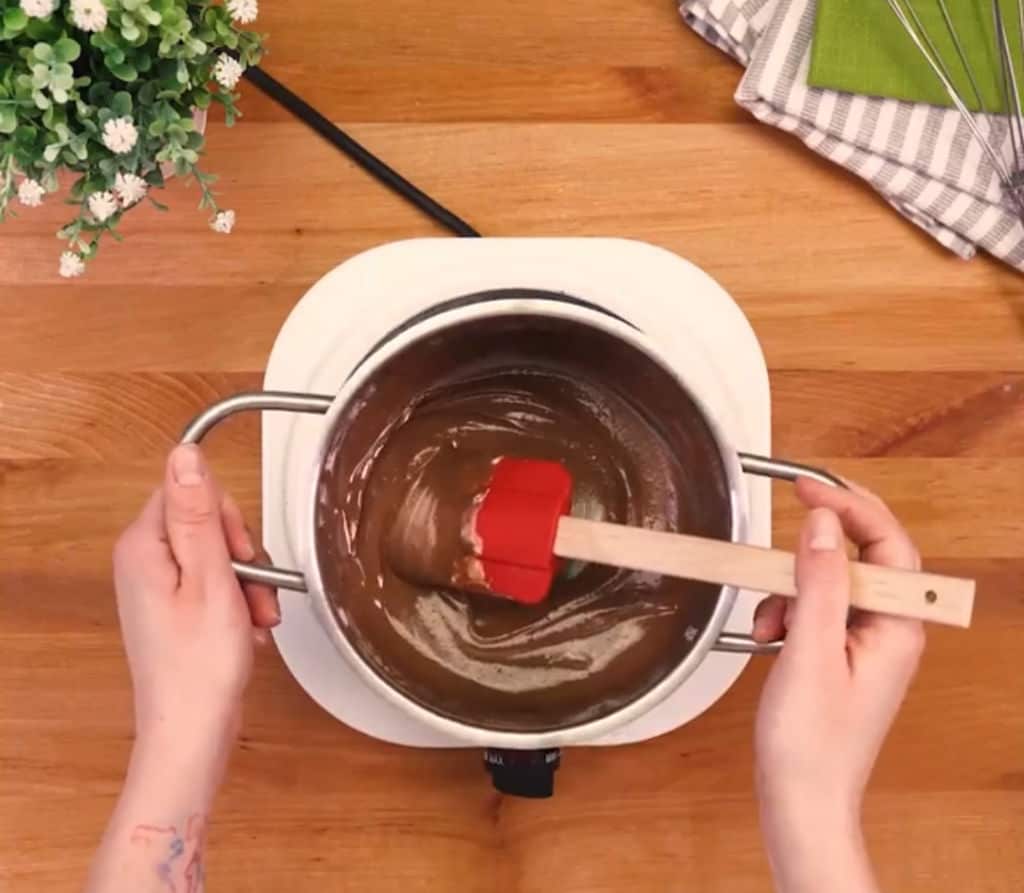
  6. Next, spoon in half a cup of peanut butter. Put the heat on medium-low, and mix with a spatula until thick and creamy.
  7. When it’s thoroughly melted, place it in a large mixing bowl. Now, add 1/2 cup of the sweet potato puree. Blend with whisk until thoroughly combined.
  8. Now add 2 tsp vanilla extract and 1 tbsp coconut oil. Use the whisk to blend together.
  9. Next, pour in the coconut sugar, using the whisk once again to mix it up. Make sure there are no clumps of sugar left when you’re finished.
  10. Then add the egg and egg yolk, also whisking until blended.
  11. Add the all-purpose flour, cocoa powder, and salt, mixing them in with the spatula. Blend until you don’t see any flour residue in the bowl.
  12. Finally, add the remaining 1/4 cup of chocolate chips. Mix them in and spoon the batter into your smaller baking pan. Make sure to line it with parchment paper first to avoid sticking. (Alternatively, you can spray cooking oil or butter onto the bottom and sides of the pan).
  13. Shake the pan so the batter settles, then bake the fudgy brownies at 350 degrees F for 20 minutes.

Directions for the icing:

  1. Melt 1 cup of chocolate chips. Add the remaining half cup of sweet potato puree and blend thoroughly with a spoon.
  2. Spread your homemade frosting onto the brownies with the spoon, coating them evenly.

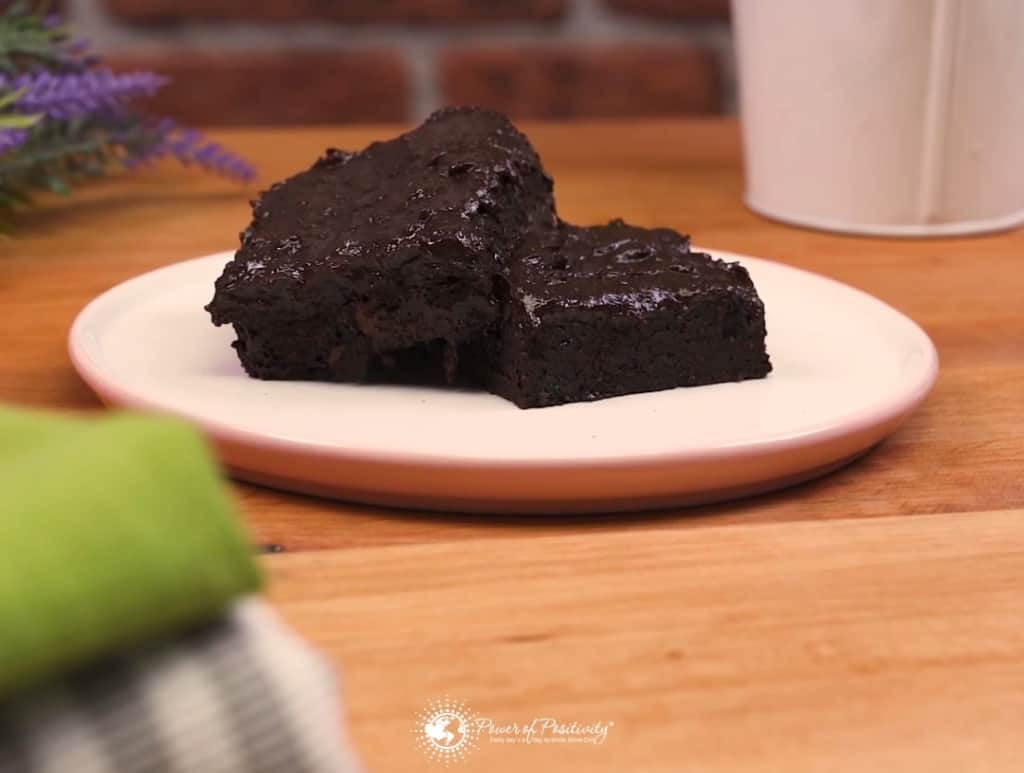
Now, slice up your fudgy brownies and enjoy this mouthwatering homemade treat!

Tips to make these top-notch fudgy brownies

 Too gooey for your liking? No worries! Simply place the brownies in the fridge for 30 minutes to one hour so they harden a bit. It will also make the frosting more “fudge-like.”

  • If you’re not a fan of peanut butter, you can leave out this ingredient. It’s not necessary for the recipe, but we think it adds to the delicious factor! You can also use almond or other nut butters that you prefer.
  • If you’ve never tried brownies made with sweet potatoes, don’t worry – you won’t even taste the potatoes! They simply give the brownies a chewy, moist texture but won’t make them taste like vegetables. The potatoes also add to the sweetness of the recipe.
  • You may find you don’t even need coconut sugar! If you don’t have a huge sweet tooth, the potatoes may be all you need.
  • Want to save time? You can also microwave the sweet potatoes. Just wrap them in a damp paper towel and microwave for about six minutes each.
  • Have leftovers? (We won’t judge if you don’t!) They’ll keep for about 3-4 days in the fridge or in an airtight container in the freezer for around 2 months.
  • You can make these even more delicious by microwaving them before serving! Paired with vanilla ice cream, it will definitely hit the spot when you’re craving warm, gooey brownies!

fudgy browniesFinal thoughts on how to make these fudgy brownies with sweet potatoes


In the old days, brownie recipes using sweet potatoes were almost unheard of. Today, they’re a common substitute for eggs, although we used both in this recipe. If you’re going for a more cake-like brownie, you probably want to leave out the eggs and just use potatoes.

This recipe combines the best of both worlds – fudge and brownies – to create the ultimate chocolate heaven. It even has a chocolate frosting in case the chocolate chips and cocoa powder isn’t enough for you! Plenty of recipes out there don’t have nearly enough chocolate, so we decided to find a solution to that problem.

These fudgy brownies will surely satisfy your chocolate craving and give you a dose of happiness in the process. Enjoy!

20 Red Flags You’re Dating Someone Who Always Craves Attention

It’s not hard to spot a person who constantly craves attention. They usually make it obvious. However, it could be a bit harder to see through the feelings you have for that person when you’re dating someone.

If you suspect that your partner may have these issues, you may have come here for some answers. This article will tell you everything you need to know about why your partner may be craving attention and point out twenty red flags that let you know you’re dating an attention-seeker.

Why a Person Craves Attention

A person who displays this behavior usually craves attention. Do you have the time and energy to be in a relationship with this person?

Jealousy

craves attentionJealousy often gets a bad rap. However, according to an article published in Frontiers in Psychology in 2017, jealousy is the best way to find out what you value in life. Based on this idea, it’s plausible to think that jealousy is a healthy emotion that provides valuable insight into a person’s true desires.

With this being said, a person who seeks out attention due to jealousy simply may be using attention as a coping mechanism. It’s possible that they have these values that they aren’t even aware of and, even worse, don’t know how to get or achieve them. All that extra attention stimulates their reward center to make them feel better about what they can’t or don’t have.

Low self-esteem

Some people with low self-esteem clam up into a shell. Others seek to heighten their self-esteem through attention. Much like trying to solve loneliness with attention, trying to fix self-esteem issues doesn’t work. Indeed, it could make it worse if they get the wrong kind of attention.

Histrionic Personality Disorder

This disorder is a condition in which the person has a seriously distorted self-image. These people have little to no self-worth, and their esteem depends solely on other people’s approval.

A person with this disorder won’t just crave attention – they’ll thrive on it. It’s as if they have an overwhelming desire to be noticed. Many people with the disorder lead what looks to be perfect everyday social lives, but they can be highly manipulative in their attention-seeking behaviors.

If the person becomes aware of their disorder or becomes depressed, they can seek treatment through psychotherapy. In extreme cases, medication may be prescribed.

20 Signs That The Person You’re Dating Craves Attention

The reasons for attention-seeking in the previous section can give you a soft spot for a person dealing with this problem. It’s only natural that if you care about the person, you’ll want to help them. However, it can be very taxing on you to continue to date someone with this problem, especially if they refuse to get help. That’s why you need to recognize the signs before they drag you down. Here are 20 signs of someone who craves attention.

1. They’ll settle for any attention – whether it’s good or bad.

You may notice that your partner is okay with bad attention. In fact, if they see an opportunity for negative attention, they’ll take steps to take it rather than avoid it actively. To your partner, the only bad attention is no attention.

2. They fish for compliments.

Fishing for compliments seems harmless – until it becomes evident that the person is doing it on purpose. With someone who craves attention, they often fish, so it becomes obvious. They have no shame, unfortunately.

3. They dress inappropriately or in a provocative manner.

This stems from the person being okay with negative attention. Society places so much value on how a person dresses that one of the easiest ways to get attention is through clothing (or lack thereof).

4. They constantly seek approval or reassurance.

This is a big indicator and is the main symptom of histrionic personality disorder. Your partner may seem as if they cannot be comfortable or happy with their own opinions. In fact, they may go as far as doing things they dislike to get approval.

5. They rarely show concern for other people.

You may notice that your partner seems to be in their own sad, disapproving world. They are only concerned about their feelings, their problems, and gaining approval and acceptance. In their minds, they are the only ones with issues.

6. They provoke reactions.

For a person who craves attention desperately and will take any kind, the opportunity for a reaction for someone seems like free attention. They don’t consider the consequences of their actions which can often land them in hot water.

7. They instigate problems between others.

Just as they’ll provoke reactions concerning themselves, they’ll do the same to others. Please leave it to a person who craves attention to pour fuel on the fire. Unfortunately, they will feel no guilt afterward.

8. Their emotions may shift rapidly.

An attention-seeker is often not in control of their emotions. That is a part of what leads to their attention-seeking behavior in the first place. You may notice that they go through severe mood swings often.

9. They may seem fake when dealing with people.

As stated before, people who crave attention have no shame. Therefore, they don’t always care about appearing genuine in their quest for attention. All that matters to them is the result, not how they got there.

10. They can seem overly sensitive to criticism.

Just as compliments and attention can give them a boost, criticism completely crushes their world. It can be the slightest criticism, and they may completely overreact to it. They may also go out of their way to prove the person who gave the criticism wrong or get their approval.

11. They are vampires.

People who crave attention inadvertently drain people’s energy. They are constantly doing everything they can to be noticed, which can mean jumping in front of any attention coming your way. If you date a person like this, you’ll constantly be upstaged for everything in the relationship.

12. They exaggerate stories.

If a person is craving attention, they can’t just settle for an average story. The story must be the most interesting there ever was. They crave the awe that people have from hearing their tall tales. Even if others around them know they are exaggerating, they may still do it anyway.

13. They are always the victim no matter what.

This may seem narcissistic, but a person who is simply craving attention seeks out the sympathy that comes with being a victim rather than avoiding the blame like a narcissist. It may not even be their situation, but somehow they make themselves the victim.

14. They put their problems on everyone else.

Since an attention-seeker seems not to be aware that others have problems, it makes sense that they think it’s okay to put their problems on other people all the time. After all, getting help with problems is a form of attention.

15. They spin their lives as overly glamorous.

This advice goes along with them exaggerating stories. No one gives attention to average, so they’ll “glamorize” their lifestyle to get a reaction from people. They may be a name-dropper or talk about fabulous trips they’ve never taken.

16. They pretend they need help when they don’t.

An attention-seeker will pretend to be unskilled at something. They may pretend that they need help lifting something that they can lift easily. They’ll request tutoring for a subject that they’re excellent in. Unfortunately, they’ll downplay any of their skills for attention.

17. They are overly active on social media and doing anything for likes.

Social media makes it very easy to get approval. A person who craves attention thrives on social media. They do any and everything they can to get strangers to “like” them. They may keep up with their likes and social media status as if their life depended on it.

18. They tend to put others down often.

It’s not that the attention-seeker is trying to be a bully. This behavior stems from the attention-seeker thinking that they’ll make themselves look good if the other person looks terrible. For example, their outfit may be average. But if they make you think someone else’s outfit is worse, you’ll suddenly think the attention-seeker’s outfit is impressive compared to the other.

19. They are often loud for no reason.

One of the quickest ways to get attention is to be loud. People instantly snap their heads in the direction of the noise. People who seek attention may have an overly loud laugh, or they may raise their voices to make a point for no reason at all. They may also get loud to talk over people.

20. They may threaten suicide or self-harm for attention.

When someone threatens suicide, loved ones come running to their aide. Unfortunately, someone who craves attention will use this to their advantage. It’s a horrible thing to do, but they have no shame, as we’ve already established.  Note: A suicide threat should NEVER be taken lightly, get this person help asap.

craves attentionFinal Thoughts on Identifying People Who Crave Attention

People who crave attention aren’t necessarily bad. There could be many reasons that they are the way they are – mental health issues, early childhood problems, low self-esteem, or more. In fact, it can be a combination of problems.

Even though they can be good people, being around a person who craves attention all the time can be draining. If it gets to the point that it creates a toxic relationship between the two of you, it may be time to go separate ways. Hopefully, you can help the person see the error of their ways and save your relationship before it gets to that point.

15 Ways to Send Positive Vibes to a Friend in Need

Being a friend comes with significant responsibilities. There are times when your pal is on top of the mountain where the sun is shining bright, but other times they may be down in the valley where the only glimmer of hope is you. People often underestimate the power of kindness, and it’s one of the easiest ways for you to spread positive vibes to a friend in need. The best part – sending good vibes is easy and doesn’t have to cost you a dime.

Learning how to stay kind and cheerful when the whole world is in chaos is a real task, but you can do it. The best part about sharing kindness is that the Universe sees and will repay you with good karma. Can you remember the last time you went out of your way to send positive vibes to someone going through a rough time?

These random acts of kindness not only make them feel better, but it makes you feel good too. Plus, sympathy and doing good things towards others can really turn your day and mood around. How often has someone done something for you that turned a bad day into a good one?

Fifteen Ways To Send Positive Vibes to Those in Need

To help someone in need, you don’t have to make a grand gesture. Remember that some of the most meaningful actions are the small things that show you really care. If you want to spread positive vibes, here is a list of 15 things you can do to help someone.

send positive vibes1. Be There To Listen When Sending Good Vibes
People going through a rough time want someone to listen to them. They want to be heard and for someone to validate their feelings. One of the best things you can do is listen and let them know you’re there for them.

2. Share a Smile to Spread Positive Vibes

A smile doesn’t cost a cent, but it’s one of the most valuable things you can do. When you see a friend or coworker that’s down, look at them and give them a huge smile. You’re saying so much to this individual without opening your mouth.

Your smile may be what gets them through the day. Did you know there’s such a thing as smile therapy? It sounds strange, but Dr. Stephen Ghim is a dentist in the Charlotte, NC area. He discusses that a smile can improve your self-esteem, increase happiness, raise confidence, and make you more alert.

Smiles are also infectious, as it’s hard for you to look at someone and smile and they do not smile in return.

3. Bring Them a Flower Bouquet

Who doesn’t love a lovely arrangement of flowers? Flowers can brighten any space, even a hospital room. It’s fascinating that some people only give flowers when someone passes, as there are so many other occasions when it’s the perfect gesture.

Please don’t wait till someone leaves this earth to send them flowers. Start sending good vibes now…when they need them the most.

4. An Easy Way of Sending Good Vibes? Tell Someone To Have a Great Day

A word of encouragement is always welcomed. Telling your friend that you hope they have a good day can send positive vibes into the atmosphere.

5. Tell Them How Great They Look to Send Positive Vibes

When you don’t feel good, likely, you don’t feel like you look good either. Whatever blows life hands you are only complicated by your inability to sit in your room and cry all day. Life goes on, and you must get up and motivated.

Your friend may need the positive boost that telling them to look great does for their spirit. Have you ever told someone they looked awful or thought they were sick? It’s probably not long before they felt worse. The power of suggestion is compelling, so use it wisely.

6. Offer To Bring Hot Soup or Remedies if They’re Sick

If your friend is sick, why not offer to bring them something to make them feel better? Some honey to soothe a sore throat or some pineapple juice to help clear mucus might be just what they need. Maybe they would like something to eat without making it, and you can be a big help.

7. Hug Them (The Best Way to Send Positive Vibes)

Don’t ever underestimate the power of an embrace. Putting your arms around someone is very healing. According to Hilary Jacobs Hendel LCSW, her training to become a counselor and the mandates from the American Psychological Association state that you “do not touch.” However, she didn’t feel that was acceptable when her patients were hurting so badly.

She had one patient, Gretchen, that she wanted to try a therapeutic hug on. When the client stood in her office sobbing, Hendel felt it was inhuman not to offer her an embrace. She’s studied the power of hugs immensely and discovered that hugging someone can give comfort and emotional regulation.

Bodies react to increased energy, and it calms the nervous system. If your friend feels small and scared, your hug might be the healing balm they need.

send positive vibes8. Send a Silly Joke

Laughter is another thing that is just not done often enough. It would help if you smiled as it lifted your spirits. Send your friend a joke, funny meme, or some crazy story about your day. Chances are, you will have them smiling and feeling better by this kind gesture that sends positive vibes.

9. Offer To Run an Errands

Sometimes, it’s all you can do to lift your head off the pillow. No matter what your friend faces, they might not feel like going to the grocery store, paying the water bill, or taking out the trash. Offering to pitch in and help is greatly appreciated.

10. Reminisce With Them

Things won’t always look so bleak. Remind your friend of better days. Tell them stories of crazy things you did when you were younger or remind them of something that will make them smile. Getting their mind off their current situation will help them to get out of their funk.

11. Send Them a Card in the Mail to Spread Positivity

Sending a card in the mail is something that many folks don’t do anymore. With the advances in technology, people try to avoid the mail. However, it’s still exciting to think someone took time out of their day to send positive vibes through snail mail.

12. Go For a Drive With Your Favorite Tunes

Sometimes you need to remove yourself from a situation, even if it’s just for a little while. There’s something very therapeutic about driving around, windows down, and listening to good tunes. Why not get your friend out of the house and into the fresh air?

It might be better if you go away overnight or for the weekend. Who doesn’t need a good getaway on occasion?

13. Tell Them What You Admire About Them

If you want to send positive vibes and spread love and light, why not tell them something you admire about them. You can even send this message in a text or email. When people have a rough patch in life, they forget all the good things and focus on the negative. You can help them remember all the good qualities they have that make them so valuable.

14. Watch a Movie or TV Show With Them

Sometimes you don’t have to do or say anything, but being there for them matters most. Why not watch a television show or movie with someone lonely or struggling? Let them pick the show, and you be a warm body there when they need you.

15. Show Compassion When Sending Good Vibes

Remember to show compassion even if your friend is having a rough time because of something they did. Listen to them without judging, and don’t offer unsolicited advice. Being compassionate means you put your judgments aside and just be there, sending positive vibes and letting them know they’re not alone.

sending good vibesFinal Thoughts on Ways To Send Positive Vibes to a Friend in Need

While your friend may be the one going through a tough time right now, one day, it will be you that needs someone to send positive vibes your way. Everyone has a karmic debt, which the Universe uses to pay you back for the things you’ve done. You want to make sure that you fill your bank of karma with good things.

You should never try sending good vibes with the thought of getting anything in return. But you should always do something like sending positive vibes in the hopes of helping someone. Never underestimate the power of an embrace, a kind word, an ear listening, and a gesture showing how much you care. Your friend needs you now, but it will be your turn one day.

Skip to content