Weekly tips, affirmations, and small actions to feel your best.

What Advice Do You Need To Hear, According To Your Zodiac Sign?

There’s no doubt about it – last year was a trying year for many of us. We had to endure financial hardships, relationship troubles, mounting stress, and, in general, simply a collective exhaustion about the current state of affairs globally. We all want change, but until it comes, we all have to work to enjoy our lives the best we can. Fortunately, your zodiac sign can help guide your life path.

So we hope this article will help you this year and put things in perspective for you, according to your zodiac sign. Everyone needs advice sometimes, and we certainly don’t mind giving it when you might need it the most.

What Advice Do You Need To Hear, According To Your Zodiac Sign?

zodiac advice

Aries (March 21st to April 19th)

Don’t make any decisions until you’ve had time to thoroughly think things through. Aries tend to jump the gun in many situations, either out of excitement, frustration, impatience, or all three. However, it does pay off to think about a choice before you act on it, because as we know, every action bears a consequence. Sure, taking risks can result in huge rewards, too, but even risk-takers weigh the pros and cons of their decisions before making them.

Just remember to think about how the decision will affect your life, and if it will benefit it positively, then we say: “Go for it!”

Taurus (April 20th to May 21st)

You might expect others to treat you how you treat them, and that would hold true in a perfect world, but it doesn’t always work that way here. You can give someone your whole heart, only to have it crushed and broken. However, this doesn’t mean you shouldn’t love with your entire being, because holding back could mean missing out on your one true love. Love everyone you come across; the right one will never want to throw your love away.

Gemini (May 22nd to June 21st)

While you have a free-spirited aura about you, dear Gemini, you also tend to weigh other people’s opinions too heavily in how you choose to live your life. Remember that only you can decide how you want to live, not others. No one knows but you what truly makes you happy, so always follow your heart, even if other people don’t see your vision. You aren’t here to please others; you’re here to find your route to happiness and success, even if you have to venture into uncharted territory.

Cancer (June 22nd to July 22nd)

As a fellow Cancer writing this article, I completely relate to the complex mind and heart of the crab. I know living in these times here on Earth can feel suffocating and exhausting, but we must rise with the tides and learn to brave the impending storms. This zodiac signs shows that we cannot blame others or force them to see things our way. Indeed, we must own our responsibilities and weaknesses, and learn to fend for ourselves. We also have to look at our strengths, and see how they can help us navigate turbulent seas. Use your sensitivity as a strength, because the world desperately needs our compassionate hearts right now.

Leo (July 23rd to August 22nd)

Those under the Leo zodiac sign tend to compare their lives to others, or wish their life looked a little different. However, this does nothing but allow depression to set in, and sucks the joy right out from under you. Learn to love your life now, and improve upon it as you go. Set goals and go after them, because complaining about your life won’t get you anywhere. Use your confident, cheerful attitude to your advantage, and do whatever your heart guides you to. Water your own grass, and don’t worry about how it looks on the other side of the fence.

Virgo (August 23rd to September 22nd)

Virgo, you tend to put people on a pedestal quite easily, and can fall victim to their mind games. You have a big heart, but don’t let people take advantage of that. Remember to set boundaries, and if someone can’t respect them, then show them the door. You deserve the best, so don’t settle for less than that.

best not stress

Libra (September 23rd to October 22nd)

Libra, you can flit from one thing to another quite quickly, as your mind feels like an Energizer bunny running at full speed constantly. Give your mind a rest, and learn to enjoy the silence for a bit. Go deep within yourself this year to figure out what you really want to do with your life, and how you can make a living out of it. You may not enjoy conventional jobs as much, so let your entrepreneurial mindset take over in 2017. The effort you put in now will certainly show later on.

Scorpio (October 23rd to November 22nd)

Scorpio, you have innate creativity about you that can take you far in life. However, you sometimes wait around for other people’s approval instead of just forging ahead and trusting your own instincts and what makes you happy. Remember, you don’t need permission to be awesome, so just go ahead and light the world on fire with your brazen spirit, and the rest will fall into place naturally.

Sagittarius (November 23rd to December 21st)

Sagittarius, you have an adventurous, infectious personality, but you can get hot-headed pretty easily when things don’t go your way. Your zodiac sign reminds you to just go with the flow, and use the roadblocks as an opportunity to take a detour and enjoy the view from a new path. It isn’t always the situation, but how you react to it that can really make or break you.

Capricorn (December 22nd to January 20th)

Capricorn, you have an amazing work ethic, but you can get burnt out if you don’t learn to slow down and take time out for yourself. You don’t have to rush to accomplish your goals; in fact, you can enjoy that victory a lot more once you stop to smell the roses and treat life as an adventure rather than a race.

Aquarius (January 21st to February 18th)

Aquarius, you love to live in the clouds and daydream to your heart’s content, but unfortunately, you have to come back down to reality sometimes and deal with real life issues. You can get what you want in life, but you have to learn to deal with the less fun “adult” problems while still striving toward your dreams.

Pisces (February 19th to March 20th)

Pisces, you have an amazing sense of intuition, so why don’t you listen to it more often? If something doesn’t feel right in your gut, then make sure you listen to your instincts. The longer you ignore them, the worse the problem or situation will become, your zodiac sign warns.
(C)Power of Positivity, LLC. All rights reserved

15 Good Ideas For A Bad Day

“Happiness is not something you postpone for the future; it is something you design for the present.” – Jim Rohn

Not one of us is immune to the occasional bad day; it happens, it sucks, now what?

While we may not be responsible for everything that contributes to a bad day; it is our responsibility to control what can be controlled. At any point, we can decide to do something different and make each day better. Too many people nowadays cede their inner happiness to outside influences – at work, home or elsewhere; but happiness is not determined by our environment unless we allow it to be.

Miyamoto Musashi, widely considered to be among the best warriors of all time, once said: “There is nothing outside of yourself that can ever enable you to get better, stronger, richer, quicker, or smarter. Everything is within. Everything exists. Seek nothing outside of yourself.”

The purpose of this article isn’t to dwell on the philosophies of happiness or lack thereof. In retrospect, citing the master swordsman and philosopher Musashi may have been aiming a bit high (sorry!) It is a great quote, though, isn’t it?

Anyways, we’re simply going to list 15 things that we can do to make each day better. It is our sincere hope that, by implementing one or more of these, that you have a better today, tomorrow, and future.

15 Good Ideas For A Bad Day

1. Breathe mindfully

Breathing is life, and life is breathing – an all-important facet in today’s crazy world.

Modern society embraces “the rush” of consumption, competition, improvement, 24/7 news…constant activity, in other words. We don’t necessarily “want” culture to influence how we behave, and we don’t have to.

Solely taking 5 deep, mindful breaths relaxes our body and mind; taking us away from the circus for a bit.

2. Drink plenty of water

Can you survive on one or two glasses of water a day? Sure. Is it a good idea? Absolutely not. Drinking at least 8 to 10 glasses of water daily is a natural elixir to both mind and body.

Make a habit of carrying a full water bottle everywhere you go. You’ll discover that maintaining proper hydration may just be enough to turn a bad day into a good one.

3. Make your bed

Admittedly, there is nothing fun about making your bed; so why do we include this monotonous activity? Because mindfully making your bed a daily habit provides a sense of accomplishment. Small victories matter in maintaining a positive outlook throughout the day (more on this later.)

4. Take a shower

Or, if you’re pressed for time, splash some cold water on your face. Both have a way of rejuvenating a lethargic body and mind. For added benefit, take a shower or wash your face with mindfulness (unwavering attention).

5. Get outside

Research has shown that immersing yourself in nature is one of the most powerful stress relievers there is. For one, the body is exposed to sunlight which can naturally replenish energy reserves. Also, you’ll be getting a bit of exercise; this will provide some needed oxygen and blood flow to the brain and body.

6. Get a snack (no junk food)

Consuming a natural, well-balanced diet is key to maintaining a healthy mind and body. When our blood sugar levels drop, we’ll inevitably feel sluggish and irritable. While it may be tempting to reach for some candy, snacking on healthier alternatives – nuts, dried fruit, or seeds – provides vital nourishment that sugar-laden snacks do not.

7. Change your environment

Today’s office environment can be depressing and stifling. If you have the option of taking some of your work elsewhere, take advantage. If not, use your break and lunch times to get away.

8. Listen to some upbeat music

Music has a wonderful way of instantly changing our mindset to a more positive one. There is a physiological reason for this; the brain releases “feel good” chemicals called endorphins when exposed to the music we enjoy.

An Oxford University professor explains: “Psychologically, endorphin release is experienced as a mild opiate ‘high,’ a corresponding feeling of well-being, and light analgesia.”

9. Accomplish something small

Upon awakening, it is not unusual to run a “to-do” list through our head before we even get out the door; this can quickly manifest into a sense of overwhelm.

One way to circumvent this response is to accomplish some small task with our full attention. This can be packing your kid’s lunch, brushing your teeth, shaving, driving to work, and so forth. This prepares the brain for more challenging things ahead – and with a more optimistic mindset.

mind

10. Get some exercise!

Exercise can be a brisk 10-minute walk in the morning or a full-fledged workout. We needn’t rehash the abundance of research proving the benefits of exercise. Suffice to say that little else, if anything, is better for health and promoting a positive frame of mind.

11. Watch or look at something cute/funny

Similar to exercising and listening to music, laughter and joy causes our brain to release feel-good hormones. Watch some short YouTube clip that gets you rolling, or find some cute pictures of dogs on your phone.

12. Write down your thoughts

Writing down our thoughts serves as a “release.” Instead of compartmentalizing and revisiting the same thoughts (a lovely trait of the brain), writing things down – or better yet, keeping a journal – allows us to organize our many thoughts and release the stress that often accompanies them.

13. Get to bed!

Having and keeping a consistent, healthy sleep schedule does more than ensure a good night’s rest. Research has shown that quality, routine sleep improves concentration and memory; mood and energy levels, and helps maintain a healthy weight.

14. Exercise your mind

If you’re like everyone else, you have to work for a living. Work can be monotonous, boring, and downright stressful. Too often, our brain development stagnates as a result.

Related article: 5 Ways to Get Out of A Bad Mood In Less Than 5 Minutes

Do something you’ve always wanted that requires an active mind: learn a foreign language, take up an instrument, do a crossword puzzle, download a “brain training” app, learn how to draw…the opportunities are endless.

Your brain will sharpen; your confidence will increase, and you’ll be anxious to tackle the challenges in days to come!

15. Be mindful

We touched on this a bit earlier, but mindfulness can completely change your outlook and your life.

Jon Kabat-Zinn, the founder of Mindfulness-Based Stress Reduction (MBSR), explains: “Mindfulness is awareness that arises through paying attention, on purpose, in the present moment, non-judgmentally. It’s about knowing what is in your mind.”

The key phrase: non-judgmentally. Not allowing negative thoughts to derail your happiness; and promoting feelings of relaxation, positive affect, and happiness.

https://youtu.be/vhsRMjDIiNc

Resources:
Douglas, S. (2013, January 15). Study: Performing Music Gets Us High. Retrieved March 21, 2017, from https://www.theatlantic.com/health/archive/2013/01/study-performing-music-gets-us-high/267138/
Foundation for a Mindful Society. (2015). Jon Kabat-Zinn: Defining Mindfulness. Retrieved March 21, 2017, from http://www.mindful.org/jon-kabat-zinn-defining-mindfulness/
Main, E. (2012, March 9). The Natural Way To Calm Down. Retrieved March 21, 2017, from http://www.prevention.com/mind-body/emotional-health/spending-time-outside-relieves-stress
(C)Power of Positivity, LLC. All rights reserved

10 Smart Ways To Respond To A Negative Person

Negative people are similar to black holes in outer space – appearing from nowhere while attempting to engulf everything else around them. Negative as a person they may be, it is paramount – if not only for our own health and sanity – to resolve the situation in an intelligent and healthy way.

First, it may be helpful to understand what constitutes a potentially negative person. Negative people have a way of draining energy from others around them. They’ll cause demean, attack, and defame you. They will make you feel unsafe, on guard, or tense; they’ll send negative energy through an unwanted vibe, or just flat-out dehumanize you. For some reason, if they cannot “reach you,” they’ll attack someone or something else you care about.

So, how can you appropriately handle such people while still respecting their humanity? It’s certainly not easy, as the negative among us would enjoy nothing more than to witness an emotional outburst of frustration and discontent. The problem is that by engaging in the behavior mentioned earlier, you simply feed their motivation.

In good conscience, we cannot (and should not) pretend to have the ultimate solution as it pertains to negativity in our lives. There are, however, ways that you can (constructively) handle negative people and their shenanigans without inflicting any type of self-harm.

Here are 10 ways of dealing with negative people:

“Don’t destroy yourself by allowing negative people to add gibberish and debris to your character, reputation, and aspirations. Keep all dreams live but discreet, so that those with unhealthy tongues won’t have any other option than to infest themselves with their own diseases.” – Michael Bassey Johnson, The Infinity Sign

1. Don’t take things personally

To not “take things personally” is much easier said than done. Some negative people after all will – at times – concentrate all of the vitriolic behavior onto you.

The problem with taking things personally with a negative person is that it doesn’t lead anywhere. The only possible outcome is a perceived “victory,” that they’ve managed to “hook” you.

2. Do not rationalize their behavior.

Many people do not like conflict; this is something known as conflict avoidance. As such, people on the receiving end of negative behavior will attempt to reason with a negative person. It’s important to remember that many negative people do not want to be “reasoned with.”

They may need a compassionate ear at some point or another, but they’ll most likely make such motives known in a more constructive manner.

3. Let them hear you

Not every negative person intentionally acts negatively. For whatever reason, they’ve simply adopted a pessimistic mindset. That said, when negative behavior repeatedly surfaces, it is time to make your voice heard.

Sometimes, those that are acting negatively without thought will perceive your forthrightness as something not to be trifled with.

4. Be compassionate

As mentioned, not everyone who behaves negatively intends to do so. When we consciously attribute their negative acts to potentially extenuating circumstances (personal problems, work-related stress, finances, etc.), it’s easier to see their behavior for what it truly is – an act of desperation and impulsiveness.

5. Separate yourself if needed

Being exposed to negative behavior on a frequent basis can be mentally and physically exhausting. We’ll instinctively know when a person is pushing us past comfort zone. It is at this point that it’s necessary to get away, if possible. We all have our limits; it’s nothing to be ashamed of or ignore.

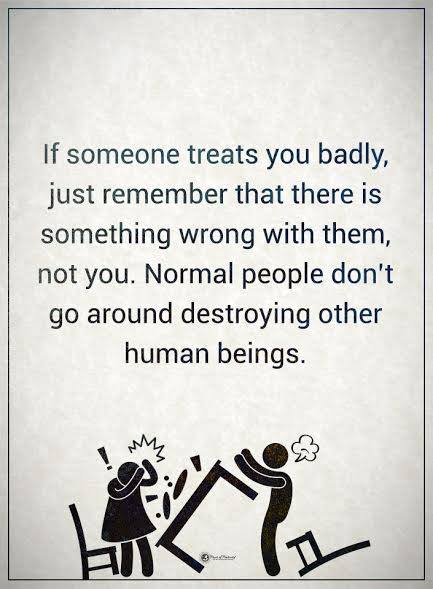
treat people badly

6. Smile

Sometimes a negative person’s perception of the world around them is skewed. This can be attributed to anything, from childhood experiences to their experiences at home or work. The simple act of smiling and maintaining a positive disposition may be enough to challenge these perceptions indirectly.

7. Be mature

When a negative person presents themselves as a challenge or threat, it is far too easy to “stoop” to childish behavior such as being impulsive or insulting. In a way, this is a natural response, as no one appreciates being in the company of someone with a negative outlook; however, it is counterproductive, and only enables their (sometimes) immature mindset.

8. Do not judge or assume

The truth is that we all develop differently, and negative people are sometimes given the short end of the stick. Being judgmental or assumptive is evident through both verbal and non-verbal cues; it is important to personally refrain from these signals, no matter how tempting, when trying to resolve the situation posed by the negative person.

9. Set positive boundaries

We all heard the adage a million times: “control what you can control.”

Indeed, establishing and maintaining an environment of positivity often leads to one of two results: (1) it protects you from their negativity, or (2) helps them feel – and possibly act – in a more positive manner. Either way, either you create a positive impact.

10. Maintain a realistic POV

As compassionate and caring people, we’ll often try our best to accommodate and influence others that hold a more pessimistic, negative frame of mind. It is important to remember, however, that your healthy outlook empowers you to help others. As such, in the event that a negative person is trespassing and violating your positive frame of mind, it may be necessary to end ties.

While such a recommendation may seem harsh, it is important to understand that many others will come along that may need your help. You cannot (and should not) allow the unfavorable influences of one person to compromise this.

(C)Power of Positivity, LLC. All rights reserved

8 Ways Your Body Changes When You Fall In Love

During our first childhood “crush,” we all experienced butterflies in the stomach, nervousness, and a racing heartbeat. We were infatuated and couldn’t take our eyes off of the object of our budding love.

Does anyone else remember anxiously awaiting the recess bell so we could see them on the playground? Or hoping that the teacher assigned you a desk right next to theirs? Indeed, chemical reactions were taking place in our young brain and body, giving us our first (albeit immature) taste of love.

Truly, a fascinating chain of chemical reactions occurs when we’re head over heels. From the relationship’s beginning to first climbing under the sheets, and finally saying those “three words,” here’s what goes on as your body falls in love.

What happens to your body when you fall in love

“Nothing is sweeter than love; all other bliss comes second. And compared to it, even honest it too hotter to hold in my mouth.” – Nossis

partner

#1 You feel “addicted” when you fall in love

Falling in love, and its effects on the body, are strikingly similar to being addicted to drugs. Chemicals that cause a euphoric high – adrenaline, dopamine, oxytocin, and vasopressin, are all released at some point during intimacy. Dopamine is the brain’s pleasure chemical and is what causes feelings of elation and energy around our loved one.

Helen E. Fisher, a biological anthropologist at Rutgers University, states “Romantic love is an addiction. It’s a very powerfully wonderful addiction when things are going well.” Functional magnetic resonance imaging (fMRI) scans of the brain in love strongly resemble those experiencing a high.

Lovers are also like drugs, in the sense that the more time you spend with them, the more hooked you become.

#2 Love lowers your inhibitions (“feeling drunk”)

Just as having one too many cocktails lowers anxiety, fear, and inhibition – and makes you more boastful and confident – the “love drug” oxytocin produces the same effect. Researchers at the University of Birmingham observed the effects of alcohol and oxytocin on the brain, and though they impact different parts of the brain, the effects are very similar.

#3 Your pupils dilate when you experience love

When you feel strongly attracted to someone, no matter the time or place, a reaction occurs within the brain’s sympathetic branch, the SNS. This stimulation causes the pupils of the eyes to dilate (become wider).

Try this out on your date, boyfriend, girlfriend, or spouse – it’s fun stuff!

#4 You may experience a flushed face, sweaty palms, or a racing heart

Becoming anxious (sometimes, very anxious) before an important event (e.g. a big date, wedding day) is more than a nervous “twitch.” An influx of the brain chemicals adrenaline and norepinephrine can produce physical sensations, such as craving and desire. Also, your brain will focus intently on the person of affection.

#5 Your stomach may act up

When you really begin to like (perhaps love) someone else, the brain may release the stress hormone cortisol. Cortisol can cause the stomach’s blood vessels to constrict, perhaps leading to feelings of nausea and lack of appetite. This physiological response may explain why many couples don’t eat much on their wedding day.

#6 Love can help you experience “withdrawal symptoms”

Corticoliberin is a peptide hormone released during a stress response. Also known as the “corticotrophin-releasing factor,” separation from our loved one can exacerbate any stress response. The “withdrawal symptoms” of anxiety and depression are similar to those of an addict weaning off a drug.

#7 Pheromones are triggered – and sensed

Pheromones are “smell chemicals” that animals, including humans, excrete and sense. Biologically, this changes the behavior of another animal. In more humanistic, simple terms, we have attuned to our partner’s pheromones, which increases sexual desire.

Dr. Fisher states, “Once you fall for someone, their smell can be a powerful thing. Women will wear their boyfriend’s T-shirts, and throughout tales in history, men have held on to their lover’s handkerchief.”

#8 Our brain changes (and “lights up”)

Fisher’s first groundbreaking study was in 2005 when she analyzed the brain images of individuals in love. A total of 2,500 brain scans were taken. Each participant was shown a picture of their “special someone” and then a picture of an acquaintance. The images revealed drastic differences.

fall in love

The first noticeable effect was the flood of “feel-good” dopamine chemicals in certain regions of the brain. Other noticeable differences involved two other areas of the brain: the caudate nucleus and ventral tegmental area. The former is strongly linked with reward detection, and the latter is associated with “pleasure, focused attention, and the motivation to pursue and acquire rewards.”

References:
Deza, D. (2015). How Love Changes Your Body Chemistry. Retrieved from http://www.health.com/health/gallery/0,,20568672,00.html
Tigar, L. (2016, February 12). How your body reacts when you fall in love. Retrieved from http://edition.cnn.com/2016/02/12/health/your-body-on-love/
(C)Power of Positivity, LLC. All rights reserved

11 Proven Ways To Be More Attractive

Attractiveness, beauty, allure . All are things beholden to the subjectivity of the individual. One person may think intelligence is attractive or sexy. Conversely, someone else may not care.

Even others place heavy emphasis on physical features, while some don’t, So the game goes on.

Science, particularly biology, plays a vital role in attraction. Besides that, it determines whether we find someone else attractive. Attraction “cues” may be conscious or subconscious, obvious or obscure. Indeed, psychology is funny that way.

“Beauty is a beautiful trait, which can only be sensed by beautiful people at heart and soul.” – Maria Cluston Cletus

11 methods of attraction, per science and research:

attractive

#1 Forget playing “hard to get”

Men and women may think they’re more attractive by concealing their feelings, motives, etc.; perhaps believing this sleight of hand adds to their mystique. There is some evidence to support this, although a “brain connection” is deemed more important.

In a 2016 study, researchers state:

“Humans interaction with other humans must be able to understand their interaction partner’s affection and motivations, often without words…We found the better a participant thought they could understand another person’s emotion, the more they felt attracted toward that person.”

#2 Red is hot

Science has shown that women who wear red are more attractive to men. Dr. Alec Beall, a psychologist at the University of British Columbia, explains:

“This red-attractiveness link is partially explained by men’s perceptions of implied sexual receptivity among women wearing reddish garb.”

Dr. Beall emphasizes his “red-attractiveness” conclusions by noting the universality of the findings. From tiny villages in the middle of nowhere, to Paris and NYC, red draws the male eye.

#3 Don’t be a stiff

So do you ever wonder why some women love guys like Zach Galifianakis and Will Ferrell? To us guys, they’re both tremendously talented, hilarious characters. To many women, they are also incredibly attractive.

In a study published in the journal Evolution and Human Behavior, the authors explain the differences between the sexes and interpretation of humor:

“Men emphasized the importance of their partners’ receptivity to their own humor, whereas women valued humor production and receptivity equally…Women preferred those who produced humor for all types of relationships.”

#4 Prioritize self-grooming

Nobody wants to get someone who looks like a slob. Doesn’t mean you need the fashion sense of a Valentino or Versace, but some effort is in order.

Science shows that one’s perception of physical attractiveness keenly focuses on “changeable aspects of our self-representation.” In other words, combing or brushing your hair, fit and clean clothing, and a healthy weight.

#5 Lay off the makeup (a bit)

(For this male writer, a woman whose face resembles a birthday cake is appalling. Sorry.)

Anyways, across studies a few interesting discoveries were made about makeup:

– Faces with “natural” makeup are seen favorably, while those wearing excessive makeup were less desirable.

– Most women wear makeup as a confidence-booster (not just for “pleasing” men.)

– Many women overemphasize the importance and impact of wearing makeup.

Advice for women who adore makeup is similar to that of alcohol consumption: “everything in moderation.”

be yourself

#6 Go lumberjack

No guys, don’t start flaunting flannel, jean suspenders, and mountain boots.

Grow a beard.

Heterosexuals, knowingly or not, look for the most definitive traits of the opposite sex. For men, nothing is more “definitive” than a (well-groomed!) beard.

Fascinatingly, research demonstrates that beards convey not only masculinity, but health and vigor, parental ability and reproductive vitality.

#7 Show your shape

In fact, many mistakenly believe men are attracted to thinner women. However, this is not true. Research shows that men prefer a body shape with fair curves and hips.

In fashion, InStyle recommends “semifitted styles that softly follow your curves and show of your waistline.” Belted shirtdresses, sheaths, and full skirts fit this description. Classy and sexy fashion, in other words.

#8 Be kind!

Exhibiting kindness is something we should be doing, anyways…

That said, having a kind heart may have a positive effect on your attractiveness. Termed the ‘halo effect,’ physically attractive people are more likely to be associated with benevolent qualities. It wasn’t until recently, however, when scientists discovered the opposite (kind people are more attractive) may be rooted in scientific fact.

According to Dr. Beall: “Mounting evidence suggests that the ‘what is good is beautiful’ stereotype may also hold true.

#9 Get a doggy

As if we needed another reason to love dogs.

However, we must look at these survey results compiled by researchers at the University of Nevada, who studied a dog’s effect on attractiveness and dating:

  • About 50 percent of women judged their date from how the man treated his dog.
  • 35 percent of women were more attracted to a man who owned a pet.
  • 22 percent of (smart) men used their “best friend” to attract a date.

#10 “Watch your tone”

This one is pretty commonsensical: tone of voice impacts attraction levels. Men find women with a higher pitch more appealing; whereas women like a deeper-toned voice.

The rationale behind tone and attraction is also straightforward. Both men and women associate a tone of voice with femininity and masculinity; especially when it comes to body type.

attraction

#11 Smile – or not

In a University of British Columbia study, researchers examined the relationship between expressions of happiness, pride, and shame, and sexual attractiveness.

The study, which consisted of 1,041 participants using “different images and samples” discovered: “a large gender difference…in the sexual attractiveness of happy displays.”

Here are the findings:

  • Happiness (i.e. smiling) was the most attractive female expression. On the other hand, it was the least attractive male expression.
  • Pride was the most attractive male expression. Conversely, it was the least attractive female expression.

“Beauty is a beautiful trait, which can only be sensed by beautiful people at heart and soul.” – Maria Cluston Cletus

References:
Bressler, E. R., Martin, R. A., & Balshine, S. (2006). Production and appreciation of humor as sexually selected traits. Evolution and Human Behavior, 27(2), 121-130. doi:10.1016/j.evolhumbehav.2005.09.001

7 Signs of Chronic Fatigue (And How to Reverse It)

Can you imagine a constant, tired feeling that doesn’t seem to go away? A 24/7 condition that causes you to feel drained – and nothing you do seems to help?

That’s what someone diagnosed with chronic fatigue syndrome (CFS) experiences on a daily basis. Unlike most medical conditions, no Food and Drug Administration (FDA)-approved medicine is available. However, this doesn’t mean there aren’t other options.

In this article, we’ll discuss some common signs of CFS and what is being done about it.

First, let’s discuss seven of the most common symptoms of CFS:

“People with (encephalomyelitis) or (Chronic fatigue syndrome) experience a range of symptoms that makes it hard to do the daily tasks that most of us do without thinking – like dressing or bathing.” – WomensHealth.com

1. Long-term fatigue

To meet the diagnostic requirements of CFS, a person must experience “long-term” fatigue, defined as a period of 6 months to a year. Beyond this time, the probability of a CFS diagnoses increases. Your doctor will evaluate your past medical history (if available) and identify any other potential explanation.

Individuals that have had a previous infection, no matter the duration or how long ago, may continue to feel tired or exhausted long after recovery; this is just one possibility a doctor must consider.

2. Cognitive problems

It’s no surprise that someone who experiences prolonged periods of fatigue has problems thinking. This sign can be frustrating – and potentially debilitating – for people with a high-stress job.

One common problem individuals with CFS experience is an impaired short-term memory. Short-term memory is defined as “A system for temporarily storing and managing information required to carry out complex cognitive tasks such as learning, reason, and comprehension.” No known correlation exists between CFS and long-term memory, however.

CFS may also affect verbal acuity, or the ability to “find and say” a particular word during normal speech.

3. Depression

CFS itself does not cause depressive symptoms. Rather, depression may manifest from various personal and work-related difficulties. It is possible for a person to have both conditions at the same time, according to scientific research.

Further, depression can exacerbate the symptoms of CFS and vice-versa. Unfortunately, doctors may interpret the symptoms of CFS as clinical depression. As such, it is important to clearly state any prolonged feelings of anxiety, hopelessness, or sadness – and will aid the practitioner in making the correct diagnosis.

4. “Post-exertional” fatigue

Post-exertional fatigue is perhaps one of the more obvious initial signs of CFS. Let’s use a hypothetical example:

Joe is a well-educated, driven, and successful businessman. He’s maintained his drive and passion for what he does for over 15 years when, all of a sudden, he experiences an onset of extreme tiredness. Even his daily lunchtime workout fails to provide any boost; instead, his fatigue worsens. Worst of all, his job duties – something he used to enjoy – depletes his energy.

Routine activities that were once normal (even enjoyable) now contribute to feelings of tiredness.

5. Fatigue after sleep

Generally, a short nap or good night’s rest will feel rejuvenating. Not so for some people with CFS. Many folks with CFS will, understandably, attempt to counteract their underlying symptoms by getting more sleep – only to find out that it doesn’t help.

Forgive the informality, but how much would this suck?

Fatigue following sleep is another strong indication of CFS – and another good reason why someone should schedule a doctor’s appointment.

6. Digestive problems

This one is a bit harder to explain.

The most plausible explanation is that CFS affects cognitive faculties (neurons, synapses, neurotransmitters); functions inextricably linked to the digestive system. The digestive system contains the most neurons – and receives more brain communications – than any other part of the body.

A CFS/digestive pattern is noted in a widely-publicized study: “Patients with CFS manifest symptoms suggestive of disturbed gut function, such as abdominal pain, diarrhea and/or constipation,” according to an article published in the Archives of Internal Medicine.

7. Other unexplainable symptoms

As the symptoms of CFS are broad in scope, it may be helpful to note some other common symptoms of the condition.

According to WebMD, CFS has eight “official signs and symptoms” aside from fatigue (you may notice some overlap to previously mentioned symptoms):

“- Loss of memory or concentration

– Sore throat

Enlarged lymph nodes in your neck or armpits

– Unexplained muscle pain

Pain that moves from one joint to another without swelling or redness

– Headache of a new type, pattern, or severity

Unrefreshing sleep

– Extreme exhaustion lasting more than 24 hours after physical or mental exercise”

“Reversing” CFS

CFS is a complex condition that often requires a specialized treatment regimen. Here are some lifestyle changes and medical therapies that may help, per the National Health Service (NHS) of the United Kingdom:

– Abstain from alcohol, caffeine, and sugar

Avoid any known “sensitive” beverages or foods

– Eat small, regular meals

Get enough relaxation time

– Do not nap excessively

Here are some medical recommendations:

Cognitive behavioral therapy

– A monitored exercise program

Activity management

– Medication

(When we discuss the signs or symptoms of CFS, please understand that is not a comprehensive list. There are about 16 recognized symptoms of this condition. Also note: CFS, as with most other medical conditions, requires the attention of a licensed physician. A licensed practitioner far more likely to ascertain the correct diagnosis and recommend potential treatment options.)

5 Reasons You Should Make Your Bed Every Morning

For reasons that vary from the cultivation of mental discipline to highlighting a bedroom’s aesthetics, there is something to be said about making your bed every morning.

There are also plenty of reasons (or excuses) why someone doesn’t make their bed. First, most people simply don’t care or notice – it’s a bed – what’s the big deal? With all the rushing around and things to do, making the bed is a “time-waster” for many people.

No dispute from this end that making your bed is mundane. It is. But this is one reason to do it. Think about your typical day: how many trivial, “unimportant” things require your attention anyways? You must do these things – at work, at home, or elsewhere – whether you want to or not.

So, why take the time to make your bed?

Here are 5 good reasons:

“If you make your bed every morning, you will have accomplished the first task of the day. Making your bed will [reinforce] the fact that the little things in life matter. If you can’t do the little things right, you’ll never be able to do the big things right.” U.S. Navy Admiral William H. McCraven

#1 You start the day right

As Admiral McCraven said to the graduating class at the University of Texas, making your bed instills a sense of accomplishment. You walk out of the room knowing that you’ve achieved something. You’ll feel more inclined to complete another task, then another. At the end of the day, you’ll have done more, (perhaps) spearheaded from the simple act of making your bed.

If you approach making your bed with the mindset of “How I do anything is how I do everything,” you’ll gain a growing sense of pride, self-confidence, and motivation. Further, you’ll leave the house feeling a sense of control and personal responsibility – an asset you can take with you throughout the day.

#2 It cultivates mental discipline

Mental discipline, also known as self-discipline, is developed by overcoming mental and physical resistance.

When you roll out of bed on a Monday morning, sometimes the last thing you aspire to do is make your bed. This dreaded feeling is understandable, but it’s also a terrific opportunity to discipline yourself.

We tend to associate any form of “self-discipline” as harsh and restraining, but it needn’t be. Although your brain and body may resist your efforts, you can engage your mind at-will and gently bring its attention back under control. You employ your mind this way by focusing intently on one thing, and one thing only: the task at-hand.

Which segues perfectly into #3:

#3 It can be a great mindfulness exercise

One tenet of mindfulness is witnessing your thoughts without criticism or judgement. This very principle can be applied to all of our efforts. Any mundane task: washing the dishes, cleaning the floor, and yes, making the bed – are all excellent times to practice mindfulness.

As we implement mindfulness into every small or large task, we establish a mental and physical “connection.” This mindset dissipates much of the resistance and angst attempting to creep in as we intently focus on the task at hand. As our mindful “muscle” grows, we’ll find making the bed – and many other duties – less “painful” and more rewarding!

Charles Dickens, one of history’s most profound writers, once wrote:

“He did each single thing, as if he did nothing else.” Perfectly said.

#4 Your sleep may improve

A study by the renowned National Sleep Foundation (NSF) may have discovered a correlation between a comfortable bedroom and better quality sleep. Individuals or couples that made their bed “every day” or “almost every day” reported better sleep than those who rarely or never make their bed.

It’s difficult to explain this study’s results. But it may be the byproduct of the several other benefits listed in this article.

Certainly, it is not out of the realm of possibility to attribute higher quality sleep to a sense of accomplishment, mental discipline, task-orientation, and, perhaps most importantly, mindfulness.

#5 You’ll appreciate the neatness

For those with an eye for design aesthetics, making your bed will most likely prove pleasing to the eyes.

Rachel Hoffman, a housekeeping and organizational guru, states: “Taking a moment to straighten up your bedding creates an orderly and neat focal point in what might otherwise be a messy disaster.”

Hoffman also says that making your bed can serve as a source of inspiration and reassurance. More specifically, that you can control your surroundings; this “can be pretty empowering as an indication of what you’re capable of accomplishing with just a small amount of effort.”

10 Behaviors People Display That End Relationships

“Old habits die hard,” as the old axiom goes; this is particularly the case when old (read: bad) habits carry over into – or manifest during –  intimate relationships.

Dr. Robert Firestone is credited for theorizing the now-renowned “fantasy bond” wherein a couple forms the illusion of connection and closeness with their partner despite emotional disconnect.

Dr. Firestone explains the rationale of his theory:

“Most people have fears of intimacy and are self-protective and at the same time are terrified of being alone. Their solution to their emotional dilemma is to form a fantasy bond.”

That’s because couples that form such a bond “go through the motions” of an intimate relationship out of a deep-rooted fear of being alone.

Predictably, the psychological patterns and behavior(s) of one partner can increase the risk of emotionally alienating the other. In turn, the chances of a once-healthy relationship becoming a “fantasy bond” increases as well.

Does everyone experiencing relationship turmoil create a fantasy bond? No. In fact, some decide to file divorce papers on a whim. In addition, some become physically, emotionally, and verbally abusive.

A relationship can deteriorate in a variety of ways, whether through living out a “fantasy bond,” being served with divorce papers, or something worse.

What all of these unfortunate outcomes have in common is this: one or both partner’s behavior(s) likely led to the relationship’s decline.

“What I’ve learned, through my own work and through a 30-year longitudinal study of couples and individuals, is that we can contrast the patterns of behavior between couples that result in long-term romantic love with those that signify that the couple has formed a ‘fantasy bond.’” Lisa Firestone, Ph.D., Clinical Psychologist, and author

Here are 10 common psychological traits or behaviors capable of wrecking a relationship:

relationships

1. Complaining and Nagging

A partner that invariably complains or nags creates division and tension in a relationship. If the complaint is legitimate, it is advisable to wait until a good time to have the conversation (ex: when both are alone and comfortable.)

It is also important to refrain from carrying on impulsively (i.e. nagging). This behavior accomplishes nothing and only serves to drive the other person away.

2. Poor Communication

It’s been said over and over that communication is the most important element of any relationship. Open and honest communication creates chemistry, understanding, appreciation, and acceptance.

Poor and infrequent communication can lead to resentment, misunderstanding, and isolation. Because of this, couples need to engage in open communication on a daily basis, if possible.

3. Fighting over text message

So you are both adults; thus, the act of initiating or participating in a text message argument should be considered juvenile. If you’re doing it, stop. Arrange a time or place to talk or meet up.

Nearly all relationship experts are in agreement that text-fighting considerably increases the chance of a relationship going downhill.

4. Overstepping boundaries

Being in a relationship, in the most technical sense, is a mutual agreement. It is important to understand the individuality of your partner, and vice-versa. In fact, each other’s individualism should be a catalyst for spontaneous, romantic excitement.

A co-dependent partner may (knowingly or unknowingly) diminish their partner’s individuality by “fusing” their identities. Regardless of the relationship’s progression, this is almost always unwelcome, as the other party feels controlled and limited.

5. Being “over distracted”

In a culture where we’re always engaged on social media or fiddling with our cell phones, distraction has become the new norm. Technology, as with alcohol and drugs, can become an addiction. Thus, it’s abuse that can have serious consequences.

When an overzealous tech lover is compulsively checking their cell phone, their significant other perceives this as a sign of disrespect. Worse, they feel their presence comes second to a cell phone. Not good.

relationship struggles

6. Jealousy

Dr. Michele Kerulis at Northwestern University states “Jealousy can stem from insecurity, lack of trust, fear of betrayal, low confidence, and can linger from past relationships and life experiences.”

Indeed, the idea of discussing jealousy issues may be cringe-worthy. But Dr. Kerulis believes such dialogue to be vital. In fact, people who have a history of jealous behavior across relationship types (friendships, family, romance, etc.) may find some consolation in talking with a counselor or therapist.

7. Ungratefulness

It’s quite easy to get excited over the big things. For example, you feel delighted to receive a thoughtful little gift. During a relationship, however, the “small things” matter a whole lot.

Did they give you a back rub after a long day? Thank them. Did they stop on the way home and get you some food from your favorite joint? Thank them. Also, make sure to return the favor.

8. Being clingy

Yes, you are in a committed relationship now. But, following along the same lines of respecting your partner’s individualism, it is important to give them some space to be themselves.

Also, research demonstrates that doing the things bring you fulfillment – and not always depending on your partner to approve – makes you more attractive.

9. Addictive behaviors

Yes, this one is quite evident. Addictions can quickly spell a relationship’s end. Joan Bibelhausen, J.D. and family lawyer states: “In family law, addiction to alcohol, drugs, or compulsive behaviors such as gambling are present in a significant amount of cases.”

The sad fact remains that the number of untreated addicts far exceeds the rehabilitated. Tragically, addiction has a devious way of isolating everyone the user cares about including their partner.

10. Financial incompatibility

Money is the leading cause of stress in relationships. Thus, it’s no surprise, that causes breakups, separations, and divorce.

Relationship experts state that it’s not the lack of money that’s the most-cited problem, it’s the ambivalence surrounding one or both partner’s spending habits which are often less than desirable.

Dr. Seth Meyers, Psy.D. writes: “Without a doubt, differences in money management styles between two partners can ruin a marriage. In fact, you don’t even need to be married to fall victim to the powerful influence money problems can have on a relationship.”

Meyers adds for good measure: “If you know that money management is a true problem, you must confront the issue head on immediately.”

References:
Firestone, T. (2016). How Do I Know if I Have a Fantasy Bond? Retrieved from https://www.psychalive.org/how-do-i-know-if-im-in-a-fantasy-bond/
Lamberg, E. (2017). 9 Common Behaviors That Are Subtly Sabotaging Your Relationship. Retrieved from http://www.rd.com/advice/relationships/bad-relationship-habits/

The 4 Toltec Agreements That Will Change Your Life

From whom?

The Toltecs are a people who rose to prominence in central Mexico between the tenth and twelfth centuries CE. They built a stunning capital in Tullan, known today as Tula, which is seventy-two kilometres North-West of Mexico City. They passed on their heritage to the Aztecs, who revered them for having a prosperous civilisation and even claimed descent from them.

With such glowing praise from the biggest known tribe of Mexico, let us look into what the Toltecs have to tell us. When these agreements are understood, people have new possibilities in life and get excited by these. Particularly the areas of happiness, love, and respect for themselves and their relationships. However, people do tend to forget about all the challenges and obstacles the mind has for living just ONE of the agreements. Don Miguel Ruiz, the grand master of Toltec spirituality and neoshamanism, touches on said challenges but people concentrate on the agreements themselves and miss out on other key information, which makes it rather likely to lead to disappointment, frustration, and “This does not work!”

Why is it so hard to do? Over the years, we do not pay attention to how we express ourselves and have our own personal automatic responses. These are out of habit and, because of this, the expressions in our words, emotions, tones, and attitudes are not our conscientious decisions. Not to worry; these mind habits do not have the power to stop the commitment of adopting the Four Agreements if you do not let them. Also, do not forget that, because you already have set habits subconsciously in the mind, it is very difficult at first to be able to keep to the agreements all of the time.

THE FOUR AGREEMENTS OF THE TOLTEC PEOPLE

1. BE IMPECCABLE WITH YOUR WORD.

– Speak with integrity.
– Say only what you mean.
– Avoid using the word to speak against yourself or to gossip about others.
– Use the power of your word in the direction of truth and love.

2. DON’T TAKE ANYTHING PERSONALLY.

– Nothing others do is because of you.
– What others say and do is a projection of their own reality, their own dream.
– When you are immune to the opinions and actions of others, you won’t be the victim of needless suffering.

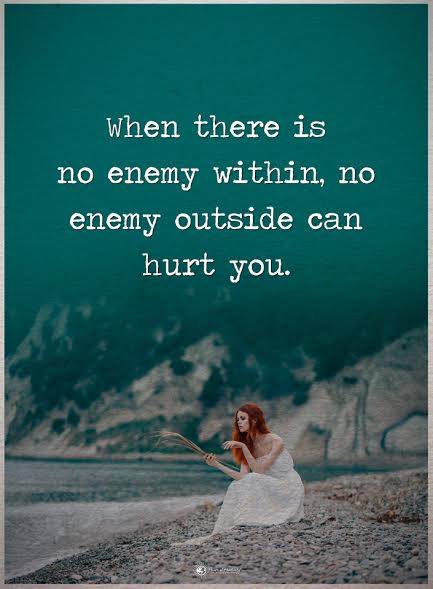
enemy within

3. DON’T MAKE ASSUMPTIONS.

– Find the courage to ask questions and to express what you really want.
– Communicate with others as clearly as you can to avoid misunderstandings, sadness, and drama.
– With just this one agreement, you can completely transform your life.

4. ALWAYS DO YOUR BEST.

– Your best is going to change from moment to moment; it will be different when you are healthy as opposed to sick.
– Under any circumstance, simply do your best, and you will avoid self-judgment, self-abuse, and regret.

Related article: 7 Lakota Sioux Laws That Will Change Your Life

What this article intends to do is to promote freedom. This freedom is a personal one from fear, illusions, and long-held beliefs within the mind, which relieves the human condition from suffering. When this is achieved, you learn to automatically live your life with unconditional love, perennial gratitude, and respect for the self and others.

What can YOU do for yourself to make life better, not only for yourself, but also for others in your clan? Are you mentally strong enough to adopt these Toltec Four Agreements?

Skip to content