Weekly tips, affirmations, and small actions to feel your best.

5 Easy Ways to Stop Heartburn Naturally

What is heartburn?

Heartburn is a relatively common problem caused by acid reflux – a condition where stomach contents (foods, liquids, etc.) are forced upward into the esophagus.

According to estimates by the American College of Gastroenterology, around 15 millions Americans suffer from daily heartburn. These individuals may also suffer from Gastroesophageal reflux disease, or ‘GERD.’ GERD is diagnosed if an individual reports experiencing acid reflux more than twice per week.

Per Medical News Today, here are some other noteworthy facts on heartburn:

– Causes of heartburn include smoking, obesity, lack of exercise, poor diet, and certain underlying medical conditions.
– The primary symptom is a burning sensation in the chest or throat from stomach acid.
– Most commonly, heartburn has little influence on overall health.
– Treatments include antacids and proton-pump inhibitors (‘PPI’ medicine.)

Medical experts consider occasional heartburn to be natural and not a cause for concern.

Other Symptoms

As mentioned, the most common symptom is a burning sensation in the upper chest and throat. These sensations are attributable to the presence of stomach acid.

Other reported symptoms: jaw pain, abdominal discomfort and burning, and acid-like taste in the mouth.

Here are five natural remedies for heartburn:
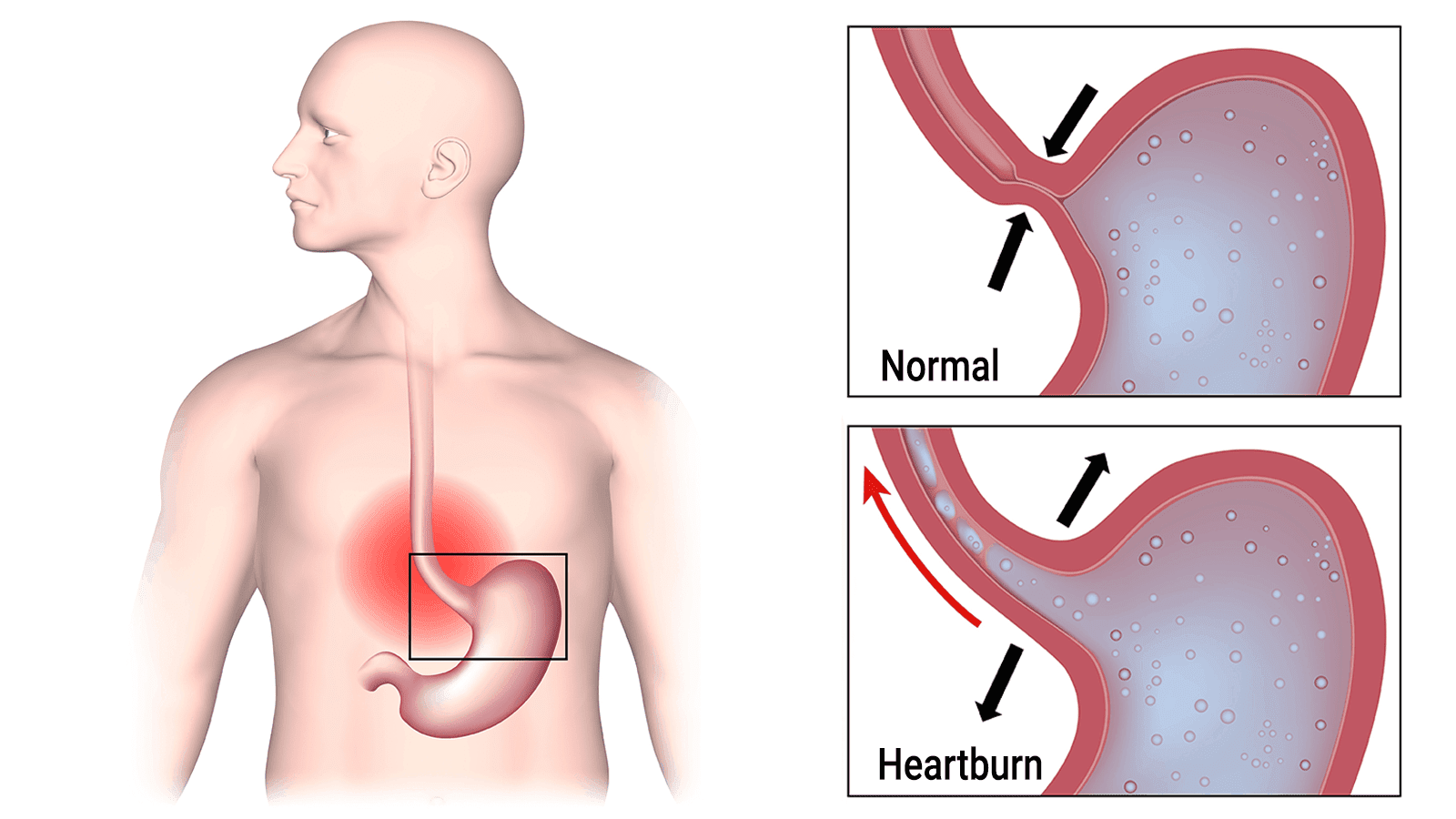
heartburn

1. Baking Soda

Straight up, baking soda is a miracle product. One of its uses – actually, its main use – is as an antacid! Baking soda made up of 100 percent sodium bicarbonate; a slightly salty tasting, alkaline white powder. Baking soda relieves heartburn, acid indigestion, and sour stomach by counteracting excess stomach acid.

How to: Dissolve 1/2 teaspoon into a 4-ounce glass of water, or a full teaspoon in one 8-ounce glass. Repeat every two hours until heartburn is gone.

2. Bananas

Bananas have a high pH level, which is vital to restoring gastric acidity to its natural state. A banana’s texture is also great for relieving discomfort of the esophagus, according to gastroenterologist Gerard E. Mullin, MD.

How to: If you’re not a big fan of ‘nanas by themselves, slice half of a banana and add it to your morning oatmeal or cereal. You can also slice a banana and add a pinch of cinnamon powder and sugar (a pinch!).

3. Ginger

Ginger is one of the best-known natural stomach soothers around. Ginger has a few benefits concerning acid reflux; its anti-inflammatory properties are especially helpful. Inflammation of the esophagus is a key symptom of those with acid reflux troubles.

How to: Ginger is quite a versatile food; it can be diced, peeled, shaved, or sliced. It can be eaten raw or added as an ingredient for salad, soup, sushi, and other foods. Perhaps the best way to enjoy ginger when it comes to heartburn is steeping it in water to make ginger tea.

Here’s a simple ginger tea recipe.

ginger tea

             Click this image for the Ginger Tea Recipe

4. Chewing Gum

While this advice may sound a bit strange, chewing gum stimulates saliva production – a natural acid buffer. Besides producing saliva, chewing gum often makes us swallow more often and pushes acids back out of the esophagus.

How to: Well, there’s not much to popping a piece of gum into your mouth and chewing. A couple pieces of advice, however: choose sugar-free gum and avoid peppermint-flavored gum. Also, don’t swallow gum as it may irritate the lining of your stomach.

5. Herbs

Per WebMD, the following herbs have demonstrated some heartburn-relieving properties: dandelion root, elm bark powder/slippery elm, euonymous bark, holy thistle herb, ginger rhizome, gentian root, meadowsweet herb, myrrh resin, lemon balm leaf, valerian root, southern prickly ash berries, oat seed.

How to: Nowadays, most herbs are sold as supplements or as standalone items. On this note, some supplements are thought to interact with certain prescription medications, so be sure to check with your doctor. The same applies if you have an underlying medical condition.

Preventative Measures

There are plenty of lifestyle changes that may reduce the production of stomach acid. Here are a few:

– avoid smoking
– exercise regularly
– drink plenty of fresh water
– do not eat lying down
– eat a well-balanced diet
– eat smaller, more frequent meals
– limit heavy lifting and straining
– limit and monitor potential ‘trigger foods,’ including: alcohol, caffeine, citrus fruits, milk and dairy products, soft drinks, carbonated juices, tomatoes.
– lose weight if overweight or obese
– review prescription medications with your doctor

https://youtu.be/yG-G9_LOkLA

(C)Power of Positivity, LLC. All rights reserved
Sources:
http://www.gov.pe.ca/photos/original/WI_KRemedies.pdf
https://www.healthline.com/health/digestive-health/ginger-for-acid-reflux#research
https://www.medicalnewstoday.com/articles/9151.php
https://www.prevention.com/food/foods-soothe-heartburn
https://www.thespruce.com/homemade-ginger-tea-3377239
https://www.webmd.boots.com/heartburn-gord/guide/natural-remedies-heartburn#

Researchers Explain 5 Health Benefits of Sleeping Without Clothes

For many people, the nighttime ritual of getting ready for bed involves putting on pajamas and climbing under the covers. But research has now shown that there are actual health benefits to shedding those pajamas and letting your body breathe during the night. Here are some of the ways sleeping without clothes can improve your health.

Here Are 5 Health Benefits Of Sleeping Without Clothes

“If you’re wearing lots of bed clothes, it’s going to be more difficult to regulate your temperature, so wear the least you can get away with.” – Russell Foster

1. Sleeping naked helps improve blood circulation

For people who tend to sleep with clothes on, waking up with a pins-and-needles extremity isn’t entirely unheard of. A lot of people find that their body parts “fall asleep” at night and need some extra time for the blood circulation to return. But the pins-and-needles feeling in your arms and legs isn’t the only thing that can be lacking circulation when you wake up. According to a study by Anna’s Linens, sleeping naked can help improve our body’s blood circulation. This can have an extremely positive benefit on your heart, lungs, and muscles.

benefits of naps

2. Sleeping without clothes also helps improve metabolism

There are a few steps when it comes to improving your metabolism where sleeping naked is concerned. First of all, sleeping without clothes ensures that you don’t overheat. When your body temperature lowers, your body activates a type of body fat that regulates your body temperature. This is to ensure that you stay warm enough while you’re sleeping. The Valley Sleep Center discussed how sleeping at a lower temperature helped people burn fat and calories at a faster rate. For a better metabolism, take off your pajamas and sleep free.

3. Sleeping without clothes helps lower stress levels

There are so many things that can cause us to get a poor night’s sleep. Stress is actually one of the worst culprits when it comes to people struggling to get to sleep and stay asleep. For the most part, sleeping without clothes has been shown to help people sleep because our bodies are much better equipped to sleep at certain temperatures. Restrictive clothing can make you overheat, which can be one of the causes of waking up feeling poorly. Getting a good night’s sleep is key to reducing stress levels. Once you start sleeping naked, you’ll notice that you’re getting better sleep and feeling less stressed during the day.

4. Ladies, it can help reduce yeast infections

Sleeping without clothes can help cut down the number of yeast infections you get. Alyssa Dweck, a gynecologist in New York, said that women who deal with chronic yeast infections and inflammation will benefit the most from sleeping without underwear. If you’re a woman who has a hard time with yeast infections, try sleeping this way to reap the benefits.

5. Sleeping without clothes helps improve fertility in men

For the most part, the benefits of sleeping without clothes all have to do with the restrictions of the clothes on your body as well as the temperature that your body is during the night. Overheating during the night can cause all kinds of problems, from a poor night’s sleep to increased stress levels. For men, sleeping at a constant temperature can help keep their sperm count healthy and high for their respective ages. This is why sleeping without clothes is recommended for men who want to increase their virility and stay fertile.

Final thoughts

Our bodies need sleep at the end of the day. Resting helps our bodies repair, helps boost our immune systems, and gets us ready for a new day out in the world. The best thing we can do for our bodies is to help them get the high-quality slumber they deserve. That’s why sleeping without clothes is one thing you can do to help your body during its most vulnerable hours. Even researchers agree that sleeping without clothes comes with a whole host of benefits for our bodies. It might take some getting used to, but once you get comfortable sleeping this way, you’ll never want to go back.

(C)Power of Positivity, LLC. All rights reserved
References:
https://timesofindia.indiatimes.com/life-style/health-fitness/health-news/Health-reasons-why-you-should-sleep-naked/articleshow/46541505.cms
https://www.prnewswire.com/news-releases/national-sleep-survey-pulls-back-the-covers-on-how-we-doze-and-dream-184798691.html

7 Adult Behaviors of Someone Who Was Made Fun of As A Child

Bullying is a highly troubling and heartbreaking issue. The psychological damage of bullying often sticks with an child well into adulthood – as is typical of traumatic events.

Bullying and Mental Health

According to a study published in the Journal of the American Medical Association, substantial evidence exists demonstrating the increased risk of depression in kids who were bullied. During childhood, victims of bullying often display depressive symptoms, poor academic performance, and low self-esteem.

Many of the psychological effects of bullying – particularly anxiety and depression – are often evident among adults who faced constant physical and/or verbal harassment as children. (Children who both instigated and were the recipient of bullying may suffer even worse mental health problems.)

This article discusses seven potential adult behaviors of someone made fun of as a child. To wrap things up, we’ll briefly talk about some treatment options available for those suffering.

Here are 7 adult behaviors of someone bullied as a child:

“Being bullied frequently by other children is a traumatic experience, and researchers need to gain a better understanding of how important a child’s early peer and school experiences are for their development.” ~ Cari Nierenberg: “Childhood Bullying Can Have Lasting Effects On Mental Health.”

1. Extreme Anxiety

Anxiety that is constant and intense is perhaps the most common symptom of childhood bullying. Adults bullied as kids are often diagnosed with social anxiety disorder, or SAD. SAD is the third-most-common mental health condition in the world – and it is often debilitating.

Individuals with SAD or a similar condition also know that the anxiety is irrational. For example, they innately understand that people are not always watching and judging them – but this knowledge does next to nothing to relieve the symptoms.

2. Isolation and Withdrawal

Kids who faced bullying often have to overcome years of negative subconscious programming that bullying leaves behind. When facing rejection or peer adversity, the natural human tendency is to withdraw and isolate themselves.

Why? Because isolation from others may be hurtful, it is less than exposing themselves to rejection or worse.

good enough

3. Depression

Per a research study from Kings College in London, England, victims of bullying are more likely to suffer from depression for up to 40 years. Individuals who were “frequently” bullied, according to the study, are nearly twice as likely to develop the condition.

The most common symptoms of depression include irritability, fatigue, restlessness, feelings of guilt, worthlessness, and helplessness, pessimism and hopelessness, and loss of interest in previously enjoyable activities.

4. Physical Illness

As it’s well established that childhood bullying correlates strongly with mental health problems, it’s unsurprising that physical symptoms often develop as well. Some studies show a link between higher rates of obesity, cardiovascular disease, and substance abuse among adults who faced bullying as children.

Health experts know that psychological problems can manifest into physical. For example, individuals diagnosed with anxiety and depression have an increased risk for both heart disease and substance abuse. The elevation of the stress hormones, cortisol, and adrenaline may be the catalyst for many of these physical effects.

5. Underachievement

One of the most heart-wrenching aspects of bullying is its effect on intelligent, capable kids. Unfortunately, these are the same kids that are often targets of bullying. While some resilient kids manage to overcome these difficulties and still succeed in the classroom, many do not.

The mental health conditions mentioned in this article alter the brain’s natural chemistry. This fluctuation in brain chemicals – especially serotonin – makes mental processes like concentration and memorization much more difficult. Underachievement in kids made fun of often begins in the classroom and continues into adulthood.

6. Poor Emotional Intelligence

Emotional intelligence is “the capacity to be aware of, control, and express one’s emotions, and to handle interpersonal relationships judiciously and empathetically.” It’s easy to understand why someone marginalized as a child may be unable to pick up on or understand emotional cues – even their own.

Childhood bullying almost always leads to emotional underdevelopment. The reason is that bullied children do not experience the social interactions required to mature socially. This stunting of emotional intelligence often lasts well into adulthood.

child

7. Antisocial Behavior

In a joint study conducted by researchers from Duke University and Warwick University (UK), scientists conclude that victims of childhood bullying are more at risk for adopting antisocial behaviors. The 1,400-person study tracked people from the ages of nine to 26. As a result of their observations, they showed that those identifying as “bully-victims” were also more likely to be convicted of a criminal offense.

“We cannot continue to dismiss bullying as a harmless, almost inevitable, part of growing up,” says Professor Dieter Wolke of the University of Warwick, “We need to change this mindset and acknowledge this as a serious problem for both the individual and the country as a whole; the effects are long-lasting and significant.”

Psychological trauma often requires a combination of talk therapy (cognitive behavioral therapy, or CBT) and medication. Research shows CBT to be particularly useful.

Treatment

A practice called mindfulness-based stress reduction, or MBSR, has proven useful on military personnel suffering from post-traumatic stress disorder (PTSD). It stands to reason that mindfulness and meditation practices may help alleviate some of the psychological and physical effects of bullying.

Psychology Explains Why Blunt People Make The Best Friends

Genuine friends are more valuable than a dozen acquaintances–but how about blunt people. Do you perceive them as good friends?

We all know that one person who tells it like it is – the friend that is brutally honest with us and gives us the tough love we need to make it through the day. We all know someone just like that. Why is it that everyone seems to have that one blunt friend? According to sociology, blunt people make the best kinds of friends.

Here Are 5 Reasons Why Blunt People Make The Best Friends

Blunt people often have a sharp exterior with a marshmallow center.

1. Blunt people tell it like it is

This means they will be honest, even when you don’t want to hear it. Blunt friends believe in telling “it as it is so people can deal with the very root of the situation,” says William B. Bradshaw, Ph.D.

That doesn’t mean they’re going to be cruel, though. Brutal, honest, and tough love is about telling someone exactly what they need to hear, even if it isn’t what they want to hear. A blunt friend will never lie to you to try and spare your feelings. You know precisely what you’re getting, meaning the friendship will have less uncertainty. You’ll always know when your blunt friend tells you something, it will be the truth.

friendship

2. You’ll always know they want to be your friend

The best thing about blunt people is that they have no reason to pretend to be friends with someone that they don’t like. They also have no reason to lie about how they feel. A blunt person will tell you if they like you or not. So, when a blunt person has decided they like you, you won’t ever have to guess how they feel. They want to be your friend and will have no problem building a solid and lasting friendship with you.

3. They push you to be better

When it comes to other people’s shortcomings, most people find it hard to tell their friends what needs improving. This is usually due to a desire not to cause a rift in the friendship or to hurt the other person’s feelings. Blunt people don’t have these same hang-ups. A blunt person will tell you precisely what you need to do to better yourself, and you’ll know they mean it.

When you surround yourself with friends like this, your life will completely change.  You become more positive, driven, and focused on your priorities,” adds lifestyle and business expert Chalene Johnson. They’re the perfect person to go to for honest feedback and criticism.

4. They’re not afraid to apologize

Admitting when you’re wrong can be difficult for some people. For blunt people, admitting they’re wrong is a lot easier. This is because they don’t have a problem telling others when they’re wrong, so why should they admit it themselves? Friendships with blunt people are usually free of the same arguments in other relationships. Someone who is blunt will be willing to admit when they’re wrong and won’t be afraid to apologize.

5. They won’t let you get harmed

A blunt friend doesn’t put up with any wrongdoings against themselves or their friends. Because they’re not afraid to say what they mean and mean what they say, a blunt person will be the first one in your corner when you need it. They will be by your side and have your back, especially when dealing with a stressful situation. If other people try to talk behind your back, your blunt friend will be the first to step into the ring for you. They make best friends because they’re not afraid to fight for their loved ones.

blunt people

Final Thoughts on Why Your Blunt Friends Are the Best

Human beings benefit from a variety of social interactions. We need a lot of different types of emotions and energy to keep our social lives healthy. Just as much as we need a person who will be kind and compassionate, we need someone who will be blunt and brutally honest. This is why sociologists agree that blunt people make the best kinds of friends. We need someone who will be in our corner unconditionally. We also need people who will challenge us and make us the best person we can be. Thankfully, unapologetically blunt people fill that role.

If you’ve been lucky enough to know someone like this, let them know how valuable they are. Life is too short for unspoken words.


Avoid Depression: 8 Habits Never to Ignore

How can someone avoid depression? Is that possible by changing habits?

No matter where you are, depression can “affect how you feel, think, and handle daily activities, such as sleeping, eating, or working,” states a fact sheet published by the National Institute of Mental Health.

Depression can affect anyone, so it’s essential to know all the habits that can help keep depression at bay. For some people, depression can be best cured with medication. But, for others, you can lessen or entirely avoid depression by picking up a few good and healthy habits.

What Causes Depression?

The NIH fact sheet offers an overview of the primary roots of this mental state.

While that’s a fair question, it offers an explanation that’s as clear as mud. Researchers continuously study this state of mind. According to the fact sheet, it stems from several situations. They cannot pinpoint just one cause.

Some things that appear to contribute are the following:

  • Your genetic makeup
  • Environmental influences, like whether a person lives and works in a place that supports mental wellness.
  • Biological “misfires” in the body, such as hormonal imbalances
  • Psychological conditions.

Everyone experiences the mental condition differently and expresses it uniquely. No two cases are alike, so researchers find the illness perplexing.

Below, you will find eight frequent vital indicators of depression.

8 Habits To Never Ignore To Avoid Depression


mental illness

1. Avoid depresstion by getting enough sleep

Nothing will help you avoid depression, like getting enough sleep.

There’s also an argument against too much sleep. Consider the following. “While sleep deprivation has proven to be a useful tool in treating depression, it is ironically what most people suffering from depression already are experiencing,” says psychiatrist Sudhir Gadh.

You should always get at least eight hours of sleep a night or more. Going to bed at the same time every night and waking up at the same time every morning can significantly improve your mood. Good sleep habits are every therapist’s first suggestion for stabilizing things like depression that can seriously affect your mood.

2. Exercise

Even if you don’t exercise, moving your body daily is essential. Going for a walk in the fresh air is enough to help improve your risk of getting depression. Exercise releases endorphins, which help boost your mood. If you want to avoid getting depression, make sure to try and exercise every single day. Even if it’s just a short walk, moving your body is important.

3. Drink water

Our brains can be affected by all kinds of things, and dehydration can make our moods plummet. Depression can be alleviated or avoided entirely by ensuring your brain gets the nutrients it needs. That includes water! When your body and brain feel healthy, you’re much more likely to have the tools you need to fight depressed feelings and keep your mood up.

4. Meditation

Meditation is a great way to help your brain stay relaxed and stress-free, which is one of the best tools to avoid depression. Sitting in a quiet spot and letting your brain relax and mind process your daily events is a great way to avoid depression. Even if you only have time for five minutes in the morning, it still works. Most people find that meditation is a great way to stay stress-free.

5. Avoid depression with journaling

Writing out your thoughts and feelings is a crucial habit to pick up when you want to fight depression. It is a great way to process your emotions and lets you get everything out of your head and down onto paper. Most people find journaling to be an invaluable habit, and it can help people alleviate their depression symptoms.

6. Pick up a new hobby

Finding ways to fill your time is a therapist-recommended way to avoid feeling depressed. Find something you love to do, and then do it! “Engaging in a hobby you already love may be just the treatment you have been looking for,” says Dr. Mark Parisi.

Learning a new hobby will keep your mind busy, whether you’re into rock climbing, knitting, or painting landscapes. Also, doing things you love will help release chemicals in your brain that make you feel happy, relaxed, and stress-free.

7. Have a routine

Most people find that having a routine helps lower their falling into depression. That isn’t to say that you can’t break your routine every once in a while. But, for the most part, having a routine is a helpful habit. This means getting up simultaneously and scheduling your day to have a morning and nighttime routine. It will help you get the balance back in your life and avoid depression.

8. Talk to someone to help avoid depression

For the most part, socializing is essential to help people avoid depression. But what’s even more important is having a support network you can talk to about your feelings. Having someone that you trust is key. Opening up and talking to someone is a healthy habit to pick up. Discussing your emotions and checking in on your headspace will help you avoid depression. That person could be a counselor, therapist, or friend.

avoid depression

9. Laugh Out loud

Studies found that laughing has positive physiological effects on your mind. The physical act of laughing causes chemical changes in your body and mind. It lightens your mood and can help reduce your pain levels. So whether it’s a good belly laugh or a simple chuckle, laughing out loud is a good habit never of ignoring if you want to avoid depression.

10. Own a sweet pet

Owning a pet lowers your stress and anxiety. Cuddling your dear little companion makes you feel less lonely and more secure. Pet owners have greater self-confidence and purpose in life. If you own a dog, you’ll meet more people in your neighborhood and get more exercise because your puppy will need to go out for walks. So whether you own a sweet kitty or cuddly pup, your adorable pet will make you feel happier about your life.

11. Find a community

When you’re involved in a community, it serves as a positive habit to fight depression. Hanging out with healthy-minded people helps you stay active and make better choices for your life. Finding a community allows you to be involved with people who will encourage and support you.

12. Stay busy to avoid depression

You may not think staying active sounds like a good habit to avoid depression, but keeping busy lowers depression and anxiety. There’s nothing worse than sitting around daily with nothing to do. It makes you feel useless and tired. Staying busy helps you feel better about yourself and your life. Keep a daily routine and find things to stimulate your mind and body.

13. Read a book

Did you know that reading can improve your mental health? One study with college students found that those who read every day for at least 6 minutes felt less stressed. They had better overall mental health and less psychological distress. Grab a favorite fiction book for a relaxing read and an easy way to help avoid depression.

14. Use music to avoid depression

Individuals who struggle with depression say listening to classical music helps lift their moods. Music has been used for centuries to raise people’s spirits. Harmonic music soothes your mind and soul and relaxes your body. Supposedly, the mathematical nature of music influences your mind to feel more relaxed. Studies found that listening to classical music helped patients’ overall sense of well-being, especially those patients suffering from heart disease, pain from cancer, dementia, and depression.

15. Play a video game

It’s been found that adults who struggle with depression found relief from playing video games. The games helped their brain function and improved their mood. Video games also help you stay socially connected with others, which helps fight depression. Of course, you should avoid violent games due to their harmful effect. But if you’re struggling with depression, playing a video game occasionally is a good habit of helping fight depression.

depression

Final Thoughts on Avoiding Bouts of Depression

Depression can be scary, but no one has to go through it alone. Not only that, but simple lifestyle changes can help you avoid or alleviate depression entirely. These habits are crucial to helping you avoid those feelings. You’ll be amazed by how much good picking up even one of these habits will do.

“You largely constructed your depression. It wasn’t given to you. Therefore, you can deconstruct it.” – Albert Ellis

Psychologists Explain 7 Ways To Fall In Love With Your Partner Every Day

Relationships take time and effort. The honeymoon period doesn’t last forever. Sometimes, we have to fall in love with our partners more than once during our time with them. There’s no shame in it, and it’s ordinary in many relationships, especially long-term ones. Falling in love with your partner repeatedly will make the relationship strong and long-lasting. Psychologists who specialize in relationships have figured out the best ways to fall in love with your partner every single day.

6 Things That Cause the Initial Rush of Love to Fade

“A great relationship is all about falling in love with the same person over and over again.” – Unknown

  1. Lack of Communication: Open and honest communication is essential for any healthy relationship. When couples stop talking and sharing their feelings, the initial attraction can fade away, leaving both partners feeling disconnected and unfulfilled.
  2. Boredom: Couples must keep their relationship fresh and exciting by trying new things together, exploring new places, or simply enjoying each other’s company. When a relationship becomes predictable and routine, it can be easy for the initial attraction to wane.
  3. Neglect: Neglecting your partner’s emotional and physical needs can also cause attraction to fade. You might forget to make time for intimacy or be attentive to your partner’s feelings.
  4. Taking Each Other for Granted: In the beginning stages of a relationship, couples are often very attentive to each other’s needs and desires. As the relationship progresses, it can be easy to take each other for granted and forget to show appreciation for the little things. This can cause the initial phases of love to fade.
  5. Lack of Trust: Trust is an essential component of any healthy relationship. Once you break the trust, it can be difficult to regain. Thus, the initial attraction may fade as a result.
  6. Growing Apart: As individuals grow and change, their relationship may evolve. Couples may grow apart if they do not take the time to grow together and nurture their relationship. This can cause the initial attraction to fade, but it does not have to be the end of the relationship.

choose

Here Are 7 Ways To Fall In Love With Your Partner Every Single Day

Here’s the good news. Couples can restore that feeling and deepen their connection with effort and commitment.

1. Focus on the positive

Negativity can worm into your relationship before you even realize it. Things about your partner that you once liked might begin to irritate you. To fall in love with your partner every day, you want to take a step back and look at all the positives. What is it about your partner that you love? What drew you to them in the first place? Remember all the good, positive things about your partner, and you’ll fall in love daily.

2. Make time to talk every day

Relationships thrive on communication. Psychotherapist Franklin Porter, Ph.D. says this:

Relationships grow stale generally because the couple avoids confronting the issue…

Relationships tend to falter when there isn’t time to check in and talk with your partner. One way to fall in love with your partner daily is to talk with them. Check-in and talk about your days or how you’re feeling. Psychologists agree that sharing your feelings with someone can help you fall in love, and who better to fall in love with than your partner?

3. Do something to make them smile

Remember how much you loved seeing your partner smile when you first started dating? Smiling is contagious, and it can make people fall for one another. To fall in love every day, you should see your partner smile. And the best way to see them smile? Please do something to make them smile! Not only will you be doing something nice for your partner, but you’ll also be falling in love every time you do.

4. Stay intimate

Intimacy is one of the things that relationships begin to lack as the years go on. If you want to fall in love and stay in love, you have to keep working at intimacy. “Partners begin to take their love for granted and forget to keep themselves turned on and to continue to seduce their partner,” says Sari Cooper, LCSW, licensed individual, couples, and sex therapist.

Being with your partner should feel natural, not like a chore. Find time to spend together in an intimate and private setting. You’ll start falling in love with your partner more every day when you keep seeing them at their most intimate.

love

5. Address any issues right away

Don’t let things fester. A key to falling in love every day is ensuring you don’t let problems get bigger than they need to be. When an issue pops up, see if you can find a solution as soon as possible. You’ll find that compromising will help you fall in love with your partner repeatedly every day. Working through problems together is key to staying happy and long-lasting.

6. Give yourself time to miss them

Every relationship needs to have healthy boundaries, and everyone needs to have time to themselves. If you want to fall in love with your partner every day, you need to give yourself time to miss them. Spend some time alone, with friends, or with family.

Take a day trip without your partner so that “when you go home to Yours Truly, you’ll both be recharged and ready to come together even stronger,” says CEO of MeetMindful, Amy Baglan. You’ll be surprised by how much love you feel when you give yourself a chance to miss seeing your partner every day.

7. Flirt like teenagers

When you’re in a long-term relationship, you sometimes forget all the fun that flirting can be. Find time during your day to remind your partner how much you want them, and how attractive you think they are. Flirt throughout the day or send flirty text messages for them to find while they’re at work. Returning to the habit of flirting with your partner will make you both fall in love every day.

love

Final Thoughts on Falling in Love With Your Partner Every Day

Relationships are a lot of work, but they should also be fun. A partnership doesn’t have to be all about bills and the mortgage. Part of the fun is falling in love with your partner every day, over and over again. These tips should help anyone keep the love in their relationship strong.

5 Behaviors That Reveal Your Partner Trusts You’ll Never Cheat

“Trust is the glue of life. It’s the most essential ingredient in effective communication. It’s the foundational principle that holds all relationships.” – Stephen Covey

When it comes to relationships, trust is one of the most important things two people can have for one another. In some relationships, distrust and paranoia run rampant, which can make the relationship strained. Both partners should feel like they can trust one another not to do something unthinkable, like deciding to cheat. But how do you know when your partner trusts you enough to know that you’re not going to cheat? Here are the behaviors that reveal your partner trusts you and isn’t afraid you’ll cheat on them.

Here Are 5 Behaviors Your Partner Trusts You Won’t Cheat On Them

1. They don’t check up on you

When you’re out with friends, how often does your partner text you? If your partner isn’t trying to pinpoint your exact location when you’re out with friends, then they probably aren’t worried about what you’re doing. Someone who has trust issues is more likely to keep tabs on what their partner is doing, which is bound to cause tension in a relationship where cheating isn’t happening. A partner who trusts you doesn’t need to constantly be checking where you are. Your partner may send you a couple of texts throughout the night just to make sure you’re safe, but they probably won’t be blowing up your phone throughout the night.

trust

2. They don’t get jealous over friends

Someone who isn’t afraid you’ll cheat won’t get jealous at the drop of the hat. When you introduce them to your friends, they don’t shut down or start arguments over the people that you surround yourself with. In fact, when your partner isn’t afraid of you cheating on them, they’re more likely to be friends with your friends. When you say that you’re going out with a certain friend, they don’t get upset. People without jealousy issues are less likely to become worried or paranoid over possible cheating.

3. They have their own life

Strangely enough, having their own life outside of the relationship is a key behavior to a partner who isn’t going to be afraid of you cheating. When your partner has their own life and friends and family outside of the relationship, they’re much more likely to understand why you need those things as well. They’re going to be able to tell when you just need a night with your friends versus hanging out with them. Being with your partner is nice, and you always need to have time together. But being with your friends is important, too, and it’s key to have a partner who understands that need without becoming afraid of someone who will cheat.

4. They communicate efficiently

Communication is key to any healthy relationship. If your partner has a good grasp on communicating their needs, worries, and problems in a relationship, then this is a good thing. Having good communication skills is a behavior that most people who aren’t afraid their partner will cheat. Someone who isn’t good at communication is more likely to be susceptible to paranoia and anxiety surrounding what their partner is doing outside of the relationship, even if they have no reason to be.

… this leads to further issues in the relationship and is usually the root cause of most major disputes,” adds marriage coach Eric Hunt. If your partner has always been capable of voicing their needs in the relationship, then they’re probably not afraid of you cheating.

5. They have high self-esteem

Having low self-esteem can be a problem in any relationship, even ones that are built on strong communication and trust. A partner with low self-esteem can still become anxious and paranoid about a partner who will cheat. However, a partner with high or average self-esteem is less likely to become paranoid about those kinds of things, especially when there are no signs of cheating present in the relationship. When your partner has good self-esteem, then you’re going to see a lot more trust. They will take you for your word when you say that they have no reason to worry about a partner who will cheat

Final thoughts

Your relationship should always be built on trust. When there’s no trust, there are a lot of problems. Usually, the suspicion of a partner who may or may not cheat can cause issues, especially when neither partner is a cheat. These behaviors should let you know that your partner trusts you to stay faithful and has no fear that you’re cheating on them. On the flip side, the opposite of these behaviors might give you a clue to whether or not your partner is paranoid about cheating. It can help you get ahead, and make sure those issues are addressed right away.

https://youtu.be/lO-TMrAyth4

(C)Power of Positivity, LLC. All rights reserved
References:
http://www.thisisinsider.com/how-to-know-if-your-relationship-will-last-2017-8#you-know-how-to-communicate-in-a-healthy-way-4

4 Behaviors That Reveal Someone Is Rejecting Love (And They Don’t Know It)

Is someone rejecting love without realizing it?

Love is what makes the world go around. Scientists also insist that people need love to survive. From family to friends to romantic relationships, love is all around us. We receive it every single day. So, when it comes to love, it’s impossible to imagine someone rejecting the love that’s offered to them. Who would ever want to reject love? Most people don’t realize all the ways that they are subconsciously rejecting the love that surrounds them. Knowing how you reject love will make it easier for you to start accepting it and changing your life. Here are all the ways someone is turning away from love, even if unaware of it.

4 Behaviors That Reveal Someone Is Rejecting Love Without Realizing It

“When we can identify what activates in us that causes us to retreat from being vulnerable and loving, we can start to understand why we act the way we do.” – Dr. Lisa Firestone

1. Starting arguments

When people feel too vulnerable in a relationship, it isn’t uncommon for them to start picking fights with their significant other. Most people experience arguments or mild disagreements in a relationship. This is a natural part of having a relationship. But, when someone rejects love, they start picking fights that don’t need to happen. Not only do people rejecting love start fights, but they also don’t let arguments resolve naturally. In order to start accepting love, it’s important to take a step back and get a reality check. If you find yourself starting arguments, look at the reasons why. You may find that you’re subconsciously trying to reject love.

peace

2. Shutting down emotionally

How should anyone accept love without being in tune with their emotions? Shutting down emotionally is one of the ways many people reject love without even realizing it. When you start to feel vulnerable, cutting yourself off from your emotions may seem like the right thing to keep you safe because “we often convince ourselves that we don’t care that much about the relationship,” adds Dr. Lisa Firestone Ph.D.

But rejecting love will only ensure that you can’t experience it. Take notice of when you shut down emotionally. What triggers it? Take steps to be more open and honest with your partner. When you allow yourself to feel your emotions, you can accept the love in your life.

3. Settling for less than you deserve

We don’t always date the people who will treat us the way we deserve. That’s just a fact of life. But when you continue to settle for less, you’re rejecting the love of all the people who would treat you the way you deserve. This is usually due to someone feeling like they don’t deserve the kind of happiness that they desire most. Take a look at your past relationships and see where they don’t live up to what you deserve. Now, imagine that someone you love was constantly settling for less. What would you tell them? Try to take the advice you would give a loved one and allow yourself to seek out the relationship you rightly deserve.

4. Comparing self to others

When we compare ourselves to others, we often feel less than our best. But what most people don’t know that comparing yourself to others is a way of rejecting love. When you compare yourself to others, you’re allowing yourself to wallow in low self-esteem. And of course, when you have low self-esteem, you tend to reject the love that comes into your life. Instead of comparing yourself to others, focus on yourself. Focus on what you’re good at, and what makes you a unique person. Everyone has something to offer others, and you have good things to bring to every relationship. The moment you stop comparing yourself to others, you’ll be better equipped to start accepting love, instead of rejecting it.

rejecting love

Final Thoughts on People Who Are Rejecting Love

Do any of these things sound like you? Are you someone who picks fights in your relationship? Or maybe you’re constantly comparing yourself to other people? If so, you’re most likely rejecting love. Thankfully, there are ways to start accepting love instead of pushing it away. If you’re honest with yourself, and recognize these love-rejecting habits, you can start making some fundamental changes. Everyone deserves to feel love. Don’t be afraid to open up emotionally to your partner. Never accept less than what you deserve in a relationship. These are the first steps anyone can take to allow love back into their lives.

5 Foods That Increase Your Brain Power Naturally

“Once we hit our late twenties, the brain’s aging process begins and we begin losing neurons – the cells that make up the brain and nervous system. By our sixties, our brains have literally begun to shrink.” ~ Canyon Ranch Institute: ‘How Your Brain Changes With Age’

Not too long ago, most people – including brain experts – thought that loss of brain cells meant the loss of intellect and that loss of intelligence was both inevitable and irreversible. All of this, of course, was before the discovery of neuroplasticity, the almost superhuman ability of the brain to grow neural connections throughout life.

Dr. Michael Merzenich, one of the pioneers of neuroplasticity research, explains this incredible capability of the brain:

“Your brain is plastic. You have the power within, at any age to be better, more capable, continuously growing a progressively more interesting life. If you’re in (cognitive) decline, you have great resources that can help you sustain – indeed, even regrow – your neurological abilities in ways that can help assure that your active brain shall last as long as your physical body.”

Now, because of aging’s cumulative effects on the brain, there is no possible way to regrow every neuron that’s ever spouted, but that’s not necessary. The most important thing, according to Dr. Merzenich, is that we continue to challenge, nourish, and protect our noggin.

If you do these three things, you’ll be able to care for your brain well beyond what is needed for healthy cognitive function.

The Role of Food

As you well know, pretty much everything that you put into your body has a physical and psychological impact. We’re either adding to our brainpower or subtracting from it. Wolf down four pieces of pizza, and you’ll probably feel a bit less sharp; eat an orange and you may experience a slight brain and energy boost.

If you’re interested in maximizing your intellectual capabilities and want to use food as a means for doing so, this article is for you. Only the foods that produce a significant (and well-documented) cognitive benefit are worthy of mentioning here.

Here are the best foods for your brain according to doctors and other experts:

1. Blueberries

A.k.a. “brain berries,” blueberries are perhaps the most potent brain food of all. First, foremost, and most importantly, blueberries protect your brain from the damage of free radicals and age-related cognitive disorders such as dementia.

In one interesting study, researchers conclude that blueberries increased “both the learning capacity and motor skills” of aging rats. These findings show that eating at least one cup of fresh blueberries per day may reap some serious brain benefits.

2. Avocados

avocado

Besides blueberries, avocados may just be the next best food for your brain. “I don’t think the avocado gets its due,” says Steven Pratt, MD, author of Superfoods RX: Fourteen Foods Proven to Change Your Life.

The most notable discovery is that the monosaturated fats in avocados significantly increase blood flow to the brain as well as also lower blood pressure. The former effect enhances thinking skills, while the latter safeguards them against decline. Healthy as avocados are for the brain, they’re pretty high in calories. Add just 1/2 avocado to one daily meal, maximum.

3. Nuts and Seeds

Per WebMD, an ounce of almonds, Brazil nuts, cashews, flaxseed, filberts, hazelnuts, sesame seeds or sunflower seeds may help halt some of the inevitable cognitive declines of aging. Scientists attribute this neuroprotective effect to vitamin E.

Unhydrogenated nut butters, including peanut butter and almond butter, also work. If you are sensitive to sodium, buy unsalted varieties. As with other calorie-heavy foods on this list, enjoy nuts and seeds in moderation.

4. Pomegranate Juice

Pomegranate juice is a convenient way to get a nice dose of antioxidants in a convenient package. Eating the fruit is also an option if you don’t mind separating the tiny seeds.

As pomegranate juice contains sugar, it is wise to drink just a bit. Two ounces of the stuff mixed in with some spring water will suffice just fine. Here’s another option: 1 ounce of pomegranate juice, a teaspoon of lime juice, and a healthy dose of club soda.

5. Dark Chocolate

We’ll go ahead and end this article with dessert. While indeed a tasty treat, dark chocolate is also a superfood! The reason? Antioxidants and more antioxidants! Dark chocolate also contains natural stimulants which help to enhance concentration. Of course, it is best to enjoy dark chocolate in moderation. Some tips: choose dark chocolate that is at least 70 percent cocoa (80 to 90 percent is even better, though considerably more expensive.) A few squares, or about a half ounce to an ounce, is plenty enough to reap the brain benefits of this treat.

https://youtu.be/7BNGVmwxoHI

(C)Power of Positivity, LLC. All rights reserved
Sources:
Merzenich, M. (2013). Soft-Wired: How the New Science of Brain Plasticity Can Change Your Life. Parnassus Publishing. San Francisco, California.
https://www.brainhq.com/media/news/you-can-rewire-aging-brain
https://www.canyonranch.com/blog/health/how-your-brain-changes-with-age/
https://www.webmd.com/diet/features/eat-smart-healthier-brain#1
Skip to content