Weekly tips, affirmations, and small actions to feel your best.

Psychology Explains Why It’s So Difficult to Heal After a Breakup

A breakup can be devastating or unexpected. It may be a long time coming and for the best. You may feel relieved or betrayed in its wake. But, regardless of the context surrounding a breakup, one thing is constant: it hurts, and it’s hard to heal from. Psychology explains why it’s so difficult to recover after a breakup.

1. You’ve Lost Your Primary Source Of Support in the Breakup

In a healthy relationship, you have multiple sources of emotional support in your life. That support system will be instrumental in your journey to healing from a breakup and can make the trip easier.

But, even then, few can deny that their most significant source of support is their partner. After all, in most committed, serious relationships, you spend most of your time with your partner, especially if you live with them or spend much time in each other’s home.

get over a breakup

When you break up with someone, you lose their support just as you enter a challenging period in your life. This entire time, you’ve been able to come to that person for support and love when needed. And now that you’re nursing a broken heart, they’re out of the picture, and you can’t go to them anymore!

If you’ve gotten used to your former partner’s undying support, you’ll now feel even more vulnerable without it. This can make things feel even more raw and painful as you struggle to pick something up. Sure, you’ll have external support from other loved ones in your life, but the vulnerability you shared with your partner will likely be the kind of support you missed most.

On top of that, less healthy relationships may have an unhealthy attachment, causing you to rely too much on your partner for your happiness and emotional health. This can make healing even more difficult. The breakup could have removed your only source of support or the person who acted as your coping mechanism.

In the case of less healthy relationships, it’s ultimately a good thing for a breakup to happen. However, the harmful patterns developed in that relationship can further worsen your attempts to get better, as your overreliance on a former partner makes you unable to regulate how you feel.

2. The Breakup Calls Your Identity Into Question

Relationships change your perception of yourself. You go from being one single individual to being someone who is actively planning a life with someone else. You share your world with them, and they share their world with you, and in the process, you absorb a little bit of each other. Your psychological boundaries blur slightly, and you merge in many ways. This happens because you do these things:

  • Experience new things together, thus shaping future thoughts and ideas based on shared experiences.
  • Develop inside jokes and knowledge that only both of you share.
  • Are vulnerable and open with each other, talking about difficult things that you may not share with anyone else.
  • Ask for the other person’s opinions; even when you disagree with them, you gain information on their perspective.
  • Hear and exist in a world where your partner dictates as much as you do, compromising and hearing their ideas and beliefs throughout the day.
  • Find things that are “yours” to do. Hobbies that you do together, something that you both enjoy and other little rituals that make your relationship unique and have sentimental value.
  • Try things that you would never have tried if not for your partner.

It certainly doesn’t help that in many relationships, people overdo this and become “one unit” instead of two separate but committed whole people in a partnership. In dynamics like this, that togetherness becomes unhealthy, and you lose some sense of your identity and who you are in the process.

Regaining Your Individuality

But even the healthiest relationships, where both partners maintain their individuality healthily and robustly, experience this. You can’t help it! Studies show that partners start to think of things in standard terms, considering what “we” want and what’s best for “us.” In most cases, when done in the right amount, this is perfectly fine and is often essential for long-term, serious relationships.

But when relationships end, the identity you’ve developed as part of those partnerships begins to erode. According to research, you start questioning yourself in the weeks following a breakup and may lose sight of your identity. You might wonder if you love the hobbies you got into with your ex-partner. Or you question if you were only participating for the sake of the relationship. You might ask yourself if you genuinely believe in the ideals you developed based on your ex-partner’s ideas and opinions or if your love for them swayed you.

This can leave you feeling lost and depressed, and your identity’s confusion can hurt. It may take months before you’re more sure of your identity once more, and the time you spend unsure may cause a lot of negative thinking and declining well-being. This is one of the biggest reasons healing after a breakup can be painful.

after a breakup

3. Your Body Knows Something Is Different After a Breakup

When you’ve been dating someone for a decent time, your body adapts and adjusts to their presence. Your whole biological rhythm changes say studies, and your partner becomes a part of the systems your body recognizes as a constant.

Think of it similarly to good sleep hygiene and how your body knows it’s time to sleep. When you go to sleep at different times, and in unstable environments, you have a more challenging time falling asleep. But when you maintain a consistent sleep schedule and have a habitual winding-down routine before bed, you get sleepy at the correct times and wake up more quickly.

Having a long-term partner, especially one you live with, is like having a consistent sleep schedule. Like with all consistent things in your life, they become a part of your body’s daily routine. This keeps you grounded and helps you navigate life evenly. On top of that, your partner’s daily routine likely plays a part in signaling yours.

Physical Symptoms After a Relationship Ends:

For example, you may:

  • Wake up as they make coffee in the kitchen
  • Automatically make two servings of everything you cook or make
  • Get hungry just as they get home from work
  • Feel thirsty when you hear your partner pouring a drink because you know they’re making one for you too
  • Become naturally sleepy when you lie next to them as they read in bed
  • Feel a little more energized when your partner is with you
  • Have a bath earlier than you did when you were single so your partner can use the shower after you
  • Stop eating late-night snacks so you can go to bed earlier at the same time as your partner
  • Become less stressed out when you get home from work thanks to a hug from your partner

In a breakup, a massive part of your routine life vanishes quickly and suddenly, and everything you regulated as part of your life with your partner is no longer present. At the same time, you are filled with negative emotions surrounding the breakup, making it harder to adjust to the dramatically shifting routine.

Breakups hurt because there’s so much you have to change about your life and adapt to. Of course, all of that is in addition to an already bad emotional state. You must change your routine so you wake up earlier to make coffee. You have trouble sleeping because your former partner isn’t there to signal bedtime with their routine. You’ll no longer have something that helps you de-stress from work. You catch yourself cooking two servings of food without thinking about it.

It certainly doesn’t help that all these changes to your routine are evident and palpable, so you’re constantly reminded by your partner in all aspects. Both the physical changes and emotional pain take a further toll on your physical health as your body struggles to adapt. No wonder a breakup is so hard to heal from!

4. Your Future Plans Change

In committed relationships, your plans begin to shape with your partner’s inclusion. Even newly committed relationships involve some degree of this; you may plan to attend an event later that year with your partner.

But in long-term, long-lived relationships, this extends to substantial life changes. You decide what city you want to live in, how many kids you want to have, and what your life will look like in the next five or even ten years. Those thoughts no longer apply; you must remove them from your plans. You may even have shared assets you thought you could rely on, and now you may have to give them up.

And, of course, even the most balanced relationships must involve compromise and some degree of sacrifice. Maybe you gave up living in your dream city because you knew you’d have a better life with your partner’s job in a different town. Now, you might regret that decision. And that gets worse in unbalanced or unhealthy relationships – maybe you’ve always reached the short end of the stick, giving up on your future wants for your partner.

It’s reasonable to be anxious about the future even when your relationship is entirely secure and healthy and you have everything planned well. So, naturally, anxiety peaks even further when all of that gets called into question, and you’re left floundering with an uncertain future after a breakup. Healing is difficult after a breakup because you must confront the reality that your envisioned future may be completely different now.
healing

Final Thoughts on Some Reasons Why It’s Difficult to Heal After a Breakup

Healing after a breakup is difficult and painful, but it’s not impossible. You can and will heal. Whether you want to date again in the future or not doesn’t matter. What’s important is that you’ll feel okay again, and it won’t hurt anymore. Hold onto the knowledge that things will be OK, and you will find recovery waiting for you in the future.


Kind Man Helps An Autistic Child Recover From A Meltdown

When an autistic child got overwhelmed and had a meltdown, a kind soul stepped in to help. Not all heroes wear capes; sometimes, saving the day looks like calming down an anxious child. Children with autism often experience anxiety and get triggered by certain situations. While we may not totally understand, we can still offer support to those who experience life differently than us.

That’s exactly what a man named Ian did when he crossed paths with a 5-year-old autistic child one day. His mom Natalie Fernando had taken him for a walk by the sea in Essex, England, one afternoon. Her autistic son Rudy, also known adorably as “Roo,” unexpectedly had a meltdown during their seaside stroll.

“My son loves to walk, but he hates to turn around and walk back, we usually try to walk in a circuit to avoid this but on his favorite walk with the boats, we have no choice but to turn back, this will often lead to a meltdown, one which I can normally handle but on the back of 2 weeks out of school today was too much for him and me,” his mom explained on her personal Facebook blog, Better to Be Different.

Many people enjoy a relaxing walk at the promenade at Southend Sea Front, as it offers an amazing waterfront view and the convenience of a jet ski dock nearby, making it easy for enthusiasts to access and enjoy water sports. While many people passed by Natalie and Roo that day, only one person reached out their hand to help. Natalie said that before Ian showed up, she and her son were met with disapproving stares from strangers watching the scene unfold.

She tried to calm Roo down, but parenting an autistic child comes with its own set of challenges. Natalie says that talking him down during a tantrum isn’t always easy.

How Ian helped Roo calm down during the afternoon walk

Natalie said in the recent post:

“Only minutes before Rudy and I were being tutted at, stared at and frowned at by a woman and a man with a 2-year-old in a [stroller] trying to sleep despite me apologising for my sons loud noises, hence the walk along the sea front so I can let him express himself outdoors. Short from gagging him, I’m not sure of an alternative.”

Exasperated and at her wits’ end, Natalie didn’t know what to do next. Her son’s outburst drew a lot of unwanted attention, but calming down the autistic child seemed out of the question. The moment when Natalie started to lose hope, Ian showed up to save the day.

The man had been running along the walkway by the sea when he noticed Rudy. When he passed by, the boy was lying on the ground and looked upset. So, naturally, Ian wanted to see how he could be of assistance. Of course, he assumed that Roo was having a tantrum like most other young children.

To ease the tension, Ian asked Roo his name and tried engaging him in conversation. That’s when Natalie explained that he had autism and didn’t really comprehend what he was saying. However, when she explained her autistic child’s struggles which made the portion of the walk difficult, it didn’t deter Ian. He said, “That’s cool; I’ll lay down with him.”

So, he started to talk with Rudy while lying down on the sidewalk, just trying to ease the boy’s anxiety. After Rudy calmed down, Ian offered to walk Roo and his mom back to their car. This kind gesture totally turned their day around and showed that a little understanding and compassion could go a long way.

Natalie was so grateful for Ian’s kindness that she made a Facebook post about it.

 On her personal Facebook blog page, Natalie expressed her gratitude for Ian showing up at exactly the right time. She titled the post:  “This Man, A Total Stranger.

“This man, a total stranger, saved me today from either a meltdown lasting up to an hour or more or the alternative, which is usually a bit of a beating from my boy who totally loses himself when he has a meltdown and can become very aggressive.”

Natalie further explained:

“This man, a total stranger, took time out of his day to just chat and ask if I was ok. This man, a total stranger, was my hero this morning…after laying with Roo [he] then walked Rudy and I all the way back to our car. I wish there were more of this man around and I am beyond thankful.”

Natalie said she will never forget Ian’s kindness and hopes others can learn from his example. As a mom of an autistic child, she believes it’s important to empathize with others instead of passing unnecessary judgments.

She wrote the following on her page: “It said a lot at the moment, ‘in a world where you can be anything be kind.’ Words are easy, these actions are not always so easy. This man is living the words, and I couldn’t be more grateful.”

She added: “If you see a parent struggling, maybe take the time to say, ‘Are you ok?’ Don’t judge the parenting. Try not to judge the child. Just be kind. We’re all walking our own path and navigating the journey the best we can, sometimes it takes a moment of kindness from a stranger to completely change your day. Thanks Ian from Southend Sea Front. You truly are a kind man.”

autistic childFinal thoughts on the kind man who helped an autistic child through a difficult moment

Ian met Rudy and his mom Natalie while walking seaside in Essex, England, one afternoon. After noticing Rudy having a meltdown, he quickly stepped in to see how he could help. He introduced himself to “Roo,” and after Natalie mentioned his autism, Ian seemed to know exactly what to do.

He laid down near Rudy on the ground and chatted with him. The kind gesture appeared to calm him down considerably. After ensuring Rudy was okay, Ian walked both him and his mom back to their car. Sometimes, it’s a kind stranger who comes to the rescue when you least expect it.

Nigerians Build Earthquake-Proof Homes from Plastic Bottles

With all the plastic waste in our world, some people have decided to repurpose it into something amazing. In Nigeria, companies have begun using plastic bottles to build homes. Called “bottle brick” technology, the building materials can easily withstand powerful earthquakes.

Nigeria’s first home constructed from recycled plastic bottles sits in the village of Yelwa. It became so popular that tourists come from all over to see it. Government officials and traditional leaders from Nigeria also visit to see the unique structure.

Trader Nuhu Dangote traveled from the state capital, Kaduna, to witness the architectural masterpiece firsthand. He couldn’t believe it was built using only plastic bottles and mud. Once he saw it, he told everyone he knew to visit the eco-friendly home.

You might not think that plastic bottles would look aesthetically pleasing, but they’re surprisingly beautiful. The round bottoms of the bottles face outside the home, so it produces an eye-catching design. The bottles get packed with sand and then placed on their side. Next, they stack the “bricks” on top of each other and “glue” them together using mud.

In northern Nigeria, homes are typically built in a round, rather than square, fashion. These plastic bottle homes were developed to keep the traditional look alive. While the homes look beautiful, the developers built them with the environment as first priority.

Since then, companies expanded their production and built twenty-five structures on the land. A Greek businessman and environmentalist donated money for the project. Hopefully, plastic bottle homes like these will become commonplace in the future.

 Each of these homes comes equipped with a bedroom, living room, bathroom, toilet and kitchen. Approximately 7,800 plastic bottles are used in production.


The plastic bottle homes provide affordable, safe housing for millions

 The “bottle brick” technology began nine years ago in India, South America and Central America. The homes provide people with an affordable, eco-friendly option, as traditional brick homes are quite expensive. Yahaya Ahmed of Nigeria’s Development Association for Renewable Energies, says plastic bottle houses cost 67% less than a home built from concrete and brick.

 Not to mention, houses made of plastic bottles have the upper hand regarding durability and safety. He went on to say that compacted sand inside a bottle has twenty times the strength of bricks. His company even plans on building a three-story building with the technology.

The bottle houses also help insulate the living space from the intense Nigerian climate. The sand helps block the sun’s heat, which keeps temperatures comfortable indoors. Plus, the compact sand makes the structure bulletproof, improving the home’s safety. In high-crime areas of northern Nigeria, the durable structure gives residents peace of mind.

 The company first lays a firm concrete foundation to create a stable structure. Builders use a sieve to sift the sand for the walls to make them compact. This process removes stones from the sand to pass through the bottles’ mouths.

 While many people have expressed their excitement about the bottled brick homes, not everyone shares the sentiment. Some people feel that the increased demand for sand will make it too expensive.

When considering alternative wall options for construction, homeowners and builders alike should explore various materials that can enhance both aesthetics and functionality. One popular choice is drywall, known for its versatility and ease of installation.

Proper drywall finishing is essential to achieving a seamless look, providing a smooth surface that can be painted or decorated to match any design preference. This finishing process not only contributes to the overall appearance of a room but also plays a significant role in improving sound insulation and fire resistance, making it a practical choice for many residential and commercial projects.

Mumuni Oladele, a mason in the southern Lagos, already sees a problem with the building method. He often sees companies digging everywhere for sand to build houses. He believes that’s just a glimpse of the future, as the demand for affordable homes increases.

 Despite the concerns, it seems the benefits far outweigh the costs.

The plastic bottle homes give people jobs and remove discarded plastic from the environment

In the state capital of Kaduna, the building project gives children a way to earn money for the future. Whether they’re unemployed or not in school, children can find purpose and meaning in helping to build the homes. 15-year-old Shehu Usman, who works on the site, says he enjoys both working and earning an income. He hopes to have a plastic bottle at home when he grows up, too.

After the 25 homes have been completed, the Development Association for Renewable Energies will begin working on a school. It will also be built on the estate and give street children like Shehu an opportunity to attend.

 In addition to the schooling and job opportunities, the project obviously does wonders for the environment. Plastic pollution in developing countries like Nigeria is a growing problem. Unlike first-world countries like the US, they lack adequate recycling centers and waste management. As a result, plastic piles up, lining the main streets and alleyways.

According to market research company Zenith International data, most water is sold in small plastic bags in Nigeria. However, the bottled water market continues to grow, and accounts for 20-25% of sales. This equates to around 500m liters of water per year.

Then, the discarded plastic bottles often end up in the environment. However, street vendors sometimes collect them to sell products such as peanuts. Other citizens utilize them for storage. With the plastic bottle homes project, there’s now a huge demand for these bottles.

The developers have gone to hotels, restaurants, homes, and foreign embassies asking for extra plastic bottles. This way, the consumer puts waste products to good use, and it doesn’t pollute the environment or waterways.

plastic pollutionFinal thoughts on the homes built from plastic bottles in Nigeria

 Who would’ve thought plastic bottles could be used as home walls? One housing development company in Nigeria envisioned building affordable homes using these bottles. That way, the homes would serve two purposes: giving people a roof over their heads and cleaning the environment. It did even more for the community, providing jobs for needy people.

 Eventually, the company will construct a school on the property so children helping with the project can receive a good education. Perhaps the project will expand even more into other parts of Africa and the world.

 The housing project shows that plastic bottles don’t have to end up in landfills. With a bit of ingenuity, people can repurpose discarded plastics into something beautiful, like these “bottle brick” homes.

20 Hope Quotes to Read When You Feel Defeated

Everyone experiences the feeling of defeat occasionally in life. It’s normal, but you can’t dwell in that mindset forever without losing hope. These hope quotes can help you when you feel defeated, allowing you to keep pushing forward.

When you feel defeated, you likely want to give up. You might feel like you lost something, your energy drains, you’re helpless, and you aren’t eager to do anything productive. While it’s hard to experience defeat, you must pull yourself out of it and keep moving forward.

Using quotes about hope can help you overcome feelings of despair and defeat. You might feel helpless at the moment, but you’ll quickly regain your strength and confidence. These hope quotes will give you the guidance and encouragement you need to overcome.

Hope Quotes to Read When You Feel Defeated

hope quotes1. “Setbacks in life are opportunities to perform at a new level.” – William Cranch Bond
Even when you feel fully prepared for something, you might still experience setbacks. Don’t let the setbacks make you feel defeated because you can overcome anything that happens. As Bond explains, setbacks give you the chance to take your abilities to a new level.

2. “Hope is important because it can make the present moment less difficult to bear. If we believe that tomorrow will be better we can bear a hardship today.” – Thich Nhat Hahn

When everything seems to be going wrong, remain hopeful because it’ll make the situation easier. You can get through hard times when you stay hopeful, and it’ll help you overcome feelings of defeat.

3. “He knows not his own strength who hath not met adversity.” – William Samuel Johnson

You must go through hard times and setbacks if you want to learn how strong you are. Without adversity, you’ll never know what you are capable of handling. When you recognize that setbacks or obstacles help you develop, you’ll overcome the feeling of defeat.

4. “The defeat in your head is not the same as the defeat in your heart. If your head tells you to stop, try listening to your heart.” – Unknown

If your negative thoughts contribute to your feeling of defeat, then stop listening to your head. Instead, listen to your heart and follow your path. Keep pushing through and listening for thoughts or feelings that motivate and encourage you.

Gain Strength with These Encouraging Words

5. “You gain strength, courage, and confidence by every experience in which you really stop to look fear in the face. You are able to say to yourself, ‘I lived through this horror. I can take the next thing that comes along.’” – Eleanor Roosevelt

When you experience fear, it might be easy to give in to defeat and stop trying. However, if you can push through, you gain so much more than if you stopped. Plus, you can look back once the situation is over and see the strength that you exhibited.

6. “Never confuse a single defeat with a final defeat.” – F. Scott Fitzgerald

If you ever fail at something, remember that it doesn’t mean everything is over. You can try again as many times as you want, so there is never a final defeat unless you decide there is. Remember this hopeful quote the next time you feel like you’ve failed because there is always another chance for you.

7. “We can design our life agendas so that our daily planner is no longer the object of resentment but, rather, a thing of beauty: a stunning log of our enjoyment of life and progress toward freedom and transcendence.” – Brendon Burchard

If your to-do list makes you feel defeated, then this is one of the best quotes about hope for you to read. While you can’t always change what you must do, you can adjust how you think about it.

Stop resenting your responsibilities and learn to embrace them. Each task you complete can bring a little joy to your life if you view it as progress and betterment.

8. “Being defeated is often a temporary condition. Giving up is what makes it permanent.” – Marilyn vos Savant

The way you feel right now is temporary. If you feel defeated, it’ll pass if you keep trying and giving your best effort.

The Wisdom of Learning Life Lessons

hopeful9. “You learn more from losing than winning. You learn how to keep going.” – Morgan Wootten

When you win, it doesn’t always include a learning opportunity. However, losing always allows you to learn something from it. As Wootten explains, you learn how to keep going, but you also learn much more.

10. “I will love the light for it shows me the way, yet I will endure the darkness for it shows me the stars.” – Og Mandino

While happiness and success are always preferred, darkness plays an essential role, too. Without hard times, you would never enjoy the brighter moments shining through. Remember to look for the stars on your darkest days so that you can find the light once again.

11. “We all want things to stay the same. Settle for living in misery because we are afraid of change, of things crumbling to ruins. Ruin is a gift. Ruin is the road to transformation.” – Elizabeth Gilbert

If you are afraid of change, you might stay in a situation that makes you feel defeated. Rather than continue feeling defeated and miserable, make the necessary changes to improve your life.

You might feel like everything you worked for crumbles, but it’s better than never moving forward. Starting over can transform your life and bring joy to your soul once again. Use this quote as a reminder to always stay hopeful because you can make a change at any moment.

Hope Quotes About Beating Adversity

12. “Sometimes adversity is what you need to face in order to become successful.” – Zig Ziglar

If you never experience adversity, you won’t grow, learn, or develop. You must face challenges if you want to reach success. The challenges push you to try harder and do better.

13. “Nobody trips over mountains. It is the small pebble that causes you to stumble. Pass all the pebbles in your path, and you will find you have crossed the mountain.” – Unknown

When you look at what lies ahead of you, remember that the mountain isn’t the hard part. The hard part is found in the smaller moments each day. If you can overcome and get through the hard parts, you’ll find that you make it to the other side.

14. “You may encounter many defeats, but you must not be defeated. In fact, it may be necessary to encounter the defeats, so you can know who you are, what you can rise from, how you can still come out of it.” – Maya Angelou

When you encounter defeats, don’t let the feeling take over your life. Instead, use it as an opportunity to learn more about who you are and what you can do.

15. “Don’t let the fear of the time it will take to accomplish something stand in the way of your doing it. The time will pass anyway; we might just as well put that passing time to the best possible use.” – Earl Nightingale

When you think of the amount of time it’ll take you to accomplish something, it might make you feel defeated. Don’t let it stop you from getting started, though. Push away the feeling of defeat because time passes no matter what you choose to do. It’s never too late to start, so put the time to good use and start working toward your goals right away.

Fight Back from Your Losses

16. “True defeat only happens if you stop. If you never stop, you’re never truly defeated.” – Unknown

When things don’t work out right away, you aren’t defeated unless you give up. You can learn from each mistake, developing your skills as you figure out what doesn’t work. Remember this hope quote the next time you feel defeated so that you can keep moving forward.

17. “Don’t dwell on what went wrong. Instead, focus on what to do next. Spend your energies on moving forward toward finding the answer.” – Denis Waitley

When something doesn’t go as planned, don’t dwell on the mistakes that you made. Dwelling won’t give you hope, but focusing on the next step to take will.

18. “The brick walls are there for a reason. The brick walls are not there to keep us out, the brick walls are there to give us a chance to show how badly we want something. Because the brick walls are there to stop the people who don’t want it badly enough. They’re there to stop the other people.” – Randy Pausch

You’ll encounter obstacles in your life, but they aren’t there to force you to stop. The challenges are there to encourage you to find another way and to work hard.

19. “Most of the important things in the world have been accomplished by people who have kept on trying when there seemed to be no hope at all.” – Dale Carnegie

When you feel defeated, remember this hope quote. Even the most successful people fail sometimes, but that doesn’t mean there’s no hope left.

20. “Just don’t give up trying to do what you really want to do. When there is love and inspiration, I don’t think you can go wrong.” – Ella Fitzgerald

No matter what happens in your life, don’t give up on your dreams. Keep working toward your goals, and focus on love and inspiration.

hope quotesFinal Thoughts on Hope Quotes to Read When You Feel Defeated
When you feel defeated, remember these hope quotes to help you get through. If you can see better days ahead, your well-being will begin to improve right now.

Keep pushing through no matter how hard things get, as these hope quotes encourage. When you get through the challenging time, you’ll look back and realize your hopefulness was all worthwhile.

Scientist Explains How to Manage the Climate Tipping Point

Scientists have sounded the alarm about a climate tipping point for decades. Previously, they believed that once the climate passed a certain threshold, it would lead to catastrophic, irreversible changes.

However, a new study by scientists from Utrecht University found that maybe we underestimated the climate’s resilience. While there’s overwhelming evidence of climate change, their research suggests that reaching tipping points won’t immediately send the planet into chaos.

What Does the Term Climate Tipping Point Mean?

About 20 years ago, the Intergovernmental Panel on Climate Change (IPCC) introduced the concept of tipping points. They identified nine key tipping points in the Earth system that could lead to abrupt changes in the climate. The IPCC initially believed that these large-scale climate shifts would only occur if warming exceeding 5 degrees C above pre-industrial levels. However, they’ve confirmed that even a temperature increase of 1-2 degrees C could trigger these tipping points.

climate tipping pointNine global climate tipping points

  1. Amazon rainforest
  2. Arctic sea ice
  3. Atlantic meridional overturning circulation (AMOC)
  4. Boreal forest
  5. Coral reefs
  6. Greenland ice sheet
  7. Permafrost
  8. West Antarctic ice sheet
  9. Wilkes Basin

In our interconnected, highly complex Earth system, passing just one of these thresholds could destabilize every climate tipping point. For example, scientists have found that melting ice in the Arctic amplifies regional warming. With less ice reflecting the Sun’s rays back into the atmosphere, the radiation remains on Earth. As ice continues to melt, the influx of freshwater flows into the North Atlantic.

Climate scientists believe that melting sea ice contributed to a 15% slowdown of the AMOC since 1950. This critical system of currents distributes heat and salt throughout the oceans. However, the rapid melting of ice sheets and the continual weakening of the AMOC could destabilize the West African monsoon.

This would cause droughts in Africa’s Sahel region and the Amazon. In addition, slowing of the AMOC would disrupt the East Asian monsoon, causing extreme heating in the Southern Ocean, accelerating Antarctic ice loss. As you can see, crossing just one of the climate tipping points could cause cascading effects throughout the climate.

But New Research Shows We Could Avoid the Climate Tipping Point

Luckily, our fate isn’t sealed by a changing climate after all. The new study published in the journal Science finds that warning signs from the environment may point to its resilience. An international team of ecologists and mathematicians studied these climate tipping points and made an unexpected discovery.

“Yes, we need to do everything we can to stop climate change,” the authors said in complete agreement with the recent IPCC report. “But the Earth is much more resilient than previously thought. The concept of tipping points is too simple.”

The paper builds on decades of collaborations between various research institutes in the Netherlands and other countries. The researchers wanted to investigate the idea of tipping points within spatial patterns.

“The formation of spatial patterns in ecosystems, like the spontaneous formation of complex vegetation patterns, is often explained as an early-warning signal for a critical transition,” explains lead author Max Rietkerk, ecologist affiliated with Utrecht University. “But these patterns actually appear to allow ecosystems to evade such tipping points.”

They based these conclusions on mathematical models of spatial patterns and observations from living ecosystems.

Maybe These Models Should Be Named, “Turing Patterns,” Instead

In nature, the sudden appearance of spatial patterns is called “Turing patterns,” named after the British mathematician Alan Turing. Turing explained in 1952 how patterns in nature, like stripes on zebras, can develop from stable conditions. Perhaps this is a better description than the term climate tipping point.

“In ecological science, the Turing patterns are often explained as early-warning signals because they indicate disturbance,” says Leiden University mathematician and co-author Arjen Doelman. “Turing’s mechanism of pattern formation is still undisputed. But the fact that a pattern is forming somewhere does not necessarily mean that an equilibrium is disrupted beyond a tipping point.”

Rietkerk refers to the transition from savanna to desert as an example of Turing patterns. “There you can observe all sorts of complex spatial forms. It’s a spatial reorganization but not necessarily a tipping point. On the contrary: those Turing patterns are actually a sign of resilience.”

The Complexity of Earth’s System May Shield Us from Climate Change

This doesn’t mean we should give up tackling pressing matters such as pollution, biodiversity loss, or rising sea levels. It simply means that Earth’s complexity may benefit us when it comes to climate change. In their research, the team discovered a fascinating phenomenon called multistability, providing further evidence of the planet’s resilience.

The climate tipping point concept suggests that a plethora of spatial patterns can exist simultaneously under similar scenarios. Rietkerk explains that “each of these patterns can remain stable under a wide range of conditions and climate change. Moreover, we found that any complex system large enough to generate spatial patterns may also evade tipping points.”

Now, the scientists must answer this critical question: which systems are more vulnerable to tipping, and which are more resilient?

“That means we have to go back to the drawing table to understand the exact role of tipping points,” Rietkerk says. “Only then can we determine which conditions and spatial patterns result in tipping points, and which ones do not.”

This work contributes to the TiPES project, an EU Horizon 2020 interdisciplinary climate science project between 18 partner institutions in 10 European countries on Earth’s tipping points.

climate tipping pointFinal Thoughts on How Passing Climate Tipping Points May Not Lead to Our Demise After All

In a new study, scientists found that reaching a climate tipping point may not lead to immediate disaster. The research revealed the resilience of Earth’s climate system, capable of adapting to large-scale changes. They used the example of Turing patterns in nature to provide evidence for their theory. Basically, they say that these spatial patterns reveal a reorganization of a system rather than a disruption.

So, perhaps we will have to adapt to a changing climate, but that doesn’t mean we won’t survive. This study provides a comforting reminder that nature changes constantly. Sure, we’ll have to adjust to the new conditions, but that’s what humans have done throughout history, after all.

20 Good Quotes to Remember When You Need Positivity

Everyone needs help attaining optimism sometimes, and many good quotes can help you. Reading quotes from people that have been in your situation can help you change your mindset. Don’t let negativity take over your mind when you can easily make a change.

When things aren’t going how you wanted them to, it can be hard to stay optimistic. Negative thoughts can take over if you let them, but good quotes can give you the motivation you need. If you can switch to positive thinking, you’ll notice a beneficial change in your life.

Reading good quotes can give you the inspirational boost you need. Plus, these quotes can give you tips on how to overcome a negative mindset or situation.

As you read through these good quotes on being optimistic, choose the ones that resonate the most with you. Then, put the quotes in areas you’ll see them often so you can read them whenever you need to.

Good Quotes About the Power of Positivity

good quotes1. “You’ve done it before, and you can do it now. See the positive possibilities. Redirect the substantial energy of your frustration and turn it into positive, effective, unstoppable determination.” – Ralph Marston

Think of every time in the past you have overcome a negative situation. If you could do it then, you can do it now, as Marston explains. Refocus your energy on being optimistic and determined.

 2. “Building a practice of gratitude is the best way I know to create an optimistic approach to life. Start each day by lying in bed for five minutes and mentally acknowledging what you are grateful for.” – Silken Laumann

If you want to experience optimism, then try practicing gratitude. When you are thankful for the things and people in your life right now, you’ll feel better. As Laumann explains, acknowledge all you’re grateful for before you even get out of bed in the morning.

3. “The best thing to do when you find yourself in a hurting or vulnerable place is to surround yourself with the strongest, finest, most positive people you know.” – Kristin Armstrong

When life gets hard, the best thing you can do is spend time with positive people. If you surround yourself with positive, strong people, you’re sure to feel more positive yourself.

Good Quotes About Facing Difficulty in Life

4. “Difficulties are meant to rouse, not discourage. The human spirit is to grow strong by conflict.” – William Ellery Channing

Everyone experiences hardships and obstacles in life, but they aren’t supposed to discourage you. Instead, allow the difficulties to make you stronger and more resilient. When you can look at hardship in this way, you’ll feel more positive as you go through it.

5. “Keep your face to the sunshine and you cannot see a shadow.” – Helen Keller

Always look for the positives in life rather than the negative aspects that threaten to disrupt your peace. There will always be something undesirable happening, but you don’t have to focus on it. Whenever you’re experiencing a hard time, remember this quote and find a few positives to focus your attention on.

6. “It’s your outlook on life that counts. If you take yourself lightly and don’t take yourself too seriously, pretty soon you can find the humor in our everyday lives. And sometimes it can be a lifesaver.” – Betty White

It doesn’t matter what is going on in your life because you can still be positive. If you can change your mindset and outlook, you can eliminate negativity by reading positive quotes. One of the best ways to do this is to humor each day to make you laugh or smile.

Inspirational Statements to Encourage You

7. “Your attitude is like a box of crayons that color your world. Constantly color your picture gray, and your picture will always be bleak. Try adding some bright colors to the picture by including humor, and your picture begins to lighten up.” – Allen Klein

By changing your attitude about life, you can change your outlook, too. Add brightness to your life by adding happiness and humor.

8. “Dream small dreams. If you make them too big, you get overwhelmed and you don’t do anything. If you make small goals and accomplish them, it gives you the confidence to go on to higher goals.” – John H. Johnson

While big dreams are great, they’re harder to accomplish because they take longer. When you don’t focus on smaller goals, you’ll begin to feel discouraged and stop working toward the bigger ones. Come up with small stepping stones toward your end goal, and celebrate all the small steps along the way.

Good Quotes About Optimistic Thinking

9. “It’s not that optimism solves all of life’s problems; it is just that it can sometimes make the difference between coping and collapsing.” – Lucy MacDonald

When you maintain a positive mindset, you will handle unexpected situations and hardships better. If you can stay optimistic, you’ll cope rather than collapse during hard times.

10. “To succeed, you need to find something to hold on to, something to motivate you, something to inspire you.” – Tony Dorsett

You need things to inspire and motivate you if you want to stay positive. Without these things, you’ll struggle to push away negative thoughts and attitudes.

11. “It is only in our darkest hours that we may discover the true strength of the brilliant light within ourselves that can never, ever, be dimmed.” – Doe Zantamata

When times get hard, you can discover your innermost strength. Look within, and you’ll begin to experience optimistic feelings even during the hardest times of your life.

good quotesPositivity Statements About Emotional Intelligence
12. “The joy of life comes from our encounters with new experiences, and hence there is no greater joy than to have an endlessly changing horizon, for each day to have a new and different sun.” – Christopher McCandless

You don’t have to leave town to experience happiness, but you do need new experiences. Try new things, visit new places nearby, and keep your eyes open for new things around you. When you experience a change in this way, you’ll be much more positive and happier.

13. “No one escapes pain, fear, and suffering. Yet from pain can come wisdom, from fear can come courage, from suffering can come strength – if we have the virtue of resilience.” – Eric Greitens

No matter how much you try to prepare, you can’t avoid all pain, fear, or suffering. Don’t let these hard times bring you down, though, because you can gain so much from them.

14. “Optimism is a strategy for making a better future. Because unless you believe that the future can be better, you are unlikely to step up and take responsibility for making it so.” – Noam Chomsky

With a positive mindset, you set yourself up for a better future. Whenever you need some optimism, remember this quote to help you switch your mindset.

Good Quotes About Your Ability to Succeed

15. “There are powers inside of you which, if you could discover and use, would make of you everything you ever dreamed or imagined you could become.” – Orison Swett Marden

Anytime you feel negativity creeping in, remember this quote by Marden. If you look within, you’ll find everything that you need to overcome and stay positive.

16. “You can, you should, and if you’re brave enough to start, you will.” – Stephen King

Believe in yourself, and you can do anything you set your mind to do. If you need some optimism in your life, this quote can help you remember how to achieve it.

17. “The greater the difficulty, the more glory in surmounting it. Skillful pilots gain their reputation from storms and tempests.” – Epictetus

Difficult times in your life don’t have to disrupt your peace and happiness. Remember that you will gain more from overcoming hardship than you will from living an easy life.

Good Quotes About Learning from Failure

18. “One of the things I learned the hard way was that it doesn’t pay to get discouraged. Keeping busy and making optimism a way of life can restore your faith in yourself.” – Lucille Ball

Don’t let negativity or discouragement take over your life. Instead, follow this tip from Ball and keep yourself busy. When you’re busy, you’ll feel more positive, and your belief in yourself returns.

19. “The greatest glory in living lies not in never failing, but in rising every time we fail.” – Nelson Mandela

Failing doesn’t mean you should give up or that you aren’t good enough. Everyone fails sometimes, but you must keep pushing through. Try again every time, and you’ll quickly experience optimistic feelings as you learn and develop.

20. “Optimism is essential to achievement and it is also the foundation of courage and true progress.” – Nicholas M. Butler

If you want to achieve all of your goals and dreams, you must remain optimistic. When you need some optimism in your life, remember this quote and switch your mindset. Knowing that you will get further with a positive outlook will help you maintain positive thoughts.

good quotesFinal Thoughts on Reading These Good Quotes to Remember When You Need Some Positivity

Even the most positive people experience disappointment and negativity sometimes. When you need some optimism in your life, these good quotes can help you. Remember the quotes that resonated within you the most, as they will give you the most optimistic feelings.

Don’t let negativity take over your life when you can switch your mindset to one of optimism. These good quotes can give you the encouragement you need to think positive thoughts.

Study Reveals Small Dietary Changes to Help Live Longer

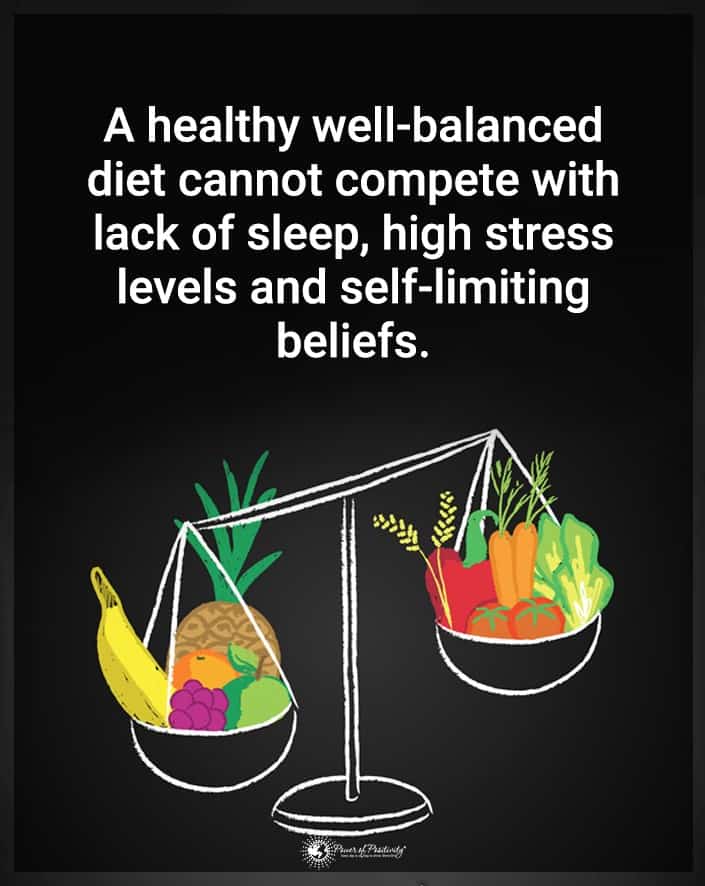
Making small dietary changes could have a significant impact on your health, according to a new study. For example, researchers found that eating a hot dog could shorten your life by 36 minutes. On the other hand, eating a serving of nuts could extend your life by 26 minutes. It may not sound like much, but healthy eating can make a massive difference over months or years.

The University of Michigan study was published in the journal Nature Food on August 18, 2021. The study evaluated 5,853 foods, ranking them by their nutritional disease burden and their environmental impact. Researchers developed the Health Nutritional Index to quantify health effects in minutes of life gained or lost. The foods evaluated ranged from 74 minutes lost to 80 minutes of life gained per serving.

The study authors found that eating 10% fewer daily calories from beef and processed meats had significant health and environmental benefits. Substituting these foods for fruits, vegetables, nuts, legumes, and certain seafood resulted in a 33% reduction in dietary carbon footprint. It also could offer 48 minutes of healthy life gained per day.

Small dietary changes can enhance your life.

dietary changes“Generally, dietary recommendations lack specific and actionable direction to motivate people to change their behavior, and rarely do dietary recommendations address environmental impacts,” said Katerina Stylianou, who performed the research as a doctoral candidate and postdoctoral fellow in the Department of Environmental Health Sciences at U-M’s School of Public Health. She now works as the Director of Public Health Information and Data Strategy at the Detroit Health Department.
First, researchers measured dietary impact on human health

The foundation of this study comes from the Health Nutritional Index, a new epidemiology-based nutritional index. Investigators collaborated with nutritionist Victor Fulgoni III from Nutrition Impact LLC to develop it. HENI calculates the net positive or adverse health effects in minutes of life gained or lost per serving of food consumed.

The index was adapted from the Global Burden of Disease, a compilation of data on hundreds of diseases and risk factors. The HENI index gathered data from this resource on disease mortality and morbidity caused by single food choices. Researchers used fifteen dietary risk factors and disease burden estimates from the GBD.

Next, they combined this data with nutrition profiles of foods consumed in the US.

They utilized the What We Eat in America National Health and Nutrition Examination Survey database for this step. Foods with positive scores increase longevity, while foods with negative scores decrease it.

Then they determined how these foods affected the environment

To understand the environmental impact of foods, the researchers used IMPACT World+. This method evaluates the effect of foods throughout their life cycle, from production to disposal. The team added updated assessments for water use and human health risks from fine particulate matter formation.

Next, the researchers developed a scoring method for eighteen environmental indicators which considered detailed food recipes in addition to estimated food waste. The team organized foods into three color zones: green, yellow, and red for the final step. After taking into account their nutritional and environmental impacts, researchers assigned the foods a color.

Foods in the green zone are beneficial to humans and the planet, having high nutritional value and low environmental impacts. Most foods in this zone include nuts, fruits, field-grown vegetables, legumes, whole grains, and seafood.

On the other hand, red zone foods include those that have detrimental nutritional and environmental impacts. The research team discovered that the highest negative nutritional impacts came from processed meats. Beef, pork, lamb, and processed meats caused the most significant burden on the environment. Because of their large carbon footprint and dangers to health, researchers suggest making dietary changes to reduce or avoid these foods.

However, researchers added that the range of environmental and health indicators varies greatly. They also acknowledge that nutritionally viable foods may not always leave a small carbon footprint and vice versa.

“Previous studies have often reduced their findings to a plant vs. animal-based foods discussion,” Stylianou said. “Although we find that plant-based foods generally perform better, there are considerable variations within both plant-based and animal-based foods.”

Based on the research, the team suggests making these small dietary changes:

  • Reduce or eliminate foods with the most negative health and environmental impacts, such as highly processed meat, beef, and shrimp, followed by pork, lamb, and greenhouse-grown vegetables.
  • Consume more of the most nutritionally healthy foods, including field-grown fruits and vegetables, legumes, nuts, and sustainably sourced seafood

“The urgency of dietary changes to improve human health and the environment is clear,” said Olivier Jolliet, U-M professor of environmental health science and senior author of the paper. “Our findings demonstrate that small targeted substitutions offer a feasible and powerful strategy to achieve significant health and environmental benefits without requiring dramatic dietary shifts.”

The research received funding from an unrestricted grant from the National Dairy Council and the University of Michigan Dow Sustainability Fellowship. Researchers collaborate with partners in Switzerland, Brazil, and Singapore to develop similar evaluation methods there. The team says that they hope to expand the system to all countries in the world in the future.

Perhaps then we’ll have an epidemic of health and start living in balance with nature. One can only hope, at least.

dietary changesFinal thoughts on the study that reveals small dietary changes can improve your life.
Frequently, people avoid making dietary changes because it seems overwhelming. However, becoming healthier doesn’t have to mean overhauling your whole lifestyle and eating habits. You can make minor improvements to your diet each day, such as eating a serving of nuts instead of a hot dog.

The study above reveals that making this one change can add nearly 30 minutes to your life. Now, imagine doing that dozens or hundreds of times, and you can perhaps extend your life by a few years. Everyone wants to know how to live longer, and now, the cat’s out of the bag.

Eat less meat and more fruits and veggies, and you’ll get to enjoy a few more sunrises. Plus, you’ll be doing the environment a huge favor while you’re at it.

Study Explains How We Can Harvest Precious Minerals from Asteroids

A new study by University of Arizona researchers reveals that near-Earth asteroids could contain precious minerals. The iron, cobalt, and nickel present in these asteroids may provide an opportunity to mine them for use on Earth or in space. In their research, the UA team discovered more information about the origins and compositions of these mysterious asteroids.

The research analyzed two metal-rich near-Earth asteroids, or NEAs called 1986 DA and 2016 ED85. The scientists wanted to learn more about what metals they contained and their similarities to meteorites on Earth. The study was published in the Planetary Science Journal.

Scientists believe that the metal-rich NEAs formed during the destruction of developing planets in the solar system’s early history. However, before this study, researchers knew little else about rare asteroids. A team of students co-led by University of Arizona planetary science associate professor Vishnu Reddy studied the two asteroids named above.

They found that their spectral signatures closely resembled asteroid 16 Psyche, the largest metal-rich asteroid in our solar system.  Located in the central asteroid belt between the orbits of Mars and Jupiter, scientists first discovered Psyche in 1852. Scientists speculate that Psyche may be the exposed core of a protoplanet – a small celestial body that never reached maturity.

Composed of iron and nickel, scientists believe the asteroid could have incredible treasures worth about $10,000 quadrillion. The possible wealth generated by the asteroid eclipses our global economy – worth $142 trillion – by orders of magnitude.

NASA plans to visit 16 Psyche in 2026 to learn more about its composition and magnetic field. It will mark the first mission to investigate a metallic asteroid rather than a rocky or icy one. Until they launch their mission, scientists believe the two “mini Psyches” could hold vital clues about these metal-rich asteroids.

Study Explains How Near-Earth Asteroids Could Contain Valuable Minerals

asteroid“Our analysis shows that both NEAs have surfaces with 85% metal such as iron and nickel and 15% silicate material, which is basically rock,” said lead author Juan Sanchez, who is based at the Planetary Science Institute. “These asteroids are similar to some stony-iron meteorites such as mesosiderites found on Earth.”
Astronomers have been fascinated with Psyche and similar asteroids for decades. By studying near-Earth metal-rich asteroids, they aim to identify meteorites that bear a striking resemblance to Psyche. The two near-Earth asteroids identified in the study measure about a mile across.

“We started a compositional survey of the NEA population in 2005, when I was a graduate student, intending to identify and characterize rare NEAs such as these metal-rich asteroids,” said Reddy, principal investigator of the NASA grant that funded the work. “It is rewarding that we have discovered these ‘mini Psyches’ so close to the Earth.”

“For perspective, a 50-meter (164-foot) metallic object similar to the two asteroids we studied created the Meteor Crater in Arizona,” said Adam Battle, a co-author of the paper along with fellow Lunar and Planetary Laboratory graduate students Benjamin Sharkey and Theodore Kareta. David Cantillo, an undergraduate student in the Department of Geosciences, also contributed to the research.

The Potential of Harvesting These Rare Metals and Minerals

The paper also investigated the potential of mining minerals on 1986 DA. It found that the asteroid’s iron, nickel, and cobalt would surpass Earth’s reserves of these rare metals. In fact, scientists estimate that the asteroid may contain a staggering $11.65 trillion worth of minerals. While this pales in comparison to 16 Psyche’s treasure trove, the materials could still prove helpful on Earth or other planets.

The idea of space mining has captured the attention of scientists worldwide because of the potential to colonize other planets. Not only would this expand our understanding of space, but it could also lessen our burden on Earth. By mining minerals from the asteroids, it would also eliminate expensive shuttle trips from Earth to space. Colonizing other planets probably won’t happen in the near future, but it’s an exciting possibility.

The Asteroids Likely Originated in the Same Asteroid Belt as 16 Psyche

When an asteroid gets demolished, it produces an asteroid family – a small cluster of asteroids with similar compositions and orbits. The research team analyzed the compositions and orbital pattern of both 1986 DA and 2016 ED85. In doing this, they determine four potential asteroid families in the outer area of the main asteroid belt.

The largest cluster of small bodies in the inner portion of the solar system resides here. In addition, most of the most significant identified metallic asteroids to date, including 16 Psyche, call this area of outer space home. The asteroid belt is located about 235 million to 309 million miles from the sun.

“We believe that these two ‘mini Psyches’ are probably fragments from a giant metallic asteroid in the main belt, but not 16 Psyche itself,” Cantillo said. “It’s possible that some of the iron and stony-iron meteorites found on Earth could have also come from that region in the solar system too.”

Scientists based their findings on observations from the NASA Infrared Telescope Facility in Hawaii. The NASA Near-Earth Object Observations Program, which also funds the NASA Infrared Telescope Facility, supported the study.

More studies are necessary in the future to determine the exact origins and value of these asteroids. However, the research marks a giant leap forward for humankind.

asteroidFinal Thoughts: Near-Earth Asteroids Contain Rare Metals Worth Nearly $12 Trillion

As our global population continues to rise, our demand for resources keeps growing as well. We’ll likely have to turn to outer space to mine minerals for raw materials in the future. Luckily, scientists have discovered two near-Earth asteroids that contain vast amounts of iron, cobalt, and nickel. They estimate that the metal reserves on these formations greatly surpass that of Earth.

NASA plans to launch a mission to the largest metal-rich asteroid in our solar system, 16 Psyche, in 2022. They hope to learn more about the composition of this massive asteroid, valued at an estimated $10,000 quadrillion. Until then, this study on the two near-Earth asteroids provides excellent insight into the vast resources in our cosmic backyard.

New Study Reveals the Body’s Metabolic Changes As You Age

As we age, our bodies undergo metabolic changes, but the rate at which that happens may surprise you. Many people look back on their teenage years with fond memories of eating whatever they wanted without consequence. Back then, you could probably eat a few pounds of junk food and not gain any weight. Previously, scientists thought that a faster metabolism during the teenage years explained this minor miracle.

However, a new study reveals that your metabolism peaks much earlier than in adolescence. And, it starts to slow down later than you’d think. The findings have been published in the journal Science.

“As we age, there are a lot of physiological changes that occur in the phases of our life such as during puberty and menopause. . What’s odd is that the timing of our ‘metabolic life stages’ doesn’t appear to match the markers we associate with growing up and getting older,” said study co-author Jennifer Rood, Ph.D., Associate Executive Director for Cores and Resources at Pennington Biomedical Research Center.

An international team of scientists, including four Pennington Biomedical researchers, analyzed the average calories burned by over 6,600 people. The participants spanned 29 different countries and ranged in age from one week old to 95 years. The vast age range allowed scientists to measure metabolic changes over an entire lifespan.

The study reveals surprising age-related metabolic changes.

metabolic changesMost prior large-scale studies only measured basal metabolic rate (BMR) – the energy your body needs for life-sustaining functions. These vital functions include breathing, digesting food, pumping blood, circulation, and cell production. However, essential functions only account for 50-70% of the calories we burn every day. This doesn’t include the energy required for other activities like household chores, exercise, or even thinking and fidgeting.

To measure total daily energy expenditure, the team used the “doubly labeled water” method. This involves having a person drink water in which the hydrogen and oxygen have been replaced with naturally occurring “heavy” forms. It then measures how quickly the molecules get flushed out in the urine.

This method is considered the gold standard for measuring daily energy expenditure during everyday life. Scientists have utilized this technique to measure metabolism in humans since the 1980s. However, due to cost constraints, prior studies were too small to gather sufficient data. For this study, scientists obtained data from multiple labs to attempt to validate previous findings.

After gathering data and analyzing metabolism throughout a person’s life, scientists found surprising age-related metabolic changes.

Dr. Katzmarzyk said the following:

“Some people think of their teens and 20s as the age when their calorie-burning potential hits its peak. But the study shows that pound for pound, infants had the highest metabolic rates of all.”

Babies grow rapidly during their first year of life, and this requires a lot of energy. By the time they turn one, babies burn calories 50% faster for their body size than adults. And, scientists discovered that’s not just because of the explosive growth spurts babies go through.

“The babies grow rapidly, which accounts for much of the effect. However, after you control for this, their energy expenditures tend to be higher than what you would expect for their body size,” Dr. Martin said.

A growing infant’s fast metabolism may explain the effects of malnourishment during this developmental stage. Childhood hunger leads to a lower chance of survival and can affect health into adulthood.

“More research is needed to understand the metabolism of babies better. We need to know what is driving higher energy expenditures,” Dr. Martin said.

Metabolism levels out after the teenage years.

After a peak in infancy, a person’s metabolism declines by nearly 3% annually until their 20s. At this phase of life, metabolism becomes more stable. Interestingly, researchers found that the growing pains of adolescence didn’t result in increased calorie needs after taking body size into account. Even more surprisingly, they discovered that metabolism remained relatively stable from a person’s 20s through their 50s.

The team observed calorie needs during pregnancy increased, as expected. These findings imply that other factors may lead to metabolic changes in middle age. Furthermore, the data shows that metabolism doesn’t begin to decline again until after age 60. At this age, metabolism slows gradually by only 0.7% per year.

However, a person in their 90s requires 26% fewer daily calories than a middle-aged individual. This means there’s more at play than just metabolic changes. Researchers believe that lost muscle mass as we age may explain the decrease in calorie needs. Muscle burns more calories than fat, and older adults typically have a higher body fat percentage.

This still doesn’t explain all the metabolic changes that occur in older people, however.

Dr. Ravussin said:

“We took dwindling muscle mass into account. After 60, a person’s cells slow down.”

Researchers also considered varying activity levels among participants, but the patterns remained. Since both the body and brain transform aging, it’s often difficult to pinpoint what causes metabolic changes. However, this new research suggests that there’s more to it than just age-related changes in lifestyle or body composition.

“This study shows that the work cells do changes over the course of the lifespan in ways we couldn’t fully appreciate before. But massive data sets like the one we collaborated on allow us to answer questions we couldn’t address,” Dr. Ravussin said.

metabolic changesFinal thoughts on a study revealing unexpected metabolic changes throughout a lifespan

Most people probably believe that teenagers have the fastest metabolism. It seems that they can eat whatever they want and get away with it. However, a new study reveals that babies actually have a higher energy expenditure relative to their body size. It’s still a mystery why teens feel so ravenously hungry because the research found that their calorie needs don’t increase with body size.

The study did reveal that metabolism levels out in a person’s 20s through their 50s. It then begins to decline once a person turns 60. This shouldn’t come as a surprise since this stage of life usually requires less energy. However, it’s interesting to learn that babies need more energy than teenagers for their body size.

Understanding the metabolic changes that occur over a lifespan can potentially guide nutrition and health strategies.

Skip to content