Weekly tips, affirmations, and small actions to feel your best.

What Does The Shape of Your Face Reveal About Your Personality?

You will be amazed to learn that facial pattern reading can reveal things about your personality, future, and your health. Facial pattern reading is an ancient Chinese technique, but it is as easy to learn as reading below to see what your facial features tell others about your personality.

Researchers examining people’s beliefs about the attractiveness of certain facial features say that ‘Chinese face reading is based on a philosophy held by Chinese people all over the world that expresses itself in contemporary daily life and practices by coloring people’s choices, likes, and dislikes.’

What Does Your Facial Pattern Reveal About Your Personality?

Traditional Chinese Medicine uses the ancient technique of face reading to map one’s true nature, health, and inherited potential. It is a technique of reading the past, present and future by the facial patterns that can be seen at first glance.

Facial reading can be used for matchmaking, choosing successful business partners, and detecting a person who is more likely to conceal or deceive you. Knowing what to look for is key to interpreting facial pattern personality.

Being able to study this art can help you learn quickly about the tendencies that others are born with at first glance rather than having to get to know them. Are they trustworthy? Will they be a hard worker? Will they be a good partner or parent to your children?

Facial Pattern Reading Is an Ancient Practice

A practitioner of Traditional Chinese Medicine uses a facial map and looks at the elements of earth, metal, wood, water, and fire as they are represented in the face.

Physiognomy is the practice of reading facial features to understand the true nature of the self and the destiny that you are meant to have. The color of the skin, shape and placement of facial features all have a role in the facial pattern reading and what it reveals about your personality.

In the book Reading in Chinese Medicine that she learned face reading from her grandmother and that these ancient Chinese facial pattern readings can predict illnesses long before tests show the health problems.

Bridges says that facial pattern reading can reveal details about your past and future. She tells a story of her Grandfather being able to know that someone he had just met had almost died as a young adult by what he saw on his forehead. The man was astonished that this detail of his past was evident to someone who knew about facial pattern reading.
zodiac

1. Eyes – Your perspective on the world

A narrow-lidded person is more likely to be less emotional and businesslike. A person with a deep-set eye and a large upper eyelid is more open emotionally.

The lower eyelid curve either represents honesty if it is a deeper curve or defensiveness if it is straight across.

Wide apart eyes mean that the person is a visionary. Eyes that are close together mean that the personality is very detail oriented.

2. Eyebrows – Quality and quantity of thoughts

Thicker eyebrows = more ideas

Thicker at beginning of eyebrow = good at starting things

Height of eyebrows above the eyes

Higher = more patient

Lower = impatient

3. Ear size – Listening ability, learning and conformity

Larger ears = better listening to others

Smaller ears = better at listening to self

Ears higher up on head = faster learning

Ears that stick out far = rebelliousness

4. Nose – Drive

Larger nose tip = better at planning

Smaller nose tip = not interested in money

Turned up = impulsive

Larger nostrils = less careful with money

Opening of nostrils is larger toward tip of nose = more likely to spend money on others than self

Nose thickness = thicker noses are more socially inclined

Long nose = leadership

Short nose = hard worker

5. Cheek bones – Your Personality Reveals You as a Leader

Chubby cheeks = more likely to draw people to you

Larger cheeks = leadership

Prominent cheek bones = boldness

Wider cheeks = more confidence

Small jaw = health issues, sensitive stomach

6. Jaw and chin – Desire and Stamina

Wide jaw = good negotiator

Jaw size = stamina

Chin size = larger is more aggressive

Narrow chin = physically weaker

Rounder chin = more people and emotion oriented

Angular chin = more controlling and introverted

7. Mouth and teeth – Expressiveness Is in Your Personality

Larger mouth = a talker who is outgoing

Licker lips = more persuasive and sensual

Thinner lips = may conceal secrets, withholds information

Crooked teeth = conflicted thoughts

Smaller teeth = more generosity

Overbite = more introverted

What Do Your Dominant Facial Features Reveal About Your Personality?

Looking in the mirror, some of our feature appear larger and out of proportion to others, unless we are as symmetrical in our facial features as a supermodel.

A dominant forehead indicates a big thinker.

A dominant mouth means a sensual person.

Dominant noses means a large ambition.

Prominent ears tend to be introverted listeners.

Larger eyes and eyebrows are charismatic and naturally attract people.
What You Need to Know If Your Partner Has Anxiety (And How To Help)

Unfortunately, many people in the U.S. and worldwide suffer from some sort of anxiety disorder.

In the U.S. alone, approximately 18.1% of people age 18 and older have anxiety, which equals 40 million people. If you have never had anxiety, you may not understand what people who do suffer from it go through on a daily basis.

Anxiety can affect every aspect of someone’s life, and treatment doesn’t totally eliminate the symptoms, in some cases.

People with anxiety can often feel very alienated and misunderstood, as the percentage of the population without anxiety often make incorrect assumptions about them. If your partner suffers from anxiety, you’ll want to know the following facts so you can do your best to support them in the relationship.

HERE ARE 5 THINGS YOU NEED TO KNOW IF YOUR PARTNER HAS ANXIETY:

anxiety

1. They suffer physically, mentally, and emotionally from anxiety.

Anxiety doesn’t just affect one’s brain and how they process information; it can actually affect them on an emotional and physical level, too. Anxiety occurs due to a combination of genetics, personality, environment, diet, and chemical imbalances in the brain.

All of these factors can make anxiety feel like a burden on the physical body and can induce headaches, cold sweats, flushing of the face, insomnia, stiff muscles, and more.

Mentally, anxiety can cause so much strain and stress due to constant racing thoughts and an overwhelming feeling of fear. Make sure you tune in to how your partner feels frequently so that you can try to understand their perspective and offer support.

2. They might also suffer from depression.

According to the Anxiety and Depression Association of America, about one-half of people with an anxiety disorder also suffer from depression. Having both of these disorders feels like being pulled in two different directions, to explain it simply. Anxiety tells your partner to get up and go, while depression says to stand still.

Managing both of these disorders can overwhelm your partner at times, and according to the Mayo Clinic, anxiety often occurs as a symptom of depression.

3. Your partner will need a lot of alone time.

Anxiety can make it difficult to stay social and keep up with others, and it drains one’s energy even further. Your partner might not want to go out on the weekends with you all the time, so respect their needs. Anxiety drains them of their energy, and socializing can easily overwhelm them when they already feel depleted and exhausted.

Your partner loves your company, of course, but even that can seem tiring if they don’t get a break. Just give them their alone time in order to recharge so that they can continue to be a good partner to you and a good caretaker of their own needs.

4. Anxiety doesn’t make your partner weak or incapable of loving you.

Many people think that those with a mental illness don’t have the capability to love others or sustain a relationship, but this stigma surrounding mental disorders needs to end. People with mental disorders have simply been too strong for too long, and anxiety and depression can occur as a result.

The most important thing to keep in mind when dealing with a partner with anxiety is to always keep an open ear and heart, and try your best to support them and help them grow.

Anxiety might make your partner seem distant and preoccupied some of the time, but just know that they fight a battle in their mind every single day. This takes up a lot of time and energy, but that doesn’t mean they don’t love you or care about you.

anxiety

5. Your partner doesn’t just want attention.

Many people, unfortunately, believe that those who claim to have a mental illness just want attention; however, this couldn’t be further from the truth.

If your partner suffers from anxiety, just know that all they crave is love and compassion, not attention. They don’t want you to throw them a pity party or bow at their feet; they just want you to listen and understand.

Remember that they didn’t ask for anxiety, and although it can be managed, sometimes figuring out what works best for you takes time. Some people respond better to meditation, others yoga, others to a cleaner diet, and still others may find a different path.

Just help your partner figure out what makes them feel better, and don’t try to condemn them for having the disorder. Compassion and a shoulder to cry on can go a long way in helping your partner with their anxiety.

Oftentimes, people with anxiety have a higher sensitivity to energies than others, and therefore, have a harder time processing our increasingly chaotic and stressed out world. They don’t want the disorder but have to learn how to live with it and overcome it anyway. And this makes them some of the strongest people you will ever come across.

(C) Power of Positivity, LLC. All rights reserved

If You Feel Emotionally Detached, This May Be Why…

Do you feel emotionally disconnected from yourself often, and have no idea how to tune back into just “being you”? It feels as though you live in your head too much, and feel cynical about the world around you. You feel disconnected from your body, and don’t have a true, meaningful relationship with yourself.

You just feel a bit lost and detached from your body and spirit, and may reject all spiritual notions simply because you can’t see past the illusions presented to you in this reality.

If this sounds like you, you might have a blocked crown chakra. The crown chakra, or the seventh and final chakra, is located at the top of the head or slightly above the head. This chakra represents your connection to Spirit, or the realms beyond this earthly plane that we currently live in.

Below, let’s talk a bit more about the crown chakra, and what you can do to get it unblocked.

If you feel emotionally detached, this may be why…

The Sanskrit name for the crown chakra is “Sahasrara,” which means “Thousand petals.” It’d most commonly represented by the color white, which symbolizes our connection with the Divine, God, Source, or whatever you prefer to call it.

Characteristics of the crown chakra:

  • Consciousness
  • Awareness of higher consciousness, wisdom, of what is sacred
  • Connection with the formless, the limitless
  • Realization, liberation from limiting patterns
  • Communion with higher states of consciousness, with
  • Ecstasy, bliss
  • Presence

Ultimately, the crown chakra represents our ability to transcend our limitations, and believe in things beyond our sight or comprehension. It also represents our ability to connect with all of life, and become fully aware of ourselves and how we fit into the bigger picture.

The crown chakra blends the functions of all the chakras below it. When balanced, we will feel totally connected to the Universe and all its inhabitants, and trust in our hearts and intuition that something out there will come to our aid when we need it most.

A second function of the crown chakra deals with opening ourselves up to higher states of consciousness, which can be done in part by healing our pineal gland.

SIGNS OF A BLOCKED CROWN CHAKRA:

A blocked crown chakra can make you feel disengaged from life and disconnected from yourself. It can also make you feel cynical and wary of any sort of spiritual notions. Being out of sync with the crown means that you have either an underactive or overactive seventh chakra. You either feel totally disconnected from your body and spirit, or feel so connected to your higher self that you lose touch from reality. If you have an overactive crown chakra, you might appear to others as flighty, or not grounded.

The following are symptoms of an imbalanced crown chakra:

  • Disconnected from Spirit, and cynical about all spiritual matters
  • On the contrary, an overactive crown chakra could manifest as a disconnection from reality
  • Paying too much attention to your thoughts and not feeling connected to your body or spirit
  • Too attached to the spiritual world (if you have an overactive crown)
  • Closed-mindedness
  • Greed and materialism
  • Boredom and frustration
  • A sense of elitism
  • Sleep disorders
  • Learning disabilities

A blocked crown chakra can seriously inhibit your ability to enjoy life to the fullest, while also connecting to the higher realms. A crown chakra blockage can make it difficult to believe in anything beyond what you see before you, which might make you cynical and narrow-minded in terms of other people’s beliefs and experiences. This blockage usually means that some of your other chakras have blockages, as the energy of these moves upward through our crown chakra.

Upon opening this chakra, you will find that you can connect successfully to the higher realms, and will gain comfort from the messages you receive. This will make you more grateful and aware of your current life here on Earth.

Physical signs of a blocked crown chakra

Some common physical symptoms of blockage include:

  • Neurological disorders
  • Nerve pain
  • Thyroid and pineal gland disorders
  • Alzheimer’s
  • Recurring headaches, migraines
  • Schizophrenia and delusional disorders
  • Insomnia
  • Depression

Emotional signs of crown chakra blockage

  • Isolation and loneliness; inability to connect with others
  • Lack of direction
  • Inability to set or maintain goals
  • Feeling disconnected spiritually

An imbalanced crown chakra can lead to two extremes; either being totally uninterested in this reality because you have found connections in higher realms, or being out of touch with yourself and your body, which leads you to feel cynical and depressed. If you feel that you have a blocked crown chakra, read on to find out how to clear this blockage so you can enjoy life to the fullest, and really get a sense of belonging in this world and beyond.

What to do about a blocked crown chakra

Clearing the crown chakra involves a lot of energy healing and learning to tap into the higher realms through your intuition and connection to yourself.

A few beginner steps to clear the crown chakra include:

  • First, you need to work on opening the other chakras, so that you can remain balanced throughout your spirit. Then, once you have done this, meditate or use positive affirmations such as “I am Divine” in order to open your crown.
  • Reconnect with nature as much as possible. We have lost our connection with ourselves because we have turned our backs on nature, so try to spend as much time with Her as possible.
  • Incorporate white colors into your life to help boost this chakra’s energy. Wear white clothing and place white objects around the home.
  • Do different types of energy healing, such as aromatherapy, sound therapy, crystal healing, etc.
  • Turn off electronics and other distractions as much as possible so you can really tune into yourself and listen to what Spirit is telling you.

5 Warning Signs Of Chronic Anxiety You Should Never Ignore

“Anxiety disorders are a category of mental disorders characterized by feelings of anxiety and fear, where anxiety is a worry about future events and fear is a reaction to current events.” – Diagnostic and Statistical Manual of Mental Disorders

Anxiety can easily take over your whole life if you don’t know how to effectively handle it.

Unfortunately, it affects approximately 18% of our population, and this figure only accounts for those who have actually reported their anxiety.

Anxiety feels like a neverending black hole. You might think you’ve been sucked in and can’t begin to search for the way out. You want to escape, but you don’t know where to start.

If this sounds like you, then you probably have some sort of anxiety.

However, you shouldn’t feel too discouraged, as we will suggest a few ways to combat anxiety before it gets too unbearable.

Of course, knowing the signs of anxiety is the first step to conquering it in the first place, so read on to find out more about the signals to look out for.

HERE ARE 5 WARNING SIGNS OF CHRONIC ANXIETY YOU SHOULD NEVER IGNORE

chronic anxiety

1. FATIGUE

The stress created from anxiety weakens the entire immune system, resulting in fatigue and lethargy. If you feel tired even after getting a full night’s rest, and this feeling occurs quite often, you might be seeing the early signs of chronic anxiety.

2. CRAVING SUGARY OR STARCHY FOODS

Many times when we feel stressed, we reach for a source of quick calories, usually in the form of sugary or fattening foods, in order to overcome this feeling. For someone with chronic anxiety, food often serves as a source of comfort during intense episodes or attacks.

If you find yourself reaching for sugary or starchy foods often, you may be developing a form of this disorder.

anxiety quotes

3. DIGESTIVE PROBLEMS

Anxiety can easily wreak havoc on the digestive system. This is because our gut is linked to our brain directly through something called the vagus nerve. This nerve sends signals to our brain based on the types of bacteria located in our gut. So, the better we eat, the better mental health we will have.

Related article: How our gut health determines our mental health

For someone with anxiety, their gut bacteria might not serve their mental health properly. This imbalance sometimes leads to feelings of distress and worry. Development of irritable bowel syndrome or other types of stomach issues can often stem from chronic anxiety.

4. SLEEPING PROBLEMS

People with anxiety have difficulty relaxing, and getting ready to go to sleep can feel like a nightmare when the mind just doesn’t want to quiet down. Those with chronic anxiety may have developed insomnia somewhere along the way and might resort to sleeping pills in order to get a good night’s rest.

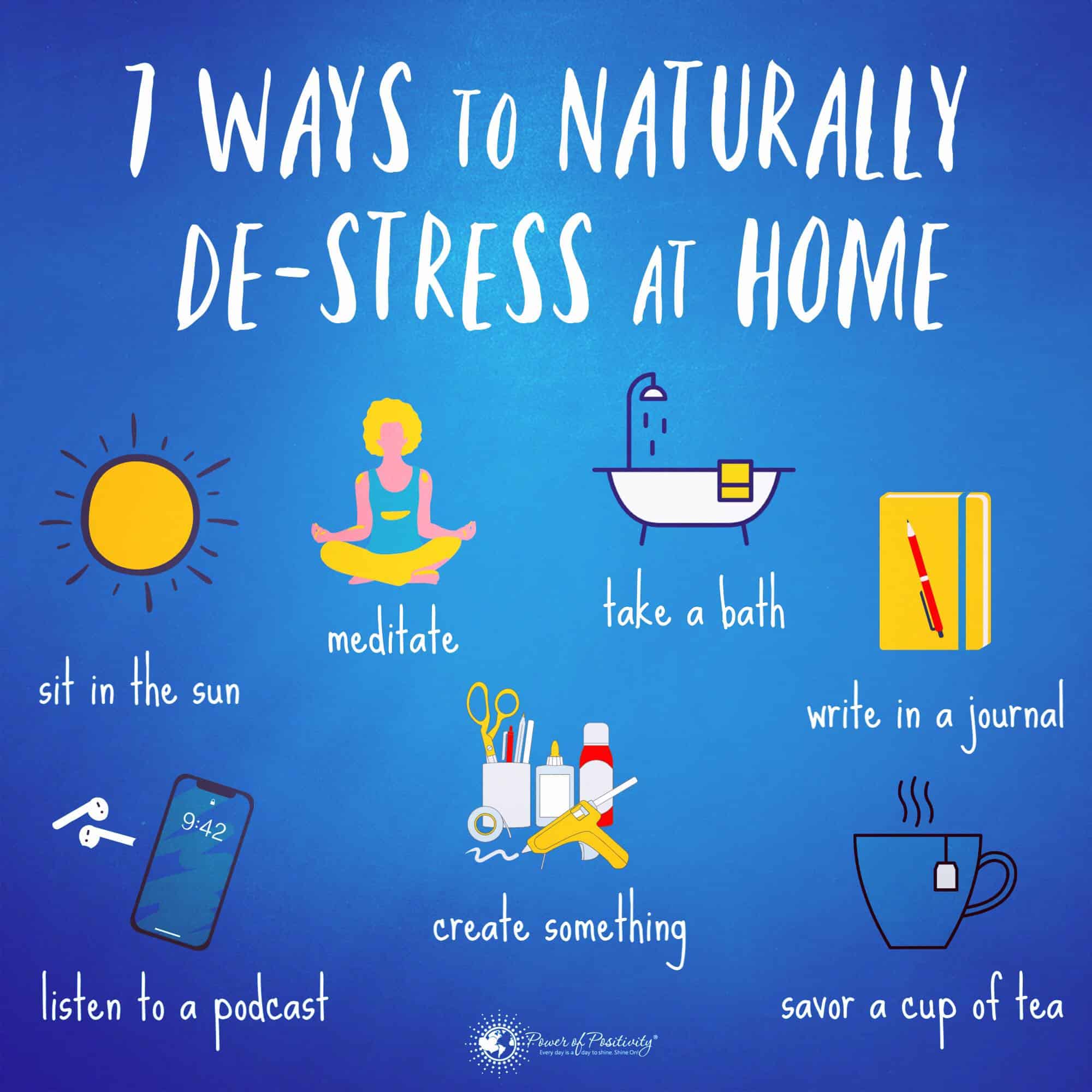
Does this sound like you? Try alternative therapies such as meditation, yoga, relaxing music, a warm bath, essential oils, a cup of tea, or some other natural way to wind down before bed. These will help you to create lasting routines and cultivate real change in your life as opposed to relying on medicine.

5. FOCUS/CONCENTRATION PROBLEMS

Since anxiety wreaks havoc on the brain, focusing or concentrating on just one task can prove very difficult. The mind doesn’t know how to stay quiet and remain engaged during an activity, so it flits from one thing to another constantly. Neurons in the brain fire rapidly, leaving one feeling very depleted and frazzled after a particularly intense episode of distress or panic.

Although anxiety seems like a never-ending black hole at times, one can take certain measures toward preventing, or at the very least, lessening the effects of anxiety.

THESE TIPS CAN HELP WITH CHRONIC (OR GENERAL) ANXIETY:

  1. Eat right – make sure to get plenty of raw fruits and veggies in your diet, as well as whole grains, nuts, and seeds.
  2. Get exercise – one of the greatest ways to combat anxiety is to get your body moving–just do something you enjoy.
  3. Establish a schedule – try to stick to a regular routine; oftentimes, not planning or going blind into something can exacerbate anxiety symptoms.
  4. Stress management – develop a mindfulness routine; get into meditation, yoga, breathing exercises, or something else helpful for stress and anxious feelings.
  5. Sleep – get the recommended amount of sleep each night for your age group. Try melatonin, yoga, meditation, or breathing exercises before bed to help regulate and ensure adequate sleep.

Related article: 8 Behaviors That Create Anxiety (And How To Avoid Having Them)

(C)Power of Positivity, LLC. All rights reserved

How To Train Your Brain To Stay Stress Free

Stress is a shared life experience. Work, school, and family responsibilities produce a lot of stress, but when you add the adrenaline-producing events of the world, your stress levels can soar. Learning to deal with stress is critical to protecting your brain. Even amid your stressful life, there are ways to train your brain to deal with stress. Here are some valuable tips on how to train your brain to be stress free.

What events make a stress free life feel nearly impossible?

Many things make your life stressful, but specific life experiences trigger a high level of stress. These include:

  • Death of a child or spouse
  • Divorce
  • Moving
  • Major illness or injury
  • Marriage
  • Loss of a job
  • Retirement

How does long-term stress affect your body?

stressWhen you’re experiencing stress, you may not even be aware of how it affects your body. You may have physical symptoms that you don’t attribute to stress. It’s worth considering whether stress causes some of your physical problems. Stress can produce physical symptoms, such as the following conditions:
  • Stomach problems
  • Autoimmune problems
  • Inflammation
  • Insomnia
  • High blood pressure
  • Headaches

If you have any of these physical symptoms, talk to your doctor about the possibility of stress being the root cause. Practice some of these suggestions to relieve your stress.

Why a stress free life is essential to brain health

You may be familiar with the effects of stress on your body, but stress can harm your brain. According to studies, stress messes with the structure of your brain. Chronic stress can atrophy your brain and shrink the area of your brain that affects your memory and learning. These facts are compelling reasons to live a more stress-free life.

How to train your brain to be stress free

Stress harms your brain. Here are some suggestions on how to have a more stress-free brain and reduce the adverse effects.

1 – Get More Sleep

Getting enough sleep is known to be essential for you to function in daily life. But according to recent studies, lack of sleep can make stress worse. It also interferes with your brain’s ability to get rid of toxins such as beta-amyloid, which has been found to attribute to brain disorders such as Alzheimer’s disease. One of the first ways you can train your brain to be stress-free is by getting a good night’s sleep. It’s recommended that you get anywhere from 7 to 9 hours of sleep per night. Try these things to help you sleep better.

  • Wind down before bedtime
  • Don’t exercise too close to your bedtime
  • Limit your caffeine during the day
  • Create a bedtime routine and stick to it
  • Keep your bedroom cool and dark
  • Limit your use of electronic devices a couple of hours before bedtime

2 – Yoga

Yoga uses a combination of physical poses and breathing methods to enhance relaxation. Studies reveal that yoga has mood-enhancing abilities, which slows down the physiological effects of stress. Yoga also can change the chemical reactions in your brain, so you feel less stressed. It’s thought to be as effective as taking anti-depressant drugs for anxiety and depression. Overall, if you regularly practice yoga, you can have a more stress-free brain and body. The five best stress-relieving yoga poses include

  • Child pose
  • Easy pose
  • Happy baby pose
  • Stand forward and bending pose
  • Seated forward bend

spiritual benefits3 – Don’t procrastinate

You may not feel that procrastination is that big a deal but having a bunch of open-ended tasks attributes to brain stress.  Procrastination makes you think you can’t catch up. You may not sleep, or you can’t focus during the day. Here are some ways to break your procrastination habit to relieve stress.

  • Make a to-do list and check off things as you accomplish them
  • Give yourself deadlines and stick to them
  • Create chunks of uninterrupted time to finish tasks
  • Set simple daily goals
  • Take breaks to clear your mind
  • Reward yourself when you complete a goal
  • Stop multi-tasking-stick to one thing at a time

4 –  Find faith

According to studies, having faith in God helps you deal with stress. Researchers say people who profess to be religious have lower levels of depression. Having faith in God enables you to find peace even during stressful situations because you believe someone is overseeing your life and helping you get through tough times. Researchers say that faith has a buffer effect between stressful life events and depression in the same study. Devout people have fewer symptoms of anxiety and depression and can cope better with stress. It’s thought that some religious practices can change your brain to boost your mental health. How does faith help your brain deal with stress? Here are some ways, including

Faith gives you a sense of purpose for your life, giving you a sense of purpose that enhances your life.

  • Let go of trying to control it all: You can let go of those things that are out of your control when you cede to a higher power.
  • Network of support: Having faith gives you a sense of community. You don’t feel alone.

5 – Change how you view stressors

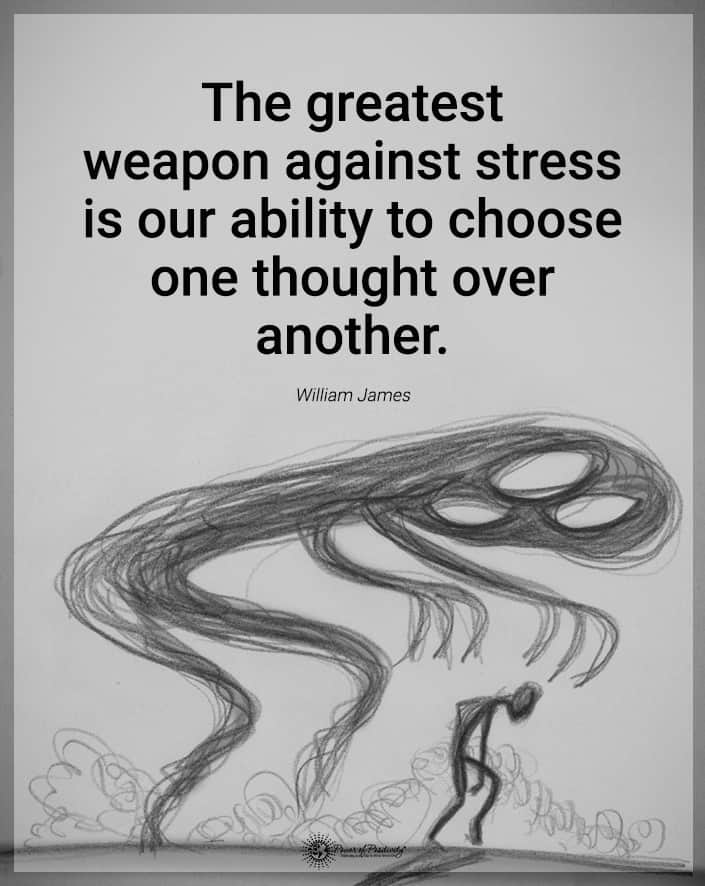
Another way to train your brain to deal with stress is to change how you think about it. Seeing pressure as all bad leads to unhealthy activities such as overeating, drinking too much alcohol, or lack of exercise to relieve the stress. Stress isn’t always harmful. It can motivate you, increase your focus, and help you be more productive. Embracing it strengthens you, happier and more intelligent. Viewing stress positively encourages you to find specific ways to cope with it. So, instead of getting rid of all stress, you can figure out how to have healthier responses to stress.

6 – Exercise for a stress free life

Regular exercise is a natural way to relieve stress in your life. Whether you take your dog for a brisk daily walk, play a game of tennis, or take an exercise class at your local gym, exercise has many benefits for your body and mind. People who regularly exercise are less prone to anxiety than those who don’t exercise. What happens when you exercise?

  • Release of stress hormones: When you get your body moving, stress hormones are released, which improves your mood.
  • Builds your confidence: Regular exercise boosts your confidence because you feel stronger.
  • Helps you slim down: If you incorporate regular exercise into your life, you’ll lose weight and trim down.
  • Sleep better: Exercise has been found to promote better sleep, which reduces your stress levels.

7 – Try supplements

Using certain supplements helps you train your brain to be stress-free and reduce anxiety. Here’s a list of some of the best stress-relieving supplements.

  • Lemon balm: This herb is a member of the mint family. Use lemon balm to make tea, eat in salads or add it to soups.
  • Green tea: Green teas contain antioxidants that help your body heal and reduce stress. Add it to your smoothies or drink it as warm.
  • Valerian: This herbal remedy might help you sleep and thus, lower anxiety. An NIH fact sheet found valerian to be helpful for some people but not for others. However, it is worth a try.

8 – Aromatherapy

Aromatherapy is made of natural plant extracts or essential oils to enhance healing and a sense of well-being. They have proven it to promote emotional health and relaxation. It’s gained a lot of popularity over the past few years as people have found it helpful to reduce stress. Some of the health benefits include

  • Relieves anxiety and stress
  • Improves your sleep
  • Improves your quality of life
  • Can ease the effects of cancer treatment for things like pain and nausea

9 – Journal your way to stress free living

Writing your thoughts and feelings in a journal gives you a positive outlet for your senses. When you’re in a stressful situation, you must understand what you’re feeling, and writing your thoughts helps you sort out your feelings. Writing gives you clarity on details and enables you to decide your next move. Journaling can have a positive effect on your stress reduction.

10 –  Learn to say no

Sometimes you need to say “no” to relieve the stress in your life. It’s easy to get pulled into commitments like being the parent who always brings snacks to your child’s class or the person at work who always helps when there’s a deadline. If that’s you, maybe you need to learn to say no. You may be your own worst enemy by over-committing or feeling guilty when there’s a need. It’s okay to refuse to help. Take control of your stress. Be selective about what you commit to, and you’ll be surprised how hit helps you train your brain to be more stress-free.

12 – Laughter

Laugher lessens your stress. It gets your focus off your problems, frees up chemicals in your brain that make you feel happier, and improves your view of life. Laughing is a simple way to train your brain to let go of stressful things. It doesn’t change your circumstances, but it gives you a break from them. You can laugh or cry when things turn stressful. So, why not choose to laugh?

stressFinal thoughts on how you can train your brain to be stress free
Stress is a genuine part of life. It can be a helpful motivation to accomplish things or damaging to your brain and body. How you view stress and react to it determines its effects on you. As you train your brain to be stress-free, you can have a stress-free life. Whether you choose to relieve your stress through regular exercise, journaling, or growing your faith, you’ll feel more relaxed and happier about your life. Stress reduction isn’t hard, but it’s a choice you can make for a better life.

5 Differences Between Stress and Anxiety

Stress and anxiety are similar. People often use these two words interchangeably, but there is a difference between these two emotional responses. It’s time to eliminate the confusion. Here are five differences between stress and anxiety.

What is stress?

Stress is a normal emotional response to a demand put on your brain or body. When you experience a challenge at work or school or have a significant life change, you will feel stressed. Some people cope better with stress than others. Stress can affect your health, so you must pay attention to the cause and reduce it. Examples of stress include:

  • Stressors related to school, work, or your family.
  • Stress from a sudden negative experience or change such as a divorce, death in the family, losing your job, or illness.
  • Stress from an event such as an assault, war, major accident, or natural disasters like a hurricane, tornado, or earthquake. This type of traumatic event can produce physical symptoms and temporary emotional ones.

anxietyWhat is anxiety?

They describe anxiety as a natural response to stress. It involves feeling fearful or apprehensive about the future. You may feel anxious on your first day at work or when you have a job interview. Anxiety causes these emotional reactions:

  • Worry
  • Nervousness
  • Concern
  • Uneasiness

If your anxiety continues longer than six months and interferes with your life, you could have an anxiety disorder. Anxiety disorders make you feel fearful all the time. Sometimes these fears are intense or debilitating. Everyday things can become difficult for you because of your constant worry about what could happen. Left untreated, your condition may get worse.

What are anxiety disorders?

Anxiety disorders are a widespread type of emotional disorder. They affect people of all ages. Common anxiety disorders include the following:

  • Panic disorder
  • Phobias
  • Social anxiety disorder
  • Obsessive-compulsive disorder
  • Separation anxiety disorder
  • Illness anxiety disorder
  • Post-traumatic stress disorder

Who’s most at risk for an anxiety disorder?

Researchers suggest there are genetic and environmental factors that can contribute to who develops an anxiety disorder. General risk factors include the following:

  • Individuals who are especially shy or had inhibitions as a child
  • Exposure to a stressful or negative experience in early childhood or early adulthood.
  • Biological relatives who have a mental illness or other mental health issues
  • Physical conditions like thyroid problems, heart problems, or certain medications can cause anxiety disorders

Five differences between stress and anxiety

It may be hard to decide if you’re struggling with stress or anxiety. But there are noticeable differences between the two of them. Here are the five significant differences between stress and anxiety.

1 – Different in how long they last

Stress is a reaction to an external cause. It could be a test at school or your first day at work. Usually, your feelings of stress go away once you finish the test or complete your first day of work. Anxiety reacts to an external, but it doesn’t go away when you remove the stressor.

2 – Different in how they affect your body

If your conditionspersists, it can get so severe that it turns into an anxiety disorder. Anxiety can affect your body in a variety of ways, including

  • Having trouble concentrating
  • Your mind goes blank
  • Fatigued all the time
  • Muscle tension
  • Can’t control your worry
  • Sleep problems
  • Unsatisfying sleep

Stress is a physical or emotional response to the demands and pressures of your life. Some people don’t process stress well, resulting in health problems such as the following:

  • Digestive disorders
  • Headaches
  • Sleep disorders
  • Heart problems
  • Asthma
  • Overeating
  • Alzheimer’s disease

3 – Stress has a known cause, but anxiety may not have a noticeable trigger

You usually know what makes you feel stressed out. You know your job is a source of stress for you. But it may be hard to pin down where your triggers originated. You may not remember an unpleasant childhood experience or not know that you have a genetic tendency toward a specific mental health disorder. That’s why it’s essential to see a professional counselor who can help you find the cause of your anxiety.

stressed loved one4 – Stress is manageable, but anxiety may not be
Most of the time, when you have stress, you can figure out how to manage it or get rid of it. Long-term anxiety can become unmanageable, so that you can’t do your regular daily tasks.

5 – Different emotional responses

Anxiety and stress cause different physical and emotional reactions. Here are some differences and similarities between the two emotional responses.

Anxiety Stress Both
restless moodiness racing heartbeat
nervous anger or irritability fast breathing
tense dizziness diarrhea
sweating unhappiness constipation
feeling of dread overwhelmed higher blood pressure
uneasy loneliness fight or flight response

Primary causes of stress

There is a wide assortment of reasons for feeling stressed. These include the following triggers:

  • Unhappy at work
  • Too much responsibility at work
  • Working too long of hours
  • Unclear expectations of you at work
  • Dangerous work
  • Lack of security at work
  • worried about being fired
  • Death of a loved one
  • Divorce
  • Financial problems
  • Getting married
  • Moving
  • Illness
  • Emotional problems
  • Caregiving of elderly or sick family member
  • Causes of anxiety

Anxiety is part of your life, but after several months, if you’re still experiencing intense fear about everyday situations, you could have an anxiety disorder. Anxiety symptoms can start in childhood or teen years and can continue into your adulthood.

Causes of anxiety disorders

  • Stress from illness: Serious health conditions cause you to worry or worry about your treatment.
  • Trauma: If you experienced abuse or witnessed a traumatic event as a child, you’ll be at risk of an anxiety disorder.
  • Stress buildup: A big event or smaller stressful life situations can trigger your anxiety. If there was a death in your family, plus work stress plus financial problems-these can pile up on you. You may end up with extreme pressure.
  • Personality: Some personality types are more apt to experience this than others.
  • Drugs and alcohol: Misuse of drugs and alcohol and withdrawal can make your anxiety worse.
  • Having family members with mental illness: Anxiety disorders run in families.

How to manage problems of stress and anxiety

Anxiety and stress are normal reactions to difficult situations in your life. They provide the fight-or-flight response that keeps you safe if you’re in danger. Generally, stress is your body’s reaction to a threat. But this outcome is your body’s reaction to stress. You need to figure out what stressors are setting off your anxiety and stress. Then you can better deal with them. Here are some things to help you manage them.

Exercise

According to studies, regular exercise has a positive impact and heals your mind. Some activities that can help you with your stress or anxiety include:

  • Running
  • Biking
  • Tennis
  • Dancing
  • Swimming
  • Fast walking
  • Talking

Seek counseling for your anxiety

Talking with a trusted friend, your pastor, or a family member is essential to help you reduce overthinking. Talking about your worries, fears, and stressors can help relieve them.

Setting boundaries

Set boundaries for yourself on what you will take on at work, home, or school. Know what causes your stress or anxiety, and eliminate it from your life. Of course, not everything can be taken away, but there are many things you can do to find relief. Perhaps it’s time to find remote work instead of staying at a job where you need to commute to work. Maybe you need to pull out of some of your responsibilities at church or school.

Setting boundaries is just one positive management tool for reclaiming your mental health.

Relaxation

Relaxation techniques are another way to improve your mental health. Try some of these techniques:

  • Deep breathing exercises
  • Visualizing a tranquil scene or the beach
  • Practice yoga
  • Practicing Ta Chi
  • Slowly counting to 10
  • When do you need to see a doctor?
  • If you find you can’t deal with your mental illness, it could be time to see a doctor. Warning signs you need to see a doctor include things like
  • Excessive worry makes it hard for you to do your everyday daily life
  • Irrational fears
  • Significant changes to your sleep patterns
  • Important changes to your hygiene habits
  • Feeling moody and low
  • Thinking about self-harm

Other things you can do to deal with your stress and anxiety include these:

  • Accept the stuff you can’t control
  • Figure out what triggers your reaction
  • Limit your caffeine and alcohol
  • Settle to be good, but don’t aim for perfection
  • Eat nutritious foods
  • Get enough sleep

anxiety disordersFinal thoughts of beating stress and anxiety
Some stress and anxiety are typical in your life. You may have a hard time distinguishing the difference between stress and anxiety since they are similar. Stress typically has limits, and stressors cause it. Once the causes of stress are removed, your stress will go away. The reasons for anxiety are harder to nail down. Plus, if it continues, you may end up with an anxiety disorder. Fortunately, you can manage and improve your mental health by setting boundaries, exercising, and relaxation techniques. If none of this helps, or if your symptoms get worse, it could be time for you to speak to a doctor to get relief.

(C)Power of Positivity, LLC. All rights reserved

Doing This ONE Thing Makes It Easy To Eat Healthy

When you know that healthier eating is easy with this one important thing to help you, better nutrition and a healthier body is within your reach. Whether your goal is to lose weight, get fit, or just have better nutrition this one technique can help.

Cravings for junk food, sweet treats, and unhealthy fats are common. Desire for these types of unhealthy foods is something that is almost unavoidable until you learn how your brain is preventing you from eating healthier.

Understanding what drives our food choices is something that can help us to have a healthier lifestyle. Each day we make many food decisions. Let’s look at how being informed about this one thing will make a difference in your future, healthier food decisions.

Doing This ONE Thing Will Help You Eat Healthier

So much of our behavior is driven by our brain, which we also have the power to control. Hacking into our brain to learn to control our behavior is the way to unlearn bad habits and build new ones.

A desire to eat healthy is a desire to make a positive change in your life. This article is designed to help you get that positive change with healthier eating.

Behavior change is your goal, and targeting your brain’s reward center is going to help you do it. Recent research is using behavioral modification techniques to help people reward good behavior like eating healthy and avoid harmful eating behavior.

Related article: This Is What Happens When You Drink Wheatgrass Every Day

In a study where consumers had a choice of purchasing a healthier grocery item with a future reward of 50 bonus points to use toward savings on a future purchase or receiving 50 cents off of the healthy food now, customers were more likely to choose a healthy food if they have the promise of a future reward.

Researchers studying consumer grocery habits say ‘Consumers who have poor eating habits and who are overweight benefit the most from long-term reward incentives than if they are offered price reductions of an equal value. However, among healthy eaters, price breaks lead to more purchases of less healthy items.’

If you are already a healthy eater, you appreciate the savings on your monthly grocery bill now, but in order for people to make the change to a lifestyle of healthy eating, they had to visualize a future self. This focus on future results is usually why we chose to make a significant lifestyle change in the first place.

Related article: How To Stop Emotional Eating In 3 Steps

Researchers say that this one finding is important because grocery stores can use it to help people choose healthier eating over junk food. We can also use the information to visualize our ideal future self-image, no matter what health goal we are working on, as a tool to help motivate us.

How to Use This ONE Thing to Eat Healthier

‘The study indicates “incentivizing with behavioral rewards is more effective for consumers who are either overweight or junk-food junkies. The points received for each healthy choice not only led to a reward (e.g., accumulated cash value or free food), but also signify the otherwise intangible benefits of an isolated act of eating healthy.”

For your own health goals, pick a reward that you can give yourself in the future that supports your goal. For example, you might choose a new juicer machine that supports your healthy lifestyle, or an outfit that you will be able to fit into once you have lost some weight by eating healthier.

Hang a picture of the item that you will reward yourself with near the fridge, in your wallet, at work or someplace where you have to make decisions about food. The image will remind you of the reward that is waiting for you if you make a healthy choice over an unhealthy one.

Set a timeframe to reach your goal of healthier eating, for example, a period of 4 weeks and then give yourself the reward if you have been able to uphold your desired new healthy eating behavior. Give yourself some forgiveness if you slip up once or twice during the goal timeframe.

Research Supporting How This Will Help You Eat Healthier

A program to influence healthier eating in schools was established to study if children would be able to maintain healthier habits over time. The program included education about healthier eating, goal setting, parent involvement and reinforcement.

The reinforcement that the kids received for engaging in healthier behaviors was only a simple heart sticker, but teachers and school administrators gave the stickers to kids when they saw them engaging in healthy eating or healthy activities on the playground.

Because the reward was given right away, the children knew that they had been caught in the act of showing positive behavior and were more likely to repeat it to get the positive recognition and reward.

Another study offered financial incentives to adults in a weight loss program over 16 weeks. Even if the monetary reward was small, like a chance to win $10, participants who had the promise of a future monetary reward lost significantly more weight than the control group.

Will this help you? Share with us in the discussion!

These Simple Yoga Poses Reduce Your Stress Hormones

Life’s everyday responsibilities produce a lot of stress. Add to that the stress-inducing events of the world, and before you know it, your stress levels are out of control. Learning how to manage stress is essential for your overall health. Yoga is a proven way to reduce stress hormones. It brings together physical and mental techniques to enhance a sense of peace. Yoga allows you to relax as you manage anxiety and stress. Here are fourteen simple yoga poses for you to start reducing stress today.

How you can reduce stress hormones with yoga

According to studies, yoga is an effective way to reduce stress, depression, and anxiety. It also provides a lot of health benefits, including:

  • Better fitness: Yoga improves your range of motion, strength, flexibility, and balance.
  • Mental health: There are mental benefits of yoga. Regular yoga builds a sense of mental well-being and resilience.
  • Quit smoke: Yoga can help reduce your desire for a cigarette.
  • Weight control: Regular yoga helps you feel better physically. It gives you a sense of being in control of your appetite, so you’re less prone to overeating.
  • Chronic conditions: Yoga can help lower your chronic disease risks, such as higher blood pressure or heart conditions. Regular yoga can relieve back and neck pain, help control your arthritis and improve insomnia.

reduce stress hormonesWhat does yoga involve?

Many yoga styles can reduce stress hormones. Depending on your yoga type, you’ll do different poses at different intensities. Yoga instructors, or yogis, are trained to teach yoga classes. Hatha yoga is the most common style of yoga. It’s a slower-paced style of yoga, with more accessible poses for beginners. The three essential components of yoga include:

  • Breathing techniques: This part of yoga teaches you to control your breathing. It helps you learn to control and calm down your mind.
  • Relaxation: Yoga may include relaxation or meditation to help you recognize movements. It enables you to increase your mindfulness.
  • Poses: Yoga postures or poses increase your flexibility and strength. They start simple and increase in difficulty.

Before you get started on a yoga routine to reduce stress hormones

When you first start yoga, be sure to follow these essential tips.

  • Find ample enough space: Create a place house to do yoga. Having a specific place can help you be more diligent in practicing daily.
  • Be gentle with your body: Start slowly, then build up your tolerance to prevent injury.
  • Move little by little: Don’t worry if you can get the pose the first few times. They take practice.
  • Don’t skip poses: Do all the poses, don’t skip to your favorite ones. Every pose has a purpose and works together with the other poses for a whole-body workout.

Here are 14 simple yoga poses that reduce stress hormones

Some instructors suggest you do yoga in a specific sequence, but it’s unnecessary. There is no wrong way to practice yoga to reduce your stress. Try these different poses to explore what works best for you.

1 – Easy pose

Get into a comfortable seated position. Cross your legs. Relax your feet and put your pelvis in a relaxed position. Think about how your body feels. Feel yourself breathing. Sit for a few minutes and concentrate on these sensations.

2 – Shoulder pose

Now roll your shoulders forward in a circular motion. Do this four times and do it back four times. After that, inhale and put your hands up above your head and exhale, lowering your hands to chest level. Let go and reduce stress hormones as you breathe out.

3 – Neck roll

Let your head fall toward your chest. Move your head around slowly in a full circle, first to the right three times. Then circle your head to the left three times. Let go of your stress as if it’s rolling off your head and neck. Return to the easy pose.

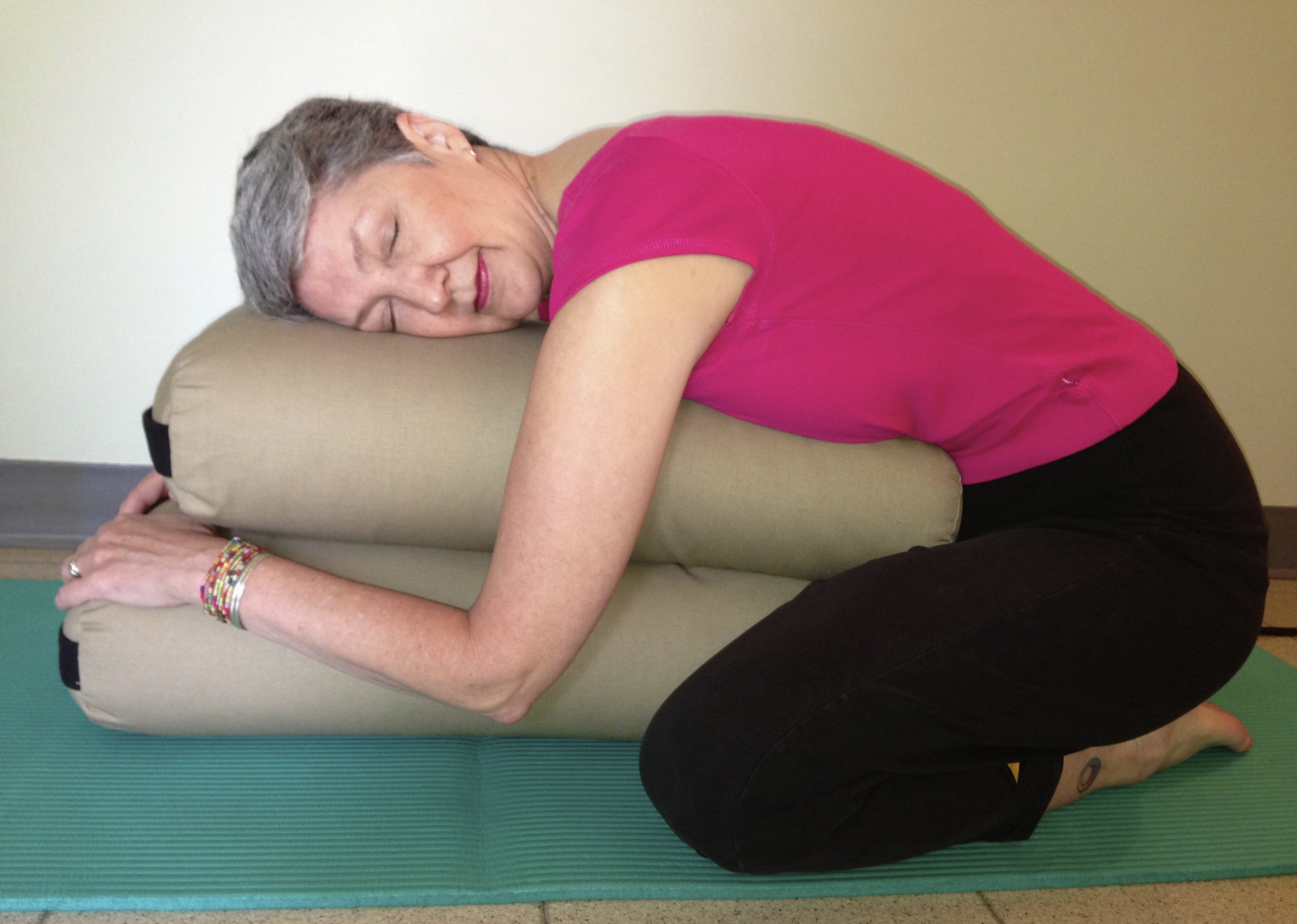
4 – Child pose

Get on your hands and knees. Put your hands out in front of you. Allow your body to relax. Your knees should be together. Reach forward and allow your bottom to touch the heels of your feet. You can use supports for assistance if you are starting to use yoga to reduce stress hormones. Don’t worry. That flexibility comes in time!

modified-supported-childs-pose-restorative-yoga

Modified supported child’s pose

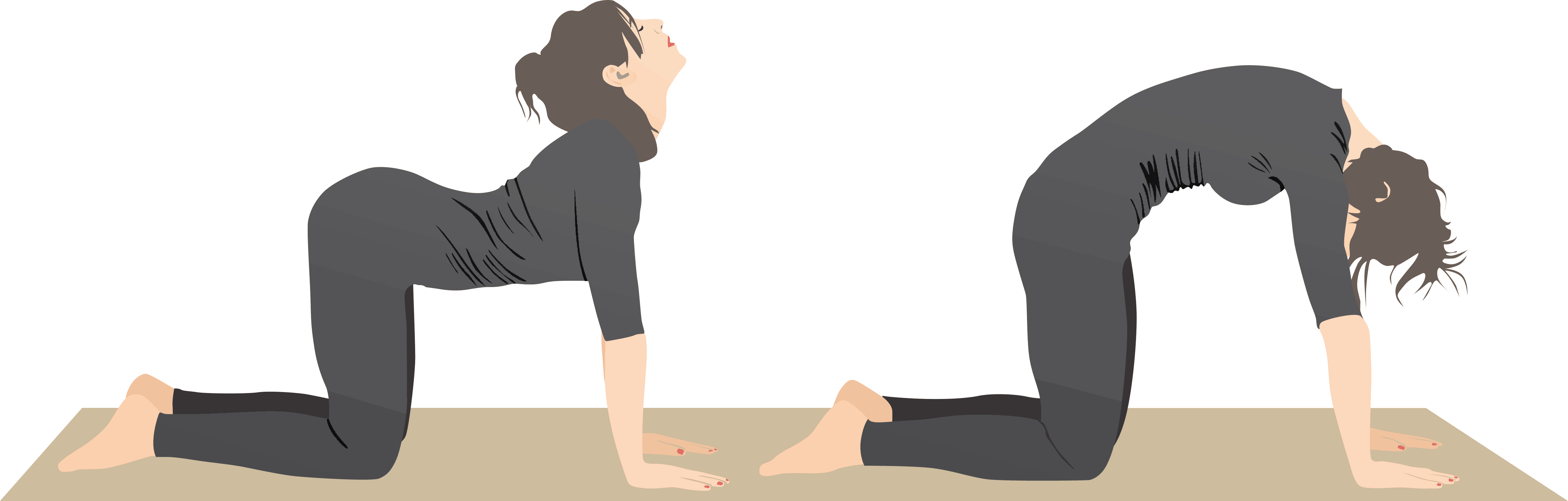
5 – Cow pose

Put your stomach flat on the floor. Inhale. Life up your chin and chest and look up at the ceiling. Exhale and release stress.

sciatica

6 – Cat pose

Inhale and pull your stomach to your spine. Round your back and look up at the ceiling. Exhale and let go of your stress. Gently allow the top of your head to go toward the floor.

7 – Downward dog

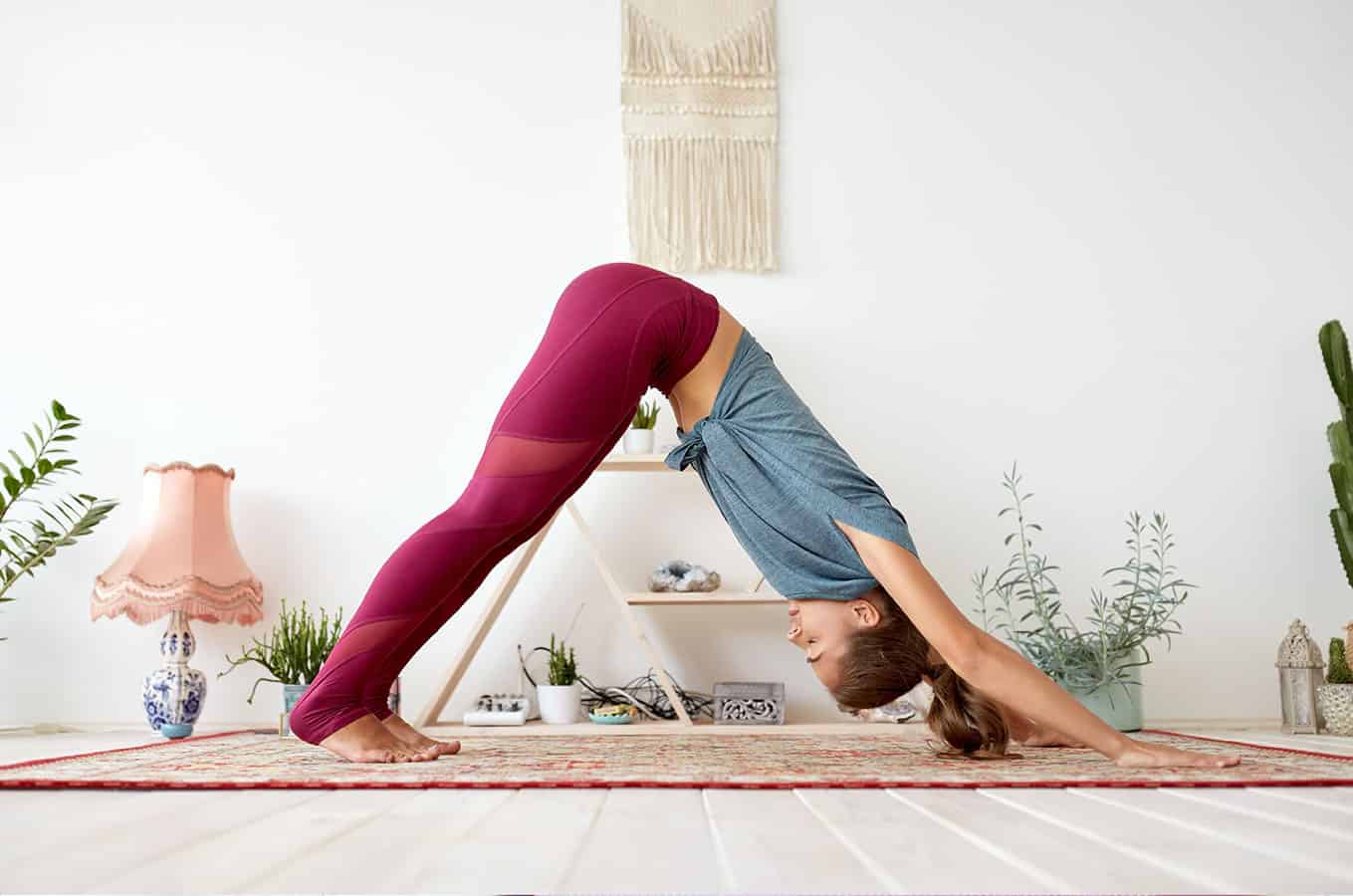
Put your toes under your feet. Press the palms of your hands on the floor and lift your hips up with your tailbone towards the ceiling. Push your heels back and down toward the mat. Stretch with your head dropping with a long neck. Think of your dog stretching-this is a classic downward dog. Stay in this pose, then breathe deeply. Exhale, letting go of any stress you feel.

yoga

8 – Tabletop position helps you reduce stress hormones

Get on your hands and knees. Place your wrists under your shoulders. Your knees should be under your hips. With your palms on the floor, and your fingers facing forward, your weight should be evenly distributed on the palms of your hands. Relax your head to gaze down and allow your stress to hit the floor.

9 – Standing forward bend

Sit flat on the floor with your feet out in front of you. Slowly stretch your hands toward your feet. Release the muscles in our neck and shoulders. Release your head while keeping your legs straight. Stay in this position and breathe slowly. Imagine your stress floating away.

10 – Mountain pose

Sitting on the floor, bend your knees and pull your stomach back toward your back. Roll your shoulders forward and relax your head. Inhale and exhale, letting go of the stress and anxiety you feel.

11 – Legs up the wall pose can help reduce stress hormones

Lie on your back with your legs up on the walls. Make sure your knees are straight up the wall. Put your hips up against the wall as much as possible. Your arms should be beside your body. Put one hand on your midsection, and your other hand is on your chest. Rest in this pose for 10 minutes, breathing slowly and feeling the stress leave your body.

12 – Corpse pose

Lie flat on your back with your feet wider than your hips. Allow your toes to be spaced out equally. Put your arms next to your body at a 45-degree angle. Your neck, shoulders, and head should align with your spine. Inhale deeply. Exhale and let your mind and body completely relax. Stay in this pose for fifteen minutes.

13 – Tre the tree pose to reduce stress hormones

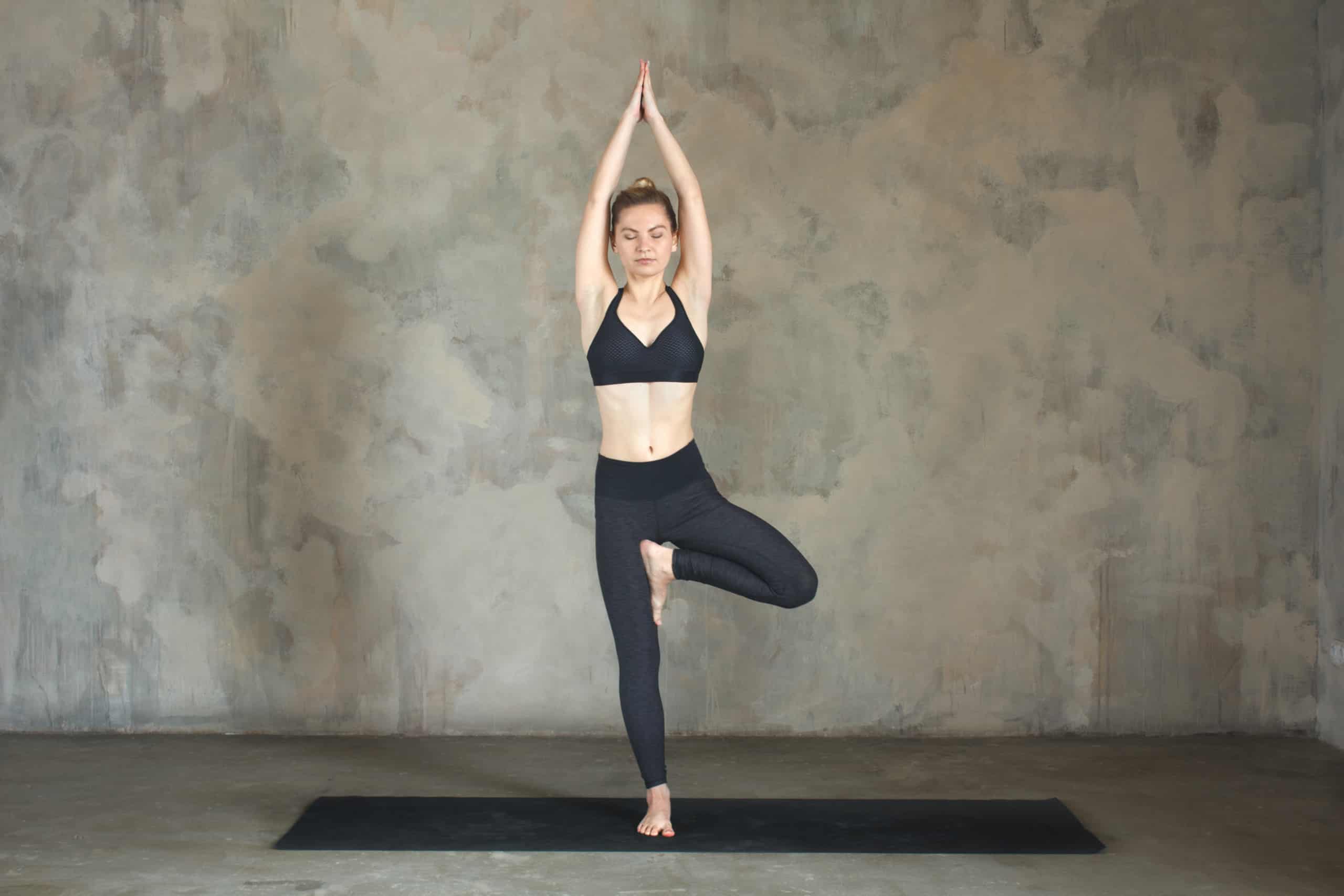
Stand straight. Bring your hands together in prayer, then slide them over your head. At the same time, slide your left leg up your bend your knee while balancing on your right leg. Press your left leg into the inner thigh of your right leg. Hold for twenty seconds and then switch legs. Breathe slowly and relax, letting go of your stress.

balance tree pose


14 – Baby pigeon pose

Get on your hands and knees, and move your right knee forward between your hands. Straighten your torso like you’re going to do lunges while you slowly straighten your left leg behind you. Keep your knee on the floor.

Turn your right knee toward your right wrist and bring it down to the floor so that your right calf is flat. Your right foot should rest under you. Slowly lower your upper body so it’s over your bent leg, rest on your elbows. Inhale and exhale. Push back onto your left leg, stretch your calf muscles, and then change sides. Repeat with your left leg bending, this time and your right leg extended backward.

What if negative thoughts come to your mind?

Sometimes when you’re doing yoga, you may think about all the negative things in your life. If this happens, let go of these thoughts. Instead, focus on the moment, how your breathing sounds or how your body feels stretching. If you continue to have negative thoughts, bring yourself back to your breathing and how your body feels. Maintaining this practice will help you create a habit of letting go of your negative thoughts and feelings.

If you enjoy doing yoga to reduce stress hormones, consider these practical suggestions when you get started.

  • Set up regular times to practice yoga at home or in class.
  • Discuss finding the best yoga routine to reduce stress hormones with your yoga instructor.
  • Talk to your doctor before starting a yoga routine, especially if you have health conditions or take medications.

Final thoughts on doing yoga to reduce stress hormones

Yoga is proven to help reduce stress, and anxiety and reduce depression. When you first start, consider trying some easier poses, then advance to harder ones. If you’re taking a class, be sure to tell your yogi if you have any medical conditions that could cause your injury while doing the poses. Most of all, enjoy learning these different poses and experiencing the benefits physically and mentally of reduced stress.

Signs of a Mold Illness: 7 Symptoms You Need to Know

You wake up feeling off—tired, achy, maybe a little foggy. You chalk it up to stress, allergies, or just one of those days. However, what if the true cause is concealed in your home, showing up as signs of a mold illness you haven’t even considered?

Mold is sneaky. It thrives in damp corners, spreads through invisible spores, and triggers symptoms that seem unrelated—until they aren’t. Mold exposure can adversely affect your health, causing symptoms such as muscle pain and brain fog, often without your awareness.

The good news? You can take control. Knowing the signs of mold illness is the first step toward protecting your body and your home. Let’s break it down—so you can breathe easier.

Where Mold Is Commonly Found (And How to Spot It Early)

Mold isn’t just a problem in old, damp basements—it can grow anywhere moisture lingers. Bathrooms, kitchens, and even your bedroom can be breeding grounds. The tricky part? Mold often hides in places you don’t check daily.

It thrives on wood, drywall, and fabrics, feeding off humidity and poor ventilation. By the time you see it, the problem is usually bigger than it looks. But mold doesn’t always announce itself with dark patches.

Sometimes, it’s the musty smell or unexplained allergies that tip you off. Knowing where to look—and what to look for—can help you stop mold before it spreads.

  • 🛁 Bathrooms and kitchens:  Steam and humidity create the perfect environment for mold on walls, tiles, and ceilings.
  • 🌬️ HVAC systems and vents:  Mold spores circulate through dirty air ducts, spreading to every room in your home.
  • 💦 Windows and door frames:  Condensation buildup fosters hidden mold growth in seals and wooden trim.
  • 💧 Furniture and upholstery:  Sofas, mattresses, and carpets trap moisture, making them easy mold targets.
  • 🚿 Under sinks and behind appliances:  Leaks often go unnoticed, allowing mold to thrive in damp, enclosed spaces.

7 Signs of Mold Illness You Shouldn’t Ignore

when flower doesnt bloom

Mold-related illness is tricky—it doesn’t hit all at once like a cold. Instead, symptoms creep in gradually, often mistaken for allergies, stress, or just getting older. The problem? If mold is the culprit, your body is constantly fighting an invisible enemy. And until the source is removed, the symptoms won’t go away.

Mold exposure affects people differently. Some struggle with respiratory issues, while others feel it in their gut, skin, or even mood. But the more symptoms you have—especially ones that seem random or persistent—the more likely mold is involved. Here’s how it can show up in your body:

1. Unexplained Muscle Aches and Joint Pain

Mold exposure can trigger chronic inflammation, which is the body’s natural response to toxins. Over time, this inflammation can settle in your muscles and joints, leading to stiffness, soreness, and deep aches that don’t go away. Unlike soreness from exercise, this pain isn’t relieved by stretching or movement. Some people also report feeling sharp, pinprick sensations in their muscles.

👉 If you’re waking up with pain that doesn’t have a clear cause—or you feel sore without strenuous activity—mold exposure could be a factor.

2. Digestive Problems and Food Sensitivities

Not many people associate digestive issues with mold, but they should. Mold exposure can disrupt gut health, leading to:

✔️ Bloating and stomach pain
✔️ Nausea and vomiting
✔️ Diarrhea or constipation
✔️ Increased food sensitivities
✔️ Leaky gut syndrome

Mold toxins (mycotoxins) can harm beneficial gut bacteria, making digestion harder. Some people even develop sudden intolerances to foods they used to enjoy, especially grains, dairy, and fermented products—foods that can contain mold themselves.

👉 If your stomach feels off more often than not, mold could be affecting your gut microbiome.

3. Mood Swings, Anxiety, or Depression

Mold doesn’t just affect your body—it affects your brain. Studies have linked mold exposure to neurological symptoms, including mood swings, anxiety, depression, and memory issues. The reason? Mycotoxins (mold toxins) can disrupt neurotransmitter balance, causing emotional and cognitive instability.

People living in mold-contaminated environments often report feeling “off” emotionally—more irritable, anxious, or even unusually depressed. Some describe brain fog, forgetfulness, or difficulty concentrating, similar to ADHD symptoms.

👉 If your mood has been unpredictable or you’re struggling with brain fog, your environment—not just stress—could be the trigger.

4. Chronic Respiratory Issues

This is one of the most common and immediate signs of mold exposure. Mold spores irritate the respiratory system, leading to:

✔️ Persistent coughing
✔️ Wheezing or shortness of breath
✔️ Stuffy or runny nose
✔️ Frequent sinus infections
✔️ Chest tightness or discomfort

For those with asthma or allergies, mold exposure can make symptoms worse. Some people even develop hypersensitivity pneumonitis—a lung condition caused by prolonged mold exposure, leading to lung inflammation, difficulty breathing, and chronic fatigue.

👉 If you always feel congested or struggle to breathe indoors but feel better outside, mold could be in your air.

5. Numbness, Tingling, or Skin Sensitivity

Ever get that pins-and-needles sensation in your hands or feet? Or maybe your skin feels itchy, irritated, or unusually sensitive? Mold can trigger a condition known as neuropathy, where toxins affect nerve function. Some people experience tingling, while others feel burning sensations on their skin.

In some cases, mold exposure can lead to rashes, hives, or dry, scaly patches. If you notice redness or itchiness that doesn’t go away—even without contact with visible mold—your immune system may be reacting to airborne spores.

👉 If your skin feels hypersensitive, tingly, or inflamed, mold could be overstimulating your nervous system.

6. Frequent Headaches and Eye Irritation

Mold exposure can trigger sinus headaches, tension headaches, and even migraines. The toxins and spores cause inflammation in the sinuses, leading to pressure, congestion, and throbbing pain around the forehead, temples, and eyes.

Meanwhile, mold spores can irritate the eyes, causing:

✔️ Redness
✔️ Itchiness
✔️ Sensitivity to light
✔️ Watery, blurry vision

Some people also report a “heavy” feeling behind their eyes, similar to allergy symptoms that don’t improve with antihistamines.

👉 If you get headaches indoors but feel relief outside, mold could be the reason.

7. Fatigue, Brain Fog, and Low Energy

Feeling exhausted even after a full night’s sleep? Struggling to focus on simple tasks? Mold exposure can drain your energy and disrupt cognitive function, making it harder to think clearly.

Mold toxins overload the immune system, forcing your body to work overtime to fight them. This constant internal battle leaves you feeling:

✔️ Mentally foggy
✔️ Physically drained
✔️ Forgetful or easily distracted

Over time, this can lead to chronic fatigue syndrome, where even minor activities feel exhausting.

👉 If your energy is low and no amount of sleep seems to help, mold could be draining you from the inside out.

How to Test for Mold Exposure in Your Body

healthy environment

Mold illness can be tricky to diagnose because its symptoms mimic allergies, chronic fatigue 😴, and other conditions. If you suspect mold is affecting your health, 🧪 testing can help confirm your exposure. Most doctors won’t test for mold unless you request it, so it’s important to know what to ask for.

A urine test can detect mycotoxins—the toxins produced by mold—while blood tests can check for immune system reactions 🩸 and inflammation linked to mold exposure.

Some people also take a vision test 👁️ that measures how toxins affect brain function. If your symptoms improve when you leave home or worsen in humid environments, mold could be the culprit.

A professional mold inspection of your living space may also provide answers. If testing confirms exposure, the next step is removing mold from your environment and supporting your body’s detox process.

Protecting Your Health from Mold

Mold exposure is sneaky, but once you recognize the signs, you can take action. Your health isn’t something to gamble with—if symptoms persist, don’t ignore them. Whether it’s improving ventilation, fixing leaks, or seeking professional help, small steps make a big difference.

Key Takeaways

  • Mold illness often mimics allergies or fatigue—don’t overlook persistent, unexplained symptoms.
  • Testing for mold exposure can confirm if it’s affecting your health.
  • Keeping humidity low and fixing leaks helps prevent mold from taking hold.

If symptoms like chronic fatigue, respiratory issues, or brain fog don’t improve, talk to a doctor. And if your home smells musty or has a history of leaks, it’s worth investigating. Your health—and your peace of mind—are worth it.

Skip to content