Weekly tips, affirmations, and small actions to feel your best.

What Do The Shape of Your Eyes Reveal About Your Personality?

Traditional Chinese Medicine uses ancient techniques in order to gather information about one’s personality, health, and even relationships using the shape of one’s eye. The shape of your eyes can reveal more about your personality than you might think, and cultures all over the world seem to believe in this type of science.

While to some people, eyes look like nothing more than colorful balls that allow them to see the world, but to others, eyes truly reflect one’s soul. Below, we will go over what the size, shape, color, slant, and even distance between the eyes reveals about your personality.

What Do The Shape of Your Eyes Reveal About Your Personality?

Size

If you have relatively large eyes, this means you have passion, receptiveness, openness, and creativity in your personality. You feel emotions very deeply, and go through life riding on the waves of your passion rather than looking at things through a more logical manner. You can sometimes trust people too easily, so make sure you size them up accordingly before giving your whole heart (and maybe life story) away.

If you have small eyes, you look at the world through a more logical, analytical lens. You believe in focus, precision, accuracy, and logic. You have high intelligence, and people come to you for answers about complicated things all the time. You pay attention to details rather than the bigger picture. Although many people might regard you as cold, they don’t realize that you do have emotions; you just don’t let yourself become carried away by them.

Shape

If you have almond-shaped eyes, then you have a certain mystique and exotic flair. You have great compassion for others, and have the ability to remain calm in almost any situation. However, you can also let your wary nature keep you from doing fun things in life, so remember to sometimes take chances and not think about the details so much. You also are very observant, and have a balanced outlook on life. You have a warmth about you that just makes people want to get to know you.

Round eyes mark great creativity and imagination, and you often escape reality by going inside your mind. You tend to let your emotions run the show, and make decisions based upon them. You’re an idealist through and through, which makes others see you as impractical and moody. You also have a certain charm about you which attracts others to you, even if you can seem a bit blunt and tactless at times.

Distance

People with close-set eyes often follow traditions, and have a keen interest in history and cultures. Their values and upbringing mean a lot to them, and they have a hard time living in a world that often forgets about culture. They don’t do well with change, obviously, which can lead to chronic stress and anxiety. They like structure, discipline, and detail, and have incredible focus. They have a resistant nature as well, which makes it hard for them to go with the flow.

Wide-set eyes mean basically the opposite – you love to explore all that life has to offer, and let nothing hold you back. You know your past, but don’t let it define you. You have eyes that see a little too far, that take you to uncharted territory and allow you to see more of the world than most people. You hate routines and inflexibility, and often wander aimlessly just to have an adventure. You are spontaneous, innovative, and fearless.

If your eyes fall somewhere in the middle of these two categories, then you have a balanced approach to life.

Prominent or Deep-Set

Prominent eyes look as though they bulge out, and protrude from the eye socket. On the other hand, deep-set eyes have a more sunken appearance.

People with prominent eyes have great sensitivity and a friendly nature, but they tend to worry a lot. They like to stick with a close group of friends and family, as their warm-hearted nature makes it easy for them to maintain close relationships. They tend to lean toward pessimism, although most people find them highly approachable and relatable.

People with deep-set eyes tend to hide much of themselves underneath the surface. They have a mysterious, brooding nature, and can seem intense and private. They love to observe their environment and often live inside their heads. They have a romantic streak, however, and will get to know you on a very deep level.

Slant

Upward slanting, or cat eyes, mean that you have great ambition and drive. You don’t let anyone stop you from accomplishing a goal, and you are very open-minded and well-rounded. People find you interesting, fun, and witty. You look for opportunities wherever you go, and love to keep getting ahead in life. Others might call you selfish and self-centered, but you just see it as doing the best possible for yourself. You have great optimism that allows you to reach your goals fairly easily. You don’t give up without a fight.

A downward slant obviously points to quite the opposite. These types of eyes mean that you might have a dependent nature, and like to stay close to loved ones, as you rely on them for many things. You have a timid nature as well, and people tend to take advantage of you. You also are pessimistic, which makes it hard for people to have fun around you sometimes. However, you care deeply about people, and keep friends for quite a long time.

Related article: What Does Your Face Reveal About Your Personality?
16 Pieces of Life Advice That Will Brighten Your Day

Sometimes, life feels nothing short of overwhelming. We have so many responsibilities, errands, and other things to attend to, and plus, many of us have a hard time shutting off our brains from overthinking every little thing. Life moves quickly, and we’re expecting to keep pace with it. However, doing so 24/7 can easily wear you out if you don’t take time for yourself, to reflect, recharge, and just take it all in.

We all need a little inspiration from time to time to keep us going, so we hope the following pieces of life advice and quotes will help you to keep your head up in trying times.

16 Pieces of Life Advice That Will Brighten Your Day

1. “Treat yourself like you’d treat your best friend in the whole world.”

Don’t ever forget to take care of yourself, love yourself, and stay true to your heart. You can’t live life to your fullest if you constantly put yourself down and don’t believe in yourself. If you wouldn’t say it to your best friend, don’t say it to yourself, either.

2. “Focus your efforts on lifting people up, not putting them down.”

We’ve all been in a bad place at one point or another; we’ve all hit rock bottom. So, if you see someone struggling, don’t knock them down even further. Lift them up when they need it the most; if we all did this, imagine how different the world would be.

3. “No matter what you accomplish today, you’re still amazing.”

Even if you didn’t get out of bed today, don’t let anyone tell you that you don’t rock at life. Sometimes, we just need to recharge, and other times, we feel like flying. Part of being human is dealing with the ebbs and flows of life, so even if you spent all weekend laying around doing nothing, this doesn’t make you lazy or unaccomplished. It makes you human.

4. “Always stand up for what you believe in, even if no one stands beside you.”

You can’t live with integrity while ignoring your truth – it just doesn’t work like that. Always stay true to you; you’ll eventually attract the right people.

5. “Don’t take yourself so seriously; this is all just a game anyway.”

We have a tendency to take life pretty seriously sometimes, but at what cost? Remember to live each day to the fullest, and only worry about the things you can change.

6. “Give compliments, not insults.”

Humanity could use a little uplifting and encouragement these days. Spread kindness, not violence.

7. “When you feel anxious, focus on nothing but your breath.”

If you feel nervous, chances are that you’re breathing rapidly and unevenly. Remember to slow down and pay attention to your breath any time you feel out of control.

8. “Don’t spend so much time plotting the path that you forget to take the first step.”

We don’t have forever to spend here, so make the most of your time. Sometimes the greatest risk you take leads to the most amazing rewards later.

9. “Love people as they are, including yourself.”

Don’t expect others to change; just love them as they come. Also, love yourself as you are, because no one else will if you don’t first give that love to yourself.

10. “Have positive conversations with yourself.”

Be mindful of your self-talk; it might seem harmless, but how you think of yourself reflects how the rest of the world will respond to you.

11. “Overthinking will never get you anywhere.”

Overthinking pretty much gives our brains something to do, but that doesn’t mean it’s productive. Try to just go with the flow and see where life takes you rather than planning out every little detail of every single day.

12. “If you get up and try again tomorrow, you’re doing something right.”

It isn’t always about how many times we succeed; it’s about how many times we get back up and try again after others tell us we should quit.

Related article: 6 Things To Remember When Life Falls Apart

13. “Leave people a little less broken than you found them.”

Kiss their wounds, help heal their hearts. If we mend the broken, the whole world will start to heal. Ripples create waves; remember that.

14. “You know that crazy voice in your head telling you to follow your dreams? Yeah, you should listen to it.”

Our dreams seem crazy until we actually do them; then, we question why we didn’t follow our hearts sooner! Well, we might still feel a little insane, but what is life if we don’t feel alive?

15. “Embrace your quirks and flaws; you never know who is falling in love with them.”

Don’t change yourself so others will like you; be yourself, and the right people will love you.

16. “The first thing you should put on in the morning is a smile.”

Before you even hop out of bed to get dressed, just smile and see how amazing you feel. This will help you get your day started on the right foot!

6 Behaviors of People Who Aren’t Thankful (And How To Avoid Having Them)

We have all had ungrateful people in our lives. Those folks that seem to think we were put on this earth to serve them or fix the messes they get themselves into. They expect people to pick up after them or help them with things but never seem to get to the “thank you very much for your help.” portion of the interaction. They also never seem to be happy or content with the way their life is or the people who are in it.

So how do we avoid becoming the unhappy and ungrateful person we see in some people?

Identify their behaviors and do the opposite.

Here are 6 behaviors of people who aren’t thankful and how to avoid them:

1.  People who aren’t thankful are always in need

People who aren’t thankful are always in need of some kind of assistance. Whether it is help with bills, watching the kids or giving them a ride. They always need something from you. They are in a perpetual state of emergency and it is usually one they create themselves either through poor judgment or on purpose in order to create the drama they feed on.
Do you have a recurring emergency in a relationship or with finances? Identify what the issue is and work to change it. Instead of asking for someone to help with a temporary solution work on a permanent one. Instead of asking for help with a bill ask your friends and family to help you find a better job.
The important thing is that when someone does take time to help then tell them “thank you.” People will rescue you from hellish situations and all that is required on your part are two words that won’t cost you a dime.

2.  People who aren’t thankful don’t have time for you unless they need something

The thing is that unless they need something from you, then you never hear from them. They only turn to you for friendship when they are in a jam. You will never hear them say “Hey let me take you out to lunch” or “let me help you with that.” If everything is going fine then you don’t exist in their world anymore.
Don’t just call friends or family only when you need something. Reach out to people. Ask them if they need help with anything or just go out and get a coffee with them and talk. Relationships built on mutual assistance are strong and last a lifetime.

3.  People who aren’t thankful expect you to help them

They may feel entitled to your help either because you are family or they feel that you owe them something for being their friend. They aren’t grateful because they feel they have earned your help and you are just paying them back. They may have done a single nice thing for you only so that they could hold it over your head for as long as they can and squeeze every last ounce of guilt fueled work they could. Family, rather than friends, usually expect you to help them.
Don’t expect people to save you. You are a strong independent and resilient person who is more than capable of helping themselves get up after a tumble. It is great when people help or come to the rescue and be very thankful when they do because those people are rare indeed, but don’t sit in your tower and expect someone to save you. Save yourself.

4.  The world revolves around them and their schedule

Oh and you have to drop everything you are doing right now to come and help them. If it was an unexpected emergency that would be one thing but the ungrateful person’s emergencies are usually do to poor planning, poor time management or irresponsibility on their part. They screwed up (again) and they expect you to come running to save them right this second.
If someone is willing to volunteer their time to help you with something then the least you can do is to work your schedule around theirs if you can or come up with a time when you both are free. Being grateful for their assistance means understanding that their time is just as precious to them as yours is to you.

5.  People who aren’t thankful often bite the hand that feeds them

Related article: 6 Behaviors That Create Spoiled People (And How to Avoid Having Them)

Despite all of your help ungrateful people will turn on you. They will talk behind your back. They will say that you never help them. That they do all of the work and you are the ungrateful sponge. Despite all you have done for them they will tell their friends or other family members what a horrible person you are in order to get more sympathy from people who can’t help them.
If someone helps you or does something nice for your with no expectation of recompense then sing their praises whenever you have a chance. Sometimes being recognized is reward enough.

6.  People who aren’t thankful will always remember the one time you didn’t help them

Ungrateful people will never let you forget that one time you weren’t able to help them. Whether it was because of time constraints or lack of funds it doesn’t matter. They will hold that guilt over you until the end of time.
If someone can’t help you either because of a lack of resources, knowledge or time then be understanding. Tell them you are thankful that they were willing to help even if they weren’t able.
Everybody needs help now and then and no one should be ashamed to ask for, or receive, help. When you are able to return the favor at a later date then that shows thankfulness. If you have truly special people in your life who give selflessly and ask for no reward then you should let them know how very grateful you are to have them in your life.

5 Signs You’re In An Immature Relationship

Relationships are hard and require some work or effort on our part. Mature relationships work as a team to solve problems and aren’t afraid to express their opinions, wants or desires to their significant other. If you can trust the person closest to you then you are probably unwilling or unable to form attachments with other people. Immature relationships are usually ones that feel difficult or forced. If you feel that you are working way to hard to make a relationship work then you are probably in an immature relationship.
Being together isn’t just about loving someone but about making that person feel loved, appreciated and safe to be who they are. Feeling insecure about your relationship might mean that the relationship is showing some or all of these five signs of immaturity.

Here are 5 signs that you’re in an immature relationship:

1.  You are not functioning as a team
A relationship is a team effort. You are in this together and it is you two against the world. You have to have each others back. If your partner is unwilling to help get things done or can’t be counted upon to do their part then you have an issue. People with successful relationships see themselves as part of a team that is working towards a common goal. Unequal relationships where one partner does all of the heavy lifting leads to resentment and bitterness. Find someone who will work with you, who will stand back to back with you against the universe.
2. You are not discussing significant issues when they come up
We all have our issues or baggage. Things come up that we aren’t comfortable with. If you have an issue then you should be able to bring it up and discuss it without it erupting into a huge knock down drag out fight. If you can’t express what you want or need in a relationship without it devolving into a fight or keeping inside for weeks on end until it becomes a larger problem then there is a serious breakdown in the relationship. People in mature relationships discuss their problems or issues as they come up not after they have been festering for weeks and have poisoned your feelings.
3.  Hiding who you are
You should never have to pretend you are anyone other than who you really are. If you think you need to hide a part of yourself because your partner will make fun of you or not find you attractive or interesting anymore then you are in the wrong relationship. We are all different people with different interests and those interests change over time. Even if your partner isn’t into the exact same things as you you shouldn’t have to hide them. You both should have the space to explore who you are without fear of rejection or insults.
Related article: 10 Signs You’re Maturing, Not Just Aging
4.  Trying to change your partner
Partners are not fixer upper projects you see on the Home and Garden Channel. It is not your job to change your partner into the perfect mate. We all have our own issues and baggage. We will will work through those issues or baggage over time and with the support of our partners hopefully grow as people. No one needs someone else to change them or fix them. This attitude is very immature and shows a lack of acceptance of others for who and what they are. If you don’t like your partner the way they are then maybe you should find someone you do like.
5.  You don’t see a future with your partner
Your partner maybe be super fun to hang with or has a lot of interesting stories but if you can’t see yourself with them in ten years then what are you doing in that relationship? If you are out to just have some fun that’s perfectly fine but it is not a very mature relationship. Mature relationships see themselves building a future with their partner, maybe raising a family or growing old together. Mature relationships are in it for the long haul. If you or your partner can’t see a future together then maybe there isn’t one to see.
“Infantile love follows the principle: “I love because I am loved.”
Mature love follows the principle: “I am loved because I love.”
Immature love says: “I love you because I need you.”
Mature love says: “I need you because I love you.”
Erich Fromm, The Art of Loving

These Things Happen To Your Body When You Take Naps Every Day

You probably have fond memories of daily naptime in elementary school, and wish you could go back to those simpler days when the world moved slower and you didn’t feel so exhausted all the time. The good news is that you can take daily naps, and actually should. We all have been programmed to think that naps only exist for newborns, toddlers, the elderly, and pets, but what about us adults?! We certainly deserve some rest during our hectic days, right? Right!

Getting some midday rest is actually normal in some countries, such as Spain, Ecuador, and other Spanish-speaking areas of the world. They call these afternoon naps siestas, and this downtime is deeply ingrained in the cultures.

Even if you work a normal desk job, you could always go nap in the car on your lunch break. Us adults have a lot of responsibilities, and if people try to call you lazy for taking naps every day, go right ahead and let them. Naps have many health benefits, and while you will get to enjoy them, they’ll just have to miss out!

Our bodies and minds have been overworked and overstressed for far too long in the modern world, so why not give them both a rest when you need it most? 

Here’s how napping every day can benefit you, and why you should incorporate some rest time into your daily routine.

These Things Happen To Your Body When You Take Naps Every Day

First of all, daily naps improve your cognitive functions, which makes sense because you give your mind a rest when you lie down for a power nap. Plus, if you didn’t get enough sleep the night before, or didn’t sleep well, then your nap might just be a lifesaver. We all know that sleep allows your brain to recharge and can even boost memory and learning. A study also showed that a 60-90 minute nap can increase mental performance and capacity for up to 24 hours afterwards, and could help you learn a visual perception skill just as well as you could with a full night’s sleep!

Secondly, taking daily naps can improve your heart health. A Harvard study discovered that those who nap regularly have a much lower risk of developing heart problems later on in life. For this to have effectiveness, however, you will need to get some midafternoon shut-eye for at least three times a week for 30 minutes.

Another obvious benefit to taking naps is that it greatly reduces stress and anxiety. With a sleep deficit, you start developing more cortisol in your body, and therefore, feel more on edge. Naps can help to reduce cortisol levels so that you feel refreshed and revitalized.

Fourthly, naps can help to curb food cravings. When we lack sleep, we start to seek sources of energy, and of course, one of the best ways to receive energy comes from the foods we eat. However, a sleep deficit can cause us to make poor food choices, as we tend to look for foods with the highest calories possible in order to stay awake. Therefore, a power nap a day can keep the cravings away.

Finally, naps can help you to perform better in your workouts. Seems counterintuitive? Well, consider this. If you don’t get enough sleep, you won’t have the energy necessary to exert yourself during physical activity. By napping, you will restore your energy levels, and can even improve motor reaction skills and speed during workouts, according to this study.

Tips For A Great Nap

1. Set an alarm.

You don’t want too much sleep, but you want enough to feel well-rested. A 60-90 minute nap is ideal, but if you can’t nap for that long, then a 30-minute power nap will do the trick. Set your alarm to play a relaxing song or tone upon waking, so that you don’t feel jostled out of your sleep.

2. Nap in the afternoon.

You’ve probably heard of the 2PM slump, when most people feel like crashing during their workday. This makes sense, as you probably just ate lunch and your body is digesting food while you try to work. If you can, try to nap during part of your lunch break, as this will help you to power through the rest of your day. Napping too late in the day can negatively impact your sleep at night, so try to keep it in the timeframe of 12-2PM.

Related article: 6 Sleep Habits You Need To Avoid

3. Make your environment comfy.

Make sure you make your room conducive to sleep. Dim the lights, turn the air down, get under a cozy blanket, and keep your head elevated on a pillow. You don’t want to fall into a deep sleep, but you want to feel rested when you awaken.

4. Prepare yourself for the nap.

This means using a sleeping mask and earplugs if necessary to block out light and noise, and maybe making yourself a cup of tea beforehand to relax you into your nap. Also, don’t forget to set your timer on your phone so that you don’t oversleep.

5. Remember that you deserve sleep.

We have such an obsession with staying productive in our society that we largely neglect our health for the almighty dollar. Don’t overwork yourself, and treat yourself like you would your best friends and family. You can’t allow your best self to come forward if you neglect your health, and this includes sleep. Start to prioritize your sleep, and take naps if you feel like it. This doesn’t make you lazy, selfish, unproductive, or anything else negative. It makes you human, and we all need to start slowing down and looking after our health more.

Naps don’t just exist for kindergarteners or preschoolers; anyone can incorporate naps into their life if they want to, without a teacher or your parents telling you when to take them. Feeling sleepy yet? Good; we hope you enjoy your naptime!

(C)Power of Positivity, LLC. All rights reserved

Your Personality Controls Your Immune System, According to Science

A new study shows that your personality, or more accurately how you process the emotional moments of your life is related to how your immune system protects your body from disease.

How we react to stress is just one personality trait that we know can impact our health. For example, if you are a more reactive type of personality, you may suffer poor health in the form of high blood pressure. Although the connection between stress and health is well known, the connections between our personality and our immune system is something that only recent research has been able to find.

Your Personality Controls Your Immune System, According To New Study

There are many personality traits that we see in the different people that we know. Psychologists study the personality traits that are stable over the course of our adult lives, for example we tend to be either more introverted or extroverted, optimistic or pessimistic, and open-minded or closed-minded.

Personality traits that control your immune system functioning

Researchers say that a number of personality dimensions, including repression, optimism, hostility, attributional style, and extraversion-introversion, have been related to immune parameters or immunity. Let’s look further at these personality traits and why they might be connected to immune function.

Denying negative feelings to self and others is what we call emotional repression. Repressing negative emotions was associated with a lower immune system response than that of people who quickly expressed negative emotions and moved on.

Related article: Here’s How Eating Added Sugar Hurts Your Brain

Pessimism, or having a negative mood associated with life events, was found to be associated with lower T-cell immune system response. An optimistic outlook showed a better immune system response. Similarly, hostility or an abrupt negative, violent reaction to life events is going to have a negative effect on your immune health as well.

Attributional style is our perspective on whether we think we have control over life events or a lack of control over what happens to us. People who have an internal attributional style know that they can take action to make things better when life deals them a negative event. People who have an external attributional style see life as happening to them without any sense of being able to act and control their mood or environment.

Extroverts, who tend to have a larger social support system with multiple friends also have lower stress responses in the body, and better resistance to the common cold virus. Introverts lack the social support that extroverts have, which can help improve mood in times of distress by sharing anxieties and getting emotional support from friends.

Change your personality, change your health

Researchers looking at how personality may affect your immune system’s defense against cancer say “Individual differences have an important role in modulating the relationship between environmental events such as stressors and the immune system, and stable individual differences such as personality may have an important influence not only on immunity but on the progression of chronic health problems such as cancer. However, the relationships among personality, the immune system, and health ‘especially cancer’ are controversial.”

Is your personality stable over time or is it possible to be an introvert in your youth and an extrovert as you get older? Is the same possible for your tendency to be an optimist or a pessimist? If you can change some of these negative features of your personality, you may be able to improve your immune system.

Making a choice to have a positive mood and outlook on the events of your life is a habit that you can practice, which will then become your usual personality style. The same is true of working on making more friends and becoming more social than you are now.

How you handle loneliness affects your immune system

Other research has linked the personality trait of how you handle alone time with your immune system health. Do you feel lonely when you are alone or are you able to be your own best friend? The research found that genes that determine immune cell function and even blood cell function were different in lonely versus non-lonely people. Psychcentral.com says  “Certain genes that dampen bodily inflammation were less effective in lonely people, while pro-inflammatory genes were over-expressed.”

How you handle stress affects your immune system

We know that stress is a killer, but stress is partly about how you process a frustrating emotional moment and how it affects your body’s fight or flight response. Chronic stress is linked to numerous health problems like cardiovascular disease and stroke. However, we now know that stress can also reduce your immunity to other illness.

Related article: 5 Ways Stressful Relationships Affect Your Health

Additional research found that when people monitored and scored their positive emotions and were then given a nasal inhalation of the cold virus, those scoring in the bottom third for positive emotions were three times more likely to catch a cold that those in the top third. More positive emotions than negative ones can help your immune system to help you stay healthy.

(c)Power of Positivity, LLC. All rights reserved

9 Comebacks When Dealing With A Narcissist

A Narcissist is a selfish, self-absorbed, and arrogant individual who craves admiration and attention. They use their physical beauty and natural charm to manipulate others into fulfilling their desires. These desires are usually superficial and short-term. Narcissists cannot hold a relationship for very long, perhaps a few months, before they are bored and seek attention elsewhere.

A narcissist knows they are a jerk and doesn’t care as long as they are admired. They don’t care about you and don’t like you. After all, there is only room for one person in their heart, and their excessive self-love already takes that spot. So what do you say to a marcissist who is trying to manipulate you into serving their needs?

9 Comebacks for dealing with a narcissist

pop meme

1. “No.”

It is ok to say no if you feel uncomfortable with someone. It is ok to say no if you don’t feel good doing something. It’s ok to say no if you don’t feel comfortable with how someone treats you. It is ok to say no. You are the captain of your life, not someone else, and you alone are the master of your fate.

2. “Stay on topic and don’t change the subject.”

A narcissist will use any argument to make it about themselves and some mistake or hurt in the past that you have inflicted on them, whether real or perceived. They will try to steer the subject away from their selfish actions and toward something that will make you feel guilty. Don’t let them. Please keep the discussion on topic and move where you want it to go.

3. “I will believe it when I see it.”

Narcissists have a terrible habit of over-promising and under-delivering. Don’t get your hopes up if they make outlandish promises or overstate their importance, influence, wealth, or skills. They will promise you the moon. Just make sure you see the deed in writing and get it notarized by two people first. They will make these promises to manipulate you emotionally, so keep your emotions and expectations under control until they deliver on their promises.

4. “I’m not overly emotional. I am assertive, strong-willed, and passionate.”

Don’t let someone else define your emotional state (unless licensed medical professionals). A narcissist will try to undermine your faith in your own emotions and rationality. Keep calm and focused, and if you start to lose your cool, walk away for a bit until you are thinking clearly.

5. “I have learned from and moved on from my mistakes.”

Learning from your mistakes is the key to success in work and life. Everyone makes mistakes, and you are no different. A narcissist will damage your self-esteem by constantly bringing up your failures or mistakes. Own your mistakes. Learn from them, and no one can use them to hurt you or cause you to doubt yourself.

6. “I refuse to be afraid.”

Fear can be a powerful manipulation tool, and a narcissist will wield it like a sword. They will cut you down and render you helpless. One of the most influential and empowering things you can do in your life is to face your fear. Fear can cripple you physically and emotionally, or it can drive you to success and greatness. Look your fear in the eye and draw strength from it.

7. “Slow down there, Speedy.”

Narcissists and other manipulators want to rush you into a wrong decision that benefits them—the ultimate pushy salesperson. Recognize when someone is running you, and tell them to slow down. Don’t ask them to slow down. Tell them. This is your decision. Take your time and look at all the angles. Is this what is best for you? Or them?

8. “I am not the bad guy here.”

Narcissists will try to flip any argument or disagreement into why you are the bad guy, and they are the sad minor victim. In reality, it is the other way around. If you point out a mistake or deficiency in their work, they will play the victim and make it into your persecuting them. Take control of the narrative and refuse to blame their mistakes. They made a mistake; they need to own up to it and fix it.

Positive quote

9. “The world does not revolve around you and your needs.”

Narcissists are the center of their universe, but they are not the center of yours. Relationships are about giving and taking and doing things together. But if you only do whatever they want to do and never what you want to do, then you need to get out of their orbit and explore your universe. Do your own thing, and live the life you want.

(C)Power of Positivity, LLC. All rights reserved

10 Things To Avoid That Trigger Anxiety

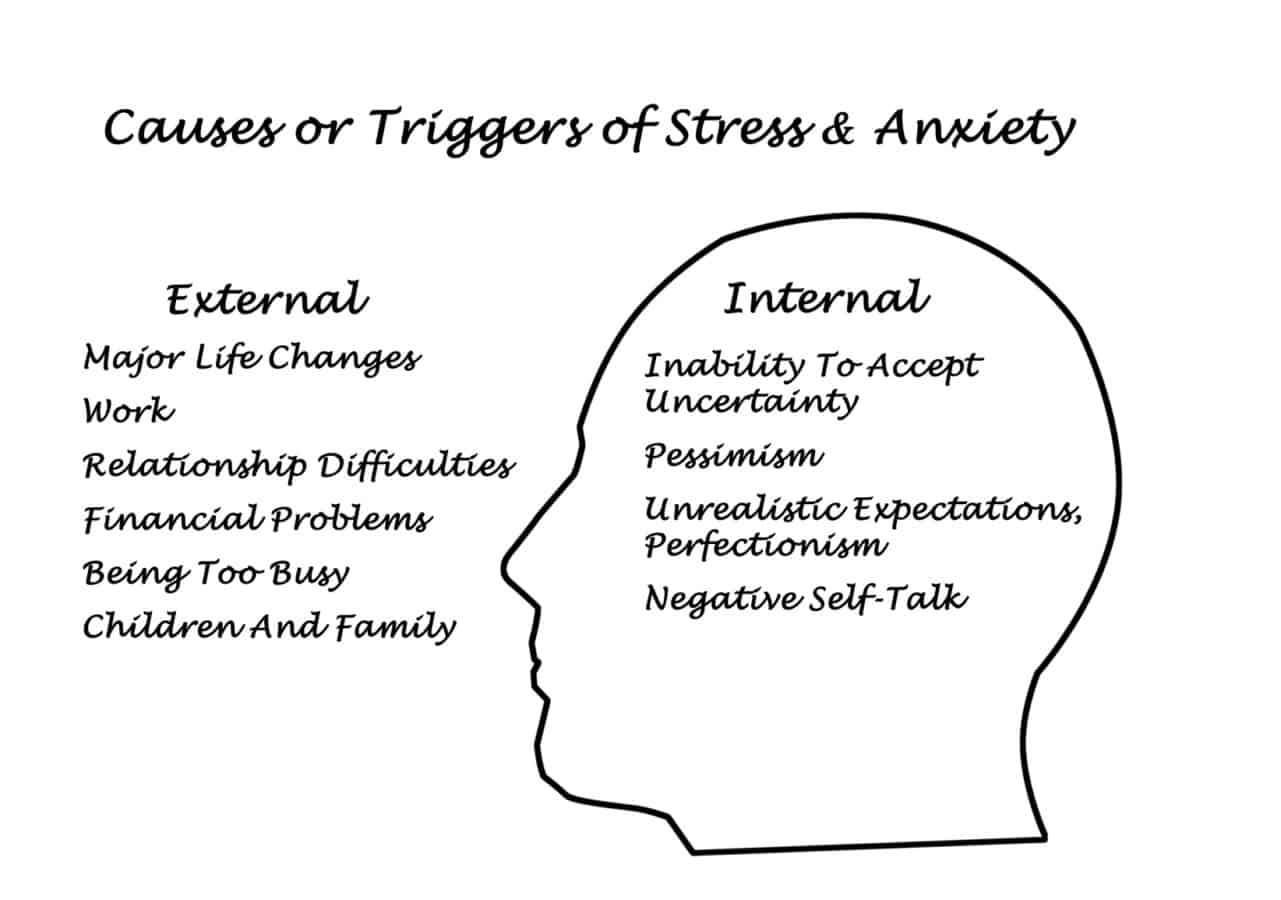
Did you know that anxiety disorder is the most common mental illness in the United States? It affects 40 million adults over the age of 18 (roughly 18% of the population). Anxiety alone costs more than $42 billion a year in mental health bills.

So what triggers this disorder? How can we overcome it? What can we do to help ourselves feel better? These answers, along with natural ways to regain your health from anxiety are included in this list to provide solutions, as well as awareness…

Here are 10 things that can trigger anxiety (and how to avoid them):

reduce anxiety

1. Overthinking

When we overthink we create emotional problems. We make up scenarios that aren’t even there. Overthinking creates fear in the future. When we stress over things we alter our emotional stability. Usually, this happens in the middle of the night when we cannot sleep.

This is a good time to try and meditate. Take deep breaths and relax your body. Focus on something joyful.

2. Finances

Nothing causes more stress and anxiety than worrying about money. Unfortunately, in the middle of worrying about money some people go spend more. The fear of not having enough is constant in our lives. Many times we avoid dealing with the finances which makes the issue even worse. Also, an increase in financial obligations causes a tremendous amount of anxiety.

Get help with your finances. Talk to your partner. Make a budget. The worst thing you can do is avoid the issue or ignore it. Also, overanalyzing isn’t going to help the situation.

3. Uncertainty

Fear of the unknown is a huge trigger for anxiety. Trying to make decisions without foreseeing the outcome lets us feel helpless. Social media and the news magnify this. People fear attacks, catastrophic events, and death which are overplayed on television. We are constantly bombarded by negative input from the external world.

Turn off the news. Detach from what’s happening out there and focus on your life. The world has always had bad things happen but we cannot live based on unknown fears of the future. Yoga, hiking, swimming, and other activities can help us refocus on what’s essential in our lives.

4. Confrontations

The fear of confronting someone about how you feel is huge. Some of us do not take criticism and prejudice lightly. Confrontations can be a trigger to anxiety disorder. Avoiding the person increases the fear even more.

Write a letter to the person. Send a text. You do not have to live in fear of another person’s attitude. That’s all on them. You don’t have to own their issues. Setting boundaries is never easy but in the long run, it helps you deal with the person in a healthy manner.

5. Work

Being unhappy with your work can cause anxiety and depression. If you’ve lost your job that can bring about tremendous fears. Work is an important part of our adult life. We must work to sustain our lifestyle. When we are stressed at work we begin to allow it to bleed into other aspects of our lives. Relationships get affected. Our health is compromised.

It’s easy to tell someone to find another job. But, it’s not always easy finding another job. Minimizing your anxiety about work requires being honest with what you are doing. Do you like what you do? What could you be doing? Follow your heart. Talk to a therapist or a job counselor. Find out what matches your aptitude. We spend more time at work than home, so prioritize that.

6. Losing control

Fear arrives when we feel we have lost control. The reality is that we have little control over anything in our lives. We don’t know when we will die. We don’t know how we will survive. Indeed, we only know this very moment. Anxiety disorder feeds on all our fears. Any phobias become magnified and we cannot let them go. Control is one of those irrational triggers that cannot be ignored when you suffer from anxiety. In fearing that if you can’t manage the control of future events something worst will happen is paralyzing.

It’s important to accept that control is not real. Medication for anxiety disorder helps with the obsession of control. Exercise also helps. Being in nature and getting out of your own way also helps puts things in perspective.

7. Aging

The fear of getting old is constant. You cannot stop aging. The moment you are born you begin the aging process. But, some people have anxiety about this fact of life. They will do everything possible not to get old, from surgeries to transforming their lives. They will date people younger than them to feel young or buy creams and inject Botox to look younger. The reality is that it’s unavoidable. Aging is non-stoppable.

You can continue to eat healthily and take care of your body. The minute you release the fears of getting older you are free. It’s paralyzing to pretend that aging isn’t happening.

anxiety

8. Meeting new people

We aren’t alone on this journey. We see people every day, at a supermarket, in the streets, or at work. It’s very difficult to hide from what’s fully present in our world. Meeting new people triggers anxiety in many people. They have no problem moving through life with little interaction. But, we learn from each other. Usually the anxiety arrives when you know you have to meet the person, but once you move past the initial moment it’s okay.

Remember that once you meet a new person you are enriched by what they teach you. Do some visualization exercises before meeting anyone. Send light to that person and become aware that they are here to teach you something, sometimes in the smallest of ways.

9. Relationships

Relationships can be difficult especially if you are in the wrong one. Anxiety and fear take over. It’s hard to let go when you are worrying about that other person. Love isn’t difficult. If you are feeling constant anxiety with that person please be aware that your own intuition is guiding you. Perhaps this person is not for you.

Honor your feelings. Make a plan and get help. If you are in an abusive relationship, please remember there are many venues to find assistance. You do not have to endure this alone.

10. Illnesses

The unknown of illnesses is enough to push anyone over the edge. Anxiety becomes the monster that walks alongside you through these times. Whether you are ill, or someone near you, it is still stricken by the uncertainty of the future. Illnesses are challenging and truly debilitating. Dr. Elisabeth Kubler, a Swiss psychiatrist, first implemented the Five Stages of Grief in 1969, explaining emotions that most people experienced during grief. There is no real order to them: denial, anger, bargaining, depression, and acceptance. When we are ill we truly forget what it was not to be sick.

Life-challenging situations require assistance from others. Meditation or any preferred form of prayer are healthy ways of centering your spirit, but ultimately, these times require others to help. Vulnerability is courageous. There is nothing to be ashamed of.

In one form or another, anxiety is part of life. We worry, we stress, and we get depressed. We are humans. What needs to be addressed is how to reduce those things that trigger the worst of fears in us. Life is fragile, and you should not have to do it alone.

10 Reasons People Fall Out of Love

Relationships take work. They require nurturing, love, and appreciation. No one wants to feel they are taken for granted, betrayed, or misunderstood. In fact, feeling that upheaval can make people fall out of love.

It takes more than friendship and commitment. Love requires the presence of trust and respect. Falling in love is easy. The tricky part is remaining in love, and committing to your partner forever.

Here are 10 reasons people fall out of love:

If you see any of these red flags, it is time to work on your relationship.

1. Lack of communication.

When you start a new relationship sharing is abundant. Couples talk about anything and everything as they get to know each other. They fall in love with those parts that relate to one another. Unfortunately, as time goes on, communication withers. For over forty years the psychologist Professor John Gottman has been analyzing relationships. He says that there are 4 ways that communication is affected: criticism, contempt (sarcasm and name-calling), defensiveness, and stonewalling (the silent treatment which is caused by the other three). In the comfort of knowing your partner, there is the discomfort of not wanting to ask again, or say the same thing again, as not to upset them. Communication shuts down because there is no effective way to sit and healthily discuss issues.

fall out of love

2. Feeling invisible.

After long periods of time, couples begin to take each other for granted. There is a feeling of merely existing in the relationship. Making love becomes the thing of the past. You stop touching and complimenting each other. You stop looking at one another. In fact, you might even begin to act like roommates rather than lovers. Love grows cold. It’s not a good idea to blame your partner for all the relationship problems. Sometimes we need distance to recognize how vital our partner is and retrace what made us sparkle in the first place. But it takes work.

3. Magnifying insecurities.

When the “in love” part vanishes, the truth of who we are starts to play. We begin to feed off each others’ insecurities. Jealousy starts to play a role in the relationship. Because we feel invisible, we begin to notice that our partner starts to behave differently with others. It’s not that he or she is cheating. It’s that we want to feel like we used to in the beginning. His insecurities are passed on to you. Her own issues began to play a huge role in how he reacts. It’s a constant battle of self worth and acceptance. The best way to move past this is to discuss the issues without blame or criticism.

4. Boredom sets in.

April Masini, the relationship author of Romantic Date Ideas, says: “Over time, people can change — or more often, they become who they really are. Someone who loved his steady business career may suddenly realize he always wanted to be a stand-up comedian and throw caution to the wind to chase his dreams. The kind of change that leads to love lost is always about a buried desire to be someone that’s repressed inside. It’s important to really know your partner to avoid this lost-love syndrome.” A way to avoid this is to be open and accept your partner’s choices in what makes him/her happy. Changes are supposed to happen in relationships. You must go with the flow. Otherwise, boredom will extinguish the flame that was once the reason you fell in love.

5. Attraction is gone.

What kills attraction? The inability to have fun. You fall in a rut and can’t get out of it. You stop going out on date nights or doing special things for your significant other. Most times it has nothing to do with physical appearance but the things that go unsaid or undone. You fell in love with that person for many reasons. It’s about revisiting those parts of the relationship. Attraction is ignited through appreciation and compassion.

6. Holding on to grudges.

Nothing is worst than holding on to past resentments and grudges. The quote “forgive and forget” does not play well when we are still reclaiming hurtful situations, bringing them up constantly, and throwing them out there. It’s hard to move on when you are still keeping tabs on what your partner has done. Neither of you can possibly move on. Either let the past go or move on. Neither of you can live a healthy relationship when relieving pain.

7. Dishonesty.

Cheating and other secrets destroy relationships. And it’s not just infidelity that destroys trust, it’s the things that are purposely withheld. It could be that your partner is keeping another bank account, doing drugs, or has lost his/her job. Not sharing is the same as lying. It diminishes all credibility in a relationship. Communication is the start of unraveling all those things.

8. No one wants to compromise.

There is a point in every relationship when egos begin to dictate. You stop caring about the other person’s feelings and you want what you want when you want it. Even through arguments, and discussions, no one wants to compromise. This begins to show the lack of respect and love. You cannot love another without give and take. You cannot get back to peace without compromising.

9. The fairy tale is over.

You got married believing that this person was your prince or your princess. You believed that you had found your happily-ever-after. Unfortunately, what they don’t share in those children’s stories is that after the love comes to the payments on the castle, the tending to the land, and all the other problems that arrived. You met someone and he was exactly who he was. You created an idea of that person, and after some time the love potion wore off and you began to deal with the reality. As couples begin to know each other better, they realize they are incompatible.

It’s a matter of sharing those things and learning to be individuals with separate interests, friends, and hobbies. Co-dependency is never a reason to remain in a relationship.

10. The love wasn’t really love.

Sometimes we mistake love for lust. What we thought was passion and true acceptance were the effects of lust. If a relationship started out from an affair, or is on the rebound, you are more likely to mistake the desires and wants for true love. Love is timeless. It’s not to say that relationships don’t go through rough stages. Parenthood is brutal in any relationship. People also go through complex life changes: illnesses, financial strains, and other life alterations. But, when you are in a loving relationship there is still a commitment and a choice “for better or for worse.” Lust diminishes when all the responsibility starts to take over.

fall out of love

Final Thoughts on Understanding Why Couples Fall Out of Love

Related article: Is it LOVE, or just lust? Here’s how to tell…

Relationships are never perfect. There is help out there through support groups, therapists, and friends. Remember why you fell in love with this person. Recall all the times he/she brought you joy. Focus on that and try to find a happy medium for both of you.

Skip to content