Weekly tips, affirmations, and small actions to feel your best.

5 Words You Need to Remember To Make Your Relationship Last

A great relationship doesn’t just happen overnight. They are cultivated over many years and through hardships. They are born out of mutual respect and admiration. People with great relationships have them because each person in the relationship puts their partner’s well-being and happiness above their own. They take the time to learn each other’s needs and wants. They understand that they may give and receive love differently than each other. These couples respect boundaries that their partner sets out for them. They live their lives together by doing things together and spending time together. They laugh together and at each other. There are five words encapsulating what it means to have a great relationship with your partner.

If you want to have a great relationship that lasts, remember these five words:

1. Learn

You have to learn what makes your partner tick. Learn the little things they like, don’t like, hate or love. Spending a lot of time with your partner will help you learn some of these things organically through your interactions with them. You have to ask about some things and probe deeper into your relationship to uncover the hidden meaning behind some of their behaviors. If you take the time to understand your partner, you can see their side in an argument and get where they are coming from. Things they do or say don’t just come out of nowhere but are a logical progression from their personal history, thoughts, emotions, and beliefs.

2. Lines

Every person and every relationship has boundaries or lines that you do not cross. Learning where these lines are and why they are there is critical to a long-term relationship. Couples who have great relationships know where their partner’s lines are and respect them by not crossing them. Respecting each other’s boundaries is an extension of your love and respect for your partner.

3. Live

Live your lives together. Great couples have great relationships because they are really choosing to live their lives together, hand in hand. This sounds kind of obvious but some people are so wrapped up in their own profession, business, family and hobbies that they spend more time away from their partner than with them. People have great relationships because there is nothing that they would rather do and no one they would rather be with than their partner. They do things together, they engage in conversations more substantial than small talk and the routine “how was your day?” People need time to do their own thing and that is not only understandable but to be encouraged. People who have great relationships always return to their partner, though, because they truly enjoy each others company.

4. Laugh

Laughter is the best medicine and being able to make your partner laugh is a key ingredient to a great relationship. Couples who are happy laugh together. Whether the cause is a silly inside joke or a witty observation about something serious, it doesn’t matter. Getting your partner to laugh when they are in a crappy mood or had a rough day can burn away stress that otherwise might accumulate to unbearable levels. Couples in great relationships are also very good at laughing at themselves. They don’t take themselves or each other too seriously. Also, they don’t hold onto old hurts or get bent out of shape over little things. They let them go and laugh them off.

relationship

5. Love

Everyone gives and receives love differently. People who have great relationships understand this and seek to give their partner the type of love they need from them. They also understand that they are different and that what works for one person probably doesn’t work for the other. They learn how to love each other in a way that makes the other person in the relationship happiest. Additionally, they are dedicated to loving each other even when they don’t like each other very much. Couples are going to piss each other off at some point or fight about something important. It happens to everyone. What sets the great relationship apart is that both people understand and forgive each other and love them even when they disagree.

References:

5 Simple but Often Forgotten Ways to Keep a Relationship Strong


http://www.lifehack.org/articles/communication/5-foundations-every-successful-relationship-needs.html

Text(C)Power of Positivity, LLC. All rights reserved

8 Hidden Behaviors Of A Bully

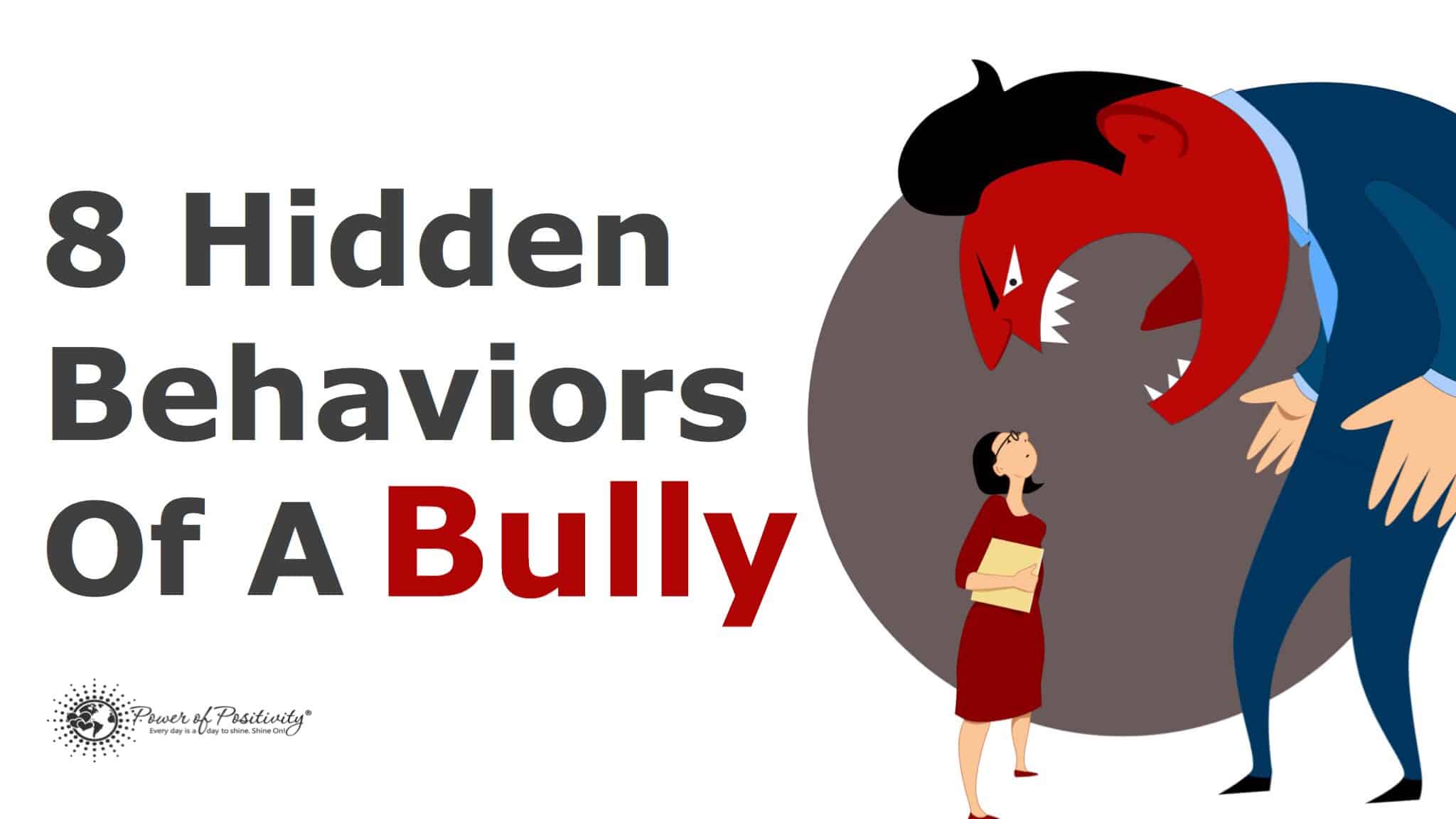
Bullying is as old as humanity and rises from a single primordial source: fear. Fear is a common emotion for everyone and everyone deals with their own fear in different ways. Some ways are healthy and rational and some are destructive and harmful. A bully, at heart, is afraid. They are insecure in their feelings about themselves and so they fight that fear by causing fear in others. Anyone has the capacity to be a bully if they are fearful enough.

It is easy enough to spot a bully if you are the victim, but it is much harder to tell if you are the one doing the bullying.

Here are 8 hidden behaviors of a bully (and how to avoid having them):

Do you see these red flags that might reveal a bully?

bully behaviors

1. A Need To Control And Dominate Others

People are afraid they aren’t good enough, strong enough, smart enough or powerful enough, and so they feel the need to prove to everyone, especially themselves, that they are. They seek to control everything and everyone because they feel that their lives are out of control, or they feel that someone can hurt them if they don’t have complete control of a situation. They seek to dominate others in order to make sure that no one can rise up and hurt them.

The best way to deal with this is to confront your own inner fears about your self-worth. Confront the individuals in your life that made you feel unworthy or insufficient. Identify your control issues and find the underlying reason you feel the need to control everything and everyone around you.

2. Quick To Anger

Part of a bully’s fear of being out of control is that their own emotions are not completely in their control. They may be emotionally unbalanced or under a lot of emotional strain and lash out more frequently because of this.

In order to deal with this, you need to find the underlying cause of your anger and deal with that. Anger management classes and finding other ways to deal with powerful emotions can help control those emotions better.

3. Poor Impulse Control

Anger and fear can override our better judgment and eliminate obstacles to acting on those emotions. People with poor impulse control struggle to control just about every emotion. There are fewer mental breakwaters to drain the power out of a tsunami of emotions. When a powerful emotion like fear or anger rises up, there is very little within a bully’s mind to slow it down and prevent them from acting on that emotion.

Confronting the fears themselves will help with this as will attending anger management classes. Being able to recognize when you are getting dangerously angry and then leaving that encounter before things get out of hand is also a good skill to learn. Preventing incidents is much better than dealing with the aftermath.

4. Lack of Empathy For Others

Dehumanizing someone makes it much easier to inflict mental or physical violence on someone. When a person you are dealing with ceases to be a person and instead become merely an obstacle to your will, then you are dehumanizing them. When you mentally categorize that person by their job instead of by their name, then you are dehumanizing them. It is easier to cuss out the customer service representative than Sally who has two kids and works two other jobs to make ends meet since her husband got sick with cancer.

You can stop a situation from escalating by recognizing that the obstacle in front of you is a person with their own issues they are dealing with. Try to understand that they may be having a crappy day just like you. When you can connect to another person’s situation, then you are less likely to mistreat them.

5. Intolerant of Differences

People are social creatures and it is easy to identify with a group. It is an instinct to sort ourselves out into “tribes” and anyone who isn’t one of “us” is a threat. Religious, political, economic and social groups can easily dehumanize and demonize members of opposing groups because they are part of another “tribe.” This stems from fear of the other and from anger at perceived grievances between groups. Social media has taken this to the extreme with “manufactured outrage” whereby you stir up the emotions of one group against another group in order to make money.

When you accept those that are different than you and understand that everyone sees the same things from different points of view, then you can try to find common ground and meet in the middle. Instead of jumping to conclusions about someone’s opinions or beliefs, try to understand why they believe those things in the first place.

bully behaviors

6. Does Not Accept Responsibility For Their Actions

Serial bullies refuse to accept the responsibility for their violence and instead will shift blame to someone or something else. They don’t see their bullying as their fault. That’s because they are reactive rather than proactive. They are reacting out of fear and anger at someone else’s misconduct. They see themselves as the victim or the hero. Most compelling villains see themselves as the hero of their own story. They aren’t responsible for their outrageous actions because they were just protecting something else like national sovereignty, religious orthodoxy or racial purity.

Regardless of the situation, you are responsible for your own actions. You choose to act or not to act by your own volition. You can choose to be gracious and understanding. Finally, you can choose to educate the other person in a rational and reasonable manner. If you threaten violence or use violence in order to get your way, then you need to accept responsibility for that action because you could have chosen differently.

7. Feelings of Superiority

Bullies often feel superior and use that feeling to dehumanize others as mere inferiors. Bullies can feel economically, socially, racially or physically superior. They use that feeling to justify their actions. When they feel that they are better than you, it gives them the justification they need to treat you like crap.

Once you realize that no one is intrinsically superior to anyone else, you can empathize with them. Everyone has something that they are good at, even though everything is not compensated equally well. You might be the most successful investment banker in the world, but without mechanics, computer techs, or carpenters, then you would have no way to get to work, nothing to work on when you got there and nowhere to live. Everyone has something special to offer the world.

8. Blame The Victim

Because bullies find it hard to accept responsibility for their actions, they often blame the victim instead. “He/She made me do it,” is a common excuse. You are either in control of your actions or you are not. No amount of hateful words or physical violence is ever justified against a peaceful person or group.

If you find yourself blaming another person or group for your violence or abusive words, then you might be a bully. Accept responsibility for your actions and your words. Using violence or intimidation to rob someone of their property, self-worth or rights is always wrong. You can choose a different path. It is your choice whether or not to victimize someone else. Learn to get what you want without violence and intimidation. Choose a better path.

(C)Power of Positivity, LLC. All rights reserved

6 Foods That Cause Inflammation In Your Body

The food choices you make influence how much inflammation you have in your body. One high-fat meal will trigger a release of specific molecules that set off an inflammatory response. Having too much inflammation in your body can lead to dangerous illnesses. It’s worth knowing which foods to avoid so you can decrease your levels of inflammation. Here are the six most common foods that trigger inflammation, leading to severe disease.

The Connection Between Inflammation and Disease

Doctors warn that inflammation is a common factor in diabetes, certain cancers, and cardiovascular disease. These diseases account for approximately 70% of all deaths in the United States every year. Other conditions that may stem from inflammation include these:

  • Arthritis
  • Crohn’s disease
  • Colitis
  • IBS
  • Asthma
  • Alzheimer’s disease
  • Parkinson’s disease

6 Foods That Cause Inflammation

Here are six foods to avoid if you have inflammatory diseases or conditions.

inflammation

1 – Refined carbohydrates

A group of researchers at Harvard found that people who ate a diet high in sugary drinks, processed meats, and refined carbohydrates were 38% more likely to end up with heart disease than people who didn’t eat these foods. Refined carbohydrates are grains that have the bran and fiber removed. These refined carbohydrates raise your blood sugar levels after you eat them. Several hours later, you end up with a blood sugar crash that makes you feel hungry and craving the foods again. Refined carbohydrates include these everyday pantry staples:

  • White bread
  • White rice
  • Pasta
  • Sugary cereals
  • Pastries
  • Sweet desserts
  • Crackers
  • Rolls

2 – Sugar

Inflammation isn’t a new medical concept. 2,000 years ago, Roman doctors noticed that they got warm to the touch, painful, and swollen as wounds healed. The word Inflammare Latin for “to set on fire,” became the word doctors used to describe this phenomenon. Only centuries later, the medical community understood the cause of inflammation-your body’s immune system fighting off threatening germs and toxins. This is the good side of inflammation, but inflammation also has a harmful side.

Glucose, a type of sugar, can lead to an inflammatory response. A diet high in sugary drinks, baked goods, or candy sets you up to have daily inflammation. Over time, this constant inflammation leads to chronic inflammation, which leads to diseases and even conditions like depression. Foods that contain a lot of sugar include the following:

  • Soft drinks
  • Fruit juices
  • Punch
  • Desserts
  • Pastries
  • Candies
  • Snacks

When you read food labels, be aware that some ingredients are the sugar in disguise. If you see these ingredients on a brand, they are sugar.

  • Corn syrup
  • Dextrose
  • Fructose
  • Golden syrup
  • Maltose
  • Sorghum syrup
  • Sucrose

3 – Saturated Fats and Trans-fats

It does not a surprise that foods that lead to inflammation are unhealthy. Foods high in unhealthy fats and trans-fats cause you to gain weight, which puts you at risk of inflammation. Foods like

  • Deep-fried foods
  • Fast foods
  • Commercially baked foods, especially hydrogenated oil, margarine, or vegetable shortening.
  • Bread
  • Granola bars
  • Salad dressings

The food manufacturers know consumers don’t want to buy foods with trans-fats, so they use different names on the labels. Regulations allow food companies to hide ½ gram of trans fat per serving. Typically, you end up eating a lot more than 1 gram of trans fat, which is the recommended amount per day for adults.

Even foods containing zero grams of trans fats contain unhealthy fats. They use different names for these fats, such as

  • Hydrogenated oils
  • Partially hydrogenated oils

4 – Food Additives

When you consume food with food additives, it changes the microbes in your stomach, causing intestinal problems and inflammation. They used food additives in processed foods to thicken, add texture, or increase the shelf life. Processed foods lack fiber, minerals, and vitamins. They’re usually high in sugar, fat, and calories. Today there are more regulations for using food additives than in the past. However, scientists must still conduct more studies to better understand food additives’ long-term effects.

Unhealthy food additives include those on the following list:

  • Partially hydrogenated vegetable oil
  • Hydrogenated oils
  • Aspartame-found in Equal and NutraSweet
  • Sodium nitrate
  • Stevia
  • Sulfites
  • Artificial colors
  • Saccharin
  • Olestra

5 – Red and Processed Meats

Overeating red meat will trigger an inflammatory response over time. This outcome puts you at risk for heart disease and cancer. Red meats include these:

  • Beef
  • Lamb
  • Pork

They processed certain types of meat using smoke, salt, curing, or chemicals. They have linked processed meats to inflammation-causing diseases like colon and rectum, esophagus, and lung cancer. Meats that are processed include the following:

  • Ham
  • Sausage
  • Salami
  • Pepperoni

So limit the amount of red meat you eat. Replace it with fish, poultry, or vegetables. When you consume red meat, choose grass-fed meat if possible.

inflammation

6 – Alcohol

High alcohol consumption causes inflammation of your esophagus, larynx, and your liver. Chronic inflammation can lead to cancer in these areas of your body. Alcohol also puts a burden on your liver, so it can’t function thoroughly. Examples of drinks that can increase your inflammation include these things:

  • Beer
  • Liquors
  • Wines
  • Liqueurs
  • Ciders

Doctors suggest that you drink moderately to reduce your risk of alcohol-related inflammation and other problems. The 2020-2025 CDC guidelines for men, the recommended amount is two drinks of alcohol or less per day, and for women, the recommended amount is one drink of alcohol or less per day.

What Foods Can Fight Inflammation?

The best way to fight inflammation isn’t taking a pill but eating anti-inflammatory foods. These foods help fight free radicals that interfere with your body’s proper function. Here are some of the best foods you can eat to fight inflammation in your body.

  • High-fiber foods-Fresh fruits, fresh vegetables, legumes, and whole grains
  • Omega3 fatty acids-Salmon, mackerel, sardines, tuna, flaxseed oil, walnuts, flaxseeds, leafy greens
  • Unsaturated fats-almonds, pecans, walnuts, pumpkin, and flaxseeds. Sesame and plant oils.
  • Polyphenols-These are plant chemicals in dark chocolate, berries, apples, citrus, onions, tea, or seeds.

How Do You Start to Eat to Fight Inflammation?

You may not want to start a completely new lifestyle eating plan all at once. It’s best to make changes slowly. Otherwise, you’ll feel deprived of the foods you love. When you’re at the store, hang out in the fresh produce aisle longer than you usually do. Look around and see if there’s produce you’ve never noticed. Try something new from the produce aisle like kale, fresh mango, or fresh red beets. Take it home and research how to prepare your newfound fruit or veggie. You may find that you love the taste.

Buy whole-wheat spaghetti pasta and brown rice instead of white. Avoid sugary snacks. Try getting your sweet tooth fixed by eating frozen mixed berries or a little dark chocolate. Skip your everyday processed food. Substitute things like

  • Instant mashed potatoes: Make real potatoes. They are super easy!
  • Salad dressing: Make your oil and vinegar.
  • Flavored popcorn: Make your popcorn with a particular popcorn maker that goes in your microwave. When you pull your popcorn out of the microwave, drizzle it with olive oil and a little salt or spices.
  • Tomato pasta sauce-Store bought tomato pasta sauce has lots of sugar. Instead of buying that, make your own. It’s easy. Chop up tomatoes. Saute them for a few minutes in a skillet with fresh garlic and basil. Drizzle your pasta with olive oil and top with your homemade pasta sauce.
  • Pita chips-Make your own by cutting a pita into fourths. Lay them on a baking sheet, then spray with olive oil. Bake in an oven 350 degrees Fahrenheit for 15 minutes or until desired crispiness.

Start Fighting Inflammation One Meal at a Time

  • Try to think about each meal instead of an entire day of eating. For instance, you can eat with berries and walnuts, coffee, or tea for a leisurely breakfast.
  • Lunch: Open-faced sandwich of mashed avocado on a slice of whole-wheat bread. Sprinkle with olive oil, chopped tomatoes, salt, and pepper.
  • Dinner: Make grilled salmon sprinkled with olive oil, lemon, and pepper. Add brown rice and a leafy green salad. For dessert, try a wedge of dark chocolate or some inflammation-fighting berries like strawberries, blueberries, and raspberries.

Every little healthy choice you make adds to less inflammation and risk of health problems in the future. If you’re unsure what healthy foods to eat or avoid, you can follow the Mediterranean Diet. One of the most nutritious lifestyle diets emphasizes eating lots of plants, lean like poultry, whole grains, and olive oil.

inflammation

Final Thoughts on Eating to Beat Inflammation

Your food choices make a massive difference in the amount of inflammation you have in your body. They link a lifestyle of unhealthy inflammation to disease and health problems. Avoiding these foods can reduce your inflammation and help you feel better. If you avoid these six common foods that trigger inflammation and begin eating more anti-inflammatory foods, you’ll be on the road to better health today and tomorrow.

Why People Get Stuck In Life

We have all experienced a rut in our lives, whether that rut was a relationship we knew was bad for us or going nowhere in a dead end job we couldn’t afford to leave. Some people sacrifice to break out of that rut. They recognize that to stay there is a death sentence for their dreams and desires. For others, though, getting out of that rut or hole is not so easy. But the reasons they remain stuck where they are is painfully obvious to those who have escaped it. They gave up. They accepted their lot in life and blame their lack of movement forward on others. They have not realized that if they want to move forward, they have to push. They have to push themselves to find a way out. They have to push obstacles out of the way and they have to push their own dreams forward.

Here are some reasons why people get stuck in life:

They Accept Their Situation

Some people just accept their lot in life and do nothing to change it. They have been beaten down so much trying to get out that they embrace their situation and give up. They give in to despair and accept the false notion that there is nothing else for them. They find themselves in a hole and they look down at the muck they are standing in rather than up to the freedom of the sky. They can’t see the way out of their situation because they are looking in the wrong direction.

They Become Creatures of Habit

They take solace in their daily routine. It feels safe and secure, something concrete and controllable in a sea of shifting goals and unforeseen catastrophes. It becomes their rhythm of life. They get up, take the kids to school, go to work, go home, eat dinner, watch TV and then hit the sack. Wake up and repeat. Anything that breaks that routine is a danger to their sense of the world. They have their schedule and stick to it meticulously. Because they feel they can’t control anything else in their lives, they revel in the small bit of control they have over their routine.

They Avoid Risk

Risk means the potential for failure, and failure is painful. People who are stuck are afraid of being hurt. They are afraid of failing. If you don’t try, then you never fail, right? And if you never fail, then you won’t get hurt. Or so the thinking goes. They have no idea they have imprisoned themselves in their own safe cocoon. They never get hurt, but they never really live, do they?

They Take Things For Granted

Some opportunities are once in a lifetime, but to someone stuck in a rut, they think the same opportunity will roll by again right on schedule. They take for granted that if you want to get yourself unstuck, you need to seize that opportunity while you have the chance. They take their loved ones for granted because they will always be there, right? No matter what they do, they think their daily routine will never deviate. They take life for granted. Life is as ephemeral as smoke. You have to stoke the fire and feed it if you want to feel its warmth.

They Give Up Their Dreams

It is easier to give up on your dreams than to fight for them. People who are stuck in life gave up on their dreams as impossible. Whenever they met the first shred of resistance, they quit. It is too hard for them. If you want to escape, then aspire to be more better than you are. Be more, reach for more and don’t stop trying to achieve it.

Related article: 5 Things Passionate People Do Differently

They Avoid Responsibility For Their Own Happiness

They are victims. Everything happens to them. They have not realized that in life, things happen because of you and your decisions. Yes, there are unforeseen circumstances, but those variables can be accounted for and planned against. People that are stuck fail to realize that their happiness is their own responsibility. They are guaranteed the pursuit of happiness and not happiness itself. The founders understood that happiness is self-generated and cannot be given to anyone from the outside. Happiness flows from within. You are responsible for your own happiness. If you are not happy, it is up to you to break yourself out of your rut and go searching for it.

5 Warning Signs Of An Emotional Affair

A relationship based solely on emotional connection can be just as intense as one based purely on sex. Most of these emotional affairs end up in a sexual relationship of some sort. In many ways, an emotional affair behaves similar to substance addiction. It isn’t just how the other person makes you feel but your body’s biochemical reaction to thinking about them and being with them. Instead, it creates a cycle of addiction whereby the stimulation of the brain’s pleasure centers through the emotional connection creates a need for more interaction. It isn’t surprising that people who abuse drugs or alcohol also end up in toxic relationships.

Craig Nakken defines this sort of addiction in his book The Addictive Personality: Understanding the Addictive Process and Compulsive Behavior.

“A pathological love and trust relationship with an object [person] or event … the out-of-control and aimless searching for wholeness, happiness, and peace through a relationship with an object or event.”

Emotional affairs are the addictive bridge between a purely platonic friendship and a sexual affair. They are the breaking point whereby a person begins to switch their emotional allegiance from their current partner to someone else.

What are some of the warning signs of this kind of addictive emotional affair?

Here are 5 warning signs of an emotional affair:

serial cheater

1. Sharing Intimate Details

When you share intimate details about yourself or your current relationship, you are creating a powerful emotional bond with the other person in the emotional affair. Instead of sharing your thoughts and feelings with your partner, you are replacing them with a surrogate instead of dealing with the problems in your relationship. By sharing those details, you are choosing to involve an outside party and creating / deepening a relationship with them instead of working on your already broken relationship with your partner. By discussing these intimate details, you are also sending a message that you are available for a deeper connection with this “friend” of yours.

2. Comparing Them To Your Partner

When you start to make comparisons between your special “friend” and your relationship partner, you are building a case against your partner and for your “friend”. You are convincing yourself that choosing your “friend” over your partner is the rational thing to do. You will tend to overlook the bad traits in your “friend” as compared to your current partner and focus more on the positive ones that make you feel pleasure in their company.

3. Obsessively Daydreaming / Thinking About Them

When you start fantasizing about them, obsessively thinking about them, you are creating a fictional surrogate for your emotions and reinforcing the addiction response of your body. Fantasizing creates a biochemical response in your brain that makes you feel good. This gets reinforced when you spend time with them, which then reinforces your fantasy about them. This creates a cycle of emotional addiction, which is hard to break.

15032652_10153983425212371_5090640618635149974_n

4. Keeping What You Do Secret

Even if you and your friend do non-sexual activities together and you feel the need to keep these activities a secret from your partner, then you have an issue. When you start keeping secrets from your partner about what you do with your “friend,” you know that you are doing something morally wrong and don’t want to face up to it. You start rationalizing why you shouldn’t tell them.

“They will get the wrong idea.”

“They won’t understand the bond I have with my friend.”

Maybe they will understand and get the correct idea and that is what you are afraid of. You keep it a secret because you are afraid they will figure it out.

5. Conspiring To Spend Time Alone Together

Once you start to conspire with your friend to spend time alone together, then you start down the slope of a sexual affair instead of just an emotional one. You have built up this intense emotional fire between each other and it wants release. So, you plan to spend time alone together that doesn’t arouse suspicion, but where you can be intimate. When this happens, you have crossed a line that cannot be uncrossed. According to Dr. Shirley Glass, author of Not Just Friends: Rebuilding Trust and Recovering Your Sanity After Infidelity, approximately 80% of these relationships switch from a purely platonic friendship into a sexual one at some point.

(C)Power of Positivity, LLC. All rights reserved

5 Things A Narcissist Will Try To Do To Take Advantage Of You

The DSMIV cites as an “essential feature” of the narcissist a “lack of empathy that begins by early childhood and is present in a variety of contexts.” If lack of empathy isn’t a hallmark of an antisocial individual, then what is? – Stanton E. Samenow, Ph.D.

For the layperson, the word “narcissist” is often used without proper context. Associated with self-absorption and selfishness, the textbook definition of narcissism is used in a way that can apply to pretty much everyone with a pulse. However, some people are much more inclined to narcissistic behavior than others.

Perhaps there is no other way this misconception can be illustrated better than a narcissist’s relationship with others. This relationship – a word used in the loosest way possible – commonly involves deceitfulness, lack of empathy, and deliberate exploitation. These relationships are usually harmful to the well-intentioned person. But you place misguided trust in a person lacking the ability to reciprocate such an emotional investment.

As decent people, it is beneficial that we’re able to identify and understand the traits of narcissists. None of us want to be exposed and abused, especially by a person whose preconceived actions and behaviors are designed to provoke the same.

It is our right to be loving and courteous, not doubtful and hesitant. We have the utmost right to protect ourselves from those who wish to harm us, whether such harm is intentional.

With this in mind, we believe it is beneficial to present certain scenarios that one may encounter with a potential narcissist. One of the things for which narcissists are well-known is taking advantage of people; hence, the purpose of this article.

Here are five ways that a narcissist may try to take advantage of you:

female narcissist

1. Cognitive Dissonance

It is common for a narcissist to mask his/her true identity with a false self. Basically, this is designed to be a sort of presentation to the world – a well-designed impetus to acquire much-needed attention and admiration. Never mind that such attention and admiration is undeserved; in fact, it’s quite likely the opposite.

Unfortunately, this deceptive tactic often works. People are frequently unable to fully understand the true nature of a narcissist – as a person that lacks empathy and interest in other human beings. Instead, they see someone that is charming, sweet and caring.

As a result, victims of narcissists are likely to suffer a good deal of cognitive dissonance. They often try and rationalize the “charming, sweet and caring” person with the outlandish and hurtful behaviors that the narcissist constantly subjects them to. The end result is that victims may end of blaming themselves while overlooking the narcissist’s true identity.

2. Emotional Puppeteering

Also known as triangulation, narcissists often manipulate emotions via the insertion of another person into the relationship. In essence, this alters the relationship dynamic and is an attempt to both provoke jealousy and maintain control.

Triangulation generally works as follows: another problem arises in the relationship, and the narcissist doesn’t feel obligated to help solve anything. Seeing an opportunity, the narcissist will (often) manipulate the emotions of another in order for them to communicate with the “problem person” – aka, the victim.

The objective? To make the victim feel as if they must “compete” for their affections. Narcissists commonly say, “I wish you’d be more like him/her,” “He/she would never treat me like this.” Such statements provoke feelings of insecurity and uncertainty in the victim; often leaving them wondering where exactly they fit into the narcissist’s life.

3. “Shape-shifting”

Narcissists love when someone strokes their ego. Besides that they often keep around a “collection” of people to do just that. Even a narcissist realizes that – for people to “accommodate”  you – you must maintain some goodwill. To achieve this goodwill, a narcissist will often “shape-shift,” or embody a new persona to please people and get what they want. Namely, constant admiration and stroking of their ego.

Quite simply, it is not normal behavior to alter personas from one person to the next. Observing this tendency should be a telltale sign that the person is unauthentic and best, and narcissistic at worst.

4. “It’s not me, it’s you”

Narcissists will do any say anything to cloud another’s judgment on their abnormal behavior. After subjecting their victim(s) to abuse – emotional and/or psychological, most likely – they’ll seek to invalidate and criticize any resistance to their actions. Common phrases include “You’re too sensitive,” “You’re too serious,” or “You’re misunderstanding me.”

Narcissists pride themselves on being emotional chameleons. When it comes to abuse, they’d like nothing more than for the victim to dwell in negativity and misguidedly blame themselves for the narcissist’s actions. The ultimate goal of a narcissist is to evoke a sense of self-doubt within their victims; as this self-doubt permits them more time to inflict their will.

advantage

5. The Idealization-Devaluation-Discard Cycle

Narcissism encompasses antisocial views and behaviors. This is most evident in relationships with romantic partners, of which there are often many. In nearly every case, the narcissist will put their partner through a cycle of idealization, devaluation, and discarding.

Idealization involves making their partner the centerpiece of their life. During this phase, they’ll be charming, courteous, and praising. They’ll flatter someone with this phase, and make their victim think they found their soulmate. In return, they’ll receive the admiration and attention that they constantly need.

Suddenly, the narcissist will begin to create feelings of “hot and cold,” where they continue the idealization phase to a small extent while criticizing their victim and often withdrawing from them. Predictably, the narcissist will manipulate the victim’s emotions in an attempt to maintain control. This period is often wrought with emotional and psychological abuse.

Finally, the narcissist believes their job to be done and subsequently pulls out of the relationship. But not before demeaning and disrespecting their victim in some terrible way; often by leaving them for someone else, humiliating them in front of others, or simply ignoring them for days on end.

Sources:
Hill, MS, LPC, T., posts, V. all and ?LPC (2015) Triangulation: The Trap of the Problematic Person. Available at: https://blogs.psychcentral.com/caregivers/2015/10/triangulation-the-problematic-family-member/ (Accessed: 19 November 2016).
Samenow, Ph.D, S. (2011) Narcissistic Personality Disorder and the Antisocial Personality Disorder — A Lot in Common. Available at: https://www.psychologytoday.com/blog/inside-the-criminal-mind/201107/narcissistic-personality-disorder-and-the-antisocial (Accessed: 19 November 2016).
(C)Power of Positivity, LLC. All rights reserved

10 Things You Need To Do Every Day Before 10AM

Mornings can be tough for some people. But you really should get up ready to face the day before 10AM.

People who like the silence of the late night. People who relish in the lack of distractions. Inevitably, the sun comes up and we have to get up out of our warm beds and face the world. This can be extremely tough if you are fighting emotional pain, trauma, or depression. The allure of laying in bed and watching Netflix can be overwhelming if you don’t have children who need you or a morning job to get to.

If you want a positive, healthy and emotionally balanced life, then there are some things you need to get up and do in the morning.

Here are 10 things you should do before 10AM:

1. Get Out Of Bed Before 10AM

The journey of a thousand steps begins with a lot of complaining. If you are suffering from depression or sleep disorders, just getting out of bed can be tough. You aren’t going to slay your personal dragons by laying in bed. No matter how tired you are, you aren’t going to feel better by lounging around in the bed. Get your butt up and moving around.

2. Wash Yourself

You are exhausted and you feel like crap. We get it. One of the signs of emotional pain is that you start neglecting personal hygiene. It is easy to skip the shower and bum around all day surfing the web. Getting a shower and washing yourself from head to toe will not only clean your body, but rinse off your soul. The warm water soaks into you and refreshes your mind. This small act of devotion to yourself can work wonders on your perspective.

3. Make Your Bed

Little things in life matter. Making your bed is the first task completed for the day. After completing that first task, you will be encouraged to complete another and another. If you have a really crappy day, then when you get home, you can slip into a well-made bed – a bed that YOU made. It will give you hope that maybe tomorrow will be better.

4. Eat Breakfast

Some people skip or ignore breakfast. It is the most important meal of the day for many biological reasons. Eating breakfast will fill your body with much-needed nourishment that will give you the energy and stamina to tackle the rest of your day. If you wait until lunch to eat anything substantial, you might find yourself snacking on empty calories to give you a boost. Those calories will go right into fat storage as the body thinks it is in a environment of low food availability. If the body thinks it is starving, then it will store energy rather than use it. Eat something nutritious and you will find you are less distracted with hunger and in a better mood throughout your day.

5. Get Dressed

Even if you don’t have to be anywhere special like work or meeting someone, get dressed like you are going out. When you work from home, it is a temptation to bum around all day in your pajamas. Getting dressed reminds you that you have stuff to do today. Like showering, it is an act of self-love that can lift your spirits just a little bit.

6. Make A List

Make a short list of the things you want to get done that day. It doesn’t have to be exhaustive. Just make either a mental or physical note to yourself that you have a goal for the day. Setting a goal or goals pushes you to get moving and stay moving until the task/s are complete. A body in motion stays in motion, and a list can give you some early momentum to work with for the rest of the day.

7. Get Out of the House Before 10AM

Get out of the house and go do something. It doesn’t have to be important or critical; just getting out of the house gets you out of your head a little. Get some fresh air. Go for a walk. In a world of social media and telecommuting, it is easy to physically isolate ourselves from others. Getting out of the house and spending time working on your laptop at a coffee shop or a park can help energize you.

15095646_10153986313012371_785532757319900647_n

8. Talk To A Friend Before 10AM

Another symptom of emotional pain is for someone to isolate themselves from others. Make it a habit to talk with friends or family even when you don’t have to. People are social creatures and need social interactions. When we let ourselves become isolated, we cut off mental and emotional lifelines to other people. Talking with friends and family can get us out of our own heads and break unhealthy loops of negative thoughts.

9. Listen To Some Music

Put on your tunes. Rock out for a few minutes to something happy and upbeat. Avoid music with depressing themes, as these will suck away your energy or turn your thoughts to negative subjects. Sing something silly with your kids. Crank up the music on your way to work and sing along. Music can energize you and put you in a better mood for the rest of the day.

10. Do Something Physical

Do something to get the juices flowing. Get on the floor and do some yoga stretches. Go for a short run before your shower. Dance with your kids in the kitchen to silly music. Get your heart pumping and your energy levels up. Getting the body active releases hormones in your brain that will raise your mood. Free your butt and your mind will follow.

References:
http://www.storypick.com/successful-people-in-the-morning/
http://www.inc.com/business-insider/14-things-successful-people-do-first-thing-in-the-morning.html

(C)Power of Positivity, LLC. All rights reserved

The Singlemost Important Thing Married Couples Can Do To Stay In Love

Young love is a magical place to be and makes for some very exciting and thrilling memories. The emotional rush. The longing to be with each other when you are apart. The excitement and anticipation of seeing them again. It is very addictive and some people chase that feeling all of their lives. They want to feel the warmth of that bonfire of emotional energy. Bonfires are just not sustainable over a very long time. Like huge stars, they burn hot and fast but then collapse into a black hole of pain and anger. Other stars, like other loves, burn on for a long time. They are stable in their warmth and in their intensity. Married couples who last are like this second kind of star.

They may not burn as bright, but they burn for far far longer than their counterparts.

How do married couples stay in love for the long haul?

They are grateful to have one another in their lives. They do not take each other for granted. Every little thing their partner does is a gift to them. No act is too small to warrant appreciation because they know that these little things are small manifestations of their love for one another. Every dinner is a banquet, no matter how small or hastily prepared, because it was made with love and devotion for your partner. Every chore completed is a vast burden off of your back.

When you are grateful, you really appreciate every little thing that someone does for you. You don’t sweat the little stuff, and you don’t complain because things are not perfect. You are deeply grateful for everything your partner does for you, your family, and your friends.

married couples stay in love

The Single Most Important Thing Married People Can Do To Stay In Love

These small acts of love and devotion every single day put fuel on the fire of your love. They feed the flames with small acts of kindness, empathy, and forgiveness. It is easy just to throw wood on the fire, right? You have obviously never had to keep a fire going in the middle of a fierce winter storm. It is when the simple and the easy things become hard that the fire needs tending the most. In the wilderness, letting the fire go out means death in some cases and mutilation through frostbite in others. In a loving relationship, it can mean the same things.

If you neglect the fire, then the love will die as it slowly burns what fuel remains until, eventually, the love is all burned up. And when the fire goes out, the relationship is just as dead as a cold campfire. But, instead of losing fingers and toes, you lose a chunk of your heart that you can’t get back.

Just like that campfire in the darkness of the wilderness, you have to feed the fire of your relationship. You do not feed it out of fear or out of love of the flames but in gratitude for its warmth and security. You are thankful for the light, the warmth, and the security that it provides. When you are both feeding the fire of your relationship and are grateful for what it gives, then the fire stays alive even in the harshest weather. But if you get lazy or neglectful, it is easy to let the fire burn out, and once it is out, you may not be able to ignite that fire again.

Life will bring many storms that will try to snuff out your fire. You can spend your time trying to keep yourself warm and dry and let your partner fend for themselves, or you can snuggle with your partner by the fire and share the only poncho you have. If you want love to last a lifetime, then you have to share your warmth and tend the fire together as a team.

married couples

Final Thoughts on the Habit That Keeps Married Couples Together

When genuinely grateful for your partner, you will sacrifice for them instead of sacrificing them for yourself. When you are grateful for your partner, you will share your meager supplies with them rather than hoard them all for yourself in a vain attempt to survive. And when you are grateful, you realize that you are stronger together than apart and appreciate your partner sticking with you through the rough times. You might carry them today, but when you are grateful, you know they might just as easily be carrying you tomorrow.

“Do not spoil what you have by desiring what you have not; remember that what you now have was once among the things you only hoped for.” ~ Epicurus

6 Things People With A Healthy Gut Do Differently

Scientists have long studied the link between our genes and our health. Now, in a growing area of scientific research, they’re studying the link between a healthy gut and the bacteria in our intestines to virtually every disease that ails us. – WebMD

Our gut is comprised of many individual parts: the mouth, esophagus, stomach, and intestines all make up our gastrointestinal system – the ‘gut.’ The gut is mainly responsible for the processing of food and absorption of nutrients. It is also very important to our health to have a gut that is in working order.

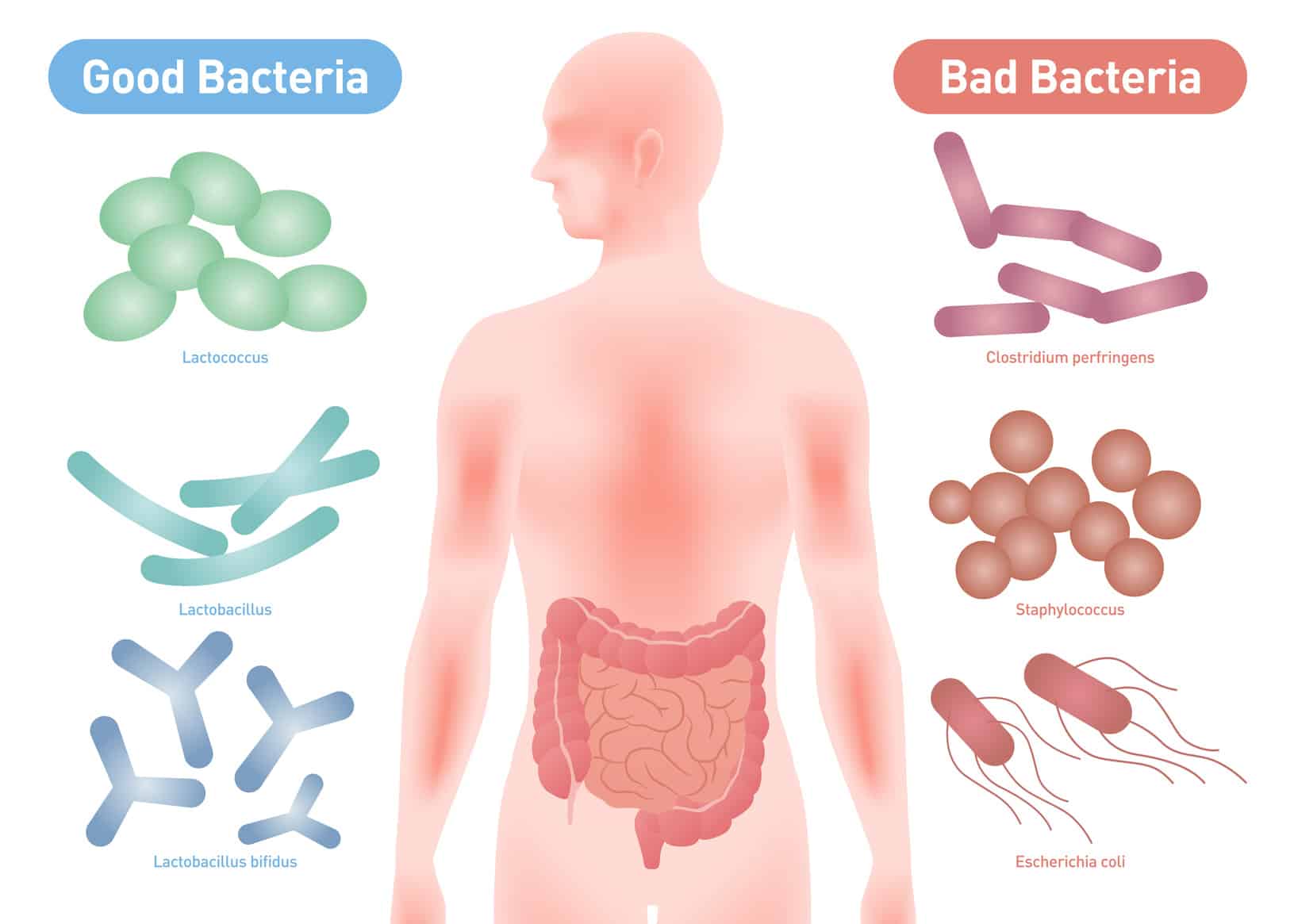
One important characteristic of the gut – relating to good health – is the proper functioning of good bacteria or microbes. The human body contains millions of microbial bacteria, residing pretty much everywhere.

Consider this. For every one of the billions of cells we possess, there are approximately 10 microbial cells. Furthermore, these microbial cells are active in each part of the body: inside the mouth, on the skin, genitalia, nose, and intestines.

Why is gut health important?

In the past, scientists have generally understood the important role if microbes on our health. It wasn’t until recently, however, that scientists discovered the crucial impact that a healthy microbiome – the body’s collection of microbes – potentially has on diseases.

Michael Snyder, the director of the Center for Genomics and Personalized Medicine at Stanford University, states: “There’s a good chance your microbiome is associated with every disease you can think of – diabetes, cancer, autism. And the area where bacteria have a huge impact is your gut.”

Our gastrointestinal system, or “gut,” performs several functions that contribute to health and well-being. As such, the state of our gut’s health has a direct impact on how we feel at any given time.

Among the functions of our gut include:

– Regulation of the immune system

– Absorption of vital nutrients

– Protection against toxins and pathogens

– Managing inflammation

What people with a healthy gut do differently

Now that we’ve got a pretty good understanding of what constitutes the gut, along with why gut health is important, we can focus on achieving/maintaining gut health. There is perhaps no better way to accomplish this than to discuss the personal habits of those with a healthy gut.

Here are 6 things that people with a healthy gut do differently:

healthy gut

1. They consume probiotic foods

Probiotics are “live bacteria and yeasts that are good for your health, especially your digestive system,” per WebMD. These good bacteria are found naturally in our bodies, but should be consumed in the form of foods to ensure an adequate supply.

Indeed, many foods provide these healthful benefits. Fermented foods – such as kefir, kimchi and sauerkraut – are great sources. Other sources include artichokes, bananas, garlic and raw onions. Whole, natural foods are certainly recommended for someone looking to add probiotics to their diet.

2. They have a healthy eating schedule

For the digestive system to work properly, it is important to maintain a healthy eating schedule. The reason is that our gut must “cease” digestive functions to perform the work of eliminating waste and bacteria – a process that generally takes between 1.5 – 2 hours. Naturally, when we eat, the digestive system kicks into gear and all other digestive functions are halted.

For this reason, it is encouraged to take breaks between meals and maintain a healthy eating schedule.

3. They remain hydrated

As mentioned, the gut performs routine cleanup duties of undigested waste and bacteria. Of course, water is important element of this maintenance. That’s because the gut requires H2O properties to effectively cycle waste and bacteria through the digestive tract.

Additionally, staying hydrated wards off unwanted digestive problems such as bloating, constipation and inflammation. Conversely, slight dehydration can alter the balance of good bacteria in the gut and complicate digestion.

4. They watch the processed foods and sugars

Bacteria that does not serve any digestive purpose, aka “bad bacteria,” feast on unnatural, unhealthy foods. Excessive consumption of refined, processed, or sugary foods provides sustenance for bad bacteria, potentially resulting in overgrowth of bad bacteria and disrupting the bacterial equilibrium within the gut.

5. The monitor stress levels

As probably all of us know, the mind/body connection is a real thing. Stress adversely affects a myriad of physiological and psychological functions. Of course, this includes digestion. That’s because stress initiates the brain’s “fight or flight” response, obstructing normal flow and slowing the digestive process.

Related article: 10 Things Healthy People Do Differently

Stress that is chronic (long-term) in nature can wreak particular havoc on our gut. Therefore, it is important to research and seek out activities that can reduce stress.

healthy gut

6. Use prebiotic supplements

Given that many probiotic foods are available, supplementing with probiotics may not be necessary. However, probiotic supplements are very convenient and generally effective. There are a vast number of supplements available, so conducting some research to make an educated decision may be advantageous.

References:
Collins, S. (n.d.). What Is Your Gut Telling You? Retrieved October 27, 2016 from http://www.webmd.com/digestive-disorders/news/20140820/your-gut-bacteria#1
DiLonardo, M. (n.d.). What Are Probiotics? Retrieved October 27, 2016, from http://www.webmd.com/digestive-disorders/features/what-are-probiotics#1
Glover, L. (2015, June 2). All About Flora: How Important Gut Health Really Is. Retrieved October 27, 2016, from http://health.usnews.com/health-news/health-wellness/articles/2015/06/02/all-about-flora-how-important-gut-health-really-i
(C)Power of Positivity, LLC. All rights reserved
Skip to content