Weekly tips, affirmations, and small actions to feel your best.

7 Most Effective (and Fun) Lower Abs Workout that You Can do at Your Home

If you want to lose excess body weight and show the definition of your muscles, you must be ready to train the entire body. Although some people state that abs are made in the kitchen, if you want to get the right body size and shape, you must combine diet with workouts. However, there is probably one area in the body that people encounter difficulties when exercising to get six-packs or a sexy body, which includes lower ab workouts. This zone gives both men and women headaches when practicing in the gym.

Lower ab workouts enable women to lose weight and acquire a sexy body. If you want to get six-packs or a hot body, you should perform exercises that target the lower abdominal muscles. Performing the best lower abs workout will eliminate all your love handles. Additionally, lower ab workouts will keep your body physically fit. You do not necessarily need to spend the whole day in the gym to acquire an attractive body shape. You can perform simple and enjoyable exercises in your home and achieve your body goals. This guide provides 7 effective lower abs workouts that you can do comfortably in your home.

1. Torso Twist 
This is one of the best lower ab workouts that you can easily do in your house. You should observe the following steps:
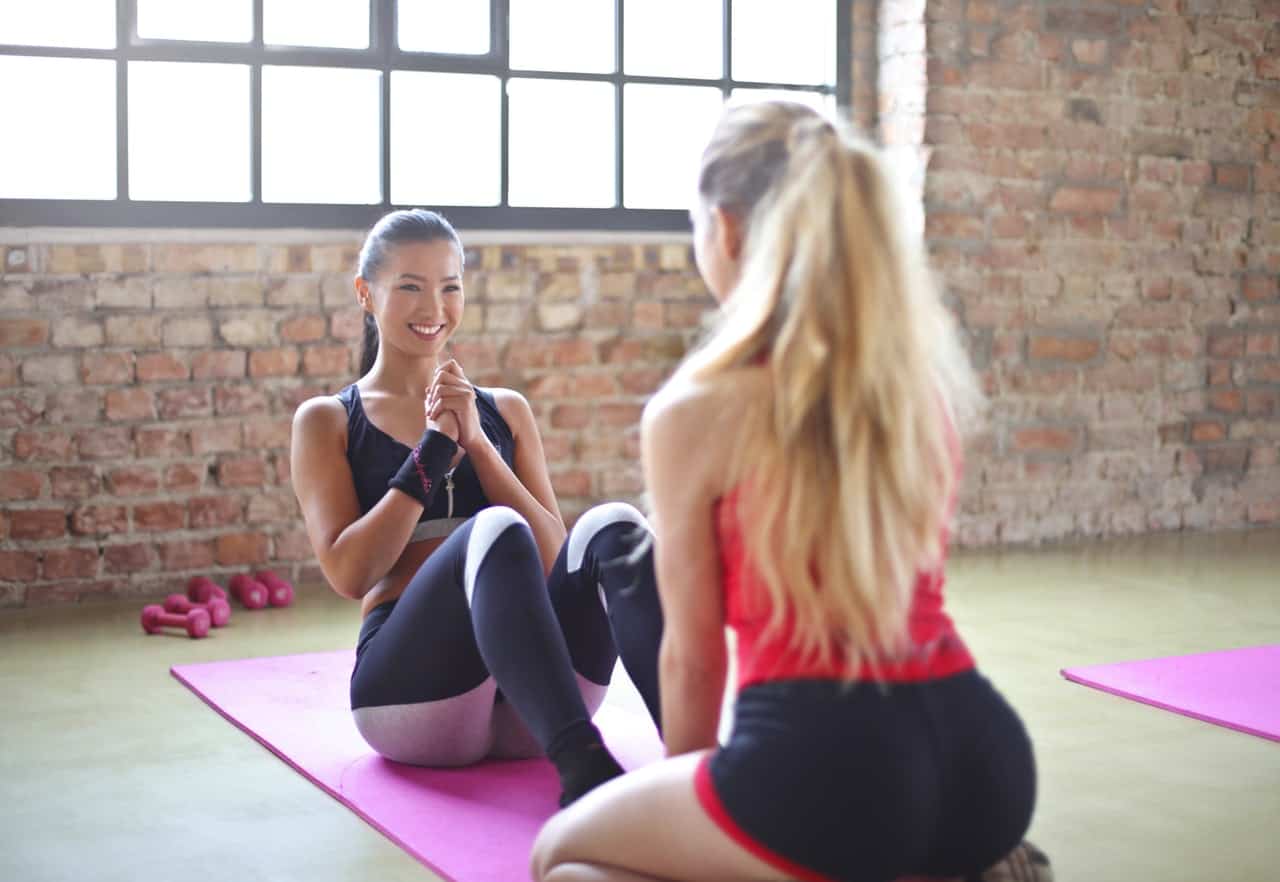
• Stretch your arms out and keep them in front of your body while sitting cross-legged on a smooth surface.
• Take a deep breath and keep your fingertips touching each other.
• With your abs tight and hips square, you can now breathe out and start rotating the upper body slowly to the left at about 45 degrees.
• Then, you should return to the center and slowly rotate again to the right.
• Repeat the exercise for at least 15 times.

2. Hip Lift 
Hip lift is another lower abs workout that you can do in your home to eliminate love handles and acquire a flat tummy. Below are the steps that you need to follow:
• Lie on a flat floor, extend both your arms on it and raise both legs towards the sky.
• Take a deep breath and tighten your core muscles, including the abdominal ones.
• Breathe out and lift your hips off the floor. Ensure that your hips are curled towards your ribs.
• Inhale as you slowly lower your hips towards the floor.
• Repeat the same exercise severally.

• 3. Scissor Kicks 
• Scissor kicks are crucial lower abs workout that strengthens both leg and lower abdominal muscles. The steps include:
• Lie on a flat surface while facing the sky.
• Lift shoulders and head off the floor and put your arms behind the head.
• Lift both your legs off the ground using abdominal muscles.
• Start alternating your legs, one down and one up (scissor kicking).
• Complete at least 20 scissor kicks without pausing.

4. Roll Up 
• Lie on a mat facing the ceiling while stretching your arms to ensure that your body forms a straight line.
• Breathe in and start curling your upper body upwards while bringing your arms overhead.
• While halfway up, breathe out and continue rolling your upper body forward until you touch your toes using your fingertips.
• Breathe in and get back to your initial position.
• Repeat the exercise severally.

5. Leg Drop 
• To perform this lower abs workout at home, you should lie on a flat surface and raise your legs towards the sky.
• Tighten your lower and upper abs and take a deep breath.
• Breathe out and start lowering both legs towards the floor (lower the legs as low as you can but do not touch the floor). Additionally, you should not move your upper body.
• Raise your legs once more and repeat the exercise multiple times.

6. V-Up 
• Lie on a flat surface facing the ceiling.
• Keep your legs and arms resting and extended on the surface.
• Tighten your abs and lift your legs and hands upwards. The legs and hands should meet over your torso.
• You need to roll your upper body upwards as you sit up.
• Lower your feet and hands back to the floor and repeat the exercise multiple times.
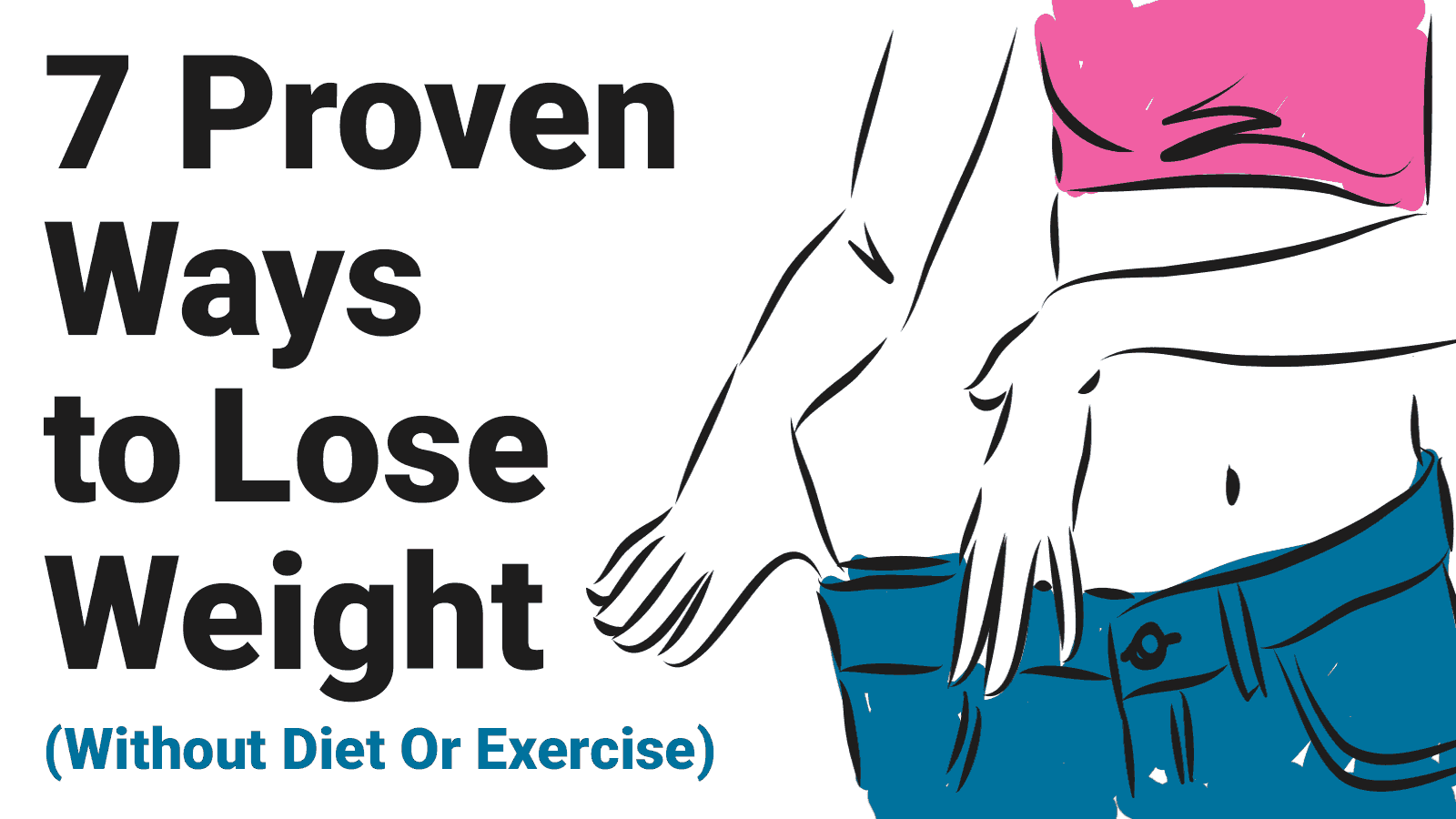
lose weight

7. Mountain Climbers 
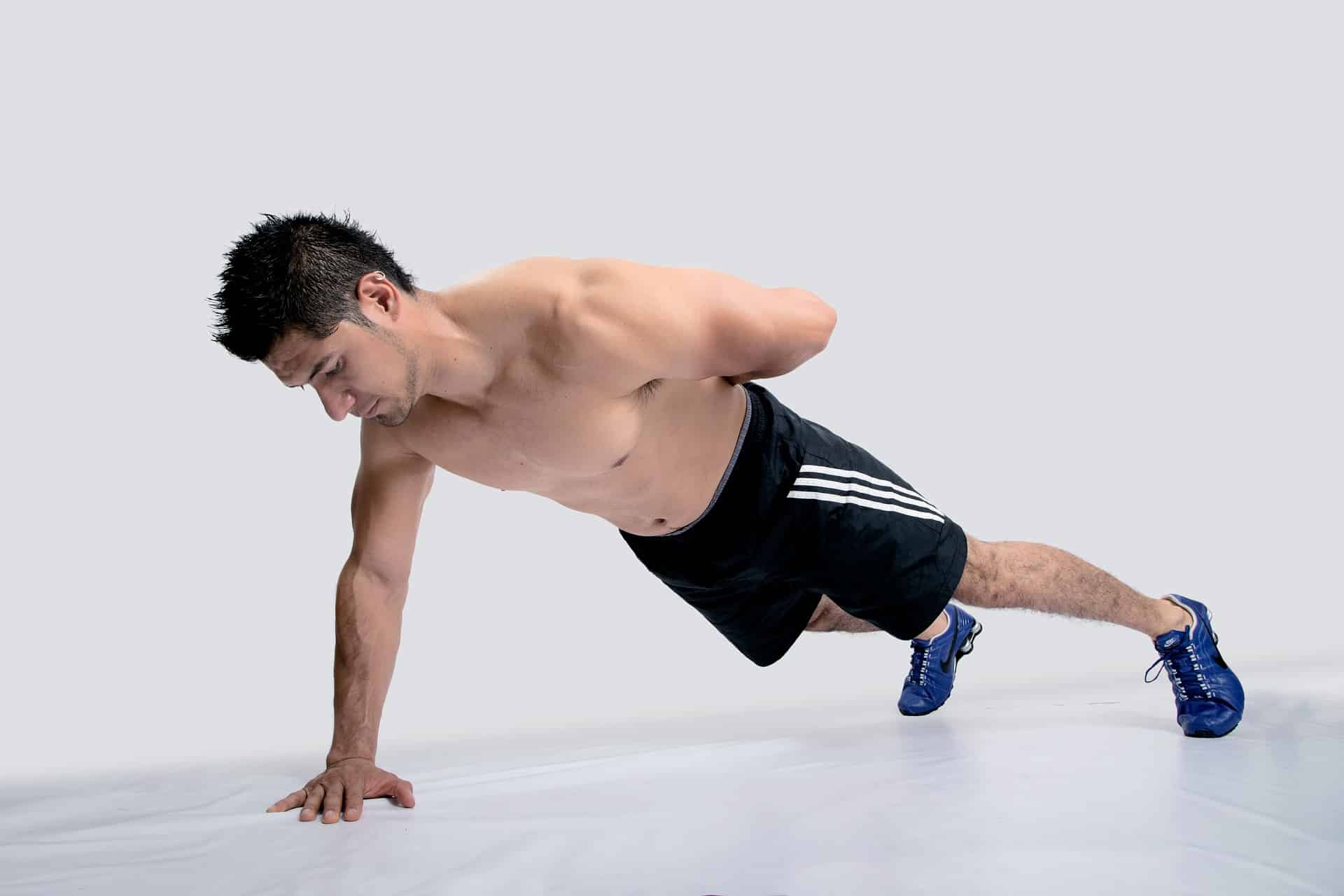
• To perform this lower abs workout, you should start this exercise in a high plank position while keeping both hands directly under the shoulders.
• Tighten your abs and draw the left knee under the torso while keeping the toes of the specific leg off the floor.
• Return the left leg to its initial position and repeat the same exercise using the right leg.
• Continue alternating your legs as quickly as you can.

In conclusion, you should keep your body hydrated when performing the above exercises. Additionally, when doing the activities with your loved ones, you should ensure that they drink enough water. They should also eat healthy meals to build and strengthen muscles.

If you want to get your dream body shape, discipline and commitment are crucial traits that you should consider when performing the best lower abs workout. If you encounter difficulties when performing lower abs workout at home, you can get guidance from an experienced constructor.

https://www.youtube.com/watch?v=yG-G9_LOkLA
10 Proven Natural Remedies for Anxiety (And How they Work)

Anxiety is a common mental disorder that causes many failures today. Anxiety includes panic attacks that interfere with an individual’s daily life and activities. If you start worrying about the future or the past, you are likely to get stuck in weird or adverse situations.

For instance, you may start worrying about getting divorced or losing your job. Anxiety causes severe illnesses such as diabetes and cardiovascular diseases because victims overthink about uncertain things, but there are natural remedies for anxiety that actually work and are easily accessible.

Every year, millions of people get anti-anxiety medications to treat the condition. However, these drugs do not work for everyone because they have severe side effects. Also, some anti-anxiety drugs are addictive. For reasons like these, individuals are now looking for effective home remedies to treat and eliminate anxiety. This guide provides 10 proven natural remedies for anxiety.

Natural Remedies for Anxiety (And How They Work)

anxiety

*Note: Always consult your wellness advocate before starting any new regimen…

1. Consume Omega-3s Each Day

Omega-3 is one of the best natural remedies for anxiety. Omega-3s contain helpful properties that will protect you against heart problems and depression. You can get it from many types of foods, including fish oil. Therefore, if you usually feel anxious, you should consume salmon regularly to protect yourself against depression and other illnesses caused by anxiety. Avocado oil, fish roe, Chia seeds, and soybeans are also rich in omega-3s.

2. Take Cannabis Oil

Experts advise people who usually suffer from anxiety to consume cannabis oil (CBD oil) regularly. It is a medical treatment that deals with depression and anxiety symptoms. Additionally, cannabis oil plays a significant role in improving the moods of victims affected by stress or anxiety. Consuming 2 mg of cannabis oil every day is enough to control anxiety. Although this product is expensive, it has worked for many people in the world. Cannabis contains helpful properties that are natural remedies for anxiety.

3. Take a Hot Bath Every Day

One of the simplest ways to control anxiety is by taking a hot shower every day. If you usually feel unhappy, you should start taking hot baths to raise your spirits. For instance, after working for long hours, your body is likely to get exhausted. Once you get tired, your ability to think creatively gets affected negatively. After taking a hot bath, your body and mind will relax. The relaxation of the mind gets rid of anxiety.

4. Spend Time with Your Family Members and Friends

Most people get depressed when they are lonely. To avoid such situations, you should learn to spend time with your loved ones. For instance, after working the whole day in the office, you should go to your house and enjoy cooking with your wife or kids. Once you do such activities together with your friends and family members, you start feeling happy and loved. Additionally, you can visit recreation facilities or events regularly with your loved ones. Such occasions will make you feel satisfied without getting worried about what will happen in the future.

5. Natural Sunlight

Natural sunlight is rich in Vitamin D. Vitamin D plays a significant role in decreasing the signs and symptoms of depression and anxiety. Therefore, it is advisable to take a break of 15-20 minutes every day at least to enjoy natural sunlight. It is one of the perfect natural remedies for anxiety.

6. Daily Workouts

You should exercise for at least 21 minutes every day. Daily exercises are natural remedies for anxiety. Workouts have a variety of health benefits, including improving the health of your heart, activating your energy, losing weight, and reducing stress. When you perform exercises, your body becomes energetic. Therefore, it can withstand the signs and symptoms of anxiety and depression.

natural remedies for anxiety

7. Chamomile

If you usually get anxious, you should take at least one glass of chamomile every day. It is one of the best natural remedies for anxiety that will calm down your mind. A calm mind is essential for good health because it boosts self-confidence and inner strength. When you are anxious, chamomile will promote your relaxation and give you energy.

8. Use Oranges

Oranges are nutritious fruits that treat stress and anxiety. The mild smell of orange peels has the ability to cure depression. That fresh, familiar aroma soothes individuals’ minds and brings relaxation. Additionally, if you drink a glass of orange juice, you will activate your energy. And that will help squash the symptoms of anxiety. Orange juice has essential elements that are natural remedies for anxiety.

9. Listen to Your Favorite Music

Loneliness can bring fear. Good music is among the top natural remedies for anxiety. When you are alone in your house, you should listen to your favorite music to keep your thoughts active. Good music enables you to forget all the negative thoughts.

natural remedies for anxiety

10. Consume Soursop Every Day

In a set of all-natural remedies for anxiety, soursop is among the best because it prevents both the symptoms of anxiety and tension attacks. This fruit contains essential elements that help in calming your mind. The fruit is readily available. Therefore, once you detect signs of the disorder, you should consume it to meet your demands.

Final Words on Calming Your Stress and Anxiety

In conclusion, you should eat balanced diets to reduce the condition. Eating healthy meals will boost your energy and immunity. If you observe all-natural remedies for anxiety, you will live a happy and stress-free life.

However, if anxiety persists, it is advisable to see a professional for help. A qualified medical practitioner will recommend the best medications to curb the situation. You should follow the instructions given to you by your doctor carefully.

https://www.youtube.com/watch?v=FWMSYeRHWU4

How to be Confident: 7 Life Changing Pieces of Advice from Experts

Self-confidence is one of the primary driving human forces. It makes us feel like gods and the lack of it makes us feel like helpless babes. The ability to know how to be confident and be your own source of power, might, and self-reflection is like gaining a superpower. It should not be taken lightly.

Take note of these amazing quotes from strong, fearless people. Consider the nourishment to your soul that they offer. The art of how to be confident may seem like a finicky one but, really, it’s a beautiful journey.

Here are 7 pieces of advice from experts on how to be confident:

1. Face Your Fears, Doubts, Troubles, and Worries Head On: Go Into Them

If you hear a voice within you say “you cannot paint,” then by all means paint, and that voice will be silenced. ~Vincent Van Gogh

There is nothing that makes fear run like facing it down and following it into its very center. Many of us avoid pain to such an extent that we are frozen in place by our avoidance of it in every direction.

When you are learning how to be confident, remember that your own doubts and fears control you… or you control them. Choose now which one it will be.

2. Leave Nothing on the Table Unplayed: Give It Your All, Every Single Time

Make the most of yourself, for that is all there is of you. ~Ralph Waldo Emerson

If you need encouragement in giving it your all, understand one of the best things you can learn about how to be more self confident is that your best efforts, actions, and thoughts are all that is required of you.

3. The Future Has Unlimited Possibilities: Revel in These Bright Colors

I am not a has-been. I am a will be. ~Lauren Bacall

If you constantly see your future as having many different options which lead on to even more and more options, you will become self confident in the mere hope that awaits you.confidence quote

4. Recognize That You Place More Limitations on You Than Anyone Else

It is not the mountain we conquer but ourselves. ~Edmund Hillary

Other people are not limiting you. You are limiting you. Other people are not hating you, holding you back, or seeking to trip you up. You are hating you, holding you back, and seeking to trip yourself up. How to be confident involves healing and loving yourself long before you seek to heal or be healed by other people.

5. Successful People Fail and Are Criticized More Often than Unsuccessful People Even Try

No one can make you feel inferior without your consent. ~Eleanor Roosevelt

It ain’t what they call you, it’s what you answer to. ~W.C. Fields

Self confident states of mind always involve expecting a series of failures on your way to success. Expecting them, seeing them, allowing them to happen, and then moving onto the next stage in your plan.

6. Always Accept the Worst Case Scenario and then Get Moving Making It Better

I quit being afraid when my first venture failed and the sky didn’t fall down. ~Allen H. Neuharth

How to be confident when the worst case scenario looks unbearable? Accept it. Accept it as fact, deal with it ahead of time so that your fear no longer freezes you, and then get busy making it better than what you have accepted. Chances are, you’ll automatically win at this attempt.

7. People Will Always Value You at the Valuation You Place on Yourself, and No Higher

Sex appeal is fifty percent what you’ve got and fifty percent what people think you’ve got. ~Sophia Loren

We may all have been born equal, but we definitely place a wide variety of values on our own heads as we progress through life. If you’re uncomfortable with valuing yourself very highly, then try valuing yourself a little bit more than you currently do. Stick with this for two or three months, then value yourself a little higher and level off there for a while. If you’re still searching for how to be more self confident after these two up-levels, then keep going until you’re assured of your self worth and self respect.

FINAL THOUGHTS: Sometimes, a little confidence is key just to get over that next small (or large!) hurdle in your life. Sometimes, all it takes is a few kind words tossed your way and a friendly smile. Treat yourself to these things first, in the beginning. We are all learning how to be confident in a better, deeper way.

One of the important steps to this is looking at yourself, seeing something beautiful, and then going with that for the time being. The rest will come as you progress.

https://youtu.be/EXElk0gq9Fk

(C)Power of Positivity, LLC. All rights reserved

Sick of the Treadmill? 7 Lower Ab Workouts For Ripped 6-Pack Abs

Turns out, having a well-defined midsection is one of the many perks of a lower abs workout. We all want 6-pack abs,  but there’s much more to gain than just weight loss, such as injury prevention, better stability, and a stronger back.

Here’s your anatomy lesson for the day – it’s important to understand what you’re working out so you can do so effectively. The “lower abdominals” actually aren’t what it sounds like. Most people believe this only refers to the lower half of your midsection. However, the “lower abdominals” consist of your abdominal wall which makes up your entire midsection.

The exact muscles to work can get tricky, so we’ve put together the best lower abs workout for you to incorporate into your workout routine so you can finally reach your fitness goals. These instructions below are so easy, so don’t feel intimidated by the names. Best of all, you don’t even need a gym –   this workout can be done anywhere!

Here are 7 Lower Abs Workout to get Ripped 6-Pack Abs

cotton swabs

1. Warm up before every workout!

Start by lying on your back, knees bent. You’ll want your feet flat on the floor. As you inhale, try to touch your chin to your chest. As you exhale, reach your arms towards your feet, curling your head and shoulders off of the floor. Hold it- and breathe in. Then release! For an effective warm-up, repeat the exercise about 8 times.

2. 90 Degree Static Press

Lie on your back with your knees and hips bent at 90 degrees (like they would be if you were sitting on a chair). Flex your feet. Without your legs moving, straighten your arms and press them on the tops of your thighs. Squeeze your abdominals and hold the position for 1 count. You can do up to 3 sets of 10 reps and take a 30 to 45-second rest in between.

3. Leg Lifts

Getting a lower abs workout at home is easy and effective when you incorporate exercises like leg lifts. Lay on your back and keep your legs out straight. Lift them up to 45 or 90 degrees and lower them back down without touching the floor. Repeat 3 sets of 10-15 reps.

4. Russian Twists

For high-intensity core work, try this lower abs workout! Sit on the floor, bend your knees, and keep your heels above ground. Then, twist from side to side. Repeat for 3 sets, 30 to 45- seconds at a time.

5. Scissors

Scissors are a lower abs workout that makes for a perfect follow-up to Russian twists. Keep your legs straight and alternate, raising them to the ceiling. Repeat for 3 sets, 10 reps at a time.

6. U-boat

For the best lower abs workout, add the U-boat! Assume the position of the Russian twist but instead of twisting from side to side, squeeze your core and use your legs to draw a “U” with your legs (knees touching). Repeat 1 or 2 sets of 20 reps. If you need a bigger challenge, make the “U” larger by extending your legs out more and more. The larger the “U” the harder this lower abs workout will be.

lower abs workout

7. Planks

Planks are known as the best lower abs workout because they focus intense energy to the core. Assume a push-up position but place your forearms and palms down on the floor. Hold for 30 to 60 seconds and repeat 3 times. You can alternate – raising each leg for added resistance.

You can repeat this lower abs workout at home 3 to 4 times a week. A general rule of thumb is to wait until the soreness from the previous workout subsides to know that you are healed up properly and can do it again. Make sure to really focus in on activating your core- experts say that this makes a huge difference in the efficiency of your workout. More muscle activation creates better results so get present, squeeze your core, and breathe completely through all exercises.

Don’t be discouraged if you have to work yourself up to complete the workout in its entirety. Be proud that you have the courage and dedication to start! Even the fittest people alive had to start somewhere and there’s no reason why you can’t do it. Combine a healthy diet with these exercises and watch as your body not only transforms physically but mentally and emotionally as well! You’ll be surprised as lifting anything – children, groceries, or packages – becomes easier and easier. Good luck!

10 Ways to Relieve Stress in Less than 5 Minutes

Today, stress is a widespread disorder that affects the majority. Experts have linked stress to cause significant illness or prolong the recovery period. Continued instances of importance stimulate the release of a stress hormone called glutamate. This hormone is said to produce some health risks like temporary loss of memory, obesity among other health problems.

Several interventions are said to relieve stress. However, they undergo extensive periods of time in their recovery. In the current century, time is scarce since you have to pay bills and cover up expenses. To such a degree, most individuals choose to skip these interventions which could worsen their situation. Nevertheless, there are convenient ways that have been confirmed to ways relieve stress in less than five minutes.

This blog aims to highlight some of the most straightforward and healthy ways that individuals can use to relieve stress in less than five minutes.

Ways to Relieve Stress in Less than 5 Minutes

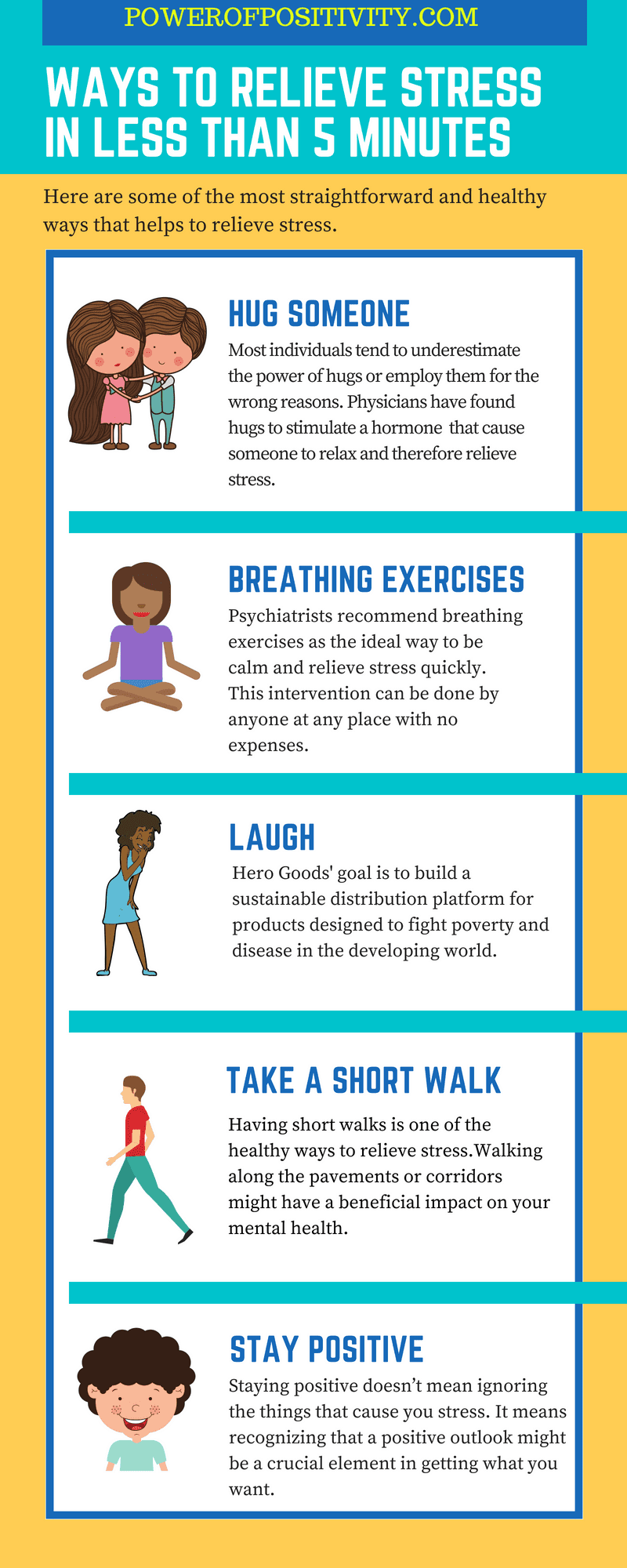
Hug Someone
Most individuals tend to underestimate the power of hugs or employ them for the wrong reasons. The use of hugs is one of the most effective ways to relieve stress within few seconds. Experts have found hugs to be working against weight even now there is world’s Hug day on January 21st. Physicians have found hugs to stimulate a hormone called oxytocin that promotes pro-social behaviors that cause someone to relax and therefore relieve stress. Having more than eight hugs a day will assist you to overcome fear and improve your mental health. Physicians recommend hugs as one of the most ideal ways to relieve stress

4-7-8 Breathing 
Meditation is considered as one of the most ideal ways to relieve stress. However, psychiatrists recommend three to four hours of meditation. This consumes time that entrepreneurs see it valuable.
The 4-7-8 meditation is the closest and most natural form of meditation that can be done without exceeding five minutes. You merely need to sit on your chair straight and lean on the back. Hold breath on the intervals of four counts, release and hold until the seventh count. On the eighth count release the final breath. This will have allowed your mind and ensured that you’re stress-free.

Mental Games 
Our brain memory cells are structured to remember and notice adverse and traumatizing events. This condition is widely referred to as negativity bias. When you are anxious, chances of concentration are exceptionally reduced. This is because the adverse events and information keep appearing on your mind.
To alter the condition, you have to change the occurrence of the events and information. Mental games reverse the channel and help you to concentrate on the task at hand. These games lessen the distractions.
You can try to count numbers backward, foolish multiplication, or try playing cards. This is one of the ways to relieve stress.

Mobile games 
Experts have said that mobile games are one of the healthy ways to relieve stress. Note that, stress accumulates when one thing about something for long. Our brains have been structured such that they can concentrate on one thing at a time. Mobile games, especially game apps that pay you real money, ensure that the subject’s thoughts are engaged in the game. This can be achieved within five minutes. Moreover, puzzles and mobile games take part in doing away with the mind distractions.

Breathing Exercises 
Psychiatrists recommend breathing exercises as the ideal way to be calm and relieve stress quickly. This intervention can be done by anyone at any place with no expenses. You barely have to learn how the response works since it requires little training.

Progressive Muscle Relaxation (PMR) 
This is a five-minutes technique that assists you to relax your muscles quickly which results in stress relief. It’s considered as one of the most ideal ways to relieve stress. Increased muscle movement inhibits the production of stress hormone. If you continue practicing this, you will realize that it’s one of the best ways to relieve stress.

Laugh 
The Laughing hormone does not work well with the stress stimulating hormones. Therefore, maintaining a sense of humor can produce an impact in relieving stress and have a robust life. Moreover, laughter connects individuals who are ideal for stress relief.

ways to relieve stress

Aromatherapy 
Currently, many individuals are using the aromatherapy technique to release stress. This is a convenient way that requires no skills, little time, and it’s inexpensive. Research studies have indicated that aromatherapy works as a stress reliever in some individuals.

Short Yoga Interventions 
You don’t have to attend a 60 or 90- minute Yoga intervention. A five-minute yoga is perfect for your mental health. Stretching your body into different shapes helps you to relieve stress. Psychiatrist recommends yoga as one of the best ways to relieve stress .

Take a Short Walk. 
Having short walks is one of the healthy ways to relieve stress.Walking along the pavements or corridors might have a beneficial impact on your mental health. To begin with, you breath fresh air which makes you refresh the brain cells.

ways to relieve stress

Share this Image On Your Site

The 20 Minute Exercise That Can Treat Anxiety Better Than Prescriptions

I’m sure you’ve heard about the many benefits of exercise before, and if you have a workout routine, you’ve likely experienced them firsthand. Exercise, of any form, allows us not only an escape from our daily life. But it’s also an opportunity to become healthier, more robust versions of ourselves. The result? Less anxiety and stress in life – and perhaps ditching those prescription drugs.

Those who practice yoga can attest to the positive impact on their well-being, as yoga is a mind-body integration. As the body moves in fluid motions, the mind becomes stabler, quieter, and more peaceful.

And, in an era when doctors dispense prescriptions freely, we have become an addicted society. Our reliance on pills, from psychotropics to pain medications, is unheard of in the traditional treatments of the Far East.  So today, let’s discuss an alternative to medications to balance out your mental health.

Below, we’ll discuss the science behind why yoga is so powerful for treating mental illnesses such as anxiety and suggest a few specific poses to incorporate into your exercise regimen.

“Yoga practice can make us more and more sensitive to subtler and subtler sensations in the body. Paying attention to and staying with finer and finer sensations within the body is one of the surest ways to steady the wandering mind. (39)”  – Ravi Ravindra

Boston University researchers found yoga effective for anxiety management:

anxiety

Chris Streeter, MD, and her colleagues from the Boston University School of Medicine did a study comparing the brain benefits of yoga to walking.

From their preliminary research, Streeter and her team found that yoga reduced anxiety boosted mood, and increased the anti-anxiety neurotransmitter GABA (gamma-aminobutyric acid) in the brain.

  • The participants were divided into two groups: a yoga group and a walking group.
  • Each group exercised for an hour thrice weekly over twelve weeks. Researchers performed brain scans on the participants before and after the 12-week study period and measured anxiety and mood levels throughout the experiment.

The results

The yoga group had higher levels of GABA and experienced significantly more significant boosts in mood and drops in anxiety than the walking group.

The University of Utah agrees, offering mindfulness and yoga programs to manage stress and anxiety

Mindfulness-Based Stress Reduction (MBSR) at the University of Utah Health is an intensive program developed by Jon Kabat-Zinn at the Center for Mindfulness, University of Massachusetts Medical School. Its primary aim is to cultivate mindful awareness to foster health, happiness, and personal growth. The program offers a variety of practices, including sitting and walking meditation, body scan, gentle yoga, and mindful communication. These practices are further enriched with inquiry exercises, group discussions, and daily assignments. The essence of MBSR is not to evade stress but to engage with it more healthily. Thereby, it enhances our inherent capacity for awareness and helps individuals be more attuned to their lives.

The benefits of MBSR – including yoga poses – are many. Participants often report improved coping mechanisms for stressful situations, significant reductions in both physical and psychological symptoms, enhanced emotional regulation, and an increase in attention, focus, and memory. Furthermore, many experience heightened levels of happiness and resilience.

The experts who developed this Wellness & Integrative Health Services at the University of Utah Health Center emphasize a tailored and integrated approach. They are dedicated to empowering patients, employees, and healthcare professionals to lead a wholesome life. Their commitment lies in maximizing preventive care, ensuring that health remains a focal point in healthcare.

Poses to Help Alleviate Anxiety

anxiety

1. Child’s Pose (Balasana)

Child’s Pose helps to release tension in the back, neck, and shoulders, three areas where people tend to hold a lot of stress. It also helps you to relax, focus on breathing, and connect deeply to the sensations within your body.

Begin on your hands and knees with your big toes touching. Your hands and arms should be extended in front of you, and your legs hip distance apart. Exhale as you let your body fall forward, and keep your torso on top of or between your thighs with your head resting on the mat. Keep your arms extended out, and press your buttocks into your heels.

Stay in this pose as long as desired, and remember to breathe slowly and deeply.

2. Tree Pose (Vrikasana)

Tree Pose, a basic standing pose, helps to increase concentration and focus by putting your attention on balancing.

Stand with your feet hip-width apart and shift your weight to your right leg. Then, bend your left knee, and press the sole of your left foot into your inner right thigh or just below the knee, with your toes pointing downward. Center your torso so that it’s facing forward. Put your hands into a “prayer position” over your heart. Point your gaze up toward the ceiling or forward, whichever you prefer. Hold for 2-3 breaths, then repeat on the other side.

3. Warrior III (Virabhadrasana III)

While this pose is a little more challenging than the other two, it helps to alleviate anxiety by stimulating the abdominal region. Studies have linked gut health with mental health, and this pose is great for improving digestion. This pose also helps to improve balance, posture, and coordination.

With your feet hips distance apart, turn to the left and widen your stance to about 4 feet. Then, turn your right foot so your toes point toward the front of the mat. With both feet planted firmly on the mat, bend your right knee and keep your torso and pelvis centered.

Raise your arms above you and press your weight onto your right foot, lifting your left leg behind you while you bend your torso forward. Your upper half should be parallel to the ground. Point your left foot out and keep your arms extended. Straighten your right leg, keep your gaze toward the ground and hold for 2-3 breaths. Slowly lower your leg back to the floor and repeat on the other side.

4. Headstand (Sirsasana)

Please do not attempt this one if you are a beginner. This is definitely an advanced pose that you should only do when you feel comfortable with the more basic poses.

However, increasing blood flow to the head can help to detox the adrenals, improve mood, and lower blood pressure and heart rate.

To do this pose, start on your hands and knees, keeping your arms shoulder-width apart. Keeping your elbows there, lock your hands together so that your pinkies touch the floor. Place the crown of your head onto the ground and keep your hands interlaced behind it. Tuck your toes and lift your hips as high as you can, walking your feet slowly toward your upper half.

Use your ab muscles to help lift you off of the ground, and press your forearms further into the mat. Keep your feet straight up over your shoulders and hips until your legs are completely straight. If you want, use a nearby wall to keep you steady. Hold for as long as you’d like, and when you come out of the pose, lift your legs down one at a time and bring your knees to the mat. Rest in child’s pose for a few breaths.

5. Legs Up The Wall Pose (Viparita Karani)

yoga

This pose is typical in restorative yoga, as it helps relax and ease anxiety symptoms. It’s also great for relieving lower back pain and menstrual cramps.

Feel free to place a pillow under your back to alleviate back pain further. Sit close to a wall, then walk your legs up until they’re straight. Keep your buttocks against the wall, and keep your head and shoulders rested on the mat. Close your eyes and relax for as long as you want, and when you come out of the pose, simply swing your legs either left or right.

Below, we’ve included a guided yoga video for stress and anxiety that we hope you’ll enjoy!

(C)Power of Positivity, LLC. All rights reserved

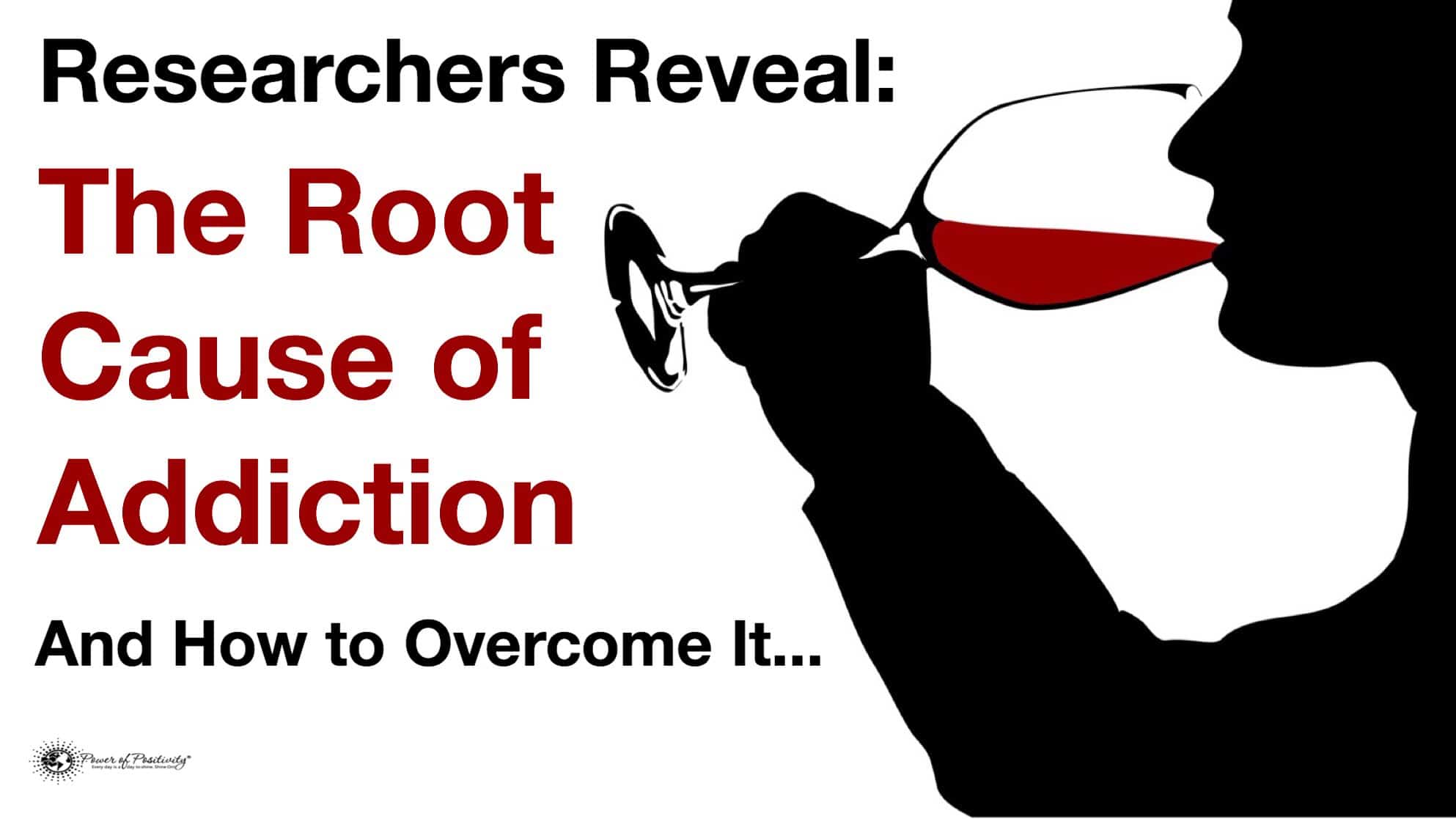
Harvard Researchers Reveal How Acupuncture Can Help People with Addiction

Is acupuncture a possible cure for addiction. It appears so, says a study.

You’re probably well aware of the opioid drug epidemic in the United States, Canada, and some other countries.  In the U.S. alone, prescription opioid abuse is a public health crisis, with tens of thousands of Americans dying each year.

Recently, the attorneys general of six U.S. states filed lawsuits against Purdue Pharma, the privately held manufacturer of the prescription drug OxyContin. The attorney general for the state of Texas, Ken Paxton, accused the company of “misleading marketing tactics that are fueling the nation’s opioid epidemic.”

Per the USA Today, “The rate of opioid prescription has tripled in the United States since the 1990s and 1 in 15 patients treated with narcotics for pain management in U.S. emergency rooms becomes chronically dependent.”

What are opioids?

Opioids are prescription drugs most commonly prescribed as painkillers. The most popular opioid prescription drugs are oxycodone (OxyContin), hydrocodone (Vicodin), codeine, morphine, and fentanyl. Most of these drugs are available as an oral tablet. Fentanyl is sold as a patch and absorbed through the skin.

Opioids bind to receptors in the brain, spinal cord, and other areas of the body. They work by suppressing the pain signals sent to the brain, which relieves the user. They also create a euphoric feeling in the user, who may become addicted to these feelings of euphoria.

Numerous and diverse consequences of opiate abuse exist. According to a study published in the Journal of Substance Abuse Treatment, “The social, medical, and economic consequences of opioid dependence are profound, including lost productivity, crime and violence, disrupted relationships, HIV/Aids and other diseases, and death.

Opioid addiction is also notoriously difficult to treat. Lindsey Kramer, a substance abuse and mental health counselor, makes this observation:

Due to the fact that the prefrontal cortex (PFC) is not fully matured until around age 25, a young adult will arguably struggle with risk-taking, limited judgment, and impulse control … the result is a young opiate addict with a preprogrammed mentality of, “feel good now, consider the consequences later.’”

The physical dependence created by opiates is both potent and highly dangerous. Withdrawal can cause symptoms such as chills, irritability, loss of appetite, muscle cramps, sweating, and insomnia.

The National Center for Health Statistics, part of the U. S. Centers for Disease Control and Prevention (CDC), documented over 63,600 lost to drug overdose in 2016. Over 42,000 deaths were due to opiates.

addiction

Is Acupuncture the Answer?

According to McLean Hospital, a psychiatric affiliate of Harvard Medical School, a new technique is receiving attention. This technique, called “transcutaneous electric acupoint stimulation” (TEAS), may help more opioid addicts maintain sobriety.

TEAS is essentially a modern-day replacement for acupuncture. Andrew Shubov, MD, a professor of medicine at the University of California, Los Angeles writes, “… TEAS can be used as an effective self-care tool for patients with chronic illness who do not have the time or resources for frequent acupuncture treatments.

The physiological effects of TEAS are very similar to those of traditional acupuncture – but with no needles. Instead, TEAS practitioner attach electrodes to areas of the body and use a slight electrical current, which is amplifiable, to stimulate the nervous system.

The Study

Researchers from Harvard Medical School wanted to evaluate the effectiveness of TEAS treatment on opioid recovery. The team used 48 patients from McLean hospital who had just undergone an inpatient detoxification protocol. Each patient joined one of two groups: TEAS treatment and non-TEAS (simulated) treatment. TEAS treatment participants received three 30-minute TEAS sessions over a four-day period.

The Results

Here’s how the study’s results break down:

  • Just 29% of TEAS patients relapsed within two weeks of treatment; 65% non-TEAS patients relapsed.
  • While 35% of TEAS patients used a drug within two weeks, this number rose to 75% for non-TEAS patients.

Final Thoughts: TEAS Has Promise

As Chinese acupuncturists of 2,500 years ago discovered, acupuncture is an effective and natural treatment for certain medical conditions. If a university like Harvard is testing ancient medicinal techniques (albeit with new technology), you can bet many scientists are perking their ears and taking notice.

Our society needs them to notice – and do something about it. For too long, doctors and others within the traditional medical community have forgone effective alternative-based treatments for non-justifiable reasons. Case in point: the use of cannabis for medical purposes is still illegal in 21 U.S. states.

Opioid abuse is claiming the lives of tens of thousands of people every year. Prior to this study, few non-drug-based solutions have been offered. Although TEAS treatment is still in its early days of clinical trials, this new technology is showing great promise in addiction treatment.

4 Proven Supplements to Manage Depression (That People Often Ignore)

Depression is defined by The National Institute of Mental Health as, “a common but serious mood disorder. It causes severe symptoms that affect how you feel, think, and handle daily activities, such as sleeping, eating, or working.”

Symptoms associated with depression are numerous and include:

  • Persistent sad, anxious, or “empty” mood
  • Feelings of hopelessness or pessimism
  • Irritability
  • Feelings of guilt, worthlessness, or helplessness
  • Loss of interest or pleasure in hobbies and activities
  • Fatigue or decreased energy
  • Moving or talking more slowly
  • Feeling restless or having trouble sitting still
  • Difficulty concentrating, remembering, or making decisions
  • Difficulty sleeping, early-morning awakening, or oversleeping
  • Appetite or weight changes
  • Thoughts of death or suicide, or suicide attempts
  • Aches or pains – headaches, cramps, or digestive problems without a clear physical cause (which do not ease with treatment)

mental illness quote

Some people suffering from depression experience all these symptoms, while some have only a few. The symptoms can fluctuate over time as well, making it a very persistent and difficult disorder to live with and treat. Globally, more than 300 million people suffer from depression, making it the most common mental disorder and leading cause of disability, according to the World Health Organization (WHO).

“Zion Research has published a new report titled ‘Depression Drug Market: Global Industry Perspective, Comprehensive Analysis and Forecast, 2014-2020.’ According to the report, the global depression market was valued at USD 14.51 billion in 2014 and is expected to generate revenue of USD 16.8 billion by end of 2020.” – GlobalNewswire, a Nasdaq company

While many people find relief in therapy or through taking antidepressants, some prefer a more natural approach. Below, we’ll go over a few supplements that many people overlook that could help ease symptoms of depression.

Here are 4 supplements that can help with depression:

(*Note: Please always consult with a medical professional before starting a new supplement.)

1. St John’s Wort

Easily the most common natural remedy for depression, St. John’s Wort has shown effectiveness in treating mild to moderate depression. In a Cochrane review of 29 clinical studies, researchers found that it works just as well as antidepressants in alleviating symptoms of depression (without all the nasty side effects). Many people who use St. John’s wort take three capsules per day to help with symptoms. However, if you choose this treatment, make sure to find a high-quality, organic supplement if possible.

Keep in mind that serious depression may require conventional medicine and therapy and that St. John’s wort will not be as effective in treating this type of depression. Also, St. John’s wort can limit the effectiveness of some antidepressants, so consult with your doctor before adding this supplement to your daily health routine.

2. 5-HTP

Depression is caused in part by low levels of serotonin in the brain, and 5-HTP can help you to produce more serotonin. Many scientists consider it a more natural form of antidepressant since it works in the same way. 5-HTP is a vital component in the production of serotonin.

Manufacturers obtain 5-HTP from the ground seeds of the griffonia simplicifolia plant. However, keep in mind that there are limited studies about 5-HTP in the treatment of depression. What is more, usage can cause side effects. Nonetheless, a review of studies has shown that 5-HTP works better than a placebo in treating depression.

3. SAMe (S-adenosyl-L-methionine)

SAMe, pronounced “Sammy”, is a chemical manufactured in the liver, and involved in over 40 metabolic processes. These function include the synthesis of neurotransmitters such as dopamine in the brain. While research is ongoing about how SAMe works to regulate mood, researchers believe it helps regulate neurotransmitters in the brain.

Studies have found that taking up to 1600 mgs of SAMe daily prove more effective than a placebo and are just as effective as tricyclic antidepressants in treatment. It might work more quickly than antidepressants, which can sometimes take a couple months before patients start noticing positive effects. However, SAMe is not recommended for people with bipolar disorder because it can cause mania.

4. Folate or L-methylfolate

If you have depression, you might want to talk with your doctor about doing a blood test for nutrient deficiencies. Many people with depression have low folate levels.

In research studies, patients with depression who added folate or L-methylfolate supplements in addition to taking antidepressants or going to therapy attained better results than people who used antidepressants and a placebo.

Final thoughts

Supplements can either replace your current antidepressant therapy or add to them; however, remember to consult with your doctor before taking any herbal supplements to see how they might interact with your current medication.

(C)Power of Positivity, LLC. All rights reserved
Sources:
http://www.who.int/en/news-room/fact-sheets/detail/depression
http://www.cochrane.org/evidence
http://www.woykoff.com/klinicke-studie/3880934/Tryptophan_Cochran.pdf
https://www.biopsychiatry.com/samerev.htm
https://www.medicalnewstoday.com/releases/225902.php

Researchers Explain 5 Causes of Acute Stress Disorder (And How to Fix It)

Acute Stress Disorder

People who experience an event that puts them in fear for their life may develop one of two conditions: post-traumatic stress disorder (PTSD) and acute stress disorder (ASD).

In contrast to PTSD, the symptoms of acute stress disorder are generally limited to one month. PTSD symptoms may persist for many years. Comparing the two conditions, according to the United States Department of Veterans Affairs, “ASD is more likely to involve feelings such as not knowing where you are, [or] feeling as if you are outside of your body.”

Acute stress disorder occurs because of a strong psychological reaction to a personally traumatic or terrifying event. Importantly, this event induces a strong emotional response within the individual. Approximately 6 to 33 percent of people who experience a traumatic event develop an acute stress reaction.

Per the U.S. Department of Veterans Affairs, individuals diagnosed with ASD are “very likely to get PTSD.” Research shows that 8 out of every 10 people diagnosed with ASD have developed PTSD within six months.

Facts About Trauma

Here are some sobering statistics, courtesy of the National Trauma Institute:

  • Trauma is the #1 leading cause of death for people between ages 1 to 46.
  • It is the leading cause of total years of potential life lost before age 75.
  • Trauma costs the healthcare system and industry more than $671 billion, which is more than heart disease and diabetes combined.
  • Despite the above statistics, just .02 percent of the National Institute of Health (NIH) budget is allocated to trauma-related research.

“Trauma is personal. It does not disappear if it is not validated. When someone enters the pain and hears the screams, healing can begin.” – Danielle Bernock

“PTSD is not about what is wrong with someone. PTSD is about what happened to someone.” – PTSD Support & Global Awareness


calm quote


At-Risk Demographics

According to Healthline, the following individuals are at an increased risk of developing ASD:

  • People who have experienced, witnessed, or been confronted with a traumatic event in the past.
  • Those with a history of ASD or PTSD.
  • Individuals with a history of mental disorders.
  • People with a history of dissociative symptoms during traumatic events. (Dissociation is the feeling of being “separated” from oneself.)

Symptoms of Acute Stress Disorder

The American Psychological Association (APA) separates the symptoms of ASD into two categories. Category 1 is comprised of the following five symptoms. A minimum of three are required for diagnosis:

  1. Feelings of emotional numbness.
  2. Feelings of being in a daze or dream-like state.
  3. Experiencing a loss of personal identity and feelings.
  4. Feeling separated from reality.
  5. Loss of memory about one or more aspects of the traumatic event.

Category 2 is comprised of the following three symptoms, one of which is required for an ASD diagnosis:

  1. Avoidance: a desire to avoid remembering the event.
  2. Hypervigilance: difficulty sleeping, irritability, being easily startled.
  3. Flashbacks: vivid remembrances of the event that produce highly distressing symptoms.

5 Leading Causes of Acute Stress Disorder

Per the Department of Veterans Affairs, these five groups exhibited symptoms of ASD:

  • 33% of survivors of mass shootings.
  • 25% of assault and robbery victims.
  • 19% of violent assault victims.
  • 13 to 21% of people involved in serious car accidents.
  • 7% of natural disaster survivors.

The V.A. department notes that individuals with a history of mental illness may be at a higher risk of ASD. Furthermore, those with a past diagnosis of PTSD may also have a higher risk for ASD.

How to Fix It: ASD Treatment

Acute Stress Disorder is a severe mental health condition, capable of affecting the individual to such a degree that they become debilitated. Prompt and efficient treatment is necessary to curtail the high risk of PTSD onset.

Per medical professionals, treating ASD revolves around three methods:

  1. Cognitive Behavioral Therapy (CBT): CBT focuses on the relationship between personal emotions, thoughts, and behaviors. It includes coping strategies for solving current problems and changing unhelpful cognitive patterns. CBT is the most widely used evidence-based practice for improving mental health. Numerous studies show that CBT may be the most effective method for treating ASD. Other research demonstrates that CBT may help prevent the likelihood of PTSD development later on.
  2. Eye Movement Desensitization and Reprocessing (EMDR): EMDR involves the patient verbally recounting the traumatic experience while tracking a moving object with their eyes. Research shows that EMDR is a highly effective trauma treatment. One reason for this is because the interaction with a given EMDR task lowers the stress of recounting a traumatic event, making it easier for individuals to process and heal from their trauma. Many people find success with this therapy, such as the EMDR therapy in Melbourne, which has been praised for its compassionate and professional approach to treating trauma.
  3. Meditation: As thousands of war veterans can attest, meditation can be a highly effective, and possibly life-saving, trauma treatment. Some U.S. military branches have begun incorporating mindfulness and meditation-based practices into their “debriefing” curriculum for returning war veterans. In a recent study, 83.7% of active-duty service members with PTSD or an anxiety disorder reduced their trauma symptoms after one month of Transcendental Meditation. Another promising stat: just 10 percent of those same veterans increased their medication dosages.

https://youtu.be/lFdcCXmGpy4

(C)Power of Positivity, LLC. All rights reserved
Sources:
https://en.wikipedia.org/wiki/Cognitive_behavioral_therapy

https://www.choosehelp.com/topics/anxiety/acute-stress-disorder
https://www.nattrauma.org/what-is-trauma/trauma-statistics-facts/
https://www.psychologytoday.com/us/blog/the-athletes-way/201601/meditation-reduces-post-traumatic-stress-disorder-symptoms
https://www.ptsd.va.gov/public/problems/acute-stress-disorder.asp
Skip to content