Weekly tips, affirmations, and small actions to feel your best.

12 Steps to Move on Peacefully for a Better Life

What do I expect from myself? This is a question you must reflect on in order to process and move on from life’s challenges. You’re only going to get what you expect from any situation.

Heartache, job loss, illness, death; any of these can incarcerate your thoughts, making you feel burdened; ushering you into self-doubts and whys. However, it is in the healing steps, the vulnerable moments, that you find your strength. Here are simple steps that will help you move on in life.

12 Steps to Move on Peacefully for a Better Life

1.Breathe

Breathing is life and is going to be your best friend when learning how to move on.

When studying what causes emotions(1), psychologist and scientist insist you invoke joy by breathing slowly, deeply and through the nose; breathing regularly while relaxing your rib cage.

You do not have to join a yoga class — it is suggested, see step 10 — or cognitive therapy group in order to breath right; just use this highly underrated life necessity to guide you into the surrender; use slow, belly deep breaths to help combat anxieties.

2.Surrender

“Surrender is the simple but profound wisdom of yielding to rather than opposing the flow of life.” Eckhart Tolle, The Power Of Now(2)

At some point you have to accept controlling everything isn’t possible, self-control is. Manifesting positivity forces you past the darkest of situations and into serenity.

If you allow the circumstances five minutes ago to infest the present, you have not surrendered. Breathe! Surrendering to yourself is the torch lighting the path to move on. Surrendering allows calmness and unloads a bountiful flow of self-compassion.

3. Feel

You need to go through the emotions, allowing them to pass; holding onto them is dangerous.

  • Denial
  • Grief
  • Anger
  • Regret
  • Sadness

These are just a few feels you can go through, don’t take them personally. They are real and part of moving on but do not define you. Allow yourself to accept feelings and in accepting, you become aware of how to relieve suffering.

4. Observing Emotions

Once you’re able to unload, you must observe.

1. Observe the cause of the emotions. You’ll start getting those “uh-huh” moments and you’ll be able to stop consuming-thoughts.
2. Observe the actual emotion. Take a deep breath and watch your newly surrendered self tap-out of the ring of negativity, allowing those feelings to wrestle there way out.

This step allows you to take each feeling and use what’s needed. Be mindful and inhale, dismissing what isn’t.

5. Forgive

Forgiveness isn’t for others, Indeed, it is for you. The Mayo Clinic (3) suggest that being unforgiving allows the past to affect future life stages, assisting depression and anxiety, which can keep you from creating new connections.

There is no guide on forgiving, you just have to do it; in between breaths. Forgiving isn’t weakness, it’s action.

6. Examine Life, Presently

“When I say “life”, I am talking about life, per se, not what you do. You generally think life is your family, your work, your business, your wealth, whatever else you possess but these are all accessories of life.”, explains Sadhguru (4).

Deeply examine the freedom of circumstance once you have forgiven or grieved (5), observed and surrendered.

What is left? You are left; the whole you!

Only pain left with the sadness: examine you, embrace you, love you, forgive you.

7. Create

“Learning to use all your emotions creatively is very important, “ Sadhguru says.

Now in motion, move on motivationally by creating the space you deserve. Start manifesting all those wants and wishes.

Opening up to your creativity can release hidden emotions. The subconscious likes to assist the ego in opening baggage when we start feeling good.

When used appropriately, creativity can really manifest some good stuff. Paint, draw, write, do pottery, or anything that has, or is, striking your passions. This can redirect your energy, aiding in peace.

8.Nurture

Just as we observed the negative, we must observe and nurture the positive; apply that you are learning how to move on.

Continuously remind yourself of the process you are going through. To nurture is to award progress.

9. Relax

Take some time to process the process; meditate or just breath. Allow yourself time to mend.

Enjoy the peace, sit back, and take in the successes of breaking through. You’ve moved on from the problem and into the relaxation of the mind.

move on

10.Interact

Now, breathing normally, get out and enjoy life. Take a yoga class maybe, to center and keep your breath. Enjoy nature and the presence of others. Discuss it with others.

There are people out there that have gone through your situation before and want to listen. People appreciate progress in conflict. You may be what someone needs to get through their surrender.

11. Reflect

Reflect on who you were in the beginning compared to who you have become; a more centered, self-loving individual.

You used your oppression as progression. These little steps are sustainability for consistant subcontious assistance.

12. Release

Let go of it all and exhale! You are still here and stronger because of it.

So take those memories and keep them as ammunition against future struggles. You are free to lead a better life!

How to Deal with Stress and Fight your Fears

Approximately 44 percent of Americans suffer from stress, which can increase in severity with age. Stress is not only challenging to experience. But it can result in many different side effects that include insomnia, depression, and high blood pressure. Most people suffer from moderate to high-stress levels. This stress elevation can make it challenging to think clearly and remain productive throughout the day.

For many adults, it can be challenging to break habits or practices that trigger stress or allow it to build. Although stress is common, there are many steps to take to deal with stress.

Tips to Deal with Stress

Perform Self-Care

Only 27 percent of people who suffer from stress make it a point to exercise and stay active throughout the week. This movement can result in unhealthy habits and a poor diet that lacks proper nutrients.

You can deal with stress by finding an activity that you enjoy performing, which can include dancing, bike riding, playing tennis, or light jogging. You should exercise three to five times each week to ensure that you’re increasing your heart rate.

Self-care also includes finding time for yourself during the week without any interruptions. There should be one day that is set aside to have off where you can practice hobbies or activities you enjoy, which can improve your mood.

Consider Supplements

There are many different natural supplements that can reduce anxiety and stress to ensure that you remain healthy and balanced. Valerian root is ideal if you suffer from a sleep disorder or are restless at night due to stress because it has a tranquilizing effect. It is proven to lower anxiety because it can alter GABA receptors. Omega-3 fatty acids are also important to obtain for the body because studies show it can reduce stress by 20 percent. Kava-kava is used as a sedative that is becoming more common in Europe and the U.S. and can calm your nerves when dealing with stress.

Avoid Procrastinating

Stress is often triggered by deadlines or feeling rushed to complete activities in your personal life or in the workplace. You’ll want to break the habit of waiting until the last minute to complete items on your to-do list to avoid feeling overwhelmed. If you scramble to catch up, you’ll feel under pressure and can have difficulty focusing or thinking clearly. Providing yourself with breaks can make it easier to remain productive.

Get More Sleep

Many people who suffer from stress also have poor sleeping habits because they can have difficulty relaxing at night or allowing their brain to rest. When you want to know how to deal with stress, write down your thoughts or reminders to clear your head and make it easier to relax when you want to deal with stress.

Melatonin is considered an ideal product to use to fall asleep easier at night and is considered to be a natural sleep aid. Consume two to three milligrams approximately two hours before bed to feel the effects.

Limit Your Caffeine Intake

You may enjoy caffeine to wake up in the morning. However, it can also have adverse reactions to increasing stress levels. The stimulant is known to make many people jittery or anxious, making it necessary to switch to decaf coffee. It’s also necessary to cut out other foods that contain caffeine from your diet to deal with stress. These foods include chocolate, soda, tea, and energy drinks.

Try Relaxation Techniques

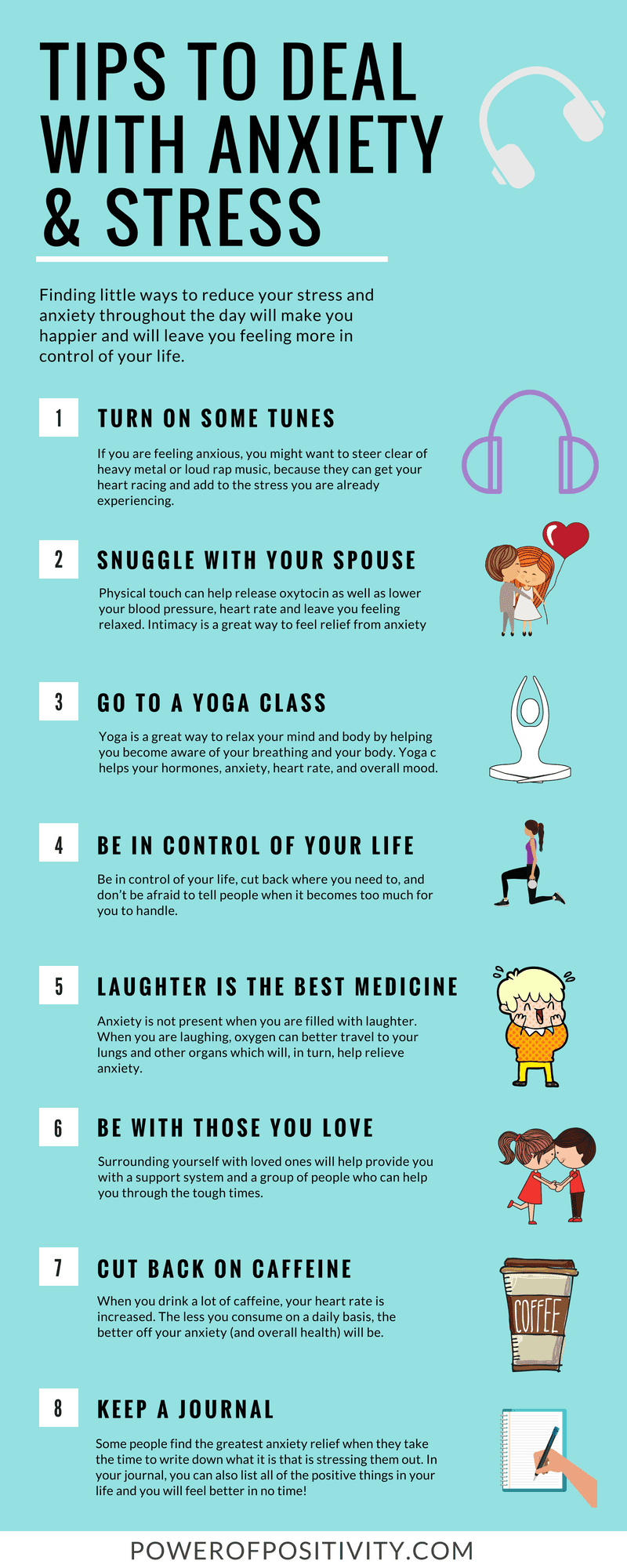
There are many relaxation techniques that can be practiced to ensure that you feel more at ease and ready to conquer the day when learning to deal with stress. Yoga or meditation can make it easier to slow down and control your breathing. You can also listen to music, write down your thoughts in a journal, and read a relaxing book to ease your nerves and feel less tense. Stepping back from your schedule and routine can allow you to remain more positive and at peace when you need it most.

Spend Time with Loved Ones

Those who have difficulty finding the time to socialize or spend time with their family members and friends are at a higher risk of suffering from stress. Isolation and a lack of human contact during the week can make it easy to feel more alone and also lead to depression. If you want to know how to deal with stress, you’ll need to prioritize visiting loved ones or making phone calls to maintain your relationships. Studies show that spending time with those you care about release oxytocin, which is a natural stress reliever.

deal with stress

You’ll likely laugh and feel more at ease when in the company of another person. In turn, the laughter brings more oxygen to the body and organs. Laughing can even relieve tension and relieves your stress response.

deal with anxiety infographic

Maintain a Balanced Schedule

In our society, many people are overworked and have too many obligations to manage. You may have the habit of overcommitting yourself to too many activities throughout the week. Of course, that can make it challenging to have downtime. When dealing with stress, make it a point to have a balance by limiting your commitments. Practice saying no and turning down requests to ensure that you can protect your health and well-being.

5 Psychological Tricks That Boost Productivity

According to most psychologists and behavioral experts, procrastination is a basic human instinct. The reason is quite simple: we are far more attracted to the allure of instant gratification than to the productivity level that is good for us in the long run.

An excellent example of this phenomenon is saving money. Americans are some of the worst savers in the world. Consider the following two statistics: (1) 75 percent of full-time workers say they live paycheck-to-paycheck. (2) Nearly 40 percent of Americans have nothing in savings. We know that we should save money for the future – but our impulses get the better of us.

Productivity works much the same way. We delude ourselves into thinking we’ll always have time, so we rationalize wasting it. We are going to talk about this a bit more.

Here are five awesome productivity hacks you can implement RIGHT NOW.

“Absorb what is useful, reject what is useless, add what is specifically your own.” – Bruce Lee

With a bit of discipline and a slight shift in mindset, you can become your most productive self!

Let’s get to it!

1. Know Thyself

When are you at your most productive? Are you a morning lark or a night owl? What are your “I’ll do it later” triggers? (Email, instant messaging, unexpected calls, etc.) Do you work better in alone or with others?

Know where you are most productive and start from there. Don’t worry about appearing unconventional or ruffling feathers. If necessary, explain your choices to others (manager, co-workers, and such). Tell them that making the most of your time at work is important to you. Chances are that you can come to a mutually-beneficial relationship.

life quote

2. Keep a Notepad

We humans have a big problem with following irrelevant streams of thought. One minute we’re focused like a laser and the next we’re obsessing over what we’re going to eat for lunch. Or how long it is until the next break time. Or how many vacation days we have.

When a something comes to mind that requires your attention, write it down. Get this extraneous stuff out of your head, and you’ll be much more productive (not to mention relaxed) as a result. Consider scheduling 15 to 30 minutes at the end of the day taking care of the “extra” stuff that crops up in your mind during the day.

3. Control Your “Spotlight”

“A wealth of information creates a poverty of attention.” This quote is attributed to Herbert Alexander Simon, a Nobel Prize-winning American economist and political scientist who devoted much of his career to the study of human decision-making.

In simple terms, we must be judicious in managing our attention. Scattered thoughts manifest into disordered, negative energy; whereas centered thoughts manifest into focused, positive energy. So watch where you direct your mental energy. Disregard the unimportant, choosing instead to cast your spotlight on things that generate a high return.

4. Get Grit

Angela Duckworth, a Distinguished Professor of Psychology at the University of Pennsylvania, and author of Grit: The Power of Passion and Perseverance (an awesome book!) says “…there are no shortcuts to excellence. Developing real expertise, figuring out really hard problems, it all times time – longer than most people imagine.”

While some are born with a bit more “stick-to-itiveness,” all of us take the path of least resistance at times. In this regard, Duckworth writes – and research shows – that grit can be developed by “…working on something you care about so much that you’re willing to stay loyal to it … it’s doing what you love, but not just falling in love – staying in love.”

Grit and self-discipline become easier the more we stick to it. When you feel like you have hit a wall, keep going! Eventually doing even the unpleasant things will become second nature.

being alone

5. Manage Your Energy

There are plenty of hacks that you can use to manage your energy – and it is critical that you make every effort to do so. Our productivity (or lack thereof) often comes down to what we’ve got left in the tank. You can be the grittiest, most disciplined, intelligent, and focused person on the planet; however, if you don’t have the energy to manifest these traits, it all amounts to less a hill of beans.

With this in mind:

  • Eat a good breakfast: consume protein and some natural sugar in the A.M. to get your day started right.
  • Carry a water bottle: drink at least 64 ounces of water throughout the day. The brain and body function best when well-hydrated.
  • Take regular breaks: more isn’t always better; this certainly applies to extended periods of work. Make sure you’re taking mini-breaks throughout the day.
Sources:
http://scienceblogs.com/cortex/2010/04/02/attention-and-intelligence/
https://www.psychologytoday.com/us/blog/adaptation/201707/5-productivity-hacks-actually-work

10 Causes of an Overactive Bladder (and How to Fix it)

Overactive Bladder (OAB) is a widespread condition affecting millions globally.

According to the Urology Care Foundation, OAB affects over 30 million Americans. This number is likely to be much higher. Counting those who experience intermittent OAB and those who’ve gone undiagnosed, estimates rise to a whopping 30 percent of men and 40 percent of women.

Symptoms and Risk Factors of an Overactive Bladder

Symptoms of OAB include:

  • Frequent urination, defined as urinating eight or more times over 24 hours.
  • Waking in the middle of the night to pee more than once (a condition known as nocturia).
  • Inability to hold your urine.
  • Wakefulness.
  • Accidental leaking of urine from sudden urges (called incontinence).

The risk factors of OAB are various. They include age-related physical or cognitive decline, neurological diseases such as dementia (e.g. Parkinson’s), and obstruction of the bladder from constipation, enlarged prostate, or surgical complications. They can also be caused by nerve damage to the urinary region, neurological disorders such as multiple sclerosis, stroke, bladder stones, or tumors. Prescription or over-the-counter (OTC) medications that increase the amount of urine production may also be a factor.

bladder

Ten Main Causes of Overactive Bladder

It’s important to note that while these are prominent causes, OAB can also result from other conditions or factors not listed here. Always consult a healthcare professional if someone suspects they have OAB.

1. Bladder Fullness

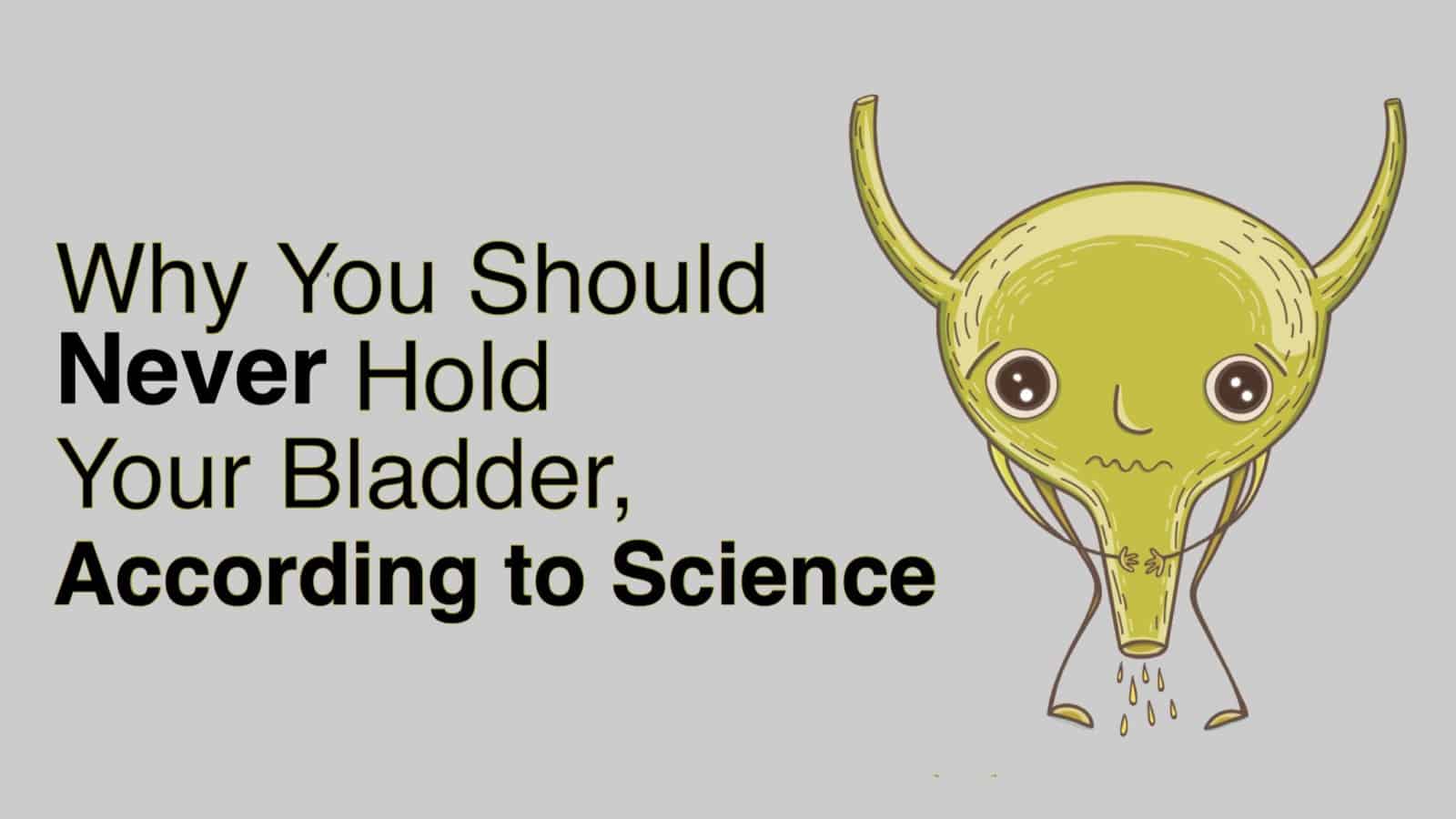
The bladder is a muscular sac located inside the pelvis. It stores urine produced by the kidneys. It stretches to hold urine and contract when it needs emptying. Holding urine for extended periods may seem harmless initially, but it can set the stage for complications.

When individuals consistently delay trips to the bathroom, they train their bladder to hold more urine than it should. This habitual retention can strain the bladder muscles over time.
Moreover, repeatedly clenching the bladder muscles can eventually lead them to become overactive, which can manifest as a frequent and sometimes uncontrollable urge to urinate. This phenomenon only exacerbates OAB symptoms.

2. Diuretics

Diuretics, often called “water pills,” promote kidney urine production. Their primary function is to help the body eliminate excess salt and water.

While diuretics are essential for many patients with heart-related issues or fluid retention, they inevitably increase urine output.

Consequently, individuals on these medications can experience an increase in the frequency of urination, exacerbating or simulating OAB symptoms.

3. Cognitive Decline

The brain and the urinary system are closely interconnected. The brain interprets signals from the bladder and sends messages back to control urination.

This signaling system can get disrupted as cognitive functions decline due to age or specific conditions like MS or stroke. The result? A disconnection in the signals between the brain and the bladder causes unexpected or frequent urges to urinate.

Moreover, other neurological conditions, not just cognitive decline, can also impact bladder control, underscoring the importance of the nervous system in urinary health.

4. Menopause

Menopause is a natural transition in a woman’s life, marking the close of her reproductive years. However, with this change come various hormonal shifts.

Estrogen, a hormone, plays a crucial role in the health and strength of the tissues in the urinary tract. When levels of this hormone decline during menopause, the bladder and urethra muscles can weaken, leading to challenges in holding urine.

Consequently, incontinence or an overactive bladder might become an issue for some women post-menopause.

5. Diabetes or Pre-diabetes

Elevated blood sugar levels characterize diabetes due to the body’s inability to produce or process insulin effectively.

An elevated blood sugar level may cause the kidneys to try to filter and absorb the excess sugar. When they can’t keep up, the body expels the surplus glucose through urine.

This excess glucose in the urine draws more tissue water, leading to increased urine volume. As a result, individuals with diabetes or even pre-diabetes might urinate more frequently, potentially giving rise to OAB symptoms.

6. Urinary Tract Infections (UTIs)

UTIs are infections occurring anywhere in the urinary system: the kidneys, bladder, ureters, or urethra. The most common type of UTI affects the bladder.

A UTI can irritate the bladder, leading to a strong urge to urinate even when the bladder isn’t complete. Some individuals might also experience a burning sensation when urinating, pain, and even cloudy or bloody urine.

While UTIs are treatable with antibiotics, they can exacerbate or simulate OAB symptoms if left unchecked.

7. Bladder Stones

Bladder stones are hard mineral masses that form in the bladder. They can develop when the urine in the bladder becomes concentrated, allowing minerals to crystallize and bind together.

These stones can irritate the bladder lining, leading to symptoms similar to those of OAB. Other symptoms often include pain in the abdomen, blood in the urine, or painful urination.

Treating bladder stones often involves a surgeon removing them.

OAB

8. Excessive Caffeine or Alcohol Intake

Both caffeine and alcohol are known diuretics, which can increase urine production and potentially irritate the bladder.

Consuming large amounts of coffee, tea, or alcoholic drinks can stimulate the bladder, leading to a frequent need to urinate.

Moderating or spreading intake throughout the day can help manage these OAB-like symptoms.

9. Medications

Some medications have side effects that may increase urine production or irritate the bladder. That includes certain antihypertensives, antipsychotics, anticholinergics, and over-the-counter cold and allergy medications.

If someone suspects that their medication might be causing OAB symptoms, they should consult their healthcare provider. They might adjust the dosage or switch to a different medication.

10. Neurological Disorders

Other neurological conditions can impact bladder function besides multiple sclerosis (MS) and stroke. Parkinson’s disease, spinal cord injuries, and brain tumors are examples.

These conditions can disrupt the nerve signals involved in bladder control, leading to OAB symptoms.

Preventing and Fixing an Overactive Bladder

Prevention is always the best medicine. With this in mind, let’s first talk about lifestyle choices that lower your risk of an overactive bladder.

The most important factors in preventing OAB are maintaining a healthy weight and getting regular exercise. A healthy body optimizes the functioning of the urinary tract and other vital organs. Further, an active lifestyle is the best way to counteract diabetes and obesity. Other prevention measures include limiting alcohol and caffeine, quitting smoking, and managing any known medical conditions.

Now let’s say you’re struggling with a bit of OAB. Are there measures you can take to counteract it? Many signs point to “yes.” One noteworthy finding reported by Harvard University showed that 70 percent of women who used alternative remedies reported being satisfied with the treatment. These treatments might include supplements, herbs, and therapies.

While research is still a bit sparse (as it often is with alternative treatments), three have shown promise.

Pumpkin seeds.

Pumpkin seeds are rich in omega-3s, which possess anti-inflammatory solid traits. One study found pumpkin seed oil to improve urinary tract function and reduce the symptoms of OAB.

Bladder retraining.

The general idea is to reset your bladder muscles. Eventually, you may get to a point where trips to the bathroom become much less frequent. First, start keeping a journal of how frequently you visit the bathroom. Next, delay your bathroom trips for a few minutes at a time. After a while, this 10 minutes will become a piece of cake, allowing you to hold for 15 minutes, then 20 minutes, and progressively longer.

Kegel exercises.

Kegel exercises (ideally in conjunction with regular exercise) strengthen pelvic floor muscles and limit involuntary contractions. Here’s a rundown of how to do Kegel exercises:

  1. “Find” your pelvic muscles by cutting off your urine mid-stream.
  2. Make sure that your bladder is relaxed (read: empty).
  3. Lie down flat on a comfortable surface. Put your arms comfortably at your sides.
  4. Relax your butt and tummy area.
  5. Squeeze your pelvic muscles for about 5 seconds; reduce hold time to 2-3 seconds if it is easier.
  6. Release your muscles for 10 seconds. Repeat.
  7. Perform these movements ten times each session. Try doing Kegel’s at least 3-4 times daily.

overactive bladder

Final Thoughts on Overactive Bladder

Overactive bladder (OAB) is a condition that affects millions of individuals worldwide, impacting their daily routines, sleep patterns, and overall quality of life. While the frequent and sudden urge to urinate might seem like a minor inconvenience, it can lead to broader emotional and psychological effects, such as anxiety, embarrassment, or even depression.

Understanding the various causes of OAB, as discussed, underscores the fact that it’s not just a standalone condition but often a symptom or side effect of other underlying issues. From neurological disorders to dietary habits, a wide range of factors can contribute to or exacerbate OAB symptoms.

However, it’s crucial to remain hopeful and proactive. With the advancement of medical research, various treatments and management strategies are available, ranging from lifestyle changes to pelvic floor exercises. Moreover, awareness and understanding of OAB are growing, leading to reduced stigma and more open conversations.

Are you experiencing these symptoms? Then contacting a healthcare professional is essential. Early diagnosis and intervention can make a significant difference in managing the condition and improving one’s quality of life.

Lastly, society must support and empathize with individuals dealing with OAB. Compassion and understanding can go a long way in helping someone navigate the challenges of this condition.

How Positive Affirmations Made Me Love My Body Again

Self-love can be a challenge, especially when the world around us is filled with negativity. The best way to bring this kind of positivity into your life is to make every effort to do it yourself, starting with affirmations.

The Journey of Intentional Self Love

Intentionally choosing to love yourself and be positive about your body, mind, and soul will change your life. One of the best ways to do this is to begin repeating and believing positive affirmations to yourself on a regular basis. Read on to learn how to change your life for the better through positive daily affirmations.

1. Positive Daily Affirmations Replace Negative Self-Talk

You’ll want to start your journey of self-love by identifying negative beliefs and self-talk. According to a study by Boulder Academy Lifestyle Coaching, 80% of the average person’s thoughts are negative. This is why it is so important to re-wire the way we think.

Begin your self-affirmation journey by taking a moment to reflect and actually understand what it is that you think and say about yourself and your body. Write down these thoughts and beliefs.

Your negative self-talk will include anything that is self-limiting. Perhaps you’ve been thinking “I can’t lose enough weight” or “I’ll never be pretty”. Use these as a starting point to pour out every negative thought you have towards yourself.

Spend a few days working on the list, making sure to capture every negative thought that comes to mind. Though this exercise may surprise you, it’s helpful to identify negativity wherever it may exist.

2. Transform Negative Beliefs into Positive Thoughts

You have the power within you to change how you feel about yourself and your body. As the queen of confidence herself, Beyoncé says, “Your self-worth is determined by you. You don’t have to depend on someone telling you who you are”.

Confront your list of negative self-talk and start writing a new positive affirmation to counter each one. Though it may feel uncomfortable at first, keep pushing through it. In response to previous thoughts, right new ones that are the opposite of what you have previously thought.

For example, instead of thinking about difficulties with losing weight, develop a positive affirmation that lists the ways you are improving your body. Similarly, if you are constantly putting down the way you look, worrying that you are not pretty enough, write down a positive statement like, “I am enough and I am incredibly beautiful and attractive”.

3. Start Using Your Positive Self-Talk Regularly

These self-affirmations are more than mere sentences. As you embed them into your thought pattern and psyche, you’ll begin to live like you believe them. This will change your life more than you know.

Post your daily affirmations of powerful body positivity someplace you’ll be able to easily see them each day. Make it a point to read your affirmation list often. As you do, you’ll notice how these words of positivity are quickly transforming your mindset.

affirmations

If you find yourself slipping into your old way of thinking with negativity, quickly stop yourself. Turn to the positive self-talk as a way to get your mind back on track. Be sure to keep your eyes and ears open for any negative self-talk as you think about or talk about yourself to others.

4. Watch as Your New Self-Love Affirmations Transform Your Life

The magic of a transformed mindset will undoubtedly follow after you stop your negative thinking. Repeating an affirmation like,”I have a beautiful body and am thankful for every day I live in it” will push you into truly living out your belief.

With these affirmations, you’ll be able to improve yourself in ways you haven’t before. You can change any area in your life where you’ve experienced difficulty or disappointment. Even if you aren’t where you hope to be, your positive belief system will catapult you to working your way to where you need to be.

Your New Life Awaits You

By sticking with this system of replacing negative thoughts with positivity, you’ll be able to really live life as you always hoped you could. There’s no such thing as the perfect body, only a body that you are perfectly content with. Remember to start writing out your positive truths and then reading them back to yourself. Regularly read them aloud as you go through your days to keep reminding yourself of these truths.

Through writing, reading, and repeating these self-love affirmations, you’ll be able to actually change the way you feel and the way you live. Once you do that, you’ll see that you have an endless reserve of peace in your mind, body, and soul. Keep changing your life and be a force of positivity for others.

https://www.youtube.com/watch?v=cHeI3Y_CfMo

References: 
https://medium.com/mindvalley/how-to-use-affirmations-to-positively-change-your-life-4db7a1d3182f 
https://www.more-selfesteem.com/affirmations.htm 
http://stylecaster.com/celebrity-self-love-quotes/ 
https://www.thecut.com/2015/11/why-self-affirmation-works.html


Science Explains 6 Cancer Causing Items to Keep Out of Your Home

In today’s hypochondria-prone society, we tend to scoff at articles that claim different products cause cancer. However, as unbelievable as it might be, we are surrounded by cancer-causing products every day. They hide in a variety of things around us, normally in forms we can’t quite discern.

It can be difficult to understand how you can protect yourself from dangerous household items in your own home. And, of course, a lot of other factors contribute to our risk factor of developing a cancerous growth. Things like general health, genetic predisposition, and quality of life are not to be ignored.

However, by taking some simple steps, you can eliminate most of the toxic products from your household. As a result, you can ensure more safety and peace of mind for both you and your family. Without further ado, here are some items in your household that may cause cancer.

Here Are 6 Cancer Causing Items to Keep Out of Your Home

“Prevention is a very important part of solving the problem of cancer.” – Eva Vertes

1. Granite countertops

It’s not so much about the countertop itself as it is for the radon, which is a toxic gas released from uranium decay. Normally, it only manifests in places where there is a high natural concentration of uranium; however, one study shows that there’s an intrinsic link between granite and radon too. Always make sure to double check whether the area you’re moving into has a history of high radon exposure; if you do decide to go for granite countertops, talk to your local authorities to get a radon testing for your home. Even though they might seem an innocent culprit, granite countertops and radon can be a silent killer over the years as the gas builds up in your system.

2. Air fresheners and scented candles

First of all, try to rely on fresh air for a nice-smelling home, rather than artificially scented products. Of course, we want our home to smell nice and feel comforting and welcoming to guests. However, you may want to look for natural solutions for good scents because air fresheners, scented candles, and incense may have toxic ingredients.

A study explains the dangerous effects of artificial scents on the body. Most scented products are made with “parfum”, an artificial scent that contains a cocktail of toxic ingredients. A lot of carcinogens hide under the “parfum” ingredient, therefore it’s always best to try and mix the ingredients for your air freshener yourself. Some scented natural oil and water will do the trick just fine. When it comes to candles, always rely on independent shops and vegan candles, as they are more organic and safer.

3. Common Shampoo

This is by far one of the most common items in anyone’s home that carry the risk of cancer. Many shampoos use parabens to make their product last longer, and parabens are a known carcinogen, connected to several types of cancer. In fact, according to a study, traces of parabens were found in over 99% of cancer patients, particularly those with breast cancer. Out of the normal high street brands of shampoo, Head & Shoulders is the biggest offender, with ingredients that you will find in cleaning products and paint stripper.

Always read the ingredients list of any shampoos or cosmetic products you buy. Things like SLS, fragrances, sulfates, and synthetic colors should immediately ring an alarm bell. If you can’t pronounce it, or you aren’t sure exactly what it is, it probably doesn’t belong in your hair!

4. Plastic bottles and containers

Reduce your use of plastic and don’t do it just because it’s good for the environment! BPA is a synthetic estrogen found in many plastic products. It has direct links to cancer, as one study shows. It’s also incredibly harmful for pregnant women and their developing babies, so it’s best to get rid of it altogether.

Plastic bottles and plastic containers are the main culprits in BPA contamination. The most common way it enters our body is through our food, seeing as a lot of it comes in plastic containers. Besides, heat makes the process of chemical leakage even faster, and lots of us are in the habit of leaving plastic bottles in cars. Invest in a reusable water bottle that’s BPA-free. It’s hard to completely get rid of plastic in your life but every small choice for health will help.

5. Mainstream Cleaning products

According to a recent study, women who use cleaning products more often are at a much higher risk of breast cancer. The corporations that produce cleaning products work very hard to convince you that they’re safe; however, most cleaners are full of parfum, 2-BE, and coal tar dye. These not only increase your risk of cancer, but can also damage your liver, kidneys, and reproductive system. There are several brands that do offer all-natural, all-purpose cleaning products, so look out for these. And always read the ingredients list to know what you’re bringing into your home. Many of these products also have toxic fumes that your family and guests breathe in, so you aren’t the only one negatively affected by them.

cancer

6. Synthetic Toothpaste

As with many other household items, you don’t really know what synthetic materials go into toothpaste until you read the ingredients. A lot of the commercially available brands of toothpaste contain triclosan, also known as TCS, which has a proven link to cancer growth. What’s worse, triclosan doesn’t really aid the cleanliness of your teeth; it’s used more as a preservative. This also goes for other harmful ingredients in toothpaste, such as fluoride, which is known to have a build-up effect. Look for a natural toothpaste, and don’t skip on flossing either.

Final thoughts

The above are just a few items in your household that can increase your risk of cancer. Always be aware of what you’re bringing into your home and how it can put you or your family in danger. If there’s an item in the ingredients list you don’t understand, look it up. Don’t just chance your family’s health on it, because it can turn out to be toxic.

https://www.youtube.com/watch?v=KKB0jThAfnQ

References:
http://www.cancerjournal.net/article.asp?issn=0973-1482;year=2017;volume=13;issue=2;spage=208;epage=212;aulast=Abbasi
https://nepis.epa.gov/Adobe/PDF/P1009BZL.pdf
https://articles.mercola.com/sites/articles/archive/2012/04/02/toxic-parabens-on-breast-cancer-patients.aspx
http://www.breastcancer.org/risk/factors/plastic
https://silentspring.org/research-update/study-reports-cleaning-products-beliefs-about-breast-cancer-and-breast-cancer-risk
http://stm.sciencemag.org/content/10/443/eaan4116
https://www.collective-evolution.com/2017/09/12/10-products-linked-to-cancer-that-are-hiding-in-almost-every-home/
https://www.rd.com/health/conditions/things-in-home-cause-cancer/

Find Your Inner Peace With These 23 Peace Of Mind Quotes

Are you feeling stressed or overwhelmed? Is life bogging you down and making you feel like you are drowning in your own situation? Taking the time to find peace of mind quotes is helpful as you try to calm down and bring yourself back to reality. Some people prefer to get lost in a story or read their favorite book, while others choose to relax by engaging in a yoga, peace of mind quotes or other relaxing exercise.

Regardless of your method for choosing to relax, there is always room for you to read quotes about peace of mind. Have you ever been scrolling through your Facebook feed and all of the sudden you come across inspirational peace of mind quotes? If you take the time to read some of these, peace of mind quotes will leave you feeling at peace with the world and with your life.

Here are a few peace of mind quotes that you can’t help but want to post all over your newsfeed or even cross-stitch to hang on the wall of your home!

1. “Love and peace of mind do protect us. They allow us to overcome the problems that life hands us. They teach us to survive… to live now… to have the courage to confront each day.” —Bernie Siegel

2. “Do not let the behavior of others destroy your inner peace.” —Dalai Lama

3. “You find peace not by rearranging the circumstances of your life, but by realizing who you are at the deepest level.” —Eckhart Tolle

4. “If there’s no inner peace, people can’t give it to you. The husband can’t give it to you. Your children can’t give it to you. You have to give it to you.” —Linda Evans

5. “It isn’t enough to talk about peace. One must believe in it. And it isn’t enough to believe in it. One must work at it.” —Eleanor Roosevelt

6. “Peace is liberty in tranquility.” —Marcus Tullius Cicero

7. “The life of inner peace, being harmonious and without stress, is the easiest type of existence.” —Norman Vincent Peale

8. “If you cannot find peace within yourself, you will never find it anywhere else.” —Marvin Gaye

9. “Peace is always beautiful.” —Walt Whitman

10. “We don’t realize that, somewhere within us all, there does exist a supreme self who is eternally at peace.” —Elizabeth Gilbert, Eat, Pray, Love

11. “Never be in a hurry; do everything quietly and in a calm spirit. Do not lose your inner peace for anything whatsoever, even if your whole world seems upset.” —Saint Francis de Sales

12. “Peace is its own reward.” —Mahatma Gandhi

13. “Nobody can bring you peace but yourself.” —Ralph Waldo Emerson

14. “Peace is a day-to-day problem, the product of a multitude of events and judgments. Peace is not an ‘is,’ it is a ‘becoming.’ ” —Haile Selassie

15. “Peace is a daily, a weekly, a monthly process, gradually changing opinions, slowly eroding old barriers, quietly building new structures.” —John F. Kennedy

16. “Peace is the result of retraining your mind to process life as it is, rather than as you think it should be.” —Wayne W. Dyer

peace of mind quotes

17. “You’ll never find peace of mind until you listen to your heart.” —George Michael

18. “The life of inner peace, being harmonious and without stress, is the easiest type of existence.” —Norman Vincent Peale

19. “Inner peace can be reached only when we practice forgiveness. Forgiveness is letting go of the past and is, therefore, the means for correcting our misperceptions.” —Gerald Jampolsky

20. “Never be in a hurry; do everything quietly and in a calm spirit. Do not lose your inner peace for anything whatsoever, even if your whole world seems upset.” —Saint Francis de Sales

21. “Peace comes from within. Do not seek it without.” —Gautama Buddha

22. “We don’t realize that, somewhere within us all, there does exist a supreme self who is eternally at peace.” —Elizabeth Gilbert

23. “Each one has to find his peace from within. And peace to be real must be unaffected by outside circumstances.” —Mahatma Gandhi

Inspirational and quotes about peace of mind will leave you feeling more in control of your life and more thankful for the life you have been given. These quotes are always a great way to brighten your day or the day of someone you love. Sending a quote like the ones listed above to a friend that is struggling will help them to find inner peace in the midst of their busy day.

Peace of mind quotes are all around you. If you choose to focus on the negativity and depressing things happening around you, they are easy to overlook. Help make your close friends and family more at peace by posting peace of mind quotes on your social media page to help inspire and motivate them to be the best person they can be.

https://www.youtube.com/watch?v=GGiRNR3jUTM

How To Boost Your Happiness : 8 Effective Tips To Achieve true happiness

Happiness is a commonly misunderstood word yet we keep searching for it our entire life. Do happiness quotes make you happy? Most people make wishes like –if only I had a big house, the job I wanted, a new car, the right partner –I would be very happy. Unfortunately, what most people don’t know is that you don’t require these things to be happy.

Do you smile every time you see a young child or baby giggling? This should remind you that we are all born with an innate and natural sense of happiness –It’s actually your birthright. You only experience unhappiness and suffering as you grow old and as circumstances change. This post will share essential happiness tips.

Be positive

Generally, life doesn’t need negative things, and negative emotions don’t have a purpose in your life. You don’t require negative emotions to do something good. These emotions only lead to negativity and that’s not good for you –they destroy your life including everything in it. What should you do? You have to learn to think positively of you want to be happy. Try to cultivate positivity and work on positive emotions. Once you develop positive emotions, you’ll be less vulnerable to any negative influence that’s around you.

Cultivate inner discipline

Discipline can transform your behaviors, outlook, and attitudes toward life. By developing a calm mind you’ll start attaining the fundamentals of true happiness. You can accomplish this by learning to face your negative qualities and tendencies and then turn them into positives. This is how you achieve inner discipline. Note that you shouldn’t ignore any events that happen around you. It means that your focus and sensitivity are still present but you are in control of everything. This way, you will easily respond to any circumstance without showing bad emotions.

Keep smiling

Do you believe that smile is contagious? Well, it works wonders not only to your face but to the people surrounding you. When you smile, your aura changes and you become radiant. You become more attractive and approachable. Isn’t this what everyone desires? Create a habit of smiling always even if your day is not as productive as you wanted or things haven’t gone the way you wanted them to. Just smile and you will see people smiling back at you.

Love yourself 

The most essential relationship you can ever have is being happy with yourself. Unluckily, most of us always talk to ourselves with contempt and criticism. The key to being happy is to treat yourself the same way you treat a person you love or your best friend –with compassion, unconditional acceptance, and love. You deserve your affection and love.

Be thankful

The opposite contentment is greed. A happy person will always be contented and successful but it doesn’t mean that they are glamorous and very rich. In fact, people who are always grateful for everything they have are often simple people. This is because they are proud of their simple accomplishments and choose to share the little they have with their loved ones. By learning to be grateful, you will have no room for greed since you’re contented. It’s okay to push yourself a little bit harder when you want to achieve your goals provided you don’t step on others as you try to succeed.

happiness

Learn to give

Develop a habit of giving with love without expecting to get something in return. This behavior will keep you nourished and you will be more fulfilled just like the person you offered a gift to. You don’t have to give expensive gifts to be happy –try giving a silent blessing in your heart, a helping hand every time you come across a needy person, or kind words of support.

Learn to forgive

The opposite of happiness is suffering. Even though pain is inevitable, suffering is a choice. Often, we like prolonging our agony when we perpetuate our pain and keep it alive. Do you find reasons and ways to hate a person just because you have experienced an injustice? Do you play a victim by magnifying what has happened? You have a choice in any given situation in your life. Your suffering will depend on how you choose to respond to a misfortune. Instead of choosing to suffer, try to forgive yourself and others and you’ll be happy. Happiness quotes can help you learn how to forgive too.

Forget the past

You can never be happy if you dwell on the past. Don’t allow your past experiences to define who you are or haunt your presence. Instead, choose to free yourself from the guilt, shame, pain, and hatred the past has brought you. Don’t re-live the past. Instead of playing a victim, choose to move forward and you will find happiness tips that can guide you.

Happiness can only be real if you stop seeking transient and material things and choose to discover that lasting joy that’s within you.

Consider following these tips and you will live a happier life. Now fulfillment and happiness are within your grasp.

https://www.youtube.com/watch?v=vzxYzkDQeEc

8 Inspiring Tips To Live Your Life To The Fullest

There’s a difference between living your life and living your best life. In a world that’s full of negative influences and depressing realities, it can be hard to break through and live the inspiring life you want, but it’s the only way to truly live.

Inspiring tips to Living a Life Fulfilled

“Twenty years from now you will be more disappointed by the things that you didn’t do than by the ones you did do. So throw off the bowlines. Sail away from the safe harbor. Catch the trade winds in your sails. Explore. Dream. Discover.” Mark Twain

If you’re not careful, you can find yourself going through the emotions of life. Wake up, go to work, go home, go to sleep, and do it all again for the rest of your life. If you find yourself caught in this routine cycle, longing for more out of your life, read on for eight inspiring life tips.

1. Start with Gratitude

Believe it or not, your attitude and perspective on life will change immediately when you realize how much you really have. Too often, we take our lives for granted and never really know how good we have it.

Today, make it a point to be grateful for your family, friends, and loved ones in your life. Be sure to let them know how inspiring they are and that you’re glad that they are in your life. Similarly, make a note of how fortunate you are to simply be alive and able to think.

2. Don’t Let People Take Your Energy

While you may not realize it, the people you keep around you can change your energy for the better or the worse. People that are constantly negative can bring you down more than you realize.

If you find that you are constantly brought down or depressed by the problems and judgments of others, it may be time to cut them out of your life. Remember, your energy is important and you need to protect your wellbeing at all costs.

3. Always Forgive, Even if it Hurts

There is truth to the statement that when you hold on to the hurt from the past, you’re only hurting yourself. While you don’t need to welcome back the people who have hurt you, you can let go of the pain.

Be the one who forgives and choose to say that what happened in the past has no hold over you today. Instead of dwelling anymore on the hurt and the pain, choose to spend your time and emotions inspiring and loving the ones that love you and want the best for you.

4. Be Picky When Choosing Friends and Lovers

It’s easy to have great relationships when everything is going well. However, when times get difficult, you may find that those great relationships can’t take the heat. As you choose your friends and lovers, make sure you have a solid connection with them.

5. Always Love Yourself First

“One day, I had to sit down with myself and decide that I loved myself no matter what my body looked like and what other people thought about my body.”—Gabourey Sidibe

inspiring

Living your life to the fullest also means loving yourself as hard as you can. Just like you love all the people in your life despite their faults, you need to love yourself. Whether you are full of self-confidence or you find yourself struggling to get through each day, make a regular habit of encouraging and believing in yourself. You’ll realize that with a little bit of self-love, you can begin inspiring yourself to live fuller.

6. Focus on Building Your Future

Don’t let the routine of the day-to-day rob you of your inspiring goals or dreams. Remember that each day can either bring you closer to what you want or hold you back. If you aren’t headed where you’d like to be, take the time now to change directions and focus on building the future you want.

7. Enjoy Life’s Little Treasures

Just like finding gratitude in your life and loved ones, be sure to enjoy the little things in life. The way the ocean looks, how beautiful the sunset is– taking time to pay attention to what is so often overlooked will help bring happiness back to your life.

8. Schedule in Fun

Don’t let life rob you of having fun. While we all have to get our work done, you can only get so much work in before you get burnt out. Be sure to fill your days with fun activities so you have something to look forward to as you work, as well as fond memories to enjoy at a later time.

The Time is Now

We only get one life. This is why it is so important to do everything in your power to build the one that you want to live. There’s always time to reinvent yourself and to rebuild, so if you aren’t where you’d like to be, now is the time to change.

Use these eight inspiring life tips to help you find the life you’ve always dreamed of. Life is hard enough as it is, this is why you must choose to dedicate your time and energy to living the life you long for.

https://www.youtube.com/watch?v=Q0gbfQUEk7A

REFERENCES
HTTP://STYLECASTER.COM/CELEBRITY-SELF-LOVE-QUOTES/
HTTP://WWW.GENIUSAWAKENING.COM/GENIUS-LIFE/LIVE-LIFE-TO-THE-FULLEST/
HTTPS://WWW.GOODREADS.COM/QUOTES/TAG/MISATTRIBUTED-MARK-TWAIN
Skip to content