Weekly tips, affirmations, and small actions to feel your best.

8 Ways to Get Past A Difficult Breakup

Going through a difficult breakup is one of the most unpleasant experiences in anyone’s life. It’s a big change to try and train yourself out of loving the person you’ve been so close to. That’s why it’s important to take all the right steps to make sure you don’t wallow in sorrow and self-pity forever. You can (and probably should) push yourself toward recovery as soon as possible.

Whether or not you instigated the breakup doesn’t really matter. Pain and regret will always find their way into your heart after a difficult breakup and sometimes just reminding yourself to think positively doesn’t quite cut it. Even though at the moment it feels like the pain will never go away, it’s up to you to put your brain in recovery mode and convince yourself that this, too, shall pass. Here are some helpful tips on habits you can teach yourself to help you get over that difficult breakup.

Here Are 8 Positive Tips to Help You Get Past A Difficult Breakup

“After a breakup, it takes a couple weeks for the fog to settle, but it’s always a period of self-priority and growth. Life presents you with so many decisions. A lot of times, they’re right in front of your face and they’re really difficult, but we must make them.” – Brittany Murphy

1. Unfollow them on social media.

The more contact you have with your ex, the more difficult it will be for you to let them go. When you follow their life, it fills you with a feeling of regret that you’re not part of it anymore – and it makes you susceptible to false hopes and dreams of getting back together. Cutting off is hard, but once you do it, you’ll feel so much better. It’ll give you the time and space you need to focus on yourself and heal rather than dwelling in the past and getting lost in ideas of what could have been.

2. Remind yourself why the breakup happened.

The most important mindset to put yourself into after a difficult breakup is that you’re better off this way. Remind yourself what was it that caused the breakdown of your relationship. Take a moment to think about how unhappy you would have been if things had kept going the way they did. Let yourself enjoy things you couldn’t enjoy before. Allow yourself to be happy with you because of you – not because of somebody else’s validation, or lack thereof.

3. Talk to your friends and family.

One of the most common feelings after a difficult breakup is second-guessing – wondering whether you took a bad step and whether there’s anything you can do to fix whatever broke in your relationship. The best remedy for that is to talk about your feelings to trusted friends or family members. Explain to them, in detail, why your relationship no longer works, and the set of circumstances that led you to where you are. Even if your friends have no advice to offer, it will help you to voice all your feelings and remind you that what you did was right.

4. Allow yourself to cry.

Another problem that people often have after a difficult breakup is that they try to internalize their emotions. Unfortunately, sometimes those bottled emotions they come out in public, or in places where they can’t be controlled. If you need to cry and wallow in misery for a few days, let yourself do it. It’s better to let it all out now than bottle it up and wait for the pressure to blow the cap off. Being in touch with your emotions will help you channel all your pain and grief in one place so that it doesn’t affect the other areas of your life.
difficult breakup

5. Write it down.

Journaling can be a surprisingly helpful method of therapy. Whether you want to write it in a blog or an actual physical journal, reflection is a very helpful tool. It’ll allow you to go back and read what you wrote the day before, and the day before that. You will see how your emotions evolve and come to realize that healing is slowly happening. If nothing else, it’ll give you hope that things will keep getting better – and provide you with tangible proof of this in the form of your own written words.

6. Tell yourself that you want to be happy.

Even if you don’t feel like you can ever be happy again, remind yourself that happiness is your long-term goal. Smile, even when you don’t feel like it. Pretend to be happy until one day you won’t have to pretend anymore. It doesn’t matter whether you feel miserable. Convince your mind to do some positive thinking by incorporating happiness into your physical reactions and, sooner or later, your brain will follow suit. It’s all about convincing yourself that happiness is what you want and what you believe you will get.

7. Adopt healthy habits.

When depression after a difficult breakup hits you, it’s easy to eat unhealthy food or spend whole nights not sleeping a wink. As tempting as it is to fall into those bad habits, try to establish a routine in your everyday life that’ll bring back the structure and support you’re craving. A great start is to go to bed at a reasonable time every night. It creates the impression that you have your life together and also helps you feel well-rested and ready for the next day.

8. Tell yourself you deserve better.

It’s difficult, especially if you were convinced that your ex was your soul mate. However, always remind yourself that life goes on and that you’ll meet someone better – even if it feels impossible now. You’ll find someone who’ll cherish and love you the way you deserve to be loved. Once you get into that positive mindset, you’ll more easily find the strength and courage to pick yourself up off the ground and keep moving.

Final thoughts

When a long relationship suddenly end, you might feel like the solid ground beneath your feet has been taken away. Don’t allow yourself to spend too long in self-deprecating thoughts. Instead, look towards the future and everything that awaits you. Understand that there’s life outside your previous relationship. And the more effort you make to discover and embrace that life, the easier you’ll find it to get over your breakup.

https://www.youtube.com/watch?v=yekZBljwsaQ

References:
https://www.girlboss.com/wellness/11-tips-for-getting-over-a-breakup
https://www.cosmopolitan.com/sex-love/advice/a6970/breakup-grown-woman-recovery/
https://www.psychologytoday.com/gb/blog/valley-girl-brain/201209/7-phrases-will-help-you-get-over-breakup
https://www.independent.co.uk/life-style/how-to-get-over-a-breakup-a7541901.html

8 Signs You Are Stressed Out (And How To Relax)

The fact that we have an organization called The American Institute of Stress just to help us understand and cope should be a dead giveaway to how stressed out most of us are. Definitions of stress vary, and so do the different kinds of stress. Some kinds, such as making positive changes in our lives or learning new skills, can be good for us. Others, like worrying over a job or about an illness, can be debilitating.

We live in stressful times, and we have little control over many situations. How can we put our stress into perspective and find stress relief techniques? Around 2,000 years ago, the Greek philosopher Epictetus summed it up this way: “It’s not what happens to you but how you react to it that matters.” One of the best ways to deal with stress is to change the way we look at things. Another is to recognize its signs and nip it in the bud before it takes over our lives.

Eight Signs That You Are Stressed Out

1. You get sick a lot, and the illnesses stick around. 

The American Psychological Association says that three out of four people experience physical problems caused by stress. When we are stressed out our bodies work overtime to release cortisol, a hormone that is helpful when we’re being chased by a tiger but harmful when we stay in a constant state of “fight or flight.” Too much cortisol weakens our immune systems and makes us more likely to get sick. A change in the way you view stress, along with habits like meditation and exercise, usually helps.

2. You have trouble sleeping at night. 

When we’re stressed out during the day, we get into a state of arousal that makes it hard to fall asleep at night. When we can’t sleep at night, we get even more worked up. Of course, that leads to more stress the next day, and the cycle continues. It helps to develop a relaxing bedtime ritual and avoid caffeine or other substances that could keep you awake.

3. You have a headache almost every day. 

If you’re having pressure or pulsing pain around your temples or scalp, you might be having tension headaches. Although they are uncomfortable, they are usually different from the severe symptoms caused by migraines. Try to find ways to relax your neck and scalp muscles to relieve the pain.

4. You can’t think clearly. 

If you aren’t sleeping well, there is a good reason you can’t concentrate, but there may also another cause. Research shows that the brain’s memory center, the hippocampus, shrinks when it is overwhelmed by cortisol, and this may even be related to dementia later in life. Mindfulness and deep breathing exercises are good stress relief techniques.

5. Your mood changes, and it affects your personality and libido. 

Anxiety might make you feel overwhelmed, moody, or depressed. If you find yourself doubting your abilities or avoiding other people, stress is probably interfering with your emotional health. Your libido might also suffer. Try to identify and eliminate as much stress as possible and see a doctor to rule out physical problems. Communicate with your partner and stay in touch with friends.

stressed out

6. Your behavior changes. 

Anxiety can make it hard to get things done. You may procrastinate or feel overwhelmed by responsibilities, or you may bite your nails, have trouble being still, or move from one activity to another without finishing anything. When you relax, your nervous behaviors should return to normal.

7. You drink too much or abuse other substances. 

Taking a drink of alcohol can be a relaxing way to spend time with friends, but it just makes stress worse when it gets out of hand. Instead of turning to alcohol, drugs, or cigarettes, call a friend, go to a movie, or take a walk. Nature can be healing.

8. Your neck is killing you. 

The old expression about a “pain in the neck” explains a lot. We all tend to tense our shoulder and back muscles when we get stressed out or tired. This alone can lead to painful muscle spasms, but it gets worse when inactivity or poor posture complicates the stress reaction.

Final Thoughts

Stress has many causes, and it takes work to create a healthier lifestyle. We can start by eating a good diet, exercising regularly, and engaging in stress relief techniques like yoga, meditation, or listening to uplifting music. Studies have shown that taking the time to write about our feelings, even if we throw what we write away, can make us happier and more relaxed. It is also important to get enough sleep, avoid stimulants, and avoid taking on more responsibilities than we can handle. Remember that the way we see things determines how stressed out we are.

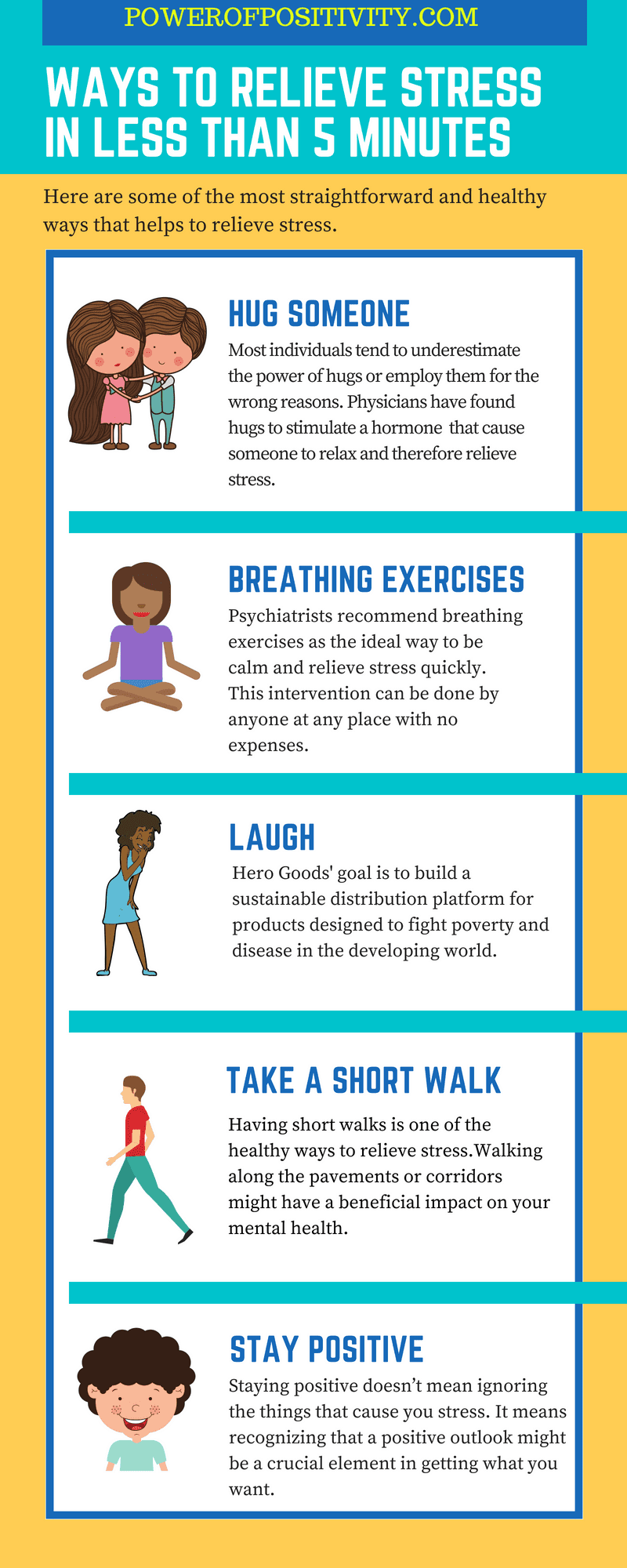
Ways to relieve stress

Share this Image On Your Site

10 Signs You Are Not Shy, You Are Actually An Introvert

People who are described as an introvert often get a bad rap in a world where extroversion is highly prized. After further study, though, you will find it easy to understand the considerable value an introvert brings to the table. Living life focused inward, the typical introvert knows what they want. As such, they do not need much from the outside world to be happy.

Introverted people aren’t necessarily shy. Being shy and being introverted belong in two different categories in many cases. Thse folks don’t avoid people due to fear or anxiety. They simply feel more comfortable relating to others one-on-one or in a small group.

Below are 10 signs that you are an introvert.

Do these characteristics describe you?

1. Being in a large group of people drains your energy.

An introvert needs time alone to recharge. While introverts are capable of spending time at parties (and may even seem like the life of the party on occasion), they can’t keep it up for long. They need to retreat to a quiet place or they may start to zone out. Large groups of people overwhelm introverts, causing them to become agitated or tired. They can also be bothered by too much noise and light, which saps their energy. An introvert often feels all alone even in a large crowd. Additionally, they may find networking activities stressful.

2. People tell you that you’re “too intense.”

If this is your personality type, small talk is off the table. You enjoy philosophical conversations and thought-provoking subjects. You will jump right into serious debates without thinking twice about it. An introvert appreciates lively and deep reflection about books and movies. These cerebral behaviors indicate you are an introvert. What some may call intensity is more likely wisdom. If you have been called an “old soul,” you are most likely an introvert.

3. You dislike small talk.

If you are aggravated by small talk, you are merely manifesting a classic sign of introvert nature. You probably avoid chit-chat whenever possible. Not only does it makes you anxious, but it also seems phony and insincere.

4. You easily get distracted.

Noisy environments with too much stimulation will distract introverts. They often seek out quiet spots to refuel after time in a crowd or chaotic environment. Contrary to extroverts (who are easily bored), the ongoing, inner monologue keeps the mind active. While they may appear quiet on the outside, they are actively thinking at all times. If you are an introvert, you may find this active inner life exhausting and distracting at times.

5. An introvert seeks peaceful and beautiful environments.

Since these folks are negatively impacted by noise, light, and crowds, they seek out places that are peaceful. Places they can relax and think. If you are an introvert, you choose your environment based on its ability to calm you. Stimulating, loud, and chaotic places make any introvert anxious and uncomfortable.

6. You are prudent and thoughtful before making decisions.

Introverted people want all the facts before they make a decision. Instead of acting with impulsiveness, they like to mull things over before making up their mind about important matters. If you are an introvert, you avoid risks. You proceed with caution. First, you evaluate the information at hand. As a result, you never rush decisions. In addition, you think before you speak, and carefully choose your words in a deliberate manner. Your friends probably think of you as cautious.

7. An introvert likes to watch others to learn new tasks.

While extroverts often jump right in (with both feet) to learn something, figuring things out through trial and error, their introverted counterparts prefer to watch others and learn. Additionally, they would rather practice on their own to perfect their skills before trying them out.

8. As an introvert, you live in your head.

You have a non-stop inner monologue that is lively and interesting to you. That is part of the reason you find it so easy to be alone. As a person with a full inner life, you don’t really need a lot of outside stimulation to be happy. You think everything over and tend to be very analytical. You feel the most alive when focusing intently on subject matter that deeply interests you.

introvertsFinal Thoughts

People often view the terms “introvert” and “shy” as complementary terms. Contrary to what people think, they can be mutually exclusive. People might think it is easy to recognize these characteristics. (The shy one in the corner, right? Wrong.) In fact, they often appear to be outgoing to others.

An introvert may seem hard to get to know since they won’t always make an effort to reach out to new people voluntarily. While their inherent nature may seem a bit standoffish, they make loyal and good friends. Most have a few close friends. They rarely seek out and maintain a lot of friendships.

https://www.youtube.com/watch?v=dFDvNfQm2kc

REFERENCES:
HTTPS://WWW.HUFFINGTONPOST.COM/ENTRY/INTROVERT-SIGNS-AM-I-INTROVERTED_US_5A2AE103E4B073789F6982F4

HTTP://WWW.ABAJOURNAL.COM/MAGAZINE/ARTICLE/15_SIGNS_YOU_MAY_BE_AN_INTROVERT

10 Signs You Have Met Your Soul Mate

There isn’t a person alive who doesn’t long for a deep connection with another human being. It’s in our DNA to want to share our life with another person. We want to be seen and valued for who we are, warts and all. That’s why the ongoing discussion about finding a soul mate is never ending; in the movies, in books, and in our own psyche.

The larger question is: how do we find the perfect soul mate. Huffington Post reminds us that there are seven billion people in the world, so how will we recognize them when we finally meet? Is there only one soul mate for each of us? People worry that if they don’t meet that one perfect person they will never feel whole.

Signs You’ve Met Your Soul Mate

1. Your connection to the perfect soul mate is much more than physical. 

The intimacy you share is not all about lust. It is about so much more. You are connected at your core from a deeper place. While the sex is going to be good, the connection is spiritual and goes well beyond sex. In fact, many people believe that your soul mate can be a friend instead of a romantic liaison.

2. You have no doubts about being committed to your soul mate for life. 

While your past dating life may have been plagued with doubt about whether it was true love or simply infatuation, there is no doubt in your mind that you have finally found the perfect soul mate when you finally meet. The difference between this relationship and others is almost impossible to describe.

3. You feel like you can finally let your guard down around them. 

Feeling safe enough in someone’s presence to be authentic and show them who you really are is one of the most powerful soul mate signs. It’s hard to be vulnerable. It feels risky with most other people, but that’s what makes soul mates different.

4. When you are around them you feel a sense of calm and peace. 

There is nothing like feeling fully loved and accepted for who you are. This type of connection is spiritual and leads to a place of peace. The anxiety that we feel in life is associated with uncertainty and a feeling that life is out of control.

5. You never attack one another, screaming and threatening to leave. 

One of the major soul mate signs relates to having a compassion and sensitivity for one another that won’t allow this type of mean-spirited behavior.

6. You are capable of giving in because you want to make your partner happy. 

When you truly love someone in a deep and meaningful way, you are capable of putting them first and leaving your ego out of the equation.

7. The connection was instant. 

When you met, it was like you had known them all your life. A feeling of familiarity was instant. This type of feeling about another person has fueled a lot of speculation with believers in reincarnation. One theory floating around is that soul mates actually carry some of each other’s soul inside of them from a past life.

8. You bring out the best in one another. 

We’ve all met couples who seem to argue all the time and who bring out the worst in one another. Soul mates are just the opposite. They bring out the best in each other because they want to make their beloved proud. They see the good things inside and encourage their partner to flourish.

soul mate
9. You share the same values and want the same things out of life. 

Some of the reasons couples struggle is because they have different value systems and are on different paths to their future. The only way to connect at a deep level is to share values and to want the same things out of your journey. It is impossible to truly connect if you don’t agree on the “big things.” We’re not talking about decorating ideas or what type of car you want, but rather what you believe is your purpose in life.

10. You feel like you truly know them. 

You can look at your soul mate and know what they are feeling. This type of intuitive understanding of another person is rare and should be cherished.

Conclusion 

It is not surprising that people are searching far and wide for promised soul mates. Life can be lonely unless you feel loved and understood. As society continues to hide behind electronic devices instead of spending time with each other “in the flesh,” it is easy to understand the allure of that “special someone” who wants nothing more than to be with you and love you, always.

https://www.youtube.com/watch?v=eGPrRQYZ-ms

Psychology Explains Why Women Are More Attracted To Introverts

Have you ever thought of what your dream guy would be? Of course, you have! Whether you were six and dreaming about true love or twenty-six and just wishing for someone who would listen to you, most women have thought about this topic once or twice. Now that you are thinking about it, what is your dream love like? Do you prefer tall and handsome or short and cute? This may come as a surprise, but with regards to personality, women are becoming more and more attracted to introverts.

First, let us define an introvert. Although a quick google search will deem an introverted individual to be “a shy, reticent person”, there is much more to it than that. An introvert may prefer small groups of friends or simply hanging out by themselves as opposed to being a part of a huge crowd. They have a tendency to be quiet until they get to know another person, but this can vary extremely from introvert to introvert.

So, what makes introverts so attractive? Let’s find out. Also, if you are not sure if you are an introvert, if you relate to the items listed below, they could be signs you are an introvert.

1. Extreme Passion
One of the first introvert characteristics that comes to mind is passion. Since introverts often do not have huge friend circles, they often take on their passion with a huge passion. What we mean is that introverts pour their heart into what they are passionate about, whether it is a hobby, work, or maybe you if you’re lucky!

2. The Element of Mystery
Because introverted people are sometimes naturally quiet individuals, women are often first interested in an introverted man because they are not sure about them. This element of mystique often peaks interest and can encourage a woman to get to know the introverted man more than she would someone who is more extroverted.

3. Undivided Attention
Extroverts may be attracted to introverts because they feel that they will be the center of their world. While this may not always be the case, it can create a sense of security and increase a blooming attraction.

4. Introverted People are GREAT Listeners
When you come home from a long day at work and want to vent to someone, but your extroverted boyfriend has probably already started telling a story. This would likely not be the case if you were dating an introvert who fits the stereotype of being a good listener. Although, keep in mind that not all introverted people are superb listeners and this quality could diminish as the person gets more comfortable with you (so enjoy it while it lasts!).

5. A Breath of Fresh Air
If you are used to dating men rowdyre loud and roudy, an introverted man will literally be a breath of fresh air. Introverted individuals do not tend to raise their voice unless extremely angry (and sometimes not even then) and if in a social situation will most likely observe and listen instead of interrupting and butting into the ongoing conversation. Doesn’t that just sound relaxing?

6. Self-Awareness
Another outstanding quality about introverted individuals is that they generally have a pretty good sense of self-awareness. They know thier personal attributes, what they like, and what they do not like. While they would never be rude, you can trust that an introverted individual will be straightforward with you and their feelings.

7. They Know What You Want
Because introverted people spend so much time listening and observing, an introverted man will catch on to things that make you happy very quickly. This means no more dropping not-so-subtle hints to your boyfriend about things you want to do because the introverted man has likely already caught on and will suggest it before you have the chance to drop a hint!

8. Value Separate Time
Especially at the beginning of a new relationship, it can feel important to be with your significant other 24/7. However, if you choose to date an introverted man, he will likely be respectful of your need for a little alone time (because he will need it to). Even if you eventually move in together, you will be grateful for this mutual respect.

9. Pay Attention to Details
With the constant observation and listening, introverts also tend to pay attention to every single detail. This means that your significant other should remember your anniversary, birthday, and any other special holidays that you two may share.

10. Organization Matters
Although it may seem like a feminine attribute, a lot of introverted men are extremely organized. This is nice because not only will they be on time for your date, but if you two move in together you will not have to constantly push piles of their stuff out of the way to get to the closet.

11. Ability to Maintain Long-Term Relationships
Most introverts are in a relationship for the long-haul. This can be a refreshing change if you are used to guys who are only interested in a few weeks.

introverts

12. Great at Collaborating
This skill is great in the workplace and in your relationship. Between the passion that the introverted man will have for you, your relationship, and the ability to listen and work together, this should make any arguments that you may have easy to work through.

Final Thoughts
If you haven’t ever dated an introverted man, now is the time to try something new. You will find qualities that you may not be used to if you frequent extroverts, such as listening, passion, and self-awarenss.

Keep in mind that these are general qualities, not universal rules. Not every introvert will demonstrate ALL of these introvert characteristics, but you are likely to see a few of them in each introvert that you meet! The signs you are an introvert are likely to vary from person to person, because we are all unique!

https://www.youtube.com/watch?v=B1u8qaermPc

REFERENCES:
HTTPS://INTROVERTEDALPHA.COM/INTROVERTED-MEN-ARE-ATTRACTIVE/
HTTPS://BLAVITY.COM/5-REASONS-BEING-AN-INTROVERT-ROCKS/

8 Healthy Breakfast Recipes That Help You Lose Weight

If you are looking to lose weight, then you need to make sure you are eating healthy breakfast recipes every single day. Breakfast has oftentimes been referred to as the most important meal of the day, but you don’t have to eat the same thing every single day.

Changing up your morning routine and trying new healthy breakfast recipes keeps you motivated to make healthy choices throughout the day. You don’t have to spend a long time preparing these meals, and some of them you can even prep the night before to save you even more time. Here are a few breakfast ideas that will help you on your journey to losing weight.

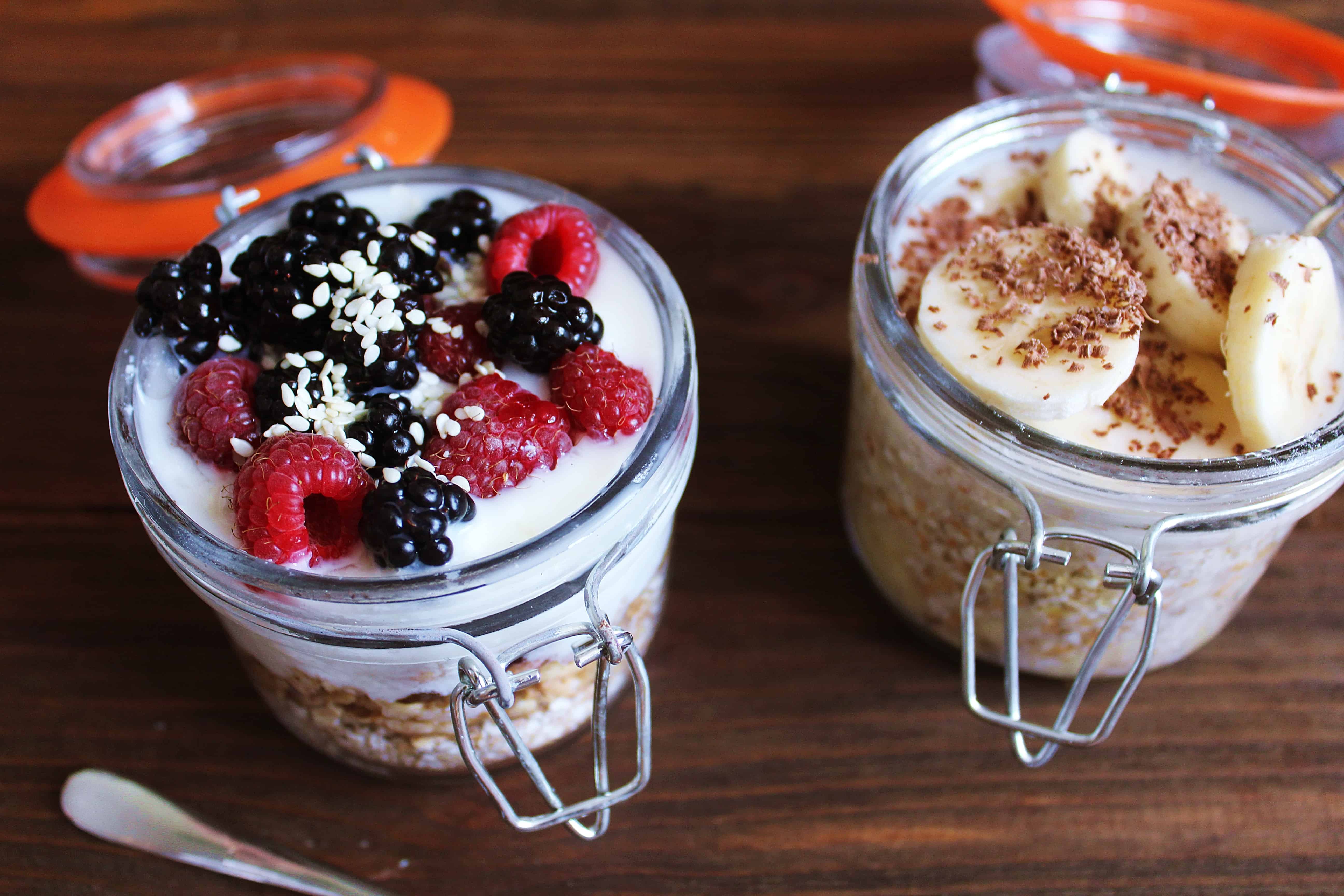
Cereal with Raspberry and Yogurt

When eating cereal, substitute yogurt for your milk to help conserve a few calories first thing in the morning. Place yogurt in a bowl and sprinkle cereal, nuts, fruit, chocolate chips, and a pinch of cinnamon on top for a delicious breakfast meal. If you are taking this with you on the road, keep the toppings separate from the yogurt until it is time to eat it to keep it from getting soggy.

Fluffy Parmesan Eggs

To make one of the delicious egg healthy breakfast recipes, first, preheat the oven to 450 degrees, and separate the egg whites from the yolks and place in individual small bowls. Using an electric mixer, beat the egg whites until they are the right consistency. Mix in the parmesan and scallions with a spatula and make four mounds of this mixture on a cookie sheet. Use a spoon to make a crater in the center of each mound and place in the oven for about three minutes. Take it out and place an egg yolk in the center of each mound and place in the oven for another 3-5 minutes or until they appear to be done.

Overnight Coconut Oatmeal

If you are looking for a quick and easy breakfast you can grab and go, try making overnight coconut oatmeal. At night, combine your oats, coconut milk, and salt and cover in a bowl. Refrigerate all night and in the morning, top with apricots or hazelnuts and enjoy! You can eat this either hot or cold depending on your preference.

Almond And Berry Smoothie

Healthy breakfast recipes don’t have to take hours upon hours to prepare. Sometimes, all it takes is throwing a few things in a blender, pushing a button and it’s ready to go. For this smoothie recipe, all you have to do is mix desired fruit (berries or bananas), almond milk, almonds, cinnamon and vanilla until it becomes a smooth consistency in a blender. Once it is fully blended, pour into a bowl or a cup and enjoy your breakfast on the go.

Omlet With Kale and Avocado

Healthy breakfast recipes can help make your diet stay on track and keep you on your path to losing weight. For this recipe, take 2-4 eggs in a bowl and beat them until the mixture is frothy, add salt and pepper for taste. In a skillet on low heat, warm olive oil and add egg mixture. You will cook the egg mixture until the bottom is set (the center will still be a tad runny), and then flip the omelet over to cook the other side. Once both sides are cooked and it is no longer runny, place the omelet on a plate. In a separate bowl, mix kale, olive oil, lime juice, cilantro, and sunflower seeds with salt and red pepper (if desired), and sprinkle on top of the egg omelet. For added nutrients and energy throughout the day, slice an avocado and place on top of kale mixture.

Protein Pancakes

To make your usual pancakes have more nutritional value, consider adding some protein powder to the mixture and you will get much more out of this delicious breakfast choice. If you want to make your pancakes even more hearty, add oatmeal as well and you will stay full longer and not be hungry throughout the morning hours. Building muscle with the use of protein powder will help you stay fit and strong as you are trying to lose weight.

Apple-Pumpkin Smoothie

In the fall when Starbucks releases their pumpkin spice latte, don’t fall for this fattening drink if you are on a mission for weight loss. Instead, make your own healthier alternative by adding almond milk, apples, pumpkin, Greek yogurt, ice, syrup, and pumpkin pie spice and mix it all in a blender. You will get your desired taste of fall without having all of the added calories that come with a Starbucks beverage.

Banana Chocolate Oatmeal

Another favorite of the healthy breakfast recipes is another alternative to morning oatmeal. Prepare your oats and simply top with chocolate-hazelnut spread and sliced banana. If you are wanting to prepare this breakfast the night before, combine your oats with water and cover in a refrigerator overnight. In the morning, all you have to do is add your toppings and enjoy either cold or warmed up.

healthy breakfast recipes

Eating healthy in the mornings is a great way to start your day off on the right foot and with these healthy breakfast recipes, you will experience weight loss with no problem, as long as you continue to eat healthy throughout the day and focus on exercise.

If you have a workout partner who could benefit from trying some of your recopies, share the love and tell them your secrets to help them be more successful in their diet and exercise routines. Having an accountability partner is a good idea to help you stay on track and make sure you don’t skip any meals, especially the most important meal of the day – breakfast.

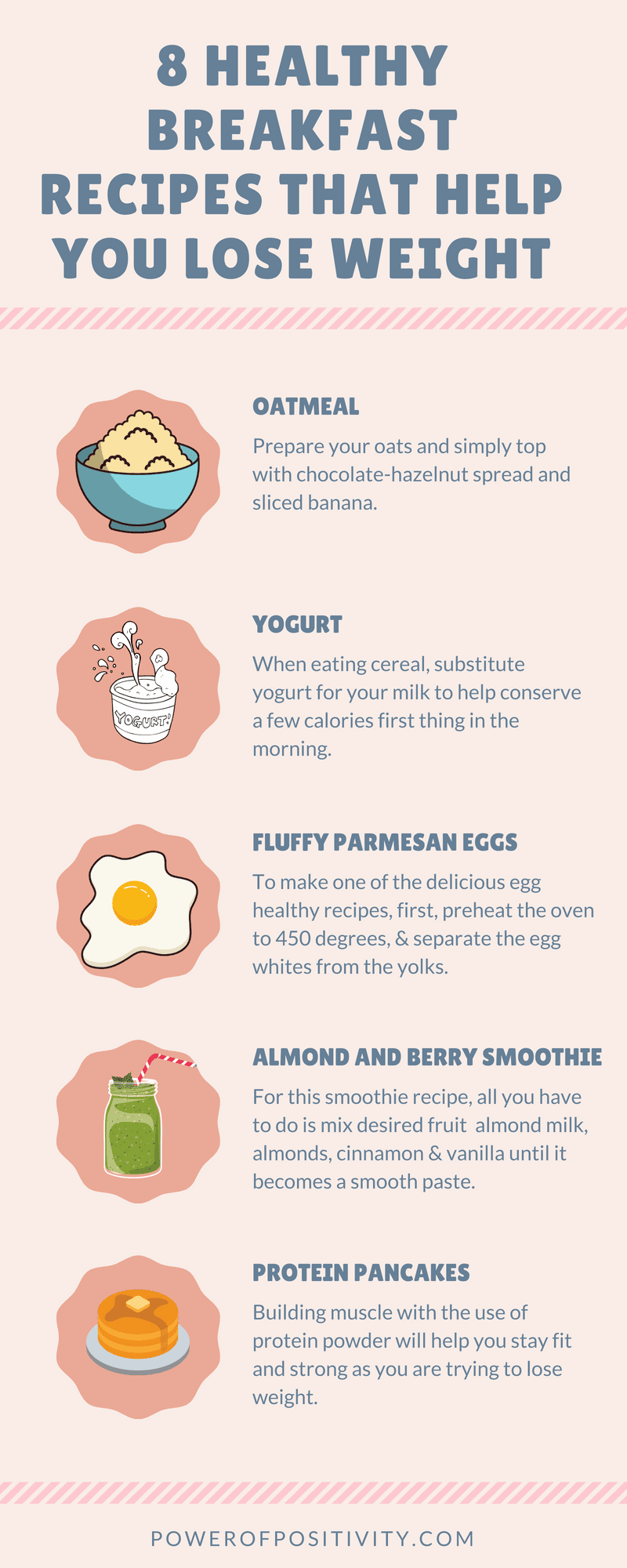
healthy breakfast recipes infographic

Share this Image On Your Site

5 Important Stretches For Anyone Over 40

The importance of doing stretches

Many of us think of stretching as a quick routine performed before working out. This perception is wrong.

“A lot of people don’t understand that stretching has to happen on a regular basis. It should be daily, “says David Nolan, a physical therapist at Massachusetts General Hospital.

Stretching our bodies becomes more important as we age since we’re more prone to aches and pains. The occasional ache or pain is nothing to worry about, but it’s still a good idea to stretch for keeping our body limber and feeling better.

Though this article focuses on five good stretching exercises for the 40-and-over crowd, we can all benefit from incorporating them into our daily routines. Perform each stretch 4-5 times per week.

“Stretching keeps the muscles flexible, strong, and healthy, and we need that flexibility to maintain a range of motion in the joints. Without it, the muscles shorten and become tight. Then, when you call on the muscles for activity, they are weak and unable to extend all the way.” – Harvard Health Publications

5 Stretches To Remember If You’re Over 40

1. Shoulder Rolls

stretches

Shoulder rolls, a straightforward exercise, helps maintain and increase the range of motion in your arms and upper back.

Rob Danoff, D.O., a physician and program director at Philadelphia’s Aria Health System, says, “(Shoulder rolls) help diffuse tension and open up your ribs for easier breathing.”

How: (a) Slowly and naturally roll your shoulders forward in big circles. (b) Perform 10 repetitions and then reverse the motion and do another 10 reps.

You don’t want to feel any trembling (shakiness) when doing the exercise; if you do, stop for the time being and try again tomorrow.

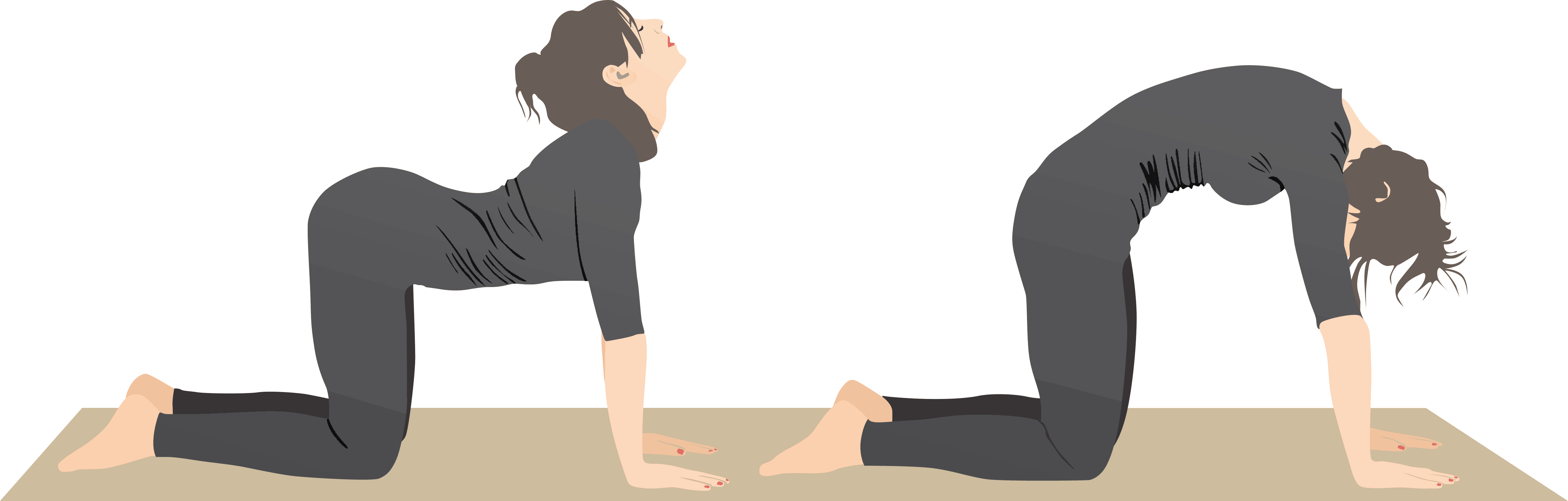
2. “Cat and Cow”

sciatica

Rachel Southard, a director of personal training, states that one of the most common complaints she hears from the 40-plus crowd is back pain. As we age, it is essential that we stretch the upper, mid, and lower sections of our back.

The Cat and Cow exercise helps create and maintain mobility of the spine. Southard explains the importance of spinal mobility, “We use our core muscles – which wrap around the truck and include the abdominals as well as the muscles in our (lower) back – all day long to sit up, walk, bend, and lift things.”

How:

(a) On the floor, (it may be more comfortable to use a mat) assume the “hands and knees” position, down on all fours. Square the shoulders with your hands and the knees with your hips.

(b) Push into the ground with your hands, pull your abdominals up and in, lowering your head [Like an upside-down ‘U’].

(c) Lift your chin and tailbone to the sky, creating an arch, while dropping your belly towards the floor.

(d) Assume the starting position and repeat 10 times.

3. Neck Stretches

Stretching the neck is crucial for increasing mobility and avoiding painful strains. Neck stretches also increase strength, release tension, and help maintain flexibility.

How:

Perform each two-part movement 5-10 times.

(a) Look straight ahead and square the shoulders.

(b) Slowly turn your head to the left as far as possible, keeping your shoulders square.

(c) Return to position (a) and perform the same movement on the right side.

(d) Hold position (a) and perform the same movement up and down (like a slow, dramatic head nod.)

(e) Hold position (a) then tilt your neck to the left side as far as possible. Reassume starting position and perform the same movement on the opposite side.

4. Hip Flexor Release

sciatic stretch

According to Ms. Southard, most of us neglect to stretch our hip flexors, the areas of the leg responsible for (you guessed it) extending the hips. Hip pain can be tremendously burdensome; neglecting our hips can lead to muscular degeneration, and may eventually require a hip replacement.

So, let’s stretch those hips!

How:

(a) Place your left knee on the floor (again, a mat may help) and move your right foot toward until you’re in a lunge position.

(b) Keeping your right foot flat, lower the left hip toward the floor until you feel a stretching in the flexor area. Hold this position for 30-60 seconds.

(c) Switch sides – the left foot in front and drop the right hip.

5. Quad Stretches

Quadriceps are the largest muscle in the leg – located at the top of the thighs. They’re also the strongest and leanest muscle in your legs; making them very important to stretch.

So let’s do it! Stand near something that you can hold to gain/regain your balance. You may also hold onto something if you wish.

How:

(a) Starting position is your upper body and head square; stomach muscles engaged.

(b) Maintaining position (a), lift your left leg back and grab the top of your right foot.

(c) Holding position, pull your foot up towards your bottom. Keep your knee down and pointed to the ground. Hold this position for 15-30 seconds.

(d) Switch and repeat the movement. Perform 3-5 times with each leg.

https://www.youtube.com/watch?v=EJ-lJUts83U

(C)Power of Positivity, LLC. All rights reserved
References:
Harvard University. (2013, September 1). The importance of stretching – Harvard Health. Retrieved from http://www.health.harvard.edu/staying-healthy/the-importance-of-stretching

Heid, M. (2016, June 23). 8 Best Stretches To Do If You’re Over 40 | Prevention. Retrieved from http://www.prevention.com/fitness/8-best-stretches-to-do-if-youre-over-40/slide/5
Rabbitt, M. (2017, July 10). Over 40? Do These 5 Stretches Every Week To Stay Ache-Free?: Pre-Workout Piriformis Roll | Prevention. Retrieved from http://www.prevention.com/fitness/5-stretches-you-should-do-if-over-40/slide/5

How to Teach Yourself to Be More Positive

Having negative thoughts is normal every once in a while. Sometimes, things can be stressful, and those negative thoughts can come creeping in your brain. However, the effect that a lack of positive thought combined with negative self-talk has on your overall mental health can be detrimental. Negativity can cause depression and anxiety, and leave you feeling lost and with a lack of motivation.

You may feel stuck in your life and unable to move forward or change your situation because you’re too used to filling your brain with negative self-talk. Words can have a profound impact on your mind and on your overall mental health. Negative words can make it hard for your neuro-chemicals that help prevent stress and regulate emotions to work properly.

Negative words can even overwork the fear center of your brain, which will cause an influx of stress hormones to overrun your body, making it more and more difficult to see the positive things in life. Changing the words you use inwardly – and outwardly – can train your brain to be more positive.

How Positive Words Can Help The Brain To Start Thinking Positively

“We can complain because rose bushes have thorns, or rejoice because thorns have roses.” – Alphonse Karr

THE IMPORTANCE OF POSITIVE WORDS

Using words that are correlated with positivity can help your brain function better with cognitive reasoning. They can also help strengthen your frontal lobes. When you use positive words, your motivation increases.

Rather than lamenting that something is difficult and that you don’t think you can overcome it, try instead saying, “This is a challenge and I will do my best.” This simple change in how you talk to yourself can kickstart your motivation and make it easier to overcome stressful challenges, and allows your brain to work better and come up with solutions that you might otherwise not be able to.

POSITIVE WORDS CAN CHANGE YOUR ENTIRE OUTLOOK AND PERCEPTION

Keeping positive words in mind, rather than negative ones, can change how you view other people. When you hold negative words in your head, you’re more likely to react to people with doubt and suspicion, since the fear part of your brain is more stimulated. On the other hand, when you focus on positive words, you become more likely to react to others with good faith.

positive

The words you use can change the way you perceive your reality. The next time you find yourself interacting with someone and you feel that they have bad intentions, but you’re not sure why, try looking at the situation with more positive words in mind. You may project your negative thoughts onto another person without you knowing it.

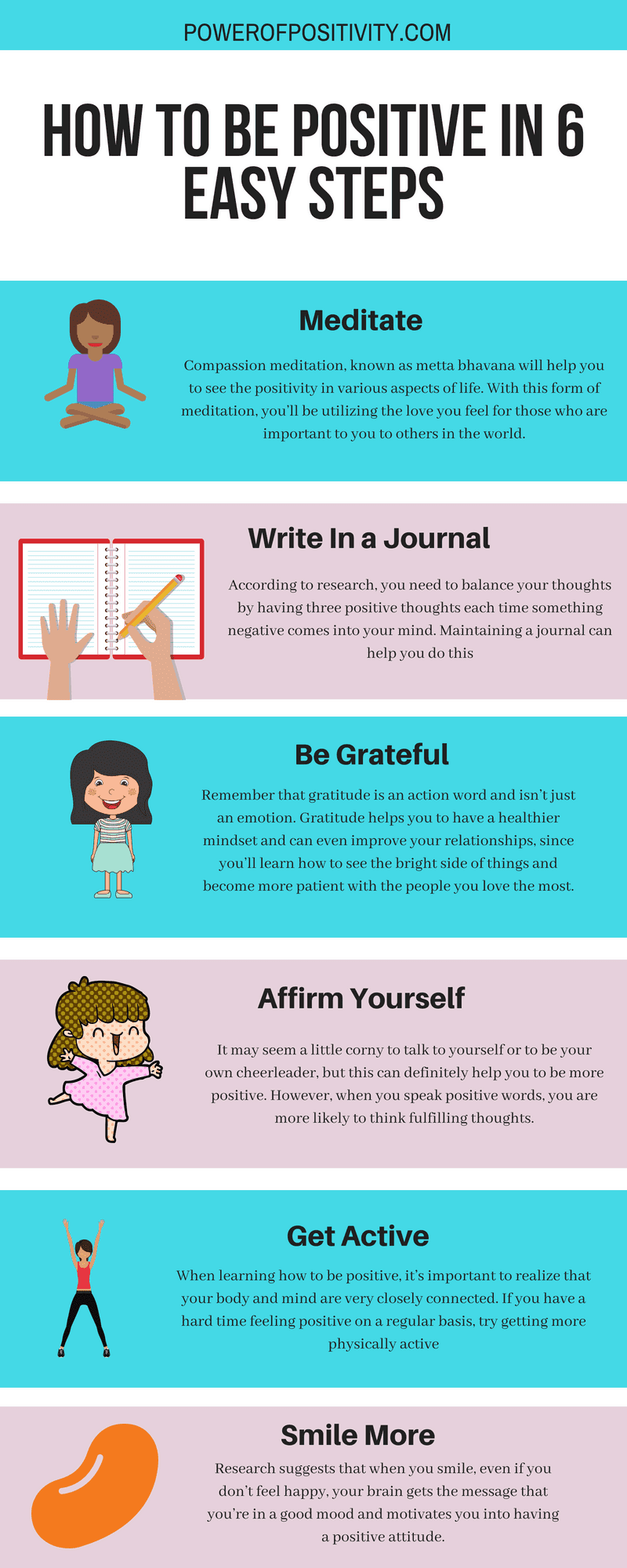
How to be positive in 6 easy steps

POSITIVE WORDS CAN ALLEVIATE ANXIETY AND DEPRESSION

When you allow negativity to cloud your mind, your mental health suffers. Focusing on negative words can make recovering from depression even harder. The symptoms of depression like lack of motivation, hopelessness and negative-self-image worsen if you allow yourself to indulge in negative words.

Being kind to yourself is one of the greatest ways to help combat the symptoms of depression and anxiety, and one of the best ways to do that is to start using positive words and affirmations when you self-talk. Using positive words over a prolonged length of time can increase your happiness, motivation and overall mental health.

Training your brain to use positive words can seem difficult, especially if you’re used to using negative words. Yet, doing something so simple as changing the words you use when you self-talk can have the most profound impact on your life. Try to keep track of how many negative words you use through the day. When you catch yourself thinking something negative about a situation or towards yourself, write it down and reflect on it at the end of the day.

Then, see how you can change the words into more positive ones that look towards a positive outlook, rather than dwelling on a bad or stressful situation. Turn each negative thought into a positive one just by changing the vocabulary you use. For example, instead of saying to yourself, “I don’t have the time to do this,” try saying, “I will rearrange my schedule and find the time to do this.” You’ll be amazed by how quickly your whole outlook begins to change when you train your brain into assessing a situation with a more constructive way.

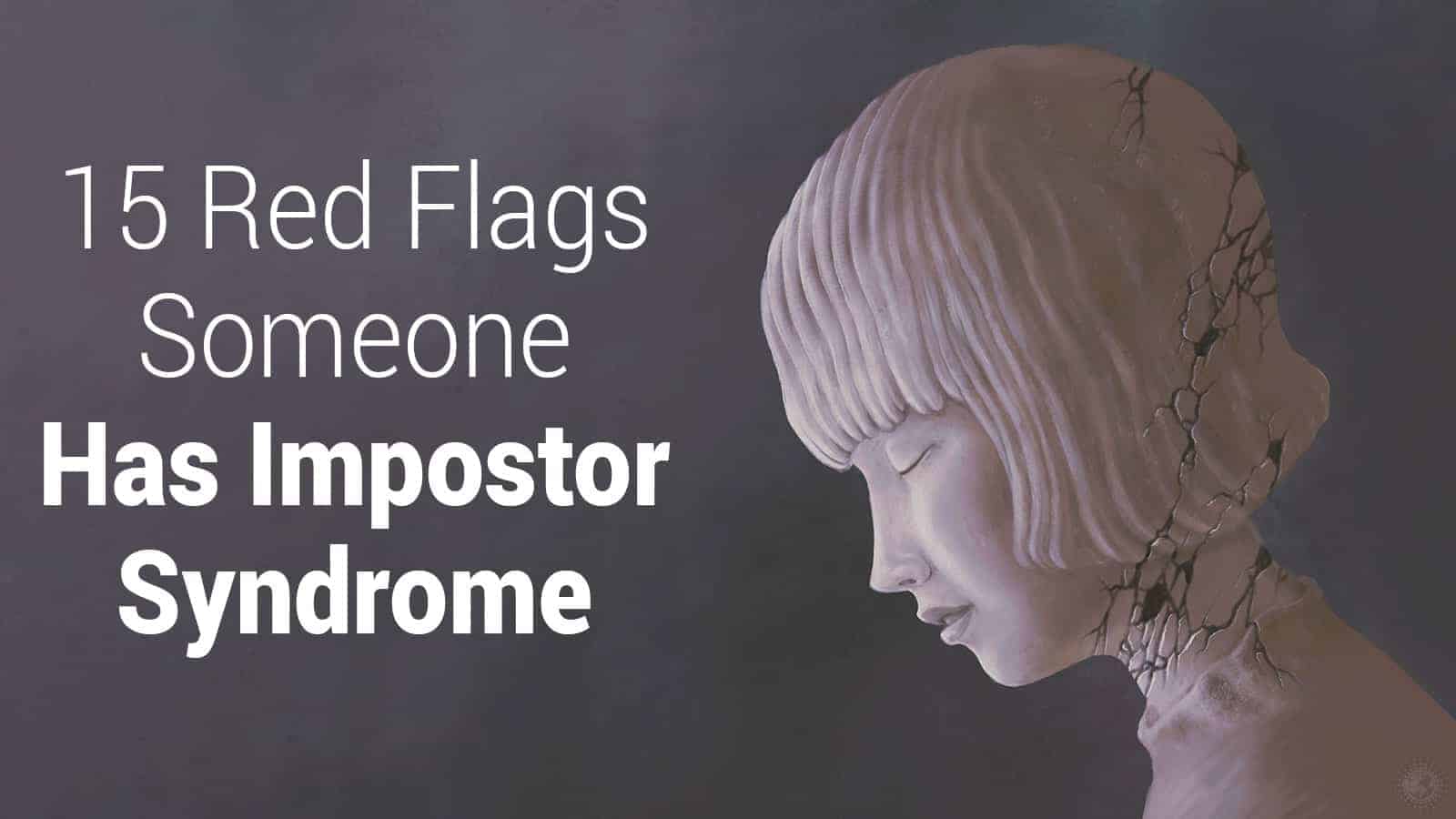
11 Signs You Have Impostor Syndrome

Impostor Syndrome may seem like just another buzzword in the media at the moment, but it is a very real condition that many people face daily. In our view-obsessed society, it might be time we consider Impostor Syndrome a little more carefully. So, what is Impostor Syndrome and what do you do if you have it?

“People who feel like impostors have unsustainably high self-expectations around competence. No one likes to fail, but impostors experience shame when they fail …” – Dr. Valerie Young

Here Are 11 Signs You Have Impostor Syndrome

impostor syndrome

1. You have difficulty accepting praise.

Though a lot of people aren’t great at accepting compliments, “impostors” struggle to internalize their success to the point that they can’t accept praise as valid. It’s not false modesty; they genuinely do not believe they deserve the credit they are being given.

2. You’re an over-worker.

Overworking is both an observed and self-perceived pattern of Impostor Syndrome. It is where a person tends to keep investing energy and effort into a project, long after the point where it would be more than acceptable to the average person. They often recognize this behavior in themselves, yet are unable to stop themselves.

3. You feel the need to be the best.

There is a reason Impostor Syndrome is often linked to overachievers. It’s due to the driving need to be the very best. Many people with Impostor Syndrome were high achievers from an early age and felt the heightened compulsion to excel as they progressed and came into contact with each new influx of smart and talented people.

4. You’re described as a perfectionist.

Along with the compulsion to be the very best, people with Impostor Syndrome often display traits referred to as “the superman/superwoman aspects” of their personality. They hold themselves to impossible standards of perfection – expecting themselves to accomplish any task they set their mind to in a flawless manner. If they don’t achieve this standard, it is considered failure, which proceeds to fuel these perfectionist tendencies.

5. The fear of failure can paralyze you.

Failure is not an option for those who struggle with this syndrome. They internalize failure, perpetuating the toxic cycle that controls every thought and action. It is quite common for someone with Impostor Syndrome to avoid trying something than possibly fail at it.

6. You avoid showing confidence.

More common in women with Impostor Syndrome, avoiding displays of confidence plays into an ingrained feeling of inadequacy. They might believe that by showing confidence, people will assume they are overcompensating. In other situations, they might feel they lack the intelligence and talent to back up confidence, so they rarely express confidence.

7. You actually dread success.

People with Impostor Syndrome experience the fear of failure in multiple ways. They’re anxious about success due to not feeling worthy of it. They have a sense of guilt about success as they recognize that their drive for it often pushes them away from friends and family. They are often unsure of success as whole because it may lead to more responsibility and progression, which they feel they don’t deserve in the first place.

8. You compare your struggles and obstacles to those of others.

Though it is normal for everyone to compare themselves to others on occasion, people with Impostor Syndrome have a persistent voice in their head telling them that everyone is getting by with fewer struggles in life. This leads them to believe there is something wrong with them, which only feeds the insecurities they have.

9. You associate praise with charm over actual talent.

While people with Impostor Syndrome tend to be highly intelligent and possess high levels of intuition, they rely on this to interact with other people, who generally find them charming. When this is used in professional scenarios, it is common for any praise received – from supervisors or other authority figures – to be perceived as due to their charm rather than any intelligence or talent the individual has demonstrated. This brings them to further doubt their own intelligence or abilities.

10. You focus more on what you haven’t done.

Because the standards those with Impostor Syndrome set for themselves are so high, they find it difficult to meet their goals and milestones according to their expectations. Because of this, they have a tendency not to dwell on what they have accomplished, which is often a great deal. Instead, they focus on what they haven’t achieved by their standards.

11. You’re convinced you aren’t enough.

Let’s get personal here. Probably the biggest sign that you have Impostor Syndrome is the persistent and overwhelming feeling that you are a fraud. That one day people will realize you aren’t everything they think you are. It’s the feeling that you aren’t as qualified as your peers or that you lucked yourself into your position.

Fortunately, there is good news about these negative, debilitating thoughts. Read on.

be positive

Here Are 4 Ways to Fix Impostor Syndrome

These signs may seem a bit direct and accusatory. But it is important to remember that Impostor Syndrome is incredibly common. Nearly everyone experiences high levels of self-doubt at some point during their lives. There are also a few things that you can do to help manage any feelings of insecurity you may be facing.

1. Acknowledge your thoughts.

Studies show strong links between Impostor Syndrome and Anxiety Disorders. For this reason, it is very important to acknowledge the “Impostor” thoughts as they happen. This will allow your brain a chance to recognize that it is just a thought and will enable you to be aware of the thought and choose to ignore it.

2. Share your experiences with others.

Talking with trusted friends, family, and colleagues can help to create a supportive environment and can help you find people who can relate to your current state of mind and situation.

3. Understand that other people are just as uncertain as you.

If you acknowledge that other people you perceive as successful have moments of self-doubt and uncertainty as well, it makes it easier to face the thoughts often associated with Impostor Syndrome. It makes you feel less alone.

4. Think positively about the effort you are putting into your projects.

Viewing your effort in projects as a positive thing can help to ease the feeling of being a fraud, as you are acknowledging the positive efforts you have in an undertaking or project.

Final thoughts

At the end of the day, Impostor Syndrome is a persistent and overwhelming feeling of self-doubt and lack of personal worth. It is important to remain positive in spite of these emotions and to acknowledge that, though you may not understand why others believe in you, others do believe in you – and they must have a reason. Impostor Syndrome is common for people to face at one or more points in their life, and with positive thinking, you will realize how important it is to not give up or let yourself feel alone.

Skip to content