Weekly tips, affirmations, and small actions to feel your best.

Don’t Get Married Unless You’ve Asked Your Partner These 15 Questions

Getting married is such a big decision, and your partner should have excellent and compatible answers to these fifteen questions before either of you says ‘I do.’ Knowing the whole truth about your partner’s medical, family, legal, and financial history is crucial, as well as how you two will handle future scenarios and avoid becoming a divorce statistic.

The current divorce rate in the United States is between 40-50%, but that rate has been declining since 1996. Communication, cooperation, and commitment are all essential for making a marriage work, but knowing yourselves is crucial also.

Here are fifteen conversational questions to ask your partner that might make a difference before you two get married. Don’t avoid these questions or you might wish you had asked them before it was too late.

Don’t Get Married Unless You’ve Asked Your Partner These 15 Questions

before getting married

1. How will we handle a future major move that affects both of us?

It could be a fantastic job offer that makes your partner want to move to Cleveland, but your partner may be going alone if you aren’t on board. Figure out ahead of time what your comfort level is with this type of major change. If your partner would move for you, you must be willing to move for them.

2. Do we feel compatible about our spiritual beliefs and the beliefs of our family?

No one wants to rock the boat regarding long-held family spiritual beliefs. If your partner expects that you will have a religious wedding ceremony and will be raising your children in their faith, make sure you feel comfortable with that as well.

3. How will we handle a major medical crisis for ourselves or family members?

Do we plan to take care of family members in our homes as they age or do we need a financial plan to keep them in assisted living?

4. Do we have any genetic illnesses that could be passed on to children?

Sickle cell disease, hemophilia, cancer, and other genetic illnesses run in families. Know your level of risk and the risk to your future children for illnesses from either side of the family. How would you care for a child that was born with a severe disability?

5. How do we balance holiday and special occasion time with both families and also make sure to have special time for us?

Holidays can be very stressful, and no matter what you celebrate, your parents and your partner’s parents both want your time. But what about you two, and your own new family? Deciding how to split your time so everyone’s needs are met can be challenging.

6. What are we both working on changing about ourselves to be better people?

What don’t you like about yourself and want to improve on?

7. Where do we see ourselves in 5, 10, 15, or 50 years? Would our plans be any different if we weren’t marrying?

You don’t want to find out later that your partner has always wanted to join the circus but passed on a chance to live their dream to be with you. This sort of unfulfilled fantasy can create tension in a marriage.

8. Do we feel confident that we can make each other laugh?

Joy helps ease many daily tensions. Make sure you can laugh, even during a crisis.

9. What are our current frustrations with each other, and can we fix them? Why have these not been communicated before now?

Why wait for an argument? Ask our partner what they dislike about your behavior now and find a way to help make them feel like you are respecting their preferences. Make sure that you are willing to give, receive, and apply feedback from each other.

10. How do we plan to commit to making our passion last?

Losing the spark would be awful. What can you commit to ensuring that sex is a priority in your marriage even 40 years from now? Read our guide about the key things that kill the flame in relationships for more insight on what not to do.

11. Would you be open to talking to a marriage counselor if we had a problem that we could not resolve?

In a study of couples who were currently seeking counseling, wives were more likely to seek out counseling while husbands were more reluctant to get help. Willingness to seek help when you have irreconcilable differences is essential.

12. Do you think that problems in the relationship are due more to things inside or outside the relationship?

This question reveals if your partner thinks that they have things within their own power that they can do to improve things. Having an ‘internal locus of control’ is a key trait for problem solvers and positive thinkers. The opposite is an external locus of control, which is the sense that life happens to you, not something you are an active player in.

A study of romantic commitment and locus of control showed that women who internalized their sense of control had deeper and more committed romantic relationships than people who see life as a series of outside events happening to them. People who internalize control believe that they, themselves, have the power to act to fix a problem rather than blame another person.

13. How did you change your behavior based on past failed relationships?

Most of us have had failed relationships before we married. Find out what your partner learned from that experience and how they changed their behavior as a result.

14. What are your financial obligations and goals?

Are you starting out in debt like many couples do or are you ready to invest for your future? What steps do you need to take to make sure that financial emergencies are covered?

before getting married

15. Do we feel able to completely trust in each other’s commitment to marriage?

Trust is the secret to a secure, loving, and profoundly committed marriage. Trust is earned based on words and actions. Ask yourselves this question and then ask your partner if they have any reservations about trust.

You can read more about what might prevent you from marrying in our article here.
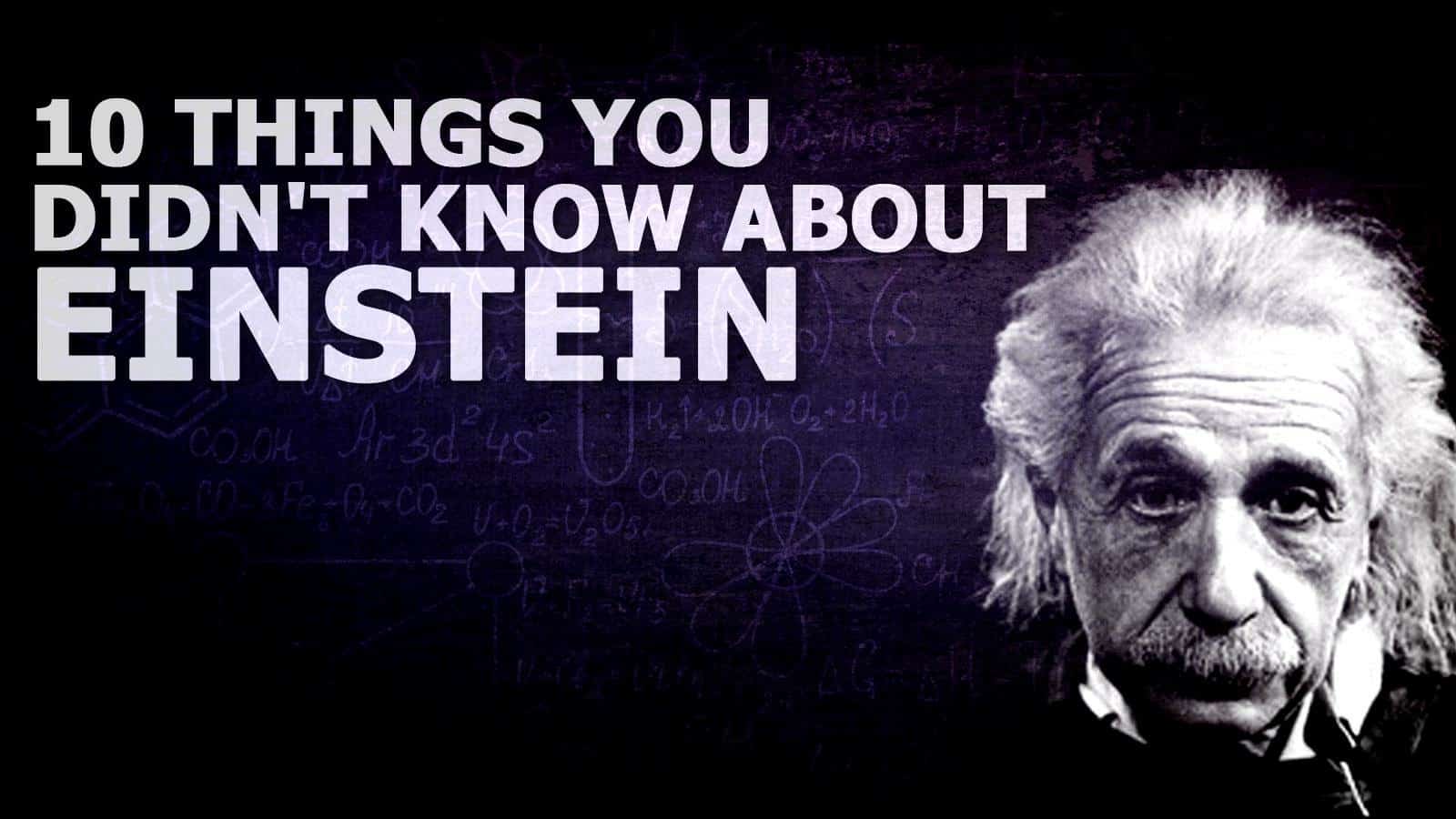
10 Things You Didn’t Know About Einstein

“A question that drives me hazy: am I or the others crazy?” -Albert Einstein

Photographer Arthur Sasse attempted to persuade Einstein to smile for the camera on his 72nd birthday. Instead, the prominent genius playfully stuck out his tongue. This one snapshot personified Einstein in a way that nothing could – a revelatory intellectual that never took himself too seriously. The photograph revealed Einstein’s humanity. The image remains a reminder to us all that we live a better life when we take things in stride.

There are things we know for certain about Einstein:  his genius, theory of relativity (e = mc 2) and unparalleled impact on science amongst them. But Albert Einstein was no lab rat in a white jacket fumbling with beakers – he was far more interesting. In fact, some may find little-known facts about the great physicist more compelling than his actual work. Above all else, these factoids pertaining to the life of this genius reveal a deep-thinking, but very real, very human life.

Here are 10 things you didn’t know about Albert Einstein:

einstein

1. He didn’t begin speaking until well into childhood

Today, we infer much about a child’s intelligence relative to how early he or she begins to speak. Some correlation does exist between verbal acuity at a young age and intellect, but not in Einstein’s case.

Einstein didn’t actually begin speaking uninhibitedly until age 7, which is much later than normal. This fact, in conjunction with some of his traits – his single-minded focus on physics, implementation of routines and music talent – has led to the hypothesis that Einstein perhaps had Asperger’s syndrome. Some have vehemently argued against this theory, instead of believing that Einstein was a non-autistic that displayed giftedness in other areas.

2. His brain was stolen

Einstein was a genius that refused to be idolized. That became evident in his instructions that he did not want his brain to be studied. Instead, he wished for his body to be cremated and his ashes scattered.

A Princeton professor by the name of Thomas Harvey didn’t get the message. On April 18, 1955, Harvey took possession of Einstein’s brain without permission. For this treacherous and disrespectful act, Princeton University fired Professor Harvey.

3. He was offered the presidency

Okay, not of the United States, but it’s still impressive. After the first President of Israel Chaim Weizmann died on November 9, 1952, Einstein was invited to accept the position. Of course, one can only imagine what Einstein’s initial reaction was, but he unsurprisingly declined.

In his refusal letter, Einstein’s humility was apparent, citing his lack of natural aptitude for the position and incompatible ways of dealing with people. Not to mention, he was getting old – he received the offer at 73.

4. His relationships were odd and tumultuous

Perhaps nothing reveals Einstein’s quirky shortcomings more than his relationships. His written letters demonstrate that he was quite the philanderer. He engaged in several extramarital affairs and even had a relationship with his cousin Elsa. Although he eventually married her, Einstein also considered matrimony with Elsa’s daughter.

Sadly, Einstein also became involuntarily estranged from his own sons, one of whom suffered from schizophrenia. In an act of atonement, Einstein gave all of his Nobel Prize money in a divorce settlement.

5. He loved to smoke

There’s a reason many of Einstein’s pictures show a wily-haired man with a pipe dangling from his mouth – he enjoyed smoking. Not only did he enjoy smoking, but he also attributed the habit to assisting him in his work, once saying: “I believe that pipe smoking contributes to a somewhat calm and objective judgment in all human affairs.”

His doctor rebutted his attitude towards smoking was (unsurprisingly). Indeed, the physician tried to get him to quit altogether. The doctor (again, unsurprisingly) was unsuccessful in his efforts.

6. He literally changed science in one year

Apparently, there are Einstein’s New Year’s resolutions and everyone else’s. In 1905, he published a series of four papers that consequently turned the scientific community on their respective ear. These papers contained groundbreaking new insights that rebutted then-accepted views on energy, mass, time and space.

Despite this, Einstein faced constant rejection from academic posts after graduation. This becomes less mystifying when considering Einstein’s hilariously impulsive act: he requested a letter of recommendation from a professor whose classes he routinely skipped.

7. He was held hostage only to mediate it

A group of radical students at the University of Berlin took a number of professors hostage. Einstein and Max Born, another renowned scientist, decided not to let the German police handle the situation.

While the details are rather unclear, we know that the two scientists were well-respected among the students. This respect may have given Einstein and Born enough leverage to ultimately secure the staff’s release.

8. He co-designed a refrigerator

Together with Hungarian physicist Leo Szilard, Einstein patented a design for a refrigerator in 1930. At that time, electrical refrigerators in use leaked volatile and unhealthy chemicals. Recognizing this, the two men designed an absorption refrigerator – one that required only ammonia, butane, and water – as an alternative.

The Swedish appliance company Electrolux eventually purchased Szilard and Einstein’s patents.

9. He loved to sail

Einstein did some of his best thinking when alone with his thoughts. He discovered his deep passion for sailing while a student at Polytechnic Institute in Zurich, Switzerland. This is rather unsurprising, as Einstein despised school. In fact, he once stated,  “It is, in fact, nothing short of a miracle that the modern methods of education have not yet entirely strangled the holy curiosity of inquiry…”

In later years, Einstein wearied of his stuffy office and ventured out on the water despite not knowing how to swim.

10. He landed on Adolf Hitler’s “wanted list”

Adolf Hitler’s Nazi regime despised Einstein’s popularity in the United States. This embarrassment was amplified through the scientist’s momentous impact on the scientific community. Nazis were attempting to propagandize the inferiority of Jews, and Einstein’s work was a clear rebuttal of that concept.

In a fury, Hitler offered a $5,000 bounty on Einstein and ordering that all of his books in Germany burned. The ignorant, fanatical tyrant also ordered the burning of many other prominent Jewish works.

Here’s Why You Should Use Baking Soda Every Day

sOne of the most overlooked beneficial products in your household is the boring baking soda box, but we have several excellent reasons why you should make use of it every day. You don’t have to be a baker to use baking soda and although it’s great for household cleaning and odor removal, we are just going to cover the health benefits of baking soda.

Baking soda, or sodium bicarbonate, is a natural mineral often found in mineral spring water. Baking soda is also found naturally in the mineral natron, and was used by the Egyptians. The mineral natrol can be found in areas that once had sea beds and salt lakes.

Let’s look at the reasons why you should use baking soda every day.

Here’s Why You Should Use Baking Soda Every Day

The most common use of baking soda is, of course, in baking. Baking soda gives bread a light and fluffy texture because it produces bubbles that stay in the dough as it bakes. As most know, baking soda will react with the other ingredients in the recipe to produce bubbles and create a rising action.

Baking soda is alkaline, which means that it can be used to reduce the pH of something that is acidic. When taken internally, baking soda changes the body pH balance to make it less acidic and more alkaline. The natural pH of the body is alkaline, between a 7.35 and 7.45. Stomach acid is naturally more acidic and is around a 3.5 pH.

For example, when you have excess stomach acid from eating a rich meal, drinking baking soda dissolved in water can help reduce the pH of the hydrochloric acid and help relieve heartburn. However, the acid in the stomach is necessary to help break down food for digestion.

When looking for home remedies for health problems, remember to consult with your medical professional to see what holistic health options are available to you. Your doctor will know if baking soda as a remedy will interact with any of your other treatments or if it is a good option for you.

Every day uses for baking soda

Never take baking soda in its dry form, so you should dissolve it thoroughly in water before using it as a drink. You can use the following baking soda remedies every day.

Antacid

Gas relief

Mouthwash

Dry mouth rinse

Toothpaste

Tooth whitening

Body scrub

Foot soak

Acne treatment

Anti-itch cream

Fingernail whitening

Treat urinary tract infection

Cold and flu prevention and remedy

Muscle pain relief

The sodium bicarbonate in baking soda acts just like most over the counter antacid remedies. Just like brand name antacids, baking soda works to relieve heartburn and stomachache.

By adding a base to the acid of the stomach, pH is lowered which helps the digestive system when too much acid is in the stomach. You can read more about other healthy to treat heartburn in our article 10 Ways to Stop Heartburn.

Drinking a half-teaspoon of baking soda per day dissolved in water is good for antacid, gas relief, muscle pain, treating a urinary tract infection, and as a cold and flu remedy. You can drink this up to 6 times per day or until you have relief.

For mouthwash and rinsing, you can use more baking soda in the water because you will not swallow it. For the other every day baking soda remedies, make a paste with very little water and a good amount of baking soda and apply to the area that needs treatment.

Science proves that baking soda can kill staph bacteria

In a study of the use of baking soda to kill staph and other types of bacteria, baking soda showed that it had significant ability to kill bacteria. When baking soda was combined with a foaming product and applied to the bacteria, even for a short amount of time, the bacteria could not survive. Researchers found that baking soda caused statistically significant decreases in numbers of staph bacteria cells and they recommend the use of oral health care products with high concentrations of baking soda.

Other surprising uses for baking soda

Baking soda is used by some women who specifically want to conceive a male child. Using a baking soda and water douche changes the pH of the cervical mucus, and can create a more favorable environment for sperm that carry the male chromosome. Although some couples use this rinse for family planning, regular use of a baking soda wash is unnecessary. That’s because the body cleanses itself naturally.

Baking soda can be used as a treatment for hyperchloremic metabolic acidosis as in uncontrolled diabetes, renal, pancreatic, and gastrointestinal diseases. Gout sufferers have reportedly used baking soda to help decrease uric acid levels, which brings on gout attacks. This remedy to treat gout is believed to have been used by Queen Victoria at the recommendation of her doctor.

The ONE Diet That Doesn’t Focus on Losing Weight

“The elimination diet: Remove anger, regret, resentment, guilt, blame, and worry. Then watch your health, and life, improve.” – Charles F. Glassman

This quote fully encapsulates Dr. Charles Glassman’s total wellness philosophy – namely that seeking inner power and peace serves as a precursor to many other benefits of the mind and body.

As opposed to sticking with the traditional “diagnose, treat and repeat” cycle of traditional medicine, Dr. Glassman goes beyond this with special emphasis on self-awareness and personal action. Five years ago, Dr. Glassman founded the New York Center for Longevity and Wellness – a medical practice dedicated to treating patients with a comprehensive approach to mind/body wellness and conventional medicine.

Dr. Glassman frames the practice of self-awareness as a necessity when it comes to well-being. In essence, Glassman associates many of the problems that we currently face – mental, physical, and emotional – with the automatic responses generated by our very brains. In managing these automatic responses, it becomes possible to understand and control mind/body connections and, hence, our health.

Of all of Glassman’s philosophies on health, the greatest amount of emphasis may be placed on preventative care. As Glassman says, “My goal is to prevent illness and to practice healthcare rather than focus on “sick care.” Accomplishing this, Glassman believes, requires managing the everyday challenges of life; hence, balancing stress and maintaining strong optimism.

Simply put, we must properly use our minds to heal our bodies and eat a proper diet.

In his book Brain Drain – The Breakthrough That Will Change Your Life, Dr. Glassman explains exactly how to do that. Using case studies of clients, Glassman teaches his readers how to handle situations trigged by automatic brain responses to achieve health.

It is beyond the scope of this article to analyze and summarize Dr. Glassman’s book for practical use. However, the tenets he uses in his treatment methods are quite straightforward and understandable.

Glassman summarizes the problem with the automatic brain (termed “AB”): “Our AB has one function – to protect us from danger, threat, or vulnerability. When it detects such, it releases an electrochemical response that we know as the fight or flight response. But this reaction is not simply getting you scared. This AB reaction leads up into behaviors and emotions that sometimes show up as fear, anger, rage, or even sadness, depression and withdraw.

In other words, our AB can use the innate “fight or flight” response to manifest harmful and counter-productive thoughts. These thoughts are the enemy and the reason for ill health of any kind. Further, these thoughts are why we fail to achieve any worthwhile endeavor. These thoughts are why life is “bad” at times.

Dr. Glassman suggests that it’s not only unnecessary to control thoughts, but it’s also nearly impossible. Unless one happens to be a Buddhist monk or meditative sage, there has to be another way…and there is.

Dr. Glassman lays out seven steps to help us gain more control over our thoughts–and our diet:

  1. Do not believe everything you think.
  2. Understand that unwanted thoughts always arise to protect you (the “fight or flight” mechanism).
  3. Try to identify the circumstance that caused the thought.
  4. Realize that the circumstance is unlikely to be dangerous at all.
  5. Don’t fight the thoughts. It is more normal to get negative thoughts than not.
  6. Recite in your mind, “There is no danger, there is no threat, I am safe,” whenever getting these thoughts.
  7. If you get a negative thought that is particularly hurtful, finish it off.

For instance, if you get a thought that says, “I’m a loser.” Finish it by saying in your mind, “Yes, I am a loser. I am a loser if I play a game I know nothing about. But since my life is not a game and I play by my own rules I am a winner.”

If this sounds familiar to mindfulness meditation, that’s because it is. It’s about being mindful that our thoughts are not always our own. In realizing that our automatic brain will sometimes act erratically due to the still-primitive nature of our “lizard brain,” we can anticipate and respond to the thoughts that attempt to defeat us.

Finally, Dr. Glassman has the following diet advice: “I suggest you don’t try to control your thoughts. Follow these steps, and it will help you accept them, but more importantly, help you so you do not always believe, trust, or take direction from them. Doing so will elevate your health, and peace of mind, and “live your everyday extraordinary!”

New Research Reveals You Only Have Four Emotions, Not Six

No matter how many emotions you can name off the top of your head, new research says that there are really only four. When we think of emotions like jealousy, frustration, anxiety and surprise, we are giving names to subtle difference that exist on top of the four basic emotions that we all share in common.

So why does it matter how many emotions we have? Emotions affect our thoughts and our thoughts reveal much about the inner workings of our minds, be they psychologically healthy or unhealthy for us.

If we can change our thoughts in response to our emotions, we can control the impact that our emotions have on us, and possibly help heal mental and physical illnesses that manifest within ourselves. Our emotions affect our thoughts about ourselves and our world, and emotions may also affect our memories.

People who choose to live positively need to know a lot about their emotional states. David Brooks of the New York Times writes about the thought research done by Nobel prize winning economist and psychologist Daniel Kahneman and his partner Amos Tversky that “Our biases frequently cause us to want the wrong things. Our perceptions and memories are slippery, especially about our own mental states. Our free will is bounded. We have much less control over ourselves than we thought.”

In 1901 Sigmund Freud, the father of modern psychology, wrote his book The Psychopathology of Everyday Life. Freud hypothesized that forgetting a memory is a result of an emotional conflict rather than a mistake. When you have a large amount of anger and are unable to express it, it is possible that you suppress or repress the memory that occurred.

Why New Research Says You Only Have Four Emotions

Previously, the scientific community had agreed on six basic human emotions: happy, surprised, afraid, disgusted, angry, and sad. Now, they believe that two of these emotions can be eliminated.

What are the four basic emotions?

Some emotion pairs have more in common than you might think, which is why the new research by a team at the Institute of Neuroscience and Psychology at the University of Glasgow says that we only have four emotions after all. For example, you can see how the emotion of surprise is close to the emotion of fear. When you are surprised, there is a startle response that is basically a fear reaction to something unexpected that happened.

Recent research has come to the conclusion that no matter how many words for emotions that you can think of, there are really only four. Feeling bored is just another word for feeling sadness. Frustration is just another word for anger. Anxiety is just another word for fear, and creative is just another word for happiness. Sadness, Fear, Anger and Happiness are the four emotion categories that researchers have identified.

The same is true for the emotion disgust, which means that you reject something that is unlike yourself. According to researchers, the emotion disgust is closer to anger and is similar to what happens when we dehumanize others. Psychcentral.com says ‘those engaging in dehumanization are usually part of a cohesive group acting against outsiders ‘that is, individuals who feel socially connected may have an increased tendency toward dehumanization.’

Researchers believe that the emotion of disgust, which is basically the same facial expression as anger, but with a wrinkled nose, may be an adaptation in “response to “stationary danger,” such as pathogens, by ‘wrinkling your nose, you may be less likely to breathe in something harmful.”

Although researchers may have identified disgust as a related emotion to anger, it is possible that it is related to fear as well. The wrinkled nose often happens in response to a stimulus that surprises us but that we dislike, like a sudden odor of fish.

Failing to recognize and cope with emotions can be the reason for a relationship failure. You may have already read our article about the warning signs of an emotionally abusive relationship, and if you are concerned about your emotions or a partner’s emotions, it is a great idea to seek out counseling.

Emotions in animals

Animals seem to experience emotion just like humans do, or at least we assign emotions to their behavior as we see it. This tendency to assign human traits to animals is called anthropomorphism. We see a puppy with its mouth open wide, teeth showing and tongue hanging out and a wagging tail and we say that the puppy is happy.

Some people believe that we assign human emotions to animals because we like them and we tend to like things that are similar to ourselves. However, research with mice revealed that the animals have a repetitive squeaking pattern that is similar to human laughter while they are playing with and tickling each other.

5 Signs You’ve Discovered Your Gift To The World

It’s always challenging to find our purpose in life. Since the beginning of time, our quest for existence has been guided by the existential question, “What is the meaning of life?” We all have amazing abilities and skills that are fueled by internal fire and passion. Those “gifts” are usually seen by others and rarely by ourselves, even when they move us to create from a place of strength and purpose. When we follow our gifts, life opens up and allows abundance, joy, and health. As Oprah says, “If you are here breathing, you have a contribution to make.”

Here are five signs you’ve discovered your unique gift to the world:

gift

1. You ache for something more and take risks into the unknown.

A passion comes from within that pushes you to want to help others. Seeing someone else happy through your creation or healing energizes you to continue doing what you are doing. You find fulfillment in the simple things that bring you joy. You are not asking the “why’s” and “how’s” because you are doing what you were created to do.

Each man had only one genuine vocation – to find the way to himself….His task was to discover his own destiny – not an arbitrary one – and to live it out wholly and resolutely within himself. Everything else was only a would-be existence, an attempt at evasion, a flight back to the ideals of the masses, conformity and fear of one’s own inwardness.” ~ Hermann Hesse

2. You find teachers and mentors who show you the path.

As the Buddhist proverb says, “When the student is ready, the teacher appears.” As you begin using and utilizing your gifts, people show up to support you and teach you in the areas you need to enhance. One mentor at a time.

3. Time slips away.

Following your life’s purpose while living a life of passion does something to the element of time. It disappears. You don’t count the days. You don’t obsess over the mundane events that time dictates. Time is a backdrop, but its needs of it do not fuel you. The days are longer, and you lose track of them.

4. You are guided by synchronicity and serendipitous moments.

Events show up. Opportunities appear out of nowhere. You begin to see signs all around you. Often times doing what you fear the most is exactly what fate is providing for you to travel down the path of your purpose.

I do believe in an everyday sort of magic — the inexplicable connectedness we sometimes experience with places, people, works of art and the like; the eerie appropriateness of moments of synchronicity; the whispered voice, the hidden presence, when we think we’re alone.” ~ Charles de Lint

gift

5. You find clarity in what you do.

You realize that your purpose in life is not about “getting” but mostly about “giving.” In many cases, when someone starts living their authentic life, materialism is no longer important. And, because it loses focus, abundance happens in all areas of your life: health, wealth, and spirituality. You live for less while having more. You are moved by intuition rather than a logical perspective in life. The Austrian psychiatrist and author Viktor E. Frankl best expressed living a life of purpose:

Ultimately, man should not ask what the meaning of his life is, but rather must recognize that it is he who is asked. In a word, each man is questioned by life; and he can only answer to life by answering for his own life; to life he can only respond by being responsible.” ~ from his book Man’s Search for Meaning.

Living your gifts in the world requires bravery of authenticity. It expects vulnerability and humility for guidance to rise to every opportunity. You let go of fear and step into the unknown. You are confident with your decisions. Indeed, you wholeheartedly believe that every step you take is held by something powerful that will continue guiding you every step of the way. And it’s in that power that passion ignites, and you live with a joyous heart opened to give and receive.

6 Telling Signs The Spirit World Is Trying To Contact You

Do you ever have a feeling of being watched when no one is around? Do you automatically get a message inside of your head and you know it’s not coming from you, but from a different world? There are several ways that the spirit world can try to get your attention, whether it’s from loved ones who have passed on or your spirit guides.

Here are 6 telling signs the spirit world is trying to contact you:

Do you see any of these signs?

1. You have vivid dreams and/or visions during meditation.

The spirit world will convey messages through dreams. They will also give us mini-movies during meditation when we let go of the chit chatter and open up consciousness to receive without static. They will create scenarios, or provide archetypes to get our attention. When you sleep, you are aligning with the spirit world. All your beliefs come down and you become more receptive to the other realms. Spirits will share things with you. All you have to do is ask deliberately before sleeping or meditating.

“The spirit world is able to get through to you easily when your mind is still and clear. Meditation is often referred to as ‘sitting in the silence. Whenever you want to reach Spirit from this side of life, start by sitting in the silence.” ~ James Van Praagh

spirit world

2. Your senses are enhanced when the spirit world is trying to reach you.

Spirits communicate through smell, touch, taste, vision and sound. They can cling to your olfactory senses by letting you smell a flower or herb. They can cause a ringing in your ear as to let you know they are near you. When tones travel different dimensions, they come into our ears with high-pitched sounds. They can use your peripheral vision to show themselves through shadows. It’s in these moments that make no sense that the spirit world is touching you. Stay open and watch the miracles unfold.

3. Electronics start to act up.

Spirits will use lights and other electrical components to let you know they are nearby. We are made of matter; electricity is a conduit for them to charge up. They will turn off lamps, raise the volume on the radio, and change channels. They will also locate a special song that lets you know who is with you. Computers stop working, even a car won’t start…until they get your attention.

Remember that although bodies may pass away, the energy that connects you to a loved one is everlasting and can always be felt when you’re open to receiving it.” ~ Doreen Virtue

4. You have an unexplained knowing when you are attuned to the spirit world.

Have you ever had a definite knowing of sorts, and you don’t know why that thought popped into your head? That’s your spirit guides and loved ones. They use telepathy to communicate with us. Listen to that small voice that whispers at you, nudging you to do something, and follow your gut. That “knowing” is a deep inkling from the spirit world guiding you towards something magical. Whenever you ask for guidance, always wait for that small voice that lets you know what you need to do.

5. Goosebumps and chills appear often.

When you are aligned with spirit, body temperature changes. You get that cold chill that leads into goosebumps. Have you ever been talking about a deceased loved one and immediately got goosebumps? That’s them letting you know that they are with you. After all, we are spiritual beings having a human experience. Connection to the spirit world is home. Those goosebumps are simple reminders that this world and the spirit world are multidimensional.

spirit world

6. You are guided by synchronicity.

Have you ever had a moment when you were thinking of something and the bumper sticker on a car at a red light gave you the answer? That’s spirit at it’s keenest. Every opportunity that shows up is a stepping stone to look deeper into your existence. Coincidences are signs from the other side that assure you’re on the right track. These little nudges are part of the Universal GPS system.

“We do not create our destiny; we participate in its unfolding. Synchronicity works as a catalyst toward the working out of that destiny.” David RichoThe Power of Coincidence: How Life Shows Us What We Need to Know

There is not separation in our realms. We are all united in one way or another. The spirit world will guide you if you are open to receive the messages. The more you meditate, create, let go and love, the easier it is for your guides to communicate with you. Gratitude is a huge payoff for all their assistance. Always count your blessings at the end of your day and remember that you are never alone.

5 Ways To Find Yourself When You Feel Lost

Sometimes, you have to lose yourself somewhere along the way to find yourself. You might feel confident and content with your path one day but feel lost, confused, and conflicted. The path to the top might look clear one day, but it can easily slip out of view depending on what circumstances you face. All of us have different ways of approaching life, and what makes us feel happy can change drastically from moment to moment. Don’t beat yourself up if you don’t know which direction to turn sometimes – this is just a normal part of life.

However, you can pull yourself out of the trenches and find your way back to the light again whenever you feel lost in life.

10 Signs You Feel Lost in Life

Do you see any of these signs?

1.     You Feel Hopeless Most of the Time.

If you’re feeling lost, you probably don’t have much hope for the future. You may look around and feel exasperated about the state of the world, leaving you mentally paralyzed. If you knew your purpose, you could quickly achieve great things. However, lost souls wander to discover their calling in life, and if they haven’t found it, they start to become desperate.

The toll of daily living could also make you feel hopeless. Grinding away at your job and taking care of endless responsibilities wears away at the strongest souls. Give yourself permission to get away and go on a nature retreat sometimes; it will replenish your spirit and perspective on life.

feel lost

2.     You’re Unsure of Your Path.

Even people who work in their dream career may question their path sometimes. It’s normal to reevaluate your place and purpose on Earth after a while because we all want to feel settled and secure. We also want to know that we’re making the right choices for ourselves and others. However, when you feel lost, your vision becomes blurry, and you’re constantly second-guessing your decisions.

3.     You’ve Lost Touch With Your Intuition.

When you disconnect from your intuitive side, you rely on your analytical, logical mind to navigate life. However, studies show that intuition is just as crucial as right-brained thinking in making decisions. Ideally, both parts of our brain would work in unison, creating a perfect balance. If you’re confused in life, you can’t hear that inner voice through all the static.

4.     You Fall Back Into Bad Habits.

Those who feel adrift in life may try to mask the pain with drugs, alcohol, food, or other unhealthy habits. When you’re feeling depressed and hopeless, you naturally want comfort and an escape from your mind. Most people in this world struggle with these feelings, so know that you’re not alone.

However, try going for a jog or talking with a loved one about your emotions instead of indulging in addictions. This way, you’ll get the same feel-good hormones without the adverse side effects.

5.     If You’re Lost, You Probably Feel Disconnected From the World.

Those who feel disassociated from themselves and others may perceive the world as a movie because it isn’t real. They don’t feel a connection with themselves or others or belong in any particular group. Lost souls may withdraw from others frequently because it’s more soothing to their spirit to be alone. They don’t have to pretend or put on a mask; they can be without worrying what others think.

6.     You’re Always Searching for Something, But Can’t Find It.

A disoriented soul may wander to the edges of Earth, searching for something to fill the void. However, no matter how persistently they search, they never seem satisfied with what they’ve found. There’s always something missing that they can’t put their finger on. If you’re astray in life, you may feel desperate for answers, but remember that you can only find them within.

Feeling lost is your soul crying out for attention when you’ve been focused too much on outer experiences.

7.     You’re Not Content in Life.

Feeling discontent in life means that you’re out of touch with your true self. We’re all wired for bliss, but most seek it through external means. Ideally, you’d feel complete and whole on your own, without needing anything material to appease you. Of course, it takes many lifetimes for most people to achieve this inner contentment.

For now, it’s essential to follow your heart and learn to trust your intuition. Perhaps changing up your career, relationships, or even where you live could bring renewed happiness.

8.     You Have No Goals or Ambitions.

A confused soul may feel so hopeless that they’ve given up on life goals or dreams. They may go through the motions of daily life without feeling connected to what they’re doing. Unfortunately, most people live on autopilot, not seeing a more profound meaning or purpose in their work. They live for the weekends or vacations instead and try to forget about the drudgery of the workweek.

9.     If You’re Lost, You See No Point to Life.

If you contemplate deeply enough the meaning of life, you may conclude that it doesn’t have an obvious purpose. We’re all trying to find our reason for living, so it’s understandable to feel this way. Truly lost souls may fall into a deep depression if they ponder the big questions too often, however. If you’re feeling empty or hopeless, talk to someone you trust or focus on helping others somehow.

Sometimes, any action can take your mind off an existential crisis, especially if it involves making others’ lives better.

10.  You Dislike Yourself and Others.

Sadly, many confused or hurting souls intensely dislike everything about life, including its inhabitants. If you don’t see a point or purpose in life, you may grow to hate existence itself. Most people struggle with self-loathing, but it can become a problem if you can’t see anything positive about yourself. Remember, how you view yourself affects every facet of your life, including your overall perception.

feel lost

Here are five ways to find yourself when you feel lost

Now that you know the signs of being lost in life, what do you do?

1. Don’t fight your feelings

First and foremost, you can’t ever climb out of the hole you’ve found yourself in if you try to suppress your feelings. To get to know yourself again, you have to walk through the darkness – not avoid it. You might not see the point in evaluating your feelings, but you have to become aware of how you feel to get anywhere in life. Your emotions at any given time can tell you a lot about your current situation and can catalyze change.

So, when you feel lost, go deep within and learn to listen to your feelings. Your intuition always serves your highest good – you have to learn how to tune into it.

2. Trust yourself

Secondly, you can’t ever find yourself again if you don’t trust both yourself and the process of knowing yourself. At some point in life, all of us will lose touch with ourselves somehow. However, the key to finding ourselves once again is to believe in ourselves and know that we have everything we need to thrive. If you turn your back on yourself and your faith in your abilities, where else will you turn?

Remember, the most important relationship you have in life is with yourself because you can’t ever run away from yourself. So, learning how to trust your inner voice and intuition will go a long way in finding yourself again.

3. Remember to engage in things that you enjoy

When you feel lost, try to remember what truly makes you happy. Get outside and get fresh air, join a gym or yoga studio, work in the garden, or do any activity that brings a smile to your face. Simply doing these little things that make our hearts happy can dispel any feelings of hopelessness that might creep up. As humans, we naturally worry about if we’re living “the right way,” but keep in mind that everything is subjective.

There is no rule book to life; we get to create it as we go along. So, it only makes sense to use our time wisely and treat ourselves with kindness and compassion whenever we feel lost. Frequently, we feel lost because we’ve taken a wrong turn somewhere in life, so going down the wrong path can usually help us find the right one eventually.

4. Try new things

Are you feeling lost? Why not shake things up a bit and get out of that boring daily routine? As contradicting as it sounds, you can quickly lose yourself inside the mundane and familiar. Inside our comfort zones, we can start to lose touch with our spirit, with what makes us indeed come alive.

We all need some variety every once in a while. Maybe by learning a new skill or keeping ourselves occupied with new activities, we can reinvent ourselves and become even better than the person we once knew.

5. Dispel negative thinking patterns

The easiest way to start feeling lost and alone is to engage in negative thinking. That voice inside your head telling you that you can’t accomplish something and won’t ever find your way in life only exists because your ego feels too scared to let go. So, to quiet your ego, you need to feed your soul. You need to breathe in the good, breathe out the bad, and replace negative thoughts with positive ones.

Easier said than done, but starting the day with just one positive affirmation can put things into perspective and eliminate those pesky, nagging negative thought patterns.

Don’t allow your mind to overtake your life – feeling lost doesn’t mean you have to give up on yourself. You can do whatever you set your mind to in life, and you didn’t come here to worry and feel worthless. You have a purpose here, even if you can’t always see it. Trust yourself and never give up, and you’ll start to notice beautiful things unfolding in your life.

feel lost

Final Thoughts on Finding Yourself if You Feel Lost

No one wants to feel disconnected from themselves, but unfortunately, many people in this modern world do. Getting caught up in the daily grind can easily make you feel like a machine just carrying out functions, not a human being with emotions. However, you can get back in touch with yourself by doing activities that bring you joy, reconnecting with Mother Earth, and slowing down a bit.

We’re not here to hurry through life, pay bills and earn a piece of paper that says we learned something in college. We are souls in temporary human form, here to rediscover our divine origins. Never forget this higher purpose as you carry out your daily duties because your transformation is the greatest gift you can give the world.

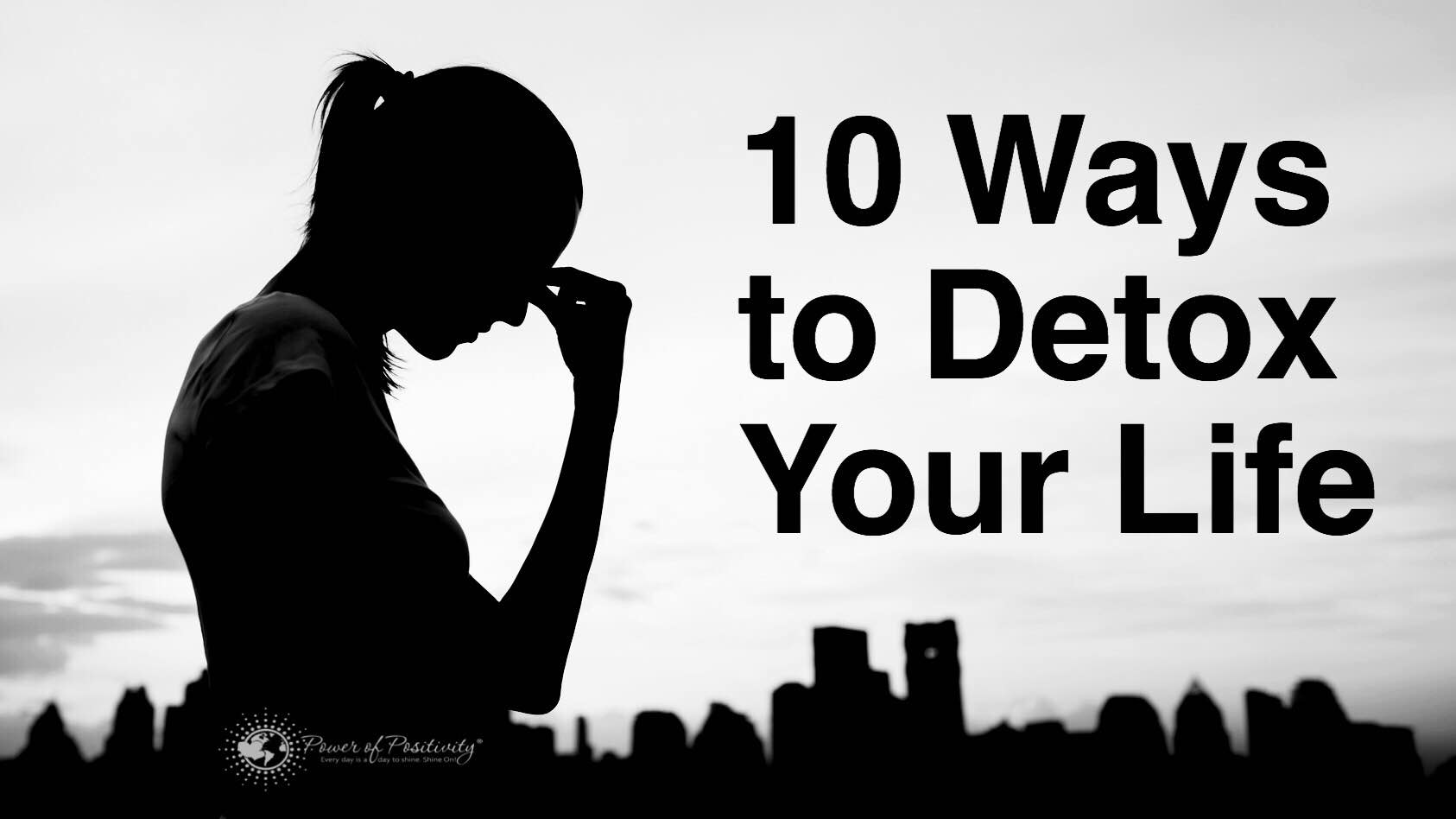
10 Ways to Detox Your Life

The need to detox your life is a direct result of an overworked, overscheduled, and overwhelmed lifestyle that has (somehow) been accepted by most people as ‘normal’ and ‘fact-of-life’, which is far from the truth. We have less time while taking on more responsibilities. As a result, we also make fewer healthy choices for our body and mind.

‘The best way to detoxify is to stop putting toxic things into the body and depend upon its own mechanisms’ – Andrew Weil

10 Ways to Detox Your Life

If you’re not sure if your life needs a detox, these signs will tell you.

soda detox

1. Cleanse with oil

From oil pulling to castor oil packs, from healthy, virgin, cold-pressed mono-unsaturated cooking oils to essential oils for home remedies, oils have got a lot of health benefits that help detox your body.

One study found that sesame oil (a natural edible oil) and sesamol (an active antioxidant) are potently beneficial for treating lead- and iron-induced liver and kidney toxicity and have no ill effects on the body. Researchers found that sesame oil reduced inflammatory responses in the body and also helped reduce lead and iron toxic metals. Sesame oil also helped reduce tumor necrosis factor’à and it might also be helpful with removing mercury from the body.

2. Clear the clutter

Then there is “stuff”…meaningless, excessive, pointless “stuff” that seems to just pile up on us. Where is your “stuff” currently? Whether it’s on your desk, in your closet, in the living room, on a table, or in your car, get rid of it.

Usually, clutter results from having an excessive amount of anything – books, papers, toys, shoes, clothes, food, antiques (Mom!) – that occupies space for no particular reason. But it occupies more than just space in your home; it takes up space in your brain.

2. Eat cruciferous vegetables

As you read in our article about armpit detoxing, eating your greens is a great way to remove cancer-causing toxic agents from your body. Cruciferous veggies like Broccoli, cabbage, and Brussels sprouts are rich in indole-3-carbinol (I3C), which helps your body clear out excess estrogens.

Excess chemicals that act like estrogen in the body come from our beauty products, BPA plastics, hormones given to animals that we eat, and even some pesticides. These estrogen-like chemicals are called xenoestrogens. Over time, they can lead to early hormonal changes in developing teenage girls and boys and can also contribute to the development of breast and other cancers.

3. Herbal tea cleanse

Herbal teas with milk thistle or burdock (for liver) and dandelion or artichoke (for bile excretion) have been used for centuries to detox and cleanse the body.

4. Digestive cleanse

From enemas to suppositories to laxatives and dietary cleanses, your colon and digestive system would appreciate a good detox. Senna herbal tea is a healthy and natural digestive cleanse that you can try that can help detox your body.

5. Pay attention to your spiritual needs

Religious or spiritual needs are something that ought not to be neglected. Whether you meditate, read scripture, pray, attend church, enjoy the beauty of nature, or do something else, doing the things that uplift your spirit is important to your balance and wellbeing.

Try to take at least twenty to thrity minutes a day to tend to these needs. If this is not possible for whatever reason, spend ten to fifteen minutes meditating, reading scripture, or enjoying some solitude before hitting the pillow.

6. Massage

Stimulating the energy meridians of the body and enhancing circulation with a massage is a good way to improve the body’s natural detox system, the lymphatic system. Read more about how your lymphatic system helps detox your body in our recent article: 10 Ways to Clean Your Lymphatic System.

7. Disconnect and reconnect

We strongly believe that overuse and overdependence on technology is toxic. If you don’t believe us, just think: How many people have you seen driving while on a cell phone? Have your kids pulled out a tablet or cell phone at the dinner table? Has a co-worker ignored you or someone else while replying to their 100th text message?

Technology certainly has its role. Advances in technology have resulted in medical advances, educational improvements, scientific discoveries, and more. But it’s had a negative impact on our actual connection with each other. Families drift apart, parents bring their work home, and kids tap away on Facebook instead of opening their textbooks. There’s no real presence of mind with excessive technology use. Be mindful of how and when you use technology.

8. Exercise

Movement helps to stimulate your circulatory system and blood flowing helps the other organs to process toxins. Toxins embed in fat cells, so losing fat will release toxins. Be sure to stay hydrated by drinking some clean, filtered water whenever you are exercising, using a sauna, or taking an Epsom salt bath since these can be dehydrating.

9. Epsom salt soak

Soak in a natural mineral hot spring if you can or seek out a flotation therapy tank. If you can’t find these excellent natural cleansing baths near you, then the next best thing is a bathtub with piping hot water and some Epsom salts. Add some lavender essential oils for aromatherapy cleanse as well.

detox

Dr. Laura K. Thompson of Furman University says that bath salts improve cleaning or the experience of bathing, provide medical improvement, or serve as a vehicle for cosmetic agents. Bath Salts have been developed that mimic the properties of natural mineral baths or hot springs. The earliest writings concerning bath salts were published in China around 2700 years BCE.’ Dr. Thompson suggests making your own bath salt blend that combines Epsom salts, natural mineral salts, baking soda, moisturizing oil, and essential oils for fragrance.

10. Sweat

One of the easiest ways to detox is by sweating. Any exercise that gets you sweating will help naturally detox your body through the skin. Sweating with sauna therapy is another way to increase circulation, sweat out toxins, and improve lymphatic flow for cleaning. After a good sweat, make sure to clean your skin with a shower. That’s because the toxins that you sweat out of your system will wash away.

Final Thoughts on Recognizing the Need to Detox Your Life

Once you realize you have the need for a clean start, make it a priority. You deserve the best! Try one of these methods to detox your life, and you will continue to lead a full and happy life.

Skip to content