Weekly tips, affirmations, and small actions to feel your best.

Study Reveals: People Who Eat Dark Chocolate Daily Have Lower Risk of Heart Disease, Stroke

One thing is certain. Not too many of us would turn down a chocolate cupcake or candy bar if offered it. However, the research continues to pour in about the negative impact added sugar is for our mental and physical health. In fact, studies have shown that eating too much processed sugar can raise your risk of dying of heart disease. And, that’s even if you aren’t overweight.

So, given this information, you might wonder why we advocate eating chocolate every day for your health. Doctors and scientists globally suggest that people cut their sugar intake enormously. But does that mean chocolate is out of the question?

So, we will go ahead and get to the good stuff. How can you eat chocolate every single day and still maintain your health?

Well, it turns out that chocolate contains far more health benefits than most people realize. So next time you get a craving for something sweet, do not feel guilty for reaching for that chocolate bar!

These Things Happen To Your Body When You Eat 100g Of Chocolate Per Day

Even though eating added sugars have been linked to heart disease, diabetes, obesity, and other health ailments, eating up to 100 g of chocolate every day can lower your risk of heart disease and stroke. That’s according to research published online in the journal Heart.

Also, the researchers in the study found that cutting out chocolate would not lower risk of cardiovascular disease. They based their findings on results recorded from observing nearly 21,000 adults taking part in the EPIC-Norfolk study. That research reviwed how diet affects the long term health of 25,000 men and women in Norfolk, England. The study gathered data about food frequency and lifestyle choices in order to obtain results. The researchers also reviewed the available international published evidence on the association between chocolate and cardiovascular disease. Those findings included the EPIC study participants of almost 158,000 people.

The researchers tracked the study participants for almost 12 years. During that period 14 percent experienced either a fatal or non-fatal coronary heart disease or stroke. 20 percent of participants didn’t eat chocolate. But the others consumed an average of 7g daily, with some eating up to 100 g daily.

The Results

They found something very interesting. Eating higher amounts of chocolate linked to lower weight (BMI), lower waist: hip ratio, lower systolic blood pressure, lower inflammatory proteins, and a decreased occurrence of diabetes, along with a fairly regular fitness routine. All of these pieces of data confirm a healthy cardiovascular profile.

Also, the people in the study who consumed more chocolate had higher energy levels. And, in many cases they had more stamina than others who consumed caffeine and energy drinks. 

What’s more, the researchers found that the people who consumed higher amounts of chocolate had an 11 percent lower risk of cardiovascular disease and a 25 percent lower risk of associated death. Also, the chocolate lovers had a 9 percent lower risk of hospital admission or death related to coronary heart disease.

In the study, 16,000 people had their inflammatory protein levels measured, and the participants who ate the most chocolate had an 18 percent lower risk than those who ate the least. Not to mention, people who ate the most chocolate also had a 23 percent lower risk of having a stroke.

Out of the nine studies in the systematic review, five of them found a dramatic reduction in the risks of both coronary heart disease and stroke when at least 100g of chocolate was consumed. Furthermore, eating this amount of chocolate was linked to a 25 percent lower risk of any episode of cardiovascular disease and even a 45 percent lower risk of death.

Even though the results from these studies seem very promising, the researchers still say that we can’t draw absolute conclusions from the at this time, as the food frequency questionnaires have a certain amount of recall bias and possible inaccuracies associated with how much food was eaten.

Related article: 6 Reasons To Eat Chocolate Every Day

Even so, the researchers say that “cumulative evidence suggests that higher chocolate intake is associated with a lower risk of future cardiovascular events.” The researchers even say that milk chocolate, while less healthy than dark chocolate, might have some health benefits as well.

“This may indicate that not only flavonoids but also other compounds, possibly related to milk constituents, such as calcium and fatty acids, may provide an explanation for the observed association,” the researchers explain. “There does not appear to be any evidence to say that chocolate should be avoided in those who are concerned about cardiovascular risk.”

Additional benefits of eating dark chocolate every day:

1. Enhances brainpower

According to a study by the U.K’s Northumbria University, subjects that ate chocolate and then waited 90 minutes tested for enhanced mathematical and cognitive aptitude. Experts believe this is due to the antioxidant flavanol. The antioxidant may expand blood vessels and increase blood flow to the brain.

2. Helps digestion and gut health

Subjects that were tested for high levels of stress hormones were put on a dark chocolate regimen for an indefinite amount of time. However, after just two weeks, samples taken from the patients showed a marked decrease in hormonal levels in the gut related to stress. Particularly, metabolic bacteria in the gut became more active and produced additional healthy bacteria that were then made available to the body. Scientists believe that flavanol and other healthy polyphenols contributed to this noteworthy discovery, which showed chocolate’s positive gut health benefits.

3. Improves skin health

In one study, women who drank a high-flavanol cocoa drink every day for three months showed a marked increase in blood flow to the epidermis.

The results:

  • Skin density increased by 16 percent.
  • Skin thickness improved by 11 percent.
  • Moisture improved by 13 percent.
  • Dryness decreased by 42 percent.

The potent antioxidant and flavanol properties of chocolate might be the primary reasons why skin rejuvenates at such a fast rate.

dash foods diet

Cardiologists explain why the DASH Foods diet improves heart health.

4. Reduces bad cholesterol

People that eat around 3 ounces of dark or high-flavanol chocolate every day have a more normalized ratio of “good” (HDL) to “bad” (LDL) cholesterol. Admittedly, scientists aren’t quite certain why this is, but they believe that flavonoids play a particularly important role.

In a supplementary study, scientists discovered that dark chocolate helps elderly people with enhanced cognitive function and increased feelings of serenity. In conclusion, scientists believe that chocolate’s positive effects on cholesterol levels, thinking capacity and feelings of serenity may be a promising solution, both short- and long-term in the care of the elderly.

(C) Power of Positivity, LLC. All rights reserved

Here’s Why Everyone Needs a Sensitive Person In Their Life

Sensitive people: Genuine givers, any takers?

We all have that one friend who seems awkward, difficult to understand, and even a little bit reclusive lately, and you wonder why.

Let me put some huge Vegas-style neon lights on the following statement: Your friend is sensitive and is going through a rough patch. These sensitive people are truly of the heart; they are more precious than diamonds. They give spades of love and kindness, and you will now get a glimpse of their world.

It is said that one in five of the population is a “highly sensitive person”. They feel the highs and lows of the emotional roller-coaster far greater than you can imagine. Imagine being dumped by your beau/belle; sensitive people feel the hurt much more. That’s because everything they see and hear reminds them of it. They go all in on the relationship and if it fails, they become emotionally bankrupt and shut down automatically. Imagine getting a promotion at work: You guessed it, they party like there is no tomorrow and get together with their friends and family and share the joy. Winner, winner, chicken dinner!

Here’s Why You Need A Sensitive Person In Your Life

“What about other people’s emotions?”

They are the same, almost as if it were happening to them. If you are going through a tough break-up, they are the first ones knocking on your door to cheer you up and lend a shoulder to cry on and a sympathetic ear to listen. Some bold sensitive people would even whisk you away to the beach, the club, the swimming pool, or anywhere you want to distract you from the pain. They do not leave your side until you feel better about being that amazing you.

12002757_10153030407697371_5895197330841037805_n

Why?

You can bet your bottom dollar that they do not want other people to go through something they have probably gone through themselves. At the other end of the spectrum, they celebrate that promotion you got as if it were their own, so get ready for a restaurant reservation at the very least. I already mentioned the chicken dinner, did I not?

In brief, sensitive people make the most loyal friends and back you to the hilt. Yet, this is what makes them so vulnerable to the emotional freeloaders. They give so willingly that some decide to manipulate their good nature. This hurts the sensitive one more deeply than anything else, and they blame themselves for it more often than not. Yet, they keep doing the same thing over and over. It is in their nature to give, help, cry, yell and to dance, hug, laugh, and bug you sometimes.

There is a special person in there, you can be assured of that. Can you see them better now? Are there any takers for such great givers?

Research Reveals: Here’s How Sleeping In Complete Darkness Can Improve Your Health

Too many people stay up far too late on their digital devices. Of course, this comes at a very hefty cost to health. That’s because technology keep our brains stimulated at night. Therefore, it also can disrupt our sleep, even delaying it for hours past our bedtime. Bedrooms today become a den for games and entertainment, but not so much a good night’s rest.

Exposure to light at night might not seem like that big a deal to you, but remember that before the advent of modern technology, we basically had two lights guiding us at all times – the sun and the moon. These natural lights helped us to see during the day, and lull us to sleep at night. We became accustomed to these natural patterns, waking with the sun and falling asleep with the moon.

However, now that we’ve moved far away from nature. Consequently, we have an abundance of artificial lighting/ Although this light might help us get work done and see in places that have little sunlight, it damages our brains and overall health. Indoor lighting, of course, doesn’t compare to the power of the sun. But it actually emits more light than the moon and stars. This leads to poor sleep if we use artificial lighting too close to bedtime.

How Sleeping In Complete Darkness Can Improve Your Health

First, we’ll go over why using artificial lighting too close to bed can damage your health. Melatonin helps us to relax and get ready to sleep. However, the blue light from smartphones and tablets actually suppresses this hormone. Melatonin lowers blood pressure, glucose levels, and body temperature, which help us to prepare for a restful sleep.

With the proper amount of melatonin in your system, your cortisol levels will also remain relatively low. As a result, you will relax and get to sleep. However, artificial lighting actually raises your stress hormones at night, and frequent exposure can cause a plethora of health problems, including excess body fat, weight gain, inflammation, insulin resistance, and heart problems. It can also contribute to insomnia and even affect hormones responsible for the regulation of your appetite.

Power Down the Devices Early

So, by keeping your room dark at night, you not only will get to sleep faster and wake up feeling more rested, but you’ll also have a lesser risk of developing health problems due to excess nighttime light exposure.

In fact, studies have shown that light exposure before bedtime shortens melatonin duration by 90 minutes in comparison to dim light exposure. Furthermore, keeping lights on in the room while you sleep can suppress melatonin levels by more than 50%. 

So, a good rule of thumb is to simply turn off electronics a few hours before bed, and dim the lights in your room. Make it a relaxing environment for sleep so that when bedtime comes, you actually feel like falling asleep.

If you still need more evidence to shut off your phones and bright room lights leading up to bedtime, a 10-year study  of over 1,670 women exposed to bright light before bed found that they had a 22% greater chance of developing breast cancer compared to those who slept in complete darkness. The researchers concluded that hormone disruption due to melatonin suppression likely caused the cancer to develop.

Shift Work Might Also Cause Health Concerns

Furthermore, people who do shift-work have a higher risk of developing cancer as well. In some studies, researchers found that nurses who rotate overnight shifts have a greater chance of developing breast cancer compared to those nurses who work during the day.

Even dim light at night can causes issues, though. Chronic exposure to dim light in the evening leads to depressive symptoms in hamsters, such as drinking less sugar water that they normally would have interest in. When researchers took away the dim lights at night, they found the depression went away.

Chronic low light in the evening also disrupts the immune system response..

So, if you have night lights on, lights from your computer or phone, or even a street lamp outside, consider covering them with a blanket or getting black-out curtains for your windows.

Finally, exposure to lights before bed can lead to weight gain due to disruption in hormones and a shift in our biological clock which controls our eating times. In studies with lab mice, they gained more weight when exposed to light before bed despite exercising and eating the same amount as the mice who didn’t have light exposure.

bed sleep

Final Thoughts on How Sleeping in the Darkness Increases Health

Taken from research presented in this article, you will likely fall asleep faster due to an increase in melatonin levels, your blood glucose levels, and your blood pressure will decrease. Additionally, you decrease the chance of developing serious diseases such as cancer, heart disease, and diabetes. Finally, you’ll wake up feeling more rested. So if you have insomnia, sleeping in darkness and  turning off lights a few hours before bed could help tremendously.

(C)Power of Positivity, LLC. All rights reserved

How Does The Moon Affect Your Zodiac Sign?

The phases of the moon throughout the month can affect your zodiac sign differently than they do for someone else, and you should know what to expect as the moon changes its shape. Let’s look at how the phases of the moon will affect your sign throughout each month so you can be prepared for the difference in energy that you may feel.

People hold certain beliefs about how the moon affects behavior, and researchers looked at who was more likely to believe in the effects of the moon. Researchers at the University of New Orleans say 43% of people ‘held the personal belief that lunar phenomena alter individual behavior. Specifically, mental health professionals (social workers, master’s clinical psychologists, nurses’ aides, LPNs) held this belief more strongly than other occupational groups.’

Researchers at the Department of Experimental Therapy, The Institute of Immunology and Experimental Therapy, and Polish Academy of Sciences, in Wroc’aw, Poland say ‘The lunar cycle has an impact on human reproduction, in particular fertility, menstruation, and birth rate.’ The study also found that admittance to hospitals and emergency units for various reasons was associated with moon phases. They also found that the number of traffic accidents, crimes, and suicides had an identifiable pattern based on the phase of the moon.

The Moon Affect

When you look up in the sky and see the crescent moon, and the points of the crescent moon are to the left, the moon is said to be waxing or growing fuller. It will eventually become a full moon. Usually the waxing phases of the moon are a time of growth, things beginning, and more energy than other times.

If the points of the crescent moon are on the right, it means the moon is already past its full point and now it is getting smaller. Generally, a waning moon is a time of decrease, a time when things will be ending and when you may notice less energy for projects than you have at other times.

Let’s look at the monthly influences that the phases of the moon have for each zodiac sign and what you need to know about how the moon affects your sign.

Aries March 21 – April 19

* Full moon for Aries: Ending a project and getting recognition for your hard work

* New moon for Aries: Letting go of something that is holding you back. Seeking something new and exciting

Taurus April 20 – May 20

* Full moon for Taurus: Seeing success in relationships and finances

* New moon for Taurus: Reflect on the state of work, home, and finances and focus your energy on mundane things

Gemini May 21 – June 20

* Full moon for Gemini: Learning new things, using the new information to improve yourself, and lots of social activity

* New moon for Gemini: Thinking about future plans, difficulty focusing due to so many new ideas at this time

Cancer June 21 – July 22

* Full moon for Cancer: Peak of self-confidence, overflowing feelings of generosity, and plenty of home happiness

* New moon for Cancer: Inner reflection, contemplating making a change for the better

Related article: 10 Things You Need To Know About Loving A Cancer

Leo July 23 – August 22

* Full moon for Leo: Creativity, enthusiasm, and peak energy times. Feelings of passion for someone close to you.

* New moon for Leo: New flirtations, jumping in to new projects that excite you

Virgo August 23 – September 22

* Full moon for Virgo: Getting organized, feeling more energetic and committed to your priorities

* New moon for Virgo: Reevaluating procrastinated projects, making positive health changes

Libra September 23 – October 22

* Full moon for Libra: Influencing healthier relationships with those close to you, creativity increases

* New moon for Libra: Making plans for your future, focus on communication with others

Scorpio October 23 – November 21

* Full moon for Scorpio: Passion is at an all time high, positive emotional connections with many people

* New moon for Scorpio: Reflect on internal patterns of behavior that need to be changed, psychological healing

Sagittarius November 22 – December 21

* Full moon for Sagittarius: Your positive mood makes you attract others and you have many exciting flirtations

* New moon for Sagittarius: Seeking excitement and mental stimulation to break a cycle of boredom

Capricorn December 22 – January 19

* Full moon for Capricorn: Positive changes at work and at home, plenty of opportunity for fun social activities

* New moon for Capricorn: Evaluate priorities, make positive changes to eliminate wasted energy

Aquarius January 20 – February 18

* Full moon for Aquarius: Contributions are recognized by others, embrace positive changes that are beginning at this time

* New moon for Aquarius: Breaking old habits, contributing in a positive way to the greater society

Related article: What Does Your Sun Sign Reveal About Your Personality?

Pisces February 19 – March 20

* Full moon for Pisces: Emotional sensitivity is high and so is kindness toward those close to you

* New moon for Pisces: Making healthy alliances with people who can help you, removing blocked energy that is holding you back

Here’s Why Being Selfish Isn’t Always A Bad Thing

Looking around at the world today, you might view it as full of greed, narcissism, and selfishness. In the age of shameless self-promotion, selfies, and self-entitlement, it seems that people have an obsession with themselves. However, if you look at if from a different perspective, you might see that having a healthy relationship with yourself, putting your needs first, and loving yourself form a sturdy, unshakable foundation from which we can build a fulfilling life.

While narcissists put their own needs above others while using people for their personal gain, self-loving, self-actualized people see that they must garner a positive relationship with themselves so that they can form healthy relationships with others.

Researchers studying healthy self-esteem say that some self-love helps to promote positive mental health and well-being. Researchers have linked self-love to a decrease in sadness, depression and loneliness, and an increase in well-being, both with their relationships with themselves and with others. Having a healthy self-esteem also contributes to less feelings of anxiety and neuroticism.

13606915_10153670869367371_8264147755989187205_n

However, too little self-love can lead to the opposite feelings and behaviors. In another study, researchers linked low self-esteem to higher levels of aggression and anti-social behavior.

“I choose to honor my feelings. I choose to give myself permission to get my needs met. I choose to make self-care a priority. I choose me.” – Daniell Koepke

If you still think being “selfish” doesn’t contribute positively to you or society at large, we hope that we can offer you a new perspective with the following points.


5 Reasons It’s Time To Start Being Selfish

1. Your relationships with others will improve.

Have you ever noticed the abundance of problems in relationships everywhere? No matter what kind of relationship, so many get destroyed by pain, guilt, betrayal, and other negative emotions. However, once you start to embody love yourself, you will see a huge transformation and upgrade in all of your relationships.

We only perpetuate pain and sorrow in the world because we haven’t fully healed our own wounds. Once you step past the victim mentality and realize that only you can take charge of your emotions, you will bring a whole new energy into your relationships. Also, you’ll leave behind those that no longer serve you, and attract people who truly uplift you.

Remember, life simply reflects our frequency levels at all times. If you want better relationships, you have to upgrade your own vibration in order to attract healthy, whole, loving people.

2. You’ll learn to truly love the person in the mirror.

Most people in the world, unfortunately, look to others for love and acceptance. They do very little to cultivate these feelings themselves, which explains why we have so much destruction and hatred in the world. Most of us seek outside of ourselves in order to find what we need, and when we don’t get it, we start to get frantic. We can’t fathom finding all we need within ourselves, because most of us feel so lost and broken.

If you feel this way, though, you need to take a harder look into your soul, and once you learn to sit in silence and truly love your own company, you’ll start to fall in love with that person looking back at you.

So, selfishness doesn’t have to mean only caring about ourselves – it means putting ourselves first and taking care of our needs so that we can offer more value to the world. 

When you indulge in your own love, no one can take that away. When you learn to love yourself, you become a better human being, and you can’t possibly find any negatives in that.

3. You’ll have better health.

Inevitably, when you start to love yourself, you’ll want to put more loving, wholesome things into your body. You’ll want foods that energize you and promote health, not ones that poison your body, mind, and soul. Once you cultivate self-love, you’ll learn to get “selfish” with what you eat and how you choose to treat your body. You won’t give into peer pressures and eat or drink things that only weigh you down. You won’t mind taking extra time to chop fruits and vegetables to prepare a healthy meal. Running 5 miles every other day won’t seem like a chore; you’ll actually want to get up and get moving!

When you love yourself, you will want your health in tip-top shape, and will accept nothing less.

4. You’ll break down mental barriers.

Many of us in the world feel limited, maybe because of laws, the economy, money, not knowing how to buy stocks, relationships, taxes, our weight, health, or something else. We feel we can’t control much in our lives, including ourselves. Therefore, we resort to violence and destruction. The chaos in our world reflects how we as a collective feel about ourselves, but once you go within and combat your demons, you’ll set them free. You won’t feel limited by your own mind; you’ll feel like the master of it.

By putting ourselves first and removing all of those destructive thought patterns, the world becomes a little less burdened. Plus, you’ll feel much lighter and more productive without all of those heavy thoughts weighing you down.

5. You’ll make decisions that truly serve you well.

Once you have self-love within, you won’t want anything in your life that could potentially harm your state of bliss. You’ll want to remove what no longer serves you, and instead, welcome in the people and things that uplift your spirit. Decision-making will become easy, because you’ll know exactly what you want out of life and will know how to align energetically with those choices.

Related article: 15 Ways to Be More “Selfish” (And Why You Should)

So, hopefully you see now that selfishness goes hand-in-hand with selflessness. Becoming our best selves absolutely requires us to put ourselves first, but by doing this, we can offer more to the world. So, don’t hesitate to become a little more selfish. Leave that job that kills your soul, go on that vacation you’ve been dreaming of, leave a relationship that doesn’t bring you happiness, and keep following your heart. You have nothing to lose except yourself, and by getting rid of the old you through self-love, you’ll finally learn to treat yourself with respect and kindness.

https://youtu.be/t9ZxXAn7njY

(C)Power of Positivity, LLC. All rights reserved

8 Signs Chronic Inflammation Is Making You Fat And Sick

As a result of human activity – namely, industrial and commercial processes – the world is burdened with toxins. There is both good news and bad news for people (rightly) concerned with the number of toxins floating around. Bad news first: it is impossible to deny entry of toxins into the human body (unless you become a recluse); the good news: we can do something about toxic effects on the body.

Contrary to what many believe, inflammation in itself is not damaging. In fact, normal inflammation is a healthy body’s response to physical harm – known as acute inflammation. Acute inflammation is a necessary physical response that allows the body to heal after an adverse physical event (e.g. breaking a bone, cutting a finger). Inflammation of this variety also “traps” impeding and harmful substances to eliminate them from the body.

Chronic inflammation, meanwhile, is a potentially damaging condition. Medical professionals and researchers have linked chronic inflammation to a variety of conditions, including diabetes, Alzheimer’s disease, and even hair loss. Chronic inflammation is also difficult to detect without a comprehensive blood test.

However, there are physical signs that may point to chronic inflammation. This article discusses eight of these signs, and supplements them with ways to reverse the damaging condition. We hope this article proves beneficial to all of us concerned with the adverse effects of chronic inflammation on the body, and that the “treatments” noted here are helpful.

Here are 8 signs of chronic inflammation:

1. Persistent abdominal pain

Inflammation can trigger episodes of abdominal pain, as the gut is sensitive to substances that provoke inflammation. Such episodes often include bouts of diarrhea and constipation, as well. Additionally, it comes as no surprise that any level of gluten intolerance (a source of inflammation) can stimulate abdominal pain.

2. Depressive symptoms

Depression and depressive symptoms are complex, as several factors contribute to the conditions. Chronic inflammation is one such factor, according to researchers. Many physicians have come to this conclusion by citing depressed patients that suffer from many conditions – heart disease and skin cancer, for example – with higher levels of inflammation.

3. Chronic fatigue

Mary Harrington, director of the neuroscience program at Smith College, believes that inflammation is “key” for those with chronic fatigue. Harrington cites the physical link between inflammation and the central nervous system (brain and spinal cord), stating that inflammation can alter the brain’s circadian mechanism – the part of the brain responsible for sleep/wake cycles.

4. Insomnia

There may be a link between insomnia and chronic inflammation, as it’s known that the latter interferes with the body’s sleep/wake cycle. Also, toxic buildup can worsen and even manifest into, insomnia episodes. There is also a known connection between insomnia and liver problems, as well as a physical link between inflammation and problems with the liver. Many health professionals recommend a liver cleanse to help alleviate one or both conditions.

5. Skin problems

People who experience high levels of stress (everyone?) produce more inflammatory chemicals than those who do not. As our skin is considered a primary indication of health, it is unsurprising that these stress chemicals can lead to, or exacerbate, several skin conditions – including acne and psoriasis.

6. Frequent Headaches

Chronic headaches are potential signs of high toxicity in the body. Therefore, it is not a stretch to assume headache episodes that increase in frequency may be a telltale sign of high toxicity levels. Headaches are a byproduct of the body’s inherent tendency to detoxify, and a direct sign that inadequate nutrition may be the root cause (more on this later).

7. Tongue discoloration

Besides the skin, our tongue is the next best indicator of the body’s toxicity levels. Foods that contain toxic chemicals (e.g. refined carbohydrates, unhealthy fats) alter the mucus of the digestive system, and is evident via a discolored tongue. When this happens, the tongue will often take on an unnatural white or yellow coloration.

8. Excess belly fat

In a study published in the journal Obesity, researchers found a link between environmental toxins and high levels of abdominal fat. This is not the first study to derive such a connection, as Washington University researchers also found a correlation. It is believed that certain toxins affect how fat is stored in the body, and that these toxins create a physiological response that disproportionately stores fat in the belly.

Reversing Chronic Inflammation

Now that we’ve gone over some physical symptoms that may indicate chronic inflammation as the source, let’s turn our attention to how we can effectively counteract the condition. When reading through this list, you’ll notice that all of the recommended actions require nothing more than simple lifestyle changes.

– Reduce or eliminate refined carbohydrates: Sugar and white flour are two ingredients that are abundant in many processed foods. The Arizona Center for Advanced Medicine estimates that Americans consume, on average, more than 160 pounds of sugar and 200 pounds of white flour per year.

To effectively reverse chronic inflammation, foods containing these ingredients should be severely restricted or eliminated, as they stimulate the release of inflammatory chemicals in the body. The most common foods associated with high levels of refined carbohydrates includes: bread, cereal, cookies, soft drinks, bread and pasta.

– Consume the right Omega’s: Omega-6 fatty acids provoke an inflammatory response, while omega-3s contain anti-inflammatory properties. We consume up to 30 times as many omega-6s than omega-3s, which is disproportionate to say the least.

To put this discrepancy in-balance, it is necessary to consume only natural or organic types of fats and oils.

–  Get active: It is estimated that two out of three Americans are overweight, with many developed countries not far behind. This trend is problematic; as fat cells produce excessive amounts of inflammatory chemicals.

Aim for 30 minutes of physical activity at least three times per week. Simply going out for a brisk walk or going on a bike ride can achieve this.

6 Behaviors That Make People Unhappy (And How To Fix Them)

If you look around you, you will find symmetry everywhere. Symmetry was thought by the Greeks to be the epitome of beauty. The entire universe is only understandable because of symmetry. We even think symmetrically; up/down, left/right, light/darkness, wet/dry, hot/cold and moving/still. Symmetry is another word for balance, and when we see people who have their emotions, behaviors, or goals out of balance with the rest of society, we see those things as negative. That’s because they offend our sense of symmetry or order.

When it comes to our behavior, the difference between order and chaos is a matter of control. Uncontrolled emotions or actions are dangerous and harmful to you and those around you, while those same behaviors when controlled are beneficial and useful. So, how can you take negative behaviors and turn these liabilities to assets?

Here are 6 Ways to Turn Negative Behaviors Into Positive Ones

Turn Lust to Passion

Lust is the unrestrained desire for something, whether it is sex, money, power or something else. Lust leads to sexual predators, theft, and other horrible behaviors. If that desire can be controlled and channeled into something productive, it becomes passion. Passion can right wrongs, build impressive structures or send people to other worlds. Passion can be channeled into work, relationships and the community in order to make the world a better place.

Turn Gluttonous Behaviors to Gastrophile

Gluttony is not just the act of eating too much, but also eating too soon, eating food that is overly costly or rare and eating with far too much pleasure and anticipation for the meal. It stems from a time when food could be incredibly scarce, and by eating too much you could starve someone else to death. But if you control that excessive desire to eat, you can become a great chef or winemaker. It is okay to enjoy the finer foods and drinks as long as it is in moderation. A fine meal can enrich conversation with your friends or partner. Not overdoing it and eating good food also leads to healthy bodies and fewer trips to the doctor.

Turn Lazy to Rest

Lazy is the lack of desire to act. Lazy people don’t want to do anything but lay in bed all day and let others take care of them. But, sometimes you need to be lazy, like when you are sick or injured. Your body needs time to rest and heal. You may feel that you don’t have time to lay around on the couch because you have stuff to do. If you keep pushing, you will make a minor physical ailment worse, so take some time and rest. People in the modern world also tend to over-schedule their lives and run from activity to activity and never give themselves a chance to recharge and refresh. Sometimes you need to take a day and just relax. Let your mind and body recover from the busy week.

Turn Rage to Anger

Rage is as uncontrolled as a wildfire and can cause just as much havoc in your life. When it is controlled it just becomes anger, and anger can be useful. Anger at injustice, mistreatment, or physical harm can spur people to action in order to protect others or rectify a bad situation. Indeed, anger can be a powerful force for change when controlled and directed into a cause. Anger spurs us to fight for what is right and to protect those that cannot protect themselves.

Turn Narcissism to Pride

Narcissism is excessive self-love or believing oneself better or superior to others. It is a form of extreme pride, so much pride and self-love that you put your own desires before the needs of others. But it is okay to be proud of achievements and accomplishments, just don’t let it go to your head. When it is controlled, you can be proud of others as well and not just yourself. Being proud of your kids for winning a competition or being proud of friends and family who achieve some noteworthy accomplishment can be good things as well. Just don’t be so proud that you denigrate the accomplishments of others. Be supportive and encouraging instead.

Related: 9 Comebacks for Dealing With A Narcissist

Turn Envious Behavior to Drive

Envy is a desire to have the traits or possessions of others, or to see someone else fail. It is one of the most destructive traits a person can exhibit, but if you turn a desire to see others fail into a desire to compete and succeed, then you will have harnessed a powerful force indeed. Drive can give you the strength to carry on even when you believe all is lost. It can propel you far beyond what you ever thought you could do. Take that desire and turn it into a drive to be the absolute best at what you do.

(C)Power of Positivity, LLC. All rights reserved

11 Signs You’ve Got A Good Relationship (Even If You Don’t Feel Like It)

If you are reading this, you are probably in a relationship. So, how do you know if your relationship is good for you? Do you feel insecure in your relationship?

Lisa Firestone, Ph.D., is a clinical psychologist, author, and the Director of Research and Education for the Glendon Association. She studies suicide and violence, as well as couples and family relations, say that “Insecurity, as most of us know firsthand, can be toxic to our closest relationships.” Reassure yourself about your relationship by asking yourself some simple questions concerning how you and your partner interact with each other.

11 Signs Your Relationship Is Doing Well (Even If You Don’t Feel Like It)

pop meme

Do you still laugh together?

If you do, then you are probably still doing well. Laughing together is a sign of intimacy; even if you are laughing at a silly cat video, it shows that you both can enjoy each others company without resorting to sex.

Do you share similar goals?

Everyone has goals in their life, which can change over time, but are you and your partner still on the same page regarding basic moral values and goals? If you are, it shows that you both want the same things in life and is willing to commit to achieving them together.

Do you still trust each other?

No relationship can survive without trust. So if you still trust each other, it shows that both of you are open and honest about your feelings, issues and desires with each other.

Are you still individuals?

Relationships bring us together, but it is important to have alone time or time doing things that are important to you but that your partner isn’t so interested in. If you can go off separately to engage in your own hobbies or interests and then come back together, it shows your partner’s high degree of trust and support.

Do you still encourage each other?

13686539_10153638473737371_6975463457387318869_n

Sometimes we want to start new things like a business or hobby but are afraid or unsure. If your partner encourages you to do these things and supports your decisions, you still have each others’ back. Cheerleading for each other and supporting your partner’s pursuits show selflessness and that things aren’t always about just one of you. A relationship is about what you both want.

Do you still talk?

This seems like a no-brainer, but do you still talk over dinner or sit there scanning your smartphone? You are doing alright if you can still have a meaningful conversation over dinner without getting bored. Couples are with each other for many reasons, and one of those should be about discussing what is on your mind. Being able to talk and laugh over a meal is a sign you are both still interested in one another.

Do you both have realistic expectations of each other?

You may have an issue if you daydream about how your partner should be a certain way. Don’t expect your partner to be your version of perfection all the time and realize they are fallible humans like yourself. Then, you won’t get frustrated after they didn’t live up to the fantasy image of them you have developed in your head.

Are you still a team?

Do you still work together to accomplish daily tasks and chores like getting the kids ready for school or taking out the trash or folding the laundry? If you still see yourselves as a team and work to take care of each other and help each other, then your relationship is doing pretty good. Because you are a team, and think of yourselves as such, then neither of you will resent the other for having to a certain chore because you know your partner is taking care of something else that you in turn won’t have to do.

Do you still support each other in public?

Disagreeing about something is part and parcel of a relationship, but contradicting your partner in front of others is a sign of trouble. Remember folks, it is the two of you against the world and you have to have each others backs. If you have a concern, gently pull your partner aside and discuss it quietly. If you both routinely present a united front, it probably means you are on the same page anyway and doing fine.

Are you open and honest with each other?

If you answered no, then you have a huge issue there. Partners in lasting relationships talk openly with their partners about embarrassing, humiliating or disappointing things in their life. They talk because they trust each other not to hurt them. Without that trust and openness, you are no longer friends, much less in a serious relationship. So when things are difficult, don’t hesitate to open up and share with your partner.

good relationship

Do you discuss or do you argue?

Even if you hotly disagree with each other on a contentious issue, you should still be able to discuss your differences of opinion without resorting to yelling, screaming or name calling. If you are very upset and can still discuss the issue calmly, then that shows basic respect and appreciation for your partner’s opinions. Discussing also show that you can work toward a resolution you can both live with. And compromise is the key to a long lasting relationship.

If you answered positively to these questions, then your relationship is pretty rock solid. Dr. Abigail Brenner, a psychiatrist, says that “caring, kindness, support, encouragement, and empathy are the watchwords of a good and loving relationship. There is simply no room for rudeness, meanness, jealousy, insulting, degrading, blaming, guilting, criticizing, judging, or physically acting out, especially when the object is one’s partner. Those boundaries cannot be crossed. “ If you have a loving, supportive and safe relationship with your partner, then your relationship is doing well.

(C)Power of Positivity, LLC. All rights reserved

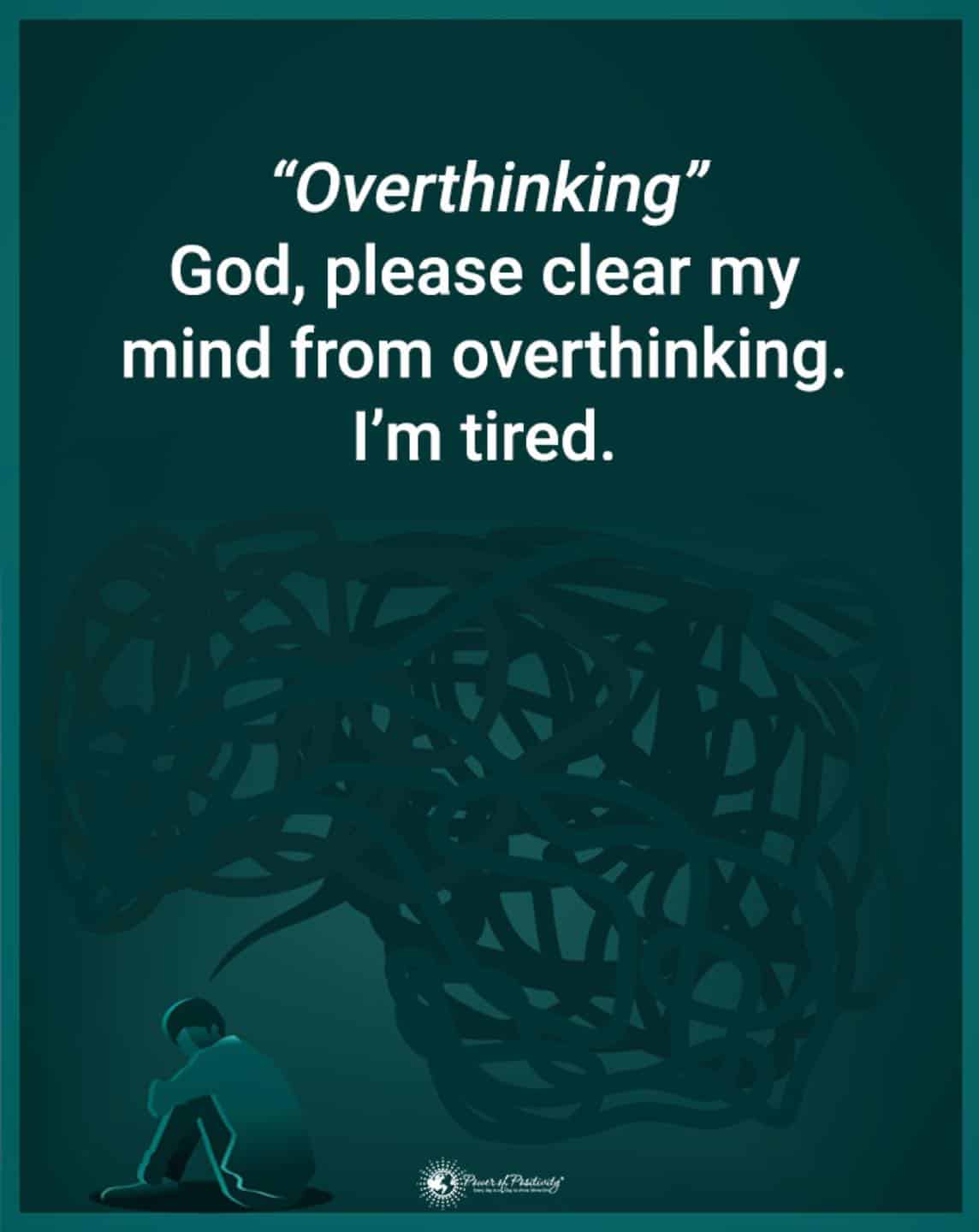
9 Signs You’re Trapped In An Overthinking Mind

Do you find it hard to shut off your mind at any given moment? Do you feel exhausted and anxious because of your thoughts? If so, you are probably a chronic overthinker. Unfortunately, overthinking has become a global epidemic, as we live in complicated times that require so much brainpower from us.

Responsibilities, finances, emotional trauma, and other problems leave our minds in a state of overdrive. Through extensive research, psychology professor Susan Nolen-Hoeksema of the University of Michigan found that young and middle-aged adults especially engage in overthinking, with 73% of 25-35 year-olds identified as overthinkers. Not surprisingly, more women (57%) than men (43%) identify as overthinkers.

So, if you have trouble detaching from your thoughts and feel consistently burdened by them, we have some tips below to help you stop overthinking, and common signs that your thoughts have overtaken you.

9 Signs You Are Trapped In Your Mind

1. Regular insomnia

Overthinkers know the difficulty of falling asleep all too well. Insomnia takes a hold on you since you can’t seem to shut off your brain, and the thoughts slowly paralyze you. Your mind races and you feel too wired to sleep; all the worries from the day keep flooding your mind, and you can’t escape from this mental prison.

13901469_10153687062687371_344616978806475281_n

If this sounds like you, try doing relaxing activities before bed, such as meditating, yoga, coloring, drawing, writing, reading, or even talking to a loved one. Do something that takes the shift off of your thoughts and onto something else that allows your creativity and emotions to come to the surface.

2. Living in fear

If you live in fear of the future, then you definitely are trapped in your mind. In her research, Nolen-Hoeksema found that this fear causes overthinkers to turn to drugs or alcohol in order to drown their negative thoughts.

For this symptom of overthinking, you should start up a meditation practice, or something else that encourages mindfulness and living in the present moment. Other suggestions would be to allow a “window” for the overthinking. Allot 15 to 30 minutes per day to get out all of your worries, whether through writing or talking to someone. This way, you can carry on with your day and leave the worries in the dust.

3. Overanalyzing everything

Overthinkers have one main problem: they have a need to control everything.  They want to plan out the future, but because they cannot predict it, this causes them great anxiety. Besides, they don’t like dealing with anything they cannot control. They have a major fear of the unknown, which causes them to sit and mull over all the options instead of taking action.

In fact, this study from UC Santa Barbara found that overthinking leads to poor decision-making and judgments. 

When you find yourself overthinking, try to bring yourself back to the present moment through deep breaths and thinking about something that relaxes you. Try to think about how these thoughts will serve you in the present moment, and this alone should get rid of them, as you’ll find that they do nothing for you but cause great stress.

4. Fear of failure

Overthinkers also have an incessant desire for perfection in everything they do. They cannot accept failure, and do everything in their power to avoid it. Ironically, this usually involves doing nothing. Remember, fear paralyzes the overthinker, so instead of risking failure, they’d rather not put themselves in a position to fail at all.

If this sounds like you, remember that you are so much more than your mistakes and failures. Also, keep in mind that to get anywhere in life, you have to make some mistakes. These allow you to grow, learn, and reach new heights in your evolution.

5. Constantly second-guessing yourself

Because of their desire for perfection, overthinkers constantly analyze, reanalyze, and triple analyze any situation. They don’t want to make the wrong decision, so they take a very long time to make any choice, because they don’t trust themselves. They are out of touch with their intuition, so every decision comes from the brain, and this isn’t always a good thing. If the brain is so foggy and bogged down that you can’t make a clear decision, then you’re definitely an overthinker.

Learn to trust your intuition, and go with your gut. If it turns out negatively, at least you’ll have learned from the experience, and have more life lessons under your belt.

6. Frequent headaches

If you suffer from regular headaches, you probably think too much. Headaches signal to our bodies that we need a break, and this includes rest from our own minds. Also, if you pay close attention to your thoughts, you probably think the same things over and over.

Worriers tend to have negative thought patterns that run in a loop, so in order to combat this, try to reinforce positive thoughts instead. Spend time on your breathing and focusing on mindfulness, and you should notice the headaches go away in no time.

7. Stiff muscles and joints

Believe it or not, overthinking can affect your whole body. Once your physical body becomes affected by something, it moves into your emotional body, and until the underlying issue gets addressed, you will keep having aches and pains. Overthinking might start in your brain, but its effects creep into other parts of your body, which leaves you feeling exhausted and lethargic.

Try stretching every night before bed, and getting regular exercise. This will help to promote a healthy body, and therefore, a healthy mind. The mind and body work very closely together; if one is out of balance, the others will fall to the wayside, too.

8. Fatigue

When we feel tired regularly, this calls for an action plan on our part. Our bodies want us to tune in and listen to their signals, instead of constantly going from one activity to the next and ignoring its calls. While fatigue can also be caused by doing too much and not resting, overthinking can also cause exhaustion. Think about it (but not too hard, of course): when you think about things constantly, you don’t give your mind a rest. Your mind cannot run 24/7; you’ll eventually get burnt out.

When we lived out in nature, we didn’t have so much to worry about, and therefore, we had less to think about. In the modern world, we have complicated lives that require us to do so much in so little time, but because of this, we have even more of a need to slow down and pay attention to our well-being. If you feel fatigued, slow down and figure out what your body and mind need from you.

9. Inability to stay in the present moment

If you can’t even stay in the present moment and enjoy life as it comes, then you are a victim of overthinking. Thinking too much causes you to lose focus of the world around you, and become trapped in your mind. Becoming bogged down with thoughts removes you from the now, and can disrupt your relationships with others.

Remember to open your mind and heart to the world around you, and not get so wrapped up in negative thinking. Only allow thoughts into your brain that serve your well-being, and try to ignore the ones that only bring you down. Life offers so much beauty and the opportunity for incredible experiences, but you can only appreciate this if you learn to tune out of your brain and into your heart instead.

Also, relationships with others help to silence those negative thoughts. When we pay attention to others, we give ourselves a break and therefore put the focus on someone else. Learn to truly listen to others, bond with them, and ask them questions about their lives. We can stop this chronic overthinking problem together by forming communities again, and learning to support and connect with one another.

anxiety

Final Thoughts on Hushing Your Overthinking Mind

In summary, focus on doing things that make you feel good and encourage you to remain active. Start an exercise program, join groups to connect with like-minded people in your community, eat healthy foods, have a mindfulness practice, and most importantly, learn to cultivate a positive relationship with yourself. Look at your thoughts as tools to help you grow, not as enemies that hinder your progress.

We are dying from overthinking. We are slowly killing ourselves by thinking about everything. Think, think, think. You can never trust the human mind anyway. It’s a death trap.”~ Anthony Hopkins

(C)Power of Positivity, LLC. All rights reserved

Skip to content