Weekly tips, affirmations, and small actions to feel your best.

6 Signs of Metabolic Syndrome

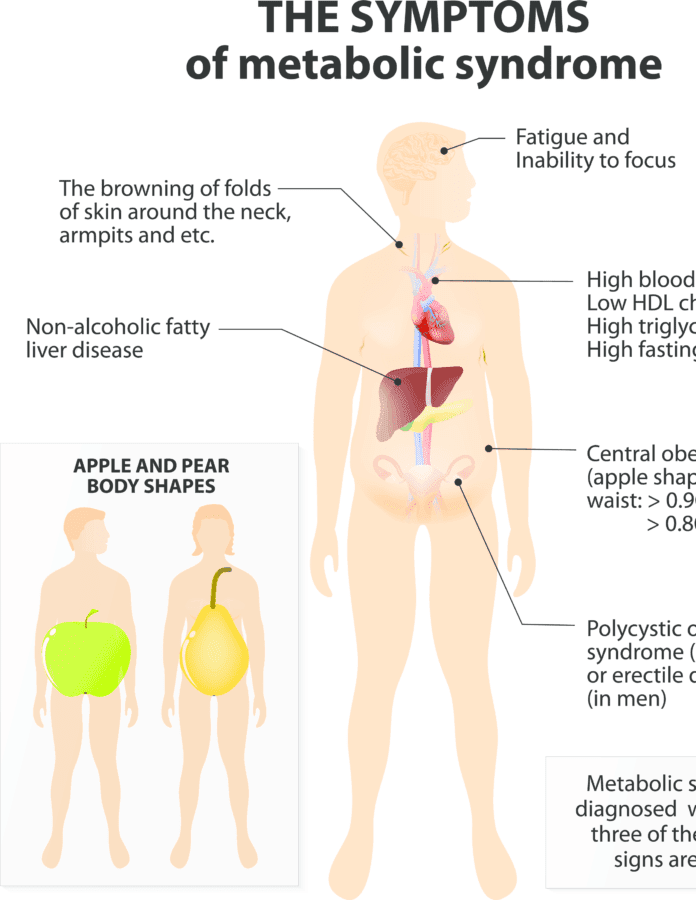
Metabolic syndrome (‘MS’) is a medical term that applies to various health conditions. We will get into each condition shortly. For now, just think of MS as a wide-ranging medical condition often resulting from being overweight or obese.

Nobody likes facing the potentiality of a dangerous medical condition, and MS is no different. However, we can make a conscious choice to make some lifestyle choices – and decrease the risk of developing the condition.

Causes of M.S.

Inactive lifestyles and/or a genetic predisposition are usually responsible for metabolic syndrome.  Another word for inactivity is ‘sedentary,’ which most medical professionals use to describe a desk-bound, lazy way of living.

Of course, being sedentary is a risk factor for being overweight or obese; both conditions can create many other health issues.

As being overweight or obese correlates to M.S., here is a point-by-point description of what regularly happens within the body:

  • A healthy digestive system will actively break down the foods you consume into sugar, or glucose. The chemical responsible for this conversion is insulin.
  • Overweightness or obesity may stimulate problems within the digestive system.
  • Sometimes, the overweight or obese person’s digestive system goes awry.
  • s a result, their cells do not respond to insulin, causing blood sugar to spike. This condition is called insulin resistance.

“Who’s at risk?”

Statistically, certain demographics of the population are more at risk than others. Also, people with certain health conditions are more likely to develop metabolic syndrome.

  • Age: Risk of MS increases as you get older.
  • Race: Latin Americans “appear to be at the greatest risk of developing metabolic syndrome,” followed by Caucasians and African-Americans.
  • Diabetes: Risk of MS is higher if you have a family history of type 2 diabetes.
  • Obesity: Disproportionate amounts of fat around the abdomen increases the risk of MS.
  • Diseases: Cardiovascular disease, nonalcoholic fatty liver disease, and polycystic ovary syndrome increase the risk of MS.

6 Signs of Metabolic Syndrome

As we go through the six most common signs of metabolic syndrome, please bear in mind that some metabolic disorders have no symptoms; this is a critical point.

The following information is based on guidelines set forth by the National Heart, Lung, and Blood Institute (NHLBI) and the American Heart Association (AHA).

Per these criteria, any person with three or more signs meet the standards for M.S.

1. High blood pressure [Hypertension]

Healthy blood pressure is below 120 systolic or 80 diastolic (120/80). Blood pressure between 120/80 and 140/90 is considered “normal.” Any blood pressure reading above 140/90 is a sign of pre-hypertension.

Symptoms of high blood pressure: dizziness, headaches, chest pain, shortness of breath, nosebleeds.

2. High blood sugar

For a person without diabetes, a “fasting blood sugar” reading (a measure taken following a 24-hour fast) is under 100 mg per deciliter (dl).

Typically, blood sugar (or blood glucose) is considered too high if it exceeds 130 mg/dl before a meal or 180 mg/dl shortly afterward. Under most circumstances, high blood glucose symptoms do not surface until levels exceed 250 mg/dl.

Symptoms of high blood glucose: blurred vision, fatigue, headaches, increased thirst, frequent urination, trouble focusing (“brain fog”).

3. Low high-density lipoprotein (HDL) cholesterol

HDL is considered the “good” cholesterol type and is vital for heart health. Despite popular opinion, cholesterol is an essential fat and is a crucial substance for every cell.

For men, HDL level of less than 40 mg/dl is considered too low. For women, it is HDL levels below 50 mg/dl.

Smoking, poor diet, and lack of exercise are commonly cited reasons for low HDL.

4. Large waist circumference

A large waist size is usually an indication of excess belly fat. Per the Mayo Clinic, a “large waist circumference” is defined as:

– “a waistline that measures at least 35 inches (89 centimeters) for women and 40 inches (102 centimeters) for men.”

5. High triglyceride level

Triglycerides are one of three fatty acid groups and are in our blood. As we eat, the body transfers any calories not needed for energy into triglycerides and stores them in your fat cells. As the body needs energy, this lipid releases from the hormones within the pancreas.

  • Normal levels: less than 150 mg/dl
  • Borderline: 150-200 mg/dl
  • High: greater than 200 mg/dl
  • Dangerously high: > 500 mg/dl (may cause pancreatic inflammation).

6. Obesity

Obesity is defined as being excessively overweight and is the top risk factor for developing metabolic syndrome. Typically, a measure called the Body Mass Index (BMI) determines a person’s degree of obesity.

While an imperfect method, BMI may help determine whether they’re overweight or obese.

Please note that it is important to consider body type – a simple “eye test” will suffice (not medically recommended, obviously).

First, here’s how to calculate BMI in kilograms (kg) and centimeters (cm):

– Weight (kg) divided by height (cm)

Here’s how to calculate BMI in pounds (lb.) and inches (in):

– LB/IN x .45

Second, here is the BMI range (applies to men and women) for underweight, normal weight, overweight, and obese:

Underweight: BMI < 18.5

Normal: BMI 18.5-24.9

Overweight: BMI 25.0-29.9

Obese (and category):

Class 1: BMI 30 < 35

Class2: BMI 35 < 40

Class 3: BMI > 40 (“extreme” or “severe” obesity)
metabolic syndrome

Decrease your risk of M.S.

Here are a few ways to lower your risk of metabolic syndrome:

  • Lose weight: Even a 10% reduction helps significantly.
  • Exercise: Aim for 30-45 minutes of moderate physical activity per day.
  • Know your family history of risk-related diseases (see above), and make the appropriate changes.
  • Eat a well-balanced and nutritious diet: Prioritize fruits, vegetables, whole grains, and lean meats.
  • Do not fast without consulting a medical professional.
7 Signs Someone Has High Functioning Anxiety

You may have suspected that someone has high functioning anxiety. This article will give you the seven signs that your intuition was right about them. Hiding anxious symptoms is a skill that the high-functioning yet anxious person has mastered unless you know what to look for.

7 Signs of High Functioning Anxiety

anxiety levels

1. Highly detail-oriented

Someone who has high functioning anxiety is usually hyper-focused on the details, planning, organizing, strategizing and working to make things as perfect as possible. This is because a person with anxiety often feels out of control. The parts of life that they can control give them a small sense of stability and control over their environment.

2. Think ahead like a chess player

Planning several moves ahead is a key technique of the best chess players. Plus, it is a skill for those with high functioning anxiety. Planning is one way to try to manage symptoms of anxiety because the more that they can control, the fewer scary unknowns there are.

3. Risk avoidance behavior

Anything perceived as ‘thrilling’ by the average person is something that someone who has high functioning anxiety would avoid. Risky situations like scary movies or extreme rollercoaster rides are not thrilling to those with anxiety. If you ask an anxious person to meet you after dark, they are likely to suggest a daytime meeting. If you suggest somewhere crowded, they will suggest somewhere with fewer people.

4. Seem a little fidgety

People with high-functioning anxiety often hide their nervous habits in public. But they also spend hours biting nails, picking, or rhythmically twitching or moving to deal with the constant anxiety. Nervous habits are a key trait of someone with anxiety. Indeed you may not know that they have these at all.

5. Need to control their environment

In times of stress, a highly functioning anxious person seeks to control as many things that are within their control as possible since they cannot control the uncontrollable. A research study found “one possible explanation as to why the need to control the environment is such a critical component of human behavior. The feeling of control enables organisms to deal with stress.”

6. Outbursts are rare but surprisingly intense

When someone has high functioning anxiety, they may suppress how they really feel or minimize the intensity of their feelings. Therefore, they seem calm most of the time. However, an anxious person is likely to explode at you when they continue to be frustrated or additional stressors like noise are introduced into an already stressful situation.
quotes

7. Thoughts seem preoccupied

When you’re telling them about something that is on your mind, their mind seems to have wandered. It might appear as if they only half-listen to others. Most likely they are worried about what to say in response, what you think of them, or if you bumped into them unexpectedly, worrying about the next unpredictable encounter. For the highly-functioning anxious person, thoughts are focused on the future or the past, not the here and now.

Researchers from the University of Illinois at Chicago found that people with anxiety disorders had a fear of the unknown. Researchers say that “Uncertain threat is unpredictable in its timing, intensity, frequency or duration and elicits a generalized feeling of apprehension and hyper-vigilance.” Research explains that fear of the unknown makes people preoccupied about their fears.

5 Ways to Tell Someone They’re Attractive (Without Being Weird)

Here is the scenario: You like someone, and found them attractive for a long time now. You feel that they are the only ones in the Universe that matter and you do not even so much as steal a glance at another. The very thought of outright telling them how you think they’re attracted to you is borderline nauseating, especially if you do not want to ruin what you have with them right now.

Yet you think about them non-stop and you just cannot wait to see them again, but when you do you are so nervous about how to tell them that you get nauseated again, and the cycle repeats itself – over and over again.

You then look at couples around you and you ask yourself: “How did THEY do it?” The answer is that one of them made its move.

The question now is: how do you make your move without coming across as some kind of pervert or cheesy? We, at Power of Positivity, have five ways to take the plunge correctly. What are they? I thought you would never ask.

5 Ways to Tell Someone They’re Attractive (Without Being A Creep)

show admiration

1. Make sure compliments are specific to THEM.

A lot of people just go about it in a cavalier fashion, telling their crush that they are “hot”, “fit”, or “beautiful”. You can say that about any person you find attractive, so when you take the time to notice what it is them you find attractive, you are far more likely to receive a positive response from them. There are many things to compliment them on. Otherwise why are you attracted to them in the first place?

Let us look at a couple of examples: If their thing is fashion (hopefully you do not become cavalier in this!), comment on how well their get-up looks on them. If they are intellectually gifted, tell them so and why. They might have written an exceptional thesis on their university course, this could be how you open the door. Also, have some fun while you do it. You need not go full on pick-up artist on them, but there is no harm in some light teasing. Remember, you are not R2D2!

2. Tell them about the emotions she has stirred in you.

Go on, be a little emotive. People, in general, eat it up like a turkey on Christmas! This is a person we’re talking about, right? It shows that you are willing to be vulnerable and that takes guts. This is more of a compliment to anyone than an actual compliment. This is a great way to demonstrate that you are willing to put your neck on the line for someone else. A great way to do it is to take your crush somewhere quiet and slowly and calmly reveal that they have struck a chord with you and tell them why.

Example: “I am just going to come out and say it. I think you are amazing. I really liked the way you helped out that old man at the food court. He dropped his tray and you paid for another meal for him. Only someone special with a big heart does that. And it is not the first time I have noticed this about you, I also noticed…”

3. Be vague.

I know it sounds contradictory and counter-productive to the last two points, but stay with me. Being all vague and mysterious it is a great way to tell someone you find them attractive. You have many forms of vagueness that you can use: ambiguity, omission, classification, uncertainty, approximation, and probability.

– Ambiguity is something having a double meaning. In the movie “Dumb and Dumber”, Harry said to Mary, “Nice set of hooters you’ve got there.” Taken aback, she replied, “I beg your pardon?” He responds, “The owls, they’re beautiful.”

– Omission is leaving out certain parts of information, so you can tell someone part of what is going on and the rest is on “a need-to-know basis”. For example, “I am going to the festival tonight. Do you want to come?”

– Classification is the perception of the information being told. When someone is vague, there is no definite classification of how to interpret this information. In this way, they will not know how to process what you have told them.

– Uncertainty means that you are unsure of the information or its candor, which puts doubt in the mind of the recipient of the information.  An example can go along the lines of: “I do not know for certain, but…”

– Approximation is an estimate. It can be close to the mark or very obscure. It can also serve as an anchor to keep the estimation around that certain point.

– Probability goes into the statistics territory. The benefit of this little beauty is that it can be used as what might be, using potential as a powerful weapon by way of increasing the recipient’s assessment.

4. Be sincere when you reveal you find them attractive.

Nothing is quite so off-putting than hearing a fake compliment. It is like saying that Florida has great ski slopes or the best vodka in the world comes from the Maldives islands. If you are not honest with your words, you will not be taken seriously by them and you will get that “are you for real?” look. Fellas, please do not tell her that she has a nice rack when she is not very well endowed in that area. Ladies, please do not tell him that you noticed how strong he was while unsuccessfully trying to open that jar.

attractive traits

5. Maintain strong eye contact while you talk to them.

Eye contact is the ultimate non-verbal way of interaction. Dogs use their eyes to tell us humans how they are feeling, and so can we. People can lie with their mouths but never with their eyes. It does not matter if it is an apology or if you are conveying desire. When you demonstrate that you are of high self-esteem (and doing that via eye contact is certainly one of the best ways – if not the best way to do so), you will be regarded by the other person as someone with power, and people associate this mental power with being great in bed.

Eye contact portrays confidence and is even a way to have foreplay without taking your clothes off. Michelle Pfeiffer uses it to “choose” Al Pacino for a dance in “Scarface”. Also, take mental note of Paul Walker in the movie “The Fast and The Furious 2” when he uses some really potent eye contact with Eva Mendes while he is driving fast and brakes at the traffic light at just the right time!

You know what they say, there is no time like the present. Now you have the tools not only to change your life, but also to change someone else’s. Lights, camera, action!

Using Nail Polish Every Day? Here’s Why You May Want to Stop

“If I think about how much nail polish I’ve ingested in my lifetime (nail biter as a kid), it horrifies me. I’m much more aware now that I’m thinking about the next phase of my life that includes pregnancy, kids, and overall well-being.” – Katherine Nilan

Nail polish is a fun accessory that many women use in their day-to-day lives. There’s nothing better than getting a new color and putting on that fresh coat of polish. However, a lot of women are finding that a few astonishing things happen once they stop using nail polish.

After all, nail polish is a mix of chemicals that you’re putting on your nails – and that’s just the stuff that chips off in a few days! If you use nail polish every day, you might want to reconsider this particular habit and see what happens when you let your nails go polish free for a while.

Foot specialist Joy Rowland says, “I always recommend to my patients that it’s best to leave polish on for a few weeks on, and then remove the polish and go without for a few weeks. It’s not a good idea to leave nail polish continuously on your toes all summer. They need a break.

Here Are 6 Reasons Why You May Want To Stop Using Nail Polish Every Day

1. You’ll have stronger nails

Nail polish remover can cause a lot of damage to your fingernails, especially if you use it frequently to change the polish color. The solvents used to take off the polish dry out your fingernails. This means that your nails can become much more prone to peeling, breakage and splitting. When you stop using nail polish, you’ll stop using nail polish remover – and that’s a win for you, because your nails will start to grow back stronger than ever.

2. No more yellow nails

Using polish daily can cause a yellow undertone to your fingernail – which many of us use nail polish to cover up in the first place! It’s an endless cycle. Much like the way cutting back of coffee can make your teeth look whiter, the same thing happens when you start cutting back on nail polish. The chemicals in nail polish can stain your nails and make them look slightly yellow. Fortunately, once you stop using nail polish, your nails will get back that regular, peachy-clear look to them.

3. No more rough patches

White patches on your nails are often caused by the keratin granulation from when you keep your nail polish on for too long. If you’re prone to wearing your nail polish until it chips all the way off or grows out, you’ve probably noticed that your nails also have a few rough patches. When you use nail polish too much or use too much polish remover, it can strip your nails of much needed layers of keratin. When you let your nails go polish free for a while, you’ll notice that those rough patches completely disappear.

4. Nails get back their natural shine

A lot of women use nail polish in order to get a shine to their nails. Turns out, if you stop using nail polish and remover, your nails will get their own healthy glow. Applying too much nail polish and then removing it with a rough acetone can cause damage to your nails and strip them of their natural shine. Instead, try getting a manicure only once every three weeks to help keep your nails looking beautiful and shiny.

5. You will eventually use less chemicals

Nail polish and its remover are full of chemicals, and when you put nail polish on too much, you’re getting those chemicals right into your body – from getting them in through your nails, to breathing them in when you paint your nails or remove the polish.

According to Dr. Michael Roizen, “…the truth is that painting your nails is like coating them with a medley of toxins. In fact, nail polish is likely the most toxic cosmetic there is.

These chemicals are often tied to any number of upsetting diseases, from lung disease to certain types of cancer. Pregnant women often want to avoid nail polish both on their nails and breathing in the fumes due to ties to miscarriage and birth defects. Going polish-free is a great way to make sure you stay chemical free, too.

6. Nails can predict your health

There are all sorts of illnesses and disease that can affect the color of your nails, from discoloration to a change in nail shape to calcium deposits underneath your nails. American Academy of Dermatology states, “Nails often reflect our general state of health. Changes in the nail, such as discoloration or thickening, can signal health problems including liver and kidney diseases, heart and lung conditions, anemia, and diabetes.

By coloring the nails continually with polish, you may miss these important signs into your health. When you go polish free, you’ll be able to see changes in your nails immediately and talk to your doctor as soon as they happen.

Nail polish can be fun, but there are plenty of ways to make your nails look lovely without using nail polish and risking damage to your body and nails with too much usage. Nail polish can be excellent for an event, but like any other beauty product or chemical that’s meant to go on your body, using it sparingly is the key to using it at all. Bare nails can still stand out and look stunning with a little maintenance.

References:
https://www.rodalesorganiclife.com/wellbeing/6-great-things-happen-when-you-stop-using-nail-polish
https://www.boldsky.com/beauty/body-care/2016/seven-things-that-happen-when-you-stop-using-nail-polish-097637.html
https://health.clevelandclinic.org/2015/07/why-you-should-give-your-toenails-a-break-from-polish/
https://www.sharecare.com/health/healthy-nails/nail-polish-toxic-chemicals
http://articles.mercola.com/sites/articles/archive/2015/12/07/10-nail-symptoms.aspx

10 Signs You Are (Or Will Be) A Good Parent

What makes a great parent? Have you ever thought about this question?

Of course, there are the traditional answers:

  • “Giving them good moral values.”
  • “Making sure they don’t go without.”
  • “Ensuring they get a good education.”
  • “Teaching them to be polite.”

We could go on. All of these are wonderful pieces of advice (if a bit cliché).

“Children learn more from what you ARE than what you TEACH.” ~ Anonymous

Let’s get slightly more specific with the question:

Have you ever thought about how the “little things” you currently do influence the kind of parent you will be? 

Uh…that’s a different animal, isn’t it?

More than likely, most people haven’t actually considered this before. So let’s talk about it a bit!

By the way, every item on this list applies to both current and future parents!

Here are ten signs you are – or will be – a great parent!

parent

1. You treat customer service people well

Who hasn’t been on hold before? Who hasn’t been on an excruciatingly long hold before? Uh-huh.

How is your demeanor once you get someone on the line? Do you go off on the person and vent your anger, or remain calm, collected, and polite?

Staying calm with people in emotionally charged situations demonstrates high emotional intelligence. “The capacity to be aware of, control, and express one’s emotions” is a vital skill for parents.

2. You have a few long-term friendships

Alisa Bash, a licensed marriage and family therapist based in Malibu, California, says:

“People with long-term friendships understand emotional intimacy. Their word means something, and they show up when they commit to things and to people, something that will mean so much to a child.”

So, if you’ve got a few ole’ chums, you may just bring a bit more to the parenting table.

3. You understand balance.

As you read this sentence, a parent is slowly killing themselves from work stress. And a child is wondering where their Mom or Dad is.

As defined by one prominent childhood educator, work-family balance is necessary ” to have the energy and patience to take care of their children in a fun, joyful, and loving way.”

4. You prioritize a healthy lifestyle

Speaking of work and speaking of balance. The crazy scheduling and resultant stress of modern life require that we monitor and take care of our mind-body health and lifestyle.

Many potential parents see having a baby as a fix to their problems.

Just … no. While things may be challenging, as adults, it’s our responsibility to take care of any pressing issues before bringing a baby into the mix.

5. You’re not afraid of self-sacrifice

If you’re reading these words, you’re either (1) a positive person or (2) someone trying to become more positive. Positivity is an admirable trait in a society that is so self-absorbed.

You are more likely to sacrifice yourself for someone else. Have you bought a stranger’s lunch before? Helped out an older adult? Lent money even when things were tight?

You get the idea. And if you’re a self-sacrificing person, odds are you’ll be a great parent.

parent

6. You’re an empath

Empaths are the folks who make the world go round. We always need more of them and can never have enough.

Not only are empaths compassionate; they have an almost superhuman ability to see and feel what someone else sees and feels as if they were them.

That’s really all that needs to be said. You know who you are. Not only will you be a great parent, but a great friend, great lover, and a great influence on a planet that really needs you.

7. You’re pretty much a nature photographer

First things first – no, selfies and 500 food pics do not count! Sorry!

Photographers, regardless of their level of innate ability, are almost always penetrating, observant, and grateful individuals.

Perhaps their greatest gift is their talent for seeing the beauty in all of the “little things” around them. You know… the person who can melt your heart with a photo of some random bug on a leaf.

8. You’re on speed dial

Being a great (active) listener is a fantastic skill that can improve any aspect of your life.

Linda Lucas, a child psychologist in Leesburg, Florida, says, “More than almost anything, children need to be listened to.” As such, if you’re the one person someone calls for advice or anything else, you’ll probably make one heck of a parent.

9. You’ve “blueprinted” things

No matter if you’re the natural planning type. If you’re already seriously considering the who, what, when, where, and how you’ll raise your kid, you’ll probably be a pretty good parent.

This doesn’t mean daydreaming about names and pink outfits (though that’s pretty nice.) It means some deliberate planning. Of course, these plans may just go to the wayside once you have the little bundle of joy; but it shows your sincerity and seriousness about parenting.

parent

10. You’re creative

In all sincerity, this world needs a bit more creativity in it. Creative individuals are open-minded, intelligent, and well-meaning in everything they do.

No reason to think they’d raise their child any differently. We need more people like you!

Sources
https://en.oxforddictionaries.com/definition/emotional_intelligence

https://www.rd.com/advice/parenting/surprising-signs-youll-make-great-parent

What Is Your Biggest Fear, According to Your Zodiac Sign?

According to astrologers, each sun sign of the zodiac has its own biggest fear. How does your zodiac sign handle the many fears in life?

What Is Your Biggest Fear, According to Your Zodiac Sign?

ARIES MARCH 21 – APRIL 19

Being left alone is the Aries’ biggest fear. That’s because this sociable sign needs to feel the love and support of family and friends. Even bigger than losing friends is the concern of losing a lover or loved ones. Unfortunately for Aries, this zodiac sign cannot escape loss.

TAURUS APRIL 20 – MAY 20

Fear of the unknown is Taurus’ greatest fear since they love a sense of security and stability, especially at home.

GEMINI MAY 21 – JUNE 21

The zodiac twins of Gemini both fear is imperfection. This sign loves being in control, graceful, on time, and exceeding your wildest dreams. Anything less than perfection feels like letting you down and Gemini’s biggest worry is failing to meet your or their own high expectations.

CANCER JUNE 22 – JULY 22

Being unlovable is Cancer’s biggest fear, but this zodiac sign’s apprehensions are ungrounded. Being crabby can turn others off, but it’s temporary and their love for this zodiac sign will return as soon as your smile does.

LEO JULY 23 – AUGUST 22

The dominant and active zodiac sign Leo fears a lack of notice and adoration by others. Loving the attention of standing out from the crowd, the lion’s biggest fear is fading into the crowd.

VIRGO AUG 23 – SEPT 22

An apprehension of chaos is behind Virgo’s biggest fear. Being orderly and organized is key to this zodiac’s happiness, whereas dirty disorder is frightening to Virgo.

LIBRA SEPT 23 – OCT 22

Fear of being unattractive is Libra’s biggest fear. As a lover of all things beautiful and in harmony, a Libra finds the ugly and chaotic to be frightening. Ugliness is scary, especially when this zodiac sign finds it in themselves.

SCORPIO OCT 23 – NOV 21

Vulnerability is this sign’s biggest fear because Scorpio wants to be seen as tough and edgy compared to others.

SAGITTARIUS NOV 22 – DEC 21

Sagittarius fears entrapment. Of course, that does not necessarily mean physically. Instead, they fret about emotional, financial, professional, and romantic traps. All entrapment that might keep this zodiac sign from total freedom of choice is usually feared and therefore avoided.

CAPRICORN DEC 22 – JAN 19

Capricorn is not the only zodiac sign whose biggest concern is rejection. Researchers at Cambridge University found that social anxiety is common when people feel ashamed about something about themselves and are more likely to hide it out of a fear of rejection.

AQUARIUS JAN 20 – FEB 18

This zodiac sign’s biggest fear is losing their vitality. Aging, losing health, and losing the energy that they once had is an Aquarian’s biggest fear. Having to rely on others rather than being the one others can rely on is depressing to Aquarius.

Researchers in the Journal of Social Psychology studied beliefs about chance or fate and found that beliefs about one’s fate were associated with taking action based on astrological readings. Women were significantly more likely than men to believe in and have knowledge about astrology.

The study results suggest that people who believe that external forces influence their lives can be helped by reading horoscopes that suggest ways to improve their well-being. Aquarius can find help with their fear by coming to terms with aging and mortality, and by accepting that allowing others to help is often helpful to them.

PISCES FEB 19 – MAR 20

Just thinking about the loss of love will send the Pisces sign of the zodiac into a frenzy of fear. Pisces’ concern over the emotional pain of loss is stronger than in other signs because they also fear their ability to handle grief.

5 Signs Your Partner Is Emotionally Disconnected

Are you in an emotionally disconnected relationship?

The distance can always grow between two partners, even in the most committed relationships. It often sneaks up on you unexpectedly. Before you know it, there’s a gaping chasm between you and your significant other. Even worse, you are not quite sure how to fix it. It’s distressing to be in, as you are so used to love and affection for that person. It can be confusing and scary when those feelings diminish.

Unfortunately, those feelings of estrangement are very hard to remove altogether. It’s no one’s fault in particular, but to start fixing the problem, you need to look at yourself first and see what you can change in your behavior.

Researcher David M. Frost, Ph.D., says, “Our study found that people who yearn for a more intimate partnership and people who crave more distance are equally at risk for having a problematic relationship. If you want to experience your relationship as healthy and rewarding, you must find a way to attain your idealized level of closeness with your partner.”

Here are five signs to look out for, and some advice on what you can do if you feel that distance growing.

Here Are 5 Signs You’re Emotionally Disconnected From Your Partner

emotionally disconnected

“Detachment produces a peculiar state of mind. Maybe that’s the worst sentence of all, to be deprived of feeling what a human being ought to be entitled to feel.” – James Dickey

1. You take your stress out on them

When all the stress factors, like your job or your family, pile up, you can quickly become moody, irritable, and snappy with your SO. In fact, your stress makes you hyper-focus on your problems, and sometimes you start taking your better half for granted. This can also lead to what we call “wandering eyes”, i.e. you start looking for something that you think will be better because you’ve started associating your significant other with all the other problems in your life.

Gary Lewandowski Jr., Ph.D., co-founder of Science of Relationships, says, “You stop caring as much about anyone else. The focus is on your plight of excessive demand and inefficient resources…

The key to resolving this behavior is to find ways to reduce stress. Try yoga or practice mindfulness. Maybe sign up to that Zumba class that you’ve been meaning to try for ages. Reduce your pressure, and you’ll see it disappear from your relationship.

2. No more sex when emotionally disconnected from your partner

You’re either too tired or not in the mood to have sex, but one too many rejections can create that gap of emotional detachment. Physical contact is just as important as romance, as it can be a great way to communicate your love without words. Maybe you’re not doing it consciously, but turning down your partner’s advances can make them feel like they’re not attracted to you anymore. The solution to this is obvious: invest more in your physical relationship. Maybe spice things up in bed a little bit, or plan a romantic evening when it’s just the two of you. When you reintroduce good sex into your relationship, things almost always start looking up again.

3. You’re unfair with chores

It’s natural that when you live together, you will focus on certain chores more than others. Maybe you have an affinity towards doing the dishes, whereas your partner prefers to be the one always to take the trash out. However, these chores must be regularly reconsidered to ensure an even split of the workload. If you start ignoring your own chores, or you’re expecting your partner to do them, that can lead to emotional detachment. It works the other way around, too, if your partner ignores their chores.

To resolve this, sit down and have a frank conversation about what’s bothering you. Then plan how to tackle household work together.

loving partner

4. No emotional support exists in an emotionally disconnected partnership

Whether you have good news or bad news, your first reaction is to share it with the people you love most. Think about it – how does your partner relate to your experiences? Sometimes, you may find that you don’t tell them about what you’re going through because you don’t think you’ll get a reaction from them. That makes you aggravated and emotionally distant, as you don’t feel appreciated and loved.

If you want to fix this, you need to have a frank conversation with your partner about how you feel and the levels of communication you require. Maybe they didn’t even realize they were doing it – and they will change their behavior when you point it out.

5. Emotionally disconnected partners fail to make time for each other

Remember how you used to spend every Saturday night on the sofa, watching the latest episode of Orange is the New Black? Do you feel tired and overwhelmed with everyday duties? It’s easy to say that we can’t deal with long discussions. However, that can only turn into a cause for emotional estrangement.

Everyone’s stressed and tired. But healthy relationships work on communication and enjoying each other’s company.

If that’s no longer the case, you may want to consider why that is and whether the real reason is that you’re tired or that you don’t want to be around your partner. Find the root cause and address it, and if you feel like spending time with your SO is a chore, then the love between you may be gone.

emotionally disconnected

Final Thoughts: Know the Signs of a Checked-Out or Emotionally Disconnected Partner

Being emotionally detached is a hard thing for any couple to have to endure. Whether you feel estranged or your partner is now distant, it can go on for years without addressing it. Whatever the cause, make sure you act on it to avoid an imminent fallout later on.

Connection with your partner will occur easily and naturally when you and your partner have the courage to fully embrace all your feelings with a deep intent to learn. You will easily and naturally connect with each other when you are both openhearted and connected with yourselves,” adds best-selling author Dr. Margaret Paul.

And, as always, consider what the benefits are and choose your fights wisely. Is it worth it to keep fighting, or is the damage already irreparable? If you choose to keep going, then make sure to look at yourself as well, rather than just your partner. That’s because it’s often both parties fault. Follow this advice and lead a happier, more fulfilling life with your better half.

5 Reasons Your Body Gets Inflammation (And How to Avoid It)

What is inflammation?

You’ve probably heard the term ‘inflammation,’ but do you have a good understanding of what it is?

Inflammation is a vital defense mechanism of the body. Without it, we wouldn’t be able to neutralize things like bacteria, viruses, and toxins.

A response of the immune system, inflammation is the activation and deployment of proteins with “the aim being to remove harmful stimuli, including damaged cells, irritants, or pathogens – and begin the healing process.”

You’ve cut yourself before, right? What did the wound look like shortly after? Most likely, the skin around the cut appeared red and swollen. This reaction illustrates the immune system at work. The red and swollen area is a byproduct of the inflammatory response.

How is chronic inflammation different?

Chronic (long-term) inflammation is not a good thing, however. Monsour Mohamadzadeh, Ph.D., and director of the Center for Inflammation and Mucosal Immunology at the University of Florida, explains the difference:

“In a healthy situation, inflammation serves as a good friend to our body. But if immune cells start to overreact, that inflammation can be totally directed against us.”

10 Causes of Chronic Inflammation

Knowing the causes of the inflammation can help you beat it!

managing pain inflammation

1.     Being Overweight or Obese

Studies have shown that overweight people have higher concentrations of inflammatory proteins in fat cells. Obese women are especially at risk and are likelier to have higher inflammatory protein levels “AIF-1” than those within a healthy weight range.

2. Poor Gut Health

Certain things – such as antibiotics, disease, and poor diet – throw a wrench into our gut’s microbiome. While the word may sound like something out of a sci-fi movie, the microbiome is very real and vital. Our gut requires healthy amounts of good bacteria – and any disturbance to this balance can trigger inflammation.

3. Stress

Stress is a primary antagonist of many chronic health conditions – and it’s no surprise that the same goes for inflammation. In a recent study, researchers discovered that simply recalling a stressful past event can increase inflammation in the body.

4. Sleep Deprivation

An adequate amount of sleep (seven to nine hours for adults) is crucial for the body to repair itself. Our brain cleanses toxins and consolidates memory, and the body releases essential growth hormones, for example. In one study, a reactive protein that serves as a marker for inflammation levels was 25 percent higher in people who slept less than six hours per night.

5. Underlying Health Conditions

Addison’s, Crohn’s disease, and Celiac diseases, along with fibromyalgia, lupus, and psoriasis, are conditions that involve an over-stimulated immune system. Autoimmune disorders cause the body to constantly send inflammatory signals even without the presence of an outside danger. Then, the body attacks healthy tissue in response, leading to chronic inflammation. Certain bacteria and viruses also affect the regulation of the inflammatory response.

6. High Exposure to Toxins

Industrial chemicals and pollution can cause excess inflammation with long-term exposure. According to a comprehensive global review, air pollution can potentially damage every organ and cell in the body. People who live close to industrial sites or urban areas have the highest risk of developing chronic inflammation caused by pollution.

7. Untreated Acute Inflammation

Inflammation isn’t always damaging; it’s simply an immune response to a foreign threat such as bacteria, viruses, or an injury. However, when you have an untreated injury or infection, your body releases inflammatory proteins, which can lead to chronic inflammation.

8. Unhealthy Diet

Unfortunately, our modern diets have done a number on our health. Our bodies haven’t evolved for our highly processed diets, so eating these foods in excess causes poor health over time. As with other foreign threats like bacteria, our bodies respond to overly processed foods in the same manner by increasing inflammation.

9. Drinking Alcohol or Ingesting Drugs in Excess

Studies have shown that alcohol contributes to inflammation because it disrupts our gut microbiome. It also impairs the liver’s ability to filter out toxins, which can cause organ failure in severe cases. In addition, long-term drug abuse impairs the immune system and can lead to neuroinflammation.

10. Lack of Exercise or Overexercising

As with most things in life, we should always strive for a happy medium. Too much or too little of anything will usually lead to ill effects, such as inflammation. Overexercising may not seem harmful, but frequently engaging in high-intensity exercise can lead to chronic inflammation since your body won’t have time to heal. On the other hand, not exercising will cause a buildup of toxins, which will inevitably cause inflammation.

How Do I Get Rid of Inflammation?

Fortunately, advances in medicine have provided the answer to this important question. It is indeed possible to reverse chronic inflammation in many cases!

10 Efficient Ways to Reverse Inflammation

inflammation fighting foods1.     Lose Weight to Reduce Inflammation

Achieving and maintaining a healthy weight will help reduce inflammation in your body. Even a 5% reduction in weight can significantly lower inflammation levels. Aim for three days of exercise per week first, and then work your way up to five if possible. It’s recommended to get at least 150 minutes of moderate or intense physical activity each week.

2.     Take Vitamin D.

In combination with a five to ten percent reduction in weight, individuals who supplement vitamin D may reduce their inflammation markers by nearly forty percent.

3.     Take Fish Oil.

Omega-3 fatty acid has potent anti-inflammatory properties. Numerous studies have shown a reduction in inflammation levels in patients with various medical conditions who take fish oil supplements.

4. Meditate.

As stated, stress is a significant contributor to inflammation. Any activity that reduces stress levels is critical to helping maintain a healthy immune system. In a University of Wisconsin-Madison study, mindfulness-based stress reduction was more effective at lowering inflammation than other relaxation techniques.

However, any calming activity can help lower stress levels and inflammation. If you don’t enjoy meditating, you can do yoga, practice deep breathing, or even journal at bedtime.

5. Exercise.

Breaking a sweat helps us maintain a healthy weight and combat stress. A moderately-rigorous exercise regimen with an hour of aerobics and weight training 3-4 times weekly is recommended, though even a brisk walk is better than no exercise.

6. Follow an Anti-Inflammatory Diet.

As we stated above, one of the main reasons for inflammation in our modern world stems from an unhealthy diet. We often don’t have time to prepare healthy foods because of busy schedules, so we opt for fast foods instead. However, we pay the price for convenience with poor health in the long term.

To reduce inflammation, try to eat more fresh, whole foods such as fruits and vegetables. Even if you can’t eat fresh foods with every meal, choosing a healthier option more often will improve your health. Research shows that a Mediterranean diet that includes primarily plant-based foods can reduce inflammation, heart disease, and stroke.

7. Prioritize Sleep.

Most people suffer from sleep deprivation to some degree in the modern world. Make sure to stick to a sleep schedule and aim for seven to nine hours per night. The body and mind have a chance to recharge and heal during sleep, so it’s vital for overall health.

8. Avoid or Quit Smoking.

Smoking damages every cell in the body because it suppresses the immune system and triggers the release of pro-inflammatory proteins. It can also cause cancer, lung and vascular diseases, oral disease, and other health problems. However, by quitting smoking, you can reverse adverse health effects relatively quickly.

For instance, your circulation and lung function will improve just two weeks after quitting. In the first year, coughing and shortness of breath decrease, and the tiny hair-like structures in your lungs called cilia to resume normal functioning. After fifteen years, your risk of heart disease is similar to that of a non-smoker.

9. Work Less.

Overworking yourself can increase stress, which will lead to chronic inflammation. If possible, reduce your hours at work to part-time to manage stress and have a better work-life balance. Today, many people find that working 40 or more hours per week doesn’t offer enough downtime. Having a flexible schedule means prioritizing your health and family rather than work.

10. Practice Positive Thinking.

It’s sometimes challenging to maintain a positive outlook in our world today. However, try not to get caught up in the world’s news and events. Instead, focus on improving yourself and your life since you can’t control anything else regardless. By shifting your attention back to things you can control, you will start feeling more empowered and optimistic. Do the best you can with what you have, and let everything else take care of itself.

cinnamon

Final Thoughts on Causes and Treatment for Inflammation

The body and mind work together to carry out daily tasks and guide us through life. However, due to internal and external stressors, they can become imbalanced quite quickly in our modern world. Chronic stress can lead to inflammation, resulting in health problems such as heart disease, cancer, and other diseases. Therefore, it’s vital to reduce inflammation by maintaining a healthy lifestyle and managing stress.

Following the fundamental pillars of health, such as exercising, eating healthy, sleeping soundly, and practicing mindfulness, can keep inflammation (and stress) at bay.

7 Reasons People Get Depressed (and How to Avoid It)

It’s very normal to feel stressed or upset sometimes. We all have days when we feel blue and upset about seemingly nonsensical things. However, if those feelings stick around and don’t go away, or interfere with your life significantly and hurt the people you love, you may be suffering from depression. Depression is a very common condition, which is why its symptoms can sometimes be overlooked, leading those who suffer from it to not seek any treatment.

Dr. Myrna Weissman says, “Now, depression is a biological disorder. It’s not all in your head. But the triggers of depression, and whether you have an episode and when you have an episode or an onset are probably related to environmental factors. And those are loss of attachments and stress and loss in your life.

With depression, it’s always very difficult to identify the root cause of what’s making us upset. That’s because it’s often the case that it’s not just a single factor contributing to our depressive feelings but several circumstances, ranging from past experiences to current stressful situations. Here are seven of depression’s most common causes and several tips on how to avoid them.

Here Are 7 Reasons Why People Get Depressed And How To Avoid It

“Depression begins with disappointment. When disappointment festers in our soul, it leads to discouragement.” – Joyce Meyer

1. Overthinking and stress can cause you to be depressed

Naturally, stress is a part of everyone’s life, but depressed people have a tendency to go over and over stressful situations that they have experienced. Sometimes, trying to focus on the details of what’s made you stressed can actually cause you to relive the stressful situation again. That way, you can easily trap yourself in a vicious loop.

According to Mayo Clinic,Chronic stressful life situations can increase the risk of developing depression if you aren’t coping with the stress well. There’s also increasing evidence of links among poor coping, stress and physical illness.

A good way to overcome this is through mindfulness and affirmative thinking. It’s never easy to just stop thinking about something, so it’s always better to try and replace the stressful thoughts with something more affirmative.

2. Thinking the worst will happen

That’s kind of the same as overthinking but the other way around – overthinking something that will happen in the future rather than a past situation. Focusing too much on things like whether your new boss will like you or whether your date will go well only causes more stress which leads to depressive thoughts. The best way to avoid this behavior is to busy yourself with everyday chores and avoid focusing on what’s to come. Keep yourself rooted in the present to stop thinking about the future.

3. Having money troubles can cause you to feel depressed

Being in debt is always a stressful situation to find yourself in, and the more you dwell on the money you’ve already lost, the more acutely you’ll feel your depression creeping in. Researchers have found out that it’s not the lack of money that can fuel your depression, it’s chronic debt and being constantly poor.

Researcher Dr. Thomas Richardson says, “People who are depressed may struggle to cope financially and get into debt, which then sends them deeper into depression.

A good way to remediate this is to focus on controlling your spending and trying to find activities to enjoy that don’t involve money. That way you can reassess some of the good, free things in your life.

depressed

4. Focusing on body image

In a society where body image is everything, it’s no surprise that many women and men get overly obsessed with the way they look. This obsession can very easily turn into depression. Giving in to that feeling and pushing yourself to an unachievable standard can lead to serious illnesses, such as anorexia. One way to avoid this is to raise your own self-esteem. Spend some time in the mirror, looking at your own body and the features of your face. Give yourself a compliment on the things you like. That way, once you start accepting yourself, you will see that others also accept you just as you are.

5. You can feel depressed because of a relationship breakdown

Relationships are hard, and seeing them end can often be a root cause for depressive feelings. It’s difficult to see someone drift away from you, especially if you’ve been so close. It can even lead you to think that you’ll never be able to find love again, or that you aren’t worthy of it.

Professor Constance Ahrons, PhD, states, “The depressed person often feels responsible, but they feel like they can’t do anything about [their inertia].” The best way to handle this is to talk to the people you love. Your family and friends will always be there for you and besides, when you share your pain, you’ll instantly feel better.

6. Due to old age

Emotional well-being can suffer a lot with old age. As our bodies change, our brains struggle to keep up and the emotional intensity of our experiences can make us miss our younger days. That’s why it’s very common for depression to develop after the age of 50. A great way to resolve this is to focus on your achievements through your life. Think about your family, or your career, your education – focus on what you’ve gained rather than on what you’ve lost.

7. Grief can cause you to be depressed

Grieving is a part of human nature; however, it is especially difficult when dealing with the loss of a loved one. If not handled correctly, grief can develop into a pattern for depression and even suicidal thoughts. The best way to ensure that is to talk to a specialist. Grief counselors help you come to terms with the concept of mortality and encourage you to grab life by the horns from now on. If you, or someone you know is grieving, make sure to seek help before it’s too late.

Society still stigmatizes mental health and mental illness today. Especially when it comes to depression, many cases go undiagnosed and can sadly end tragically. That’s why it’s vital to address symptoms of depression if you notice them in one of your friends, family, or even yourself.

No matter how hard anyone tries, you have to try and help yourself first. Recognize these seven reasons for depression and reflect on your own experiences with one or more of these life events. We need more and more people to be open and honest about their mental health if we are to ever break that taboo.

Skip to content