Weekly tips, affirmations, and small actions to feel your best.

5 Loving Ways To Support Someone Who Just Left An Abusive Relationship

“If you walked away from a toxic, negative, abusive, one-sided, dead-end low vibrational relationship or friendship — you won.” – Lalah Delia

Someone who has recently exited an abusive relationship needs to be treated with respect and compassion. They’re going to need a lot of support to help them get back on their feet. According to The National Domestic Violence Hotline, “Abuse is about power and control, so one of the most important ways you can help a person in an abusive relationship is to consider how you might empower them to make their own decisions.

Many people aren’t sure exactly how to help support someone who has recently left an abusive relationship. It’s always important to know the best ways to support someone in this situation, because you never know when you might be someone’s support network. Here are the best ways to compassionately support someone who has just left an abusive relationship.

Here Are 5 Ways to Support Someone Who Has Just Left An Abusive Relationship

1. Let them talk

Emotional venting is important for people who have recently left an abusive relationship. For some people, their relationship consisted of being silenced by their abusive partner. They weren’t able to talk about their feelings and were often left walking on eggshells. You never know how long someone spent being silenced or being coerced into keeping their thoughts and feelings private. Their abuse may have even consisted of gaslighting.

To be supportive, it’s important to allow them to talk about the abuse they endured. “Let them know that the abuse is not their fault,” adds The National Domestic Violence Hotline. Let them vent, because it might be the first time they’ve been able to in an incredibly long time.
kind

2. But don’t make them talk

As important as it is to be supportive by letting them talk, it’s just as important not to make them talk. Someone who has left an abusive relationship has a lot of emotions. They may not know where to begin when it comes to processing them. They may also not want to talk about the abuse they endured. It’s okay if they want to process things privately. Be a listening ear, but don’t try to force them to talk about anything they don’t want to. If they’re not ready to talk, respect that and let them be silent. Sometimes, silence is the strongest compassion.

3. Use neutral language about the abuser

It might be really tempting to tell someone that their abuser is trash, and that they’re an evil human being. While all those things may be true, a lot of people who come out of abusive relationships still feel loyalty towards their abusers. It’s important to use neutral language when you’re talking to them about their abusers. They will be more likely to open up and talk about their experiences if they don’t feel the need to defend their abuser.

4. Help them find a professional

Sometimes, we don’t have the right things to say. We may not always know how to handle someone’s emotions when it comes to dealing with an abuse victim. Professionals, like counselors and therapists, will have a better time helping someone who has recently left their abusive relationship. Help connect them to a professional and recognize that your advice may not be the best thing that they need right now. Helping them find a professional is one of the most compassionate things you can do when it comes to supporting someone.

5. Let them have a distraction

Abuse victims need to have fun just as much as everyone else. Some days will be better than others. For someone who’s recently left an abusive relationship, getting their life back to normal is incredibly important. If you want to support them, it’s a good idea to allow yourself to be a distraction for them. Make it clear that you still see them as the same person they were, even if they may not feel like the same person. Take them to the movies or spend a day shopping together. It’s okay if they want to pretend like everything is normal once in a while.

Final thoughts

Abusive relationships are life-altering. Some people bounce back to normal quicker than others. If you find yourself in the position of being someone’s support system, it’s important to know the best ways to go about doing it. Everyone has a different idea of what is supportive – some people might take the mothering approach, while others try using tough love. But really, what someone who has just left their abuser needs is compassion. Compassion will help people heal from their abusive relationships. These are the best ways to compassionately support someone who needs it, especially in the wake of leaving their abuser.

https://youtu.be/lO-TMrAyth4
(C)Power of Positivity, LLC. All rights reserved
References:
http://www.thehotline.org/help/help-for-friends-and-family/

10 Foods That Put Your Metabolism Into Fat-Burning Mode

When did you last hear someone say, “I’m trying to lose weight, and I need to eat in a way that supports my metabolism”? It seems we’ve drifted away from this balanced approach, instead focusing on weight loss as a process of rigorous “dieting,” often involving low calorie foods or fat restriction. There’s also an emphasis on exercise, despite the potential for low energy due to these restrictive practices. Finding the strength to work out when we’re not sufficiently fueling our bodies can be a challenge.

It’s essential to understand that our current perceptions of weight loss and dieting might be influenced by widespread misinformation. Unfortunately, the weight loss industry, worth billions, can sometimes propagate deceptive narratives. In some cases, this even includes misrepresentation of scientific studies.

Are Diets Even Effective?

The effectiveness of dieting is frequently brought into question, and for a good reason. The simple yet powerful truth is this: sustainable weight loss is about 80% dependent on eating the right foods. Furthermore, research has shown that conventional diets fail more than 95% of the time. This is a sobering fact that calls for a reconsideration of our approaches to weight management.

Portia de Rossi, in her book “Unbearable Lightness: A Story of Loss and Gain,” poignantly states, “The diet industry is making a lot of money selling us fad diets, nonfat foods full of chemicals, gym memberships, and pills while we lose a piece of our self-esteem every time we fail another diet or neglect to use the gym membership we could barely afford.”

This observation also highlights the high cost of gym memberships and personal training, which may not be affordable or sustainable for many people.

Dr. Yoni Freedhoff, an assistant professor of family medicine at the University of Ottawa and a contributor to the U.S. News & World Report, provides some compelling insight. He explains, “I believe that 95 percent of diets fail people … For at least the past 100 years (and likely many more), dieting has been synonymous with suffering. It’s been “die” with a “t,” where adherents to diets have been instructed to either suffer through hunger and cultivate the skill of white-knuckled willpower, or to consider food to simply be fuel and deny themselves either the dietary indulgences they love the most or eliminate entire food groups.”

Let us take these reflections as an opportunity to reevaluate our understanding of weight loss and nutrition, placing our focus on sustainability, balance, and overall well-being. Let’s remember that the journey to better health is not about punishing restrictions but about nourishing our bodies and minds in a meaningful, enjoyable, and maintainable way.

foods

Eating to Boost Metabolism and Lose Weight

Dr. Freedhoff, unsurprisingly, is a staunch advocate of eating to lose weight. Like millions of other physicians specializing in nutrition and health, he understands the vital importance of incorporating foods that stimulate the metabolism.

10 Foods That Rebalance Your Metabolism So You Can Lose Weight

Here are ten such foods that put your metabolism into fat-burning mode:

1. Beans

Beans are rich in dietary proteins and require a fair amount of metabolic energy to digest properly. Additionally, beans are rich in fiber which – along with protein – is a catalyst for a fueled-up metabolism.

2. Chia Seeds

Chia seeds are packed with omega-3 fatty acids, fiber, and protein. Besides being terrific for both heart and brain health, omega-3’s regulate metabolic rate by affecting the fat-burning hormone leptin.

3. Egg Whites

Egg white, like chia seeds, contain concentrated amounts of fatty acids. Also, eggs whites include what are called branched-chain amino acids, which get your metabolism revved up. Finally, egg whites are packed with protein – and that’s always good for fat-burning!

4. Chili Peppers

Chili peppers contain a chemical compound called capsaicin, which boosts your metabolic rate. Merely adding a tablespoon of chopped chili peppers to your meals throughout the day is enough to obtain their fat-burning benefits.

5. Whole Grains

Unlike processed grains (e.g., white bread and pasta), whole grains break down slowly. This extra digestive effort requires a higher metabolic rate and, you guessed it, this added effort burns more calories. Fiber-rich foods, such as brown rice and oatmeal, are particularly effective.

6. Curry

This Indian specialty provides a few noteworthy benefits. The reason for its nutritional versatility is that curry contains a wide array of different spices – all of which have properties that help burn calories. Among these are ginger and turmeric.

7. Green Tea

Green tea supplements are top-rated for weight loss, although one can get the same benefits from fresh tea. According to a study published in the American Journal of Clinical Nutrition, green tea extract boosts metabolic rate by as much as 4 percent.

8. Lean Meats

Lean meat, such as that found in chicken and turkey, is packed with iron. As it turns out, iron deficiency is one of the most common in developed countries; which is strange considering the abundant mineral sources. (Fortified cereal is another excellent – and vegetarian/ vegan-friendly – source of iron.

9. Cocoa

Studies show that cocoa may help prevent weight gain by reducing the absorption of calories. Additionally, extracts of cocoa activate the genes associated with fat-burning. Dark chocolate containing over 70 percent cocoa (sometimes called ‘cacao’) is best.


metabolism

Share this Image On Your Site

10. Water

No metabolism-boosting article would be complete without water. H2O prevents dehydration, which slows down metabolism; it also promotes proper digestive function – a crucial part of losing weight. Drinking cold water is best, as it forces your body to use more calories for digestion.

Final Thoughts on Eating to Feed Your Metabolism

Maintaining metabolic health is an essential part of our overall well-being. As we have learned, the process doesn’t have to involve grueling diets, expensive gym memberships, or harsh restrictions. Instead, it’s about nourishing our bodies with the right foods that support our metabolism.

The 10 foods highlighted in this article are not only delicious and easily accessible but also packed with the nutrients necessary to fuel our metabolism. Including these foods in our regular diet can help support energy production, aid digestion, and promote a healthy weight, among other benefits.

Remember, it’s not about strictly adhering to a diet but developing sustainable eating habits that nourish our bodies. The key is to have a balanced diet that includes a variety of nutrient-dense foods, and these ten foods are an excellent place to start.

Let’s change our mindset from deprivation to nourishment, focusing on foods that will support our metabolism and contribute to our overall health. This shift in perspective might be what we need to sustainably manage our weight, enhance our well-being, and lead healthier, more fulfilling lives.

It’s your health, and you have the power to influence it positively. Every meal is an opportunity to provide your body with what it needs to function optimally. So, take this information to heart and enjoy the process of nourishing your body, knowing that you’re supporting your metabolic health with every bite.

Dentists Explain 7 Habits That Ruin Your Teeth and Gums (And How to Fix It)

Taking care of your teeth and gums is vital for overall health.

There’s a direct relationship between what goes on in your mouth and what goes on in your body. Indeed, maintaining good oral health can prevent medical disorders such as diabetes, heart attack, and stroke.

Poor oral care invites the accumulation of bacteria along the gum line, which creates a haven for bacteria. Additionally, not regularly brushing and flossing one’s teeth may lead to more severe conditions like gingivitis, periodontitis, and trench mouth.

Eventually, poor oral care begins to show. This may mean the loss of teeth, gum disease, or a severe medical condition such as cardiovascular disease. For those who have lost some or all of their teeth, dental implants offer a durable and natural-looking solution. Many people are now considering the full mouth  dental implants Turkey package deals, which provide a comprehensive and cost-effective approach to restoring a full set of teeth. These packages often cover everything from initial consultations to implant procedures, making it easier to achieve a complete smile transformation. You may see specials here.

Unfortunately, far too many of us have acquired some bad habits. Of course, most of us are unaware of the damage these behaviors cause – and you can cut yourself some slack. It turns out that unless you happen to be a dentist or dental hygienist, you wouldn’t know, and that’s why is so important to visit the dentist Charlotte NC to get the best attention and recommendations for your dental health.

Here are seven habits that can damage your teeth – and what to do about them!

receding gums

RELATED: 5 Easy Ways to Heal Receding Gums Naturally

1. Opening things

Your teeth are not meant to replace a knife, scissors, or bottle opener! Most of us are guilty at some point or another of cracking something open (mainly nuts, bags, and soda bottles) with our chicklets. When we do this, we increase the odds of breaking or chipping one or more teeth.

2. Using tobacco

Not much of a surprise here. Mountains of research link tobacco use with an increased risk of gum disease and oral cancers. Besides potentially acquiring cancer (as if that isn’t a good enough reason!), snuffing and smoking tobacco can permanently stain your teeth.

3. Biting your nails

“Quit biting your nails!!” Does anyone else remember being screamed at for munching on your digits? Well, there are a couple of good reasons.

First, think about how many things our fingers encounter during the day. Throughout 24 hours, we’ll accumulate millions of bacteria on our hands and under our nails. So our chances of getting sick go way up, we may very well chip or otherwise damage a tooth.

4. Piercings of the cheek, lip, and tongue

While considered trendy among some youngsters, piercings anywhere around the mouth are risky. According to the Canadian Dental Association (CDA), these piercings can lead to ‘chronic injury to adjacent teeth and mucosa (inside of cheeks, lips, taste buds), including tooth fracture, and gum recession, which can lead to tooth loss.’

5. Consuming too many acidic foods

Eating too many foods high in acidity (lemons, limes, oranges, etc.) may damage your teeth’ enamel (hard outer layer). Enamel damage dramatically increases the risk of cavities and oral diseases.

6. Clenching the jaw or grinding teeth

People who clench their jaw and grind their teeth generally do so out of nervous habit or stress. While widespread, dental experts claim that jaw clenching and tooth grinding increases the risk of a misaligned jaw and deterioration of the teeth. Furthermore, either habit may cause the surfacing – or worsening of – headaches and jaw pain.

7. High sugar consumption

As a rule, the more sugar eaten, the higher the presence of oral bacteria. As if this isn’t bad enough, sugar consumption also correlates with higher levels of bacteria and toxins in and around other body parts. Surprisingly, throat lozenges are considered products that should be avoided due to their sugar content. And don’t forget…bubblegum also contains sugar!

teeth

Final Thoughts: Reversing Damage to Teeth and Gums

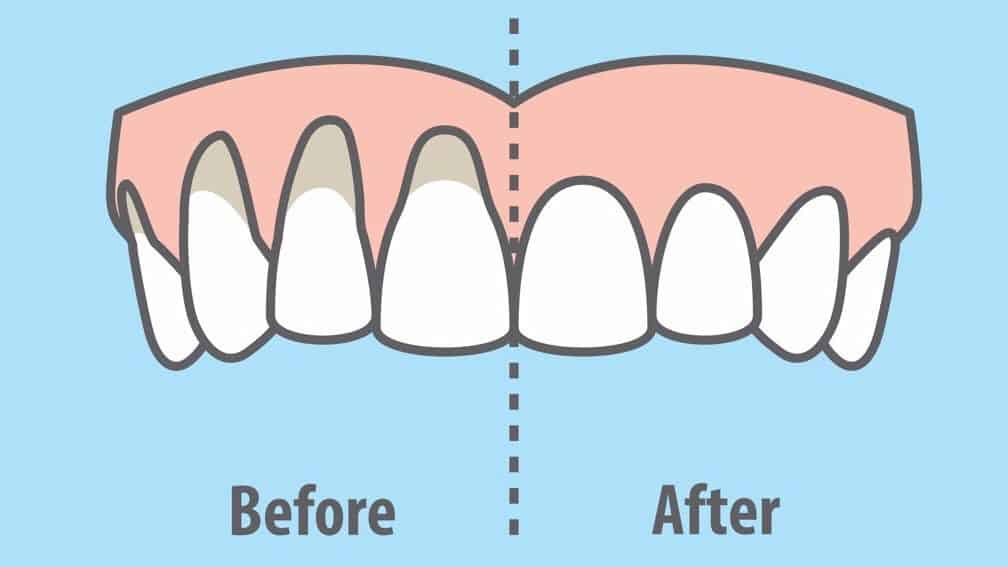
Depending on the severity of any present condition, it may be entirely possible to reverse or limit damage to the teeth and gums. Here are a few pieces of advice, courtesy of the experts.

First, begin practicing excellent oral care. This means thoroughly brushing your teeth twice daily and flossing at least once. Proper brushing and flossing are your two primary tools to guard against damage.

Second, see a dentist if you notice significant gum recession. Receding gums are a common oral problem, and a dentist can prescribe various treatments that can both repair gum tissue and prevent further damage. Moreover, having the opportunity to customise your treatment plan with a trusted provider like The Brace Place means you’re never compromising on quality or appearance. The flexibility and discretion offered by private braces make them an increasingly attractive option for adults and teens alike.

Third, abstain from any behavior or habit that may damage your teeth. Besides not engaging in any of the seven habits mentioned above, it is helpful to be aware of other patterns that may cause problems. According to the American Dental Association (ADA):

  • Binge eating
  • Brushing too hard
  • Chewing ice cubes
  • Drinking too much coffee or red wine
  • Eating too many snacks
  • Gnawing on writing utensils
  • Playing sports without a mouthguard
  • Snack on veggies. For example, cucumbers are a yummy, crispy snack that’s a great alternative to high-sugar or salty snacks and doesn’t harm your teeth. Consuming them also has many other health benefits.

Experts Explain What Happens to Your Body After Smoking E-Cigarettes

E-cigarettes, also known as e-vapors or vaporizers, are a battery operated, electronic nicotine system (ENDS) that simulates the experience of traditional smoking. These “vaping” devices emit vaporized nicotine which, instead of being inhaled by the user, is simply held in the mouth and released. E-cigs are heavily advertised products, with many ad campaigns focusing on the “benefits” of vaping over traditional smoking, but are they really healthier?

One of the United States’ leading market research firms, BIS Research, estimates that the global electronic cigarette (e-cigarette, or ‘e-cig’) will reach a total market value of $50 billion by 2025.

Competing directly with “Big Tobacco” and “Big Pharma,” e-cigarette products have become a major player. While the growth of tobacco companies has stagnated in recent years, e-cigarettes – despite stricter regulations in primary markets – is conservatively expected to grow by over 20 percent year-over-year.

Since the number of people smoking e-cigarettes are expected to continue to increase as people give up real cigarettes and look or a safer alternative, the question is, what happens to your body after you smoke an e-cigarette? Lets dive in and find out…

Experts Reveal The Dark Side Of Smoking Popular E-Cigarettes

What is the problem

Although most health professionals will concede that vaping is much safer than traditional smoking, it isn’t without risks.

As mentioned, e-cigs usually contain nicotine, and – aside from the health problems (which we discuss later) – are being used, in increasing numbers, by high school students and other minors.

According to the Centers for Disease Control and Prevention (CDC), the nicotine found in e-cigarette products may lead to continued tobacco product use among youth. 69% of middle and high school students were exposed to e-cigarette advertisements, according to a recent study.

As there’s nicotine in the products, minors – under current U.S. law – are prohibited (or supposed to be) from its usage. The selling of nicotine-containing products (e.g., cigarettes and dipping tobacco) is also illegal.

However, up until recently, there were no restrictions on the sale or use of these products to minors. And many people, rightfully so, had a big problem with this.

What Happens to Your Body After Smoking ‘E-Cigarettes’

Additional studies show that the products aren’t as safe as advertised.

Researchers from the Karolinska Institute in Stockholm, Sweden found “there was a significant increase in heart rate and blood pressure” in those who used e-cigarettes containing nicotine.

The study also found that arterial stiffness, the “generalized thickening and stiffening” of the arterial walls, is three times higher in smokers using e-cigarettes containing nicotine than e-cigs without nicotine.

Stiffening of the arteries strains the heart, reduces blood circulation, and may increase the risk of heart damage. Conditions associated with arterial stiffness include atrial fibrillation (irregular heartbeat), coronary artery disease, high blood pressure (hypertension), heart failure, and stroke.

Dr. Magnus Lundback, the leader of the study, says his team “found there was a significant increase in heart rate and blood pressure in the volunteers who were exposed to e-cigarettes containing nicotine.

Toughening the law

Findings such as those by the Karolinska Institute are having serious repercussions.

The European Commission of the European Union (EU) was the first body to crack down on the e-cigarette industry. The lawmakers consented to Article 20 of the Tobacco Products Directive in 2014, which issued wide-ranging safety and quality requirements, packaging and labeling rules, and enhanced regulatory oversight of the e-cigarette and vaping industry.

In 2016, the European Commission issued technical standards for the electronic components of e-cigarettes.

In August of 2016, the U.S. Food and Drug Administration (FDA), finalized a tobacco rule to include e-cigarettes. Mitch Zeller, director of the FDA’s Center for Tobacco Products, said:

“Before this final rule, these products could be sold without any review of their ingredients, how they were made, and their potential dangers. Under this new rule, we’re taking steps to protect Americans from the dangers of tobacco products, ensure these tobacco products have health warnings and restrict sales to minors.”

Generally, when the U.K. and U.S. take legal action, other countries do as well. To date, 79 countries have adopted laws regulating e-cigarettes; including minimum age laws, advertisement, labeling, packaging, promotion, safety, and classification legislation.

The Need for Transparency

While some studies show that vaping may help someone to cut back on smoking or quit, the companies – unsurprisingly – were taking advantage of lax regulations. Many find former promising and the latter unacceptable – particularly when minors are unnecessarily put at risk.

Lundback emphasizes this point: “Our results underline the necessity of maintaining a critical and cautious attitude towards e-cigarettes, especially for health care professionals.”

“E-cigarette users should be aware of the potential dangerous of this product, so they can decide whether to continue of quit based on scientific facts.”

(C)Power of Positivity, LLC. All rights reserved
Sources:
http://www.dailymail.co.uk/health/article-4870964/E-cigs-triple-risk-heart-damage-users.html

http://globaltobaccocontrol.org/e-cigarette/country-laws-regulating-e-cigarettes
https://ec.europa.eu/health/tobacco/ecigarettes_en
https://www.fda.gov/ForConsumers/ConsumerUpdates/ucm506676.htm
https://www.fda.gov/tobaccoproducts/labeling/rulesregulationsguidance/ucm394909.htm

5 Behaviors That Reveal You’re Breaking Your Own Heart (And Don’t Know It)

Human beings are complex creatures. Many people don’t realize that being broken hearted doesn’t only happen after the end of a relationship. In fact, other people don’t even have to be involved when a broken heart occurs. Breaking your own heart is entirely possible. We even do it without realizing that we are. The only way to stop yourself from breaking your own heart is to recognize the behaviors that you’re exhibiting. After coming to terms with heart-breaking behavior, anyone can get on the path to healing.

Here Are 5 Behaviors That Reveal You’re Breaking Your Own Heart (possibly without realizing it)

1. Checking up on your ex

There’s usually a reason that our ex-partners are no longer in our lives. If the relationship ended and you didn’t stay close friends, then there’s very little reason to continue to check up on your ex. This includes peeking at their social media, checking on their Instagram, or asking your mutual friends how they’re doing.

Sex and relationship expert, Dr. Megan Stubbs, EdD, ACS says, “You have to remove all traces of them because something as innocuous as seeing their name or a photo can trigger your brain into a wave of sad emotions.

If you found out that an ex-partner was constantly checking up on you, how would you feel about the situation? Try looking at it from their point of view, too. Letting go of our ex-partners makes room for new love in our lives. Constantly checking up on your ex to see how they’re doing will only further break your heart.

letting go

2. Following friends that no longer play a role in your life

Just like ex-partners, old friends are out of our lives for a reason. Maybe you had a falling out, or maybe you realize that they weren’t being a good friend to you. Whatever the reason, it’s just as important to let go of old friends as it is to let go of old lovers. Sometimes, friendship can be just as important and life-altering as romantic relationships. Stop checking up on friends that are no longer in your life and thinking of all the ways that things could have been different. It’s important to look towards the future.

3. Thinking poorly of yourself

Breaking your own heart can be as easy as looking in the mirror and being cruel to yourself. If you ever found yourself looking in the mirror and thinking you’re not good enough, you’ve already begun to break your own heart. Low self-esteem is always hard to handle. However, giving into the need to be less than kind to yourself is one of the ways that you break your heart every day.

Each and every person has worth, and is important, and learning to love yourself and the good things about you is one of the greatest things you can do,” says psychiatric intake clinician, Megan Hosking.

When you think of yourself, try to imagine yourself as someone else. That is to say, imagine you were talking to your loved one the way you speak to yourself. It will help you break out of the bad habit of thinking that you deserve anything less than kindness and love.

4. Not setting your boundaries

Are you one of those people who doesn’t ever seem to say “no”? Do you let people walk all over you in an effort to be the most helpful and accommodating person you can? While you may think you’re being kind, it’s actually a way that you’re breaking your own heart. The best way to keep your heart intact is to know what your boundaries are and exert them. Having boundaries and knowing when to say “no” is a virtue in and of itself. It will keep you safe and happy, and it will also stop you from breaking your own heart.

5. Being afraid to take a chance

If you’ve ever stopped yourself from asking someone out just because you think they’re going to say no, you’ve already begun to break your own heart. Being afraid of taking chances is what is going to stop you from experiencing life to the fullest. It’s also going to continually be what breaks your heart.

Take chances every once in a while, and you’ll be surprised by how many things actually go your way. Conquering that fear is the first step to healing an already broken heart. It’s also the first step to making sure that you don’t break your own heart all over again without realizing it.

Final thoughts

People break their own hearts every day without even noticing it. The best way to combat a self-broken heart is to remind yourself that you’re a person worthy of love. Stop checking up on people who have proven that they no longer care about you. Instead, focus on the people in your life that are there and who do care. Be kind to yourself, and make sure that you’re learning your boundaries. And most of all: don’t be afraid to take a chance in life.

“Stop thinking about everything so much, you’re breaking your own heart.” – Anonymous

https://youtu.be/apVYj7spM1I

(C)Power of Positivity, LLC. All rights reserved
References:
http://www.bravotv.com/blogs/you-need-to-stop-looking-at-your-exs-social-media
https://www.health24.com/Mental-Health/News/how-to-deal-with-the-crippling-effects-of-low-self-esteem-20160701

9 Behaviors People Who Grew Up In A Controlling Family Display In Their Adult Lives

“By contrast, psychological control can limit a child’s independence and leave them less able to regulate their own behaviour.” – Dr. Mai Stafford

Sometimes, family can go from being present, to being too present. Trying to find the balance between allowing children to be independent and still looking out for their best interests can be hard. However, swinging too far in one direction can result in a controlling household.

Families and parents that try to control their child’s every move create adults who display maladaptive behaviors, simply because controlling behaviors “can limit a child’s independence and leave them less able to regulate their own behavior,” says Dr. Mai Stafford. Here are some of the most common adult behaviors of someone who grew up with a controlling family or parents.

Here Are 9 Behaviors of Someone Who Grew Up in A Controlling Family

1. Trouble with codependency

Adults who grew up with a controlling family will have trouble with being codependent on other people in their lives. Sometimes, those people can turn out to be close friends. But, most often, the new role of codependency falls on a romantic partner. Because of the controlling nature of the family, the adult who grew up in that family may start to seek someone to replace the codependency of their parents.

2. Perfectionist

Someone who grew up with a controlling family is much more likely to be a perfectionist. This perfectionism often stems from wanting to avoid getting in trouble, or to avoid criticism from within the family. As an adult, the perfectionism carries over to the rest of their everyday life. This perfectionism is often maladaptive and can cause issues in the adult’s workplace or relationships.

3. Trouble with self-doubt

A controlling family will often instill a sense of uncertainty in the child in order to more easily control what they do (or don’t do).

Often the roots of low self- esteem lie deep in a wounded child within us who feels “not good enough.” As children we feel accepted only to the extent we feel unconditionally loved and supported by our parents,” says Dr. Sonera Jhaveri.

This uncertainty carries over into adulthood in the form of self-doubt. This means that someone who had a controlling family is more likely to seek out affirmations from their friends or romantic partners. They may have trouble doing normal day-to-day tasks without getting approval from someone else in their life.

repeating past

4. Feelings of intimidation

Around people with a controlling demeanor, someone who grew up with a controlling family will struggle with feelings of intimidation. This is usually left over from feeling intimidated or belittled from their own family as children. Adults who grew up with a controlling family aren’t able to process their emotions in a healthy manner, which may leave them struggling with feeling intimidated by people who have no ill-will towards them.

5. Inability to relax

Adults who grew up with a controlling family have a hard time relaxing. They often feel like they’re being watched or scrutinized. This stems from the controlling family during childhood, where the family would often exercise their need for control over the child’s need for privacy or autonomy. In adulthood, these people will still feel like they’re being watched, no matter how distant or far away from their family that they are.

6. Feelings of betrayal

If a child grew up being told that they should never, under any circumstances, get a tattoo, then as an adult, that person may struggle with feeling like they are betraying their family if they decide to get a tattoo. This could happen with any behavior that a person exhibits that had been deemed problematic or unacceptable by their controlling family. Adults with controlling families have trouble fully expressing themselves due to fear of disappointing or betraying their families.

7. Addictive personalities

When a child grows into an adult, they begin to exercise freedom from their once controlling family. For some people, this freedom can cause addictive personalities in the adult. For example, many adults who grew up in controlling families drink to excess the minute they legally can, because they’re now free of their parents control. Substance abuse is common among adults who grew up in controlling families for this reason.

8. Lying

Adults who had a controlling family growing up often default to lying, even if they don’t need to. They lie about little things – like what they had for lunch, or what they did over the weekend. The lies are not usually something large enough that they will get caught up in the lie. This is a leftover coping mechanism from childhood, in which the child would need to lie to their controlling family in order to avoid getting in trouble for expressing some autonomy over their own selves.

9. Trouble making decisions

A controlling family takes over the decision-making for the child. This results in the child never learning how to make decisions for themselves. When the child grows into adulthood, that inability to make decisions is still there. People who grew up in a controlling household seek input from the people around them before making decisions, or simply avoid making them at all.

Final thoughts

Adults who grew up with a controlling family may not realize that they’re exhibiting these behaviors until it gets pointed out to them. Like most maladaptive behaviors, there is hope to righting the issues that took place during childhood. Therapists and mental health experts have long been helping adults learn how to take control of their lives after having grown up with a controlling family or parental figure. There’s always hope, and there’s always help for adults who grew up with a controlling family.

https://youtu.be/EXElk0gq9Fk

(C)Power of Positivity, LLC. All rights reserved
References:
https://www.independent.co.uk/life-style/health-and-families/overly-controlling-parents-cause-their-children-lifelong-psychological-damage-says-study-10485172.html
https://www.healtheminds.com/articles/low-self-esteem-in-romantic-relationships/

6 Easy Ways to Reduce Stress Naturally

There are plenty of reasons to be concerned about the direction the world is heading. And guess who the decks are stacked against? We’re pretty sure you can figure that one out.  Hardworking people who get up, go to work, and just want to live an ordinary and peaceful life are thrown into a vicious cycle of unrelenting turbulence and cynicism. World events affect our health, whether we realize it or not. More on this later.

We Have Enough to Worry About!

Do we really need another source of stress? None of us want to stress. Sometimes we need to deal with it to get along in life. But why are we asking for more? If you’re fortunate enough to have a steady income, the odds are that you stress too much about work – and probably about finances.

Maybe you or a family member has a disability. Maybe your savings are dwindling if you have any at all.

When one problem gets resolved, another always seems to pop up, doesn’t it?

Now ask yourself: “Do I really want to take on more stress? Why?”

Coping Tips

When the information we take in triggers a negative response, it has a very real impact on our health. Stress is stress; doesn’t matter if the source of stress is personal or not.

That said, let’s take a look at some ways to deal with stress caused by what you see, read, or hear.

6 Ways to Deal With Stress Naturally

1. Keep Your Mind On One Thing

Did you know that the average person has 50,000-70,000 thoughts per day? While we may take a bit of pride in this number – the brain is a remarkable organ – being mindful of what we think about is essential.

Focus on the task at hand. Discard the extraneous garbage that you don’t need. Including obnoxious new anchors and news hosts.

2. Do Things You Enjoy

At the risk of sounding incredibly cliché, life is too damn short! It can’t (and shouldn’t) be all serious, all of the time.

Getting out the rut that is negativity bias can be difficult, so make it (much) simpler by doing the things you “get lost in.” Maybe it’s painting, writing, computer games, meditation, or reading.

You’ll feel much more relaxed and rejuvenated.

3. Talk to People

Keeping with the “Life is too damn short!” theme, take the time to visit your family and friends. Share a good meal, go out together, or just sit around and talk.

Of course, try not to limit yourself to friends and family. If that’s all you can manage, fine; but there’s a whole world out there! Trying joining a group of some sort; one that stokes your passions and adds some much needed Joie de vivre.

stress

4. Stay Healthy

While most of us (including yours truly) enjoy the occasional grub/beer/wine-fest, make it a priority to stay healthy.

People have a propensity to over-complicate health. Don’t listen to the 8-pack abs infomercial. Here’s everything you need for basic health:

– Eat 3-5 healthy meals per day.

– Abstain or cut back on alcohol and nicotine.

– Get 30+ minutes of moderate exercise per day (break it up into chunks, if easier.) Make the exercise something fun!

– Drink at least six, eight-ounce glasses of water per day.

– Practice diaphragmic breathing or mindfulness meditation.

5. Limit Your News Exposure

In fact, try limiting your T.V. time, period. Television, while it’s relaxing for an hour or two here and there, is pretty much a waste of time and brainpower.

If nothing else, limit the time spent watching the news. Instead, try scanning the headlines on Google News, Reuters, or your local paper. Bypass the garbage and only read what you think is essential. (Like sports.)

6. Make A Difference

Gandhi famously said, “Be the change you wish to see in the world.”

Can you imagine the difference if everyone allocated just 10 percent of their time devoted to entertainment and “news” and did something to better humanity?

While we all want to make the world better, the uncomfortable truth is too many of us are spectators and not participants.

Make a personal pledge to help one person a day. How does this change the world? Via the “multiplier effect.”

See, when you help just one person, you aren’t just helping one person. You’re making it more likely that they’ll help someone, and that “someone” to help someone – and so on.

You’re being the change.

May you be happy and at peace this day and the next.

https://youtu.be/lFdcCXmGpy4

(C)Power of Positivity, LLC. All rights reserved
Sources:
http://bigthink.com/in-their-own-words/why-we-love-bad-news-understanding-negativity-bias

http://www.businessinsider.com/most-and-least-trusted-news-outlets-in-america-2017-3
http://mentalhealthrecovery.com/info-center/relieving-feelings-of-stress-caused-by-world-events/

Relationship Experts Reveal 7 Habits Strong Women Should Never Tolerate In A Relationship

Do you envy strong women who don’t put up with a bunch of nonsense?

Women tolerate all kinds of things in a relationship. When women get together and talk about their past relationships, they’re often appalled by everything they put up with. Thankfully, relationship experts have been listening, and they’ve compiled a list of things that women should never tolerate in a relationship.

Some of these things seem so normalized that many strong women don’t realize that it’s something they don’t need to put up with.

Our title and today’s topic focuses on how today’s women handle relationship adversity. However, nobody should put up with people who disrespect or mistreat–men or women. So regardless of your gender, take note of these traits and expect the best for yourself!

Here Are 7 Things Strong Women Should Never Tolerate in A Relationship

“A strong woman is a woman determined to do something others are determined not to be done.” – Marge Piercy

Women who stand up for themselves will not put up with men who exhibit these behaviors.

1. No kitchen know-how

As charming as it might be to cook dinner for your partner every once in a while, not knowing how to cook isn’t an endearing trait. However, a strong woman should never put up with someone who can’t cook a meal or doesn’t know how to fend alone for a few days.

Women should be companions to their partners. In fact, they are not their partner’s mother. Not knowing how to cook is, indeed, a baseline for any adult. Otherwise, “This signals that he may not see you as an equal,” says Jennine Estes, M.F.T and author of Relationships In The Raw.

2. Not cleaning up after themselves

A woman in a relationship is not a maid or a housekeeper! If a man leaves his drawers all over the floor, his wet towel on the bathroom sink, and his socks outside the hamper, he’s not ready for an adult relationship. A strong woman should never have to tolerate picking up after a man every time she comes over. He needs to grow up if he can’t clean up after himself.

what ruins relationships

3. Lack of compromise

Rex Tillerson once said, “Compromise on ethical conduct is not an option.” A strong woman should always have a relationship in which compromise is the preferred form of ending disagreements. Indeed, no strong woman should ever tolerate being in a relationship with a man who doesn’t want to compromise. Compromise is one of the backbones of being in a serious relationship. So there’s no need to tolerate a relationship where one person doesn’t want to give and only wants to take.

4. Verbal abuse

Strong women may not realize they’re being abused in a relationship because the abuse might not be physical. Relationship experts agree that this is one of the top things that strong women should never tolerate in a relationship. Their partners should all be speaking to them with respect. Strong women should never accept being spoken down to, condescended, insulted, or verbally humiliated in their relationship.

5. Unsupportive of her goals

Being in a relationship is like having a built-in support system. According to research by Brigham Young University,ambivalence in a relationship — the feeling that a partner may be unpredictable with his or her support or negativity — can take a quiet toll on the health of an individual.” A strong woman will have plenty of goals that she wants to achieve in her life.

A strong woman should have a partner who is supportive of those goals. If a man in a relationship is unsupportive of a strong woman’s goals, then that’s a red flag that the relationship will not work. Relationship experts agree that a strong woman should never tolerate an unsupportive partner.

6. A partner who doesn’t help with the children

Sometimes, a relationship gets to marriage and children before a strong woman realizes that she’s been tolerating unacceptable behavior. Strong women should never accept a man who doesn’t help out with the children. Parenthood should be a shared task among both partners, and a strong woman should never tolerate a man who doesn’t pull his share of the weight.

7. Untrustworthy

A strong woman should always be able to trust her partner. Relationships survive on trust and communication. No one should feel like they can’t trust the person they love. No female should never tolerate being in a relationship with someone who can’t be trusted. She should never have to endure a man who tells lies – about himself, or his life, or about what he’s doing or who he is with.

pop meme

Final thoughts on Strong Women and Relationships

There are so many things in a relationship that no one should tolerate. Many females may not realize that minor annoyances in their relationships are unacceptable. A strong woman should know all her boundaries, desires, and wants in a relationship. She should control her life, including who she chooses as a partner. Relationship experts have been researching the types of things that should never be tolerated in a relationship, and these are the top behaviors. Strong women should not tolerate their partners exhibiting these things in a relationship.

10 Behaviors That Reveal Someone Secretly Feels Trapped In Life

Feeling trapped isn’t as uncommon as we like to believe. Some people feel trapped in a life that they didn’t want, and don’t know how they got to where they are. This could be someone who is feeling depressed, or someone who was pressured by a controlling family to conform in certain ways. However, there are some key behaviors that reveal that someone is trapped in a life they didn’t want.

Stanton Peele mentioned in his book ‘The Meaning Of Addiction’ that, “The difference between not being addicted and being addicted is the difference between seeing the world as your arena and seeing the world as your prison.

Here Are 10 Behaviors That Reveal Someone Feels Trapped in Life

1. They don’t like their job

Everyone has worked a job they didn’t particularly enjoy. Usually, this phase of our life happens when we’re still in a transitionary period, between working a job and starting a career. However, one of the biggest signs that someone feels trapped is that they’re miserable in their career – even if it’s one they worked hard for to get a degree to enter into that career. It’s a sign that they’re living a life they didn’t want to live.

2. They’re withdrawn

Some people are just natural introverts. This usually means that they enjoy spending time by themselves, but still enjoy social gatherings. Someone who is withdrawn doesn’t WANT to spend all that time by themselves, but they often don’t see another option. Someone who is withdrawn is trying their best not to remind themselves of the life they’re currently living.

don't want

3. They don’t have a support system

People who feel trapped in their life tend to withdraw even from the people that can make their life a little more bearable. Someone who feels trapped won’t have a good connection with their friends or their family members. They tend to be alienated from all of the people that could offer them support.

4. They’re restless

Emotional restlessness tends to manifest itself in a physical form. Someone who can’t ever sit still, who constantly needs to be doing something new and exciting may be trying to forget that they’re feeling trapped. These people tend to never slow down, and always seem to have some kind of plan to keep them emotionally occupied.

5. They lie about their life

Sometimes, the only way for someone to escape the life that they don’t want is by lying about it. Usually, these people will lie to complete strangers. They will make up details about the life they wish they were living, rather than the life that they actually have. It may start small but can escalate to lying about their career, family, and relationships.

6. They’re depressed

Depression is common among people who feel trapped. They may be very good at hiding it, but knowing the signs of chronic depression will reveal it. Most people who are living a life they never saw for themselves experience some kind of depression. It may be mild, or it may be incredibly severe.

7. They have a substance abuse problem

Escapism is something that many people indulge in when they feel trapped in a life they don’t want. One of the most common forms of escapism is substance abuse. They will either have a drinking problem or abuse prescription or illegal drugs. Being high or drunk allows them to escape from the life they’re leading, even for a little while.

8. They can’t say “no”

People who feel trapped often showcase the inability to say “no”. Sometimes, it’s this inability that leads them to the life that they’re living now. They won’t be able to say no to their family, to their partner, to their friends, to their boss or to their coworkers. They tend to run themselves ragged trying to appease everyone who has ever asked them to do something.

9. They have low self-esteem

“Stop thinking in terms of limitations and start thinking in terms of possibilities.” – Terry Josephson

Feeling trapped in a life you didn’t want doesn’t bode well for your self-esteem. This is why people who feel trapped often exhibit low self-image. They don’t think highly of themselves. They also don’t believe that they “deserve” the kind of life that they want to life, which leaves them trapped in one they don’t.

10. They have commitment issues

Struggling with commitment isn’t unusual for people who feel trapped. They already feel trapped in their day-to-day life, so they try to exercise some form of control over their relationships. These people tend to have a string of short relationships. Their past partners would describe them as “commitment phobic”.

Final thoughts

Feeling trapped in a life you don’t want happens to people every day. Fortunately, it isn’t something that anyone has to deal with. Taking charge of life starts with deciding that something has to change. Once that decision is made, anyone who feels trapped can start turning their life around. Anyone who feels trapped in life can reach out to a therapist or life coach who can help them start to change things and make their life what they want to live. Taking charge is only steps away for anyone.

https://youtu.be/958oQqN-9DQ

(C)Power of Positivity, LLC. All rights reserved
References:
https://www.psychologytoday.com/us/blog/the-second-noble-truth/201205/imprisoned-your-life
https://www.amazon.com/Meaning-Addiction-Unconventional-View/dp/0787943827
Skip to content