Weekly tips, affirmations, and small actions to feel your best.

Science Explains What Happens To Your Brain When You Don’t Use Your Smartphone For A Week

Look around you next time you go out; are most people engaging with others or engaging with a smartphone or other device in their hand? Most likely, it’ll be the latter. While smartphones have their place in society and can definitely make life easier, they can also drive a wedge between ourselves and reality. With just the press of a button, we can unlock a whole virtual world full of apps, games, social media platforms, news sites, emails, and other functions. With all of this available, why would we immerse ourselves in boring old real world when we can get lost for hours in a made up one?

Well, there’s a simple answer to this question, and one that our addiction can quickly make us dismiss: because the things that truly matter are in the real world. While the online world serves its purpose, it should never take the place of reality. However, that’s exactly what has happened for most of us.

Consider these startling statistics: According to a New York Times report, both teens and adults check their phones an average of 150 times per day and send 110 text messages. A 2015 Pew Research Centre study revealed that 24% of teens said they go on the Internet “almost constantly.” Surveys in the United States and Europe from 2012 show that between 1.5% to 8.2% of people suffer from a condition called Internet Addiction Disorder (IAD). Other reports have found rates between 6% and 18.5%. Moreover, 46% of smartphone users say that they couldn’t live without their phone.

The governments of China and South Korea have classified IAD as a major public health threat. Of course, millennials use their smartphones the most among all age groups, which means the problem will only worsen if we don’t shed light on this epidemic now. We won’t get into too much detail about smartphone statistics; however, we would like to share the negative effects of using them, and what can happen when you take a vacation from your smartphone.

Here’s what happens to your brain when you take a break from your smartphone:

First of all, can you think back to a time in your life before your smartphone entered the picture? Did you feel, act, or think differently? We thought so. Just like anything addictive, smartphones have a powerful hold on us, even if we don’t realize it. Smartphones and social media activate the same reward centers in our brains as sex, gambling, eating, exercise, and other things that feel good to us. A considerable amount of dopamine is released every time you come back for another “hit,” which explains why smartphone addiction is so hard to break.

In fact, according to a study published in the journal Cyberpsychology, Behavior and Social Networking, “Sudden cessation of online social networking may, in some chronic users, cause signs and symptoms that at least partially resemble the ones seen during drug/alcohol/nicotine abstinence syndrome.”

With that alarming bit of information in mind, consider this small study done at Capital City Academy (CCA) in London. Called the Disconnect project, researchers took a group of 15-year-olds from the school and quizzed them about their gaming and social media habits. Then, they asked them to give up their precious smartphones for a week. Half the class volunteered to use a basic flip phone for a week (not sure about the other half). How did they react, you ask?

“Initially the students were dismissive,” says Sally Llewellyn, a teacher at CCA. “But the more they considered it, the more interesting the prospect of disconnecting became. Once we started looking at what they’d done the previous week, and how much time they’d spent on their smartphones and games, they were horrified.”social media hidden dangers
Some students voiced concerns about how they would fill their time, since both gaming and smartphones were off-limits. However, most of them found other things to do, and actually got enjoyment out of doing them. One teen said he read a book, and couldn’t remember the last time he did that. He also turned in his homework on time and spent more time with friends and family. Most of the participants reported going to bed earlier, as well.

Another student, Jason Badu, who wasn’t part of the project, said he observed that the volunteers seemed “freer. It gave them a sense of getting to know their strengths and limitations. When you have your phones it’s easy to forget this. When it was taken away they had to be like modern-day explorers.”

In the end, the students said the challenge was hard, but not impossible. They realized that the relationship they have with their smartphone is more compulsive than addictive. So, by taking it away, they learned new habits and ways of interacting with the world around them.

Final thoughts

We realize that smartphones have their place in the world, but they shouldn’t become your whole world. As long as you can set limits on your usage and have a life outside your phone, a smartphone probably won’t hinder you much. However, if you find that you spend more time on your phone than in the real world, you might want to take a vacation from your phone or consider giving it up, at least for a little while. There’s simply too much you miss out on in life if you keep your head glued to your phone all the time.

Have you ever taken a break from or totally given up your smartphone? Let us know about your experience in the comments!

https://youtu.be/Q0gbfQUEk7A
(C)Power of Positivity, LLC. All rights reserved
Sources:
https://www.theguardian.com/teacher-network/2015/apr/23/teens-tech-students-give-up-smartphones
https://www.elephantjournal.com/2017/08/cell-phone-addiction-in-teens-is-real-scary-statistics-some-helpful-advice/
https://www.nytimes.com/2017/01/09/well/live/hooked-on-our-smartphones.html
https://www.ncbi.nlm.nih.gov/pmc/articles/PMC3480687/
http://www.pewinternet.org/2015/04/09/teens-social-media-technology-2015/
https://www.ncbi.nlm.nih.gov/pmc/articles/PMC4183915/

7 Proven Ways to Lose Weight (Without Diet or Exercise)

Have you ever given any thought as to just how confusing and contradictory different messages are about how to lose weight? As you read these very words, some marketing company someplace is thinking about how to sell some fad diet or exercise product/service – oftentimes through deceit.

Some of these methods do in fact work, but the main issue is, 60 to 75 percent (depending on the source) of people who subscribe to a diet or exercise regimen for weight loss: they regain at least half of it – and sometimes more – within a few months or years.

Referred to as “yo-yo dieting” or, within the diet/nutrition community, “weight cycling,” these weight fluctuations following a prescribed diet or exercise routine all but confirm that dieting is a poor solution for long-term weight loss.

Research scientists at the University of California – Los Angeles (UCLA) conducted the most comprehensive and rigorous analysis of dieting, analyzing not two or three, but 31, long-term studies.

Traci Mann, a professor at UCLA and one of the lead authors of the study, says: “Even when you follow dieters (for the study) for four years, they’re still regaining weight.”

Worse, the evidence suggests that “repeatedly losing and gaining weight is linked to cardiovascular disease, stroke, diabetes, and altered immune function.”

Okay, so it’s one thing to say that yo-yo dieting is ineffective – it’s quite another to say that yo-yo dieting can kill us. But there you have it.

Oh, and exercising – while the best thing for health – is not the best way to lose weight. (Be that as it may, you should still get regular exercise. Physical activity is the way to lower cholesterol and blood sugar; prevent cancer; improve attention, energy, mood, and sleep, and many other reasons.) Also, strength training – not cardio – is probably more conducive to weight loss.

So what the heck are we supposed to do besides keep exercising? Don’t worry. We’re not going to leave you in a lurch.

According to science, here are seven other ways to lose weight without diet or exercise:lose weight

1. Look In Your Medicine Cabinet

According to Louis Aronne, MD, director of the of the Comprehensive Weight Control Center at Cornell University, “As many as 10% to 15% of weight issues are related to medications.” Aronne goes on to cite a few drug classes thought to contribute to a bulging waistline:

– Allergy relievers
– Anti-depressants
– Beta-blockers
– Corticosteroids
– Diabetes medicines
– Migraine medicines
– Mood stabilizers (for bipolar disorder, schizophrenia, etc.)
– Seizure medications

Note: Before altering your medication, it is essential to first get approval from a licensed physician.

2. Chew Your Food (The Right Way!)

Our brain needs a certain amount of time to pass before shouting “I’m full!”

Multiple studies have shown that slower chewing leads to less food intake — associating with increased satiety (feelings of fullness) and smaller portions. When we’re hungry, it is much tougher to follow this advice; we’re more prone to shoveling heaps of food into our mouths. Alas, not being conscious of this will not help you lose weight.

No matter how your stomach may feel, try to chew your food for at least 10 seconds.

3. Hide Unhealthy Stuff

That’s right. Keep those cookies and cakes out of sight. Better yet, don’t buy them to begin with.

Numerous studies link the presence of fattening and sugary foods with weight gain and more frequent cravings. If you have a sweet tooth, try stocking more fruits like apples and bananas – and keep them in your eye line!

4. Eat Viscous Fiber

It is well known that adequate fiber intake increases satiety or feelings of fullness and will help you lose weight. Studies demonstrate that viscous fiber, in particular, is beneficial because it slows the digestion process.

Sources of concentrated viscous fiber include beans, Brussels sprouts, asparagus, flax seeds, oats, and oranges.

5. Practice Mindful Eating

In an analysis of 24 studies, a research team concluded that people who minimize distractions while eating – also known as ‘mindful eating’ – consume about 10 percent less food per meal.

Not paying attention while eating, or engaging in mind wandering, may cause someone to overeat during later meals. Some research shows that a person is likely to eat as much as 25 percent more calories later on in the day.

6. Get Rid of Soda

Sugar may just be the worst thing for people trying to lose weight. Actually, sugar may just be the worst ingredient ever made. Sugary drinks like soda have been linked to multiple diseases across the world.

Worse, sugar included in beverages gives no feelings of fullness; so we’re far more likely to eat a bunch of junk food after drinking that first soda, fruit juice, etc. Healthy beverage alternatives include coffee, green tea, and water.

(Note: this does not apply to natural sugars, such as those found in fruits.)

7. Drink Lots of Water

Boring, repetitive advice? Perhaps. It also happens to be absolutely correct: water is the most important thing for human health. Unsurprisingly, this includes those trying to lose weight.

Again: water is the most critical element of human health. Regarding weight loss: researchers found that drinking about 16 ounces of water led to 44 percent more weight loss over a 12-week period.

Water, water, water. You’re welcome 🙂

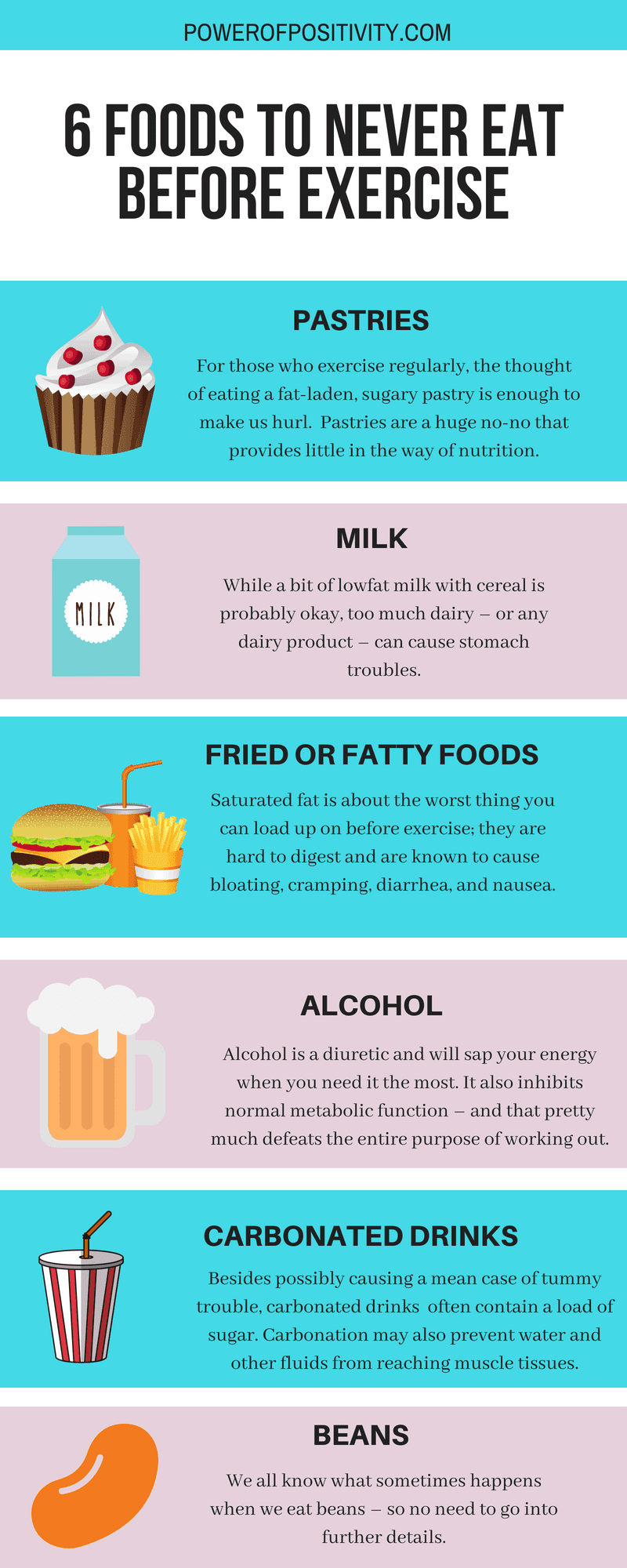
Foods to never eat before exercise

Share this Image On Your Site

(C)Power of Positivity, LLC. All rights reserved
Sources:
http://newsroom.ucla.edu/releases/Dieting-Does-Not-Work-UCLA-Researchers-7832
https://www.healthline.com/nutrition/11-ways-to-lose-weight-without-diet-or-exercise#section6
https://www.medicalnewstoday.com/articles/317617.php
https://www.sciencealert.com/the-most-effective-way-to-lose-weight-with-minimal-effort-diet
https://www.webmd.com/diet/obesity/features/medication-weight-gain#1

5 Common Ailments (And Easy Ways to Relieve Them Naturally)

“By researching your (own) condition, you can make suggestions to your physician. Together you can create an educated plan to address the obstacles to your health.” ~ Holly Lucille, RN, ND

“There’s a pill for that … and that …”

70 percent of Americans, or about 228 million of us, take prescription drugs. Meanwhile, it’s estimated that 133 million have an illness classified as “long-term.”

Before there were prescription pills for seemingly every sickness, people researched – and to some extent, still do – a variety of potential methods to treat the biological, emotional, physical, and nutritional effects of illness. Many effective products – herbs, spices, plants, trees – continue to be sold today (more on this later!)

While the progression of “modern medicine” is beneficial and even life-saving, many people in developed countries have embraced a “Just pop a pill” attitude. Unfortunately, millions of licensed physicians are doing little to stop the pharmaceutical drug craze.

Just look at the prescription drug abuse numbers. Per the National Institute on Drug abuse, 48 million people have used prescription drugs for nonmedical reasons in their lifetime. This figure equates to approximately 1 in every 5 American citizens.

Now the United States (and some other parts of the world) is facing an opioid epidemic. Young adults, some still in high school, are overdosing on pain pills like morphine, Vicodin, and Dilaudid. The abuse of pain medication is the newest addition in the prescription drug crisis, joining the realms of kids and adults abusing prescription stimulants designed for Attention Deficit Disorder (ADD) and its hyperactive kin, ADHD.

Looking at OTC’s

What does all of this mean for, say, the common cold or flu? Well, it turns out that even over-the-counter (OTC), non-prescription medicines contain some pretty nasty stuff, the effects of which can be potent. This may explain why one in ten teenagers abuse OTC cough medicines to get high.

Yeah, that DayQuil or Robitussin in your med cabinet isn’t harmless. Both contain dextromethorphan, a subclass of psychoactive drugs. They are, in effect, commercially-available (though less potent) forms of morphine. Both can damage the liver and even cause shock.

And it isn’t just cough medicine, either. Motion sickness pills and pain relievers are often abused for reasons ranging from a psychedelic high to chronic pain. Apparently, chronic pain isn’t a good enough reason for many to steer clear of overly-dangerous medicines, say, most painkillers.

The thing is: most people don’t know what you’re about to know – that natural cures are out there.

“…the practice of integrative medicine is gaining popularity and many mainstream medical practitioners now fully embrace and trust some of the better-studied alternative approaches, such as acupuncture…” ~ Dr. Mehmet Oz (a.k.a. “Dr. Oz”)

To illustrate the main point that nature can (often) potentially cure common ailments with natural ingredients, here they are.

5 Common Ailments That Have Natural Cures

1. Brain Fog: Omega-3 Fatty Acids

omega 3

Omega-3 fatty acids are critical for the neurological system, including the brain, where it is highly concentrated. Brain fog is a term used to describe cloudy or fatigued thinking that is exacerbated by external stressors.

In numerous studies, increasing omega-3 intake relieved many symptoms of brain fog – including poor concentration and memory. Omega-3’s anti-inflammatory properties help to explain this improvement.

2. Common Cold: Garlic

flu

In a meta-analysis of randomized clinical trials, researchers found that individuals who supplemented with garlic (example: 180 mg daily for 12 weeks) reported fewer occurrences of the common cold compared to the no-garlic group (16 percent and 45 percent, respectively), and fewer days of sickness (111 days to 366 days.)

Garlic is believed to have potent antimicrobial and antiviral properties that help relieve the common cold, which may help to explain this outcome.

3. Acid Reflux, Heartburn, and Indigestion: Baking Soda

Baking soda is made up of 100 percent sodium bicarbonate – a natural antacid. Actually, while baking soda may have hundreds of potential uses, it is labeled as a possible cure for heartburn, indigestion, and acid reflux!

Per Healthline.com, baking soda “is a good treatment for immediate relief from acid reflux.” On this note, the recommended dosage for adults is 1/2 teaspoon dissolved in a 4-ounce glass of water. Drink the mix slowly to avoid gas, and repeat every couple of hours.

4. Fever Blisters: Lemon Balm

Fever blisters suck; they hurt and can be embarrassing to the sufferer. According to a 2012 study published in the journal Chemotherapy, lemon balm “demonstrated a high viricidal activity … and inhibited attachment to host-cells,” say the authors.

In other words, lemon balm kills the virus that causes cold sores and fever blisters while blocking the growth of additional blister-causing cells.

5. Chronic Stress: Panax Ginseng & Acute Stress: Gingko Biloba

In a study conducted by the Division of Pharmacology at the Central Drug Research Institute, researchers found that Panax ginseng “has significant anti-stress properties and can be used for the treatment of stress-related disorders.” Still another study found that supplementing Panax ginseng lowers not only the stress hormone cortisol but also triglyceride and cholesterol levels.

Gingko Biloba was also studied – and found to be more effective for acute stress than Panax ginseng.

https://youtu.be/7BNGVmwxoHI

(C)Power of Positivity, LLC. All rights reserved
Sources:
http://www.doctoroz.com/article/alternative-medicine-treatments
http://www.gov.pe.ca/photos/original/WI_KRemedies.pdf
https://www.drugs.com/dextromethorphan.html
https://www.healthline.com/nutrition/17-health-benefits-of-omega-3#section8
https://www.ncbi.nlm.nih.gov/pubmed/14737017
https://www.ncbi.nlm.nih.gov/pubmed/22377592
https://www.ncbi.nlm.nih.gov/pubmed/22419312
https://www.thedailybeast.com/big-pharma-is-americas-new-mafia
https://www.webmd.com/mental-health/addiction/abuse-of-prescription-drugs#1

Relationship Experts Explain 7 Ways A Baby Changes Your Relationship

Ask most parents, and they’ll say that having a baby is one of the most thrilling, joyous, and loving things a person can experience. It’s also incredibly hard work. In this article, we’ll discuss 7 ways that having a baby may change the relationship dynamic with your partner. (We’d love to read your comments, Moms and Dads!)…Let’s go!

Here’s how having a baby with your partner changes your relationship:

1. There’s a ton of additional responsibility

Meeting the demands of a newborn can be overwhelming. All of a sudden, you realize that you’re entirely responsible for another human being. No easy task! While new parents may have an idea of what lies ahead, once the little bundle of joy shows up, Moms and Dads often are often taken aback by just how much responsibility comes with being a parent.

Experts say that when both parents partake in baby care, intimacy strengthens. The challenge, they say, is getting new momma bears to loosen their grip long enough for daddy to share some of this workload. But this experience is vital: “It helps (the father) understand the challenges of meeting the needs of an infant,” says Gary Direnfeld, a social worker and marriage expert.

2. You’ll probably hate one another at times

Taking care of a baby is often an exhausting endeavor. When you’ve got two incredibly fatigued parents, that’s a recipe for some conflict.

It’s important to understand that bickering and criticizing between new parents is entirely rational. However, conflict can frequently be averted by (a) coming to an agreement about shared responsibilities, and (b) having some basic knowledge of baby care.

Perhaps the essential piece of regulating conflict with your partner is to understand that mistakes are inevitable, particularly if this is your first child. Once again, both parents would do well to learn about the basics of child care before the due date (knowing how a baby sleeps is a good starting point!)

3. Your “alone time” is pretty much gone

Ask a new parent how he or she “fits in some alone time,” and they’ll probably clench their stomach in uninhibited laughter. “Alone time? Are you kidding me?” They’ll probably go on to explain that what now counts as “alone time” is often spent catching up on precious sleep. Because, you know, sleep deprivation.

Throughout the first few months of a child’s life, they will constantly wake up, go to sleep, wake up, and go back to sleep. Oh, and most of their time sleeping is during the day. This cycle takes a heck of a toll on the ole’ circadian rhythm.

4. Date nights are both more expensive and rare

While you do love spending time with your little one, you’ve gotta get out of the house at some point! The stark realization soon hits that you can’t just throw on some clothes and drive away. Enter, the “new parent dating dilemma.”

First, you’ve got to be comfortable with the idea of someone watching your child (not easy). Second, you’ve got to find someone (a bit easier). Third, you’ve got to pay ‘em (okay, that sucks.) Oh, and since the babysitter is likely to be some school kid, they’ll need to be home in a few hours.

“On second thought, how ‘bout a pizza and some Netflix?”

5. Sex takes a backseat

make love

There are a number of reasons as to why sex takes a backseat. First, you’re utterly exhausted. Maybe your body doesn’t feel like it, or the baby starts crying when the time comes to spend together

Dr. Shannon Hardy, a sex educator and midwife, says “Your partner suddenly becomes sort of secondary.” She goes on to suggest alternate ways of being intimate – caressing, hugging, and kissing – that does not necessarily always lead to sex.

For men, understanding that it takes their partner a few months to get back “in the mood” can help. Eventually, a biological equilibrium will be reached, and you’ll “carry on” per usual.

6. Money tightens up

Babies are expensive. Per a study conducted by the United States Department of Agriculture (USDA), an average middle-income family spends roughly $12,000 on child-related expenses during the baby’s first year of life.

The advice is somewhat common sense: plan for and stick with a “post-baby” budget. Consider saving a bit of money by cutting back on extras, like gifts and entertainment, and through purchasing expensive items (cribs, swing, etc.) secondhand. “The baby doesn’t know the difference!” one mother adds.

In addition to budgeting, thoughtful gifting can play a significant role in easing the transition into parenthood. Friends and family often want to support new parents, and practical gifts can be a game changer. Items like baby products, diapers, and clothing can relieve some of the financial pressure while ensuring that parents have the essentials they need. Opting for high-quality, practical gifts is a great way to show support, and it can also prevent parents from accumulating items that may not be used.

Another great idea is to consider pregnancy gifts that can help the parents-to-be prepare for their new arrival. From maternity clothes to prenatal massage vouchers, these thoughtful presents can make the pregnancy journey a little more enjoyable.

Giving gifts that prioritize comfort and well-being for the expectant mother not only shows your thoughtfulness but also helps them feel appreciated during this transformative time. The right gifts can make a lasting impact, ensuring that new parents feel supported as they embark on their parenting journey.

7. An unparalleled sense of joy

If caring for a child is so hard, why do people keep having kids? For the same reasons that anyone does anything worthwhile: the benefits far outweigh the costs.

Ask any good parent, and they’ll tell you that having a baby is the best thing to ever happen to them. Newborns bring about a sense of love, pride, and compassion that is almost inexplicable.

Out of these shared feelings – and despite the challenges of raising a child – couples often experience a new, profound sense of intimacy. They may just have to wait awhile, is all!

3 Signs of Diastasis Recti (And How to Fix It)

Don’t let the sophisticated name fool you: diastasis recti (pronounced “dye-uh-stas-is rec-tie”) is very straightforward and familiar, particularly among pregnant women. It’s estimated that 2 out of every 3 women who become pregnant will develop the condition.

“‘Diastasis recti’ means your belly sticks out because the space between your left and right belly muscles has widened. You might call it a ‘pooch.’” ~ WebMD: Abdominal Separation (Diastasis Recti)

Diastasis means separation and the word ‘recti’ refers to your ab muscles, or the “rectus abdominis.” This is precisely what diastatic recti is: separation of your ab muscles.

‘D. recti’ can also affect newborn babies and men, with the latter mainly acquiring the condition from fad dieting or from performing incorrect weightlifting techniques. But primarily, d. recti affects women during pregnancy when excess belly pressure from the extra weight causes the ab muscles to lose their shape. This extra pressure usually results in a protrusion around the mid-abdominal area. Per the Mayo Clinic:

“During pregnancy, the growing uterus … can cause the two large (bands) of muscles that meet in the middle of the abdomen to separate … Diastasis recti might cause a bulge in the middle of the abdomen where the two muscles separate.”

A couple of other factors can increase the likelihood of developing d. recti: having a child after age 35, delivering twins/triplets, and giving birth to more than one child throughout life.

In the medical community, and even among post-partum mothers, diastasis recti isn’t often mentioned. Part of the reason, understandably, is that women are hesitant to share information about what they consider private matters. Another reason is that many post-partum women are unaware as to just how prevalent – and potentially serious – this condition is.

A Woman’s Wisdom

The truth is that no physician, however intuitive and smart, can replace a woman’s instinct regarding her own body. Fortunately for us, women who’ve had troubles with the condition shared their story – and gave some invaluable advice.

With regards to her experience, the woman says:

“During my pregnancy with my first child, I continued doing abdominal specific exercises like crunches … I thought it would (help) my body stay fit and recover more quickly after pregnancy,” but, the woman adds, “… it did the opposite, and I noticed after that pregnancy that my stomach didn’t regain its previous ‘flatness.’”

While obstetricians and gynecologists do not consider d. recti to be a serious and threatening condition, it can cause problems.

Here are the three main signs of Diastasis Recti:

belly fat

1. Constipation

Diastasis recti creates a continuous, heavy pressure in both the pelvic floor and the abdominal wall, causing strain between the upper and lower intestines. This extra pressure on these two areas may both cause and worsen constipation symptoms.

Per the Mayo Clinic, symptoms of constipation include:

  • passing fewer than three stools a week.
  • having hard or lumpy stools.
  • straining to have bowel movements.

How to Fix: Constipation may be fixed by making some small adjustments to diet. First, try incorporating more probiotics to encourage digestion. Fermented foods such as yogurt and sauerkraut are excellent sources.

Second, consider taking a magnesium supplement. Magnesium draws more water into the stool, which softens the texture and makes them easier to pass. It is also a muscle relaxant, so it may help relieve tension along the intestinal wall.

2. Lower back pain:

Per Minnesota’s Sport and Spine Physical Therapy Practice, lower back pain is a common complaint among those with d. recti. The lower back is separated by abdominal muscles. Therefore, any separation or weakness of these muscles may cause chronic lower back pain.

As with constipation, d.recti can be either cause or worsen the symptoms of lower back pain.

How to Fix: First, if you suspect that you’re affected by d. recti, it is important to ask your obstetrician for a quick check. If your instincts prove to be right, they’ll give you some preventative advice.

Second, it is essential to avoid lifting heavy objects or remaining on your feet for extended periods. Also, refrain from extreme bending and twisting of your torso. Finally, make it a priority to practice daily stretching.

3. Poor posture

Abdominal muscles are important to keeping our torso upright. Therefore, weakening of the tummy muscles can affect the ability to maintain a good posture.

D. recti inevitably affect the abdominal muscles most during the late stages of pregnancy. During this time, these muscles may not be able to contract, leading to a structural misalignment and poor posture. Pregnant women report the postural effects of d. recti most commonly during the second or third trimester.

How to Fix: It’s essential to have proper alignment and posture both during and after pregnancy. Maintaining both helps to strengthen your body’s core functions and decreases aches and pains. Therefore, remind yourself to stand tall and engage your core muscles.

As always, ask your obstetrician for personalized advice. Commonly dispensed advice includes:

  • avoid looking down
  • don’t lock your knees
  • occasionally engage your core while sitting or standing
Sources:
https://paleoleap.com/magnesium/
https://www.livestrong.com/article/404959-exercise-restrictions-for-diastasis-recti-in-men/
https://www.mayoclinic.org/diseases-conditions/constipation/symptoms-causes/syc-20354253
https://www.mayoclinic.org/healthy-lifestyle/pregnancy-week-by-week/expert-answers/diastasis-recti/faq-20057825
https://www.webmd.com/baby/guide/abdominal-separation-diastasis-recti#1

5 Things That Happen Naturally When You Start Respecting Yourself

Without respecting yourself, you can’t really improve on yourself and your life. Why? Well, because self-respect is the foundation for the life we build. When that foundation is lacking, we have nothing to build upon. Self-respect influences your relationships, your career, your outlook on yourself…pretty much everything. Sadly, a lot of people don’t have much self-respect. This comes from not having a very good relationship with themselves, but luckily, everyone can learn how to love and honor themselves by changing their thinking patterns.

If you don’t have much motivation to love yourself, maybe we can convince you to start with these life-changing things that happen when you give yourself respect.

“Self-respect permeates every aspect of your life.” – Joe Clark

Here are 5 things that happen when you begin respecting yourself:

respect yourself

1. You learn self-love, too.

Self-love and self-respect pretty much go hand-in-hand. People who have more self-respect tend to have better self-worth, which translates into more love for themselves. Learning to like and love yourself has profound implications for your life. For one, you won’t tolerate anything or anyone that doesn’t love you as you are.

You won’t invite toxic friendships or relationships into your life any longer, because the level of love you have for yourself won’t allow it. You won’t indulge in poor dietary choices because you will only want to put loving things into your body. You won’t accept a job you hate because that means you don’t love or respect yourself enough to do something you actually enjoy. The list goes on and on, but the point is that self-respect paves the way to self-love, and armed with both of these, your life will flourish like never before.

2. You’ll learn to like being alone.

People who disrespect themselves generally don’t like solitude because that means being alone with their own thoughts and feelings, and this terrifies them. Why? Well, if you don’t have much self-respect, you probably don’t like yourself much and allow a lot of negative self-talk. However, when you have respect and love yourself, you’ll practice positive self-talk and engage in more loving behaviors, which means you’ll actually look forward to alone time.

3. You won’t care what others think.

People with low self-worth and self-respect tend to look to others for acceptance and admiration. However, when you enhance your view of yourself, all that will change. Instead of looking outwardly for a sense of belonging, you’ll find it within. You’ll feel comfortable in your own skin because you’ll realize that only your opinion of yourself matters. Caring what others think and looking to them for approval creates a prison in your mind; however, counting on yourself for those feelings creates liberation.give up - respecting

4. The world will look a little brighter.

When you have a negative view of yourself, you also have a pretty bleak view of the world around you. Your thoughts dictate your reality, so whatever you see in yourself will spread into your life, too. So, by respecting and loving yourself, you’ll learn to have a more positive outlook, which will help you have more optimism about both yourself and your world. People with low self-respect tend to see a glass half-empty, but you’ll start to see it half-full. This attitude will help you to navigate obstacles and challenges in life much more effectively, too.

5. The comfort zone won’t appeal to you anymore.

To most people, the world seems pretty scary, so they hide inside their covers to avoid anything uncomfortable. However, what they fail to see is that a lot of this discomfort stems from within. They don’t trust or love themselves enough to see that they have all the necessary tools to create a life that feels good to them. Self-respecting people, however, have confidence in their abilities and love pushing the envelope to test their limits. They know that self-imposed limits only hold them back.

Final thoughts

Sadly, too many people feel inadequate or inferior, and these beliefs greatly hold them back. It seems difficult to change thinking patterns and behaviors that have been learned, but in reality, all it takes is persistence and determination. No one can decide your self-worth but you, so remember this as you travel through life. Having respect for yourself can literally change your life if you’re willing to do the work to get there.

Health Experts Explain 5 Ways to Make Your Bones Stronger (Without Dairy)

“Despite what those milk-mustachioed celebrities in those ‘Got Milk?’ ads have been telling us for years, humans have no nutritional requirements for milk, and it may be doing us more harm that good because of all the sugar (that) even plain nonfat milk contains.” ~ Dr. David Ludwig

David S. Ludwig, MD, PhD, founder of the New Balance Foundation Obesity Prevention Center at Boston Children’s Hospital and Harvard Medical School:

“Humans have no nutritional requirement for animal milk, an evolutionarily recent addition to diet. Anatomically modern humans presumably achieved adequate nutrition for millennia before domestication of dairy animals…”

Uh, ok, but there’s a bunch of health benefits – like healthy bones – right, Dr. David?

“Throughout the world, bone fracture rates tend to be lower in countries that do not consume milk compared with those that do. Moreover, milk consumption does not protect against fracture in adults…”

Well, at least milk still has protein (sheesh). Anyways, there are plenty of other ways to strengthen your bones without milk, which may indeed be the best move if Ludwig’s research is any indication.

Here are 5 ways to strengthen your bones without dairy:

1. Chop some kale

Besides raw milk, cooked kale is the best vegetarian source of calcium there is. Just one cup of cooked kale contains 245 milligrams (mg) of calcium, or 24 percent of recommended daily intake (RDI).

Besides being rich in calcium, kale is loaded with antioxidants which help fight against illness and disease. It’s also great for aiding digestion, containing 5 grams of fiber in each serving!

care for your body

2. Eat white beans

Here’s a fun factoid for ya: beans are the least expensive source of protein, which is arguably just as important to bone health as calcium. Also, white beans are the best source of calcium in the legume family, containing 191 mg in one cup, or 19 percent of RDI.

White kidney beans are also rich in antioxidants, fiber, and iron. (Lack of iron is thought to be the leading mineral deficiency in developed countries.)

3. Do strength training

Strength-training, a.k.a. weight training, is not only great for increasing muscle mass – it helps to improve and maintain bone health, as well. A meta-analysis (“multiple study” analysis) shows that strength training protects against bone loss in women of all ages.

Research demonstrates that performing weightlifting and resistance training exercises can help increase bone formation during bone growth and protect bone health in older adults, including individuals with low bone density.

4. Maintain a healthy weight and balanced diet

Having a stable, healthy weight – i.e., neither underweight or overweight – helps to support bone health. Concerning the former, low body weight is associated with a higher risk of both osteoporosis and osteopenia (both conditions refer to bone density that is lower than normal, with osteoporosis being the more severe condition.)

Of course, keeping a healthy weight is much easier when you eat the right foods. Besides the foods on this list, make sure to get plenty of whole grains, fruits, and vegetables. Also make sure to drink plenty of water, which has been shown to increase the number of calories burned throughout the day.

5. Get some Omega-3’s

In a study published in the American Journal of Clinical Nutrition, individuals who consumed a diet rich in omega-3’s demonstrated higher bone mineral density at the hip and spine. These results suggest that omega-3 fatty acids “may play a vital role in preserving skeletal integrity in older age.”

In other words, fatty acids promote the creation of new bone while protecting against bone loss in older adults.

Although fish is often cited as the best source of omega-3’s, there are numerous plant sources of the fatty acid, as well, including chia seeds, flaxseeds, and walnuts.

https://youtu.be/7BNGVmwxoHI

(C)Power of Positivity, LLC. All rights reserved
Sources:
https://jamanetwork.com/journals/jamapediatrics/article-abstract/1704826?redirect=true
https://www.healthline.com/nutrition/build-healthy-bones#section2
https://www.healthline.com/nutrition/maintain-weight-loss#section17
https://www.mindbodygreen.com/0-23391/5-ways-i-build-strong-bones-without-dairy.html
https://www.ncbi.nlm.nih.gov/pubmed/15817874
https://www.webmd.com/osteoporosis/tc/osteopenia-overview

Scientists Explain 5 Things That Happen To Your Body When You Eat Too Much Salt

Salt makes things taste a lot better, but overeating of it can have disastrous effects on your health. Food companies have spent billions figuring out what keeps us coming back for more, and unfortunately, they found that salt will increase their profits while keeping us addicted, sick, and unhealthy.

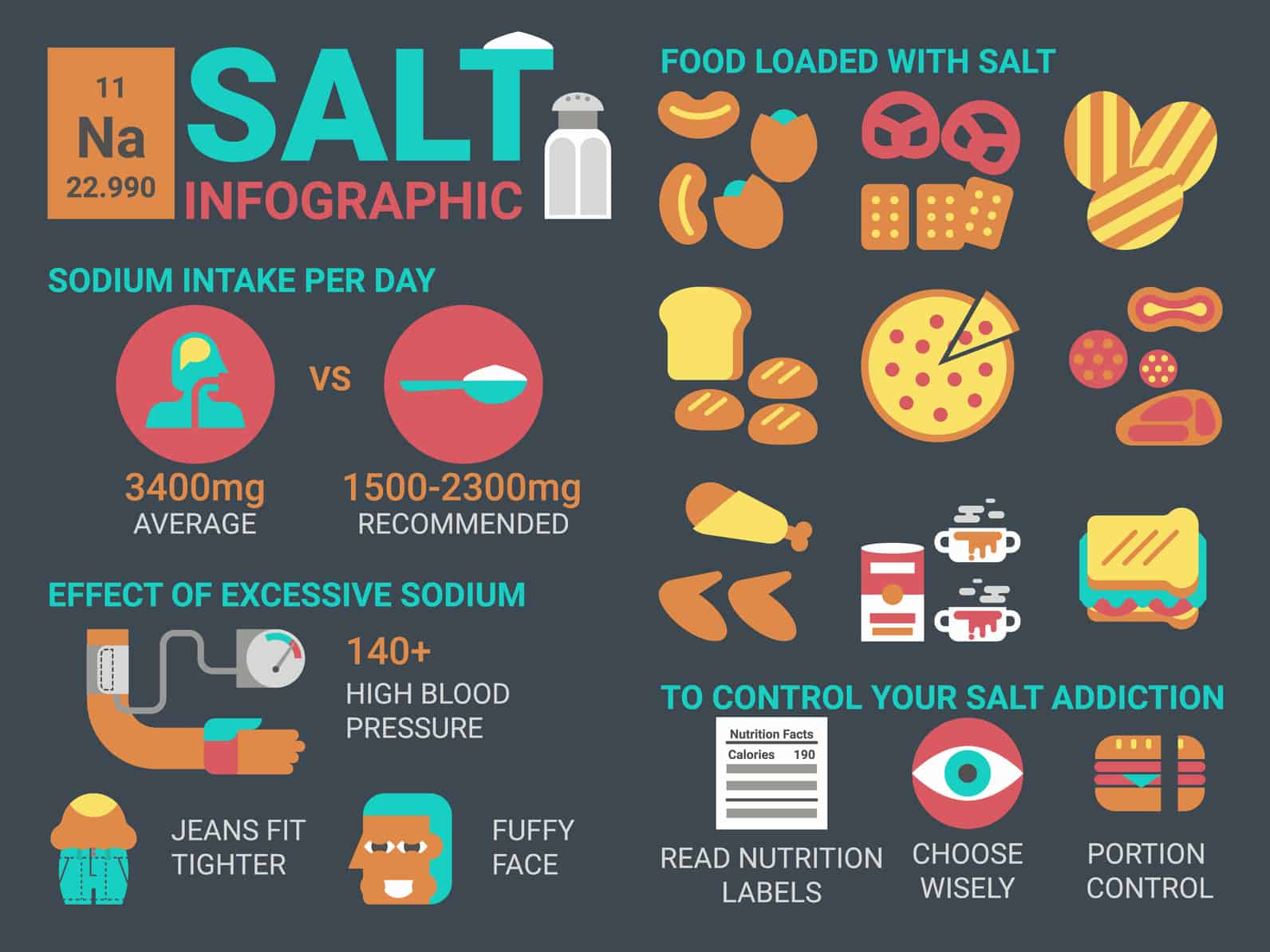
The American Heart Association (AHA) recommends eating 1,500 to 2,400 mg of salt daily. With that said, Americans eat an average of 3,400 mg per day, most of which comes from processed foods. This further exacerbates risks for health problems, because processed foods have very little nutrients, a ton of calories, and a few too many pinches of salt.

To illustrate the dangers of high-sodium diets, a study published in The New England Journal of Medicine found that there are an estimated 1.65 million deaths worldwide linked to high sodium consumption annually. In the U.S., 10 percent of all heart-related deaths are caused by too much sodium. While most people don’t die from eating too much salt, it can still pose other health risks.

Below, we’ll go over what can happen if you consume too much salt and how to limit your added salt intake.

Here’s what happens when you eat too much salt:

hidden salt

1. You start to have kidney problems.

A high-sodium diet increases your risk of developing kidney stones because it increases the amount of calcium in your urine, which is a key factor in the formation of the stones. As you consume more salt, the body holds on to more water to try to dilute the sodium. Your body normally removes excess fluid by filtering blood through your kidneys to draw water out of your blood. However, when you have a diet high in sodium, the kidneys will remove less water, and therefore, your blood pressure increases. This can cause kidney failure because, as your blood pressure rises to accommodate the excess sodium, it puts tremendous strain on arteries leading to the kidneys.

2. Salt can increase blood pressure.

As we briefly mentioned above, people who consume a lot of sodium in their diet have a greater risk of developing high blood pressure. This happens because salt makes you retain water, which makes your heart pump harder. This puts a lot of strain and pressure on your organs, which can lead to heart disease, strokes, dementia, cardiovascular disease, and other serious problems.

3. You feel bloated.

When you consume too much sodium, you retain water, as we mentioned. Most people think of bloating in their abdomen only; however, sodium can cause you to hold onto water throughout your body. Called edema, you can even develop swelling in the feet, legs, and hands due to excess salt consumption. While one night of eating too much salt won’t usually cause severe swelling, over time, fluid retention caused by a high-salt diet can certainly lead to chronic bloating.

4. Salt can cause brain fog.

Many things can cause cognitive impairment, including excess salt. One study published in the Neurobiology of Aging in 2011 found that older people who consumed high amounts of salt and led a sedentary lifestyle had more cognitive decline. Brain fog is usually a sign of inflammation, which can be caused by excess sodium. Also, people who consume a lot of salt usually don’t drink enough water, and dehydration can cause cognitive disturbances as well.

5. It can lead to osteoporosis.

Normally people don’t think of this when it comes to high-sodium diets, but your body loses calcium when you urinate, and the more salt you consume, the more calcium you lose. When you don’t have enough calcium in your blood, it can get leeched out of you bones, which can cause osteoporosis.

Limiting intake of salt

salt

Pin It!

– Avoid or severely cut down on processed foods and take out. Many of these products contain way too much salt and don’t have quality nutrients.

– Make sure you get plenty of potassium in your diet. Potassium can counteract the effects of excess sodium and lower blood pressure. Ideally, you should aim for 3,500 – 4,700 mg per day. Healthy sources include bananas, sweet potatoes, spinach, avocados, and tomatoes.

– Prepare more meals at home, and add sodium-free seasonings to your food. If you look in your local grocery store, you’ll find plenty of choices for seasonings that don’t necessarily include sodium.

– Buy fresh foods such as fruits, vegetables, and meats, and limit consumption of canned foods with added salt. If you do buy canned food, try to find salt-free versions.

6 Exercises You Can Do Without Getting Out of Your Chair

You know that working off extra pounds can mean time spent on fierce exercise, but it can also be something easy that you can do from your chair.

Belly fat is a marker for cardiovascular and other diseases. According to Harvard Health, “a large study of European women ages 45 to 79 concluded that those with the biggest waists (and those with the largest waists in relation to their hip size) had more than double the risk of developing heart disease.” Keeping your heart healthy and lowering your risk of cardiovascular disease means getting rid of your belly fat and deeper visceral fat.

Your abdominal muscles are just waiting for you to try these 6 exercises so they can reveal themselves to you underneath that fat layer.

Here are 6 simple exercises you can do without even getting up:

1. Let it all hang out

Push your belly out as far as you can, making your stomach look big, round and full. This is a move that we usually try not to do because of how we look, but actually by not fully releasing our abdominals, we fail to experience our full range of motion. Excess belly fat can be caused by stress, and muscle tension in our abdominals is one area we store tension and fat in. Push your abs out and hold for a count of 10 seconds. Repeat for 3 sets.

workout

2. Big belly breath

As you inhale, inhale into your belly first. Expanding the belly with air allows the lungs to be supported by a balloon under the diaphragm. This then allows your upper chest to fill with air. These are the 3 parts to a full inhale and exhale that fully expand your belly, mid and upper chest. Focus on several 3-part, full, deep breaths.

3. Bicycle hips

Lift your right hip up off the seat like you are adjusting your position without standing. Then lift your left hip. This alternating hip lift that moves your hips like riding a bicycle is a belly dance move that helps work the lower abdominals. Lift alternating hips for a count of 20. Repeat for three sets.

4. Chest drops

Pilates was originally developed for people on bed rest who weren’t physically able to do most exercises, so since you aren’t incapacitated, sitting all day is no excuse for belly fat. And we know that muscle cells burn more calories than fat cells.

As you inhale, your chest rises. Try lifting your chest by using your muscles, rather than your breath. This move is similar to putting a small arch in your back and sticking your chest out with your shoulders back. Now drop your chest down as if you were punched in the gut, but with a normal exhalation of air. Try 3 sets of 15 drops.

5. Touch your belly button to your spine

This exercise is the opposite of letting it all hang out. Pulling your abdominals in, contract your belly so that you feel like your belly button is going to be able to touch your spine from the inside. You should be able to breathe normally in and out while contracting your belly. Pull your belly button in to your spine and hold for a count of 10 seconds. Release. Repeat for three sets.

6. Breath of fire

A common yoga move, breath of fire is a panting breathing technique that is a great workout for your diaphragm muscle. Your upper abdominals are on top of the diaphragm muscle, which helps the lungs fully inhale. Do the breath of fire by sticking your tongue out and rest your hands on your thighs. Focus on a spot about 6” away on the ground in front of you and pant like a happy puppy.

Although exercises will help, they may not be all that is needed to reduce belly fat. Researchers at the National Institute of Health studied the effect of abdominal exercise on belly fat. They found “Six weeks of abdominal exercise training alone was not sufficient to reduce abdominal subcutaneous fat and other measures of body composition. Nevertheless, abdominal exercise training significantly improved muscular endurance.”

A sitting lifestyle is a modern annoyance, but you can find ways to rid yourself of belly fat without getting out of your chair. Consciously focusing your energy on abdominal strength exercises during your sitting hours will allow you to add healthy activity to a sedentary life.

https://youtu.be/yG-G9_LOkLA

(C)Power of Positivity, LLC. All rights reserved
Sources:
http://shareozone.com/post/6-exercises-flat-belly-can-right-chair/
https://www.health.harvard.edu/staying-healthy/taking-aim-at-belly-fat
https://www.ncbi.nlm.nih.gov/pubmed/21804427
Skip to content