Weekly tips, affirmations, and small actions to feel your best.

This 60 Second Test Will Tell You If Your Thyroid Is Working Properly

More than 12 percent of the U.S. population will develop a thyroid condition during their lifetime. – American Thyroid Association (ATA)

Facts About the Thyroid Gland

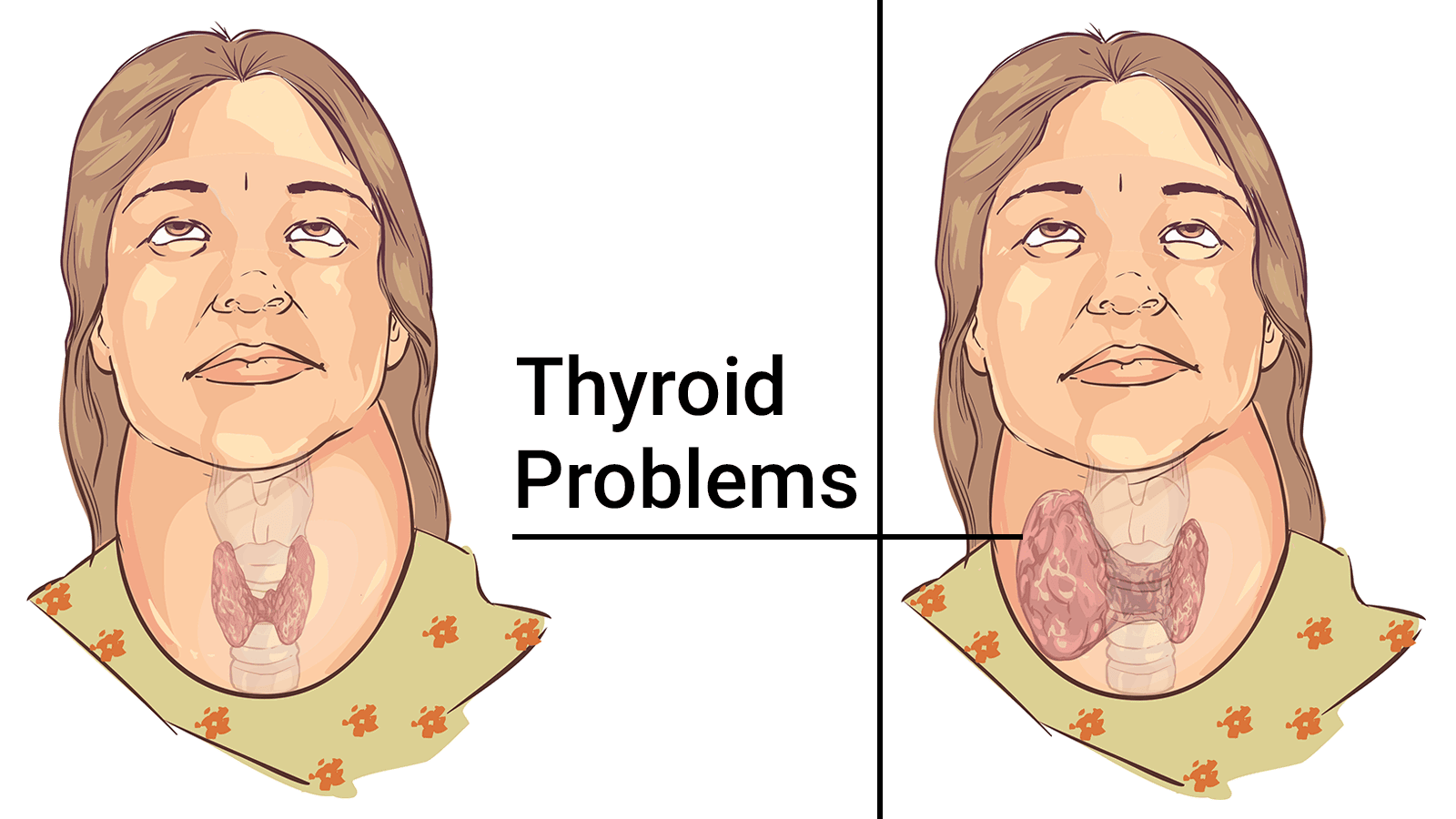
The thyroid is a small, butterfly-shaped gland located in the middle of the lower neck that helps regulate metabolism (the rate at which your body uses energy from nutrients you eat and the oxygen you breathe), produce hormones, and affects body functions such as heart rate and energy levels. The thyroid produces two main hormones: triiodothyronine (T3) and thyroxine (T4).

Though the thyroid gland is small, it is one of the most important glands in the body, as it affects every single cell, tissue, and organ in the body. As we said, many people develop conditions of this gland. We will go over the two main thyroid disorders below, with facts from the ATA.

Facts about Thyroid Diseases

  • Hypothyroidism happens when this gland doesn’t produce enough thyroid hormone. Symptoms include forgetfulness, depression, fatigue, and weight gain.
  • Hyperthyroidism, on the other hand, occurs when the body produces too much of its hormone. Symptoms include anxiety, irritability, insomnia, weight loss, eye irritation, and muscle weakness.
  • Graves’ disease, a type of hyperthyroidism, is a genetic autoimmune disorder and is estimated to affect 1% of the population.
  • Around 20 million Americans suffer from some type of thyroid disorder.
  • Up to 60 percent of people with a thyroid disease don’t even know they have it.
  • Women are at a higher risk of developing a thyroid disorder than men. Women develop them more than five to eight times more frequently than men.
  • One in eight women will develop a disease involving this gland.
  • Thyroid cancer responds well to treatment.
  • Currently, the causes of thyroid disease are unknown.
  • Undiagnosed and untreated conditions may put the person at risk of more serious diseases, such as cardiovascular disease, infertility, and osteoporosis.
  • Pregnant women with undiagnosed or untreated hypothyroidism have a greater risk of miscarriage, premature delivery, and significant developmental problems in their children.
  • While most thyroid diseases require life-long treatment, they can be managed well with the proper care.

Now that you know a little bit about the functions of this gland and related disorders, we will talk about the signs of a thyroid problem.

Signs of A Thyroid Disease

According to the Cleveland Clinic, here are the main signs of hyperthyroidism and hypothyroidism:

Signs of Hyperthyroidism

  1. Irritability/nervousness

When the body produces too much thyroid hormone, this causes the metabolism to run much faster than necessary. A person with hyperthyroidism may seem anxious or jittery for no reason, and will become irritated easily.

  1. Muscle weakness or tremors

This usually presents as a slight shake in the hands and fingers. Again, this happens because the body is producing more thyroid hormone than necessary, leading to excess energy. When you have unused energy, your body will do whatever it can to rid itself of that energy.

  1. Irregular, light menstrual cycles

If you have are a woman with this issue, you might notice that your periods are lighter, shorter, and occur infrequently. This is because having too little thyroid hormone production affects other hormones in the body, such as the thyrotropin-releasing hormone (TRH), which has a direct effect on the ovary. Decreased levels of this hormone may lower prolactin levels, leading to irregular periods.

  1. Weight loss

This is one of the most obvious signs of hyperthyroidism. If your thyroid is overactive, you’ll start losing weight unexpectedly due to a higher metabolism. Even if your appetite and exercise regimen remain the same, you will still experience weight loss.

  1. Sleep problems

Because your nervous system is overstimulated, you may notice you have a harder time falling asleep at night. Even if you feel tired, your metabolism is still running high and may prevent you from falling and staying asleep. You may also experience night sweats, restlessness, and leg tremors.

  1. Eye irritation or problems

This usually occurs in patients with Graves’ disease. Symptoms include feeling of irritation or grittiness in the eyes, redness or inflammation of the white part of the eyes, dry eyes, swelling of the eyelids, sensitivity to light, bulging of the eyes, and double vision.

  1. Sensitivity to heat

People with hyperthyroidism will become hot easily due to excess thyroid hormones. Your metabolism increases, leading to a rise in body temperature.

Symptoms of Hypothyroidism

  1. Fatigue

If you feel exhausted all the time, even after getting adequate sleep, you might have hypothyroidism. Fatigue occurs because your body doesn’t produce enough thyroid hormone, which helps give you energy. Though fatigue can be a symptom of many different disorders, it’s worth getting checked out if you also have other symptoms on this list.

  1. Weight gain/inability to lose weight

According to the American Thyroid Association, people with hypothyroidism generally present with weight gain or a hard time losing weight. However, in most people, only 5-10 pounds of weight gain is attributable to the underactive thyroid. Most of the excess weight gained by people with hypothyroidism is due to the accumulation of water and salt.

People with this condition have a low BMR (basal metabolic rate), which makes it much easier to gain weight. Low energy levels lead to less calories burned by the body, meaning that even eating a small amount can result in weight gain. Also, since the metabolism is damaged, those with this condition will have a hard time losing weight as well.

  1. Depression

While research isn’t conclusive about the connection between depression and hypothyroidism, some people will experience feelings of depression who also have low thyroid hormone production. Some scientists speculate that patients might get depressed due to the other organs in the body slowing down, but more research needs to be done on this topic.

  1. Forgetfulness and brain fog

As thyroid hormone production slows down, some people may experience brain fog, difficulty remembering things, or decreased awareness. This is because all the body’s organs slow down, including the brain. Without enough of this hormone, the body can’t efficiently send signals to the brain, leading to cognitive impairment.

  1. Dry skin and brittle hair

Because hypothyroidism slows down the metabolism, this will cause you to sweat less, leading to dry hair, skin, and nails. Sweating helps to keep the skin and hair moist, so a lack of sweat can certainly cause a change in the skin’s texture and appearance.

  1. Heavy menstrual cycles

In contrast to women with hyperthyroidism, women with an underactive thyroid often experience heavy periods. This is because without sufficient hormones from this gland, your ovaries may not be able to make enough of the hormone progesterone, which helps decrease blood flow. Also, your blood may not coagulate as well, which helps to prevent heavy bleeding. Thirdly, you make less of the estrogen-binding protein SHBG, which means your estrogen levels will be too high. All of this can lead to heavier menstrual cycles.

  1. Sensitivity to cold

While people with hyperthyroidism are intolerant to heat, those with hypothyroidism have greater sensitivity to cold. This happens because the hormone this gland produces helps regulate body temperature, so when you don’t have enough of the hormone, you will feel cold more easily.

We’ve discussed the signs and symptoms of the most common types of thyroid disorder, so now, we’ll go over treatments for both conditions.

Treatment for Thyroid Disease

  • Hyperthyroidism: For this condition, a doctor may prescribe antithyroid drugs that block the body’s ability to produce extra thyroid hormone. Alternatively, he might suggest beta-blockers which will lessen certain symptoms such as shakiness or nervousness, though they won’t lower the levels of this hormone in your body.

Your doctor may also suggest something called radioactive iodine, which has been used as a treatment for over 60 years in the U.S. and is still used today on 70% of patients with hyperthyroidism. Radioactive iodine is taken in the form of a small capsule, usually just once. It works by damaging or destroying overactive thyroid cells. As a last resort, the doctor may suggest surgery, though it usually isn’t necessary.

  • Hypothyroidism: Currently, the only treatment for an underactive thyroid is taking the synthetic thyroid hormone levothyroxine daily. This medication will help bring your T4 and TSH levels back to normal, thus reversing symptoms of hypothyroidism such as fatigue. For patients who still don’t feel normal taking the synthetic T4 hormone alone, the doctor might supplement them with T3 to increase hormone levels.
thyroid

How to Test Yourself for Thyroid Problems in 60 seconds

Check the pulse on the inside of your wrist using your first and second fingers. Count the beats of your pulse for one minute. Do this in the morning for three days. If the pulse is consistent each day, your thyroid is functioning normally. If there are inconsistencies, it might point to a problem.

Final thoughts

We hope you have learned valuable information about the thyroid gland and related disorders. If you have a concern, make sure to get checked by a doctor as soon as possible.

No matter if you have an underactive or overactive thyroid, there are adequate treatments available for each condition. The most important thing is to seek help before the condition becomes unmanageable.
10 Benefits Of Coffee You May Have Never Heard About

Millions of people across the world start their day with a warm cup of joe. Most people choose the most popular drink in the world and buy from one of the coffee of the month clubs because of the good flavor and boost that comes with every cup. However, many people aren’t aware of the myriad health benefits that are associated with this drink. Studies have shown that people can use coffee for weight loss and a cognitive boost.

Here are 10 benefits of coffee that you may have never heard about.

1. Coffee is full of healthy antioxidants. 

Antioxidants is a word that has been thrown around a lot in within the recent health boom. In short, antioxidants help to reduce inflammation and can even destroy free radicals that can lead to chronic diseases. Regular consumption of java has been shown to provide a rich amount of antioxidants. In fact, a cup of coffee is a better source for these than green tea or cocoa. This may come as a surprise for many people as these two drinks are known well for their antioxidants.

2. A few cups a day can help lower risk of heart disease. 

People are always arguing whether caffeine has a negative or positive impact on cardiovascular functioning. While it has always been clear that too much caffeine can be harmful, scientists were still unclear how moderate amounts affected the heart. All of this confusion was cleared up in a Dutch study that analyzed over 37,000 people over a 13 year period. The results indicated that people who drank two to four cups of java per day had a lower risk for heart disease.

3. Moderate consumption can have positive effects on the liver. 

That daily cup coffee made from 2 lb bag whole bean colombian coffee may do more than just help with lowering heart disease. A few cups have also been linked with healthier livers. One study showed a link between the consumption of java and a lower risk of cirrhosis, especially alcoholic cirrhosis. The study conducted by the Archives of Internal Medicine showed an inverse correlation between these two factors. More specifically, they found a 20% decrease for each cup consumed (to a total of four cups).

4. Caffeine can help increase workout performance. 

Sports and fitness enthusiasts advise practitioners to stay away from caffeine before and after workouts. This is a struggle for some people who need a cup of joe in the morning to get started. There is a popular misconception that caffeine dehydrates the body. However, recent research is suggesting just the opposite. A moderate amount of caffeine, around 500mg per day, has been shown to not interfere with exercise performance. In fact, this amount can help battle fatigue, allowing for longer and more intense workouts.

5. A few cups per day may help to fight depression. 

Although the research is still young, there seems to be a correlation between the amount of caffeine a person consumes and their level of depression. Multiple studies have shown a link between coffee drinking and low rates of depression in both men and women. Those who had a higher consumption of caffeine were less likely to develop depression. In fact, heavy drinkers had the lowest risk of depression (up to 20%).

6. Long-term consumption can help guard against gout. 

Gout is a painful form of arthritis that causes an excessive uric acid in a person’s bloodstream. Several independent studies have suggested that long-term consumption can help to guard against this awful condition. In one Nurses’ Health Study, nearly 90,000 women nurses were analyzed for a period of 26 years. Researchers found a positive correlation between the amount of java consumed and a lower risk for developing gout. This association was found with both regular and decaf drinkers.

7. It may help lower the risk for developing type 2 diabetes. 

Several different studies are suggesting a link between the consumption of java and a lower risk of developing type 2 diabetes. One study conducted in 2009 found that a daily cup of joe helped to drop the risk for developing diabetes by 7% with each cup. Prior studies had suggested similarly that heavy coffee drinkers have a 50% lower risk for developing type 2 diabetes when compared to non-drinkers or even light drinkers. Scientists have a few ideas for why this correlation exists, although there are several more studies being conducted right now.

8. Daily consumption can possibly help curb some cancers. 

There is no word that strikes fear into the heart of health-conscious people more than cancer. Men and women who enjoy a daily cup of java may be at a lower risk for developing certain types of cancer. Men who consume this drink on a daily basis possibly have a lower risk of developing rough prostate cancer. A study from the Harvard School of Public Health is suggesting that women can see a 25% decrease in their risk for endometrial cancer by drinking four or more cups of joe per day. This is in contrast to other women who drank less than one cup per day.

9. Caffeine may help with cognitive decline. 

Alzheimer’s and other types of dementia are associated with a decline in cognitive functioning. This can have multiple effects on an individual and none of them are positive. Researchers in Finland conducted a promising study that showed a correlation between increased java consumption and a lower risk for developing some forms of dementia. More specifically, this research showed that consuming three to five cups of joe per day during midlife was correlated with a 65% decrease in risk for developing Alzheimer’s and other types of dementia.

coffee

10. It may contribute to a short-term memory boost. 

Beyond helping to fight off cognitive decline, a regular cup of java may also help to boost short-term memory and functioning. Austrian researchers found that an intake of 100mg of caffeine, about the amount in one cup of java, is associated with a spike in brain activity. Participants in this study were able to perform better during memory tasks after the caffeine intake. Scientists have been able to show how caffeine helps to activate areas in the brain associated with concentration and memory.

Coffee has been associated with a host of health benefits. Some people use coffee for weight loss while others drink it because they love the taste. Either way, a daily cup of joe or three has been shown to have a host of positive results.

(C)Power of Positivity, LLC. All rights reserved

Psychology Explains The Link Between Emotional Trauma And Physical Illness

Psychology explains that even a seemingly small emotional trauma in your life can be blamed for physical illness in the body. Emotional dis-ease is not limited to those who seek help from a professional. We often connect emotional trauma with an extremely negative past event that deeply affects the psychology of a person, causing mental and even physical symptoms associated with memories of the traumatic event.

However, even a negative interaction with a person today at the grocery store could leave you with lingering unwanted physical effects. In this article we will explore the causes of emotional trauma, the negative physical effects of illness due to trauma, and how we can respond differently for our best possible future outcomes.

Causes and physical symptoms of emotional trauma

Perhaps disease, or dis-ease, is just that – a feeling of being uneasy about something emotional. We then continue to remember and carry the physical sensations of that uneasy moment around with us. Psychology is beginning to uncover our connections between these traumatic moments and our physical health.

Physical trauma and emotional trauma often go together when we think about our past. For example, you can likely easily complete the blanks in the following sentence:

*I began to have a problem with my ______ (physical symptoms) right after ________ (a specific event happened).

Feelings of anxiety or stress are often the result of an emotional trauma since we worry that the same thing will happen to us again. Anxiety is linked to physical symptoms and illness such as:

  • Insomnia
  • Numbness and tingling of extremities
  • Heart palpitations
  • Dry mouth
  • Breathing problems and asthma
  • Nausea
  • Tension headaches
  • Muscle tension
  • Dizziness

Emotional trauma and physical suffering

It is possible that many more of us have Post-Traumatic Stress than show up in the psychologist or counselor’s office needing help. For example, a friend confided that a male partner told him at a young age that he was a “bad kisser.” He has been reluctant to kiss ever since, even though he is an adult now and his partner has encouraged him with positive feedback.

This type of emotional trauma is likely not thought of as a “traumatic” event by the person who was told he was a “bad kisser.” However, the fact that he is continuing to live with the negative effects of the event makes it an emotional trauma. Now, did a lack of kissing cause him a physical illness? Not likely, however, he is likely missing out on opportunities to connect more intimately with his partners.

Also, he might experience physical symptoms of stress when faced with a situation involve the act or even just the possibility of kissing. (See our related article for behaviors of someone who suffers from emotional trauma.)

In a previous positive research article, we discussed how Harvard researchers say that the gut is extremely sensitive to emotions. Imbalances in gut bacteria are linked to depression, anxiety, autism, and ADHD. Our mood and mental health are connected to physical illness, which can be measured in our gut microbe health. Feeling upset to your stomach is possibly your gut instinct telling you that you are feeling anxiety.

Links between emotional trauma, inflammation, and illness

Research on the connection between physical illness and emotional trauma has discovered that bodily fluids such as urine, blood, and cerebrospinal fluid can be tested for ORP (Oxidative Reduction Potential; a measurement of the presence or lack of anti-oxidants). What is more, researcher indicate that this “measurement can be useful in evaluating acute diseases, such as traumatic brain injury, severe sepsis, stroke, and myocardial infarction, as well as chronic diseases, such as Alzheimer’s disease and atherosclerosis.”

These psychologists also cite previous research showing that those with a traumatic brain injury showed increased ORP levels compared to those in healthy individuals. This indicates the presence of oxidative stress.

Oxidative stress is correlated with aging, inflammation, illness, and disease in the body. Times of high stress result in high levels of inflammatory chemicals being produced in the body, chemicals such as the stress hormone cortisol.

Psychology is learning that some of those who later develop Post-Traumatic Stress Disorder (PTSD) may be born to parents who themselves had PTSD. At birth, these babies had higher levels of the stress hormone cortisol than those born to parents without emotional or physical traumas.

How to respond to emotional trauma for better outcomes

Once we are aware of a trauma, what can we do to avoid the resulting physical illness and symptoms of stress? Psychologists say that responding differently to stressful events and practicing the skill of responding differently is one effective technique.

Here’s how to accomplish this:

  • Awareness is key

    • Try to identify where you feel negative emotion in your body

Scan your body for sensations of tightness and unease

What feels off/different than usual?

  • Identify a physical symptom that correlates to the time of the emotional trauma

When ____ happened, I felt ____

  • Identify how an emotional trauma feels in the body and focus on a positive sensation instead

    • ______ (an event) makes me feel frustrated/angry/upset/depressed
    • Read our related article in which psychologists explain how to release emotional attachments in toxic personal relationships
    • Think of how that negative emotion physically feels in your body (I get all tense, my side hurts. It makes me feel nauseous. I get a headache when I think about it.)
    • Focus on a positive body sensation or thought to associate with the trigger instead (a pleasant warmth or tingle, or thinking of the feeling as a higher vibrational alert system for example)
  • Identify a negative emotional response and substitute a positive response

    • First complete the following sentence:
      I get so frustrated when _____ (event) happens that I ________ (respond with negative emotion or feeling)
    • Second, list five different activities or responses you can do the next time you feel the negative emotion after the event that triggered it.

Some examples:

  • deep breathing
  • a walk outdoors in nature
  • a yoga pose
  • listening to a meditation or affirmation
  • squeezing a stress ball

Choosing a positive attitude about the physical illness

British scholars of The Institute of Integrative Health studied people who had experienced a variety of traumas, from physical, mental, or emotional to ongoing disabling conditions. They explain that, “Moving from being wounded, through suffering to healing, is possible. It is facilitated by developing safe, trusting relationships and by positive reframing that moves through the weight of responsibility to the ability to respond.”

Positive-thinking people apply the following positive thoughts. “I …

  • … learn, grow, and forgive myself if I made a mistake.”
  • … congratulate myself on trying.”
  • … fail to blame anyone.”
  • … don’t hold regrets.”
  • … focus on how much better next time will be because I’ll know the trigger.”
  • … can see and laugh about my usual tendencies to hunch my shoulders and I can choose to drop my shoulders and relax those muscles.”
  • … choose to take several nice deep breaths.”
  • … can choose to know that I am safe, even with my eyes closed.”
  • … give myself the gift of a relaxing moment.”
  • … trust my inner guidance.”

Be inspired to release the stigma of mental illness by these celebrities who are doing it.

Choosing your attitude is taught even in management to improve employee morale. The Pike Place Fish Market in Seattle, WA inspired the FiSH Philosophy training program. This program basically tells the world that you can have a job where you have to handle fish all day or you can have a job where you have a great time and engage with others in a fun way while doing that same thing. You get to choose.

In other words, we can take back a portion of our sense of control in an uncontrollable world. How? We choose to smile about a tense situation and our reaction to it. If you can reframe your fearful thoughts about being triggered by emotional trauma into having a laugh at your response, maybe others will have a laugh too, not at you, but at what they see of themselves in your honest vulnerability.

Healing emotional trauma and illness with the gift of self-care

Awareness is the positive-thinking start of healing from emotional trauma; however, caring for our emotional needs is key. When we have negative emotions, we must gain enough positive ones to create a sense of balance for ourselves. As you learn to focus your attention on becoming aware of negative thoughts about a traumatic emotional event, and the corresponding bodily sensations associated with the negative emotion, you can turn your focus to say:

emotional trauma

“I choose to be the best person I can be, in spite of the emotional trauma and my physical illness.”

The best gift you can give yourself is self-care to heal from both the physical illness and the emotional trauma. Whatever brings you joy, positive physical feelings, and positive responses in your mind is where you should spend extra time as you heal. This might be reading, doing yoga, or interacting socially with people who love you and support you.

It likely is not commiserating about how bad things are for you and others. After all, misery loves company, but you don’t need that kind of friendship when your positive goal is health.

Note: Always consult your wellness advocate before starting any new regimen.

https://www.youtube.com/watch?v=CU2LlJxEdJ4

?Power of Positivity, LLC. All rights reserved

15 Ways To Deal With Depression Symptoms Naturally

It can be difficult to find ways to deal with depression. Depression is a serious problem that many people face every single day. The symptoms can be overwhelming and difficult to understand, but it is important to find ways to deal with it.

If depression isn’t dealt with, it can lead to problems with sleeping, eating, working, or maintaining relationships. It can make it difficult to think clearly or normally, making it that much harder to handle the symptoms. There are some self-care strategies to help with the problem, however.

Self-Care to Deal With Depression Symptoms

1. Get enough sleep.

Healthy amounts of sleep can help ease the symptoms of depression in more ways than one. Getting the right amount of sleep can raise energy levels, which helps with depression. Sleeping enough can also improve your mood, making it easier to deal with depression.

2. Eat healthy foods.

Sometimes, depression can lead to overeating or just eating more junk food than normal. This can cause our bodies and minds to feel even worse. Take care of yourself and your mind by choosing nutritious foods that will help you think more clearly. Nutritious foods will also raise your energy levels.

3. Get active.

You don’t have to go for a long run or start lifting weights, but you should be staying active. Doing light yoga or going for a leisurely walk can help ease the symptoms of depression.

4. Do something every day that makes you happy.

Create a list with all the things that make you happy. Now, make sure you do one of those activities every single day. Switch it up a little now and then, but always do something that you enjoy. It could be something simple and easy, or you could plan to set aside some time to do something even bigger.

5. Join a group of a club.

Being around other people who enjoy the same things you do can boost your mood and help you ease the symptoms of depression. Find a sports team, a crafting group, a book club, or any other kind of group.

6. Write in a journal.

Getting your thoughts down on paper can help ease the mind and deal with the negative feelings you’re having. It can even help you sort through those problems and determine the root of it. Sometimes, it just helps to vent in some way.

7. Practice deep breathing.

Deep breathing is especially helpful when dealing with depression. Not only does it allow you to take a small break and refocus your thoughts, but it also has other properties that help, as well. It can increase the circulation in your body, release endorphins that help boost your mood, and it relaxes your muscles.

8. Follow a relaxing, stress-free bedtime routine.

Getting enough sleep is a huge part of dealing with depression. Without the right amount of sleep, stress levels will be higher and you will be more emotional. With this being the case, it is important to find a relaxing way to wind down each night in order to help yourself fall asleep on time. Pick a time to lay back and relax by reading a book. Once that time comes, you should stop doing all work-related activities, and turn off your cell phone. By relaxing before bed and allowing your mind to rest, you will be able to fall asleep easier.

9. Take a bubble bath.

Take a hot bath with relaxing essential oils or bubble bath in it. Do whatever it is that you need to do to relax. You could light candles, turn on calming music, or read a book. By taking a bath, you will help your muscles relax, which could help deal with depression.

10. Reach out.

When you are having a hard time, your friends and family will be able to help you deal with the depression and find the cause of it. Asking for help can be so hard, but it is an important part of self-care. Your loved ones love you and want to help you, so once you get past the hard part of asking, you will be glad that you reached out.

Your loved ones only want what is best for you, so you should never be ashamed or feel guilty for asking them for help. Even just venting to them and telling them about the way you are feeling may help.

11. Avoid depression triggers.

We all have those people, things, or situations that make our depression worse. An important aspect of self-care when it comes to helping with depression is to avoid those triggers whenever possible. If there is a person who triggers those negative feelings in you, it is probably time to cut that person out of your life or, at the very list, limit your time with them. If there is a food or a book or any other object that triggers your depression, get rid of it. Do the same with places and situations and cut them out of your life or limit your time there.

12. Find something productive to do in your home every day.

This could be organizing your desk, cleaning your bedroom, or getting the laundry all caught up. Pick something that will make a difference to you and get it done. No matter how small the task is, it will help you feel less depressed. Being productive tends to bring good feelings, and knowing you made your own space more usable will make the good feelings even stronger. On top of that, the task will keep your mind busy for at least a little while.

13. Talk to your doctor.

Telling your doctor about your symptoms can help alleviate the problems because your doctor will be able to suggest a course of action for you. Sometimes, a doctor may prescribe you medication to help with depression. While many people think negatively about medication, it can make all the difference in your self-care plan. It can help you think more clearly and understand what actually triggers your depression.

deal with depression

14. Have good personal hygiene.

When you are depressed, it can be hard to want to get up and take a shower every day. It may seem easier to stay in your pajamas and lounge around all day. To help ease the depression symptoms, however, it is better to practice good personal hygiene.

When you wake up in the morning, force yourself to get out of bed and take a shower. Brush your teeth afterward, and put on clean clothes. This process will help distract your mind from the negative thoughts for a while, and getting around and dressed may help you feel a little better.

15. Get outside.

Sit outside and read a book or go for a leisurely walk. You could just sit outside and look at the beauty around you, or you can just practice deep breathing. Breathing in the fresh air will help clear your mind and help you think more clearly. Feeling the sunshine on your body will also help ease the symptoms of depression.

Symptoms of Depression

If you haven’t been diagnosed with depression but think that you suffer from it, it may be helpful to know what the symptoms are. Knowing the symptoms and recognizing them when they are affecting you is just one step to solving the problem and dealing with the depression. Even if you are able to self-diagnose your depression, it is still smart to meet with your doctor so you can be formally diagnosed. More options are available to you when a doctor has diagnosed your mental illness.

Usually, one person will not suffer from every symptom. When a symptom is present, it could be a sign of depression if the symptom gets worse or does not go away on its own.

Common symptoms of depression include:

  • Feeling sad or empty
  • Feelings of anxiousness
  • Feeling helpless or worthless
  • Feeling guilty when there is no reason to feel that way
  • Feeling hopeless and like things will never get better
  • Feeling irritable
  • Lack of interest in activities
  • Loss of energy
  • Difficulty concentrating
  • Forgetfulness
  • Having a hard time making decisions
  • Sleeping too much or not enough
  • Eating too much or not enough
  • Frequent headaches
  • Thoughts of suicide or death

Some of these symptoms are not normally associated with depression, which leads to the symptom being ignored. In order to adequately deal with depression, you must know what you are dealing with.

It is important to note, however, that having one or more of these symptoms does not always mean you have depression. Something else may be the issue, which is another reason it is important to get a professional diagnosis from a doctor.

Final Thoughts on How to Deal With Depression

Depression affects many people every single day. In order to deal with depression, you should indulge in some self-care strategies. Even the simplest forms of self-care can greatly help relieve the symptoms.

Knowing the symptoms is helpful, too, so that you know which depression symptoms are affecting you the most. Seek help from a doctor in order to know for sure what you are dealing with and the severity of the problem.

16 Small Choices That Help You Stay Happy

What do you truly want, and do you know how to be happy along the way?

Many of us ask these questions to find purpose and meaning. Interestingly, your difficulties may show you how to be happy with your life. Don’t fret if you’re in a predicament now. Happiness requires things that our professional and family life may not provide. Let’s take a look into ourselves to put happiness exactly where it should be.

A word of inspiration is enough to remind us of our values and beliefs. The lessons we’ve learned in life can be reignited through the helping hand of others, and this is why we wrote this. We have some fundamental beliefs to pick you up with, to bring you back to your center and to remind you about how to be happy.

1. The Glass is Half Full, or is It?

Epicurus: “Nothing is enough for the man to whom enough is too little.”

Judging our lives through the eyes of others is a big mistake as we work to make something of ourselves. Comparisons lead us to see our lives as half-empty rather than completely full, yet every person’s life is much too difficult to judge from the outside without being that person.

We find this issue when those who think they’re poor judge others that they think are the rich. A closer look might uncover just how much those perceived to be rich are lacking. The outward appearance of people’s lives can never provide enough information to make an honest comparison with. Be your full self instead.

2. Even the Best Will Fail and Fail Greatly

Michael Jordan: “I’ve failed over and over and over again in my life, and that is why I succeed.”

How do you look at failure? The greatest in sports, literature, politics and art all have horrifying stories of failure to tell. You have to accept this to truly understand how you can stay on the path of happiness. Many of the world’s most successful people attest to the fact that they were right at the point of success when they also felt like quitting.
(1)

3. When Life is the Sum of Your Thoughts and Ideas

Scott Hamilton: “The only disability in life is a bad attitude.”

Don’t be discouraged by the reality of your own power. Happiness isn’t so much about having things or about living a perfect life. Most cases simply require us to choose to be happy. Positivity can be infectious through other people, but be aware that negativity can be more influential within our own attitudes.

4. Being Accountable to Your Actions

Winston Churchill: “We make a living by what we get, but we make a life by what we give.”

Blaming the challenges and outcome of life on others creates a huge setback toward the central goal of happiness. Being happy will call on your ability to be held accountable to the actions you take. None of us are perfect, but it’s up to us to acknowledge when we’ve made mistakes and when we have the power to do something about them.

5. Live for What You Believe In

Paulo Coelho: “Remember your dreams, and fight for them. You must know what you want from life. There is just one thing that makes your dreams become impossible: the fear of failure.”

Consider what would happen if you found happiness. You could lose sight of why you had set the goal to begin with. Having purpose is about holding onto what you know is right and living for it. This is true when life is exciting, bland, great or bad. Just one bad outcome can make you fear pursuing your dreams, yet if you always stand by your beliefs, then you can turn failure into a friend.

6. Finding Belief in Yourself

Les Brown: “Life takes on meaning when you become motivated, set goals and charge after them in an unstoppable manner.”

Your beliefs can change daily, but they shouldn’t. An important drive to have when pursuing happiness is the belief in yourself. Believing in yourself gives you the internal vision of you achieving your goals with nothing being able to stop you.
(2)

7. How to be Happy With Courageousness

Thucydides: “The secret to happiness is freedom, and the secret to freedom is courage.”

We all dream for happiness to fall from the sky, but what actions have you instead invested? None of us can expect greatness without putting in great effort. Life is a wondrous adventure, but it takes courage to discover it, and it takes a bold stance to discover it daily. We can’t tell the future, but we can dictate our own actions.
(3)

8. Listen, This Moment Won’t Last Forever

Jim Rohn: “Happiness is not something you postpone for the future; it is something you design for the present.”

Living in the moment requires a sense of acceptance. Today is all we have, and that’s a wonderful gift the moment we wake up. Are you looking at these precious moments, or are you too caught up in the past and future though neither currently exist? Living for today can quickly teach you how to be happy with your life.

9. Expect the Best

Ashley Montagu: “The moments of happiness we enjoy take us by surprise. It is not that we seize them, but that they seize us.”

Discovering life, while not theorizing on what bad can happen, allows you to embrace the inevitable benevolence of this universe. There are adventures at every turn, but we have to let most of these experiences work themselves out.

10. Measuring Success From the Right Perspective

Herman Cain: “Success is not the key to happiness. Happiness is the key to success. If you love what you are doing, you will be successful.”

There is happiness in the things that gives us passion and pleasure. Knowing how to be happy is about turning life into a gift that you give to yourself. We’re all capable of enduring unfavorable conditions, but remind yourself that you don’t have to. Doing what you love begins with accepting a life that’s driven by passion.
(4)

11. Be OK that it Didn’t Work Out

David Allen: “Much of the stress that people feel doesn’t come from having too much to do. It comes from not finishing what they’ve started.”

Following through doesn’t always mean success, but it does mean that you have given it your all. Ask yourself if the hurt you feel came as a result of your own actions. Not being able to achieve your goals can be a direct result of having the wrong objectives, trying to please others or not finishing what you started.

How to be happy with your life begins with having no loose-ends.

12. Fairy Tales are for the Fairies

Bernard M. Baruch: The art living lies less in eliminating our troubles than growing with them.”

The good without the bad is a plot for movie-screens. We can often over-look the true riches we have by holding to a false picture of reality. Do you believe that you’ll eliminate your troubles via success? Think again. The secret to happiness is in knowing that failures and troubles will still exist but that they don’t have to change us.

13. Letting go of it All

Paul Boese: “Forgiveness does not change the past, but it does enlarge the future.”

Holding onto the past is a sure way to remain there. The future is an open book with its pages unwritten on how to be happy. Make yourself the author of reality by starting on those blank pages. You’ll find that in creativity, there are many things that you can’t control; let them go. There’s a new day now and one waiting on you tomorrow.

14. Making Your Outer Reality the Result of Your Inner Peace

Marcus Aurelius: “He who lives in harmony with himself lives in harmony with the universe.”

Here’s how to be happy with your life.

Reflecting on our own behaviors requires an impressive level of honesty. We admit that looking at our internal reflections could make us feel less than human. This, however, is a misunderstanding of what it is to be human. Be OK with yourself at all times because then your inner peace gets projected to the outer world around you.

15. Having the Audacity to Learn from Your Mistakes

Archibald MacLeish: “There is only one thing more painful than learning from experience and that is not learning from experience.”

Stubbornness guarantees that you repeat your mistakes over and over again. If you believe that you can repeat the same actions and not receive the same consequences, then your ambition in learning how to be happy is weak. Be bold in admitting your mistakes, adjust accordingly and listen to what others have to say.

16. Slowing Down Enough to Enjoy it All

Mahatma Gandhi: “There is more to life than increasing its speed.”

Accepting life for what it is allows us to know how to be happy without overthinking it. This is an amazing world we live in, and as the old adage goes, you can enjoy it once you “stop to smell the roses.” The pace of life is the same for us all. Have you tried something just to find that you need more time?

Welcome to the club. Everyday-life is a slow and gradual process, and this is why it helps to be patience. We can fall off the course of happiness if we expect too much too soon. We’d not only be unable to manage immediate change, but we wouldn’t be able to learn about the right actions that achieve what’s in our hearts.

Today, you’re now prepared in how to be happy with your life.

https://www.youtube.com/watch?v=vzxYzkDQeEc

5 Reasons Everyone Needs An Aries In Their Life

Do you have an Aries in your life? If not, you probably should! Being the first sign in the zodiac, an Aries can be a whirling dynamo of primal free will. But that’s all the more reason to love them!

Those born under the Aries sign are known for their passion, intensity, and strong personalities. Although they can have dynamic personalities and plenty of vehemently stated opinions, they make fantastic friends. Here are some reasons everyone needs an Aries in their life!

Here Are 5 Reasons Everyone Needs An Aries In Their Life

“Aries will never let you face your problems alone. They will always be right there to protect you.” – Unknown

1.    An Aries is always fun and passionate

An Aries is constantly seeking new ways to have fun. They are energetic and often seem to have a burning fire within them – likely because they are a fire sign! There’s a reason that those born under Aries are often referred to as dynamic. They have tons of energy and are commanding and compelling.

  • Aries can often also be a little childlike. This may be because they are the first zodiac sign.
  • They generally have positive thinking.
  • He loves seeing the good in the world.
  • She can be brazenly optimistic.
  • Since they have a childlike perspective toward life, it makes sense that they’re going to want to have fun!

Basically, if you’re looking for a friend who is the life of the party, you need look no further than an Aries. Even an introverted one can liven up a party and socializes wonderfully with those around them. Since many born under this sign like being the center of attention, social gatherings are where they can strut their stuff!

An Aries is rarely ever concerned about what others think of them. As we said, they mainly strive to have fun. Essentially, they aim to live their truth and enjoy existence. They don’t have time to spend living their lives through the eyes of others.

An Aries believes that rules are made to be broken. They don’t mind getting in trouble and taking risks. Best of all, they know that there’s fun to be had in being a little mischievous!

And guess what? This confidence is infectious! An Aries can teach you how to truly be yourself, unapologetically. Since Irene S Levine Ph.D. states that friends commonly build up each other’s self-confidence, it’s safe to say that an Aries will make a great friend.

On top of all that, this fun is purposeful and exciting because of how passionate an Aries can be. An Aries feels everything very intensely, so their happiness is infectious. There will never be a dull moment when an Aries is around!

2.    An Aries is brutally honest

You’ll never have to second-guess yourself with an Aries. Worrying about whether a friend truly likes you, someone has a crush on you, or if a person is angry with you will turn into a thing of the past. According to BetterHealth, communication is crucial in any relationship, friendships included. With an Aries, this comes naturally.

  • They are direct and straightforward.
  • If something you’ve done has bothered them, they will let you know.
  • If they genuinely like you and think you’re great, they’ll tell you.
  • You’ll rarely have to worry about their intentions, so you’ll feel secure.
  • This also means that an Aries is the best person to go to for opinions and advice.
  • If they think your new partner isn’t right for you, they won’t hesitate to let you know.
  • If they think you’re being ridiculous, they’ll tell you. (And if you don’t look very good in that shirt, they’ll be honest about it when you ask.)

An Aries seems to know what you need to hear. They’ll waste no time keeping secrets from you, harboring resentment, or holding their tongue when they believe they know what’s best. You can count on someone born under this sign to look out for you and stand up to you even when you don’t want to hear something they know you need. This can make them amazing, positive influences to have in your life.

The reason behind this? An Aries has no tolerance for bulls***. They don’t take nonsense from anybody. Hang around an Aries long enough, and you’ll learn how to stop tolerating mistreatment and start calling people out on their crap, too.

3.    An Aries is strong-willed

You will meet few individuals more determined than an Aries. Once they have their eyes set on a particular goal, absolutely nothing you do or say can stop them. No matter what gets in their way, someone born under this sign will fight to succeed.

  • No matter how tough the fight is, they will not give up.
  • In their minds, if they keep pushing, they will find the success they seek.
  • This headstrong nature makes them fantastic motivators.
  • They won’t give up on themselves, and they won’t give up on you, either (even when you’ve given up on yourself).

This trait expands into the work of an Aries, too. Although they are optimistic, they are grounded in reality.

  • They know that hard work and lots of effort are the only things that can truly help them achieve their dreams.
  • They’re willing to try every option and expend every avenue.
  • They won’t take no for an answer – in the best way.

A lot of this is rooted in the natural stubbornness of an Aries. Being represented by the sign of the Ram makes this even more obvious. They’re hard-headed and refuse to back down. When faced with adversity, they will dig in their heels and demand to get their way.

This means an Aries will also fight for you with all their might. If you’re being treated unfairly, the Ram will stand up for you. When you’re ready to throw in the towel, an Aries will get you back up on your feet with positive thinking.

As the inspirational Oprah Winfrey said, your friends should be those who lift you higher. That’s what an Aries will do – lift you up and show you how to be the best you can be.

It goes without saying, then, that an Aries is a great person to have on your team. When they’re on your side, they’ll help you take down any adversities you face. But when the Ram is on the other team, expect to have a hard time!

4.    An Aries is adventurous and spontaneous

As we said earlier, an Aries is a positive force for fun and excitement. But there’s another aspect to this that we didn’t cover. This fun and need to try new things and take risks makes someone born under this sign highly spontaneous. It’s why so many people born under this sign love adventure!

You won’t know what’s coming next with the Ram. While it can certainly be a double-edged sword, someone born under this sign is likely to be balanced enough for the spontaneity to be healthy. Besides, living with spontaneity is better than relying solely on your planner!

There is actual research published in the Journal of Marketing Research about this. This study proved that planning activities in advance can, sometimes, take all the fun out of the actual activity. This phenomenon is called the calendar mindset and it’s no good for a positive adventure. In fact, being spontaneous every now and then is a fantastic way to live!

  • This will be excited to show you new things.
  • With someone born under this sign, you’ll learn new things and discover new worlds you would have never encountered without them.
  • In a sense, being with an Aries can be incredibly enriching, both physically and spiritually.
  • This means the Ram will also be happy to push you a little out of your comfort zone.
  • They will give you a tentative nudge in the right direction to help you overcome your nervousness.
  • Every moment will be interesting and you won’t be able to help wanting to come along!

An Aries will teach you that life is best lived when you’re willing to try new things. He’ll take you bungee jumping or skydiving. She’ll get you to watch that movie everyone says is the scariest of all time. They’ll teach you the joys of traveling, even on a backpacker’s budget. Sure, it’s a wild ride – but you’ll live your life to the fullest!

5.    An Aries is loyal

An Aries is fiercely loyal. They make incredibly best friends and secret-keepers. Despite their adherence to honesty, they would never reveal your secrets to anyone. If you whisper something to the Ram in confidence, their lips are sealed for life.

  • He would never dream of tearing you down to make themselves look better.
  • She will speak highly of you to others.
  • He will defend your good name and keep you out of trouble.
  • She will bring you home safely when you’re blackout drunk.
  • They’ll fight for you and always have your back, and they’ll expect you to have theirs.

aries

An Aries will also be very trusting. They tend to see the best in others and will likely think highly of you until you give them a reason to believe otherwise. They will never doubt your honesty unless you betray them – so don’t!

An Aries will be one of the best friends you’ve ever had. They truly know what it means to be with someone through thick and thin. No matter what you do, you’ll always be confident that they have a special place for you in their heart.

Final Thoughts About Why Everyone Needs An Aries In Their Life

The fact is that everyone needs an Aries in their life. Sure, sometimes, they get a bad rep for being diva-ish, too direct, and a little selfish. But the truth is that no one will care for you as intensely as these special people do!

If you have a friend born under this sign, consider yourself lucky! There’s no limit to what could happen when they’re allowed to run wild and free. They’re fiery, fun, honest, adventurous, and passionate – what’s not to love?

5 Hidden Dangers of An Iodine Deficiency (And How to Fix It)

Over a hundred years ago, iodine was cited as the universal medicine that can treat different medical conditions. Its positive effects were hailed in tons of old journals and studies. But by the 1950s, iodine slowly lost its appeal following a report from doctors at the University of California that an excess of iodine deficiency in the body can lead to a disorder.

The medical community soon used less iodine and the fallout also impacted the food industry. Manufacturers began substituting its iodine ingredients with other substances. By the 1970s, worldwide iodine consumption dropped as much as 50 percent.

But decades later, different studies have linked iodine deficiency to conditions like breast or prostate cancer, as well as other chronic or life-threatening illnesses. It turns out that while there are consequences for having too much iodine, the lack of it also poses a lot of risks.

Here Are 5 Hidden Dangers Of An Iodine Deficiency And How To Fix It

“Iodine is the most misunderstood nutrient when it comes to thyroid disorders.” – Dr. David Brownstein

1.    You’re gaining weight even if you’re eating right

The human body needs iodine to help the thyroid gland produce triiodothyronine (T3) and thyroxine (T4) hormones.

  • These hormones have a vital role in how the body efficiently burns the calories. So, your metabolism may feel the effects if your body has an insufficient amount of iodine.
  • If your body’s metabolic function slows down, it is harder to convert the food you ate into energy.
  • As a result, you’re likely to store more fat in your cells than burn it. If you don’t take care of your iodine deficiency, the resultant weight gain can lead to a host of other chronic diseases that affect your heart, liver, and kidneys.

According to the American Thyroid Association, you need to source iodine from the food you eat since the body doesn’t produce this element on its own. If you have an iodine deficiency, your thyroid may grow into a goiter, otherwise known as an abnormally large thyroid gland, or you could develop hypothyroidism that can lead to weight gain.

Unlike other diseases, hypothyroidism does not have any significantly different symptoms that should cause an alarm. However, if you’ve been eating right and following a positive diet plan but you are still gaining weight, it might be best to get yourself checked.

The only way to tell if you have the condition is through blood tests, a thyroid-stimulating hormone test, and a physical examination with your doctor.

There is no known cure for hypothyroidism. The cause of the disorder cannot be eliminated but you can manage and control your weight gain – as well as symptoms like fatigue, constipation, and muscle spasms or aches – with medications and weight management.

2.    Your skin is dry and your hair is falling

Skin Care

Did you know that your skin stores 20 percent of the iodine you source from food? In particular, your sweat glands have a lot of iodine. If you are deficient of this nutrient then you may not be able to perspire well even if you’re soaking in the sauna.

  • When you can’t perspire, your skin won’t be sufficiently moisturized.
  • The hormones from your thyroid gland, which has the iodine, also aid in the regeneration of your skin cells, according to a study in Dermato Endocrinology.
  • If your skin cells cannot properly regenerate, you’ll develop dry and flaky skin.
  • Managing dry skin can be more than challenging since you’ll experience tightness that may also lead to peeling and itching.
  • In general, it’s unflattering to have dry skin and it can make you look older than your age. But you can do many things to turn this condition around.

For one thing, you have to moisturize, exfoliate and hydrate regularly. Fortunately, you have many choices for moisturizers, as there are hundreds of skin care products in the market. However, go for products that use natural ingredients as much as possible as harsh chemicals might irritate your dry skin further.

Every time you wash your face, apply the moisturizer to keep your skin softer. Once or twice a week, gently exfoliate to remove the dead skin cells that contribute to the dryness and skin blemishes.

Hair Growth

Meanwhile, iodine is also essential for hair growth. This is once again linked to the function of the thyroid gland. The hormones that this gland produces can dictate the quality and health of your hair. So, when it’s not working right, your hair can turn dry, brittle or rough just like the condition of your skin.

An iodine deficiency is one of the most common reasons many women suffer hair loss. This nutrient combats problems like premature graying and hair fall. It also contributes to the strength of your hair.

So, eat foods that are good for your skin or hair and great for your diet in general, such as fruits, vegetables, and nuts. Avoid foods and drinks that can contribute to the dryness, such as coffee or alcohol, fried foods, packed and processed foods.

3.    You’re more prone to feel colder than other people

A study found in the journal Hippokratia cited that 80 percent of people who have been diagnosed with low thyroid hormone levels were also likely to be more sensitive to colder temperatures. Experts tied this to slow metabolism, which makes your body generate less heat.

A slow metabolism also prevents good circulation of the blood to your organs and your skin. As a result, you’re bound to bundle up more when in low temperatures compared to other people.

As mentioned, the T3 and T4 hormones contribute to your body’s metabolic rate and biochemical process. Aside from regulating your body temperature, it also influences your heart rate and blood pressure.

All these elements affect the way your body responds to the cold thus, it’s vital to keep your thyroid’s function in check because of the number of effects it has upon the body.

4.    You have signs of depression

Should you be taking a thyroid medication instead of an antidepressant when you have symptoms of depression? According to Harvard Health, this mental health concern might be linked to a disorder in the thyroid gland.

People typically regard depression as an emotional or biochemical problem of the brain. However, several studies have shown that diet and nutrition, particularly iodine deficiency, may also be important factors to a person’s depressive moods.

  • The thyroid gland that produces iodine takes cues from the pituitary gland near the brain.
  • When the levels of hormones on the thyroid gland falls, the pituitary gland receives less stimulation.
  • At the same time, other organs also slow down its function when the thyroid is not working right.
  • As a result, you experience different symptoms including depression and decreased cognitive function.

Your symptoms of depression might be tied to an iodine deficiency if you also have other signs related to the disease, such as constipation, fatigue, muscle aches, dryness of the skin, and sensitivity to the cold. To confirm this, consult an internist and get a blood test to determine if you have a thyroid disorder. If you’re positive for this condition, talk to your psychiatrist so that they can adjust your therapy and medications.

5.    Your menstrual period is highly irregular

An underactive thyroid gland can lead to amenorrhea or highly irregular periods. Your blood flow might also remain heavy, even on days when the period should be nearing the end of its cycle.

A malfunctioning thyroid prevents a woman’s body from ovulating properly. It disturbs and impacts the functions of the pituitary hormones. In many cases, doctors don’t always determine the thyroid as the main cause of period problems.

iodine deficiency

Medical journals dating back to the 1840s had already identified an iodine deficiency’s links to an irregular menstrual cycle, according to a study in the Annals of the New York Academy of Sciences.  If you think your unusual blood flow might be linked to a thyroid disorder, ask your doctor for some tests.

Hypothyroidism also impairs insulin production, therefore women diagnosed with this condition often receive treatment for polycystic ovarian syndrome (PCOS). One of the symptoms of PCOS is irregular menstruation. Hypothyroidism may also increase estrogen exposure and decreases blood coagulation. Because of this, you experience heavy periods.

Treating Iodine Deficiency

According to the National Health Institutes, you need to take 150 mcg of iodine a day if you’re above 14 years old.  Breastfeeding and pregnant mothers need 290 mcg daily to meet the recommended allowance for this nutrient. This is because their hormone production is different during this phase.

  • Some of the foods that are rich in iodine include codfish, seaweed, and cranberries. Also, plain low-fat yogurt, potato (baked and not fried), shrimp, eggs, dried prunes, and beans have plenty of iodine.
  • You may also gain iodine from multivitamins and supplements or add iodized salt in your cooking.
  • You may like eating vegetables but if you’ve been diagnosed with an underactive thyroid, take note of which veggies you eat. Try to reduce your consumption of broccoli, cabbage, cauliflower, and kale. Although these foods are healthy, they contain elements that might make your thyroid condition worse, according to a study.
  • Make sure that you steam and thoroughly cook these vegetables if you would still like to include them in your daily meals.

A study published in the Chinese Journal of Control of Endemic Diseases found out that children in several villages in the Asian country had a lower IQ level because of iodine deficiency. Their water source apparently had high fluoride content. You lose significant iodine levels in your body if you smoke cigarettes or drink fluoridated water.

Final Thoughts On The Hidden Dangers Of An Iodine Deficiency

Since the noticeable decline in iodine consumption, many governments all over the world have adopted a salt iodization program for their respective countries to fight iodine deficiency. Today, you can find iodized salt in pretty much any kitchen.

However, an overdose of iodine may also be risky for those with health problems, such as a kidney disease. As with anything, the key is to strive for balance with your iodine intake. Follow your doctor’s orders carefully and take heed of prescribed doses.

https://www.youtube.com/watch?v=yG-G9_LOkLA

7 Anger Management Tips That Make You Feel Calm (Even When It Seems Impossible)

While the slogan ‘keep calm and carry on’ is a popular mantra, it is much easier said than done. Everyone loses his or her cool once in a while; negative emotions are part of being human. Still, very few people can have angry outbursts without seeing some ramifications. Parents need to be especially diligent about anger management, as their children are constantly watching and absorbing the good, the bad, and the ugly.

The irony of anger management while parenting is that raising children is inherently taxing. Furthermore, children are experts at pushing their parents’ buttons, eliciting a highly charged response. What is a parent to do? These anger management tips might be all it takes to harness this stormy emotion.

Get perspective.

Put yourself in someone else’s shoes. However, this someone isn’t just anyone; it’s your child. Now imagine being yelled at. The person yelling at you is physically much, much bigger than you. Plus, you adore this screaming being. He or she is the center of your universe! You were trying your hardest and doing your best, but you made a mistake, a miscalculation. You haven’t yet learned these things and aren’t mature enough to behave differently. Before you tear into your child, imagine how you would feel.

Lighten up.

Find a way to laugh about the crazy situation you may find yourself in. When life hands you lemons, make lemonade as this dad did. His wife was hesitant to leave the house for an outing, as the young couple had recently had a baby, and the musician father hadn’t yet been alone with all three kids. She left a long list which included the task of feeding the baby finger foods. Easy, right? Nonetheless, this baby had quite an arm for slinging food around the room. Of course, this made the older kids laugh and join the fun. The oldest child shouted out to her father, “Dad, let’s write a song about this!” This wise dad possessed excellent anger management skills as he started singing and enlisting his family to help him clean up. Kids love experiences like this and will learn healthy anger management tips that will last a lifetime.

Dig deeper.

Child-rearing is wrought with unknowns that can cause worry and fear. Examine what the real emotion/problem is that you are feeling. Are you insecure about your parenting skills or afraid of how your child reflects on your skills as a mom or dad? Are you experiencing misplaced frustration that isn’t even related to your child? Has the baby kept you awake all night, and you just need some sleep? Maybe you are rushed, running late, or overbooked. Even if the real root of your anger is something that is in fact related to your child, it’s imperative that your have a healthy response.

anger management

Remove yourself.

Physically, mentally, and emotionally step away from your child if possible. Take a time out. Step into another room or outside if your kids are old enough. Break away for a minute to calm down. Anger management is about managing you, not about handling your children. Take breaks preemptively, before you are facing a nerve-wracking situation. This will help you be a healthier, happier parent. Treat yourself well so that you can treat your family well.

Express it.

Give a name to the emotions you are feeling. Are you furious or just upset? In a healthy way, use words that truly convey your point of view. Are you hurt, raging or scared? Your child will learn how to express his or her feelings more accurately from the good example that you set. Talk it through briefly, then move on; don’t dwell on it.

Let go.

Pick your battles. Don’t make a stand on every mountain. Sometimes it’s more important to communicate a message of love and mercy to your child. If you feel it’s necessary, tell them that you’re upset, but that you love them and expect them to make a change. It can be as simple as that. Other times, words aren’t needed; a hug will diffuse the situation.

Carry on.

So, keep calm and carry on! Be diligent, yet not too hard on yourself. Each child is different. Each situation is different. Each age is different. Sometimes anger management is a breeze. Other times, it will take every ounce of strength that you have! Continue to learn and practice new strategies. Be sure to take care of yourself and seek help when you need it. Help can be found from professional counselors. Maybe an occasional babysitter is all you need. Either way, your vitality is critical to the success of your family.

https://www.youtube.com/watch?v=k99uas87S-M

Arnold Schwarzenegger’s Beautiful Message For Anyone With Depression

If you or someone you know suffers from depression, you know how debilitating and lonely it can feel. Depression is more than just feeling sad; it’s a chronic, persistent feeling of despair, emptiness, and exhaustion. It’s going through the motions to try to make it to tomorrow.

Depression is that nagging voice in your head telling you that everything is pointless and that nothing you do will make a difference.

Sadly, millions of people worldwide suffer from this awful illness, and just because you can’t see it doesn’t mean the person isn’t in pain. While mental illnesses can and often do present with physical symptoms, most of the anguish people feel comes from their minds. Depression is the leading cause of disability worldwide and affects more than 300 million people globally, according to the World Health Organization (WHO).

I’m exhausted from trying to be stronger than I feel.” – Unknown

Symptoms of Depression

People can feel a variety of symptoms ranging in severity. We’ll go over some common symptoms of depression, according to the National Institute of Mental Health. If you experience more than five of these symptoms consistently for at least two weeks, you might suffer from depression.

depression

  • Feeling sad, empty, or anxious for no reason
  • Feelings of hopelessness or helplessness
  • Feeling irritable and negative
  • Feeling guilty or worthless
  • Loss of interest in activities you once enjoyed
  • Low energy/ fatigued easily
  • Difficulty speaking or speaking more slowly
  • Restlessness and difficulty sitting still for long periods
  • Difficulty remembering things, focusing, and making decisions
  • Sleep problems such as oversleeping, difficulty falling asleep and staying asleep, restless sleep, or sleeping too little
  • Loss or increase in appetite
  • Suicidal thoughts or suicide attempts
  • Body aches such as headaches, stomach aches, digestive problems, and muscle aches that don’t get better with treatment

Depression can present with other symptoms, but the ones listed above are the most common. Now that we’ve gone over the symptoms of depression, we’ll go over effective treatments for it.

Treatment for Depression

Remember that you can find dozens of different online remedies claiming to treat or cure depression; however, the ones listed below are scientifically proven to ease symptoms. According to the National Alliance on Mental Illness, here are the most common depression treatments:

Traditional Treatment

Psychotherapy

This includes therapy such as CBT (cognitive behavioral therapy), DBT (dialectical behavioral therapy), IPT (interpersonal therapy), or psychodynamic therapy.

  • Cognitive behavioral therapy involves assessing and working to change negative thinking patterns associated with depression. It teaches patients valuable skills and coping strategies for negative thoughts and how to recognize them.
  • Dialectical behavioral therapy is a specific type of therapy that teaches skills such as mindfulness, emotion regulation, distress tolerance, and interpersonal effectiveness. It was created initially to help chronically suicidal individuals diagnosed with borderline personality disorder (BPD). However, research shows that it can treat a variety of other conditions, such as substance dependence, depression, post-traumatic stress disorder (PTSD), and eating disorders.
  • Interpersonal therapy focuses on helping people improve their relationships with others and evaluate how they interact with others. If the main cause of depression in an individual is determined to be relationships with others, this type of therapy might be recommended.
  • Psychodynamic therapy involves looking into an individual’s past to recognize negative thinking patterns and behaviors associated with prior experiences. It helps the person work through those experiences and gain a new perspective. Also, unconscious thinking processes and behaviors are a key focus of this type of therapy.

depressed

Antidepressants

Antidepressants such as Selective serotonin reuptake inhibitors (SSRIs), Serotonin and norepinephrine reuptake inhibitors (SNRIs), Norepinephrine-dopamine reuptake inhibitors (NDRIs), and Tricyclic antidepressants (TCAs) can all aid in minimizing feelings of depression. Some antidepressants can take two to four weeks to begin working and up to 12 weeks to reach full effect. Many people will have to try out several different medications before finding one that works for them.

While there is still quite a stigma surrounding treating depression with medication, 40-60% of people taking an antidepressant see an improvement in their symptoms within six to eight weeks, according to research.

It’s been proven, however, that a combination of medication and psychotherapy is more effective in treating depression than either one on its own.

Natural/Alternative Treatment

Many people don’t want to take medication or go to therapy and would rather take a more natural approach. These are some of the most common, effective natural remedies to treat depression:

  • Exercise has been shown to help alleviate symptoms of depression. It releases feel-good hormones such as dopamine and serotonin, both of which are lacking in people with depression.
  • Eating healthy is also important for people with depression. Certain nutrients have been shown to help alleviate symptoms, including zinc, omega-3 fatty acids, folate, Vitamin B12, and Vitamin D.
  • Some people choose to take supplements such as St. John’s wort for depression. Other supplements for depression include 5-HTP, SAMe (S-adenosyl-L-Methionine), and folate (L-methylfolate). Consult with your doctor before taking these, however, because they can react negatively with antidepressants or other medications.
  • There are many studies on how meditation can positively impact depression. Because meditation helps you destress and literally rewires your brain, it can be a valuable tool in the fight against depression.

These are just a few methods that have been shown to help depression. Many others exist, but ultimately, you must do what feels right to you. People react differently to various treatments, so it’s often a process of trial and error. Remember that alternative therapies typically work best in conjunction with medication, therapy, or both.

Now you know about some effective treatments for depression, and we hope you find something that works for you. Since depression can affect anyone of any age or economic status, we thought we would give you advice from a big name in the celebrity world. Depression can feel like an uphill battle, but a message from this man will help you keep going when you feel like giving up.

Arnold Schwarzenegger’s Reaction to a Fan with Depression

A Reddit user named Ali, who suffers from depression, took to Reddit for advice about how to get back into working out. He posted on the /r/bodybuilding subreddit, where Arnold posts frequently, asking for advice from the Terminator himself.

“I know this is pandering but, I’ve been depressed for months and haven’t hit the gym during that time,” he wrote. “Mr. Schwarzenegger, can you please tell me to get off my lazy a** and hit the gym? I swear to everything I hold dear that I will snap out of it and go.”

Arnie actually replied to the fan, but instead of criticizing him, he empathized with him.

“I’m not going to be that hard on you,” he said. “Please don’t be that hard on yourself. We all go through challenges, we all go through failure. Sometimes life is a workout. But the key thing is you get up. Just move a little. Roll out of bed and do some pushups or go for a walk. Just do something. One step at a time, I hope you feel better and get back to the gym. But don’t beat yourself up, because that’s just useless talk. It doesn’t get you closer to the gym. And don’t be afraid to ask for help. Good luck.”

Upon reading Arnie’s reply, Ali said that he “jumped out of bed” and went to the gym. Arnold checked on him the next day and was pleased to find out that his message motivated Ali to return to the gym. Other Reddit users commented on Arnold’s response, saying he’s an “amazing mentor” for checking in on the young man and offering sound advice.

Arnie even posted a video response, saying he was happy that Ali was feeling better.

This shows that advice and motivation go a long way, whether you’re a celebrity or not.

depressionFinal Thoughts on Help for Depression

Depression can take a toll on a person after a while, especially without proper treatment. However, there are effective treatments out there, such as self-care, exercise, eating healthy, meditation, therapy, and medication. Combining these may work best, but everyone is different and responds differently to treatment. It’s worth it to try out various methods to see what will work best for you personally.

We hope that you can take Arnold Schwarzenegger’s advice and remember not to be hard on yourself as you move through life. No matter if you suffer from mild or severe depression, all that really matters is that you keep going. Some days, you might only accomplish getting out of bed, while on another day, you might run a marathon. Remember that life isn’t about how fast you get to the finish line; it’s about your experiences along the way.

Don’t be your worst enemy; nurture yourself and treat yourself compassionately. You, above everyone else, deserve your love and understanding. Depression is difficult to live with, so don’t make it harder by putting yourself down. You’re more than worth self-love and acceptance.

Skip to content