Weekly tips, affirmations, and small actions to feel your best.

11 Life Changing Lessons to Learn from Buddha

1. Thoughts and words have power. They can either hurt or heal. Choose wisely.   ~Buddha

“Words have the power to both destroy and heal. When words are both true and kind, they can change our world.”
– Buddha

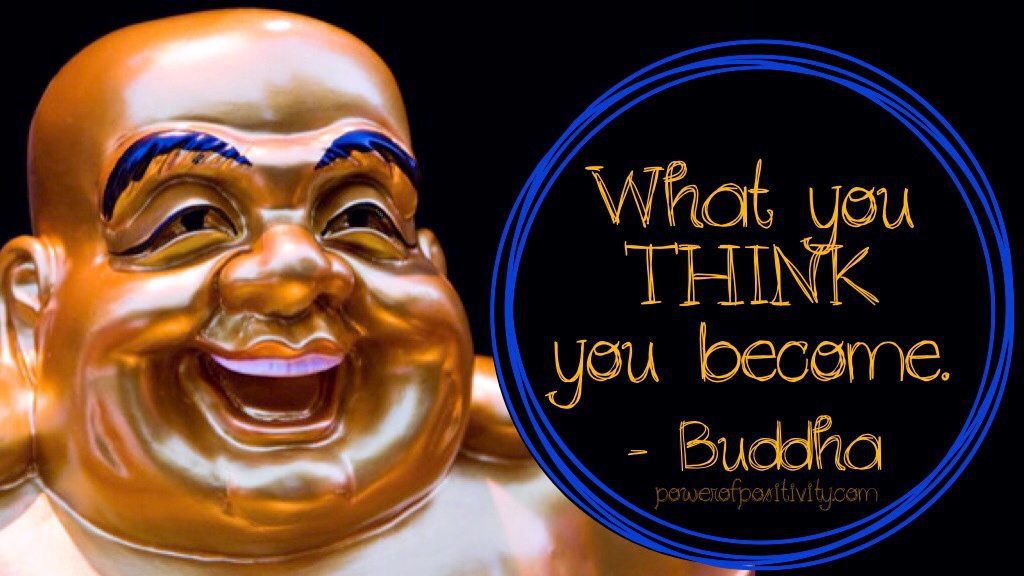
All that we are is the result of what we have thought. The mind is everything. What we think we become.”
– Buddha

“Whatever words we utter should be chosen with care for people will hear them and be influenced by them for good or ill.”
– Buddha

“You will not be punished for your anger, you will be punished by your anger.”
– Buddha

“All wrong-doing arises because of mind. If mind is transformed can wrong-doing remain?”
– Buddha

“We are shaped by our thoughts; we become what we think. When the mind is pure, joy follows like a shadow that never leaves.”– Buddha

“He is able who thinks he is able.”
– Buddha

2. There is an abundance for all. Happiness never decreases by being shared.

“Thousands of candles can be lit from a single candle, and the life of the candle will not be shortened. Happiness never decreases by being shared.”
– Buddha

3. Let go of fear.

“The whole secret of existence is to have no fear. Never fear what will become of you, depend on no one. Only the moment you reject all help are you freed.”
– Buddha

4. The truth will always be revealed. Always believe your own truth.

“Three things cannot be long hidden: the sun, the moon, and the truth.”
– Buddha

“Believe nothing, no matter where you read it or who has said it, not even if I have said it, unless it agrees with your own reason and your own common sense.”
– Buddha

“Do not believe in anything simply because you have heard it. Do not believe in anything simply because it is spoken and rumored by many. Do not believe in anything simply because it is found written in your religious books. Do not believe in anything merely on the authority of your teachers and elders. Do not believe in traditions because they have been handed down for many generations. But after observation and analysis, when you find that anything agrees with reason and is conducive to the good and benefit of one and all, then accept it and live up to it.”

5. You, yourself, deserves your love and affection. Self love is the most deserving love.

“You can search throughout the entire universe for someone who is more deserving of your love and affection than you are yourself, and that person is not to be found anywhere. You, yourself, as much as anybody in the entire universe, deserve your love and affection.”
– Buddha

6. We are all spiritual beings in need of a spiritual life that nourishes the soul.

“Just as a candle cannot burn without fire, men cannot live without a spiritual life.”
– Buddha

“The way is not in the sky. The way is in the heart.”
– Buddha

“To conquer oneself is a greater task than conquering others.”
– Buddha

“The only real failure in life is not to be true to the best one knows.”

– Buddha

7. True peace comes from within. Peace is the answer.

“Peace comes from within. Do not seek it without.”

“Better than a thousand hollow words, is one word that brings peace.”
– Buddha

“Those who are free of resentful thoughts surely find peace.”
– Buddha

8. Choose friends wisely.

“An insincere and evil friend is more to be feared than a wild beast; a wild beast may wound your body, but an evil friend will wound your mind.”

“A good friend who points out mistakes and imperfections and rebukes evil is to be respected as if he reveals a secret of hidden treasure.”

9. Remove separation and give up labels. We are all ONE.

“In the sky, there is no distinction of east and west; people create distinctions out of their own minds and then believe them to be true.”

“Unity can only be manifested by the Binary. Unity itself and the idea of Unity are already two.”
– Buddha
“He who experiences the unity of life sees his own Self in all beings, and all beings in his own Self, and looks on everything with an impartial eye.”

10. Happiness is the journey, not the destination. Enjoy the journey.

“There is no path to happiness: happiness is the path.”
– Buddha

“A jug fills drop by drop.”
– Buddha

It is better to travel well than to arrive.”
Buddha

buddha

11. Health is Wealth!

“Every human being is the author of his own health or disease.”

“To keep the body in good health is a duty…otherwise we shall not be able to keep our mind strong and clear.”

“Health is the greatest gift, contentment the greatest wealth, faithfulness the best relationship.

4 Ways to Find Your Purpose

Find out what you’re passionate about.  What makes your soul smile? The things you are passionate about are leading you to your purpose.

Passion is a powerful and intense emotion. So powerful, that when used properly it has the potentiality for the highest level of achievement and fulfillment. The purpose of our life is revealed in our passions.

Life loves when we are passionate because we’re in our happiest and most creative state. Passion with the right action leads to creation that exceeds our expectations.

The immeasurable power within us is summoned in our passion and craves to thrive. So, it’s a wonderful thing when passion collides with a career. Add dedication, hard work and positive thinking to the mix and you have S-U-C-C-E-S-S.

When you love what you do, you will always do it better and have higher results – that’s because of passion.

Are you doing what you TRULY love to do?

Could you do more of it?

If you’re passionate about something, but you aren’t doing enough of it, chances are you aren’t happy. The good news is, nothing is truly permanent, even if it appears that way. You can do what you love to do and earn a good living from doing it.

Here are 4 Clues to Help You Find Your Purpose

purpose-soul-quote

1. Uncover your Fears.

Oftentimes, our purpose is hidden under a trunkload of junk called fears. These false little dictators chase us away from our purpose and scare us into believing we would fail if we follow our passions. Fear is simply this: False Evidence Appearing Real.

It’s never real, but it sure feels real. Doesn’t it?  When we let go of fears, we are FREE. Usually, this chain-breaking event aligns us with our passions and our purpose almost instantly.

What are some of your biggest fears?

Whatever your fears are, look at the opposite and you’ll surely find where your success lies. Once you discover your main passion, write down actionable steps to do more of it and then dive in.

2. Focus on your strengths and talents.

Our society, beginning in early childhood, tends to focus on our weaknesses instead of our strengths and talents. This subconscious habit starts early and, unless stopped, roots itself into our adulthood and stays. Some of us realize this and work to reverse it, while others wander around living average or unhappy lives.

Instead, let’s focus on our strengths and build on making them even stronger. Let’s follow what we love to do instead of trying to catch up in other areas. Our passion and purpose lie in our strengths and talents.

Do you know what your unique gifts and abilities are?

If  you do, congratulations. You are probably well on your way to living your purpose. If you haven’t fully realized them yet, that’s okay too. StrengthsFinder 2.0 is a great book and assessment by Tom Rath that has sold over 4 million copies. It’s one of the best ways to find your strengths and talents with actionable steps.


3. Reflect on your childhood dreams.

Research and experts agree that many of our childhood passions and dreams hold clues to our future purpose. But, most people do not realize that, nor are they encouraged at a young age to pursue them. As a result,  they usually do not discover them until they are well into their adult or middle-aged years.

You can’t turn back time, but you can write down memories of things you passionately enjoyed as a child.

What were you really enthusiastic about?

Where did you receive the most compliments?

What were you good at?

Children are pure love and innocence. Children are their authentic self. Our authentic self can reveal our best self.

As you answer the questions above and reflect, notice which area makes you feel really good right now. This is your calling. 🙂

4. Follow what feels right.

Your soul is your best guide. It’s the connection to your Creator and access to infinite, divine energy. It’s who you truly are and it’s the source that guides you.

Are you listening?

You’ll know if you are on the right path if what you are doing feels right. When something feels right and you follow it, the energy builds and passion is created. The more you follow your passion, the more creative ideas that will flow from it. These creative ideas will lead you to your purpose.

Your purpose can be different at different times in your life. That’s okay. We are not meant to be here and do just one thing. Our purpose can be grand and it can also be small, depending on how we look at it. For example,  our purpose could be following a career path, being a parent, being a helpful friend, volunteering, learning a new skill, etc.

When we follow our passion and it truly feels right in our heart and mind we can always be assured we’re on the right path. It’s not always perfect or easy, but it is worth it.

The Bottom Line

All in all, if you aren’t experiencing the success you have expected in your life, you may not being putting your time and attention into what you are truly passionate about, therefore unlocking your purpose.

If you feel like you’ve explored all of these tips and you still aren’t sure of your passion or purpose try asking yourself this very simple, yet profound question. . .

“What would I be doing right now, full time, if I were guaranteed success?”

The answer to that question may be your answer.

Remember: You will never fail if you follow what you love. There will be mistakes along the way, but that’s how you learn and grow. The most successful and happiest people have made many mistakes along the way. But, they never gave up.

If you follow your passion long enough you WILL be aligned with your purpose. Consistently living that purpose will guarantee lasting fulfillment.  In fact, you can bet your best life will miraculously unfold before your very eyes.  <3

ACTIONABLE AFFIRMATION:

Pursuing my passion paves the path to my purpose and prosperity.

DAILY INSPIRATION:

For more positive thinking quotes and daily inspiration follow Power of Positivity on FB and Subscribe to our Newsletter or RSS Feed. <3

Sometimes the bad things that happen in our life. . .

POSITIVE THINKING QUOTE:

Sometimes the bad things
that happen in our life
put us on a direct path
to the very – BEST –
times in our life
when we keep on believing.

EXTRA INSPIRATION:

During the tough times, it’s important to keep believing that better days are ahead. In fact, it’s a positive, faithful attitude that brings them to you. Being a positive person doesn’t mean you or your life are will always be perfect. Without hardships we couldn’t truly and fully appreciate our best days.

When we keep believing in our dreams and in our success, tough times WILL pave the way for our best life. They will equip us with a deeper level of knowledge, experience and wisdom. This is the purpose of the school of LIFE  –  to allow us to grow into our fullest potential.

So, during the tough times, affirm that it will set you up for the BEST times in your life. Listen to your intuition, connect with divine energy (however you choose) and look and focus on solutions.

ACTIONABLE AFFIRMATION:

Challenges summon my will and bring me to a higher level of victory!
 

DAILY INSPIRATION:

For more positive thinking quotes and daily inspiration follow Power of Positivity on FB and Subscribe to our website.

life-quote-inspiration

Bringing JOY to Others is a Beautiful Quality. But, Remember. . .

20140720-185828-68308679.jpg

positive thinking quote

Positive Thinking Quote

Bringing joy to others is a beautiful quality.
But, remember sometimes some people
no matter how hard you try just aren’t happy.
Don’t blame yourself.
They must make the choice to be happy.
It has nothing to do with you.
Keep your happiness and continue to share it with others.
You make the world A better place!

DAILY DOSE OF INSPIRATION:

For more positive thinking quotes and daily inspiration follow Power of Positivity on FB and Subscribe to our website.

Is Lucid Dreaming the Greatest Human Discovery?

Have you ever experienced lucid dreaming? That is, a dream in which you knew you were dreaming?

Have you experienced a dream in which you knew you were dreaming and was able to shape your dream and the experience?

Congratulations! You produced Gamma waves, the highest frequency brain waves possible. Also, you had a “lucid dream” – a dream in which you were able to realize a higher consciousness and reality than is normally attainable.

Pretty cool, huh? Let’s delve into this a little by explaining the science behind lucid dreaming, Gamma and other brainwaves and their benefits and uses, and how you can consciously form your own lucid dreams.

lucid-dreaming

Your Amazing Brainwaves

Your brain produces five types of brainwaves: Delta, Theta, Alpha, Beta and Gamma.

Delta brainwaves operate at a very low frequency – .5 to 2 Hertz. This is the slowest possible brain frequency you can experience, and normally happens in a state of deep, dreamless sleep. Delta waves are very important for deep sleep, which is essential for healing and regeneration of mind and body.

Theta brainwaves operate at a frequency of 4 to 7.5 Hertz. These brainwaves are present during moments of light sleep and deep meditation. You experience Theta waves briefly as you drift off to sleep and when awakening from a deep sleep. Scientists believe these waves to be important for creativity and inspiration (here’s to you, artists!)

Alpha brainwaves operate between 7.5 to 14 Hertz. The waves are the doorway to your subconscious mind. Formed during moments of deep relaxation, such as a daydream or light meditation, these waves are the most valuable of all types for visualization and imagination.

Beta brainwaves, our most commonly experienced, operate between 14 and 40 Hertz andc4rvd occur when you are awake and alert. Obviously, these waves are important for essential functions such as work, driving, active learning and listening. However, these are also the most stressful, as your brain works hardest at this state. Beta waves are the reason why rest and relaxation are a necessity.

Finally, there are the Gamma brainwaves. These waves are the fastest type, operating at a frequency of over 40 Hertz. In addition to being the source of lucid dreams, Gamma waves also produce breakthrough insights, very high-level cognitive functioning, and peak focus.

Other great benefits of Gamma waves: joy, self-control, love and compassion!

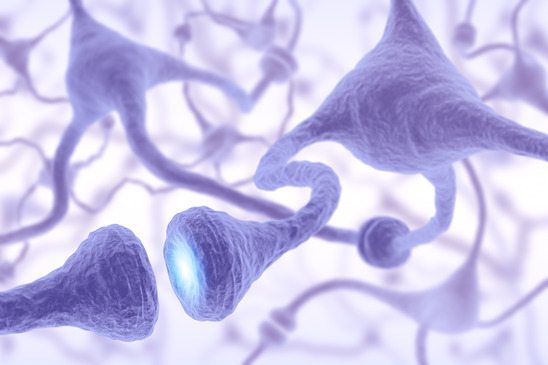
nerve-cell-lucid-dreaming
Increasing Gamma Waves – the Dalai Lama story

With all of the incredible benefits of Gamma wave production, you are probably thinking: I want Gamma waves! Give me more Gamma! Or something to that effect…

Here is the wonderful news: you can perform activities that will increase Gamma waves!

The best, most proactive activity for increasing Gamma production: meditation. Let’s take a look at perhaps the most prominent ever study done proving this assertion.

A renowned, brilliant neuroscientist by the name of Dr. Richard Davidson (please “Google” him) is perhaps the most prominent, sought after expert on contemplative practices (i.e. meditation) in the world.

He’s also a long-time friend and companion of the Dalai Lama.

In 2002, his Holiness sent eight of his monks to visit Davidson’s lab for a groundbreaking study; during which, the Buddhist practitioners were connected to an electroencephalograph (EEG) machine for brain testing and scanning. As a comparative element of the study, Dr. Davidson used ten student volunteers with no meditation experience.

The monks and students were connected to 256 electrical sensors and asked to meditate for a short period of time. The results of the study are nothing short of extraordinary…

Davidson discovered that meditation activated the monk’s trained minds in very different ways than those of the students. Most notably, the monks produced the strongest, most frequent Gamma brainwave activity ever recorded, far surpassing the Gamma production of the student participants.

In other words – meditative practice can change your brain and has a profound effect on your ability to produce more Gamma waves.

If you never had a great reason to become a student of meditation, you do now…

lucid-dreaming

Gamma Waves, Lucid Dreams and the Future

Needless to say, scientists all over the world are excited about Dr. Davidson’s studies and others like them.

In one study in Frankfurt, Germany, scientists administered an electrical current to sleeping people’s brains and were able to induce lucid dreaming in many participants. The volunteers noted that they were able to control the dream’s plot and observe and interact willingly.

Breakthrough studies such as these are opening up an entirely new discussion on what is possible with the human brain and our realities. The ability to induce lucid dreams, treat mental ailments such as Post Traumatic Stress Disorder (PTSD), and even access a realm unknown to us in our regular, everyday states now seems more possible than ever.

All of a sudden with the help of modern technology, visionary scientists and their remarkable studies, the Dalai Lama and his monks, and meditative techniques, Humankind may just made one of the most important discoveries in our history: the ability to literally transform our realities.

Amazing stuff, indeed.lucid-dreaming

Just don’t forget to drop the Dalai Lama a “Thank You” card.

As a side note, Dr. Davidson continues to conduct rigorous scientific research on healthy qualities of the mind within his organization. The Center for Investigating Healthy Minds at the Waisman Center can be visited online

For more information on the famous study in Frankfurt, Germany, and more information on lucid dreaming, visit http://www.world-of-lucid-dreaming.com/lucid-dream-research.html

3 Ways Mindfulness Can Help Treat Depression

Depression is a mood disorder that affects nearly 6% of the U.S. population – about 18.8 million people ages 12 and older. According to the Anxiety and Depression Association of America, depression is characterized by persistent feelings of discouragement, sadness, hopelessness, and disinterest in life. Need info on how to treat depression?

We know all too well the “recommended” methods to treat depression, including therapy and expensive prescription medications. If you ask most people, they would probably list one of these two “recommendations” on how a person should treat depression if they think they’re depressed.

But there is another way to help treat depression: being mindful.

What exactly does “mindfulness” mean? More importantly, how does it work?

Contrary to popular belief, being mindful is not simply meditation; although meditation can certainly be one aspect of the practice. Two words can describe mindfulness quite well: being present.

Mindfulness means being present within your mind, your body, and your relationships. Not only can practicing mindfulness help treat depression by reducing the symptoms, it’s a good practice in general.positive-thinking

Let’s delve into each one.

Being present within your mind

Negative and depressive thoughts are often continuous – one negative thought breeds another, then another. In other words, human beings’ brains are often on auto pilot. This means that it’s very easy to allow negative thoughts to permeate and, as a consequence, the afflicted person is caught up on a cycle of negative thinking.

When we consciously turn our autopilot off and direct our thoughts onto something positive and productive – a task, work, or other activity – we redirect our thinking and, in effect, change our moods!

Being present within your body

Tension, shortness of breath, sweaty palms, a tight stomach – these are all physical symptoms of depressive and negative thoughts. Through evolution, our bodies have adapted to threatening situations by heightening our awareness of them. This is also known as “fight or flight.”

happy-brain-treat-depressionBy monitoring and controlling your breath, stretching your body, or using another activity such as mindful walking or yoga, you focus your body and mind on the activity and off of your autopilot.

A brief, three-minute breathing activity has been found to be remarkably effective in helping treat depression and negative thoughts. The reason is that people who experience troubling thoughts are often unmotivated and pessimistic. It’s as simple as focusing on your breath, and only your breath, for three minutes.

So find a quiet spot, set a timer, and breathe!

Being present within relationships

We live in a world with a lot of people – I know, revolutionary stuff here, right?

Well, mindfulness can help strengthen our good relationships and bring healing to our bad relationships – or just a bad situation. That concept may indeed be revolutionary for some of us.mindful-relationships-treat-depressionBy bringing more attention to relationships, we can more deeply appreciate the precious time with the people we love and care for – in every situation, every time, everywhere.


For instance, when eating a meal with your significant other – just absorb them. Look them in the eyes and talk. Forget everything else – this is the opportunity to create small memories.

When disputing with someone, subdue your impulse to argue and just listen. Empathize and understand them, and then come to a solution. This will improve the situation, and you may just make a new friend.

The take away is this: just be present. Something amazing may happen.

24 Positive Affirmations To Help You Build Positive Self Talk and Self Love

Positive affirmations are beginning to trend, and not just in the self help world. Everyday people are using positive thoughts to change their life for the better. That’s because research is emerging with proof that how you live your life is largely determined by our internal self talk throughout the day. For most of us, unless we have rewritten our subconscious with positive affirmations, negative preprogramming (from when we were a child) replays in our minds.

Research has shown that positive affirmations can have many benefits, such as improved reduced stress and improved health. Affirmations can even help you improve in a variety of life settings.  There are many reasons why positive affirmations are important – and if you don’t make a habit of repeating them,  they’re easily lost.  What we repeatedly focus on expands.

It’s time to program new thoughts and habits with the positive affirmations below to help bring you what you DO want!

Here are 24 Positive Affirmations to Help You Build Positive Self-Talk and Self Love

positive-affirmation-affirmations

  1. All is always well. 
  2. I am confident and capable.
  3. I attract positive people in my life.
  4. I know who I am and I am enough.
  5. The positive energy around me is continuously expanding.
  6. I choose to be present and mindful right now.
  7. I am grateful for my miraculous life.
  8. I choose to use positive affirmations that serve me.
  9. I fulfill the promises I make to myself and others.
  10. I love sharing my happiness with everyone around me.
  11. I feel energetic and so alive.
  12. I am in control of the way I respond to the behavior of others.
  13. I have the will. I have the way.
  14. I am love, peace, hope, joy, truth and positive, radiant light!
  15. I forgive and release. I am filling my heart and mind with love.
  16. All of my needs are met. I thrive from where I am right now.
  17. I inhale positivity and exhale negativity.
  18. I fuel my body with health and activity.
  19. I am talented, creative and successful.
  20. Like the waves of an ocean, peace washes over me; cleansing and rejuvenating my spirit.
  21. I choose to reach for a better feeling.
  22. I grow stronger every day.
  23. I speak kindly to myself and others. 
  24. My life is unfolding perfectly.

BONUS: I choose to see everyone as an opportunity and search for solutions.

THE JOURNEY OF SELF LOVE THROUGH POSITIVE AFFIRMATIONS

affirmations

The world is filled with negativity and high expectations, which can make self love a challenge. However, the best way to become your best self and bring more positivity into your life is to make every effort to practice affirmations daily, especially in the mirror.

Make it a habit to intentionally choose to love yourself, compliment yourself – being positive about your body, mind, and soul. This daily routine will change your life.

Truly, one of the best ways to do this is to begin repeating positive affirmations to yourself on a daily, right into your own eyes, in the mirror, when you wake up in the morning. If you’re not used to positive self-talk, this can be challenging. However, it is still possible to make it a daily routine.

How to make positive self-talk a habit:

If affirmations don’t come natural to you, no worries. Put up post-it notes around your house where you’ll see them often, especially on your mirror where you will see them every day.  It’s critical that you constantly remind yourself of your favorite positive affirmations every day, in all situations until they become a habit. Making positive affirmations a natural self talk will allow you to become the best version of yourself. Shine ON!

Have you had success with positive affirmations? Let us know in the comments!

7 Habits Happy People Have (But Never Talk About)

Sometimes, happy people are glaringly obvious. They have “pep in their step,” are often smiling, rarely complain, and won’t say a bad thing about anyone.

What’s that extra special element that they have that most people don’t?

Certainly, it appears there are some obvious things like genetics, upbringing, birthrights, money, fame (although both can be a downfall for many), a good job, a beautiful family, etc. But, none of these guarantee happiness.

Most happily contented people have very unobvious reasons that create happiness in their life.

Here is a list of 7 things that make most happy people, well, happy. 🙂


7 Habits Happy People Have (But Never Talk About)

1. These folks don’t need acceptance.

In our culture, it’s often about your “inner circle.” It’s not what you know; it’s who you know.

Right?

Wrong. For many with a joyful spirit, they are simply themselves, and through their infectious, radiant energy they attract other positive people.

Happy people don’t need to fit in with the crowd or change so that others will like them. They live and are guided by who they truly are and don’t need others to accept them.

2. Happy people embrace the temporary.

Happy people enjoy the ride and accept the bumps in the road that come along with it. They do so because they know that life is short and that things always work out. Besides, they are too busy excitedly awaiting the next good thing to come along anyway.

Jobs, relationships, and circumstances all come and go. In the meantime, these people seek out their next adventure, learn and make the most of it.

3. Happy people refuse to be denied their dreams.

Happy people are not only gregarious, loving people, but they are also passionate about their dreams and tough-minded. They take hits in stride. They don’t settle for excuses or problems, they create solutions. Their dreams are far too important!

They deeply care about their hopes, dreams, and goals. Ask a happy person what they want out of life. Most times, they will have an immediate answer. Joy-filled people are driven, passionate and creative individuals with a positive end goal in mind that is usually for the betterment of not only themselves but for humanity and a better future.

One tip though. . . Don’t get in the way of that dream. They may take their smiling face off for a minute or two.

Well, maybe not. But, they surely won’t let you stand in their way.

4. Happy people embrace equality.

There are folks among us who have a pedestal and tend to look down on and criticize others. They look for other’s faults like theirs a reward for it, as Zig Ziglar once said.

But, truly joyful people are completely different. They treat other people as equals, regardless of differences.

Look at some of the revolutionaries that have lived amongst us. The Dalai Lama, Gandhi, Martin Luther King Jr., Mother Theresa… the list goes on. Do you notice a characteristic that is common among them all? They were ALL for equality. They were also optimistic and loving people who went to any level to help others.

We are all one, and happy people know it.

5. Happy people put themselves first.

Putting yourself first is important. Our society needs to re-evaluate the misconstrued belief about this. We aren’t referring to being selfish, greedy and “Numero Uno”.

We are talking about healthy self-care. Joyful people love and take care of themselves because that is the only way that they can show up for other people.

It’s true!

By constantly sacrificing your own needs, you cannot true and fully take care of others. Happy people know this and have to put themselves first once in a while to show their best selves and be of service to others.

6. Happy people don’t worry about money.

Many of the happiest people in the world are just average people with modest means. They take pleasures in the small, free things like the weather, their family and friends, good food, a good book, the ability to walk, clean water, and the list goes on…

Happy people understand that money is just a form of energy and there is always enough provided at all times. Money creates more freedom, but happy know that they truly don’t need money to be happy – it’s just an added bonus.

No matter how much they have, there is never lack – there is always enough. Happy people don’t talk about money problems, even if they have less than everyone else.

Most happy people don’t lust money. Lusting is greed. They may welcome more, but they don’t allow the worry for more to consume their life so much that they can’t enjoy where they are right now.

7. Happy people make small differences every day.

One of the greatest things about happy people is that they often do little things every day that make themselves and other people better and happier. They see humanity as something that needs to be improved, and they perform whatever deeds necessary to do so.

Happy people have daily habits that are positive and they strive to live every day this way, because they understand that overall small differences make a BIG difference. Joyful people truly enjoy making a difference. J

Ever notice when you are particularly giddy, you are more likely to leave a bigger tip, smile, or make someones day?

This is perhaps the best thing about these people: they make these small differences every day, all day.

happy people
They smile at the stranger looking down, they leave the tip for the waitress struggling to make ends meet, and they embrace and support the friend that is hurting.

The insightfulness of joyful people is truly something to behold, and it can be summarized easily: Happy people are consistently positive in all ways! 

Bibliotherapy: Doctors Are Now Prescribing Books to Treat Depression

Books are arguably the greatest gift that Mankind has even given to….well… Mankind. Long and short, fiction and non-fiction, e-book and paperback. Without a doubt, books have given us access into some the greatest minds ever – dead and alive, human and divine. Enter bibliotherapy

“Living your life is a long and dodgy business…and stories and books help. Some help you with the living itself. Some help you just take a break. The best do both at the same time.” – Anne Fine, author of “Goggle Eyes.”

It’s not so surprising, then, that doctors are prescribing reading to our fellow human beings. These patients suffer from depression, anxiety, and other mental and emotional problems.

BibliotherapyBibliotherapy Treats Depression

Of course, we think of “treatment” for mental illness as someone on a therapist’s couch. Or, we envision some expensive, over-the-top advertisement for the latest prescription drug. Then again, you may see a picturesque treatment center surrounded by a lush garden and flowing water…

However, Bibliotherapy has been around longer than any of the aforementioned treatments.

But, you might wonder, what is the definition? We define bibliotherapy as the use of designated reading materials designed to facilitate the recovery of patients suffering from mental illness or emotional disturbance. Indeed, it’s a smart idea! However, it’s not a new one.

In fact, the ancient Greeks used to post a sign above their library halls with the words “healing place for the soul.

Heck… what would Socrates and Aristotle know, anyways? Oh… yeah…the whole “laying the foundations of Western thought” thing…

But it’s not just some of the greatest minds of the ancient world. Fast forward to 2014. Indeed, you’ll find some of the world’s best academic institutions and mental health professionals singing Bibliotherapy praises.

In the United States, “reading therapy” began in many hospitals as a supplement to other types of treatments. Medical professionals determined that books with heavy emotional and intellectual emphasis had the ability to uplift and strengthen a patient – both mentally and physically. The stronger tie of the book to the patient’s circumstances, the more it seemed to help.

How Bibliotherapy is thought to work

Have you ever gotten “lost” in a good book? The same kind of feelings and interactivity between the reader and the book are what bibliotherapy is all about.

There are two elements of therapy at play in bibliotherapy – expressive and psychological. The expressive element of the therapy focuses on the healing nature of a book. On the other hand, the psychological element focuses on exactly the mental, emotional and internal relationship between the reader and the book.

In theory, bibliotherapy is more dependent upon the emotional interaction of the “book-reader” relationship than the actual intellectual understanding of the literature. A literary work’s worth is determined entirely by its ability to provoke a therapeutic reaction from the person.

In other words, the book needs to create some relief of certain emotional or mental pressures.bibliotherapy

One of the main concepts of bibliotherapy is called universalization. And that is the realization that you are not alone in your thoughts or struggles. While going through any problem, a common feeling is that of isolation and hopelessness. In bibliotherapy, it’s crucial for an individual to realize two things: that they are not alone and that others have experienced the same problems and overcame them.

Who Bibliotherapy can help

The therapy is used to help people of all ages and with a wide range of emotional, mental, physical and social issues. Some of the problematic experiences that people have countered with Bibliotherapy include:

-Learning disabilities

-Addictions

-Bereavement

-Depression and anxiety

-General Stress

-Sexual, physical and emotional abuse

-Loneliness and isolation

-Financial problems

-Job loss

-Relationship problems

bibliotherapy-healingTypes of Bibliotherapy

For advocates and therapists, there is one core belief: bibliotherapy requires some form of reading. Now, let’s set this common thread aside.

Of course, there are different beliefs and schools of thought on the type of book, amount of therapy required, and therapist involvement.

On one side, self-help books require almost no therapist involvement – the book itself is the catalyst of treatment. On the other end of the continuum, bibliotherapy serves as a therapeutic aid. And, the involvement of a therapist is crucial.

Usually, the type of therapy used depends upon the theoretical leanings of the therapist. In fact, there are two primary “schools” of thought for bibliotherapy: “cognitive” and “affective.”

Cognitive (thinking)

Therapists involve either no therapist or minimal therapist involvement. As the learning functions of a person are believed to be the main factor in treatment, therapy involves non-fiction works. And, all media works well–including apps with actionable learning outcomes. The main concern is the improvement of the reader’s problem-solving ability and mental functioning.

Affective (behavioral)

Therapists believe in the power of fiction to help people. Therapy places significant emphasis on the evocation of emotional responses through character interaction. Affective therapists believe that as a character works out a problem, the reader becomes emotionally involved; thus identifies with the struggles of the character and the resolution of the problem.

Where reading therapy has shown a tremendous amount of promise is with children. When experiencing difficulty and hurt, children are the most vulnerable. Tragically, these kids often have nowhere to turn and no one to help see them through.

On the positive side children are also very open to love, support, and guidance. Perhaps, just as important, children are also creative and open minded. Characters in literature often pop off the page for them, and they are very receptive to the message. This can help them tremendously in identifying with the character and the resolution of the problem.

bibliotherapy
Conclusion on Bibliotherapy

Books can touch our soul, strengthen our mind, and broaden our perspective. We identify with the words, the characters, and the human experience within the pages.

And so, anyone that has read a truly great book can speak to the fact that they can change your life.

Because reading a good book might bring some answers to difficult questions, our fellow humans in need benefit. Also, it may be useful in changing their hearts and healing their minds.

So, are you now interested in learning more? If so, check out the American Art Therapy Associates and the National Federation for Biblio/Poetry Therapy.

Skip to content