Weekly tips, affirmations, and small actions to feel your best.

If You See Someone With A Feather Tattoo, This Is What It Means

Feather tattoos can have many different meanings, and people get them for a variety of reasons. Every tattoo means something different. And whether it’s a tribute to someone in your life, a symbol that is meaningful in some way, or just a design that you found to be attractive, there is almost always a specific reason behind a person’s choice to permanently ink their skin.

One such meaningful tattoo might come in the form of a beautiful feather tattoo. Whether it is a colorful feather or a more simple feather in black and white, there is often some level of significance behind these kinds of tattoo designs.

Easily one of the most popular designs, feathers have a lot of symbolism behind them. But many people don’t realize it. If you’ve been thinking of getting a feather tattoo, whether it is a big, sprawling back tattoo, an arm sleeve, or just a cute small tattoo behind the ear, you might be interested to learn a little bit about the various meanings behind this popular tattoo idea.

First, what is the cost of ink? That greatly depends on how intricate or simple the design is, as well as the size of the tattoo. If you get a large colorful feather tattoo, for example, it will likely be a lot more than a small simple feather tattoo.

IF YOU SEE SOMEONE WITH A FEATHER TATTOO, THIS IS WHAT IT MEANS

So what does this imagery symbolize? There are a lot of potential meanings behind feather tattoos, from freedom, to courage, to simply admiring the design. Here are a few possible meanings behind this artwork:
feather tattoo

FREEDOM

An obvious meaning behind a feather tattoo, the desire for freedom prompts many people to get this design etched onto their skin. Bird feathers symbolize spreading your wings and taking off, no matter if you can see the ground or not. You might hear a lot of people who get these types of tattoos calling themselves free spirits or wanderers. That’s because they long for emotional, mental, and physical freedom. A tasteful bird feather design can be a subtle way to express this kind of spirit of longing, rather than through actual words or a full bird tattoo.

CONNECTION TO SPIRIT

Historically, different cultures have been known to sport feather tattoos as a sign that they have a close relationship with Spirit, Source, the Universe, or whatever you’d like to call it. Specifically, Native Americans, Egyptians, and Celtics wore feather tribal tattoos as a symbol of their connection to nature, and the various gods they believed in. These cultures have a close relationship with the Earth, and therefore, this tattoo allows them to depict that connection on their own skin, further deepening this bond between humans and Earth.

COURAGE/STRENGTH

Feather tattoos can also be a sign of boldness, assertiveness, and courage. If you look at it symbolically, birds have the courage to spread their wings and fly. Look at how they trust themselves enough to not fall. So, in the same way, people who get this artwork have great strength and faith in themselves to make the right decisions in life, and soar rather than fall. Sometimes all it takes is a beautiful feather in a prominent place, to remind you of the courage that you have inside.

INTELLIGENCE

People who get feather tattoos likely have great intelligence, as the imagery has an association with air, and people born under an air sign excel in intelligence and communication. They express themselves clearly and know exactly what they want in life, which persuades them to get some ink.

BEAUTY

Also, many animals with feathers have great beauty; for example, owls, peacocks, and doves. If you choose to get body art— especially a bird tattoo — this symbolizes regality, poise, and beauty. You might look at various birds in bewilderment, and really feel a connection to how they carry themselves in nature. If you get a feather tattoo, this will serve as a constant reminder of how truly breathtaking this world is. It is for this reason that bird feather tattoos such as eagle feather, peacock feather tattoos, and owl tattoos are very popular.

CULTURE

Especially in the Native American culture, birds are seen as sacred, wise creatures that deliver important messages and directly embody Spirit. Native Americans believe that all animals and plants carry the Source Energy through them. But birds are seen as special spirit guides, showing them the right path in life. So, you might choose to get a feather tattoo as a connection to your culture, as well.

It is also worth noting that the location of tattoo designs can alter their significance slightly. For example, a small feather tattoo behind the ear might mean something more intimate than, say, a simple feather on the arm.

If you are looking for inspiration for your large or small feather design — or even inspiration for your ink in general — you can find countless tattoo ideas online to spark something creatively inside of your mind.

If you’d like to read more about the meaning behind tattoos, you can read our article about semicolon tattoos here.
10 Signs You Aren’t Taking Care of Yourself

Do you prioritize taking care of yourself?

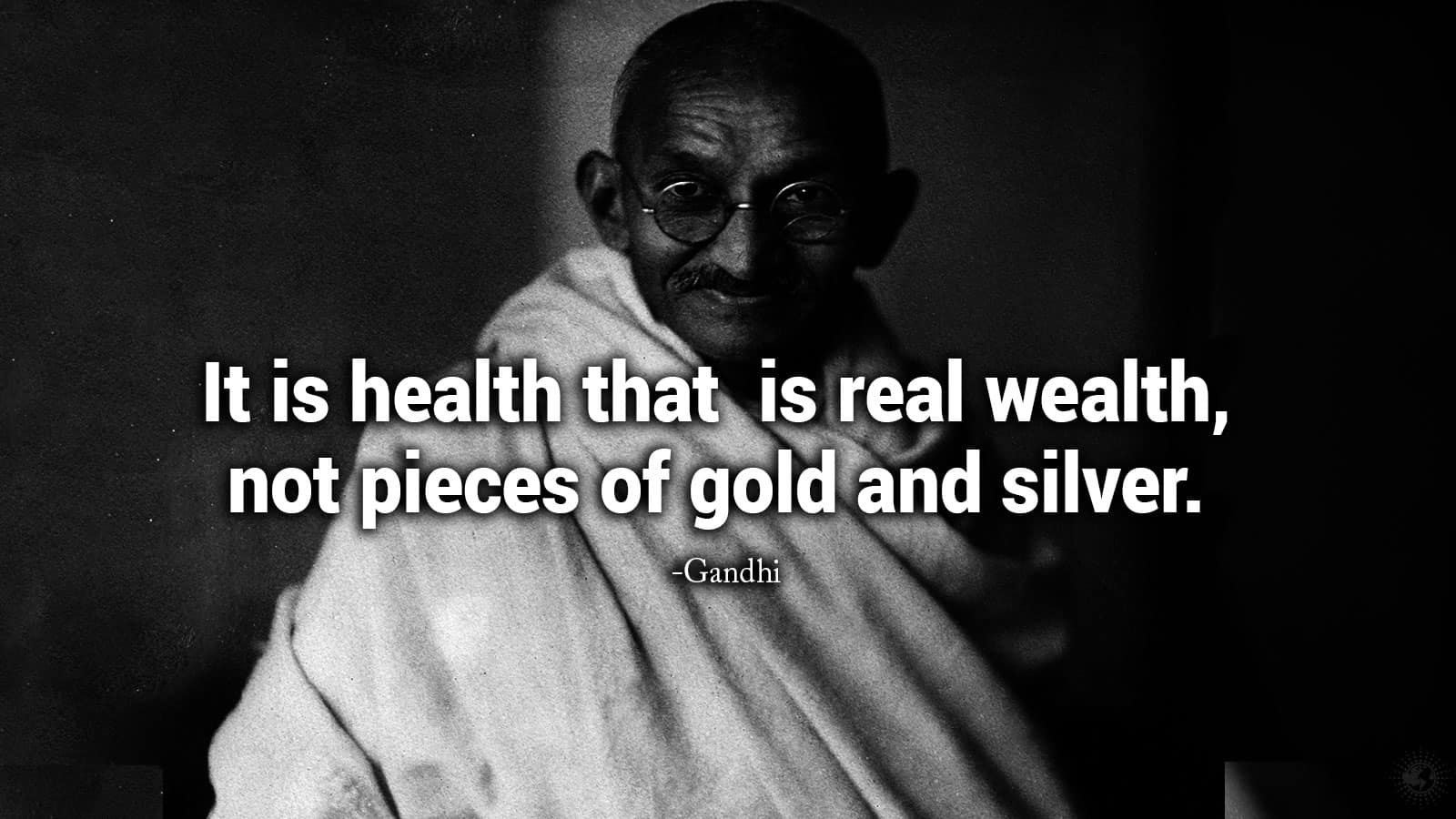
“Each one has to find his peace from within. And peace to be real must be unaffected by outside circumstances.” – Mahatma Gandhi

As one reflects on this quote from perhaps the greatest Peacekeeper in history, the latter part of Gandhi’s statement catches our eye: “must be unaffected by outside circumstances.” Unaffected by the stressors we encounter every day. Unaffected by forces that attempt to derail us from living life with a sense of inner peace.  This is a challenge for most of us, as it was a challenge for Gandhi. The man encountered injustices that would make even the most resolute among us tremble. Yet, he was able to overcome these circumstances in a peaceful and loving way.

Perhaps the biggest reason for Gandhi’s victorious life was his exceptional devotion to cultivating his inner strength. He once said “Strength does not come from physical capacity. It comes from an indomitable will.” He used his will to defeat both internal and external forces that attempted to defeat him. We too can recognize these internal forces and defeat them. There are ways that inner turmoil manifests itself and, once identified, can be overcome.

Here are ten signs you may not be taking care of yourself:

Take care of yourself – you are the priority!

take care of yourself quote

1. Not embracing self-acceptance

This is one that many of us struggle with – the ability to simply embrace who we are. For whatever reason, we instead make fruitless attempts to think, act, and appear different than what we truly are. A predominant reason is that we attempt to mold ourselves to society’s expectations of who we should be and how we should live.

Self-acceptance is elusive, but it’s certainly possible. It’s not only a healthy and peaceful way to live; it should be the only way to live. Self-acceptance is simply embracing our inner selves without reservation or judgment. We should all seek to connect with our emotional, mental, physical, and spiritual selves.

2. Not living with self-compassion

When we incessantly berate ourselves, self-compassion becomes impossible. Continuously punishing our self-image and refusing to accept mistakes is a sure path to an unhappy destination.

The solution is to treat ourselves with compassionate care. We accomplish this by admitting our shortcomings while resisting the urge to hand out needless self-punishment.  Nobody is without faults and flaws, and the willingness to accept this universal truth determines our capability to render self-compassion.

3. Not connecting with your needs

Selfless people are the lifeblood of any noteworthy society. That said, self-denial can be taken to an unhealthy and unnecessary extreme. As human beings, it is paramount that we are attentive to our needs. We all require love, acceptance, and purpose in our lives. Self-deprivation is not an altruistic trait, nor is it needed.

Instead, all of us should be cognizant of the fact that our needs are of the utmost importance. Taken a step further, our needs should provide the foundation that lends meaning to our lives. Let us all connect with our emotional, physical, mental, and spiritual needs.

4. Not connecting with your thoughts

There’s no way around it: our thoughts will default to auto-pilot if we allow it. The human mind is a magnificent gift, but only if we’re nurturing towards it. One aspect of our mind that is often subconsciously overlooked is that it is habitual. In other words, it’ll often repeat thoughts that have surfaced – both positive and negative.

To connect with our thoughts is to be mindful of their presence. Specifically, we recognize and make adjustments to unhealthy thought patterns while making it a point to embrace and duplicate positive thoughts. A special emphasis is placed on recognition here; for only through recognition can we consciously intervene and control our thoughts.

5. Not connecting with your beliefs

Would Gandhi have left such a remarkable legacy without an ability to connect with his beliefs? No, of course not, as Gandhi’s beliefs were his guiding principles. In the same way, we cannot expect to omit our beliefs if we aim to not only leave something behind but create a meaningful existence.

That said, we should ask ourselves if we’re truly connecting with our beliefs. Are we embracing our beliefs or substituting them for something else? Despite of any internal or external influences, our true beliefs and convictions remain. They simply require that we recognize their presence and act on them.

Gandhi quotes

6. Not connecting with your intentions

One universal trait that we all share is the ability to seek and create our own destiny. Unfortunately, our lives rarely unfold as planned – this is when we should revisit our intentions.  It’s natural for our expectations to shift as we continue throughout life. As we evolve, so do our aspirations.

It’s important that we continually revisit our intentions, as they provide a “True North.” Are we living in a way that’s conducive to our intentions or are we ignoring them? Achieving a dream – large or small – requires that we reexamine our purpose.

7. Not connecting with your expectations

This issue is complicated. Having expectations for ourselves is important, but we can also take that to an extreme. Limiting expectations frees us from disappointment, but minimization of expectations can create complacency.

The solution to this enigmatic reality is to simply be lenient. Goals are important, yes, but so is the ability to shed unnecessary pressure. The important thing is that we have achievable expectations without self-imposed burdens.

8. Neglecting self-kindness

As children, most of us are taught to be kind to everyone. Showing kindness is an act of love and a requirement if we wish to live in a meaningful world. Self-kindness is as important, if not more so than the benevolence we exude.

So, be kind to yourself. Forgive yourself. Love yourself. Take care of yourself. Be merciful with yourself. An added benefit: the kindness you give will be much greater in proportion.

9. Abandoning wants and desires

Withholding some wants might be necessary for some circumstances. Outside of anything selfish or counterproductive, it’s healthy to keep our wishes in mind. Many of us want a family; have educational aspirations; seek a certain career, etc.

When life becomes turbulent, it’s easy to abandon our wants and desires. Our hope is that you seek out and achieve your wishes that contribute to a meaningful life. Simply keeping our aspirations in mind and revisiting them on occasion is enough.

self care

10. Not living with self-awareness

The capacity to be aware of our thoughts and actions is one that is exclusive to the human race. It’s also one that is commonly taken for granted. Our ability to understand how our behavior affects ourselves, others and our world is one that we should regard of the utmost importance.

So, make it a priority to do a bit of introspection. Are your thoughts and actions helpful or hurtful to yourself, others and your world? Be honest with yourself. One of the beautiful things about being human is our ability to change course and live a life that we and others deserve. Take care!

15 Words That Express Feelings You Can’t Explain

Have you ever tried to explain your emotion but realized the right word didn’t exist? I think we’ve all been there at some point, and we all know how frustrating it feels to describe something without proper words. With over one million words in the English language, you would think that explaining our emotions would come easily, but surprisingly, words describing emotions are few and far between in our dictionary.

Because of this lack of adequate vocabulary, John Koenig created The Dictionary of Obscure Sorrows in 2009, where he posts words he invented so that we no longer have to fumble for words to describe our emotions.

Here are 15 words that can express feelings you can’t explain:

1. occhiolism

n. the awareness of the smallness of your perspective, by which you couldn’t possibly draw any meaningful conclusions at all, about the world or the past or the complexities of culture, because although your life is an epic and unrepeatable anecdote, it still only has a sample size of one, and may end up being the control for a much wilder experiment happening in the next room.

2. lachesism

n. the desire to be struck by disaster—to survive a plane crash, to lose everything in a fire, to plunge over a waterfall—which would put a kink in the smooth arc of your life, and forge it into something hardened and flexible and sharp, not just a stiff prefabricated beam that barely covers the gap between one end of your life and the other.

3. exulansis

n. the tendency to give up trying to talk about an experience because people are unable to relate to it—whether through envy or pity or simple foreignness—which allows it to drift away from the rest of your life story, until the memory itself feels out of place, almost mythical, wandering restlessly in the fog, no longer even looking for a place to land.

4. onism

n. the frustration of being stuck in just one body, that inhabits only one place at a time, which is like standing in front of the departures screen at an airport, flickering over with strange place names like other people’s passwords, each representing one more thing you’ll never get to see before you die—and all because, as the arrow on the map helpfully points out, you are here.

5. monachopsis

n. The subtle but persistent feeling of being out of place.

6. nodus tollens

n. the realization that the plot of your life doesn’t make sense to you anymore—that although you thought you were following the arc of the story, you keep finding yourself immersed in passages you don’t understand, that don’t even seem to belong in the same genre—which requires you to go back and reread the chapters you had originally skimmed to get to the good parts, only to learn that all along you were supposed to choose your own adventure.

7. liberosis

n. the desire to care less about things—to loosen your grip on your life, to stop glancing behind you every few steps, afraid that someone will snatch it from you before you reach the end zone—rather to hold your life loosely and playfully, like a volleyball, keeping it in the air, with only quick fleeting interventions, bouncing freely in the hands of trusted friends, always in play.

8. vemödalen

n. the frustration of photographing something amazing when thousands of identical photos already exist—the same sunset, the same waterfall, the same curve of a hip, the same closeup of an eye—which can turn a unique subject into something hollow and pulpy and cheap, like a mass-produced piece of furniture you happen to have assembled yourself.

9. kenopsia

n. The eerie, forlorn atmosphere of a place that is usually bustling with people but is now abandoned and quiet.

10. sonder

n. The realization that each passerby has a life as vivid and complex as your own

11. chrysalism

n. The amniotic tranquility of being indoors during a thunderstorm.

12. kuebiko

n. A state of exhuastion inspired by acts of senseless violence.

13. opia

n. The ambiguous intensity of Looking someone in the eye, which can feel simultaneously invasive and vulnerable.

14. pâro

n. the feeling that no matter what you do is always somehow wrong—that any attempt to make your way comfortably through the world will only end up crossing some invisible taboo—as if there’s some obvious way forward that everybody else can see but you, each of them leaning back in their chair and calling out helpfully, colder, colder, colder.

15. adronitis

n. Frustration with how long it takes to get to know someone.

Are You Messy? Here’s Why It Might Mean You’re A Genius

Not an inch of Einstein’s desk is free of paper. Books, manuscripts, magazines, and envelopes are everywhere. The same goes for shelves. One shelf holds neatly arrayed journals, but everywhere are messy piles and piles of paper. – Andrew Tate

This is what Andrew Tate – a creativity and psychology writer – had to say about the snapshot taken of Einstein’s desk after he had died. This famed picture by Time’s photographer Ralph Morse of the world’s greatest mind (Seriously, Google it!) encapsulated Einstein’s approach to his work – scattered, messy, unorganized.

Cue Einstein: “If a cluttered desk if a sign of a cluttered mind, then what are we to think of an empty desk?”  Einstein, and any of the world’s creative geniuses of both past and present were unapologetically messy. Nobody would doubt Mark Twain’s creative genius, regardless of how “disorganized” his office may appear, and it is most certainly disorganized. Some of Silicon Valley’s brightest minds insist that clutter breeds creativity, as do countless artists, writers, and other folks with a mean creative streak.  But is there anything to the notion that a messy workplace sparks creative juices? Indeed, there are.

Are You A Messy Person? Here’s Why It Might Mean You’re A Creative Genius

Consider this study by psychologist Kathleen Vohs of the University of Minnesota. In her study, Vohs’ researchers meticulously organized one room of their laboratory and completely messed up the other. Research subjects were then given the creative task of thinking up the possible uses of a ping pong ball within a certain timeframe.

While they both constructed roughly the same number of possibilities, folks in the messy room were “far more creative.”

Here is Vohs’ conclusion:

Therefore the people surrounded by tidiness were choosing convention, whereas the people surrounded by messiness were choosing novelty.

With perhaps a bit of skepticism, researchers at Northwestern conducted the exact same test. Here is their conclusion:

They found people in messy rooms drew more creativity and were quicker at solving creative problems.

Why is this?

Piggybacking off of Northwestern University’s study, it all comes down to “irrelevant” sensory information and allowing the individual to focus more on the task at hand. More specifically, that creative talent has a strong association with the reduced ability to filter this information and allow for more unconventional thinking processes.

In other words, conventional thinking is perhaps best achieved with a tidy approach. But unconventional (read: creative) processes originate from a sense of disorder, uninhibited by the socially-acceptable traits of organization and meticulousness.

Creative people have the very rare ability to produce something out of a mess of ideas. Thomas Edison, undoubtedly one of history’s greatest creative minds once said:

“To invent, you need a good imagination and a pile of junk.”

For those of us with a creative streak, this quote by Edison is certainly relatable. Creative geniuses are not only prone to sense of disorder… they feast off of it.

The world around us seems to be an organized, structured entity that invites a minimalist approach – something that is not very conducive to dreaming or novelty. Not to mention, it’s flat-out unexciting.

A creative person has an innate need for a degree of chaos, as the world would simply bore them if deprived of such. In terms of work, this need shifts the brain into creative mode and invites a seemingly endless flow of abstract thoughts.

The creative among us will ignore a desk scattered with papers and coffee cups in order to focus on what’s truly important – creation. Simply put: it doesn’t matter how disorganized their surroundings may be. They’re too busy focusing on the next novel, painting, sculpture, or music piece. Now, as it turns out, there may just be a pretty darn good reason.

Our workspaces are a reflection of who we are as individuals. Walk into any corporate office, and odds are that everything is tidy, organized and unobstructed. Ask any talented artist what they think about the traditional workplace, and there’s bound to be some semblance of disapproval, dissatisfaction and (assuredly) boredom.

Who wants to live in a world that is all business? It’s monotonous, uninspiring and completely dull.  Creative people wear their “unorthodox” label with pride, as they should. Artists are a rare breed in a world that values structure and order above anything else. We need individuality and a flare for the artistic, which our fellow artists provide.

Final Thoughts on Messy People

If there’s a takeaway, it’s this: don’t be hampered by expectations to conform. If you’re a creative person working in the corporate culture, refuse any attempt to detract you from your creative work. Find the environment that you work best in and maintain that environment.

For the rest of us, it may just be worth it to “forget” cleaning the workspace for a while. “Cleanliness is next to Godliness?” BAH

Do You See Repeating Numbers? Here’s The Meaning Behind Them…

Have you ever looked at a clock, sign, or radio and seen repeating numbers? While this might seem like a silly coincidence at first, repeating numbers and number sequences can provide powerful insight into how our lives will unfold. Our angels, spirit guides, and higher selves like to speak to us through simple methods that we can easily notice and understand. Here on Earth, communication already can seem challenging, but when it comes to talking with people or spirits in another dimension, that delves into a whole new level of difficulty.

Because our higher selves and spirit guides operate on a totally different dimension, they must speak to us through their own mediums. They use numbers, songs on the radio, dreams, and other methods to send us messages; however, repeating numbers seems to be their favorite way to communicate.

Don’t just dismiss repeating numbers and number sequences when you notice them – they actually have incredible meaning behind them, which we’ll explain below.

Do you see repeating numbers? Here’s the meaning behind them…

Different sequences of numbers have different meanings – for example, seeing 11:11 means that you have become in tune with your soul, and are following the right path. You are in a wonderful space to manifest your wildest dreams and have a great connection between yourself and the universe. If you’d like to read more about the meaning behind 11:11, you can do so here. 

numbers

Seeing 1’s

Noticing ones essentially means you have gotten in touch with your soul purpose, and know exactly what you want out of this life.

Seeing 2’s

Seeing twos means that you should continue on your path, regardless of what others may think. Don’t fear being ridiculed for allowing your true self to shine through. Whatever you feel has been holding you back, just let go and let flow. Believe in yourself, and stand up for what you feel even if you must walk the path alone.

Seeing 3’s

Noticing threes means that your spirit guides have been summoned to help you along your path, and that you are always protected. Don’t live in fear, but rather, embrace the fact that you have been blessed by the divine light and energy of your angels. They will not let you fall into a bad situation or allow anything negative to happen to you.

Seeing 4’s

If you see 4’s repeating, you will begin to attract abundance in all aspects of life. If you have been struggling financially, spiritually, emotionally, or in any other manner, you will start to see your life transform dramatically. You have tapped into the energy of the universe, and will begin to see positive changes in many parts of your life.

Seeing 5’s

Seeing fivesmeans that your life will begin to move forward in a positive direction. So, if you’ve been feeling stagnant, lost, or afraid lately, don’t let these worries take over. Keep following your heart, and everything will fall into place perfectly. It might seem like things have taken a while to manifest for you, but never fear – big changes are just around the corner for you.

Seeing 6’s

Seeing sixes means that you need to spend more time going within and slowing down. Though repeating 6’s have a negative connotation, looking deeper into the message reveals that you just need to take more time out for you. You might have recurring negative thoughts or notice that your life seems to keep spiraling downwards, so this points clearly to a need for relaxation and rebalancing. If you look after your own energy, you will start to see that better energy will come back to you.

Seeing 7’s

Repeating 7’s means that the doors are wide open for you to continue learning and growing. You will keep evolving into a more conscious being, and learn even better ways of living that will encourage and motivate others to replicate.

Seeing 8’s

Seeing eights is very rare, but it means you have tapped into a very deep, hidden realm of the universe that many people never venture to. Repeating 8’s have a very healing, shamanic energy, so if you see them, don’t take it lightly. You might be on your way to discovering profound truths about how the universe works.

Seeing 9’s

Nines signify a closing of one chapter and the opening of another. Maybe you have a relationship or job that you feel no longer serves you, so now would be the time to let it go and continue walking your unique path. Repeating 9’s have been called a “master number,” because you will learn important lessons on your soul journey that will accelerate your growth as a spiritual being.

5 Ways Creative People Recharge

When creative people try to explain creativity, it’s hard to depict its strange nature in that there is no rhyme or reason to it. Anybody that makes a career or hobby out of creating has encountered the ole’ “Creative Block,” a time when the creative juices just don’t seem to be reaching the brain. Creative Block (yes, it’s capitalized for emphasis) is frustrating, time-consuming, and – perhaps worst of all – inevitable.

Countless artists use many self-prescribed methods of relieving Creative Block; some isolate themselves, some imbibe alcohol, some daydream, some sleep it off, etc.

You can overcome a creative block by finding a good recharging ritual that works for each person.

CBS (Creative Block Syndrome, not a real medical condition) resists many attempts at treatment, as there is no universal cure. However, below are a few prescriptions (non-substance, of course) that many-an-artist have found useful.

Here are five ways creative people recharge:

creative

1. Turn off the television

Mind-wandering is a catalyst to great creative thinking, but mind-numbness is not. Engaging in some mindless activities, such as watching television, inhibits creative thought. Although some television shows may be inspirational and well-meaning, studies demonstrate that the vast majority of television programs actually lower different types of intelligence.

On the flip side, watching or reading material that challenges our intellect and promotes creativity can be beneficial. The challenge lies in actually finding television shows that prioritizes intelligence, creativity and other attributes that spark creative thought.

Interestingly, some monotonous activities (think most jobs) may be a great place to garner some creative thoughts. In a study published in the journal Psychological Science, some tedious tasks accomplish exactly that. The founder of genetics, Gregor Mendel, is said to have counted pea plants and honeybees in his quest to substantiate his theories.

2. Write by hand

Digitization has led to the near eradication of longhand and shorthand writing. Crafting our calendars, shopping lists, and even signatures have all become doable through technology. However, it turns out that writing something down gives a sense of permanence and concreteness that pecking away at a keyboard or touchscreen does not.

Our brainpower is also helped out when we write by hand. Virginia Berninger, a professor of educational psychology at the University of Washington, states that writing by hand stimulates the portion of the brain responsible for thinking and working memory – two important functions relative to creative thought.

Lee Rourke, an award-winning author, puts it this way: “The constant tap-tap-tap-tap on the keyboard reminds me of all the offices I’ve worked in. The sound bores into me, it fills me with an anxiety I could do without. I feel like I’m signing off invoices rather than writing my next novel.”

Writers (including this one), take note.

3. Watch something funny

To be clear, this is not a reason to watch the hilarious and dopey antics of those on reality TV. Instead, watching something short and funny may provide the mood boost someone needs to break their creative slump. The simple reason: solid creative thinking is best achieved in a positive frame of mind. While feelings relating to anxiety may help with focus, feelings of humor, especially the act of laughing, help stimulate creativity.

Mark Beeman, a professor of psychology at Northwestern University, conducted a research study that linked a part of the brain – the anterior cingulate cortex – with mood-boosting activity. The anterior cingulate cortex is responsible for emotion, empathy and decision-making – a part of the brain that may help develop connections that lead to a spark in creative insight.

4. Take a shower

Few activities relax the mind and body as effectively as a hot shower. People with creative talent will almost universally state that they work best when the mind and body are free of tension. Additionally, a shower is also a relatively mindless task, which liberates the mind to wander into creative territory.

Multiple studies have also been published linking other activities to creative thought. Creative sparks may fly on a routine commute; when on a fishing trip, or simply resting in solitude.

Researchers assigned people to one of three groups in one study and issued a specific task. The first group was given a demanding task during a rest period; the second group received a simple task and was encouraged to mind-wander, while the third group was not given any task. Afterward, the three groups were given a series of creative problems to solve. The group that was allowed to mind-wander solved the creative problems faster than the other two groups.

5. Get some sleep

Of all the creative hacks available, the simple act of sleeping is perhaps the most valuable. During this period, the brain is essentially reorganizing and retooling for the tasks that lie ahead, the process is consolidation. It activates the brain’s neural networks responsible in forming new connections and associations.

While sleep is valuable to the creative process, it is more so when we’re close to having an answer to a problem. Waiting a day and utilizing the brain’s automatic consolidation process enhances the probability that these elusive answers will surface.

As with any creative solution, taking advantage of sleep works best when applied intelligently. Benjamin Franklin may have said it best: “Early to bed early to rise, makes a man healthy, wealthy and wise.”

Rumor has it that Ben was quite creative, as well.

6 Ancient Remedies That Can Heal Your Mind and Body

Our bodies and minds must work together harmoniously to achieve optimal health. Fortunately, many ancient remedies can work to rebalance your energy and pH levels so that you can feel your best.

Here’s an example. Did you know that many health problems come from high acidity levels within the body? Acidity causes inflammation, which therefore causes cortisol levels to rise, resulting in many diseases and illnesses. If you want better health, alkalizing your body as much as possible is essential, which can be done with the following natural remedies.

These Six Ancient Remedies Have Unique Healing Properties for the Body and Mind

Here are six remedies that can heal your body and mind:

cleopatra

1. Adding cardamom powder to your coffee

Even though our world runs on coffee, it falls on the acidic side of the pH scale, which can damage our bodies if we drink too much. Add a half teaspoon of cardamom powder for every 12-ounce cup you brew to negate these harmful effects. If you’d like to alkalize your body further, drink plenty of water if you drink coffee in the mornings; this will help keep acidity down and hydrated.

2. Eat alkaline foods

As mentioned above, eating a reasonably alkaline diet will work wonders for your mind, body, and soul. Our body’s pH level is between 7.30 and 7.45, so eating foods that match this level will make us feel our best. Foods such as raw fruits, vegetables, nuts, seeds, and starches are the optimal foods for the human body. Overeating meat, dairy, processed foods, refined sugar, and alcohol can throw your body’s pH level off, opening the body up to disease.

Also, drinking water at the correct pH level is essential – drink non-fluoridated, ionized water if possible.

3. Oil pulling (one of the most revered ancient remedies)

Oil pulling offers many benefits, including protecting against gingivitis, plaque, and microorganisms that cause bad breath. This Ayurvedic practice dates back 3,000 years, one of the most ancient remedies. It involves swishing around one tablespoon of coconut, sesame, or sunflower oil in your mouth for 20 minutes, then spitting it out. The enzymes from the oil will help pull out toxins and acidity from the body, reducing inflammation in the process. You will also notice whiter teeth, clearer skin and eyes, and stronger gums. Besides that, your energy levels will notably increase.

4. Use delicious turmeric in your cooking.

Ancient cultures have used turmeric for various things, including arthritis, heartburn, stomach pain, diarrhea, gas, bloating, headaches, bronchitis, depression, cancer, Alzheimer’s disease, and much more. This powerful herb should become a part of your daily nutrition regimen if it isn’t already; you can either add it to your cooking, put some in your tea before bed, or add it to your baking. One teaspoon of turmeric per day should do the trick.

5. Practice positive thinking.

As you probably already know, negative thoughts are the body and mind’s worst enemies. Practically all disease begins within the mind, so training our brain to weigh the positives instead of focusing on the negatives is vital to our health. It might take some time, but don’t give up on reprogramming your brain. You might slip up a few times and fall back into negative patterns, but this is expected. Instead of beating yourself up, take a few breaths, relax, and forgive yourself. Deep breathing, meditation, and positive affirmations can turn your life around if you incorporate them into your overall lifestyle. If you’d like to read more about what negative thoughts do to your brain, you can do so here.

6. Ancient remedies include today’s hot trend–essential oils.

Various essential oils are available, all with different healing properties. Some of the most common is lavender, which can help with stress and anxiety, and peppermint, which can help you feel refreshed and alert. And chamomile also relieves anxiety and stress. However, there are many more to choose from, depending on your particular problem; you can learn more about essential oils here.

To use them, massage a drop or two on the area that seems to trouble you, or, for stress and anxiety, massage the drops into your temples. Add fifteen to twenty drops to a warm bath, use a diffuser, or even put a drop or two of ONLY pure oil into your tea.

Tea

Final Thoughts on Using Ancient Remedies to Heal Modern Day Health Issues

These solutions come from centuries of knowledge, particularly from the Asian and Native American traditions. It is essential to acknowledge the contribution of those ancient healers, while also understanding the value of the need for good health. Try one or two of these solutions, depending on your health needs. They are well worth a try and can help prevent further decline in your body.

5 Signs Your Eating Habits Are Making You Sick

“Do you know that you make over 200 food choices…a day?! We eat largely because of what is around us. We overeat not because of hunger but because of family, packages and plates, names and number, colors and candles, shapes and smell, distractions and distances; the list is almost as endless as it is invisible.” – Brian Wansink, author of Mindless Eating.

The United States is the most obese country in the world. Nearly 33% of adults in America are classified as obese, a medical condition in which excess body fat can effectively impact health. Note that this is different than being overweight, which simply means weighing too much. Obesity can be detrimental to the health of those afflicted.  Obesity is not the topic of this article. However, it is relevant in the sense that many of us engage in unhealthy eating habits that promotes obesity; not only obesity, but many other adverse health conditions.

The bottom line: nutritional habits are, perhaps, the most influential determinant to our overall health.

Negative dietary health outcomes can be attributed to two main things: poor eating habits and the proliferation of processed foods. While the latter may not be in our control, the former certainly is. First, it is necessary to recognize eating habits that are counterproductive to overall health.

Here are 5 signs your eating habits that are making you sick:

1. Your food portions are over the suggested serving sizes

The amount of food that is considered one ‘serving’ is far more in the U.S. and other developed countries than elsewhere in the world. Not to mention, we’re more likely to load our plates with the “good stuff” rather than healthy vegetables, fruits, etc.  If you’re eating more than a single suggested serving, you could be making yourself sick by overburdening your body with food. Think of your body’s metabolism as an incinerator – not enough food the fire goes out – too much food and the fire gets smothered.

2. You’re eating when stressed

Oh, yes. What better way to release those pent-up feelings than with a double/triple/stacked/leaning inject-me-with-pasteurized-cheese-and-beef monstrosity of a burger? (This is a personal dietary preference of the writer…feel free to point out your own.) On a serious note, fast food is a go-to for many stressed-out office-goers. Stressed folks have a higher likelihood of indulging on unhealthy fare.

3. You’re eating processed meats

Many processed meats – hot dogs, bacon, sausage, deli meats, etc. – contain both an unhealthy blend of nitrates and an unnecessary amount of sodium. Nitrates are a preservative that undermines the body’s ability to process sugar, which throws blood-sugar levels out of whack. Excess sodium contributes to hypertension, or high blood pressure. It can also contribute to heart disease.

4. You’re drinking too much coffee

Okay, bear with us a second. Please don’t navigate to another webpage. Many of us love coffee, or at least make it a priority to get a cup on the morning. Nobody’s saying to forgo that morning cup or two. However, excess coffee intake means excess caffeine intake – this means increased fat storage and other undesirable health effects.

5. You’re not getting enough sodium

Ignoring sodium intake in our food is a bad idea. It is necessary to regulate sodium intake to ward off obesity, high blood pressure and numerous other health issues. A shocking statistic: the average American consumes about 50% more than the recommended daily amount of salt.

Okay, this is all well and good but what are we supposed to do?

Healthy eating can be difficult in a society that produces disproportionate amounts of unwholesome food. The solution is this: to be mindful of what we put into our bodies. Mindful eating can be an effective measure against innate tendencies to indulge in unhealthy eating habits.

To eat mindfully simply means to engage in eating habits with the intent to care for ourselves. More specifically, that we eat with attention; attention necessary to notice and enjoy our food while understanding its effect on our bodies.

We can practice mindful eating by asking ourselves six simple questions:

Why?

Why do I choose to eat this particular food? Why am I eating now?

When?

When do I think about eating? When am I more prone to eating unhealthy food?

Where?

Where do I intend this food to go? Does this food serve my energy and health or some other need or want?

What?

What do I choose to eat? What are the healthiest choices considering the options?

How?

How do I eat? How do I choose the foods necessary to serve a healthy function?

How much?

How much food do I need to eat? Are my portions conducive to healthy eating habits?

Mindful eating is quickly becoming a trend among those who strive to achieve a healthy lifestyle. Understanding the myriad of ways that nutrition affects our overall health is a great first step, as we’re more prone to make mindful, healthy decisions when educated about nutrition and its impact on our everyday lives.

In making the simple decision to make mindful nutritional choices, we effectively make the decision to live with intent and well-being.

Here’s Why You Should Drink Warm Salt Water Every Morning

Drinking warm salt water every morning might sound strange. However, the benefits are abundant.

Too much salt can harm your body, leading to strokes, fluid retention, osteoporosis, and stomach cancer. These problems come from studies of people who use too much over-processed and refined salt stripped of its beneficial properties.

Too little salt can also cause health problems for us as well. Too little salt can cause “spasms, irregular heart rhythms, sudden death and even increase the risk of heart attack in hypertensive patients.” The average American consumes about two to three teaspoons of salt per day. That amount is almost double the FDA’s recommended daily amount.

In a study of the effects of water lost by workers in hot conditions, researchers found that “in order to obtain the best performance, water must be given in amounts equal to the volume of sweat lost.” Being thirsty did not occur until water loss from sweating had been too much for immediate replacement of fluids lost.

When workers replenished their fluids after a day’s work, it was not enough to compensate for the sweat loss. “The amount of water drunk in the day, during the period of working and sweating, is usually about two-thirds of the amount of sweat lost.”

Researchers said the remaining fluids lost could be made up in food intake.

The Benefits of Salt

Salt has gotten a bad rap, but as we know from our article on the great things that happen from eating Himalayan salt, natural, unrefined, raw Earth salt provides so many essential health benefits.

Unrefined sea salt has more than 80 rare trace minerals, which gives us our daily intake requirement of these elements when we consume the salt.

Drinking warm salt water also helps our hydration process. We can better absorb and use the water we drink with slight saltiness. The salt in the water stimulates our salivary glands to produce saliva, which will also aid our digestion of food later in the morning.

Here’s Why You Should Drink Warm Salt Water Every Morning

pop meme

The Sole warm salt water drink trend

Sole (pronounced so-lay, like Ol‚) is a warm saltwater drink you can make at home for your morning beverage. Make this saltwater drink by saturating water with salt to create a highly concentrated but dissolved saltwater mixture.

You do not drink saturated salt water. But you can use pre-dissolved saltwater mixtures in a glass of water rather than following the recipe below. Please consult your medical practitioner before drinking warm salt water or sole in the morning, as some health concerns, like hypertension, might worsen by drinking it.

Keep metal utensils, bowls, and jar lids out of making sole, because they can affect the ionization of the salt water, which s part of its benefit. You can use Himalayan salt, Celtic salt, real salt, or sea salt for this as long as it is not refined.

Place one or two cups of salt in a mason jar with a plastic (not metal!) lid and fill it with water. Replace the lid and shake for a minute. Leave the jar on the counter overnight. Most of the salt will dissolve into the water. In the morning, if the salt water mixture still has salt at the bottom of the jar, the water has absorbed as much salt as it can take.

Warm some good quality drinking water and add one teaspoon of the sole water to your drinking water. The recommended ratio is one teaspoon per 16 oz of water. Do not exceed this amount unless directed by a yogic master or physician that it is safe.

Yogic practice of morning cleanse with warm salt water drink

Please consult with your medical practitioner before drinking warm salt water. Ensure you have access to a restroom before drinking this recipe since it will likely bring on a bowel movement.

Many have heard of the practice of cleansing.  In yoga, regular advanced practitioners use Shankhaprakshalana (also known as shuddhi kriyas). This process clears the intestinal tract by removing digestive impurities with salty water.

salt water

Warm salt water recipe:

  • 16 oz of still-warm water, heated to your preference, as you would for hot tea.
  • One teaspoon of salt
  • juice of half of one lemon

Start drinking warm salt water early, between 6:00 and 7:00 am. Drink one 16oz glass of warm salt water quickly. In a study of this yogic cleansing process, warm salt water was found to help remove infective secretions.

Yoga therapist Ananda Seva also writes in a review of how obesity is helped by yoga that the drinking of warm salt water ‘Will relieve a clogged up and devitalized digestive system, overtaxed bowels, [and] depleted liver and pancreas. As a result, long-forgotten mental and physical lightness; increased vital energy, and clarity of mind are again experienced.’

Skip to content