Weekly tips, affirmations, and small actions to feel your best.

These THREE Ingredients Naturally Kill Weeds

Home gardeners know that organic gardening means a lot of work to kill weeds. That is, unless you use these three natural ingredients. When you put as much time and effort into your garden as most home gardeners do, you want your vegetable beds to look fantastic.

A weed can be any plant that is growing where you don’t want it to. So any variety of plants can make it difficult to find a natural weed killer that is effective.

Weeds are an inevitable part of gardening. If you use manure for your garden, you are unfortunately introducing hundreds of weed seeds that passed through the cow’s digestive system before becoming your manure. Weed seeds can also come from bird droppings. So you can see how they are nearly impossible to prevent.

Related article: 5 Lessons You Can Learn From A Tree

Organic is the healthiest way to go with your natural garden of course, and you may have tried some other ways to naturally eliminate weeds. Pulling weeds is always the most natural method, but it can become very labor-intensive depending on your garden size.

Natural Weeding Methods

Weeds, and all plants, have very resilient seeds that have developed the best way to ensure the survival of the species. Some seeds can lie dormant in the soil and wait for years until soil nutrient and moisture conditions are just right to sprout.

In nature, on wild, uncultivated land, weeds are helpful to other plants. They add nutrients to the soil, shade and cool the soil, and they aerate the ground as their roots break up hard-packed dirt.

Related article: 12 Of The Best Plants For Cleaner Indoor Air

In garden beds, when we are providing ideal soil conditions for plants to thrive and produce by adding nutrient fertilizers, weeds can easily take over a garden.

Beneficial weeds in an organic garden

You may recall from our article Bees Make a Resurgence in Europe After They Ban This ONE Thing that the world bee population is in danger. Allowing some weeds to grow, like dandelions, provides flowers for bees. Bees will be important to your organic garden when your plants begin to flower and produce.

Dandelions are one beneficial weed that you might consider keeping in your garden. Dandelion greens have a sharp flavor but excellent nutrition. According to motherearthnews.com dandelions have ‘protein, calcium, phosphorus, iron, riboflavin, niacin, and vitamins A and C and B1.’ Try them mixed in your salad with vinaigrette dressing.

These THREE Ingredients Naturally Eliminate Weeds

So what are these three natural ingredients for this easy, effective way to eliminate weeds? Salt, vinegar and liquid dish soap. According to weedcontrolfreaks.com, the correct ratio of these ingredients for eliminating them is as follows:

1/2 gallon of vinegar

1/2 cup of salt

2 tablespoons of dish soap

In a study of the use of vinegar as a natural herbicide, researchers found that a 9% concentration of vinegar could kill the weed hairy vetch. Researchers mention in the study that vinegar is very effective at killing plants, both wanted and unwanted.

Another research study on the use of vinegar as a weed killer found that adding clove oil to the vinegar could help. Researchers say ‘Broadcast applications of vinegar and clove oil have potential for use on young, actively growing sweet corn, onion, and potato [crops].’ The use of vinegar as a weed killer is most beneficial when they are small in size and more vulnerable to damage.

This means that you will need to be very careful about spraying the weed control solution on your crops. The vinegar is basically a mild acid and it will burn the leaves of the weeds.

The salt in the solution also creates a dehydrating condition for the leaves of the unwanted plants. The dish soap in this solution acts to help coat the leaves of the weeds that you want to eliminate.

The combination of the vinegar, salt and dish soap in a targeted spray for the weeds is an easy recipe for naturally eliminating weeds. Again, make sure you avoid spraying this on your crops. The solution can be ingested without causing harm to animals or humans but it will likely cause your crops to burn and die if you accidentally spray them.

Another natural way

After you try this three ingredient way to eliminate weeds and you still think that pulling or raking is the best for your garden, this is also a suggested method by many. It is suggested to rake the areas around your plants every 10 days after planting your crops.

By constantly disturbing this soil, the weed seeds that do germinate will be unable to keep growing. Tiny seedlings will be pulled up and turned under the surface of the soil where they will decompose and enhance the nutrients of the dirt.
6 Sleep Habits You Need To Avoid

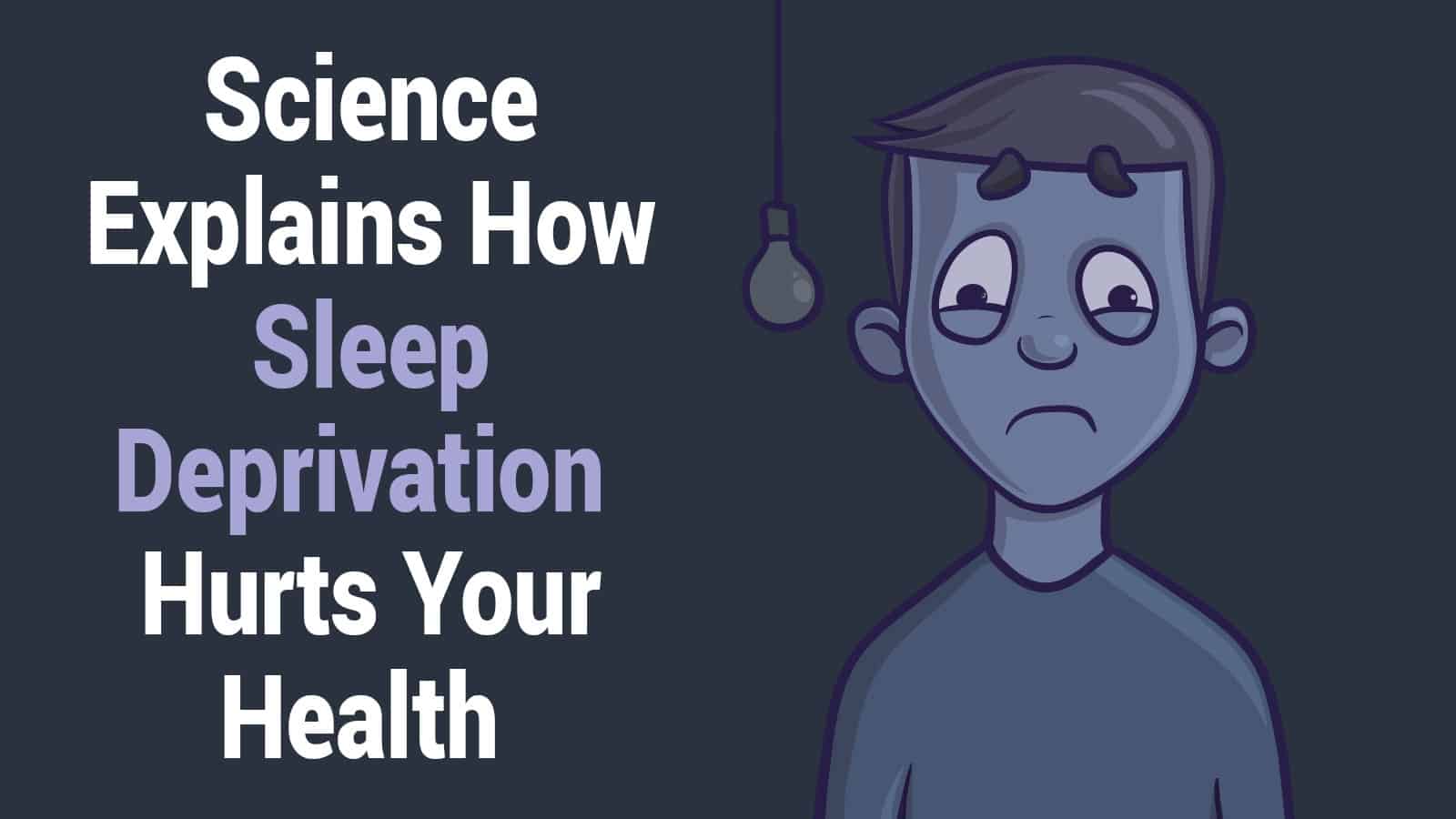
Getting enough sleep is vital for our health and well-being. Unfortunately, many of us don’t – 35% of the population state that they don’t get a minimum of 7 hours of sleep a night. Consequently, inadequate sleep is quickly becoming a public health epidemic. The Center for Disease Control calls the widespread lack of sleep in our world an epidemic, and for a good reason.

According to the National Sleep Foundation, about 40 percent of adults have insomnia. Of course, the rising number of people who have insomnia doesn’t come as a surprise when you think about how our society runs today – many of us rush around daily with stress heavy on our minds and hearts. Not to mention, plenty of us have adopted poor sleep habits due to our fast-paced world.

To get adequate sleep, making sure you have proper “sleep hygiene” can make a difference if you regularly suffer from sleep problems.

Here are six sleep habits you need to avoid:

Let’s look at some everyday sleep habits that can contribute to poor sleep below.

restful sleep

1. Using electronics before bedtime.

Countless studies have shown that the bright lights emitted from phones and computers can delay sleep for hours past your bedtime. The bright blue lights from tablets, phones, and computers tell our brains that we need to stay awake, not go to sleep. Think about it: the sun would tell our bodies to wake up and get our day started in nature. So, with all these artificial lights today, we stay awake longer and longer because our brains don’t know the difference between natural and unnatural light. However, you can make things easier by turning off electronics a few hours before bed and keeping them off during the night so they don’t awaken you with notifications.

2. Drinking caffeine too late in the day.

Caffeine sends a jolt of energy through our bodies that help us to stay awake and feel refreshed. Drinking a few cups in the morning to help us get our day started won’t do much harm; however, downing a cup or two close to bedtime will keep you awake well into the night. If you do drink caffeine, avoid drinking it five or six hours before bed, as it will stay in the bloodstream for hours after consumption, forcing sleep to evade you once again.

3. Overthinking before bed.

Another bad sleep habit is allowing our minds to run wild as we’re trying to wind down for bed. We have a sleep-deprived world, mainly because we don’t know how to shut off our brains. Before bed, try doing something relaxing that will tell your brain to slow down for the day, such as meditating, doing yoga, taking a hot bath, or doing deep breathing exercises. These relaxation routines can slow your mind down and get you ready to hit the sack.

4. Worrying about losing sleep.

This can truly become a self-fulfilling prophecy because when we lose sleep, we tend to fear it happening again and again. So, guess what happens? Since we begin to obsess over our lack of sleep, our minds create this scenario repeatedly without us even doing much to make it happen. Remember, your thoughts have immense power, so instead of focusing your attention on what you don’t want to happen, try to turn your awareness toward what you want to occur. However, don’t obsess too much about getting to sleep, either, because it will seem like a chore to fall asleep at night.

Ease your way into it, and do whatever feels most relaxing to you before bed.

5. Not exercising or working out later in the day.

Exercise releases endorphins that promote relaxation and overall well-being, and many studies have found a link between a good night’s sleep and physical activity. Our bodies should move, so if you live a sedentary lifestyle, all that energy is just sitting in your body, unable to be released. Could it be that so many people have sleep problems because they have pent-up energy in their bodies? Possibly so. If you have trouble getting to sleep, it might be as simple as going for a 30-minute brisk walk a few times a week to get your beauty rest.

However, remember to work out at least four or five hours before bed. The rush of energy you get from working out might keep you up if you exercise too close to bedtime.

sleep


6. Having an irregular sleep schedule.

Finally, our bodies perform tasks during set hours of the day. We would wake with the sun out in nature and fall asleep just after it set each night. Therefore, not going to bed at the same time each night and waking up at different hours each day can cause your body to become confused and exhausted. Going to bed late all week and waking up early for work doesn’t mean you should sleep in until 2 PM on Saturday to make up for it. Try to keep a consistent schedule to feel rested and rejuvenated each day.

6 Sleep Hygiene Hacks to Get Better Slumber

Just as you should avoid certain activities before bedtime, you also should practice good sleep hygiene. This includes staying off electronics at night, sticking to a sleep schedule, and winding down before bed. Also, it’s important to release any pent-up feelings through journaling or other self-expressive methods, so your thoughts don’t keep you up at night.

Finally, you should keep the room cool and comfortable, and keep the lights dim when the sun sets. We’ll go over these sleep hygiene tips in detail below.

1.     Turn off electronics a couple of hours before bed.

Countless studies warn that using technology such as smartphones or tablets at night can disrupt sleep. It takes longer to fall asleep. It also reduces your sleep quality and increases daytime sleepiness. Frequent, prolonged use of technology before bed could even result in certain sleep disorders and cancers.

Technology can affect your sleep in the following ways:

  • Disrupting Circadian Rhythm: Studies have found that using technology before bed suppresses melatonin production, the hormone that promotes sleepiness. This occurs because the blue lights from phones and tablets trick your body into thinking it’s daytime. Therefore, it causes you to stay up later than you probably intended and makes it harder to fall asleep.
  • Overstimulating the Brain: Activities like scrolling on social media before bed make the brain too alert and stimulated. All of that information kicks the brain into overdrive, the opposite of what you want at nighttime. In addition, playing action-packed or aggressive video games increases the heart rate and puts sleep on the back burner.
  • Cutting into Sleep: If you’re playing a video game or talking to someone online, you’re probably not thinking about sleep. Combined with blue light and overstimulation, reduced sleep time from technology use can lead to sleep deprivation. So, make sure to turn off electronics a couple of hours before bed so your brain can begin winding down.

2. Stick to a sleep schedule.

Our minds and bodies love routine, especially when it comes to sleep. Many people like to use the weekends to catch up on their beauty rest, which can worsen insomnia and other sleep disorders.

Erratic sleep schedules increase the risk of mental illnesses since sleep and mood are highly interdependent. In addition, an inconsistent sleep routine could lead to metabolic syndrome, which could raise your risk of heart disease.

According to the study, a person’s metabolic syndrome risk increased by 27% with each hour of varied sleep duration over time. It also increased by 23% with every one-hour increase in bedtime variability.

So, make sure you have a regular bedtime and wake up at the same time each morning. It will improve your sleep in addition to other important markers of health.

3. Make time to wind down before bed.

After a long, hard day at work or school, your brain won’t just shut off when you get into bed. You should have a bedtime routine that includes relaxation techniques like yoga, meditation, or deep breathing. You could also listen to calming music, color in adult coloring books, or take a warm, soothing bath.

Once you come home from work, leave your day at the door and focus on self-care. Make your home a sanctuary where nothing from the outside world can taint the energy. Then, you’ll associate home with relaxation, making it easier to wind down at night before bed.

4. Journal or release any negative emotions/worries somehow.

How many times have your thoughts made you restless and agitated at night? Some nights, it seems like our brains won’t shut off no matter how hard we try. To remedy this, try journaling or other types of self-expression at bedtime.

If you can get your thoughts on paper, it helps release pent-up emotions and energy from your mind. Plus, getting out your most private thoughts allows you to process stressful or traumatic events in your life.

Many studies have found a link between journaling and reduced depressive symptoms. In fact, a 2006 study discovered that writing in a journal matches the effectiveness of therapy in reducing depression in young adults. Since many people with depression have insomnia, simultaneously journaling at bedtime could alleviate both conditions.

If you’re prone to anxiety, writing out a to-do list the night before could help you fall asleep 37% faster, according to a 2018 study. It only takes five minutes, but this simple practice makes the extra beauty sleep well worth it.

5. Keep your bedroom comfortable.

If you’re too hot at night, you won’t feel relaxed enough to fall asleep. Of course, you don’t want the room feeling like an igloo either; most experts agree that a temperature between 60-67 degrees Fahrenheit is ideal for adults. Turning down the thermostat at night helps your body regulate its temperature and allows for the release of melatonin.

Also, make sure your comforter and sheets aren’t too heavy or thick, as this can make you toss and turn at night.

6. Dim the lights at nighttime.

Just as you shouldn’t use your smartphone or tablet at night, you shouldn’t leave too many bright lights on around the house. Any lights dampen melatonin production, making it harder to fall asleep at night. Ideally, you should only keep a very dim light on in your room as you get ready for bed.

sleep gummies

Final Thoughts on Changing Your Sleep Habits

Having good sleep hygiene can make a difference between a restless and sound night’s sleep. Avoiding overly stimulating activities such as electronic use, exercise, or drinking caffeine will improve your sleep quality. In addition, allowing your brain to wind down and maintaining a regular sleep schedule promote restful sleep. Also, keeping the room at a comfortable temperature and dimming the lights at night will do wonders for your beauty rest.

Hopefully, these tips will help you fall asleep faster at night and wake up feeling more refreshed!

5 Things You Can Do In 5 Minutes That Make Your Whole Day Better

When we wake up in the morning, we’d all like to have a great day full of inspiration, growth, and laughter, wouldn’t you agree?

Fortunately, we can control how our day will go by how we start our mornings. When you wake up, instead of grabbing a Pop-tart and a coffee to go, why not start off your day mindfully and consciously with a few simple practices? It just takes five minutes to do the following things, and the best part is, these practices can make a world of difference in what kind of day you will have.

Here are 5 things you can do in 5 minutes to make your whole day better:

morning sunlight

1. Write in a gratitude journal.

Studies prove the benefits that come along with expressing gratitude for what you have. Some of these benefits include a greater sense of well-being, better immune system, more positive outlook on life, more energy, and better relationships with others.

If you take just a few moments in the morning to write down what you feel thankful for, this will set the stage for a positive, fulfilling day to unfold before your eyes. Life responds directly to your energy, so the more positive vibes you put out, the more will come back around to you. You don’t have to write down any major thing you feel thankful for – just the ability to walk, see, laugh, hug, or breathe will suffice. Write down whatever you feel in your heart, and watch how your world changes as your thankfulness expands.

2. Practice positive affirmations.

Positive affirmations simply mean writing or saying a phrase that empowers you. Something like “I am capable of accomplishing whatever I set my mind to” or “I love myself” constitutes as a positive affirmation. Of course, you can cater the phrase to fit your personal preferences and beliefs, but just make sure that you make time to repeat this phrase to yourself a few times in the morning. You can also remind yourself of the phrase throughout the day to keep it fresh in your memory and keep the energy flowing. If you’d like some ideas for positive affirmations, read our article about them here.

3. Stretch.

Nothing feels better than getting out of bed in the morning and loosening those tight muscles and joints. Taking just five minutes in the morning to get your body limber and ready for the day can set the stage for your work or school day, plus, stretching keeps your body healthy and your mind sharp. You don’t have to do anything fancy or complicated – just doing a few simple movements like reaching your hands down to your toes, doing back twists, or even your favorite yoga poses, will help you feel ready for the day.

Related Article: Try This Easy Stretching Routine That Will Make Your Day Amazing

4. Make a smoothie.

In the mornings, we tend to grab something quick and easy for breakfast so we can head out the door and begin our hectic, busy day. However, you can still have an easy breakfast with just a little more effort by making something yourself. This way, you know exactly what goes into your breakfast, you save money, and plus, something you make at home will generally have more nutrition than a fast food meal or something similar. All you need for a smoothie is a few of your favorite fruits and vegetables, some water or plant-based milk, and a blender.

It might take a little work to chop or peel the fruits/vegetables, but you’ll have a healthy, nutritious breakfast that you can take with you, and it will give you energy for your day.

Related Article: Here’s Why You May Want to Drink a Green Smoothie Every Day

5. Laugh.

In our overly serious society focused so much on productivity and consumption, we sometimes forget to laugh in the midst of it all. Laughter keeps us sane, boosts our immune system, and simply gives us more energy to keep going in life. Laughter also helps connect us to others, so when you start your day, remember to laugh. Watch a funny YouTube video, play for a bit with your kids, or make a funny face in the mirror. Do whatever it takes to make yourself laugh, because how can you really have a bad day if you start it off with laughter?!

While these tips might not totally transform your life, they will certainly give you a headstart and create more positive energy throughout your day.

7 Signs You Have A Strong Personality

Ever notice how many different personalities exist? Psychologists halove to study the innumerable personalities of human beings, dating back to the beginning of man. Philosophers, scientists, and spiritual leaders have contemplated the origins and intricate nature of individual personality for centuries.

It’s worth mentioning that the innate complexity of human beings, including personality traits, is something that is unique to our species. Ever other species, for whatever reason – limited cognitive abilities, ingrained genetic code, evolution, etc. – demonstrate much more “linear” characteristics and ways of living. It is the human capacity to personify our existence and relate to our fellow man that makes us a truly distinctive creatures.

Each personality brings something unique to the human race. To state that one personality or another is more “valuable” or “desired” is an exceptionally narrow point of view. That said, it is commonplace for our most beloved people, past and present, to portray a type of strength that is both reassuring and admired. Such individuals – Mother Teresa, Gandhi, Martin Luther King Jr., Nelson Mandela and Abraham Lincoln, just to name a few – have navigated crises and danger while remaining steadfast, due to a strong personality, in their belief of mankind’s greater good.

Each person mentioned prior faced obstacles that no doubt challenged their courage, including some that were genuinely despised by the very people they attempted to encourage. This piece is designed to encourage such individuals, regardless of whatever forces may be trying to suppress that strength.

Strength does not come from physical capacity. It comes from an indomitable will. – Mahatma Gandhi

Do you possess a strong personality? See how many of these traits you connect with

your personality

1. You choose your “inner circle” carefully

Strong people are unique in the sense that they do not require approval. The strong among us wisely understand that “those who mind, don’t matter” and “those who matter, don’t mind.” In other words, those who are fortunate enough to call a strong person a friend have unhesitatingly gained the trust and respect of the strong individual. To the strong, these are the only type of people that you can truly call your friends.

2. You have little tolerance for ignorance

Ignorance comes in many stripes: intolerance, hatred, apathy, and carelessness among them. People of strength detest the nonchalance that many people seem to covet as they navigate through life. People of character respect those that are well-informed, knowledgeable and kind-hearted. In simple terms, those of strength don’t waste their time or energy on ignorance.

3. You don’t require attention

While a strong person’s personality may attract the attention of others, it is certainly not required. In fact, when the time calls for such, strong people can become somewhat solitary. This may be explained by the fact that people need strong people around, necessitating the need for the strong among us to recharge their batteries.

4. You’re a terrific listener

Ever notice how most people act when they’re “listening” to someone? Chances are that they’re constantly fidgeting, looking elsewhere, or checking their phone. Most strong people are also excellent listeners, as they understand the requisites of being someone that others can trust. Most strong people are also quite intolerant of those with an inability to truly listen.

5. Your life isn’t fear-driven

Nowadays, so many people are apprehensive about what might happen. Such people place a premium on security and comfort while sacrificing their desires. This is not the case with strong people. To be clear, strong people feel fear, they just don’t follow fear.

Perhaps John Wayne, a strong personality himself, said it best. “Courage is being scared to death but saddling up anyway.”

Strong people often embrace this personified axiom.

6. You see problems as an opportunity

Building off of the so-called “security and comfort” that the majority of people cherish, the strong among us are different in this regard, in two important ways: (1) they are less concerned about security and comfort, (2) whenever problems occur from a lack of security and/or comfort, they begin to hatch out a plan. Strong people are remarkably adept at converting problems to opportunity – a truly rare trait.

7. You don’t allow excuses

Strong personalities do not permit excuses – from themselves or others. In fact, strong people are often much more difficult on themselves than they are on others, which is saying something quite profound. Instead of making excuses, such people choose to consciously redirect their efforts to finding solutions to problems, no matter how difficult and counterintuitive it may feel.

Stronger people are terrific at rolling up their sleeves and delving face-first into the muck. Simply put…strong people simply despite excuses. They have a tendency to see excuses for what they really are – a drain on energy and a colossal waste of time.

6 Foods You Can Buy One Time And Regrow Forever

When one is born and raised in a developed nation, such as the United States or Canada, food is provided and consumed with minimal effort. The negative consequence of this is that the vast majority of food eaten is processed with unhealthy chemicals, such as preservatives and excess amounts of sugar, sodium and/or fat.

Why is this the case? Well, a short answer is convenience. The majority of the population deals with hectic work, home and personal schedules which allocate a scant amount of time to prepare foods made from raw, unadulterated sources. Combine unrelenting schedules with manufacturing and technology advances, and the proliferation of convenience foods – boxed, bagged and processed – begins to make sense.

The problem is that these foods don’t make sense from a health perspective. Study after study has shown that convenience foods are not well-received by the human body. For thousands of years, our distant ancestors hunted, gathered and consumed foods that were strictly limited to available resources. In other words, we’re genetically programmed to take in foods that are unaltered and pure.

Fast-forward to today, and what do we see? Supermarkets intentionally stack their aisles side-by-side with unhealthy, unnatural foods. Notice that vegetables, fruits, meats and other “unpopular” edibles are limited to corner space…this is done for a reason. The reason is that grocery shopper’s demand for convenience foods far outpace the demand for natural, raw sources. We’d rather pop a 15-minute pizza into the oven than spend 30 minutes preparing a fresh, wholesome meal.

Despite the overwhelming demand for “fast food,” it is possible to grow, harvest and consume home-grown, natural sources of food. In fact, we’re going to show six different food types that can be regrown and re-eaten. Not only are the health benefits significant, the cost savings are as well. Promisingly, these foods can also be regenerated with less than anticipated effort.

Here are six foods that can be regrown forever:

Related article: 6 Reasons You Need To Try An Alkaline Diet

1. Carrots

Well, technically, carrots and other vegetables that grow from the root. Turns out that – in addition to Bugs Bunny’s favorite snack – beets, turnips and parsnips are able to be home-grown for a long time. All that’s needed is a container of water and a knife. Cut off the tops of each veggie, submerge in a container of water and set it out in the sun. Simply change the water in each container every few days and, once the veggie’s roots appear, plant them in soil until fully developed. Repeat.

2. Ginger

One of the world’s most treasured plants, ginger has been used for countless millennia for everything – from medicinal cures to nutritional value. For interested parties, this wonderful plant is easy to grow. Simply gather a pot, some soil and a thumb-sized piece of ginger. Plant the piece upwards and within a week, the plant to should grow to a point that allows harvest.

3. Celery

For celery lovers, the fact that the vegetable is easy to regrow is good news. All that’s needed is a knife, a bowl of warm water and sunlight. Sever the celery’s head from the base and place it in warn water with the severed end upward. Place the bowl in an area with ample sunlight and simply change the water every two days. Once the leaves have appeared, place the base in soil and await full growth.

4. Basil

Root stems of both fresh basil and cilantro can be regrown after appearing. The stems need to be placed in a full glass of water while in direct sunlight. Every other day, the water will need to be replaced until the roots are at least two inches long – at which time the vegetable will need to be transferred to soil until fully grown.

5. Lettuce

In just four short days, lettuce – in addition to bok choy and cabbage – can be ready for soil. It is recommended that ample space, such as a deck or small garden, be used to grow these luscious greens. Submerge the vegetable’s outer leaves in water and set the bowl in an area with plenty of sunlight. Every two days, replace water and pluck the dead leaves. After four days, the plant should be ready for soil transport. Harvest the plant until grown to full size.

6. Lemongrass and Scallions

Lemongrass is a delectable, succulent herb that people treasure having in their diet. The issue is it’s relatively isolated to certain parts of the world – namely, East Asia. Fortunately, this delicious food can harvested by simply cutting the root end of a stalk and placing it in water. That’s right…just cut the root and submerge it into water, placing it in direct sunlight. After approximately a week, the product is ready to be transferred to soil, where it can be observed till full-growth, when it’s then ready to be plucked.

8 Sentences That Decide The Fate Of Your Relationship

Communication is so important that it can make or break the course of your relationship. Our words can be powerfully hurtful or helpful in a relationship, but we have the choice how to speak to our partner.

Let’s look at eight different phases that could send your relationship on a collision course, and then 9 ways to communicate more lovingly. Keep in mind that you always have a choice to communicate with kindness.

8 Sentences That Decide The Fate Of Your Relationship

relationship

1. I don’t want to talk about it vs. Let’s talk later

Avoiding conflict by shutting down a discussion is selfish. Your partner has a right to their opinion and so do you. If emotions are high, it’s a great time to wait to talk though.

2. I don’t care what you do vs. It’s important for us to decide what we do together.

If you truly didn’t care about your partner’s behavior, you likely wouldn’t be saying this phrase that can decide the course of your relationship. Of course you care. In fact, you probably dislike what your partner is doing but you were afraid to say that.

3. If you ever ___, I will leave you vs. That behavior is unacceptable to me.

Handling conflict by saying this threatening phrase is an aggressive tactic. An argument is just an argument. There’s no reason to threaten to break up with someone over a difference of opinion unless this is a crucial issue to your belief system.

If you truly dislike what your partner did, you can set a relationship boundary without it being an ultimatum of ‘If you ever yell at me again I’m leaving.’ Instead try ‘This is very important to me. I need you to lower your voice when you speak to me.’

4. You never/always vs. I prefer that you wouldn’t do that (specific behavior).

Anytime you say ‘you always’ or ‘You never’ you are exaggerating the truth. The truth is probably that your partner has acted that way several times before, and each time you disliked it. And you said nothing.

You can’t blame your partner for not mind-reading. If it bothered you 2 years ago when your partner first did it, there’s no point blaming them for not knowing that it bothered you until now.

You are responsible for setting your own boundaries. If something bothers you, do not bring up a list of other things that bothered you. Give your partner the respect of pointing out how their behavior, this ONE specific time, wasn’t really how you would prefer them to act in the future in this same situation.

5. You’re always coming up with crazy ideas vs. I’ll support you

The classic 1938 movie Holiday was on the other night with Carey Grant and Katherine Hepburn. But Carey Grant almost ends up with Doris Nolan, who played Ms. Hepburn’s sister in the film. The only difference was that Katherine Hepburn supported Carey Grant’s crazy dreams and Doris didn’t.

You don’t have to love all of your partner’s ideas, especially if they are costly, but you can find a way to be positive and curious rather than negative and immediately dismissive of their ideas.

6. Why do you do that? Vs. I want to connect with you and understand you more deeply.

In a study of 189 people in romantic relationships and how they handle arguments, they found that people who were focused on becoming closer to their partner were ‘more likely to engage in open discussion and compromise, show concern for their partner, and seek social support, whereas they were less likely to deny or ignore the conflict. They were also more likely to successfully resolve the conflict (e.g., maintain the relationship).’

When there is an argument, there is usually a difference of opinion. If you approach your partner with an attitude of wanting to understand their view so that you can become closer to them as a person, the researchers show that you will be better at staying together.

7. You’re just like my ex Vs. I dislike your behavior

No one wants to be compared to an ex-lover. Treat your partner like a unique individual with their own quirks, because they are. You can dislike the behavior and say so, without mentioning a relationship with an ex.

relationship

8. I’ll love you if you ___ Vs. I love you just for who you are

Conditional love is the opposite of unconditional love. You put conditions on your relationship when you say ‘I’ll love you if ___.’ The use of conditional love is like treating your partner like a dog that will be rewarded with your love if they do the trick that you asked them to do.

Why Empaths Freeze Around Fake People

We have discussed the highly sensitive person, or empath, many times before, but if you have never heard of them, read below for a quick summary.

Before the 1990s, heightened sensitivity in humans was not widely discussed, but in 1991, a psychologist named Dr. Elaine Aron began to study this trait more closely. Surprisingly, she discovered that 15-20% of the population carries the trait that classifies them as highly sensitive, which means they respond to external stimuli more noticeably than non-HSP’s.

They have a different way of processing sensory information due to parts of their brain that regulate emotions being more responsive than the brains of their less sensitive counterparts.

Highly sensitive people respond deeply to their environment, and can easily pick up on people that are not genuine. They need honest, deep, meaningful relationships with others, and usually feel on edge around fake people.

Here’s why some empaths freeze around fake people:

sensitive person

Being an empath in a largely desensitized world comes with many challenges, including dealing with disingenuous people. When an empath meets someone they perceive as fake, they tend to stay silent or stumble over their words.

Empaths can see right through a fake persona, which sends them into a state of alarm. They start to experience physical and mental symptoms that wouldn’t make sense to those who don’t identify as an empath – sweaty hands, fast heart rate, feelings of dread, and exhaustion, among others.

Empaths feel the pain that people sweep under the rug and try to hide behind a fake persona. Empaths know that these “fake” people don’t necessarily mean any harm, but they have a lot of healing left to do here on Earth.

These common situations you will encounter as an empath can quickly leave you feeling drained:

  • Someone who acts like a pushover to get accepted by everyone they meet.
  • A person who conceals their hatred or anger but comes across as lovely and friendly.
  • Someone who had a bad upbringing and feels vulnerable and insecure yet tries to act unshaken and tough.
  • A person who tries too hard to act a certain way goes against their natural personality.
  • Someone dishing out fake compliments to feel accepted.
  • A person who embellishes to get people to like them.

As a result, the empath will usually react like this:

  • Avoiding them, not necessarily because they did something wrong, but just because you don’t get good vibes around them
  • You can’t form logical sentences, and speech becomes difficult. You will also forget important details of your life if they ask about them
  • Getting an overwhelming feeling of dread and discomfort that only dissipates when you are no longer in their company
  • Literally feeling sick after spending extended periods with them
  • Feelings of confusion and guilt for not being able to spend time with this person, especially if you actually like them
  • Wanting to run as far away from them as possible

Empaths can read body language and energy like no other type of person and do not tolerate lies and deception. However, even the empath can fake things to deal with the world.

After all, none of us can truly know all of ourselves. So, we put the self on display that we feel will gain the most acceptance. Empaths can fake feelings or an entire persona to hide emotions or understate their pain.

We’ve all done it, so if an empath picks up on this trait about yourself, they might see that characteristic in themselves, too. Life is a mirror, so we see in others what we actually see within us.

For an empath, coming across a fake person drains their energy, but they don’t wish these people any harm. Empaths try to love everyone and show compassion as much as possible, so they might send them a wish for healing or love after seeing them in person.

The empath does not want to act “holier than thou” by not being able to tolerate certain people. Instead, they have a heightened sensitivity to the world. That means literally can’t handle certain situations or people without feeling physically and mentally sick.

If you’re an empath, here are a few things you can do to retain composure and avoid feeling drained around fake people:

empath

Don’t be afraid to say no to others, something that empaths struggle with

Many times, empaths feel they can’t maintain their sensitivity while also speaking up for themselves and possibly letting others down. Remember, though, when you say no to someone’s request, this doesn’t make you a bad person. It simply means you have a lot on your plate and can’t possibly make everyone happy.

In life, we have a limited amount of time each day. Thus, we can’t always get everything done that we’d like to. However, prioritizing things can help you knock off the important tasks on your list, and saying no further aids you in managing your time wisely.

If someone gets hurt because you said no, remember they are responsible for choosing how they want to feel. Your response shouldn’t dictate their emotions.

Always follow your heart

Empaths can often get swept up in the idea that they must do what others want because they have a duty here to heal the planet and everyone on it. Empaths, in a way, have superhero qualities but often don’t take the time to look after themselves properly. Never sacrifice your dreams to please others; this won’t lead to fulfillment in the long term.

Following your heart means bravely stepping into the path of your dreams and not letting anyone stand in the way. Just focus on improving your life and doing things that feel good to you, which will help you become more assertive.

doormat

Focus on self-care instead of pleasing others

People pleasing might seem harmless, but it can quickly become dangerous and self-destructive. When you try to bend over backward to please everyone, you push your needs to the back burner. Be careful; doing this too much can make you feel exhausted.

If you have high self-esteem, you’ll realize that you need to meet your own needs first before you can take care of everyone else.

11 Life Lessons To Learn From Aristotle

“In all things of nature, there is something of the marvelous.” – Aristotle

One of the most well-known and highly regarded Greek philosophers in history, Aristotle taught us many important lessons in subjects such as science, logic, ethics, poetry, theater, metaphysics, and just life in general.

Did you know the name Aristotle literally means “the best purpose” when translated? He certainly lived out his purpose to share knowledge during his lifetime, and we’ve gathered some of this most famous and profound quotes to share with you all so that you can keep these teachings with you.

Here are 11 life lessons to learn from Aristotle:

Related article: 15 Life-Changing Lessons To Learn From Rumi

life lessons

1.  Know who your friends are, and keep them close.

“Without friends, no one would want to live, even if he had all other goods.”

“Wishing to be friends is quick work, but friendship is a slow ripening fruit.”

“The best friend is the man who in wishing me well wishes it for my sake.”

“A friend is a second self, so that our consciousness of a friend’s existence…makes us more fully conscious of our own existence.”

“What is a friend? A single soul dwelling in two bodies.”

“Misfortune shows those who are not really friends.”

“The antidote for fifty enemies is one friend.”

2. Honesty is the best policy; hold it in high regard.

“The least deviation from truth will be multiplied later.”

“All persons ought to endeavor to follow what is right, and not what is established.”

“Piety requires us to honor truth above our friends.”

“The high-minded man must care more for the truth than for what people think.”

“Liars when they speak the truth are not believed.”

3. Never stop learning in all areas of life.

“Education is the best provision for the journey to old age.”

“The educated differ from the uneducated as much as the living differ from the dead.”

“All men by nature desire knowledge.”

“Educating the mind without educating the heart is no education at all.”

“Those who educate children well are more to be honored than they who produce them; for these only gave them life, those the art of living well.”

“All men by nature desire to know.”

4. The art of written word is beautiful. -Aristotle

“Poetry is finer and more philosophical than history; for poetry expresses the universal, and history only the particular.”

“Poetry demands a man with a special gift for it, or else one with a touch of madness in him.”

“To write well, express yourself like the common people, but think like a wise man.”

“The aim of art is to represent not the outward appearance of things, but their inward significance.”

5. One of the biggest triumphs in life is conquering your Ego.

“Knowing yourself is the beginning of all wisdom.”

“He who has overcome his fears will truly be free.”

“I count him braver who overcomes his desires than him who conquers his enemies, for the hardest victory is over self.”

“It is not enough to win a war; it is more important to organize the peace.”

6. To accomplish anything in life, you must have willpower.

“Through discipline comes freedom.”

“It is of the nature of desire not to be satisfied, and most men live only for the gratification of it.”

“Excellence is never an accident. It is always the result of high intention, sincere effort, and intelligent execution; it represents the wise choice of many alternatives – choice, not chance, determines your destiny.”

“Excellence is an art won by training and habitation. We do not act rightly because we have virtue or excellence, but rather we have those because we have acted rightly. We are what we repeatedly do. Excellence then is not an act but a habit.”

“For what is the best choice, for each individual is the highest it is possible for him to achieve.”

”Always prefer the probable impossible to the improbable possible.”

“For the things we have to learn before we can do them, we learn by doing them.”

7. Comedy and humor must exist in life in order to keep us sane.

“The secret to humor is surprise.”

“The gods too are fond of a joke.”

“Comedy aims at representing men as worse, Tragedy as better than in actual life.”

8. Oftentimes, the craziest people have the best ideas.

“No great genius is without an admixture of madness.”

“No great mind has ever existed without a touch of madness.”

9. Fear doesn’t do anything but hold us back.

“Wicked men obey from fear; good men, from love.”

“Fear is pain arising from the anticipation of evil.”

“I have gained this by philosophy; that I do without being commanded what others do only from fear of the law.”

“Hope is a waking dream.”

10. You get to control the quality of your life and the qualities you choose to possess.

“Men create gods after their own image, not only with regard to their form, but with regard to their mode of life.”

“Happiness belongs to the self sufficient.”

“Happiness is the settling of the soul into its most appropriate spot.”

“We acquire a particular quality by acting in a particular way.”

“The actuality of thought is life.”

“We must be neither cowardly nor rash but courageous.”

“To avoid criticism say nothing, do nothing, be nothing.”

“Patience is bitter, but its fruit is sweet.”

“Dignity does not consist in possessing honors, but in deserving them.”

11. Never underestimate the power of the darkness.

“It is during our darkest moments that we must focus to see the light.”

“We cannot learn without pain.”

5 Questions To Ask Yourself When You Can’t Let Go Of The Past

Letting go of the past certainly can seem challenging when old times hold so many precious memories and people you used to know. However, we must move on from the past if we ever want to live a happy, fulfilling future. Staying stuck in the past only promotes stagnation and depression, as we can’t ever get the past back.

“When the past calls, let it go to voicemail. It has nothing new to say.” – Mandy Hale

The past can teach us valuable lessons, but to stay there would mean putting our lives on hold, and that does nothing for us in the end. When you find yourself reminiscing on the past and wishing you could somehow get it back, refer to these five important questions below.

Here are 5 questions to ask yourself when you can’t let go of the past:

fall out of love

1. Am I in the present moment, or in the past?

Obviously to remain stuck in the past, we have to actually shift our consciousness and perception to days gone by. In other words, to let go of the past, we must turn our attention to the present moment so that we can fully enjoy life and all it can offer us. Living in the past will only bring about depression about how things used to be, and the fact that they can no longer be exactly as you remembered.

Marcia Reynolds, Psy. D., says, “You can’t force yourself to love your current life but you can recognize the value today and the possibility for fulfillment tomorrow. Or maybe you need to start looking for a new role, job, or adventure that will get your old needs met. Be careful, you should not decide you are failing at your new endeavor because you aren’t perfect. Making a full transition takes time.

2. Do I have the same beliefs?

Going through life, we will inevitably change our beliefs from time to time. New experiences require us to shift our thinking and question everything we thought we once knew. As you think about moving on from the past, remember how much you’ve grown since then, and how you see the world differently than before.

In the past, you saw things from a certain vantage point because you didn’t have all the experiences you have today. Now that you know what you do, would you even want to go back to your former self? Think about this next time it seems hard to let go of the past.

3. Is there more I have to learn from my past experience?

Ask yourself why you keep going back to the past. If you find yourself traveling back in time often, you probably have some unfinished business there. Ask yourself if you have learned all the lessons you can from the past, or if you have more to uncover from your experiences. Many times, we revisit the past because it has something left to teach us that we may not have learned before.

4. Have I completed the lesson?

Many people live in the past simply because they haven’t learned all they could from it. The past offers powerful lessons if we feel ready to receive them. Life will continue to send you the same teachers until you have mastered the lesson, so maybe you aren’t actually living in the past – maybe you just keep seeing the same situations repeating themselves because you haven’t completed the lesson yet.

There’s nothing wrong with this, but you need to ask yourself this question next time you have trouble letting go of the past. It will help you to understand why you cannot move on at this time.

5. How does the past serve me today?

How you do feel about your past? Do you feel it helped you along your journey, or do you feel damaged and weathered by your experiences? Everything in life is about perception and perspective, so maybe you just need to shift your thinking about the past in order to move on from it.

Your future awaits you, and your present beckons your presence, so don’t allow precious moments to pass thinking about what could’ve been. Just enjoy today, and thank the past for what it taught you.

Skip to content