Weekly tips, affirmations, and small actions to feel your best.

10 Foods That Fight Back Against Diabetes

First, our readers should know whether they have a genetic predisposition to diabetes. While scientists and researchers are still determining the strength of diabetes/genetics link, knowing your family history is half the battle. Type 2 diabetes is known to have a strong genetic connection.

The other half of the battle is “modifiable lifestyle risk factors,” which includes your diet. Lifestyle may be more influential than genetics, especially for Type 2 diabetes, which is the most common.

This article discusses ten foods that can “fight back” against diabetes. We’ll also discuss some of the science behind it.

10 Foods That Can Help With Diabetes
diabetes prevention

#1 Blueberries

Blueberries are considered a “superfood,” incredibly nutrient-dense food. Blueberries are potent diabetes fighters; a natural chemical in blueberries shrinks fat cells and stimulates the release of a hormone that helps regulate blood glucose levels. A protein hormone called adiponectin, which blueberries are a rich source of, can maintain low blood sugar while increasing our body’s sensitivity to insulin.

#2 Broccoli

Heart disease is the number one cause of death for people with diabetes, which makes broccoli’s inclusion on this list mandatory. Like blueberries, it too is considered a superfood – and a potent anti-diabetic source. Broccoli is rich in sulforaphane, a compound that initiates multiple anti-inflammatory responses that maintain blood sugar levels while protecting blood vessels from diabetes-related heart damage.

#3 Dark Chocolate

This treat is not only shown to increase satiety, but it is also rich in nutrients that ward off diabetes. One class of nutrients, flavonoids, helps reduce insulin levels, improve insulin sensitivity, and reduce insulin resistance. Flavonoids found in dark chocolate may lower blood pressure and lessen the risk of heart attack and stroke.

#4 Olive Oil

Olive oil is a known staple in Mediterranean-style diets, which may reduce the risk of type 2 diabetes by nearly 50 percent. Olive oil is also considered the healthiest monounsaturated fat and enhances satiety more than butter, lard, margarine, and canola oil. Rich in antioxidants, olive oil also safeguards cellular health by fighting free radicals and promoting heart health.

#5 Fish

Many types of seafood are excellent choices for diabetes, but fish reigns supreme because of its nutritional density and breadth. Fish is low in unhealthy fats, trans fat, and cholesterol. The fat within fish is healthy, unsaturated, and contains a bounty of Omega-3 fatty acids. Also, fish is high in protein and has zero carbohydrates; the latter helps stabilize blood sugar levels. The best fish choices for diabetes include albacore tuna, halibut, herring, mackerel, salmon, sardines, and trout.

#6 Cinnamon

Cinnamon is not only a delicious spice, but it also contains some potent anti-diabetes properties, especially for lowering blood sugar levels. In addition to dropping blood sugar levels, cinnamon improves the effectiveness of insulin. Tertiary benefits of cinnamon include neutralization of free radicals, anti-cancer properties, and anti-inflammatory properties. Its ability to decrease “systematic inflammation” further protects you from diabetes.

#7 Spinach

Spinach is another superfood with some incredible nutritional benefits. Spinach is an excellent source of alpha-lipoic acid (ALA); one promising area of ALA research focuses on the acid as “a possible alternative remedy to treat the pain associated with diabetic (neuropathy).” Neuropathy is a form of (often painful) nerve damage and often complicates diabetes and diabetes-related treatments. ALA also reduces blood sugar, cortisol (the “stress hormone), and inflammation.

#8 Walnuts

Walnuts contain a fatty acid, alpha-linolenic acid, which has demonstrated anti-inflammatory traits. Additionally, walnuts contain numerous other properties that ward off diabetes. In a 140,000-person study published in the Journal of Nutrition, participants “who consumed a 28-gram packet of walnuts at least twice a week were 24 percent less likely to develop type 2 diabetes.” Walnuts are also believed to protect against arthritis, heart disease, and cancer.

#9 Sweet Potatoes

Unlike various other starches, sweet potatoes have a much lower glycemic (read: sugar) index. Moderate consumption of sweet potatoes can stabilize blood sugar levels. Standard diabetes tests indicate that the food reduces fasting blood glucose. Anthocyanins, a flavonoid that gives sweet potatoes their orange hue, assist with warding off viruses and inflammation.

sweet potatoes for diabetes

#10 Cannellini Beans

Yeah, this is a new bean for me too. Cannellini beans are white beans with some incredible health benefits. In a 2012 University of Toronto study, 121 people with type 2 diabetes saw their average blood sugar levels drop nearly 200 percent more than the whole-grain control group. Cannellini beans are also rich in protein and soluble fiber – a fiber source that lowers harmful cholesterol levels.

What Causes Diabetes?

Type 1 diabetes

Type 1 diabetes is an autoimmune disease. This happens because instead of fighting infection, your immune system goes after the insulin-producing cells in your pancreas. It’s sometimes called juvenile diabetes because it can appear in young children or teenagers. It’s unclear what causes type 1 diabetes, but a virus, genetics, or the environment could cause it.

Type 2 diabetes

This is the most common diabetes. It develops due to genes and lifestyle choices. You are susceptible to type 2 diabetes if you’re overweight and physically inactive. It can create insulin resistance when you’re overweight, especially if you carry fat in your stomach area.

Gestational diabetes

This type of diabetes occurs during pregnancy. Because there are no symptoms of gestational diabetes, every pregnant woman receives a blood sugar test to check for it.

Gestational diabetes stems from hormonal changes and lifestyle choices, and genes. Women who end up with gestational diabetes during pregnancy are at a greater risk of developing type 2 diabetes later. After the baby is born, there will be continued blood sugar tests and monitoring of the baby.

Other things that cause diabetes

  • Gene mutations-Certain gene mutations damage your pancreas, causing diabetes. These usually pass down through families, but gene mutations randomly occur on their own once in a while.
  • Cystic fibrosis scars your pancreas, so it can’t make insulin, resulting in diabetes.
  • Hemochromatosis leads to your body storing too much iron, which damages your pancreas.
  • Hormonal diseases cause insulin resistance because of too much of certain hormones.
  • Cushing syndrome-Too much cortisol affects your body’s insulin production.
  • Acromegaly- This condition occurs when your body makes too many growth hormones, damaging your pancreas.
  • Hyperthyroid-Too much thyroid hormone speeds up your metabolism so that insulin is eliminated quicker, causing your blood sugar levels to spike, putting you at risk for diabetes. Hypothyroidism leads to low blood sugar.
  • Damage or removal of your pancreas
  • Pancreatic cancer

Certain medications disrupt your insulin’s ability to work correctly. These medications include:

  • Anti-seizure drugs
  • Diuretics
  • Niacin
  • Psychiatric drugs
  • Pentamidine
  • Glucocorticoids
  • HIV drugs
  • Anti-rejection medications
  • Statins

If you take these medications and have high blood sugar, ask your doctor what you should do to manage your diabetes. They may change you to another drug that doesn’t disrupt your insulin.

10 Foods To Avoid If You Have Diabetes

1.  “Fruit-based” Foods

They packed these fruit-based foods with sugar, making your blood sugar spike dangerously high. Even your favorite fruit smoothie may not be a good idea if you have diabetes. Avoid sugary fruit foods such as:

  • Canned fruits
  • Jams
  • Jellies
  • Fruit rolls
  • Sports drinks
  • Honey

2. High sodium foods

Sodium controls the balance of fluids in your body. This maintains your blood pressure. If you overeat salt, it causes fluid retention and high blood pressure. So, your feet, legs, and hands swell, which is dangerous for anyone with diabetes. High sodium foods include:

  • Olives
  • Pickles
  • Sauerkraut
  • Canned beans
  • Frozen dinners
  • Salted nuts
  • Smoked
  • Canned meats

3. Fatty meats

Meat consumption is consistently a risk of getting diabetes. These meats include

  • Bacon
  • Ground beef
  • Hot dog
  •  Sausage
  • Bologna
  • Ribs
  • Deli meats

Meats high in saturated fat and cholesterol raise your blood cholesterol, which causes you to gain weight. This weight makes it hard to control your diabetes.

4. White flour foods

These processed foods result in blood sugar spikes. Plus, they provide little to no nutrition. These white foods include:

  • Rice
  • White bread
  • White pasta

They make white flour foods with refined carbohydrates. This softens the texture and strips away vitamins, fiber, and minerals, so these carbohydrates have a higher glycemic index. The glycemic index measures how quickly a food causes your blood sugar to go up. They rank foods from 0 to 100. The higher the number of food, the faster the food gets digested and absorbed by your body, causing your blood sugar to rise.

5. Processed foods

Processed foods contribute to insulin resistance, affecting your blood glucose levels. These processed foods include things like:

  • Crackers
  • Chips
  • Snack cakes
  • Cookies
  • Doughnuts
  • Pretzels

6. Sugary sauces and condiments

Sauces and condiments have a lot of sugar in them. This can cause your blood sugar to spike. Avoid spices and seasonings such as:

  • Ketchup
  • Barbecue sauce
  • Honey mustard
  • Gravy
  • Salsa
  • Tomato sauce
  • Sriracha
  • Teriyaki sauce
  • Worcestershire sauce
  • Teriyaki sauce

7. Fried foods

According to a long-term study, people who eat a good amount of fried foods have a high risk of heart disease and type 2 diabetes. Even eating fried foods only once a week puts you at risk of type 2 diabetes. Eating out where the frying oils weren’t fresh results in a greater chance of getting heart disease and type 2 diabetes.

  • French fries
  • Fried egg
  • Breaded or fried chicken
  • Fried fish

8. Drinks

Drinking a sugary drink is like drinking ten teaspoons of sugar. This results in high blood sugar that may lead to coma or even death for someone with diabetes if left untreated.

  • Sports drinks
  • Soda
  • Diet soda-Even diet soda isn’t good for you if you have diabetes. The sweeteners signal insulin to be released by your pancreas.
  • Specialty coffee drinks-These tasty drinks often contain sugar and fat.

9. Fat-free foods

Fat-free foods are low in fat, but they’re usually high in sugar and sodium to compensate for the lack of flavor.

  •  Light or fat-free salad dressings
  • Low-fat yogurts
  • Low-fat peanut butter
  • Cereal
  • Low-fat coffee drinks

10. Fresh fruit

Even though they’re fresh, some fruits are high in sugar and carbohydrates. This sugar boost makes your blood sugar spike.

  • Bananas
  • Cherries
  • Mangos
  • Watermelon
  • Tangerines
  • Kiwi
  • Lycées

exercises for diabetes

Final Thoughts on Eating to Manage Your Diabetes

Whether you have a genetic disposition towards diabetes or some of your lifestyle choices have led to this condition, it’s possible to manage your diabetes. Avoid certain foods that spike your blood sugar. Instead, choose foods that fight back against diabetes so that you can feel your best.  Managing your diabetes is possible with healthy eating, exercise, and controlling your medications. Don’t let diabetes get you down. Take control of it so you can lead a full, active life.

20 Behaviors a Cheaters Display Before Revealing Themselves

Cheaters are a dime a dozen these days. But you have to wonder. Why do people in an otherwise good relationship cheat?

This complex question would demand hours upon hours of research and subsequent pontification. Suffice to say that being cheated on is one of the worst things you could ever experience in a relationship.

Perhaps a more beneficial angle – particularly for those with a susceptible cheat partner – is to elaborate a bit about the signs of cheating. It is worth noting that not every individual who expresses these behaviors will cheat or has cheated. Many individuals cheat and provide no apparent, outward reason to suspect infidelity.

It is necessary to take some deliberate precautions before confronting someone with “evidence” of unfaithfulness. After all, there’s quite a bit riding on the line to be impulsive.

20 Signs  Cheaters Will Display

Here are twenty signs of a cheater you should (probably) not ignore. You may observe as few or two of these signs or myriad red flags.

secretive cheaters

1 – They are always coming home late

Your partner used to be a time hawk, always ragging you about needing to be (someplace) at (specific time), only to suddenly disclaim his/her meticulous time ownership in favor of arriving home late, it may be a sign of cheating.

Quite simply, it makes little sense for someone involved in a relationship to ignore obvious changes to how they manage time. Those that do are often willing and able to provide an honest explanation of exactly why such changes are taking place… except for a potential cheater, that is.

2 – They safeguard their phone

Nobody likes having their phone tampered with. In a serious relationship or marriage, however, it is not unusual to play with your partners phone out of habit. If your partner suddenly and uncharacteristically objects to this by snagging their phone out of your hands, it may be worthwhile to have a constructive dialogue.

3 – Cheaters have unexplained charges or lines of credit

It is common for those in a serious relationship to share financial information with each other – a “My money is your money” kind of deal. So, for your partner to inexplicably have spontaneous charges to their credit or debit cards makes little sense. Perhaps more deserving of scrutiny is a newly-opened line of credit that was neither discussed with nor approved by, their relationship partner.

4 – They “need privacy”

Make no mistake: privacy is essential to the well-being of every relationship. However, constantly insisting upon ‘privacy’ in excess is a potential misnomer when the need to say ‘privacy’ was never a prior issue until recently.

5 – Sudden and excessive defensiveness

When two people are in a serious relationship for any significant period, each individual’s personality is understood and accepted. It is enigmatic for one person to suddenly delve away from understood personality traits without raising a red flag. Indeed, this red flag may signify a sudden drift away from commitment – and towards infidelity.

6 –  Changes to dress/hygiene habits

Like many things on this list, this one is based on observable habits. It is only natural to inquire into mysterious alterations in one’s sense of style or hygienic preferences. With the caveat of a “mid-life crisis,” this conspicuous sign of a potential cheater warrants further inquisition.

 7 – Cheaters “need to work”

Okay, so we all need to work for a living, understandably. But, as a couple, you should feel obligated to elaborate on any significant changes to your work schedule. Unfortunately, this is one not-so-subtle excuse that cheaters use to explain away any previously-existent sense of responsibility. Work is a common and convenient excuse for several reasons. Primarily, it is a commonplace for employees to put in extra hours at the workplace, either out of necessity or a sense of obligation. However, when ‘working’ seems to become more the rule than the exception, it is time to have a serious talk.

8 – Intimacy Increases or Decreases

Things certainly change in the bedroom for better or worse. They may feel guilty and want to overcompensate for their affair. They may become adventurous and even daring when it comes to intimacy, but don’t be fooled by this ruse.

On the flip side, this person may become closed off. They may not want any intimacy from you at all. They may completely shut down all intimate acts, including handholding, kissing, and cuddling with one another. There’s something up when a person changes their intimate drives, and you need to investigate to see if there’s someone else fulfilling their desires.

9 – Attitude Changes

You can always spot a cheater by their change in demeanor. Depending on the person, they can become more doting towards you or standoffish. The changes may be sudden and drastic, or they can be over some time.

The demands of the other relationship certainly will have a bearing on their bond with you. The closer they get to the other person, the further they will pull away from you.

10 – Partners Often Catch Cheaters in Lies

One thing you can always count on is that lies always come out somehow or way. If a cheater is telling one too many stories to keep everyone happy, they will eventually slip up. The best way to catch them in lies is to sit back and observe.

There will be a story that doesn’t make sense, or they will tell a different tale when you ask about details at a later date. Don’t be shocked if the story changes too, or they have a friend on standby. When they have someone eager to verify their whereabouts, it screams that everything has been carefully planned out.

Be careful about the conniving narcissist as they are master manipulators. If someone is a habitual or pathological liar, even a lie detector test can’t prove their guilt. According to a study conducted by the UCLA School of Medicine and reported on Lie Detectors UK, they found that so many criminals these days are psychopaths.

Due to their lack of consciousness, these machines can’t detect any changes in breathing or respirations. Hopefully, the one you’re with isn’t an expert liar, and they will eventually get caught if they’re cheating on you.

forgive a cheater

11 – Spends A lot of Time Running Errands

Does your partner suddenly jump when you say you need groceries or pick up something from the drugstore? Do they seem eager to get out of the house no matter the reason? Someone who is cheating will look for every excuse possible so that they can call or meet up with their other lover.

They want to find a reason to make contact without you being suspicious. They feel if they help you out and get things done that you need to be accomplished, it won’t look so bad for them to get out and be free for just a few minutes.

12 – Communication Dies

When someone has a secret, they become cautious with their conversation. They don’t want anything to slip accidentally. Additionally, if they have something to hide from you, they certainly don’t want to get into any deep conversations where they may feel the pangs of guilt.

Sure, they become secretive about their daily affairs, but they may pull back from you and only want to communicate on matters when they have no choice.

13 – Displays Behavior That’s Out of Character

Is your partner acting weird lately? For instance, they’re getting up earlier, going to bed later, and just doing things out of the ordinary for them? Anything out of character for this person could indicate that something is wrong.

Now, keep in mind that people go through various phases in their life where they don’t feel or act the same due to stress or other situations. However, the cheater will also display odd behaviors when putting all their energy into keeping up with two lovers and hiding secrets. It’s pretty draining to live two different lives.

14 – Cheaters Take Calls in Private

One huge red flag that someone might be cheating is when they get a phone call or text and must take it in private. This is especially suspect when they don’t usually conduct business in this manner. Some people want to take the phone away from TV, kids, and other background noise if it’s a client or other significant person on the other end, which is understandable.

However, if this isn’t the usual behavior, you need to investigate. There’s no reason to take the phone outside if a parent or other relative calls. It usually indicates the person they’re talking to shouldn’t hear what’s going on or vice versa.

15 – Picks Fights for No Reason

A cheater will often try to pick fights out of the blue. The rationale behind this is that when they choose a fight with you, then it gives them a reason to leave, do something rash, or not speak. It’s a manipulative tactic used by people trying to cover their tracks.

The average couple fights at least seven times a day, so you need to ensure that it’s not just a normal part of being with someone. Usually, couples tend to fight more when they’re under stress, and according to the National Library of Medicine, the topic that causes the most arguments is money. These disagreements are often different in that they’re petty and sometimes even silly.

16 – Becomes Critical of You

A partner who once praised and adored you has become critical of your every move. It seems that you can’t do anything right in their eyes. They’re griping about little things like their steak wasn’t cooked well, the laundry wasn’t done timely, and they didn’t like the way you’ve been wearing your hair.

They’re using an old trick to justify their actions. If they can make you out as the wrong person and cite reasons why life is so bad with you, they don’t feel as guilty about cheating. In fact, they may feel that a divorce or separation is warranted based on how you’ve been lately. This is total manipulation and toxic behaviors that are nothing more than mind games.

17 – They Suddenly Have New Friends

An old trick of cheaters is to suddenly drop the names of new people in their lives. These folks can be coworkers, people they met at social gatherings, or just made-up names to throw you off track. Be careful if they spend all their time with someone you’ve never met, as it’s often very fishy.

It’s entirely possible that their new friend is a love interest. Don’t think they won’t make up a name so that they can find a way to talk about this person. These actions also show that they’re falling in love and can’t stop thinking about the other one in their life.

18 – Cheaters Take More Business Trips

Does the number of business trips they’ve been taking increase? They do not usually take business trips, but suddenly, their boss sends them everywhere? These are red flags that they are sneaky and looking for ways to get out of town.

You may want to check your credit cards and bank accounts to ensure these business trips aren’t costing you dearly.

19 – Turns The Blame on Their Partner for the Failing Relationship

You both know things are falling apart, and they want to blame you for all the bad stuff. Cheaters often don’t like to take responsibility for their actions, so it just seems better and justifies their behaviors if they blame someone else. In their eyes, if you’re the one causing them to be miserable, it’s logical to move on with someone new.

20 – Cheaters Insist on Doing Their Laundry

If someone is intimate with a person other than you, they might want to wash their clothes. This is because the clothes often have many clues to their sins. There might be lipstick on a collar or perfume or cologne on a shirt.

If they’ve always helped with laundry, this won’t apply, but if they suddenly are interested in being domesticated and helping with this mundane task, it’s a cause for alarm.

secretive cheaters

Final Thoughts on Identifying Cheaters

Nothing stings quite as bad as being cheated on by someone you love. Thankfully, cheaters usually have similar behaviors like lying, sneaking, and manipulative tactics that are relatively the same. Occasionally, someone will come forward and admit their wrongdoing and either end things with you or try to make it right.

However, the vast majority have a stake in their current relationships, and they don’t want to end things. This is often seen a lot with people who have been married for years, have kids, assets, and a divorce would be costly and messy. Some people don’t even want a divorce, as they just want to have some fun on the side.

Sure, marriage and long-term commitments can be boring at times, and you may feel like you’re in a rut. However, there are better ways to handle these downtimes than finding someone else to be romantically involved with in secret.

5 Types of People Strong Women Keep In Their Life

There’s something to be said about the special bond that women have with each other. Observationally, when watching two female friends “hang out” together, the mutually intimate feelings are often apparent. It’s not unusual to see two girlfriends holding hands, hugging, and displaying their affection.

Men? Not so much. We’re more likely to have our hands in our pockets or arms crossed. We won’t call each other unless necessary. We certainly will not hold hands or hug. Does this mean we don’t care for our friends? Of course not. In fact, there are more similarities than differences regarding friendship between the sexes.

That said, psychology has discovered that women “tend to invest more in maintaining their friendships – calling friends regularly [and] meeting more frequently.” Men’s friendships tend to be more “transactional,” in that, we exchange favors, meet up for fun activities (e.g., watching football, playing golf), and then go our separate ways.

Strong women arguably make the best friends – even for some men. Why? Women of strength are far less likely to sugarcoat things (give honest, direct advice), encourage independence, put their friend’s needs first, have your back, and be there to inspire and encourage.

It’s not surprising, then, that strong women are desirable companions. Women are drawn to their unique qualities, and understandably so. It’s also typical for strong women to attract others with similar attributes.

Which segues into the topic of this article.

“One friend in a storm is worth more than a thousand friends in sunshine.” —Matshona Dhliwayo

Here are five types of friends that strong women keep in their life:

strong women

1. The Wise Cracker

We all need that one friend who can keep us from becoming a curmudgeon. Life gets serious – and sometimes necessarily so – but no circumstance should drain us of our right to a happy life. We need someone to remind us of humor’s importance.

Enter the Wise Cracker – the friend with cunning and humorous wit.

We should all be so lucky to have a Wise Cracker within our social circle. They’ll sense someone’s hurt and despair, and – at just the right moment – deliver a punch line that has their friend reeling from laughter.

2. The Human Polygraph

Some people can sense a lie with the precision of a polygraph machine. They may not be 100 percent right all the time, but they’re pretty close. Aside from this exceptional skill, the Human Polygraph also makes for a terrific friend.

Combine an inner strength with detective-like deductive abilities, and you get someone who will emphatically call someone on their B.S. – even if the B.S. is self-inflicted. Strong women will call their friend’s bluff out of love and compassion, refusing to let them make excuses for themselves.

3. The Virtuously Angry Friend

It’s now 2017 – 97 years after the ratification of the 19th amendment giving women the right to vote. Still today, women all over the world (including the United States) are still having to fight for equal pay and equal rights.

Many people, not just women, are averse to conflict – this is just an inherent part of their personality. Sometimes, however, situations arise when either ourselves or someone else must employ an intelligent, mature variety of anger.

The Virtuously Angry friend demonstrates, through word and deed, that righteous anger is okay. Similarly, this friend will quickly distinguish the vast difference between anger of virtue and irrational, rude anger.

The Virtuously Angry friend teaches a critical lesson: that intelligent anger is sometimes necessary – and that it’s okay to employ this emotion in the face of injustice.

4. The Misfit

It’s not uncommon for an individual’s inner circle to resemble themselves. We witness this social arrangement throughout life. Remember high school? Boys hanging around boys, girls hanging around girls, “jocks” hanging out with “jocks”– and on, and on.

The fact that we tend to associate with like-minded people is sad; it is so because it narrows our view of the world. Indeed, this accepted social trend may limit the views of our very self. At best, this social order manifests into a type of ignorance. At worst, it breeds intolerance and spite.

In friendship terms, The Misfit embodies a different set of beliefs and ideas than our own – and leads a different type of life – which, ironically, makes them a potentially great friend. The Misfit not only possesses the capability to teach us about different viewpoints (thus tolerance); but may also observe something in us – in our character – of which we were never aware.

5. The Rooter

When life inevitably gets tough, we tend to inflict unneeded self-harm. We’ll analyze and critique our failures; accomplishing nothing and draining our self-worth and self-respect in the process.

Just as we need someone to “give it to us straight,” we also need someone who can look past our self-perceived failures and inspire. Women face several challenges in this world (some noted above). Some women need an optimistic voice to encourage them to push on despite any obstacles.

The Rooter is the friend who embraces you in a tight hug while whispering: “Remember your strengths.” They’ll be happy to list them off for you if you can’t.

References:
Riggio, R.E., Ph.D. (2014, October 09). How Are Men’s Friendships Different From Women’s? Retrieved from https://www.psychologytoday.com/blog/cutting-edge-leadership/201410/how-are-men-s-friendships-different-women-s
Tellander, H. (2016, December 16). The 5 Friends Every Woman Needs In her Life. Retrieved from https://womenshealth.com/the-5-friends-every-woman-needs-in-her-life/

How to Train Your Brain To Avoid Anxiety

“The thing that makes fears and phobias so persistent is that virtually anything you do to oppose, escape, or distract from the anxious feelings and thoughts will be turned against you, and make the anxiety a more persistent part of your life.” – Dr. David Carbonell

While the exact cause of anxiety, particularly anxiety disorders, remains unknown, there are a few theories on why some people struggle with this mental state. Factors in one’s environment, genetics, and alteration of neurochemistry are all potential “triggers” of anxiety.

An important distinction must be made. Having anxious feelings – like many other forms of stress – from time to time is not irregular. Our brains have evolved to detect and avoid threats – a mechanism known as the “fight or flight response.”

The reasons why persistent anxiety poses a real threat to both mental and physical health is two-fold: (1) some cannot distinguish “normal anxiety” from a genuine threat, and (2) repeated exposure to #1 alters brain chemistry; thereby altering thoughts, feelings, behaviors, and emotions.

“Prevention is the best cure” is a well-known axiom within the medical community, and it is valid for virtually every known physical and mental disease in existence. Problems with anxiety are not different in this respect.

Here are five ways of “training” your brain to prevent and avoid anxiety

stress panic anxiety meme

1. Become AWARE

The AWARE technique is another method of “interrupting” anxious thoughts before they take hold. Practitioners that advocate this approach cite its mighty impact in reducing and preventing anxious thoughts.

A – Acceptance: This means to accept what’s happening – and to “go with it.” Attempting to counteract, fight with, or succumb to anxiety only heightens its effects.

W – Watch: To “watch” anxiety in action is to remain a distant observer of its activities. Observe the fear without hesitation or judgment – a practical approach that prioritizes mindfulness. Remember: the tension and you are two different things.

A – Act: More specifically, act as you usually would and carry on about your day. Think about the task in front of you. Also, notice your breathing patterns to avoid shallow inhalation.

R – Repeat: Repeat “A-W-A” until the anxiety either dissipates or becomes entirely manageable.

E – Expect: Anxiety provokes fear – a fear that almost never surfaces. Expect the best outcome. Repeated practice of this technique will work given proper attention and focus.

2. Establish a routine to Avoid Anxiety

People that struggle with anxiety often feel that their lives are out of control. In fact, many that struggle with anxiety (e.g., OCD patients) attempt to control every facet of their lives; when their plans fail, fear often comes back with fervor.

A relatively simple way to overcome this problem is to establish a routine. Set a schedule and apply some self-discipline to stick with it. It’s important to understand that a routine (or program) needn’t place restrictions on how you live. In fact, those with a well-kept routine often discover additional free time to enjoy life.

Arrange a schedule for work, family, activities, and interests. Also maintain a sleep/wake time throughout the week.

pop meme

3. Get plenty of relaxation time

Trying to relax while experiencing anxiety is often difficult. Instead, setting aside time to get some R&R while not in an anxious state is more beneficial. The idea here is to take advantage of a balanced state of mind; something that will serve as an effective countermeasure to anxiety yet to surface.

Make it a priority to get away from stressful distractions, even if it’s just 20 minutes per day. This time is your time to do what you wish. Mindful breathing is an excellent way to spend this allocated time, but anything that brings you joy and contentment is a wonderful anecdote to anxiety.

4. Stop the anxiety before it kicks in

Anxiety is a process – a complicated process, but a systematic one nonetheless. It is important to understand this, as it allows us to distance ourselves from its intended effects.

First, understand that anxious feelings are separate from yourself. You are not your anxiety. Second, know the condition(s) that trigger anxiety and try your best to mitigate or eliminate them. Third, in the anxiety should fully surface, refuse to take part in its ploy to discombobulate the mind.

Numerous methods are promoted to help stop anxiety in its tracks. Here are some examples:

Picture a red “STOP” sign in your mind

– Reassuring thoughts, such as “I’m okay,” or “It shall pass.”

Pinch yourself (not too hard)

– Or…just find something fun to do if you can

5. Exercise to Avoid Anxiety

If you regularly visit our site, you’ve surely noticed that we’re huge proponents of physical activity. The simple reason is that exercise, perhaps more than any other drug, supplement, or self-medication, produces numerous health benefits – and, arguably, does so more effectively than anything else we can do.

Related article: These Things Happen to Your Brain When You’re Anxious

Of course, exercise is beneficial to the brain. Therefore, exercise benefits many adverse states/conditions of the brain, including anxiety. We’ll leave it to the experts to explain the rationale behind such claims.

choose positivity

Final Thoughts: Words from the Anxiety and Depression Association of America on How to Avoid Anxiety

According to the Anxiety and Depression Association of America (ADAA):

“Scientists have found that regular participation in aerobic exercise has been shown to decrease overall levels of tension, elevate and stabilize mood, improve sleep, and improve self-esteem. About five minutes of aerobic exercise can begin to stimulate anti-anxiety effects.”

Furthermore, they say this about the importance of exercise in managing your symptoms:

“According to some studies, regular exercise works as well as medication for some people to reduce symptoms of anxiety and depression, and the effects can be long-lasting. One vigorous exercise session can help alleviate symptoms for hours, and a regular schedule may significantly reduce them over time.

The ADAA’s message is a simple one: management of physical health manifests into mental health benefits, especially when exercise becomes a routine practice.

(Sidenote: ADAA is an extremely thorough, knowledgeable reference for anyone struggling with anxiety and/or depression).

(C)Power of Positivity, LLC. All rights reserved

5 One-Move Workouts That Will Help You Lose Weight Faster

“Transformation is not five minutes from now; it’s a present activity. In this moment you can make a different choice, and it’s these small choices and successes that build up over time to help cultivate a healthy self-image and self-esteem.” – Jillian Michaels

Time and lack of knowledge are two of the biggest obstacles faced when it comes to fitness – if we even think about fitness at all. Tack on additional responsibilities and the need for some R&R, and all of a sudden fitness takes a seat somewhere in the far back.

Busy people require an effective, time-efficient way to get fit. We’ve seen the proliferation of “get fit quick” schemes that serve no other purpose than to pad the pockets of companies. Unfortunately, too many people have fallen for these gimmicks with nothing to show for it.

Then there is the HIIT methodology of fitness. HIIT is the acronym for High Intensity Interval Training, and is applicable to any workout that alternates between intense bursts of activity and fixed periods of rest. Many HIIT programs have become extraordinarily popular, as they are both effective and time-efficient.

In a way, the fitness techniques that we describe in this article are similar to HIIT, although they’re broken down and simplified. Though the techniques described are simple, they’re excellent for building some muscle, burning fat, and strengthening the mind. And they don’t require more than 5, 10 or 15 minutes of your time.

We’re not talking about a bunch of different exercises either, which is the case for 99 percent of the fitness routines out there (e.g. circuit training, weightlifting). We’re not even talking about a few exercises (though you can mix them up).

We’re talking about a workout that involves one move. Let’s talk about that a bit then we’ll get into some exercise ideas.

General Steps

(Please note: you must know your overall health and fitness level as an initial benchmark.)

1. Set rep rate

For most of the moves described below, a good rep (repetition) number is 10-20 per minute. It may be more or less depending on your current fitness level.

2. Set your rounds

A “round” is a minute – a minute of exercise, of course. It’s a good idea to complete at least 5 rounds of a one-move exercise, but you may feel free to add more. (For example, 5 rounds of goblet squats and 5 rounds of sprinter pushups.) It’s best to use a clock or stopwatch to accurately time your rounds.

3. Understand the ‘rest’ period

Remember, this is similar to HIIT. As such, the activity will be fast-paced (as your health and fitness level allows, of course). When you hit your rep rate target, rest for the remaining minute and continue to the next round. The more reps that you complete in the round, the more time you have to rest.

4. Make progress

Making progress is an essential component of any exercise or fitness regimen. The one-move workout system is no different in this respect. As you become more fit, you’ll undoubtedly find that your previous rep rate becomes too easy. This is the mark of progress. Increase your reps and keep pushing yourself.

Also, don’t forget to give yourself a well-deserved pat on the back (or an emphatic fist pump) for a job well done!

One-Move Workout List

Now for the fun part. We’re going to describe five of the best one-move exercises that will allow you to get fit quick.

Technique is more important than repetition. You’ll get much better results if you execute every move correctly, every time. If your rep rate dips, so be it.

That said, here are instructions for five of the most effective one-move exercises (in no particular order):

1. Goblet Squat and Thrust

(a) Grab a lightweight kettlebell or dumbbell and hold it in front of your chest

(b) Slowly lower your butt into a squat until legs are parallel with the floor (try to keep your back as straight as possible)

(c) Push your legs back into a standing position while raising the weight above your head (arms straight).

2. Dumbbell “ski swing”

(a) Hold a dumbbell in each hand, feet hip-width apart

(b) Lean slightly forward while swinging the dumbbells back (knees bent, back bent naturally)

(c) In kickback motion, keep arms straight and squeeze your buttocks. Thrust hips forward naturally and swing dumbbells to front at chest level (arms straight).

3. Dumbbell “shot put”

(a) Hold lightweight dumbbell in front of right shoulder, feet staggered (right in front of left)

(b) Slightly bend forward at hips and lower torso to a 45-degree angle with floor (knees bent, back straight)

(c) In one fast motion, pivot both feet 180 degrees while raising the dumbbell to a 45 degree angle above your shoulder right shoulder

(d) Switch sides and repeat, if desired.

4. Plank jacks

(a) Begin from a pushup or plank position – arms straight, legs together and parallel

(b) While keeping pushup position, “jump” both legs until feet are slightly wider than shoulder-width apart

(c) Move back into push position and repeat.

Related article: This ‘Stomach Vacuum’ Exercise Can Melt The Most Stubborn Belly Fat

5. “Sprinter” pushups

(a) Begin from low pushup or plank position – arms straight, legs together and slightly staggered or parallel

(b) Keeping lower back in place, bend the knees and push the hips back as far as possible

(c) Push your forward until it is back into position (a).

Researchers Reveal How A Lack of Sunlight Affects Your Mental Health

“These (study) findings suggest the need for institutions and public health entities to plan for intervention and prevention resources and strategies during periods of reduced sun time.” – Journal of Affective Disorders

We’ve instinctively known that the sun affects mood for some time, haven’t we? Of course, one of the first things most people do in the morning is glimpse outside. And, when it’s raining, we feel kind of bummed out. However, when the sun shines? Then, we just feel good.

There is a scientifically-proven explanation for why we think differently depending on the weather. In numerous studies, scientists have linked reduced sunlight with increased levels of depressive symptoms. Seasonal affective disorder (SAD) is an excellent example of this link. Per the Mayo Clinic:

Seasonal affective disorder (SAD) is a type of depression that’s related to changes in seasons…most people with SAD (have) symptoms (that) start in the fall and continue into the winter months, sapping your energy and making you feel moody. Less often, SAD causes depression in the early spring or early summer.

Other studies have linked events like Daylight Saving Time to increased rates of depression. In fact,  weather conditions link to increased risk of sleep disturbances, stroke, and even erratic driving behavior.

So…all sorts of research studies have been done linking weather to changes in mental health.

However, a 2016 study undertaken by professors at Brigham Young University (BYU) may be the most convincing one yet. Turns out that sunlight affects our emotional and mental health more than any other factor in the environment.

Studies Reveal How Sunlight Affects Your Mental Health

Dr. Mark Beecher, clinical professor of psychology at BYU, was determined to discover the degree to which sunlight duration (i.e. sunrise to sunset) affects mental health. Moreover, it raised new queries. Questions asked: Is sunlight more impactful than rain? Clouds? Pollution? Temperature? How much of an impact? Can any other environmental factor be attributed to an adverse mental health condition?

According to the research, published in the Journal of Affective Disorders, the research team elaborates on the study’s purpose. In it, they noted the inconclusive results derived from similar studies:

“The current study aimed to examine a range of weather and atmospheric phenomena and their association with time-bound mental health data.”

To examine this association, Dr. Beecher and his team researched and analyzed the following information and data from BYU’s Counseling and Psychological Services Center:

– Archived self-reported mental health therapy data of 16,452 student adults

– 6 years of “therapy distress measures” across 19 weather/pollution variables (the “range of weather and atmospheric phenomena”)

– Weather condition data during each of the 16,000-plus visits

Perhaps the most important information used in the study were the mental health questionnaires that each student was required to fill out before every visit.

The questionnaires were designed to gauge the student’s mental state on that particular day.

To this end, Beecher and his team compared the dates of each questionnaire with detailed weather data from the time and date of each student’s visit. For example, if a student visited a therapist at noon on Monday the 15th, Beecher extracted detailed weather data for noon on Monday the 15th.

With help from his colleagues, Dr. Beecher was able to include the all-important weather-related statistics (e.g. pollution levels, temperature). And, all of the data collected for each of the 19 weather variables were analyzed for a potential correlation with emotional distress.

The final analyses led to some interesting conclusions. Indeed, some outcomes surprised even Dr. Beecher himself.

Study Findings

The team made several key observations during the study. And, each of which confirmed the analyzed data. Among the data analyzed were the 19 environmental factors. That includes those variables that, anecdotally, we often chalk up to changes in temperament:

  • rainfall
  • temperature
  • wind chill
  • cloud cover (overcast).

First, seasonal changes in sun time (i.e. sunrise to sunset) strongly correlated with the students self-reported emotional and mental states. Second, the relationship between sun time and adverse mental health conditions (e.g. anxiety and depression) is stronger than any other weather or pollution variable.

mental health

The Conclusion

One conclusion reached by the study that rebuffs common perception is the idea that gloomier conditions are more likely to induce a more depressive state. “That’s one of the surprising pieces of our research,” Dr. Beecher states. “On a rainy day or a more polluted day, people assume that they’d have more distress (harmful stress). But we didn’t see that.”

Finally – of all the 19 environmental factors studied – none showed any notable correlation with increased levels of emotional distress. This trend remained consistent throughout the study, provided that adequate sunlight time was present.

Related article: These Things Happen To Your Body When You Don’t Get Enough Sun

In addition, Dr. Beecher elaborates a bit on this somewhat surprising observation: “One way to interpret the finding that the other weather and pollution variables did not have a significant impact on mental health is that people and clients are resilient and adaptive.”

Still, Dr. Beecher believes that we must pay more attention to the weather’s ability to affect mental health adversely. He cites the fact that Seasonal Affective Disorder can cause severe depression to illustrate this need.

References:
Beecher, M. E., Eggett, D., Erekson, D., Rees, L. B., Bingham, J., Klundt, J., . . . Boardman, R. (2016). Sunshine on my shoulders: Weather, pollution, and emotional distress. Journal of Affective Disorders, 205, 234-238. doi:10.1016/j.jad.2016.07.021
MacMillan, A. (2016, November 7). The End of Daylight Saving Time Really Can Trigger Depression. Retrieved December 21, 2016, from http://www.realsimple.com/health/mind-mood/daylight-saving-time-depression-risk
Seasonal affective disorder (SAD). (2014, September 12). Retrieved December 21, 2016, from http://www.mayoclinic.org/diseases-conditions/seasonal-affective-disorder/basics/definition/con-20021047

10 Behaviors of an Egomaniac (And How to Avoid Having Them)

Do you know the telltale signs that reveal an egomaniac?

Egomania is closely related to another abnormal personality type that you are also probably familiar with: Narcissistic Personality Disorder (NPD). There are, however, some significant differences between egotism (also called egomania), NPD, and other conditions. Why is this important to mention? Because mislabeling someone can cause serious harm, especially to individuals already in pain.

For example, an individual experiencing clinical depression may appear overly self-involved. Still, this behavior is rooted in a different neurobiological cause (they can’t escape hopeless thoughts, speaking out in desperation, hoping someone will help.) Depression, in any form, is a severe condition that demands treatment.

Egotism, on the other hand, often entails unabashedly vocal self-centeredness; NPD often fits this description, as well. Furthermore, it’s incredibly rare for this type of person to seek help.

Just become you like to take selfies doesn’t make you an egomaniac – a true egomaniac has a psychological disorder that makes him believe he is the greatest, most important person in the world. You can also use the word to describe someone you know who’s a self-centered jerk, though. Egomaniac, coined in the early 19th century, combines ego, “the self,” and maniac, from the Greek mania, “madness or frenzy.”vocabulary.com

With that in mind, we present ten common behaviors of an egomaniac:

egomaniac

1. Egomaniacs have extreme self-centeredness

Unsurprisingly, egomaniacs are highly self-absorbed individuals. They care for no one else’s wants or needs – the notion simply never crosses their mind.

Most people are “selfish” to a degree, in that they seek to first take care of themselves, but this is a natural way of thinking.  An inability to look after oneself – or at least meet one’s basic needs – makes it tough to help anyone else.

Egotists never seek to help anyone, regardless of their circumstances.

2. Intense cruelty

The history books are full of megalomaniacal egotists who exhibited extreme cruelty: Hitler, Stalin, Hussein, and so on. Granted, few if any egotists will ever reach such extreme levels of inhumanity.

That said, egotists aren’t particularly concerned with the welfare (much less the feelings) of others. As such, it’s quite commonplace for them to exhibit irrational malice.

3. Egomaniacs are naive in their self-confidence

Charles Darwin, who infamously discovered the evolutionary theory, once said: “Ignorance frequently begets more confidence than does knowledge.”

Self-confidence is a beautiful attribute, lest such confidence originates from some misplaced sense of superiority rather than earned – which is often the case with egomaniacs.

4. Lack of empathy

As mentioned, egotists aren’t known for being considerate towards the feelings of others. Likewise, egotists do not contemplate others’ thoughts or opinions at odds with theirs. An egotist will demonstrate this absence of empathy in conversation, where they’ll disengage at the slightest notion of opposition and without explanation.

5. Sense of entitlement

An egomaniac has a sense of entitlement that falls in line with that of a narcissist. Egomaniacal narcissists misguidedly believe that their needs and wants require “favorable treatment;” any other reaction – or in some cases, non-reaction – from those involved are met with scorn and rage.

egomaniac

6. Egomaniacs have a complete lack of maturity

Sigmund Freud, in addition to most psychologists and psychiatrists, believes that humans are born in a state of egomania. One expert states, “Infants are primarily concerned with having their own needs met, and very young babies may not be aware of others (i.e. omnipotence) …(young) children eventually develop empathy and interest in others gradually over time.”

Egotists do not appear to undergo these (and other) psychological developments, which seems to correlate with their immature mindset.

7. Calculating and cold

Most egomaniacs possess traits similar to those with NPD. One particular attribute stands out: deliberate and calculated manipulation. Egomaniacs that fit his description perceive others as a means to an end. They’ll utilize whatever is at their disposal to get what they “deserve” before quickly discarding the person without remorse.

8. Ill temperament

Because of the egomaniac’s immature mindset, they generally possess undeveloped emotional intelligence. Their impulsivity, in conjunction with a limited capability to manage or adjust their emotions, often manifests into verbal fits and tirades. Egotists may become very aggressive, even physically.

9. Always alone

Egotists have such a high sense of self-importance that they perceive others as a waste of time. If one were to browse the Facebook page of a suspected egomaniac, there’d likely be very few (if any) photos with other people. At the workplace, it’s common to see these folks distance themselves using whatever means necessary.

10. A lust for extravagance

Not everyone who basks in luxury is an egomaniac – but a good number are. The strange thing about an egotist’s affinity for the extravagant is that they get less thrill from the actual item than from the attention it garners.

egomaniac

Final Thoughts on Revealing an Egomaniac

The characteristics and behaviors of egomaniacs are unmistakably distinct, creating a portrait of individuals consumed by their extreme self-centeredness. Their unwavering self-absorption, intense cruelty, and misguided self-confidence set them apart from the ordinary spectrum of human behavior. Egomaniacs lack empathy and exhibit a sense of entitlement, which further isolates them from the empathetic connections that bind society. Their perpetual immaturity and calculated manipulation tactics only deepen their alienation from the world around them.

With their ill-tempered outbursts and a preference for solitude, egomaniacs perpetually exist on the fringes of social circles, seemingly unable or unwilling to connect with others in meaningful ways. Their lust for extravagance is driven not by genuine enjoyment but by a desire for attention, highlighting their fixation on their own image.

In studying the traits of egomaniacs, we gain insight into a unique and challenging personality type, one that, thankfully, exists in a minority. While not all egotistical individuals may reach the extreme levels of historical figures like Hitler or Stalin, their consistent patterns of behavior and attitude underscore the importance of recognizing and understanding the complexities of human personality.

How Coffee Affects Your Body (And Brain) In Just 6 Hours

Besides water, people around the world drink coffee more than any other beverage. Plants from which coffee beans are derived are refined in more than 70 countries. Drank as a morning “eye-opener” or burn the midnight oil lamp, billions of people around the world enjoy this dark and tasty beverage.

Ever wondered what happens to the body after drinking coffee? Well, we know it provides a much-needed jolt in the early hours – but why? Well, this article will provide these answers and more.

We’ll take a look at coffee’s effect on the brain and body, the time window of its effects, and the proven health benefits.

So grab a fresh cup of Joe and let’s go!

How Coffee affects the Brain

The main reasons people drink coffee are for its alertness, focus, and mood-boosting properties. Here’s the science behind these properties:

  • Certain chemicals within the coffee cross the blood-brain barrier.
  • Chemicals effectively block the activity of adenosine, the neurotransmitter that makes us drowsy.
  • The transmission of dopamine increases, which elevates and improves our mood, and increases alertness.
  • The levels of acetylcholine increase as well, which increases muscle activity.
  • It raises serotonin levels, creating an energetic yet relaxed feeling.

Researchers continue to study the potential long-term benefits of coffee on the brain, including improved memory, protection against age and disease-related brain degeneration, and the reduced risk of depression.

How Coffee Affects the Body

Most people consume java for its neurological benefits. However, the drink also possesses certain properties that improve other functions of the body. Here are some of those benefits:

  • Coffee boosts our metabolic rate, which accelerates the burning of fat.
  • Chemicals within coffee can significantly improve physical performance and strength.
  • Coffee is the single-largest source of antioxidants (disease-fighting compounds) in the world.
  • One cup of coffee contains 11%, 2%, and 6% of the recommended daily allowance (RDA) of vitamins B2, B3, and B5, respectively.
  • Properties within coffee appear to have a protective effect on the liver.
  • Coffee helps to support blood vessel health.

The Time Window of Coffee’s Effects

Let’s put all of this information together and explain what happens from the moment you take your first sip of coffee to the time it exits the body:

  • Within 10 minutes: The caffeine from coffee enters your bloodstream, causing your blood pressure and heart rate to rise.
  • Within 20 minutes: Two of the above-described neurochemical reactions take place. First, caffeine binds to the brain’s chemical adenosine, which neutralizes fatigue while increasing our energy. Dopamine levels then increase, which provides an alert and focused feeling.
  • Within 30 minutes: The adrenal glands kick into high gear and produce more hormones. As a result, our pupils dilate and may sharpen vision for a short time.
  • Within 40 minutes: The body produces more serotonin, which improves the functioning of neurons within the spinal cord called motoneurons. This leads to improved muscle strength and coordination.
  • Within 4 hours: Cellular metabolism increases. Thus, it initiates the expedited burning of energy. The body will break down stored fats as a result. Levels of acid within the stomach increase.
  • Within 6 hours: Caffeine produces a diuretic effect, promoting the act of urination. During this time, approximately half of the caffeine consumed earlier leaves the body. (This is called a drug’s half-life – or the amount of time needed for its chemical presence in the blood to drop to 50%.)

Final Thoughts on the Impact of Coffee

As you can see, coffee possesses many powerful health benefits. Effectively, it improves our mood and relieves boredom. Cognitively, it enhances alertness and focus, and helps with decision-making. Physically, coffee promotes fat-burning and improves muscle coordination and strength.

Perhaps more exciting than the short-term benefits of coffee are the potential benefits in the long run. Accumulating amounts of research continue to demonstrate and espouse the benefits of coffee against cancer, depression, cardiovascular disease, stroke, and other serious ailments.

Furthermore, it’s important to understand that the properties of coffee beans provide most of the abovementioned benefits. Energy drinks, energy “shots,” and many other caffeine-laden products on the market come with high levels of sugar, unnatural chemicals, and preservatives. Additionally, the same applies to canned or bottled coffee.

The Food and Drug Administration recommends limiting caffeine intake to four hundred milligrams (mg) or less per day, or the equivalent of about 4 cups (the average adult consumes about 200 mg.) Also, make sure to supplement your java with plenty of water and a healthy diet to mitigate the notorious side effects (e.g. jitters, crashing out, or heartburn.)

Let’s get brewin’!

5 Critical Sentences To Avoid If You Want to Lose Weight

As you might already know by now, losing weight is mostly a mental game. Our minds give out much faster than our bodies ever will, so we must be mindful of our self-talk so that we don’t sabotage our own weight loss efforts before we even begin. With that said, there are certain things you should never tell yourself on your weight loss journey, simply because you’ll psyche yourself out before you have even tried to lose weight.

Here are 5 things to never tell yourself if you want to lose weight:

1. I’ll never be able to get down to my ideal weight

If you want to lose weight, never say never. This sentence is so easy to say, because if you are still struggling to lose weight, then it feels true. However, this sentence is only true, because you believe it is true. Restate this sentence more positively instead – for example ‘Even though I haven’t yet achieved my ideal weight of ____ pounds, I know that I am capable of anything that I really put my heart and mind to.’

In other words, if losing weight was the most important thing in the world to you, you’d be doing it. It is possible that in the future you will achieve your ideal weight, so if you want to lose weight, never say that you’ll never get there.

2. I don’t have time to exercise.

This sentence is about a failure to prioritize your time more than it is about not being able to exercise. Again, if you make it a priority and discipline yourself, you will make the time to exercise. Find the optimal time to do it, or add it to your routine. Do glute squeezes while commuting. Do leg lifts while brushing your teeth.

3. My slow metabolism is what keeps me from losing weight

Be totally honest with yourself now, is this sentence helping you lose weight? Challenge this belief by saying this sentence as a question: “What is keeping me from losing weight?” Blaming your body, or a diagnosis that you or a medical ‘professional’ gave you might be keeping you from losing weight.

In other words, a diagnosis of ‘slow metabolism,’ no matter where it came from, is the excuse that you can use to assign blame for not losing weight. Ask yourself if you are using this as an excuse. Do you regularly eat healthy, nourishing, organic foods in balanced nutrition and exercise regularly and long enough to increase your heart rate and oxygen consumption? If not, then metabolism is not your problem.

believe in yourself

4. Other people are sabotaging my weight loss efforts.

No one is forcing you to eat the Doritos that they bought in bulk. No one put your hand in the bag and put it in your mouth. Yes, the fact that you, and you alone, are the only person responsible for your weight gain or loss is a hard fact to swallow, but it is true.

Researchers studying the role of social support or sabotage for weight loss found that the perception of support is helpful for weight loss. Blaming another person for your inability to lose weight doesn’t help your situation at all. Likely, it also makes someone else resent that you blame them for your inability to control yourself around foods that you crave. Assume that your friends have the best intentions, which is to help you lose weight.


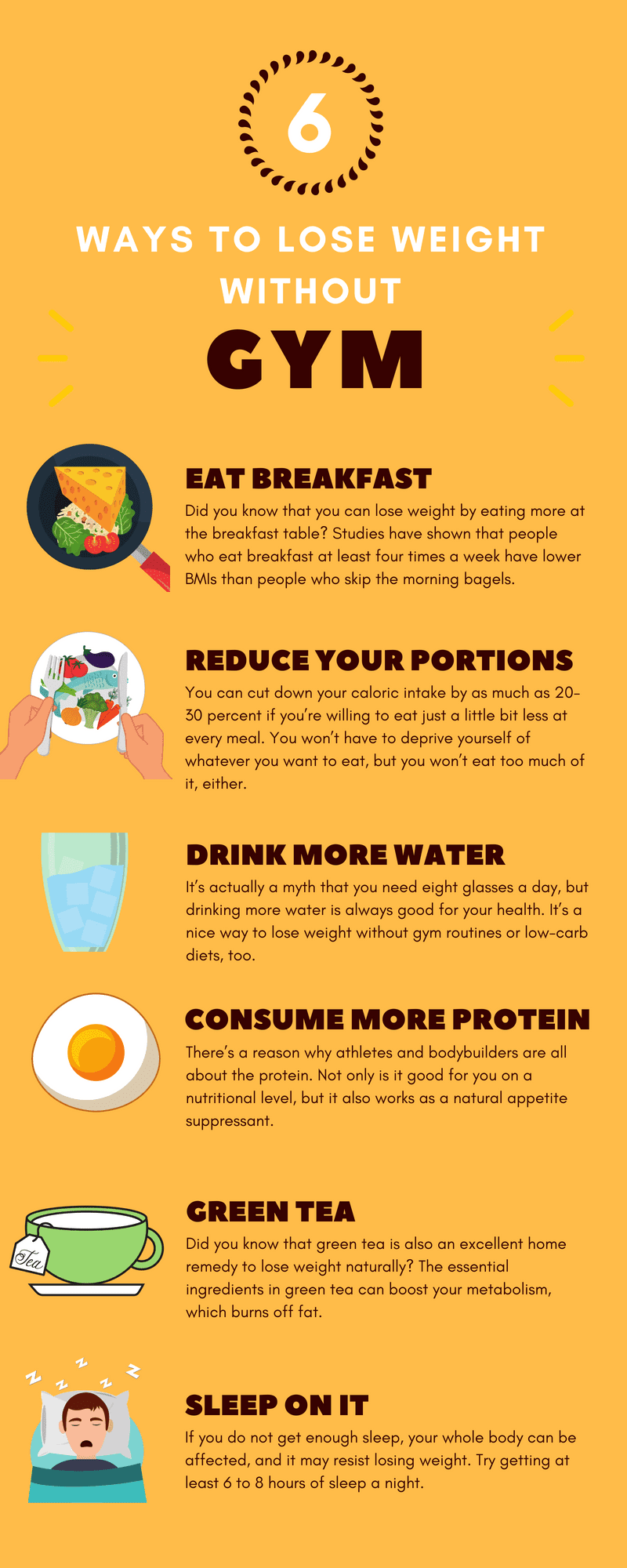
lose weight without gym

5. I don’t have the energy to exercise.

It is definitely possible to feel this way after a long day of work or your average running-around. However, people who are successful at losing weight know that they have to know themselves first. For example, the author knows that her energy is highest in the morning up to 10:00am. Know your own ‘best’ time of day and plan your exercise around that.

Get plenty of sleep to avoid exhaustion if you want to lose weight. Research shows that sleep deprivation can lead us to make poor choices about food and our health, which can lead to weight gain. A study published by the National Academy of Sciences found “that increased food intake during insufficient sleep is a physiological adaptation to provide energy needed to sustain additional wakefulness; yet when food is easily accessible, intake surpasses that needed.” Researchers also found that when people were able to get a good night’s sleep, they reduced intake of fat and carbohydrates and lost weight.

Sources:
National Academy of Sciences http://www.pnas.org/content/110/14/5695.full
http://link.springer.com/chapter/10.1007/978-3-319-42536-8_15
Skip to content