Weekly tips, affirmations, and small actions to feel your best.

Researchers Explain What Your Habits Say about Your Personality

How Do Habits Form?

We all possess habits – both good and bad. We rarely give those habits much thought because they are . . . well . . . habitual. Have you ever wondered, however, where those habits come from? If you bite your nails, for example, where does that nervous – and mostly unconscious – tic arise?

Regarding the science of habits, you might not be surprised to find out that they form in the emotional center of the brain: the basal ganglia. Meanwhile, the logical, executive part of the brain – the prefrontal cortex (PFC) – admonishes us for engaging in the unwanted behavior. For example: the emotional brain causes you to whip out your credit card, whereas your logical brain goes “DOH!” after buying those way-too-expensive shoes. The same parts of your brain go into action when you eat that second piece of chocolate cake and regret it a few minutes later.

We can consider good habits as those that are beneficial to our physical and mental health. People who possess more positive habits generally manifest high levels of discipline and self-control. In other words, their prefrontal cortex is “firing on all cylinders.” On the flip side, failing to exercise the logical part of the brain can lead us down the path toward bad habits. Because of these connected ideas, we don’t have to reach far to see that our habits ultimately decide our happiness – or the lack thereof.

The Role of Habit in Personality

So what links our personality and the habits we form? We can define personality as “the outer appearance and behavior of a person.” Habits generally reveal themselves right there . . . in those outward behaviors. For this reason, we can be sure our collection of habits forms a large chunk of our personality. Even your smaller, insignificant habits may provide insight into your disposition. With that said, consider what the following habits may reveal about you.

Here are five habits and what they say about your personality:

Our character is basically a composite of our habits.” – Stephen Covey

 1. Walking Style

Patti Wood, a body language expert, says that how you stroll can send a strong message about you. If you balance your weight forward – as if charging ahead – and you fix your gaze forward, you’re probably ambitious and focused. At the same time, people might consider this demeanor unapproachable and cold. If you are lighter on your toes with your eyes downcast, you may tend to be more introverted, shy, and aloof.

Folks who walk with a spring in their step while scanning with their eyes are socially-conscious and gregarious, though they may hog the spotlight. Finally, people who walk with a smooth gait, with their weight in the legs, tend to be people-centered, sensitive, and team-oriented.

2. Email Style

According to some psychologists, your emailing style can reveal a few things about your persona. For example, an absence of typos and grammatical errors reveals a tendency to be conscientious, perfectionist, and possibly obsessive. Longer emails reflect a thorough, energetic nature. They may also indicate a needy personality. Introverts tend to get down to business, while extroverts are more casual and playful with their words and topics of choice.

3. Punctuality

Are you the reason someone has to halt their business meeting because you’ve barged into the door out of breath, late again? If you make a habit of tardiness, others might see you as undependable or too laid back. Meanwhile, people who are always early may be a bit neurotic. Finally, people who arrive “on the dot” generally manifest traits such as agreeableness, conscientiousness, and dependability.

4. How You Eat

Juliet Boghossian, a Los Angeles-based behavioral expert and founder of the food behavior research firm, Food-ology, claims that eating habits are linked to personality traits. “Food-related habits can, in fact, reveal facets of an individual’s personality and behavioral tendencies,” says Boghossian. Slow eaters “are usually people who like to be in control and know how to appreciate life.” At the same time, they might manifest confidence and level-headedness. People who wolf down their plate “tend to be ambitious, goal-oriented, (but) impatient.”

“The speed at which you eat reveals the speed at which you take on and enjoy life,” Boghossian adds. What about picky eaters? It’s possible that these individuals never quite grew out of the likes and dislikes they held in childhood. A stubborn reluctance to try new foods – something termed “food neophobia” – is linked to specific characteristics such as anxiety, neuroticism, and sensation-seeking.
sleep

5. Your Handwriting Style

Graphology analyzes the physical characteristics and patterns of handwriting. Some psychologists believe this analysis provides a valid measure of personality. Handwriting analysis specialists, called graphologists, claim that a person’s writing can reveal as many as 5,000 traits. Here are just a few:

  • Size of letters and words: Large letters means you want to feel understood and noticed. Smaller letters may indicate intense concentration and focus, and reveal a more introverted personality.
  • Slant: Tending to put a rightward slant on letters could mean that you’re friendly, sentimental, and a bit impulsive. No slant indicates a logical and methodical personality. A leftward slant suggests that you prefer to work with things over people.
  • Pressure: Heavy pressure indicates strong emotions and a propensity to be reactive. Lighter pressure shows a more playful attitude and a need for adventure.
  • Connection of letters: If your letters are connected, you are logical, methodical, and a cautious decision maker. Letters that are a bit more spaced out indicate an intelligent and intuitive nature.

https://youtu.be/BrQHK272XcE
(C)Power of Positivity, LLC. All rights reserved
Sources:
http://atozhandwriting.com/graphotherapy/

http://www.businessinsider.com/what-your-handwriting-says-about-you-2014-https://www.huffingtonpost.com/entry/eat-habits-personality_us_560d4a4fe4b076812700f04c
https://www.menshealth.com/trending-news/g19540469/walking-style/?slide=5
https://www.npr.org/2012/03/05/…/habits-how-they-form-and-how-to-break-them
https://www.rd.com/culture/personality-habits/

5 Nutrients that Relieve Depression (That People Don’t Realize)

Mood disorders include several different mental disorders like depression that cause a person’s mood to fluctuate. As you likely know, mental disorders are complex. They can be caused (or exacerbated) by a variety of factors such as diet, exercise habits, genetics, environment, personality, a chemical imbalance in the brain – or a combination of these factors.

If you look around you, you might notice that we have a full-blown mental health crisis on our hands, and it doesn’t just affect the United States. People worldwide suffer from mental illnesses, but only recently have scientists looked into the role nutrition plays in mental health.

“Eating an American/Western diet almost doubles the risk of depression in large research trials, while a more traditional or Mediterranean pattern cuts the risk of clinical depression by 40-50 percent,” observes clinical psychiatrist Drew Ramsey, MD.

Diet plays such a large role in our mental health that some scientists now consider the gut our “second brain.” Fascinating stuff, right? With that said, we’d like to discuss a few key nutrients that can help treat depression naturally.

Here are 5 nutrients that can ease depression symptoms:

(*Note: Always consult your wellness advocate before beginning anything new for depression symptoms)

1. Zinc

If you suffer from depression, you should consider adding more zinc to your diet or taking zinc supplements. A meta-analysis published in December 2013 in Biological Psychiatry took 17 studies and found that depression sufferers had about 14 percent less zinc in their blood than the average person. What is more, people with severe depression had the lowest levels of zinc.

Researchers at the University of Newcastle in Australia also analyzed two longitudinal studies and found a correlation between depression and low zinc levels. They found that men and women with the highest zinc intake lowered their risk of developing depression by 30-50 percent compared to those with the lowest zinc levels.

Recommended daily zinc intake is 9 mg for women and 11 mg for men. If you are wondering where to find this mineral, good sources of zinc include oysters, red meat, poultry, beans, and whole grains. You can also take a supplement, but look for a high-quality, organic one if possible.

2. Omega-3 fatty acids

No list of nutrients that help ease depression would be complete without mentioning this powerhouse nutrient. Omega-3’s not only help with production of serotonin in your brain, but they also boost your immune system, endocrine system, lungs, heart, blood vessels, brain, and mood, according to the NIH. As you can see, we need a healthy dose of Omega 3’s for a variety of reasons. Omega-3 fatty acids are also an anti-inflammatory, which is important since depression has been found to be caused in part by inflammation in the brain. Women should get 1.1 grams per day, and men should try for 1.6. Good sources of Omega 3’s include salmon, tuna, flaxseeds, chia seeds, and walnuts.

3. Vitamin B12

Evidence continues to mount regarding the effectiveness of B12 in treating depression. A Finnish study found that people being treated for depression showed the most success if they also had high levels of Vitamin B12 in their bloodstream. The study tracked 115 patients who saw psychiatrists and therapists for major depression. When the researchers followed up with the patients six months after their counseling sessions had ended, they found that people with the highest B12 levels had the least amount of depressive symptoms.

Good sources of Vitamin B12 include beef liver, clams, fish, poultry, eggs, and dairy products. Recommended daily amounts vary by age. Infants six months and younger need 0.4 mcg, while adults need 2.4 mcg.


4. Vitamin D

As most of us know, Vitamin D plays an important role in warding off depression. In fact, a study from the Netherlands found that adults with low Vitamin D levels had symptoms of depression. The body absorbs Vitamin D from sunlight, but if you live in an area without a lot of sun, you can take supplements or even try “light therapy.” For infants 12 months old and younger, experts recommend 400 IU. Adults from the ages of 19 to 70 years old are recommended to consume 600 IU each day.

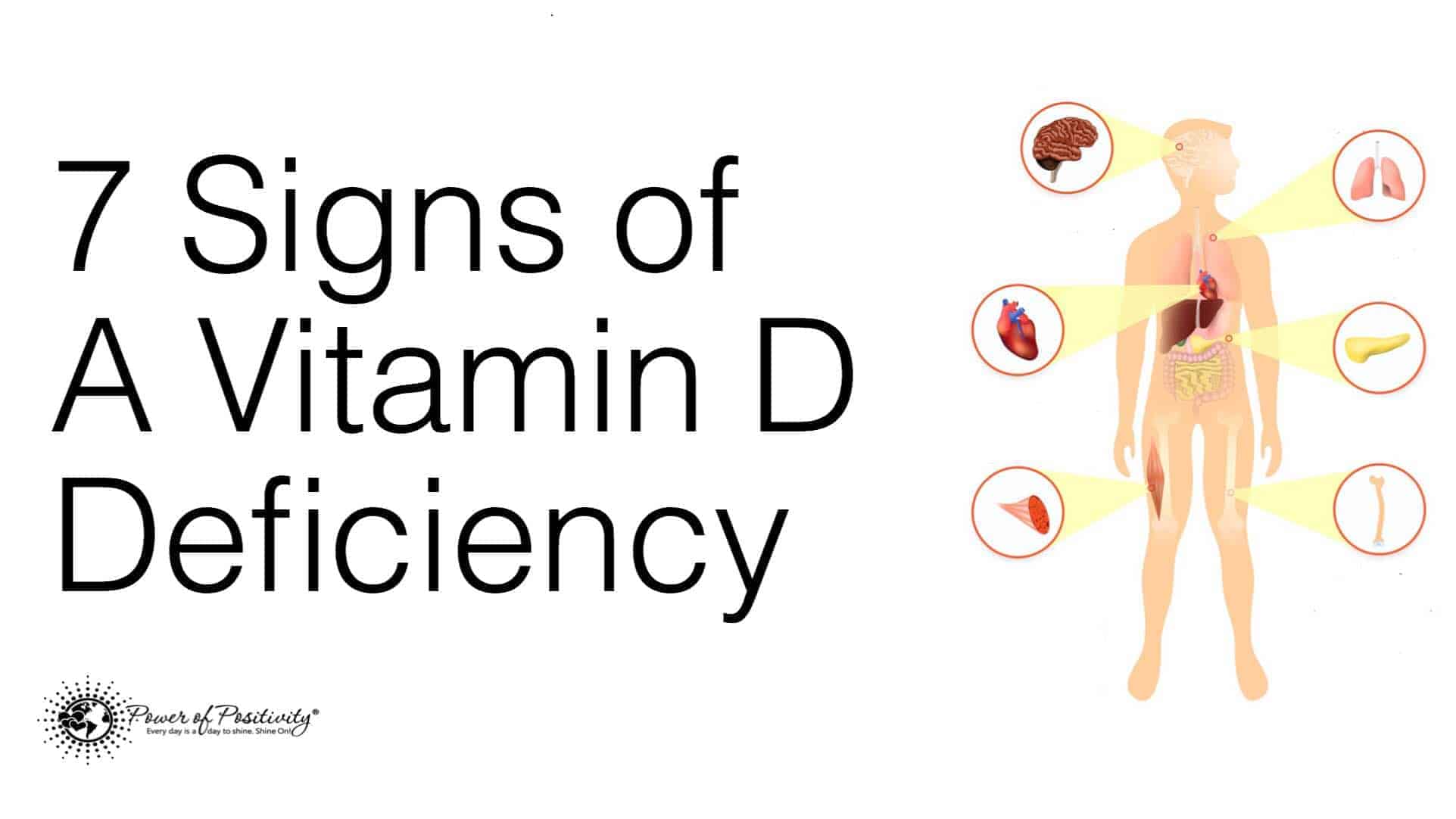
vitamin d deficiency

5. Folate

According to an Indian Journal of Psychiatry article, a folate deficiency could cause depression. Researchers cited that, according to their findings, patients with depression had 25% lower folate levels than the average person. “Depressive symptoms are the most common neuropsychiatric manifestation of folate deficiency,” according to their findings.

Good sources of folate include asparagus, Brussels sprouts, dark leafy vegetables, oranges, peanuts, black-eyed peas, kidney beans, and whole grains. Infants six months and younger should get 65 mcg a day, while adults aged 19-70 should aim for 400.

Final thoughts

Although diet alone may not fully treat depression, it can certainly make a world of difference in the severity of symptoms. If you suffer from depression, start with the basics first: diet, exercise, self-care, and therapy. Consider medication, if needed or recommended by your health care provider. Depression does not have to be a life sentence, and these are some of the best nutrients researchers have found to help ease symptoms.

References:
https://jamanetwork.com/journals/jamapsychiatry/fullarticle/482702
https://www.nami.org/learn-more/mental-health-by-the-numbers
https://www.scientificamerican.com/article/metals-and-mental-health/
https://link.springer.com/article/10.1007/bf00585677#page-1
https://www.ncbi.nlm.nih.gov/pmc/articles/pmc2738337/

Therapists Explain What Challenges Children Most, According to Their Age

A certain level of anxiety and worry is programmed into the human brain, especially when raising our children.

In the days of yore, our early ancestors grew to fear anything with sharp teeth, claws, and fur (imagine that!). In the unforgiving and deadly environment we started in, our species had to rely on instinct to survive.

The years passed, and the brain slowly evolved; but the instinctual, fight-or-flight center of the brain – the amygdala – has remained. Although we’ve become a much smarter species, the amygdala cannot distinguish between real and perceived threats. The same goes for certain emotional parts of our brain. This is where age and development come into play because brain development comes with physical development.

The frontal lobe is the most recently evolved part of the brain; it is also the last to develop in young adulthood. The frontal lobes play critical roles in problem-solving, initiation, judgment, impulse control, and social and sexual behavior, among other things. In other words, the younger we are, our emotions, hormones, and other autonomic functions will influence our thinking and decisions.

We all face trials and tribulations as we go through life – and kids are no different. Research shows that children face a unique set of challenges throughout certain phases of life or stages of development. To complicate matters, children are believed to not develop the capacity to cope with most things involving anxiety and worry until near adolescence.

“Ages and stages is a term used to outline key periods in the human development timeline broadly. During each stage growth and development occur in the primary developmental domains including physical, intellectual, language, and social-emotional.” – The Children Development Institute

Here are the primary challenges children face according to their stage of development:

night terrors

Infants and Toddlers (Birth – 3 Years Old)

The primary challenge during this stage is what psychologists call emotional regulation. Despite popular belief, kids can feel a wide range of emotions early, including joy, excitement, fear, grief, sadness, and anger.

A critical step in child development is helping them understand and embrace their feelings – both good and bad. When you help your child understand his or her feelings, you better equip your child to manage those emotions.

Expert tip:

  • Tune in to your baby’s cues – sounds, gestures, and facial expressions – and respond with sensitivity. This shows your infant that their feelings are recognized and important.

Preschool Years (3 – 6 Years Old)

The biggest challenge likely to face parents at this stage is the child’s newfound sense of independence. Michele Borba, EdD, author of The Big Book of Parenting Solutions, says, “These ages are among the most active and frustrating in terms of parenting.”

Whether or not your child agrees with you, consistency and routine are key for preschoolers. You will be in for a long three years when you’re not dependable regarding what the child can do and when they can do it. Inconsistency can also confuse children. They will continually test their boundaries if they sense that rules change depending on their parents’ mood.

Expert tip:

  • Give your child plenty of time and space for free play. Expect your child to challenge you during this phase. Moreover, resolve to keep a level head as you deal with those challenges.

School Age (6 -12 Years Old)

The most significant challenge kids face at this stage is fear of uncertainty. While the child may relish their independence, there is no mistaking their dependence on Mom and Dad to help navigate a scary and mysterious world.

Right up there with fear of uncertainty is the fear of rejection. Your child is slowly beginning to understand that it’s a big world out there – and they can’t go at it alone. The development of loving, nurturing relationships inside and outside of the home is crucial.

Expert tip:

  • Please encourage your child as often as possible and shower them with plenty of praise. Allow them to experience the natural consequences of their behavior and provide logical consequences to help them learn from mistakes.
  • Ask, “How was your day?” and show loving concern when necessary.

Teenagers (13 – 19 Years Old)

Adolescence is fraught with numerous challenges – mentally, socially, and physically. Most of these challenges stem are exacerbated by puberty. But the pressure – from peers and society at large – may be teenagers’ biggest challenge. The culmination of these internal and external pressures can lead to substance abuse or mental health problems.

The Child Development Institute summarizes the teenage years as follows:

“During adolescence, kids need their parents more than ever. Research shows that [with] a positive family environment – including fun family activities, open parent-child communication and the encouragement to participate in positive extracurricular and community activities – teens are able to navigate these years with relative ease.”

Expert tip:

  • Although your teenager may rebel at this phase of their life, they secretly need your guidance.
  • Do not force your teenager to open up. Instead, remind them that you are – and always will be – there for them.intelligent children

Final Thoughts on Helping Your Children Through Every Developmental Stage

Parenting provides some of the most significant challenges of life. More importantly, however, parenting gives you some of the deepest joys you will ever experience. Assure your children – at every stage of development – of your love for them. Verbalize your dedication to always be there for them no matter what they face in life. Positive and healthy relationships with loving parents are key in your child’s ability to develop into a healthy adult–and whole individual.

7 Habits of Couples That Don’t Argue

Have you ever heard of a relationship void of arguments? Yeah, we didn’t think so. All relationships go through ups and downs. Every couple has their fair share of arguments. Disagreements tend to happen when two people merge their personalities and interests together and have to overcome the challenges of daily life. However, just because life throws us curveballs does not mean we have to fight all the time with our partner. While healthy relationships do have disagreements, these tiffs shouldn’t become so commonplace that a couple forgets why they even got together in the first place.

Here’s how to reduce arguments with your partner:

1. Don’t get worked up over little things.

In other words, “Don’t sweat the small stuff.” We have all heard this phrase before, but how often do we practice it in our daily life? This advice can apply to pretty much any situation, but in a relationship, it means to forgive and forget. It means not expecting perfection from your partner, and learning to let things slide.

Of course, you shouldn’t allow behavior that actually hurts you emotionally or physically, but if your partner forgets to start the dishes or leaves laundry on the bathroom floor, don’t sweat it. Give them a chance to apologize and explain why they forgot. What is more, tell them you understand. Maybe they got caught up with work or it just slipped their mind; it happens. If you let the little things go, you’ll notice a lot less arguing between you and your partner.

2. Listen to understand, not to reply.

Otherwise known as active listening, much of society could benefit by utilizing this forgotten skill. Most people hear what another person is saying, but they don’t really listen. What is the difference, you ask? Well, “normal” listening usually involves hearing the other person while focusing more on distractions such as a phone or TV show, and not giving the speaker the full attention they deserve – or half-heartedly engaging while really just waiting to talk.

Active listening means really trying to understand the other person and giving meaningful responses throughout the conversation. Practicing this skill with your partner will surely reduce arguments because your communication will improve and you’ll understand each other better.

3. Don’t have unrealistic expectations.

Sure, we would all like a fairy-tale relationship, but those only exist in movies and books. When you factor real life into the equation, the story shifts a little. It becomes more about two people taking on the battles of life and overcoming them together. As we touched on in the first point, don’t expect from your partner what you can’t give yourself. Yes, you should expect basic things like respect, honesty, and communication; if you aren’t receiving those, you need to have a discussion with your partner.

At the same time, it wouldn’t be wise to let an idealistic view of relationships cloud your vision and cause you to argue with your partner more than you need to. Changing your expectations a bit to match to reality can help reduce arguments with your partner.

4. Remember your common goal.

No one wants to fight all the time; it adds so much unnecessary stress and strain to a relationship. Remember that your partner doesn’t want to argue with you every day either, so keep that in mind next time an argument begins. If you both navigate the argument with a common goal of peace and understanding, it will make it a lot easier to settle the disagreement.

5. Don’t attack their character.

This is also called an ad hominem argument. It means avoiding the real topic of discussion by attacking someone’s personality and character. Making insulting comments about your partner will only make them defensive and even angrier. A verbal attack like this can also do lasting damage in a relationship.

Instead of saying things that you probably don’t mean, reduce arguments by focusing on the subject at hand, or the behavior they displayed that hurt you. This way, you can have a mature discussion instead of resorting to name-calling and insults.

argument

6. Never assume.

Assumptions cause a lot of misunderstandings in relationships. If you don’t know what someone means or you’re unsure of something, simply ask for clarification. Gaining clarity about a matter can stop an argument in its tracks because you might realize you have no reason to be mad in the first place! Perhaps you have the wrong perception of what happened or what your partner meant.

It’s always better to ask questions than make assumptions.

7. Focus on finding a solution, not “winning.”

A lot of couples lose sight of the “we” in their relationship and instead focus on “me.” Arguments quickly become more about winning than about solving the problem at hand. You have to remember that you’re a team and that no one wins if both people aren’t happy. If you approach a disagreement with the common goal of finding a solution that works for you and your partner, this can help to reduce future arguments. What is more, it can make your relationship stronger.

Final thoughts

“Say what you mean, but don’t say it mean.” – Andrew Wachter, marriage counselor

All relationships deal with arguments at times, but that doesn’t mean you should lose sight of the positive partnership you have. If you remember to work together instead of trying to win the battle, you’ll reduce arguments with your partner and develop a deeper bond together.

(C)Power of Positivity, LLC. All rights reserved

References:
http://www.huffingtonpost.in/entry/8-things-successful-couples-do-differently-during-arguments_us_569fd4f0e4b0875553c2a5e0
https://www.psychologytoday.com/blog/rediscovering-love/201403/write-anger-speak-love-end-bickering
https://www.psychologytoday.com/blog/understand-other-people/201210/don-t-assume-i-know-what-you-mean
https://www.psychologytoday.com/us/blog/emotional-fitness/201209/10-tips-help-avoid-ugly-arguments
https://www.huffingtonpost.com/margaret-paul-phd/love-and-relationships_b_4309353.html

How to be Healthy in 10 Easy Steps

Striving to be healthy may seem intimidating and almost impossible at first. Fortunately, living a healthy lifestyle is not as hard as it seems! With a few simple adjustments and a positive mindset, you can change your lifestyle and nurture your body and mind. Follow these guidelines on how to be healthy and you’ll be amazed how easy it is!

How to be Healthy in 10 Easy Steps

1. Avoid processed foods and artificial sweeteners

The Canadian Medical Association journal warns, “Artificial sweeteners may be associated with long term weight gain, increased risk of obesity, diabetes, high blood pressure and heart disease.“ Processed foods and artificial sweeteners can be hard to avoid when living a fast paced lifestyle, but reading labels and prepping your meals at home is the best way to prevent unknowingly consuming artificial sweeteners, sugar, and excess salt.

2. Drink water

Drinking plenty of water is one of the easiest ways to maintain a healthy lifestyle. Without proper hydration, your kidneys will have a difficult time filtering toxins from your body. Furthermore, ample hydration gives you more energy, clearer skin, and improve cognitive performance. Aim to consume half your body weight in ounces of water a day, and always keep a bottle handy.

3. Get more sleep

The average adult requires 7 to 10 hours of sleep each night to maintain optimal performance. Sleep is as important to your body as food and water, so make sure to make it a priority! Ample sleep improves brain performance, reaction time, and even your metabolic rate. Sleep also gives your body the opportunity to repair any damage done to your body throughout the day. Think of sleep like your own personal mechanic. Avoid electronics two hours before bed, and keep your bedroom at a cooler temperature for productive sleep.

4. Meditate

Even just five minutes a day of meditation reduces stress, and increases patience and mindfulness. A consistent meditation practice has even been proven to alter your brain. Long-term meditators have more gray matter in their brains, resulting in improved memory, decision-making, and even sensory enhancement.

5. Have a morning routine

The path to healthy living is building good habits, and a morning routine accomplishes exactly that. When you follow a consistent pattern, such as meditation upon waking, breakfast, and morning reflection, it prevents decision fatigue and allows an easier start to your day. An unhurried morning will reduce stress, increase positivity, and improve your performance for the rest of the day.

6. Exercise

Along with diet, exercise is the best weapon against risks such as cardiovascular disease and obesity. However, don’t be intimidated. Even a brisk 30 minute walk three times a week will improve your cardiovascular and respiratory health and keep you limber. Exercise also releases endorphins, which significantly improve your mood.

7. Choose friends wisely

A positive atmosphere will lead to a positive you. Be selective with who you spend your time with, because they have a profound ability to influence your mood and your decisions. Friends who make good choices will inspire you to do the same, and those friends who always complain may cause you to eventually do the same. Your friends reflect who you are.

8. Omega-3s

Omega-3 fatty acids are crucial for healthy organs, and if you fear that you are not consuming enough through regular food, you can simply take a supplement. Omega-3s benefit heart health and lower your triglyceride levels. Aside from cardiovascular health, omega-3s improve your memory and your mood. Don’t want to take a supplement? Grill some salmon and eat a Mediterranean style diet.

how to be healthy

9. Go outside

We’re not just talking about the benefits of Vitamin D from the sun. Spending time in nature increases energy and lowers stress. A study even shown that time spent in nature can reduce inflammation and ease hypertension. A Japanese practice known as shinrin-yoku or “forest bathing” takes advantage of these benefits, and is an important component of Japanese medicine. Walk through the woods once in a while. You’ll enjoy it!

10. Eat vegetables

Finally, the most basic practice of all. Vegetables are the cornerstone of a healthy diet and help combat or prevent numerous chronic illnesses such as cardiovascular disease or type 2 diabetes. Eating vegetables rich in potassium helps lower blood pressure and prevent kidney stones. Aim for half a plate’s worth at dinner, and buy frozen for convenience and ease of preparation.

While these tips on how to be healthy are easy, do not be afraid to take small steps each day in order to foster good habits and consistency. Attaining one goal a day is better than not achieving one at all, so don’t give up when you have a bad day! Remember that you are capable of achieving anything if you take it one day at a time.

10 Traits of Someone With True Integrity

Integrity, as defined by the dictionary, is “the quality of being honest or having strong moral principles.” People with integrity are generally known to be trustworthy, honest, and kind. This is a quality that everyone should strive for.

Everyone should strive to surround themselves with people who have true integrity. How can you tell that someone has what is considered true integrity?

It isn’t something that can be faked, but there are some ways to tell that someone has real integrity and are not just faking it.

10 Behaviors That Signify Someone Has True Integrity

Here are the main behaviors that reveal if someone has the kind of integrity you want in a friend or coworker.

true integrity

1. Taking responsibility for their actions

Integrity is all about having a high level of honesty. When someone takes responsibility for their actions, you know that they are an honest person. It’s not always easy to take responsibility for things that happen, but it is the right thing to do.

People with integrity choose to do the right thing, even when it’s hard.

2. Putting others’ needs above their own

In a world that is so focused on individualism, it can be rare to find someone who focuses on what’s good for the collective community. People who put the needs of others above their own needs or desires show true integrity. Of course, they don’t do this simply to get praise and recognition. Someone with true integrity is only interested in doing the right thing.

3. Offering to help others in need

Seth Meyers, Psy.D, says that volunteer work is a great place to find people who have integrity. This is because people with true integrity have no qualms offering their time to help people in need. They want to help those who are less fortunate than themselves. What is more, they do so happily.

Whether it’s working with others to build a house in a developing country, or helping out at the local food bank, someone with true integrity will be found helping those in need.

4. Giving others the benefit of the doubt

Seth Meyers also says that someone with integrity doesn’t jump to conclusions. They always give others the chance to explain themselves, and move forward considering those other points of view. Someone with integrity knows that things aren’t always as they seem and that each person has a unique point of view that deserves to be heard. As such, they choose to give the benefit of the doubt instead of doubting.

5. Choosing honesty in all things

Little white lies can be tempting, but someone with true integrity doesn’t give in to this particular impulse. Integrity means being honest, and someone with true integrity will live this quality every day.

You can always trust these kinds of people to give you their honest opinion, and it will be a point of view that you can value.

6. Showing respect to everyone

Respect is often considered something that must be earned, but someone with integrity gives respect to everyone they meet. Someone with true integrity knows that everyone deserves respect and deserves to be treated like a human being.

People with true integrity will never be caught being rude to waiters or customer service workers.

7. Manifesting humility

A person with integrity will be proud of their accomplishments, but they will at the same time be humble. In other words, they know the difference between confidence and arrogance. A person with true integrity will know their strengths as well as their shortcomings. They recognize their strong points, yet they’re always striving to better themselves in some way.

8. Being able to admit they’re wrong

Who likes to admit they have been wrong? It isn’t fun, and it can be a humbling experience. But a person with true integrity has no problem admitting when they’re wrong, or when they made a mistake. You will find they are always the first to stop, admit their mistakes, and apologize if need be.compassion for mental illness

9. Showing regular reliability

A person with true integrity will always show up to an obligation. When they say you can count on them for something, you know they will keep their word. Integrity is all about being the best person you can be, and reliability is part of that. People with true integrity will never flake on you if they can help it. You can confidently rely on them.

10. Conveying true kindness

Above all, people with integrity are kind. They’re not the type of person to say something they don’t mean. They won’t say something nice to your face and something cruel to your back. A person with true integrity knows that there is strength in being unrelentingly kind.

Final Thoughts on Identifying True Integrity

“Real integrity is doing the right thing, knowing that nobody’s going to know whether you did it or not.” – Oprah Winfrey

Integrity is a trait that everyone should strive for. These traits and behaviors will help anyone move towards becoming a person with true integrity. Of course, people with true integrity do these things because it’s the right thing – not to be praised for their integrity! That is part of the beauty of someone who lives a life of integrity.

How To Be Positive In 10 Easy Steps

When it comes to learning how to be positive, you may think that you should be happier more often. However, being happy and being positive are not always the same thing. There are several ways you can practice positivity even when you’re going through a challenging time in life. Researchers even suggest that we can cope with life more effectively by thinking positively and managing our emotions. It’s also important not to suppress your feelings and to work through negativity in order to live a more positive life. Here are some tips that could prove helpful when learning how to be positive.

1. Learn to Accept Things 

Address the issues that you’re facing in life and accept where you are. Be honest about your negative feelings or thoughts and if you don’t enjoy what’s going on in your life, make the decision to change things.

Try not to be hard on yourself when you don’t feel your best. While you can’t control all the things that happen to you, you can control the way you respond to life’s situations. Become aware of the ways that you reduce stress and practice healthy habits. For instance, if you find that meditating or spending time alone is helpful, make time for this. If you are able to gain new perspective when you spend time with loved ones, make your social life a priority.

2. Set Goals

When you want to have a more positive outlook, it’s important to set goals. Making goals can make you feel hopeful about the future and will give you confidence about your purpose. This is especially true if you set goals that are in line with your values. Be as detailed as possible with your goals and remember to start small so that you won’t get overwhelmed. For instance, if your goal is to eat healthier, start by adding one vegetable side dish to your meals per week, then increase your intake of nutritious foods from there.

3. Meditate

Compassion meditation, known as “metta bhavana”, will help you to see the positivity in various aspects of life. With this form of meditation, you’ll be utilizing the love you feel for those who are important to you to others in the world. You’ll also learn how to effectively recover from tragedy or negative circumstances and you’ll likely see an improvement in your relationships after only a few weeks of practicing metta bhavana.

Meditation is good for your mental state as well. Studies have proven that meditation can help to reduce depression symptoms, and being compassionate toward others can help you to show yourself more compassion.

4. Write In a Journal

According to research, you need to balance your thoughts by having three positive thoughts each time something negative comes into your mind. Maintaining a journal can help you do this. Writing in your journal regularly will also make it easier for you to focus your energy on the positive things in your life. Writing things down will also help you to remember them.

Even if you write about negative experiences in your journal, don’t focus so much on the experiences themselves. Instead, write about your emotions regarding the situation as a way to help you process your feelings without holding on to the negativity.

5. Be Grateful

Remember that gratitude is an action word and isn’t just an emotion. Gratitude helps you to have a healthier mindset and can even improve your relationships, since you’ll learn how to see the bright side of things and become more patient with the people you love the most.

You can practice more gratitude by not feeling or behaving as though you are entitled in your relationships. Be grateful for the time that your friends and relatives invest in you, and do your best to show them mutual love and respect. It’s also helpful to be grateful for the little things in life so you’ll learn not to take the great things in your life for granted.

6. Affirm Yourself

It may seem a little corny to talk to yourself or to be your own cheerleader, but this can definitely help you to be more positive and feel happier day by day. However, when you speak positive words, you are more likely to think fulfilling thoughts. The more you affirm yourself, the stronger the “short-cut” in your brain, which means you will be more likely to default to positive thinking instead of having to work hard to make yourself see the bright side of life.

When learning how to be positive, repeating affirmations to yourself can also reduce depression and anxiety and enhance the function of the immune system. So, when you remind yourself that you are smart, capable and able to conquer anything that comes your way, you are actually improving your health.

7. Be Optimistic

Research from the 1970s found that people who were lottery winners weren’t any happier than people who didn’t have such good luck. This is due to the fact that humans have a happiness baseline, which means that after extremely happy or sad events take place in our lives, we return to our comfortable state of happiness.

It has also been proven that even if you have a naturally low baseline, you can learn to develop the power of positivity. When you learn how to be positive and are optimistic, you are likely to have a more enhance sense of well-being and increased self-esteem. This also changes the way you look at the world, and keeps you from blaming yourself for things that you can’t control. However, it’s important not to adopt blind optimism, since this could lead to disappointment later. For instance, when you’re just starting a new career or creative venture, don’t expect to be an expert right away. Rather, be upbeat about your potential and do your best, while being focused on your goals and being patient with yourself.

how to be positive

Change Your Negative Outlook to Positive

When learning how to feel happier and more positive, don’t use avoidance as a way to cope with negative experiences. While this may be natural to do because tragedies are painful and embarrassing, but when you ignore these situations, you cripple yourself and become less able to deal with the ups and downs of life. By adopting positive thinking, you can learn from your past and avoid certain mistakes in the future. Thinking about failures as an opportunity to try again and developing a positive attitude can also make you more determined, and you’ll be even more fulfilled when things actually work in your favor after you’ve put in the hard work.

8. Get Active

When learning how to be positive, it’s important to realize that your body and mind are very closely connected. If you have a hard time feeling positive on a regular basis, try getting more physically active. According to Amy Cuddy, a social psychologist, your posture can even change the way your body processes stress hormones. Try the “power pose,” in which you stick your chest forward and hold your shoulders back, looking straight ahead.

9. Smile More

Research suggests that when you smile, even if you don’t feel happier, your brain gets the message that you’re in a good mood and motivates you into having a positive attitude. When you engage in the duchenne smile, which activates the mouth and eye muscles, you’ll get even more benefits. People who spent more time smiling while undergoing uncomfortable or painful medical treatments were even reported to feel less pain.

10. Look Your Best

Did you know that according to a study, people who put on lab coats before performing a simple scientific experiment did better on the experiment than people who didn’t? This means part of the power of positivity is finding clothing that makes you look and feel great to give yourself a boost of creativity and positivity. It’s also important for you to take care of your body to increase your confidence, but don’t get stuck on trying to reach a certain weight. As you see your body change for the better, remember that a number is not indicative of your worth.

Working  Out makes you feel happier

Your body releases endorphins when you exercise, and these chemicals make your mind and body feel great. Exercise also helps you to rid your mind and body of anxiety and depression. Even if you exercise moderately for about 30 minutes on a regular basis, you’re likely to feel calmer and more relaxed. Even tending to your garden can have this effect, of you can engage in practices like tai chi, yoga and meditation.

8 Sciatica Stretches That Prevent and Relieve Hip and Lower Back Pain

If you have lower back pain, you are not alone. Most people, especially those with sedentary lifestyles, sometimes experience lower back pain. In some cases this might be a result of sciatic nerve pain. This often leaves people debating the question, what is the most effective pain relief for sciatica? The best thing to do is talk to your doctor about various pain relief methods and physical therapy, but many stretches and sciatica exercises can significantly lessen sciatic pain.

The enjoyment of stretching may amaze anyone who has never tried it. The intense pain of sciatica may inspire a willingness to experiment with a new approach to pain relief. Your body’s longest nerve is the sciatic, extending from the spine through the buttocks and legs. Usually affecting only one side, it reacts negatively to tight and stiff muscles that press on it. These sciatica stretches make your muscles feel good, but you must stop doing anything that hurts.

1. Sciatica Mobilizing Stretch

sciatica

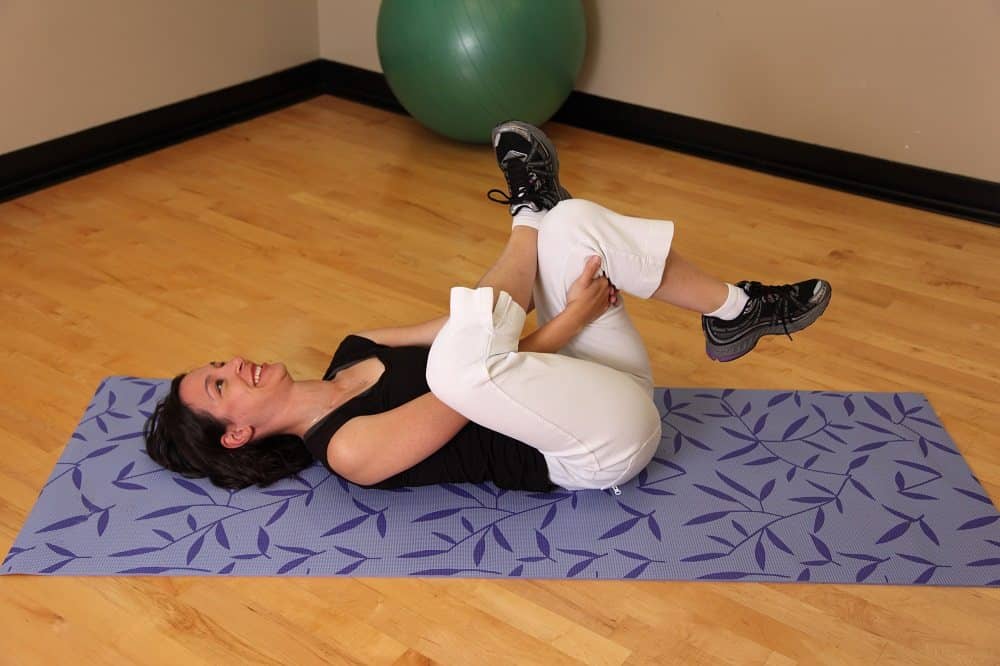
The first of these sciatic nerve stretches is sciatica mobilizing stretch. Lie on a yoga mat with your knees bent and a cushion or hard pillow under your head. Bring one knee toward your chest and hold it with both hands. Slowly extend your leg upward for a count of 30 and return to original position. Straighten the leg that remains on the mat as much as you can comfortably do, or you may put a pillow under that opposite knee for support. Repeat three times for each leg while taking deep breaths throughout the exercise.

2. Both Knees to Chest Sciatica Stretches

sciatica stretch

Lie on a yoga mat with a cushion or firm pillow under your head. Place your hands on both knees and slowly bring them toward your chest. Hold the stretch for a count of 30 and return to the original position. Repeat the exercise three times, and make sure to take deep breaths throughout your exercise period.

3. Piriformis Muscle Stretch

piriformis stretch

Lie on your back on a yoga mat with comfortable support for your head. Bring both legs into a bent-knee position. Cross one leg on the opposite knee. Grasp the thigh of the leg that has a foot on the floor. Exert a gentle pull to move it toward your chest until you feel a stretch in your butt on the side of the elevated leg. Hold the stretch for a count of 30 and return to the original position. Perform this stretch three times for each leg.

4. Cat-Camel Poses

sciatica

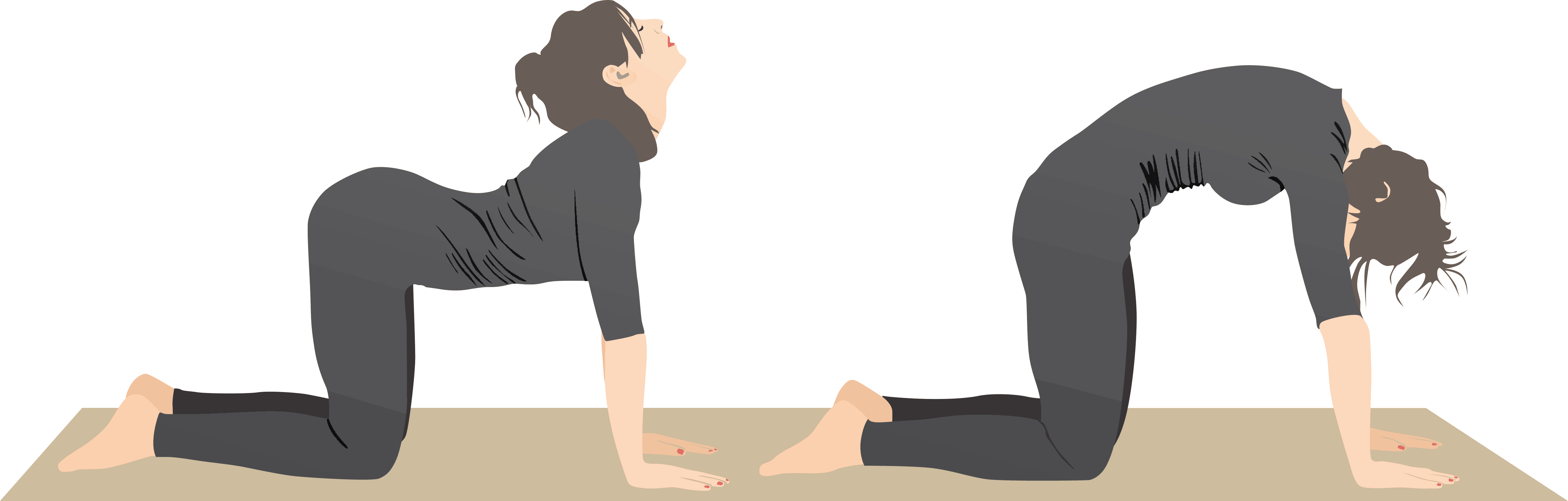
Straighten your arms directly below your shoulders from a position of all fours on your yoga mat. Align your knees with your hips. Exert pressure on your abdominal muscles and gently push your back upward to create an arch like a cat for the first part of the exercise. The stretch works best when your head points downward toward the mat. Maintain the pose for a count of 10 and return to the original position.Lower the middle of your back into a reversed arch for the second part of the stretch. Keep your head up to help deepen the stretch and hold the pose for a count of 10. The up and down movement of your spine provides the stretch, and you need to keep your arms straight. Repeat the cat-camel stretch 12 times.

5. Standing Hamstring Sciatica Stretches

sciatica stretches

The next of our sciatica exercises is a standing hamstring stretch. From an erect starting position with your feet together, stand in front of a sturdy table, bench or ledge that is about hip-width high. Lift one leg and let your heel rest on the object before you. You need to keep your legs straight without locking your knees. Bend forward at your waist while keeping your spine straight. You reach the right level when you feel a stretch in the back of the elevated leg. Maintain this pose for 30 seconds and then release to the original position. Repeat the exercise three times for each leg.

6. Frog Pose (Advanced)

sciatica stretch

Start by getting down on all fours on the width instead of the length of your yoga mat. Place your hands on the floor as you slowly widen your knees. Keep the inside of the calf and foot of each leg touching the floor. Gradually lower your body down to your forearms. Hold the pose for 30 seconds for a series of three stretches.

7. Two Knee Twist

sciatica

Lie on your back on your yoga mat with your knees bent and a pillow to support your head. Spread your arms to each side to form a T shape and keep your shoulders flat. Slowly rotate your knees to the left and hold for a count of 60 before switching sides. Repeat the stretch three times.

8. Child’s Pose

sciatica

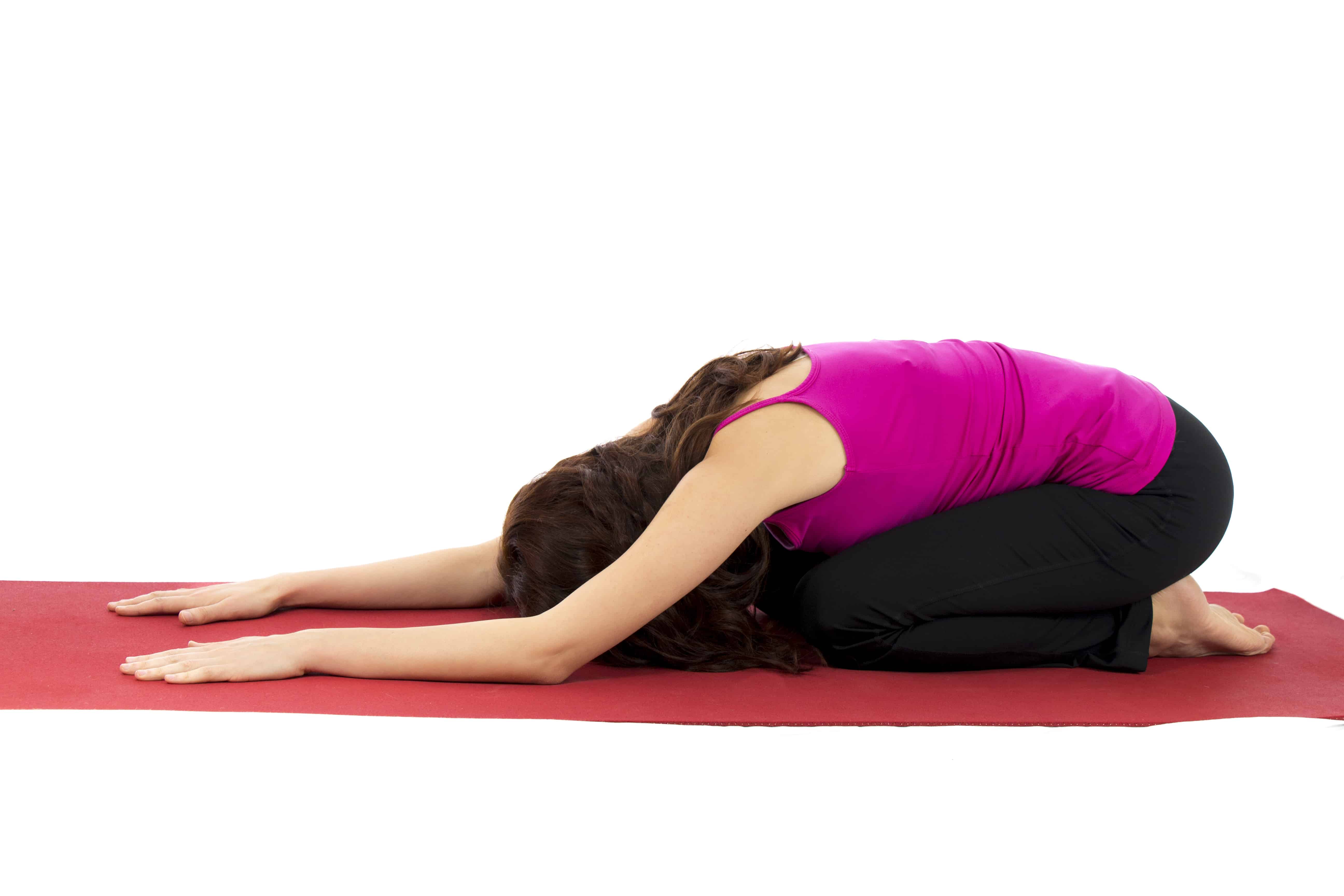
Get down on your hands and knees with your hands out in front of the yoga mat. Slowly extend your hands forward as you lower your body into a crouch.

These top 8 sciatica stretches should help you with your sciatica pain, whether it is hip pain or lower back pain, if you maintain your stretching routine.

sciatica stretches back pain

Related: 5 Signs Your Back Pain Is Actually Sciatica Pain (And How to Reverse It)


5 Things You Should Keep Secret About Your Marriage

Some things that happen in a marriage should stay in the marriage. In other words, other people don’t need to be privy to the details. Sure, it can be tempting to tell your friends everything that happens in your marriage; however, sharing the secrets of your marriage can cause undue stress. It can even put an unhealthy strain on your marriage. Relationship experts have a helpful list of “secrets” in your marriage. These are things that should always stay between you and your spouse.

“The secret of a happy marriage remains a secret.” – Henny Youngman

Here Are 5 Marriage Secrets to Never Tell Anyone

marriage

1. Private Photos

This one should be self-explanatory, but some people don’t realize that revealing photos should never be shared outside your marriage. Even if you think your spouse looks really good in the sexy selfies they send you, you shouldn’t be showing them to other people. There should be certain boundaries that you have with your spouse, as well as with other people. Secrets that should be kept between you and your spouse include anything that has to do with their body, especially on an intimate level.

2. Money problems

Nothing can put pressure on a marriage faster than money problems. Most people don’t want to admit that they’re having money problems. Even though it might be tempting to complain about financial issues to your friends, try to keep such matters to yourself. You and your spouse can work out a financial plan without having other people inject their opinions on your financial situation. While you might want to vent to your friends about money problems, this can cause more issues than it solves. Terri Orbuch, Ph.D., says that talking to your spouse about money issues is the best way to release related tensions. Set aside “neutral time” to talk about money problems, rather than setting aside “friend time” and discussing something that should remain confidential in your marriage.

3. Details of arguments

Arguments and disagreements are entirely normal in a relationship. You’ll likely agree that sometimes the arguments aren’t even worth the breath we use to fight them. But, that’s just life! The important part is knowing how to compromise and work through a disagreement. Once the fight is over, there’s no reason to drag it back to the surface. That includes talking about the argument with your friends and family and hashing out the details of the disagreement. Not only will it probably upset you all over again, but if your partner isn’t there to put up any defense, you could be giving the wrong perception of your spouse to friends and family.

4. Your sex life

Maintaining boundaries within a marriage is crucial for fostering trust and intimacy. While some might be tempted to discuss personal matters with friends, it’s important to prioritize your spouse’s feelings and privacy. Instead of oversharing, couples might consider ways to strengthen their connection privately. Exploring new ways to connect, like open communication or even watching content such as watch live sex responsibly as a couple, can help enhance intimacy. The key is ensuring that both partners feel comfortable and respected in any shared experiences, reinforcing trust rather than risking it. If you and your spouse face issues in your sex life, Laurie Wilson, a certified sex therapist, suggests seeing a counselor for help. Sex therapy can be beneficial, as it is a form of talk therapy that can help couples navigate problems in their sex lives.

5. What your partner really thinks of them

marriage quote

If you’re in a relationship that your family might not approved of, there’s no reason to fuel the fire by sharing how your spouse really feels about them. The same goes for your friends. In a perfect world, everyone would get along with your spouse. But with different personalities clashing from time to time, it’s just not realistic that everyone will “just get along.” If your partner and one of your friends generally don’t see eye to eye, you probably don’t want to tell your friend what your partner said in confidence about them. The same also goes for keeping quiet about what your friends and family think of them. There’s only going to be unnecessary drama when that happens.

Final Thoughts on the Things to Keep Secret in Your Marriage

Secrets aren’t always a bad thing. Keeping them between yourself and your partner can ensure the relationship doesn’t face any more outside stress factors that will naturally arise in any committed relationship. Your friends and family don’t have to know every detail of your marriage. Some things are better left unsaid!

 
Skip to content