Weekly tips, affirmations, and small actions to feel your best.

10 Things To Remember When You’re Overwhelmed With Problems

Psychologist Marla W. Deibler, PsyD defines overwhelm as a “feeling completely overcome in mind or emotion.” Getting overwhelmed is something that everyone deals with sometime in their life. Some people deal with it more often than others. If you’re feeling overwhelmed with problems, make sure to remember these key things. They will help you get over the hump and get you back on track with your life.

Here Are 10 Things to Remember When You’re Overwhelmed with Problems

1. You’ve done this before

Most likely, you’ve felt overwhelmed with problems before. And like all the other times, you were able to make it through and get to the other side. It’s important to remember that you’ve conquered being overwhelmed before. It will help you stay on the right track and help you avoid having a breakdown.

2. Focus on what you can control

Feeling overwhelmed comes from feeling like you are out of control. One of the best ways to combat this feeling is to make sure you’re focusing on the things that you actually can control.

Steve Maraboli once said, “Incredible change happens in your life when you decide to take control of what you do have power over instead of craving control over what you don’t.

Sometimes, you may feel a loss of control because you’re trying to control the uncontrollable. Sit back, relax, and focus on the things you do have control over.

3. Change happens fast

When it feels like you’re overwhelmed with problems, remember that the only way to get through is to be proactive. You’ll be surprised by how fast change in your life actually happens when you start putting in the effort. When you’re standing at the precipice, remind yourself that you don’t really have that far to go.

4. You have a support system

According to the University at Buffalo School of Social Work, “Supportive relationships can also bolster you emotionally when you’re feeling down or overwhelmed… they provide encouragement and lower your stress and feelings of loneliness.

You don’t have to go through feeling overwhelmed alone. In fact, you probably have a support system that is ready and willing to help you back on your feet. Remember that your family and friends are always going to be there for you, and that you can reach out to them any time you need.

5. Someone else has survived this

The problems that we have in our lives are not unique. Even if it feels like no one else is experiencing what we are experiencing, that simply isn’t true. There are always going to be people who have gone through what you’re going through right now. All you have to do is reach out and find solidarity.

6. It’s not as bad as it seems

Even when things seem pretty darn bad. When you’re in the moment, emotions can take over and make everything seem ten times worse than it is. When you step back and look at your situation, you can probably find the silver lining. At the very least, you’ll be able to find your starting point to making a positive change.bad day

7. Find ways to relieve the stress

When you’re feeling overwhelmed, stress will be right on your heels. Don’t forget to take some time to de-stress. “Resist the urge to self-impose stress by having more confidence in yourself. Don’t press the panic button every time you face a crisis. And, don’t let someone else’s behaviour stress you out,” says Sharon Melnick, author of Success Under Stress.

Whether you need to spend a few hours relaxing, meditating, journaling, exercising or watching your favorite television show, always make time to de-stress. You’ll be amazed how manageable your problems seem after you get rid of the stress.

8. Take it one problem at a time

When you’re overwhelmed, it can be tempting to try and solve everything at once. That is just going to add a whole different world of problems right into your lap. Instead, remember that all you need to do is take it one problem at a time. After that, break it down even further: one step at a time. As long as you’re moving forward, you’ll make it out the other side.

9. Remember to say “no”

If you’re a “yes man” type of person, this could be contributing to your overwhelming pile of problems. Sometimes, it’s good and healthy to exert boundaries. Learning to say “no” to certain things will help you keep your problems manageable. Remember: you don’t have to say yes to everything someone asks of you. Saying “No” can be a virtue.

10. Eat and stay hydrated

Stress and feeling overwhelmed can make it hard to remember to do the bare minimum to keep ourselves healthy. Set periodic reminders on your phone to remind yourself when to eat and when to drink water. Getting through to the other side will require that you stay healthy, well-fed, hydrated, and well-rested. Don’t forget to get sleep, too.

Final thoughts

Feeling overwhelmed isn’t a new feeling. You’ve probably made it through being overwhelmed before. Always remind yourself of these things to help you get through to the other side. You’ll come out stronger, wiser, and readier to deal with being overwhelmed if it ever happens again.

“If you have a positive attitude and constantly strive to give your best effort, eventually you will overcome your immediate problems and find you are ready for greater challenges.” – Pat Riley

https://youtu.be/T1ke5KbOAZs

(C)Power of Positivity, LLC. All rights reserved
References:
https://psychcentral.com/blog/overwhelmed-these-6-strategies-may-help/
https://socialwork.buffalo.edu/resources/self-care-starter-kit/additional-self-care-resources/developing-your-support-system.html
https://timesofindia.indiatimes.com/life-style/health-fitness/de-stress/whats-your-daily-stress-plan/articleshow/57912596.cms

Why Having Pride Actually Means You’re Mentally Tough

How many times have you heard that you should never be too prideful? Maybe you’ve been told it’s better not to boast about your accomplishments. Many people have been told that pride is something to avoid, but maybe it’s time to look at being proud in a whole new light. A positive light. Being proud of yourself is nothing to be ashamed of.

Most people like to quote pride as one of the seven deadly sins, but there’s nothing deadly about pride. In fact, being proud of yourself is one of the ways you can make yourself a stronger person. Psychologists even agree that being proud of yourself is one of the best ways to grow stronger and more self-assured in mind and spirit.

Mental toughness is defined as the “ability to work hard and respond resiliently to failure and adversity — the inner quality that enables individuals to work hard and stick to their long-term passions and goals.” With that in mind, here are some reasons it’s okay to have a bit of pride in yourself throughout the day.

Here Are 4 Reasons Why Being Proud of Yourself Makes You Mentally Tough

1. You are your best cheerleader

It’s good to have a support system, but no one will have your back quite like yourself. Other people may have an idea of all the effort you put into achieving your goals, but only you will know exactly what you went through to get to where you are. You see yourself at your lowest, but you are also the only one able to pull yourself back up.

Being proud of yourself is important because you’re the only one who lives inside your head every day. You are in the best position to be your own cheerleader. Being able to have your own back when it comes to difficult situations will make you stronger every day.

2. Being proud of yourself builds self-worth

According to Elvira G. Aletta Ph.D. when someone is proud of themselves, the feeling can help grow their self-worth. Why is self-worth important? Self-worth is connected to all kinds of things about ourselves. Having a good amount of self-worth can help you in foundational areas of your life. Not only will self-worth build your self-esteem, but it will also allow you to interact with the rest of the world in healthy, positive ways.

Self-worth is important. It enables you to draw positive boundaries with the people around you, avoid toxic relationships, and form friendships and relationship with people who will treat you right.

3. It keeps you in touch with your emotions

When you overcome a hardship in life or achieve a goal, you want to share it. The people you tell often express pride in your abilities. If other people can be proud of you, then it stands to reason that you should be proud of yourself, too!

Feeling a sense of pride isn’t anything to be ashamed of. If you have overcome something particularly difficult in life or achieved a long-awaited goal, that inner glow of pride is a natural response. When you access that pride and keep yourself in touch with your emotions, you’ll create of yourself a stronger person.inspiring quote

4. It motivates you for the future

Self-motivation is something that many people find a struggle. Being proud can actually help you become more self-motivated. After all, if you enjoy the feeling of accomplishing your goals, in the future you can better motivate yourself to keep achieving them. Jeffrey S. Smith M.D. describes self-motivation as needing to be challenged and enjoying the reward we get once we complete that challenge.

Pride is one of the ways our mind rewards us for a job well done. That good feeling you get after you do something difficult is a sense of pride, which motivates you to keep striving for bigger and better things. Having the ability to keep yourself motivated is the hallmark of a stronger person.

Final thoughts

Don’t be afraid of pride in yourself. Being proud can lead to all kinds of positive changes in the way you look at yourself, and the way you interact with the world. Psychologists agree that the outcomes of being proud of yourself can cause anyone to be a stronger person, day by day. It’s time to shed your shame and start being proud of your pride – because it is bound to make you a better you.

https://youtu.be/xDMlO8nc5_4

(C)Power of Positivity, LLC. All rights reserved
References:
https://www.entrepreneur.com/article/250989
https://psychcentral.com/blog/to-build-self-esteem-allow-yourself-to-be-proud/
https://www.psychologytoday.com/us/blog/healing-and-growing/201510/motivating-yourself-and-others

Therapists Explain 5 Ways to Help Someone In A Bad Relationship

Everyone wants to be able to support a friend in need. When you see a friend going through a relationship crisis, you may feel it is more than you can handle. Most people don’t know what to do, or what boundaries they shouldn’t cross, when offering support. Should you give them advice? Should you listen to them talk about their problems?

If you have no idea how to help, don’t worry. There are plenty of ways to support a friend who is having a relationship crisis. If your friend is struggling in their relationship, here are the best ways to show them support in a positive and uplifting way.

“Each person holds so much power within themselves that needs to be let out. Sometimes they just need a little nudge, a little direction, a little support, a little coaching, and the greatest things can happen.” – Pete Carroll

Here Are 5 Ways to Positively Support a Friend in Relationship Crisis

1. Accept that, ultimately, the choice is theirs to make

Let’s say you feel that your friend should leave their partner, and that everyone would be happier and better off. Don’t try to force that choice on them, no matter how strongly you feel about it. People make all kinds of decisions, and we can’t force their hand either way.

One of the best ways to support your friend when they’re going through a relationship crisis is to accept that the choice is theirs to make – whatever that choice may be. Of course, you don’t necessarily have to think it’s the right decision. The point is to support your friend, not try to control them.

2. Offer to be a listening ear to your friend’s problems

Meg Selig, an M.A. in counseling, considers that one of the best ways to be there for a friend is by listening to them. Their relationship crisis shouldn’t be a spectacle or entertainment. Having good listening skills means listening to what your friend has to say, and only what they want to share.

A friend in a relationship crisis may want to say very little, or they may want to go over every minute detail. Whatever your friend needs to say, be there. Listen. Focus less on trying to give advice, and more on providing a safe space so they can talk as much, or as little, as they need.

3. Show empathy with what they’re going through

When your friend is having a relationship crisis, empathy is one of the greatest ways you can support a friend in a positive way. Meg Selig suggests empathy as a strategy to support someone, without offering any advice that they might not need right now. Using empathy in this situation shows your friend that you understand how they’re feeling and that their emotions are valid. When you show empathy, they’re bound to feel supported and less alone.

4. Ask how you can help themfriend quote

Rushing in to help your friend who is having a relationship crisis might feel like the most logical course of action. First, however, you want to make sure that what you’re doing is actually helpful to them. After all, you wouldn’t want to do something that would make them feel worse or make their lives harder.

In order to positively support a friend who is having relationship troubles, you want to ask them what you can do. Not only will this show that you’re there for them and willing to help, but it will give them a chance to exercise some agency and autonomy over the situation.

5. Be there to help them make a plan of what to do next

When relationships start to falter, there’s pretty much only two ways they can go. Either your friend can plan to address all the issues, or they can plan to leave. Depending on what your friend chooses, the best way to support them is to help them make a plan on what to do next.

For example, if they want to try and work through the problems in their relationship, you can help them find a counselor or a therapist to work with them. If they want to end the relationship, you can offer resources or anything else they need. Don’t try to force them in one direction or the other; just be there to help them design a plan of action, whatever it is they choose.

Final thoughts

Relationship problems can be extremely rocky. During a relationship crisis, most people are at their most vulnerable. You want to be there for them without causing them any undue stress. If you truly consider these ways to support a friend facing a relational crisis, you will surely be a positive force when they need you the most.

(C)Power of Positivity, LLC. All rights reserved
Sources:
https://www.psychologytoday.com/us/blog/changepower/201410/9-ways-be-there-friend-without-giving-advice

7 Ways to Stop Yourself from Overthinking

Picture a pot of water on the stove. Initially, the surface is calm, but tiny bubbles form at the bottom as the heat intensifies. Gradually, they rise, becoming more vigorous and numerous until the water is in a turbulent, boiling frenzy, threatening to spill over. Our minds, much like that pot, can become overwhelmed with thoughts. At first, these ruminations might be subtle and manageable but left unchecked, they can amplify, leading us to an agitated state of overthinking.

In these moments, we risk boiling over, clouding our judgment, and impairing our decision-making. In this article, we’ll explore seven effective strategies to turn down the heat, helping you find clarity and prevent the tumultuous boil of overthinking.

“Analysis Paralysis”

To overthink something is to allow the topic to linger for far too long in your mind. Often, the result is poor judgment, elevated stress, and inaction.

While it is crucial to think through something, regularly taking action is also critical. The inability to act cripples many of the world’s great minds, effectively rendering their brilliant and innovative ideas useless. These are the folks for whom the axiom, “You’re too smart for your own good,” was invented.

The term “analysis paralysis” describes perfectly – in just two words – the dangers of overthinking. When we overanalyze anything, we tend to stress out. As a result, the body releases the stress hormones epinephrine and cortisol. Because of the flood of stress hormones, we find it much more challenging to think clearly – sometimes, we just freeze up.

It isn’t an exaggeration to say that overthinking can ruin someone’s life. Ruminating on good or bad thoughts can halt someone from progressing and moving forward. This leads to underachievement, frustration, and even mental health conditions like anxiety and depression. Thus, it is critical that we halt the flood of seemingly never-ending thoughts, especially if they are negative.

Here are 7 ways to stop yourself from overthinking:

Here are some tips to help control those thoughts.

overthinking

1. Become Self-Aware of Your Overthinking

To stop any behavior, we must be aware that it is occurring in the first place. Overthinking is a flood of thoughts that can manifest as physical and mental symptoms, including anxiety, irritability, and lack of concentration. Whenever you notice a stream of disconnected or anxiety-inducing thoughts, cut them off.

2. Distract Yourself

When it comes to overthinking, distract yourself by actively disengaging from stressful thoughts. If you find it hard to get back into the swing of positive thinking, distract yourself by taking a break, reading, or playing a game.

3. Don’t Suppress Your Thoughts

Anyone with an anxiety disorder will tell you that thought suppression is counterproductive. The reason is simple: the brain thinks – that’s what it does. It isn’t unusual to have thoughts enter your head. In fact, you’re probably in trouble if you don’t! Don’t tense up and try to “steal” yourself from intrusive thoughts. Instead…

4. Become An Observer

Did you know that pointless rumination – dwelling on bad things – is the primary cause of anxiety and depression? (Which, by the way, are the first and second most common mental health conditions, respectively.)

Observing your thoughts is noticing the things that attempt to pull your attention away from the moment – and then bringing your attention back to your breath, work, or body. Notice that this is the opposite of thought suppression!

5. Set Reminders

Let’s not kid ourselves: stopping ourselves from overthinking is not an easy feat, as breaking entrenched habits of the brain requires effort. The mind will continue to operate in its “default” mode unless given other directions. In this regard, setting reminders is an excellent method for changing up your mental habits.

Schedule reminders on your computer’s calendar, or put a few Post-Its around your house and office with phrases like “Here and now!” “Where’s your head?” or, “Be an observer.” Repetition is the mother of all learning!

6. Forget About Being Perfect

Some people think that being a perfectionist would be great. It’s not. In fact, perfectionists tend to have higher rates of anxiety and lower quality of life. An inability to let go, continually second-guessing and comparing themselves, having unrealistic expectations, and always needing to be in control are just a few reasons why perfectionists have a harder time. Paying more attention to the process as opposed to the outcome is good advice for those with a perfectionist streak.

7. Practice Mindfulness Meditation

As mentioned, replacing habits of overthinking can be difficult. That said, it is vital to challenge your overthinking and build new thought processes. Mindfulness meditation may be the best antidote when it comes to any form of anxiety. Mindfulness meditation requires focusing on the present, most often through paying attention to your breathing.

You can find numerous smartphone apps and free online resources on mindfulness meditation. If you’re new to meditation, start out with five to ten minute session and slowly build up from there.

perfect moment

Final Thoughts on How You Can Stop Overthinking

Perhaps the most important thing to remember is to be patient. Understand that setbacks are part of changing any habit, including those of our brain.

Pay attention to the present moment. Slow down and focus your attention on what’s going on here and now. Don’t overthink the past or worry too much about the future.

After all, “Life is a journey, not a destination.”

Scientists Explain What Happens to Your Body When You Drink Matcha Tea Every Day

We’ve all heard of superfoods with benefits that might seem too good to be true. If you’re looking for a surge of health benefits, why not try a super tea with over six times as many antioxidants as a serving of Goji berries? And don’t worry, it’s not too good to be true. Everything good about Matcha tea is backed by science.

If you love tea, you know it can help you feel your best whether you’re going to work, getting things done around town, or simply trying to get through a rainy morning. You probably already have a favorite tea variety. But after you read about the health benefits of matcha tea, you just might have a new favorite.

What is this Matcha Tea?

Matcha tea is technically another form of green tea.However, it’s also quite different from your average cup. In Japanese, “ma” means powder and “cha” means tea. You guessed it, matcha tea is a powder made from green tea leaves that can be added to water like any other cup of tea. However, since you are directly ingesting the powdered leaves instead of just an infusion (which boils away some of the nutrients), you’ll experience more of the positive health benefits matcha tea has to offer. Here are just a few reasons why drinking this super tea as a part of your daily routine will help you to be your healthiest!

1. Matcha tea contains more nutrients than other types of tea.

Since matcha tea is not heated in boiling water like other teas, it retains many of the nutrients that naturally occur in tea leaves. Just a few of the important vitamins and other nutrients it contains are epigallocatechin gallate (EGCG, which is the key to many of this tea’s benefits as we’ll find out), vitamin C, selenium, chromium, zinc, and magnesium.

It’s not just full of nutrients, contains more of them than any other tea. Compared to regular green tea, powdered green tea contains 32 times as much vitamin C, twice as much caffeine, and 4 times as much of the stress-reducing amino acid L-theanine.

2. Matcha tea helps you maintain healthy skin.

You already know that when your skin looks great, you feel great. You can find endless lists of foods NOT to eat in order to have healthy skin, but matcha is on the list of the best foods for better skin. In a study published by the Medical College of Georgia, the EGCG found in green tea rejuvenated surface skin cells that would otherwise die. This is why some people use it directly on their faces! This rejuvenating power could keep your skin looking fresh–and possibly younger!

Some researchers believe that it can even fight off skin cancer. The National Cancer Institute says that the antioxidant powers found in tea are part of the reason this may be true. Catechins such as EGCG are a type of polyphenol, which may help protect your skin from potentially cancer-causing UVB radiation.

3. Matcha tea is full of antioxidants.

Free radicals are created when your body burns energy, and they have the potential to damage your body’s cells or DNA. Antioxidants such as vitamin C and the trace element selenium neutralize these free radicals and stop cell damage. Your body doesn’t make these antioxidants on its own, so it’s important to get them from your diet. This overachieving tea contains as many antioxidants as ten cups of regular green tea, so drink up!

When illnesses like the common cold or the flu start getting you down, antioxidants boost your immune system and help your body fight back. With a super tea to help you fight off sickness, you’ll take less time off.Plus, you won’t need as long to get back to doing the things you love.

4. Matcha tea helps you keep a healthy weight.

weight loss

We all need a little extra encouragement when it comes to dieting! If you’re trying to lose weight, this tea may be able to help you by increasing your metabolism. The amino acid EGCG is the main metabolism booster in matcha, and it increases the production of leptin, the hormone that makes you feel full. Experts suggest drinking one to three cups a day along with a healthy diet to maximize your weight loss.

It also helps you to burn fat. If you exercise right after your cup of tea, you could burn up to 25% more fat than you would have burned otherwise!

5. Matcha tea helps with mental alertness.

You probably already reach for a cup of coffee or tea when you’re in a slump (I sure do!). But when you reach for matcha tea the next time you’re struggling to stay awake at work, you’ll be surprised what it can do for your alertness! It contains an amino acid called L-theanine in much higher concentrations than other teas. L-theanine helps your brain to focus and be alert without causing the stress or elevated heart rate a more caffeine-heavy beverage would cause.

It does this by producing alpha waves in your brain. These occur when you are relaxed, focused, or feeling creative. In other words, a meditative state. No wonder the Zen Buddhist monks of Japan considered it to be such a valuable beverage!

Don’t let all those calming effects fool you, though. It also contains caffeine, but it is released over a longer period of time than with coffee. It also works with another stimulant called theophylline which increases blood flow to the brain. This helps you stay alert longer without the crash. Paired with matcha’s mood-boosting effects, a quick cup will help you stay focused and positive at any time of the day!

Final Thoughts

There are so many reasons to “go green” and drink matcha every day! Not only does this tea help your body work at its best, but you’ll also see a difference in your mental focus. So don’t be afraid to try that green powder. Your body and your brain will thank you, and you just might feel like a whole new person!

10 Truths No One Tells You About Long-Term Relationships (And Why So Many End)

Long-term relationships, or LTR’s, are what many of us search for. But they’re something few of us can sustain in the long run. It often seems there’s a secret to getting through the rough patches of a marriage or LTR once the honeymoon phase is long gone. Even in the case of true love, we find that there is far more involved in learning how to get love to last for the long term.

Most people struggling to keep a positive relationship afloat face the trouble of failing to understand that no long term relationships are perfect. All romantic relationships require consistent work, no matter how well-matched two partners may be. For those of us wondering how to make it through those rough patches, it helps to know the basic truth about long-term romances. Read on to see what truths most people have to learn about making it work the hard way.

The Secret to Making Long Term Relationships Work

traits in long-term relationships

1. It’s Perfectly Normal to Question Your LTR

“When true love finds you, you’ll know”. That is the common misconception that ruins so many good relationships. It’s part of human nature to ask questions. So it makes perfect sense that you may have a little doubt about whether or not you should be with your significant other. When the doubt creeps in every now and then, know that it is healthy. However, if you have persistent doubts that are difficult to shake, it may be time to address those concerns with your significant other.

2. You’ll Be Attracted to Other People and Even Tempted

Being in love doesn’t automatically shut down what makes you attracted to other people. Though your happiness may be true, it won’t prevent temptation from creeping in. It is common for people in a LTR to be attracted to others and even develop a crush from time to time. Keep your eyes open and be honest with yourself and your lover. By firmly establishing yourself as committed to your partner, you will be ready to fight whatever temptation comes your way.

3. You May Get “Bored” In Your LTR

When you think about all the adventurous antics of your single days, the steady, day-to-day sameness of your romantic life can seem boring. This is one of the biggest secrets of long-term life. Your romantic partnership will be boring more often than not. It’s no surprise that a new romantic interest’s heightened excitement, lust, and passion is seemingly more interesting than the same person over 15 years. Still, there is much more to a romance than escaping boredom. As you work towards strengthening your relationship, you’ll realize that your focus is on building a positive future, rather than reveling in the constant uncertainty that short-term flings provide. With the right person, you will find happiness and excitement throughout your daily lives.

4. Vulnerability is Best

The best experience in a LTR is truly being known and loved anyway. The truly vulnerable moments where you and your SO know each other’s deepest identities can only be experienced in a romance. Getting this close to someone can be scary. But it’s the only way to deepen your LTR and make it last.

5. Find Ways to Be Independent in Your Long Term Relationships

A new lover can feel like a whirlwind, making you want to stay with your loved one every waking moment. However, as your LTR wears on, you’ll realize the need for your interests and space. Keep your other hobbies alive and well, making them a regular part of your life. By nourishing these outside interests, you’ll be able to keep your romance from being stifled or getting jealous when your significant other is spending time with their own hobbies.

6. Forgiveness is Key

Two people in a relationship are bound to offend and even hurt one another at times, no matter how positive they try to be. When this happens, it’s important to always communicate with your significant other about how you feel and what you would like to change. Once things are discussed, it is important to exercise forgiveness and move past any hurt feelings.

7. Your Sex Drive Will Change During Your Romantic Life

Dry spells in one’s sex life can happen to anyone. Be sure to be open with your partner about your sexual desires and anything that may have recently changed for you. The secret to sexual desire in a romance is that it must be worked at regularly.

8. Going to Bed Angry Isn’t as Bad as You Think

While you may want to work out arguments as soon as possible, sometimes forcing a reconciliation is not practical. At the end of the day, both partners are probably very tired and not in a positive place to solve a conflict. Get a good night’s rest and work towards figuring the problems out in the morning.

9. Your Partner’s Unique Quirks May Aggravate You One Day

As you get to know your SO, what you may have thought was a positive quirk may turn into an annoying aggravation one day. While these quirks may become irritating, it is unfair to expect your partner to change. Try to be open with your lover about what you’re experiencing. But at the end of the day, try to value your significant other for what you do like about them.

10. Sharing the Bathroom Won’t Kill the Romance

In new romances, sharing the bathroom with your SO can be terrifying. Despite trying to hide your bathroom behavior from your lover, there will come a time when you both will need to share the same bathroom. As you truly get to know your significant other, sharing a bathroom will be another intimacy between you.

Why So Many Relationships End

difficult times in relationships

The truth about long term relationships will help you navigate your romance better, but it’s also important to determine why so many long-term romances fizzle out.

1. Trust Issues

A lack of trust in one’s SO has been the number one downfall in relationships. No relationship will have a strong bond if the partners cannot fully trust one another. In such situations, possessiveness, jealousy, infidelity, and the like, can run amok, ruining whatever chance you may have had to keep your long-term relationship going.

2. Varied Expectations

When considering the truths of the reality of our daily lives, couples’ expectations may differ. What one lover may have hoped for their future may end up being totally different than their significant others. When it comes to the LTR itself, many couples will find that they view each other differently. One half of a couple may have had marriage on their mind while the other was simply looking for a short-term situation.

3. Incompatibility

Compatibility can be found at several stages in a relationship. Whether you’re considering your personality types, styles of intimacy, or intellect levels, it is important to find a SO that you match well with. On their way to a long-term journey, many couples find that they are much less compatible than they initially imagined.

4. Boredom and Growing Apart

Couples in relatively new romances should be focused on getting to know each other further. If it feels that you both have grown apart before you’ve truly even started building a LTR, likely, the pairing will not last. While boredom will find its way into any partnership. But it is sometimes too much to handle. As a result, couples do grow apart.

long-term relationships

Final Thoughts on Better Long-Term Relationships

Strong relationships are built over time and maintained through the dedication of both partners. Not every couple is meant to last. So it’s important to acknowledge that if things aren’t working out, no matter how hard you both try. As you work towards understanding the ten truths of any LTR. and why so many don’t work out, you’ll realize that staying together is far from easy. However, if you and your lover are firmly committed to growing your love and furthering each other’s happiness, you’ll be able to keep things together. And that means through the good and the bad.

12 Secret Habits of Happy Couples

Happy couples that stay together for the long-haul work hard to make their relationship last. There’s no “magic bullet” to a lasting relationship, but there are secrets that every couple should know. Every couple that stays together has adopted these secrets and, over time, has developed them into habits. Relationship experts can back it up: these habits will keep any relationship healthy and strong for years to come.

Here Are 12 Secret Habits of Happy Couples

1. Spend time together

Obviously, you want to spend time with your partner; however, it’s not always possible. Couples who stay together know that it is all about making the time. Even if it is just a phone call over lunch or an hour at the end of the day, make together-time happen. Couples who stay together make an effort to listen to one another and share their feelings.

2. Turn off social media

As fun as it can be to show off your relationship on the internet, it’s important to know when enough is enough. Sometimes take that extra step to put down the phone, unplug your computer, and spend quality time with your partner. Keeping some things to yourself about your relationship is key to keeping one another happy and emotionally healthy.

3. Go with the flow

You know that relationships are going to have their ups and downs. Not every relationship is going to be exactly the same, and you’re going to experience different hardships in each one. Couples who stay happy together understand the importance of going with the changing flow of any relationship. You can’t move forward if you keep standing still.

4. Teach one another

There’s so much we can learn from the people around us. We should not see intimate relationships any differently. Learning from and teaching one another is one of the habits that happy couples must learn. Don’t be afraid to admit your shortcomings – and don’t be afraid to allow your partner to show you the way! Relationships are about growth, and sometimes we have to grow together.

5. Talk it out

Happiness doesn’t come from sweeping your problems under the rug and hoping they go away. Happy couples that stay together learn how to talk through their issues. They don’t let things fester. They bring up disagreements, talk about them, and come to a compromise or agreement.

6. They show affection

Sex is good, but affection is also an important part of relationships. Holding hands, hugging, kissing, and cuddling are all important aspects of affection, yet this intimacy can sometimes get overlooked. Reminding your partner of your love is one vital benefit of regular affection.

7. Stay intimate

intimacy

Of course, intimacy (both physical and emotional) is also a key to a long-lasting, happy relationship. Couples who keep intimacy a regular part of their relationship are much more likely to stay together. According to a research study, intimacy is important to happy relationships because it promotes a stronger connection between two people.

8. Show appreciation

When relationships last for a while, we can start to take our partner for granted, even if we don’t mean to. In fact, can you remember the last time you thanked your partner for preparing dinner or doing the dishes? What about taking out the garbage or filling the gas tank? It’s important to show appreciation, and happy couples make a habit of saying thank you.

9. Learn to forgive

According to Mark Goulston, M.D., happy couples know that trusting and forgiving one another is the way to go. When arguments arise, or when your partner does something unintentionally hurtful, it’s important to trust them and forgive them. Next, discuss together how to move forward from that point. Happy couples practice forgiveness rather than hold grudges.

10. Check-in

Goulston also suggests that happy couples check in on each other throughout the day. Sometimes, things can happen during our day that can completely tank our moods. Couples who keep one another in mind and give a text or call to “check in” are likely to stay happy and build a long-lasting connection. Show your partner that you care and that you’re thinking of them.

11. Learn how to argue

There is a right way and a wrong way to argue with your partner. Arguments happen, but your partner isn’t your enemy. Happy couples learn how to argue without seeing their partner as someone they have to win against. Rather, they look for a positive solution to end the disagreement.

12. Say “I love you” every day

Happy couples always remind one another that they care and that they love each other. Saying “I love you” every day will help form stronger connections between you and your partner. Happy couples that stay together tell one another “I love you” every morning and every night – and throughout the day when they can.

Final thoughts

“I think for any relationship to be successful, there needs to be loving communication, appreciation, and understanding.” – Miranda Kerr

Happy, long-lasting relationships can happen for anyone. You just need to know how to work out the problems that come with relationships. These habits are a great starting point to building a long and happy relationship.

References:
https://www.psychologytoday.com/us/blog/fulfillment-any-age/201707/the-secret-reason-why-sex-is-so-crucial-in-relationships
https://www.psychologytoday.com/us/blog/just-listen/200911/10-habits-happy-couples

5 Early Warning Signs of Rosacea (and How to Treat It)

Many people don’t even know what rosacea is.

According to rosacea.org, in an NRS survey, 47 of almost 1,500 patients didn’t know what rosacea was before they were diagnosed. Rosacea is a skin condition that gives the skin an appearance of a blush or burn.

It can begin as a simple flush, but can last for long periods of time and, over time, develop bumps under the skin. It can also cause an itching, burning sensation and expose blood vessels. Thankfully, early warning signs of rosacea can help reveal the underlying cause so treatment can be sought out.

Here Are 5 Warning Signs of Rosacea

rosacea

1. Small bumps on the face

In the beginning, many patients who suffer from rosacea develop small, pimple-like bumps on their face. These can often be mistaken for acne. As such, most patients and doctors overlook them in the beginning. However, if you’re past puberty and don’t have a history of acne, you might want to pay attention to what your face is telling you. These bumps will often feel warm to the touch, which is different from run-of-the-mill acne.

2. Flushed face

One of the biggest warning signs of rosacea is having a flushed face. It’s almost like blushing, but it comes on with no warning. Unlike a red face after a workout, rosacea flushing will happen anywhere, at any time. It usually comes on slowly, yet fades quickly. The skin will feel extremely feverish to the touch, and the redness can stay for ten minutes or longer before it begins to fade.

3. Red, swollen nose

Rosacea can cause swelling of the nose that might look similar to a severe sunburn, along with dry skin. If you’re not prone to being out in the sun for long, or don’t generally suffer from sunburns, rosacea might be the cause. The nose can grow red and swollen, with hard skin forming. The nose can also grow to look bulbous, so pay attention to this warning sign.

4. Inflamed blood vessels in the facehealth

Inflamed facial blood vessels is one of the earliest warning signs of rosacea, even before a flushed face or bumps under the skin. In the beginning, the blood vessels might be barely detectable underneath your skin. Over time, however, they can become inflamed, or raised up. Rosacea is almost always the cause of this symptom, so it’s important to take notice if this happens.

Swollen face

Swelling is never a good sign, and it can be a symptom of several issues. However, combined with redness, bumps, inflamed blood vessels, and hard skin around the cheeks and nose, a swollen face is one of the early signs of rosacea. The skin will get swollen, inflamed, and flushed. If your face has recently begun to swell up, as well as become hot and tender, you probably want to see a doctor about rosacea treatment.


Here Are 3 Ways to Treat Rosacea

Knowing the warning signs is important, but how does one treat rosacea? First, you’ll want to go to your doctor to get a proper diagnosis. After that, there are several ways that rosacea can be treated and relief can be found.

1. Topical medication

Doctors will often want to try a topical medication first (although medication is not the only route). They will tell you to apply these medications to the skin twice daily in order to control the redness and inflammation underneath the skin. Topical medications are very effective and can help control rosacea flare-ups and minimize the symptoms.

2. Laser treatments

For more severe cases of rosacea, “light pulse,” or laser treatments, can help control the redness and blood vessels in the face. While laser treatments can be uncomfortable, they do wonders to help improve the redness, complexion, and appearance of skin affected by rosacea, without medications that can affect you in other ways.

3. Sunscreen

The American Academy of Dermatology recommends sun protection whenever possible for those who suffer from rosacea. While using sunscreen isn’t the end-all-be-all treatment for rosacea, it can greatly help control flare-ups and keep the skin safe from the UV rays that can trigger the condition. Most people who suffer from rosacea have fair skin, so it’s important to keep that skin safe from harm. Applying daily sunscreen is usually recommended to reduce the redness and chances of flushing.

5 Behaviors That Reveal Verbal Abuse In A Relationship

In many cases, domestic or verbal abuse is something visible and physical – potentially causing physical injury. In some instances, however, it’s less obvious. At these times, recognizing verbal abuse isn’t always easy. How do you know if your feelings are valid when you’re feeling unsafe because of someone’s words instead of their actions?

5 Behaviors That Reveal Verbal Abuse

1. They take away your independence.

Signs of verbal abuse and manipulation can start off subtly. At first, it may not seem odd that your loved one is jealous when you’re with other friends or family members, but if they’re stopping you from leaving the house without them, you should step back and assess the situation.

According to the National Domestic Violence Hotline, a verbally abusive loved one may also monitor your comings and goings. Additionally, they may tell you when you can or cannot leave the house, and even decide what you can wear. This controlling partner may diminish your independence in other ways as well, such as through overriding your choices or controlling your money. Sharing funds or a bank account is one thing, but your loved one should not be making all your financial choices or taking your money from you.

2. They intimidate or threaten you.

Unfortunately, some of the clearest signs of domestic abuse are the most dangerous. Threats and acts of intimidation from a loved one are unignorable. They are also unacceptable. You should never be in a position in which your loved one makes you feel unloved and unsafe. Even silent intimidation is considered verbal abuse. Body language makes up more than half of all communication, and intimidating body language is a major red flag in a relationship.

If a loved one is following or stalking you; looking at you or acting in ways that scare you; trapping you in your home; or damaging your things by throwing, kicking, or hitting when they are angry, seek help from someone you trust.

3. They pressure you into doing things you don’t want to do.

Coercion is another form of verbal abuse that may not be easily recognizable. Coercive loved ones might convince you that you owe them favors because of your relationship. If this is the case, you should look at the situation objectively and remind yourself that your first obligation is to yourself and your safety. If your loved one is pushing you to make a choice you don’t want to make or forcing you to have sex, know that they shouldn’t be making you do anything that goes against your personal comfort level.

4. They gaslight you.

Gaslighting is a form of manipulation used to make victims question themselves and their own sanity. If your loved one is gaslighting you, they may tell you blatant lies or say that you’re making up stories or imagining things. This exhausting, dangerous manipulation tactic takes place and grows over time. It might not be something that you notice at first.

We all occasionally feel we’re too sensitive or that we’re doing everything wrong; however, if you’re constantly second-guessing yourself because your abusive loved one questions your point of view, you may be the victim of gaslighting. Ask someone you trust for their objective opinion of the situation and remind yourself that you aren’t always wrong.

5. They make you feel worthless.

low self esteem

Offensive language and insults are more obvious signs of verbal abuse, but they aren’t the only routes your loved one may take to affect your thought patterns and sense of self. An abusive loved one may offhandedly tell you that you do everything wrong; or that you’re a bad child, significant other, or parent.

In addition, verbal abuse can be the absence of verbalizing. The “silent treatment” is a dangerous tool used to ignore the needs of another person that makes them feel as if they are not worth it.

This individual may also threaten to withhold attention or affection as punishment or humiliate you in front of friends and family. Try to remove yourself from these situations. Be positive about yourself and seek validation and refuge with supportive friends and family.
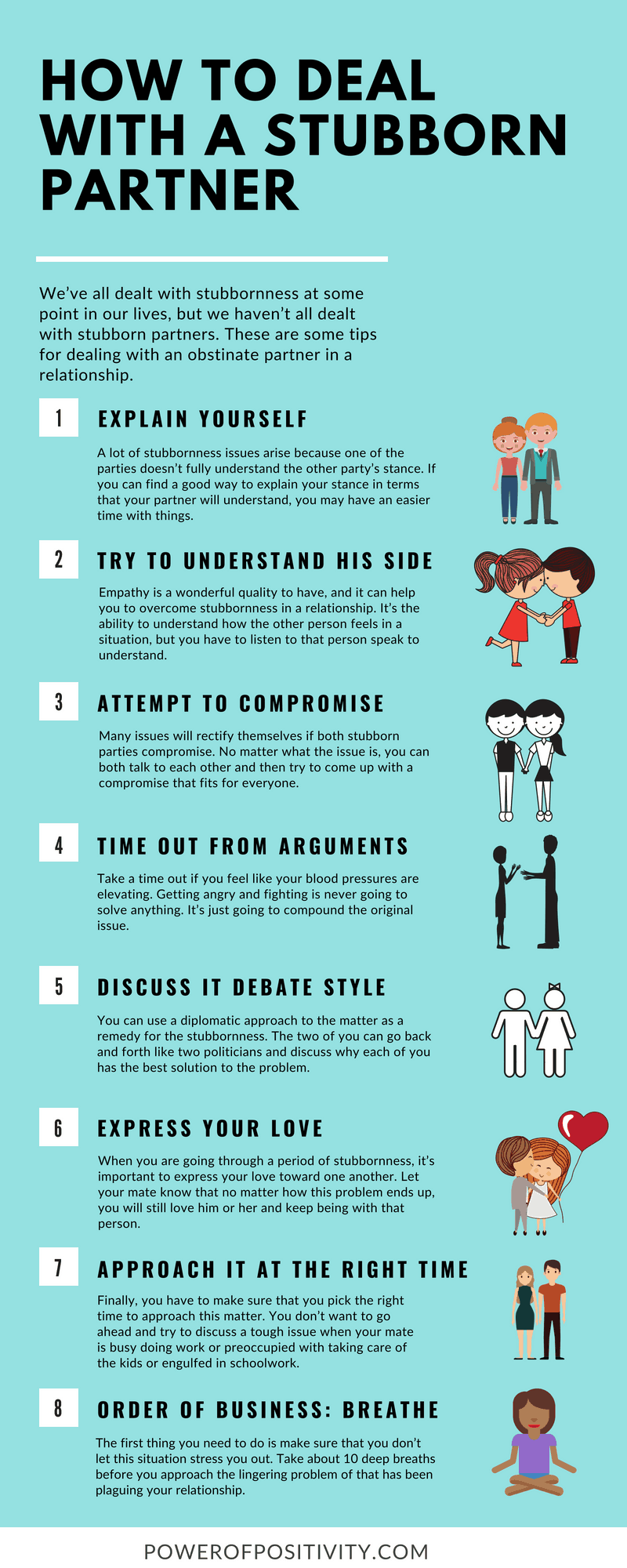
How To Deal With A Stubborn Partner In A Relationship

Final thoughts

“It amazes me when education, religion and family values fail to create a human being.” – Anum Sattar

Domestic or verbal abuse can be difficult for a victim to recognize, especially when it has yet to become physical. This is why knowing the signs of verbal abuse is so important. If you or someone you care about is in a potentially abusive relationship, seek out a path to safety.

Skip to content