Weekly tips, affirmations, and small actions to feel your best.

19 Quotes to Remember When You Feel Powerless

These empowering quotes will restore your self-confidence.

Feeling powerless can have a significant impact on mental and emotional well-being. It is an overwhelming feeling of helplessness or inadequacy in stressful situations, making you more susceptible to anxiety, stress, and depression. Reflecting on these inspiring quotes allows you to regain control and empowerment, even during the most challenging moments.

Powerlessness can occur because of various factors, including traumatic events. It can obliterate our trust and self-confidence, reducing our capacity to cope with stress.

Powerlessness is at the heart of moral distress, which is the feeling that we have had to or must compromise ourselves or something we care about. Feeling powerless can lead to cognitive distortions, which can cause mental health difficulties, including anxiety and depression.

People with little power tend to show a greater risk of illnesses and death. Understanding why you might feel this way can help, and you can use inspirational quotes for difficult times.

Understanding Why You Might Feel Powerless Sometimes

There are many reasons why a person might feel powerless at times. Here are a few possible reasons:

powerless

  • Loss of control: When someone feels like they have no control over a situation, they may feel powerless. It can happen in any area of life, such as work, relationships, or health, and often leads to feeling overwhelmed or vulnerable.
  • Trauma: Experiencing a traumatic event can make you feel helpless, especially if the trauma violated your autonomy or safety.
  • Low self-esteem: People with low self-esteem may feel ineffective because they can’t change their circumstances.
  • Oppression: Some forms of oppression, such as racism, sexism, or ableism, can make people feel defenseless because they face systemic barriers to achieving their goals.
  • Depression or anxiety: Mental health conditions can cause people to feel a loss of control, especially when the symptoms make it hard to function.

Feeling powerless is a shared experience, but you can regain control. Engaging in self-care, seeking support from loved ones, and taking steps to address contributing factors can help.

Nineteen Quotes About Inner Strength for When You Feel Powerless

Tagging into your inner strength can boost your perseverance and courage. Here are a few quotes that may be helpful when you are feeling powerless:

1 – “I have always been fascinated by the notion that strength is found in vulnerability. I believe that strength is not feeling powerful, but finding true inner resilience when everything seems fragile.” – Unknown

Taking action and making progress can help cultivate a sense of power and control over your life. It can help build resilience and develop the confidence and motivation they need to overcome challenges and achieve their goals.

2 – “There is a secret place where no one can harm you. It’s a place where your tears are invisible, where no one can touch you. That place is inside you.” – Unknown

Developing a positive and compassionate mindset is essential. It can involve reframing negative self-talk and focusing on self-care activities that promote well-being. Seeking support from loved ones, engaging in mindfulness practices, and pursuing activities that bring joy and fulfillment also help.

3 – “Life is never easy. We all have to face difficulties, but it’s how we learn to overcome them that really counts.” – Unknown

Taking concrete steps to address the factors contributing to powerlessness can help. It may involve seeking new opportunities, building new skills, and creating a plan of action to achieve specific goals.

4 – “You have within you, right now, everything you need to deal with whatever the world can throw at you.” – Brian Tracy

Tapping into your inner strength can be an effective way to overcome these feelings. When faced with a difficult situation or feeling like you have no control over their circumstances.

It can be easy to get stuck in a mindset of helplessness. However, by focusing on your inner resources and strengths, you can regain a sense of control.

5 – “Believe in yourself and all that you are. Know that there is something inside you that is greater than any obstacle.” – Christian D. Larson

Remember, you are never genuinely powerless if you maintain your resilience. As Larson explains, believe in yourself and have fair in your abilities.

Quotes About Overcoming Obstacles

Overcoming challenges and pushing through adversity can help you feel powerful again. Here are some quotes to start with:

6 – “We may encounter many defeats, but we must not be defeated.” – Maya Angelou

Consider a plan of action by breaking it down into smaller, more manageable steps. It reminds you to keep trying until you find something that works so you don’t feel defeated.

7 – “The greater the obstacle, the more glory in overcoming it.” – Moliere

When overcoming obstacles, consider reading books, taking courses, and chatting with people who’ve overcome the same barriers. Learn as much as possible about what you need to do to improve your skills.

The more you learn to overcome obstacles, the easier it will be. Plus, the effort it takes to overcome something will make you feel victorious.

8 – “Success is not final, failure is not fatal: it is the courage to continue that counts.” – Winston Churchill

Sometimes, the path to overcoming an obstacle may not be straightforward. Being open to different approaches can help you find a solution.

9 – “You are not stuck where you are unless you decide to be.” – Wayne Dyer

When faced with an obstacle, it’s essential to stop and take a moment to accept the situation. It can help you move forward and find a solution.

10 – “When we long for life without difficulties, remind us that oaks grow strong in contrary winds and diamonds are made under pressure.” – Peter Marshall

Using a combination of your emotional mind and your rational mind can make a difference. Using both can help you make better decisions and find solutions to obstacles. You’ll recognize that despite adversity, you can grow into the person you’re supposed to be.

11 – “Be thankful for problems. If they were less difficult, someone with less ability might have your job.” – Jim Lovell

Remember, obstacles can be opportunities for growth and resilience. Keep pushing forward, and you will overcome them.

powerless

Quotes About Self-Belief and Confidence

Building self-belief is an ongoing process that requires effort and dedication. Here are some quotes that’ll help boost your self-worth:

12 – “Self-belief and hard work will always earn you success.” – Virat Kohli

Identify and build the knowledge and skills you need to achieve your goals. Focus on what you’re good at and work on improving them. It can help you believe in your abilities.

13 – “With confidence, you have won even before you have started.” – Marcus Garvey

Looking at what you’ve already achieved can help you feel powerful. Make a list of all the things you’re proud of, big or small.

14 – “One important key to success is self-confidence. An important key to self-confidence is preparation.” – Arthur Ashe

Improving your self-confidence requires building good habits, reflecting on past achievements, and setting goals.

15 – “I believe that the only true and lasting solution to fear is to return to our Comfort Zone and face the situation from this place of safety, clarity, and power.” – Kristen Butler

When you experience fear, take some time to calm down and consider the situation. It’ll help you believe in yourself and your abilities instead of allowing fear to control you.

comfort zone book

Quotes About Support and Community When You Feel Powerless

Quotes can emphasize the importance of a positive support system in times of struggle. They remind us that we are not alone and that togetherness can achieve great things. Here are some quotes to consider:

16 – “No one can whistle a symphony. It takes an orchestra to play it.” – H.E. Luccock

While it is impossible for one person to whistle a symphony, a group of musicians working together can create something beautiful. The orchestra demonstrates the power of teamwork and collaboration, as each member contributes unique skills and talents to create a beautiful sound. You can use this quote in any situation because it reminds you of the impact of a group of people working together.

17 – “Alone we can do so little, together we can do so much.” – Helen Keller

When people work together, they can bring different skills and strengths to the experience. It leads to more effective problem-solving and innovation, allowing you to tackle challenges.

18 – “Community is a sign that love is possible in a materialistic world.” – Jean Vanier

Social support can help mitigate the effects of powerlessness on social closeness, disengagement, and employee voice. It can also help reduce the sense of loss of control and its negative impact on health.

19 – “Support and encouragement are found in the community.” – Lailah Gifty Akita

Find guidance, and support in a safe place that helps you feel comfortable. You can stop feeling powerless by putting yourself out there to meet others.

Applying the Quotes to Feel Less Powerless in Daily Life

Using quotes can be a powerful tool to help us feel less powerless. Here are some tips on how to use quotes to feel empowered:

  • Find quotes that resonate with you: Look for quotes you can relate to or promote inspiration. Find ones that address the specific situation or challenge you are facing.
  • Write them down: Write your favorite quotes on paper, in a journal, or on a sticky note. It can be a helpful reminder throughout the day if your put them somewhere you’ll see regularly.
  • Use them during mindfulness practices: Including quotes in your daily practice can help you clear your mind. Thinking of these quotes during that time can help you embrace them.
  • Repeat them to yourself: Use the quotes as affirmations. Saying your chosen quotes out loud can help reinforce the positive message and make you feel more connected.
  • Share the quotes with others: Share your favorite quotes with friends or family members going through similar challenges. It can help create a sense of community and encourage you and others to stay positive and motivated.

Remember, quotes are not a magic fix and will not solve all problems, but they can be a helpful tool in shifting our perspective and providing encouragement and support when we need it most.

quotes

Final Thoughts on Overcoming Feelings of Powerlessness

Overcoming feelings of powerlessness can be challenging, but it is essential to remember that it is possible. Shifting your mindset and developing new coping strategies and approaches may take time and effort. However, with persistence and support, you can regain control.

Quotes can provide a positive and uplifting message that can help you shift your mindset, regain motivation, and feel more empowered. They’ll promote finding strength in adversity so you can overcome anything.

Remember, quotes are just one tool and may not work for everyone. You must find the best strategies for you and seek support when needed. Remaining positive, focused, and motivated can help you overcome challenging situations and accomplish your goals.


9 Shoulder Workouts That Melt Away Fat

Shoulder workouts offer many benefits, far beyond only making you stronger. Incorporating effective shoulder workouts into your exercise routine can melt away fat and improve your overall physique. 

Many assume they should do exercises targeting the abdomen, thighs, biceps, and other areas to reduce fat. However, a sculpted shoulder workout is beneficial, too, because your back, shoulders, and armpits can also have excess fat. Shoulder workouts can make you feel more confident and improve your overall fitness. 

When you reduce fat in these areas, it boosts your health and well-being. You can do many workouts at home or incorporate them into your gym routine. 

Shoulder Anatomy and Function

The best shoulder workouts involve the deltoids, upper trapezius, serratus anterior, rotator cuff muscles, and levator scapulae to promote scapular stabilization. The deltoids are what make your shoulders look rounded. 

They are triangular and span from your collarbone and shoulder blade to your upper arm bone. This muscle affects shoulder movement and rotation, lifting your arms to your sides and performing lifting and pressing motions.

Understanding the anatomy and function of your shoulders can help you recognize your body’s limits. You’ll know to focus on balanced development and injury prevention to maintain muscle health.  

Working all shoulder muscles is essential for balancing development and preventing injuries. It improves your upper body appearance while promoting stability, increasing your range of motion, strengthening the rotator cuff, and improving your posture. You will not only look great, you will be stronger.

shoulder workouts

Shoulder Workouts for Fat Burning (and to Get Stronger!)

High-intensity shoulder workouts contribute to fat loss and promote cardiovascular fitness. Circuit training is one of the best ways to incorporate fat-burning workouts into your exercise routine.  

Examples of fat-burning shoulder workouts include:

1 – Dumbbell Thrusters 

Dumbbell thrusters use your quads, hamstrings, glutes, and shoulders. It also works your arms, upper back, and core. 

You’ll want to keep your chest up, core engaged, and hips back as you do this exercise. Focus on inhaling as you squat and exhaling as you raise your arms.

Here’s how to do it:

  • Stand straight with your feet shoulder-width apart, holding your dumbbells at your shoulders.
  • Lower your body into a squat, paralleling your thighs to the floor. 
  • Stand back up and extend your arms above your head. 
  • Return to the starting position and repeat the exercise for up to one minute. 

2 – Shoulder Press With Squat 

A shoulder press can help strengthen your deltoids and promote muscle maintenance. It also requires using your triceps. Shoulder presses tone and sculpts your arms, shoulders, chest, and back.

Here’s how to do it:

  • Hold your dumbbells in front of your shoulders with your palms facing each other.
  • Keep your back straight as you push into your hips and lower into a squat while keeping the weights in front of your shoulders. 
  • Once your hips are below your knees, push your legs into the ground to stand back up and raise your dumbbells overhead simultaneously. 
  • Return to the starting position repeating the exercise. 

3 – Kettlebell Swings 

Kettlebell swings are high-intensity, target your posterior chain, but involve your entire body. They build strength and burn fat, and are helpful in circuit training. Kettlebell swings boost cardiorespiratory fitness and burn many calories quickly.  

Here’s how to do it:

  • Start by standing with your feet shoulder-width apart.
  • Hold a kettlebell with both hands, keep your palms facing you, and hold your arms straight down.  
  • Hinge your hips, bend your knees slightly, and inhale as you bring the kettlebell between your legs. Keep your back straight and engage your core as you do this. 
  • On the exhale, contract your glutes and stand up, swinging the kettlebell as far as possible. 
  • To finish the first rep, inhale as you push your knees back, bend your knees slightly, and swing the kettlebell between your legs. 
  • Repeat this exercise for 10 – 20 reps of two to three sets or up to five minutes. 

Shoulder Workouts for Muscle Definition

Incorporating muscle-defining workouts into your daily routine can help increase muscle definition. Isolation exercises, compound exercises, and resistance training are the best options.  

Some of the muscle-defining workouts you can try to include:

4 – Lateral Raises 

Side lateral raises strengthen and tone the muscles in your deltoids. It focuses on the middle portion of your shoulders and strengthens your lats and pectoralis major. 

Here’s how to do it: 

  • Stand tall with your feet shoulder-width apart while holding a dumbbell in each hand, slightly away from your hips.
  • Tighten your core and slowly lift the dumbbells out to the sides. 
  • Keep raising them until your arms are parallel to the floor, maintaining a slight bend in your elbow.
  • Hold the position before lowering the dumbbells back to your sides. 
  • Repeat this exercise for three sets of 12 reps. 

5 – Front Raises 

Front raises benefit your deltoids, allowing you to build round shoulders. They sculpt your other shoulder muscles and chest.  

Here’s how to do it:

  • Stand straight with your legs hip-width apart and a dumbbell in each hand, resting them on the front of your thighs.
  • Your palms should face your thighs and arms fully extended.  
  • Raise one dumbbell upwards and out, slightly bending the elbow.
  • Once your arm is parallel to the floor, hold it for one count before lowering it back to the start position.
  • Raise the other dumbbell the same way, beginning as you lower the other one. 
  • Do front raises for two sets of 12 reps.

6 – Resistance Training 

Resistance training makes your muscles work against force to get stronger. When you gain muscle, you’ll burn more fat while at rest. 

Some forms you can try include:

  • Weight machines 
  • Resistance bands 
  • Free weights 
  • Your body weight

When you do resistance training on a specific muscle group, rest in that area for at least two days. Resting is essential to maximizing the benefits and avoiding injury. 

stronger

Shoulder Workouts for Endurance and Stability

Some workouts encourage endurance training, core stability, and functional fitness. They improve endurance and stability, so it’s essential to incorporate them into your regular exercise routines. You will get stronger with consistency.

Some workouts to try include:

7 – Plank to Push-up

A plank to push-up works your front, side, and back deltoids. It also strengthens your triceps, abs, glutes, hamstrings, quads, and biceps.  

Here’s how to do it:

  • Start in a plank position with your elbows bent, forearms rested on the floor, and your legs behind with your toes pushing into the floor. 
  • Keep your core engaged and neck aligned with your spine. 
  • Turn your arms to place your palms flat on the floor.
  • Without stopping, extend your arms to do a push-up.
  • Repeat this exercise for two sets of 10 reps. 

8 – Shoulder Taps 

Shoulder taps target multiple muscle groups and boost your fat-burning efforts. You can speed up this workout as you become more comfortable because it also serves as cardio.

Here’s how to do it:

  • Start with your palms flat on the ground, directly below your shoulders. 
  • Extend your legs behind you, curling your toes under to support your lower body. 
  • Lift your right hand and touch your left shoulder as you engage your core for stabilization. 
  • Do the same movement with your left hand touching your right shoulder. 
  • Continue this exercise for one minute or until you can’t continue. 

9 – Static Holds

A static hold requires maintaining a position without moving, creating an isometric muscle contraction. Some of the static holds that promote fat burning, make your shoulders muscles stronger, and prevent injury include: 

  • dumbbell holds 
  • isometric deadlifts 
  • planks 
  • pull-up holds 
  • wall sits 

 Eight Tips for Maximizing Shoulder Workout Results

  1. Using proper form during shoulder workouts is essential to achieving the best results. Before starting your workouts, do upper body warm-ups to prepare your body. Stretching afterward is also suggested.
  2. Start with a weight you’re comfortable with. You shouldn’t feel pain as you start, but it should be heavy enough to promote fat burning and strength building.  
  3. It’s okay to start with a lower weight than initially desired because you can always increase as you build strength. Being patient with the weight increases can help prevent injury and promote weight loss. Use progressive overload to intensify your workouts as you gain strength, gradually increasing the weight, speed, and repetitions.  
  4. The best way to know if you need more weight is if you can do at least two reps beyond the suggested amount for two workouts in a row. If you can, it’s time to increase your weights to the next size of dumbbells.
  5. You’ll know you’re lifting too much weight if you can’t place it back in the starting position without good form. Additionally, you might be using too much if you can’t complete three sets of 12 reps.  
  6. One of the best tips is to give yourself time for recovery, which involves rest and nutrition. Recovering promotes optimal results and prevents injury. 
  7. You can’t only do shoulder workouts for fat burning because your body requires balance. Focus on your core and lower body a few times a week, and do cardio exercises at least three times weekly. 
  8. Eating a light meal 20 to 40 minutes before working out can also increase the benefits. Look for options that contain carbohydrates and protein. 

Six Mistakes to Avoid When Doing Shoulder Workouts to Become Stronger and Melt Fat

Avoiding common mistakes during shoulder workouts can help you achieve the best results. It also allows you to prevent injury or strain. Remember to avoid the following: 

  1. tensing your neck or shrugging your shoulders 
  2. lifting too much weight 
  3. doing more repetitions than you’re ready for 
  4. swinging the weights during raises 
  5. not considering your form 
  6. skipping warm-up 

shoulder workouts

Final Thoughts on Shoulder Exercises for Fat Loss and to Get Stronger

Adding shoulder workouts to your regular exercise routine promotes fat loss and overall fitness. Implement some exercises discussed here to improve your physique and melt away fat.  

It’s easier than you might realize to burn fat with shoulder workouts because the exercises will offer the results you’re looking for. Implement them slowly to see which ones you enjoy best and make you feel stronger but comfortable.  

Science Explains What Happens to Your Brain When You Multi-Task

In today’s fast-paced and interconnected world, multi-tasking has become indispensable. We juggle multiple responsibilities, seamlessly switching between tasks and dividing our attention to meet the demands of our modern lives. However, what may appear as a remarkable ability to multi-task, or manage multiple processes simultaneously often comes with a hidden cost.

Science now sheds light on what truly happens to our brains when we multi-task. A complex interplay of cognitive processes can significantly impact our efficiency and performance. Multitasking affects the brain in various ways, reducing efficiency and cognitive performance. Multitasking refers to performing multiple tasks or activities simultaneously or in rapid succession.

It involves dividing attention and cognitive resources between two or more tasks to achieve concurrent progress. The allure of multitasking lies in its perceived potential to enhance productivity and efficiency by maximizing time utilization. However, delving deeper into the realm of neuroscience shows that there are many common misconceptions.

This article explores what happens when you multi-task and unravel the common misconceptions surrounding this prevalent phenomenon. By understanding the intricate mechanisms, we can decide whether single-tasking or multi-tasking is the right choice.

The Myth of Productive Multi-tasking

multi-task

In the quest for increased productivity and efficient time management, multitasking has long been hailed as a solution. The idea that one can juggle multiple tasks simultaneously, saving time and accomplishing more, has permeated our work culture. However, it is time to debunk the myth of productive multitasking and shed light on the limitations of the human brain.

As commonly understood, multitasking involves dividing attention and focus across several activities. It may include checking emails during a conference call, responding to instant messages during a meeting, or working on multiple projects simultaneously. While it may seem productive, research has consistently shown that multitasking is ineffective.

Studies have consistently shown that when individuals engage in multitasking, the quality of their output suffers. Splitting attention between multiple tasks reduces our ability to focus, analyze complex information, and make thoughtful decisions. In contrast, when we give undivided attention to a single task, we can allocate our mental resources effectively and produce higher-quality work.

The belief that multitasking increases productivity is a myth that needs to be debunked. The human brain is not designed to manage multiple tasks simultaneously.

Task-Switching and Cognitive Costs When You Multi-task

When it comes to multitasking, task-switching is a key factor that undermines productivity. Task-switching refers to shifting attention and focus from one task to another. While it may appear that we are seamlessly switching between tasks, the reality is that our brain incurs cognitive costs each time we switch.

Understanding these costs is crucial to comprehending why multitasking is not as efficient as it may seem. Task-switching requires our brain to disengage from one task, refocus on a new task, and activate the relevant neural networks associated with that task. This process takes time and mental energy, resulting in what psychologists refer to as “switching costs.”

These costs manifest as delays and inefficiencies in performance as our brain transitions from one task to another. The cognitive costs of task-switching can be significant. Research has shown that even brief interruptions or task switches can decrease productivity and increase errors. When we multi-task, our brain needs to reallocate its attention and cognitive resources, disrupting the flow and continuity of our work.

It takes time for our brain to reorient itself and reach the same level of focus and efficiency as before the switch occurred. The impact of task-switching goes beyond the immediate moment of switching. The remnants of the previous task, known as “attention residue,” can linger. This residue can interfere with our ability to engage in the current task and hinder our concentration and performance. Even though we may think we have moved on, our brain may still be partially preoccupied with the previous task.

Impact on Working Memory and Attention

Multitasking also significantly impacts our working memory capacity and attention span. Working memory indicates our ability to temporarily hold and manipulate information in our minds while performing tasks. Attention, conversely, is our cognitive ability to focus on relevant stimuli and filter out distractions.

When we multi-task, it places a heavy burden on our working memory capacity. Attempting to juggle multiple tasks simultaneously places increased demands on our working memory. This is due to the need to retain and process information from various sources. Unfortunately, our working memory is limited, and dividing our attention across tasks can overwhelm it.

This cognitive overload can lead to difficulty retaining and integrating information, negatively impacting our performance and efficiency. Furthermore, multitasking hampers our attention span. Sustained attention is crucial for focusing on a particular task or information for an extended period.

When we switch between tasks frequently, our attention becomes fragmented, and our ability to sustain focus diminishes. We become more susceptible to distractions, and our overall attention span decreases. As a result, our performance on individual tasks suffers, and errors become more likely.

Cognitive overload plays a central role in the detrimental effects of multitasking on working memory and attention. Cognitive overload occurs when the demands on our cognitive resources exceed their capacity, causing mental strain and reduced performance.

Reduced Learning and Information Retention

multi-task

When we multi-task, our brain’s capacity to process and consolidate information becomes compromised, leading to reduced learning outcomes and information retention. Multitasking places a significant cognitive load on our brains, dividing our attention and cognitive resources across multiple tasks. This division of attention prevents us from fully immersing ourselves in learning.

According to research, when our attention is fragmented, our ability to encode new information into memory is compromised. Multitasking disrupts the crucial process of memory consolidation, which is essential for transferring information from short-term to long-term memory.

Focused attention is critical for effective learning because it allows us to process and encode information. When we give undivided attention to a learning task, we can devote our cognitive resources to understanding, analyzing, and connecting new information with existing knowledge.

This depth of processing enhances memory formation and retrieval, leading to better learning outcomes. Multitasking not only disrupts the encoding process but also affects information retention. When we switch tasks or divide our attention, we create interruptions in the learning process.

These interruptions disrupt the consolidation of memories, making it more challenging to strengthen the neural connections associated with the learned information. As a result, our ability to retrieve and recall that information later is diminished.

Multitasking and Stress

Multitasking creates a sense of constant urgency and pressure to complete multiple tasks simultaneously. This heightened demand for performance can lead to increased stress levels. When we multi-task, we may feel overwhelmed and unable to manage the workload effectively. This feeling of being stretched too thin can contribute to chronic stress and a sense of being constantly “on edge.”

Multitasking also introduces constant distractions and interruptions, making maintaining a sense of focus and flow challenging. These interruptions can disrupt concentration, increasing frustration and heightened stress levels. Each time we switch tasks is mentally taxing and contributes to feelings of stress and cognitive strain.

Moreover, multitasking often creates a sense of never being able to complete or excel at any task. Constantly shifting attention from one task to another can lead to fragmentation and a lack of satisfaction in our accomplishments. This can result in inadequacy and increased stress as we strive to meet unrealistic expectations.

Three Strategies for Focused and Efficient Work (Without the Need to Multi-task)

Adopting focused and efficient work strategies can significantly enhance productivity and overall well-being. We can optimize our work habits by shifting away from multitasking and embracing single-tasking, time blocking, and task prioritization. We can also enjoy the benefits of improved brain health and cognitive performance.

1. Embrace Single-Tasking

Instead of juggling multiple tasks simultaneously, focus on one task at a time. Give your undivided attention to each task, allowing for deeper engagement, increased accuracy, and enhanced productivity. By immersing yourself in a single task, you can optimize your cognitive resources and perform at your best.

2. Utilize Time Blocking

Time blocking involves allocating specific time blocks for different tasks or activities. By dedicating uninterrupted periods to focus on a particular task, you create a structured approach that minimizes distractions and maximizes productivity. Set aside time slots for specific activities, whether working on a project, responding to emails, or attending meetings. This allows for focused work and better task management.

3. Prioritize Tasks

Not all tasks are equally important or require urgent attention. Prioritizing tasks helps you focus on what matters most and ensures that essential work gets the attention it deserves. Determine your priorities based on deadlines, importance, and impact. By focusing on high-priority tasks first, you can make significant progress and alleviate the pressure of multitasking.

multi-tasking

Final Thoughts on How You Decrease Productivity When You Multi-task

The neuroscience of multitasking reveals that attempting multiple tasks simultaneously can harm our brain, productivity, and overall well-being. By understanding these negative effects and acknowledging multitasking limitations, we can improve our productivity and work more efficiently by adopting single-tasking and other focused work strategies.

Multitasking strains our cognitive resources, leading to increased task-switching and cognitive costs. It impairs our working memory capacity and attention span, making it more challenging to retain information, stay focused, and perform at our best. Multitasking also contributes to cognitive overload, leading to mental strain and reduced performance.

To counteract the negative effects of multitasking and improve productivity, it is essential to adopt strategies that promote focused and efficient work. By adopting strategies such as single-tasking and other focused work techniques, we can foster a more balanced approach to work. We can thrive in an increasingly demanding and fast-paced world through these efforts.

How to Detox From Stress (in Under 5 Minutes!)

Stress occurs when we feel pressured or threatened by either internal or external forces. Experiencing unease isn’t necessarily harmful, as it can prompt us to take action against a threat or address challenges. However, unresolved tension and anxiety can devastate your mental and physical health. Is it time for a detox?

For example, you may feel overwhelmed by your workload and experience migraines, digestive problems, or fatigue due to burnout. Or, maybe you and your spouse have been fighting more often, which could make you worried or scared about where your relationship stands. In other words, any situation can cause distress and agony if we allow it to fester.

But you can learn how to detox from nervousness with a few scientifically-backed quick stress relief techniques. With effort and persistence, these mental and physical remedies will help you feel calmer and more capable of adapting to changes. When your body and mind are in sync, life seems more effortless and enjoyable instead of a source of constant problems.

Understanding Stress

When you experience stressors, your cortisol levels rise to prepare you to fight a perceived environmental threat. Most of our daily anxiety and fears come from our minds instead of physical dangers, such as wild animals. In modern times, our fight-or-flight response usually becomes activated by endless mental chatter about job pressures, family conflicts, and other worries.

In other words, we create much of the tension we feel in our minds simply by fixating on issues or pondering what the future holds. Unfortunately, our brains can’t differentiate between physical and mental threats, so they release massive amounts of cortisol regardless of the source. However, chronic anxiety can trigger numerous health issues like cancer, autoimmune disorders, obesity, diabetes, heart disease, and psychological illnesses.

That’s why managing stress is vital before it gets out of control and causes further damage. While worries are inevitable, you can learn to coexist with them rather than allowing fear to dictate your experiences.

stress detox

Fast Stress Detox Methods Everyone Should Master

If you feel overwhelmed by life and want to detox from stress quickly, consider adding these practices to your daily routine. (You can do all of these in five minutes or less!)

1. Deep Breathing Techniques

One of the simplest and most effective techniques for managing stress involves deep breathing. Practicing diaphragmatic breathing, or breathing from your belly, relieves immediate anxiety by drawing more oxygen into your body. Breathing deeply and slowly reduces cortisol levels, helping you feel more peaceful and inducing mental clarity.

To do this:

  1. Find a quiet place where you can sit comfortably and relax your shoulders.
  2. Take a few deep breaths, keeping one hand on your chest and the other on your stomach.
  3. Inhale slowly through your nose and exhale through your mouth for four seconds.
  4. Focus on your breath and try to clear your mind of any distractions.
  5. Repeat this process for several minutes, and you’ll feel a sense of calm and relaxation.

Other breathing techniques to promote mind-body wellness include 4-7-8 breathing, box breathing, and alternate nostril breathing.

2. Progressive Muscle Relaxation

Progressive muscle relaxation is a technique that involves tensing and relaxing different muscle groups in your body to reduce stress.

Here’s how to do it:

  1. Find a quiet place to sit or lie comfortably.
  2. Start with your toes, tense them for a few seconds, then release.
  3. Move up to your calves, thighs, and so on until you have tightened and relaxed all the muscles in your body. This technique can help with physical tension release and promote body awareness.

3. Visualization Techniques for Stress

Visualization is a technique that involves thinking of positive mental imagery, such as a peaceful or calming scene, to soothe your mind. To perform this exercise:

  1. Find a quiet, relaxing place to sit comfortably and close your eyes.
  2. Imagine a place that makes you feel calm and relaxed, such as a beach or a forest.
  3. Visualize yourself in that place and allow the calming imagery of the sights, sounds, and smells to ease your anxiety.

By imagining tranquil places, you can reduce stress quickly and enjoy a mini-mental vacation!

4. Mindfulness and Grounding Techniques

Mindfulness and grounding techniques involve focusing your attention on the present moment. By performing exercises such as body scanning, mindful breathing, or meditation, you can significantly reduce your anxiety and feel more connected to your body.

To do this:

  1. Find a quiet place to sit without distractions and close your eyes.
  2. Take a few deep breaths and then focus on your breath to clear your mind of restless thoughts. If your mind wanders, gently bring your attention back to your breath.
  3. Repeat this process for several minutes, and you’ll feel more centered and grounded in present-moment awareness.

5. Quick Physical Activity

Another excellent way to manage stress involves engaging in regular physical activity. Countless studies show that exercise releases endorphins, natural mood boosters that can help you feel more relaxed and energized. You don’t need to spend hours in the gym to reap the benefits of exercise. Even a short walk around the block or a few minutes of jumping jacks can help you alleviate tension.

6. Aromatherapy to Relieve Stress

Aromatherapy is a technique that involves using essential oils to promote relaxation and reduce stress. Essential oils such as lavender, chamomile, and peppermint are known for their calming scent and properties. You can use these oils in a diffuser or add a few drops to a warm bath. As the soothing aroma envelops you, your stress will dissolve, and you’ll feel more relaxed.

7. Laughter and Humor for Stress Management

Laughter is one of the simplest, easily accessible ways to reduce stress and improve mental health. As the adage goes, “Laughter is the best medicine,” and that remains true today. Incorporating humor into your day releases endorphins and can help you feel more relaxed and positive. Some ideas for activating your “laugh reflex” include watching a funny video, telling jokes, or recalling humorous memories and stories.

stress detox

Final Thoughts on Learning These Quick Stress Detox Techniques

If you want to reduce your anxiety in under five minutes, these techniques can help you achieve your goal. Meditation, visualization, breathing techniques, laughter, aromatherapy, and exercise are just a few ways to alleviate tension and promote relaxation. Experiment with these methods to find which works best for you, and incorporate it into your daily routine.

As mindfulness becomes a habit, you’ll notice that life flows more fluidly, and you don’t feel so frazzled all the time. Having a stress detox in minutes is possible with these simple, peace-inducing techniques designed to strengthen your mind-body connection.

Psychologists Reveal 18 Phrases for Happy Relationships

In the intricate tapestry of human existence, few things hold more excellent value and significance than the relationships we build with others. Romantic partnerships are pillars of emotional support, companionship, and personal growth. A happy relationship, therefore, becomes a cherished aspiration for many individuals seeking fulfillment and contentment. A happy relationship can be defined as a state of mutual satisfaction where both partners experience a sense of emotional well-being, love, communication, and connection. It is an environment where trust, respect, and understanding flourish, fostering an atmosphere conducive to personal growth and shared joy. The path to achieving happiness in a relationship is multifaceted and unique to each couple.

But psychologists have identified key elements that contribute to the vitality and longevity of such unions. One critical aspect that underpins happy relationships is the use of positive language. Communication serves as the lifeblood of any partnership, and the words we choose can shape the quality of our interactions. The power of language lies not only in its ability to convey thoughts and emotions but also in its potential to uplift, motivate, and strengthen the bond between partners.

Effective communication is vital for maintaining a happy relationship. It allows couples to express their needs, desires, and concerns openly and honestly, fostering empathy, understanding, and a deeper connection. Conversely, ineffective communication, marked by misunderstandings, negativity, and conflict, can erode the foundation of even the most loving relationships. As such, couples can foster happiness and strengthen their relationships by using specific phrases. And we will discuss six phrases that will allow you to better your relationship.

3 Phrases for Expressing Gratitude to Increase Happy Relationships

Gratitude, often called the language of the heart, is profoundly influential in our lives. It is a fundamental aspect of positive language that has the potential to transform our relationships and cultivate happiness. When expressed sincerely and consistently, gratitude can create a ripple effect. It strengthens individual bonds and nurtures a deep appreciation and thankfulness.

happy relationships

1. Thank you for everything you do

These simple words carry immense weight and profoundly acknowledge your partner’s efforts and contributions. Expressing gratitude for everyday acts of kindness, support, and love can help your partner feel seen and appreciated.

2. I appreciate your support

This phrase conveys gratitude for your partner’s emotional, practical, and moral support. It demonstrates understanding their role as a pillar of strength in your life. It also helps with affirming their significance and fostering a sense of togetherness.

3. I’m grateful for you in my life

This phrase expresses deep gratitude for the presence and companionship of your partner. It communicates a sense of awe and appreciation for their positive impact on your life. As such, it helps create a foundation of love, security, and happiness.

3 Phrases for Building Trust in Happy Relationships

Trust is the cornerstone upon which happy and fulfilling relationships are built. The glue holds couples together, fostering a sense of security, intimacy, and mutual understanding. Positive language is vital in cultivating trust, creating an environment of honesty, transparency, and open communication.

1. I trust you

These three simple words convey confidence and belief in your partner’s character and actions. By explicitly expressing your trust, you validate their integrity and affirm your faith in their decisions. This fosters a stronger sense of security and closeness.

2. I value your honesty

Honesty is a vital element of trust in any relationship. By emphasizing your appreciation for your partner’s truthfulness, you create a safe space for open communication. You encourage them to be authentic and transparent. This phrase acknowledges the importance of honesty in nurturing a deep connection and promotes a culture of trust.

3. We can work through this together

Trust is not immune to challenges or moments of doubt. However, expressing a belief in your partner’s ability to overcome difficulties together conveys unwavering support and reinforces the strength of your bond. By affirming your commitment to work together, you reinforce the foundation of trust and the resilience of your relationship.

3 Phrases for Demonstrating Respect to Build Happy Relationships

Respect serves as the bedrock of healthy and harmonious relationships. It is a fundamental aspect of positive language that fosters mutual appreciation, admiration, and understanding. Within the context of romantic partnerships, demonstrating respect becomes a crucial element in nurturing happiness and creating a strong and lasting bond.

1. I respect your opinion

This phrase acknowledges and values the unique perspective and ideas that your partner brings to the table. Through this phrase, you demonstrate respect for their individuality and the value they bring to your shared decision-making process.

2. I admire your strength

Expressing admiration for your partner’s qualities and strengths can significantly contribute to a sense of mutual respect. By acknowledging their resilience, courage, or perseverance, you communicate that you recognize and value the qualities that make them who they are.

3. You always handle situations with grace

Recognizing and appreciating your partner’s ability to navigate challenges or difficult situations with poise and composure fosters a deep sense of respect. By acknowledging their emotional maturity and how they handle adversity, you demonstrate admiration for their character and reinforce their self-worth.

happy relationships

3 Phrases for Encouraging Open Communication and Fostering Happy Relationships

Open communication forms the lifeblood of thriving relationships. The catalyst fosters understanding, resolves conflicts, and deepens emotional intimacy. Couples can cultivate an atmosphere that encourages open expression and attentive listening of thoughts, feelings, and concerns by using specific phrases.

1. I’m here to listen

This simple yet powerful phrase conveys your availability and willingness to lend an empathetic ear. It communicates that you are ready to receive and understand your partner’s thoughts and emotions without judgment or interruption. This fosters a safe space for open expression.

2. Let’s talk about it

By initiating a conversation with this phrase, you signal your commitment to addressing any issues or concerns that may arise. It encourages your partner to feel comfortable sharing their perspective. It demonstrates your willingness to engage in a constructive dialogue to find resolutions or deepen understanding.

3. Your feelings matter to me

Expressing that your partner’s emotions hold significance in your eyes affirms the value you place on their emotional well-being. This phrase encourages openness and vulnerability by conveying that their feelings are acknowledged, respected, and met with empathy.

3 Phrases for Showing Empathy to Maintain Happy Relationships

Empathy connects hearts and fosters emotional intimacy within relationships. It involves empathizing with and connecting to another person’s emotions. This helps in promoting compassion and strengthening the bond between partners. Through empathy, couples can create a nurturing environment where emotional support flourishes, contributing to a happy and fulfilling relationship.

1. I understand how you feel

This phrase communicates that you genuinely comprehend and validate your partner’s emotions. It acknowledges their experiences and demonstrates a willingness to empathize, fostering a sense of emotional connection and support.

2. I’m here for you

Expressing your availability and support sends a powerful message of compassion and understanding. It reassures your partner that they are not alone in facing their challenges. It also shows that you can offer comfort and assistance when needed.

3. We’ll get through this together

By using this phrase, you convey a shared sense of resilience and determination. It reassures your partner that you are committed to facing difficulties as a team, instilling a sense of trust and emotional security.

3 Phrases for Expressing Love and Affection in Happy Relationships

Love and affection are the vibrant threads that weave a tapestry of happiness and fulfillment in romantic relationships. They are the language of the heart, expressing deep emotions, care, and devotion. By using specific phrases that convey love and affection, couples can cultivate a strong and lasting bond, creating a haven of warmth and connection.

1. I love you

These three simple words carry immense power and capture the essence of your emotional connection. Uttering these words sincerely and from the depths of your heart reaffirms your bond. This phrase can reaffirm a sense of security, appreciation, and love.

2. You mean the world to me

This phrase conveys the significance your partner holds in your life. It communicates that they are cherished and valued beyond measure, evoking a sense of deep connection and emotional intimacy. There’s nothing that a partner wants to hear more than that they are an essential part of your life.

3. I cherish our time together

Expressing an appreciation for the moments shared as a couple conveys a profound sense of affection and gratitude. It reflects a recognition of the joy, love, and meaning that your partner brings to your life. It also expressed that you feel a sense of happiness and contentment, making your partner feel secure.

communication

Final Thoughts on Using Positive Language to Build Happy Relationships

In romantic relationships, the language we use has tremendous influence over our connections’ quality. We can foster happiness and create a lasting bond with our partners by consciously incorporating positive language into our interactions.

Throughout this article, we have explored various phrases psychologists recommend to enhance different aspects of relationships. Let us now recap the benefits of using positive language and offer encouragement for practicing open and honest communication. Using positive language in relationships provides a multitude of benefits.

It creates an atmosphere of warmth, appreciation, and respect, nurturing emotional security and a sense of belonging. Positive phrases affirm our partners’ value, validate their experiences, and promote empathy and understanding. We lay the foundation for a happy and fulfilling relationship by expressing love through words.

Remember that using positive language is not a one-time effort. It requires consistent practice and dedication. Encouraging open and honest communication is crucial for maintaining relationship happiness. By actively listening to our partners and expressing empathy, we create a secure environment for vulnerability, understanding, and growth.

Effective communication is the key to navigating challenges, resolving conflicts, and fostering deeper connections between partners. By engaging in openly honest conversations, we establish meaningful connections, reinforce trust, and promote mutual growth. By using loving phrases, we can navigate even the toughest situations and create a resilient and happy relationship.

15 Good Morning Quotes to Have a Happy Day

Introducing good morning quotes into your day can boost your mood and inspire positivity. Starting your day with a positive quote can uplift your mood and inspire happiness all day. You’ll feel more optimistic, fulfilled, and ready to handle anything that comes your way.

These good morning quotes can brighten your day and help you smile. You can read positive phrases from many perspectives to help you find daily happiness. They’ll also help you stay motivated and inspired even if things become complicated.

You can use good morning quotes in many ways to inspire happiness, including:

  • writing them down in your daily journal or planner
  • saying them aloud as positive affirmations
  • putting them in a frame or posting them somewhere you’ll see them often
  • sharing them with others to encourage positivity

There are quotes for everything, including ones to boost your mood or remind you to appreciate the present. Find the ones that resonate in you, and use them to help you have a happy day.

Quotes to Inspire Gratitude

Expressing thankfulness through good morning quotes can improve your social life, psychological state, and health. It also boosts your optimism, helps you sleep better, and eases symptoms of physical illness.

Showing appreciation can make you happy, improve vitality, and give you hope. These good morning quotes can inspire you to show gratitude daily.

good morning quotes

“Gratitude can transform common days into thanksgivings, turn routine jobs into joy, and change ordinary opportunities into blessings.” – William Arthur Ward

Being thankful for what and who you have can help you find the joy in each day. As Ward explains, you’ll see the great things around you as you go through your daily tasks. When you can do this, it’ll help you find happiness despite anything occurring around you.

“Each morning we are born again. What we do today matters most.” – Buddha

This quote from Buddha reminds you to appreciate each day. Even if yesterday didn’t go well, you can try again today, making the most of what you have. This good morning quote can help you view each day as a gift and find fulfillment.

“Gratitude is not only the greatest of virtues, but the parent of all the others.” – Marcus Tullius Cicero

When you’re grateful, everything else will seem to fall into line. You’ll find happiness and fulfillment because you recognize how blessed you are. Appreciation also helps you attract other good things, helping you live the life of your dreams.

“Gratitude helps you to grow and expand; gratitude brings joy and laughter into your life and into the lives of all those around you.” – Eileen Caddy

Expressing thankfulness allows you to grow and become the best version of yourself. It promotes joy for yourself and for those around you. Not only will you be happier, but you’ll also attract positive people into your life.

Quotes to Encourage Self-Love

Self-love is essential for happiness because it involves being kind, compassionate, and respectful toward yourself. It’ll boost your emotional well-being, increase your self-esteem, and encourage self-confidence.

You’ll learn to appreciate your strengths and accept what makes you different, helping you say happy. Here are some good morning quotes for self-love to start with:

“To fall in love with yourself is the first secret to happiness.” – Robert Morley

Loving yourself can remind you of your worth and boost your overall well-being. You’ll develop a stronger relationship with yourself and feel more fulfilled in everything you do. Nothing can disrupt your happiness or make you feel unworthy if you love yourself.

“Believe you can and you’re halfway there.” – Theodore Roosevelt

Loving yourself can help you go through personal growth and transformation. You’ll believe in yourself enough to make your dreams possible and find happiness.

As Roosevelt explains, believing in yourself is half the struggle in living the life of your dreams. If you believe in yourself, anything is possible, and you’ve already begun the journey.

“To be beautiful means to be yourself.You don’t need to be accepted by others. You need to accept yourself. When you are born a lotus flower, be a beautiful lotus flower, don’t try to be a magnolia flower. If you crave acceptance and recognition and try to change yourself to fit what other people want you to be, you will suffer all your life. True happiness and true power lie in understanding yourself, accepting yourself, having confidence in yourself.” – Thich Nhat Hanh

When you love yourself, you’ll have a positive self-image that doesn’t leave you wanting acceptance from others. You’ll know your worth and recognize your beauty despite what anyone else thinks or says. Accept who you are and love yourself through it all because you shouldn’t try to change yourself to fit in with anyone else.

“Self-love is an ocean and your heart is a vessel. Make it full, and any excess will spill over into the lives of the people you hold dear. But you must come first.” – Beau Taplin

When you love yourself, it fills you with joy and boosts your well-being. If you worry about taking care of others, remember this quote so you know to prioritize yourself first. The people in your life can also benefit from your self-care, and it’s far from a selfish act.

good morning quotes

Quotes to Foster Mindfulness

These good morning quotes encourage mindfulness and presence awareness. They remind you to focus on your current surroundings rather than fixating on the past or worrying about the future. When you can do this, it’ll help you find daily happiness.

“The present moment is filled with joy and happiness. If you are attentive, you will see it.” – Thich Nhat Hanh

Even during hardship, you can find good around you, helping you find happiness anywhere. Attentiveness allows you to be aware of what’s happening around you, your thoughts, and your feelings, allowing you to notice small moments of joy.

“The best way to capture moments is to pay attention. This is how we cultivate mindfulness.” – Jon Kabat-Zinn

Paying attention to the present and being aware of each moment is one of the best ways to have a happy day. You’ll form better connections, see the good around you, and make memories.

“This is a wonderful day. I have never seen this one before.” – Maya Angelou

This good morning quote from Angelou reminds you to appreciate each day as a gift. It can help you develop a fresh perspective each morning, allowing you to be mindful of new opportunities and experiences. You can build a sense of optimism and gratitude while building presence awareness.

Quotes to Spark Joy and Laughter

Laughter can spark happiness, helping you see the good around you. It can help you feel closer to others and temporarily forget your problems. These good morning quotes can remind you to laugh, make you giggle, or increase your overall mood.

“In all of living, have much fun and laughter. Life is to be enjoyed, not just endured.” – Gordon B. Hinckley

Sometimes, you might get caught up in going through the motions of life without enjoying them. This good morning quote can remind you to have fun and find things to laugh about to enjoy your days.

“I wake up every morning at nine and grab for the morning paper. Then I look at the obituary page. If my name is not on it, I get up.” – Benjamin Franklin

This funny good morning quote can help you start the day positively. It has a touch of humor that allows you to find daily joy. This quote also reminds you that you won’t live forever and should make the most of the time you have.

“Laughter is important, not only because it makes us happy, it also has actual health benefits. And that’s because laughter completely engages the body and releases the mind. It connects us to others, and that in itself has a healing effect.” – Marlo Thomas

Laughter is a great way to have a happy day because it promotes health benefits. It requires using your muscles and often helps clear your mind. You’ll experience stress relief and other benefits that allow you to find happiness.

“Live life to the fullest. You have to color outside the lines once in a while if you want to make your life a masterpiece. Laugh some every day. Keep growing, keep dreaming, keep following your heart. The important thing is not to stop questioning.” – Albert Einstein

This quote encourages you to live your best possible life. You’ll want to follow your dreams, do things you love, and take on new opportunities. It requires doing things your way instead of following others to set yourself apart and find joy.

happiness

Final Thoughts on Good Morning Quotes to Welcome Happiness Into Your Day

Using good morning quotes to inspire gratitude can help set the tone for your day. You’ll feel more happiness and attract good things to you.

Reading quotes to spark joy and laughter during your morning routine can boost productivity and ease stress. So read the good morning quotes aloud, post them in a place you’ll see often, or send them to loved ones. They can help you gain happiness and find meaning in your life, whichever way you use them.

7 Causes of Low Self-Esteem (And How to Fix It)

If you suffer from low self-esteem, know that you’re not alone. Many people today struggle to genuinely trust and value themselves due to negative societal influences and the extreme competitiveness of life. Other factors that can cause a lack of confidence include ruminating over the past, negative self-talk, and being around abusive, unkind people.

 Essentially, people who have poor self-awareness believe what others say about them rather than creating a positive image for themselves. They rely too much on external influences. Thus, they fail to see the beautiful traits in themselves, thus perpetuating the cycle.

 However, it’s possible to improve one’s outlook on life and relationship with themselves by simply creating a different story. We often believe every thought that comes into our minds, not realizing we can shift that energy and raise our consciousness. We don’t have to give into these harmful thoughts about ourselves that only serve to make life miserable and have no basis in reality.

 Identifying and addressing the root causes of low self-esteem can significantly improve self-worth and overall well-being.

 What Causes Low Self-Esteem?

 There are a few main reasons people have low self-esteem, such as the following:

low self-esteem

 1 – Negative Self-Image

 A negative self-image can cause low self-esteem because it distorts one’s perception of themselves. Mental illnesses and even physical diseases may develop when people don’t value themselves. A poor body image can also negatively influence a person’s identity and result in depression, eating disorders, and other mental diseases.

 Our thoughts become a reality, so if we want peace and harmony with ourselves and others, we must first change these damaging beliefs. It’s essential to watch your thoughts like clouds in the sky, knowing they will soon dissipate. In other words, become the watcher of your thoughts instead of identifying so heavily with them.

 Remember, you’re not your body, thoughts, or even your mind, but a soul traveling through this life in a temporary human form. By getting to know the eternal soul through self-reflection and meditation, you can discover immense energy within yourself that will quickly dispel all negative thinking and cognitive distortions. Other strategies to develop a more positive identity include the following:

  • Exercising.
  • Eating a balanced diet.
  • Spending time in nature.
  • Practicing plenty of self-care.

 2 – Past Experiences and Trauma Lead to Low Self-Esteem

 Childhood trauma and negative past experiences can also trigger low self-esteem and cognitive distortions. For example, if your parents often criticized you and didn’t offer much positive reinforcement as a child, it can harm your self-image and emotional regulation in adulthood. In this case, cognitive-behavioral therapy (CBT) or other forms of counseling can help you reframe and process past experiences. By doing these therapies, you can learn to forgive those who abused you and shift your perspective.

 3 – Social and Cultural Factors

 Today’s culture and social media influences, especially teenagers, can harm people’s self-esteem. Many children and young teens have social media accounts and can often fall into the comparison trap, increasing their risk of anxiety and depression. They’re particularly vulnerable to developing a poor self-image because they are still trying to understand their identity. Therefore, comparing themselves with others online can cause immense psychological damage.

 However, in this case, it’s helpful to challenge these social factors by reducing media usage and instead going within for answers. Practicing self-acceptance can help you overcome low self-esteem and negative thinking patterns. If you stop seeking approval from others, you’ll notice an extraordinary shift in your self-esteem.

 4 – Unhealthy Relationships May Cause Low-Self-Esteem

 Another common reason for low self-esteem includes negative relationships and failure to establish boundaries. People who grew up with narcissistic or abusive parents may have developed people-pleasing behaviors and placed their self-worth in making others happy. 

However, this habit can contribute to toxic relationships. That’s because people often go above and beyond to satisfy their partner while neglecting themselves. But by developing a healthy relationship with yourself, you can have more successful, fulfilling relationships with others.

 5 – Fear of Failure and Perfectionism

Unfortunately, we live in the age of perfectionism, where nothing seems good enough. We always strive for lofty goals and achievements, not realizing we already have everything we need. This external striving and constant focus on self-improvement often leads to self-criticism and unhappiness. Fear of failure can make life miserable because it creates unrealistic expectations and causes people to seek self-worth in the outer world.

The only way to overcome this detrimental attitude involves looking within for self-worth and focusing more on finding peace rather than never-ending achievements.

 6 – Lack of Self-Compassion

 You may have a negative relationship with yourself if you lack self-compassion and self-kindness. Feeling like you don’t deserve self-care or love means you’ll look elsewhere for validation instead of within. But always remember that you’re worthy of all the love in the universe and already have it in your heart. You can regain your lost tranquility by creating a peaceful inner environment using positive affirmations, meditation, and other mindfulness practices.

 7 – Comparison to Others

 Finally, comparison to others triggers envy and can cause low self-esteem. As we said above, excessive social media usage can make you lose your inner peace and believe others are better or more capable than you. Instead of spending so much time online comparing yourself to others, focus on your inner world. Feeling peaceful and complete in yourself matters immensely more than anything you’ve learned in the past.

low self-esteem

Three Tips for Overcoming Low Self-Esteem and Grow in Confidence

  •  Engage in regular self-reflection. If you have low self-esteem, you must remember your thoughts and notice your reactions. By watching your thoughts, you can learn to distance yourself from them rather than believing they’re a part of your essence. It takes incredible persistence and patience to improve your self-image, so don’t beat yourself up if you don’t notice results immediately. Keep improving yourself and purifying your internal environment of harmful negative thoughts and influences, and you’ll reap the benefits soon.
  • Focus on personal growth and confidence-building strategies. To counter a poor self-image, focus on self-improvement, such as exercising daily, eating a healthy diet, and practicing mindfulness. Also, remember that your worth isn’t in how much money you make or your achievements. Instead, absolute confidence comes from establishing inner peace and bliss, regardless of outer circumstances.
  • Seek professional help if necessary. Overcoming low self-esteem isn’t always possible alone. Of course, there’s no shame in seeking outside support. A therapist can help you reframe negative thoughts. Besides that, they teach you strategies to develop a healthier self-image.

Shifting Your Mindset to Reap the Benefits of High Self-Esteem

Changing from low to high self-esteem can benefit your overall well-being and quality of life. Here are some key advantages:

  1. Improved Mental Health: When you have high self-esteem, you are more likely to experience lower levels of anxiety, depression, and stress. It means you can enjoy better mental health and be more resilient in life’s challenges.
  2. Increased Confidence: High self-esteem fosters strong confidence and self-assurance in your abilities. When you believe in yourself, you are more likely to take on new challenges, pursue your goals, and embrace opportunities for personal growth.
  3. Better Relationships: Healthy self-esteem positively impacts your relationships with others. A positive self-image makes you more likely to form and maintain healthy, fulfilling relationships. You can set boundaries, communicate effectively, and engage in mutually supportive interactions.
  4. Achievement and Success: Self-esteem plays a crucial role in achieving personal and professional goals. With high self-esteem, you believe in your capabilities, which leads to greater motivation, persistence, and resilience in the face of setbacks. Thus, it enhances your performance and increases your chances of success.
  5. Enhanced Emotional Well-being: High self-esteem enables you to manage your emotions better, leading to a more positive outlook. It means you can experience greater happiness and cultivate inner peace. High self-esteem also reduces the risk of developing self-destructive behaviors or engaging in substance abuse.
  6. Healthy Self-Care: When you have high self-esteem, you prioritize self-care and maintain healthy habits. You value yourself and your well-being, making choices that promote physical and emotional health. These include regular exercise, eating nutritious foods, practicing good hygiene, and seeking support when needed.
  7. Increased Resilience: High self-esteem acts as a protective factor against adversity. When faced with challenges, setbacks, or criticism, your high self-esteem allows you to bounce back and maintain a positive outlook. You are more likely to view setbacks as temporary and learn from them rather than letting them define your self-worth.
  8. Improved Decision-making: High self-esteem empowers you to decide based on your values, needs, and aspirations. You feel fewer external pressures. Moreover, you’ll be more confident in your choices. It leads to a greater sense of autonomy and fulfillment in your life.

The shift from low to high self-esteem can positively impact various aspects of your life. Thus, it allows you to embrace your strengths, value yourself, and live authentically.

confidence

 Final Thoughts on Building Confidence and Beating Low Self-Esteem

 Low self-esteem has many causes, including negative external influences, childhood trauma, social media, and cognitive distortions. It may seem hopeless at times, but you can overcome feelings of inadequacy by practicing self-compassion, mindfulness, and other self-care strategies. 

Improving self-worth takes time and effort. But you have all the power within yourself to change your outlook and grow in confidence. Remember that we see the world how we view ourselves. So if you want a more beautiful picture, you need only look within and remove all barriers keeping you from love.

10 Reasons to Try Yoga for Constipation (12 Poses to Try)

Yoga for constipation can improve your symptoms as the poses help ease pain and discomfort. Improving digestion with specific yoga poses can help your stool move through your digestive system better while decreasing your risk of a chronic issue.

Practicing yoga for constipation can naturally alleviate discomfort and improve your digestive health. It won’t cure the underlying conditions but will provide comfort as it eases the symptom.

What Causes Constipation?

Constipation occurs if you have less than three bowel movements weekly. It could also involve stool being hard and dry or painful and difficult to pass. Natural methods, including yoga for constipation, can improve the situation if you have trouble passing stoo.

Common causes of constipation include poor eating choices, stress, and busy schedules. These things can cause hard stools or infrequent bowel movements. Other potential causes include:

  • Parkinson’s disease
  • Multiple sclerosis
  • Stroke
  • Nerve damage
  • Medications
  • Issues with pelvic muscles
  • Hormonal imbalance

yoga poses

The Mind-Gut Connection and How Yoga for Constipation Relief Is the Real Deal

The mind-gut connection occurs because of the enteric nervous system in your gut. It involves millions of nerve cells that line your gastrointestinal tract. It links digestion, mood, health, and your thoughts.

Doing yoga for constipation can strengthen a positive connection, improving mental well-being and promoting relaxation. Practicing yoga can help reduce stress, leading to improved digestion. Stress can cause digestive issues, making you more likely to experience constipation when you’re stressed.

Yoga for constipation can help ease stress while manipulating your body to get your digestive system moving. The poses offer a digestive massage, making it easier to pass stool or gas by twisting, inverting, and folding your body. Some of the benefits of a digestive massage include:

  • increasing blood flow
  • boosting oxygen delivery
  • helping with peristalsis
  • encouraging stool to move through

Researchers indicate that yoga impacts the vagus nerve that signals between your mind and gut. It stimulates the nerve, activating anti-inflammatory properties and promoting the equilibrium of the microbiota-gut-brain axis.

Additionally, studies show that yoga can ease the symptoms of IBS, including constipation. If IBS causes your digestive issues, you can use these methods to improve your condition.

Why Try Yoga for Constipation?

An overview of the ten benefits of yoga for constipation includes the following:

  1. stress relief
  2. promoting relaxation
  3. digestive massage
  4. stimulating the vagus nerve
  5. easing symptoms of irritable bowel syndrome (IBS)
  6. encouraging gravity to work in your favor
  7. toning muscles of digestive organs
  8. stimulating peristalsis
  9. promoting detoxification
  10. increasing metabolism

Yoga for Constipation: Gentle Stretching for the Digestive System

The gentle stretching motions of these yoga poses can improve your digestive health by promoting intestinal movement. Yoga for constipation eases symptoms and helps you find comfort.

1 – Seated Forward Fold

The seated forward fold encourages calmness while increasing blood flow to your brain to reduce stress. It also stimulates your stomach and intestines to help with digestive health.

Here’s how to do it:

  • Sit on your bottom with both legs extended in front of you.
  • Inhale and bring your arms overhead.
  • Exhale as you hinge at your hips to fold yourself over your legs.
  • Push yourself as far as possible without experiencing pain, and hold onto your legs, shins, ankles, or feet.
  • Hold the position for ten seconds before inhaling and raising your body, repeating it up to ten times.

2 – Wind-Relieving Pose

This easy yoga pose offers gentle stretching while massaging the abdomen to release gas. It encourages intestinal movement for better digestive health and may cause you to pass gas while in the pose.

Here’s how to do it:

  • Lay on your back and hug your knees to your chest.
  • If you want, you can extend one leg out.
  • Hold the post for a few minutes.
  • If you extended one leg, switch sides and hold it for another few minutes.

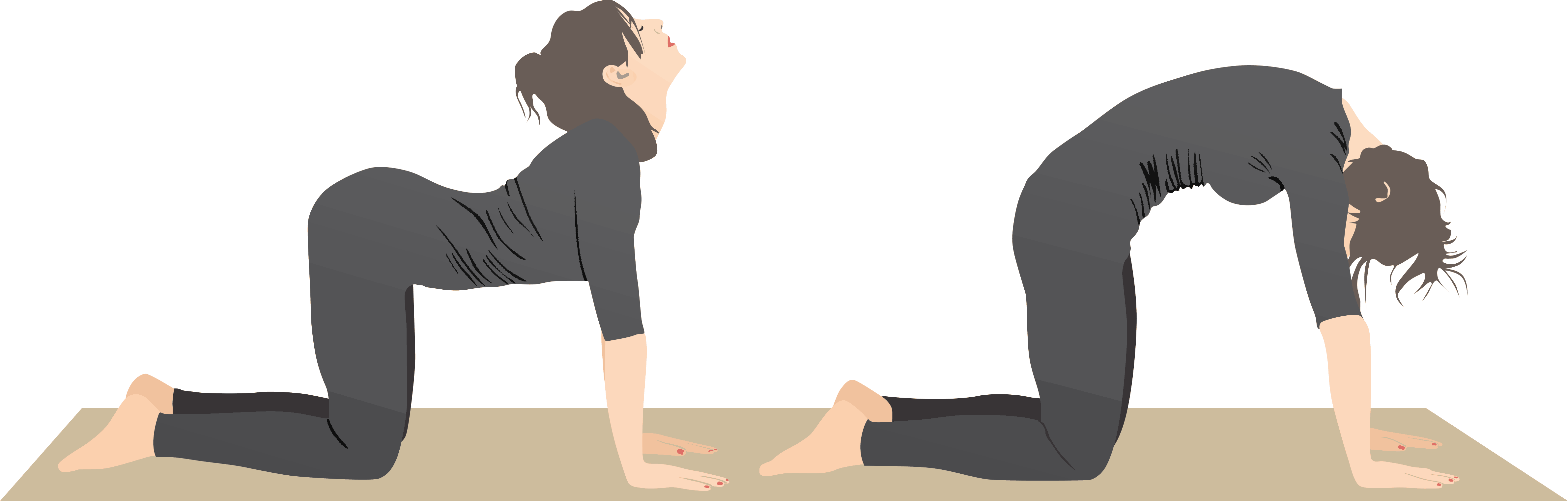
3 – Cat-Cow Pose

This pose expands and contracts your abdominal muscles and organs, stimulating the digestive tract. Yoga for constipation also offers relief from gas pain and bloating.

Here’s how to do it:

  • Start on your hands and knees, keeping them about shoulder-width apart.
  • Inhale as you lower your belly, open your chest, arch the spine, and tilt your head toward the sky.
  • Exhale as you round your spine (imagine how a frightened cat looks), pull your belly in, and drop your chin toward your chest.

yoga for constipation

Yoga for Constipation: Twisting Poses to Stimulate the Digestive System

Twisting poses help massage the digestive organs and stimulate peristalsis, easing constipation. It also promotes detoxification that eliminates toxins from your body.

4 – Seated Spinal Twist

This twist can help alleviate bloating and digestion while opening the hips and stretching the spine. The movement activates your digestive system to allow you to have a bowel movement.

Here’s how to do it:

  • Sit straight on the floor with your legs crisscrossed and your feet under your knees.
  • Place your right hand on your left knee and place your left hand behind you.
  • Inhale and lengthen your body through your spine.
  • Exhale and twist to the left from the base of your spine, turning your head in the same direction.
  • Hold the pose for five breaths before returning to the starting position.
  • Repeat the movement on the other side.

5  – Supine Twist

The supine twist is calming while offering a gentle digestive massage that stimulates your organs. It can help move waste and food through your body while increasing blood flow to your gut. This yoga pose also releases tension, allowing oxygen and nutrients to flow easily through the digestive system.

Here’s how to do it:

  • Lay on your back and pull your knees toward your chest.
  • Extend your left leg straight out without letting it touch the ground.
  • Keeping your right knee bent, bring that leg to the left across your body, keeping your shoulders flat on the floor.
  • Turn your head to the right, and hold the pose briefly before switching sides.

6 – Chair Twist

This pose works your upper body and lower body muscles. Yoga for constipation also stimulates and massages abdominal organs, promoting healthier digestion.

Here’s how to do it:

  • Stand straight, putting your feet together and your hands at your sides.
  • Bring your hands together near your heart.
  • Act like you’re sitting down, bending your knees, and shifting back.
  • Put your right elbow on the outside of your left knee and press your palms together.
  • Twist your body, and hold the post for at least ten breaths.
  • Release the position and switch sides.

Yoga for Constipation: Inversions to Encourage Digestive Movement

Inversions mean that part of your body will be upside down during the pose. It utilizes gravity to promote digestive movement and stimulate the lymphatic system.

7 – Legs up the Wall

This pose uses the support of a wall, making it easier to hold your legs up. It is beneficial for beginners because it is simple and doesn’t require much strength.

Here’s how to do it:

  • Sit on the floor with your hips close to a wall.
  • Lower your back and head to the floor before walking your legs up the wall.
  • You can place your arms where ever you’re comfortable and stay in the position as long as you want.
  • If you experience hip discomfort, you can place a folded towel or blanket under them.

yoga poses

8 – Shoulder Stand

This pose balances your bodily systems, allowing you to feel better and be healthier. The full-body inversion shifts gravity and helps you have regular bowel movements. It also drains the lymphatic system and promotes circulation.

Here’s how to do it:

  • Lay down, bend your knees, and place your feet flat on the floor.
  • Walk your shoulders under your upper back until your chest gently rises.
  • Lift your hips, and extend your arms on the ground with your palms facing down.
  • Press your palms into the ground, lift onto the balls of your feet, and extend one leg up.
  • Support your lower back with your hands by bending your elbows.
  • Lift the other leg up, straightening them in the air so your hips are over the shoulders and feet over the hips.
  • Hold the post for 10 seconds before rolling your body back down.

9 – Plow Pose

This inversion compresses your abdominal organs to relieve constipation. Yoga for constipation helps get your bowels moving so you can find comfort.

Here’s how to do it:

  • Lay on your back and bend your knees so your feet are close to your bottom.
  • Exhale and lift your knees toward your chest, keeping your hands next to you with palms flat.
  • Use your abs to lift your hips, rolling up until your shoulders support your body. You can use your hands pressed into the floor for added support as you do this.
  • Moving slowly, extend your legs back over your head, flex your feet, and rest your toes on the ground.
  • You can use your hands to support your back but keep your elbows close to the body. Otherwise, you can leave your arms on the floor.
  • Hold the pose for six deep breaths before slowly returning to the original position.
  • Repeat the movement five times.

Yoga for Constipation: Deep Breathing for Relaxation and Digestion

Using deep breathing techniques is another way to massage your abdomen and intestines. It helps get your internal organs working to ease constipation and discomfort. Diaphragmatic breathing also stimulates your parasympathetic nervous system.

10 – Dirga Pranayama

This breathing technique is sometimes called the three-part breath. It promotes a calm mind and offers grounding benefits to help you focus on the present and build body awareness. Dirga pranayama also helps oxygenate your blood and nourish your body.

Here’s how to do it:

  • You can choose a seated, cross-legged position or lie on your back.
  • If you choose to lie down, you can stretch your legs out or bend your knees with your feet flat.
  • Once you’re comfortable, focus on your natural inhale and exhale.
  • Don’t engage thoughts that threaten to distract you. Instead, acknowledge the thoughts and release them, refocusing on your breathing.
  • Then, begin inhaling and exhaling deeply through your nose.
  • As you inhale, fill your belly with breath, expanding it with air like a balloon.
  • On the exhale, breathe through your nose until it’s all out of your belly, pulling your navel in to expel it all.
  • Repeat this process five times.
  • Inhale and fill your belly with air again, but pull a little more breath in. Let it expand into your rib cage until it causes the ribs to widen.
  • On the exhale, release the air from your ribcage first, then the belly.
  • Repeat this another five times.
  • Then, inhale to fill the belly and rib cage with air again, and pull in a little more to fill the upper chest.
  • Exhale, releasing the breath from your chest first, then your ribs, and finally your belly.
  • Do these steps ten times.

11 – Ujjayi Breath

This breathing technique calms the mind and body. It involves using a soft sound or feeling in the throat.

Here’s how to do it:

  • Sit straight and comfortably, keeping your spine neutral.
  • Inhale slowly and deeply, making a soft sound in your throat.
  • Block your right nostril, stop making the sound, and exhale through the left nostril.
  • Inhale again, making the sound.
  • Block your left nostril, stop making the sound, and exhale through your right nostril.

12 – Nadi Shodhana

This yogic breathing method improves metabolism and relaxes your body, allowing your bowels to move.

Here’s how to do it:

  • Sit comfortably and relax your mind.
  • Inhale through both nostrils before blocking the right one with your thumb.
  • Keeping the right nostril covered, exhale completely through the left.
  • Inhale through the left nostril and immediately cover it with your ring finger.
  • Exhale through the right nostril, then inhale through that side before blocking it with your thumb.
  • Repeat this nine times.

Developing a Consistent Yoga Practice

Consistency is essential for maximizing the long-term benefits of yoga for constipation. Adding it to your daily routine helps, and you can become more consistent by:

  • Scheduling yoga sessions in advance
  • Finding a dedicated space for practice
  • Tracking your progress

Besides Yoga for Constipation, Try These Digestive Health with Lifestyle Changes

You can pair yoga for constipation with other techniques to ease symptoms and offer relief. Some lifestyle changes to implement include:

  • Diet: A lack of fiber can lead to constipation, so changing your diet can help. Add fiber-rich options to your daily menu to promote optimal digestive functioning.
  • Hydration: Drinking plenty of water can help ease constipation and other digestive issues. Having a glass of water on an empty stomach can stimulate your digestion. It can also create pressure that makes it easier to have a bowel movement.
  • Exercise: Physical activity stimulates your intestinal muscles, encouraging healthy digestion. Yoga is one method, but you can try others to alleviate your symptoms.

Personalizing Your Yoga for Constipation Practice; Adjust Yoga Poses to Your Skillset

As you practice yoga for constipation, be mindful not to push yourself too much. While stretching your muscles is nice, you don’t want to experience pain because it can lead to injury. A little discomfort can be beneficial, but don’t do it if it’s too painful.

Personalization is essential, so ease up on that pose or choose a different one that offers more comfort. Focus on body awareness because individual needs differ.

Final Thoughts on Trying Yoga for Constipation Relief

While over-the-counter treatments and medications can help, you can try natural constipation relief through yoga. It helps manage stress while providing a digestive massage to help you pass stool and gas.

yoga for constipation

Yoga poses for constipation relief make a difference in your life by easing digestive discomfort. Trying yoga for constipation can improve your situation and help you feel better. You can live healthier and feel more comfortable as your digestive system improves.

7 Signs of Psychotic Depression to Never Ignore

Depression, besides psychotic depression, affects millions of people worldwide. This disorder can devastate an individual’s daily life. However, not all forms of depression are the same, and some types can be more severe than others. 

Psychotic depression is a particularly severe form of depression marked by delusions and hallucinations. These symptoms can make it challenging for people with this disorder to function daily. They may need specialized treatment to manage their symptoms. Distinguishing psychotic depression from other forms of depression is essential, as it requires a different approach to treatment. 

Depression can cause sadness, hopelessness, and a lack of motivation. But psychotic depression goes beyond these symptoms and can lead to delusional thinking and hallucinations. The delusions and hallucinations can often be very distressing for the person experiencing them. 

Therefore, recognizing the signs of psychotic depression is crucial for seeking timely treatment and improving any mental health disorder. 

People Experiencing Psychotic Depression Might Not Understand the Depth of the Disorder

Unfortunately, people with psychotic depression may not always recognize the severity of their symptoms or may feel ashamed to seek help. That’s why it’s essential to understand the warning signs and seek appropriate help if you or someone you know is experiencing them. This article will explore the seven signs of psychotic depression you should never ignore. 

By identifying the symptoms of this psychotic depression, you can take steps to seek appropriate help and begin the path to recovery. With proper treatment and support, people with psychotic depression can manage the symptoms and improve their quality of life.

Seek Immediate Help if You See These Signs of Psychotic Depression

Let’s look at the seven signs you should never ignore. These warning signs can help you or someone you know when it’s time to seek help. They can help you get on the pathway to recovery.

psychotic depression

1 – Persistent Sadness and Low Mood

Persistent sadness and low mood are hallmark symptoms of depression and can affect anyone at any age. In the case of psychotic depression, these symptoms can be much more severe and debilitating. Individuals with this condition may feel a profound sense of sadness and despair. Individuals with depression may lose interest in activities they once enjoyed and withdraw from social situations, further exacerbating their sadness.

One significant challenge for people with psychotic depression is that delusions and hallucinations can accompany their low mood. This low makes it difficult to distinguish between reality and their thoughts. It’s crucial to acknowledge hopelessness and despair and seek help if the symptoms of this disorder persist. 

Unfortunately, many people with psychotic depression may not seek help because they believe their symptoms are personal failures. However, these symptoms are not a personal weakness but a treatable medical disorder. With the proper treatment, people with psychotic depression can learn to manage their feelings and improve their quality of life.

2 – Delusions or False Beliefs

Delusions, or false beliefs not based on reality, are a key distinguishing feature of psychotic depression. These delusions can be irrational and can significantly harm an individual’s daily functioning. People with this condition may hold firmly to these beliefs, even when presented with evidence to the contrary. 

There are several common types of delusions that people with psychotic depression may experience. They may also experience delusions of persecution and believe they are being watched or followed. Another common type of delusion is delusions of grandeur, where the individual believes they have exceptional abilities, wealth, or fame.

This symptom of the disorder can significantly impact an individual’s daily functioning, making it challenging to maintain relationships or hold a job. For example, a person who experiences delusions of persecution may become paranoid and avoid social situations. Someone with delusions of grandeur may become overly confident and take unnecessary risks. 

The treatment of delusions often involves a combination of medication and therapy. This therapy can help individuals learn to manage their thoughts and behaviors.

3 – Hallucinations

Hallucinations are another common symptom of psychotic depression, and they involve perceiving things that are not present or real. These sensory experiences can be auditory, visual, or other types, and they can be distressing and frightening. People with psychotic depression may struggle to differentiate between what’s real and not, leading to confusion and anxiety. 

Auditory hallucinations, or hearing things that aren’t there, are the most frequent type of hallucination experienced by those with psychotic depression. Someone may perceive voices, music, or other sounds and disrupt daily life. Visual hallucinations, or seeing things that aren’t there, are less common in psychotic depression but can still occur. 

People with psychotic depression may hesitate to discuss their hallucinations for fear of being judged or misunderstood. So, creating a supportive, safe, and non-judgmental environment to share their experiences is crucial.

4 – Social Withdrawal and Isolation

Social withdrawal and isolation are common symptoms of psychotic depression. Individuals with this condition may strongly desire to withdraw from social situations. They may avoid social activities, friends, and family members and prefer to spend most of their time alone. They may feel as though they don’t fit in or as though others don’t understand them. 

It can result in social isolation and loneliness, worsening symptoms and significantly impacting mental health. Depression can also contribute to physical health problems like high blood pressure, heart problems, or stroke. The tendency to withdraw from social situations can also make it difficult for individuals with psychotic depression to seek help.

Individuals with depression may feel embarrassed or ashamed of their symptoms and worry that others won’t understand what they’re going through. Mental health professionals can provide support or help to manage symptoms and cope with a feeling of loneliness and social isolation. Support groups can also help give a sense of community and understanding.

psychotic depression

5 – Suicidal Thoughts and Behaviors

Suicidal thoughts and behaviors are critical warning signs of psychotic depression. People with this condition may experience thoughts of self-harm or suicide and may engage in behaviors that increase their risk of harm. Suicidal thoughts can be overwhelming and may be accompanied by feelings of hopelessness and despair. These individuals may feel trapped in a cycle of negative thoughts and emotions. 

They may believe that there is no hope for recovery. It’s essential to recognize that suicidal thoughts and behaviors are not a sign of weakness or failure. Depression is not a personal weakness. Instead, it is a symptom of a deeper underlying mental health disorder.

Try to know the signs of suicidal ideation and seek immediate help. Immediately contact a mental health professional, crisis line, trusted friend, or family member. People with psychotic depression may be at higher risk for suicide than those with other types of depression. So, it’s essential to take these warning signs seriously.

6 – Cognitive and Motor Impairment

Cognitive and motor impairment are often present in individuals with psychotic depression. People with this condition may experience difficulties with thinking, concentration, and memory, making it challenging to complete daily tasks and engage in activities. They may also experience a decrease in motor skills, making movements slower and more challenging. 

Cognitive and motor impairment can significantly impact daily functioning, leading to difficulty at work, school, or home. People with psychotic depression may also experience a decrease in motivation and energy. Indeed, it makes it challenging to engage in activities they once enjoyed. 

For example, someone with cognitive impairment may struggle with decision-making or problem-solving. Someone with motor impairment may have trouble with coordination or movement. These symptoms can also affect an individual’s ability to work or maintain relationships, leading to further social withdrawal and isolation.

7 – Sleep Disturbances

Sleep disturbances are common in people with psychotic depression and can present as insomnia or hypersomnia. Insomnia indicates difficulty falling or staying asleep, whereas excessive sleepiness and extended sleep duration reveal hypersomnia. Changes in sleep patterns can be potential indicators of psychotic depression. 

Poor sleep quality or sleep deprivation can worsen existing mental health conditions and increase the risk of developing new ones. Sleep disturbances can also negatively impact daily functioning, leading to decreased energy, impaired concentration, and mood changes. Treating sleep disturbances is an essential part of managing psychotic depression and improving overall mental health outcomes. 

Treatment options for sleep disturbances may include therapy and medication. Lifestyle changes are a must. Improving sleep hygiene, reducing caffeine and alcohol consumption, or engaging in relaxation techniques, can all help. 

Seeking Professional Help and Treatment for a Mood Disorder Like Psychotic Depression

Seeking professional help for psychotic depression is crucial for managing symptoms and improving mental health outcomes. Some people may try to manage their symptoms on their own. Professional help as early as possible is essential to ensure timely and effective treatment. Treatment options for psychotic depression may include medication, therapy, or a combination of both. 

Antidepressants and antipsychotic medications can help manage symptoms such as depression, delusions, and hallucinations. Therapy, including cognitive-behavioral therapy (CBT), can help people recognize and alter negative thought patterns and develop coping mechanisms. Support from loved ones or friends can also help manage psychotic depression. 

Online or in-person support groups can provide a sense of community and understanding. Working with a mental health pro is crucial to develop an individualized treatment plan to decrease specific symptoms and needs. It might take time to find the right treatment combination. Adjustments need to be made over time to ensure the best outcomes.

disorder

Final Thoughts on Treating Psychotic Depression

Psychotic depression is a severe and dangerous mental health disorder. It requires early intervention for effective treatment. It’s essential to recognize the signs of this condition, especially the ones outlined above. Seeking professional help and support is vital to manage symptoms and improve mental health outcomes.

Do you struggle with severe depression? Then don’t hesitate to ask for help. Speak to a trusted healthcare provider or mental health professional to discuss treatment options, including medication, therapy, and support groups. Remember that recovery is possible. With the proper treatment and support, individuals with psychotic depression can regain their quality of life and overall well-being.

Skip to content