Weekly tips, affirmations, and small actions to feel your best.

6 Ways To Turn Off Your Weight Gain Hormones

Seven different hormones can cause weight gain. Once you understand how they work in your body, you can turn off their power to make you overweight.

We gain weight often can seem to be due to what is happening in our lives that cause us stress. Sometimes, even though we watch what we eat and exercise, we feel like our weight gain is out of control.

Let’s look further at how you can work with your body to turn off your weight gain hormones and have the body you desire.

6 Ways to Turn Off Your Weight Gain Hormones

Here are proactive steps you can take to jumpstart weight loss.

1. Eat plenty of protein to balance your hormones

Ghrelin is made in the digestive system, and it is called the hunger hormone because it increases your appetite when your body needs the energy to use. Being able to suppress ghrelin’s effects would help us turn off this weight gain hormone.

Research published in the American Diabetes Association found that ‘Ghrelin administration stimulates GH secretion and causes weight gain by increasing food intake and reducing fat utilization in rodents.’

The researchers looked at lean and obese people’s levels of this weight hormone. They found that ghrelin was found in lower concentrations in obese people than thin people.

To turn off your ghrelin hormone so you won’t gain weight, eat a diet high in protein and avoid high-fat foods. Protein helps suppress ghrelin production in the digestive system to keep you from eating more and gaining weight.

2. Remove sugar from your diet

Sugar is sneaky because it shows up in many forms in many foods. Getting rid of it entirely can be a challenge in label reading. However, it may be the best thing you can do to turn off your weight gain hormone insulin.

Insulin is most closely associated with diabetes, which affects millions of people worldwide. The pancreas produces insulin to help digest sugars that you eat. High insulin levels in your blood can affect your likelihood of weight gain.

Insulin helps glucose to be absorbed by the cells and stored as energy, which is why you can gain weight when you have more sugar in your diet. Storing energy in fat cells is not what you need to turn off weight gain.

3. Eat less dairy (hormone free dairy might not do the trick)

Hormone-free dairy products aren’t necessarily a safe means of avoiding extra hormones that cause weight gain.

The dairy industry has responded to public pressure to provide hormone-free dairy products to consumers. Research shows that eating animal hormones may trigger early development in teenage girls and boys.

Nutritional and medical experts have realized that the milk that cows and other animals provide is meant to grow and raise their own young, not humans. Avoid these non-human hormones that can mess with your own.

4. Avoid soy products that can cause imbalanced hormones

Women undergoing menopause experience a natural decrease in the estrogen that their body produces now that they can no longer bear children. As a result of the decreased estrogen, body fat increases. Soy products contain phytoestrogen, which can block the normal human estrogen in the body.

Estrogen has a role in the production of leptin. Leptin is one of the most important hormones to reduce weight gain because it regulates satiety. Satiety is how satisfied we feel when we eat. If we don’t feel satisfied or sated, we will continue to eat, even if we don’t need to eat.

Researchers studying the role that estrogen has on leptin levels found that ‘In humans, serum leptin concentration was higher in premenopausal women than in men, and in postmenopausal women, it was lower than in premenopausal women but still higher than in men.’

The same researchers found that in premenopausal women, serum leptin levels were significantly higher in the luteal phase or the later part of their menstrual cycles.

This research suggests that increasing estrogen levels through dietary changes could help increase leptin production, which can help turn off weight gain.

5. Improve hormone health by reducing stress and caffeine intake

The stress hormone cortisol is released when frustrated, overwhelmed, or feeling stuck. Stress eating is natural, and people who binge, especially on so-called ‘comfort foods,’ are likely to engage in a destructive behavior pattern that will lead to weight gain.

Rather than allowing your stress to dictate when you eat, seek to reduce sources of stress in your life to reduce cortisol levels in your body.

If work is overwhelming, delegate parts that someone else can handle. If your home life is stressful, sit outside in nature for 5 minutes while breathing deeply to relax and recharge.

Caffeine levels can also increase the level of cortisol that releases into your body. Turn off the weight gain by reducing your caffeine intake, and the hormone cortisol will be reduced as well.

6. Eliminate grains

Grain consumption links to thyroid hormone production that slows down. Reducing your intake of grains in your diet can help regulate your thyroid hormone levels and turn off weight gain.

The thyroid is one of the most important factors to consider when examining weight gain. Check with your medical professional to have your thyroid levels checked if you suspect that a low-functioning thyroid gland causes your weight gain.

Nine Other Lifestyle Changes To Help Regulate Hormones

What can you do for better hormone health besides changing your nutrition? Try these things.

1. Regular meal times

Eating your calories in smaller, more frequent meals helps regulate your body’s glucose levels that affect the secretion of insulin and cortisol. These hormones stabilize your appetite, so you don’t overeat. Staying in tune with your body and eating when you’re hungry gives your body a break. It relieves your digestion hormones, so they don’t get overworked, leading to weight gain. Create good eating habits, such as:

  • Sit down at the table to eat-Avoid walking around or eating in your car.
  • Chew slowly-Take appropriate bites and chew your food slowly. Enjoy the experience of eating.
  • Schedule your meals-Try to eat at the same time every day.
  • Be mindful of flavors-Enjoy the flavor and texture of your food.
  • Don’t add condiments until you taste the food-Taste your food before adding salt or other seasonings.

2. Exercise helps boost hormones

Exercise regulates adrenaline and cortisol, two stress hormones. It also helps stimulate the production of endorphins, peptide hormones that relieve pain and give you a feeling of general well-being.

3. Get enough sleep

Not getting enough sleep upsets your hormones levels. Lack of sleep releases stress hormones causing you to overeat, increasing your blood pressure, and making you feel exhausted.

4. Reduce your stress

When you’re stressed, your body releases adrenaline and cortisol into your bloodstream. These fight-or-flight hormones speed up your heart rate and increase your blood pressure. Living with constant stress upsets the balance of these hormones causing

  • Anxiety
  • Weight gain
  • Depression
  • Loss of focus
  • Decreased immunity
  • Auto-immune disorders

5. Stop smoking

You know the fact. Smoking isn’t healthy. Not only does it cause cancer and other diseases, but smoking upsets your body’s estrogen and testosterone levels. This imbalance can decrease fertility in women.

6. Stay hydrated

When dehydrated, toxins aren’t properly filtered out of your body. This puts stress on your body and throws off your hormonal balance. Drinking plenty of water helps your body deliver hormones via your bloodstream to your organs. This flushes out the toxins in your body and keeps your cells working properly.

7. Avoid certain foods

Skip sugary or processed foods. These foods are full of useless calories that affect the production and secretion of hormones in your gut and nervous system. Processed and fast foods have a lot of salt, fat, and sugar. Research shows that eating these foods can

  • Shorten your life
  • Age your body quicker
  • Put your brain at risk
  • Cause you to gain weight

8. Getting enough light exposure

Exposure to light affects your hormones. Getting enough light helps your body regulate the circadian rhythm function, which allows your sleep and waking cycles. Being exposed to sunlight helps you sleep better at night. You wake up with more energy since you’re well-rested. Being exposed to blue light from your electronics, especially at night, can suppress natural melatonin secretion, so you can’t sleep.

9. Makeup (surprisingly) can impact hormones

Did you know that some makeup contains harmful substances that affect your estrogen levels? These hormone disruptors, Xenoestrogens, block estrogen production, so they can’t work as they should. Chemicals called phthalates also disrupt your hormones. These are in hairsprays, nail polish, and hair straighteners.

(C) Power of Positivity, LLC. All rights reserved

6 Things That Happen When You Fall In Love

People say that love is a drug, and your body might agree when you understand what happens to your body when you fall in love. There are a lot of physiological changes in your mind and body that are normal for someone who is falling in love, but it can feel like you are going through puberty again with all of the chemical and hormonal changes that your body is experiencing.

This Is What Happens When You Fall In Love

You release pheromones

Pheromones are chemicals that have a faintly detectable scent. As a person falling in love, you often feel sexually attracted before you feel true, deep love. That initial spark of attraction is likely due to your inhalation of your partner’s pheromones.

Related article: 5 Things That Make A Woman Beautiful (Besides Her Looks)

Adrenaline

When you fall in love, your body releases a spike in adrenaline. The adrenaline rush gives you that feeling of butterflies in your stomach. This is a similar feeling you get when something ‘just doesn’t feel right.’ That gut feeling is a way for your body to tell you to pay close attention because something important is happening.

Related article: 5 Ways to Strengthen Your Gut Instinct

Obviously, falling in love and getting a gut instinct that something is wrong are very different emotionally. One is a happy emotion and the other one is a fear response. The tingling in your belly is a way for your body to tell you that something is about to change your life, either for the good or the bad.

Hormone level changes

Researchers studied the hormone levels of people who had fallen in love within the last 6 months and compared them to the hormones of people in long-term relationships or those who were single. They found ‘Cortisol levels were significantly higher amongst those subjects who had recently fallen in love, as compared with those who had not. FSH [follicle-stimulating hormone] and testosterone levels were lower in men in love, while women of the same group presented higher testosterone levels.’

The scientists explain that the research on the biological chemistry of falling in love is limited, and that they are unsure why the reverse levels of testosterone happen for men and women falling in love.

You increase serotonin

Your body and your brain undergo chemical changes that cement the new bond of love that you are forming with your partner. These changes happen when you fall in love as an evolutionary tool to help us to reproduce and sustain the population of our human species.

A joint study between the University of Pisa, Italy and the University of California at San Diego looked at the neurotransmitter serotonin and the brains of people who were falling in love. They found that the levels of a serotonin transporter were as high as they were in the brains of patients with Obsessive Compulsive Disorder.

No wonder you can’t quit your partner. 5-HT is the serotonin transmitter that you makes you obsessed about your partner. The scientists say that the increase in 5-HT ‘might mediate more enduring and ‘romantic’ forms of love, characterized by ‘obsessive’ pre-occupations about the partner and, consequently, a greater likelihood of bonding and faithfulness to the relationship.’

Related Article: 5 Ways To Increase The Serotonin In Your Brain

You increase your levels of other neurotransmitters

Dopamine and oxytocin are two other neurotransmitters that make you feel good. Oxytocin is such a strong naturally-produced pain-killer that it is given to women during childbirth. Increased levels of oxytocin is one thing that happens to your body when you fall in love. Oxytocin is often called the ‘cuddle hormone’ because it is also produced during intimate snuggle time.

Dopamine levels also increase when you fall in love. Dopamine is like a happy drug for your brain and it makes you want more of the good stuff. To get more dopamine, you want more love from your partner.

Your heart rate and breathing synchronizes to your partner’s

Does your heart beat only for your true love? That’s entirely possible because researchers at the University of California at Davis say couples who were connected to monitors measuring their heart rates and rates of respiration had heart rates that were in sync. The research also revealed that the couples breathed in and out at the same intervals.

The scientists found that women tended to adjust their heart rate and breathing to match that of their male partners, rather than the other way around. The researchers explain this as similar to the tendency of women to adapt to their partners’ preferences in a relationship and their tendency to have a higher capacity for emotional empathy as well.

The couples were a few feet away from each other and did not touch each other or speak. When couples who are in love have been separated from each other, their heart rates spike when they see each other again.

(C) Power of Positivity, LLC. All rights reserved

This Is For Every Person Who Has Ever Had Anxiety

In the fast-paced, chaotic world we live in today, it seems that more people suffer from anxiety than ever before.

In fact, according to the Anxiety and Depression Association of America, 40 million adults age 18 or older in the United States have some anxiety disorder, making anxiety the most common mental illness in America.

Often, anxiety can feel incredibly isolating, lonely, and scary and can make the sufferer feel like no one truly understands. Anxiety only rests while you sleep, and even then, sleep seems to evade you more nights than it should. Anxiety clouds your mind so much that you can barely differentiate reality from the one you’ve created inside your mind. Indeed, the one within speaks so much louder. Does the battle ever end? Do hope, love, and happiness ever win?

As someone who suffers from anxiety herself, I can relate to how debilitating, hopeless, and frustrating you feel if you have anxiety. The following letter goes out to everyone who battles their mind daily and might need a little something to keep them going.

This Is For Everyone Who Has Ever Had Anxiety

stress and anxietyAnxiety doesn’t care whether you feel tired or fed up; it persists despite your weariness. Moreover, it trudges on and infiltrates your mind just when you thought you’d found peace. It doesn’t let up. It only seems to get worse when you try to fight it. The moment you wish it would just leave you alone for a while, it seems to bite back twice as hard.

Anxiety haunts you in your sleep and follows you around during the day. It doesn’t let your mind rest, always making you fixate, contemplate, and suffocate. You didn’t ask for this, and you can’t understand why you can’t attain peace. Life already comes with challenges, but the anxiety makes it worse because EVERYTHING feels like a huge obstacle.

Going on simple errands seems draining before you even walk out the door, and giving a presentation at work prompts panic and significant discomfort. Life moves so quickly, and it seems that taking time to rest and refuel one’s mind and body is looked down upon. This world wasn’t made for the anxious, so where do all those who have anxiety fit in? How do we deal with a world that asks us to keep on going even when we feel we can’t take another step?

With so much to worry about, it seems that peace of mind is either a distant memory or a paradise island you can’t afford to visit. Anxiety creeps up when you least expect it and stays around long after you try to send it packing. It doesn’t ever want to leave! It builds a permanent home in your mind and robs you of all positive thoughts and feelings. You try to fit in, smile at strangers, keep up with friendships, and go about your everyday life, but inside, you know something feels wrong.

The worst part…

You try to correct these thoughts and feelings and heal them from within, but anxiety is a tricky beast to tame. Anxiety is a silent monster, sabotaging your mind and taking up valuable space when you didn’t even invite it inside. It just comes and goes when it wants and seems to stay far too long when it does visit.

Anxiety doesn’t understand you when you say you need a break or when you question the voices running through your mind. It’s persistent, resistant, and cruel, a parasite that sucks your energy and clouds your brain. Anxiety doesn’t just live in the mind, though. You know the feeling all too well. Perhaps you have jittery nerves, a racing heart, butterflies in your stomach, headaches, nausea, blushing, a lump in your throat, sweaty palms, and the sheer panic that overtakes you in a stressful situation.

The worst part is you can’t seem to differentiate between a stressful and harmless environment. Eventually, it all seems to bleed together. Everything seems stressful because your brain can’t remember how it should feel in certain situations.

anxiety

Final Thoughts on Reaching Out to Anyone Who Has Ever Had Anxiety

If you are one of the millions who suffer from an anxiety disorder, please don’t hesitate to get help if you need it. It doesn’t make you weak or a burden to ask for help. Instead, it makes you brave and strong to admit that you have a problem and need guidance. No one should have to go through this life alone. So don’t hold back your thoughts or feelings just because society tells you to. Sit down and talk with a loved one, write in a journal, meditate, or do anything that helps feel a sense of release and relaxation.

We live in a stressed-out world, but this doesn’t mean you have to take on the feelings of the majority. Take time away from society, and don’t apologize for it. Nature, going within, taking care of your body, having positive people in your life, having a sense of purpose, and helping others can all help to alleviate feelings of anxiety. Never give up because the feelings won’t last forever. You have to be willing to work on yourself and have the courage to fight the demons in your mind. Remember, they can’t win if you don’t let them.

(C) Power of Positivity, LLC. All rights reserved

7 Stretches In 7 Minutes For Lower Back Pain Relief

There really is no other way to say this: back pain sucks. Anyone who has experienced a back injury or a bout with back pain can attest to how much it sucks. Back pain is also incredibly common: 31 million Americans experience back pain during any given time.

The agony caused by back pain can be excruciating and even lead to disability or handicap. Common back pain also requires due diligence in order to care for it effectively. The most common types of back pain involve aches, spasms, and stiffness – all of which contribute to an affliction that is sometimes difficult to manage or predict.

One lifestyle trend that has led to prolific back pain is the sedentary nature of our daily lives. More of us work sitting in a cubicle than at any other time in history. Spending more time in the office or working from home means more sitting and less exercise. Less exercise leads to a complacent body, which is turn leads to less muscle activity. Do you see where this is going?

The good thing is that we can do more to both prevent and heal back pain. As it turns out, stretching is one of the best methods for doing both. It doesn’t require much time either.

Back pain is the leading cause of disability in Americans under 45 years old. More than 26 million Americans between the ages of 20-64 experience frequent back pain. National Centers for Health Statistics

Here are 7 stretches that you can do in 7 minutes to help reduce back pain:

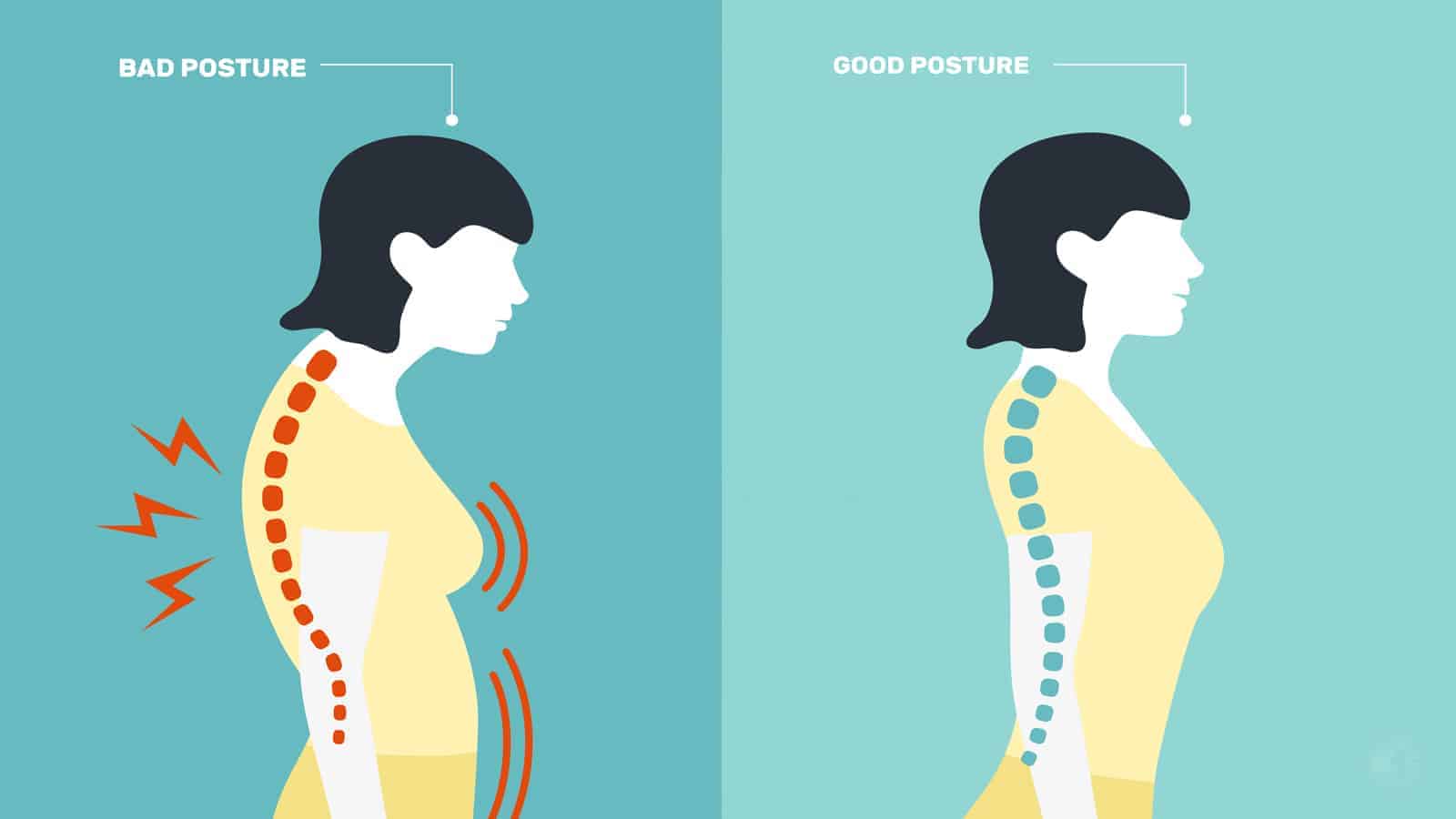
fix posture

1. The “Complete” Back Stretch

You can do this quick stretch if you have something you can grab onto – a countertop, desk, couch, table, etc. –. Simply hold onto the surface and walk backward, maneuvering the back until it is at a 90 degree angle. Make sure to push the butt upwards until pressure can be felt in the lower back. Hold this position for about 15 seconds. Repeat.

2. The Spine Stretch

Lay on the floor with legs and arms flat. Make sure the legs are together. Rest the left hand around the abdominal area, keeping the right arm straight and flat against the floor. Keeping the legs together, bend them towards the waist. Slowly rotate the legs leftwards as far as possible while keeping the rest of the body in position. Hold for about 20 seconds. Repeat.

3. The Hamstring Stretch That Reduces Back Pain

Lay flat on your back and place your hands behind the thigh. Slowly lift the leg with your hands while sliding them down towards the foot until fully stretched. Hold this position for about 20 seconds and repeat with the other leg. This stretch is particularly effective for instances of lower back pain.

4. The Knee To Chest Stretch

This stretch is performed exactly as advertised. Simply lay flat on the ground, eyes upwards. Flex either leg at the knee and place your hands on the shin. Pull your knee towards the chest until you feel tight. Hold this position for about 20 seconds and then repeat with the opposite leg. Repeat two or three times.

5. The Piriformis Stretch

While this stretch sounds complicated, it is relatively easy. Lay on your back and cross the left leg over the right, resting your left ankle on the right knee. Grab ahold of your left knee with your hands and gently pull it toward the opposite shoulder. Hold this position for 20 seconds and relax. Switch sides and repeat twice.

arthritis

6. The Hip Flexors Stretch for Back Pain

There are a few different variations of this stretch. The one we’ll describe here is arguably the simplest and most effective. Get yourself into a half-kneeling position – the back leg is the one that is to be stretched. Drive your hips forward until the back knee is resting on the group. This exercise should stretch the iliopsoas, a primary hip flexor that, when stretched, can alleviate lower back pain.

7. The Lying Down Quadriceps Stretch

The quadriceps are also attached to your lower back. Loosening up and relaxing these muscles can help to relax any tension, which is often the source of lower back pain. Lay on your side with a hand supporting your head. Grab the lower shin and pull the leg back behind the body as far as possible. Hold the position for about 20 seconds. Switch sides and repeat once or twice more.


What Do Your Social Media Updates Reveal About Your Personality?

While many of us would like to think Facebook and Twitter don’t reflect someone’s real life, in some ways, their status updates say a lot about their personality. We don’t recommend spending hours deciphering posts to determine the personality types of your online friends, but social media updates can provide a quick overview of someone’s character traits. We all find ourselves bored from time to time and use social media as a way to combat that boredom, so you may as well get something out of the time spent on Facebook, Twitter, or other media platforms just to have something that is trending similar to this Jimmy John Shark photo. Why not check it out as well?

People post about a variety of topics from esoteric musings to job opportunities to a new gadget they bought, and believe it or not, you can tell a lot about a person just by what they decide to share on their social media accounts.

What you choose to share on social media reflects alot about what kind of persona you’d like to create online, and different types of status updates suggest different personality traits.

Here’s what your social media updates say about your personality:

Related article: What Does Your Palm Reveal About Your Personality?

Have you ever wondered what prompts a person to post a photo of their hubby vs an update about the nature of our existence?

Well, this study in the “Journal of Personality of Individual Differences” reveals everything you’ve ever wanted to know about status updates and personality types.

Researchers Tara Marshall, Katharina Lefringhausen, and Nelli Ferenczi studied the effects of an individual’s self-esteem, levels of narcissism and the Big Five personality traits (neuroticism, extraversion, openness to experience, agreeableness and conscientiousness) on their status updates, and found pretty interesting results.

They also formed conclusions about the purpose of these posts, whether the user wanted attention and acceptance, an outlet for self-expression, or the ability to communicate information on their channel or webpage.

In order to come up with the results, the researchers first categorized the topics that people post about on Facebook: social activities and everyday life (social activities, something funny that happened to them, everyday activities, pets, sporting events), intellectual thoughts (views on politics, current events, research/science), achievements (achieving goals, their own creative output, accomplishments, anything work or school related), diet and exercise, children and feelings about their relationship.

After this step, the researchers then gave 555 Facebook users (59 percent female and 41 percent male) tests to measure their levels of self-esteem and narcissism, as well as their levels of the Big Five personality traits.

They also asked the participants how often they used Facebook, how many “likes” they usually got on their status updates and how frequently they posted about the topics listed above.

After crunching the numbers, the researchers began to notice a pattern regarding what types of status updates people made, and what type of personality they had.

Not surprisingly, the study found that posts about social activities, life, and achievements received the most likes and comments, and posts about deep thoughts and intellectual ideas received the least amount.

While this certainly seems a bit shallow and superficial, it makes sense when we think about the general population. Most people want to congratulate someone on an achievement or connect with them socially, but many people shy away from debates and deep topics.

Related article: Which Bird Personality Type Are You?

For instance, talking about politics or religion in an opinionated way on your Facebook might deter people from engaging with you at all, depending on the words used and the context of the subject matter. Strong viewpoints on Facebook make people shy away because they generally don’t want to get involved in a discussion or feel singled out if they have a different view than everyone else on the thread.

Now, onto the Big Five. This portion of the study perhaps revealed the most interesting results about personality and status updates.

Also, according to the study, people who have lower self-esteem have a tendency to post updates about their romantic relationship “as a way of laying claim to their relationship when it feels threatened.”

On the opposite side of the coin, the narcissists among us enjoy posting status updates about achievements in order to receive validation, which proves “consistent with narcissists’ tendency to boast in order to gain attention.”

People high in narcissism also tend to post about their diet and exercise routine, but for the purpose of self-expression.

This suggests that narcissists might post about their health regimen in order “to express the personal importance they place on physical appearance.”

Extroverted people generally post more about social activities and everyday life as a way of connecting with others.

Neurotic people have a tendency to post updates for validation and to “seek the attention and support that they lack offline.”

People who enjoy new experiences and have an open mind generally use Facebook to share intellectual ideas and post their opinions about topics in order to share information.

People high in conscientiousness write more frequently about their children to communicate and share information, perhaps in “an indirect form of competitive parenting.”

While the study might not reflect everyone’s habits on social media, it does provide some insight into people’s general personality traits, and what types of statuses each personality might post on social media accounts.

How To Solve An Argument With Your Partner In 3 Steps

An argument are a normal part of a relationship, but they don’t have to be a constant headache when there is a fairly simple solution to solving them.

You and your partner are two different people with different needs, so having conflict is normal. The art of negotiating is something that is worth your time to master because it will help you in other areas of your life as well, not just with your relationship.

How To Solve An Argument With Your Partner In 3 Steps

Problems in a relationship can come from a huge range of topics from financial to sexual. Communication with calm, honest expression of feelings is the way to solve these problems in just a few steps. Remember that communication includes both listening and talking and that listening is the more important of the two.

Arguing fair is important for couples during the discussion process, so let’s review the rules of engagement according to psychologist and couples counselor Dr. Nathan Cobb.

Start by agreeing to abide by these fair fighting rules:

  • No degrading language (name calling, cursing, belittling)
  • No blaming
  • Don’t use raised voices or yelling
  • No violence or threats of violence
  • No threats of divorce
  • Focus on your own needs, not what you think your partner’s are
  • Focus on today, not the past
  • Take turns speaking

These are the ground rules before you start working on bringing peace to your arguments, but you may want to add more depending on you and your partner’s personal boundaries about what is and isn’t off limits.

1. Manage your own emotional response

Anger and frustration are typically the most common emotions that people experience when they are having an argument in their relationship. Anger has the potential to become violent if it is not managed. Slow your breathing down before speaking and if needed, take a five-minute walk while distracting yourself with a good song.

Fear or anxiety is possible when you worry that your partner may leave you. Think about any worries that you have now and remind yourself that fear is about what might happen in the future, not what you can do right now.

Sadness or feelings of depression is certainly normal when you are having problems in your relationship. Sadness means that you need something that you aren’t getting, so this is a great place to start looking at what you really need in your relationship. Think about how you would finish this sentence: ‘I’m sad because I need more ____ in my life.’

2. Give your partner’s argument some time and perspective

Now that you’ve given your emotions a thought, think about whether this is a situation that needs to be handled right now or if it can be put on hold. Researchers at the University of California at Irvine sound that people who were not able to manage anger with strategies such as taking a time-out had fewer and lower quality romantic, social, and occupational relationships.

Your partner is so frustrating at times. Why can’t they see things from your perspective from time to time? Good point, and yet, have you tried to see things from their perspective?

Related article: 10 Reasons To Have Sex Daily

When the argument continues, it is difficult for either of you to gather your thoughts beyond the immediate gut response of yes/no or good/bad. The issue is deeper than that because someone is not getting his or her needs met.

Unless a decision is needed urgently, even as little as 2-5 minutes of quiet peace can calm your mind enough to start gaining some insight into how to resolve your differences. It can also help you see how important this issue is to your partner and that means it’s worth your time and consideration.

3. Ask for what you need

Each of you should now take a few minutes to express what you need from the relationship that you are currently not getting. This should be very specific with what you want your partner to do for you.

For example ‘I need to feel secure in our relationship’ is vague because it does not define what you expect from your partner. Instead you could say ‘I need you to be honest and tell me when you talk to members of the opposite sex.’

Related article: 5 Little Things That Will Improve Your Relationship

Couples counseling is a healthy option for those who might need an impartial person to listen to the argument from an unbiased perspective and offer suggestions for how to solve things. If you and your partner have tried to work things out and are still committed to each other, look for a licensed therapist in your area.

Some relationship problems can be solved with communication training programs. According to a study in The Journal of Family Psychology ‘It has been shown that five to six sessions of relationship education with a skills-training focus reliably improve couple communication.’ Licensed counselors are also available who will work with you via video phone call. There are counseling apps and counseling by text available now as well. Check out all of your therapy options before you or your partner throw in the towel.

(C) Power of Positivity, LLC. All rights reserved

13 Yoga Poses That Melt Away Stress

Stress is a serious health risk that can be easily eliminated from your life by trying these 13 easy yoga poses. The simplicity of holding a pose while breathing deeply allows the muscles to release stress. The mind is also able to rest through yoga by focusing on breath and position rather than stress.

Why does yoga work to eliminate stress from your body? The gentle stretching of multiple muscle groups paired with the focus on posture and rhythmic breathing help to bring the body to a state of relaxation.

For those who are chronic worriers, yoga allows their mind to focus on the physical sensations of their body and breathing. Eliminating stressful thoughts by replacing them with thoughts about controlled movement is one way that yoga helps people with anxiety.

13 Yoga Poses That Eliminate Stress From Your Body

Some yoga classes are designed to increase metabolism with accelerated breathing and moving through poses more quickly. Although these yoga methods are good for fitness, the better strategy for eliminating stress is slow, controlled movements and breath. Read more about how breathing techniques can help in our article This Ancient Breathing Technique Can Help Relieve Anxiety.

Multiple studies have shown a decrease in anxiety for people who use yoga with as little as one session of doing certain yoga poses. Research has shown that yoga can also help relieve phobias as well as general stress.

Stress and fear are closely related emotions. If you have stress in your life, it is likely that you will feel fearful about the future. When you are worrying about ‘what if,’ your mind is not focused on the present moment.

Yoga helps practitioners to focus their minds on the here and now. Being focused on the present moment is best for our mental well-being. For those who suffer from anxiety and stress, yoga may be the best alternative to taking medication.

Prior to doing yoga exercise, make sure that your physical health can support these activities. If you have any injuries, talk to your medical professional before undertaking a yoga program. For the following yoga poses, hold each for 5 slow breaths or 1-2 minutes.

1. Child’s Pose

yoga

For this simple yoga pose, kneel on a yoga mat.

Bend forward with your forehead resting on the mat and your chest resting on your thighs.

Rest hands near your feet, palms up.

2. Head to Knee Forward Bend

yoga

Sit with legs extended and feet flexed.

Bend one knee, bringing the foot to the inside of the upper thigh.

Place palms on either side of extended leg.

Bend forward with forehead resting on extended leg.

3. Bridge Pose

yoga

Lie on your back with feet flat hip width apart and knees bent.

Palms should be facing down with fingertips toughing heels.

Raise hips and chest off the mat.

You should feel tightness in your thighs, buttocks and abdominal muscles,

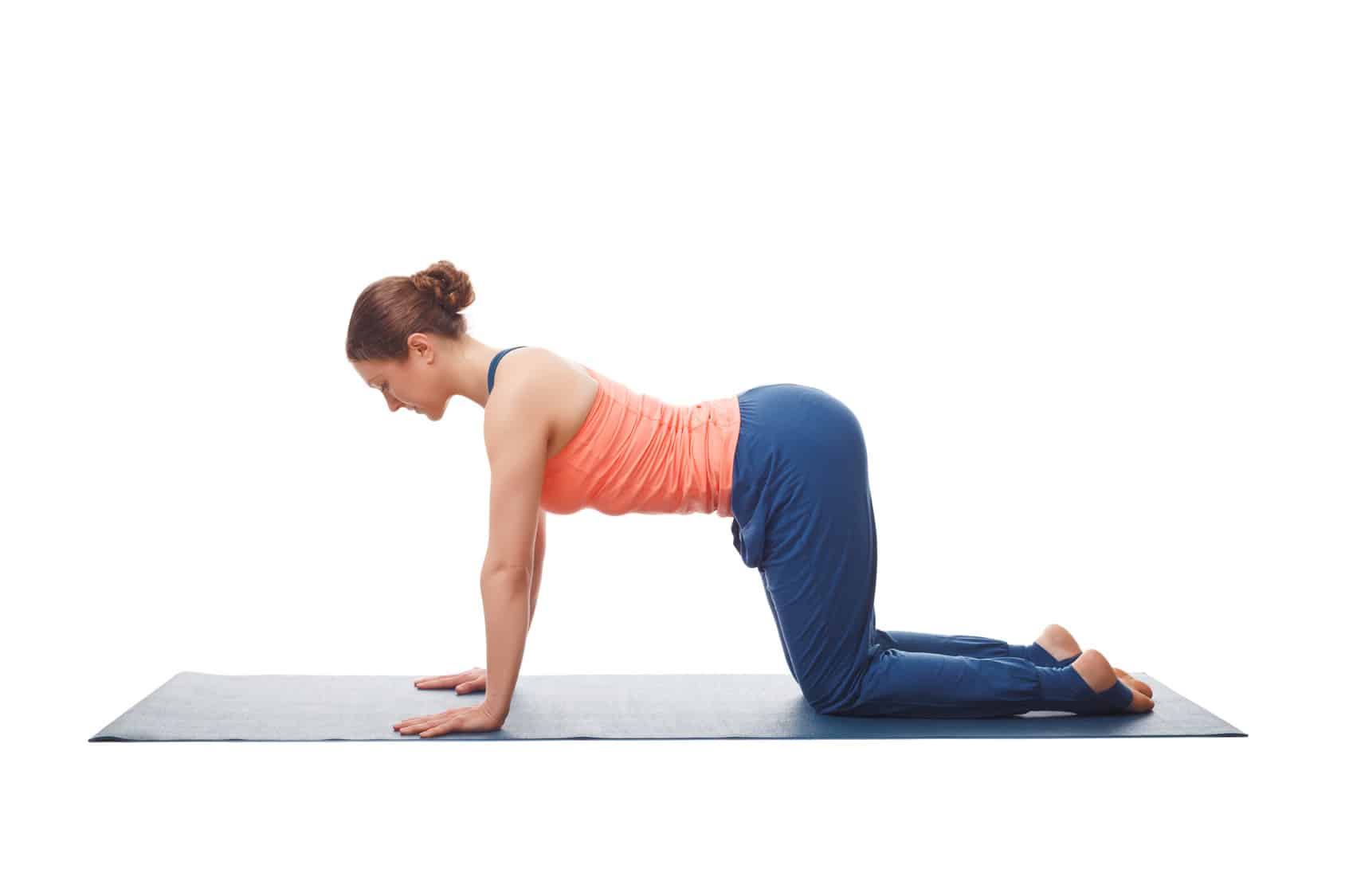
4. Cow Pose

yoga

Kneel on all fours.

Allow the belly to sag down toward the mat as spine also curves downward.

Lift chin upward.

5. Standing Forward Bend Pose

yoga

While standing, bend forward.

Palms should be flat on the floor near feet.

Head should rest against legs.

6. Easy Pose

yoga


Sit crossed-legged on the yoga mat.

Both feet should be under the opposite knees.

Rest palms of your hands on your knees.

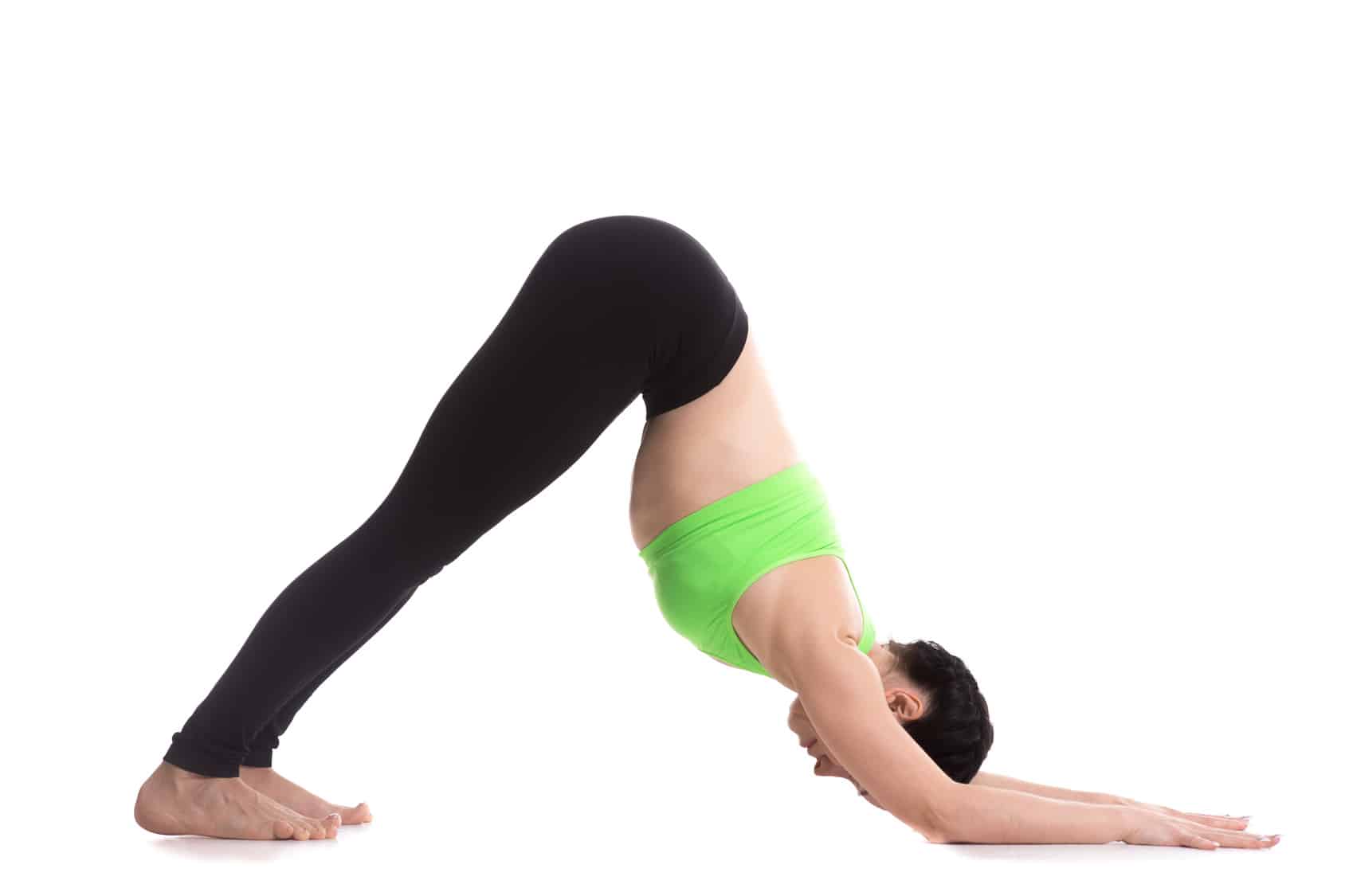
7. Dolphin Pose

yoga

Stand and bend forward, touching palms to floor.

Walk hands forward until you can place your forearms flat on the yoga mat.

Relax your neck and head.

8. Eagle Pose

yoga

Bend knees and balance on one foot.

Cross other leg over balancing leg, then wrap foot behind calf of balancing leg.

Cross arms, bend elbows and press palms together.

Repeat on opposite leg.

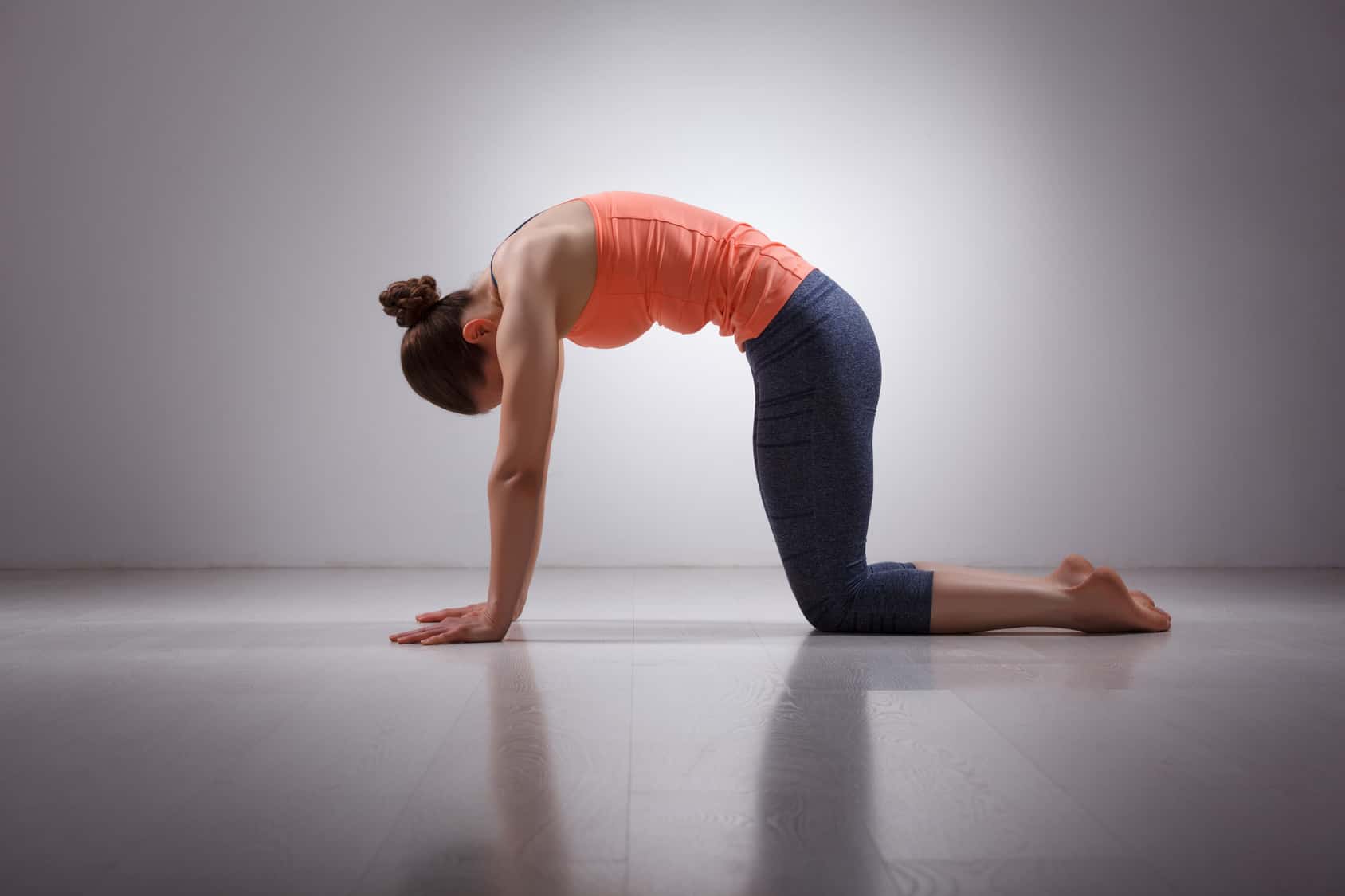
9. Cat Pose

yoga

Kneel on all fours with toes pointed.

Round back into a curve arcing up.

Allow head and neck to relax.

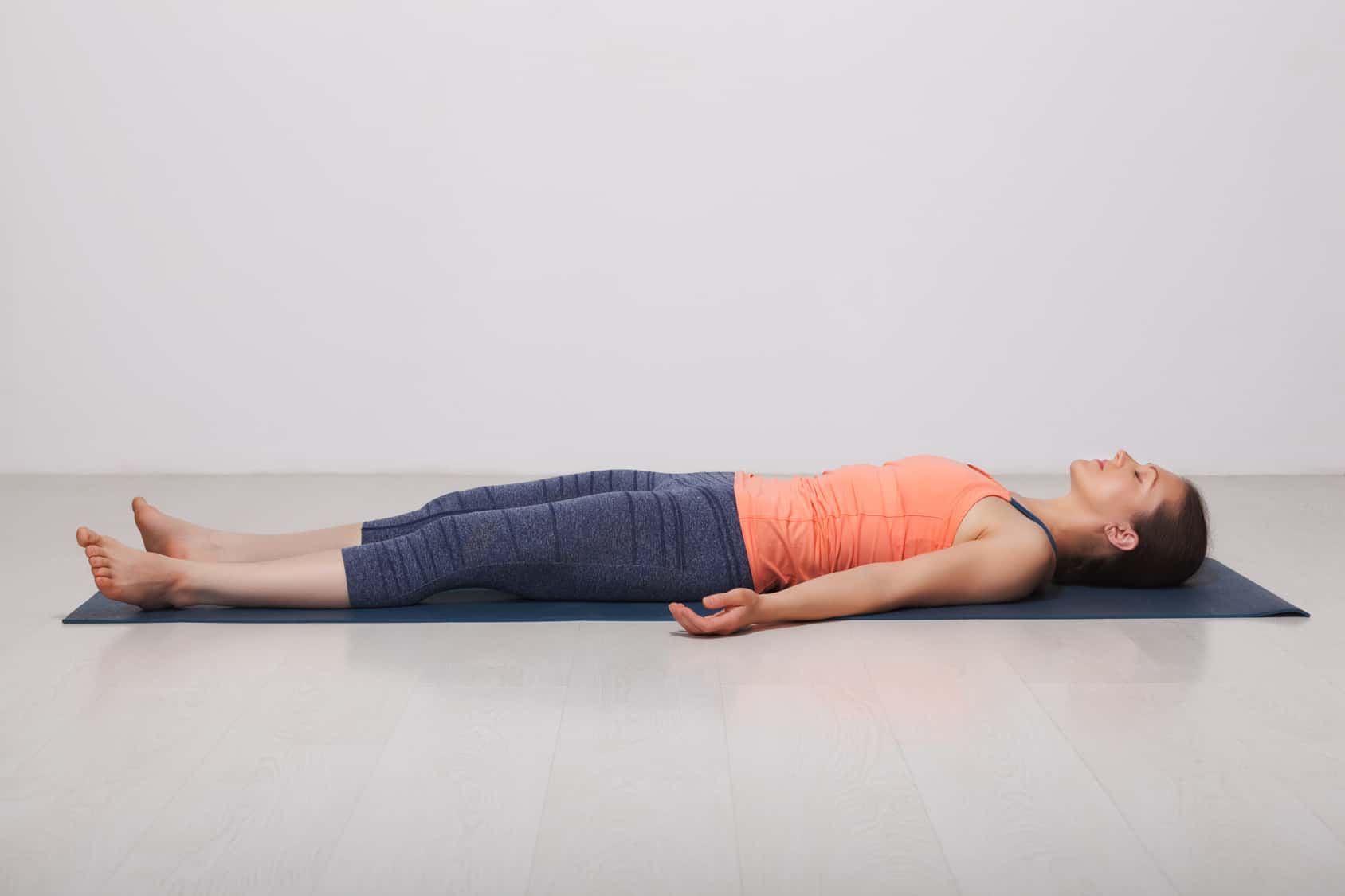
10. Corpse Pose

yoga

Lie flat on your back.

Palms should be facing up.

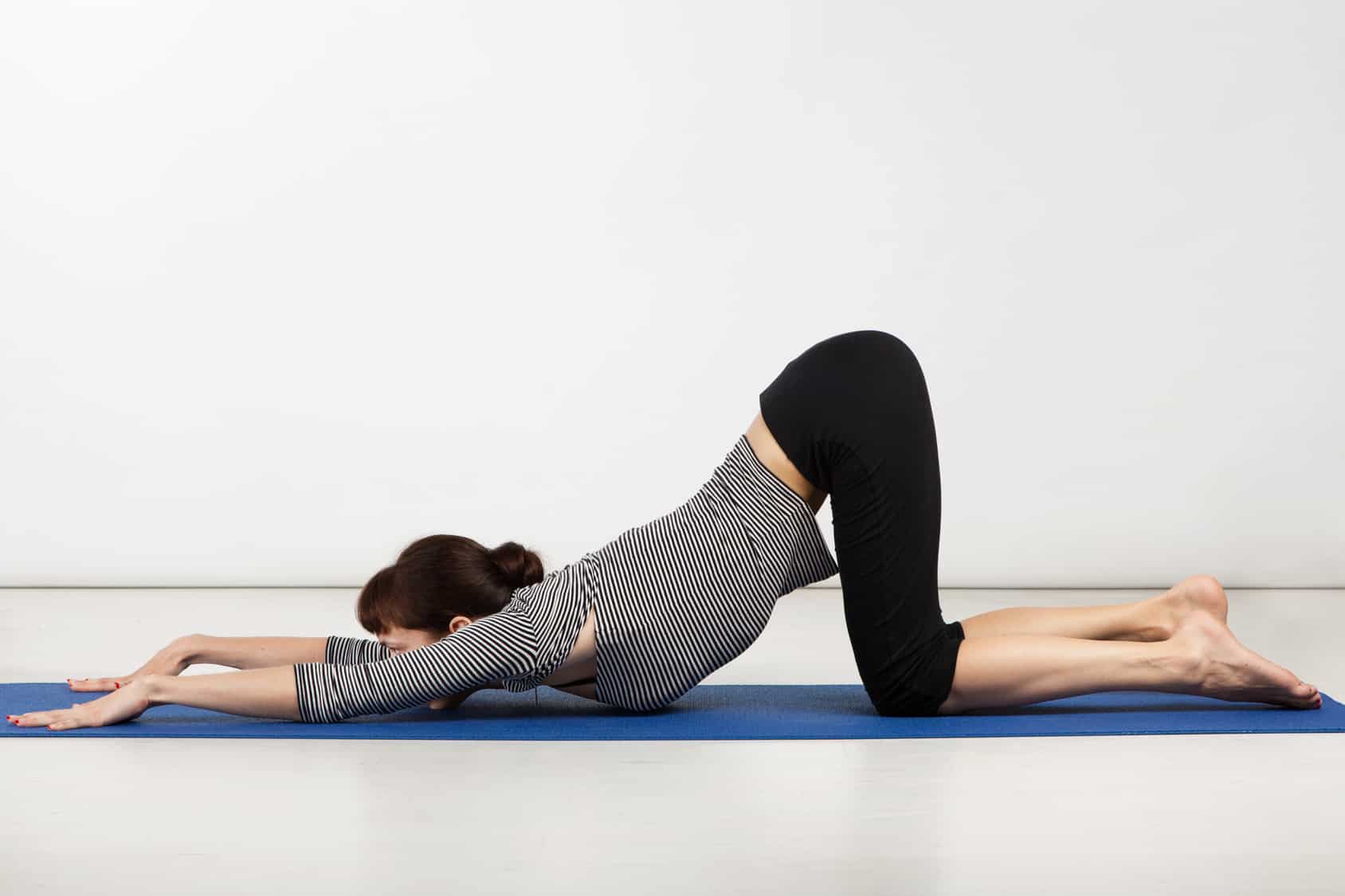
11. Puppy Pose

yoga


Kneel on all fours with feet flexed and toes against yoga mat.

Walk hands forward with arms straight and palms against floor.

Allow chest and forehead to touch floor.

12. Extended Triangle Pose

yoga

Stand with one foot facing forward and other foot turned out 90 degrees.

Step forward one giant step with the foot that is turned out.

Bend forward placing hand on the ankle of forward foot.

Reach opposite arm upward.

13. Legs Up the Wall Pose

yoga

Sit with rear close to a wall.

Put both legs up the vertical surface of the wall with feet flexed.

Arms should be out straight from shoulders with palms down.

These poses help blood flow to muscles and you should feel a gentle warming of your body as you stretch. The release of muscle tension from yoga can result in less pain, including relief of minor tension headaches.

7 Life Lessons You Can Learn From Being In A Relationship

As life-long learners connecting with people all over this big blue planet, we gain many lessons from being in both healthy and unhealthy relationships. The way we define love as a society may change over time, but the way it feels in your heart will always be the same.

Being in a relationship can give you emotional lessons as well as social knowledge in the form of intrapersonal and interpersonal skills.

After you have been with someone for a while you can learn to pick up on your partner’s body language habits, facial expressions and what they mean.

You learn to use your emotional intelligence, which is the ability to detect another person’s emotional state, which is a valuable social skill to have.

7 Life Lessons You Learn From Being In A Relationship

1. We can choose our emotional state

A couple who is going through a difficult time, for example, with the illness of a loved one, often has to go about the usual business or earning money, paying bills, and caring for a family. The stress of having to cope with a setback while also needing to keep moving can be a burden.

One significant life lesson you learn from being in a relationship is to choose your mood. Sure, you may have a sorry situation to recover from, but hanging your head only brings down those around you. Making the best of a bad situation is an excellent life lesson that love teaches us.

2. The moments of pain are worth all of the joys

These setbacks are just that, a temporary moment of disappointment. The laughter, joy, smiles, giggles, jokes, euphoria, hugs, snuggles and more all make these sad moments as temporary as the pain from a needle when you get a shot. It hurts for a moment, and then you’re all protected.

Related article: 6 Signs You’re In A Relationship With Your Soulmate

3. People are capable of change

Aging, choices we make, experiences we gain, how can we not change over time? People rarely change their core beliefs, values or traits that they’ve had since birth but they can change their attitudes, behaviors, thoughts and beliefs, no matter their age.

Related article: 7 Things A Strong Woman Will Never Tolerate In A Relationship

The key to being able to change someone is for that person to be willing to change. Can you change your partner, not really but you can reward them by praising things that you like them doing. This reinforces the positive behavior as long as they like the reward.

This type of Pavlovian behavior psychology has been around for decades and it is still relevant today. Anything that activates your brain’s pleasure center can act as a reward for reinforcing good behavior. That could be food, sex, a ‘Thank you honey,’ or anything that your partner loves.

4. The past can only affect your attitude if you let it

Researchers at the University of Massachusetts studying relationship lessons and attitudes of optimism vs. pessimism found that peoples experiences in their own dating relationships predicted whether or not they were optimistic or pessimistic about future love relationships.

In other words, if your parents had it rough, you will too. But people in relationships have learned the life lesson that they are in control of their behavior in the here and now and they won’t let the past affect how their present relationship progresses.

5. Learning to compromise will help you all through your life

You never get to control the remote? How about the room temperature? Isn’t it your partner’s turn to do the dishes There will never be a day where everything goes your way when you’re part of a couple and that’s one life lesson that people in relationships have learned.

That’s because by being in a relationship they have learned to compromise. Peaceful harmony cannot exist between two grown adults who have different tastes, preferences, likes, and dislikes all the time. Therefore, it is essential to learn how to compromise in order to live with a partner in a relationship.

6. Forgiveness is powerful healing magic

Researchers studying the effects of a 6-week counseling program to help forgive someone who has wronged you. When participants completed the program, their mental health improved more and they had more forgiveness toward their exes than the control group did.

7. Love changes over time

The initial fire and passion from a relationship’s beginning may have faded, but the emotions become more intense, deep, and primal than ever. The heart muscle becomes stronger as it is exercised, and even through deep emotional connections we increase our heart rate slightly. Stronger hearts can love more deeply, and that’s one heart-healthy life lesson you learn from being in a relationship.

7 Things You Need To Know About Being Friends With A Gemini

If your friend was born May 21 to June 20 then he or she is the sign of the twins, Gemini. Gemini is ruled by the planet Mercury and is an air sign, which means that you need to know that your Gemini friend thinks they know everything.

Gemini’s friends need to know that being a “twinsie” is not always double trouble or double the fun. Why are people always saying that Geminis have a double personality, are two-faced or make split decisions? It might be that their silent twin is always along for the ride that makes it feel like you have a third wheel along when you and your Gemini friend get together.

Astrology is used by many people to help them understand their personality traits. People like the outline of traits that astrology provides, which they see like a guide for how to become a better person based on their tendencies. Positive people work to maximize the positive while working on the negative personality traits.

According to Kendrick Frazier, author of The Hundredth Monkey: And Other Paradigms of the Paranormal, in 1977 about as many people chose to seriously pursue the study of astrology as chose to study psychology.

While today the numbers of seers and astrologers are surely different, astrology deserves respect. Those who do love astrology feel that awareness of their personality tendencies through the knowledge of their sign contributes to their lives in a positive way.

7 Things You Need To Know About Being Friends With a Gemini

Gemini is a two-for-one deal when it comes to friendship. You’ll feel like your friend is actually two people at times. Gemini can drive even the closest of friends crazy, but stick with them because there’s plenty of fun to come.

Lucky for you, having an extra brain, heart, and soul to partner up with you is one of the best of these 7 things you need to know about being friends with a Gemini.

1. You won’t have to build their self-esteem

Geminis know that they have good taste, thank you very much, and they are happy to share their opinion. Gemini loves themselves first, and their twin second.

2. Geminis have the best dressed friends

Gemini will wear clothes to stand out, not to blend in with the crowd. They prefer to be unique, so don’t copy their style. They’ll find something similar but just as unique for you if you ask.

3. Two heads aren’t necessarily smarter than one

No, Gemini isn’t unintelligent, but they think they’re smarter than they are. You can give them all of the evidence to the contrary but arguing won’t help you unless you have others on your side too. Just tell them they’re right and have them take you shopping.

4. On the other hand, Gemini has multiple opinions

Well it’s hard to make up your mind when there are two very excellent points of view here. Gemini might need you to help them decide when they are facing two different perspectives.

Related article: 9 Things Never To Say To A Strong Woman

Two-faced is what you might be thinking, but having different viewpoints from your helpful Gemini friend can be good for you too. Try to be open-minded and let Gemini play Devil’s advocate for you. Remind your Gemini friend that ultimately, the decision was yours to make.

5. Gemini will not always agree with you

Related article: 10 Things You’ll Only Understand If You’re A Taurus

If you asked for your friend’s opinion about whether to get back together with your ex, you’re going to get Gemini’s honest answer, and the argument for your ex’s perspective as well. After all, Gemini can see things from both viewpoints. Ah, the annoying Gemini.

6. Someone else is usually to blame

Gemini might try to get away with blaming a twin, but they definitely aren’t taking full responsibility for anything that they did wrong. Maybe they will take half blame though. Just be sure that they aren’t trying to put the blame on you if it’s not justified.

7. You aren’t Gemini’s only best friend

Your Gemini friend is a positive sun sign, did you know that? In order of the zodiac, starting with Aries, the signs are numbered and they alternate with positive and negative. Gemini ends up being an odd-numbered sign and is assigned as a positive one. That means Gemini is extroverted and science actually backs this up.

Researchers confirmed ‘the astrological proposition that people born with the sun in a positive sign (Aries, Gemini, Leo, Libra, Sagittarius, Aquarius) are extroverted and those with the sun in a negative sign (Taurus, Cancer, Virgo, Scorpio, Capricorn, Pisces) are introverted,’ The study in the Journal of Sociology and Psychology found that this was more often true for with people with an astrological knowledge of the personality traits of their sign.

Skip to content