Weekly tips, affirmations, and small actions to feel your best.

Doing This ONE Thing Makes It Easy To Eat Healthy

When you know that healthier eating is easy with this one important thing to help you, better nutrition and a healthier body is within your reach. Whether your goal is to lose weight, get fit, or just have better nutrition this one technique can help.

Cravings for junk food, sweet treats, and unhealthy fats are common. Desire for these types of unhealthy foods is something that is almost unavoidable until you learn how your brain is preventing you from eating healthier.

Understanding what drives our food choices is something that can help us to have a healthier lifestyle. Each day we make many food decisions. Let’s look at how being informed about this one thing will make a difference in your future, healthier food decisions.

Doing This ONE Thing Will Help You Eat Healthier

So much of our behavior is driven by our brain, which we also have the power to control. Hacking into our brain to learn to control our behavior is the way to unlearn bad habits and build new ones.

A desire to eat healthy is a desire to make a positive change in your life. This article is designed to help you get that positive change with healthier eating.

Behavior change is your goal, and targeting your brain’s reward center is going to help you do it. Recent research is using behavioral modification techniques to help people reward good behavior like eating healthy and avoid harmful eating behavior.

Related article: This Is What Happens When You Drink Wheatgrass Every Day

In a study where consumers had a choice of purchasing a healthier grocery item with a future reward of 50 bonus points to use toward savings on a future purchase or receiving 50 cents off of the healthy food now, customers were more likely to choose a healthy food if they have the promise of a future reward.

Researchers studying consumer grocery habits say ‘Consumers who have poor eating habits and who are overweight benefit the most from long-term reward incentives than if they are offered price reductions of an equal value. However, among healthy eaters, price breaks lead to more purchases of less healthy items.’

If you are already a healthy eater, you appreciate the savings on your monthly grocery bill now, but in order for people to make the change to a lifestyle of healthy eating, they had to visualize a future self. This focus on future results is usually why we chose to make a significant lifestyle change in the first place.

Related article: How To Stop Emotional Eating In 3 Steps

Researchers say that this one finding is important because grocery stores can use it to help people choose healthier eating over junk food. We can also use the information to visualize our ideal future self-image, no matter what health goal we are working on, as a tool to help motivate us.

How to Use This ONE Thing to Eat Healthier

‘The study indicates “incentivizing with behavioral rewards is more effective for consumers who are either overweight or junk-food junkies. The points received for each healthy choice not only led to a reward (e.g., accumulated cash value or free food), but also signify the otherwise intangible benefits of an isolated act of eating healthy.”

For your own health goals, pick a reward that you can give yourself in the future that supports your goal. For example, you might choose a new juicer machine that supports your healthy lifestyle, or an outfit that you will be able to fit into once you have lost some weight by eating healthier.

Hang a picture of the item that you will reward yourself with near the fridge, in your wallet, at work or someplace where you have to make decisions about food. The image will remind you of the reward that is waiting for you if you make a healthy choice over an unhealthy one.

Set a timeframe to reach your goal of healthier eating, for example, a period of 4 weeks and then give yourself the reward if you have been able to uphold your desired new healthy eating behavior. Give yourself some forgiveness if you slip up once or twice during the goal timeframe.

Research Supporting How This Will Help You Eat Healthier

A program to influence healthier eating in schools was established to study if children would be able to maintain healthier habits over time. The program included education about healthier eating, goal setting, parent involvement and reinforcement.

The reinforcement that the kids received for engaging in healthier behaviors was only a simple heart sticker, but teachers and school administrators gave the stickers to kids when they saw them engaging in healthy eating or healthy activities on the playground.

Because the reward was given right away, the children knew that they had been caught in the act of showing positive behavior and were more likely to repeat it to get the positive recognition and reward.

Another study offered financial incentives to adults in a weight loss program over 16 weeks. Even if the monetary reward was small, like a chance to win $10, participants who had the promise of a future monetary reward lost significantly more weight than the control group.

Will this help you? Share with us in the discussion!
These Simple Yoga Poses Reduce Your Stress Hormones

Life’s everyday responsibilities produce a lot of stress. Add to that the stress-inducing events of the world, and before you know it, your stress levels are out of control. Learning how to manage stress is essential for your overall health. Yoga is a proven way to reduce stress hormones. It brings together physical and mental techniques to enhance a sense of peace. Yoga allows you to relax as you manage anxiety and stress. Here are fourteen simple yoga poses for you to start reducing stress today.

How you can reduce stress hormones with yoga

According to studies, yoga is an effective way to reduce stress, depression, and anxiety. It also provides a lot of health benefits, including:

  • Better fitness: Yoga improves your range of motion, strength, flexibility, and balance.
  • Mental health: There are mental benefits of yoga. Regular yoga builds a sense of mental well-being and resilience.
  • Quit smoke: Yoga can help reduce your desire for a cigarette.
  • Weight control: Regular yoga helps you feel better physically. It gives you a sense of being in control of your appetite, so you’re less prone to overeating.
  • Chronic conditions: Yoga can help lower your chronic disease risks, such as higher blood pressure or heart conditions. Regular yoga can relieve back and neck pain, help control your arthritis and improve insomnia.

reduce stress hormonesWhat does yoga involve?

Many yoga styles can reduce stress hormones. Depending on your yoga type, you’ll do different poses at different intensities. Yoga instructors, or yogis, are trained to teach yoga classes. Hatha yoga is the most common style of yoga. It’s a slower-paced style of yoga, with more accessible poses for beginners. The three essential components of yoga include:

  • Breathing techniques: This part of yoga teaches you to control your breathing. It helps you learn to control and calm down your mind.
  • Relaxation: Yoga may include relaxation or meditation to help you recognize movements. It enables you to increase your mindfulness.
  • Poses: Yoga postures or poses increase your flexibility and strength. They start simple and increase in difficulty.

Before you get started on a yoga routine to reduce stress hormones

When you first start yoga, be sure to follow these essential tips.

  • Find ample enough space: Create a place house to do yoga. Having a specific place can help you be more diligent in practicing daily.
  • Be gentle with your body: Start slowly, then build up your tolerance to prevent injury.
  • Move little by little: Don’t worry if you can get the pose the first few times. They take practice.
  • Don’t skip poses: Do all the poses, don’t skip to your favorite ones. Every pose has a purpose and works together with the other poses for a whole-body workout.

Here are 14 simple yoga poses that reduce stress hormones

Some instructors suggest you do yoga in a specific sequence, but it’s unnecessary. There is no wrong way to practice yoga to reduce your stress. Try these different poses to explore what works best for you.

1 – Easy pose

Get into a comfortable seated position. Cross your legs. Relax your feet and put your pelvis in a relaxed position. Think about how your body feels. Feel yourself breathing. Sit for a few minutes and concentrate on these sensations.

2 – Shoulder pose

Now roll your shoulders forward in a circular motion. Do this four times and do it back four times. After that, inhale and put your hands up above your head and exhale, lowering your hands to chest level. Let go and reduce stress hormones as you breathe out.

3 – Neck roll

Let your head fall toward your chest. Move your head around slowly in a full circle, first to the right three times. Then circle your head to the left three times. Let go of your stress as if it’s rolling off your head and neck. Return to the easy pose.

4 – Child pose

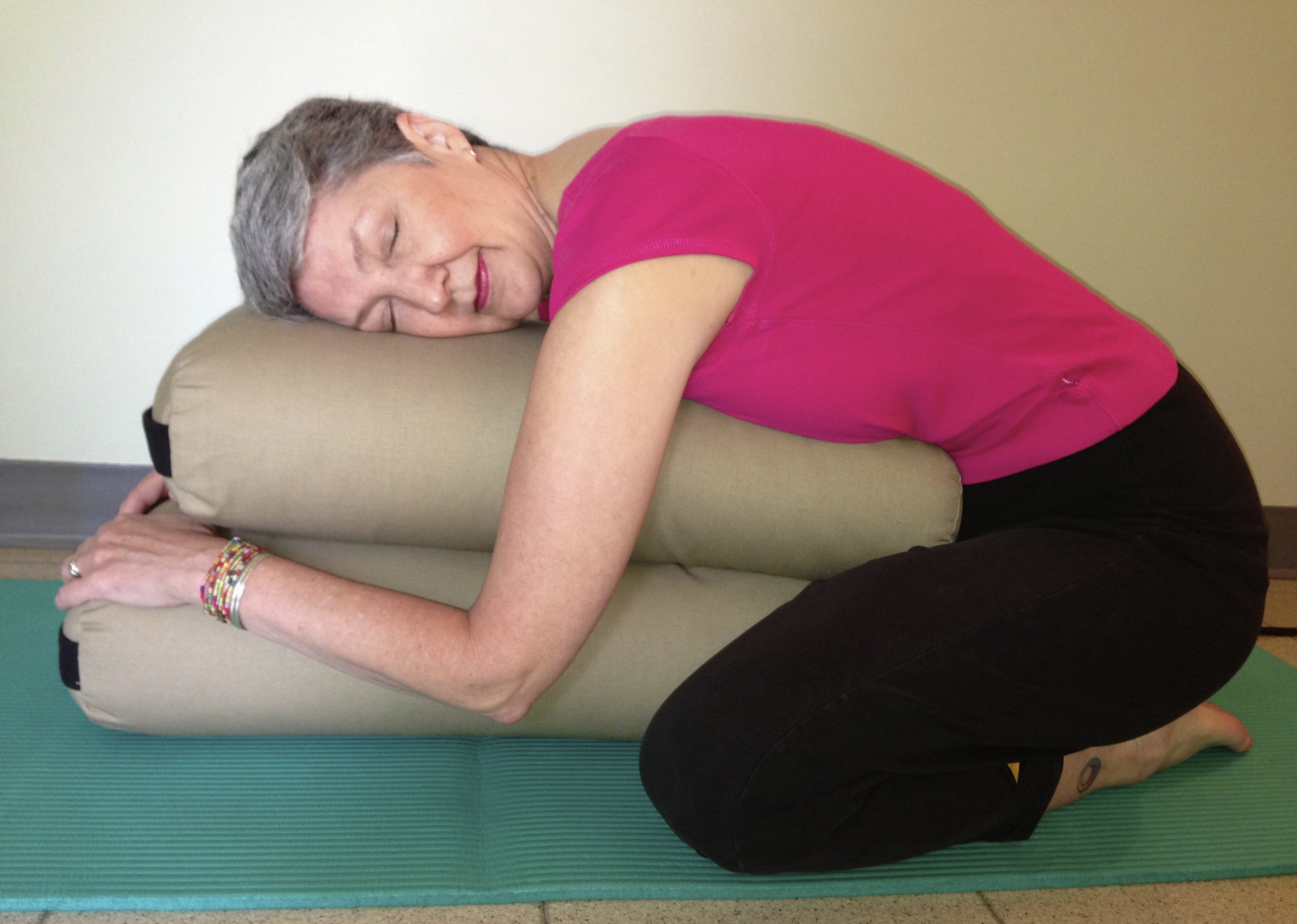
Get on your hands and knees. Put your hands out in front of you. Allow your body to relax. Your knees should be together. Reach forward and allow your bottom to touch the heels of your feet. You can use supports for assistance if you are starting to use yoga to reduce stress hormones. Don’t worry. That flexibility comes in time!

modified-supported-childs-pose-restorative-yoga

Modified supported child’s pose

5 – Cow pose

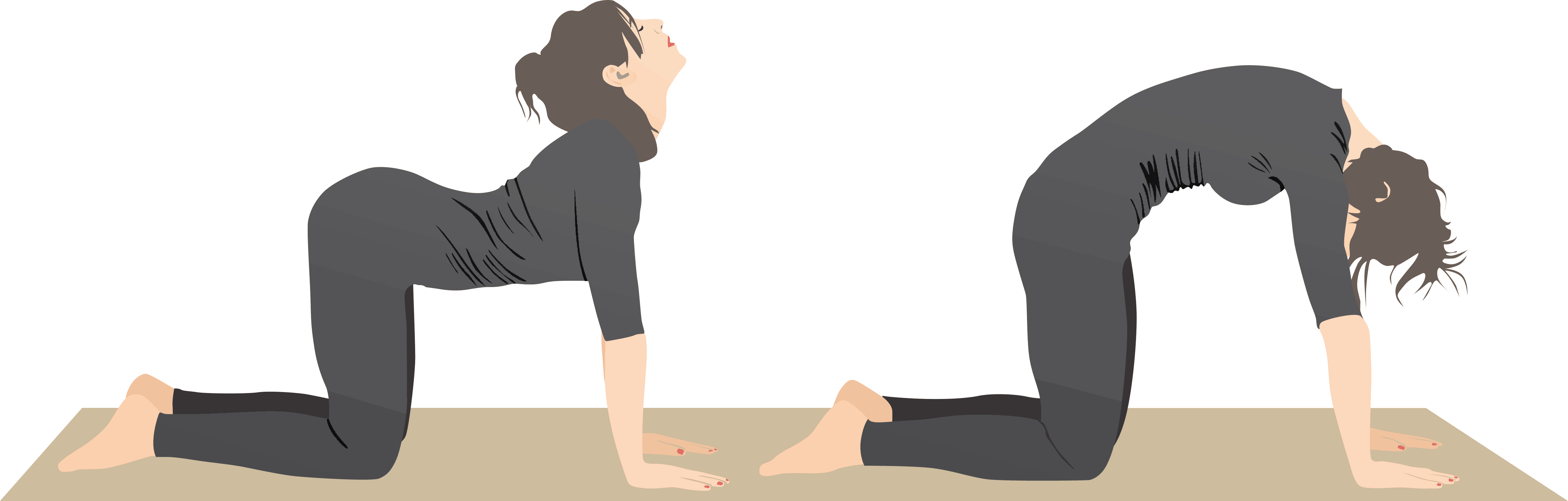
Put your stomach flat on the floor. Inhale. Life up your chin and chest and look up at the ceiling. Exhale and release stress.

sciatica

6 – Cat pose

Inhale and pull your stomach to your spine. Round your back and look up at the ceiling. Exhale and let go of your stress. Gently allow the top of your head to go toward the floor.

7 – Downward dog

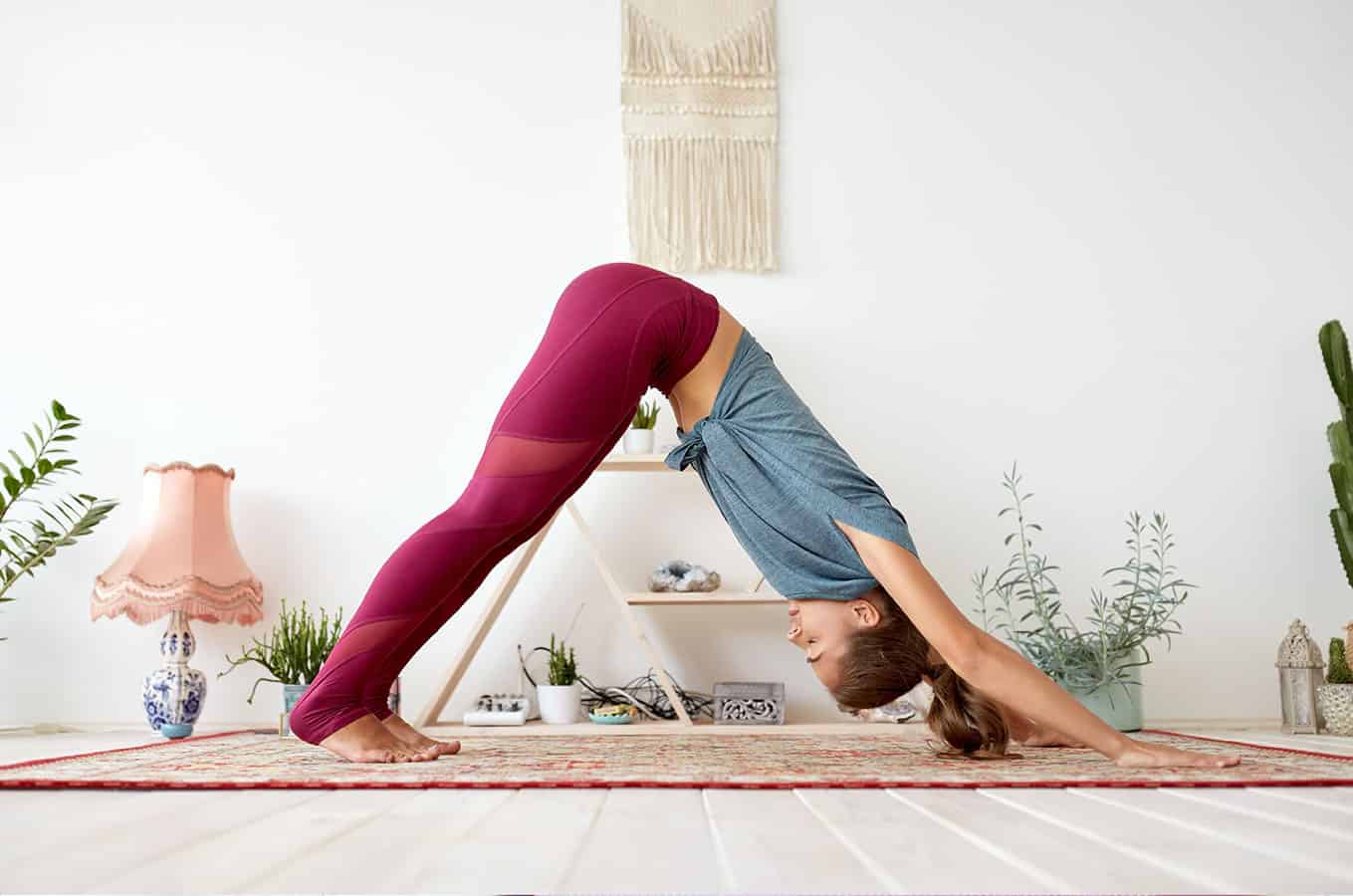
Put your toes under your feet. Press the palms of your hands on the floor and lift your hips up with your tailbone towards the ceiling. Push your heels back and down toward the mat. Stretch with your head dropping with a long neck. Think of your dog stretching-this is a classic downward dog. Stay in this pose, then breathe deeply. Exhale, letting go of any stress you feel.

yoga

8 – Tabletop position helps you reduce stress hormones

Get on your hands and knees. Place your wrists under your shoulders. Your knees should be under your hips. With your palms on the floor, and your fingers facing forward, your weight should be evenly distributed on the palms of your hands. Relax your head to gaze down and allow your stress to hit the floor.

9 – Standing forward bend

Sit flat on the floor with your feet out in front of you. Slowly stretch your hands toward your feet. Release the muscles in our neck and shoulders. Release your head while keeping your legs straight. Stay in this position and breathe slowly. Imagine your stress floating away.

10 – Mountain pose

Sitting on the floor, bend your knees and pull your stomach back toward your back. Roll your shoulders forward and relax your head. Inhale and exhale, letting go of the stress and anxiety you feel.

11 – Legs up the wall pose can help reduce stress hormones

Lie on your back with your legs up on the walls. Make sure your knees are straight up the wall. Put your hips up against the wall as much as possible. Your arms should be beside your body. Put one hand on your midsection, and your other hand is on your chest. Rest in this pose for 10 minutes, breathing slowly and feeling the stress leave your body.

12 – Corpse pose

Lie flat on your back with your feet wider than your hips. Allow your toes to be spaced out equally. Put your arms next to your body at a 45-degree angle. Your neck, shoulders, and head should align with your spine. Inhale deeply. Exhale and let your mind and body completely relax. Stay in this pose for fifteen minutes.

13 – Tre the tree pose to reduce stress hormones

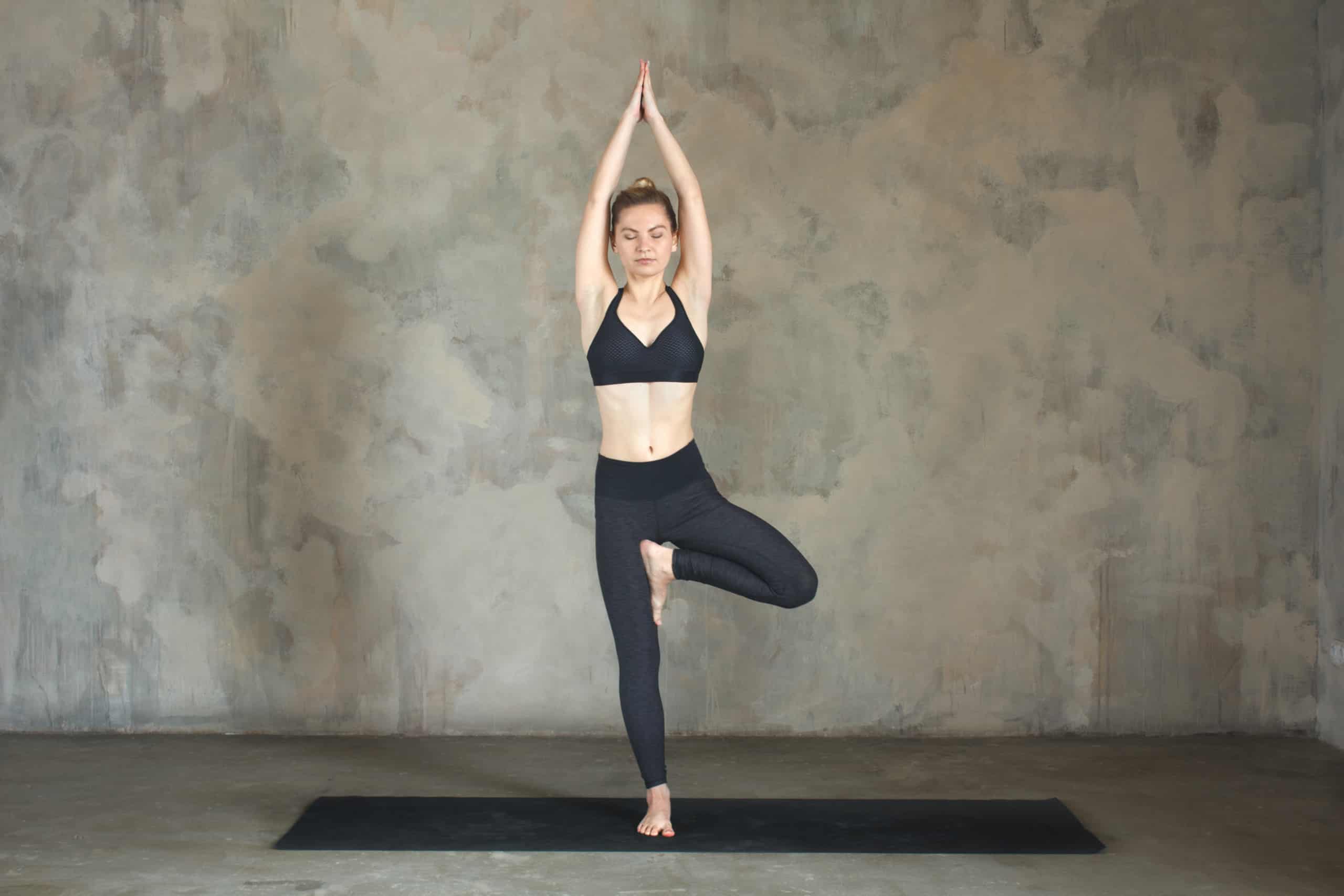
Stand straight. Bring your hands together in prayer, then slide them over your head. At the same time, slide your left leg up your bend your knee while balancing on your right leg. Press your left leg into the inner thigh of your right leg. Hold for twenty seconds and then switch legs. Breathe slowly and relax, letting go of your stress.

balance tree pose


14 – Baby pigeon pose

Get on your hands and knees, and move your right knee forward between your hands. Straighten your torso like you’re going to do lunges while you slowly straighten your left leg behind you. Keep your knee on the floor.

Turn your right knee toward your right wrist and bring it down to the floor so that your right calf is flat. Your right foot should rest under you. Slowly lower your upper body so it’s over your bent leg, rest on your elbows. Inhale and exhale. Push back onto your left leg, stretch your calf muscles, and then change sides. Repeat with your left leg bending, this time and your right leg extended backward.

What if negative thoughts come to your mind?

Sometimes when you’re doing yoga, you may think about all the negative things in your life. If this happens, let go of these thoughts. Instead, focus on the moment, how your breathing sounds or how your body feels stretching. If you continue to have negative thoughts, bring yourself back to your breathing and how your body feels. Maintaining this practice will help you create a habit of letting go of your negative thoughts and feelings.

If you enjoy doing yoga to reduce stress hormones, consider these practical suggestions when you get started.

  • Set up regular times to practice yoga at home or in class.
  • Discuss finding the best yoga routine to reduce stress hormones with your yoga instructor.
  • Talk to your doctor before starting a yoga routine, especially if you have health conditions or take medications.

Final thoughts on doing yoga to reduce stress hormones

Yoga is proven to help reduce stress, and anxiety and reduce depression. When you first start, consider trying some easier poses, then advance to harder ones. If you’re taking a class, be sure to tell your yogi if you have any medical conditions that could cause your injury while doing the poses. Most of all, enjoy learning these different poses and experiencing the benefits physically and mentally of reduced stress.

Signs of a Mold Illness: 7 Symptoms You Need to Know

You wake up feeling off—tired, achy, maybe a little foggy. You chalk it up to stress, allergies, or just one of those days. However, what if the true cause is concealed in your home, showing up as signs of a mold illness you haven’t even considered?

Mold is sneaky. It thrives in damp corners, spreads through invisible spores, and triggers symptoms that seem unrelated—until they aren’t. Mold exposure can adversely affect your health, causing symptoms such as muscle pain and brain fog, often without your awareness.

The good news? You can take control. Knowing the signs of mold illness is the first step toward protecting your body and your home. Let’s break it down—so you can breathe easier.

Where Mold Is Commonly Found (And How to Spot It Early)

Mold isn’t just a problem in old, damp basements—it can grow anywhere moisture lingers. Bathrooms, kitchens, and even your bedroom can be breeding grounds. The tricky part? Mold often hides in places you don’t check daily.

It thrives on wood, drywall, and fabrics, feeding off humidity and poor ventilation. By the time you see it, the problem is usually bigger than it looks. But mold doesn’t always announce itself with dark patches.

Sometimes, it’s the musty smell or unexplained allergies that tip you off. Knowing where to look—and what to look for—can help you stop mold before it spreads.

  • 🛁 Bathrooms and kitchens:  Steam and humidity create the perfect environment for mold on walls, tiles, and ceilings.
  • 🌬️ HVAC systems and vents:  Mold spores circulate through dirty air ducts, spreading to every room in your home.
  • 💦 Windows and door frames:  Condensation buildup fosters hidden mold growth in seals and wooden trim.
  • 💧 Furniture and upholstery:  Sofas, mattresses, and carpets trap moisture, making them easy mold targets.
  • 🚿 Under sinks and behind appliances:  Leaks often go unnoticed, allowing mold to thrive in damp, enclosed spaces.

7 Signs of Mold Illness You Shouldn’t Ignore

when flower doesnt bloom

Mold-related illness is tricky—it doesn’t hit all at once like a cold. Instead, symptoms creep in gradually, often mistaken for allergies, stress, or just getting older. The problem? If mold is the culprit, your body is constantly fighting an invisible enemy. And until the source is removed, the symptoms won’t go away.

Mold exposure affects people differently. Some struggle with respiratory issues, while others feel it in their gut, skin, or even mood. But the more symptoms you have—especially ones that seem random or persistent—the more likely mold is involved. Here’s how it can show up in your body:

1. Unexplained Muscle Aches and Joint Pain

Mold exposure can trigger chronic inflammation, which is the body’s natural response to toxins. Over time, this inflammation can settle in your muscles and joints, leading to stiffness, soreness, and deep aches that don’t go away. Unlike soreness from exercise, this pain isn’t relieved by stretching or movement. Some people also report feeling sharp, pinprick sensations in their muscles.

👉 If you’re waking up with pain that doesn’t have a clear cause—or you feel sore without strenuous activity—mold exposure could be a factor.

2. Digestive Problems and Food Sensitivities

Not many people associate digestive issues with mold, but they should. Mold exposure can disrupt gut health, leading to:

✔️ Bloating and stomach pain
✔️ Nausea and vomiting
✔️ Diarrhea or constipation
✔️ Increased food sensitivities
✔️ Leaky gut syndrome

Mold toxins (mycotoxins) can harm beneficial gut bacteria, making digestion harder. Some people even develop sudden intolerances to foods they used to enjoy, especially grains, dairy, and fermented products—foods that can contain mold themselves.

👉 If your stomach feels off more often than not, mold could be affecting your gut microbiome.

3. Mood Swings, Anxiety, or Depression

Mold doesn’t just affect your body—it affects your brain. Studies have linked mold exposure to neurological symptoms, including mood swings, anxiety, depression, and memory issues. The reason? Mycotoxins (mold toxins) can disrupt neurotransmitter balance, causing emotional and cognitive instability.

People living in mold-contaminated environments often report feeling “off” emotionally—more irritable, anxious, or even unusually depressed. Some describe brain fog, forgetfulness, or difficulty concentrating, similar to ADHD symptoms.

👉 If your mood has been unpredictable or you’re struggling with brain fog, your environment—not just stress—could be the trigger.

4. Chronic Respiratory Issues

This is one of the most common and immediate signs of mold exposure. Mold spores irritate the respiratory system, leading to:

✔️ Persistent coughing
✔️ Wheezing or shortness of breath
✔️ Stuffy or runny nose
✔️ Frequent sinus infections
✔️ Chest tightness or discomfort

For those with asthma or allergies, mold exposure can make symptoms worse. Some people even develop hypersensitivity pneumonitis—a lung condition caused by prolonged mold exposure, leading to lung inflammation, difficulty breathing, and chronic fatigue.

👉 If you always feel congested or struggle to breathe indoors but feel better outside, mold could be in your air.

5. Numbness, Tingling, or Skin Sensitivity

Ever get that pins-and-needles sensation in your hands or feet? Or maybe your skin feels itchy, irritated, or unusually sensitive? Mold can trigger a condition known as neuropathy, where toxins affect nerve function. Some people experience tingling, while others feel burning sensations on their skin.

In some cases, mold exposure can lead to rashes, hives, or dry, scaly patches. If you notice redness or itchiness that doesn’t go away—even without contact with visible mold—your immune system may be reacting to airborne spores.

👉 If your skin feels hypersensitive, tingly, or inflamed, mold could be overstimulating your nervous system.

6. Frequent Headaches and Eye Irritation

Mold exposure can trigger sinus headaches, tension headaches, and even migraines. The toxins and spores cause inflammation in the sinuses, leading to pressure, congestion, and throbbing pain around the forehead, temples, and eyes.

Meanwhile, mold spores can irritate the eyes, causing:

✔️ Redness
✔️ Itchiness
✔️ Sensitivity to light
✔️ Watery, blurry vision

Some people also report a “heavy” feeling behind their eyes, similar to allergy symptoms that don’t improve with antihistamines.

👉 If you get headaches indoors but feel relief outside, mold could be the reason.

7. Fatigue, Brain Fog, and Low Energy

Feeling exhausted even after a full night’s sleep? Struggling to focus on simple tasks? Mold exposure can drain your energy and disrupt cognitive function, making it harder to think clearly.

Mold toxins overload the immune system, forcing your body to work overtime to fight them. This constant internal battle leaves you feeling:

✔️ Mentally foggy
✔️ Physically drained
✔️ Forgetful or easily distracted

Over time, this can lead to chronic fatigue syndrome, where even minor activities feel exhausting.

👉 If your energy is low and no amount of sleep seems to help, mold could be draining you from the inside out.

How to Test for Mold Exposure in Your Body

healthy environment

Mold illness can be tricky to diagnose because its symptoms mimic allergies, chronic fatigue 😴, and other conditions. If you suspect mold is affecting your health, 🧪 testing can help confirm your exposure. Most doctors won’t test for mold unless you request it, so it’s important to know what to ask for.

A urine test can detect mycotoxins—the toxins produced by mold—while blood tests can check for immune system reactions 🩸 and inflammation linked to mold exposure.

Some people also take a vision test 👁️ that measures how toxins affect brain function. If your symptoms improve when you leave home or worsen in humid environments, mold could be the culprit.

A professional mold inspection of your living space may also provide answers. If testing confirms exposure, the next step is removing mold from your environment and supporting your body’s detox process.

Protecting Your Health from Mold

Mold exposure is sneaky, but once you recognize the signs, you can take action. Your health isn’t something to gamble with—if symptoms persist, don’t ignore them. Whether it’s improving ventilation, fixing leaks, or seeking professional help, small steps make a big difference.

Key Takeaways

  • Mold illness often mimics allergies or fatigue—don’t overlook persistent, unexplained symptoms.
  • Testing for mold exposure can confirm if it’s affecting your health.
  • Keeping humidity low and fixing leaks helps prevent mold from taking hold.

If symptoms like chronic fatigue, respiratory issues, or brain fog don’t improve, talk to a doctor. And if your home smells musty or has a history of leaks, it’s worth investigating. Your health—and your peace of mind—are worth it.

Don’t Let Anxiety Create These Problems In Your Relationship

Anxiety is caused by fears and strain of expectations. This emotional turmoil can put a huge tension and stress on relationships. Dr. Susan Heiter, who specializes in relationship counseling in Denver, says that she “sees cases in which anxiety, worrying and fearfulness block ability to enjoy comfortable relationships. Anxiety undermines a sense of confidence and personal power. It can arrive mysteriously, like a sudden fog on a clear day, and can hang on far too long.” There are things that trigger anxiety in relationships.

Here are 7 problems anxiety causes in a relationship and how to avoid them:

1. Being overly needy

We all want to feel wanted while being shown love through affection. However, there is a difference when you suffer from an anxiety disorder. The neediness can turn into a compulsion and it becomes too much for the other person in the relationship. Neediness becomes a smothering mechanism that suffocates the union. The person suffering from anxiety worries about seeming too needy, which then causes more neediness in the relationship.

If you begin to feel the helplessness of needing constant reassurance, step back and recognize the behavior. Find ways to cope with your fears while relying on you. When you feel better about yourself, you don’t need another to reassure you. Get creative. Fill the anxiety with positive reinforcements such as meditation, exercise, reading, or writing.

2. Jealousy

Jealousy stems from insecurities, and it’s all-encompassing. It comes from the fear of loss. It affects trust in a loving relationship. When you suffer from anxiety the magnitude of jealousy can be astronomical. You begin to spin out of control thinking about your mate cheating.

When fear lessens, so does jealousy. Recognize the behavioral patterns. No one likes to be accused of things they have not done. Trust is what makes and breaks a relationship. If you can identify the source of fear, you can stop the cycling in the mind. Put your feelings in place and don’t push your partner to the point of making a decision.

3. Chronic Stress

Stress escalates anxiety in a relationship. Financial and health issues are top on the list of stresses. It’s important to try and separate these from your relationship as much as possible. You must maintain a union with your partner rather than push him/her away. Anxiety makes you feel as if you have lost your footing in everything.

Talk about your fears with your partner. Do not blame or shame yourself, or your partner. Share your concerns. Speaking about what worries you is important to let the fear subside. Those things that live in our heads can be set free when we open up to them.

4. Impulsiveness

Anxiety can create moments so unbearable that you feel impulsive. In those erratic moments you can say things that you don’t mean. You can make irrational decisions. You can even act out in destructive behavior. Your partner may or may not tolerate these behaviors for very long.

If you find that anxiety is making you do things impulsively, sit down and breathe. Let those moments where you feel that you are about to jump the gun pass. Find something else to do. When you step back from a situation for a bit you can redirect with a positive attitude. Anxiety forces you to spin out of fear. Every emotion that follows moves on a roller coaster track. Substituting those moments with a different scenery makes a difference. Step outside. Sit in nature. Let the focus lessen before you return to talk with your partner.

5. Negativity

Negativity has a huge impact on fear-based emotions and disorders. Anxiety forces you to take on a victimization personality which is deteriorating in a healthy relationship. A negative outlook towards anything can cause your partner to take seclusion. No relationship can endure too much negativity unless it’s an abusive relationship that feeds on fears and control.

In order to shift your awareness from negativity, you have to change environments. Anxiety has a way of creating stories that aren’t real. If you are experiencing a constant mood of doom with your partner, ask yourself if this is a healthy way to live. Get assistance in this manner. Anxiety can produce a tremendous amount of scenarios that may be eliminated when you face them with someone else. Use positive mantras and affirmations.

6. Addiction

Addictive behaviors and actions can bring about a monsoon of anxiety. In relationships, when one person suffers from substance abuse, this can make the anxious person even more erratic. Drugs, alcohol or other substitutes are substitutes to a deeper issue. You cannot numb the problem or repress it. You must ask yourself if the relationship is causing this and what good will come out of it? If it’s your partner who is suffering from addiction, it’s important to get a hold of the situation for your safety.

If you are the one covering up the anxiety with drugs, sex, food or alcohol, get professional help.

7. Assumptions

When you suffer from anxiety, the last thing you need is jumping ahead of the game. You don’t need to be speculating what will happen in your relationship. One thing is to make plans for the future, but another is to be worrying about things that haven’t happen. You cannot guess your partner’s feelings, so assuming how he or she feels is unfair.

Speak openly to your partner about how you feel. Don’t over stress on the issues. In an open and loving relationship, freedom of speech is a given. You can discuss anything. Assuming and expecting are destructive behaviors in a relationship. You are condemning someone before anything has or could happen.

If you are experiencing these problems, ask yourself if the relationship is worth saving. And, are you willing to change even if your partner doesn’t change? Changes are going to happen in life. Jobs, housing, parenthood, taking care of elderly parents…these are all parts of our life experiences. You need to understand your triggers when it comes to changes. Don’t wait for the panic to strike.

Anxiety is debilitating. It can take over someone’s life and end relationships if not addressed properly. Determine the causes of your stress and fears. Work with a therapist, a support system, and your partner. You can get through this with help. If you want to save your relationship, there is always a way!

Writer Anais Nin expressed her own struggles with how anxiety dictates a relationship: “Anxiety is love’s greatest killer. It makes others feel as you might when a drowning man holds on to you. You want to save him, but you know he will strangle you with his panic.”

Related article: This Is For Every Person Who Has Ever Had Anxiety

(C)Power of Positivity, LLC. All rights reserved

If You Have Dreams About Natural Disasters, This Is What It Means

We’ve all had those intense dreams that involve earthquakes, hurricanes, tornadoes, tsunamis and other natural catastrophes. But, what do they mean? Is our subconscious creating scenarios of disasters to get our attention, or are they visions? These dreams are sometimes created from emotional turmoil, physical issues or spiritual transformations. Dreams have a way of significantly getting our attention.

Well known psychologist, Carl Jung said, “The dream is a little hidden door in the innermost and most secret recesses of the soul, opening into that cosmic night which was psyche long before there was any ego-consciousness, and which will remain psyche no matter how far our ego-consciousness extends.”

If you have dreams about natural disasters, this is what it means:

Related article: If You Have Dreams About Your Partner Leaving, This Is What It Means

Are you having a hard time moving through changes in your life?

Changes in our lives can leave us depleted. We can’t see past the issue at hand. Even though we know that life is ever changing, while we are going through the stress we internalize our emotions. Fear takes over, and during waking hours we are too busy to take notice. However, when we sleep, consciousness is no longer in charge. These are the moments that the mind is able to play out stories. The dreams become little riddles in your psyche. If you are having a hard time accepting changes, you could be dreaming about a volcano eruption, which means that you are bottling up emotions.

Are you stress about challenges that keep showing up?

Sometimes, these dreams show up to stir up the storm that has been brewing in the heart. Earthquakes “break things apart.” If you are struggling with challenges or making an important decision, you could be dreaming of these natural disasters. Step back in waking moments and write your dreams down. Try to decipher the meaning of how you were feeling during the dream. Were you in danger or just being a spectator? It’s important to look at all parts of the dream to see if you can determine the emotions behind the visions. Water, wind, fire, and rocks all mean different things. These elements stir us up.

Are you a perfectionist?

The need to be perfect and stay in control is a huge factor in stressful dreams. If you are having these sort of disastrous dreams, where everything falls to pieces, you can be sure that the anxiety level is going to be atrocious when you wake. Trying to be perfect in an imperfect world is impossible. You have no control over anything but yourself, and even that is questionable.

Research professor Brene Brown says, “Understanding the difference between healthy striving and perfectionism is critical to laying down the shield and picking up your life. Research shows that perfectionism hampers success. In fact, it’s often the path to depression, anxiety, addiction, and life paralysis.”

Are you overindulging in drugs, alcohol or other destructive habits?

What you do during waking life affects sleep patterns. If you are using drugs, alcohol, sex, food or any other substitute to avoid your life, it will show up in your subconscious through the dream world. The sense of being out of control is a factor in dreams of natural disasters. These dreams can be signs that your psychological body is in need of help. Tornadoes passing through, hurricanes shattering everything in sight, and tsunamis wiping everything out of view are some examples of fear and losing control. Take a look at your habits. Drugs and alcohol can alter the dream state with crazy dramatic events.

Natural disasters come in different scenarios. Fires in these dreams can relate to social problems. Water, floods, tsunamis, can also represent spiritual issues. Volcanoes and earthquakes can symbolize the physical body and ailments. Dreams with tornadoes, hurricanes or other wind related disasters can mean financial challenges. If you dream with a comet or asteroid falling, it is a sign of a new era in your life. These cosmological events signify the evolving of consciousness and a deep spiritual transformation.

These dreams can also be telling you that major changes are coming your way in a positive light. Not all dreams of disasters mean doom. They can be omens of job changes, moving to a new location, and even receiving wonderful news. The dream world is a window to your emotions and your spiritual body. Only you know how to interpret these dreams because you know yourself better than anyone.

Jung also said, “Until you make the unconscious conscious, it will direct your life and you will call it fate.”

Sensitive People Are Beautiful. . .

Sometimes, sensitive people appear weak. They give in and they forgive with the same intensity that they love. They feel from the deepest part of their spirit. Besides that, they shed tears without shame, show vulnerability, and usually blame themselves for things that they feel in others.

highly sensitive person

In spite of being hurt, sensitive people still hold compassion in their hands, willing to give to everyone who needs. They share their knowledge in the simplest ways; through a kind word, a gentle touch, a listening ear, and an unconditional love that can’t be matched.

The sensitive person is able to detect a lie in minutes. And, yet, they will continue to show you profound humanness, empathy, kindness, grace, and devotion. They can smell fear, taste success, and hear those things that aren’t being said.

One thing is for sure – Sensitive people don’t care what you are or what you do – they feel the truth of who you are.

Sensitive souls are intuitive, insightful and believe wholeheartedly in their causes to help humanity.

The true beauty of a sensitive person is that they’ve endured such intense obstacles and challenges, and yet want to reach a hand out for others to transform and transcend from their own struggles.

The paradox of these lovely beings is that they have experienced deep pain, but they refuse to let it stop them from loving again. At the end of their lives, many sensitive people have lived fully through the wisdom of tenacity and persistence.

highly sensitive person quote

Sensitive people are the unique, beautiful souls that this world needs. They are the artists, creators, and inventors of our society. They are the originals who take chances, love without excuses, and change the world with one act of kindness at a time.

The world would be in total chaos if these beautiful souls weren’t here to balance the scales of negativity back to optimism.

What Causes Highly Sensitive People?

Being a highly sensitive person is a part of a personality trait that creates emotional sensitivity. Since many medical and psychiatric professionals don’t fully understand these sensitivities, these folks are often diagnosed with sensory processing or anxiety-based disorders. This sensitivity means that a person feels stronger stimulation when dealing with simple things like noise, light, or hunger pangs. It makes your inner life complex, and it can be challenging to manage.

It was psychologist Elaine Aron who came up with the theory of HPS, and her book detailing this personality issue has sold more than a million copies. Her vast knowledge of the mind’s innermost workings was based on self-identity. Today, it’s believed that about 20 percent of the population fits into the category of highly sensitive and being sensitive is a challenging but manageable condition.

Sensitivities Affect Everyday Life

At the crux of this matter is believed to be overwhelming feelings caused by chronic stress, tension, or violence. Folks with HSP are more apt to avoid situations where their sensitivities are profoundly manifested. For instance, if one is sensitive to lights, going to a bright outdoor event where the sun is beaming down might be complicated or even painful.

While there are overwhelming things about this condition, there are also positives to being highly sensitive. These folks are known to possess a significant level of creativity, and they tend to have more meaningful personal relationships. They appreciate things like the beauty of a flower growing in their yard or a child’s laughter.

Sadly, society doesn’t always understand the person with HSP. They often don’t have the correct emotional response when they’re in a social setting, and they can become uncomfortable when faced with trigger items. Perhaps their lack of comfort on the inside is what delves them into creative arenas like art and music.

You must weigh both the pros and cons of being a highly sensitive person, as managing this condition can be complex. A person with HSP requires proper support and the ability to recognize both strengths and shortcomings. Their home and workspace must be conducive to survival, and if something makes them uneasy, making exceptions to make their space comfortable is helpful.

7 Traits of Highly Sensitive People

Do you think you’re a highly sensitive person? Here are some common traits you can measure to see if you fit into this category.

highly sensitive people

1. They Have an Urge to Be Creative

The highly sensitive person must be creative as it’s a driving force in their personality. They find that they’re the happiest when creating music, drawing, painting, or letting their inner creative side flourish. They use this to balance all the energy they feel on the inside.

2. They Can Read People

Another fantastic thing about sensitive people is that they have an uncanny ability to read people. While they may miss some social cues, one thing they don’t miss is when someone is in pain. They tend to be empathetic as they know what it feels like to be out of sorts, so they pick up on this emotional turmoil with ease.

3. They’re Often Uncomfortable in Public

HSP may also have some social anxiety that accompanies their personality, especially since they often feel awkward when out of their comfort zone. For instance, if a person has a massive problem with noise, then going to a concert would only aggravate their situation. A psychologist might assume it’s an anxiety-based disorder when it’s a neurological nuance.

However, that’s not to say this person doesn’t have a secondary condition like anxiety that stems from their sensitivities. An article published by the National Library of Medicine states that people who have anxiety disorders are often sensitives, and those who have a sensitive personality often develop anxiety. So, while they’re two separate conditions, they’re most definitely linked.

4. They Can’t Stand Violent Movies

Since this person’s emotions are intense, they feel everything much deeper. So that movie meant just to frighten the audience might affect them for days afterward. They personalize things and feel the emotions of others. Watching violent movies can send them into emotional upheaval because they can’t shake the feeling as if it happened to them.

5. Their Feelings Are Easily Hurt

Sensitive people tend to wear their emotions on their sleeves. The smallest comment, even meant most constructively, can devastate this person. These folks will cry in an argument because their emotions become so overwhelmed, that they don’t know what to do or say, so they break down. They have no problem showing emotions as it seems to come naturally.

6. They’re Very Generous

One of the attractive traits of sensitive people is that they’re givers. These folks would give you the shirt off their back without question. They go out of their way to give their time to other people, but this also gets them in trouble. Some people will quickly take advantage of these folks and use them, as they see these individuals as doormats.

7. They Overanalyze and Overthink Each Situation

The HSP doesn’t like to make decisions as they tend to get caught up in all the little details and can’t focus on the big picture. They overanalyze everything until they drive themselves mad. Sensitive people will avoid making decisions and procrastinate until they call on others for help.

8. They Always Feel Different or Like They Don’t Belong

It’s not uncommon for HSP to feel like they don’t belong. During their school days, fitting in was a challenge that made them feel like outcasts. They might have formed deep bonds with some folks, but they always felt like the odd man out.

sensitive people

Final Thoughts on Highly Sensitive People

Sensitive people tend to feel things on a deeper level. It doesn’t matter if the situation is positive or negative, as it has an overwhelming effect on them. There are many highs and lows to managing this condition, as it’s quite overwhelming. It can profoundly affect relationships, stress levels, and everyday life.

If you think you’re an HSP, talk to a counselor and learn practical management tools to handle difficult situations. There’s no magic cure for this condition, but you can learn ways to manage it and have a happy life.

8 Signs You Have A Potassium Deficiency

Many of us hear that potassium is essential in one way or another. What many of us do not know is precisely why. We may be aware that a banana has high potassium, but what about other foods? Do we know the functions of this nutrient?

Potassium is a macromineral, the most critical type of mineral. Also within this class are calcium, chloride, phosphorous, magnesium, sodium, and sulfur. It is also an electrolyte – a mineral that carries an electric charge. This helps to explain why the mineral is vital to neural capabilities partially.

­In terms of function, potassium is essential to nerve and muscle networks, such as allowing each to communicate. Potassium is also necessary for transporting nutrients into cell bodies and eliminating waste products from cells.

Potassium deficiency is precisely that: minimal to low levels of potassium. We will cover eight of the most prominent signs of a deficiency.

We’ll also list some terrific sources of this vital nutrient to get us (potassium neglecters) back on the right nutritional track.

Here are eight signs of potassium deficiency:

potassium rich

1. Abdominal cramping or bloating

The digestive tract is lined with smooth muscles tissue and controlled by the autonomic (involuntary) nervous system. As mentioned, potassium is an electrolyte that helps stimulate functions of the neural network – including digestion. When potassium is lacking, the intestines do not function normally, which compromises healthy digestion.

2. Constipation

Since we’re on the topic of digestion, it may be best to get this one out of the way. As some of you have undoubtedly guessed, yes, abnormal potassium levels can cause constipation. It’s also worth mentioning that too much potassium can cause the same effects.

3. Brain fog

Low potassium levels can also interfere with regular electrical activity in the brain. It may lead to brain fog – overall feelings of confusion, sluggishness in thinking, and inability to concentrate. Getting enough potassium is essential to brain function, especially for individuals with demanding occupations or when in school.

4. Fatigue

This is perhaps the most common symptom of potassium deficiency: feelings of fatigue and exhaustion. Potassium is involved in the functionality of every cell in the body. Every. Single. One. Potassium is an essential part of a well-balanced diet and a critical component of energy production. Of course, not consuming enough of something that produces energy can result in less energy.

5. Feelings of thirst or frequent passing of urine

Feeling thirsty or frequent passing of urine can occur when the blood’s potassium levels are too low. This is particularly true when the body’s sodium levels are also depleted. When this happens, the kidneys’ ability to retain water is suppressed, which needs to be released in urine. The body loses its ability to regulate water balance, creating frequent or extreme thirst feelings.

6. Heart Palpitations

Potassium is essential for the proper regulation of blood pressure. Blood pressure directly affects our heart rate, which means that adequate potassium levels are vital to our heart rate. As such, low levels can potentially result in irregular heartbeat and even heart palpitations.

7. Skin Problems

Dealing with a chronic potassium deficiency can manifest into skin problems, including acne and dry skin. As potassium is involved in the healthy functioning of every cell in the body, it is probable that this nutrient also serves some capacity in keeping our skin healthy.

8. Ringing or vibrating in ears

Since potassium has such an effect on blood pressure and heart rate, inadequate potassium levels can indirectly result in ringing or vibrating of the ears. These are often secondary symptoms of irregular heartbeat or heart palpitations. Therefore, maintaining healthy levels of potassium consumption can indeed assist with two problems related to potassium deficiency.

Now that we have a list of potential symptoms, here are some great sources of potassium. Nearly every case of potassium deficiency is diet-related; in other words, extraneous factors (e.g., genetics or environment) have minimal effect.

8 Foods that Boost Your Potassium Levels

Most of the time, potassium deficiency occurs due to dietary habits such as consuming too much salt, which causes electrolyte imbalances. Luckily, there are plenty of healthy, plant-based foods you can incorporate into your diet to boost potassium.

According to the FDA, the Daily Value (DV) for potassium is 4,700mg for healthy adults. You can easily reach the recommended potassium intake by consuming the foods below.

potassium

1.    Various Types of Potatoes

Potatoes aren’t just delicious. They also have potent antioxidants and essential nutrients. Plus, you can use them in various dishes such as stews, casseroles, and soups. If you want to reverse a potassium deficiency, sweet potatoes, in particular, should be a staple in your diet.

A 1-cup (328-gram) serving of mashed sweet potato contains 16% of your recommended daily intake. If you choose to eat whole sweet potatoes, a medium one boasts 541mg of potassium while a large one contains a whopping 900mg. Sweet potatoes are also rich in Vitamin A, an essential nutrient that promotes cell growth, immune function, and vision health.

Some people in the health community frown upon regular potatoes, but they have essential nutrients. One medium boiled potato contains around 12% DV.

In addition, all varieties of potatoes have complex carbs, protein, and fiber along with minimal fat. There’s a reason why cultures worldwide have centered their diets around potatoes, as they’re a nutrient powerhouse.

2. Yams

These starchy tubers originated in Asia, Western Africa, and the Caribbean. They’re very similar to sweet potatoes in appearance, but they aren’t nearly as sweet. They also have white, yellow, purple, or pink flesh compared with sweet potatoes’ orange interior.

Yams are rich in potassium, with one cup (136 grams) having 19% of the DV.

3.    Bananas

When most people think of curing a potassium deficiency, bananas immediately come to mind. While other foods have higher potassium levels, bananas still boast around 9% of the DV or 422mg for an average-sized fruit. Besides this mineral, they have important vitamins such as B6 and C and various phytonutrients and antioxidants.

4.    Dried Fruit

If you have a potassium deficiency, dried fruit makes a delicious, healthy way to boost your intake. Since they’re shelf-stable, they won’t get moldy like fresh produce, so that you can enjoy them for quite some time.

Just 1/2 cup of dried apricots provides 16% of your daily allotment of potassium, and a whole cup boasts over 1,500 mg! They also have other essential nutrients like magnesium, phosphorus, and calcium and make a great addition to trail mixes.

If you’re not a fan of apricots, you could also try prunes, raisins, dried plums, peaches, or figs.

5.    Tomato Products

Tomato products such as juices, sauces, and pastes can help reverse a potassium deficiency. You can also eat tomatoes raw, but processed products contain higher potassium levels. In fact, just three tablespoons of tomato paste pack over 10% of your DV, or around 486mg.

You can get even more potassium from sun-dried tomatoes, which have over 1,800mg in just one cup! They’re also filled with protein, fiber, and vitamins and can boost immunity. In addition, tomatoes contain antioxidants such as lycopene that can lower inflammation, insulin resistance, and cancer risk.

6.    Seafood

Not everyone enjoys clams, but if you do, they can provide around 534mg of potassium in a 100-gram serving. Clams also have around 78% of the DV for selenium and generous amounts of iron and B12.

In addition, they’re high in protein and omega-3 fatty acids, which can lower inflammation and reduce the risk of various diseases.

Other types of seafood, such as lean and fatty fish, can increase your potassium intake. For example, half a fillet of cooked cod contains 12% of the recommended intake, and a whole fillet (150 grams) of haddock provides 11% of the DV.

Furthermore, half a fillet of cooked salmon offers a staggering 21% of the DV, and the same serving of tuna serves up 17% of the DV.

7.    Beans and Legumes

Most lentils and beans have tons of potassium, fiber, and other vital nutrients. For example, just 1 cup (179 grams) of white beans offers twice the amount of potassium as a banana, providing around 21% of the DV. The same serving of black beans boasts 17% of the DV. Kidney beans have over 600mg of potassium in one cup, making them a great choice.

Lentils also offer a hefty dose of potassium, containing about 15% of the DV for one cup. Other legumes such as chickpeas, soybeans, and peanuts provide 10%, 19%, and 23% for the same serving. In addition, all of these foods provide an excellent source of protein for vegans and vegetarians.

8.    Leafy Greens

Leafy greens provide a lot of potassium and other essential minerals to keep the body and mind functioning properly. For instance, a cup of cooked spinach contains over 800 mg, while the same serving of Swiss chard provides a whopping 1,000 mg of potassium, about 20% of your DV.

Plus, both of these green vegetables contain Vitamin A and K and magnesium, folate, and fiber. Since they’re low in calories, you can enjoy them without worrying about overeating.

potassium rich

Final Thoughts on Identifying a Potassium Deficiency

Sadly, a growing number of people worldwide suffer from a lack of this vital nutrient due to eating more processed foods. Plant foods such as greens, potatoes, and lentils have high potassium, but they take time to cook.

Since many people are pressed for time, they opt for fast food or other unhealthy options. However, getting back to the basics and eating from nature can restore our health and relationship with food.

If you have a potassium deficiency, you may notice abdominal pain, constipation, bloating, and brain fog. If you’re curious, you can ask your doctor for a blood test to check your nutrient levels.

What Being Left or Right-Handed Reveals About Your Thoughts

Left or right-handedness is something you might not give much thought to, unless you have to use lefty scissors. However, what it reveals about how you think might surprise you.

We have one brain but it has a left and right half. Scientists call these hemispheres, and they connect in the middle. Each hemisphere of your brain does different tasks. Indeed, whether you are right or left-handed relates to how you think about problem-solving, your preferences, and it is also related to other personality factors as well.

Let’s look at what being right- or left-handedness says about how you think compared to people who use the opposite hand.

What Being Left or Right-Handed Says About How You Think

Researchers in the Journal of Experimental Psychology created an experiment where people looked at fictional characters called Fribbles and chose either a Fribble on the right or on the left column that looked the most trustworthy, attractive, smart, and other traits. They found that right-handed people had a bias toward selecting the Fribble on the right and left-handed people toward selecting the one on the left.

Related article: What Does Your Birth Order Reveal About Your Personality?

This side-bias also reflects negative traits but in reverse. For example, when asked to pick which Fribble is the most deceptive, unattractive, or unintelligent, right-handed people choose the Fribble on the left. Conversely, left-handed people chose the one on the right. Clearly, we associate good things with the side that our dominant hand is, and we associate bad things with things that are on the side of our opposite hand.

Awareness of this side-bias is helpful to make sure you are thinking clearly when making decisions. If you know that you tend to prefer things on the right side of the aisle, see what you’re missing on the left. Mind blowing!

Side Dominance

Are “righties” also right-eye or right-leg dominant? It appears that this is the case for most people. Only about 1% of the population is ambidextrous, meaning that they can equally use their left or right hand. Being one-side dominant in how you approach everything from dancing to sighting a target makes you different than your other-side-dominant friends.

How Right-Handed People Think and Their Personality Traits

The good news for right-handed thinkers:

  • Right-handed people have it easier at school than left-handed people. Conversely, teachers often encouraged lefties to change hands when writing.
  • Right-handed people score higher on intelligence tests. But testing is not everything, right?
  • Right-handed people live an average of nine years longer.

The bad news for right-handed thinkers:

Right-handed people have very few downsides to being right-handed. However, they may fail to see the more creative left-handed way of thinking as a viable option. Not being able to see more creative solutions may limit a right-handed person’s thinking to fewer options.

Related article: What Does The Day Of The Week You Were Born On Reveal About Your Personality?

One other small piece of bad news for right-handed thinkers; a study of psychiatric patients found that ‘among psychotics in general there was a higher proportion of fully right-handed subjects.’ Being right-handed does not cause you to be psychotic, it’s just that coincidentally more psychotics use their right hand than their left.

How Left-Handed People Think And Their Personality Traits

The good news for left-handed thinkers:

The bad news for left-handed thinkers:

Left-handed thinkers have to adapt to a world created by right-handed people. From your computer desk layout to the can-opener, you find struggles in places that the right-handed majority cannot appreciate. Here are a few differences in how left-handed people think.

Other interesting facts about left-handed people

Interestingly enough, being left or right-handed might be coincidentally connected to sexual preference. Researchers found that gay participants in a study were 50% more often left-handed than heterosexual people in the study. Homosexual men had 82% greater odds of being non-right-handed than heterosexual men. However,  the difference was only 22% greater odds of gay women being non-right-handed than heterosexual women.

(C)Power of Positivity, LLC. All rights reserved

Should You Put Onions On Your Feet Before Bed?

You may have heard that people are slicing onions to put on their feet before bed. So out of curiosity, you wondered what would happen.

In this article, we will look at the reasons you should put onions against your feet and in your socks before you go to bed, and why you might want to try this interesting health remedy.

Here’s What Happens When You Put Onions On Your Feet Before Bed

Our skin is our body’s largest organ and it can absorb chemicals, ions, minerals, drugs, cosmetics, and other things that we put on it. Transcutaneous absorption is the name for the process by which substances are absorbed through the skin.

Studies show that it is possible that you can absorb some of the nutrients from onions when you put them on your feet as you sleep. Researchers studying the skin of newborns found that coconut oil and safflower oil rubbed onto a baby’s skin resulted in a rise in the triglycerides and fatty acids in the bloodstream of the baby. The oil that was rubbed onto the skin actually showed up in the bloodstream as though the babies had eaten it.

Foot reflexology, Ayurvedic medicine, acupressure, acupuncture, and traditional Chinese medicine all have healing practices that involve stimulating areas on the feet that correspond to the health of our overall body. The points at which you stimulate the feet correspond to energy meridians that lie in the body.

onions

Antibacterial Properties of Onions

whfoods.org says that onions are similar to garlic in their antibacterial properties, but have not been as widely researched as garlic has been. The San Francisco Globe’s online newspaper quotes Joe Schwarcz, director of McGill University’s Office for Science and Society, who says: ‘Onions feature a variety of sulfur compounds that have antibacterial activity. … Furthermore, cutting an onion triggers the release of enzymes that initiate a chemical reaction producing propenesulfenic acid, which in turn decomposes to yield sulphuric acid … sulfuric acid also inhibits the growth of bacteria.’

How To Put Onions On Your Feet Before Bed

Slice any type (white, yellow or red) to about a half-inch thickness. Place a slice of onion against the bottom of your foot covering the bottoms of the toes and slide your sock on over your foot and the onion until it covers the first onion slice. Add a second or third slice of onion to cover the arch and heel of your foot before pulling your sock on all the way.

If you have any hard skin growths on your feet, also known as corns, onion can also help remove them while you sleep. First, soak a slice of onion in vinegar and then place it on top of the corn on your foot before you slip on socks and go to bed. The combination of the acetic acid in vinegar and the sulfuric acid from the onion will help soften the skin of the corn and may make it easier to slough off the skin on the corn when you use a pumice stone or foot file.

Nutritional Benefits Of Onions

Onions are a stinky food that we love to add to pizza, salads, salsa, sandwiches, and other foods to enhance the flavor of the other ingredients. The stinky reason that onions smell this way is sulfur.

Sulfur is a very important nutrient in our diet because it helps the formation of proteins. When you put onions on your feet before bed, you are making a source of sulfur available to your body to absorb while you rest.

Sulfur is important to building healthy hair and fingernails, for making insulin in the body, and for building muscles. Putting onions on your feet before bed allows the onion oil to penetrate your skin, providing sulfur for your body. Of course, you can eat onions to get this benefit as well, just don’t eat the same ones.

Health Problems That Improve By Putting Onions On Your Feet

Onions have been used to ‘purify the blood’ for centuries as far as folk remedies are concerned. There are several health problems that may be helped when you put them on your feet before bed.

Liveandfeel.com lists the following health problems that you might help by applying onion oil to the skin:

  • Common cold and flu
  • Gland imbalance
  • High blood pressure
  • Immune system complaints
  • Inflammation
  • Nausea
  • Loss of appetite
  • Weakness

Buying oil in concentrated form is also an option for those not looking to wear slices of onions to bed. Look for a high-quality, organically grown essential oil variety. To apply the oil to your feet before bed, mix 2 drops per teaspoon of carrier oil like coconut, jojoba, or avocado oil. Rub the mixed oil on the soles of both feet before bed and wear socks to keep your sheets from getting messy.

(C)Power of Positivity, LLC. All rights reserved
Skip to content