Weekly tips, affirmations, and small actions to feel your best.

Scientists Explain What Happens To Your Body When You Quit Sugar For 10 Days

As human beings, we all have specific weaknesses when it comes to food, and for many of us, anything that contains sugar satisfies our cravings and gives us comfort when we need it most. If you go into any store nowadays and read the labels on packaged food, you’ll find it contains sugar in some form and usually in ENORMOUS amounts. For example, a bottle of soda can have more than fifty grams of sugar, which far surpasses the recommended amount for the average adult.

In today’s world, where we can get a sugary concoction of artificial ingredients at any corner store or restaurant, staying away from this toxic additive in food can become quite a challenge. However, trying our best to at least cut back on sugar can prevent diseases such as diabetes, strokes, cancer, cardiovascular disease, heart disease, obesity, and more. In recent years, food companies have replaced added fats with sugars to follow health trends, but research proves that sugar, not fats, has contributed far more to the decline of people’s health at large.

However, even if you’ve consumed sugar, you can quickly reverse the harmful side effects by severely reducing your sugar intake. Many diets take a while to show results, but cutting out added sugars can bring results in as little as ten days. In a new study that included children, researchers saw dramatic improvements in the children’s health in just over a week.

These Things Happen To Your Body When You Go Without Sugar For Ten Days
sugar

Dr. Robert Lustig and his team of researchers from the University of California, San Francisco, noticed an average decrease in triglyceride levels by 33 points. The LDL (bad) cholesterol dropped by five points, and diastolic blood pressure. In only ten days, all children participating in the study dramatically decreased their risk of developing Type 2 diabetes.

Even though this study only includes children, we can only assume that this would work on adults.

However, we’d like to clear something up before we move forward. Many people assume that ALL sugars cause adverse health, but we need sugar to survive. The key is to consume the RIGHT kind of sugars from whole, plant-based foods. These sugars occur naturally, and our bodies can assimilate and digest them perfectly. The problem exists when we extract sugars from plants and put these “food-like substances” into processed foods. Added sugar has no nutritional value whatsoever, so the body recognizes the calories but does not know how to convert the energy into a usable form. Thus, we see rampant diabetes, cancer, heart disease, etc., in modern society.

Sugar spikes

Also, not all calories perform the same way in the body. Added sugar causes your insulin levels to spike, even with natural sugars. However, over time, your insulin response will become damaged after consuming added sugars in large amounts and cause inflammation. On the other hand, if you consume the same amount of calories in the form of broccoli, for example, your body will process it as actual energy since it contains the correct alkalinity and nutrients for us.

Food companies spend millions per year trying to convince us to buy their products, but truthfully, many food substances they sell have no nutritional value whatsoever. Simply put, we should all make an effort to eat primarily whole, plant-based foods that our bodies have been designed to consume and try to steer clear of processed foods. Even if something says “low calorie” or “fat-free” on the label, it does not necessarily indicate a healthy option. In fact, many companies substitute sugar to conserve the flavor without adding extra calories or fat.

So, how much sugar should you consume?

For an average two thousand calorie diet, the Heart and Stroke Foundation recommends that only 10% of our calories come from sugar or about twelve grams. Many products on the shelves, including sauces and dressings, come very close to or even exceed that amount with just one serving. So, when you go grocery shopping next, pay attention to the labels, and opt for whole foods as much as possible. While processed food comes at a lower price, you can’t put a price tag on health. Sure, purchasing fruits and vegetables might cost significantly more, but think of it this way: you will save THOUSANDS on medical bills later in life, so which would you rather have?

Keep in mind as well that added sugars can hide under many different names and labels, so look out for the following when you go to the store: glucose/fructose, high fructose corn syrup, corn syrup, sucrose, maltose, dextrose, beet sugar, glucose solids, cane sugar, dehydrated cane juice, dextrin, and maltodextrin, among others.

Also, remember that our brain responds the same to sugar as to certain drugs, and some studies have even found sugar to be eight times more addictive than cocaine! With this in mind, hopefully, you will aim to make sugar a part of your diet and fill your cart with more living foods. Your body will indeed thank you in the long run!

8 Ways to Reduce Sugar Cravings

While cutting sweets out of your diet may seem complicated, it comes with great rewards. Here are some easy ways to help combat your sugar cravings and possibly lose a few pounds.
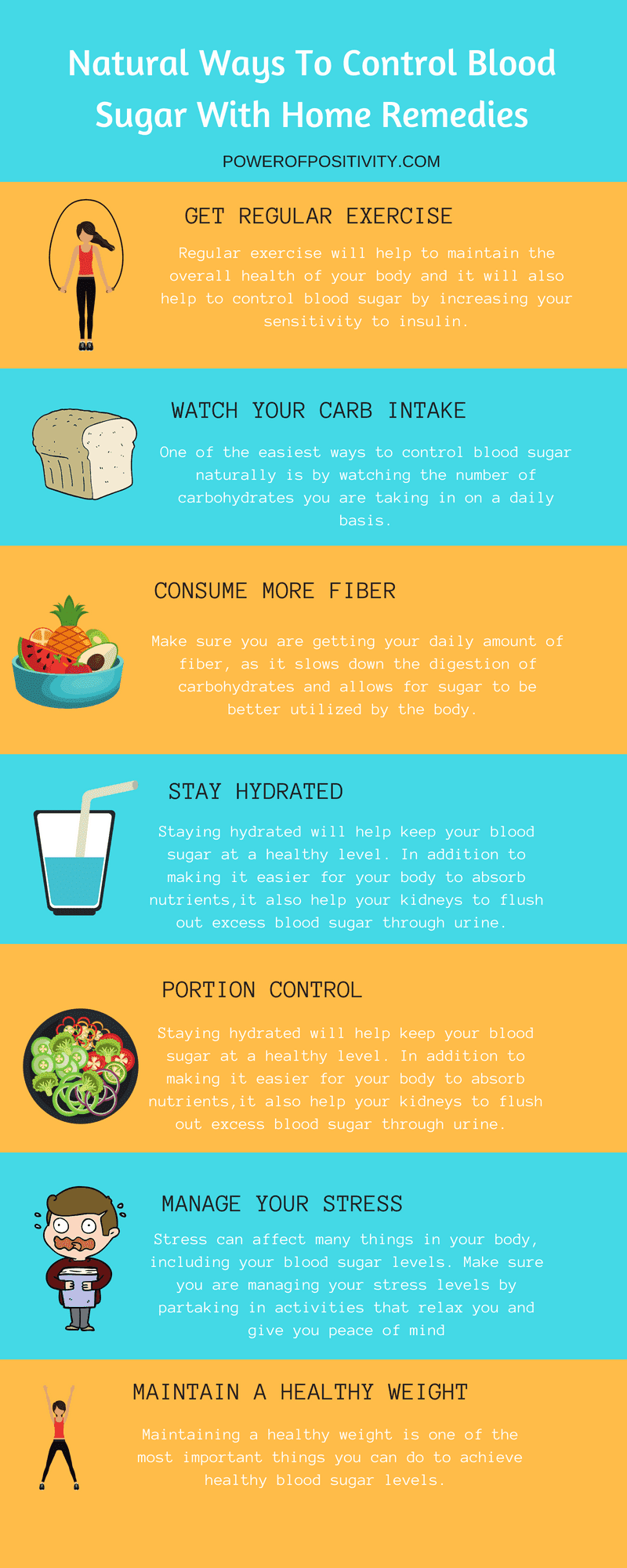
Control blood sugar level


1. Fill up on Protein

You need between 46-and 56 grams of protein daily, which helps fill you up and satisfy you. Strive to ensure each meal has about 20 grams of protein so that you don’t feel hungry and want to reach for sweets.

2. Be On the Look Out for Hidden Sugars

There are refined sugars in many beverages and foods that you don’t even realize. It would help if you ate your calories rather than drink them. Things like fruit juice are high in fructose, making you crave sweet things even more.

Opt for low-calorie and sugar-free beverages. Always read the label and know what hidden sweeteners are present in your meals.

3. Include Complex Carbs in Your Meals

There are two types of carbohydrates, which are complex and simple. You don’t want to fill up on simple ones as they will pack on the pounds and enhance your cravings. Complex carbs are the ones that will keep your cravings at bay, and you will find them in things like oats, cereal, whole wheat bread, and beans.

4. Find Sweet Alternatives

You can’t deprive yourself of everything sweet, or it could lead to binge eating. However, you can find alternatives that won’t kick your cravings into overdrive or affect your glucose levels. It’s okay to have a piece of cake once in a while as long as you can control it.

5. Stay Hydrated

Did you know that many people reach for sweets when their body is craving water? The CDC states that people are severely water deficient, as they don’t drink anywhere near the required amounts.

They’ve found that teens, on average, drink about fifteen ounces of water each day, and adults consume about 39 ounces, which is nowhere near the required amounts. Filling up and keeping your body hydrated can also help reduce unnecessary hunger.

6. Eat More Often

Consuming smaller meals more often than eating three large meals a day is better. It will help you keep your glucose levels in check, but it can help reduce cravings too. Many people reach for things in a hurry because they’re starving, and it’s often a vending machine or something from a convenience store during the workday.

Pack some healthy snacks with you and try to eat every two to three hours to keep binge eating at bay.

7. Chew Gum

Chewing sugar-free gum is a great option to keep you from indulging in sweet treats. A study by The Pennington Biomedical Research Center shows that people who chew gum after lunch are way less likely to consume sugary sweets in the afternoon.

Plus, when the folks in the study did snack, the group that chewed gum ate fewer calories than those who didn’t chew gum. Additionally, the chewing motion can help relieve anxiety, which is always helpful.

8. Switch to a Low Carb Lifestyle

While you need some carbs to survive, you can live on much less than you eat. Stay below three hundred carbohydrates daily to keep your cravings at bay. Diets like keto, paleo, and the Mediterranean are great for helping people with intense cravings to kick them to the curb.
sugar

12 Natural Sweeteners to Replace Sugar

An all-natural sweetener is an answer if you long for that sweet kick in your tea, coffee, or desserts. Avoid using sugar-alcohols that can make you sick when eating in abundance, but you should try some of these all-natural alternatives.

1. Monk Fruit

This fruit is known for its sweetness. This Southeast Asia wonder is way sweeter than the white crystals, so you only need a little bit to achieve the required sweetness. Plus, there are antioxidant properties, and it has zero carbs is also a benefit.

2. Stevia

This alternative is made from the leaves of the stevia plant. It has no calories, so it’s great for diabetics and dieters alike. It can be used as a spoon as a sweetener to substitute of table-sugar with just about anything your heart desires.

3. Xylitol

This sweetener is made from birch trees and has forty percent lower calories than refined options. It’s dangerous for pets, so make sure you don’t let Fido have a taste of anything made with this sweetener. For you, it’s the perfect supplement to keep your glucose levels regular and your waistline slim.

4. Pure Maple Syrup

Pure maple syrup comes from extracting sap from a tree. Now, don’t be confused by the syrup bottles on your shelves at the supermarket, as they are artificially flavored and not the real thing. By reading the labels and the price tag, you will know if you have the real maple variety, as it’s a bit pricey.

It’s great for people with diabetes as it has a low glycemic index, and when using it in a recipe, you need slightly less than you would traditional sweeteners. You only need about three-fourths of a cup of maple syrup to substitute for one cup of table sugar.

5. Raw Honey

Unlike refined sweetness, this natural product has antioxidants and anti-inflammatory properties. It’s chocked full of vitamins and minerals that are healthy. Plus, the antibacterial and antifungal properties can’t be denied.

Another fact is that picking honey harvested locally can also help with your allergies as bees pollinate on the flowers which aggravates your sinuses. You’re introducing your system to micro amounts of this pollen, which will help you build up a resistance to them.

6. Figs

Figs are versatile fruit as they can replace fat and sweetness. They’re loaded with things like iron, fiber, and potassium. You can blend them in a food processor to make a puree to use as a sweetener in recipes. To make fig puree, use eight ounces of figs and one-third of a cup of water to make a liquid sweetener.

7. Blackstrap Molasses

Don’t be fooled by the various types of molasses on the market, as blackstrap is the healthiest. It’s lower on the glycemic index as well as has fewer calories. It’s full of nutrients like iron, magnesium, copper, and potassium.

8. Yacon Syrup

Yacon syrup is not commonly marketed as a sweet alternative. Still, it is a great low-calorie option that improves your gut health. It has soluble fiber and prebiotics to help you regulate your digestive system. The key is to use this in moderation, as it tends to cause stomach upset when eaten in abundance.

9. Banana Puree

When you need more potassium and fiber, you look to bananas. However, if you need to add sweetness to your cooking, you can also use this yellow fruit. You want to make a puree with bananas and water, and it can then be used as a liquid sweetener in anything you want.

The best thing about this natural sweetener is the price. Most alternative sweeteners are very expensive, but you can make this one for nearly nothing.

10. Dates

Pick up some dates if you’re looking for a great natural sweetener rich in nutrients and fiber. Did you know that it can also help to regulate your digestive system? You can use them raw or make a liquid sweetener with the fruit and some water in a food processor.

11. Agave

Agave syrup is super sweet, 1.5 times that of regular table salt. It has around sixty calories for each tablespoon, but its health benefits outweigh traditional sweeteners. Did you know that the blue agave plant is the same used to make tequila? It’s low on the glycemic index and high on taste.

12. Apple Sugar

Apple sweetener is a relatively new option on the market. It’s 58 percent lower on the glycemic index than cane varieties and has a neutral flavor that folks love. It’s overly sweet, so you only need about half the amount to add sweetness to your desserts or drinks.
sugar

Final Thoughts on Eating Too Much Sugar

Your body needs some sugar to help the processes in your body. However, when you overindulge and frequently consume, it can cause cell damage and make you miserable.

Many people try to cut out sweet stuff and have failed, so finding an alternative that works for you and suits your tastebuds is a great place to start. If you have a little bit of sugar in your day, it’s okay if you have the discipline not to go overboard.


(C)Power of Positivity, LLC. All rights reserved

4 Signs Your Partner Is A Perfect Match

Your partner feels so right to you, and you are definitely getting soul mate vibes from them, but how can you be sure that this is your perfect match? Whether or not you believe in the idea of a one and only love in the world who is just right for you, knowing the signs will help you pin down your perfect match before he or she gets away.

Nobody’s perfect, but can you be perfect in a relationship with a partner who is your perfect compliment? Maybe you aren’t a patient person, but your partner is willing to wait in line for you when you can’t handle it. Or maybe you hate to clean but your partner enjoys it. An odd couple can be a perfect match when they help support each other’s weaknesses and they also bring plenty of strengths to the relationship.

In this article, we will look at some of the signs of an ideal partnership so you will recognize it when you see it and make a move before they have a chance to getaway.

4 Signs Your Partner Is A Perfect Match

perfect match

1. Your partner (and hopefully you) have a positive outlook

A positive, rather than a negative attitude would certainly make your future together with your partner a brighter one. When you see yourself in your golden years, you don’t want to be surrounded by negativity, at least not alone. Ideally, your perfect match would bring a positive mood to your life anytime you are around them.

Researchers in the Journal of Personality and Social Psychology conducted a study to ‘understand how dating couples can maintain feelings of relationship satisfaction in their daily lives and over the course of time.’ Researchers found that couples were most likely to be happier when both of them had a life-seeking attitude that embraced every challenge with positive energy.

Ideally, both partners would share this attitude, but happiness is still achievable if at least one of you is cheerful enough to pull the other one along. In contrast, if your partner looks at life as a series of events that are focused on avoiding bad things rather than seeking the good, your chances of a perfect match for happiness are decreased.

2. You know what it means to be a good friend to your partner

In another research study, feelings of emotional security and companionship predicted happiness for couples over long-term relationships. The study found that happiness was ever more likely when the participants knew themselves well and had a firm sense of identity.

Companionship is particularly important later in life, when sexual activity decreases as we age. You and your partner need to be able to support, entertain, and bring joy to each other’s lives so that you can enjoy your relationship many years from now.

Think about your best friend who is not your partner. Think about the specific qualities that you love about your friend’s personality and the ways in which they show their trust and friendship. If your partner does these same things for you now, it’s a good sign that your partner is a perfect match.

3. You are truly your best self when you are with your partner

An ideal match for you would be someone who helps you to be your best self by encouraging your growth and development within the framework of a committed relationship. In this way, you feel securely emotionally protected and you can spread your wings and be amazing.

Think about when you feel truly your best self and think about how you can feel that way more often. Are you with your partner when you feel this way or are you with other people or alone?

perfect match

4. You feel comfortable and happy just doing nothing together

A comfortably matched couple is a couple who are happy just to be together with nothing to do. They can have a great conversation with no music, TV, or WiFi to disturb the wonderful feeling that they get by being in each other’s presence.

Relaxing in a park or going for a walk are fun activities when your partner is a perfect match. They know how to stimulate your mind, your emotions, and they connect to you spiritually as well as physically. These moments together build a lifetime of intimacy for a perfectly matched couple.

The foundation of your relationship will be built on trust and communication, so being able to bond by sharing the intimate details of your lives in conversation is both a way to build trust and also your joint communication skills. Your partner is a perfect match when you feel comfortable that they do not hide important things from you and they are able to communicate love in whatever way you need it.

(C)Power of Positivity, LLC. All rights reserved

9 Reasons You Need to Eat Flaxseed

Indeed, flaxseed has been around for centuries. The seed was believed to be cultivated somewhere east of the Mediterranean around 3000 BC. Initially, flax (or linum usitatissimum), was used to make linen because of the plant’s robust and flexible fiber within its stem. The consumption of flax seed is a relatively new concept, catching on in the United States in the late 1990’s.

An exciting piece of history: around the 8th century, King Charlemagne passed a law that required people to consume flaxseed. That may be a bit excessive, but the sovereign King did have an altruistic reason for doing so, in that he wanted to pass the tremendous health benefits of flaxseed to his people.

Flaxseed is considered a “superfood,” or food so densely packed with nutrients that it should be consumed daily. The seed is tasty, small, and can be included with several foods: oatmeal, rice, yogurt, cereal, potatoes, smoothies…the list is practically endless.

Here Are 9 Reasons You Need To Eat Flaxseed Every Day:

flaxseed

1. It’s an excellent source of nutrients

As mentioned prior, flaxseed is a superfood because of its sheer amount of packed nutrients. Flaxseed contains omega-3 fatty acids for heart and brain health, lignans with antioxidant and cancer-fighting properties, and soluble fiber for digestive and gastrointestinal health. In addition, flaxseed is a rich source of macronutrients, manganese, and vitamin B. Flaxseed also contains good protein. Nutrition gurus deem it a powerful addition to one’s diet.

2. It reduces hypertension

The Centers for Disease Control and Prevention (CDC) estimate that approximately 68 million Americans (one-third of the population) have hypertension or high blood pressure. Flaxseed is shown to be a promising remedy for this epidemic. Those that include flaxseed oil in their daily diets tend to sustain regular blood pressure readings and lower the blood pressure of those with hypertension. (For reference, normal blood pressure is around 120/80.)

3. It may help fight skin cancer

We all love to be out in the sun; perhaps the only concern is the rising numbers of skin cancer.

As it turns out, according to The US National Library of Medicine, dietary flaxseed supplementation enhanced the cancer-fighting properties of mice by as much as 63% while reducing the number of cancerous tumors discovered.

4. It may help ward off depression

Depression is a complicated illness to understand.

Those afflicted with the condition often desperately need some help. According to one Japanese study, flaxseed may help balance the complex network of neurotransmitters within the brain, providing much-needed relief. In addition, depressed people are more likely to have lower levels of omegas in their body, which flaxseed may also help to correct.

5. Helps to lower cholesterol

Having high cholesterol levels is not only unhealthy, but it’s also dangerous. Those with high cholesterol are more likely to suffer from a heart attack or stroke. According to an Iowa State University study, flaxseed effectively lowers cholesterol levels. Flaxseed may also help serve as great preventative food for warding off high cholesterol.

6. Promotes healthy hair and skin

The good fats and B vitamins within flax help reduce dryness of the hair and skin. It is also believed that these properties effectively improve the symptoms of acne, eczema, and rosacea. In addition, flaxseed may help alleviate dry eyes.

7. Promotes weight loss

In an article published in the Journal of Nutrition, researchers discovered that flaxseeds (along with walnuts) might help fight obesity and promote weight loss. The reason is that flaxseed is packed with fiber and healthy fats, which helps increase feelings of fullness (or satiety). Further, healthy fats contained within flaxseeds may also reduce inflammation.

8. Contains important antioxidants

Consuming flaxseed is one of the best ways to get all-important antioxidants. Flax contains potent polyphenols, which provide terrific benefits such as anti-aging and cellular health. Flaxseed may also help correct hormonal imbalances. Polyphenols also help stimulate the growth of probiotics in the gut, which plays an essential role in eliminating harmful bacteria in the body.
omega 39. Contains anti-viral and antibacterial properties

Everybody despises cold and flu season, and nothing (regardless of what some commercials may tell you) is a surefire preventative solution. That said, flaxseed contains some of the most potent anti-viral and antibacterial properties of any food on the market. Simply including a small amount in your morning oatmeal, smoothie, or cereal may be the edge needed to get through another dreadful cold and flu season.

11 Signs Your Partner Has Lost Interest

Your relationship has been a bit rocky lately, but it’s not like your partner has lost interest in you…or have you just missed the warning signs? Worrying about the stability and security of your relationship is not something that people in healthy relationships deal with.

If you have concerns, your fears may or may not be founded in reality. Although we have the 11 signs that your partner has lost interest below, you may need to have a heart to heart with your partner about your feelings to really be sure about their plans to continue in the relationship.

11 Signs Your Partner Has Lost Interest

“How will I know if he really loves me?” – Whitney Houston

1. Your partner has been a little selfish lately

You always seem to be eating your partner’s favorite meals and watching their favorite shows, but where is the consideration for what you love? If your partner has lost interest, you will start to notice this sign, feeling like your needs and desires are second place to those of your partner.

Researchers studying relationship breakups found that imbalances in power in the relationship, for example, where one partner controls all of the activities, are connected to relationship conflict, unhappiness, psychological distress, and breakup.

lost interest

2. You feel like you’ve done something wrong

You can feel like apologizing when your partner has lost interest, but you’ve done nothing wrong. Maybe it’s the silent treatment your partner is giving you, or the disapproving looks that you’ve seen them send your way, but you feel like you did something wrong.

Loss of interest can be like an infected wound that grows into something worse; contempt. When we no longer care for the well-being of the people in our daily life, we can grow angry and resentful in their presence, which expresses itself as a negative emotion toward the unwanted person.

3. You used to be included in your partner’s social activities

Your partner has stopped including you in the fun things they do with friends when they are away. For that matter, you aren’t being included in family get-togethers either. Whatever your partner is doing without you, it’s clear that they have lost interest in doing it with you.

4. They don’t have time for you

If your partner has ever told you that they don’t have time for you, it might have made you feel like the lowest person on Earth. This is definitely an unfeeling way to treat the person that they supposedly love.

5. You have been disrespected by your partner

Your partner used a vulgar gesture or language toward you, belittled you in front of others or even in private. Their words are hurtful, angry, and anything but kind and loving.

6. You argue more often

You rarely used to fight, but now it seems like your partner has lost interest in everything with you except for arguing.

7. You have asked them to change their negative behavior, but they have not done anything different

It would be nice if your partner would treat you the way you have asked them to treat you, but clearly they have no interest in changing their behavior for you at this point in your relationship.

8. You’ve lost that loving feeling

Not you toward your partner, but your partner sure isn’t giving you love that is meaningful to you. You can’t remember the last time you were held and comforted, cuddled, or treated with loving kindness.

For that matter, your partner is not supporting you when you need them.

9. You suspect that they are keeping things from you

Emotional cheating, withholding information, or outright lying and physical cheating; you suspect that something has been going on behind your back.

lost interest

10. There have been no signs of making a commitment

They’ve never asked you to be a monogamous partner, expressed a desire to take the relationship to the next level or proposed to you. The fact that you aren’t getting signals of wanting to stay in a committed relationship from your partner is not a good sign of continued interest in you as a romantic partner.

Researchers studying the factors that predicted breakups found that the more ‘commitment and love individuals experienced toward their relationship partner, the less likely they were to end the relationship.’ Commitment is a good sign that your partner has not lost interest, but there may be a reason to worry when your partner has failed to show a commitment to you.

11. There are no future plans that include you

You know about at least one event in the future that your partner is planning for and that does not include you. Your partner should want to include you in their future, unless they’ve lost interest, which this sign might indicate.

(C)Power of Positivity, LLC. All rights reserved

Completely Relieve Stress In 10 Minutes With This Guided Meditation

Guided meditation is an easy way to relieve stress and you can do it in as little as a 10-minute session to help you feel less tension in your body. Relax your tight muscles with this guided meditation and completely relieve stress.

Progressive muscle relaxation is a technique to relieve stress by focusing on the sensations of relaxation in the body. By tensing and then relaxing groups of muscles, we can release any stored tension.

For example, many people carry muscle tension in their neck and shoulders. By simply tightening these muscles and holding the tension for a few seconds before relaxing, we can notice that although we were unaware of it, our shoulder muscles were not fully relaxed before.

Researchers studying the effects of a guided meditation that included progressive muscle relaxation found that people who experienced the meditation reported lower levels of mental confusion, depression, fatigue, and tension.

Completely Relieve Stress in 10 Minutes With This Guided Meditation

What follows is a script for a guided meditation. However, it should take less than ten minutes to complete. As you read the meditation, you can follow along and do the exercises rather than closing your eyes for the session.

You can read the steps for the guided meditation below, ask someone to read it for you, and guide you as you sit with your eyes closed. Alternatively, you may listen to a meditation video via the link below.

anxiety

Guided meditation to completely relieve stress

Before you begin, find a comfortable place to sit, either in a chair or on the floor. Try to find a quiet place where you won’t be disturbed or distracted for 10 minutes.

  • Sit in an upright but comfortable position.
  • Rest your hands in your lap.
  • Close your eyes and focus on your breathing.
  • Inhale and exhale through your nose and allow 4-5 slow, full breaths to pass as you notice the feeling of your lungs filling with air.
  • On the next breath, inhale, tighten, and tense all the muscles in your feet, and as you exhale, release all of the muscles of the feet. Repeat for another inhale and exhale.
  • On the next breath, squeeze the muscles of your lower legs and calves. As you exhale, release all of the muscles of the lower legs. Repeat for a second breath.
  • On the next breath, inhale and tighten your thigh muscles. Exhale, and relax the muscles of the thighs. Repeat tightening your thigh muscles for another in and out breathe through the nose.
  • With your next breath, squeeze the muscles of your abdomen and your pelvic muscles. As you exhale, release all of the abdominal and pelvic muscles muscles. Repeat for a second inhale and exhale.
  • On the next breath, tighten the muscles of your buttocks. Exhale, and release the muscles of the buttocks–then repeat.
  • On the next inhale, squeeze the muscles of your hands and make fists. As you exhale, relax your hands back into your lap–repeat
  • With the next breath, squeeze the muscles of your arms. Flex your arms and squeeze your biceps, triceps, and forearms. As you exhale, release all of the muscles of the arms–repeat
  • On the next breath, inhale and squeeze the muscles of your shoulders. Tense these muscles by raising the shoulders up to the ears. Exhale and release the shoulders. Repeat for another breath.
  • On the next breath, squeeze your upper back muscles together by squeezing your shoulder blades. As you exhale, release all of the muscles of the upper back. Repeat for a second inhale and exhale.
  • On the next breath, inhale and tighten the muscles of your neck. Exhale, and release all of the neck muscles–repeat.
  • This time when you breathe in, squeeze the muscles of your face. Clench the jaw muscles and smile big, squint your eyes and squeeze your eyebrows together. As you exhale, release all of the muscles of the face. Repeat.
  • Focus your attention on the tingling in your body now that you have squeezed them and released tension from your muscles. Keep your attention focused on your breathing and your body’s relaxation.
  • Use a keyword to bring your focus back if your mind wanders. For example, you can use the word ‘Om’ or ‘One’ or ‘Calm,’ any one-syllable word that is positive and meaningful to you and will help you refocus on simply relaxing and breathing.
  • Continue breathing and focusing on your one word. If you can, continue focused, mindful breathing for 5 minutes to relieve stress in your body completely.

stress

A modified guided meditation

On the other hand, you can use a muscle relaxation guided meditation that only focuses on relaxation without tensing muscles. This can be helpful if you have an injury or cannot tense muscles without pain.

Researchers studying relaxation-only meditation, without using muscle tension exercises to relieve stress, guided participants to notice sensations of tension in their right and left hands and arms, allowing these muscles to relax completely. Repeat this with the other muscle groups mentioned above until you achieve complete muscle relaxation.

These Things Happen To Your Body When You Drink A Gallon Of Water Every Day

Water sustains life, and we need much more of it than we think. We are composed of 50-75% water, and this element carries out vital processes in the body, such as regulating body temperature, carrying oxygen and nutrients to the cells, dissolving minerals and nutrients, aiding digestion, protecting body organs and tissues, lubricating joints, among others.

Not to mention, drinking at least a gallon of water per day can accelerate weight loss.

According to a study published in the Journal of Clinical Endocrinology and Metabolism, drinking 17 ounces of water increases metabolic rate by 30% in healthy men and women. Their metabolism peaked 30-40 minutes after the subjects drank.

Let’s look at another study that proves the amazing things that can happen to your body after drinking a gallon of water daily. Researchers from the University of Birmingham in the United Kingdom conducted a 12-week experiment in which they gave 84 obese adults weight loss advice and put them in one of two groups. The first group drank 16 ounces of water 30 minutes before their meals, while the second group imagined feeling full after their meal. The result? The first group ended up losing three pounds more than the second.

Benefits of Drinking Water Every Day

water

In addition to losing weight, here’s what else can happen if you drink a gallon of water per day:

  • Helps keep us alert
  • Prevents headaches
  • Boosts cognitive abilities
  • Protects our heart

Drinking a gallon of water daily might seem like a lot to some people, but you can have very drastic results after just 30 days. In fact, a woman from the UK tried out this experiment for herself, and the results were shocking. Read on to find out more about what happened!

These Things Happen To Your Body When You Drink A Gallon Of Water Every Day

When it comes to water, unfortunately, a shocking 75% of Americans suffer from chronic dehydration, according to a report by CBS.

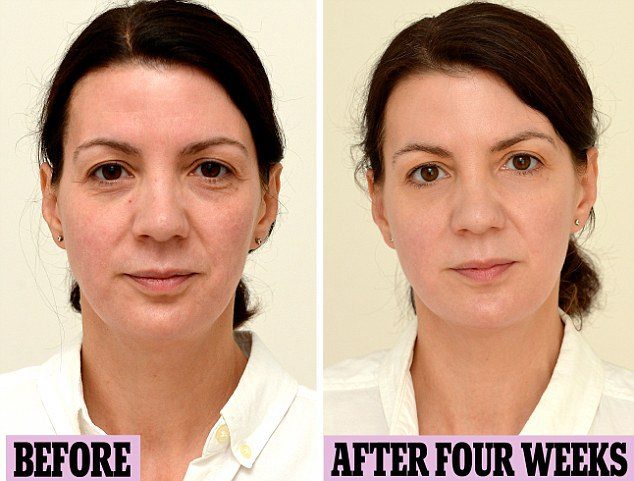
In the UK, 1 in 5 people suffer from dehydration, but one woman decided to do something about this growing problem. Sarah Smith, a mother of two from the UK, realized that she wasn’t drinking nearly enough water every day. She had health problems as a result, such as poor digestion, headaches, and overall fatigue. After meeting with several doctors, they all told her the same thing: drink more water. So, she tried an experiment where she would document her journey of drinking more water. Every day for 30 days, she decided to drink a gallon of water and take a before and after photo to see if she noticed any physical changes or internal benefits.

When she began this experiment, she noticed that “I am 42, but have to admit I look more like 52 in this picture, which is shocking. There are dark shadows under and around my eyes, which make me look exhausted, a profusion of wrinkles and strange reddish blotches, and my skin lacks any lustre. It looks dead….even my lips look shrivelled.”

So, to combat these issues, she drank water in jugs in the morning, afternoon, and evening. She felt better, leaner, and fitter, and looked noticeably different from the beginning of the experiment. Here are her before and after photos:

©WARRENSMITH2013. shows SARAH SMITH 'BEFORE' shot Water Feature

WARRENSMITH2013

WEEK ONE:

At the end of the first week, she had already noticed that her digestion improved and her urine had turned clear due to the flushing of toxins from her body. She also suffered breakouts, a positive sign since toxins get flushed from our bodies through our skin quite often. Her headaches also disappeared, and her joint stiffness, which always bothered her in the morning, had improved dramatically.

WEEK TWO:

The second week brought on a massive improvement in her skin tone and complexion. Though her eyes still appeared wrinkled, Sarah said, “they look less creepy and shadowy than before”. She also had a noticeably flatter stomach, and her cellulite had disappeared! Also, she still didn’t suffer from headaches.

WEEK THREE:

Sarah found that her eye wrinkles and dark circles had disappeared, and her skin looked healthier. She also ate less, as she mistook hunger signals for thirst signals in the past. Many people don’t recognize the difference between these signals unless they have had enough water for their weight and age.

So what about the end of WEEK FOUR? Sarah said, “I genuinely can’t believe the difference in my face. I look like a different woman. The dark shadows around my eyes have all but disappeared and the blotches have gone. My skin is almost as dewy as it was when I was a child. The transformation is nothing short of remarkable.”

5 Ways Millenials Are Changing The World

In decades, Millenials will be known for many things, hopefully more positive than negative.

We have become a generation that does not conform to any conventional structure. As we all know, society focuses on what we lack, rather than what we provide to the world. We are savvy, tenacious, and ambitious. We have learned that there is nothing free in this world.

But, we have also been known to depend on technology, and depend less on human contact. We are used to wars, political corruptions, and disasters. Other generations see us as heartless and that we have truly forgotten what it is to stand up for humanity and have compassion.

The true stoWe are living in transcending and extreme times. We can create a new world, and it moves through empathy and love.

Here are 5 ways millenials are going to change the world…

1. Stop the desire for instant gratification.

We are not alone in this world. There are billions of us inhabiting this planet. Because of all the technological advances, everything is at our fingertips. Guess what? There is a whole world out there that is not on a computer. When we take our time to absorb that and bring ourselves back to all that IS, the world will see a shift in short time.

2. We’re learning to deeply connect with others again.

Online dating has become the norm for meeting anyone. We rarely pick up the phone to call. Texting is our favorite form of communicating with others. The sexual revolution has allowed for us to sleep around and move on. Attachment has become a thing of the past. We get hurt and lick our wounds quicker than others in the past. If this person doesn’t work for us, another will. We date for entertainment.

Taking time to connect with others on a personal level is something that Millenials come to recognize. We’re seeing what depersonalization does to our society and we know that it isn’t sustainable. Old fashioned morals and the value of time are coming back once again. This time, they’re here to stay.

3. We’re learning to let go of self-absorbtion.

Dr. Jean M. Twenge shares research done in the University of South Alabama showing that “the narcissistic traits are increasing even faster than we previously thought. From 2002 to 2007, college students’ scores on the Narcissistic Personality Inventory rose twice as fast as we’d found in an earlier study that covered changed between 1982 and 2006.”

Why the epidemic? The ability to have plastic surgeries and other cultural changes in behavior has led to superficial behaviors. Our entire value system has been jolted by the ability to have things instantly at our finger tips. We have grown to believe that perfection fixes everything and it is mental distortion.

Now however, Millenials see the clarity in acceptance. We fully accept things, events, the world around us, and most importantly ourselves, as is.  We know that the only way to heal is through acceptance and stepping forward from where we are now.

4. We’re not getting too caught up in technology, but rather we’re learning to let technology become our laborer.

Social media and gadgets have given us an opportunity for complacency. Some live addicted to it, but it’s also an incredible tool to change our world, and we are the first generation to truly embrace this. We are learning to utilize this amazing venture of mass communication to our advantage. We are a generation that can accomplish more, faster, than other times in history.

As Millenials lay the path for the future, the world will see a coming together of ideas to help humanity, in every area imaginable.

5. We’re reinventing love

Love is evolving from how other generations loved. This generation is taking more chances and traveling farther. We are walking away from careers to just enjoy life. So in between all the negativity, we are loving ourselves more and therefore able to help others. We are experiencing the length of our lives now rather than waiting for later. We are thinking outside the box. Actually we’ve thrown the box away. We are learning to ask questions, rationalize and help others along the way.

This generation is more earth conscious and consists of tree-huggers, environmentalists and new hippies. We believe in “green therapy” instead of conventional psychotherapy. We are not restricted by time as we chose to make memories through our easy access to the world.

Millenials simply show new ways to love and expand knowledge out into the world. We are reforming our culture by our own experiences rather than that of our ancestors because we know that we must move with the times. Love is being readjusted and redefined. It’s not disappearing, it is merely modifying to this era. We are following our passions and expanding love while providing a new creative awareness in this world. We are transforming love and all that it entails in a way that might be seen as shallow, but it’s truly keeping up with our humanness in a new fast-changing world.

Our Ancestors knew that healing comes in cycles and circles.
One generation carries the pain so that the next can live and heal.
One cannot live without the other, each is the other’s hope, meaning & strength.” ~ Gemma B. Benton

Related article: 6 Ways To Be The Change You Want To See In The World

(C) Power of Positivity, LLC. All rights reserved

This Is What Happens To Your Body In A Stressful Relationship

Most of us are well aware by now that distress (the “negative” kind of stress) is terrible for health. To make matters worse, we live in a world that makes it very difficult to maintain stress “equilibrium”.

To put it very simply, most of us are overworked, underpaid, and underappreciated. We are often forced to juggle multiple priorities (after all, “multitasking” is the thing now, right?) and are even required, at times, to choose between our family, friends, work or something else.

Thankfully, we have the people who care for and love us waiting at home, right?

Well, most relationships are positive influences on our life. However, when the people we care for are constantly causing our internal “stress meter” to rise, there is a serious problem.

After all, loved ones are supposed to be a refuge to our frustrations, not a catalyst. On the worst day, we should be able to lean on someone who comforts us; not someone who judges. It is perhaps no surprise to learn that relationships, bonds that are supposed to bring joy, can also exacerbate stress depending on the person you’re dealing with.

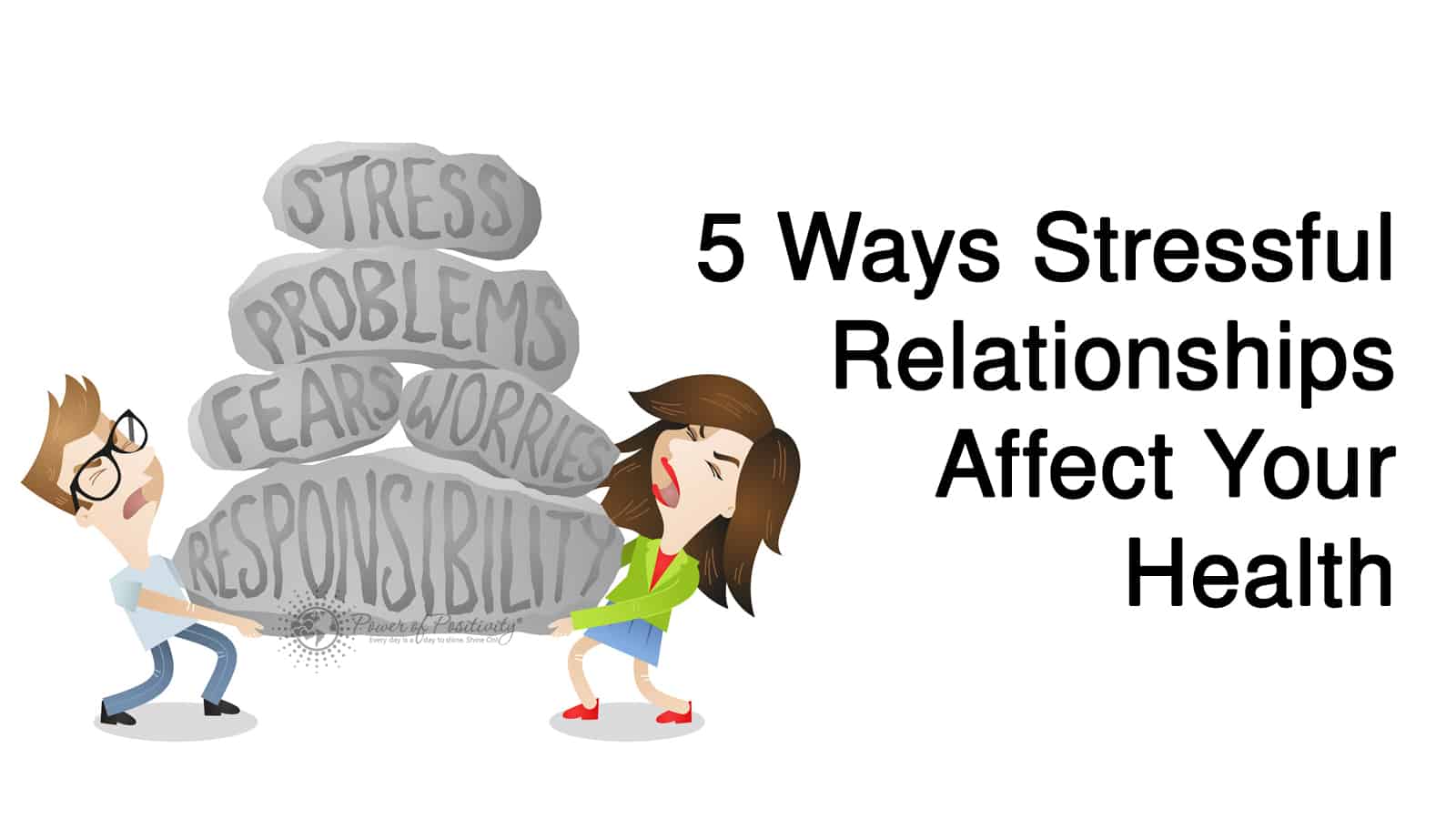
This segues into our topic for this article: stressful relationships can be (literally) deadly.  We are not referring to (tragic) death as a result of murder but from stress caused by people who are designated our support system.

Scientists Explain How Stressful Relationships Affect Your Health

stressful relationships

At Copenhagen University in Denmark, Rikke Lund, along with her colleagues, sought out to discover the impact of stressful relationships on our health. This simple question was asked to 10,000 people: “In your everyday life, do you experience conflicts with any of the following people?”

  • Children
  • Friends
  • Family members
  • Neighbors
  • Spouses

Participants between the ages of 36 and 52 answered: “always,” “often,” “sometimes,” “seldom,” or never for each relationship detailed above.

After 11 years, 422 died. Now, that number is nothing out of the ordinary – it’s a standard death rate for these age groups. However, what is intriguing is that those who answered “always” or “often” in the survey died at two to three times higher than other participants.

Fortunately, none of the people that passed had been a victim of violence. Causes of death were broad.However, they saw disproportionate numbers of people dying from liver cirrhosis (brought on by alcoholism), cancer, and heart disease. It has been discovered that distress plays a significant role in developing alcoholism and heart disease: another possible linkage discovered.

Additionally, mortality numbers were much higher for closer relationships (spouse, children) than for those of a more distant nature; this is another piece of information that provides credence to the notion that stressful relationships can contribute to death.

Lund and her colleagues posed a slightly different question this same group: “In your everyday life, do you feel that any of those people (in the prior question) demand too much of you or seriously worry you?” It turns out (sadly) that those faced with frequent demands or worries from a spouse or child had a 50 to 100 percent higher chance of dying during the 11 years.

So…what’s the answer?

Understanding that stress created by difficult relationships is particularly harmful is the first (perhaps most important) step. However, now it’s us to each one of us to work on two things: (1) Conflict management skills and (2) Decision-making ability.

Let us explain.

Conflict management is necessary for two reasons:

  1. It helps avoid relationship-based stress
  2. It helps to resolve relationship-based problems when they arise.

Our typical response is to stew in anger or ignore the problem altogether – neither of which are effective in the least. It’s important – especially for our health – to have commonsense skills that allow us to navigate tribulations in a relationship.

Related article: 8 Simple Yoga Poses That Reduce Your Stress Hormones

Decision-making ability, as it applies to a stressful relationship, is very simple. Do you stay stick with the relationship or not? Do you try to work things out or not? Or do you simply walk away?

It’d be nice to say that there is no right or wrong answer to either question, but there definitely is. It’s up to us to examine, weigh the pros and cons, and make the right decision for our health. There is nothing (nothing!) more important.

10 Ways Mentally Strong People Handle Stress

Handling stress poorly can negatively affect your well-being, but the good news is that you can learn the 10 ways that mentally strong people deal with stress and start using these techniques today.

Stress that is unmanaged can lead to physical health problems like high blood pressure, but can chronic stress can also develop into depression, anxiety, and substance abuse. Rather than continue to handle stress poorly, let’s look at the 10 ways that mentally strong people handle stress effectively. And, yes, you are capable of this, too!

10 Ways Mentally Strong People Handle Stress

mentally strong people

1. Accept that stressful events will happen

We all know that things are bound to upset even the most planned day, but mentally strong people acknowledge this upfront. There is going to be something unplanned for that to happen to you, but you can begin planning for it now.

Tell yourself now that although you know something stressful may happen today, you are prepared to handle it.

2. Use multiple stress management tools

Researchers in the Journal of Occupational Medicine studied workplace stress management programs and found that one that included goal setting, problem-solving, identifying and questioning negative thoughts, relaxation, and time management were helpful for people to handle stress effectively.

This strategy of using multiple techniques to handle stress is one that mentally strong people always employ.

3. Take control

Mentally strong people look at what is causing the stress and look for ways to prevent it from happening again. By changing their environment, they can avoid or reduce the causes of stress.

4. Affirmations

Use positive self-talk to remind yourself of how capable you are when stressful situations arise. For example, say ‘I’ve handled situations like this before and I know I can handle this just fine too.’

5. Time management

Much of our perceived stress comes from not having enough time to get done what we want to get done.

By planning ahead for lost time, we can make sure that we have enough time in the day for everything, without being stressed when something does inevitably delays us.

Related article: 7 Things You Don’t Need To Stress About, Even If You Think You Do

For example, if you have a full schedule and worry about being late to your next appointment, next time book your day with 20-30 minute gaps of time in between appointments.

That way if there is too much traffic, the delay won’t seem as stressful to you due to the extra time that you planned into your day.

stress panic anxiety meme

6. Social support

Researchers studying how people handle stress found that a strong social support network was linked to mental well-being. Some people find it challenging to ask for help because they like to be self-reliant. We all need help at some point, so being able to recognize when you have reached a significant stress level and ask for help to get yourself back to a calm state is an excellent skill that mentally strong people use to handle stress.

7. They do not avoid stress

The same study that showed that social support helped mentally strong people to handle stress found that if they used the technique of avoiding things that they thought of as stressful, their mental well-being decreased significantly.

Avoiding is just a way of delaying handling stress. Running away from a problem never solved anything so choosing to face your worries and acknowledge the uncomfortable feelings while using another coping strategy is better for your mental strength.

8. See thoughts about stress as temporary

Thoughts come and go and some are terribly negative. Our awareness of our negative thoughts about stress is an excellent skill to have. This mindfulness can then be taken to the next level. Rather than avoid or repress negative thoughts about stress, see them as temporary mental events that will be gone fairly soon.

This is a strategy called ‘decentering’ by psychologists, where we challenge negative thoughts. We can choose to accept our negative thoughts as fact, or we can acknowledge that we were making a bigger deal than we needed to about the stressful event, and allow that thought to pass away from our minds like a cloud.

9. Look at the big picture

This one stressful event is not going to change the course of your life all by itself. You are still a fantastically talented, creative, and intelligent person who just had a negative experience. Mentally strong people know that although the surface of the ocean is turbulent, deep down it is calm.

mentally strong people

10. They find ways to add joy

Adding a few moments of laughter to a stressful day can be all it takes to handles stress well. Even in the midst of a crisis, being able to laugh at yourself for how you overreact or misjudge something. It is a way to shift from a negative mindset to a positive one. For example, you might say, ‘Well that was silly of me to forget my wallet. But hey, at least I noticed it before I was at the cash register with a full shopping cart.’

Skip to content