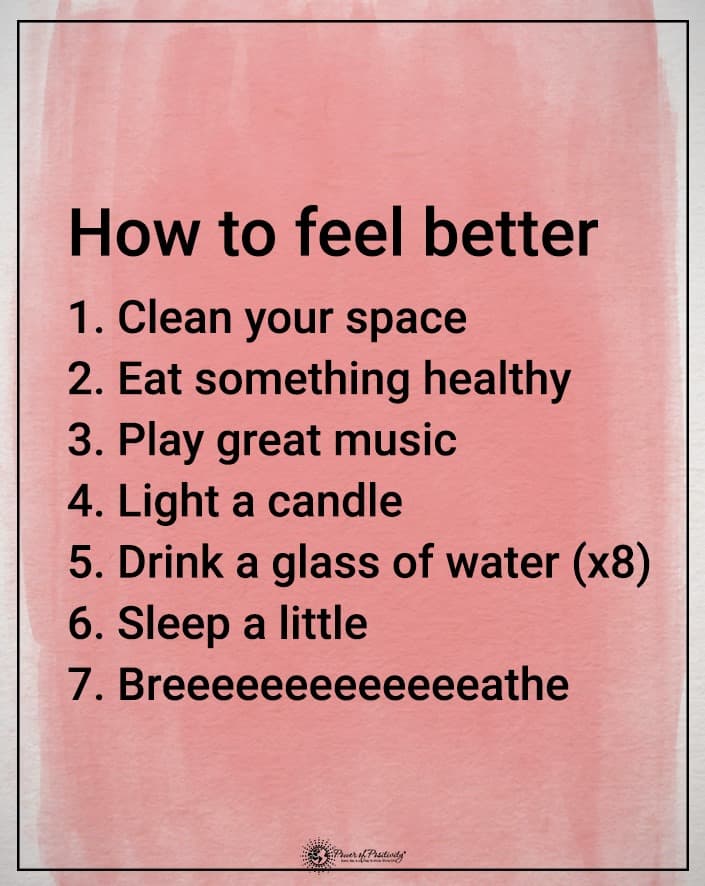
Weekly tips, affirmations, and small actions to feel your best.

5 Signs You’re Dealing With A Difficult Person

People learn behaviors by observing through stimulus and response. They then act accordingly through positive or negative reinforcements. But, how do you deal with a problematic personality when you try to deviate from their attitude, and it still backfires? Difficult people have a way of bringing out the worst in others. Their negativity and behavior are toxic. Sometimes you can feel them before even speaking with them. They act according to their negative reinforcements.

We must all learn (sooner or later!) how to deal with difficult people. “People who irritate us usually have something to show us about ourselves. “Ask yourself: How is this person holding up the mirror to me?” suggests Sandra Crowe, author of Since Strangling Isn’t an Option. For example, being around my chronically late friend reminds me of how quick-tempered and impatient I can be — not my favorite traits. Reminding myself of this may keep me from bouncing off the walls when I find myself waiting for her yet again.”

Difficult people are everywhere in our lives. They come in all colors, shapes, sizes, religions, and nationalities. But, how do you pinpoint the signs that you are dealing with a difficult person when you first meet someone? Sometimes we are sucked right into their pessimism without warning. Or, perhaps we don’t notice the hints.

Here are five signs you are dealing with a difficult person:

Have you seen these red flags?
difficult

1. A difficult person makes it all about them.

Difficult people are dramatic, and reactions from others fuel them. They need to be the center of attention. You know this person whose life seems to be a soap opera. You ask her what she did during the weekend, and she moves through elaborate storylines. These folks don’t just tell a story in a few sentences. They share a novel. And, to even ask them, “How are you doing today?” is opening a can of worms. They are selfish, narcissistic, and full of opinions.

2. They don’t do a favor without collecting.

These people are always scheming about how they can get something for nothing. If you ask them for a favor, realize it will be like selling your soul to the devil. That favor will not go unnoticed. Difficult people are not compassionate–they are self-serving. These folks will remind you over and over what they did for you. Never mind that you have helped them in the past. That’s not in their best interest. They will bully you into repaying whatever support or assistance you got from them.

3. They are victims.

The victim is the one who never gets over a trauma. They’re stuck in the past. They utilize illnesses, family, and events to manipulate them into getting what they want. They live in constant victimization mode. These people will reel you into their lives by making you feel sorry for them. They tell and re-tell stories of pain and failures. Negativity is their means of communication. The best way to stop their behavior is to continue giving positive statements and not buy into their pity party.

4. Difficult people can be oblivious.

Believe it or not, there are people out there who have no idea what’s going on in this reality. They live in a world that only makes sense to them. These people are problematic because they constantly deny what’s going on. They are flaky. They can be intolerable and hard to handle. These are not the people who are dreamers and trailblazers. These are the ones who bring about drama by creating a world that is not understood. They are delusional. It’s hard to have a serious conversation with an oblivious person. You hope they get the notion that the universe doesn’t revolve only around them.

5. Difficult people whine, blame and gossip.

The truth is that a person sharing gossip with you is also telling your business to others. They blame everyone for their mishaps. They’ll whine about the weather, the boss, the traffic, and anything that can bring attention. They complain about everyone. They make up stories, embellishing details to make them seem more attractive. To stop the nonsense, you have to express your disgust about their behavior.

Difficult people don’t like when the tables turn, and they are no longer in charge of stories. When they don’t get what they want from you, they move on to someone else. They don’t appreciate being called out about their negativity.These folks can’t find a speck of sunshine on a cloudy day. They move through manipulation, control, and bratty behavior. You start to see their signs the minute they show zero empathy for another. You can stop the behavior with positive reinforcement and let them know that you will not tolerate their attitude. We must be grateful for those rude and obnoxious souls who show us what we will never become.

Are You the Difficult Person? Here’s How to Change

Let’s face it – we’re all a bit difficult to deal with at times. Our imperfections make us human, so don’t beat yourself up about not being flawless. However, we should always strive to get along with our fellow humans to the best of our ability. Having a problematic personality can make this challenging, but innate characteristics aren’t set in stone. We can change throughout life by making a concerted effort and exercising self-control.

If you’re a difficult person, we have a few pointers below on how to improve. Remember that we’re not calling anyone out here, just advising those who may need it.
difficult

1.     Listen more than you talk.

How often do you truly listen to people during conversations? You might think you’re listening, but you may not fully hear the other person if your attention wanders. With the advent of technology, many of us have become distracted and not present when we’re with people. However, we owe it to our fellow humans to show compassion and offer a listening ear when they need it.

It isn’t very kind or tactful to scroll on your phone or act like you don’t care about another’s thoughts. Even if you’re a busy person, you can probably spare a few moments to converse with your loved ones. Regarding work-related conversations or encounters with strangers, it’s equally important to practice active listening. We’ve become very disconnected from each other in modern life, but we can heal by putting our guards down and reaching out.

Please realize that we’re all one, and in caring about others, you’re also showing kindness toward yourself. Imagine that you’re talking to yourself in conversations with others, and you’ll begin to grasp this concept.

2. Practice empathy.

Perhaps you find that you care more about yourself than others. Don’t worry; most people fall under this category, and it doesn’t make you an awful person. However, extending this care to others and including fellow humans in your love will make it easier to get along with people. In general, most people enjoy being around others that have compassion and kindness toward them.

Empathy doesn’t come naturally to everyone, but you can always learn how to care about other beings. Volunteering at a homeless shelter, making dinner for your family, or giving free hugs to strangers are just a few ways to become more empathetic.

Putting yourself in others’ shoes and seeing life from their perspective will help you grow as a person. We all have to share this planet, and it becomes a much better experience if we help each other along our journey.

3. Have realistic expectations of others.

You may have lofty expectations of yourself and others as a problematic person. There’s nothing wrong with setting standards, as long as you allow room for flexibility. No one will live up to these expectations 100% of the time because humans naturally make mistakes.

Also, it isn’t fair to expect so much from people in the modern world where we’re all thin. Keep in mind that people are just doing their best to get by. When they disappoint you, you’ll have greater understanding and compassion toward them. Most people don’t hurt others on purpose; they have a lot on their plate and can’t always attend to your needs.

4. Find fulfillment within yourself.

If you’re a difficult person, you may look to others to feel complete or validate your existence. However, no one can genuinely make you happy unless you’ve found that within yourself first. Disagreements usually occur between people when they have conflicting desires or unrealistic expectations.

Much of this heartache and strife could be avoided if people felt whole on their own. Your relationships will become more fulfilling by not needing anything from others, and you’ll feel more secure.

Practicing meditation, mindfulness, and other reflective techniques will help you remember your true self. Peace, joy, and total consciousness are your natural state, where your desires are finished, and you can rest in the truth.

Becoming more spiritually inclined will reduce the tension and turmoil within yourself to have a clearer picture of the world around you. Polishing the mirror inside your mind will bring profound peace, where all difficulties dissipate.

Find peace within, and you will see it all around as well.

5. Have self-compassion.

Before you can heal your relationship with others, you must face any issues within yourself. Expanding on the point above, the universe acts as a mirror, where we see the world through our lens.

If our lens is cloudy and unclear, we only get a small glimpse of reality based on this narrow-minded view. However, removing unnecessary thoughts and biases will allow us to expand our limited mindset and perceive higher levels of consciousness.

This process starts by forgiving yourself for past mistakes and loving the person you’ve become. Remember that you’re worthy of this gift of acceptance because you’re a child of the universe and deserve to be here like everyone else. The turmoil in modern life stems from our unhealthy relationships with ourselves, so world peace can only happen if we find inner peace first.

Being a problematic person means you haven’t yet accepted yourself as pure love and bliss. When you change how you view yourself, the world won’t seem like a scary place anymore.
difficult

Final Thoughts on Coping With a Difficult Person

We will inevitably encounter a problematic person throughout life and might even be one ourselves. Whether it’s you or someone else, you should always have compassion and come from a place of love. Difficult people usually have unhealed trauma or other problems to deal with, taking it out on others.

When you interact with these people, keep in mind that they’re struggling through life just like you. Compassion and empathy will help us heal our relationships with ourselves and others and create a more equitable world.

How To Solve The Happiness Equation

It really is true that scientists have discovered a happiness equation, and they describe all of the factors that have been used to accurately predict whether or not you will be happy.

Happiness has been explained as achievable by focusing on having a positive attitude, expressing gratitude, being generous, and a number of other pieces including love and social support, but how can we use this information to find the right balance of happiness in our lives?

We will look at all of the pieces that make up the scientific happiness equation and how you can use this information to solve your own happiness.

How to Solve The Happiness Equation

The study, conducted by University College London and published in Nature Communications, says this new Happiness Equation shows us how our happiness depends not only on what happens to us but also how our situation compares to other people. Researchers feel confident about the formula because they showed that they could use it to predict levels of happiness in study participants based on these factors.

The Role of Trials in the Happiness Equation

In the Happiness Equation, our faulty memory plays an important part. Researchers call life events ‘trials’ and they say that more recent trials are weighted more heavily by the Happiness Equation that plays out in our brains. Past trials are more easily forgotten and so our bias is toward more recent events that are present in our memories.

There is no right or wrong to our faulty logic and the fact that we give more importance to recent events than past events, but knowing this can help us to pause to evaluate our prior experience with similar situations. If something pleasurable just happened, we tend to want more of it right away, rather than more of something that made us happy in the past.

Gambling on Happiness

In the Happiness Equation, as in life, we take chances where we don’t know what the payoff will be. For example, by choosing to going to college, we make an investment and hope that we will have a good-paying job as a result, but it is not a guarantee.

The researchers say that how part of the Happiness Equation is how we feel about the reward that we get based on the gamble or risk that we took to get it. If it was a big risk, with a big reward, we feel fantastic. If it was a small risk with a smaller reward, we feel less happy. Your expectation makes a difference in your resulting happiness.

The One Variable In the Happiness Equation

In our previous article ‘10 Ways To Increase The Dopamine In Your Brain,’ we talked about how this important brain chemical is key in your brain’s pleasure and reward center. If your brain is getting plenty of dopamine, your brain is happy too.

Some people are just naturally higher in the neurotransmitter dopamine than others, which is why this one variable is uncontrollable from person to person in research studies.

In the Happiness Equation, dopamine level is a variable associated in previous neurological research, and your own baseline level of this happiness neurotransmitter may be higher than another person’s. Dopamine controls your desire or ‘liking’ of something and also your willingness to pursue it or ‘wanting.’ Getting something you want equates to pleasure and lots of dopamine.

What Do Guilt and Envy Have To Do With the Happiness Equation?

In the Happiness Equation solution, the part you play in solving it depends on your natural level of social comparison. How often do you compare what you have to what others have?

Guilt is what we feel when there is an inequality of reward received compared to another person. In other words, you have more than someone else has, and the inequality makes you feel guilt.

Envy is what we feel when we are missing out on a reward that the other person received. In comparison to the other person, we have less and we are envious.

Expectations and Comparison in the Happiness Equation

Solving the Happiness Equation comes down to your expectations and comparisons to others. If you expect more than you get, you will be less happy. If you compare what you get to what others got, you will be less happy.

One key finding from this research shows that we are unhappy in any situation where our peers, or even people who we just met, are treated unequally, whether they get more or less than we do.

Comparison is something that we do as social creatures because we interact with others often. In another study of happiness, researchers say ‘Humans are intensely social, and data indicate that one of the most important factors for happiness is social relationships with other people. Social pleasures may still include vital sensory features such as visual faces, touch features of grooming and caress, as well as in humans more abstract and cognitive features of social reward and relationship evaluation.’ When we evaluate our relationship to others, we engage in comparison by asking if things are equitable between us.

7 Signs You’ve Met Someone From A Past Life

Have you ever met someone with whom you had an instant connection, and you just intuitively felt that you had met them somewhere, somehow, before Could they have been from a past life experience?

If you’ve experienced this feeling before, then you have likely met someone from a past life who you have run into once again on your current journey.

You might not immediately think “Hey, I knew them from a past life” when you meet them, but you just know that their soul and yours have crossed paths at some point in time before. You might not have even believed in reincarnation or past lives before this experience, but something so powerful and intense can easily open your mind to other possibilities.

Meeting someone from a past life usually feels amazing, but sometimes, bad memories or feelings could come up due to your past relationship together. Just be mindful of how you feel, and trust your intuition. Not all relationships last forever, and some of them teach us painful lessons. However, if you’ve met someone in a past life, it likely means you have unfinished business with them here on Earth.

Here are 7 signs you’ve met someone from a past life:

past life

1. They may be from a past life if you feel at home when you look in their eyes.

You finally feel as though someone understands you. You don’t feel judged or uncomfortable in their presence. Besides that, it feels like looking into their eyes is like looking into your own. You feel one and the same with them like you have connected with someone who knows your soul to the core.

Meeting them feels like coming home, and you could talk with them for hours on end. Contrarily, you could sit in silence for a long time and not feel awkward, like you have to fill the empty space. You can be totally yourself, and they just get you. The relationship with them feels easy, not strained or forced.

2. You feel overwhelming emotions upon meeting.

The person you meet draws up a wellspring of emotions within you. You can’t place it exactly. But something about the encounter felt incredibly powerful and life-changing. You feel you haven’t seen them in ages and have suddenly crossed paths in such a surprising way.

You probably didn’t even know the person lived in your area, or maybe you met on travels to a foreign place.

Whatever way you meet them, you know it’s more than just a coincidence. You might cry, laugh, or fall into a warm embrace when you see them because you just can’t hold back your emotions. This person means a lot to you in your heart, so seeing them again for the first time in months or years will inevitably stir up some powerful feelings.

3. They may be from a past life if you have plenty of memories with them.

You don’t know how or why… But you both share memories of past lives together. You might recall living in the same place, having the same occupation, or crossing paths along travels in a foreign country.

You just intuitively know and remember these things, and the memories have carried over into all the lives you have shared with this person.

4. You can read the other person like a book.

Even if you don’t say it, this person can read your mind. They know your thoughts and emotions without you having to explain, which makes having a relationship with this person feel easy, for once.

Nothing feels strained, and you can read them just as easily as they can you. You both have a telepathic connection and cherish it greatly.

5. They may be from a past life if time means nothing in their company.

You sort of forget about the reality around them – time doesn’t mean anything when you have them at your side. Upon meeting them again, you two might spontaneously decide to catch up, and before you know it, five hours have passed. You feel so in tune and engaged with them that you easily lose track of time, space, and all of reality.

6. You have a strong connection even when you’re apart.

Even if you didn’t know it at the time, you and this person have probably communicated before. You may have gotten powerful messages before that seemed to enter your consciousness out of the blue – this could have been someone trying to contact you telepathically.

Maybe you see the same numbers on the clock day after day, which also means the universe needs to deliver you a message. Signs appear when you least expect them, and could point to a past life connection with someone special.

past life

7. You click instantly.

You may have felt misunderstood and alone for the majority of your life. But meeting them erases all of those painful memories. You have an unbreakable bond with them that feels more powerful than anything you’ve felt before, and you can talk and be with them effortlessly.

Psychic Michele Knight says about past life connections: “We’ve all been in the situation where we’ve met someone new but have this immediate and deep connection – sometimes to the point of being able to anticipate what they are going to say next – or feeling as if they’ve been in our life forever.

Often this can mean they have been in a spiritual sense as this kind of ‘instant karma’ we feel with certain people is exactly that. A karmic, past life connection and the level of comfort and feeling we already ‘know’ someone is merely our shared history catching up with us and playing out in this lifetime.”

(C)Power of Positivity, LLC. All rights reserved

5 Signs Anxiety Is Hurting Your Relationship

More people than ever before seem to have some type of anxiety disorder, and while no one wants to have this illness, it can wreak havoc on even the strongest of relationships…

Many studies have been done on anxiety and what causes it, but despite all of this research, more people live with anxiety than ever before. Unfortunately, many people in the U.S. and worldwide suffer from some sort of anxiety disorder. In the U.S. alone, approximately 18.1% of people age 18 and older have anxiety, which equates to about 40 million people. 

No one should have to deal with anxiety on their own, of course, but getting into a relationship with someone new can come with a lot of roadblocks unless they show willingness to understand what you go through daily. You shouldn’t have to hide your anxiety in order to stay in a relationship, and you will have to decide on your own who will stay in your life based on their willingness to understand your point of view and mental state.

Anxiety can overtake your whole life and make any sort of decision or event difficult, but having a partner that understands will help the relationship go much more smoothly and make you happier long-term in the partnership.

Here are 5 signs anxiety is hurting your relationship:

1. You constantly worry about your relationship ending

Worrying about the demise of your relationship can easily become a self-fulfilling prophecy. The more you worry about what you DON’T want to happen, the more you invite it into your life by putting your energy into it. Your partner will start to notice this behavior if you appear more clingy than normal, or become possessive or jealous. While you can’t always control your anxiety, you should make it a point to voice your concerns rather than letting them stew and grow into something unmanageable. Many times, your worries will probably go away once you express them to your partner, as they can help alleviate your stress and make you realize that your relationship is actually going well.

Many people with anxiety tend to overreact and blow things out of proportion simply because they feel things more deeply. Make sure to keep the lines of communication open with your partner so he or she can help you when your thoughts get the best of you.

2. You cling to your partner

Clinging to your partner will only make him or her become more distant. Think about it – if you smother a plant with too much water, it will eventually kill it. In the same way, if you smother a relationship with too much love, affection, and attention, you will give it no room to breathe. Your partner needs his or her space just as much as you need yours, so try to avoid suffocating the relationship. Even if you have insecurities, clinging to your partner will only end the relationship faster than you expected.

3. You wonder if your partner would be happier without you

Wondering about whether or not your partner would feel happier without you will only make your relationship miserable. Obviously your partner chose you for a reason, so remember this the next time you feel anxious about your relationship.

4. You rely on your partner to do the things that make you anxious

Relying on your partner to make a phone call to the doctor or go to the store to pick up a few things will only exacerbate and prolong your anxiety. While it might seem easy to run to your partner when you feel anxious and get them to pick up the slack, you can’t keep doing this forever – eventually, your partner will get burnt out. While they can help you with some things, you shouldn’t count on them for everything. Doing the things that give you anxiety will help you to overcome it, anyway.

Related article: 5 Signs Your Partner Has Hidden Anxiety

5. You restrict the things you do based on your anxiety

Another relationship killer is putting boundaries on what you can and can’t do with your partner. Maybe they want to try a new restaurant or go on a whitewater rafting trip, but you allow your anxiety to get in the way. A surefire way to hurt your relationship is to always turn down your partner’s ideas in favor of doing things that feel “safe” to you, such as staying in and watching Netflix, ordering takeout and following your normal routine. While you shouldn’t bend over backwards to please your partner, try to compromise and get out of your comfort zone sometimes in order to keep the relationship balanced and happy.

(C)Power of Positivity, LLC. All rights reserved

Learning This ONE Skill Can Save Your Relationship

Hopefully you aren’t reading this as your partner is about to walk out the door, because mastering this one skill that can save your relationship can take a little practice, but the result is worth your time.

With just a little time and effort, you can learn and master this one skill and your relationship will be much better for it.

Learning This ONE Skill Can Save Your Relationship

Relationships are so dependent on excellent communication between the two people who make up the partnership. Any work that you can devote to improving both how well you communicate your own thoughts and also how well you listen to your partner is well worth the time.

This one skill that can save your relationship is simple, but effective and it involves your ability to recognize the moments when you are most likely to completely blow it with your partner, which is when you are frustrated.

When you are frustrated, your words come from a place of anger and a lack of control and they can be fatal to your relationship. Angry words spoken are very difficult to put back in your mouth and they can cause suffering in the person you love most. Preventing the angry words from coming out at all is best for your relationship.

In the moment where you recognize your frustrated emotional state, try your best to pause before responding to your partner. Think about the impact that your words will have on your partner. If you have the emotion of frustration in your voice as you speak, it is interpreted as anger being directed toward your partner.

The Importance of Emotional Intelligence

According to the Yale Center for Emotional Intelligence, ’emotional intelligence is related to mating intelligence, which refers to the abilities to understand a potential mate’s emotional expressions, intentions, and preferences and to modulate and express one’s own emotions effectively.’

Can you tell how your partner is feeling by just looking at their body language? If they are frustrated, using hurtful words will only make things worse. If you know your partner well, picking up on their emotion can tell you how they would want you to respond to them. For example, maybe they would really benefit from a hug right now.

Emotional intelligence can affect your relationship quality and happiness. Researchers studying emotional intelligence and relationship satisfaction find that being able to detect your partner’s emotional state is associated with trust, dependability and your partner’s faith in you as a supportive mate.

Ideally, both partners would be sensitive to their mate’s feelings and change their responses to help support their partner. If only one of you is doing this for the other, the one who isn’t getting support may feel resentful that you aren’t making an effort.

Mastery of your tongue, awareness of your own emotions as well as your partner’s, and perspective on the relationship in the big picture are all important, but controlling your words is the most important to avoid hurting your partner.

When You’re More Likely To Hurt Your Relationship

Emotional moments make up the vivid and intense memories that we have, from the happy one of falling in love, to the genuine frustrations that seem to ruin a good day. When your emotions are running high, this is the time that you are more likely to do something that will hurt your relationship.

Recognizing emotional moments and being able to pause before responding to your partner, as you consider the impact that your words can have on the bigger picture of the relationship is a key skill. When you are angry, hurt, tired, worried, or not feeling good, you are more likely to respond with hurtful words, because you yourself are hurting in some way.

Related article: 5 Words To Avoid Saying In Your Relationship

The ONE Skill That Can Save Relationships

This one skill can save your non-romantic relationships too. The perspective skill is useful for managing your work relationships and friendship relationships as well. If you can master the ability to pause before speaking to take in the full view of your past, present, and future with the person you are dealing with, you will be likely to respond differently than you would while your emotions are fueling your words.

Related article: 5 Signs Your Partner Is Falling Out Of Love

We can sum up this one skill by saying it is equivalent to saying ‘Look before you speak’ in the sense that you look at the big picture of your life before making a mistake with your words.

Being able to use this moment before you speak to get perspective, clarity, and awareness of your own tendencies and treat your partner gently is a valuable skill that is as good as having eternal patience.

This is not a coddling of your partner, it is more a total personal awareness and mastery of your emotions and how you express them as well as having a sensitivity to your partner’s needs. Partners who are able to meet each others needs are more likely to want to stay together longer, which helps save your relationship from a breakup.

(C)Power of Positivity, LLC. All rights reserved

These Things Happen To Your Body When You Drink Water Every Day For 30 Days

Many of us don’t think twice about how much water we drink per day. But we ought to pay more mind to this very important element. We are composed of 50-75% water and need to drink a half ounce to an ounce for every pound we weigh.

Despite that, a shocking 75% of Americans suffer from chronic dehydration, according to a report by CBS. Other reports say that 25% of kids and teenagers don’t drink ANY water as part of their daily fluid intake, another shocking statistic.

Unfortunately, many people grab something quick and easy while they go about their daily routine, and prefer a sugary drink such as a soda or syrupy coffee drink to boost their energy. These drinks do nothing for our bodies nutritionally, yet so many people around the world choose these over water as their preferred beverages. By drinking only water, however, you can improve your health dramatically, and may even shed a few pounds in the process!

According to a study published in the Journal of Clinical Endocrinology and Metabolism, drinking 17 ounces of water increases metabolism by 30% in both healthy men and women. Their metabolism peaked thirty to forty minutes after the subjects consumed the water.

We found yet another study to prove that drinking water can help to reverse health problems and trim down the waistline. Researchers from the University of Birmingham in the United Kingdom conducted a 12-week experiment in which they coached 84 obese adults on weight loss and placed them in one of two groups. The first group drank 16 ounces of water 30 minutes before their meals, while the second group simply imagined feeling full after their meal. The result? The first group ended up losing three pounds more than the second.

These Things Happen To Your Body When You Drink Water Every Day For 30 Days

In addition to losing weight, you can enjoy many other benefits from drinking more water a day. We’ll discuss some of these benefits below.

water

1. Your skin will feel more hydrated.

One of the biggest signs you’re dehydrated appears on your skin, believe it or not. By drinking more water, your body will have a chance to eliminate toxins, which will result in brighter, clearer looking skin. Not drinking enough water results in dry, parched-looking skin, because the toxins build up over time, causing us to look older and more fatigued.

2. You will have less joint pain.

Since your body’s cartilage is composed of nearly 80% water, replenishing hydration lost through sweat will keep your bones and joints functioning properly. Water keeps joints lubricated in order to protect the body during strenuous activities or unexpected movement, such as falling or tripping. So, if you have joint pain, drinking only water for thirty days can help with this troubling issue.

3. You’ll have more energy.

Water brings oxygen into the body. The more oxygenated your cells, the more alive you will feel. However, if you don’t drink enough water, your body relies on your blood to obtain oxygen, which therefore will make you feel more sluggish and lethargic. So, drinking more water will increase your vitality.

4. You will get to know your hunger cues better.

Hunger and thirst cues come from the same part of the brain, which may explain why so many people overeat since we haven’t really been taught how to differentiate these signals. As you up your water intake, you will likely notice that you have a decreased appetite, since water fills up your stomach and nourishes your cells just like food does. However, if you still feel hungry after drinking adequate water, then you know you need a bite to eat, as well.

5. You’ll have lower blood pressure.

Dehydration causes the blood to become thicker, resulting in slower blood flow and higher sodium content in the blood. However, hydration, on the other hand, allows the blood to flow more quickly, which lessens your chances of having high blood pressure.

6. And lower cholesterol.

Being dehydrated means that your body will hold onto any water it can find so you don’t lose even more. In this study, fifteen people completed a fast under two different circumstances: once without fluid replacement, and another with salt and water supplementation. The researchers found that when the participants fasted with no fluids, their total serum cholesterol levels were much higher than when they had a saltwater supplement. While most people still drink water during a fast, drinking sugary, nutrient-lacking drinks in place of water throughout the day can cause dehydration, and therefore, higher cholesterol levels.

7. Your digestion will improve.

Water helps to move things through our digestive system and cleanse the colon, but without enough water, the body doesn’t digest food very smoothly, leading to digestive problems. When the body is lacking fluids, the large intestine soaks up the water from the foods you eat. This increases the likelihood of constipation, acid reflux, ulcers, and other digestive issues.

water

8. Your headaches will disappear.

Dehydration actually causes our brain tissue to lose water, resulting in the brain shrinking and pulling away from the skull. In turn, this sends alarms to the pain receptors surrounding the brain, which gives you that nasty midday headache. Being dehydrated decreases blood volume, which means less blood and oxygen will flow to the brain. The blood vessels in the brain dilate to keep the blood flowing. As a result, people experience inflammation and a pounding headache. Unfortunately, too many people are too familiar with this. So, by drinking more water, you will experience less headaches, and therefore, have greater mental clarity.

8 Signs You’re In A Codependent Relationship

You may have never considered yourself to be in a codependent relationship. Still, if any of these eight warning signs are present in your relationship, you may be in for a rude awakening. There are steps that you can take to break the cycle of codependency. But first, you need to be able to recognize it in your relationship.

What Is a Codependent Relationship?

A codependent relationship is a dynamic in which two people become mutually dependent on each other in unhealthy ways. Typically, one partner in the relationship is the enabler, while the other is dependent. The enabler may feel responsible for taking care of the dependent and may prioritize their needs over their own, while the dependent may rely heavily on the enabler for emotional support, validation, and a sense of identity.

Codependent relationships can be found in any type of relationship, including romantic partnerships, family relationships, and friendships. In these relationships, both partners may struggle with boundary issues and have difficulty differentiating between their own needs and the needs of the other person. This can lead to an unhealthy cycle of dependency and enablement that can be difficult to break.

Some common signs of a codependent relationship include an inability to make decisions without the input or approval of the other person, a sense of responsibility for the other person’s emotions, an inability to set healthy boundaries, and a tendency to prioritize the other person’s needs over one’s own. In some cases, codependent relationships may also involve enabling behaviors such as substance abuse, financial support, or emotional manipulation.

Codependent relationships can severely impact the individuals involved, including emotional and psychological distress, a loss of sense of self, and a lack of healthy personal relationships. Additionally, codependent relationships can be challenging to break out of, and individuals may require therapy or other forms of support to learn healthy relationship skills and establish healthy boundaries.

Ultimately, codependent relationships are about an unhealthy dynamic of mutual dependency, where the needs and wants of one partner are prioritized over the others. Breaking out of this cycle often requires acknowledging and addressing the underlying issues contributing to codependency, including low self-esteem, boundary issues, and a need for control or validation. By addressing these issues, individuals can develop healthy relationship skills and establish healthier, more fulfilling relationships.

8 Warning Signs That You’re In A Codependent Relationship

codependent relationship

Researchers examining codependency say that codependency has been defined as an addiction, the cause of an addiction, or the result of someone else’s addiction.

Codependent adults frequently start out as codependent children who had to grow up quickly when one or more parents needed parenting themselves. Now as an adult, they repeat the same negative pattern of trying to take care of others at the expense of themselves.

1. You think you can help your partner to change

Even though you have not successfully gotten your partner to change in the past, you keep trying. You feel certain you could be happy if only they would listen. People in a codependent relationship try to fix each other’s negative behavior rather than changing their own destructive habits.

Researchers studying codependent relationships find that feelings of shame, low self-esteem, and having to be a parent to your own parent at a young age were all correlated with an adult codependent relationship. The researchers believe that therapy to heal the self-image will help people to heal from codependent relationships.

2. You say ‘Yes’ when you really mean ‘No,’ and then feel resentful about it

Caving in to your partner’s demands in an attempt to ‘make them happy’ is unproductive and hurts your own personal integrity. Pay attention to your own needs first and make sure that they are being met first. To break the cycle of a codependent relationship, you must learn to fulfill your own needs without your partner’s help.

3. You have so much love to give, but your partner seems to reject it

Giving until it hurts is your motto when you’re in a codependent relationship. You shower your partner with love and support. You might also help them with financial and emotional problems, but they don’t seem to be able to heal themselves in spite of your love.

4. Your partner’s mood affects your own mood

You are too sensitive to your partner’s mood and needs, but what about your own? You can’t change how they feel, but you can change your own emotional state and how you respond to their negative mood.

13529136_10153609604887371_2266616924999727981_n

5. You rarely do anything away from your partner

Is it that you don’t trust what they will do apart from you, or do they control your comings and goings? In a codependent relationship, one or both partners seek to control the other person’s behavior. This is not a healthy pattern.

6. You worry about your partner leaving you

Feeling insecure about your relationship is expected in a codependent relationship but not normal in a healthy one. Your partner is always angry at you because you keep asking them to change, and you are frustrated by their lack of change but determined to keep trying. You worry they will reject your help and spiral further into their negative pattern.

7. You fantasize about leaving your partner

Life would be so much easier with someone who would listen to your feedback or who at least wasn’t so angry all of the time. Although these thoughts drift through your head, you are unlikely to do anything to leave your partner. That is the nature of a codependent relationship.

8. Your partner’s behavior is borderline, or over the line, abusive

Do you feel afraid of your partner? Do you feel like they are suspicious of your activities away from them? Or do they accuse you of things you have not done or tell you what you can and can’t do? Do they limit your friendships with others? Are they abusing drugs or alcohol or engaging in other self-abusive behavior?

Children of alcoholics are particularly susceptible to getting into a codependent relationship. Wanting to sacrifice your needs to anyone who is engaging in destructive behavior by protecting them from themselves is a sign that you’re in a codependent relationship.

codependent behavior

Final Thoughts on Your Codependent Relationships and Your Safety

If you have any concerns about your safety in an abusive codependent relationship, get to a safe place and call the National Domestic Violence Hotline at 1-800-799-7233 or go to their website for resources and help.

(C)Power of Positivity, LLC. All rights reserved

5 Things People With Integrity Do Differently

When you meet a person who has exceptional integrity, you know that there is just something different about them that might feel like an attractive force. There’s no real secret to being a person of integrity, and becoming that type of charismatic, honest person is something that everyone should try to accomplish to live a life of authenticity.

Personal integrity is being true to who you are, personally, in spite of who you are with at the time, since your relationship should only define a part of who you are. Integrity is a way of being honest in your actions and it is what makes you a trustworthy romantic partner, business partner, and member of society.

People with integrity are people whose words and actions match and often inspire us to want to be like them. These are the role models of our society. They show up and do what needs to be done. People with integrity are problem solvers and movers and shakers.

In this article, we will explore the five things people with integrity do differently and how we can adopt their best habits.

5 Things People With Integrity Do Differently

integrity

1. Do what you say you will do

Have you ever failed to come through for someone to whom you made a promise? People with integrity inspire us because they are consistent with their word being their bond. They act differently by committing to keep promises that they have given. If you can say the same thing about yourself, then that makes you a person with integrity that acts differently than those who do not.

2. Stand up for what is right

Bullies are not going to like what a person with integrity has to say. The same goes for anyone who is using belittling language or name-calling. People with integrity sick up for the little guy when the little guy is getting picked on.

They have an innate sense of right and wrong and seek to balance the scales of justice. When someone with power is abusing their power, people with integrity are there to defend the powerless. Abuse of power is an injustice. People with integrity see others being treated as ‘less than’ and come to their defense.

3. Look in the mirror and commit to positive change

Part of a healthy level of self-evaluation is looking at whether or not we hold ourselves accountable to the same standards that we hold others to. We cannot be justified in pointing fingers at others when we haven’t cleaned up our own houses first.

You may have heard the saying that when you point one finger, there are three pointing back at you. Judging others’ faults is an easy trap to fall into, but instead of putting others down, people with integrity lift others up by owning up to their own flaws.

None of us is perfect and embracing those parts of you that you want to change is something that people with integrity are doing differently. Not only do people with integrity acknowledge their flaws, they seek to improve themselves in the areas that need changing.

4. Take ownership for solving problems, even when the fault lies elsewhere

People with integrity are different in that they assume the role of leader when no one else will. Maybe it wasn’t your fault that someone left trash in the hallway, but people with integrity see that there is a problem and take ownership of it anyway. Another thing that people with integrity do differently is that they are also more likely to be volunteers or people who champion a cause for the little guy.

One model of management theory in the workplace is that of Servant Leadership, as described first by Robert Greenleaf.

Greenleaf says that these are the traits of a servant leader:

  1. listening;
  2. empathy;
  3. healing;
  4. awareness;
  5. persuasion;
  6. conceptualization;
  7. foresight;
  8. stewardship;
  9. commitment to the growth of people; and
  10. building community.

honest man

5. Act sooner rather than later

People with integrity don’t wait to act in case someone else jumps in first to save a drowning person; they are the ones who jump first and come to the aid of their fellow man and woman as often as possible.

In a journal article on personal accountability in the workplace, former NASA mechanical engineer Roger M. Boisjoly says, ‘If good and knowledgeable people observe wrongdoing and simply turn away to protect their own self-interests without attempting to correct the wrongdoing, they become part of the problem.’

Boisjoly spoke up a year before the disastrous Space Shuttle Challenger mission in 1986 and NASA’s fatal decision to launch in spite of known problems for the operating temperatures of the O-rings. This is one example of how failing to act quickly is one thing that people with integrity do differently; acting sooner rather than later can impact the lives of many people.

(C)Power of Positivity, LLC. All rights reserved

The 10 Golden Rules Of A Relationship

Your relationship is so important to you, and to treat it with the supportive care that it needs to survive over the long term, you need to follow these ten golden rules…

Here Are 10 Golden Rules Every Relationship Needs To Know About

relationship myths

1. Fight fair

You and your partner will argue, but knowing how to fight fairly will be an essential skill to keep your relationship solid through the years. Things will not always be fair, but they should always be respectful of both partner’s needs. If one partner doesn’t get their way now, ensure there are opportunities for them to get their way in the future.

The power balance in a relationship is often not balanced, especially for male and female couples. Researchers found that a relationship where the male partner had more power and dominance was more likely to last long-term. On the other hand, another study found that power imbalances and unequal treatment was a reason that women were more often cited for breakups than men did. Check-in with your partner to see how they feel about the power balance in your relationship.

2. Honesty is really the best policy

Being accused of hiding something from your partner is not a great way to establish trust, which is essential to a good relationship. Do your best to follow this golden rule that every relationship needs to know because the consequences of being less than honest are lonely and painful.

If you are unsure whether to tell your partner about something, ask yourself if they found out another way if they would be upset. Withholding information will likely not win you any points with your partner either. Flat out lying is definitely frowned upon. Trust, once broken, is never quite the same again.

3. Keep the past in the past

Your past, your partner’s past, and any exes should stay there. The same goes for the mental file of your partner’s past bad behavior. Let it go or the weight of that baggage will drag your relationship down.

4. Allow your partner more freedom

No one wants to be caged up, and the more freedom you can allow your partner to have, the greater their appreciation of the wide boundaries that you provide. In a study of breakups and relationship expectations, researchers found that partners who left wished that they had more freedom outside of the relationship.

We are not talking about the freedom to stray, but if you have restricted your partner’s coming and goings, activities, and friends, they are not likely to like being with you. For this golden rule, allow as much freedom for your partner as possible, because you cannot expect to keep someone who is chained to you happy.

5. Give more than you receive

Be as supportive as possible to your partner for this golden rule, or your partner may find the support elsewhere. Be the best friend and companion to your partner as well as a romantic mate.

partner

6. Know your partner well

Provide what your partner likes and needs. Know their love language and give them love in how they like to receive it.

7. Think long-term

Today is not where you will be ten years from now. Where was your partner headed before you met? Did you derail them from reaching their goals? They probably have not forgotten what they dreamed of before they met you, so be supportive of their future goals as well as your own.

8. Be mindful in your relationship

Mindfulness of your emotional state, your partner’s feelings, the significance of this moment in the scope of your relationship. Indeed, each of these deserve our full attention. When we are shielded from experiencing the fullness of our relationship, we miss out on the wonderful moments.

9. Master the art of communication

By communication, we mean listening more than speaking your meaning. The Gottman Institute studied the difference between couples divorced after six years and those who had stayed together. The difference between divorce and happiness was simple; paying attention to your partner when they are interested in something versus ignoring them.

Related article: 10 Things To Never Stop Doing For Your Partner

If your partner is interested in something, they are basically asking you to turn toward them. If you decide to turn away, you deny their request for your attention. Repeated turning away makes your partner feel unloved.

serious relationship

10. Build intimacy outside of sex

Sexual passion is not always an enduring factor in long-term relationships. So this golden rule is important to ensure that your relationship has the power of many intimate moments, shared jokes, joy, laughter, and connectedness that will keep you bonded for life.

Skip to content