Weekly tips, affirmations, and small actions to feel your best.

Study Finds: Ancient Practice of “Forest Bathing” Reduces Stress And Boosts Immunity

You might already know that nature heals, but did you know that “forest bathing” specifically can offer many health benefits? “Forest bathing” comes from a Japanese term, Shinrin-yoku, which basically means spending time amongst trees to lower stress levels. To do this, you just need to find some trees, breathe deeply, open your mind and all your senses, and forget about all your stresses and responsibilities for a little while.

We live in such a fast-paced, chaotic, stressful world, and we all need to decompress sometimes. Luckily, nature offers a wonderful, natural way to do just that. Often, it doesn’t have to cost you a penny.

Many people go into nature for relaxation purposes, but did you know that trees specifically can help to reset your immune system and lower stress? Trees and all sorts of plants produce a compound called phytoncides, which help to protect the plants from rotting and from hungry animals. This chemical can actually lower cortisol levels in humans, plus increase immunity. Just a 40-minute walk through the woods, or “forest bathing,” can greatly improve your physical and mental health.

Here’s How “Forest Bathing” Helps People Reduce Stress And Boost Immunity

Of course, people have known about the power of nature to heal for centuries now, but today, we need this natural gift now more than ever before. Two German physicians in the 1800s actually found that fresh forest air helped to heal patients from tuberculosis. Nowadays, researchers have found that nature can actually cure many problems brought on by modern living, by going back to our roots, our natural environment.

For example, a Japanese study from 2010 found that participants that had exposure to forest environments showed more positive health markers than those surrounded by city conditions: “lower concentrations of cortisol, lower pulse rate, lower blood pressure, greater parasympathetic nerve activity, and lower sympathetic nerve activity.”

In addition to these wonderful benefits, being in the forest can also increase creativity and improve focus! This study by researchers from the University of Kansas and the University of Utah discovered that participants who hiked and camped for 4-6 days in Alaska, Colorado, Maine and Washington performed 50% better on creative problem-solving tasks than those who did not. These states have tons of trees, which provides further evidence that being among forests can do wonders for the mind, body and spirit.

Also, scientists believe that being in a less stimulating, natural environment helps us have better attention spans, because we don’t have to switch between tasks and manage so much stimuli like we do in the “modern world.” This helps to provide mental clarity, as the peace and tranquility of nature don’t demand things from us like city life does.

12032280_10153029267967371_190666601443569540_n

Although the majority of us live in a concrete world, we can all find a green space somewhere nearby to refresh our brains and recharge our spirits. Fresh air and sunshine have never stopped being vital to our existence, so we ought to make spending time in nature a priority, instead of just an afterthought.

According to a study published by the National Academy of Sciences of the USA, we spend 25% less time outdoors than we did just 20 years ago. With that said, it should come as no surprise that we have so many health problems today since we have neglected our natural environment and basic needs.

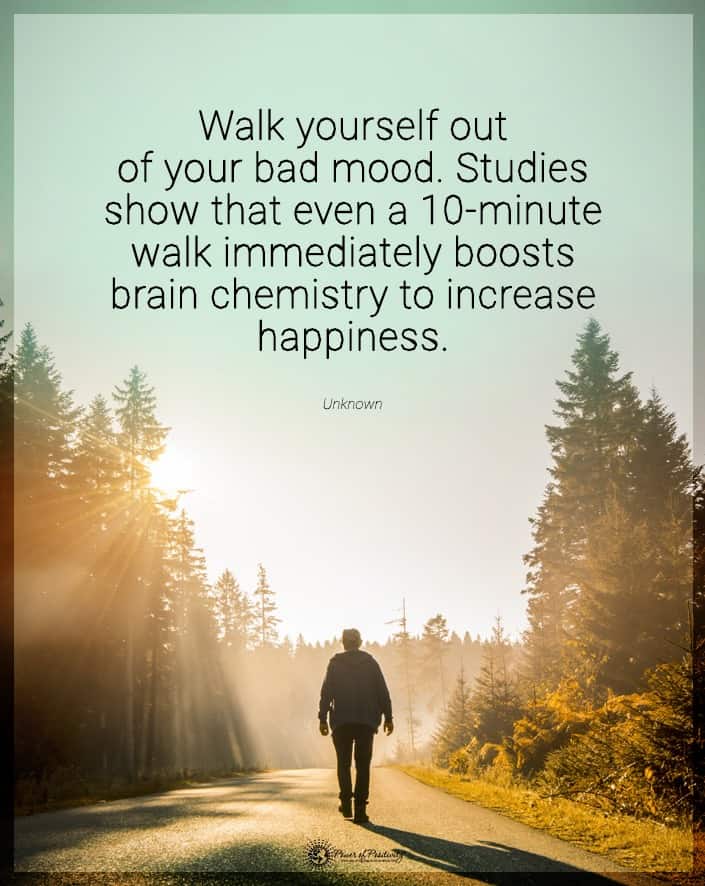
Walking in nature not only gives us Vitamin D from the sun and helps to refresh us, but it can also change our brain chemistry.

Research from Stanford University found that spending time outdoors can actually lead to changes in brain chemicals, providing mental clarity and peace of mind, and reducing anxiety and stress. As Gretchen Reynolds explains in the New York Times, graduate student Gregory Bratman, who attends Emmett Interdisciplinary Program in Environment and Resources at Stanford, analyzed the brains of 38 adults living in the city who went on a 90-minute nature hike. Bratman found that these individuals had lower brain activity in their subgenual prefrontal cortex, a part of the brain that focuses on “morbid rumination,” than the participants who trekked along the side of a nearby highway.

Those who spent time in nature at least once a day didn’t dwell on the negative happenings in their lives as much, Reynolds reported. These results suggest what many of us probably knew all along – that everyone can benefit from spending more time in nature, and less time in the concrete jungle.
tree bathing

Nature can do wonders for your mental health, but did you know it can also boost energy levels?

Several studies have shown that spending time in nature can increase energy levels, and research reveals that just twenty minutes of outdoor time a day can make a significant difference. Richard Ryan, lead author of the scientific studies mentioned above and a professor of psychology at the University of Rochester, says, “We have a natural connection with living things. Nature is something within which we flourish, so having it be more a part of our lives is critical, especially when we live and work in built environments.”
(C)Power of Positivity, LLC. All rights reserved

The Most Hurtful Word You ‘Should’ Never Say In Your Relationship

Relationships have ups and downs, and discussions can quickly become arguments with as little as one wrong word spoken in a moment of frustration. Protect yourself and your partner from being hurt by keeping the one most hurtful word out of your conversations with each other.

The Words You Should Keep Out of Your Relationship

Communication is an essential part of any relationship, including both the verbal and nonverbal parts of your interaction. Communication is essential for each partner to get their needs met and those could be physical needs, like the need for food, or emotional needs, like the need for intimate physical touch.

Your communication with your partner is about expressing how you feel and getting what you need with the help of your other half. In the course of talking to each other, sometimes you can unintentionally let slip the one word that should be kept out of your relationship.

The power of words to hurt your relationship

The University of Texas at Austin researchers studied the power of hurtful words in a relationship and found that it’s not necessarily the words themselves that hurt, but the perception of their intent that does the most damage.

The researchers say, ‘Results indicated that people who judged something an individual said to them as intentionally hurtful felt the comment had more of a distancing effect on their relationship with the individual than did those who perceived the message as unintentionally hurtful. Furthermore, those who viewed the comment as intentionally hurtful tended to be less satisfied with the relationship they had with the person who hurt them and felt less close to the person than those who saw it as unintentional.’

Lashing out at someone in frustration because you are having a bad day, are tired, or hungry is likely forgiven by your partner when they know you did not mean to hurt them. However, if your hurtful words reflect a pattern of negative behavior toward them, they will be more likely to perceive your words as intentionally hurtful.

Communication in your relationship is about more than words

Although your partner in your relationship might use one of these hurtful words, it doesn’t mean much unless:

1) You take it negatively, or

2) Their actions, tone, body language, or other patterns of behavior also convey a negative meaning

Much information is hidden in our body language and facial expressions. Was your partner smiling and using the humor of sarcasm when they said it to you? Did they say a word that you disliked, but then after you told them that you were hurt they changed and did not do it again?

Research published in Communication Quarterly looked at the hurtful messages in communication and the use of humor to soften those messages. They say ‘The results indicated that humorous messages used to convey hurtful information were seen as less intentionally hurtful, as expressing less intense feelings across most message topics, and as causing less hurt as compared to non’humorously phrased comments. These findings suggest that humor may make hurt-evoking statements more palatable to recipients than non’humorously phrased hurtful comments. ‘

Failing to speak can also be hurtful to your relationship

Keeping silent might be good, but only if you also know when it’s essential to speak up. When your partner is getting close to pushing your boundaries and you feel that uncomfortable gut reaction, speak up and calmly express how you feel about their words or actions. For example, you might say, ‘I’m not comfortable with that. What are some other options?’

Related article: 5 Things That Kill The Passion In A Relationship

The ONE word you don’t want in your relationship

This is one word that you may say to yourself all the time, especially if you have a lot on your to do list, so you definitely want to keep it out of your relationship vocabulary. The controlling word that we need to keep out of our relationships is ‘should,’ as in ‘You really should (or shouldn’t) do ___.’ Why is this one word most toxic to a healthy relationship? The same reason that it feels bad when you say it to yourself – it’s a negative way to influence someone’s behavior and it implies a judgment about what they are or are not doing right according to your opinion.

Related article: Why Couples Who Argue Love Each Other More

Rather than judging the behavior by saying that your partner really ‘should’ or ‘should not’ do something, focus on your own feelings and say ‘I feel like this is not really the best thing for you because ___.’ In this way, you have expressed your own feelings and given reasons for feeling the way that you do but you aren’t presuming to know what is best for your partner. Ultimately, it is their decision to act on your suggestion or not.

(C)Power of Positivity, LLC. All rights reserved

5 Ways Pessimists Try To Bring You Down (And How To Avoid Them)

Pessimistic people aren’t just negative but cynical and arrogant. They don’t just see the struggles in life but thrive in these circumstances. Many will flat-out tell you that they are not pessimists but realists. In their world, nothing is rainbow and butterflies. Many of these folks are depressed, mentally unstable, and feel that the world is the world’s cruelest place. Our lives consist of good and bad, up and down, and a million other opposites. The Yin and Yang of the world describe how opposite and contrary forces are interconnected. Perhaps we need the pessimist to appreciate the optimist.

How does one deal with the constant woes of the pessimist? The pessimist has unrealistic expectations and continues to be pushed and pulled by the gloom and doom of circumstances. In many cases, this type of person cannot see the light at the end of the tunnel. They live in a miserable state of darkness, crudeness, and hostility.

Here are 5 behaviors pessimists use to bring you down, and how to avoid them:

pessimistic

1. Victimization

Most pessimists believe that they are victims of circumstances or situations. They live stuck in the past. As per Robert Firestone, Ph.D.: “People who become mired down in feeling victimized tend to view events in their lives as happening to them and feel ineffective and overwhelmed. They also operate on the basic assumption that the world should be fair, which is a child’s way of thinking.”

Some practically carry around a sign that says, “Poor Me!” Everything that happens to them relates to childhood or past events. They cannot move out of the victim mode.

The best way to deal with the victimization behavior is to call the person out. Make them aware each time they enter into a pessimistic attitude and put a stop to it. People may become angry when they are called on their attitude constructively. It’s essential to shut down critical and destructive thoughts. Help that person understand that they are no longer living in the past. They can create a new way of thinking.

2. Jealousy

Jealousy and an envious attitude derive from insecurities. Most pessimists do not want to follow through because they believe they will be disappointed. Therefore, they’d rather feed on emotionally toxic behaviors of wanting what others have worked hard for. In their own lack of self-esteem, they cannot understand why they are “unlucky” or do not get what they deserve righteously.

Most of the time, jealous people have no idea that they are envious. They do not see the disturbing pattern in mental health. It’s not uncommon for them to have anger or rage for not receiving what another has in their lives. Dealing with this type of behavior is like dealing with a selfish child. You can’t make them understand what they aren’t ready to face about themselves. They already live in a state of negativity, and any productive criticism will be taken as a rejection. It’s best to reinforce their good qualities and help them find something to replace the jealousy.

3. Chronic Complainer

13907152_10153699305122371_18407985115474627_n

The complainer is ridden by constant negativity that can become a huge challenge for anyone around them. Nothing makes these type of people content or satisfied. They are a dark cloud that never allows the sun to shine through. The chronic complainer lives in a miserable state of dissatisfaction and passes on that toxic behavior on to others. Unfortunately, these folks do not see themselves as pessimists. They believe they are pointing out the things that no one sees, but in the most annoying ways.

You cannot convince the complainer that things are not that morbid. You cannot tell them to stop overreacting either. The best way is to validate their feelings, have empathy and let them know that you appreciate their input. You can redirect their complaints and behavior by adding something positive and walking away.

4. Cynical Attitude

Most cynical people have little faith in humanity. They are bitter, and angry and have no problem expressing their opinions to anyone. Oscar Wilde said best: “A cynic is a man who knows the price of everything and the value of nothing.” Cynicism is often considered intelligent because cynical and sarcastic people are full of wit. However, they are not just skeptics but blinded by their ignorance and fears of seeing beyond their conventional ideas. A cynical person has difficulty leaving the comfort of their own ideas to learn something new.

It’s hard to deal with a cynical, close-minded individual. You either set boundaries or take your losses. This type of person isn’t willing to agree to disagree. They are right and you are wrong. It’s best not to pursue an intelligent argument because they can’t see past their misconceptions. They are not willing to learn anything from you.

5. Assume the Worst

The pessimist assumes the worst in everything without ever trying. They believe they will never succeed at anything, so they don’t bother pursuing a dream. A cloud of doom and gloom drives them at all times. And, this type of person will rain on your parade when you share a dream or goal. They will find the worst-case scenario to stop you from pursuing anything you want. It’s not in their genetic composition to understand how anyone can accomplish things and have a beneficial outcome.

pessimist

Final Thoughts on Avoiding the Pessimists Who Hold You Back in Life

The pessimist with this characteristic is rude and condescending to a fault. They don’t know they are this negative; sometimes, you must set them straight. But, no matter what you try to say to them, they will never see life through rose-colored glasses. The best thing to do is acknowledge their opinions and keep quiet. Arguing is part of their programming. It’s not worth trying to instill a new personality trait when they are unwilling to see the good in a situation.

(C)Power of Positivity, LLC. All rights reserved

6 Things Your Parents Never Told You About Relationships

Your parents usually have good intentions at heart when they try to give you relationship advice. But one thing they won’t tell you is that you don’t have to take their word for what works in a healthy partnership and what doesn’t. The honest truth is that although you love where your parents are coming from with their hopes for your happy relationship. However, they don’t know what’s best for you and your partner.

6 Pieces of Relationship Advice Your Parents Won’t Give You

Parents don’t get to decide whether you will be happy with your partner or not. But sometimes, they like to butt in and give you a taste of some advice that they think will help you. It’s none of their business. Still, telling them, that might not save you from hearing their well-intentioned advice anyway.

Let’s look at six pieces of relationship advice your parents won’t give you. You will also read why you’re sometimes better off learning these lessons alone.

1. Your relationship might turn out a lot like your parents’ relationship

Researchers at Florida State University studied young adult romantic relationships and the role of parents’ marital problems on their children’s relationships. They found that if the parents experienced marital conflict problems, they could predict that their children would have conflict problems in their relationships as young adults.

The important piece of relationship advice that your parents won’t give you is to look at whether or not your parents were able to communicate effectively and resolve problems without fighting. If you saw many arguments between your parents, learn how to avoid repeating these problems in your current and future relationships. Otherwise, you may follow in their unhappy footsteps.

2. You don’t have to settle for someone just to avoid being lonely

Perhaps your parents worried about you becoming a spinster or never giving them the grandchildren they had always dreamed of. Well, the piece of advice that your parents won’t give you is that you don’t have to live up to their expectations for you. Just because they worry about you being alone your whole life doesn’t mean you have to take on that worry for yourself.

3. Being your authentic self will make it easier to find the right person for you

The true you is always the best you, and being yourself, even if it means being quirky or different from most people, will help you attract the person who best fits you in a romantic relationship. But you won’t hear this piece of advice from your parents. Instead, they will probably tell you to me more this or less that, which doesn’t do you or your romantic partner any good since you’re just concealing your true nature.

4. Intimacy is natural, fun, and healthy, even before marriage

Your parents’ attitudes and beliefs about sexuality are often transmitted to children by how restrictive the parents are when their children are teenagers. Your parents won’t tell you that their opinions about sex were primarily shaped by their own parents’ beliefs and their parents’ religious beliefs about sexuality. But the real advice that your parents won’t give you about sex is that your body belongs to you alone and that if you find joy in sex, are safe, and are not hurting anyone, you are having more fun than they did.

11953082_10152993591577371_921302542108292225_n

Related article: 8 Parenting Behaviors That Keep Children From Being Successful

Researchers at the University of Michigan surveyed parents and their teens and found that attitudes about premarital sex were largely the same for both of them, with restrictive parents having teens who felt that they should wait to have sex. Social norms and attitudes about sex have changed dramatically since your grandparents’ day. Indeed, the sex advice you get from your parents is not necessarily suitable for you in your relationship.

5. A successful relationship doesn’t have to lead to marriage

Marriage is not ideal for a happy relationship. Still, your parents won’t give you this piece of advice because they were most likely raised with more traditional, church-wedding expectations.

Related article: Don’t Let Anxiety Create These Problems In Your Relationship

6. Having children doesn’t have to be the goal of a romantic relationship either

Not everyone is suited for parenting, and not everyone wants to be a parent anyway. There is no reason that you should let your parents’ expectations dictate whether you add to the next generation or not. Of course, they will tell you that they’d love to spoil their grandchildren and that raising you was easy and a constant source of joy. But where will they be at three am when you’re exhausted and need to sleep before you get up in three hours for work and their darling grandchild just threw up? That’s another piece of advice that your parents won’t give you; when it comes to raising their grandkids, you’re on your own.

20 Things To Remember If You Love A Strong Woman

If you love a strong woman, you might look at this list of twenty things to remember about her remarkable power, grace, and complexity. Keep in mind the strength of the other women who also touch your life and the lives of others.

20 Things To Remember If You Love A Strong Woman

NOTE: If you need information on a relationship with a strong man, we cover his behaviors in a separate article.

strong woman quote

1. A strong woman holds herself to a higher standard

Our laws may be in place for the rest of society to know what is right and wrong, but a strong woman lives by higher standards than those. She rises to the challenge; it means taking the high road in any situation.

2. She values integrity

She is a woman of honor and integrity if you love a strong woman. This righteous female does the right thing, setting an example for others in her words and behavior.

3. A strong woman is self-aware

The strong woman you love knows herself very well, inside and out. She may surprise you occasionally, but she rarely surprises herself unless it is by proving that she is stronger than she thought she was.

4. She is working on her flaws and she expect your to do the same

A strong woman can accept that she is not perfect, and she has identified the things she wants to improve. She is taking action to make herself a better person every day, and if you want to remain the love of her life, you need to step up and do the same to keep pace with her.

5. A strong woman expects you to act with kindness, like she does

Women have an innate social tendency to be kind to those who are weaker than themselves, including animals, children, and the elderly and they look lovingly upon those who also let kindness guide their actions.

6. She has better social skills than you do

A Cambridge University study showed that as early as the age of one year old, female children make more eye contact with their parents than male children do. The researchers say this is evidence of the superiority of female social skills, as shown in previous research.

7. A strong woman is sensitive to others’ emotions

Researchers at the Department of Psychology at the University of Western Ontario in London, Ontario, Canada say that women have a strong advantage over men regarding recognizing emotions through subtle facial expressions. In the study, the ‘women were faster than men at recognizing both positive and negative emotions from facial cues’ and had a significantly better recognition rate than the men for recognizing negative facial expressions.

8. She knows she can have more than she has now

A strong woman can have the sun, moon, and stars if she wants them. She just hasn’t decided that she wants them yet.

9. She asks for what she needs

If you love a strong woman, know that she will communicate to you in many ways what she needs from you. If you can meet her needs, then you are closer to her heart.

10. She can handle everything that you can

Never doubt for a second that the strong woman you love is capable of doing everything that you can do and more.

11. A strong woman knows her own mind

When you love a strong woman, be careful not to question her decisions because she knows what she wants.

12. She has overcome adversity, and it has made her stronger

13924964_10153703843727371_4059355954133873681_n

Her past does not define her, but it has helped shape this lady who has your love into the person she is today.

13. She knows she is vulnerable

Women, as the ‘weaker’ sex, have their vulnerabilities. Some, but not all, females may be physically less strong than men, but they can also embrace their tender side. A strong woman knows that opening up about her innermost emotional struggles is a way of sharing her courage with others.

14. She has a positive outlook

Everyone has their down moments, but the woman that you love can usually find a way to see a lesson in even the most painful setback.

15. A strong woman doesn’t need your help

She is independent, knowledgeable, and determined, and with those traits, the strong woman you love doesn’t really need your help.

16. She knows when to ask for help

Although she doesn’t need your help because she is capable of doing things on her own, the strong woman that you love also recognizes her own shortcomings and can ask for help when she needs it.

17. She stands up for injustices toward others

Just as she is kind to others, a strong woman dares to stand up to bullies who go after the weak. She sees when others are hurting, and she speaks up for them.

18. She owns up to her actions

Accountability for her actions is a key trait of the strong woman you love. She is not afraid to say that she was wrong and apologize if she hurt anyone, but she will also take credit and expect to be recognized for her accomplishments.

19. A strong woman has a limitless capacity for love

She knows her heart as a bottomless well of love that she can draw from when she needs to give it to others, and she does so freely, with compassion and grace.

strong woman

20. She expresses her gratitude

She knows when the gifts from the universe have blessed her, and your love is among the things she counts herself grateful for each day.

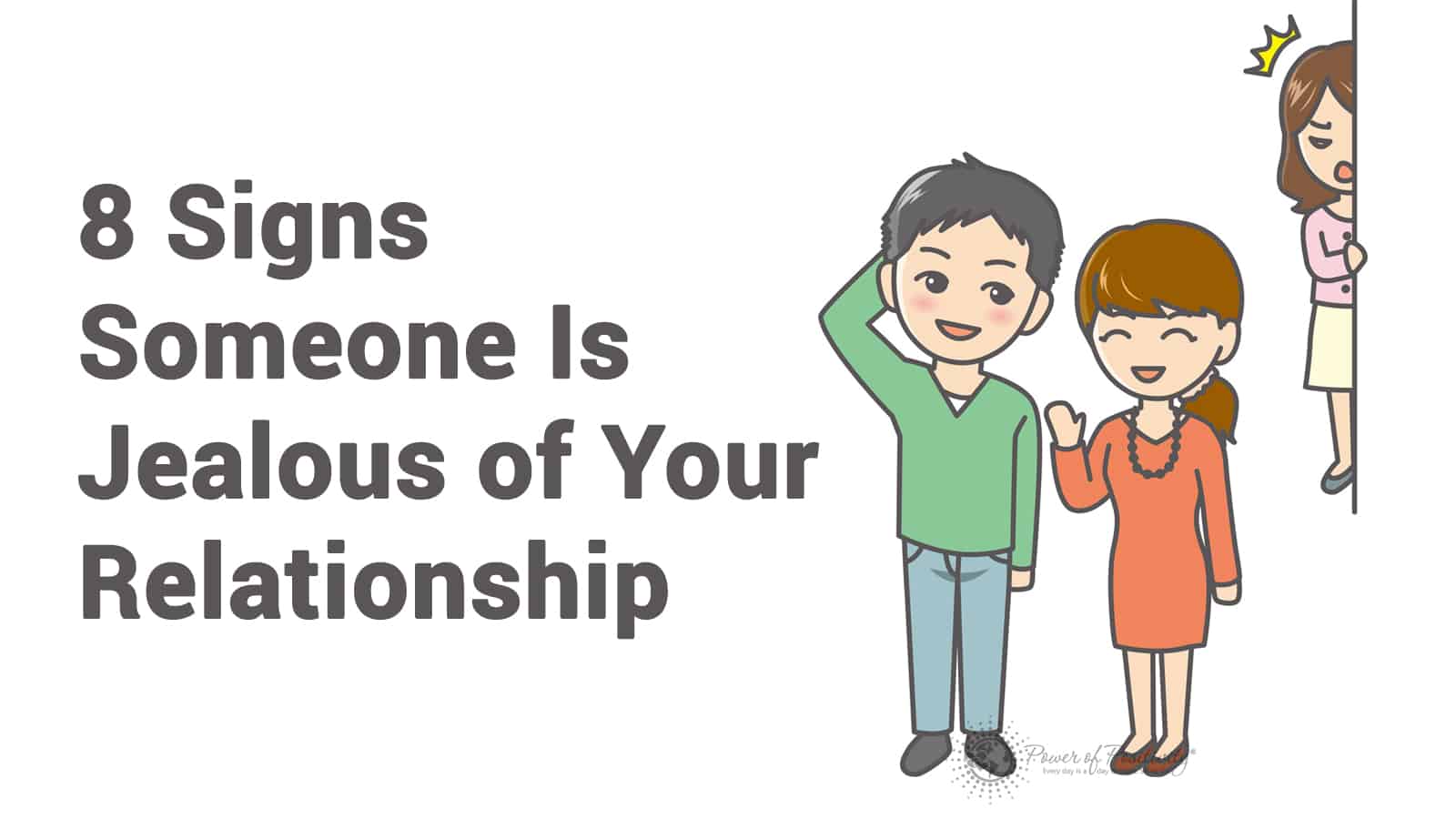
8 Signs Someone Is Jealous of Your Relationship

Jealousy, often referred as the “green-eyed monster,” is present in all aspects of our lives. These insecurities come and go depending on the level of intimacy and attention. Helen Fisher, PhD explains that we feel jealous for many reasons.

But, “therapists often regard the demon as a scar of childhood trauma or a symptom of a psychological problem. And it’s true that people who feel inadequate, insecure, or overly dependent tend to be more jealous than others. But the “monster” actually evolved for positive reasons. Throughout our primordial past it discouraged desertion by a mate, bolstering the family unit and enabling the survival of the young. At the same time, it has pushed us to abandon philanderers—and many a futile match—in favor of more stable and rewarding partnerships.”

When it comes to jealousy outside of a relationship, it is important to be aware and understand why someone is envious of your relationship. It goes deeper in the psyche of how we feel and if we are being replaced. Some people cannot tolerate others being happy when they are not happy themselves. There are friends who feel they’ve lost their best friend to a significant other. Perhaps you know one or two of these folks.

Here are 8 signs someone is jealous of your relationship:relationship

1. Your friends hate hearing about your relationship.

If your friends start to snarl or shut you down when you begin to talk about your relationship, it is a sign that there is jealousy involved. True friends are happy for their friend’s happiness. They don’t go around making remarks or ignoring them for being in a relationship. Perhaps it’s time you ask your friend(s) if they feel left out. You can take a night and just spend with them. Changes in friendships catapult others to irrational behaviors and question their bonds as friends.

2. Your friends become passive aggressive.

No one likes passive aggressive behavior. It becomes annoying when a friend agrees to something but deep inside means something else. Who wants that kind of sarcasm and cynicism?

As per PsychologyToday, “Jealousy is a complex emotion that encompasses many different kinds of feelings ranging from fear of abandonment to rage and humiliation. Jealousy can strike both men and women when a third-party threat to a valued relationship is perceived. Conventional wisdom holds that jealousy is a necessary emotion because it preserves social bonds, but jealously usually does more harm than good, creating relationship conflict and strife.”

The passive aggressive behavior is a form of masking the fear of losing your friend. It’s easier for that friend to be passive than to confront what really is hurting him/her.

3. You stop getting invited to places or gatherings.

If you hear of parties and gatherings that have taken place but you weren’t invited, there may be some jealousy in your friendship. If you are missing out on events happening in your close circle of friends, it could be a sign you need to ask what’s going on. The more time goes by, and things aren’t addressed, the longer the distance becomes in your friendship. The greatest distance between friends is a misunderstanding. If you aren’t getting invited, perhaps it’s time you create the gathering and invite your friends.

4. Your friends start rumors that are far from the truth.

13912670_10153703844797371_2767014460453381736_n

This is a no-no. True friends do not go around making up stories for dramatic effects. If you have a friend who is spreading rumors, you might want to evaluate your friendship. A real friend doesn’t gossip and make up events to make themselves feel better. You can be assured that this is not only jealous behavior, but manipulation. And, while you are re-evaluating your friendship, also let them know that the behavior is not going to be rewarded. It’s disrespectful and humiliating.

5. Your friends disappear and stop hanging around you.

Just like not being invited to gatherings, if your friends are giving you the cold shoulder, you are owed an explanation. Real friends can sit and talk about anything. You need to address what the deal is with the disappearing acts. Also, you might have to ask yourself if your partner is part of the issue. Is he/she not reaching out and being friendly? Is he/she being dominant with your time and space? Are your friends picking up on some toxic behavior or just being jealous of something special in your life?

6. Your friend starts to talk behind your back.

This is a bit different than spreading rumors. When a friend starts to talk behind your back, sharing intimate details of your relationship, it’s painful and disrespectful. You may want to reach out to that so-called friend and let him/her know that you will not tolerate this in your friendship. Address it and put a stop to it, while also being aware that jealousy is based on insecurities. Is your friend missing you and acting out? Is your friend feeling rejected because you have no time for him/her?

7. Your friend can’t stand when you and your partner show affection in public.

Some people cannot handle affection. They truly have an issue when a friend starts touching or kissing a mate in front of them. There are several reasons for this. First, they feel left out because perhaps they don’t have anyone in their lives. Secondly, people tend to take PDA to an uncomfortable level that makes others feel as if they witnessing an erotic state of voyeurism. There is a time and place for affection. However, if it’s a peck, a hug, or hand holding, and you witness a friend making a face of disgust, it might be more about them than you. That person could be dying inside because he/she doesn’t have this at the moment. And sometimes it’s their insecurities whispering in their ears, “Why can’t that be me?”

8. Your friend has a comment and opinion about everything.

Passive-aggressive behavior is difficult to swallow, but constant opinions are worse. If your friend has to comment about your mate all the time, it’s a sign that something deeper is brewing. He/she is envious of your relationship and cannot help it. They may start with supportive comments and turn negative in an instant. If your friend tries to one-up on everything you share with her, this is a huge sign of jealousy. You have the ability to put a stop to it. It’s difficult enough to start a new relationship, so by adding the stress of friends and their opinions, you have a recipe for disaster. You need to set boundaries with what you are willing to entertain and what you need to stop accepting from a friend.

Sometimes friends miss the fun and silly times spent with their friend before “the one” came into the picture. Be loving and compassionate with that friend who is acting out. He/she may just be missing one-on-one moments, the ability to be there all the time, and the sharing that seems to be lacking at this time. Reassure him/her that being in a relationship is not going to change the intimate moments shared before your partner arrived into the picture. Jealousy is not just about wanting what someone has, but about missing what they once shared.

20 Things A True Gentleman Does Differently

The idea of a true gentleman grew out of the traditions of knighthood in a very dangerous period of history. While the concepts of knighthood and honor have long been out of fashion, some behaviors from that time still have meaning and purpose.

The core concepts of the knight and the gentleman are similar: Protect the weak and defenseless, show compassion and mercy, speak the truth, and be courteous to others, especially women.

So what are some of the actual behaviors of a true modern gentleman?

Here are twenty behaviors of a true gentleman:

Do you recognize these actions in your beloved?

a true gentleman

1. Opens Doors

A gentleman holds the door for others to go in. He opens the door for women and lets them go through first.

2. On Time

A gentleman shows up when he says he will show up and doesn’t leave others waiting. It is rude to show up late and waste other people’s time. Not only is being on time courteous, but it shows that you value their time.

3. Walks closest to the Curb

Walking close to the curb and putting yourself between a woman and any potential danger is what a gentleman does.

4. Offers his Jacket

If a woman is cold and doesn’t have a jacket, and you do, then you sacrifice your comfort to make a lady more comfortable.

5. Helps her be seated

A gentleman pulls out a woman’s seat for her and helps her move the seat in closer to the table.

6. He is Courteous

It seems like a small thing, but saying “please” and “thank you” to people shows courtesy and respect for others. It is a minor thing and costs you nothing, but can earn you valuable points with people.

7. Offers his Seat

If you are on the bus/subway/park bench and a woman does not have a seat, you offer your seat. A gentleman sacrifices even small things like personal comfort for a short commute.

8. Offers His Arm

When out on a date, and you and your date are walking, offer your arm. It is classy, and women like to walk arm-in-arm with a gentleman.

9. Has Table Manners

Appropriate table manners mean a lot and show that you are not some uncouth barbarian. If you are at a BBQ joint, then by all means, use your fingers and get messy. But, if you are eating at a restaurant with silverware, use them; that knife and fork are there for a reason. Also, put your napkin on your lap. It shows refinement and class.

money

10. Is Not Rude to People

Even if the service is horrible, take the high road and be polite. It doesn’t cost you anything, shows you can restrain your emotions, and shows empathy and basic respect for others.

11. Picks up the Check

A gentleman reaches for the check and in most cases, should insist on paying. The rare occasions when a gentleman doesn’t pick up the check, he at least attempts to get the check and puts up a token struggle before conceding. When he picks up the check, whether for a date or for friends, he never expects something in return.

12. Is Attentive

When someone is talking, you should be listening and listening closely. Don’t fiddle with your phone or watch the TV in the background. Look at the speaker and listen to what they are saying. A gentleman also notices how others look. Compliment a woman sincerely. “You look stunning” is an appropriate compliment and always makes a woman smile.

13. Keeps his Word

He does it if a gentleman says he will be somewhere or do something. It is that simple. Do what you say you are going to do.

14. Keeps a Secret

That information goes into the vault if a gentleman is told something confidently. He doesn’t blab it to others.

15. Does Not Kiss and Tell

Nobody needs to know what your significant other looks like without clothes, how good they are in the sack or what freaky things they like. Please keep it to yourself.

16. Does Not Hit Women

A gentleman’s role is to protect women even at the cost of their own life. A gentleman never hurts a woman. The only exception to this is if a woman is trying to kill an innocent person. Outside of extreme circumstances, a man should never lay his hands on a woman in anger.

17. Waits For Others to Get Their Food Before Eating

A gentleman waits until everyone has been served at a restaurant before eating. It shows patience and courtesy.

18. Is Honest

A gentleman tells the truth even if it hurts him. Honorable people tell the truth, always. A gentleman is trustworthy.

19. Gets Stuff Done

A gentleman knows how to do stuff and gets those things done. A gentleman can fix the car, splint a broken limb, change the baby’s diaper or cook dinner. Gentlemen know how to do things and can get those things done. He is a jack of all trades, a Renaissance man, or the most exciting man in the world.

20. Protects the Defenseless

A gentleman, at his core, is a warrior and stands ready to jump into harm’s way to protect the innocent. Bravery, courage, and fearlessness are the hallmarks of a gentleman. He stands up for the oppressed, protects women and children, and risks his life to save the lives of others.

gentleman

Final Thoughts on Recognizing the Signs of a True Gentleman

Being a true gentleman is a timeless concept that transcends generations and cultures. A true gentleman embodies the qualities of chivalry, respect, and integrity. He is someone who exudes confidence but not at the expense of others. Being a true gentleman is not just about being well-dressed or well-spoken. It’s about embodying values and principles that define the person. A true gentleman is respectful, honest, trustworthy, and kind.

How to Keep Toxic People Out of Your Relationship

Some people don’t know how to mind their business. When these toxic personalities get involved in your relationship, it’s time to tell them to keep out. This article will look at the destructive ways others will try to butt in where they don’t belong. Also, we review how you can prevent yourself and your partner from the emotional drain of their toxic behavior.

How to Keep Toxic People Out of Your Relationship

Some people love a good story. So the intimate details of your relationship are like a juicy soap opera that they can’t get enough of. Naturally, they will keep asking you more about your feelings toward your partner. Then they get more into the nitty gritty of your affairs when they should be keeping out of your business.

If only all of the people we talk to could respect our privacy, be socially polite, and keep the confidences that we entrust them with, then we wouldn’t have to worry about the negative effects on our relationship. But when people use the information that you share to tell others, get entertainment value from your life, or use the details to manipulate your behavior, these toxic people need to be kept out of your relationship.

toxic behaviors

Why toxic people get involved in your relationship

We all love a good story, and a good non-fiction love story is exactly what your relationship has turned into for the toxic person who won’t let you have your privacy. Maybe some of these phrases sound familiar:

  • ‘I’m just worried about you.’
  • ‘When you won’t include me in your life, I just don’t feel like you care.’
  • ‘Why won’t you trust me?’

If you’ve heard these phrases or something similar from a person you suspect of being toxic, it’s a sign that they are trying to get the gossip on your relationship. Don’t let these toxic people manipulate your relationship.

Research by the Queensland University in Brisbane, Australia, found some interesting facts about malicious workplace gossip. They note it can be an influential form of power, strongly contributing to counterproductive behavior. There are negative consequences of the rumors spread by toxic people for those who are the targets of their attacks, for example, intentionally excluding someone from a group because they are being talked about in secret. The researchers say, ‘This research highlights the importance of recognizing gossip as an effective, though dark, form of power.’

What can you do to keep toxic people out of your relationship?relationship

  1. Stop offering information about your relationship.
  2. When a toxic person with questionable motives asks you questions about you and your partner, say this instead of giving them the gossip they crave.  ‘Why do you ask?’
  3. Confront toxic people about their need for gossip
  4. Say this. ‘The details of my relationship are a private matter between myself and my partner and we would like to keep it that way.’
  5. Set boundaries for the toxic person when they interact with you.
  6. You never have to tolerate unacceptable behavior from a toxic person. Instead, say, ‘If you continue to ask me about my relationship, I will stop talking with you.’
  7. Don’t make this an idle threat, if you set the boundary and the toxic person persists in asking you about your relationship, repeat what the boundary was and then state the consequence; that you are leaving, hanging up, or no longer speaking to them until they respect your privacy.
  8. Ensure that your partner sets boundaries too
  9. If you hold the toxic person accountable for their behavior, but your partner still shares your relationship information, your efforts will be wasted to keep the toxic person out. Make sure you act as a team to keep nosy people at bay.

13962744_10153703847017371_7905604818084892046_n

Final Thoughts on Eliminating Toxic People From Your Relationship

Are you and your partner arguing about something? Sometimes your partner brings in a third party to confide in. Researchers at Brigham Young University in Provo, Utah say ‘Rather than deal with problems more directly within the confines of the marital relationship, the spouse engaging in social sabotage chooses to expose and defame the spouse, bringing third parties into ongoing marital dynamics.’ Your partner or an outside person may use rumors and gossip about your relationship to collect information and to ‘recruit others to take their side in a dispute.’

The Provo study also says that a toxic person can use gossip as a tool to engage in ‘social manipulation and using circuitous means to harm a victim. In particular, they recognized how rumors and gossip serve as a unique brand of covert, non-confrontational behaviors in which the perpetrator (the original source of the rumor) may remain unidentified. ‘If your partner spreads rumors, you might not know whom they have talked to about confidential pieces of your lives.

7 Pieces of Relationship ‘Advice’ You’ll Want To Ignore

Relationship advice can be found on any magazine you see in line for the register at any grocery store, but if your relationship is in crisis, there are some old gems of ‘good advice’ that you’ll want to ignore. In this article, we will look at 7 pieces of relationship advice to throw out with the recycling and why they are no good for you or your partner.

7 Pieces of Relationship ‘Advice’ You’ll Want To Ignore

It is hard to ignore the fact that our social culture has changed over time and has brought about some pretty radical changes in the way we find a partner, join our lives together, and sustain a relationship over time.

Researchers at University of California, Irvine and State University, Los Angeles reviewed women’s magazine topics on relationships since 1900. They found ‘a historical change toward equating love with self-fulfillment and advocating the expression of anger.’ There have been many changes from traditional relationship values to more modern ones and the research showed that these changes in relationship advice given by women’s magazines are related to waves of political liberation versus oppression.

The researchers say that ‘Emotion norms have become less rigid and more tolerant of diversity; but gender differences persist, and women are still responsible for maintaining intimate relationships. Historical trends in love and anger norms are nonlinear, not a continuous shift toward individualism, self-development, and free expression, as suggested by recent cultural theories.’

1. You can train your partner to be a better mate

No one can force another person to change their behavior, so this is an avoidable piece of relationship advice. Training is something you can do for non-human animals, not people. Although you can certainly communicate your preferences to your partner, and praise or reward them when they listen and respect your boundaries, you will never change the core of their personality.

13781674_10153662671112371_2870975984071929785_n

2. Express your emotions, don’t repress them

‘Harry, you’re going to have to try and find a way of not expressing every feeling that you have, every moment that you have them.’ – Sally Albright, When Harry Met Sally

Should you tell your partner how frustrated you are by, for example, them humming along to the radio, now, or to ignore it? Is it better to bottle up your feelings, or express them right away? The best relationship advice is, it depends.

For example, if your partner is happy, and you can tell this by their body language and expression, then telling them that you are annoyed by their behavior is going to hurt them more deeply than if you can move to another location or plug your ears or just learn to be happy with them. No one partner in a relationship has the right to stop the other partner from being happy just because they find it annoying. You both have the right to happiness.

3. Don’t go to bed angry

Honestly, this piece of relationship advice should be ignored because some topics are too serious to come to a decision about before bed. An argument is usually a difference of opinion between you and your partner and if it’s important, and you’re still arguing about it before bedtime, sleep is probably the best thing you can do to gain some perspective on the situation.

4. As long as you are both honest about your feelings, everything will be fine

Honesty is key to building trust, and hiding things from your partner isn’t good, but you also know the difference between telling a little white lie to save your partner from having hurt feelings and a flat-out lie that is dishonest and could destroy your relationship later.

5. If the sex is good, then the relationship is healthy

Sex and intimacy is only one component of a healthy partnership. A strong libido doesn’t equal a happy relationship with excellent communication and a couple who work together to overcome obstacles and achieve goals. Sex does not equate to a deep emotional commitment either, unfortunately, so this is one piece of relationship advice you’ll want to ignore.

6. A good breakup is better than a bad relationship

If it’s truly a bad relationship, meaning that staying is emotionally, physically, mentally or otherwise harmful to one partner or both, then a breakup is indeed better. However, if you’re not hurting, it might be worth staying if the relationship problems can be solved. University of Buffalo researchers found that the physical health of both partners was a sign of a high-quality romantic relationship. So if you are fit and healthy, consider yourself to be in a healthy relationship.

Related article: This ONE Behavior Will Affect Your Relationship More Than Anything Else

7. You can always go to counseling to fix your problems

Couple’s counseling won’t fix anything unless you are both willing to work to fix problems with communication, trust, intimacy, or whatever else is ruining your relationship. It takes two to make a partnership and both partners are usually involved in the problems of the relationship as well as the solution. If each of you is blaming the other, this piece of relationship advice is never going to work until you take accountability for your own actions.

Related article: Why You Will Marry The Right Person

https://youtu.be/eGPrRQYZ-ms

(C)Power of Positivity, LLC. All rights reserved
Skip to content